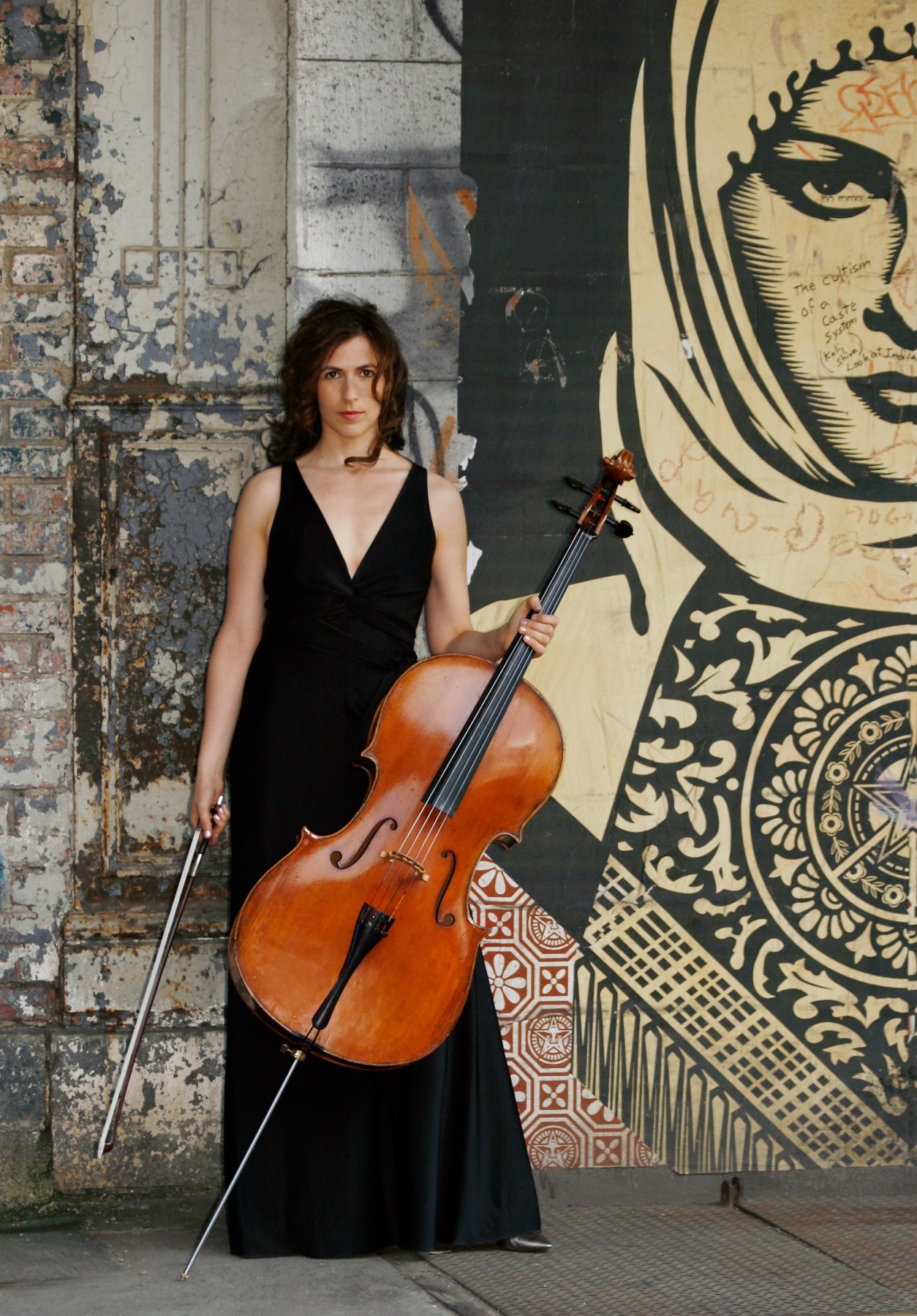
Boulder Chamber Orchestra mixes very different ingredients

“Virtuosity & Grace” pairs Brahms and Mozart

By Peter Alexander
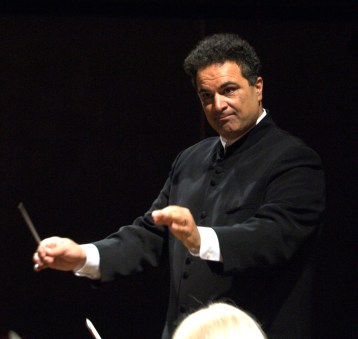
bsaless.4.Keith Bobo

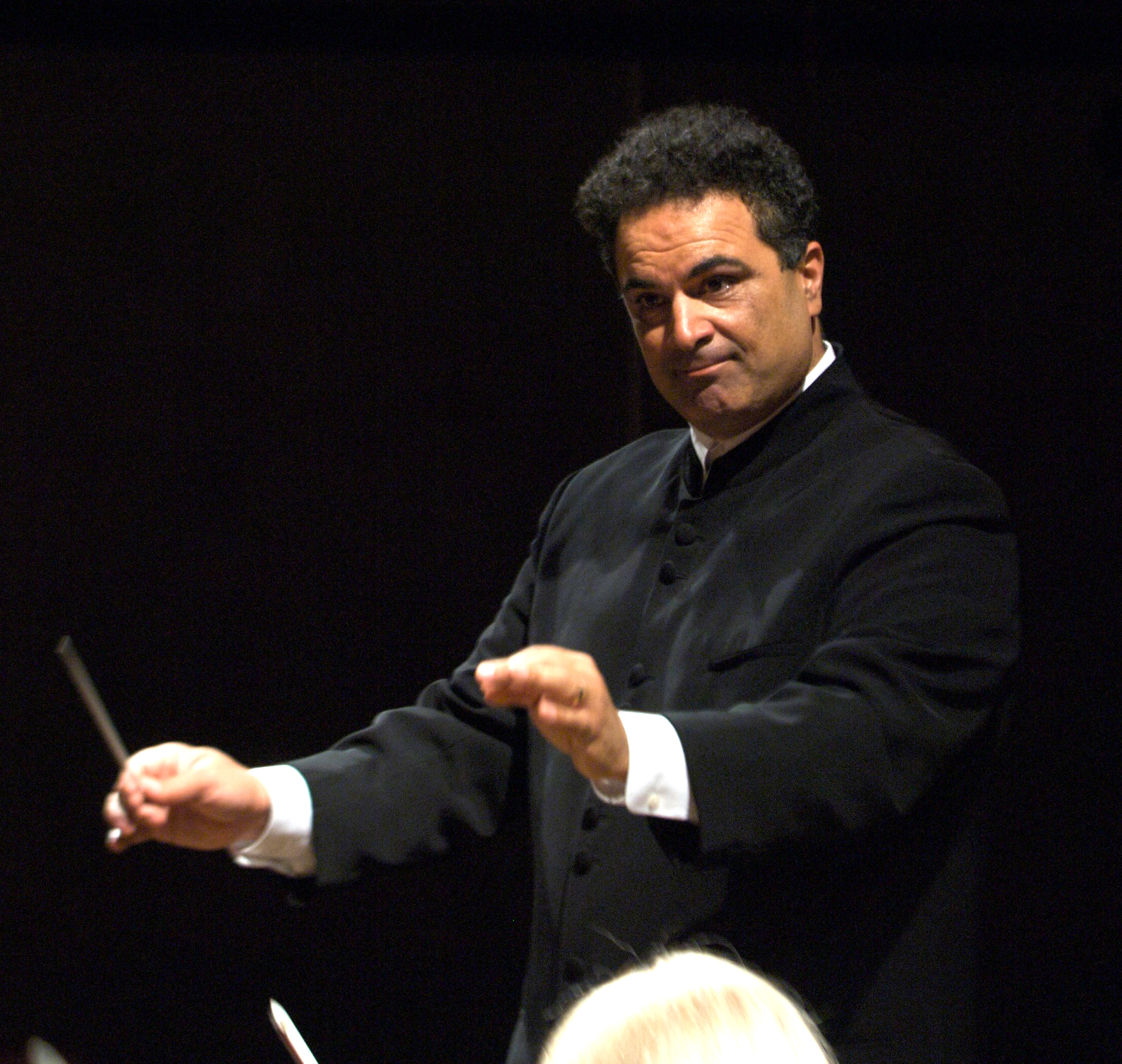
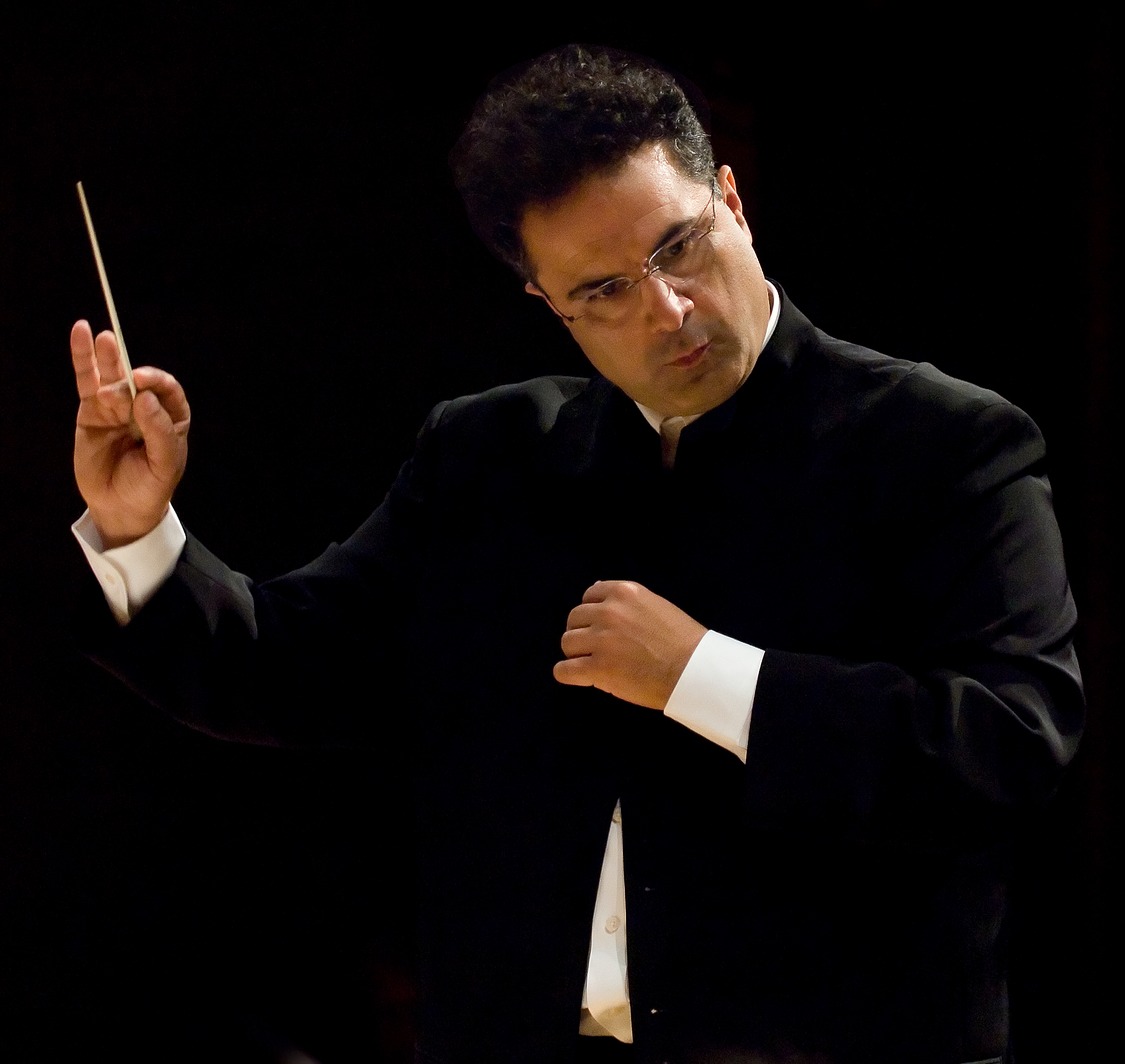
Bahman Saless. Photo by Keith Bob.

Bahman Saless wants to give you an earworm.

The conductor of the Boulder Chamber Orchestra is preparing to perform Brahms’s massive Second Piano Concerto this weekend with pianist Soheil Nasseri (Friday and Saturday, April 15 and 16, in Broomfield and Boulder), and he says, “The second melody of the first movement is, to me, probably the most gorgeous melody ever written.

“Ever! I cannot think of any other melody that just makes me want to sing it as much as this one. So if you want an earworm, come to the concert!”

Earworms or not, there is no question that the Brahms Second Piano Concert is a serious undertaking for any pianist. At 50 minutes in length and four movements, just the sheer volume of music to be learned is daunting. And it is a powerful, energy-sapping work as well.
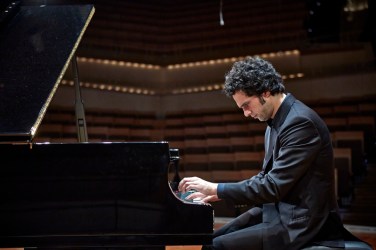
Musik

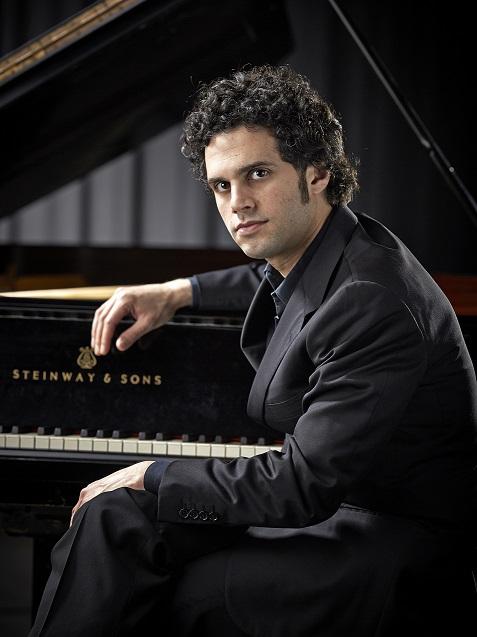
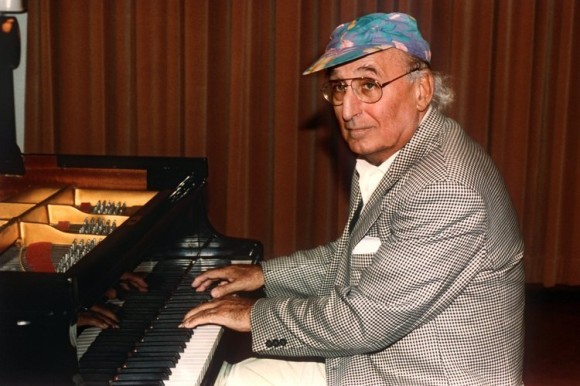
Soheil Nasseri in der Berliner Philharmonie

But Nasseri really wants to perform this concerto.

“It has been his lifetime dream,” Saless says. “He asked me if I would do it and I said, ‘Sure! Let’s give it a shot!’ If he’s got that much passion for it, it’s got to be great.”

That created a problem for Saless, though. The Brahms Second Piano Concerto is a difficult piece to put into a program. “If you want to perform Brahms Two, what do you put it with?” he asks. “There are certain pieces that are just hard to program. And when you’ve got a concerto that’s 50 minutes long, you run the risk of going over an hour and a half.

“It’s just a really hard piece to balance with.”

Saless talked to several other conductors, but he didn’t like any of their ideas. “You need something lighter, something more accessible, something that doesn’t demand so many intellectual calories” from the listeners, he says.

He wanted a piece that’s strong enough on its own to stand up to the Brahms. And he also needed something that used a classical rather than a large Romantic orchestra, because that’s what the Brahms concerto—for all of its imposing impact—calls for. “It’s more massive in length and structure than in orchestration,” he says.

The piece he settled on is Mozart’s Symphony No. 40 in G minor, which he had conducted before and wanted another shot at. “I’ve done it before, and I failed,” he confesses. And citing a Samuel Beckett quote, he added, “I’m going to fail better this time.”

The two pieces—Brahms and Mozart—“in many ways are the antithesis of each other,” he says. “You’ve got this beautiful, compact, very transparent Mozart symphony, versus this gigantic cruise chip of a concerto which is really a symphony for piano and orchestra. In so many ways they’re extremely different, but at the same time, they’re both appealing.”
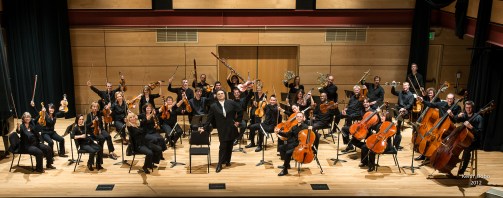
bconew_1

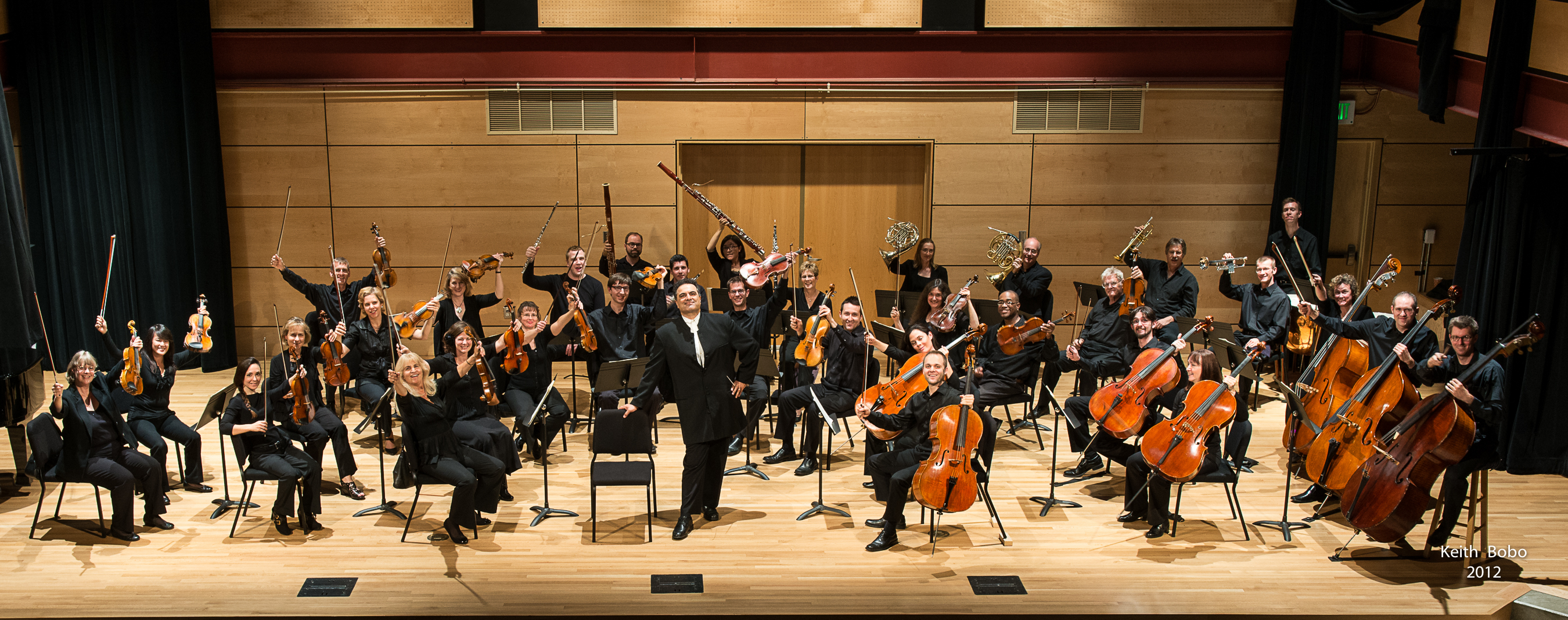
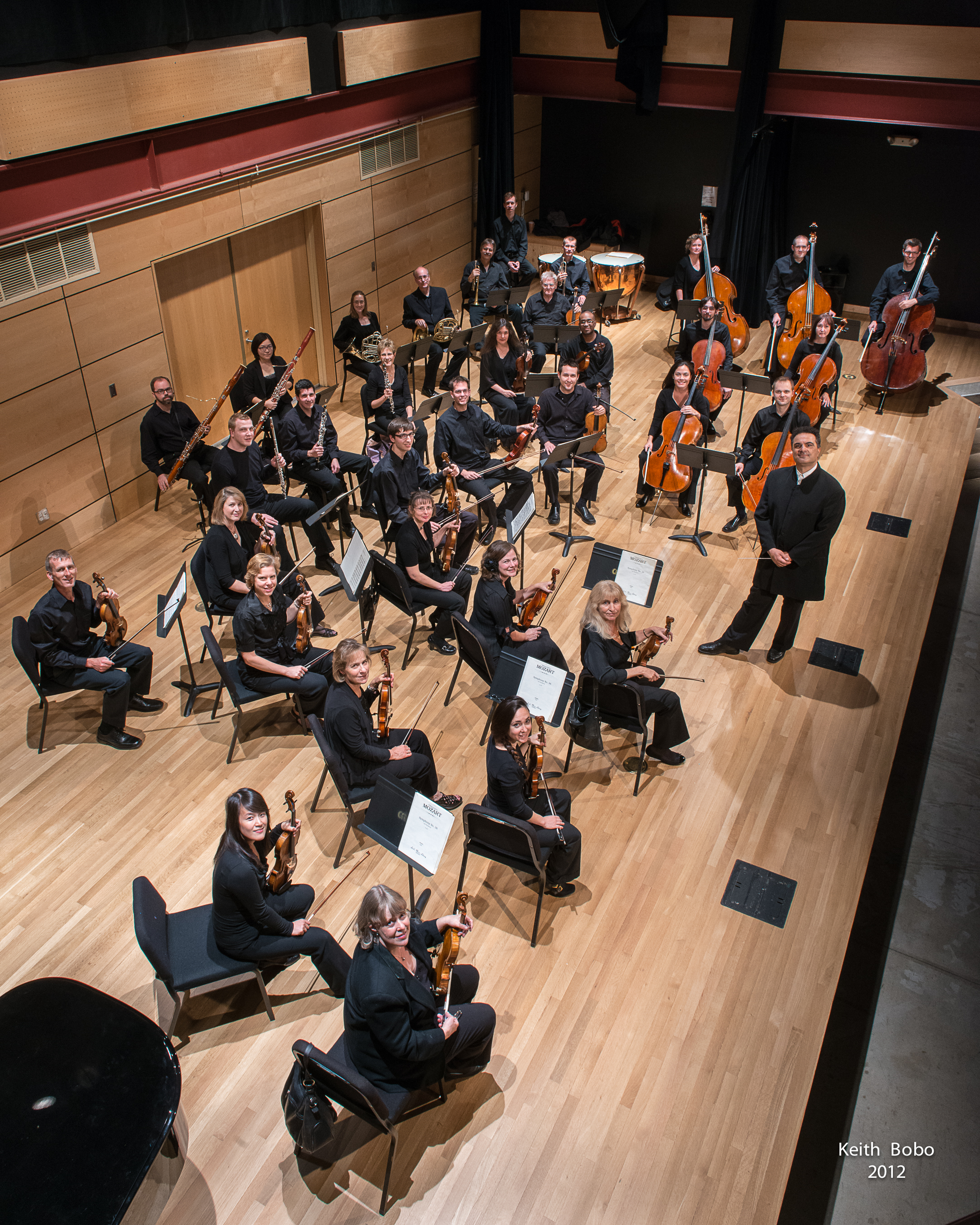
Bahman Saless with the Boulder Chamber Orchestra. Photo by Keith Bobo.

Is the “gigantic cruise ship of a concerto” well suited for a small orchestra like the BCO? Saless thinks so. “With Brahms it’s always chamber music,” he says. “You can literally do any Brahms big piece with a chamber orchestra. That just brings out all the inner weavings that you don’t generally hear.”

The Mozart Symphony, which opens the program, is a very direct and accessible piece, Saless believes. “It’s right there, it’s all there in all its beauty and glory,” he says. “But it’s a huge challenge for the orchestra. In many ways it’s much harder than the Brahms for us, because it’s so transparent, because it’s Mozart.

“It’s just so tricky with a piece like this, especially because everybody knows it. We need to perfect every bar.”

Just as with the Brahms, Saless thinks the Mozart gains from having a smaller orchestra. “The orchestra needs to suddenly become this completely different animal, because most of the musicians are used to playing with big orchestras,” he says.

“You have to change the range of the entire orchestra. And what’s great about doing it with a chamber orchestra, with smaller string sections, is that the winds come out so much more. And so much of this symphony is all about the writing for the winds, which is outstanding.”

Mozart and Brahms, the two pieces on the program, offer a many contrasts. The title suggests one: Virtuosity and grace. Compact and transparent versus a gigantic cruise ship. Classical versus Romantic. The Mozart symphony is very familiar to classical audiences, while the Brahms concerto is, Saless believes, “not performed often enough.

“You really can’t miss this (opportunity), to hear the Brahms,” he says. And you just might come away with the most beautiful ear worm ever.

# # # # #
newbanner3“Virtuosity and Grace”
Boulder Chamber Orchestra
Bahman Saless, music director, with Soheil Nasseri, piano

Mozart: Symphony No. 40 in G minor, K550
Brahms: Piano Concerto No. 2 in B-flat major, op. 83

7:30 p.m. Friday, April 15
Broomfield Auditorium, Broomfield
Tickets

7:30 p.m. Saturday, April 16
Seventh-Day Adventist Church, 345 Mapleton Ave, Boulder
Tickets 
120-year-old debutante makes a strong impression with Boulder Chamber Orchestra

Saless’ BCO and Mina Gajić’s 1895 piano give promise for the future

By Peter Alexander

Last night (Oct. 30) the Boulder Chamber Orchestra (BCO) and conductor Bahman Saless presented what may the most important debut of the musical season in Boulder. At 120, the debutante sounded wonderful.

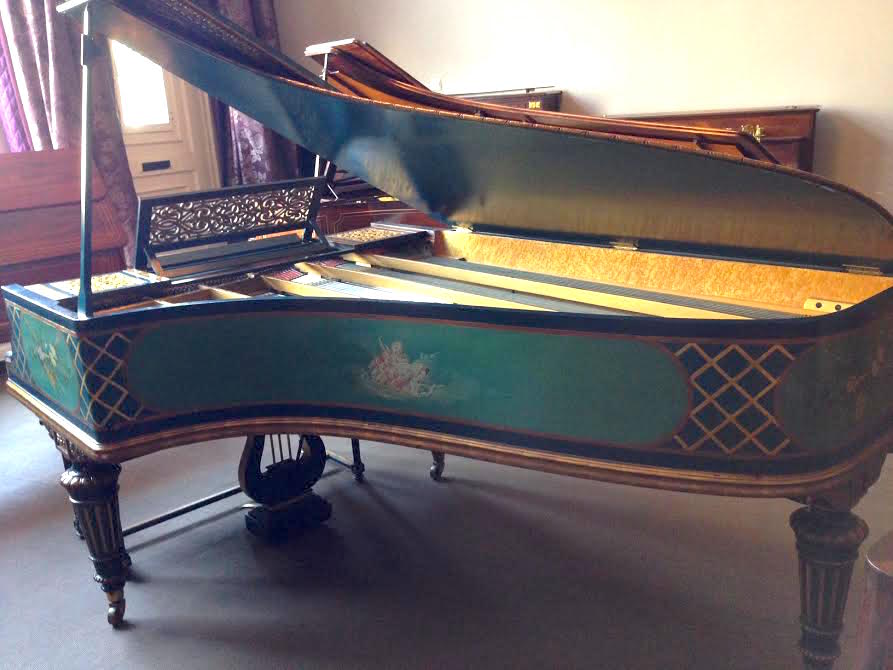
BCO's debutante: an 1895 piano by Érard.

BCO’s debutante: an 1895 piano by Érard.

In case you didn’t know, the “debutante” was a piano, made in Paris in 1895 by the firm of Sébastien Érard. It was played by the evening’s soloist, pianist Mina Gajić, who purchased the piano in Amsterdam in 2014 and brought it to Boulder. The concert was the first ever performance on the instrument in the U.S.

A superb pianist, Gajić gave memorable performances of two works—one written before the piano was built, and one after. The earlier work was the Malédiction (Curse) for piano and strings of Franz Liszt; the later was Young Apollo for piano, string quartet and string orchestra by Benjamin Britten.

“We thought it would be an interesting juxtaposition to have a piano that fits right in the middle of these pieces—Liszt in 1833, Britten in 1939, and the piano from 1895,” Gajić said.

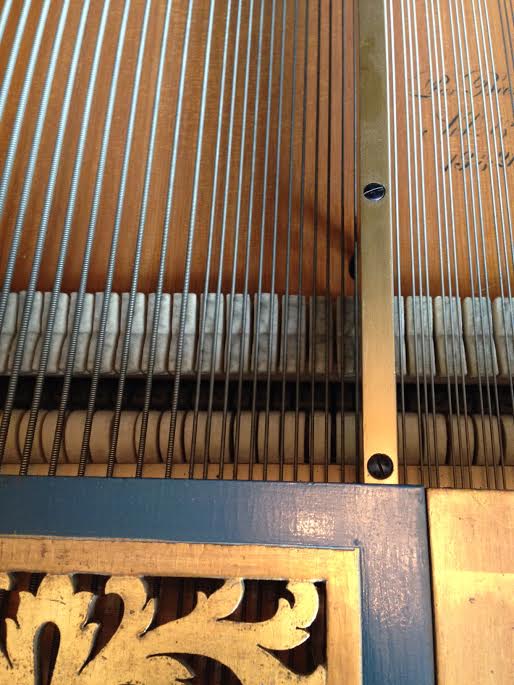
Erard piano.4The straight-strung Érard piano, with strings that run parallel in all registers, has a marvelously clear and transparent sound. (For more details of the piano’s construction, read my earlier post previewing the concert.) The sound is particularly striking in the highest register: bright, pure and clean, without ever sounding pingy or losing a delicious piano sound. The middle register sounds more like a modern piano, but one that is remarkably present.

My only reservation might be the bass, which is powerful and hard-edged, and when heard alone almost metallic in its timbre. Nonetheless, the bass supports and blends with chords in all registers, adding weight to the sound without turning it thick or murky.

But what is most striking is the clarity and penetration of the sound in all registers. The sound was never swallowed up by the full string orchestra, in even the loudest passages. Every chord throughout the range was clear, always audible, always transparent. Even though the instrument is seven feet—in contrast to today’s Steinway D and Kawai EX at nine feet, or the Bösendorfer 290 Imperial at nine feet six inches—the Érard can be plenty loud, without any distortion or loss of sound quality.

Pianist Mina Gajić

Pianist Mina Gajić

But the piano, however marvelous, doesn’t play itself. Gajić had the apparently effortless control of the music that characterizes every true virtuoso, in both the Liszt and the Britten.

Young Apollo is an odd piece, one that was written very early in the composer’s career and then withdrawn after its first performance. It was never heard again until after Britten’s death in 1976. It is hard to find in the score signs of the Britten one recognizes from his later and well known operas. It is full of bustle and fanfare, with declamatory string chords juxtaposed with surging scales running the full length of the piano.

Gajić and the BCO gave a robust performance. If the piece was not quite as nutty as Saless suggested in his remarks, it was pleasingly off-center, and played with conviction. One might consider the piano a little antiquated for a 1939 piece, but it was more than up to Britten’s quirky demands. The opening scales were the perfect introduction to the piano, allowing one to hear the sound from the bottom to the clear, bell tones that capped each run.

The title of Liszt’s Malédiction originally referred to only the first section of the piece, which contains a great deal of contrast along with its pianistic fireworks. It is likely that the pianos of 1833 couldn’t quite provide what Liszt wanted in this score, but by 1895 Érard pianos were up to the task.

Once again, Gajić and the orchestra gave a very convincing interpretation of a piece that is not heard often. Gajić tossed off all of Liszt’s virtuoso passages—written, after all, for his own showy concerts—with confidence. The piano was never covered or dominated by the orchestra in this well balanced performance.

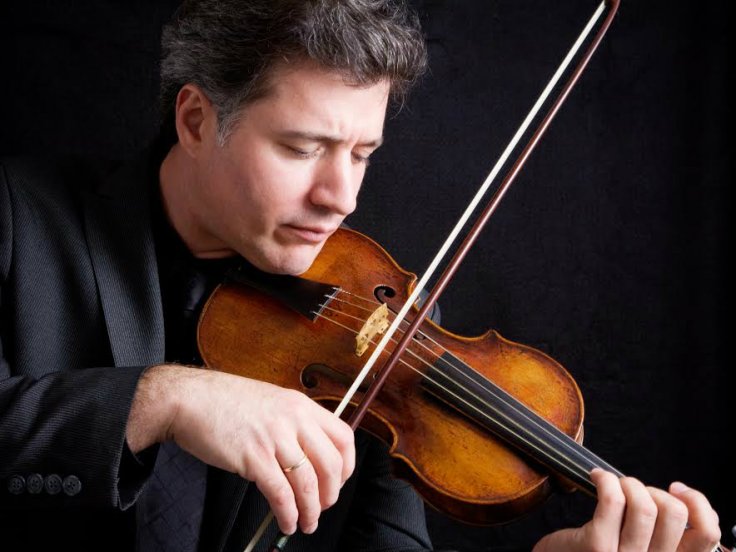
Bahman Saless. Photo by Keith Bob.

Bahman Saless. Photo by Keith Bob.

Intermission saw audience members surrounding and photographing the piano, which obviously stirred great interest. It is unfortunate if the rest of the concert was slightly overshadowed by the instrument, because Saless led incisive, controlled performances throughout. The program, titled “Spook Symphony,” included several pieces selected for Halloween.

The concert opened with Mozart’s Adagio and Fugue in C minor, K546, which begins with an ominous C minor that suggests threat and fear. The piece was written for string quartet, but the full sound of the BCO string section multiplied the sense of menace in the Adagio. On the other side of the same coin, the fugue occasionally suffered from the lower parts not being as nimble and precise in section as they could be with the single players of a quartet.

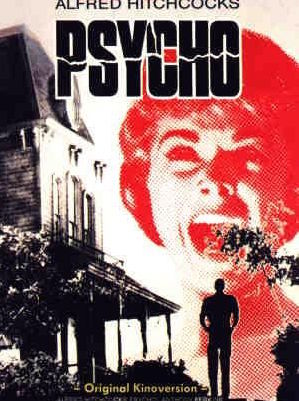
After intermission, Saless and the BCO presented the one definitively spooky piece of the “Spook Symphony,” Bernard Herrmann’s score to Alfred Hitchcock’s horror classic Psycho. Under Saless, the performance achieved all the menace and tension that Herrmann was aiming for. The parts were carefully balanced, with interior lines and a repeated three-note motive carefully brought out from the texture.

Bahman Saless with the Boulder Chamber Orchestra. Photo by Keith Bobo.

Bahman Saless with the Boulder Chamber Orchestra. Photo by Keith Bobo.

This was clearly an audience favorite. I saw knowing, if slightly guarded, smiles and heard a slight nervous chuckle when the slashing chords of the famous shower scene were played.

Happily, the concert ended with a piece that did not leave audience members afraid to venture out into the dark. Danish composer Carl Nielsen’s early Little Suite for Strings—as Op. 1 it was his first published work—opens with a slightly sinister Prelude, but proceeds with movements that are much more cheerful. The Intermezzo practically danced along, and the Finale ended comfortably. Saless elicited very good string playing and a true ensemble performance from the section.

In all, this was a memorable concert that promises well for the BCO’s season, and for all future appearances of Gajić and her historic piano.

Boulder Chamber Orchestra presents a slightly crazy “Spook Symphony”

Music from Psycho and a 19th-century piano highlight Halloween concert

By Peter Alexander

psycho-posterBe sure to take a shower before you go the Boulder Chamber Orchestra’s concert Friday (7:30 p.m. Oct. 30, First United Methodist Church, Boulder). You may not want to afterwards.

Director Bahman Saless has programmed the music from Alfred Hitchcock’s horror classic Psycho, including the slashing chords from Hollywood’s most famous shower scene. “The central idea was spook,” Saless says of the concert, which he has titled, in honor of Halloween, “Spook Symphony.”

In addition to Psycho and other pieces he picked to go with the spooky theme, the concert will also feature pianist Mina Gajić performing two works with the orchestra. She will give the first U.S. performance on a historical piano that she owns, one that was built in Paris in 1895 by the piano maker Sebastian Érard.

Pianist Mina Gajić

Pianist Mina Gajić

Érard’s pianos were owned and played by many of the leading composers and pianists throughout the century, including Haydn, Beethoven, Liszt, Chopin, Mendelssohn, Ravel, Fauré, and many others.

Gajić will play two works for piano and string orchestra: the Malédiction (Curse) by Liszt, and Young Apollo by Benjamin Britten. Other works on the program for strings alone will be the Adagio and Fugue in C minor, K546, by Mozart, and the Little Suite for Strings, Op. 1, by Carl Nielsen.

Tickets for the concert are available here.

Bahman Saless. Photo by Keith Bob.

Bahman Saless. Photo by Keith Bob.

“I wanted to do the music to Psycho, because people really liked it the last time we did it,” Saless says. “I think (composer Bernard) Herrmann was one of the best (of the classic film composers). He did a lot of Alfred Hitchcock movies, and they’re all absolutely, as far as I’m concerned, ideal for the genre.

“The question is what goes with Psycho, sticking to classical music (and) our routine of doing things that are not played enough. I knew the Nielsen Little Suite, which is not spooky but has a waltz that has a very macabre type of sound to it. And then another unique, spooky, crazy, lunatic piece is the Britten Young Apollo. It’s almost like the dance of ghouls—it’s very comic ghoulishness.

“And Malédiction also, just from the name of it sounded very apt, and it has crazy harmonies, really out of this world unexpected harmonic changes and modulations. And I thought it’s a very good partner to the Britten.”

__________

It’s not spooky, but for many people the greatest draw of the concert will be Gajić’s Érard piano. She found it in Amsterdam in 2014, at Maison Érard, a preserver and restorer of Érard pianos. She had played more than 100 historic pianos in her career, and was looking for one that she could purchase for her own.

1895 piano by Érard.

The 1895 Érard piano of Mina Gajić.

“We walked into this beautiful canal house and there were 30 pianos in one show room,” she says. “I spent about a week there, playing all of those pianos. This one stood out because of the clarity of its tone, the color of the sound, and the fact that it is really a virtuosic instrument, and yet it has such richness and fullness to the tone which really comes to life in a concert hall.”

The piano has all original parts, including the case, ivory keys, the original soundboard, dampers and hammers, and even a few of the original strings from 120 years ago. At seven feet, it is a full concert grand of the time.

The piano “is one of a kind because of the (custom) artwork on the case,” Gajić says. The instrument was made “for a Belgian noble family that had a chamber salon and concert series at the turn of the (20th) century.

“I am hoping to some day learn that Debussy, Fauré, or Ravel played upon this very instrument. It is in fact likely, given this piano lived in Brussels. However, all I know at this point is that it is a one-of-a-kind Érard, among the best instruments they made.”

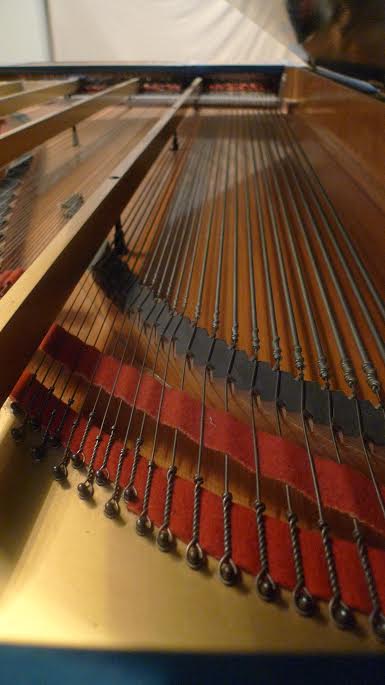
Erard piano.3There are three things that are particularly distinctive about the piano, that give it qualities unlike modern concert grands. For one, it is straight-strung, like many instruments of the 19th century. In other words, all the strings run parallel to one another, at a 90 degree angle to the keyboard, whereas modern pianos are cross-strung, with the bass strings crossing diagonally over the higher strings. This newer design gives a rich sound, but one that is heavier and thicker—and sometimes murkier—than straight-strung pianos.

The second distinctive feature is that the grain of the wood in the soundboard runs parallel to the strings, directly away from the keyboard. This too is unlike modern pianos, where the grain goes diagonally from right to left, across the direction of the strings. With the diagonal grain, the soundboard resonates all together, whereas when the grain parallels the strings, each portion of the soundboard will resonate separately, giving a different timbre to different registers of the piano.

These two features combine to create a distinctive sound many performers prefer for the music of the 19th century. Indeed, the pianist Daniel Barenboim has recently designed a modern instrument for his own use that has straight strings and the wood grain in parallel.

The dampers under the strings in Gajić's Érard piano.

The dampers under the strings in Gajić’s Érard piano.

The third distinctive quality of Gajić’s Érard is that the dampers (felt pads that stop the strings from sounding) are set below the strings. Pianos today all have dampers above the strings, which is easier is one respect, since gravity will cause them to fall onto the strings. The disadvantage is that the dampers can make a thump when they hit the strings that can even be heard in some recordings, whereas dampers under the strings are much quieter.

Gajić suggested several things the audience can listen for when they hear her piano. One is the clarity of the sound, especially in the bass. “Also there is a very distinct registral quality at the top of the piano,” she says. “In the very, very highest register it’s very clear and very special. It sounds like pure bells.”

Below that, each register of the piano has a distinctive sound, much like different voices in a choir, with a “soulful mid-register and a lot of power in the bass. And this piano has a lot of power and a lot of projection,” she says.

Erard piano.4“Nowadays we hear a lot of the period instruments from the classical era and Baroque era—strings, winds, singing styles—but we don’t really have such an opportunity to hear a piano which is in its original condition from the 19th century. I would definitely encourage everybody to hear the piano, because it offers an insight not only into how composers of the 19th century were writing music, but also how the audiences were hearing it.

“You can really hear all the nuances in the voicing and the textures when it’s in a larger hall. We already moved the piano to the hall and it sounds fantastic. I’m really excited and really, really happy that we’re playing these pieces on this piano and in this hall.”

___________

Liszt’s “Curse,” Hitchcock’s Psycho, a remarkable old piano, and Britten’s “lunatic piece” Young Apollo. It all sounds slightly crazy.

But as Norman Bates said, “We all go a little mad sometimes. Haven’t you?”

# # # # #

Spook Symphony

Bahman Saless with the Boulder Chamber Orchestra. Photo by Keith Bobo.

Bahman Saless with the Boulder Chamber Orchestra. Photo by Keith Bobo.

Boulder Chamber Orchestra,
Bahman Saless, conductor, with
Mina Gajić, piano

Bernard Herrmann: Music to Psycho
Mozart: Adagio and Fugue in C minor, K546
Carl Nielsen: Little Suite for Strings, Op. 1
Liszt: Malédiction
Benjamin Britten: Young Apollo

7:30 p.m. Friday, Oct. 30
First United Methodist Church
1421 Spruce St., Boulder

Tickets
Boulder Chamber Orchestra puts tickets on sale for 2015–16

Season runs from Baroque to Brahms to Britten, plus the Boulder premiere of a piano (yes: a piano, not a player)

By Peter Alexander

Bahman Saless and the Boulder Chamber Orchestra. Photo by Keith Bobo.

Bahman Saless and the Boulder Chamber Orchestra. Photo by Keith Bobo.

Bahman Saless and the Boulder Chamber Orchestra will expand beyond the usual Classical/Baroque repertoire of smaller ensembles for their 2015–16 season, with concertos by Romantic composers Brahms and Tchaikovsky.

The season will also include contemporary works by John Rutter and Astor Piazzolla, music from Alfred Hitchcock’s iconic film Psycho, and the Boulder debut of a historical piano that was built in Paris in 1895.

Series tickets for the 2015–16 season are now available from the BCO. The full season schedule is not yet listed on the orchestra’s Web page, but the BCO shared a preliminary program with Sharpsandflatirons, as listed below. While some programs are incomplete, the dates and venues are definite. Watch the BCO Web page for more details.

There will also be a series of mini-chamber concerts, to be announced later.

Mina Gajić

Mina Gajić

The season will open Oct. 30 in Boulder and Oct. 31 in Lakewood with a concert featuring pianist Mina Gajić performing on an 1895 straight-strung Érard piano. A performer who has played on many Romantic-era pianos, Gajić found the Érard in Amsterdam and had it shipped to her home in Boulder in 2014. The one-of-a-kind instrument was commissioned by a noble family in Brussels, and was hand painted for them.

The historic instrument is ideal for one work on the program—Franz Liszt’s one-movement Malédiction for piano and strings, which was composed in the 1830s. Gajić will also play a 20th-century work on the same piano, Benjamin Britten’s Young Apollo for piano and strings. The program, calling on the BCO strings only, will also feature film music from Psycho and Mozart’s Adagio and Fugue in C minor for strings.

Zachary Carrettin

Zachary Carrettin

The following concerts, Dec. 4 in Boulder and Dec. 5 in Broomfield, will present the pairing of Vivaldi’s evergreen Four Seasons concertos for violin and strings, and the Vivaldi-inspired Four Seasons of Buenos Aires by Argentinean tango composer Astor Piazzolla. The soloist will be Zachary Carrettin, known in Boulder as the adventurous director of the Boulder Bach Festival. Though far from Bach, Piazzolla is not out of Carrettin’s rather large musical ball park by any means: he performed for 10 years in a duo with a “Tango Nuevo” composer working in the same style as Piazzolla.

It is noteworthy that this will be the second opportunity in less than two years for Boulder audiences to hear the Vivaldi/Piazzolla pairing, which was presented by the Pro Musica Colorado Chamber Orchestra in April of 2014, with violinist Lina Bahn and conductor Cynthia Katsarelis. The pairing of these two works was popularized by violinist Gidon Kremer when he recorded them together, and it has been played by violinists around the world.

The performance is also the second collaboration between the Bach Festival and a Boulder-based orchestra to be announced for the coming year, along with a semi-staged performance of the St. Matthew Passion with the Boulder Philharmonic and conductor Michael Butterman scheduled for April 23 and 24, 2016.

Jennifer Ellis Kampani

Jennifer Ellis Kampani

Concerts Dec. 19 in Boulder and Dec. 20 in Broomfield will feature soprano Jennifer Ellis Kampani performing Baroque vocal music (full program to be announced later). Especially known for performing the music of Spain and Latin America, Kampani has sung numerous roles in Baroque opera productions and appeared with leading early music ensembles in the U.S. and Europe.

On the same program BCO will play John Rutter’s Suite Antique for flute, harpsichord and strings; and Sibelius’ Rakastava (The lover), a short suite for string orchestra based on folksongs that tell of a nighttime tryst that must end at dawn.

BCO will continue its recent tradition of playing a News Year’s Eve concert at the Lakewood Cultural Center. The program will be announced later.

Soheil Nasseri

Soheil Nasseri

The final two programs of the season, in April and May, will see the orchestra entering Romantic repertoire with two much loved virtuoso concertos. Concerts April 15 in Broomfield and April 16 in Boulder will feature pianist Soheil Nasseri returning to the BCO for Brahms’s Second Piano Concerto, on a program that will include Mozart’s Symphony No. 40 in G minor.

The final concert of the season will be May 6 in Broomfield and May 8 in Boulder. Multiple prize-winning violinist Chloé Trevor will play Tchaikovsky’s Violin Concerto on a program with Beethoven’s “Pastoral” Symphony.

# # # # #
Season XII 2015–16
Boulder Chamber Orchestra
Bahman Saless, Music Director and Conductor

Friday, Oct. 30, First United Methodist Church, Bouldernewbanner3
Saturday, Oct. 31, Lakewood Cultural Center
Benjamin Britten: Young Apollo for piano and strings, op. 16
Franz Liszt: Malédiction in E minor for piano and strings
Music from Psycho
Mozart: Adagio and Fugue in C minor for strings, K546
With Mina Gajić, piano

Friday, Dec. 4, First United Methodist Church, Boulder
Saturday, Dec. 5, Broomfield Auditorium
Antonio Vivaldi: The Four Seasons
Astor Piazzolla: Four Seasons of Buenos Aires
With Zachary Carrettin, violin

Saturday, Dec. 19, Seventh-day Adventist Church, Boulder
Sunday, Dec. 20, Broomfield Auditorium
Jan Sibelius: Rakastava (The lover) for string orchestra, op. 14
John Rutter: Suite Antique for flute, harpsichord and strings
Baroque vocal music
With Jennifer Ellis Kampani, soprano

Thursday, Dec. 31, Lakewood Cultural Center
New Year’s Eve Concert
Program to be announced

Friday, April 15, Broomfield Auditorium
Saturday, April 16, Seventh-day Adventist Church, Boulder

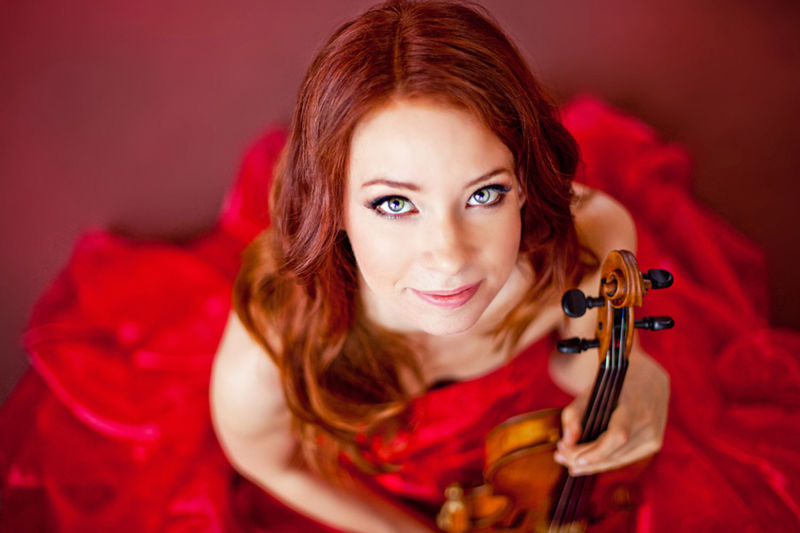
Chloé Trevor

Chloé Trevor

Mozart: Symphony No 40 in G minor, K550
Brahms: Piano Concerto No. 2 in B-flat major, op. 83
With Soheil Nasseri, piano

Friday, May 6, Broomfield Auditorium
Sunday, May 8, Seventh-day Adventist Church, Boulder
Beethoven Symphony No. 6 in F major, op. 68 (“Pastoral”)
Tchaikovsky: Violin Concerto
With Chloe Trevor, violin

Season tickets

“A crazy piece” tops off Boulder Chamber Orchestra’s season

After Rossini and Chopin, season-ending concert ends with Beethoven’s Fourth Symphony

Bahman Saless and the Boulder Chamber Orchestra. Photo by Keith Bobo.

Bahman Saless and the Boulder Chamber Orchestra. Photo by Keith Bobo.

By Peter Alexander

First it’s serious, and then it’s not; then it seems not, but it is.

That’s more or less the way Bahman Saless, music director of the Boulder Chamber Orchestra, describes Beethoven’s Fourth Symphony. Saless and the BCO end their 2014–15 season with that energetic symphony, Saturday in Broomfield and Sunday in Boulder (May 9 and 10, both concerts at 7:30 p.m.; details).

In addition to Beethoven’s symphony—one that is less well known than the Third or the Fifth or Seventh or Ninth— the program features the rollicking Overture to La Scala di seta (The Silken Ladder) by Rossini and Chopin’s Second Piano Concerto, performed by soloist Hsing-ay Hsu. This adds up to a comfortable and enjoyable evening—a humorous Rossini overture, an elegant, decorative piano concerto, and a cheerful Beethoven symphony that Robert Schumann compared to a “slender Greek maiden.”

I’ll get back to Beethoven and that Greek maiden in a moment, but first the concert opens with the overture by Rossini. It is easy to think of all of those bubbly Rossini overtures as being almost interchangeable, but Saless had a reason for choosing the one he did.

“I picked La Scala di seta because we’ve done many of the other ones, and this one seemed just fun to do,” he says. “I listened to three or four of them and I thought it fits the character of this concert, just because it’s kind of comical.”

Next on the program will be Chopin’s Piano Concerto No. 2—actually the first to be written, while the composer was still studying at the Warsaw Academy and first performed in 1830. It is not modeled on the heroic concerto of Beethoven and the later 19th century, but is more lyrical, decorative and free-flowing.

Hsing-ay Hsu. Photo by Cyrus McCrimmon.

Hsing-ay Hsu. Photo by Cyrus McCrimmon.

The concerto was the choice of the soloist, Hsing-ay Hsu. “I think that every great composer has his own voice and there is a lot of poetry in Chopin. It’s emotionally very approachable, and for an audience to experience that kind of soaring and that kind of blissful energy is a great experience.”

Poetry suggests a certain freedom for the soloist, which Hsu identifies as the greatest challenge of the concerto. “What I find really challenging is that on one hand it has to feel completely free and improvised, and on the other hand the rhythmic integrity is very important,” she says. “There’s the sense of very long-reaching lines and having that flexibility within this larger structure is something that is really exciting and really challenging at the same time.”

That flexibility is in turn a challenge for the conductor, who has to follow the soloist without constraining her expressivity. “The pianist can take all of these elaborations on every phrase, with a lot of freedom if they want to, so the rubato (alteration of tempo) is going to challenge any conductor to make sure they play together,” Saless says.

Because he wrote the concerto before leaving Poland, Chopin did not have the Parisian drawing room in mind. In fact, Hsu hears a lot of the composer’s native culture in the music.

“I think of the third movement as a mazurka,” she says, referring to a Polish folk dance. “You might not dance to it because it’s quite complex music, but I think that understanding the rhythm is crucial to the performance, and having that feeling of lifting your dress up and twirling and all that is part of the character of the third movement.

“I think it’s music of the people. It’s a movement that’s meant to be a joyful family gathering.”

Beethoven_Hornemann

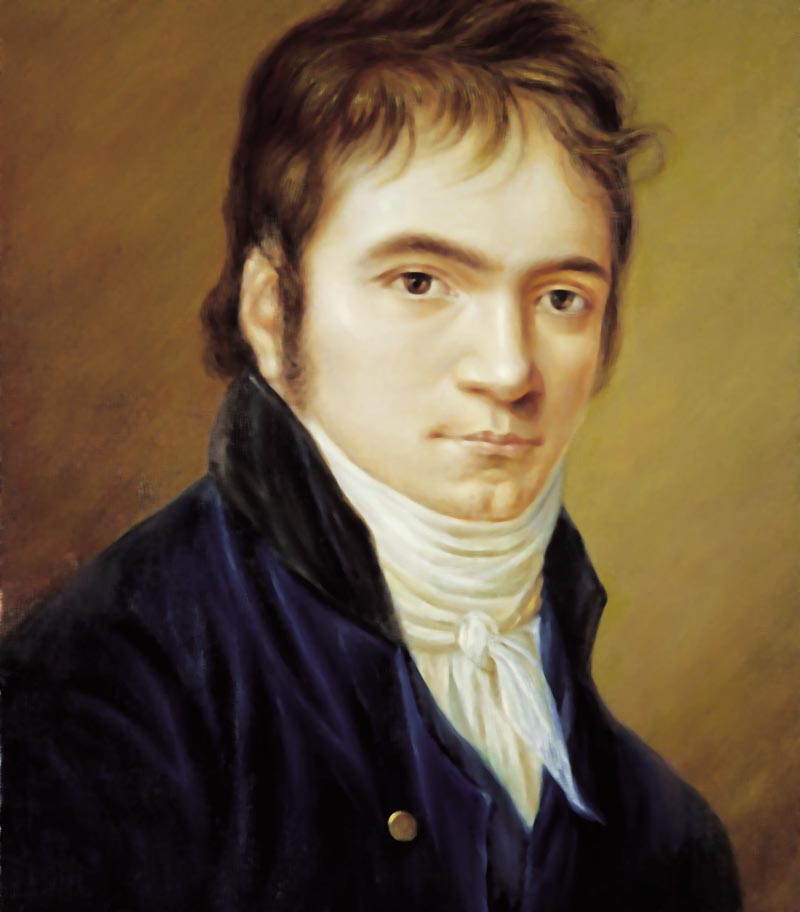
Beethoven around the time of the Fourth Symphony. Portrait by Christian Horneman.

After intermission it’s time for Schumann’s “slender Greek maiden,” a phrase suggesting that Beethoven’s Fourth Symphony is graceful and ingratiating, and avoids the drama of some of his music.

But maybe not. Saless sees far more going on in the symphony than the cheerful surface Schumann describes. “It’s a crazy piece,” Saless says. “It’s lighter and folksier, but at the same time in many ways crazier than even the Third Symphony, in the sense that he’s just pushing the boundaries and experimenting with extremes.”

Saless points to the very beginning of the symphony. It opens with a very somber slow introduction that seems to be building to a dramatic climax when suddenly, a fast and bumptious allegro seems to explode out of nowhere.

In other words, first it’s serious and then it’s not.

“Beethoven tries at first to kind of fool you into thinking this is going to be a serious piece of music,” Saless says. “The first 12, 15 bars is very serious. You think ‘Oh my God, what’s going to happen,’ but then suddenly, brrum! It’s like a horse race!”

Saless compares this beginning, seeming so solemn before bursting into a raucous romp, to Beethoven’s private piano recitals, when he would practically mock his audiences. “He would perform something and purposefully make the music deep,” Saless explains. “Everybody was drawn in, their complete attention was to the music, and then he would suddenly stop and laugh at them!”

The slow movement moves in another direction, from placid beauty to something more troubling. “I think the slow movement has a lot more depth than people have thought,” Saless says.

Bahman Saless.

Bahman Saless. Photo by Keith Bobo.

The movement is dominated by one of Beethoven’s most serene melodies. It seems perfectly calm, but it is accompanied by a constant rhythmic figure that, to Saless, represents the composer’s heartbeat. “Why would you put that against this legato melody?” Saless asks. “He obviously wants to keep you unsettled.”

At one point, the heartbeat figure takes over completely, and is played in unison and forte by the whole orchestra. “It seems like the whole idea of this beautiful melody gets dropped and he’s really concerned about his heart,” Saless says. “What’s that about? It’s nothing musical, it’s not fate knocking on the door, it’s just really amazing.”

So now it doesn’t seem serious, but it is.

After that, the last movement poses virtuoso challenges to the players, but refreshingly few complications to the audience. It moves like the wind from beginning to the end, and is one of the great movements of Beethovenian exuberance. It is, Saless says, “as showoff a piece as anything, if you can pull it off!”

Making a great ending for a concert or a season.

# # # # #

newbanner3“Character”
Boulder Chamber Orchestra
Bahman Saless, conductor, with Hsing-ay Hsu, piano

Rossini: Overture to La Scala di seta
Chopin: Piano Concerto No. 2 in F minor
Beethoven: Symphony No. 4 in B-flat major

7:30 p.m. Saturday, May 9, Broomfield Auditorium, Broomfield
7:30 p.m. Sunday, May 10, Seventh-Day Adventist Church,
345 Mapleton Ave., Boulder

Tickets
Inbal Segev Brings Bach and Gulda to Boulder

Irsraeli-American cellist hopes audiences have fun

By Peter Alexander

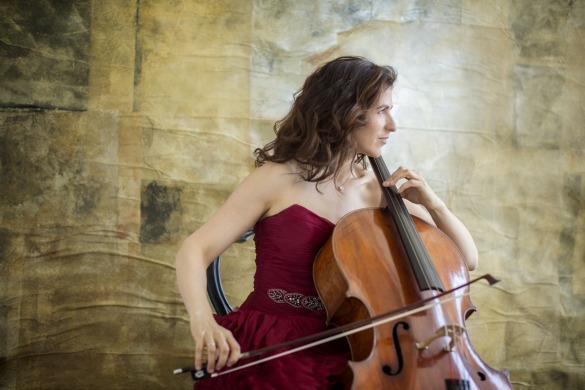
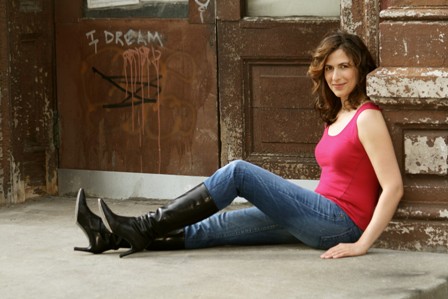
Inbal Segev (Photo by Dario Acosta)

Inbal Segev (Photo by Dario Acosta)

Inbal Segev brings a “tasting menu for the cello” to Boulder this weekend.

The Israeli-American cellist is the soloist with the wind players of the Boulder Chamber Orchestra (BCO) and conductor Bahman Saless for “Allure,” the third concert of BCO’s 2014–15 season (7:30 p.m. Friday in Broomfield, Saturday in Boulder).

In addition to Friedrich Gulda’s Concerto for cello and wind orchestra—Segev’s “tasting menu”—the program features a Serenade for winds by Mozart and Stravinsky’s rarely performed neo-classical gem, the Octet for wind instruments.

Segev will also have some Bach in her luggage: The First, Second and Fourth suites for solo cello, which she will play on a recital Sunday afternoon in Boulder. Billed as a “CD Prerelease Recital,” that performance is the outgrowth of an ongoing recording project that, when completed later this year, will encompass all six Bach solo cello suites.

Pianist/composer Friedrich Gulda

Pianist/composer Friedrich Gulda

Gulda’s Concerto, written in 1980, combines influences from the composer’s training as a classical pianist and his love for American jazz. “The concerto has five movements, they are very varied in style,” Segev says. “There’s jazz, there’s Baroque, there’s one movement I call the ‘Ricola!’ movement because of the horns. And the third movement, which is like the heart of the piece in some ways, is a huge cadenza.”

The cadenza movement is a particular challenge from the composer, who included “two spots where the star cellist must improvise,” he wrote.

“That was a big challenge to me,” Segev says. “Back in the days people used to write their own cadenzas all the time, especially violinists and pianists, but cellists—we’re not used to it! I didn’t write it note by note. I wrote a road map to remind myself what I want to do, so I change a little bit” in each performance.

Inbal Segev. Photo courtesy of ME Reps

Inbal Segev. Photo courtesy of ME Reps

Even more difficult for the soloist is the final movement. When I spoke to Segev earlier this week, she said “I’ve been practicing (that movement) this afternoon, and it’s really fast sixteenth notes, very virtuosic, all over the place. It took me quite a long time to find out the right fingerings for it—you play it slowly and it sounds great, and then it doesn’t work fast, because all the times you leap and change!”

Fortunately Gulda himself solved what Segev thinks would have been an even greater challenge. “There’s just no way you can compete against a brass band going full throttle,” she says. “Luckily the cello is amplified, and he did really well by doing that.” She will in fact be playing the same 17th-century cello she uses for the Bach suites, but with a contact microphone mounted on the cello’s bridge.

For the remainder of the BCO program—actually the first half of the concert—Saless decided to pair two relatively short pieces, a Mozart Serenade and the Stravinsky Octet. “It’s very different to put three pieces for wind instruments (on a concert, rather) than having an entire Mahler symphony, because with a Mahler symphony all the winds at some point take rests,” he says. “To put (a long piece for winds) next to the Octet, you would kill them. There is just not that much wind in a human being!

“So one of the things we have to do is we have to play the Mozart at a little bit of a snappy tempo.”

Bahman Saless. Photo by Keith Bobo

Bahman Saless. Photo by Keith Bobo

Saless originally was not sure about programming the Stravinsky, because it is not particularly well known or popular. Then he suggested it to the players.

“The orchestra was really excited about doing Stravinsky, so I said, ‘OK, let’s just do the Stravinsky,’” he recalls. “I’m really enjoying it through my musicians because I can tell they’re having a blast doing it.”

Although Mozart and Stravinsky sound very different, Saless wants you to know that the Octet—written during Stravinsky’s “neo-classical” period in the early 20th century—is actually very classical in conception and structure. “The first movement is a sonata form, the second movement is variations, and the third movement is a rondo with fugue-like themes,” he says.

“Because the Mozart also has a variation movement, I’m going to draw this parallel between the two pieces. One is Mozart 250 years ago, and the other is the same form, but 20th century. I feel like it’s part of my obligation to explain it to the audience before we perform it, because it’s much more modern sounding than it really is.”

Looking ahead to Sunday, Segev’s recital of Bach suites and the Bach recording project are central to her identity as a cellist. “I’ve been preparing for this basically since I’m six,” she explains. “I started working on the First Suite when I was 6 years old. This my life’s work.

“We call it Bach Everest around the house, and it’s not really a joke. It’s really a certain time in a cellist’s life, it’s the pinnacle of our works and it’s a journey to do it well. (When playing the suites,) I try to be honest to who I am as a musician, and bring the best of me.”

In the meantime, Segev likes the Gulda Concerto as a break from working so intensely on Bach. “I just thought it was a really fun concerto,” she says.

“I think it’s something that audiences everywhere can dig, whether they are relating to the Beethoven and the Brahms or they like lighter fare. I just hope people are going to have fun.”

# # #

Cellist Inbal Segev

Cellist Inbal Segev

“Allure”
Boulder Chamber Orchestra, Bahman Saless, conductor
Inbal Segev, cello

Mozart: Serenade for winds
Stravinsky: Octet for winds
Friedrich Gulda: Concerto for cello and wind orchestra

7:30 p.m. Friday, Nov. 7, Broomfield Auditorium
7:30 p.m. Saturday, Nov. 8, First United Methodist Church, Boulder

Solo Recital
Inbal Segev, cello

Bach: Suite No. 1, 2 and 4 for solo cello
1 p.m. Sunday, Nov. 9
Grace Lutheran Church, Boulder

TICKETS

NOTE: This article has been edited 11/6 to correct punctuation.

BCO and pianist Victoria Aja in a delightfully designed program

By Peter Alexander

Pianist Victoria Aja

Pianist Victoria Aja

Conductor Bahman Saless and the Boulder Chamber Orchestra were joined by Spanish pianist Victoria Aja for a program of French and Spanish music Friday and Saturday, Oct. 3 and 4. The program was wonderfully planned, if somewhat uneven in execution on Saturday.

The first drawback of that performance was the venue, Broomfield Auditorium. Part of a larger complex that includes a public library, the auditorium looks like a barely completed warehouse, with an open ceiling that reveals pipes, light instruments, ducts and conduits. Spare stands and chairs are stacked on the edge of the stage, and a ladder can be seen backstage as the artists enter and exit.

More troubling than the inelegant appearance, however, is the sound. The stage is shallow and flat, and the hard concrete walls bounce the sound directly into the small seating area (fewer than 300 seats on the main floor), rather than blending it or in any way cushioning the sound waves, as more suitable acoustic materials would do.

Because the sound is so present, it was hard to achieve the needed balance and contrasts in the opening work, Manuel de Falla’s popular “Ritual Fire Dance” from El Amor Brujo. This exciting orchestral work was well played, but the winds—almost hidden on the flat stage—were often unbalanced, while the bright sound made it especially difficult to achieve the kind of dynamic contrasts that would give impact to the fiery climaxes.

The second work on the program introduced the soloist in de Falla’s impressionistic Nights in the Gardens of Spain. Normally a work for large orchestra, Saless used a chamber-orchestra version that suited his smaller ensemble. This version lost none of the score’s exotic color, but the reduced strings gave up some of the mysterious atmosphere of the original.

Clearly having a full grasp of de Falla’s style, Aja played with great flair and expression. Saless’s accompaniment was sympathetic, but the soloist sometimes struggled to be heard, even over the reduced orchestra, in the hall’s vivid acoustic environment.

The second, French half of the program fared better. César Franck’s Symphonic Variations treats the piano and orchestra not as contestants in a heroic concerto or as soloist with accompaniment, but as two equal partners that share the material. This disposition eliminates many of the balance problems the hall imposes.

Consequently, Aja could be heard as a thoroughly worthy partner to the orchestra. She certainly has the technique and the interpretive gifts to bring Franck’s somewhat academic work to life. I especially enjoyed the spirited final variations.

Boulder Chamber Orchestra. Photo by Keith Bobo.

Boulder Chamber Orchestra. Photo by Keith Bobo.

In this case, the greatest drawback was the size of the BCO. Saless said that the Symphonic Variations was written for a “Beethoven orchestra,” which might be true of the wind section. But when it was completed in 1885 (not 1955 as the program anachronistically stated), string sections of 50 or more had been commonplace for more than 20 years, whereas BCO only mustered about 30 for Saturday’s concert. (The program lists 34, but there did not appear to be that many on the Broomfield stage.) While the performance on the whole was satisfactory, the string section sound was audibly underweight in some full-bodied passages.

To close the program, Saless chose Bizet’s early Symphony in C major, written when the composer was a 17-year-old student in the Paris Conservatory. Both the size and the personnel of the BCO are ideally suited to this delightful work, which was pure pleasure from beginning to end. The spirited wind solos were notable throughout, and oboist Max Soto deserves special recognition for his lovely solos throughout the tender second movement.

In spite of any shortcomings, Saless’s thoughtful programming and Aja’s pianism afforded an enjoyable evening of music, topped off with Bizet’s refreshing little symphony. In a more hospitable performance space, such as the Methodist Church where the BCO performed on Friday, it may well have been even more satisfying.

# # # # #

NOTE: After intermission, Saless characterized the first half of the concert as “tapas” that preceded a main course of French cuisine. If you would like more than an appetizer of Iberian music—paella or a Spanish omelet, perhaps?—Aja is playing an entire solo piano recital of “Spanish Piano Masterpieces” at 7:30 p.m. Friday, Oct. 10, in Grace Lutheran Church, Boulder. The program, about an hour to be played without intermission, will include music by Albéniz, de Falla, Joaquin Larregla and Padre Jose Antonio Donostia.

“A Night of Spanish Piano Masterpieces”

Victoria Aja, piano
Presented by the Boulder Chamber Orchestra
7:30 p.m. Friday, Oct. 10
Grace Lutheran Church, Boulder

Tickets

Piano virtuosity, with and without the Boulder Chamber Orchestra

Spanish pianist Victoria Aja will be heard in two performances in Boulder

By Peter Alexander

Bahman Saless. Photo by Keith Bobo

Bahman Saless. Photo by Keith Bobo

When a soloist comes all the way across the Atlantic, Bahman Saless likes to give her a real opportunity to be a star.

That is certainly the case for Victoria Aja, a Spanish pianist who has played extensively in Europe but is not well known here. Aja will be the soloist with Saless and the Boulder Chamber Orchestra on their next concert, at 7:30 p.m. Friday, Oct. 3, in the First United Methodist Church in Boulder (program to be repeated at 7:30 p.m. Saturday in the Broomfield Auditorium; tickets). And a week later, she will play a solo recital, “A Night of Spanish Piano Masterpieces,” at 7:30 p.m. Friday, Oct. 10, in Grace Lutheran Church in Boulder (tickets).

“I really wanted to expose her to the Boulder audiences, in her own intimate setting, which is she does a lot of piano recitals,” Saless says. “I decided, she’s come all the way from (Spain) to here, we will basically host her the entire week, and have her do another recital program of just Spanish music.”

Pianist Victoria Aja

Pianist Victoria Aja

For the orchestra program, Aja will play two large pieces, virtual concertos, with the BCO: a chamber orchestra version of Manuel de Falla’s atmospheric piano showpiece Nights in the Gardens of Spain; and French composer Cesar Franck’s more serious work Symphonic Variations for piano and orchestra.

The orchestra will also play two works that complete the Spanish/French pairing: de Falla’s “Ritual Fire Dance” from El Amor Brujo and the early Symphony in C major by Georges Bizet.

The solo recital program of Spanish music, to be played without intermission, will include the complete Suite from El Amor Brujo, arranged for piano, as well as other works by de Falla, Isaac Albeniz, Joaquin Larregla, and two of the Fifteen Basque Preludes by Padre Jose Antonio Donostia.

Aja comes from the Basque region of Spain, near the border with France. A Basque musicologist and composer, Donostia based his Basque Preludes on the traditional music of the region.

Saless learned of Aja when she wrote to him a few years ago, including a resume and several DVD recordings of her solo recitals. “I had been wanting to do a Spanish program for quite a while, and I thought she would probably be a good fit,” Saless says.

“She is really from the more gypsy end of Spanish pianists—very sort of hot blooded, you know, rubatos, a crazy pianist. She specializes in de Falla, so I thought, let’s bring her in, we’ll do something cool and crazy.”

Boulder Chamber Orchestra. Photo by Keith Bobo.

Boulder Chamber Orchestra. Photo by Keith Bobo.

Friday and Saturday’s orchestra program, Oct. 3 and 4, is titled “Glamour,” but not for the exotic European piano virtuoso. “No,” Saless says, “really the glamour comes from the French-Spanish (culture) of that era, when the music was written. It’s very chic.

“It’s an amazing, exquisite program. It’s really very luscious. Sandwiched by the “Fire Dance” at the beginning and the Bizet Symphony at the end, it’s a really fun and jolly concert. In between, the de Falla pieces are so exotic and I think people are not used to hearing so much color. Color is everywhere with de Falla, and with that sense it’s a really unusual concert for us because you don’t do much color with a chamber orchestra.”

But Saless believes that the Oct. 10 solo recital will be Aja’s “signature event.”

“She is much more of a recital pianist than an orchestra pianist,” he explains. “I think that concert is really going to be fun, filled with music that you just will not hear here in the US. It will showcase her very stylistic, gypsy sort of piano.

“She’s extremely musical— she cannot not be musical!”

# # # # #

“Glamour”

Boulder Chamber Orchestra
Bahman Saless, conductor, with Victoria Aja, piano
“Ritual Fire Dance” from El Amor Brujo by Manuel de Falla
Nights in the Gardens of Spain by Manuel de Falla
Symphonic Variations for piano and orchestra by Cesar Franck
Symphony in C major by Georges Bizet

7:30 p.m. Friday, Oct. 3, First United Methodist Church, Boulder
7:30 p.m. Saturday, Oct. 4, Broomfield Auditorium

Tickets

“A Night of Spanish Piano Masterpieces”

Victoria Aja, piano
Presented by the Boulder Chamber Orchestra
7:30 p.m. Friday, Oct. 10
Grace Lutheran Church, Boulder

Tickets