James Bailey returns to the Dairy Saturday to open jazz series

“From Peru to Mexico” features cello-guitar duo with Alfredo Muro

By Peter Alexander

Bailey

James Bailey, former music curator at the Dairy Arts Center

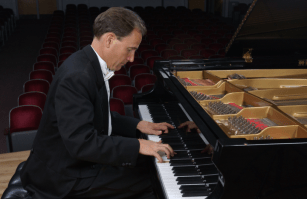
James Bailey, the former music curator at the Dairy Arts Center, moved to Mexico last year, “to open myself up to whatever happens next,” he says.

What happened next included quite a bit of performing, and now he is back in Boulder to play for the opening of the “Jazz at the Dairy” series at 7:30 p.m. Saturday, Sept. 16, in the Dairy’s Gordon Gamm Theater (tickets available here). Bailey will be the cello half of a guitar-cello duo with Peruvian guitarist Alfredo Muro. Together they will perform “From Peru to Mexico,” a program of Latin jazz and other music for their instruments.

With an extensive international career as a solo guitarist, Muro was originally booked at the Diary as part of a current North American tour. When Bailey was able to be in Boulder this weekend, they decided to add some of their duo repertoire to the program.

“Part of (the concert) will be what it was originally going to be, which is him performing alone,” Bailey says. “And then the other part will be the duo portion. There are elements of jazz to what we do, but I think the (main) jazz component will be his part of the program.”

alfredo-muro-5-print

Guitarist Alfredo Muro

Bailey and Muro have performed together for three years. They first met when Bailey booked Muro for a concert at Dazzle in Denver. They became friends and soon formed a duo. Since then they have performed whenever they can get together, most recently this summer at the San Miguel Chamber Music Festival in San Miguel de Allende, Mexico, where Bailey now lives.

“It’s a unique combination, the cello and guitar, and it really works well,” Bailey says. “Balance-wise it works out well. The thing that we’ve been surprised by is how much people like that combination, especially with Latin music. It’s just something that’s not heard very often.”

Bailey says they have not decided yet what they will play for the Dairy program, which will be announced from the stage. “I’m sure we will decide that afternoon how we’re going to do it,” he says. Very likely they will intersperse duo performances with Muro’s solo pieces.

“A good part of the concert will be music from Brazil,” Bailey says. The duo “will be playing some traditional Brazilian jazz pieces. We’ll also play two pieces from Peru, and a suite of pieces that are either written by Bach, or influenced by Bach, that will venture further off the jazz chart.”

Since moving to Mexico, “I’m being asked to perform a lot of different things,” he says. In addition to the duo performances at the chamber music festival, “I did a jazz ballad with a jazz pianist, I’m doing a Kol Nidre Jewish service, I’m putting together a repertoire of Mexican music with a jazz guitarist who lives in San Miguel, a woman who has a wonderful Bösendorfer grand in her living room wants to work on some Beethoven sonatas, and there are a couple of string players who want to put together a string quartet.”

A native of Peru, Muro performs a wide variety of styles, many based in South American folk idioms, as well as jazz and classical guitar. He has a particular interest in many varieties of Brazilian music, including choros, frevo and bossa nova, but he also has an extensive repertoire of classical guitar and has performed with the Boulder Chamber Orchestra.

# # # # #

Jazz at the Dairy: From Peru to Mexico
Alfredo Muro, guitar, and James Baily, cello
7:30 p.m. Saturday, Sept. 16
Gordon Gamm Theater

Tickets


From ‘Bachtoberfest’ to Carnival in Brazil, Boulder’s musicians plan celebrations

Boulder Bach Festival, Boulder Chorale announce 2017–18 seasons

By Peter Alexander

The Boulder Bach Festival and Boulder Chorale have announced their 2017–18 seasons, with globe-trotting celebrations from “Bachtoberfest” to Brazil to Venice.

imageOf the two, the Boulder Bach Festival (BBF) gets underway first with the “Bachtoberfest” at 7:30 p.m. Thursday , Oct. 12 in Boulder’s Seventh Day Adventist Church. The program will be repeated at 7:30 p.m. Saturday, Oct. 14, in Longmont’s Stewart Auditorium.

Stoppelenburg

Soprano Josefien Stoppelenburg

The concert—which actually has nothing to do with beer—will feature four guest soloists: violinist Elizabeth Blumenstock from the faculty of the Juilliard School; Guy Fishman, principal cellist of the Handel-Haydn Society of Boston; Chris Holman, historical keyboardist of the Bach Society in Houston; and Dutch soprano Josefien Stoppelenburg, who has appeared with the BBF several times in the past.

Violinist Zachary Carrettin, artistic director of the BBF will also play on the concert of 18th-century chamber music. The program includes trio sonatas and arias by Handel, Vivaldi, J.S. Bach and Telemann.

A particularly interesting item on the program that continues the BBF’s exploration of historical rarities is listed as a “Keyboard Concerto in G major” by Johann Christian Bach, arranged by Mozart. Known as “The London Bach” for having had a very successful musical career in that city, Johann Christian was the youngest of J.S. Bach’s sons. Mozart visited London while on tour with his family during the years 1763–66, when he was seven to 10 years old. He became friends with Bach, around 30 at the time.

Johann_Christian_Bach_by_Thomas_Gainsborough

Johann Christian Bach, portrait by Thomas Gainsborough

In order to learn how to write concertos, the young Mozart arranged three of Bach’s solo sonatas as concertos by adding passages for orchestra. These arrangements were originally included in Mozart’s works under the listing K107 nos. 1–3; the Concerto in G major is the second of the three. Rarely performed, because they are not strictly “by” either J.C. Bach or Mozart, they are nonetheless fascinating historical documents, revealing the young composer’s learning process.

There are two new scheduling features for BBF’s 2017–18 season: Boulder performances will all be on Thursdays, to avoid conflicts with other performing organizations; and the performances will be split between Boulder’s Seventh-Day Adventist Church and Longmont’s Stewart Auditorium. Some concerts will be presented in both venues, and others only in one or the other.

Erard@Stewart

1895 Érard piano

For example, the second event on the season, a concert titled “A World Transformed,” will only be performed at 7:30 p.m. Saturday, Dec. 9, in the Stewart Auditorium in Longmont. The performance will feature Mina Gajić performing on her 1895 Érard grand piano together with Richie Hawley performing on a 1919 Parisian clarinet and Carrettin playing a  gut-string violin. They will play music of the early 20th century by Bartók, Ives, Berg and Antheil.

Likewise, the major Bach performance of the year will only be presented once, at 7:30 p.m. Thursday, March 15, in Boulder’s Seventh Day Adventist Church. Titled “The Eternal Spirit,” the program comprises four of Bach’s great sacred cantatas. Zachary Carrettin will lead the BBF Chorus and Orchestra with vocal soloists Josefien Stoppelenburg, soprano; Abigail Nims, mezzo-soprano; Derek Chester, tenor; and Ashraf Sewailam, bass-baritone.

SONY DSC

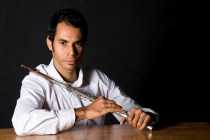
Flutist Ismael Reyes

The final concert of the season will honor the musical heritage of the Basilica of San Marco in Venice, with music by  prominent Venetian Baroque composers: Antonio Lotti, Giovanni Gabrieli, Tarquino Merulo and Antonio Vivaldi. The concert will end the season with one more piece by J.S. Bach, the Orchestral Suite in B minor with Ysmael Reyes playing the flute solos.

You can see the full Boulder Bach Festival season here.

# # # # #

Dec-2014-BC-adults

The Boulder Chorale (BC) opens its 52nd season with “Carnival Brazil,” at 2 and 7:30 p.m. Saturday, Oct. 28, in Boulder’s First United Methodist Church. Titled “All Things Bright and Beautiful,” this will be BC’s ninth season combined with the Boulder Children’s Chorale and the third with artistic director Vicki Burrichter.

Graffiti-Wall-1.2

Ginga

Carnival Brazil (Oct. 28) will see the BC sharing the stage with the Brazilian-music band Ginga and the Bateria Alegria, the percussion ensemble of the Boulder Samba School. That is only the beginning of the collaborative performances in a season that the BC is describing as “an adventurous exploration of different genres.”

The BC will be joined by JAMkeyJAM, a duo of Nepalese musicians who aim to combine ancient traditional music with contemporary sounds, March 10 and 11. The joint program, “Between Heaven and Earth,” will include a performance of Eliza’s Gilkyson’s Requiem, written in response to the 2004 Indian Ocean tsunami.

© Glenn Ross | www.glennrossphoto.com

Vicki Burrichter

Later the same month, the chorale will appear with the Boulder Chamber Orchestra for a performance of Mozart’s Requiem (March 30 in Broomfield and 31 in Boulder), and they will close out the season May 19 and 20 with Duke Ellington’s Sacred Concerts, performed with a jazz combo.


The full Boulder Chorale season, including ticket information and performances by the Boulder Children’s Chorale not mentioned in this article, can be found here.

NOTE: Typos corrected 9.8.17


Mozart, movies and more at the Dairy

2017–18 concert season gets underway at the Dairy Arts Center

By Peter Alexander

Some of Boulder’s best musicians want to see you at the Dairy.

Korevaar

Pianist David Korenaar

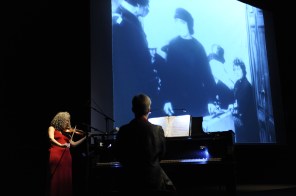
That’s the punning implication of the new series CU@The Dairy, presented jointly by the Dairy Arts Center and University of Colorado College of Music. That concert series opens Thursday, Sept. 7 with “Miraculous Mozart,” a program of Mozart piano concertos with David Korevaar, the Helen and Peter Weil Professor of Piano, doubling as soloist and conductor, and continues eight days later, Friday, Sept. 15, with a screening of the 1918 film The Yellow Ticket with live music performed by klezmer violinist Alicia Svigals and pianist Marilyn Lerner.

“Miraculous Mozart” will feature two of Mozart’s piano concertos, K449 in E-flat major and K450 in B-flat major, with Korevaar leading and playing with a chamber orchestra.

Yellow_Ticket_in_Vancouver_2

Alicia Svigals and Marilyn Lerner performing for a screening of ‘The Yellow Ticket’

A silent film from 1918, The Yellow Ticket is of great historical interest for several reasons: It was filmed in the Warsaw Ghetto; it features a teenaged Pola Negri, who went on to great fame as a femme fatale in Hollywood; and it was reconstructed from various partial sources after the Nazis tried to destroy all traces of the film in the 1940s.

Read more in Boulder Weekly.


September music events at the Dairy:

CU@The Dairy: Miraculous Mozart
David Korevaar, piano, and chamber orchestra.
7:30 p.m. Sept. 7

The Yellow Ticket
Film screening with live music
Alicia Svigals, violin, and Marilyn Lerner, piano.
8 p.m. Sept. 15 [note corrected time]

Jazz at the Dairy: From Peru to Mexico.
Guitarist Alfredo Muro with former Dairy music curator James Bailey, cello.
7:30 p.m. Sept. 16

Soundscape: Women in Classical Music.
2 p.m. Sept. 20

One Night Only: Shake, Schimmel, and Shout!
7:30 p.m. Sept. 27

Other fall dates and ticket information here.

NOTE: The time of the screening of The Yellow Ticket has been corrected to 8 p.m. An earlier version of the story listed the time as 7:30 p.m.

CU Faculty Tuesdays, free and live-streamed, offer a fascinating potpourri of repertoire

With several performances on the calendar, pianist David Korevaar’s plate is full

By Peter Alexander

The summer has ended and fall has arrived.

It may not seem like it when it reaches 90°, but you can be certain. Not only is it Labor Day Weekend, the official end of summer, but the fall music has season has, in fact, already begun. The first of the CU College of Music Faculty Tuesday concerts was already last week, when pianist David Korevaar and violinist Harumi Rhodes played a program of sonatas for violin and piano by Beethoven, Janáček and Schumann.

Grusin_Hall_CC02-2959x1896

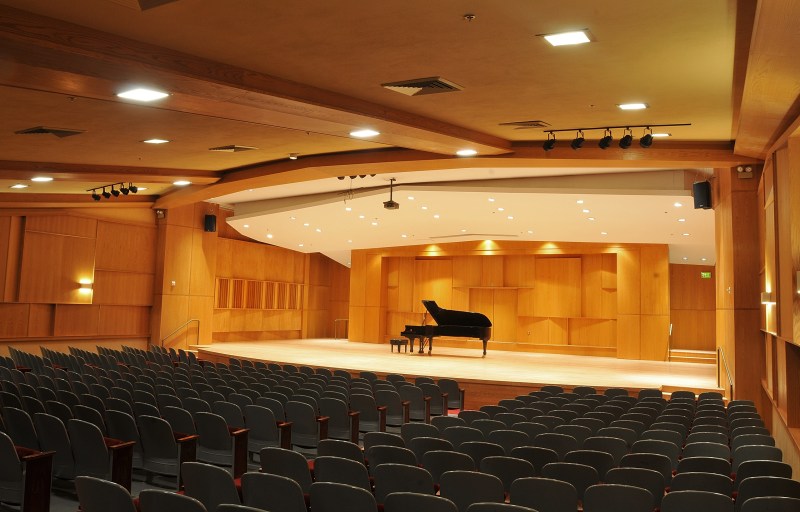
Grusin Hall, home of “Faculty Tuesdays”

That series continues tomorrow, Tuesday, Sept. 5, with a Faculty Tuesday debut by baritone Andrew Garland performing a program titled “The Quest” with pianist Jeremy Reger. Future Faculty Tuesday events, listed here, will feature guests from the Cleveland Orchestra Sept. 12, Korevaar and violist Geraldine Walther performing “Chopin on the Viola” Sept. 26, and a fascinating potpourri of other topics and programs through the fall.

The Faculty Tuesday concerts are all at 7:30 in Grusin Music Hall, and all are free. Even better, you can watch from home and avoid the parking free-for-all around campus: the College of Music will provide live streaming of these events, available through the “CU Presents” button on the Faculty Tuesdays Web page listing of each event.

Korevaar

Pianist David Korenaar, Helen and Peter Weir Professor of Piano at CU, Boulder

None of the music faculty will be busier this fall than Korevaar, who shows up on four more Faculty Tuesdays in addition to his series-opening recital with Rhodes last week: “Chopin on the Viola” with Walther Sept. 26; “Finnish Celebration” with eight other faculty members Oct. 24; “Schubert and More” with violinist Charles Wetherbee Oct. 31; and “Signs Games+Messages” with Rhodes, Walther and cellist David Requiro Nov. 28.

Not letting any grass grow under his feet or on his keyboard, Korevaar also inaugurates the new CU@The Dairy series at the Dairy Arts Center on Thursday, Sept. 7, playing and conducting two of Mozart’s piano concertos. And as if that weren’t enough, he will be performing Beethoven’s Fantasy for Piano, Chorus and Orchestra, op. 80, with the Boulder Philharmonic at 7:30 p.m. Saturday, Oct. 14 in Macky Auditorium (tickets here).

“Yeah, there’s a lot on the plate,” Korevaar admits.

Thursday’s concert at the Diary, titled “Miraculous Mozart,” will feature two of Mozart’s piano concertos, K449 in E-flat major and K450 in B-flat major. They were both written in the same year, 1784, and of the two Korevaar identifies the second as the more difficult. “Mozart wrote a letter to his father,” he says, “and he said [K450] is the hardest thing he’s ever written. I might not disagree—it’s a tough piece, so obviously virtuoso.”

You will be able to read more about Korevaar, the Mozart concertos, and CU@The Dairy on this Web page and in the next issue of Boulder Weekly on Thursday, Sept. 7.

CU music faculty will appear on a new concert series at the Dairy Center

“CU at the Dairy” opens Sept. 7 with “Miraculous Mozart”

By Peter Alexander

Two of Boulder’s eminent arts organizations have joined together to inaugurate a promising new collaborative music series this fall.

The University of Colorado College of Music and the Dairy Arts Center have announced a series of concerts jointly sponsored by both organizations, to be held during the year in the Dairy’s Grace and Gordon Gamm Theater. “CU at the Dairy,” featuring music faculty members in collaboration with one another and other local artists, will supplement the free Faculty Tuesdays series of recitals in Grusin Hall.

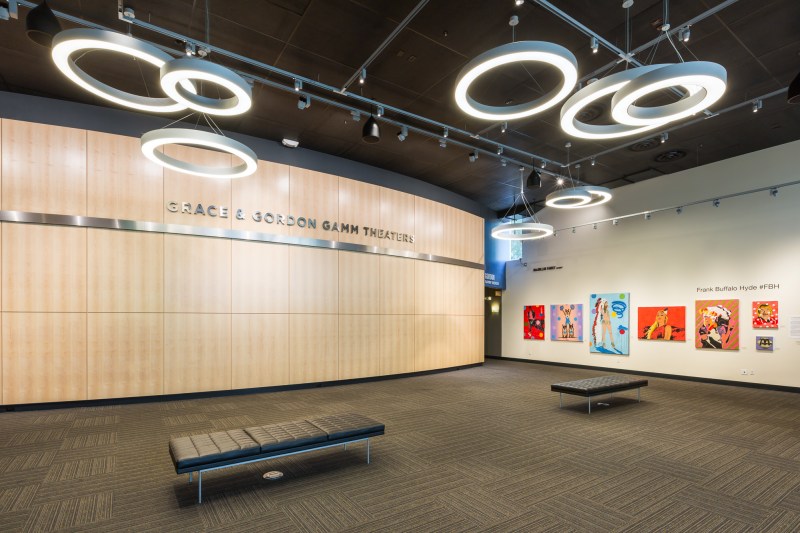
Gamm.Lobby.5-Dairy_Center_for_the_Arts

The lobby of the Grace and Gordon Gamm Theater at the Dairy Arts Center

Based on early listings, the Grusin Hall Faculty Tuesday events will be more traditional recitals, while the CU at the Dairy will be more exploratory, collaborative, and in some cases will be multi-media events. In a news release from Aug. 16, the Dairy’s music curator, Sharon Park, says that the CU faculty “have such great ideas and projects they want to present. The Gordon [Gamm Theater] gives them an intimate venue to pair visual art, silent film, dance or any other art form with music.”

Korevaar

David Korenaar

The series gets underway Sept. 7 with “Miraculous Mozart,” featuring Helen and Peter Weil Professor of Piano David Korevaar playing and conducting Mozart’s piano concertos K449 in E-flat major and K450 in B-flat major. The small orchestra for these performances will include violinist Charles Wetherbee from the music faculty along with other faculty and alumni of the College of Music.

Yellow_Ticket_in_Vancouver_2

Alicia Svigals performing “The Yellow Ticket” in Vancouver

The following week a multi-media event will bring together representatives of the College of Music, CU’s Program in Jewish Studies and International Film Series. Yonatan Malin, faculty in the music theory area of the College of Music, will host the screening of “The Yellow Ticket” a silent film from 1918. The film, about a young Jewish woman studying medicine in Tsarist Russia, will be accompanied by Klezmer violinist Alicia Svigals and jazz pianist Marilyn Lerner performing Svigals’s original score live. Malin will also moderate a panel discussion with the performers and CU faculty members about film, music and cultural awareness.

“CU at the Dairy” will continue in the spring with a performance by Thompson Jazz Studies director John Gunther and friends. More details about these performances will appear on this Web page and in the pages of Boulder Weekly.

Tickets for all “CU at the Dairy” performances are available through the Dairy Center Box Office.


Santa Fe Opera premieres remarkable, powerful opera about Steve Jobs

‘Total work of art’ from composer Mason Bates and librettist Mark Campbell

By Peter Alexander

Steve.full stage

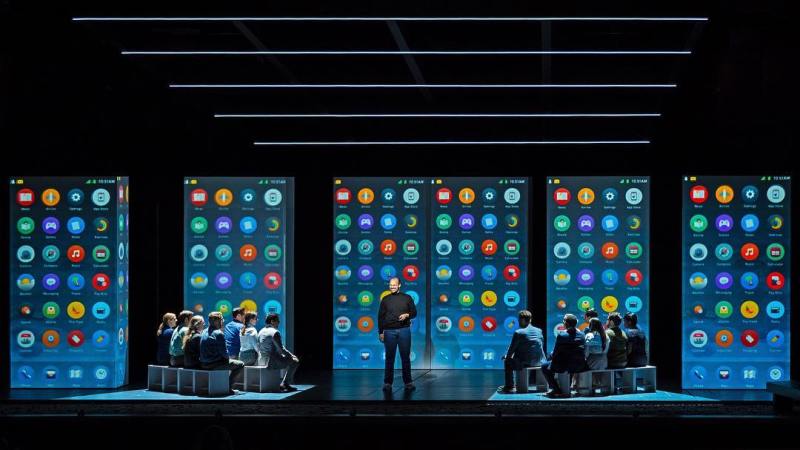
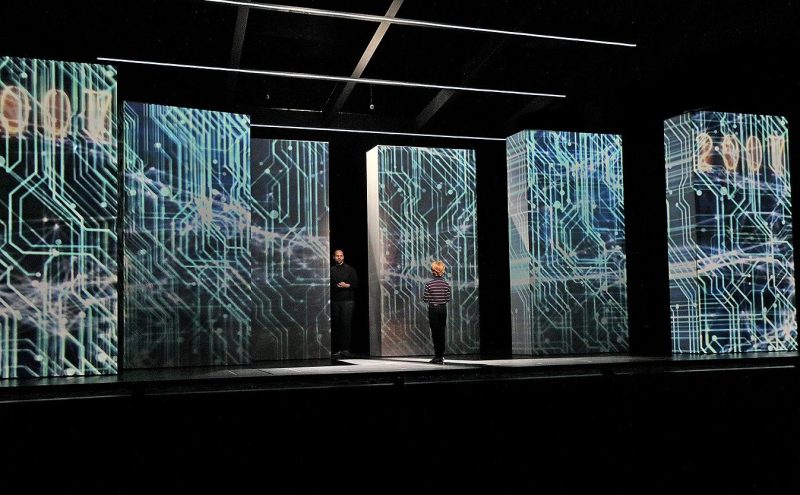
Santa Fe Opera; The (R)evolution of Steve Jobs. Photo by Ken Howard.

The (R)evolution of Steve Jobs, premiered July 22 by the Santa Fe Opera and performed last Friday (Aug. 4), is a remarkable first opera by the composer and electronic DJ Mason Bates.

Equally remarkable are the high-tech and musical resources that the Santa Fe Opera assembled for the production, which is eloquent testimony to the company’s unmatched commitment to new opera. I have no doubt that this work will be high on the list of important premieres in the SFO’s history, both for the quality of the work and for the excellence of its execution.

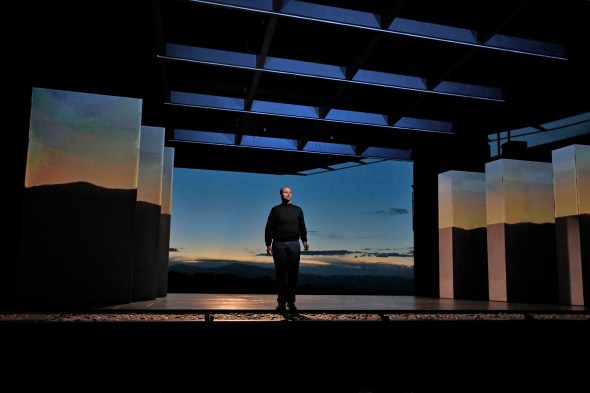
The opera itself and Santa Fe’s production in particular represent an impressive monument to the marriage of arts and technology. Performances feature an extensive sound design that blends lightly amplified voices, guitar and other naturally produced sound with electronics into an overall sound scheme, and a scenic design using projections on a series of movable screens that seamlessly transport the locale from the Jobs family’s famous garage to the Apple boardroom to Yosemite National Park.

The result is a powerful work that immerses the viewer in an artistic and emotionally charged sensory experience that is in some ways more than a performance. It is a 21st-century Gesamtkunstwerk (“total work of art,” Wagner’s term for his own works) and a definitive statement of what can be accomplished in theaters today. And it suggests what might be achieved in the future.

SteveJobs.Apple-Tech-LiberalArts

The real Steve Jobs

One of the most performed composers in the United States today, Bates lives and works at the intersection of art and technology. This made him an ideal choice to write an opera about Steve Jobs, who once said “I think our major contribution was in bringing a liberal arts point of view to the use of computers.” It was Bates who suggested Jobs as the subject of his commission from the Santa Fe Opera, which was then completed with librettist Mark Campbell.

Woz-Jobs

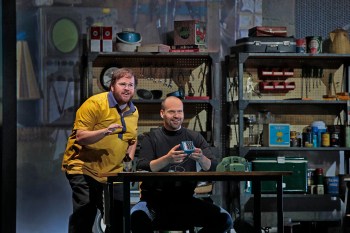
Garrett Sorenson as Woz and Edward Parks as Steve Jobs in the famous garage. Photo by Ken Howard for the Santa Fe Opera.

One problem that Campbell and Bates confronted was the absence of obvious opera-worthy drama in Jobs’s life. Product design and the distribution of corporate stocks are not usually operatic. In a way, The (R)evolution of Steve Jobs unfolds as a series of powerful character portrayals, of Jobs himself, Apple co-founder Steve Wozniak, Jobs’ early girlfriend Chrisann Brennan, the Zen monk Kōbun Chino Otogawa, and Jobs’ wife Laurene Powell Jobs.

But Campbell and Bates also found ways to build an effective dramatic arc of rising tension, punctuated with humor and quieter lyrical moments. A single act of 90 minutes is arrayed in 18 scenes plus a prologue and epilogue. Many iconic scenes from Jobs’ life are included: the development of the first Apple, his attraction to Zen Buddhism, his initial denial of his paternity of his daughter Lisa, and others.

Recognizing that Jobs was a showman and his product announcements were very theatrical, Campbell placed the first scene at the greatest of these, the 2007 unveiling of Apple’s transformative “one device,” the iPhone. This pulls the audience in from the first, launching the opera directly into the story of a man we remember and a product that has profoundly touched our lives.

The remaining events are carefully arranged not in chronological order, but in a taut dramatic structure with a powerful emotional climax near the end. Borrowing the Japanese concept of ensō, the hand-drawn circle that represents enlightenment and the minimalist aesthetic that Jobs embraced, the libretto often circles back to earlier scenes, reinforcing the most important events while creating a kind of musical structure.

Laurene.Jobs

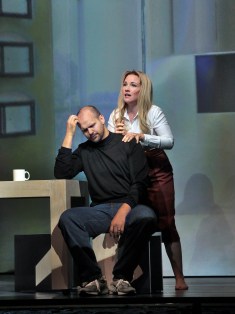
Sasha Cooke as Laurene and Edward Parks as Steve Jobs at the opera’s emotional climax. Photo by Ken Howard.

The most dramatic moments—Jobs’s denial of paternity of his daughter Lisa, his brutal abuse of employees and his departure from Apple in 1985—are placed together about two-thirds of the way through. This forms the opera’s climactic scene, and in a perfectly constructed pattern of tension and release, it is immediately followed by a return to 2007 and the opera’s emotional core, when Laurene forces Jobs to face his own mortality.

The opera ends with gestures of symmetry. In the final scene at Jobs’ memorial service, Laurene recalls the first scene and the iPhone launch when she sings “The very second this is over, for better or worse, everyone will reach in their pockets or purses and . . . look at their ‘one device’.” Completing the symmetry, the epilogue briefly recapitulates the prologue, when Paul Jobs gives his young son a work bench as ”a fine place to start.”

Bates expertly combines the acoustic orchestra and electronics, as in his previous works. He creates a different sound world for the different characters: guitar and electronica for Steve Jobs, flute and Tibetan bowls for Kōbun, strings for Laurene Jobs. These are arrayed skillfully, and the build-up of sound in the climactic scenes integrates well with the visual electronics and the rising dramatic arc.

The vocal part are never less than serviceable, and they get better as the opera goes along. The distribution of the voice parts and the strategic placement of songs for the individual singers adds to the characterizations. The songs, or arias if one prefers, emerge comfortably from the musical fabric, and they are all expressive. Jobs’ “Something we play,” Kōbun’s “Take one step,” and Laurene’s passionate “”When will you let in the truth?” stand out in my memory, but there were other equally enjoyable numbers.

Jobs has to carry the opera: he is on stage almost every minute, and the opera largely takes place within his mind. In Edward Parks Santa Fe Opera has a singer who has a solid baritone voice and looks enough like the later Steve Jobs to satisfy audiences who remember him—tall, bearded, balding, and of course wearing a black turtleneck.

Parks’s movements, gestures and poses accurately captured what we remember from Jobs’ photos and public appearances. He was strong enough to dominate scenes vocally and physically when required, but he was able to turn softer at the end. His successful performance was one ingredient the opera could not survive without.

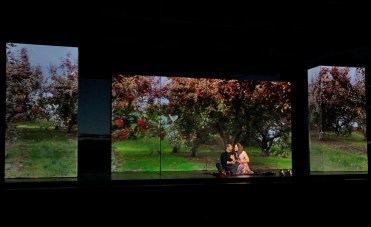
Steve.orchard

Jobs (Parks) and Chrisann (Jessica E. Jones) in the apple orchard. Photo by Ken Howard.

As the women in Steve Jobs’s life, Sasha Cooke as Laurene Powell Jobs and Jessica E. Jones as Chrisann Brennan sang well and were effective character actors. In her several scenes, Cooke found just the right level of dignity, loving compassion, and flirtatiousness when she first meets Steve. Jones was pert and funny when she and Steve took LSD in an apple orchard, and she was even better when she faced Steve Jobs’s final rejection, going from wounded and needy to crushed and defiant

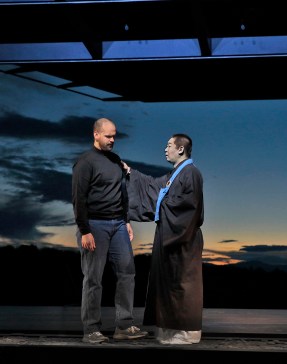
Steve.Kobun.Jobs.jpg

Jobs (Parks) and Kobun (Wei Wu). Photo by Ken Howard.

Wei Wu, a 2013 University of Colorado graduate whose blossoming career has taken him to major opera companies around the world, sang with a deep resonant bass as Kōbun. In a role filled with both wisdom and wry humor, he captured the changing nuances perfectly. Garrett Sorenson brought a soaring, resonant tenor and some passion at the climactic moments to the relatively small but essential role of Wozniak. Kelly Markgraf as Paul Jobs and Mariya Kaganskaya as a calligraphy teacher made solid contributions.

Michael Christie, well known in Boulder as the music director of the Colorado Music Festival for 13 years, held the ensemble expertly together. There is a lot to manage, and he seemed in control every minute, managing the flow of the complex score and getting the big moments right where they should be. The chorus under the direction of Susanne Sheston sang Bates’s complex music with precision.

The previously praised sound design by Rick Jacobsohn and Brian Loach was expertly done and always well balanced. Opera singers generally hate amplification of voices, but here it is part of an overall electronic concept, and it was subtle enough that I often could not hear that the singers were amplified.

Victoria “Vita” Tzykun’s scenic design and the projections from the London and New York-based international firm 59 Productions created an appropriately high-tech feel along with the various sites of the story. It is probably the highest praise to say that the costumes of Paul Carey and direction of Kevin Newbury fit the familiar times so well as to be almost unnoticeable: everything looked exactly right.

Steve.sunset

Edward Parks as Steve Jobs. Photo by Ken Howard for the Santa Fe Opera.

There are still four performances of The (R)evolution of Steve Jobs to come in Santa Fe, including one Aug. 22 that was added to the schedule due to demand and that has the most seats available; click here for ticket information. The last Santa Fe performance is Aug. 25. The opera will later be presented by co-commissioners the Seattle Opera, the San Francisco Opera, and the Indiana University Jacobs School of Music.


Three musical triumphs at the Santa Fe Opera

Productions of Lucia, Alcina and Golden Cockerel offer musical treasures

By Peter Alexander

The Santa Fe Opera 2017 season, which continues through Aug. 26, offers three productions of remarkable musical accomplishment.

The stagings, however, are less consistently successful, ranging from one that is brilliant in conception and execution to another that is bafflingly undramatic. The operas are Donizetti’s Lucia di Lammermoor, Handel’s Alcina, and Rimsky-Korsakov’s infrequently performed masterpiece, The Golden Cockerel, all of which I saw the week of July 31.

The world premiere production of The (R)evolution of Steve Jobs by Mason Bates, performed Aug. 4, will be reviewed separately.
lucia-4

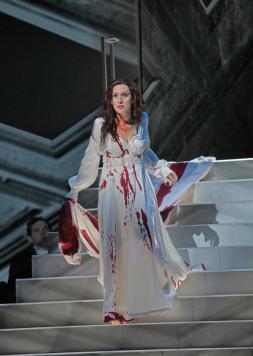
Soprano Brenda Rae as Lucia. Photo by Ken Howard for the Santa Fe Opera.

Brenda Rae, singing the title role of Lucia di Lammermoor Aug. 31, gave a virtual master class in bel canto singing. She sang with uncommon control and purity of sound, achieving an unimpeachable evenness of line across all registers and levels of volume. Every note was part of a phrase. The coloratura was thrilling, even at pianissimo.

Agility, lyricism, range, expression—the whole package was present. Her portrayal of Lucia’s descent into madness was particularly effective, making the famous mad scene not a stand-alone show-piece, but as it should be the culmination of Lucia’s dramatic arc.
lucia-3.jpg

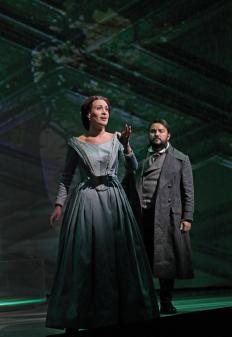
Brenda Rae and Mario Chang. Photo by Ken Howard.

Rae was well supported by the rest of a remarkably strong cast. Mario Chang was vocally superb as Edgardo, matching Lucia with a strong, resonant tenor. His arias were deeply expressive and he paired well with Lucia in their duets.

As Lucia’s brother, Enrico Ashton, Zachary Nelson had a strong, weighty and when, necessary, malevolent baritone. The intensity of his increasing demands for Lucia to sacrifice herself for his honor ratcheted the dramatic tension effectively. With voice and presence, he was as villainous as the story requires.

As the chaplain Raimondo, Christian Van Horn’s powerful bass commanded the stage when he announced the discovery of the bridegroom’s lifeless body and Lucia’s madness. His character is ambivalent, first defending Lucia, then advising her to accept her destiny, and he was equally resolute in these changing declarations.

Stephen Martin was effective as the scheming Normanno, as was Carlos Santelli in the small and thankless role of Lucia’s doomed bridegroom. Sarah Coit was everything that is needed for the standard role of the soprano’s confidante.

Corrado Rovaris and the outstanding Santa Fe Opera orchestra provided strong support for the cast. One member of the orchestra deserves extra mention: Friedrich Heinrich Kern played the glass harmonica, a welcome and spooky return to the original orchestration of the mad scene, instead of the more usual flute. Kern, who works and teaches composition in New York, was hired for the summer specifically to play the glass harmonica part in Lucia—an example of the SFO’s uncompromising commitment.

I have less to say about the production, which was minimal to the point of emptiness. Designer Riccardo Hernandez created a high-walled reflective box that is supposed to represent the increasingly cramped realm in which Lucia is caught as her fate closes in on her. The barest minimum of furniture is employed, while lighting projections by Peter Nigrini represented changing locales, from forest to hall.
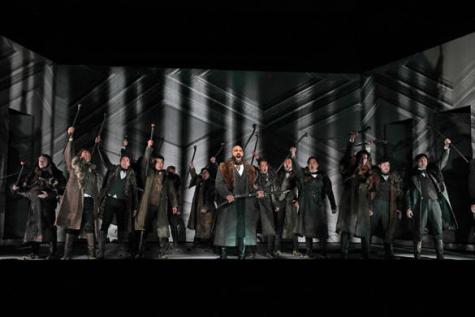
lucia1

Opera in a box: Scene 1 of Santa Fe’s Lucia. Photo by Ken Howard.

This might have impact if everything else was meaningful, but alas it was not. Stage director Ron Daniels often seemed to leave the singers to fend for themselves on an empty stage, with varying degrees of effectiveness. Due to space limitations in the box, the chorus often could do little more than stand in a row and sing.
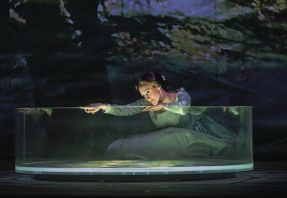
lucia.image

Lucia at the “fountain.” Photo by Ken Howard.

Among other infelicities, when a fountain is called for in the second act, what appeared to be a large plastic Petrie dish with a few inches of water rose noisily from below stage. The stairs that Lucia must descend for her mad scene appeared and disappeared for no evident reason. In the final scene, the chorus that reveals Lucia’s death to Edgardo was arrayed in a single curving row far above the stage, looking like judges assembled to condemn the solitary miscreant below. Doors opened and closed noisily, to the detriment of music and drama. Contradicting the force of the musical performance, none of this added up to drama.

But bel canto opera is first of all about the music, and in that regard this was a Lucia to remember.

# # # # #

The production of Handel’s Alcina (which I saw Aug. 2) is highly entertaining, sometimes distracting, clever, campy, over the top and musically superb. Director David Alden, known for his politically charged, updated interpretations, has placed Alcina in the 1950s.

Clearly the era was a great source of inspiration. In Handel’s original, Ruggiero is the latest sexual slave held captive on a magical island by the sorceress Alcina, whose previous lovers have been changed to wild beasts and stones. In Adlen’s Alcina, Ruggiero has snuck into an abandoned movie theater in order to imagine Alcina as an ideal woman and seductress.

Alcina-2

Elza van den Heever, Jacquelyn Stucker and Anna Christy in Santa Fe’s campy, entertaining Alcina. Photo by Ken Howard.

Without that information, found in the program book, I’m not sure what the audience would make of the production—people in movie-usher uniforms who change into gorilla suits, a brownie flash camera, vaudeville acrobats with animal masks who tumble on and off stage, and at the end, a smaller-than-life model of a perfect little suburban neighborhood symbolizing Ruggiero’s return to sanity.

The clarity of the foundational symbolism aside, the performance was marked by great energy and commitment from all performers. Alden asks a lot of the singers—to sing with a cigarette between clenched teeth, while hopping about the stage, while being lifted and carried by the acrobats, while being wheeled about the stage on a dissecting cart—which the cast undertook with cheerful enthusiasm.

In his day Handel wrote for entertainment, and so it is a form of authenticity to make Handel’s operas entertaining for modern audiences. For this purpose Alden has many wonderful ideas—sometimes too many ideas. At times the constant activity upstages the  singers and subverts the Baroque ideal of placing attention on vocal prowess.
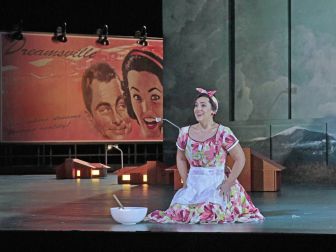
597e815b70de9.image

Daniela Mack as Bradamante in the safe, sane world of ’50s suburbia, at the end of Alcina. Photo by Ken Howard.

Nonetheless, there were moments of great beauty and emotional impact, and it is telling that the greatest of these came when there was only a single singer onstage with no hijinks to upstage the music. And it certainly does not hurt that just about the entire cast sang beautifully, handling the Baroque style with aplomb.

It seems unfair to single out any individual from the strong cast. As the enchanted Ruggiero, Paula Murrihy sang with a clean, clear voice that was meltingly beautiful in her arias. Daniela Mack did a fierce and brilliant rage aria as Bradamante/Ricciardo. As her tutor Melisso, Christian Van Horn sang with a full rich bass and commanding expression.
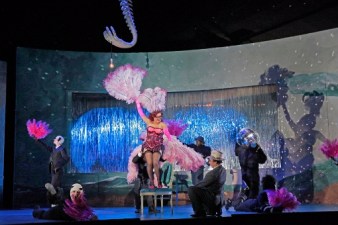
64949-alcina-anna-christy-daniela-mack-c-ken-howard-for-santa-fe-opera-2017-resized

Anna Christy romps as Morgana in Alcina. Photo by Ken Howard.

Anna Christy, known to Colorado audiences for her Lucia with Opera Colorado and Baby Doe with Central City Opera, was a bright, saucy and fully engaging Morgana, a role with great comic potential that she grasped with glee. Alek Schrader was her equal as Oronte, conveying in action and voice his changing moods alternately in love with and furious with Morgana.

In the title role, Elza van den Heever was a convincing enchantress, pink glove and all. She sang with careful control, a beautiful pianissimo and long, expressive lines, in spite of occasional discomfort with the Handelian ornamentation.

Harry Bicket, Santa Fe Opera’s chief conductor, led a stylish modern-instrument performance. Gideon Davey’s scene and costume design and Beate Vollack’s choreography supported Alden’s interpretation effectively.

Some purists will be uncomfortable with the transformation of Alcina into a semi-modern parable, and the frenetic activity behind some of the scenes. A few sexual suggestions are in questionable taste. But I found it almost entirely a delightful entertainment, first-rate musically and wonderfully provocative.

# # # # #

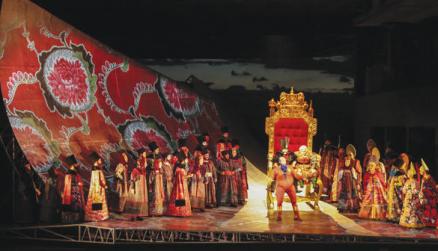
If you have only one opera to see in Santa Fe, do not miss Rimsky-Korsakov’s gorgeous fairy-tale opera The Golden Cockerel. Scarcely known in the U.S., the opera was more than redeemed by the SFO’s brilliant production. Director Paul Curran took full advantage of the satirical aspects of the plot, creating a production that is magical, laugh-out-loud funny, and touching.

This is one of Rimsky’s most brilliant scores, full of bright colors and lush orchestration. In spite of the satirical elements, there are moments of serene beauty, as when the buffoonish Tsar Dodon is sleeping. Conductor Emmanuel Villaume led an unrushed, luxurious performance by the excellent SFO orchestra and cast. I cannot imagine a better realized, musically beautiful, or satisfying performance than I heard (Aug. 3).
Golden Cockerel2

Golden Cockerel. Photo by Ken Howard.

Equally noteworthy are the ingenious scene design and colorful costumes of Gary McCann. The costumes are spectacularly beautiful recreations of authentic Russian clothing of the early 20th century. The set—a stark reflective metal spiral—was enhanced with inventive projections by Driscoll Otto and the lighting design of Paul Hackenmueller.

The opera is a double satire of the vanity and foolishness of dynastic rulers. It was first a satire of Tsar Nicholas I, known for his endless wars against Russia’s neighbors, in the form of a poem by Pushkin written in 1834. Rimsky took Pushkin’s story and made it into a satire of Nicholas II and the disastrous Russo-Japanese War 71 years later. Unsurprisingly, the Tsarist censors of 1905 forbade performances of The Golden Cockerel. Rimsky refused to make changes, and died 3 years later without ever seeing it performed.
Golden Cockrel1

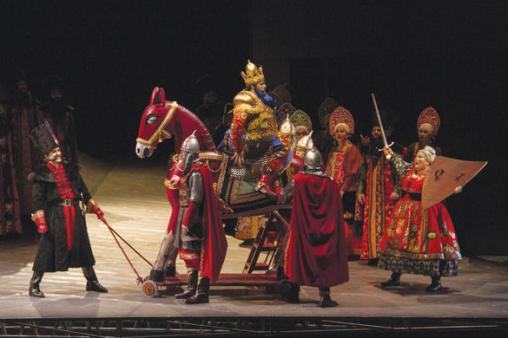
General Polkan (Kevin Burdette) leads Tsar Dodon (Tim Mix) gloriously to battle in The Golden Cockerel. Photo by Ken Howard.

The cast again is superb. Tim Mix did a great comic turn as the bumbling Tsar Dodon. Not only did he sing strongly, he conveyed Dodon’s pompous self-regard with every step and gesture. His wide-eyed infatuation with the Queen of Shemakha in the second act was comedy gold—and who could forget his mock-heroic exit to battle, backwards on a large hobby horse?
GoOlden Cockerel.3

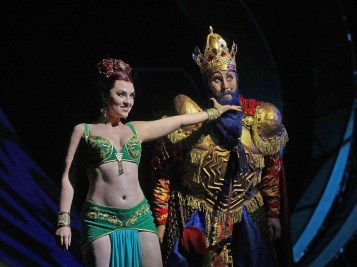
The Queen of Shemakha (Venera Gimadieva) leads the wide-eyed Tsar Dodon (Tim Mix) by the beard. Photo by Ken Howard.

The second act belongs to the Queen of Shemakha, 45 minutes of glittering coloratura and high-soprano showmanship. Venera Gimadieva sang with mastery of her part. In her best moments her capricious taunting of Dodon was fearsome, although she occasionally seemed too casual in her demeanor for the flirty, haughty queen.

The other roles large and small were more than capably covered. Barry Banks brought a penetrating tenor voice to the difficult role of the Astrologer who sets the story in motion, singing with impressive control of the daunting heights demanded by the role. Meredith Arwady was a deserving audience favorite as Dodon’s ebullient housekeeper Amelfa. Kasia Borowiec sang brightly in the small, repetitive but critical role of the Cockerel. And certainly not least, Kevin Burdette was wonderful, vocally and dramatically, as General Polkan, Dodon’s unfortunate general whose severed head is handed around at the opera’s climax.

64290-golden-cockerel-meredith-arwady-chorus-c-ken-howard-for-santa-fe-opera-2017-resized

Meredith Arwady as Amelfa in The Golden Cockerel. Photo by Ken Howard,

Like everything else in the opera, the severed head is only an illusion. In the brief epilogue, the astrologer comes back to life—after being summarily dispatched by Dodon—to assure the audience that only he and the queen are real. Everything else has been conjured—and magically realized on the Santa Fe Opera stage.

# # # # #

All three operas reviewed here have performances left, ending with Lucia di Lammermoor on Aug. 26. For dates of performances, visit the Santa Fe Opera 2017 calendar. Ticket information and pries can be seen here.

Wall of Sound at the Britt Festival

Next Stop: Santa Fe Opera

By Peter Alexander

Last week I was in Oregon visiting family. While I was there, I took the opportunity to attend the opening orchestra concert of the Britt Festival in Jacksonville, Ore.

IMG-0765

Teddy Abrams with the Britt Orchestra. Photo by Peter Alexander.

The concert featured an attractive program of West Coast composers, including John Adams, Andrew Norman, Mason Bates, Henry Cowell and John Williams. During a break, there was a humorous nod to John Cage’s 4’33”. Darius Milhaud was included, courtesy of Mills College in Oakland, Calif. And there was an attractive world premiere of Song of Sasquatch by Oregon native Kenji Bunch—a Britt commission that gives humorous acknowledgment to the festival’s and composer’s home region.

Teddy Abrams was the conductor. Joshua Roman, who has appeared several times in Boulder, was the soloist for Bates’s Cello Concerto.

I was not there as a critic, and so this is not a review of their performances. But I wanted to make one observation: the concert, held in an outdoor venue, was heavily amplified. By heavily, I mean that the winds and the bass especially were over-amplified, and sometimes the percussion as well. The balance was seriously distorted, and at times the blend muddied the interior voices and blended complex textures into a single Phil Spector-ish wall of sound.

Every sound engineer has his or her ideal sound, so I can only assume that was exactly what the engineer at Britt wanted. If so, it is not a sound that is appropriate for complex classical orchestral music. The clarity of textures and the precision of balances that we take for granted at the Colorado Music Festival was nowhere to be heard—which served to remind me how lucky we are in Boulder.

My next travels, to the Santa Fe Opera, will be as a critic. Watch here for reviews of the 2017 season productions, including the world premiere production of Mason Bates’s The (R)evolution of Steve Jobs, conducted by former CMF music director Michael Christie.

steve2-1347x834

“The (R)evelution of Steve Jobs” at the Santa Fe Opera. Photo by Ken Howard for the Santa Fe Opera.

CMF ends on a high note

‘Classically Jazz,’ Mahler’s Ninth and violinist Gil Shaham will end the season

By Peter Alexander

Gil.Shaham

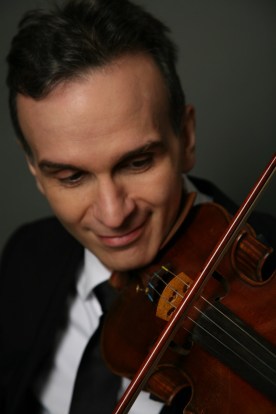
Gil Shaham

When you plan a summer festival, you want to end on a high note. And this year, Jean-Marie Zeitouni and the Colorado Music Festival (CMF) will end on three separate high notes that bring the 40th anniversary season to a grand conclusion, July 30–Aug. 4.

The first: former CMF first-clarinetist Boris Allakhverdyan returns to Boulder to perform the Copland Clarinet Concerto on a program titled Classically Jazz, Sunday, July 30; the second: Zeitouni leads the Festival Orchestra in Mahler’s Symphony No. 9, last performed at CMF more than 20 years ago, Thursday, Aug. 3; and the third: Beethoven’s Violin Concerto, performed by super-star soloist Gil Shaham, described by Zeitouni as “a wonderful man and musician,” Friday, Aug. 4.

“The idea for the last week is to do something for the orchestra — and [Mahler’s Ninth] is a piece that they’ve all been dying to play — and something for our patrons in the form of a major guest artist,” Zeitouni says. “One concert is more about the orchestra, and one is a gift to the audience.”

Read more in Boulder Weekly.

# # # # #

Colorado Music Festival Final Week
All performances 7:30 p.m. in Chautauqua Auditorium

BorisAllakhverdyan

Boris Allakhverdyan

CMF Presents: Chamber Music
Boris Allakhverdyan, clarinet, with members of the CMF Orchestra
Saturday, July 29

Classically Jazz
CMF Chamber Orchestra, Jean-Marie Zeitouni, conductor, with Boris Allakhverdyan, clarinet
Sunday, July 30

Mahler’s Ninth
Festival Orchestra, Jean-Marie Zeitouni, conductor
Thursday, Aug. 3

Festival Finale
Festival Orchestra, Jean-Marie Zeitouni, conductor, with Gil Shaham, violin
Friday, Aug. 4

Tickets

Central City offers splendid mainstage productions of ‘Così fan tutte’ and ‘Carmen’

By Peter Alexander

The 2017 season of the Central City Opera (CCO) is well launched, with two splendid productions in the main theater: a musically solid and entertaining production of Bizet’s Carmen and a revelatory production of Mozart’s Così fan tutte.

Carmen opened the season July 8 and continues through Aug. 6. Using sets stored since CCO’s 2011 season, it had an all-new cast and director. Carmen is a tricky show to pull off on Central City’s small stage. The act set in Lillas Pastia’s tavern works well, but the other three force compromises that are not always effective, including an awkward ballet in place of the bullfighters’ parade in the final act.

AC-1_Amanda-Tipton-640x426

Matthew Plenk (Ferrando), Hailey Clark (Fiordiligi) and David Adam Moore (Guglielmo). Photo by Amanda Tipton, courtesy of Central City Opera.

Opening last Saturday, July 15, and continuing through Aug. 4, the production of Così fan tutte takes its cue from the opera’s subtitle: the school for lovers. By placing it in a Victorian-era boarding school, the production appropriately brings out the youth and inexperience of the lovers; it creates wonderful opportunities for humor, and it appeals to the Victorian vogue stoked by Downton Abbey.

In this context, Don Alfonso is a fusty professor teaching a needful lesson. Despina is a “house-mistress” whose cynicism comes from years of exasperation with the follies of adolescents. And the four lovers, described in the program as “students” who are “dating,” are clearly in the throes of self-dramatizing first love.

This setting fits Così perfectly. The Central City cast conveyed this interpretation wonderfully.

Read more in Boulder Weekly.