CMF’s mid-summer mini-fest puts the focus on French music

Artist-in-residence Benedetto Lupo will play both Ravel piano concertos in one evening

By Peter Alexander

The mid-summer mini-festival, happily restored to the Colorado Music Festival season, this year will fill Chautauqua Auditorium with the sounds of French music — Ravel, Debussy and others less familiar.

benedetto_lupo3

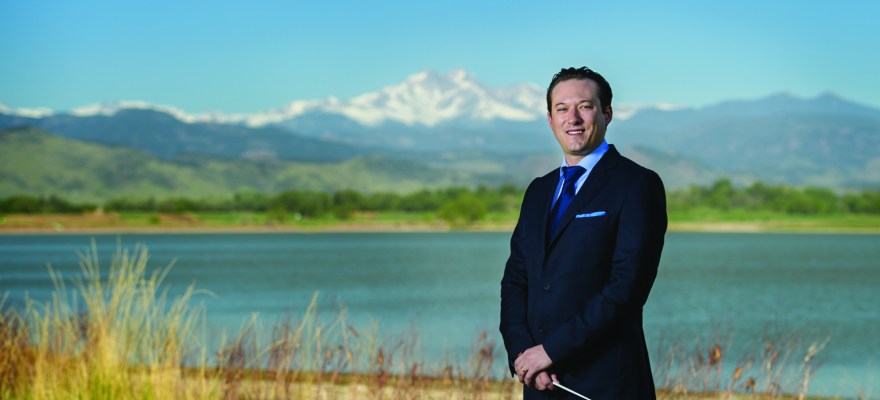
Pianist Benedetto Lupo will be artist-in-residence for the CMF French Music mini-festival.

This is a welcome opportunity for Boulder audiences. The orchestral repertoire is so dominated by German and Russian composers that we can easily forget that France too had a vital musical culture.

The choice is also unsurprising: French music is the natural home of Jean-Marie Zeitouni, the CMF’s music director. “This is a repertoire with which I have intimate affinities,” he says. “I grew up with the Montreal Symphony playing Ravel and Debussy, so I have a special love for it.”

In addition to Zeitouni’s affinity for the repertoire, the other factor in the programming was the availability of pianist Benedetto Lupo. Although he is Italian, Lupo says he “always had an interest” in French music. He studied with Aldo Ciccolini, another Italian who was renowned for his performances of French music.

Lupo will be the CMF artist-in-residence during the mini-festival week and will be part of all four concerts — a Festival Orchestra concert July 20, an abbreviated repeat for “Fresh Fridays” July 21, a solo and chamber concert July 21 and a CMF Chamber Orchestra concert July 25.

Read more in Boulder Weekly.

# # # # #

Colorado Music Festival
French Mini-Festival
All performances in Chautauqua Auditorium

Festival Orchestra, Jean Marie Zeitouni, conductor, with Benedetto Lupo, piano
7:30 p.m. Thursday, July 20

Fresh Friday performance
Festival Orchestra, Jean Marie Zeitouni, conductor, with Benedetto Lupo, piano
6:30 p.m. Friday, July 21

Benedetto Lupo, piano, with Joseph Meyer, violin; Elizabeth Jaffe, viola; and Aaron Merritt, cello.
7:30 p.m. Saturday, July 22

Fauré’s French Soirée
CMF Chamber Orchestra, Jean-Marie Zeitouni, conductor
Benedetto Lupo, piano; Calin Lupano, violin; Catherine Turner, horn; Vivian Cumplido Wilson, flute.

Tickets

Beethoven’s monumental 9th Symphony enjoys a mid-season triumph at CMF

Zeitouni, orchestra, chorus and soloists deliver an immaculate performance

By Peter Alexander

Beethoven’s Ninth Symphony is a piece burdened with so much projected significance that it is difficult to hear it just as a piece of music.

Unquestionably a great symphony, it has also become the preferred piece for any major occasion. It has been played for memorials of all kinds, for the reopening of Germany’s Bayreuth Festival after World War II, as the European anthem, for the demolition of the Berlin Wall, to mark the millennium, for Olympic ceremonies and presidential inaugurations, for orchestras opening or closing anniversary seasons, and just this year for the meeting of the G-20 in Hamburg, Germany.

Jean-MarieNew1

Jean-Marie Zeitouni

In that context, it was surprising and a bit refreshing that Jean-Marie Zeitouni programmed the Ninth not as the opening or closing gesture of the Colorado Music Festival’s 40th anniversary season, but right the middle of the summer, as if it were just another piece on the program. I believe that is a good thing: it is a better piece when taken off its pedestal and heard as a great artistic product instead of a weighty political or social statement.

I suspect that was Zeitouni’s intention. “I thought, let’s put it right in the middle,” he says. “It’s a way to connect with the people and to offer something familiar.”

However familiar it is, Zeitouni tries to approach the symphony anew each time he conducts it. “Each time I buy a brand new score, I get rid of all the markings that I have and I start fresh,” he says. “And each time I find something new, something I haven’t seen before.”

Whatever Zeitouni has found new, last night’s performance at Chautauqua Auditorium (July 13) more than justified his thinking. He and the CMF Festival Orchestra, joined by the St. Martin’s Festival Singers and an outstanding quartet of soloists delivered an immaculate performance of the Ninth Symphony, from the portentous opening haze of the first movement to the triumphant “Ode to Joy” Finale.

Among the strengths of the performance were the clarity and transparency of the orchestra throughout, a result of well controlled intonation and balance. Zeitouni’s management of the volume and pacing of the performance were remarkable. One of the most powerful moments was the return of the first movement’s primary theme. First heard as a whisper, it comes back with crashing D-minor chords that were, as they should be, the powerful culmination of all that came before. Without careful pacing and management of dynamics, that moment misfires.

The precipitous scherzo movement was marked by great economy of gesture from the conductor and absolute precision across all the tempo changes by the orchestra. The slow movement was deliciously warm, with Beethoven’s extended phrases, passages, whole paragraphs of music beautifully sustained.

Mary-Wilson-1

Soprano Mary Wilson

The finale, some of the most familiar music in the repertoire, was marked by many wonderful expressive touches, making the music as fresh to the listener as it must be for Zeitouni with a clean new score. The chorus, prepared by Timothy J. Krueger—who got deserved recognition at the end of the performance—was exceptional, with sopranos that really can sustain those high As that Beethoven cruelly asks for, and in tune.

The four solo parts are some of the most thankless roles in the repertoire, written with no mercy, but they were made as beautiful as possible by the quartet of soprano Mary Wilson, mezzo Michelle DeYoung, tenor Jason Baldwin, and bass Timothy Collins—a last-minute replacement for CU alumnus Keith Miller. Only Collins had a moment of unease, perhaps as the new guy in the quartet, but beyond that they all sang with great assurance, even with some very brisk and exhilarating tempos.

152betsyjolas

Composer Betsy Jolas

The Symphony benefited from being played after a short opening portion of the concert, comprising two contrasting pieces: the American premiere of A Little Summer Suite by Betsy Jolas, and Mahler’s early Lieder eines Fahrenden Gesellen (Song of a wayfarer) with De Young as soloist.

Jolas’ Suite, with seven short movements in 12 minutes, reflects the atonal, atomistic style of the mid-20th century—not surprising for a composer born in 1926 and soon to turn 91. It is an assured score, but the summer she seems to be writing about struck me as a little bit sinister, with ominous clouds always on the horizon. The shifting moods were convincingly conveyed by the Festival Orchestra.

Great Performances at the Met: Tannhäuser

Michelle DeYoung as Venus in Wagner’s Tannhauser at the Met. Photo by Marty Sohl/Metropolitan Opera

DeYoung, a dramatic soprano with upcoming Wagnerian roles as Kundry in Parsifal, Fricka in Rheingold and Sieglinde and Die Walküre, sang Mahler’s songs with great dramatic import. If slightly overdone for early Mahler, it was nonetheless very effective, especially in the final two movements. Her expressiveness charmed the audience, while Zeitouni and the orchestra provided comfortable support.

The concert was sheer pleasure from beginning to end. I especially commend Zeitouni for allowing us to hear the Ninth as a great piece of music, fresh and powerful, but unburdened of any unnecessary weight.

The Ninth Symphony will be repeated at 6:30 p.m. tonight (July 14) on the CMF “Fresh Friday” series. Tickets from the Chautauqua Box Office.

“All-American” program at CMF is big, bold, brassy

Violinist Elina Vähälä scores with Corigliano’s “Red Violin” Concerto.

By Peter Alexander

Conductor Cristian Măcelaru likes loud, brassy climaxes, and last night (July 6) the Colorado Music Festival (CMF) Orchestra was able to deliver.

Macelaru.POP_1009-2

CMF guest conductor Cristian Măcelaru

A guest artist at the CMF, Măcelaru led a program of American music—more or less, depending on how American you consider Dvořák’s “New World” Symphony. The concert was filled with big moments for the brass, resulting in a performance that was exciting, always dramatic, but sometimes over the line into a sound that was pushed and raw.

Măcelaru and the Festival Orchestra opened the concert with the Three Dance Episodes from On the Town by Leonard Bernstein. From the first note, the performance was bold, incisive and jazzy. In fact, the playing was so brash, so perfectly in character throughout that one might wish for more jazz-inflected American music from the orchestra.

Which, in fact ,the CMF offers later in the summer! The concert scheduled for July 30 is titled “Classically Jazz,” and will feature music by Aaron Copland, George Gershwin, Scott Joplin and more Bernstein, as well as jazz-influenced music by Kurt Weill and Darius Milhaud. Take my word: you will be sorry if you miss it!

Returning to last night’s concert, the Bernstein dances were great fun, but even here the loud climaxes seemed just overplayed. A more restrained, carefully blended sound would serve the music well.

EVHERO

Elina Vähälä

After the Bernstein, the concert’s second guest artist, Finnish violinist Elina Vähälä, gave a passionate, committed performance of John Corigliano’s “Red Violin” Concerto, music taken from the 1998 film The Red Violin. Vähälä, Măcelaru and the orchestra seemed well matched to bring out the contrasting moods of the four movements.

The dramatic first movement suffered somewhat from Măcelaru’s high-volume style, which sometimes covered the violin, but the dramatic contrasts of sounds were effective. The second movement was all cinematic foreboding, a ghostly chasing of shadows by soloist and orchestra alike. The more lyrical third movement, the expressive soul of the concerto, elicited Vähälä’s most lovely playing. The finale seemed building toward a certain collapse, until a sudden moment of calm, beautifully conveyed by the CMF players, interrupted the manic forward motion.

After intermission, Măcelaru and the orchestra returned for one of the most popular works in the orchestra repertoire, and the first great work written in the United States: Dvořák’s Symphony No. 9 in E minor, known by the note that the composer casually jotted on the score, “From the New World.” The performance was very dramatic, and enjoyed by the audience, but I found it often too pushed in both tempo and volume. This was particularly true in the first and last movements: withholding the full impact of the brass until the true climax of each movement allows more of the inner voices and string parts to be heard along the way—the brass can cover just about everyone else—and gives that final climax more impact.

The inner movements were the most effective. In the slow movement, Măcelaru heightened the drama by bringing the softest passages down to a mere whisper of sound, wonderfully played by the orchestra. The woodwinds as a whole played this movement beautifully, especially the solos by the brooding English horn and the scampering oboe. The scherzo was about as fast as I would want to hear it, but never out of control. Here again the woodwinds acquitted themselves well, and the movement never flagged.

Whatever you think of Măcelaru’s interpretation, you cannot question the quality of the CMF players, nor of the performances they deliver from one week to the next. Măcelaru himself said it well from the podium: Boulder is fortunate to have such an ensemble in residence every summer.

‘Carmen’ and ‘Così’ highlight Central City Opera’s summer season

For 2017, all performances will be in Central City

By Peter Alexander

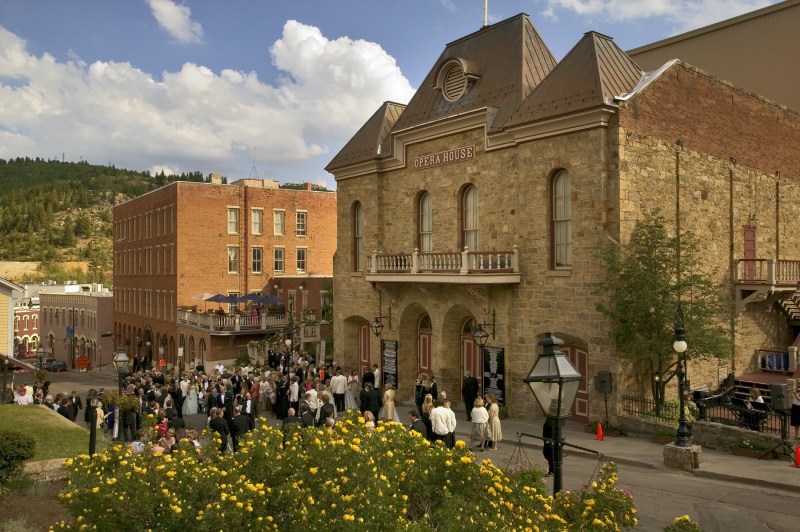
Central City Opera Opening Night 2006- Page 2 of Book

Opening Night at Central City Opera. Photo courtesy of Central City Opera.

Central City Opera (CCO) is offering two operatic mainstays in their historic 1878 opera house this summer, Bizet’s Carmen (July 8–Aug. 6) and Mozart’s Così fan tutte (July 15–Aug. 4).

Carmen and Così are joined on the Central City season by limited performances of three short operas presented in smaller venues in Central City (July 26–Aug. 4): The Burning Fiery Furnace by Benjamin Britten, The Cabildo by Amy Beach, and Gallantry by Douglas Moore. Though little known, these works are an important part of CCO’s long-term goal.

“We’re doing this to build new audiences,” Pat Pearce, CCO’s artistic director, says. “Come up and see one of these one-acts! You’re out in an hour, and it’s in English.”

The two mainstage productions appear to be worlds apart. Carmen is a gritty story about a decent man destroyed by his fatal passion for an untamed Gypsy, Così fan tutte an artificial semi-comedy about two pairs of lovers. But beneath the surface, both works explore the same emotions: love, jealousy, anger.

Read more in Boulder Weekly

# # # # #

CCOperaLogoPreferredCentral City Opera
Summer 2017

Georges Bizet: Carmen
Central City Opera House
Matinees at 2:30 p.m.: July 12, 14, 16, 18, 22, 26, 30, Aug 3, 6
Evenings at 8 p.m.: July 8, 20, 28; Aug. 1

Mozart: Così fan tutte
Central City Opera House
Matinees at 2:30 p.m.: July 19, 23, 25, 19, Aug. 2, 4
Evenings at 8 p.m.: July 15, 21, 27

Benjamin Britten: The Burning Fiery Furnace
The Martin Foundry, Central City
12 noon July 26 and Aug. 2
5 p.m. July 27

Amy Beach: The Cabildo
Williams Stables, Central City
8 p.m. July 26, 29, Aug. 2 (Double feature with Gallantry)

Douglas Moore: Gallantry
Williams Stable
8 p.m. July 26, 29, Aug. 2 (Double feature with The Cabildo)
12 noon Aug. 3 and 4

Tickets


Colorado Music Festival Opens 40th anniversary season with “Joy”

Pianist Olga Kern returns to the delight of a sold-out Chautauqua Auditorium

By Peter Alexander

The sign at the corner of the stage said “JOY,” a reference to the theme of the Colorado Music Festival’s 2017 40th-anniversary season: “Find Your Joy.”

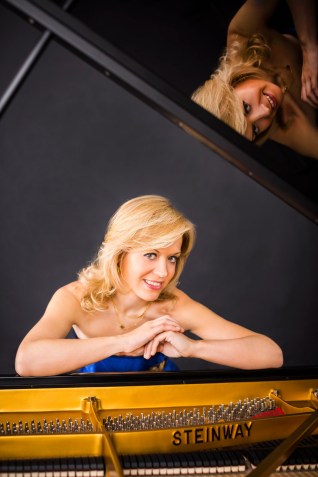
Olga Kern

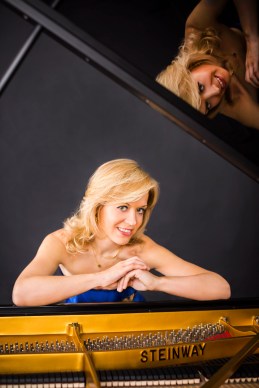
Olga Kern, pianist, photographed by Chris Lee at Steinway Hall

The joy was onstage in more ways than one last night (June 29). Music director Jean-Marie Zeitouni led the Festival Orchestra in their season-opening performance with an ebullience and infectious enjoyment I have not seen before. And there was joy in the audience as well, when the sold-out Chautauqua Auditorium crowd greeted pianist Olga Kern, a Boulder favorite since her 2013 festival performances.

Zeitouni began the concert with Shostakovich’s “Festive Overture,” a brilliant opener and, having been featured in the CMF”s 10th season, a nod the festival’s history at the same time. Never one to shy away from big effects, Zeitouni unleashed the Festival Orchestra brass in the opening fanfares, then took the following section at a breakneck pace that showed off the whole orchestra. From its rustling pianissimos to the thunderous climax, the “Festive Overture” was all that and more.

The apparently tireless Kern played two powerhouse Russian showpieces back-to-back, only taking enough time to catch her breath and change gowns between the Prokofiev First Concerto and the Rachmaninoff Rhapsody on a Theme of Paganini. (Soloists’ clothing is not the usual subject of this blog, but in this case Kern’s glittering choices were so eye-catching and perfectly a part of the opening-night vibe that they could only be admired.)

The Prokofiev Concerto is a muscular piece from the composer’s youth that gave Kern every opportunity to show off her strength and technique. She negotiated the mercurial changes of mood with precision, from the powerful chords of the opening, to the romping leaps and glittering passagework that came later, all played with relish and abandon. Only the lyrical solo passages seemed overly careful, perhaps suffering in comparison to the brilliance elsewhere in the concerto.

Jean-MarieNew1

CMS Music Director Jean-Marie Zeitouni

Zeitouni was not inclined to hold the orchestra back, so that at one climax one could see but not hear Kern’s exertions. Nonetheless, the effect was powerful and elicited cheers from the audience.

The Rhapsody on a Theme of Paganini, which Kern had played as part of her 2013 marathon performance of all the Rachmaninoff concertos in two nights, is a much loved piece. And calling for both power and delicacy, it is one that plays directly to Kern’s obvious strengths.

If anyone thought she was still recovering from the Prokofiev, Kern’s first robust octave entrance in the Rhapsody would have dispelled that notion. From there she went from strength to strength, bringing out all the virtuoso display of the kaleidoscopic variations.

I particularly liked the mysterious moods and emotional depths Kern found in the less showy variations. Everybody’s favorite variation, No. 18, was the essence of loveliness. After returning to a more steely interpretation, Kern ended it all with a delicacy and humor that brought first a chuckle, and then “bravas” from the audience.

Those who would like to hear more of Kern’s playing will have the opportunity at 7:30 p.m. Saturday (July 1) at Chautauqua, when she will play a solo recital of Russian and American music. Tickets are available from the Chautauqua box office.

Keeping to the Russian subject matter, Zeitouni and the Festival Orchestra ended the concert with Rachmaninoff’s lushly Romantic Symphony No. 2 in E minor. From the very first movement, Zeitouni’s interpretation emphasized the orchestra’s richness of sound, while bringing out brass section-passages and solos from the clarinet and other winds.

In the second movement, Zeitouni danced about the podium, beaming his pleasure to the players and bringing out all the exuberant energy of a Russian folk festival. In the third movement, he showed off the flexibility and responsiveness of the orchestra, and the finale was all happy hustle and bustle.

That the Festival Orchestra only occasionally showed signs of having assembled just two days before is a testament to the quality of players that come to Boulder and Chautauqua every summer. After some years of administrative uncertainty and change, last night’s outstanding concert was a reassuring sign that musically, the CMF is in good hands and going strong.

Elliot Moore is building bridges as director of the Longmont Symphony

First season is about connecting with local institutions—and friendship

By Peter Alexander

The Longmont Symphony Orchestra (LSO) has announced its 2017–18 season, the first under new music director Elliot Moore, and the consistent theme is building connections within the community.
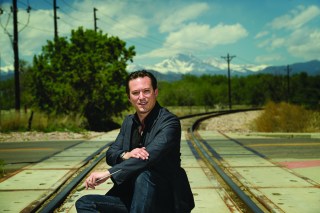
Elliot Moore - credit - Photography Maestro

Elliot Moore. Photo by Photography Maestro

That and friendship. The first concert explicitly highlights friendships, and the entire season is filled with performances that developed out of Moore’s professional friendships.

“Building connections is something that I’m really passionate about with this orchestra and with Longmont,” Moore says. Some of the connections he has worked to establish over the coming season are with the Longmont Public Library, with local composers, with the Longmont Museum through a chamber orchestra concert in Stewart Auditorium, and with other local cultural organizations.

“These are friendships that I think are so valuable, and I’m happy that we’re highlighting that very thing on the first concert,” he says.
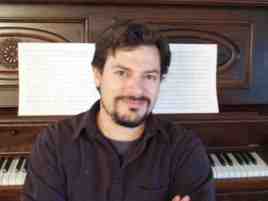
OLYMPUS DIGITAL CAMERA

Composer Carter Pann, one of Moore’s new friends

The season opening concert Oct. 7 features three pieces, each representing a different facet of friendship: Slalom by CU composer Carter Pann, who Moore counts as a new friend since coming to Colorado; Rachmaninoff’s Rhapsody on a Theme of Paganini with piano soloist Spencer Myer, a professional colleague and friend that Moore has worked with before; and Elgar’s Enigma Variations, in which each variation describes one of Elgar’s close friends, from his wife to his publisher.

In addition to Pann, the season includes another local composer, Michael Udow, a percussionist/composer who lives in Longmont. The LSO concert on Feb. 24 will feature the world premiere of Udow’s Mountain Myths.
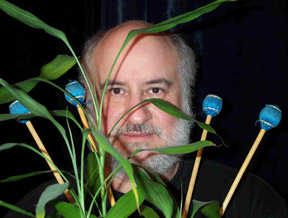
Udow.Michael

Percussionist/composer Michael Udow

Udow had been on the faculty of the University of Michigan when Moore was a student. “When I was guest conducting the LSO, Michael contacted me and said, ‘Oh, by the way, I’m living in Longmont,’” Moore explains. “I got to know some of his music, and thought that he writes really beautiful stuff. I was very happy to be able to draw on that connection with a fantastic composer who literally lives right there in Longmont, and it goes along with the theme of friends.”

Several of Moore’s friends will appear as soloists. In addition to Myer on the first concert, violinist Andrew Sords will play the Barber Violin Concerto on Nov. 11, and cellist Matthew Zalkind, Moore’s fellow student at Michigan who now teaches at the Lamont School of Music at the University of Denver, will play the Saint-Saëns Cello Concerto No. 1 on Feb. 24.
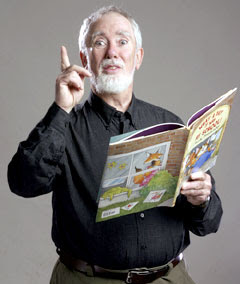
prelutsky2

Popular children’s author Jack Prelutsky

Another personal acquaintance on the season is sure to attract attention. “I believe this is going to be a real feather in the cap of this orchestra and this season,” Moore says. “The main work on our family concert (Jan. 27) is Lucas Richman’s Behold the Bold Umbrellaphant. People are going to have an unbelievable experience because the music is so good!”

In collaboration with the Longmont Public Library, the LSO is bringing in to narrate Richman’s piece the well known author and former Children’s Poet Laureate Jack Prelutsky. “Prelutsky is a music lover and a great singer,” Moore explains. “It just so happens that my mom conducted a choir, which she recently stepped down from, and Jack was in her choir.”

Another program that Moore wants to point out is the concert on Nov. 11, Veterans’ Day. Titled “The American Frontier: In Honor of Our Veterans,” the all-American program includes both Aaron Copland’s World War II-era “Fanfare for the Common Man,” and Joan Tower’s 1987 response to Copland’s iconic piece, “Fanfare for the Uncommon Woman.”

Other works on the program are “Hymn to the Fallen,” taken from John Williams’ score for the World War II film Saving Private Ryan, and the Barber Violin Concerto, played by Sords. The program closes with just about the first piece to enter the standard orchestra repertoire that was written in America, Antonín Dvořák’s Symphony No. 9, “From the New World.”

Balancing the needs of the orchestra and the audience, Moore has put together a season with a mix of styles and periods, known and unknown composers. There are several pieces by living composers, but also many of the most popular classical composers are on the schedule as well: Rachmaninoff, Elgar, Mendelssohn, Dvořák, Vivaldi, Bach, Sibelius, Tchaikovsky. And the season will end with a chamber orchestra concert featuring the two most loved classical-era composers, Beethoven and Mozart.

Six‐concert subscription packages will go on sale by phone only on Thursday, July 6 (303‐772‐5796; 10 a.m.–4 p.m. Mondays, Tuesdays and Thursdays, and 9:30 a.m.–3:30 p.m. Fridays). Prices and details will be available on the LSO Web page. Single tickets go on sale on Monday, Aug. 28 by phone or online.

# # # # #

Longmont Symphony
Elliot Moore, music director
2017–18 Season

(All performances at Vance Brand Civic Auditorium except as noted)

Opening Night: On the Frontier with Old & New Friends
7:30 p.m. Saturday, Oct. 7
Elliot Moore, conductor, with Spencer Myer, piano

Carter Pann: Slalom
Rachmaninoff: Rhapsody on a Theme of Paganini
Elgar: Enigma Variations

The American Frontier: In Honor of Our Veterans
7:30 p.m. Saturday, Nov. 11
Elliot Moore, conductor, with Andrew Sords, violin

Joan Tower: Fanfare for the Uncommon Woman
John Williams: Hymn to the Fallen from Saving Private Ryan
Samuel Barber: Violin Concerto
Aaron Copland: Fanfare for the Common Man
Antonín Dvořák: Symphony No. 9, “From the New World”

HOLIDAY EVENTS

The Nutcracker Ballet with the Boulder Ballet
Elliot Moore, conductor
4 p.m. Saturday, Dec. 2.
2 p.m. Sunday, Dec. 3

Candlelight Concert with the Longmont Chorale Singers
4 p.m. Sunday, Dec. 17
Westview Presbyterian Church, Longmont
Longmont Symphony Chamber Orchestra
Elliot Moore, conductor, with the Longmont Chorale singers & soloists

Vivaldi: Gloria
J.S. Bach: Jesu, Joy of Man’s Desiring
Respighi: Adoration of the Magi
John Rutter: Candlelight Carol and Angel’s Carol
Cynthia Clawson: O Holy Night
Holiday carols & sing‐alongs

Family Matinee Concert
4 p.m. Saturday, Jan. 27, 2018
Elliot Moore, conductor, with Concerto Competition Winner (TBA)
Longmont Youth Symphony
Jack Prelutsky, narrator

Matthias Bamert: Circus Parade
Sibelius: Symphony No. 2 (Finale)
Lucas Richman: Behold the Bold Umbrellaphant

A Longmont World Premiere
7:30 p.m. Saturday, Feb. 24, 2018
Elliot Moore, conductor, with Matthew Zalkind, cello

Michael Udow: Mountain Myths (world premiere)
Saint–Saëns: Cello Concerto No. 1
Tchaikovsky: Symphony No. 4

Tales from the Sea
7:30 p.m. Saturday, April 7, 2018
Elliot Moore, conductor, with Sarah Barber, mezzo‐soprano

Mendelssohn: The Hebrides (Fingal’s Cave)
Elgar: Sea Pictures
Rimsky Korsakov: Scheherazade

Museum Concert
4 p.m. Sunday, April 15, 2018
Stewart Auditorium, Longmont Museum
Longmont Symphony Chamber Orchestra
Elliot Moore, conductor

Mozart: Symphony No. 35, “Haffner”
Beethoven: Symphony No. 1

Pops Concert: Divas through the Decades
7:30 p.m. Saturday, May 12, 2018
Elliot Moore, conductor, with vocal soloists

In celebration of Mother’s Day, the LSO will feature music by and about women across decades and genres―from opera to cabaret, jazz and pop, and from Bernstein’s West Side Story to Lady Gaga.


CMF founding director Giora Bernstein and pianist Olga Kern return to Boulder

Opening weekend: “high-profile guests, big orchestral pieces, variety, intensity”

Olga Kern

Olga Kern returns to CMF for the opening concert, June 29. Photo by Chris Lee.

By Peter Alexander

The opening weekend of the Colorado Music Festival’s 40th anniversary season, Thursday, June 29 through Sunday, July 2, will set the pattern for the entire 2017 season.

“It will be a microcosm of the whole festival,” music director Jean-Marie Zeitouni says. “A variety of repertoire, Baroque, Classic, Romantic, 20th-century, high-profile guest soloists, big orchestral pieces, variety, intensity; it sums it all.”

The opening concert will feature pianist Olga Kern playing two Russian concertos: Prokofiev’s Piano Concerto No. 1 and Rachmaninoff’s Rhapsody on a Theme of Paganini. Framing Kern’s solo turns will be Shostakovich’s Festival Overture, and Rachmaninoff’s deeply Romantic Symphony No. 2 in E minor.

Kern will also appear in a solo recital of American and Russian music on July 1, featuring Rachmaninoff, Scriabin, Balakirev and several pieces by Gershwin. The next day, CMF founding director Giora Bernstein returns to Boulder for the first time in 10 years to conduct the CMF chamber orchestra. 

GIora Bernstein

CMF founding director Giora Bernstein

“The greatest satisfaction is that (CMF) really has established itself,” Bernstein says. “To see it 40 years (after its founding) is just wonderful.”

The first weeks of the festival culminate with performances of Beethoven’s Ninth Symphony, Thursday and Friday, July 13 and 14. 

“It’s basically right in the middle of the festival so it’s a way to mark a certain apex,” Zeitouni says.

Read more in Boulder Weekly.

# # # # #

Colorado Music Festival (Classical Concerts through July 14)
Jean-Marie Zeitouni, music director

Opening Night, Festival Orchestra, Jean-Marie Zeitouni, conductor: Olga Kern Plays Rachmaninoff, 7:30 p.m. Thursday, June 29

Olga Kern solo recital: 7:30 p.m. Saturday, July 1

Mozart with CMF Founder Giora Bernstein and CMF Chamber Orchestra: 7:30 p.m. Sunday, July 2

“All-American” concert, Festival Orchestra with conductor Cristian Măcelaru and violinist Elina Vähälä: 7:30 p.m. Thursday, July 6

Young People’s Concert, directed by Scott Terrell: 10 a.m. Saturday, July 8

Chamber Music: 7:30 p.m. Saturday, July 8,

Beethoven’s Ninth, Festival Orchestras, Jean-Marie Zeitoun, conductor: 7:30 p.m. Thursday, July 13

Fresh Fridays – Beethoven’s Ninth: 6:30 p.m. Friday, July 14

Chamber Orchestra with Pianist Stewart Goodyear: 7:30 p.m. Sunday, July 16

All performances in the Chautauqua Auditorium

Tickets 

CU NOW rewards audiences, composers and performers

Adamo’s Gospel of Mary Magdalene is getting an intimate makeover

By Peter Alexander

IMG_0440

2016 CU NOW rehearsal. Photo by Peter Alexander

CU NOW, the University of Colorado Eklund Opera Program’s annual New Opera Workshop, is one of the most rewarding events on the Boulder classical music scene.

It is an opportunity to see how operas are put together. It is an opportunity to hear new works, often before their professional world premieres, and possibly, through feedback sessions with the composer, to influence the final product. And falling between the end of the main music season and the beginning of the summer festivals, it comes at a time when the classical scene is starting to get dry.

And that’s just the benefits for the audience. It almost goes without saying that the composer has the reward of seeing his work in an informal setting, where he can tweak the score and make improvements, and the singers reap the reward of learning a new work and preparing it for the composer. I count that a win-win-win.

Usually a workshop for completely new works, the NOW program goes in a different direction this year. Composer Mark Adamo is in Boulder to re-work his Gospel of Mary Magdalene, which was premiered by the San Francisco Opera in 2013 (under conductor Michael Christie, known locally for his years at the Colorado Music Festival). Following the somewhat controversial premiere, Adamo decided to revise the opera to make it smaller in scope than the San Francisco production, more intimate, more human.

Mark.Adamo

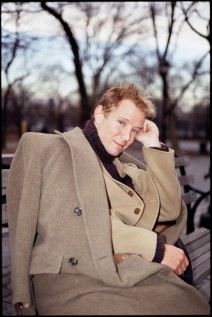
Composer Mark Adamo

Or as he was quoted in the CU press release, he wanted the show to be “more witty and modern, a lot closer to Godspell.”

Complete performances of the re-worked Gospel of Mary Magdalene will be free and open to the public, 7:30 p.m. Friday and 2 p.m. Sunday in the Imig Music Building Music Theater. The cast and ensemble of CU students and alumni will be accompanied by piano and harp.

Knowing the history of CU Now, Adamo says he was unsure about bringing a work that had already had a premiere, and a grand one at that, to Boulder. “Leigh (Holman, director of the Eklund Opera Program) talked to me about this, because ordinarily CU NOW does pieces before they’re given a premiere,” he says. “I wanted to revisit this because I’m not sure that the show that we staged (in San Francisco) was entirely the show that I meant.

Leigh.Holman

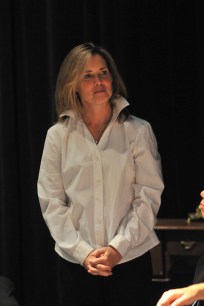
Leigh Holman

“It was a beautiful production, it was brilliantly cast, it was a beautiful set, it was a beautiful design, the direction was very sensitive, and yet . . . I didn’t feel like the tone was what I hoped for. And so Leigh said ‘we’re absolutely the place for that.’”

Adamo wrote both the libretto and the music for The Gospel of Mary Magdalene. The opera places Mary Magdalene at the center of the story, making her an important influence on Jesus’ teachings. Adamo’s libretto is based in part on the Gnostic Gospels, early Christian texts that were discovered in 1945. Not accepted by most Christian traditions, the Gnostic Gospels suggest that Jesus and Mary were lovers, and later married, and that Jesus was illegitimate.

The libretto grew out of Adamo’s own research, which was so thorough that the libretto even contains footnotes, some of which are sung. One important part of his goal was to counteract anti-female ideas of some Christian traditions. The opera opens with modern characters expressing their unease with the negativity toward sex and women that they have encountered in the church.

Cory.Weaver.Mary-M

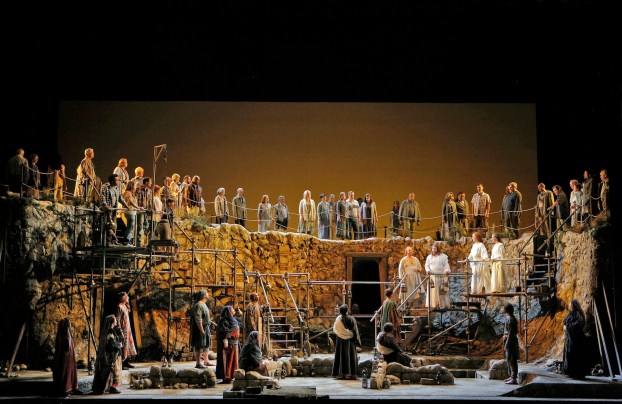
San Francisco Opera production of The Gospel of Mary Magdalene. Set by David Korins. Photo by Cory Weaver.

In the San Francisco production, which Adamo describes as “more King of Kings, if you will, that kind of Biblical spectacular look,” the modern characters got much less emphasis than he wanted. “Given the grandeur and the somberness of the setting, it was a stage that you could not do anything remotely personal, or witty,” he says.

To shift the focus back to the modern characters, and their relationship with the Biblical characters they conjure from their imaginations, Adamo cut the cast from 72 including chorus down to 16. “In San Francisco we had the five seekers (modern believers) and the chorus in modern dress, and then the Biblical characters, and all the supporting characters,” he explains. All of that has been reduced to the four principals—Yeshua (Jesus), Mary Magdalene, Miriam (Mary) and Peter—plus a dozen ensemble singers who take the other roles.

The original production was 2½ hours of music, plus intermission, which some listeners found to be ponderous. Adamo says he has reduced that to under 2½ hours including intermission. “Here’s the joke,” he says, “Nothing has been cut. A five-minute opening has been added, and the running time is shorter than in San Francisco.”

gs-adamo-portrait

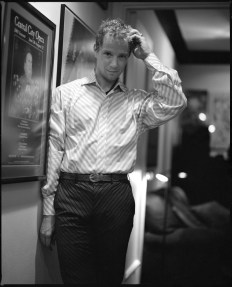
Mark Adamo

“It starts with me,” he admits. “I had under-marked the tempos to so dramatic a degree that when I went back to the score in preparation for this production, I was looking at the metronome markings and saying, ‘what was I thinking? Are these tempos sponsored by Ambien?’

“All of this needs to move much more conversationally. When I met with (conductor) Andrew (Bisantz), I said, ‘assume the metronome markings you’ve got are 12 (beats per minute) slow.’”

Finally, Adamo wanted a setting that was not as monumental as the San Francisco production. “Is there a setting that is illustrative of the concerns of the show, that allows more nimbleness and a wider variety of dramatic tones?” he asks. “I did come up with that,” he says, adding slyly, “I’ll leave the surprise for you if you see the show.”

Adamo is particularly happy that the smaller number of singers and the more intimate setting has shifted the emotional focus of the performance. “For the most part, the stress is squarely on what the performers are doing and how they are defining the space and the emotional terms of the piece, rather than anything more elaborate,” he says.

“That and making the whole stage into a group, rather than principals and then a chorus, have been the principal innovations, and it has been a delight.”

# # # # #

CU NOW
Leigh Holman, founder and artistic/general director

The Gospel of Mary Magdalen
By Mark Adamo
Andrew Bisantz, conductor

7:30 p.m. Friday, June 16
2 p.m. Sunday, June 18
Music Theatre, Imig Music Building, CU

Free and open to the public

Advisory: These performances include adult content, sexual situations, and a stylized suggestion of violence, and may not be suitable for children.

Sharpsandflatirons one of the top 50 classical music blogs?

A limited but interesting list is posted by the blog sharing page Feedspot

By Peter Alexander

Classical Music transparent_1000pxFeedspot, a Web page that aims to bring some order to the varied world of blogs, has selected Sharpsandflatirons one of the “Top fifty classical music blogs and Websites for classical music fans.”
While I neither endorse nor discourage readers from making use of the Feedspot page—you can apparently start for free—it is gratifying to be included on a list with blogs by Greg Sandow in ArtsJournal, the classical music blog pages of the New York Times and the Telegraph, and the Classics Today blog. What I do encourage is that readers check out the full list. I found some new blogs that I will want to read regularly, and you may as well.

I will add that there some excellent blogs that were missed in the Feedspot list, particularly Alex Ross’ “The Rest is Noise” and the classical music news page of Arts Journal. But the really important message here is that there is a lot going on in the classical world, and you have many sources to turn to for news, all at your fingers, thanks to the magic of the Internet.

# # # # #

A programming note for my followers: I have been on vacation for a couple of weeks, camping in Utah and entertaining family in Colorado, but the classical scene in the Boulder area is heating up for the summer. Look for coming stories on CU NOW, the Colorado Music Festival, Central City Opera, the Santa Fe Opera, and whatever else catches my attention and fits into my schedule.

Bach Festival 2017–18 Season will avoid busy Fridays and Saturdays in Boulder

Long-range plan: an historical-instrument ensemble for Boulder

By Peter Alexander

newBBFLogoSquareWebsiteThe Boulder Bach Festival has announced its 2017–18 season of five concerts, three to be presented in both Boulder and Longmont.
Of the other two, one will be presented only at the festival’s Boulder home, the Seventh-Day Adventist Church, and the other in Longmont’s Stewart Auditorium. In a significant change, the concerts have been scheduled to avoid the busy weekends in Boulder.

“Boulder is saturated,” Bach Festival director Zachary Carrettin says. “We have so many wonderful music presenters and organizations for such a small community, so I’ve put us on Thursday nights in Boulder and Saturday nights in Longmont. That’s my contribution to the scheduling madness we’re experiencing in Boulder.” (See the full schedule below.)

Carrettin is confident that having performances on Thursday nights will not limit the audience as much as the scheduling conflicts might. “We have a very specific audience,” he says. “They want to hear the particular, distinct programs and artists that we offer. And I think by and large, it doesn’t matter to them which night of the week (the concerts are presented).”

zc-conducting

Zachary Carrettin

Rather than build a season around a single theme, Carrettin looks for connections across seasons, from year to year. ”Each time we finish one season, I ask, where did we start to go?” he says. “What doors did we open? What happens next?”


One example is that the festival has programmed music from Venice, one of the musical centers that influenced Bach and others of his generation. In 2016, it was a program titled “Venice on Fire,” featuring chamber music that Carrettin called “the rock ‘n’ roll of the Baroque.” And the 2017–­18 season will close with “La Venexiana,” a concert of music from Venice for orchestra, soloists and chorus (May 24 & 26, 2018).

That concert also represents the beginning of a new long-range project of the Bach Festival: the establishment of a standing Baroque orchestra. Carrettin’s goal is to establish in Boulder a center for historical instrument performance, much as exists in New York, Boston, Amsterdam, and other cities around the world.

“We are introducing concert by concert, season by season, our own in-house Baroque orchestra, on historical instruments,” he says. “Due to the generosity of some donors, we have decided to fill in some of the gaps on the front range by purchasing instruments, three instruments a year for the next three years. You’ll see more (orchestral) concerts each season, and a larger and larger Baroque orchestra.”

The Boulder Bach Festival is partnering with CU Boulder and other musical organizations for this project. “We are working with doctoral students and recent graduates of CU who want to have a world-class international experience with historical instruments here on the front range,” Carrettin explains. “We are offering them access to luminaries in the field—our guest artists—access to the instruments, access to master classes, lessons and reading sessions, so that they can explore the world of early music.”

That project reflects a major thread that connects one season of the Bach Festival with another: the exploration of the many aspects of historical performance practice. “Next year we are engaging even more in the dialog of original instruments, or historical instruments,” Carrettin says. “That dialog is one that I hope results in some unexpected delights.”

In the festival’s recent seasons, the dialog around historical instruments has expanded from Bach and the Baroque era to the late 19th century, where questions of historical performance are not as obvious, but are still significant. “We play Bach with harpsichord and with chamber organ, then why would we not pay Brahms with the straight-strung 19th-century piano?” Carrettin asks. “When the Boulder Bach festival started doing that two seasons ago, our artists were able to work with a piano that has very different properties than today’s concert grand.”

Erard piano.1

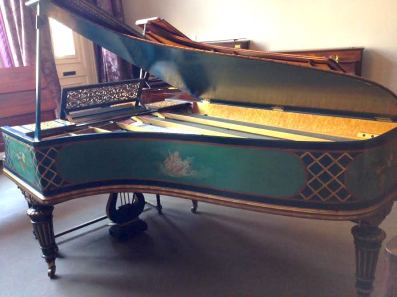
Mina Gajic’s historic 1895 Érard piano.

That piano was manufactured in Paris in 1895 by Érard and belongs to pianist Mina Gajic, the festival’s director of education and outreach. (Further information on the straight-strung Érard is here.) It was used in a concert of music by Bach and Brahms presented in 2016 that included the Brahms Horn Trio played on a 19th-century-style natural horn (without valves) and a violin with natural gut strings.

The Érard will return in the coming season for “A World Transformed,” a program the encompasses the late 19th and early 20th centuries (Dec. 9, Longmont). “We are opening a new door in the 36-year history of the Bach Festival,” Carrettin says of the program. Opening with some late Romantic music by Brahms the program will move on to works by Bartók, Ives, Enescu and Berg. Gajic and her historic Érard piano will be joined for the program by Carrettin, on violin and clarinetist Richie Hawley, playing a clarinet manufactured in 1919.

zachary+carrettin

Zachary Carrettin

“What we’re looking at is an early 20th-century clarinet, a violin set up in the manner of the time with silk and gut strings and the piano from the period as well,” Carrettin says. “We are performing (the pieces on the program) as they would have been heard at that time.”

Historical instruments will also be featured on the seasons opening concert, “BachtoberFest,” a concert of chamber music by Bach, Handel, and their contemporaries (Oct. 12 Boulder, Oct. 14 Longmont); and Baroque orchestra concert that closes the season, “La Venexiana” (May 24, 2018 in Boulder, May 26 in Longmont).

For the Bach devotees in the festival audience, the culminating concert of the year may well be on March 15, in Boulder only. Titled “Eternal Spirit,” the program features four of Bach’s best known cantatas: No. 4, Christ lag in Todesbanden; No. 50, Nun is das Heil und die Kraft; No. 61, Nun kumm, der Heiden Heiland; and No. 63, Christen, ätzet diesen Tag.

“These works are chosen because of their musical content,” Carrettin says. “The four masterworks represent different periods of Bach’s life, from 1707 to the 1720s. Liturgically they come from different parts of the church year. One special work on the program is Cantata 50, which is a single movement double chorus, based on the chorale Nun kumm, der Heiden Heiland.

 “This work has trumpets and timpani and orchestra, and where we connect season to season is that last October we did three different settings of that chorale, for organ and choir and strings. And now we bring back that chorale in a rarely performed masterwork of Bach.”


Boulder Bach Festival
Zachary Carrettin, artistic director
2017–18 Season

Bachtoberfest
7:30 p.m. Thursday, Oct. 12, Seventh Day Adventist Church, 345 Mapleton Ave., Boulder
7:30 p.m. Saturday, Oct. 14, Stewart Auditorium, Longmont Museum, Longmont
—Program of chamber music by Bach, Händel and other Baroque composers performed on historical instruments

A World Transformed
7:30 p.m. Saturday, Dec. 9, Stewart Auditorium, Longmont
—Music of the late 19th and early 20th centuries performed on historical instruments

Schwartz-Bournaki in Recital
7:30 p.m. Thursday, Feb. 8, Seventh Day Adventist Church, Boulder
7:30 p.m. Saturday, Feb. 10, Stewart Auditorium, Longmont
—A recital by the New York- based duo of Julian Schwartz, cello, and Marika Bournaki, piano, winners of the 2016 first Boulder International Chamber Music Competition.

Eternal Spirit
7:30 p.m. Thursday, March 15, Seventh Day Adventist Church, Boulder
—Four Bach cantatas performed buy the Boulder Bach Festival Chorus, orchestra and soloists.

La Venexiana
7:30 p.m. Thursday, May 24, Seventh Day Adventist Church, Boulder
7:30 p.m. Saturday, May 26, Stewart Auditorium, Longmont
—Vocal and instrumental music from Venice, including works of Giovanni Gabrieli, Monteverdi, Merulo and Vivaldi, plus the Bach Orchestral Suite in B minor.

All-access passes available at (720) 507-5052.