Elliot Moore finds the Longmont Symphony “fun to drive” going into a new season

Opening program features music by Bernstein, Shostakovich and Mahler

By Peter Alexander Oct. 1 at 10 p.m.

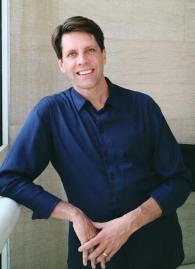
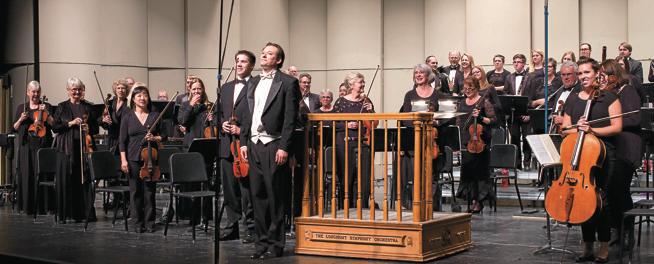
Elliot Moore is energized and inspired as he starts his second year as music director of the Longmont Symphony.
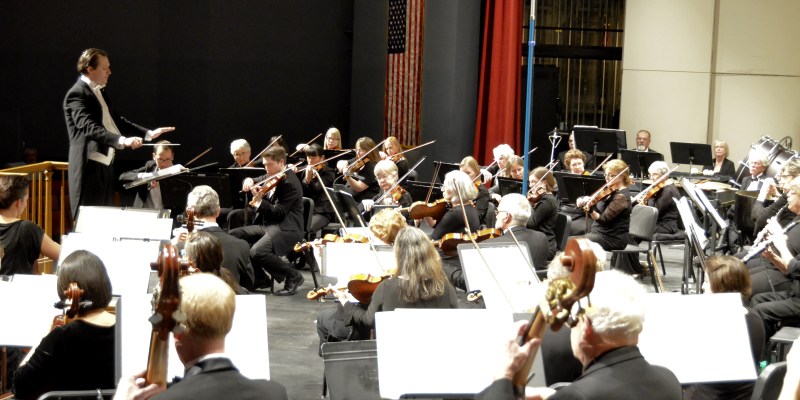
Elliot Moore with the Longmont Symphony 3.smiling_elk

Elliot Moore with the Longmont Symphony

“I often think about conducting an orchestra as like driving a car,” he says, “and the orchestra is really fun to drive right now. How I’m able to do my job as music director has changed in a very positive way, because the level of musicianship continues to ascend.”

For evidence of the change, one need look no further than the recent auditions for places in the LSO, which kept the auditioning committee busy until 1 a.m. “It’s my understanding that we had about a 400% increase in people applying for the Longmont Symphony,” Moore says.

“I think that means that there is excitement about the Symphony, and that people want to take part in it. And it shows that the future of music in Longmont is very, very bright.”

The first concert of the 2018–19 season, a celebration of this year’s Bernstein Centennial, is Saturday (Oct. 6) in Vance Brand Civic Auditorium. Unlike other Bernstein concerts this year, the LSO is not playing any of the well known, popular works that we have heard recently. Instead, they will present one of the great under-appreciated works that Bernstein wrote, the Chichester Psalms.

Other works on the program are pieces by composers that Bernstein was associated with as conductor: Shostakovich’s aptly named Festive Overture, and Mahler’s Symphony No. 1.
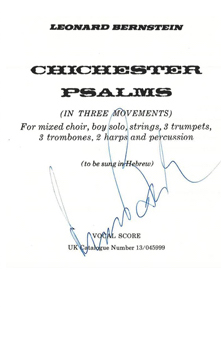
chichester-psalms-1447933896The Chichester Psalms were composed in 1965 for a choral festival at Chichester Cathedral in England. The Hebrew text comes from several of the Psalms, including Psalm 23 (“The Lord is my Shepherd”). The setting is for a small orchestra of brass, percussion, two harps and strings, with a boy soprano, chorus and soloists.

The boy soprano will be Wade Hartrick of the Boulder Children’s Chorale, Kate Klotz, artistic director. The choral voices will be from the Longmont Chorale, Scott Hamlin, conductor.

The Chichester Psalms were written during the Vietnam War, and their call for unity and peace had both religious and political meanings. “One of the things that I find compelling about (the Chichester Psalms) is the overarching message about unity, and how unity is needed in the world,” Moore says.

“It’s beautiful how Bernstein uses melody and harmony to underscore his message, and the need for peace in the world. I find that to be a compelling message on the one hand, and today in our current political climate.”
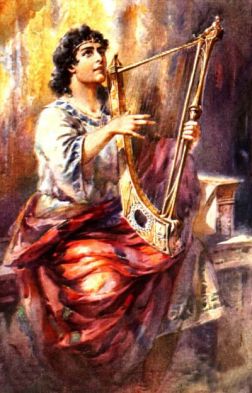
King David

King David as a boy, with harp

The second of the three movements distills Bernstein’s message. It opens with a beautiful melody, the boy soprano singing the 23rd Psalm (“The Lord is my Shepherd”) with harp accompaniment. “The role of the harps is critical because the Psalms were written by King David,” Moore explains. “When David was a boy, he played the harp and sang to King Saul. That’s why there’s a boy soprano accompanied by harps at the beginning of the second movement.”

The melody sung by the boy is taken up by the women of the chorus, who are suddenly interrupted by a violent theme in the men’s voices, singing the 2nd Psalm (“Why do the nations rage”). In the end, the women return with the opening theme, and the two different musical ideas—representing peace and war—are juxtaposed until the end of the movement.

The third movement ends with a moment of hopefulness, as the full chorus sings the 133rd Psalm (“Behold how good and how pleasant it is, for brethren to dwell together in unity”). In a moment of exquisite tone painting, the voices of the choir gently resolve to a single note on the Hebrew word “Yaḥad,” meaning “unity.”

“There’s a lot of tone painting that’s in here,” Moore says. “Its’ a rich, rich score, an absolutely fabulous piece.”

Moore programmed the Shostakovich Festive Overture not only because it is a brilliant concert opener, but because Bernstein programmed and recorded so much of Shostakovich’s music. Shostakovich heard Bernstein performing his Fifth Symphony and other works when the New York Philharmonic toured the Soviet countries in 1959.

Bernstein was known for his flamboyant and exuberant performances, which were not always faithful to the pessimistic side of the Russian composer. “Lenny sometimes did some things in Shostakovich’s music that truly weren’t in the score,” Moore says, “but Shostakovich adored Bernstein.”
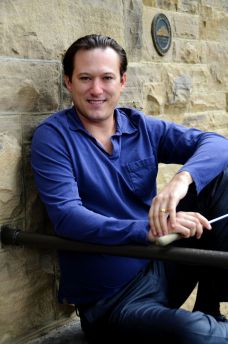
LSO Music Director Elliot Moore 2_preview

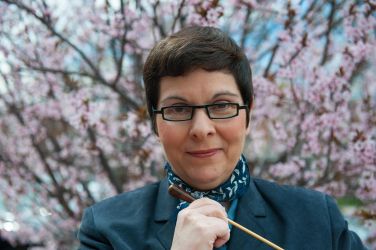
Elliot Moore

The programming of the Mahler symphony points to parallels between the two composer/conductors. “My intention was to draw the link between Bernstein and Mahler, both of whom were music directors of the New York Philharmonic,” Moore says. “At the same time I think there’s a subtler message, that conductors have a role in bringing great music to their audiences, and Bernstein did that with Mahler.”

Moore also sees a link to the theme of the entire season of the LSO. which is “Musical Journeys.” “Mahler’s First Symphony is absolutely a musical journey,” he says. Even before the First Symphony, Mahler had written his “Songs of a Wayfarer,” which described the loss of an unrequited love.

“He continues that narrative in the First Symphony, describing how he’s able to overcome (the loss),” Moore says. “He describes a whole journey that is a beautiful one to know about, a beautiful one to learn about, a beautiful one to listen to and experience in the concert hall, with this First Symphony.

“So this symphony goes along with what we are about this season, which is taking people on a journey.”

# # # # #
20170927__29AELSO~1

“Happy Birthday, Lenny!”
Longmont Symphony, Elliot Moore, conductor
With Wade Hartrick, boy soprano

7:30 p.m. Saturday, Oct. 6
Vance Brand Auditorium

Shostakovich: Festive Overture
Bernstein: Chichester Psalms
Mahler: Symphony No. 1

Tickets

NOTE: Corrected Oct. 8 to state that Wade Hartrick is a member of the Boulder Children’s Chorale, not the Colorado Children’s Chorale as was originally written.
Boulder Phil opens 2018–19 season with music of John Williams

Music from Star Wars, Jaws, Raiders of the Lost Ark, E.T., and more

By Peter Alexander Sept. 25 at 10:15 p.m.

BPO.Macky.2

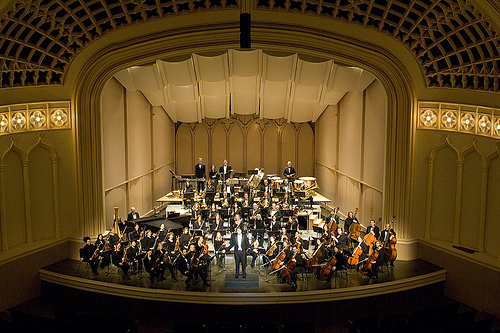
Boulder Philharmonic Orchestra

From Jaws to Harry Potter and Star Wars, John Williams has written some of the most familiar music of the past 45 years, across generations, social classes and all varieties of musical taste.

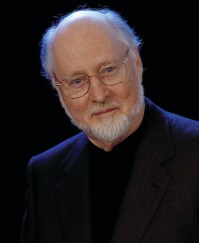
John_Williams_preview

Composer John Williams

“I dare say that Williams is a well known entity” Michael Butterman, music director of the Boulder Philharmonic, says with a smile. And so he admits that the orchestra is not breaking new ground when they perform “A Tribute to John Williams” as their opening event of the 2018–19 season, Saturday (Sept. 29) in Macky Auditorium.

“This (concert) is more in the camp of wanting to create experiences that are broadly appealing to as wide a swath of the community as possible,” Butterman says. “Williams’s music has an appeal to people who love great orchestral sonorities, as well as people who love any of the great movies that he’s scored.”

To reach that broad audience, he and the orchestra are presenting music from some of Williams’s best known films, including Jaws—his first big hit, from 1975—Star Wars (1977), Raiders of the Lost Ark (1981), E.T. (1982), Jurassic Park (1993), and Harry Potter and the Sorcerer’s Stone (2004). He also selected music from some less familiar films, including The Cowboys (1972), The Terminal (2004) and Memoirs of a Geisha (2005).

MB-jiah 1

Michael Butterman

Butterman’s aim in choosing music for the concert was to showcase the wide variety of styles that Williams can adopt in his scores. “There’s really just no end to the variety that this guy is capable of,” he says. “If there is a discovery to be made here, or at least a reminder, it’s that he has an ability to write in a huge variety of styles, and do it really effectively in each one.”

If Williams is known for anything to students of film music, it’s not his originality, but his ability to assimilate many different styles, and to create a mood in just a few notes. For example, it is no secret that the “Imperial March” from Star Wars has a striking resemblance to “Mars the Bringer of War” from Holst’s Planets. Nor is it disputed that it perfectly creates the impression of grandeur and menace that the forces of The Empire require.

rs_1024x759-170222163528-1024.John-Williams-Oscar.kg.022217

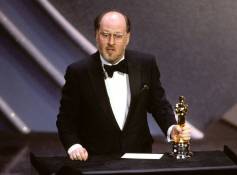
John Williams with one of his Oscars

That ability to capture exactly the right style to pull the movie audience into the scene is the essence of great film music. And John Williams has it to such a degree that he has been nominated for no fewer than 50 Academy Awards, and has won five of the golden statuettes.

“The music is there to nonverbally transport the listener to a time and place, and he can do that with just a few notes or a couple of chords,” Butterman says. “There are works where he channels a particular culture, like Memoirs of a Geisha where he’s writing in a style that is evocative of Asian music, or Angela’s Ashes where there’s an Irish or British Isles feel to the music, or “Viktor’s Tale”from The Terminal where he’s channeling a sort of folksy central European feel.”

The concert will open with the “Superman March”—in case you forgot, Williams wrote music that was used in all four of the Christopher Reeves films (1978–87). Early on you will hear what is likely the most famous and terrifying two-note theme ever written, and the program ends with one of the greatest opening fanfares of any film—but I don’t have to identify those, do I?

Hint: Both scores won an Academy Award.

# # # # #

BPO_Sept-2018-concert2

A Tribute to John Williams
Boulder Philharmonic Orchestra, Michael Butterman, conductor
7:30 pm. Saturday, Sept. 29
Macky Auditorium

Music from Star Wars, Jaws, Raiders of the Lost Ark, E.T., Jurassic Park, Harry Potter and the Sorcerer’s Stone, and other films

Tickets


Takacs Quartet presents campus series with new second violinist Harumi Rhodes

Programs from the heart of the chamber music repertoire

By Peter Alexander Sept. 20 at 7:30 p.m.

09-Takacs-Quartet-Amanda-Tipton-photography.jpg

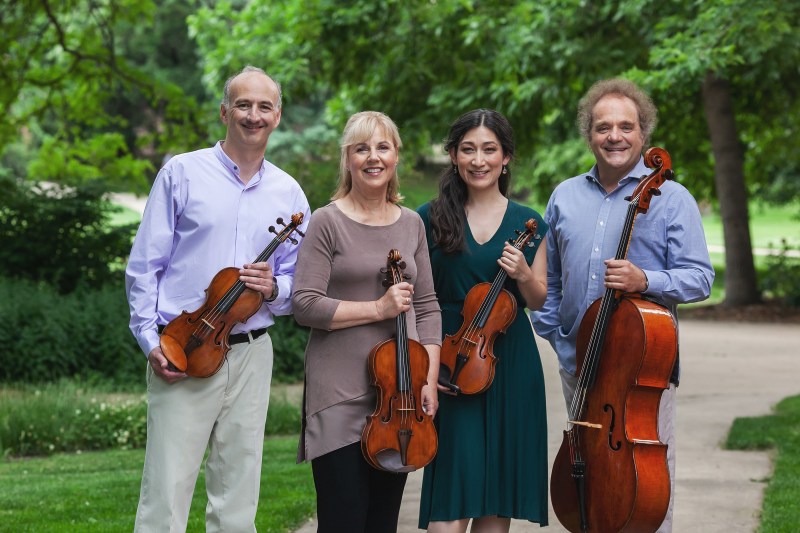
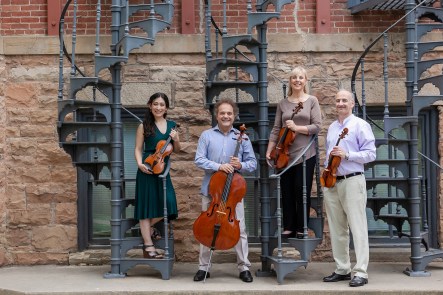
Takacs Quartet: Edward Dusinberre, Geraldine Walther, Harumi Rhodes, and András Fejér (L-R). Photo by Amanda Tipton

The Takacs Quartet launches their 2018–19 CU campus concert series, the first with new second violinist Harumi Rhodes, Sunday and Monday (Sept. 23–24).

Rhodes joined the quartet last spring, following the retirement of founding second violinist Károly Schranz. She has made one recording and toured with the quartet over the summer, but this will be her first year-long series as a member.

The program for the fall’s opening concerts features works by three great composers of chamber music for strings: Joseph Haydn, Schubert and Shostakovich. Two of the pieces are not well known, as they are not performed often—Haydn’s Quartet in D major, op. 20 no. 4, and Shostakovich’s String Quartet No. 4. In contrast, the third work on the program, Schubert’s String Quintet in C major, is one of the greatest and most beloved chamber works of the 19th century.

Cellist David Requiro, a member of the College of Music faculty, will join the members of Takacs for the Schubert’s Quintet.

The second concert of the fall semester is scheduled for Oct. 28 and 29. It will feature another piece by Haydn—the Quartet in D minor, op. 76—alongside works by Bartók and Brahms. Notably, both concerts feature composers considered to be the heart of the Classic-Romantic chamber music repertoire.

Takacs.Dusinberre.CUphoto-X2

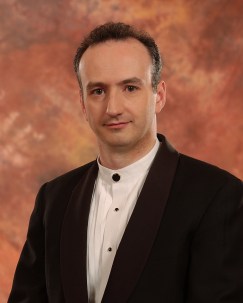
Edward Dusinberre

You might think that changing members in a well tuned ensemble such as the Takacs Quartet would require difficult adjustments, but Edward Dusinberre, the quartet’s first violinist, says that has not been the case. “We feel very comfortable with her,” he says of Rhodes. “We’re having a great time. She’s got chamber music and string quartets in her blood.”

He also points out that playing in a string quartet is always a process of negotiation among the ensemble members, and Rhodes fits into the environment very well. “When you’re playing chamber music, every phrase is an adjustment,” he says. “She’s got a very strong artistic voice, and that’s one of the reasons we chose her.

“Within the group there are always three or four different opinions, so that doesn’t change. It’s not like she’s coming into a situation where three of us have a standardized view of how things should be played. It’s totally not like that, so (adding Rhodes) feels like continuing the good work.”

Rhodes1

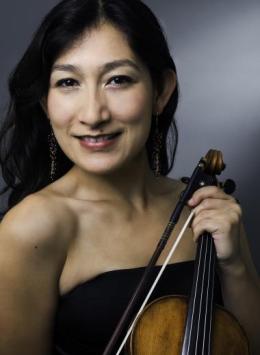
Harumi Rhodes

The transition has been very positive for Rhodes, too. She was a unable to speak to me, but sent some written observations: “Everything about joining the Takacs has changed my life for the better,” she wrote. “As soon as I joined the Takacs, I assumed a new identity. Filling this role with pride and joy is what every bone in my body was made to do.”

She has played chamber music for many years, but she has found new pleasures in the Takacs. “The biggest surprise has been the luxury of performing the same piece many times. I’ve always enjoyed the process of rehearsing and performing. But the trajectory is completely different when you have a life-long relationship with this music in this way, a relationship that spans many concerts in one season. This is new to me.”

Her email to me concluded with great enthusiasm: “I look at the season ahead and can’t wait to dive in.”

Dusinberre says that whether the pieces are familiar or not, everything on the Sept. 23–24 concerts is music the quartet enjoys. “Haydn’s Op. 20 No. 4 is one of our favorite pieces,” he says. “It’s got a slow movement where the solos are very well distributed between the parts. The minuet is tremendously fun, sort of off-kilter—Haydn tricking his audience, tricking us sometimes!”

According to Dusinberre, the first movement is one of the places where quartet playing does require negotiation among the members. “It’s got a rather simple opening theme that comes back many times, in different ways. There’s different ways of bowing it, and it’s like opening a can of worms to find out what bowing we’re going to do. We’ve already had some entertaining rehearsals on that.”

David Requiro

Cellist David Requiro

The Shostakovich Fourth Quartet is actually one that the Takacs has not played before. “It’s quite fun because it’s new for all of us, and not just Harumi, and I think that’s quite nice, because it sort of levels the playing field,” he says. “It’s a wonderful piece (that has) a strong sense of folk melodies early in the piece, and then it turns into something a bit darker and more dramatic and more exciting.”

The Schubert Quintet in C major is part of larger plans by the quartet. “We’re playing (the quintet) on the road with David (Requiro), at the White Lights Festival at Lincoln Center in October,” Dusinberre says.

“He’s a wonderful player. We’re very excited to explore this piece with him.”

# # # # #

Takacs Quartet
CU Fall Concerts

04-Takacs-Quartet-Amanda-Tipton-photography.jpg

Takacs Quartet. Photo by Amanda Tipton.

4 p.m. Sunday, Sept. 23, and 7:30 p.m. Monday, Sept. 24
Grusin Music Hall

Haydn: String Quartet in D Major, op. 20 no. 4
Shostakovich: String Quartet No. 4 in D Major, op. 83
Schubert: String Quintet in C Major, D956
With David Requiro, cello

4 p.m. Sunday, Oct. 28, and 7:30 p.m. Monday, Oct. 29
Grusin Music Hall

Haydn: String Quartet No. 2 in D minor, op. 76
Bartók: String Quartet No. 1
Brahms: String Quartet No. 2 in A minor, op. 51

Tickets

“Women Among Men” featured by Pro Musica Colorado Sept. 22-23

Polish composer Grazyna Bacewicz is ”a great discovery”

By Peter Alexander Sept. 20 at 8 p.m.

“Women Among Men,” a concert by the Pro Musica Colorado Chamber Orchestra, will feature a woman conductor, two women soloists, and a woman composer—and some male composers as well.

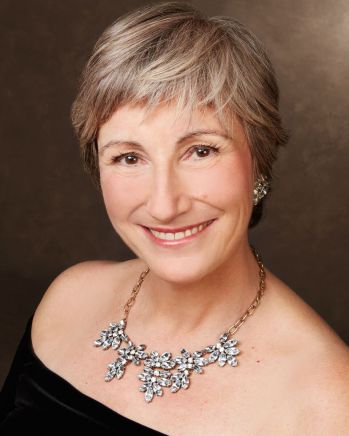
Photography by Glenn Ross. http://on.fb.me/16KNsgK

Cynthia Katsarelis. Photography by Glenn Ross.

The conductor is Cynthia Katsarelis, Pro Musica’s music director. The soloists are violinist Yumi Hwang-Williams, concertmaster of the Colorado Symphony, and soprano Amanda Balestrieri, artistic director of Seicento Baroque Ensemble. And the composer is Grazyna Bacewicz, who Katsarelis describes as “a great discovery.”

Other composers on the program are J.S. Bach, Joseph Haydn and Mozart. Performances will be Saturday in Denver and Sunday afternoon in Boulder (Sept.  22–23).

Katsarelis points out that the program is filled cheerful pieces. Recent seasons have seen Pro Musica playing some pretty dark, serious works—musical reflections on death, the martyrdom of Joan of Arc, and a tragic shipwreck, for example. “I decided we should do a happy concert for once,” she says.

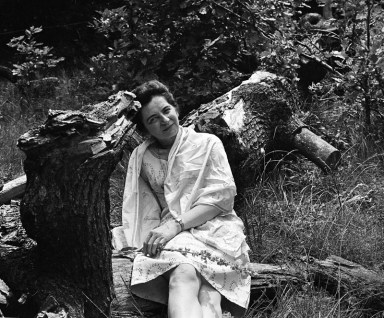
Grazyna Bacewicz

Grazyna Bacewicz

Bacewicz, Katsarelis’s “great discovery,” is likely better known to violinists than to the audience. She was a virtuoso violinist as well as composer, and she wrote a lot of music for the violin. “I’m going to get her violin sonatas and play those,” Katsarelis says. “I’m really enjoying her music!”

Born in Poland in 1909, Bacewicz lived and worked through the middle of the 20thcentury. The Concerto for String Orchestra was written in 1948, and reflects the clean and bracing neo-classical style of the era between the wars.

“Her aesthetic likes clarity and orchestration that has space,” Katsarelis says. “She didn’t like the giant, dense sound blocks, and in that respect she reminds me of Ravel.

“There are areas that have an impressionistic sound, there are areas that have a Stravinsky-like sound, and sometimes we get eastern European rhythms that are reminiscent of Shostakovich. She’s obviously aware of Bach, and the coloristic effects of Stravinsky, Debussy, Ravel, Bartok, and Shostakovich. Without anything sounding derivative, it just sounds like she’s got a really wonderful broad palette.”

A word that Katsarelis uses to describe Bacewicz’s music is “lively,” but she also points out that it is not music that is difficult or unfriendly to audiences. “She knows how to drive a line, but it’s nothing intimidating or scary,” she says. “You can really take it in and enjoy it deeply.”

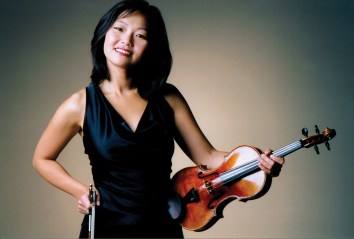
yumi-hip

Yumi Hwang-Williams

Katsarelis knew Hwang Williams before either moved to Colorado, when Hwang-Williams was principal second violin in the Cincinnati Symphony and Katsarelis was an apprentice conductor with the orchestra. Since they both settled in Colorado, Hwang-Williams has been a soloist with Pro Musica several times.

On this occasion, she is playing one of her favorite pieces, Haydn’s Violin Concerto in C major. “It’s a wonderful, beautiful, ebullient, joyful work,” she says. “I have loved this concerto for a long time, and I’ve always wanted to play it.”

Although it is not a big Romantic showpiece, Hwang-Williams says that the concerto has its own challenges. “There’s a lot of virtuosity,” she says. “It’s just a different kind of virtuosity. The challenge of playing classical repertoire well is that you have to have a lot of refinement in your playing. You need crystal clear intonation and articulation, so what you hear is the purity of the violin, in the tone and phrasing.”

Katsarelis says “It’s just a really wonderful piece, written around the time of his early to middle symphonies. It’s a mature work, from the beginning of his peak—which then lasted for 50 more years!”

The concerto will be followed by a piece that Katsarelis calls “a bonbon”: Die Schätzbarkeit der weiten Erde (The riches of the world), an aria for soprano and violin with strings from Bach’s Cantata No. 204. “Yumi has been talking to me about the wonderful Bach arias that have violin solos,” she explains.

Amanda Balastrieri.2

Amanda Balestrieri

“The concert was a little bit short, so there would be room to do a wonderful bon-bon. The music is charming—and of course, Amanda Balestrieri is the perfect person for this, both because of her voice quality and her musical intelligence.”

The fourth piece on the program is Mozart’s Serenade in D major, K239, known as the “Serenata Notturna” (Nocturnal serenade). “When I was putting together the program, I was shuffling through pieces for string orchestra,” Katsarelis says. “I’d forgotten about this, except that it has two orchestras, the quartet of principals and the string orchestra with also timpani. I looked into it, and I was delighted by the piece right away!”

As Mozart would have done, Pro Musica will separate the two performing groups—”so that we get that aural, spatial surround sound,” Katsarelis says.

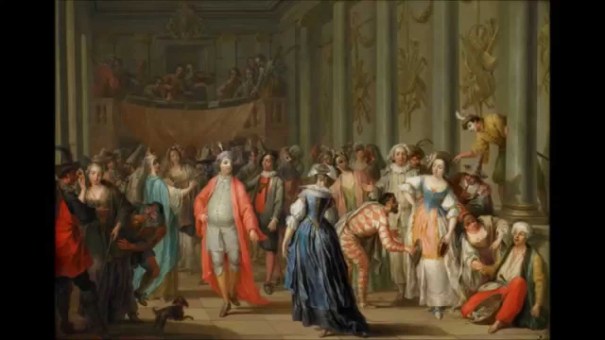
Mozart’s serenades, were usually written for celebrations of some kind. The occasion for the “Serenata Notturna” is not known, but was most likely a masked ball during Carnival season. Katsarelis happily suggests that “it’s not difficult to imagine intrigue going on while they were playing this at a masked ball—where you can get away with more than at a non-masked ball!”

maxresdefault

Viennese masked ball

To add to the enjoyment of his Viennese audiences, Mozart incorporated some melodies hat would have been recognized at the time. “That would have added to their delight,” Katsarelis says.  “But the music still carries that delight, even if we don’t know the songs.”

# # # # #

Women Among Men
with Violinist Yumi Hwang-Williams
Amanda Balestrieri, soprano
Cynthia Katsarelis, conductor

7:30 p.m. Saturday, September 22 
Central Presbyterian Church, 1660 Sherman St., Denver

2 p.m. Sunday, September 23
Mountain View United Methodist, 355 Ponca Pl., Boulder

Mozart: Serenade in D major K. 239, Serenata notturna
Grazyna Bacewicz: Concerto for String Orchestra
Haydn: Violin Concerto in C Major
J.S. Bach: Die Schätzbarkeit der weiten Erde

Tickets 


Prominent guests come to CU to join Bernstein celebration

Composer’s daughter, former NY Phil concertmaster, scholar visit College of Music

By Peter Alexander Sept. 20 at 12:25 p.m.

JB_HeadShot3_Steven J. Sherman

Jamie Bernstein. Photo by Steven J. Sherman.

The University of Colorado College of Music has joined the rest of the musical world to celebrate the centennial of the unique American composer, conductor, teacher, writer, lecturer and humanitarian Leonard Bernstein.

Just about the entire College of Music is represented in the months-long festival, from individual faculty members to the University Symphony, the Eklund Opera Program and even the Marching Band.

The celebration gains an extra dimension starting Monday, Sept. 24, with the arrival on campus of three prominent guests: Jamie Bernstein, the composer’s daughter and author of the recently released memoir Famous Father Girl; violinist Glenn Dicterow, concertmaster of the New York Philharmonic for 34 years who played many performances Bernstein conducted; and Carol Oja, William Powell Mason Professor of Music at Harvard University and one of the leading Bernstein scholars.

The three guests will open the week with a joint appearance Monday afternoon. Oja will present a keynote address for the celebration, followed by a public discussion moderated by Susan Thomas, director of the CU American Music Research Center. Each of the guests will then participate in individual events during the rest of the week.

Read more in Boulder Weekly.

# # # # #

CU Bernstein at 100
Events featuring guest artists
All events are free and open to the public

Public Talk with Jamie Bernstein, Glenn Dicterow and Carol Oja
Moderated by Susan Thomas, director of the CM American Research Center
4 p.m. Monday, Sept. 24
Grusin Music Hall

Faculty Tuesday
Chamber Music of Leonard Bernstein, narrated by Jamie Bernstein
CU Faculty and Student performers
7:30 p.m. Tuesday, Sept. 25
Grusin Music Hall

“Citizen, Conductor, Composer: The Continuing Legacy of Leonard Bernstein”
Conversation with Carol Oja, presented by The Entrepreneurship Center for Music
5 p.m. Wednesday, Sept.. 24
Chamber Hall (C199), Imig Music Building

CU Symphony Orchestra
Gary Lewis, conductor, with Glenn Dicterow, violin
Jamie Bernstein, narrator
7:30 p.m. Thursday, Sept. 27
Mackey Auditorium

Bernstein: Overture from Candide
Bernstein: Suite from On the Waterfront
Samuel Barber: Violin Concerto

Master Class with Glenn Dicterow, violin
3 p.m. Friday, Sept. 28
Grusin Music Hall

Boulder Dairy Arts Center presents unusual music-video performance

Pianist David Korevaar and video artist Betsy Tobin present “Motion and Stillness”

By Peter Alexander

“Motion and Stillness,” a collaborative music and visual performance, will bring together pianist David Korevaar and multidisciplinary video artist Betsy Tobin at 7 p.m. Wednesday, Sept. 19, at the Dairy Arts Center.

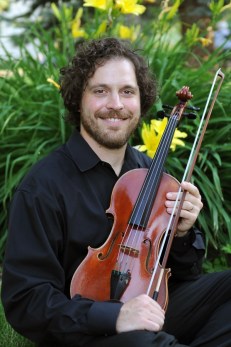
Pianist David Korevaar with the University of Colorado at Boulder College of Music

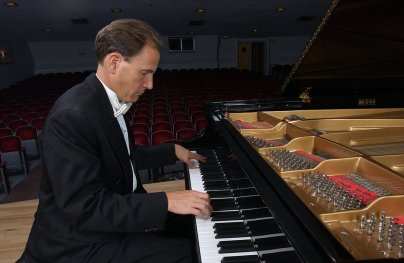
David Korevaar

Korevaar, the Peter and Helen Weil Professor of Piano in the CU College of Music, is one of the most active performers in the region. A member of the Boulder Piano Quartet, he often performs chamber music with his faculty colleagues and appears as concerto soloist world wide.

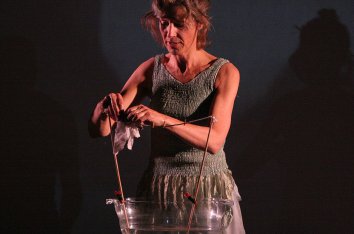
Tobin is director of Boulder’s Now or Never Theater, presenting unique theater performances in Colorado and elsewhere. Her performances routinely incorporate puppets, live actors, dancers, shadow theater and video.

For the Dairy performance, Korevaar will play music of Lowell Liebermann, whose works he has recorded. He also organized a festival of Liebermann’s music last year at CU. He will play two impromptus and two nocturnes by Liebermann, as well as works by Italian composer Luigi Perrachio, and the “Tempest” Sonata of Beethoven.

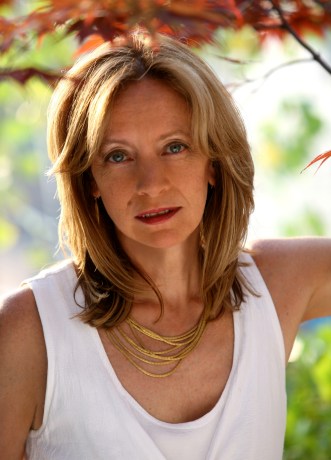
Betsy Tobin

Betsy Tobin

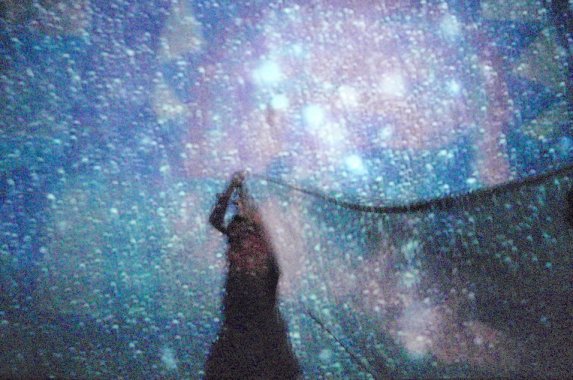
In a written communication, Korevaar said he is intrigued by working with Tobin. “She is going to do a combination of video projections and some shadow work with the music,” he wrote. “What I’ve seen so far has been interesting and engaging, but most of it will be coming together in the days just before the program.

“It’s fun to collaborate with a visual person, but also kind of new for me, so I’m looking forward to seeing how it all comes out.”

Melissa Fathman, the executive director of the Dairy Center, has said that the program is based in the concept of synesthesia, in which perceptions in one sense—such as sound—are tied to perceptions in other senses—such as vision or taste. Examples include people for whom numbers have colors, or days of the week have specific shapes. In music, the association of keys or pitches with specific colors or even tastes have been reported.

“It was my lifelong fascination with synesthesia that led to the idea for ‘Motion and Stillness,’” Fathman has written. “The recipe was quite simple: introduce two wonderfully gifted artists—a pianist and a videographer/performance artist—and invite them to create a breathtaking evening of sights and sounds. And then eagerly await their creation.”
# # # # #

Now or Never image

“Motion and Stillness”
David Korevaar, piano, and Betsy Tobin, video artist
7 p.m. Wednesday, Sept. 19
Dairy Arts Center

Music by Lowell Liebermann, Luigi Perrachio, and Ludwig van Beethoven

Tickets

Bernstein at 100 at CU

CU Boulder and College of Music join in world-wide celebration

By Peter Alexander

It started Aug. 31 with the CU Marching Band’s half-time show.

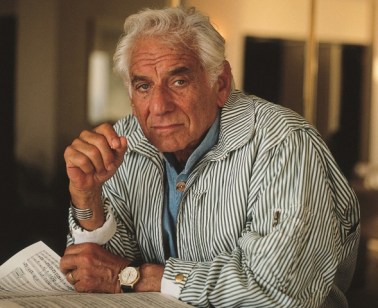
Bernstein_2000_07_cropped

Leonard Bernstein

“It” is the CU Boulder contribution to the world-wide juggernaut that is the 2018 centennial of Leonard Bernstein’s birth. If the CU-CSU “Rocky Mountain Showdown” seems an unusual place to celebrate the former director of the New York Philharmonic, Leonard Bernstein is a unique figure in American music. He famously wrote everything from serious symphonies to smash-hit Broadway shows. Indeed, he was such a protean figure that he is identified on the university’s Webpage as a “composer, conductor, educator, musician, cultural ambassador, and humanitarian.

For the record, the marching band played arrangements from West Side Story at the CU-CSU game in Denver. They will repeat the performance, with assistance from the Dance and Theatre Department at the Folsom Field halftime shows Saturday, Sept. 15, and Friday, Sept. 28.

Locally, the observance of the Bernstein centennial actually started long before August. Last April, the Boulder Philharmonic presented a sold-out performance of West Side Story in concert, and several of the concerts at the Colorado Music Festival this last summer were arranged around music Bernstein wrote, conducted, or was influenced by.

Cooperstock1

Andrew Cooperstock

With nearly 20 events on the calendar, the CU celebration will be the most wide-ranging Bernstein festival in the region. “We wanted to feature the University of Colorado, and involve as much of the College of Music as possible,” says Andrew Cooperstock, professor of piano in the College of Music and artistic director of CU Bernstein at 100.

“I think we’ve done that pretty well. We have faculty chamber music, we have student performances, we have all of the major ensembles, opera and wind symphony, and orchestra—and marching band! We have music theory and musicology as well, and extramural partnerships with the Program in Jewish Studies and the Department of Cinema Studies and Moving Image Arts.”

Cooperstock also noted the wide variety of Bernstein’s interests as a motivating aspect for the broad range of events. “Bernstein said he didn’t differentiate among different kinds of music,” Cooperstock says. “He had an interest in the Beatles, and Mahler, and jazz, and everything in between.”

Information about the CU Bernstein at 100 project can be found on their Web page, which also includes a calendar of all the CU Bernstein events. The calendar includes concerts and other performances, lectures, a masterclass, film screenings, and a full production of West Side Story by the Eklund Opera Theater. You can also find a page about Bernstein that has a brief bio and links to videos and essays about various aspects of his career written by people who knew him.

Jamie.b

Jamie Bernstein, the composer/conductor’s daughter

Among the authors is Jamie Bernstein, Leonard Bernstein’s daughter, whose remarkable book Famous Father Girl: A memoir of growing up Bernstein was published in June. Jamie Bernstein will be one of three special guests at CU during the week of Sept. 24–28, along with Glenn Dicterow, former concertmaster of the New York Philharmonic Orchestra, and Carol Oja, the William Powell Mason Professor of Music at Harvard University and one of the leading scholars on Bernstein and his music.

Events involving these guests will be covered in more detail later this month.


Green Room Artists open the new season with music about night and breezes

Pieces by Takemitsu, Chen Yi, Saariaho and Martinů comprise the unusual program

By Peter Alexander Aug. 21 at 10:42 p.m.

Green Room Artists, the unconventional chamber music collective founded last year by violinist Leslee Smucker to explore some little-known corners of repertoire, this fall gets a jump on other classical music groups’ fall seasons with a concert titled “Night Spaces,” at 7 pm. Thursday and Friday (Aug. 23 and 24).

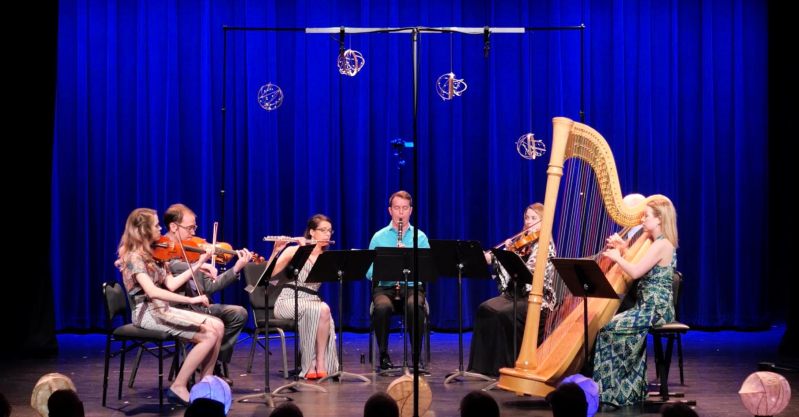
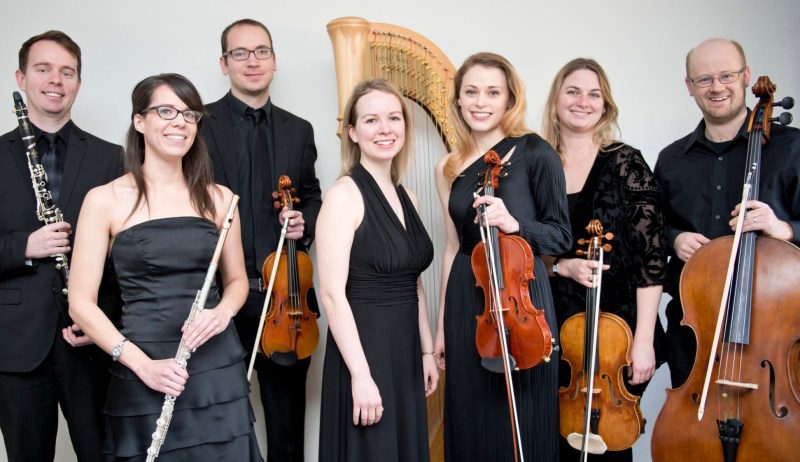
GreenRoom.01

Members of Green Room Artists performing last year in e-Town Hall

Like last year’s program, which was motivated by an unpublished piece by the French composer Gabriel Fauré, “Night Spaces” features pieces that are off the beaten path. Works on the program are by composers whose names may or may not be familiar to Boulder audiences, and all whom came from countries outside the U.S.: Tōru Takemitsu (Japan), Chen Yi (China), Kaija Saariaho (Finland) and Bohuslav Martinů (Czech Republic). The ensembles range from duos for violin and cello to a sextet with winds, strings and piano.

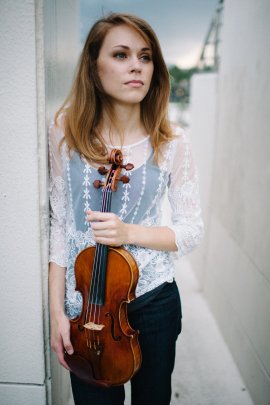
Leslee.S01

Violinist and Green Room Artists founder LesleeSmucker

“I wanted to do a companion concert to our last one, in that there’s some bridges in sounds,” Smucker says. “This one focuses on both the conception of the historical nocturne, and the beauty and mystery of night music. Martinů’s Chamber Music No. 1, which has the subtitle of Les fêtes nocturnes (Nocturnal celebration), was actually the one I found first, and I just fell in love with it.”

The largest work on the program, Chamber Music No. 1 is scored for violin, viola, cello, clarinet, harp and piano, and it will close the concert. “It’s one of the last pieces Martinů wrote, and each movement is so distinct and wonderful,” Smucker says. “And Les fêtes nocturnes is like a night party, so I got really excited about that.”

From the Martinů piece, Smucker went on to find other pieces of chamber music connected to the night. The concert will open with Distance de Fèe for violin and piano by Takemitsu. Here the connection to night may be more in the sound of the music than in the original conception of the piece.

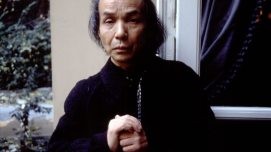
Takemitsu

Japanese composer Toru Takemitsu

It is based on a poem by surrealist Japanese poet and artist Shūzō Takiguchi about a mysterious fairy. “It describes a mythological creature living in ‘air’s labyrinth . . . it lives in the spring breeze’,” Smucker says. “I read somewhere that Takemitsu never wrote an ugly note in his life. It’s true! Everything he writes is beautiful.”

Chen Yi’s Night Thoughts for flute, cello and piano is “definitely a nocturne,” Smucker says. “Chen Yi has her own distinct voice. You can hear all of these different layers of sound, and the flute has very ornate licks. Silence plays a prominent role, interspersed with all of these great textures.”

Saariaho has become well known in the U.S. since her opera L’amour de loin (Love from afar) was produced at the Metropolitan Opera last year—the first opera by a woman presented there in more than 100 years. Her work has been known to new-music performers for many years, though, and Smucker performed her Lichtbogen (Bow of light) when she was a student at CU.

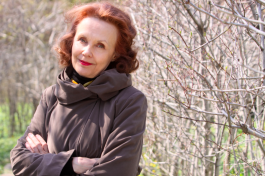
Kaija_Saariaho_Andrew_Campbell.png

Finnish composer Kaija Saariaho. Photo by Andrew Campbell.

Like Takemitsu’s piece, Saariaho’s Aure seems to be about a breeze. The composer wrote, “We were caressed by a gentle breeze that our ancient language called aure; a kind of delicate morning breeze misty and scented in the dew.”

It was originally written for violin and viola, then rescored for violin and cello, Smucker explains. “She played violin, and so she writes magnificently for violin. She uses her own extended techniques—harmonic trills and sul pont (on the bridge of the violin)—to achieve all these really interesting sounds. You have to get used to it, but it’s perfectly intuitive, once you really look at it.”

Playing on the bridge usually produces a harsh and sinister sound, but according to Smucker, Saariaho writes it differently. “We think of it as creepy, but the way she writes is twinkly and sparkly and shimmery,” she says. “She makes it pianissimo, and dolce, and it is beautiful.”

“I love the way that this concert reminisces about the elusive and mysterious quality of night music in general,” Smucker says. “Going from the very serene Night Thoughts to the sort of playful Fêtes nocturnes, I hope that people hear all angles of night music.

“All of these pieces are just extremely beautiful to me.”

# # # # #

image2

Green Room Artists

“Night Spaces”

Green Room Artists: Leslee Smucker and Timothy Cuffman, violin; Megan Healy, viola; Adam Riggs and Zack Reaves, cello; Colleen White, flute; Kellan Toohey, clarinet; Kathryn Harms, harp; and Jessica Nilles and Joshua Sawicki, piano.

7 p.m. Thursday, Aug. 23, Seventh Day Adventist Church, 345 Mapleton, Boulder
7 p.m. Friday, Aug. 24, Caffè Sole, 637 S. Broadway, Boulder

Tōru Takemitsu: Distance de Fèe for violin and piano
Chen Yi: Night Thoughts for flute, cello and [piano
Kaija Saariaho: Aure for violin and cello
Bohuslav Martinů: Chamber Music no. 1, “Les fêtes nocturnes,” for sextet

Tickets

Edited Aug. 22 to correct typos and inadvertent spacing errors.


Grace Notes: Brief news items from the classical music scene in Boulder

gracenote4 blue

By Peter Alexander Aug. 20 at 9:45 p.m.

Boulder Chamber Orchestra hires executive director—The Board of Directors of the Boulder Chamber Orchestra announced earlier this summer that Courtney Huffman has been appointed as the organization’s executive director.

The executive director’s responsibilities had been handled by Bahman Saless, founder and artistic director of the BCO. After 14 years, he is now ready to leave administrative duties to Huffman in order to focus on the music.

Picture1

Courtney Huffman

“I have loved and cherished very moment and I am ready to take a step back and lighten the administrative load knowing that the orchestra is in good hands,” he said in a news release.

Huffman first joined the BCO organization three years ago as managing director. She had left in 2017 to work for an educational non-profit organization in Denver, but returned to Boulder when offered the position with the BCO.

“I am beyond excited to be returning to Boulder to lead the orchestra,” she said in the BCO’s news release. “I have loved classical music since I was a little girl, and this organization feels like home to me. I am honored to be able to ring in the orchestra’s 15thseason.”

Grace note red

MahlerFest also hires an executive director—Colorado MahlerFest recently hired its first executive director.

DSC_1964-reduced

Ethan Hecht

In a decision announced in July, MahlerFest hired Ethan Hecht as executive director after 31 seasons of performances. MahlerFest’s announcement notes that the festival has grown since the 2015 hiring of Kenneth Woods as the its second artistic director. The festival has added both workshops and a masterclass for young conductors, and introduced “festival artists” who are featured both in the MahlerFest orchestra and in chamber music performances during the festival.

According to the announcement from the festival, “the board looked to expand the administrative operations of the festival.” Hecht has performed at MahlerFest as the orchestra’s principal violist, and he has extensive administrative experience with Colorado Music Festival and Pro Musica Colorado Chamber Orchestra. He is currently executive director of the Boulder Chorale.

MahlerFest board president David Auerbach was quoted in the announcement of Hecht’s appointment: “This is a major investment in the future of the festival . . .We are very excited [Hecht] has joined the team.”

Grace note red

Pro Music Colorado announces 2018–19 season—The Pro Musical Colorado Chamber Orchestra has announced their 2018–19 season, titled “Classical Evolution!”

Photography by Glenn Ross. http://on.fb.me/16KNsgK

Cynthia Katsarelis

The central performance and likely audience favorite of the season will be Handel’s Messiah, to be presented Saturday and Sunday, Dec. 1 and 2, at Mountain View United Methodist Church, 355 Ponca Place in Boulder. The performance under conductor Cynthia Katsarelis will feature guests soloists to be announced later and the Boulder Chamber Chorale with artistic director Vicki Burrichter.

Mountain View Methodist, which has ample on-site parking, has become the orchestra’s home base in Boulder. All three of the season’s programs will be presented there. In addition, their September concert will be performed in Denver at Central Presbyterian Church, and the season-closing concert in February will be performed at the First Baptist Church of Denver and at the Stewart Auditorium in Longmont.

Here is the full 2018-19 season of Pro Musica Colorado Chamber Orchestra:

“Women Among Men”
7:30 p.m. Saturday, Sept. 22, Central Presbyterian Church, Denver
2 pm. Sunday, Sept. 23, Mountain View Methodist Church, Boulder
Cynthia Katsarelis, conductor, with Yumi Hwang-Williams, violin, and Amanda Balestrieri, soprano

Wolfgang A. Mozart: Serenade No. 6 for Orchestra in D major K. 239, Serenata notturna
Grazyna Bacewicz: Concerto for String Orchestra
Franz Joseph Haydn: Violin Concerto in C Major
Johann Sebastian Bach: Die Schätzbarkeit der weiten Erde (The treasure of the world), aria from Cantata 204

Handel’s Messiah
Cynthia Katsarelis, conductor, with the Boulder Chamber Chorale, Vicki Burrichter, conductor, and soloists tba.
7:30 p.m. Saturday, Dec. 1, Mountain View Presbyterian Church, Boulder
3 p.m. Saturday, Dec. 2, Mountain View Presbyterian Church, Boulder

“21st-Century Style”
Cynthia Katsarelis, conductor, with Jory Vinikour, harpsichord
7:30 p.m. Friday, Feb. 22, First Baptist Church of Denver
7:30 p.m. Saturday, Feb. 23, Mountain View Methodist Church, Boulder
2 p.m. Sunday, Feb. 24, Stewart Auditorium, Longmont

Max Wolpert: Harpsichord Concerto No. 1, “Baroque in Mirror” (World Premiere)
Philip Glass: Concerto for Harpsichord and Chamber Orchestra
Joseph Haydn: Symphony No. 22 (“The Philosopher”)

More information and tickets here.

Grace note red

CU Faculty Tuesdays start Aug. 28—The CU College of Music’s “Faculty Tuesdays” series starts next week, at 7:30 p.m. Aug. 28, in Grusin Hall of the Imig Music Building.

The first of the fall series of faculty recitals at CU will feature violinist Charles Wetherbee and pianist David Korevaar, performing three works: the Sonata for Violin and Piano in B minor of Ottorino Respighi; the Poeme op. 25 by Ernest Chausson; and one of the great masterpieces of violin repertoire, Beethoven’s Violin Sonata in A major op. 47, known as the “Kreutzer” Sonata.

You may check the full fall schedule for “Faculty Tuesdays” on the College of Music Web page. Note also that if you cannot make the trip to the CU campus for any of the performances, they are live-streamed every week through this Web page.


Jean-Marie Zeitouni and Michelle DeYoung return to CMF

Performances include world premieres, iconic masterpieces

By Peter Alexander July 19 at 10:42 a.m.

Jean-Marie Zeitouni is back in town and he feels like a new man.

Jean-MarieNew1

Jean-Marie Zeitouni

Currently principal guest conductor of the Colorado Music Festival, Zeitouni was the CMF’s music director through the end of last summer. He is here for the current week, conducting concerts tonight and Sunday (July 19 and 22). Over the past year he has had surgery to reconstruct some joints, and says “I have much more energy and much less pain.”

Although he took time off for the surgeries, Zeitouni had a very good year professionally. “I did a lot of European conducting,” he says. “I managed to spend four months in Europe doing three opera productions, all French operas. I did squeeze in a tour in Brazil with my chamber orchestra, and guest conducting engagements throughout North America.”

Also coming back to CMF is mezzo-soprano Michelle DeYoung, who grew up in Colorado and sang at CMF last year. This year she is the SeiSolo Artist-in-Residence at the festival, which includes teaching a masterclass and three performances over eleven days.

1922 Michelle DeYoung HI RES_blur ART 1 version

Michelle DeYoung

In that short span, she will perform two of the iconic masterpieces of the soprano and mezzo-soprano repertoires—her range is so great that she sings both—the Liebestod from Wagner’s Tristan und Isolde and the Abschied movement from Mahler’s Das Lied von der Erde. As if that weren’t enough, she will also present two world premieres of music written for her by Australian composer Timothy Collins.

That all gets underway at 7:30 p.m. tonight in the Chautauqua Auditorium, when Zeitouni, DeYoung and the CMF Festival Orchestra will collaborate on a program that features the Wagner, the premiere of Collins’s Buch des Sängers (The singer’s book), and one of the great orchestral showpieces, Rimsky-Korsakov’s Scheherazade.

The program is built around the premiere. Collins and DeYoung have sung together, and he had written songs for her in the past. She asked him to write the orchestral pieces for her, asking that he find texts that had not been set before. His search led him to Goethe’s last poetry, contained in a large set of volumes known as the West-östlicher Divan (roughly translated as the West-Eastern Poetry Collection), which was inspired by translations of the 14th-century Persian poet Hafez. Goethe’s monumental collection actually comprises 12 books of poems, the first of which is titled Buch des Sängers. Collins set five of the poems from that volume.

All participants agree that the premiere is a special occasion. “I feel very lucky to partake in the creation of something that is so intimately connected with the performer,” Zeitouni says. “Usually, we try to fit the (performer to the) written music, but now the written music fits the performer. It’s like a glove around her voice. It fits her perfectly.

“It’s rare that we participate in this process, and I’m really honored.”

tim-collins-high-res

Composer Timothy Collins

Collins feels both honored and challenged. “It’s a big responsibility, as well as a huge honor,” he says. “How many composers are asked to write for a Grammy Award-winning mezzo soprano? I just have to think a very great deal about trying to get it right for her voice to showcase what’s so unique about it.

“It’s not just any mezzo-soprano voice, because she has extra high notes, she has particular colors in certain parts of her voice. I just have to think a very great deal about trying to get it right for her voice to showcase what’s so unique about it.”

DeYoung returns the compliments. “He knows what the strengths and weaknesses of my voice are, so when he writes for me it really suits my voice—he highlights what I think is good about my voice. (The songs) are so beautiful that it’s an honor to sing them and to create them.”

Zeitouni wanted to build a program around the premier that would fit the occasion. Because she is known for singing Wagnerian roles, he thought there should be some Wagner in the program, and she had sung the Liebestod before. Then he added Scheherazade because it compliments the Goethe texts as another example of Eastern literature, the 1001 Nights, filtered through Western ears.

For Sunday’s concert with the Chamber Orchestra, Zeitouni says he wanted “to do a concert that is all orchestra, because I want the orchestra to be the gem. Basically we chose Mother Goose, the ballet, not the suite so it’s little longer, it’s a bit more developed, and (Beethoven’s) Eroica (Symphony).

The Beethoven of course is well known to the orchestral players and classical audiences alike, but Zeitouni says it is easy to make it new. “Each time I get a new score, I get fresh ideas, I imagine the people coming and hearing this the first time. How can we get tired of playing this?

“I’m not very old, but I’ve been doing this for 25 years, and I’ve done it almost every year. I’m still looking forward (to it) in the calendar. And I’m looking forward so much to do it here.”

De Young’s masterclass will be open to the public, at 2 p.m. Saturday (July 21) in the Center for Musical Arts in Lafayette. She travels too much to have her own roster of students, but she often gives masterclasses. “I’m from Colorado, so it’s exciting to me,” she says of her role as SeiSolo Artist in Residence at the festival. “It’s a huge honor. If I can do anything to help or be involved, I want to do that.”

2328 Michelle DeYoung LO RES

Michelle DeYoung

The other premiere she will present will be part of her song recital the following Saturday (July 28) with pianist Cody Garrison from Denver. In addition to art songs by Brahms, Strauss and Barber, she will sing Collins’s Love’s Crusade, another piece that was written for her.

Love’s Crusade is a cycle of four songs, all taken from very different sources from Shakespeare to Collins’s own texts. “When I put these four songs together, it seemed that there was a common underlying theme of love, the struggle to protect love, and eternal love, so that’s where the title Love’s Crusade came from.

One song in particular Collins included because it fits DeYoung’s image as a Wagnerian soprano. Titled “Warrior Queen,” it tells of a Viking queen who leads the army to protect her husband’s realm. “I loved to present that role (of the) heroic woman who will lead the troops and that she’s the hero.

“I’m very excited to hear this for the first time in the flesh. They’re all very different.”

“That’s one thing that’s very interesting about his compositions,” DeYoung says. “In that cycle especially all four are so different. I always call him a melodist, because he writes such incredible melodies, and writes for (each individual) poem.”

DeYoung will finish her CMF residence fittingly, with the final movement of Mahler’s great song cycle Das Lied von der Erde. Titled Abschied (Farewell), this is one of the great pieces written for mezzo-soprano. That performance will be on a program with conductor Peter Oundjian and the CMF chamber orchestra at 7:30 p.m. Sunday, July 29.

# # # # #

Colorado Music Festival
Events with Jean-Mari Zeitouni, conductor, and
Michelle DeYoung, mezzo-soprano, SeiSolo Artist in Residence
July 19–29
All concerts in the Chautauqua Auditorium

Scheherazade
7:30 p.m. Thursday, July 19
Jean-Marie Zeitouni, conductor, with Michelle DeYoung, mezzo-soprano

Wagner: Prelude and Liebestod from Tristan and Isolde
Timothy Collins: Buch des Sängers (world premiere)
Rimsky-Korsakov: Scheherazade

Fresh Fridays: Scheherazade
6:30 p.m. Friday, July 20
Conductor: Jean-Marie Zeitouni, conductor

Borodin: In the Steppes of Central Asia
Rimsky-Korsakov: Scheherazade
(Played without intermission)

Vocal Masterclass
2 p.m. Saturday ,July 21
Center for Musical Arts, 200 East Baseline Road, Lafayette
Mezzo-soprano Michelle DeYoung
Free and open to the public

Beethoven’s “Eroica”
7:30 p.m. Sunday, July 22
Jean-Marie Zeitouni, conductor

Ravel: Mother Goose (full ballet)
Beethoven: Symphony No. 3 (“Eroica”)

A Poetic Evening
7:30 p.m. Saturday, July 28
Michelle DeYoung, mezzo-soprano, and Cody Garrison, piano

Timothy Collins: Love’s Crusade (World Premiere)
Music by Brahms, Strauss and Barber

Made in America
7:30 p.m. Sunday, July 29
Peter Oundjian, conductor, with Michelle DeYoung, mezzo-soprano

Joan Tower: Made in America
Stravinsky: Pulcinella Suite
Maher: Abschied from Das Lied von der Erde

Tickets
Full CMF calendar