Boulder Phil unveils new season, new motto, new logos

2019–20 season, labelled “Let’s play,” features pop elements throughout

By Peter Alexander April 7 at 3 p.m.

The Boulder Philharmonic Orchestra—now officially aka “Boulder Phil”—unveiled their coming season, a new logo, and a new motto at an event for friends and supporters of orchestra Thursday evening, April 4.
B.Phil logoAcknowledging popular practice, the name “Boulder Phil” has been incorporated into the official logo. The logo itself is actually three related symbols, all of them playfully swirling swoops and curls. And in the same spirit, the new motto, for the orchestra and for the season, is “Let’s play.”

greenwood1800-1402682617

Jonny Greenwood of Radiohead

All of that reflects the 2019–20 season’s programming, which includes some familiar classical masterpieces and also elements popular in the culture at large and with Boulder audiences: Music by Jonny Greenwood of the alt-rock band Radiohead and by Jon Lord of Deep Purple; the return to the Boulder Phil of the piano duo Anderson & Roe, a Boulder audience favorite since their 2016 performance with the orchestra; a screening of the popular film Raiders of the Lost Ark with the John Williams score performed live onstage; and a concert of “The Music of Queen.”

The mixture of popular and classical ingredients is obvious from the very first concert, titled “Gritty/Pretty” (Oct. 12–13). Two of the works on the program are by Greenwood and Lord, two successful rock musicians who have turned to classical composition. Greenwood has written several orchestral scores for film, including the Academy Award-winning There will be Blood. The Phil will perform a suite from Greenwood’s score for the film, which suggested the “Gritty” part of the concert’s title.

Jon-Lord

Jon Lord

Lord, who was both a Rock and Roll Hall of Fame inductee and honorary Doctor of Music, was a composer of orchestral scores for more than 30 years, alongside his work with Deep Purple. Boulder Phil music director Michael Butterman says that he heard Lord’s To Notice Such Things, a six-movement suite for solo flute, piano and strings, while driving, and was so taken with the music that he stopped to find out what it was.

Not being up on rock performers, he admits that he thought “who?” when the piece was announced, but he went on to learn about Lord, and the piece, which was written in memory of one of Lord’s close friends. The Phil performance will feature the orchestra’s principal flutist, Elizabeth Sadilek-Labenski.

Also on the same program is Schubert’s Fifth Symphony which, along with Lord’s score, suggested the “Pretty” part of the title.
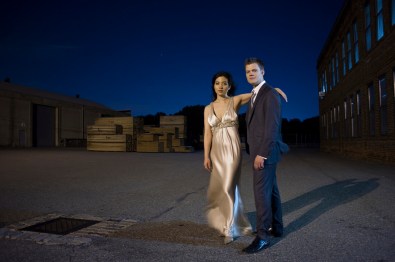
AndersonRoe+by+Ken+Schles

Anderson & Roe. Photo by Ken Schles.

Other nods to popular music in the program will be obvious: “Raiders of the Lost Ark in Concert” (Oct. 27) and “The Music of Queen” (Feb. 15, 2020) from Windborne Music, the same organization that produced “The Music of David Bowie” for the current season (May 4). Not directly from the pop music canon, but certainly popular with Boulder audiences will be the return of the piano duo Anderson and Roe (Jan. 25), whose highly entertaining performance style captivated Boulder Phil audiences in 2016.

Two pieces on the program will be arrangements by Greg Anderson, half of the duo: Ragtime alla Turca, based on Mozart’s “Rondo all turca” for piano, and Danse macabre bacchanale, based on music by Saint-Saëns. The same program will see Butterman join Anderson and Roe for Mozart’s Concerto for Three pianos, and a performance of Mozart’s joyful “Haffner” Symphony.

Z.Bailey

Zuill Bailley

Other returning guest soloists during the season will be cellist Zuill Bailey, playing Michael Daugherty’s Tales of Hemingway for cello and orchestra (Feb. 22) and violinist Jennifer Koh, playing Beethoven’s Violin Concerto (April 25). The latter concert will feature two pieces with accompanying visuals. Circuits by Cindy McTee will have visuals by computer graphics artist Aleksi Moriarty; and Alan Hovhaness’ Symphony No. 2, Mysterious Mountain, will have visuals by adventurer-composer Stephen Lias, whose compositions Gates of the Arctic and All the Songs that Nature Sings were premiered by the Boulder Phil in past seasons.

F.FLyers (2013)

Frequent Flyers Aerial Dance with the Boulder Phil (2013)

Frequent Flyers Aerial Dance will appear with the Boulder Phil for the first time since their joint performance at the Kennedy Center in Washington, D.C. in 2017, providing aerial choreography for the Butterfly Lovers Concerto by Chinese composers He Zhanhao and Chen Gang. The violin solo will be played by the Phil’s concertmaster, Charles Wetherbee.


The concert—rather hopefully titled “Rebirth of Spring”—will be presented March 21 and 22. Other works on the program will be Resurrexit by Mason Bates, Rimsky-Korsakov’s Russian Easter Overture and Stravinsky’s Suite from The Firebird.

Lopez Gavilan

Aldo López Gavilan

“Latin Fire & Boléro,” the concert scheduled Nov. 3, will introduce a new soloist to Boulder audiences, Aldo López Gavilán. The Cuban-born composer/pianist will play his own Emporium, a concerto for piano and orchestra, on a program that also features two works by Argentinian composers: Astor Piazzolla’s Tangazo, and Alberto Ginastera’s virtuoso orchestral piece Variaciones concertantes, which assigns each of nine variations to a different solo instrument from the orchestra. Closing out the program will be Ravel’s Boléro.

Other events that will be part of the season will be the annual Nutcracker performances with Boulder Ballet, Nov. 29–Dec. 1; and a new Holiday concert, “Christmas with the Phil,” Dec. 21–23. The latter will feature the Christmas section of Handel’s Messiah, and other seasonal music. Performances will be in more intimate venues than Macky Auditorium, including Boulder’s Mountain View United Methodist Church.

The full 2019–20 season of the Boulder Phil is listed below. Season tickets are currently on sale here.

# # # # #

Boulder Phil 2019–20 Season
All concerts at Macky Auditorium unless otherwise specified

B.Phil logo.3

“Gritty/Pretty”
Michael Butterman, conductor, with Elizabeth Sadilek-Labenski, flute

Jonny Greenwood: Suite from There Will Be Blood
Jon Lord: To Notice Such Things
Schubert: Symphony No. 5

2 p.m. Saturday, Oct. 12, 7:30 p.m.
Sunday, Oct. 13, 2 p.m. at Pinnacle PAC

51K8ouYrHeL._SY445_“Raiders of the Lost Ark in Concert”
Film screening with live orchestral performance of John Williams’s score
Gary Lewis, conductor
4 p.m. Sunday, Oct. 27

“Latin Fire & Boléro”
Michael Butterman, conductor, with Aldo López Gavilán, piano

Astor Piazzolla: Tangazo
Aldo López Gavilán: Emporium
Alberto Ginastera: Variaciones concertantes
Ravel: Boléro

7 p.m. Sunday, Nov. 3

Nutcracker Ballet by Tchaikovsky
With Boulder Ballet
Gary Lewis, conductor

Photo-by-Eli-Akerstein

Boulder Ballet’s Nutcacker. Photo by Eli Akerstein

2 p.m. Friday, Nov.29
2 and 7 p.m. Saturday, Nov. 30,
2 p.m. Sunday, Dec. 1

“Christmas with the Phil”
Gary Lewis, conductor

Handel: Messiah (Part I: Christmas section) and other works

7 p.m. Saturday, Dec. 21, Vilar Performing Arts Center, Beaver Creek, Colo.
2 p.m. Sunday, Dec. 22, Mountain View United Methodist Church, Boulder
7:30 p.m. Monday, Dec. 23, Lone Tree Arts Center, Lone Tree, Colo.

“Anderson & Roe Return!”
Michael Butterman, conductor, with Greg Anderson and Elizabeth Joy Roe, duo-pianists

Gabriel Fauré: Masques et Bergamasques
Mozart: Concerto for Three Pianos, K242
Mozart/Anderson: Ragtime alla Turca
Mozart: Symphony No. 35 (“Haffner”)
Saint-Saëns/Anderson: Danse macabre bacchanale

Saturday, Jan. 25, 7:30 p.m.

“The Music of Queen”
Brent Havens, conductor
7:30 p.m. Saturday, Feb. 15
Daugherty-2

Michael Daugherty

“Hemingway Portraits & Sibelius”
Michael Butterman, conductor, with Zuill Bailey, cello

Michael Daugherty: Tales of Hemingway
Sibelius: Symphony No. 2

Saturday, February 22, 7:30 p.m.

“Rebirth of Spring”
Michael Butterman, conductor, with Frequent Flyers Aerial Dance and Charles Wetherbee, violin

bates-by-lydia-danmiller-3d0998aed443c4c236f4192ab8ecd0f0a1c27726-s800-c85

Mason Bates. Photo by Lydia Danmiller

Mason Bates: Resurrexit,
He Zhanhao and Chen Gang: Butterfly Lovers Concerto
Rimsky-Korsakov: Russian Easter Overture
Stravinsky: Suite from The Firebird (1919)

7:30 p.m. Saturday, March 21
2 p.m. Sunday, March 22, at Pinnacle PAC

“Beethoven & Beyond”
Michael Butterman, conductor, with Jennifer Koh, violin
B.Phil logo.2Cindy McTee: Circuits, with visuals by Aleksi Moriarty
Alan Hovhaness: Symphony No. 2, Mysterious Mountain, with visuals by Stephen Lias
Beethoven: Violin Concerto

7:30 p.m. Saturday, April

Tickets and more information: Five- and six-concert subscription packages are now available; click here or call 303-449-1343. Single tickets go on sale June 1, 2019.
 

Boulder Philharmonic pairs ‘complementary’ composers Beethoven and Elgar

Program highlights cellist Astrid Schween, new work by Boulder native Kristin Kuster

By Peter Alexander Feb. 28 at 12:40 p.m.

Astrid-Schween-by-Steve-Sherman 2015-01_preview

Astrind Schween will play the Elgar Cello Concerto with the Boulder Philharmonic. Photo by Steve Sherman

Michael Butterman, music director of the Boulder Philharmonic, thinks that Beethoven and the English composer Sir Edward Elgar go well together, but he’s not quite sure why.

“I always think of Beethoven and Elgar as complementary,” he says. “It’s a gut sense, and I can’t put my finger on it.”

Finger on it or not, when the guest soloist for Saturday’s concert, cellist Astrid Schween, was selected to play the Elgar Cello Concerto, Butterman picked Beethoven’s Fourth Symphony for the same program. Also on the program is the first Colorado performance of Dune Acres, a new work by Boulder native Kristin Kuster.

Read more in Boulder Weekly.

# # # # #

“Elgar and Beethoven”
Boulder Philharmonic Orchestra, Michael Butterman, music director
With Astrid Schween, cello

Kristin Kuster_preview

Composer Kristin Kuster

Kristin Kuster: Dune Acres (Colorado premiere)
Edward Elgar: Cello Concerto
Beethoven: Symphony No. 4

7:30 p.m. Saturday, March 2, Macky Auditorium
Tickets

There will a free pre-performance program at 6:30 p.m. in Macky Auditorium, hosted by Marilyn Cooley of Colorado Public Radio, with Michael Butterman, Astrid Schween and Kristin Kuster.

Soprano Mary Wilson sings songs about childhood with Boulder Phil

Samuel Barber’s Knoxville, Summer of 1915 and Maher’s Symphony No 4

By Peter Alexander Feb. 7 at 4:15 p.m.

Soprano Mary Wilson is looking forward to her appearance with the Boulder Philharmonic Saturday (7:30 pm. Feb. 9 in Macky Auditorium). “It’s a real dream program for soprano,” she says.

photo-Mary Wilson.1.jpg

Soprano Mary Wilson

Under the title “The Heavenly Life,” the program includes two pieces with soprano solo that reflect the voice of a child, but with deeper currents: Samuel Barber’s nostalgic Knoxville, Summer of 1915 and Mahler’s Symphony No. 4. The program also features portions of Mark O’Connor’s Strings and Threads with the Phil’s concertmaster Charles Wetherbee as soloist.

“It is a good concert for those of us who just take in the beautiful sonorities,” says Boulder Philharmonic music director Michael Butterman. “I’m looking forward to it.”

mbhighres2 - Jiah Kyun (1)

Michael Butterman Photo by Jiah Kyun.

Mahler’s Fourth Symphony is the most familiar of the three works on the program. It is the shortest of Mahler’s ten symphonies, and has the smallest orchestra. Lacking the emotional stress and angst of some of Mahler’s larger symphonies, the Fourth is “audience-friendly,” Butterman says. “It’s a lighter, more transparent work and one you can hear without pre-concert study. It’s rejuvenating to listen to.”

The Fourth marks the end of Mahler’s first group of symphonies that share the common feature of being related to the composer’s songs written on texts from a single collection of poetry, Des Knaben Wunderhorn (The boy’s magic horn). The finale is a setting of one of the Wunderhorn texts, a song that Mahler called “Das himmlische Leben” (The heavenly life), from which the concert takes its title.

Originally conceived as a possible finale to his previous symphony, the movement was written before the rest of the Fourth. As he worked his way toward the already completed finale, Mahler anticipated its themes and mood of gentle lyricism in the earlier movements.

The entire symphony has a cheerful cast, from the very opening with flutes and sleigh bells through to the end. Even the second movement’s macabre fiddle solo that represents “Freund Hein,” a medieval German symbol of death, is mostly lighthearted in nature.

The finale, with its lovely melodies and its text describing a child’s view of a heavenly feast in which “the angels bake the bread” is the shortest. “It is not an apotheosis,” Butterman says. “It’s a benediction.”

There are darker moments. The text describes how “we lead an innocent, dear little lamb to its death” for the meal, and “St. Luke slaughters an ox.” But in this childlike heaven, even the animals seem happy to become meals.

WIlson.2

Mary Wilson

“What this piece has so beautifully [is] a sense of wonder, but there’s a definite pensiveness to it,” Wilson says. “In that respect it’s very honest. Not everything is wonderful, and I think the way that Mahler gives it balance is really beautiful.”

Knoxville, Summer of 1915 is a setting for soprano and small orchestra of a prose piece by James Agee, published as a preamble to his Pulitzer Prize-winning book A Death in the Family. As such, it is both a nostalgic remembrance of an idyllic moment in Agee’s childhood and a poignant prelude to a family tragedy.

The text describes a lingering summer evening on the porch and in the backyard of Agee’s family home, where the child is surrounded by a loving family. It is presented from the perspective of both a five-year-old child and an adult looking back on his lost innocence.

In her performance, Wilson aims to capture both the child and the adult. “My goal is to get the background in the way I can shape a word, to give the idea that it’s not one dimension,” she says. “I don’t want to be histrionic and melodramatic. Agee does such a good job of spinning the poetry that my job is just to add color and zero in on the important words at the important times.”

She finds that living in Tennessee the past 11 years has given her an extra appreciation for Agee’s description of summer nights. “I live in Tennessee now and I hear the cicadas, which I didn’t have growing up in Minnesota,” she says.

“That first-person relationship to sitting on your front porch on a summer evening, I really do feel that. I find it so comforting and so homey anymore, the sound of the cicadas on a hot summer night.”

Charles Wetherbee.2

Chalres Wetherbee

O’Connor’s Strings and Threads is a set of 13 short movements written to trace a thread of American folk music, and reflecting the history of his own family, moving from Ireland to Appalachia and westward across the continent. “The work is for string orchestra and violin solo, you might call it fiddle solo, because the pieces are written in this kind of folk idiom,” Butterman says.

Wetherbee will only play a selection of O’Connor’s complete work. “We’ve chosen a few movements that are appealing and ordered them in a way that contrasts slow and fast,” Butterman explains. “We’re treating them more as stylistic references to other parts of the program, the Appalachian locale of Knoxville, and also the reference to fiddling in the second movement of the Mahler, rather than a travelogue as a chronological presentation.”

The combination of O’Connor, Barber and Mahler is an unusual variation on the usual orchestral program of overture, concerto and symphony, but Wilson has no doubts. “It’s brilliant programming!” she says.

“It’s really stunningly beautiful.”

# # # # #

The Heavenly Life

Boulder Philharmonic in Macky

Boulder Philharmonic Orchestra, Michael Butterman, conductor
With Mary Wilson, soprano, and Charles Wetherbee, violin
7:30 p.m. Saturday, Feb. 9, Macky Auditorium

Mark O’Connor: Strings and Threads
Samuel Barber: Knoxville, Summer of 1915
Mahler: Symphony No. 4

Tickets

With 80 to choose from, Garrick Ohlsson will play only one in Boulder

Rachmaninoff First Concerto shares Boulder Phil concert with other Russian works

By Peter Alexander Jan. 17 at 11:30 a.m.

Pianist Garrick Ohlsson has, at last count, at least 80 concertos in his repertoire.

ohlsson.smaller

Garrick Ohlsson. Photo by Dario Acosta.

Yes, eight-zero, 80. “It’s absolutely possible,” Ohlsson says. “It’s probably more by now, but it doesn’t mean that I play them all, all the time.”

He admits that there are fewer than 10 that he could play at the drop of a hat — one of which, Rachmaninoff’s First Piano Concerto, he will perform with the Boulder Philharmonic and conductor Michael Butterman on Saturday (Jan. 19) in Boulder and Sunday (Jan. 20) in Federal Heights. Other works on the all-Russian program will be Alexander Borodin’s In the Steppes of Central Asia and Sergei Prokofiev’s Fifth Symphony.

Read more in Boulder Weekly.

# # # # #

Boulder Philharmonic Orchestra, Michael Butterman, conductor
With Garrick Ohlsson, piano

Borodin: In the Steppes of Central Asia
Rachmaninoff: Piano Concerto No. 1
Prokofiev: Symphony No. 5

7:30 p.m. Saturday, Jan 19, Macky Auditorium, Boulder
2 p.m. Sunday, Jan. 20, Pinnacle Performing Arts Center, Federal Heights

Tickets


Violinist Midori comes to Boulder as a concerto soloist and much, much more

Week-long residency includes teaching, master classes and a public lecture

By Peter Alexander Nov. 1 at 12:15 p.m.

Sometimes a soloist is more than a soloist.

Midori credit Timothy Greenfield Sanders_preview

Midori will be soloist with the Boulder Phil. Photo by Timothy Greenfield Sanders.

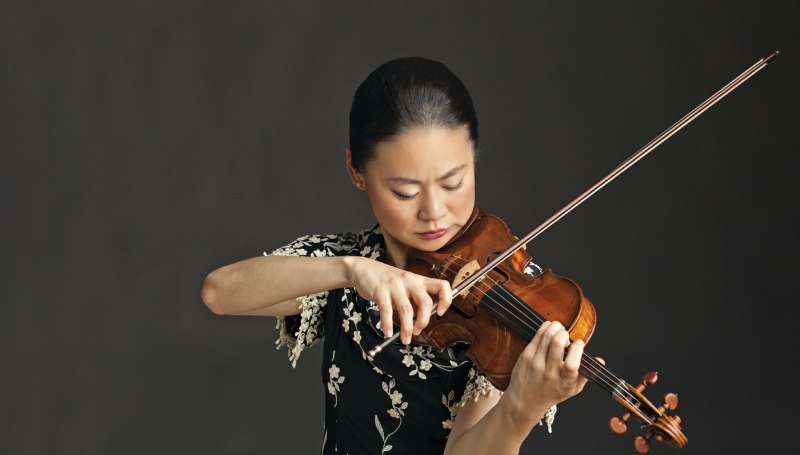
The next concert of the Boulder Philharmonic, at the unusual time of 7 p.m. Sunday, features the violinist Midori Goto (who performs under the mononym Midori) playing the Sibelius Violin Concerto. That’s Midori appearing as a traditional concerto soloist, but it’s only one part of a week-long residency in Boulder that includes teaching students from grade school through college as well as community outreach to adults.

The Boulder Philharmonic and the Greater Boulder Youth Orchestras (GBYO) were selected for the residency — one of only two in the 2018–19 year — through a competitive process administered by the Midori Orchestra Residencies Program in New York.

Sunday’s concert will feature two other works along with the Sibelius Concerto: Passacaglia: Secret of Wind and Birds by Tan Dun, an atmospheric piece that includes an mp3 file that audience members can download and play on their cell phones during the concert; and Brahms’ Third Symphony.

Read more in Boulder Weekly.

# # # # #

Midori Plays Sibelius
Boulder Philharmonic Orchestra, Michael Butterman director
With Midori, violin
7 p.m. Sunday, Nov. 4

Macky Auditorium

Tan Dun: Passacaglia: Secret of Wind and Birds
Sibelius: Violin Concerto
Brahms: Symphony No. 3

Tickets

Midori Orchestra Residencies Program events

Citizen Artist Talk
Saturday, Nov. 3, 1 PM
Naropa University Performing Arts Center, 2130 Arapahoe Ave., Boulder
Free and open to the public

Community Play-Along
Sunday, Nov. 4, 12-1:30 PM
Naropa University Performing Arts Center, 2130 Arapahoe Ave., Boulder
Free and open to the public

Greater Boulder Youth Orchestras Concert with Midori
Monday, Nov. 5, 6 PM
Macky Auditorium, Boulder

More information on all events, registration for the Community Play-Along and tickets for the GBYO performances can be found here.

Infinite Space: Boulder Phil plays music about stars and astronomers and planets

New video by artist Gary Kelley will accompany The Planets by Gustav Holst

By Peter Alexander

The Boulder Philharmonic calls their 2018–19 season “Open Space,” and they will begin their classical programming Saturday (Oct. 13) focusing on the openest space of all. Under the title “Infinite Space,” they will perform music about stars and astronomers and planets.

the-planets-artwork-square-01

Artwork by Gary Kelley for The New Live, from “The Planets Re-imagined”

You might guess one of the pieces: The Planets by Gustav Holst, one of the best loved and most programmed pieces for orchestra. The other two are completely new to Boulder audiences, having both been written in this century: Jessie Montgomery’s Starburst and James Stephenson’s Celestial Suite.

“To take something well loved and surround it with music that is a discovery for people—that is the formula we have followed for a while,” Michael Butterman, the Boulder Phil’s music director says.

Holst’s Planets will be accompanied by a video, “The Planets Re-imagined,” created by artist Gary Kelley, who is known for his posters and illustrations, and The New Live, a company specializing in multimedia productions for the concert stage.

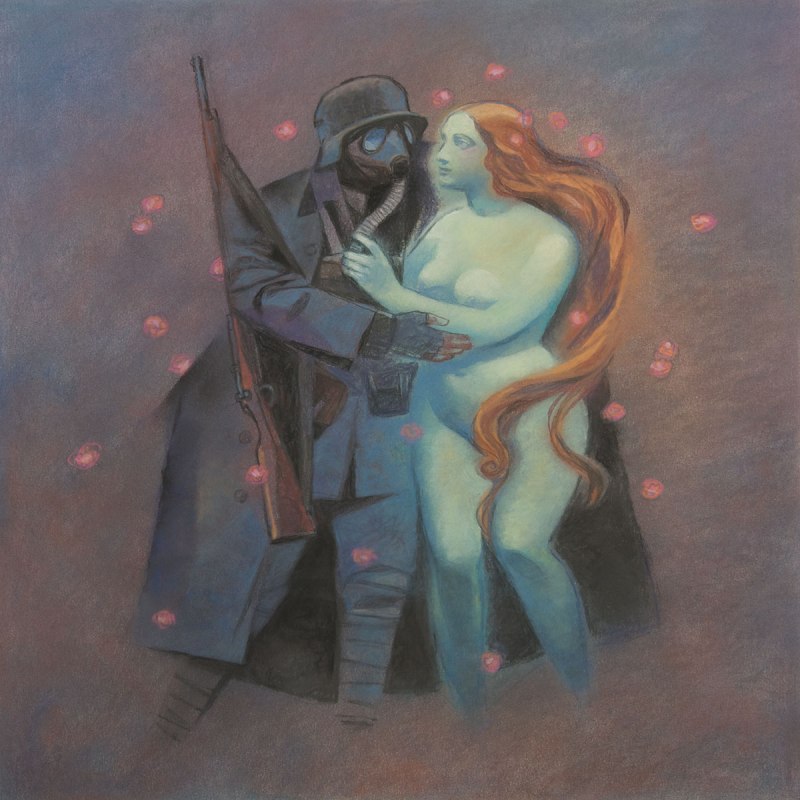
Kelley created more than 25 separate images, from large oil paintings to small illustrations, that are combined in video imagery. The subject of the images is World War I and the time after the war, rather than the physical planets themselves.

Read more in Boulder Weekly.

# # # # #

umZdmeWA


“Infinite Space”
Boulder Philharmonic Orchestra, Michael Butterman, conductor

Jessie Montgomery: Starburst
James Stephenson: Celestial Suite
Gustav Holst: The Planets

7:30 p.m. Saturday, Oct. 13
Macky Auditorium, Boulder

2 p.m. Sunday, Oct. 14
Pinnacle Performing Arts Center, Denver (without video projections for The Planets)

Tickets

Related events:

“Meet the Planets” Musical Hike
Dave Sutherland, leader
7:15 p.m. Oct. 11 CANCELED (weather)
7:15 p.m. Oct. 12 and Monday, Oct. 15 (weather permitting; clear skies are forecast))
Boulder Valley Ranch Trailhead
Free

Free Pre-Concert Talk
Hosted by CPR’s Marilyn Cooley with Michael Butterman, astronomer Kyle KremerandDavid Brainof CU’s Laboratory for Atmospheric and Space Physics
6:30 p.m. Saturday, Oct. 13
Macky Auditorium


Boulder Phil opens 2018–19 season with music of John Williams

Music from Star Wars, Jaws, Raiders of the Lost Ark, E.T., and more

By Peter Alexander Sept. 25 at 10:15 p.m.

BPO.Macky.2

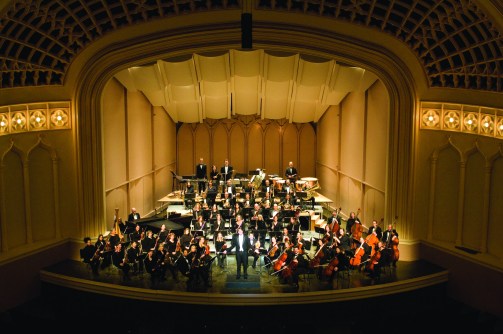
Boulder Philharmonic Orchestra

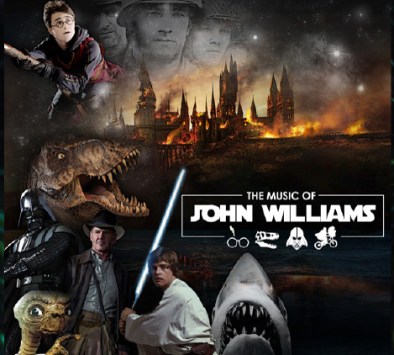
From Jaws to Harry Potter and Star Wars, John Williams has written some of the most familiar music of the past 45 years, across generations, social classes and all varieties of musical taste.

John_Williams_preview

Composer John Williams

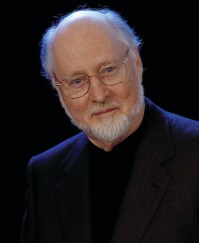
“I dare say that Williams is a well known entity” Michael Butterman, music director of the Boulder Philharmonic, says with a smile. And so he admits that the orchestra is not breaking new ground when they perform “A Tribute to John Williams” as their opening event of the 2018–19 season, Saturday (Sept. 29) in Macky Auditorium.

“This (concert) is more in the camp of wanting to create experiences that are broadly appealing to as wide a swath of the community as possible,” Butterman says. “Williams’s music has an appeal to people who love great orchestral sonorities, as well as people who love any of the great movies that he’s scored.”

To reach that broad audience, he and the orchestra are presenting music from some of Williams’s best known films, including Jaws—his first big hit, from 1975—Star Wars (1977), Raiders of the Lost Ark (1981), E.T. (1982), Jurassic Park (1993), and Harry Potter and the Sorcerer’s Stone (2004). He also selected music from some less familiar films, including The Cowboys (1972), The Terminal (2004) and Memoirs of a Geisha (2005).

MB-jiah 1

Michael Butterman

Butterman’s aim in choosing music for the concert was to showcase the wide variety of styles that Williams can adopt in his scores. “There’s really just no end to the variety that this guy is capable of,” he says. “If there is a discovery to be made here, or at least a reminder, it’s that he has an ability to write in a huge variety of styles, and do it really effectively in each one.”

If Williams is known for anything to students of film music, it’s not his originality, but his ability to assimilate many different styles, and to create a mood in just a few notes. For example, it is no secret that the “Imperial March” from Star Wars has a striking resemblance to “Mars the Bringer of War” from Holst’s Planets. Nor is it disputed that it perfectly creates the impression of grandeur and menace that the forces of The Empire require.

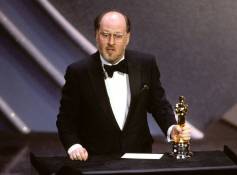
rs_1024x759-170222163528-1024.John-Williams-Oscar.kg.022217

John Williams with one of his Oscars

That ability to capture exactly the right style to pull the movie audience into the scene is the essence of great film music. And John Williams has it to such a degree that he has been nominated for no fewer than 50 Academy Awards, and has won five of the golden statuettes.

“The music is there to nonverbally transport the listener to a time and place, and he can do that with just a few notes or a couple of chords,” Butterman says. “There are works where he channels a particular culture, like Memoirs of a Geisha where he’s writing in a style that is evocative of Asian music, or Angela’s Ashes where there’s an Irish or British Isles feel to the music, or “Viktor’s Tale”from The Terminal where he’s channeling a sort of folksy central European feel.”

The concert will open with the “Superman March”—in case you forgot, Williams wrote music that was used in all four of the Christopher Reeves films (1978–87). Early on you will hear what is likely the most famous and terrifying two-note theme ever written, and the program ends with one of the greatest opening fanfares of any film—but I don’t have to identify those, do I?

Hint: Both scores won an Academy Award.

# # # # #

BPO_Sept-2018-concert2

A Tribute to John Williams
Boulder Philharmonic Orchestra, Michael Butterman, conductor
7:30 pm. Saturday, Sept. 29
Macky Auditorium

Music from Star Wars, Jaws, Raiders of the Lost Ark, E.T., Jurassic Park, Harry Potter and the Sorcerer’s Stone, and other films

Tickets


Boulder Philharmonic announces program change for 2018–19 season

Season Finale April 27 will be “The Dream of America”

By Peter Alexander Aug. 10 at 6:30 p.m.

The Boulder Philharmonic has announced a change in the final concert of their upcoming 2018–19 season, scheduled for 7:30 p.m. Saturday, April 27, in Macky Auditorium.

“The Dream of America,” a concert program that pairs Dvořák’s popular “New World” Symphony with Ellis Island: The Dream of America by Peter Boyer, will replace the previously announced performance of Peter Schaffer’s play Amadeus. The change was announced today (August 10) in a message sent to ticket buyers from Boulder Phil executive director Katie Lehman.

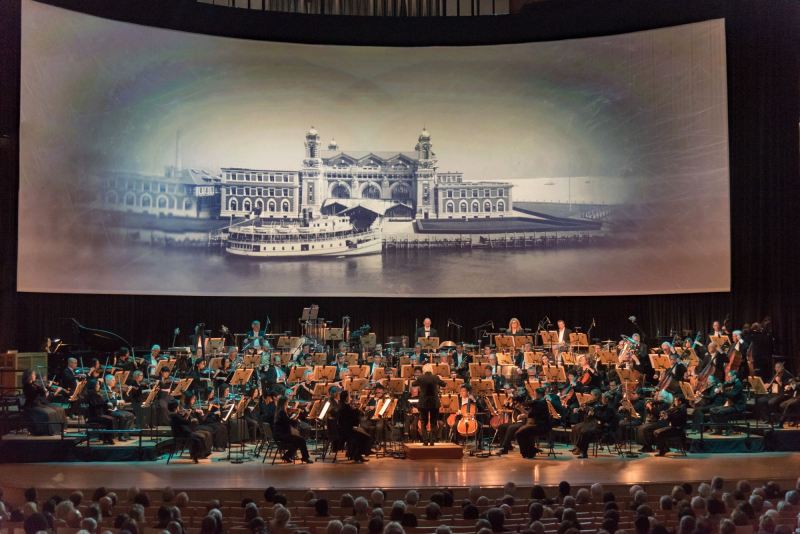
Fri1-404_EllisIsland-screen-ferry-docking-at-EI

A scene from the PBS broadcast of Peter Boyer’s “Ellis Island: The Dream of America,” performed by the Pacific Symphony with conductor Carl St. Clair

The program was selected by Boulder Phil music director Michael Butterman, who will conduct the performance.

Nominated for a Grammy, Ellis Island is a piece for actors and orchestra that was presented recently on the PBS series “Great Performances.” Based on stories from the Ellis Island Oral History Project, the score weaves together monologues, a full orchestral score and projected images from the Ellis Island archives. At the center of the piece are the stories of seven immigrants among the many thousands who entered the U.S. through Ellis Island between 1910 and 1940.

According to information released by the Boulder Philharmonic, the rights to present Amadeus had become unavailable due to plans to mount a major theatrical revival.

Patrons who already purchased tickets for April 27 who wish to keep their tickets need not do anything; their tickets will be mailed in September. Those who wish to exchange tickets for another performance, receive a refund, or donate their tickets back to the Boulder Phil should contact the orchestra’s office, at 303-449-1343 (11 a.m. to 4 p.m., Monday–Friday).

Boulder Philharmonic season information and tickets are available on their Web page.

BPOFB-Cover_2018-19

Bernstein at 100 is celebrated by Boulder Phil and colleagues

West Side Story in Concert is sold out, but Monday’s tribute concert is not

By Peter Alexander April 20 at 4:30 p.m.

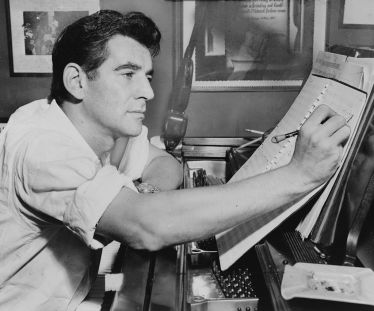
Leonard Bernstein has become the singular enduring icon of American concert music.

Bernstein_2000_07_c_REDUCED-1481918492-960x480

Leonard Bernstein

His Broadway hit West Side Story, his leadership of the New York Philharmonic, his televised music education programs, his membership in the jet-set glitterati of the arts world, his famous performance of Beethoven’s Ninth on the site of the fallen Berlin wall—these made him the most recognizable classical musician in the world. As such, he was one of the most influential cultural figures of his time.

MB-Jiah 2

Michael Butterman

“Composer, conductor, pianist, educator, advocate, communicator: he could do it all,” says Michael Butterman, music director of the Boulder Philharmonic. “I would say he was one of the most significant figures in 20th-century music, period.”

The 100thanniversary of Bernstein’s birth arrives in August of this year, and his centennial is being celebrated by virtually every orchestra in the country. That includes the Boulder Phil, whose sold-out concert performance of West Side Story leads local celebrations.

While that performance has gotten the most attention, another, more intimate concert will take place Monday evening that explores some lesser known corners of Bernstein’s creativity (7 p.m. April 23 in Boulder’s Jewish Community Center).

“Bernstein at 100: Leonard Bernstein in Concert” was put together by Eve Orenstein, the Phil’s director of development. Wanting to bring the larger community into the celebration, she contacted local musical organizations and musicians, assembling a program of solo and duo performances that will also include spoken tributes to Bernstein by Butterman, pianist Andrew Cooperstock from the CU College of Music, and Kathryn Bernheim, cultural arts director of the JCC.

Charles Wetherbee.2

Charles Wetherbee

Two of the Phil’s musicians will perform: concertmaster Charles Wetherbee will play an arrangement of “Somewhere” from West Side Story and clarinetist Stephanie Zelnick will perform Bernstein’s Sonata for Clarinet and Piano. Both will collaborate with Cooperstock, who has recorded Bernstein’s complete solo piano music. Cooperstock will also play two shorter solo pieces.

Tenor Eapen Leubner will perform “Maria” from West Side Story and “Two Love Songs on Poems by Rainer Maria Rilke” with pianist Mac Merchant. Also performing with Merchant, vocalist Faye Nepon will sing “So Pretty,” and “Lucky to be Me” from On the Town; and soprano Rose Sawvel will sing the “Simple Song” from Bernstein’s Mass, “La Bonne Cuisine,” and the showpiece “Glitter and be Gay” from Candide.

This diverse program ranges from the serious (Clarinet Sonata) to the more humorous (“La Bonne Cuisine”) to pure entertainment (“Glitter and be Gay”). As such, it complements the familiar West Side Story and gives audiences a chance to expand their musical horizons—which was the constant goal of Bernstein’s own teaching.

The performance of West Side Story itself is noteworthy. For one thing, the fact that it sold out ten days in advance shows both the draw of Bernstein’s show, some 61 years after its premiere in 1957, and the success of the Phil’s programming for the Boulder community. There have been a few sellouts in recent years, but none as far as 10 days in advance.

It is also noteworthy that the Boulder Phil is one of the first, if not the first regional orchestra to present West Side Story in concert. The Bernstein estate had not permitted concert performances until 2014, when conductor Michael Tilson Thomas and the San Francisco Symphony received their consent. Since then several orchestras have done the concert version, although it remains more popular to perform the music live with the 1961 film.

RobertNeu

Robert Neu

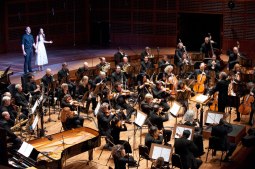
For Saturday’s performance, the orchestra will be seated on stage and the actors will be limited to the front apron and a single raised platform behind the players. In a score as complex as West Side Story, this could create challenges keeping orchestra and singers together, but stage director Robert Neu is not particularly worried.

“I’ve done a ton of concert performances of operas,” he says. “I’ve found two things. One is that there are plenty of easy ways to have it staged that somebody’s near the conductor and out of the corner of the eye catch a beat. And I’ve found that the force of that many musicians, the energy on stage, you can tell what’s happening behind you.”

A larger issue for Neu is that dancing, which creates so much energy, is only allowed in fully-staged productions. For concert performances the use of any choreography is forbidden.

“The hardest thing about semi-staging this piece is that the dancing is so iconic and we’re not doing any dancing at all,” Neu says. “The dance music is so descriptive that if you set up the action before and after satisfactorily, the music helps to tell the story. (The action) is told by the music in such a specific way that you can still follow the story.”

West Side Story has become so familiar that it is easy to overlook how revolutionary it was in 1957. “I’m reminded of how tightly constructed it is, the way that themes are introduced at various times in a very subtle and foreshadowing, or backward looking, way,” Butterman says. “This is the sort of thing that opera composers do all the time, but not as often encountered in Broadway musicals.”

The complexity of the music was particularly startling in 1957, when most musicals did not have complicated ensembles like “Tonight,” or quite such virtuosic orchestral lead parts. “It was a genre-changing piece,” Neu says. “I would love to have been there in 1957 at that first orchestra read, when the principal trumpet and the percussionist were first seeing the parts, going, ‘say what?’”

The complexity and difficulty of the music is still a challenge, 61 years later. The Boulder Phil will bring in a few brass players who are specialists in the jazz-inflected style of the score. “Some of the brass playing is incredibly virtuosic and very, very, much like a big band,” Butterman says. “In spite of the fact that the tunes are familiar, it’s complex. It’s difficult, it’s relentless.”

1024px-Leonard_Bernstein_NYWTS_1955

Leonard Bernstein

Amidst all the celebration, we should remember that Bernstein’s impact continues today, present in much of the musical activity around us. Butterman talks about having conducted the Rochester Philharmonic, an orchestra that Bernstein once led, and having found a lingering “ethos that Bernstein then displayed when he was music director of the New York Philharmonic.”

I shook Bernstein’s hand and collected his autograph once when I was in high school. Many of us in the musical world had such brief or tangential contacts with him. But his influence on our national musical life is far greater than any individual’s near or remote degree of separation. “Because of the breadth of what he did, he became larger than life,” Butterman says.

“He left an amazing legacy for anyone involved in orchestral music. It’s important to celebrate his music, which is the most long-lasting legacy he left to the world, at the same time remembering the work he did to bring classical music to as many people as possible. I see him as an inspiration.”

# # # # #

Bernstein at 100: Leonard Bernstein Tribute Concert
Presented by the Boulder Philharmonic with musicians from CU College of Music, Central City Opera, Colorado Music Festival, and Opera Fort Collins

7 p.m. Monday, April 23
Levin Hall of the Boulder Jewish Community Center, 6007 Oreg Ave, Boulder

Tickets

westsidestory

West Side Story in Concert: SOLD OUT
Boulder Philharmonic, Michael Butterman conductor, and Robert Neu, stage director
In collaboration with Central City Opera

7:30 p.m. Saturday, April 28
Macky Auditorium

NOTE: Corrected for typos 4/20/18

Boulder Phil sells out West Side Story 10 days in advance

Orchestra ends 60th-anniversary season on a high April 28

By Peter Alexander April 18 at 10:40 a.m.

The Boulder Philharmonic has announced that their concert performance of Leonard Bernstein’s West Side Story on Saturday, April 28, has sold out 10 days in advance.

westsidestoryThe orchestra’s 60th-anniversary season has already been a success at the box office, leading to a modest expansion of next year’s season. When announcing the 2018–19 season April 6, Katherine Lehman, the Boulder Phil’s executive director, observed that “We have been extremely successful with ticket sales, and we’re ending the year particularly well this year.”
The sellout of West Side Story adds success to success. “This is thrilling news for us,” Lehman says today. “We can’t imagine a better way to bring our 60th-anniversary season to a close than to share West Side Story with a sell-out crowd!”

MB-jiah 1

Michael Butterman will conduct the sold-out West Side Story in Concert with the Boulder Phil

Boulder Phil has sold out a few performance in Macky Auditorium in recent years. Besides the Sunday Nutcracker performances with Boulder Ballet, these include several performances with Cirque de la Symphonie. Another sellout was the Boulder performance of the “Nature and Music” concert in March, 2017, that was subsequently performed in the Kennedy Center in Washington, D.C.

Performances by the orchestra with ukulele virtuoso Jake Shimabukaro in 2017 and violinist Sarah Chang in 2013 both sold out the day of the performance. The current production of West Side Story marks the first time in recent years that Boulder Phil has sold out a concert 10 days in advance.

The performance, in celebration of the 100th anniversary of Bernstein’s birth, is a presentation of the Boulder Phil in collaboration with Central City Opera. Boulder Phil music director Michael Butterman is conducting, with stage direction by Robert Neu, and a cast selected in audition by Butterman, Neu, and Central City Opera artistic director Pelham Pearce. The orchestra will be seated onstage, with action occurring on the front apron of the stage, and on a platform erected behind one side of the orchestra.

1-westsidestory003.StefanCohen

San Francisco Symphony: West Side Story in Concert (photo by Stefan Cohen)

A few years ago, this performance would not have been possible. It has been popular for many years for orchestras to perform live with a screening of the film, but rights were not given for concert performances until 2014, when the San Francisco Symphony gave the first live in concert performances. Their performance was subsequently released on CD.

There have a been a few other orchestras who have performed West Side Story in concert, but the Boulder Phil is one of the first, if not the first, regional orchestra to do so.