Colorado Music Festival announces diverse 39th summer season

Second season under music director Jean-Marie Zeitouni offers many highlights

Former music director Michael Christie returns to Boulder for a Festival Orchestra concert July 14

By Peter Alexander

chautauqua-boulder-colorado

Chautauqua Auditorium, home of the Colorado Music Festival

The program will look both new and familiar at the 2016 Colorado Music Festival.

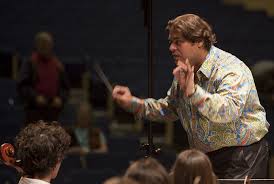
The CMF announced its 39th festival season last night (March 2) at an event for their friends and supporters. Running from June 30 through August 7, this will be the festival’s second summer series under music director Jean-Marie Zeitouni.

Many of the familiar features of recent festivals will continue—Festival Orchestra and Chamber Orchestra concerts, the Music Mash-Up series, family and young people’s concerts, and chamber music performances. But within that general framework, there will be some new developments as well: chamber music will be presented in the Chautauqua Auditorium; and an imaginative new series of three concerts under the direction of CMF creative partner Joshua Roman, “ArC (Artistic Currents) at the Dairy,” will be presented at the Dairy Center. In a change from previous years, most Festival Orchestra programs will only be presented one night instead of two.
Zeitouni_2

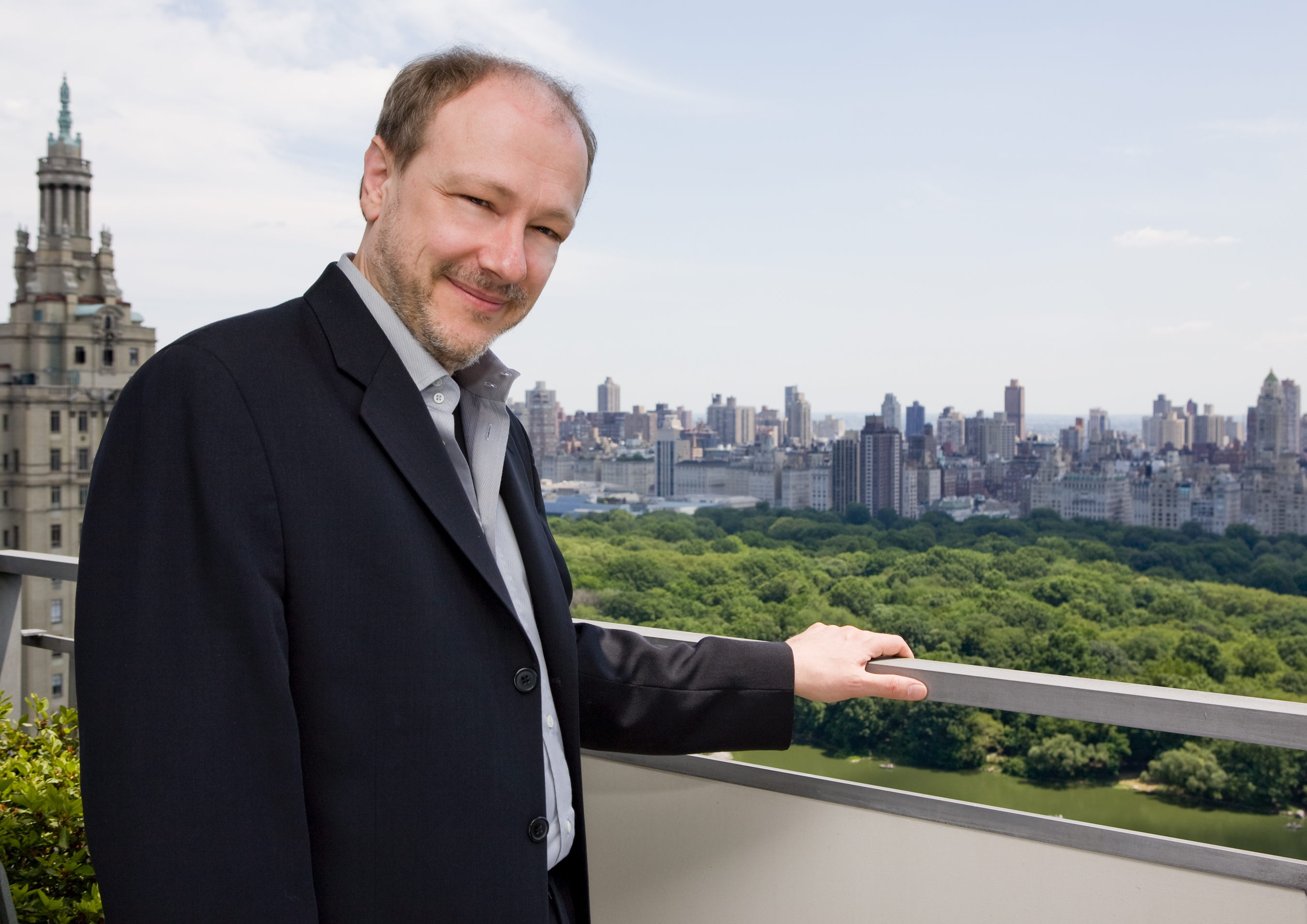
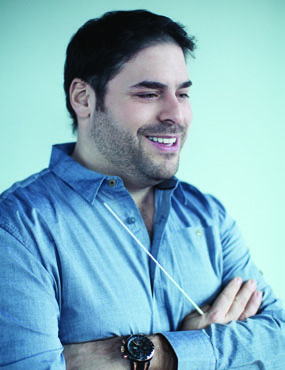
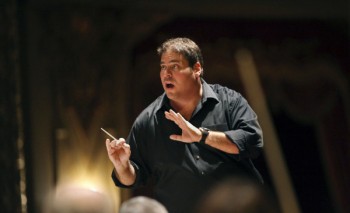
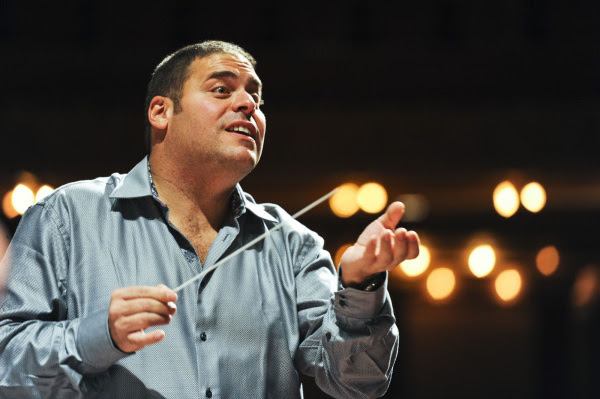
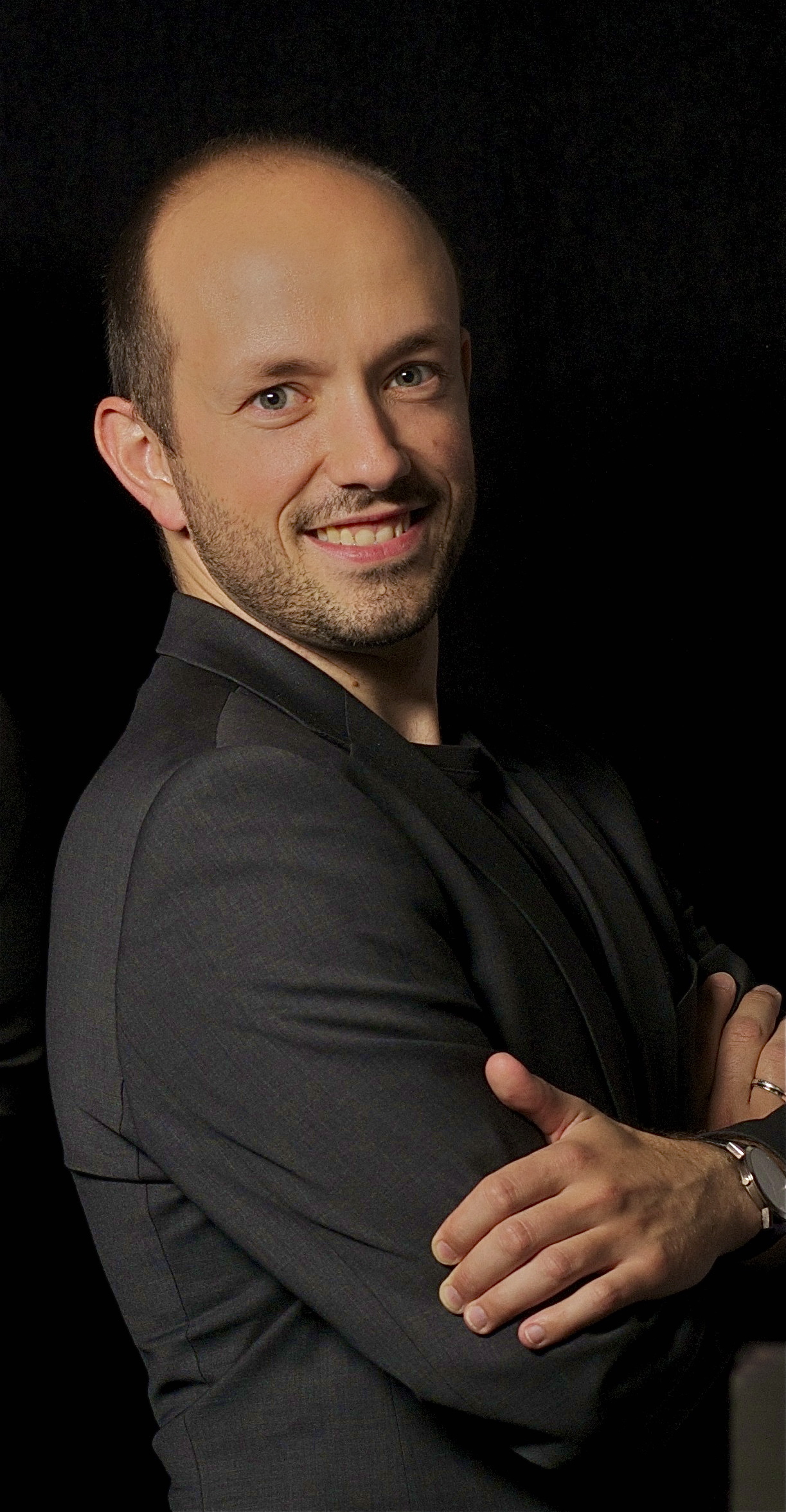
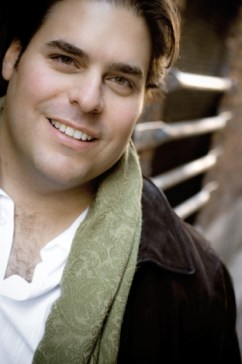
CMF music director Jean-Marie Zeitouni

Innovations for the 2016 season will include the Fêtes Galantes Series of intimate house concerts of chamber music, July 11, 20 and Aug. 5; a partnership with the Boulder Valley Velodrome, “CMF Goes to the Velodrome,” July 29; and a “Festival of Dinners” prepared by chefs from Boulder restaurants to be announced on the CMF Web page.

Ukrainian-Israeli violinist Vadim Gluzman will be one of several artists to have a residency at CMF, a notable expansion of festival activities. There will be several new and contemporary works during the summer, and Peter Brook’s controversial Tragedy of Carmen, a distillation of Bizet’s opera, will be presented July 10.

There will also be notable returns to the festival. Music director laureate Michael Christie will come back to Boulder to conduct a Festival Orchestra concert on July 14, with returning piano soloist Orion Weiss.

Other popular soloists from previous seasons will be back, including violinist Jennifer Koh with the Festival Orchestra on opening night, June 30. At the opposite end of the season, pianist Olga Kern will perform with the CMF Chamber Orchestra on the final concert, Aug. 7.
Lash

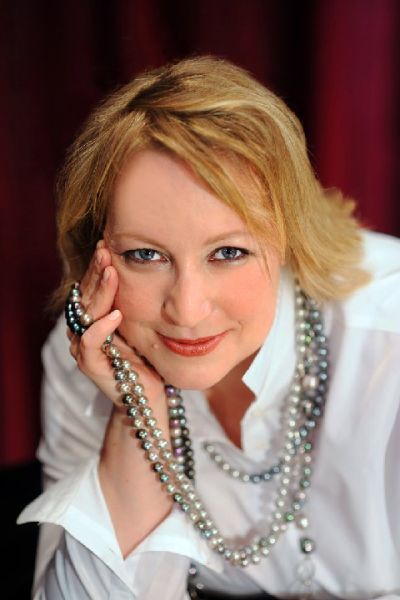
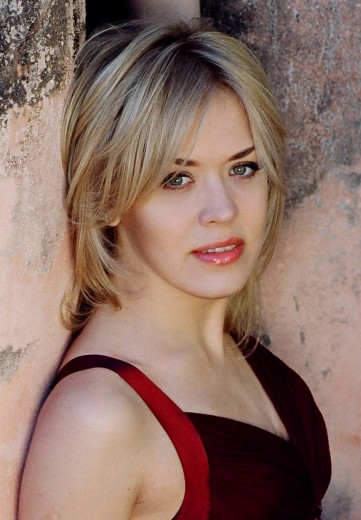
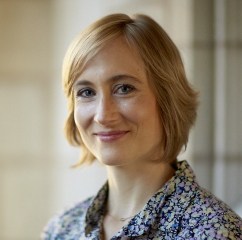
Click! Commission winner Hannah Lash

The “Click” Commission program that offers new works by composers selected and financed by festival-goers is back, with the premiere of the Second Harp Concerto by Hannah Lash, who will also be the soloist July 31. Lash will take part in a residency at CMF, extending her participation in the festival beyond the premiere of her new concerto.

There will a number of other notable guest artists during the summer: Guzman, pianist Stephen Hough, the vocal ensemble Roomful of Teeth, conductor Christopher Rountree, pianist David Korevaar from CU, and mezzo-soprano Kelley O’Connor, among others.

# # # # #

The season will be packed with so many highlights that it is difficult to list them all. Here is at least an overview of concert events. (All performances begin at 7:30 p.m. in the Chautauqua Auditorium unless otherwise noted.)

SFP-JenniferKoh-03@2x

Jennifer Koh

The festival opens June 30 with “Narratives of Heroism,” a concert Zeitouni describes as “one of the highlights for me.” The program features Koh playing Finnish composer Esa-Pekka Salonen’s Violin Concerto, on a program with Beethoven’s Overture to Egmont and Berlioz’s Symphonie Fantastique. The concert will be preceded by a Pre-Concert Dinner at 5:30 p.m. on the great lawn at Chautauqua.

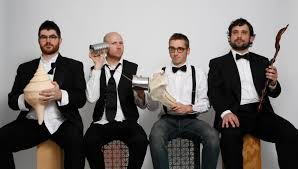
Also part of the opening weekend will be the residency of Sō Percussion from Brooklyn, currently Ensemble in Residence at Princeton University. They will give a recital July 1 on the Presenting Series of chamber music concerts, and will play Young People’s Concerts with the CMF orchestra at 10 and 11:30 a.m. July 2.
SO Percussion

So Percussion

The holiday weekend will wrap up with “Red, White and Brass,” a patriotic pops concert by the CMF Brass Ensemble at 4 p.m. July 3. Other Family Fun Concerts will be at 3 p.m. July 10 and 31.

The second week will feature “Boulder Brahms,” with the Festival Orchestra playing the four Brahms symphonies in two concerts: Nos. 1 and 2 on July 7; and 3 and 4 on July 8. “We’re not doing a mini-festival proper, like we did last season,” Zeitouni explains. “Instead, there are different themes throughout the summer.

“It’s interesting to hear all (the Brahms symphonies) two by two, but the idea goes beyond this. One of the more long-term ideas for the festival is to do multi-year symphonic cycles, like Michael Christie did with Mahler. The Brahms cycle is, I would say, a pretty conservative first step.”

Zeitouni sees this as a way to open up the repertoire beyond the symphonies that are programmed most often, but without overwhelming the schedule and the audience by trying to fit all of a composer’s symphonies into a single summer. Possible future composers for a multi-year cycle might include Bruckner, Shostakovich, Prokofiev and Dvořák, he said.

July 10 will see the presentation of a work that has become notorious in opera circles: Peter Brook’s abridged version of Bizet’s Carmen. The Tragedy of Carmen boils the opera down to about 80 minutes by paring away everything that does not have directly to do with the central drama of conflicting loves.

This distilled version, which only requires four voices and a chamber orchestra, “makes it a little bit more intense, if that’s even possible,” Zeitouni says. “It just tightens the tension—you have a higher alcohol content, because it’s a more concentrated formula.”

*temp*

DJ Spooky

The Music Mash-Up series will feature three groups: Jazz trio The Bad Plus will present a deconstruction of Stravinsky’s Rite of Spring, enhanced with projections and passages of jazz improvisation, July 12. On July 26, CU faculty Paul Miller, who performs as DJ Spooky, will mix classical pieces using turntables and performing with the Festival Orchestra.

The final Mash-Up brings the Colorado band Paper Bird to Chautauqua Aug. 2 to perform with the orchestra. Christopher Rountree, founder and director of wild Up, a Los-Angeles based chamber orchestra, will conduct the CMF orchestra on the July 26 and Aug. 2 Mash-Up performances.

# # # # #

Michael Christie is very happy to be coming back to Boulder for the July 14 Festival Orchestra concert with pianist Orion Weiss. “We’ve got a great program,” Christie says. “I think its going to be a fun night.”

Christie

Michael Christie

The concert will open with Leonard Bernstein’s Shivaree, a fanfare for brass, followed by Charles Ives’s Unanswered Question for strings and a single trumpet. “The Bernstein is very boisterous and the Ives is extremely quiet,” he says. “I think in Chautauqua it will be quite magical.”

Next will be the suite from Bernstein’s score for the film On the Waterfront, which Christie chose because it is not heard often and it has a lot of solos for his friends in the orchestra. “It’s a beautiful, cinematic work,” he says. The second half of the concert will be a single work, Brahms’s First Piano Concerto with Weiss as the soloist.

“When I think about Chautauqua, there are just so many faces that I can see, because I saw them for so many summers,” Christie says. “I can remember a lot of folks, and I’ll be curious to see if they will still be there.

“The other thing I’m really looking forward to is getting out to do some hikes. When the summer was going and I was music director there were always a billion things to take care of. I’d get to the end of summer and realize that I hadn’t done a single hike. I’m going to try to make up for that, so maybe you’ll see me on the trail!”

# # # # #
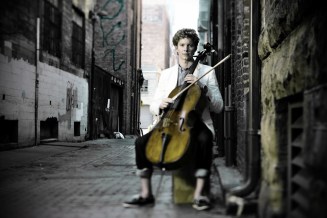
JoshuaRoman_JeremySawatzky04

Joshua Roman. Photo by Jeremy Sawatzky

The ArC at the Dairy series, presented at Boulder’s Dairy Center, has some of the most intriguing programs of the summer. On July 16 series director and cellist Joshua Roman will perform with soprano Jessica Rivera and CMF musicians to present his own song cycle we do it to one another, based on Tracy K. Smith’s Pulitzer Prize-winning poetry collection “Life on Mars”; and one of the iconic works of the 20th century, Olivier Messiaen’s Quartet for the End of Time, written in a World War II prisoner-of-war camp.

On July 23, composer/violinist Daniel Bernard Roumain and spoken word artist Marc Bamuthi Joseph will join together to present “Blackbird, Fly,” a hip-hop influenced program that will address issues of tolerance and inclusion. And July 30 the Grammy-winning contemporary vocal group Roomful of Teeth will bring their unique style to the festival.

10-24-07-Vadim-Gluzman-CD-Cover

Vadim Gluzman

Chamber Orchestra concerts will include “Inspired by Bach” July 17, with violinist Gluzman playing and leading the orchestra in works of Mozart, Shostakovich, and Alfred Schnittke; Mozart’s three final symphonies together on a single concert directed by Zeitouni July 24; and the July 31 premiere of Lash’s Harp Concerto No. 2, the Click! Commission winner, programmed with music by Bach, Beethoven and Richard Strauss.

The Presenting Series will offer chamber music performances at Chautauqua Auditorium. After Sō Percussion opens the series on July 1, Weiss, Roman, Korevaar, Gluzman, Kern, and CMF musicians will perform in various combinations July 15 and 19 and Aug. 6. As part of his week-long residency, Gluzman will also appear with the Festival Orchestra in “Russian Passions,” the one orchestra program to be repeated, July 21 and 22.

In addition to Gluzman’s performance of the Tchaikovsky Violin Concerto, the concerts will feature Liadov’s Enchanted Lake and a special presentation of Mussorgsky’s familiar Pictures at an Exhibition with animation that was created for the first performance in architect Frank Gehry’s New World Center in Miami Beach, Fla.

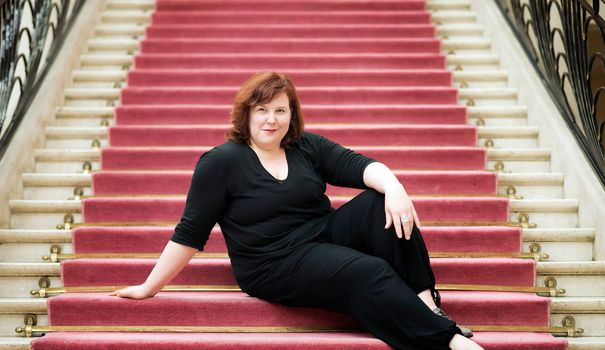
Stephen Hough

Stephen Hough

British pianist Stephen Hough returns to Boulder for the sixth Festival Orchestra program, “From Prague to Warsaw to Bucharest,” on July 28. Hough will play Liszt’s First Piano Concerto and Polish composer Witold Lutosławski’s Paganini Variations. “In a folkish-inspired program, we will open with the Enescu First Romanian Rhapsody and (close with) Dvořák’s Symphony No. 8,” Zeitouni says of the program.

Zeitouni identifies the Aug. 4 Festival Orchestra concert as one of his favorite programs of the summer. It will feature two major works, the Trois Nocturnes for orchestra of Claude Debussy, and Gustav Mahler’s deeply moving Lied von der Erde (Song of the Earth) with mezzo-soprano Kelley O’Connor and tenor Richard Cox as vocal soloists.

“This music is some of my favorites,” Zeitouni says. “I have a very personal relationship with Das Lied von der Erde, because it was one of the first recordings that I got as a teenager.” He also observes that the piece was requested by orchestra musicians, because they rarely have the chance to play it in their home orchestras, and it is a continuation of the Mahler cycle that Christie had begun.
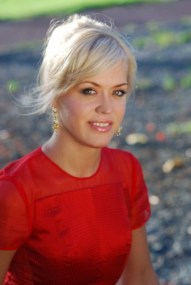
OK-Red-Dress

Olga Kern. Photo by Fernando Baez.

The final night of the festival will be a Chamber Orchestra concert on Aug. 7. This program will feature Zeitouni and CMF favorite Olga Kern playing Beethoven’s “Emperor” Concerto on a program with Stravinsky’s “Dumbarton Oaks” Concerto and Schubert’s delightful Symphony No. 5.

Outgoing CMF executive director Andrew Bradford has written that “the offerings of the 2016 Colorado Music Festival are incredibly wide-ranging and diverse,” a claim that is hard to disagree with. “The season includes something that every music lover will enjoy,” he wrote.

# # # # #

UPDATE (3/4/16): The full summer calendar is now available on the CMF Website.

TICKETS: Subscription tickets will go on sale Monday, March 7, and single tickets will be available Monday, April 4. For tickets to most events, click HERE. Tickets to the ArC series at the Dairy Center are available HERE.
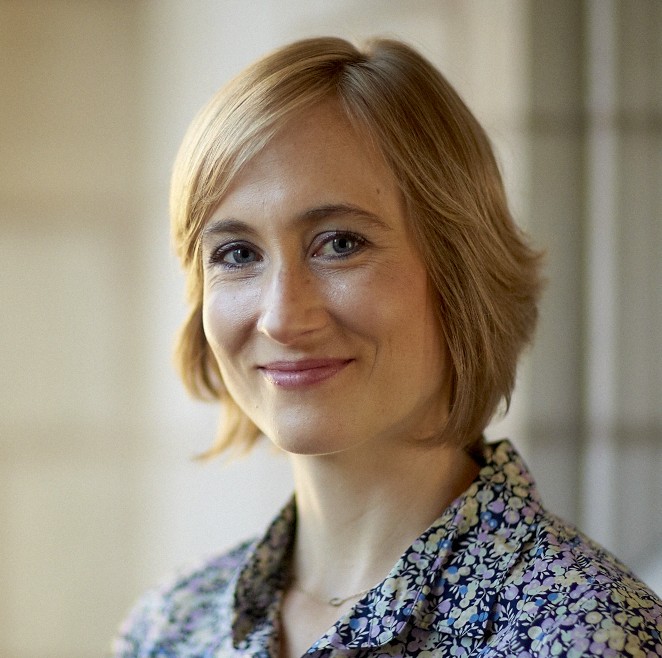
Final weekend at CMF includes the sweet and the sour

Composer Hannah Lash is 2016 “Click” Commission winner

By Peter Alexander

The 2015 Colorado Music Festival (CMF) came to a solemn conclusion last night (Aug. 9) with music from Handel’s Ode for St. Cecila’s Day, part of a final weekend that had its ups and downs.

Or as CMF board co-president Jane Hossière said before the final concert, it was a “sweet and sour” occasion.

Composer Hannah Lash

Composer Hannah Lash

Hossière also announced that Hannah Lash, a young composer on the faculty of Yale University, has been selected by the CMF audiences as the winner of the 2016 “Click Commission.” She will receive the commission for a new work to be premiered during the 2016 festival, other works by her will be performed during the summer, and she will be in residence during the festival.

The final Festival Orchestra concert had already been presented Thursday and Friday (Aug. 6 and 7). Music director Jean-Marie Zeitouni conducted a potpourri of pieces representing the close relationship between America and France. His fellow French-Canadian, pianist Marc-André Hamelin, was the soloist. The program included the very familiar—Gershwin’s American in Paris and the Overture to Bernstein’s Candide; one genuine masterpiece—Ravel’s Concerto for the Left Hand; and the very unfamiliar—George Antheil’s Jazz Symphony and Darius Milhaud’s A Frenchman in New York.

The concert opened with a highly charged, very fast reading of the Candide Overture. It is certainly a tribute to the players that Zeitouni’s tempos were no obstacle to a clean, precise and exhilarating performance. Zeitouni seems to love the low brass, but here I thought a little less tuba would have made a better performance.

Marc-André Hamelin. Photo by Fran Kaufman.

Marc-André Hamelin. Photo by Fran Kaufman.

The real high points of the concert were the performances with Hamelin, particularly the Ravel Concerto. Hamelin is a muscular pianist who can stand up to the full CMF orchestra—with one hand tied behind his back, as it were. The sheer sound he got from the piano was impressive, if a little thick in the lower register. His commitment to the piece and technical command made this a performance to be treasured.

Hamelin and Zeitouni returned to the stage for a programmed “encore,” Antheil’s Jazz Symphony which, in its 1955 version, is small-scale piano showpiece. Antheil described himself as “the bad boy of music,” and based on the Jazz Symphony, he may have misbehaved because of ADHD. He apparently couldn’t keep his mind on any one thought, as the piece jumps from jazzy idea to jazzy idea. All are catchy and fun, though, and the whole ensemble—Zeitouni, Hamelin and the orchestra—negotiated Antheil’s many tempo and mood changes effectively.

Reversing the printed order, Zeitouni started the second half of the concert with Milhaud’s Frenchman in New York, a piece I am sure few in the audience had ever heard. Milhaud has written some jaunty, rhythmically catchy pieces—if you don’t believe me, see Le Bœuf sur le toit—but this is not one of them.

The whole piece is dominated by thick, massed chords that represent the imposing buildings of Manhattan. That may well be what most impressed Milhaud in New York, but it did not lead to great music. I heard none of the bustle and energy and none of the jazz of New York. There is a reason it is so rarely played.

The final work on the program was Gershwin’s American in Paris. The audience loved it—it’s a familiar piece, and it was performed with great energy. The exploitation of the orchestra’s full dynamic range created dramatic contrasts. But on the whole, I found the performance a mixed bag.

Going full out in tempo and giving the brass free reign leads to some exciting moments, but also to occasional passages that are out of balance, or not quite together. So while the excitement was there, the whole was not quite at the level of Zeitouni’s best performances this summer.

# # # # #

The “sweet and sour” were of course the mixed feelings one has when a happy time comes to an end. With Sunday’s choral-chamber orchestra concert, the CMF said farewell to what has been a fascinating, and largely impressive, first year with a new music director. Zeitouni put a personal stamp on every concert, and achieved some very fine results.

The program, titled “A Royal Finish!”, had vocal, choral and orchestral music by Mozart and Handel. The soloist was soprano Mary Wilson, a last-minute substitute. She performed ably in pieces by both composers, some of which may not be part of her ready repertoire.

It seemed an odd choice to start with Mozart’s tender, late work for chorus, strings and organ, the Ave verum corpus. One of the gentlest and most lovely pieces ever written, it was a very soft start to the proceedings. Here it was little more than a beautiful sigh, so well controlled that it failed to rise even to a modest peak.

Soprano Mary Wilson

Soprano Mary Wilson

Wilson arrived onstage for Mozart’s virtuosic solo cantata for soprano and orchestra, Exsultate, jubilate. Here and in the following Regina Coeli for soprano with chorus and orchestra, Wilson sang with a bright, unforced sound and sparkling technique in the fioratura passages. She sang with great attention to the text and phrasing, but it was all so pretty that it ran the danger of becoming music-box Mozart. I believe there is more drama in Mozart’s music than we heard in these performances, delightful though they were.

As someone who believes that Handel, outside of the unavoidable Messiah and one or two ubiquitous instrumental pieces, is under-performed and under-appreciated, I was delighted to have the splendid coronation anthem Zadok the Priest and portions or the Ode for St. Cecilia’s Day on the program. The chorus, so restrained in Mozart’s Ave verum corpus, rang out impressively in Zadok. Their entrance will wake up sleepy listeners as surely as the chords in Haydn’s famous symphony.

This was followed by a fast and noisy performance of Music for the Royal Fireworks—and that is not a criticism. Taking full advantage of an orchestra of modern instruments, Zeitouni led a performance that achieved a greater dynamic range, and a faster tempo, than would be practical on Baroque instruments. This is not particularly “historical,” but it makes a splashy effect, which is what Handel was after in the first place.

CMF music director Jean-Marie Zeitouni

CMF music director Jean-Marie Zeitouni

Especially memorable were the rattling drum rolls and the brilliant work of the CMF trumpets. Not as noticeable but equally effective were the horns and woodwinds, adding their weight to music that was, after all, written to be played outdoors.

The concert and season ended with four of the 12 movements (why not more?) of Handel’s Ode for St. Cecilia’s Day. An homage to music, of which St. Cecilia is the patron saint, this was specially chosen by Zeitouni to end the festival. Here all the performers came together: the chorus, impressive in their dynamic control; Wilson, impressive with her brilliant technique; and the orchestra, impressive with their clean sound and sparkling flourishes.

The final movement, “As from the power of sacred lays,” is chorus with soprano celebrating the power of music until “the trumpet shall be heard on high, the dead shall live, the living die, and music shall untune the sky.” It is not a rousing finish, but a more solemn one that offers the audience more a sense of appreciation than excitement as they leave the theater: yet another way that Zeitouni put his own stamp on the festival.

Edited for clarity on Aug. 10, 2015.

CMF “Cellobration” winds up with the classics, plus a surprise encore

Colorado’s Julie Albers caps the weeklong mini-festival with Haydn concerto

By Peter Alexander

Julie Albers. Photo by Chester Higgins, Jr.

Julie Albers. Photo by Chester Higgins, Jr.

The Colorado Music Festival spent the last week celebrating the cello, wrapping up its “Cellobration” last night (July 19) with a concert titled “Classically Cello.”

The printed program for that concert featured Colorado cellist Julie Albers as soloist in Haydn’s Cello Concerto in D major, plus Mozart’s Overture to The Marriage of Figaro, Bach’s Brandenburg Concerto No. 3 in G major, and Mozart’s “Paris” Symphony. All were conducted by CMF music director Jean-Marie Zeitouni, except for the Bach, which was performed without conductor, as a piece of chamber music.

As for what was not on the program: more about that later.

The day previous (Saturday, July 18), the “Cellobration” had presented all five of Beethoven’s sonatas for cello and piano, played by three members of the Festival Orchestra cello section—Aaron Merritt, Morgen Johnson and Gregory Sauer—with the festival’s principal keyboardist, Vivienne Spy. The performances were spread across two concerts, at 4 and 8 p.m. in the CMF’s summer chamber music venue, Boulder’s First Congregational Church.

First it should be said that Spy was a full partner in these performances, playing all five sonatas with great sensitivity and ideal support for her partners. The consistency of her playing and the quality of the CMF players brought the entire Beethoven experience to a high very level.

Morgen Johnson

Morgen Johnson

That said, for me two of the performances stood above the others: Johnson playing the early Sonata No. 2 in G minor, op. 5 no. 2; and Sauer playing the middle-period Sonata No. 3 in A major, op. 69. Both cellists commanded attention from the very first notes. Johnson was helped by the fact that she was playing one of the stormier sonatas, giving lots of scope for expressive display, but her commitment to the piece and the clarity of her sound were equally impressive.

Sauer played with was an even larger, richer sound and a willingness to convey all the moods of Beethoven’s outgoing sonata—one of his more “public” works, is the way Sauer described it.

Sunday evening’s chamber orchestra concert opened with the Overture to The Marriage of Figaro. This is one of the most familiar concert openers, and under Zeitouni’s direction it did not disappoint for brilliance and verve. In fact, Zeitouni took a very fast tempo, from the very first almost inaudible rush of notes in the strings, to the furious woodwind scales at the end.

Jean-Marie Zeitouni

Jean-Marie Zeitouni

Very soft beginnings seem to be a Zeitouni specialty. Here it served the purpose of pulling the audience into the gentler sound world of the 18th century, as opposed to that of the full orchestra playing Romantic showpieces, such as those we have heard this summer by Respighi and Richard Strauss. With the CMF orchestra, Zeitouni has the string players to pull off the extra-pianissimo, but it is always a trade-off. Played so soft, and so fast, the very opening was a miracle of bustling motion; but against other instruments, and later in louder passages, the details became difficult to discern.

The barn-like Chautauqua Auditorium is a great venue for those Romantic showpieces, but a challenging space for much 18th-century music—such as the Haydn Cello Concerto that was written to be played for a few dozen people in a room of the palace of Haydn’s patron, Prince Esterhazy. Julie Albers gave a polished performance of this familiar piece. Her playing was well tailored to the music, from the opening announcements of the main themes to the rollicking finale.

After the concerto, Albers returned to the stage with all of the chamber orchestra cellists for a “surprise” encore—the piece that was not in the program. Cellists love to get together and play in choirs of all cellos, so it was appropriate to end the “Cellobration” with one of the most loved pieces for multiple cellos, the Bachianas Brasileiras No. 5 for soprano and eight cellos by Heitor Villa-Lobos.

Christie Conover

Christie Conover

Christie Conover, a young soprano from Colorado who is starting to land some plumb operatic roles with the Minnesota Opera and the Komische Oper in Berlin took the soaring soprano part, and was a delight to hear. Albers played the lead cello part, but all the cellists on stage doubtless know and have played the piece. They were clearly as pleased to perform it as the audience was to hear this surprise encore.

After intermission, a collection of string players plus keyboardist Spy—now playing harpsichord—came on to present Bach’s Brandenburg Concerto No. 3 in G major for three violins, three violas, three cellos and continuo. A conductor was not needed: the players, who again doubtless all know the piece quite well, followed concertmaster Calin Lupanu in a sprightly performance of a piece that is as much fun to play as to hear. With so many players spread across the stage in a single line, there were some minor issues of ensemble precision, but nothing serious enough to spoil the fun.

The concert concluded with Zeitouni introducing, then conducting, Mozart’s Symphony No. 31 in D major, known as the “Paris” Symphony. Written during Mozart’s disastrous visit to Paris in 1778, when he failed to land a job, earned very little money, and witnessed his mother’s death, this is nonetheless one of Mozart’s most delightful and popular orchestral works.

Zeitouni began the symphony with phrasing and dynamics that I can only describe as eccentric—but it cannot be said that he lacks ideas. Except for that unusual choice, the symphony was played with delicacy and style. Zeitouni chose what is believed to be Mozart’s original slow movement, not one that was supposed to be simpler that was substituted in some later Parisian performances. The movement was played exquisitely, again taking advantage of the string section’s ability to play together very softly.

After this moment of 18th-century elegance, the finale was a bracing and light-hearted salute to the tastes of the Parisian audiences. It is brilliant, calls for the most delicate work from the strings, and rushes to a happy conclusion. Under Zeitouni’s careful control, all the pieces fell enjoyably into place.

At CMF, Don Quixote conquers more than windmills

Cellist Desmond Hoebig and conductor Jean-Marie Zeitouni give committed performance of Strauss’ tone poem

By Peter Alexander

Cellist Desmond Hoebig

Cellist Desmond Hoebig

The Colorado Music Festival Orchestra, conductor Jean-Marie Zeitouni and cellist Desmond Hoebig gave a fully committed and convincing performance of Richard Strauss’ daunting tone poem Don Quixote last night (July 16).

The program, which also includes the Prelude to Tristan und Isolde by Richard Wagner and the Suite No. 2 from Romeo and Juliet by Sergei Prokofiev, will be repeated at 7:30 p.m. tonight (July 17) in the Chautauqua Auditorium (tickets available here).

At 45 minutes, the Strauss filled the second half of the concert. The program opened with the Prelude to Tristan und Isolde, in a performance of strengths and weaknesses. Zeitouni began the prelude from the closest thing to silence, which gives scope for a wide crescendo, all the way to the Prelude’s defining climactic moment.

Such a beginning is captivating, but such soft levels make it difficult for the players to sustain and control the phrases, which led to some initial uncertainty and unevenness in the winds. At the opposite extreme, there were moments at the highest volume which the sound became slightly rough and not quite balanced among the sections.

Between these levels—which means most of the Prelude—the orchestral sound was warm and well controlled, including some exquisite string section playing, carefully controlled by the conductor. A lovely ending gave the performance the sense of a journey traversed.

Jean-Marie Zeitouni

Jean-Marie Zeitouni

The Second Suite from Prokofiev’s Romeo and Juliet contains some of the most familiar music from the ballet (“The Montagues and the Capulets,” “Friar Laurence”) as well as some movements that are less familiar but a welcome addition to the program (“Dance of the Girls with Lilies”). Zeitouni led a performance in which the character of each section was strongly delineated, creating meaningful contrasts from one to the next. The orchestra meticulously followed the conductor’s expressive use of rubato, adding an emotional depth to music.

The performance was at its best in the more chamber-like passages, when individual players exchanged melodies and played off each other’s phrases. Likewise, the portions played by the strings alone were again beautifully rendered. From where I sat, however, the brass occasionally overpowered the rest of the orchestra. The tuba played beautifully, but the flute and clarinet could not stand up to his volume. Likewise, the brass section playing as a whole had a magnificent sound, but it was magnificent at the cost of balance with other sections.

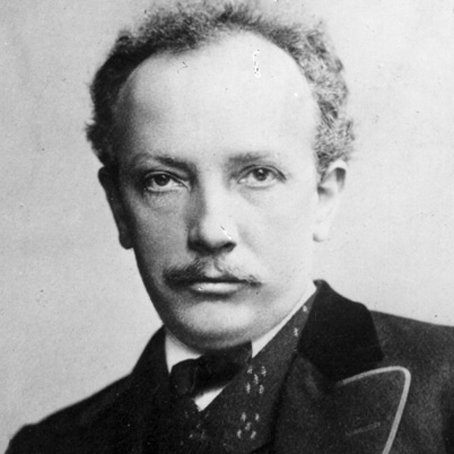
Richard Strauss

Richard Strauss

For Don Quixote, Zeitouni and the orchestra came entirely into their own. This is a piece that defines the concept of the “virtuoso orchestra,” and it requires a correspondingly virtuoso conductor. Happily, CMF has both. The Festival Orchestra boasts section players of the highest caliber, and Zeitouni clearly has an affinity for Strauss. He and the orchestra both proved that last year when his audition concert for the position of music director included powerful performances of Don Juan and Ein Heldenleben.

As part of the “Cellobration”—CMF’s week-long mini-festival celebrating the cello as a solo instrument, in chamber music and as an orchestral soloist—Don Quixote was chosen for this program because the cello is used to portray Cervantes’s literary protagonist. The score features a series of “fantastic variations” (as Strauss wrote) representing several of the Don’s fantastic adventures. Hoebig, the able soloist for CMF’s performances, is a cellist of wide experience who teaches at the Shepherd School of Music at Rice University.

Hoebig conquered all the technical demands of Strauss’ score, even fingering along with the section cellos when his solo part was silent. His intense performance was at its best in the extended solo passages, where he could not be challenged by the volume of Strauss’ massive orchestra. The lyrical sections of “Don Quixote’s Vigil” and the Finale, when the Don regains his senses and approaches his poignant end, were especially memorable. Also notable was Hoebig’s attentiveness to the lovely playing of the orchestra’s concertmaster, Calin Lupanu, in their shared passages.

The Festival Orchestra’s principal violist, Shannon Farrell Williams, is practically a second soloist portraying the Don’s sidekick Sancho Panza (together with bass clarinet and tenor tuba). Williams played with assurance and a dark, solid tone that captured Panza’s grounding in the real world throughout the Don’s chivalric fantasies. She dispatched her part on the same virtuoso level as every other member of the orchestra, from the principal wind players to the percussionist on the highly visible but (alas) barely audible wind machine.

Don Quixote is not played as often as some of Strauss’ better known tone poems—Don Juan, Till Eulenspiegel, or even Ein Heldenleben. For that reason, its programming at CMF as part of the “Cellobration” is all the more welcome—especially when it is performed with such élan and technical skill as was the case last night.

# # # # #

For those who love the cello—as who doesn’t?—the remaining events of the mini-festival will be at 4 and 8 p.m. Saturday, July 18, when members of the Festival Orchestra cello section will play all five of Beethoven’s Cello sonatas at Boulder’s First Congregational Church; and at 7:30 p.m. Sunday, July 19, when the CMF Chamber Orchestra will perform “Classically Cello,” a concert that features Julie Albers, a cellist from Longmont, Colo., performing Haydn’s Cello Concerto No. 2 in D major in the Chautauqua Auditorium. (More information and tickets to these performance available here).

I should point out that the title of the current Festival Orchestra Concert—the one with Don Quixote—is “Impossible Dreams.” This of course refers to the song “To Dream the Impossible Dream” from the popular Broadway musical Man of La Mancha—which serves as a reminder that you can see the musical this month at the Central City Opera, opening at 8 p.m. Saturday, July 18, in the Central City Opera House and continuing through Aug. 9 (details and tickets here).

And finally, to offset the melancholy side of the Don Quixote story, Central City is also offering a one-act Baroque opera on a lighter episode from Cervantes’ novel, Don Quixote and the Duchess by Joseph Bodin de Boismortier. This comic opera will be performed in Central City at 12:30 p.m. July 18 and Aug. 1, and at noon Aug. 6 at the First United Methodist Church in Ft. Collins (details and tickets here).

New CMF music director aims to build a relationship with the audience

With the festival under way, Zeitouni can come into his own

By Peter Alexander

Jean-Marie Zeitouni

Jean-Marie Zeitouni

Jean-Marie Zeitouni is excited about his entire first season as music director of the Colorado Music Festival (CMF).

“I love them all!” he says of the festival concert programs. “These are all concerts that I’m looking forward to. [Over the summer] you have every single genre, and every single period in music. You have solo works, you have chamber music, you have recitals, you have chamber orchestra and big orchestra — everything is covered.”

The festival got underway with Young People’s Concerts June 26 and 27 and an opening concert July 1. The festival now gets going in earnest, with weekly performances of chamber music, pairs of Festival Orchestra concerts Thursdays and Fridays through Aug. 7, and Chamber Orchestra concerts on Sundays through Aug. 9. (All orchestra concerts are at 7:30 p.m. in the Chautauqua Auditorium; chamber music will be at the First Congregational Church, 1128 Pine St.)

Scattered through the summer are solo recitals by pianist Olga Kern, who wowed CMF audiences two years ago with her performances of the Rachmaninoff concertos ( July 3); Music Mash-Up programs, combining classical and popular material, planned and directed by Steve Hackman ( July 7, 21 and Aug. 4); and a performance by musical humorists Igudesman & Joo (Aug. 1).

Read more at Boulder Weekly.

See the full CMF schedule and purchase tickets on their Web page.

Colorado Music Festival opens Zeitouni era with controlled, beautiful performance

Alto Lemieux provides vocal fireworks—even before the Fourth of July!

By Peter Alexander

CMF Music Director Jean-Marie Zeitouni (Photo by Tessa Berg)

CMF Music Director Jean-Marie Zeitouni (Photo by Tessa Berg)

The Colorado Music Festival (CMF) opened last night (July 1) with some splash and dash, some exoticism, some vocal fireworks, and a loud, brassy finish. With such ingredients, the audience went away happy.

Conductor Jean-Marie Zeitouni chose to begin his very first Festival Orchestra concert as music director—he appeared last year as one of several guest conductors vying for the post he now holds—with a work that ties into his own French-Canadian heritage, Debussy’s La Mer. But as Zeitouni said last week, there is another reason to program La Mer: “because it’s a virtuoso orchestral piece, and it’s my way of showcasing this wonderful orchestra.”

His performance did indeed showcase the players. This was not a lush, Romantic performance of La Mer such as you may have heard before. Zeitouni was more spare in his approach, creating a chamber-music-like sound that revealed every voice in the orchestra. One could hear every individual line, every player in the ensemble, and the players responded with some beautiful playing. This was a transparent ocean, every wave audible—or visible in the listener’s mind.

The performance was also remarkably flexible, with delineating changes of tempo and volume carefully managed. The finale in particular was immaculately controlled and detailed. Zeitouni did not take the easy way of going for big effects; the result was something more subtle, a performance that elicits admiration if not unrestrained exuberance.

Ravel’s Shéhérazade was probably the least familiar work on the program. The score is a set of three imaginative poems based on the Arabian Nights by the composer’s contemporary Tristan Klingsor, performed with colorful orchestral accompaniment. With lines like “I would like to see fine turbans of silk” and “I’d like to see cruel assassins,” the text is a classic expression of Orientalism, the dreamy distortion of Arab and Asian peoples who could not speak for themselves during the age of European colonization.

These Orientalist clichés of the text were in full view, since Timothy Orr of the Colorado Shakespeare Festival was on hand to read the poems before each song. But whether one approves of the texts or no, his dramatic readings greatly enhanced the audience experience.

Alto Marie-Nicole Lemieux

Alto Marie-Nicole Lemieux

Ravel’s music beautifully evokes in sound the images of the text. And when one hears it as well performed as it was by Zeitouni, the Festival Orchestra, and the remarkable alto Marie-Nicole Lemieux, one easily forgets that the text was tainted by the Eurocentrism of the 19th- and 20th-century colonial powers. I particularly enjoyed the playing of principal flutist Viviana Cumplido Wilson in the second song, La flûte enchantée (The enchanted flute).

After intermission, Lemieux came into her own with arias from Rossini operas. She showed why she is known and admired in Europe for her fiery performances in dramatic operatic roles. The first two arias she sang, those listed in the program, were taken from two of Rossini’s serious operas, Tancredi and Semiramide. It was good to hear these arias: they are great music taken from serious operas that are not often taken seriously today, and therefore are seldom heard by most audiences.

My only reservation was that these very dramatic pieces, in which Lemieux was clearly seeing the scene before her eyes as she performed, were largely opaque to most listeners, because the program notes opted for an irrelevant paragraph about the composer and his popularity in Beethoven’s and Schubert’s Vienna, rather than including the texts, or even descriptions of the emotions being portrayed by the singer.

Best of all was the final aria, an encore from Rossini’s L’Italiana in Algeri (The Italian girl in Algiers), which Lemieux introduced with great verve and humor. She had the audience in her hands—and that was before she began to sing! I suspect that for Colorado audiences, she will be one of the great discoveries of the summer at CMF. Her performances were vocally brilliant, dramatically engaging, and filled with personality.

It was an interesting choice to have Orr return to the stage and set the scene for each of the four scenes of Respighi’s tone poem The Pines of Rome, which closed the program. I enjoyed his introductions, but thought: why was he not employed for the Rossini arias?

Respighi’s brilliant music did exactly what it was written to do: bring the audience to their feet. But that is not to say that their enthusiasm was misplaced. Here Romanticism was in full flower, but with no loss of orchestral clarity.

As in past years, CMF has a Festival Orchestra of remarkable quality, and the musicians played with a fullness of sound and balance that made The Pines of Rome everything it is meant to be. Of the many wind solos, one must single out the work of the principal clarinet, Louis DeMartino, who played his long solo in the third section, “The Pines of the Janiculum,” with remarkable beauty, delicacy and control.

The final “Pines of the Appian Way” emerged from near silence, leading to a long and controlled crescendo that never got out of hand but reached Respighi’s great climax near the ideal moment. When the last powerful brass chord died away, the audience jumped to their feet and cheered—more spontaneously than in many of Boulder’s more dutiful standing ovations—and then left happy.

# # # # #

One parting sour note to the audience: after they were asked to turn all devices off, it was only 5 seconds into the concert that someone’s cell phone jingled in one of the quietest passages of Debussy’s score. I hope the CPR engineers can edit that out of the broadcast—but who in 2015 still doesn’t know to turn their phone OFF, when they have just been reminded?

NOTE: edited for clarity 2 July 2015

New CMF music director Jean-Marie Zeitouni: “Don’t call me maestro!”

The conductor wants to build a relationship with the orchestra

Jean-Marie Zeitouni

Jean-Marie Zeitouni

By Peter Alexander

Jean-Marie Zeitouni, the new music director of the Colorado Music Festival, finds Boulder a very comfortable place to fit in and make friends.

Just don’t call him “maestro.”

He made this clear when he introduced the 2015 festival season Thursday evening (Feb. 26) at the Chautauqua Community House. “You can call me Jean-Marie or JMZ,” he said. “You can call me many things behind my back. But don’t call me maestro.”

When asked about that a couple of days later, he shook his head and made a sour face. “No,” he said. “I have played in an orchestra. There is not one master and the rest are slaves.”

This experience as an orchestra member is a very important part of the way Zeitouni thinks about his job here in Boulder. “I try to be the conductor I would want as a member of the orchestra,” he says. “The greatest goal for me this year (at the Colorado Music Festival) is to develop my relationship with the orchestra.”

One part of that relationship is to be found in the repertoire that Zeitouni, as music director, selects for the players, as members of the orchestra, to rehearse and perform. And in the season that was announced Thursday night, Zeitouni has included pieces that the musicians may be expected to relish.

For example, in addition to the usual Beethoven and Tchaikovsky and Sibelius symphonies, which the orchestra members have probably played many times, there are pieces such as Charles Ives’s Symphony No. 3 and Michael Daugherty’s Deus ex Machina that are outside the standard repertoire.

Surely some of the orchestra members will look forward to the French Baroque music of Jean-Philippe Rameau’s Les Boréades. A rarity like George Antheil’s Jazz Symphony will have its advocates. And next to the perennially popular American in Paris there is the rare opportunity to play Darius Milhaud’s response, A Frenchman in New York.

But probably nothing will be more exciting for the players than Bartók’s Bluebeard’s Castle. As with much of Bartók’s orchestral music, this is a virtuoso score that gives the players a chance to really show their worth. Although it has two singing characters, Zeitouni describes Bluebeard’s Castle as “an opera where the orchestra is the main character.” (It will be performed in Hungarian with English surtitles.)

Andrew Bradford

Andrew Bradford

Indeed, Zeitouni and CMF executive director Andrew Bradford confirm that they have already heard from members of the orchestra that this is the piece that they are most looking forward to.

Zeitouni, who lives in Montreal, will spend the summer in Boulder with his family. He readily cites Boulder’s concern for health, the environment, and the presence of many different cultural—and counter-cultural—elements as aspects of the city that he likes. “Like in Canada, you can be whoever you are,” he says. “I feel comfortable here.”

“It reminds me of the places I have been most joyous, in the Rockies of Canada, especially Banff.”

Speaking of their vision of the CMF, Zeitouni and Bradford point out that there were some limitations to what they could do in the first year. There was not time to develop partnerships that could be assets to the festival, and many potential soloists were not available on relatively short notice. That will change as they have more time to plan coming seasons.

2015-festival-icon-with-dates-300x213As for the future, Zeitouni says there is no fixed version of what any festival should be. He is clear that taking the heritage and the strengths of the CMF in consideration, they expect to move in new directions, aiming to make the summers more exciting, and to gain more national recognition for a festival that has already achieved a great deal in its history.

“We have many ideas” Zeitouni says. “We have big things in mind that we are starting to organize, but we want people to focus on what is there this year.

“What we have put together is quite good and we want to people to get excited about that.”

# # #

Read my season preview, and view a complete listing of the summer’s concert, below.

Jean-Marie Zeitouni will lead Colorado Music Festival and audiences on “a journey together”

2015 season includes expanded chamber series and “Cellobration” mini-festival

By Peter Alexander

Jean-Marie Zeitouni

Jean-Marie Zeitouni

“This will be a season to get acquainted” Jean-Marie Zeitouni, new music director of the Colorado Music Festival, told the festival’s friends and supporters last night (Feb. 26) in introducing the program for the summer of 2015.

“It will be a chance to get to know one another better, and for me and the orchestra to know each other,” he said.

The festival program that Zeitouni and CMF’s executive director Andrew Bradford laid out included features that provide continuity with past festivals, as well as elements that reflect the personality of the new music director. (The full schedule is now listed below.)

Continuity will be represented in the general layout of the festival, with weekly concerts by the Festival Orchestra and Chamber Orchestra during the season, which runs from June 26 to Aug. 9. That is a slight shift from past festivals, opening on a Friday and ending on a Sunday, rather than ending with a Friday concert by the Festival Orchestra.

There will be many elements familiar from past festivals, including Music Mash-up concerts directed by Steve Hackman; an expanded series of five chamber concerts, moved to Boulder’s First Congregational Church (1128 Pine St.); and a one-week mini-festival, this time a “Cellobration” presenting both chamber and orchestral works that feature the cello.

In introducing the mini-festival, Zeitouni joked that Bradford, a cellist, had insisted on the “Cellobration.” In fact, the programs are well chosen, and will provide audiences the opportunity to hear a foundational instrument of orchestral and chamber music in a wide variety of contexts, including solo works, sonatas with piano, concertos, and as a member of large and small ensembles.

Olga Kern

Olga Kern. Photo by Fernando Baez

There will also be some new wrinkles to the festival. One will be a solo piano recital in the Chautauqua Auditorium by Van Cliburn Competition Gold Medalist and CMF favorite Olga Kern. Another surprise will be an evening of musical humor by Igudesman & Joo. Two classically trained and exceptional performers, violinist Aleksey Igudesman and pianist Hyung-ki Joo will present their wildly popular program, “A Little Nightmare Music.”

Zeitouni’s musical personality will be reflected principally in the orchestral repertoire of the festival. One aspect is his love of vocal music, reflected in the appearance of solo singers with the orchestra; another is the inclusion of some intriguing and not always familiar bits of French music.

Marie-Nicole Lemieux

Marie-Nicole Lemieux

Those interests show up already on the Festival Opening Night (July 1). Zeitouni and the Festival Orchestra will present a program of French and Italian music—“a voyage, to start our journey together,” Zeitouni said. Like any good voyage, this one starts on the sea, with Debussy’s La Mer. Contralto Marie-Nicole Lemieux will sing Ravel’s song cycle Shéhérazade, based on poems by the eccentric French poet who adopted the pseudo-Wagnerian name Tristan Klingsor. To enhance the audience’s understanding of the cycle, the Colorado Shakespeare Festival’s Timothy Orr will read translations of the poems.

The second, Italian half of the program will include a number of operatic arias for contralto by Rossini, again sung by Lemieux, and conclude with Respighi’s colorful Pines of Rome.

The season will end Aug. 9 with “A Royal Finish,” featuring the chamber orchestra, soprano Sarah Coburn, and the Colorado Music Festival Chorus in vocal works by Mozart and Handel. Once again there are familiar pieces, like Mozart’s Exsultate, Jubilate and Handel’s Music for the Royal Fireworks. But there are also some great music that should be heard more often, including Mozart’s early Regina Coeli K. 108, and Handel’s splendid Zadok the Priest.

Composer Michael Daugherty

Composer Michael Daugherty

The remainder of the orchestral series will include popular works from the standard repertoire—Beethoven and Tchaikovsky symphonies, Stravinsky’s Firebird Suite—as well as some less familiar works that will appeal to Boulder’s musical adventurers. Among these, one has to mention the Colorado premiere of the Grammy-Award winning piano concerto “Deus Ex Machina” by the seriously hip pop-influenced composer Michael Daugherty; and the Colorado premiere of Opening Remarks by Lee Actor.

Also off the beaten path will be the North American premiere of the Festive Overture by Spanish composer Benet Casablancas; the much admired if rarely heard Third Symphony by American Charles Ives; and the even more rarely heard Jazz Symphony by the self-proclaimed “bad boy of music,” George Antheil.

Continuing the focus on vocal music will be a concert performance of Bartók’s two-character opera Bluebeard’s Castle, performed in Hungarian with English supertitles. Hungarian singers Krisztina Szabo, soprano, and Gabor Bretz, bass-baritone, will be guest soloists.

Joining nature and music, “John Fielder’s Colorado” will celebrate the centennial of Rocky Mountain National Park. Fielder’s acclaimed photos will be coordinated with performances of Sibelius’ Symphony No. 5 and Beethoven’s Symphony No. 6.

Steve Hackman

Steve Hackman

Turning to this year’s Music Mash-Up series, Steve Hackman will once again bring a completely new score, Bartók + Bjork. The other mash-ups feature an earlier Hackman score, Copland + Bon Iver, the Colorado group SHEL, and singer/actress Storm Large with her band, Le Bonheur.

Finally, Bradford has announced the very welcome return of the “Click Commission.” This program, which gives the audience the chance to select the recipient of a commission of a new piece for the following year’s festival, will now be expanded to include a mini-residency at the CMF for the winning composer.

The commission for the 2016 festival will go to one of three composers selected by the CMF: Pierre Jalbert, Hannah Lash and Daniel Wohl. Potential contributors to the program will have the opportunity to hear works by all three, and to vote with their contributions for the composer they prefer. This is your chance to pay the piper and call the tune! Watch the CMF Web page for details.

# # #

In September of last year, I stuck my neck out by offering suggestions for the future of the Colorado Music Festival. While I do not claim any influence on the professional directors and the board of the festival, I am pleased that three of my six suggestions—reinstate the “Click Commission,” expand the chamber music series, and bring back the mini-festival—were addressed in the program for the coming year. I believe that all three are integral to the unique character of the Colorado Music Festival.

Another idea I offered—that the festival should treasure its orchestra—is honored in Zeitouni’s selection of repertoire, which will certainly give the orchestra the opportunity to shine throughout the summer. This is a season that the players will enjoy.

And my preference to hear challenging explorations of music by living composers gets some satisfaction from the inclusion of works by Michael Daugherty, Lee Actor and Benet Casablancas.

With less than one year to pull a festival together, Zeitouni and Bradford have delivered an interesting season. There’s plenty for all of CMF’s diverse constituencies, and much to relish.

# # #

Subscription tickets will be available starting early in March, with single tickets going on sale April 1. See the CMF Web page for details as they become available.

# # #

COLORADO MUSIC FESTIVAL
2015 Season Program
All Concerts in Chautauqua Auditorium unless otherwise indicated

Week 1

10 a.m. Friday, June 26, and Saturday, June 27
Young People’s Concerts, program TBD
7:30 p.m. Wednesday, July 1: Opening Night, Welcome Jean-Marie!
Festival Orchestra, Jean-Marie Zeitouni, conductor, with Marie-Nicole Lemieux, contralto, and Timothy Orr, speaker
Debussy: La Mer
Ravel: Shéhérazade
Rossini: Arias from Trancredi and Semiramide
Respighi: Pines of Rome
7:30 p.m. Friday, July 3: An Evening with Olga Kern
Olga Kern, piano
Beethoven: Variations on a Theme by Salieri, WoO 73
Charles-Valentin Alkan: Etude No. 3
Chopin: Sonata No. 2 in B-flat minor
Rachmaninoff: Twelve Preludes

Week 2

7:30 p.m. Monday, July 6, First Congregational Church: Piano Chamber Music
Musicians of the CMF
Dvorák: Piano Quartet
Schumann: Piano Quintet in E-flat Major, Op. 44
7:30 p.m. Tuesday, July 7: Music Mash-Up, Bartók + Bjork
Steve Hackman, conductor, with singers TBA
Hackman: Bartók + Bjork Mash-Up (World Premiere)
7:30 p.m. Thursday, July 9, and Friday, July 10: Tchaikovsky and the Grammys
Festival Orchestra, David Danzmayr, conductor, with Terrence Wilson, piano
Lee Actor: Opening Remarks (Colorado premiere)
Michael Daugherty: Deus ex Machina (Colorado premiere)
Tchaikovsky: Symphony No. 5
7:30 p.m. Sunday, July 12: An Evening in Vienna
Chamber Orchestra, David Danzmayr, conductor, with Alexandra Soumm, violin
Schubert: German Dance in D major (arr. Anton Webern)
Mozart: Violin Concerto in D major, K.218
Beethoven: Symphony No. 2

Week 3: Cellobration Mini-Festival

4 & 8 p.m. Tuesday, July 14, First Congregational Church: Complete Bach Suites for solo cello
Bjorn Ranheim and Guy Fishman, cello
7:30 p.m. Thursday, July 16, and Friday, July 17: Impossible Dreams
Festival Orchestra, Jean-Marie Zeitouni, conductor, with Desmond Hoebig, cello
Wagner: Prelude to Tristan und Isolde
Prokofiev: Romeo and Juliet Suite No. 2
Richard Strauss: Don Quixote
4 & 8 p.m. Saturday, July 18, First Congregational Church: Complete Beethoven cello sonatas
Musicians of the CMF
7:30 p.m. Sunday, July 19: Monday July 20 in Estes Park
Chamber Orchestra, Jean-Marie Zeitouni, conductor, with Julie Albers, cello
Mozart: Overture to The Marriage of Figaro
Haydn: Cello Concerto No. 2 in D major
Bach: Brandenburg Concerto No. 3
Mozart: Symphony No. 31 in D major (“Paris”)

Week 4

7:30 p.m. Tuesday, July 21: Music Mash-Up, Copland + Bon Iver Featuring SHEL
Steve Hackman, conductor
7:30 p.m. Thursday, July 23, and Friday, July 24: Beyond Fairy Tales
Festival Orchestra, Jean-Marie Zeitouni, conductor, with Krisztina Szabo, soprano, and Gabor Bretz, bass-baritone
Stravinsky: The Firebird Suite (1919 version)
Bartók: Bluebeard’s Castle (In Hungarian with English supertitles)
7:30 p.m. Sunday, July 26; Monday July 27 in Estes Park: Sounds of the Mediterranean
Chamber Orchestra, Jean-Marie Zeitouni, conductor, with Ana Vidovic, guitar
Benet Casablancas: Festive Overture (North American premiere)
Joaquin Rodrigo: Concierto d’Aranjuez
Vivaldi: Guitar Concerto in D major, RV.93
Mendelssohn: Symphony No. 4 (“Italian”)

Week 5

7:30 p.m. Tuesday, July 28, First Congregational Church: Chamber Music for Strings
Musicians of the CMF
Brahms: Sextet for Strings in G major
Schoenberg: Verklärte Nacht
7:30 p.m. Thursday, July 30, and Friday, July 31: John Fielder’s Colorado
Festival Orchestra, Jean-Marie Zeitouni, conductor
Sibelius: Symphony No. 5
Beethoven: Symphony No. 6 (“Pastoral”)
Performed with projected images by photographer John Fielder
7:30 p.m. Saturday, Aug. 1: A Little Nightmare Music
Igudesman & Joo
7:30 p.m. Sunday, Aug. 2; Monday, Aug. 3 in Estes Park: Nature’s Tableaux
Chamber Orchestra, Jean-Marie Zeitouni, conductor, with Calin Lupanu, violin
Jean-Philippe Rameau: Les Boreades
Charles Ives: Symphony No. 3
Vaughan Williams: The Lark Ascending
Haydn: Symphony No. 73 in D major (“The Hunt”)

Week 6

7:30 p.m. Tuesday, Aug. 4: Music Mash-Up, The Crazy Arc of Love with Storm Large
Steve Hackman, Storm Large & Le Bonheur
7:30 pm. Thursday, Aug. 6, and Friday, Aug. 7: Trading Places
Festival Orchestra, Jean-Marie Zeitouni, conductor, with Marc-André Hamelin, piano
Bernstein: Overture to Candide
Ravel: Piano Concerto for the Left Hand
George Antheil: Jazz Symphony (1955 version)
George Gershwin: An American in Paris
Darius Milhaud: A Frenchman in New York
7:30 p.m. Saturday, Aug. 8, First Congregational Church: Chamber Music for winds and piano
Musicians of the CMF
Samuel Barber: Summer Music
Walter Piston: Wind Quintet
Beethoven: Quintet for piano and winds
7:30 p.m. Sunday, Aug. 9: A Royal Finish
Chamber Orchestra, Jean-Marie Zeitouni, conductor, with Sarah Coburn, soprano, and the Colorado Festival Chorus
Mozart: Ave Verum Corpus
Mozart: Exsultate Jubilate
Mozart: Regina Coeli K.108
Handel: Zadok the Priest
Handel: Music for the Royal Fireworks
Handel: Excerpts from Ode for St. Cecilia’s Day

Edited Feb. 27 for minor corrections in the program, consistency between the program listing and the text of the article, and to insert the date of the announcement.

Edited March 1 to correct the title of Milhaud’s Frenchman in New York.

Jean-Marie Zeituoni reflects on his new role as Music Director

The newly appointed Music Director of the Colorado Music Festival endorses the role of new music, chamber music, and festival themes.

By Peter Alexander

Jean-Marie Zeitouni

Jean-Marie Zeitouni

The following Q&A interview with Jean-Marie Zeitouni covers some of the issues facing the new music director of Boulder’s beloved Colorado Music Festival. The questions were presented to Zeitouni by email, giving him the opportunity to write careful and thorough answers to each question. This also allows him to introduce himself and his thoughts about the festival directly to our readers. The 12 questions I asked were intended to cover many of the most historically prominent aspects of the festival, including mini-festivals, commissions of new works, chamber music events, and guest soloists, and to give opportunity for comments on their future importance to the festival.

His answers are presented unedited, except for minor corrections to capitalization and punctuation. Additions for clarity are placed in brackets. Otherwise, the words are exactly as Zeitouni wrote them.

QUESTION: I assume it is too early to talk about specific programming for the 2015 festival, but I wonder if you have any thoughts about the general nature of programming for an intensive, six-week summer festival as opposed to a nine-month-long subscription season.

JEAN-MARIE ZEITOUNI: The keyword here is “intensity,” to which I would add creativity, originality and some balance. Some audience members are also yearlong classical concertgoers and are not always interested in listening to the same things they hear all year long; others however will get their first concert music experiences in the summer at a festival. It’s important to keep them also in mind as we elaborate programs. I’ve been involved with numerous festivals over the past 15 years (notably the Festival International de Lanaudière, where I’ve been conducting the festival orchestra for the past nine years, and with the Festival International du Domaine Forget, for the past 15 first with Violons du Roy and now with I Musici de Montréal, but also at Grant Park, Banff, Mostly Mozart, Parry Sound, and the Opera Festivals of Glimmerglass, St. Louis, Cincinnati, etc.), and what always strikes me is that they each have a distinct personality and audience that is reflected in their choices of programs, guest artists and explorations.

I’m looking forward to bringing along my experiences and ideas to Boulder, but I’m also allowing myself a bit of time to digest and understand what CMF is all about, from its roots to its fruits.

There is also the wonderful CMF orchestra. We need to develop our way of making music together, and some of next summer will be about that.

Chautauqua Auditorium, home to the CMF Festival Orchestra

Chautauqua Auditorium, home to the CMF Festival Orchestra

Q: How do you feel about “themes” for a festival—musical topics such a Russian music or great violin concertos—to be explored during all or part of a festival?

JMZ: I like themes and thematics in general, especially for concert programs. I think that coherent and original pairings can help us enjoy more and differently some pieces we don’t know, and even some others we think we know so well. “Mini-festivals” are also interesting if the circumstances are right. The nature of a festival allows us to explore a subject more deeply in an intensive period of time and is a good setting for organizing parallel activities (film, seminars, lectures, etc.) for audiences looking for a more complete immersion.

Q: How do you feel about programming that crosses genres and styles, such as the “mashup” programs blending pop and classical styles we have had at CMF the past two years, or the “World Music” series of earlier festivals that blended classical with music of other cultures (Klezmer, Asian styles, jazz, etc.)?

JMZ: My personal taste is very eclectic. I like great music whether it’s Western classical or Eastern or Afro-Cuban or old or modern, etc. . . . (the list goes on and on). I think it’s very natural to blend and cross styles and genres as long as we are presenting good music and at a high level of performance.

The other major factor is having the sensational Festival Orchestra, which is an invaluable asset. We want to program music that will display this ensemble’s colors and possibilities.

CMR Festival Orchestra onstage in Chautauqua Auditorium

CMF Festival Orchestra onstage in Chautauqua Auditorium

Q: What do you see as the role for new music in the festival?

JMZ: The festival has a long history of playing new music and even commissioning works. I think every arts organization should be involved in both the performance and creation of art. As for programming, it’s like creating a menu at a great restaurant—accords and contrasts, themes and threads, originality and references. Balancing the flavors.

Q: Would you like to continue the CMF’s history of commissioning new works?

JMZ: Yes, no doubt.

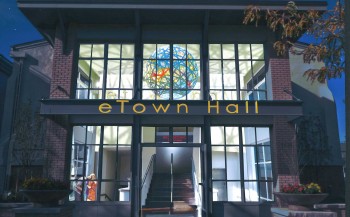
eTown Hall, home of CMF's chamber music concerts

eTown Hall, home of CMF’s chamber music concerts

Q: What do you think should be the role of chamber music performances in the festival?

JMZ: I don’t know where to start. . . . There are so many positive aspects of having the chamber music series in the festival. First, of course, there is the vast repertoire that is complementary to what we do with the orchestra, with so many masterpieces available for the audience to discover. Second, the intimacy and proximity between the artists and the audience that is incomparable. It’s also a great way to showcase some of the musicians of the CMF orchestra (and guest artists) and introduce them to the community in a more personal way.

Q: In picking soloists for the festival, how do feel about inviting well known artists as opposed to younger artists who may not be as well known? Do you think there is a role for each within the festival?

JMZ: There is definitely a role for both in the festival. We have the responsibility to both get the best artists possible on our stage and to be scouting for the best new talents to introduce them to the audience.

Jean-Marie Zeitouni

Jean-Marie Zeitouni

Q: How do you expect to be involved in the educational aspects of the organization? 

JMZ: Much yet has to be defined. We are looking at creating more activities for the younger ones, and I have some ideas to share with the team. There is of course the very popular young people concerts, and I hope in the future, finding the right channels to involve the kids who attend CMA in original projects.

Q: Do you anticipate any issues in maintaining balance between the two arms of the organization—the school and the festival?

JMZ: No. In fact, it is important to me that we not only strive to take both the Festival and Center to new heights, but that we also look for ways to create greater synergies between the two.

Q: Do you have specific plans for attracting new audiences to the festival?

JMZ: Although [Executive Director] Andrew [Bradford] and I are both still fairly new to the organization, we have already spent a lot of time talking about this subject. We are both committed to collaborating with some of the many arts organizations in Boulder, which we hope will lead to, among other things, new audiences attending our concerts. Also, Andrew is carefully examining how we have approached marketing and public outreach in the past, and is looking for new, more creative ways to increase awareness of the organization.

The Dining Hall, on the beautiful CMF Chautauqua campus

The Dining Hall, on the spectacular CMF Chautauqua campus

Q: What is your initial impression of Boulder?

JMZ: What is there not to love? My first impression was as positive as could be! I got to know many people and found them all to be extremely friendly. I also managed to make time to try many of Boulder’s best restaurants. The location is fantastic and the landscape is literally breathtaking. It’s a place I’m looking very forward to spending my summers in with my daughter, Gabrielle, who will turn two in a couple of months.

Q: What would be your message for Boulder audiences, and the supporters and fans of the Colorado Music Festival?

JMZ: I want them to know that I feel blessed to have been given the opportunity to serve as Music Director of this wonderful organization, and that I take this responsibility with great respect and care. I think I am coming to understand the great love and passion so many people in this community have for CMF and CMA, and I intend not only to create new, exciting programs for their enjoyment but also to be a steward of the organization.

Edited 10/7 to put back one word that dropped out in transmission.

Zeitouni chosen as music director of Colorado Music Festival

French-Canadian maestro was “consensus choice” of the search committee

By Peter Alexander

Jean-Marie Zeitouni

Jean-Marie Zeitouni

The board of the Colorado Music Festival and Center for Musical Arts has announced the selection of Jean-Marie Zeitouni as music director for the festival, succeeding Michael Christie. He is the third music director in the festival’s history.

During an initial three-year term, Zeitouni will oversee all artistic planning for the festival, lead five weeks of Festival Orchestra concerts each summer, and be involved in the center’s music education program.

The board’s announcement states that Zeitouni emerged as a consensus choice of the search committee. He was one of three official finalists for the position, along with William Boughton and Carlos Miguel Prieto. Each of the three conducted two programs during the 2014 festival—one with chamber orchestra and one with the full symphony orchestra. These three finalists were selected from a roster of dozens of conductors who were interested in the position.

The decision comes just weeks after the CMF’s new executive director, Andrew Bradford, officially began work. The festival had been without a permanent appointee for either position since August 2013.

zeitouni.3“It is a real honor to join CMF and CMA as music director,” ZeitouniZeitouni said. “In both programs I conducted, the orchestra played sensationally and was a true pleasure to work with. It was the kind of collaboration that every conductor dreams of. With an orchestra of this caliber, an important music school in the center, and a delightful community like Boulder, I could not be more excited for the opportunity to lead this marvelous organization into the future.”

Ted Lupberger, search committee co-chair and a CMA and CMA board member said, “From the very first time the search committee spoke with Jean-Marie during the early stages of the search process, we were thoroughly impressed with his dynamic personality, his understanding of the many roles of the 21st-century music director, his passion for music and music education, and his excitement about the Boulder community.”

Jeffrey Work, CMF principal trumpet who was involved in the search process, added, “With the appointment of Maestro Jean-Marie Zeitouni, the CMF & CMA gains not only a leader of high artistic ideals, but one with a vision for the future of this treasured institution.”

# # # # #

hsJean-MarieZeitouniOf the three candidates, Zeitouni probably has the lowest profile. Outside of his two concerts at Chautauqua this summer, he remains largely an unknown quantity in Boulder. That is not necessarily a bad thing—Michael Christie was largely unknown when he took the helm at CMF, too. But we have very little to go by in judging Zeitouni’s likely qualities as a festival director.

The two concerts he led this summer offered very solid performances of demanding orchestral works, and he certainly gets high marks for those. I was not entirely convinced by the nuances of the two great Strauss tone poems that he led, Don Juan and Ein Heldenleben (A hero’s life), but two concerts are hardly enough to have an idea of his vision as the director of a major festival. Programming for all conductors this summer was circumscribed by the situation and the requests of the CMF.

Zeitouni’s conversations with the CMF board and search committee may have been extensive and revealing, and we may hope that the board learned about his long-term vision and leadership skills. But those conversations were of course confidential.

Nor does he have a past professional record that reveals much. He was conductor of the Columbus (Ohio) Symphony, a position he relinquished as of Aug. 14 of this year. It is not clear why he left Columbus, except that it was, Zeitouni said, an “amicable” parting. He remains artistic director of I Musici de Montréal and maintains an active schedule as a guest conductor, but these are not professional activities that have yet built a record of achievement.

Still, there should be no doubt about his musical qualifications. In addition to the two first-rate concerts here, Zeitouni has gotten high praise from musicians and critics alike. When he moved to Columbus, he had several strong endorsements.

Laurent Patenaude was head of artistic administration for Les Violons du Roy, a chamber orchestra in Quebec that Zeitouni has conducted. Patenaude was quoted in the Columbus Dispatch saying that Zeitouni “has a real clear idea of the sound he wants, and he’s able to create it. . . . Because he’s such a great leader and listener, he can build something with what he has in front of him and at the same time bring the musicians someplace else.”

In 2012, the Boston Globe critic wrote of Zeitouni’s performance with the Handel & Haydn Society that the conductor’s “punk-tinged ‘Eroica’ was . . . the best live performance of this symphony I’ve heard.” And in 2011 the Seattle Times praised “one of the most memorable ‘Messiahs’ this city has seen.”

So we can be comfortable with his musical skills. But the music director has to do far more than conduct the orchestra. He has to maintain relations with the executive director, the board, major contributors, and other cultural leaders in the community, and of course he has to help raise funds. He has to bring in the audience on the strength of his perceived personality.

Zeitouni.2Zeitouni has a reputation—what maestro doesn’t?—for being prickly, which might not play well in Boulder. When I interviewed him, I did not sense the same level of eagerness to engage Boulder on its own terms that I have found in the other candidates and in musicians who have been successful here. But now that he has been here and met the board, he may well have a better understanding of the town and the audience. He appears to have the kind of quick intelligence that would be up to the task.

Another critical part of the music director’s job is programming for the festival. If the programs do not consistently capture the audience’s interest, the festival cannot remain viable. And here we have very little idea what Zeitouni might bring to the task. He has no record with an event comparable to the CMF.

Concentrated in a short period of time, festivals have different programming needs than an orchestra season that is spread over eight or nine months, so Zeitouni’s tenure with the Columbus symphony is not pertinent. Nor does his record as a guest, conducting individual concerts around the world, tell us what we would like to know: what can we expect from a Zeitouni-led festival?

We will know far more when we see the program for 2015. If Zeitouni and Bradford share a common vision for the festival and work harmoniously to achieve that vision, there is reason to be hopeful. But until they get to work, we will all have to reserve judgment.

The next chapter starts now.

# # # # #

My previous interview with Jean-Marie Zeitouni can be found here. A further interview will follow when Maestro Zeitouni returns from traveling in France.