Seicento Baroque Ensemble explores music from the birth of the Baroque

Artistic Director Evanne Browne conducts her last program with Seicento

By Peter Alexander April 24 at 6:20 p.m.
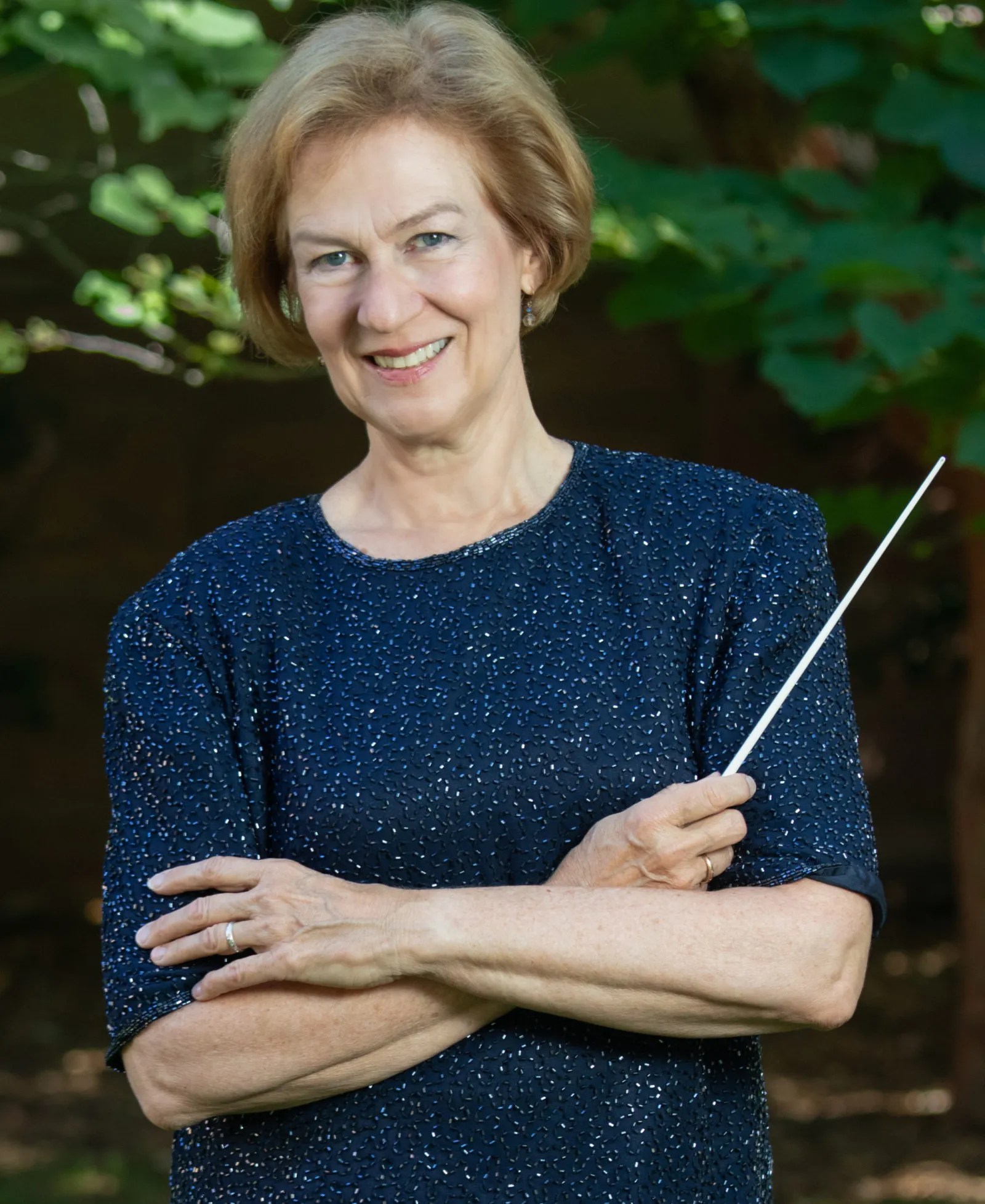
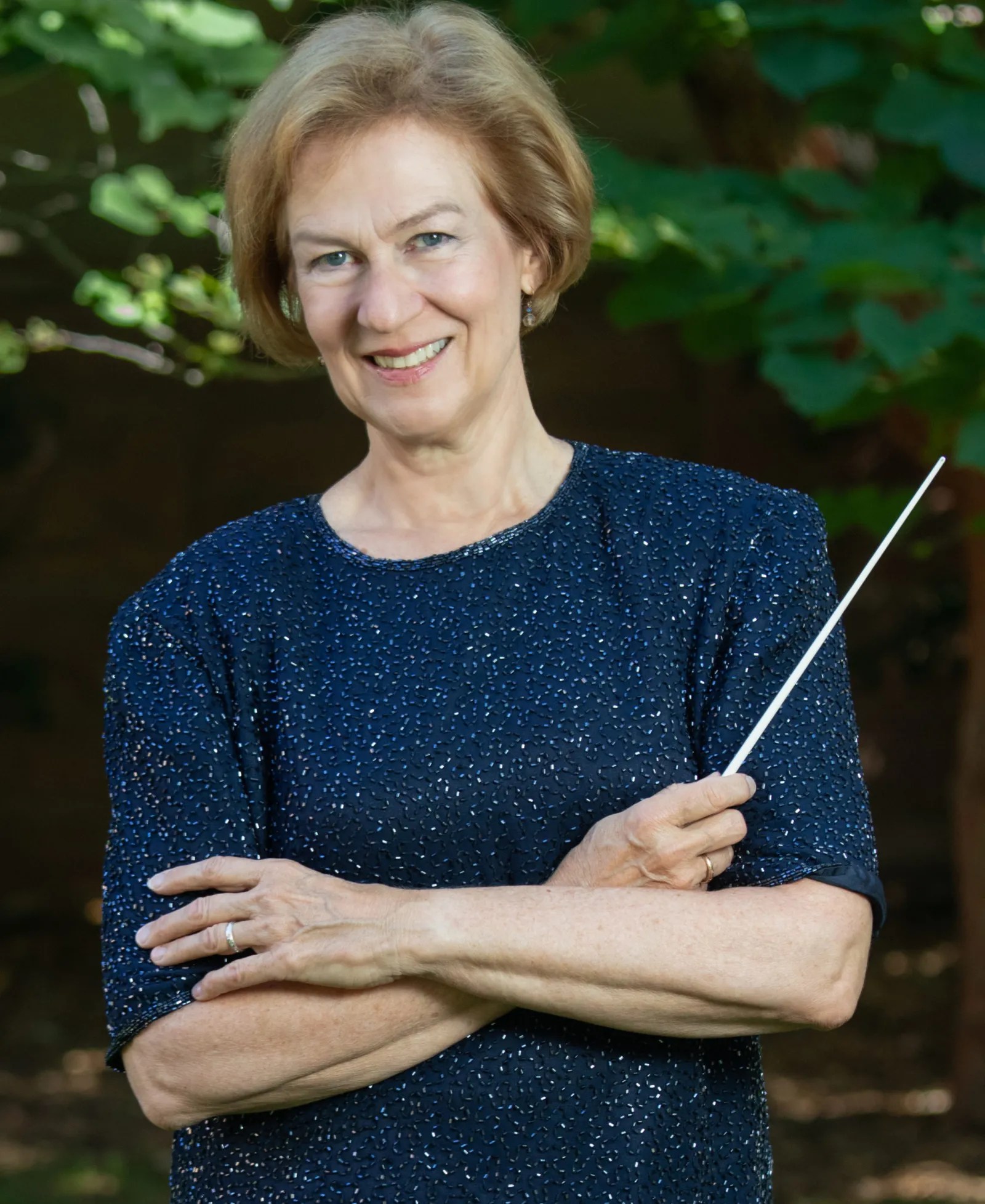
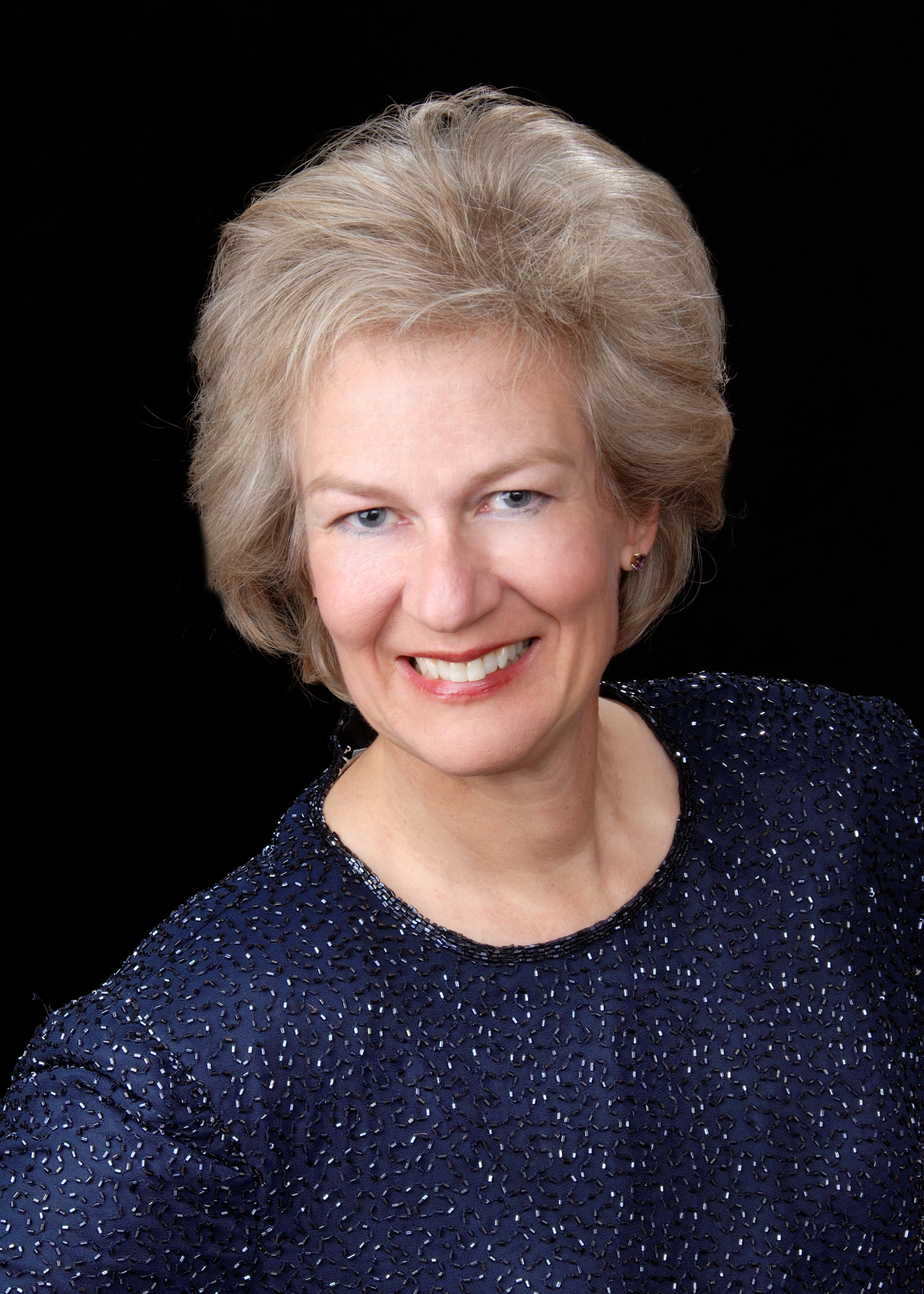
Evanne Browne

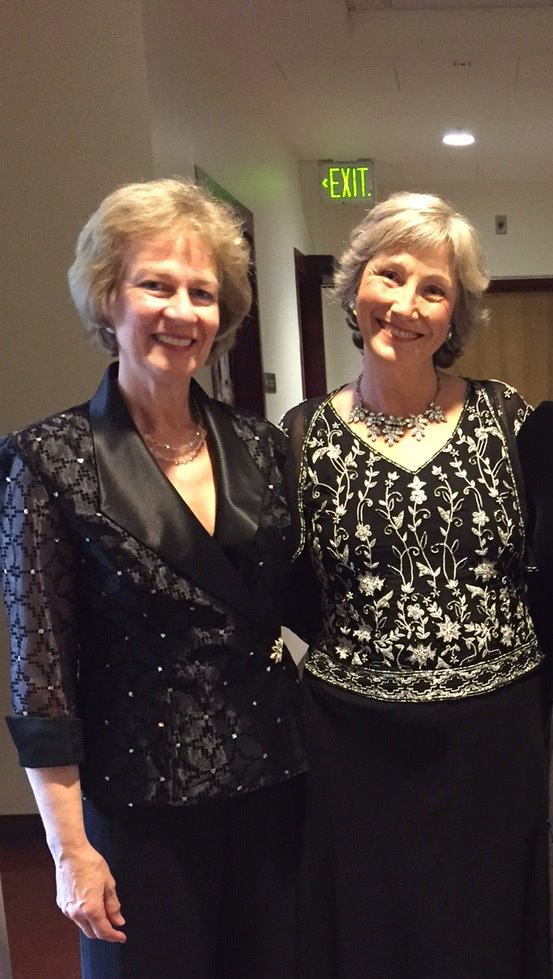
Evanne Browne, the first and the fourth director of Boulder’s Seicento Baroque Ensemble, will perform some of her favorite music for her last performances with the group, Friday through Sunday in Denver, Boulder and Longmont (April 26–28; details below).

Browne has announced that she will retire as Seicento’s artistic director following the concerts, which mark the end of the ensemble’s current season. A search is under way for her successor.

Browne founded Seicento in 2011 then left the group when she moved to the east coast in 2017. Two conductors later, she returned to Colorado, and has led the group for the past two years. She says the program was planned in advance and not specifically chosen for her last concert with Seicento. It might well have been, though, as the early years of the Baroque are Browne’s specialty. 

“This is the era that I truly love—the early Italian Baroque,” she says. “This program is a passion of mine (and) was my specialty in my performing years.”

The music she is referring to comes from the period around 1600. The music of the Renaissance had mostly been written for choirs, but starting around 1600 music was written for solo singers with accompaniment of a bass line and simple chords played by keyboard or other stringed instruments. The emphasis in the solo singing was on expression of the text, with vocal lines that required extensive ornamentation.

“It is very virtuosic,” Browne explains. “It really is an approach that where, you have to fill in the blanks.”

To help promote understanding of the style, Browne has been working with four apprentice artists who will be featured on the program, sopranos Ann Jeffers and Andrea Weidemann, and mezzo-sopranos Emily Anderson and Gabrielle Razafinjatovo. 

“I’ve done a lot of that kind of music as a soloist,” Browne says. “It is very virtuosic, and my goal in having the apprentice artists program (was) to pass that knowledge on.”

Because much of the expression in the early Baroque was supplied by ornaments that were not written out, that was where Browne started with the apprentice artists. She started by teaching the most common ornaments, and suggested recordings they should listen to. “They learned the cadential ornaments [for endings of phrases],” she explains. “Then we started filling in thirds, and filling in fourths, and it was so much fun to see them go, ‘Oh!’”
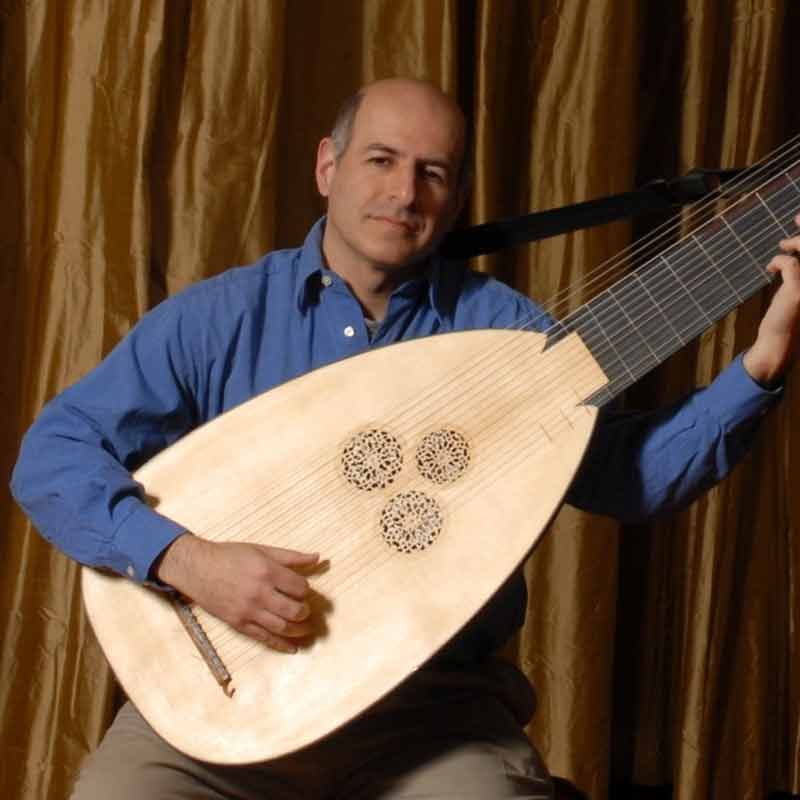
William Simms with theorbo
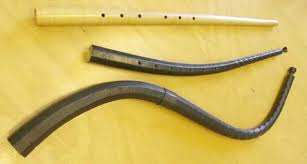
cornettos

To make an interesting program for both solo artists and the Seciento chorus, Browne selected both solo pieces in a style called “monody”—ornamented solo voice with continuo accompaniment that will be sung by the apprentice artists—and music from the period for the full chorus, including madrigals and a mass setting by Frescobaldi. There are also instrumental pieces played by local performers on Baroque instruments and three guest artists—William Simms on theorbo (a large stringed lute that can play chordal accompaniments), Chuck Colburn on cornetto (a fingered wind instrument with a trumpet-like mouthpiece), and Webb Wiggins on harpsichord.

Browne singles out two portions of the program that bring together the Seicento chorus and the other performers. “Things that I think are spectacular are our set of variations on a tune, sometimes called ‘La Monica’,” she says. “This tune is anonymous, (and) appears in the early 1500s. It appears in France, it appears in Italy, it appears in England, and different composers take that same tune and set it for different instruments.”

Frescobaldi

The set is based around music by Frescobaldi that incorporates the tune within a choral mass. Seicento’s set begins with a unison performance of the tune, followed by the mass with different instrumental versions of the tune interspersed between the movements. “The Mass is gorgeous, it’s a double choir mass,“ Browne says. 

Between movements, she explains, “William Simms is going to play variations on theorbo that were written by Piccini, our cornet player is going to do ornamentation on his own that shows what a performer would have done at the time, and then the violins have a Sonata by Marini that’s also a set of variations. I love this set!”

The final piece on the program, Venga dal ciel migliore (Come from the best heaven) by Giovanni Rovetta, also brings performers together. “That’s a highlight for me because it brings the violins and the soloists and the choir and all the continuo instruments (together), and the cornetto player’s going to be playing. 

“It’s from that transitional time when a piece of music has choral sections that are punctuated by solo sections. The solo sections have all of the ornamentation, a lot of written out runs, and very challenging technical parts, and then the choir comes in and kind of repeats what they said.”

Browne emphasizes how the musical changes at the beginning of the Italian Baroque are still familiar to us today. “We’ve been calling this kind of a revolution in music,” she says. “This is when we change to the melody accompanied by harmonies, which is a big change from Renaissance music.”

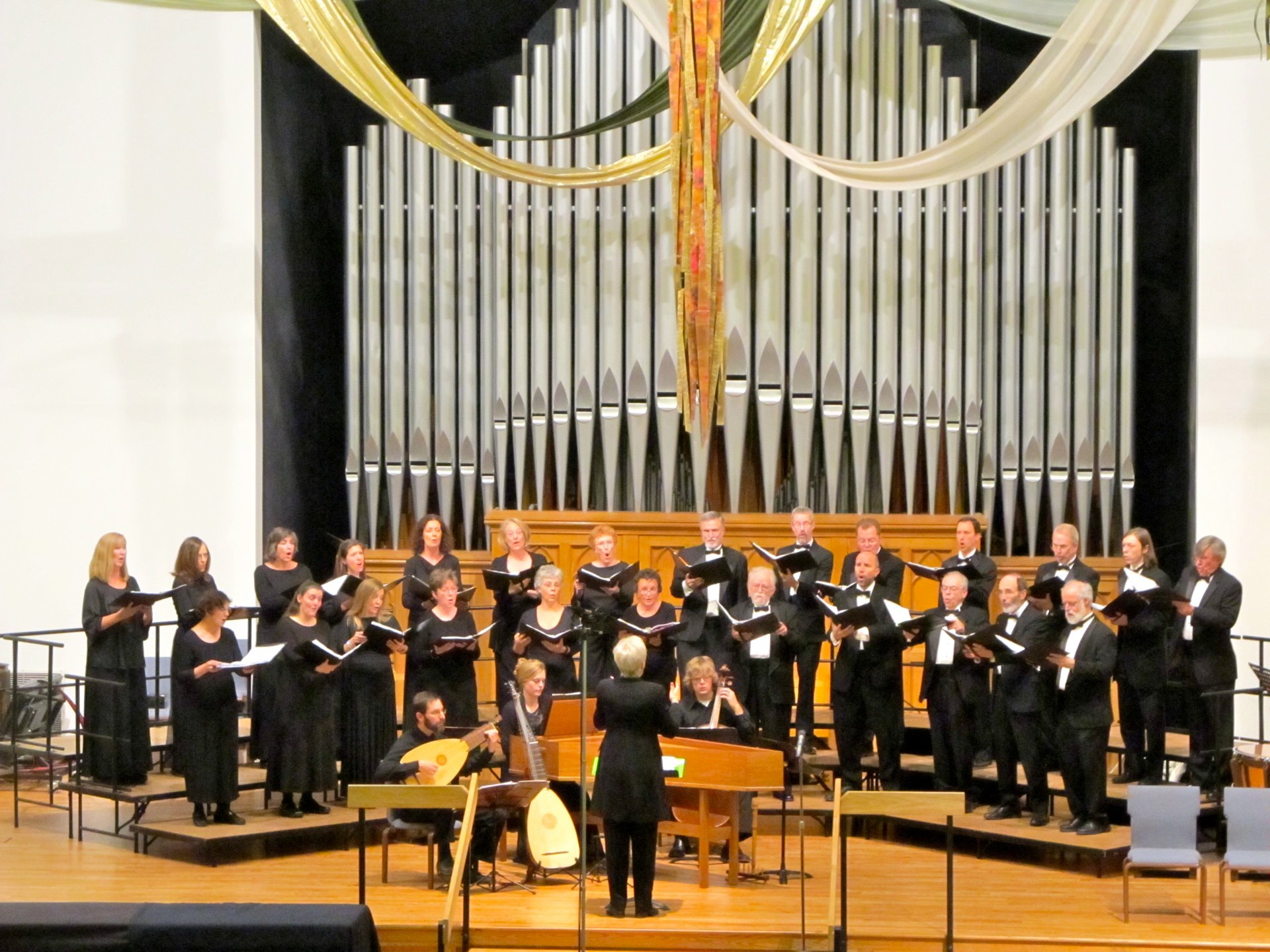
Browne and Seicento at a performance earlier this season. Photo by Emily Bowman.

Ultimately, the importance of the “revolution” was in creating a texture and style of music that continues to this day. In fact, any time you turn on the radio you will hear a melody accompanied by harmonies, in popular songs, in jazz, in show tunes—almost anything you hear today, 

As Browne wrote in her press release, “A lead melody supported by harmony and a prominent bass line is still the primary format of today’s music, from classical to jazz to rock and roll.”

And it all started around 1600.

# # # # #

“Prima Melodia: Birth of Baroque”
Seicento Baroque Ensemble, Evanne Browne, conductor
With sopranos Ann Jeffers and Andrea Weidemann, and mezzo-sopranos Emily Anderson and Gabrielle Razafinjatovo, Seicento apprentice artists.
William Simms, theorbo, Chuck Colburn, cornetto, and Webb Wiggins, harpsichord, guest artists

  • Monteverdi: Movete al mio bel suon
  • Sigismondo d’India: Cruda Amarilli
  • Cipriano de Rore: Ancor che col partire
  • Riccardo Rognoni: Ancor che col partire
  • Alessandro Grandi: Laetamini vos o caeli
  • Monteverdi: Quel sguardo sdegnosetto
  • Francesca Caccini: Maria, dolce Maria
  • Monteverdi: O come sei gentile
  • Girolamo Frescobaldi: Toccata Settima in D minor, Book 2

Variations on a Melody: “Aria della Monica”:

  • Anonymous: Madre, non mi far monaca (unison)
  • Frescobaldi: “Kyrie” from Missa sopra l’aria della Monica (chorus)
  • Alessandro Piccinini: Corrente sopra l’Alemana (theorbo)
  • Frescobaldi: “Gloria” from Missa sopra l’aria della Monica 
  • Une jeune fillette (embellishments improvised on cornetto)
  • Frescobaldi: “Sanctus” and “Agnus Dei” from Missa sopra l’aria della Monica
  • Biagio Marini: “Sonata sopra la Monaca” (two violins and continuo)
  • Luzzasco Luzzaschi: Toccata in e minor
  • O dolcezz’ amarissime d’amore
  • Giulio Caccini: Amor, io parto
  • Nicolò Corradini: Spargite flores
  • Giovanni Rovetta: Venga dal ciel migliore

7:30 p.m. Friday, April 26, St. Paul’s Lutheran Church, Denver
7:30 p.m. Saturday, April 27, Mountain View Methodist Church, Boulder
3 p.m. Sunday, April 28, United Church of Christ, Longmont

TICKETS, including live stream of Friday’s performance
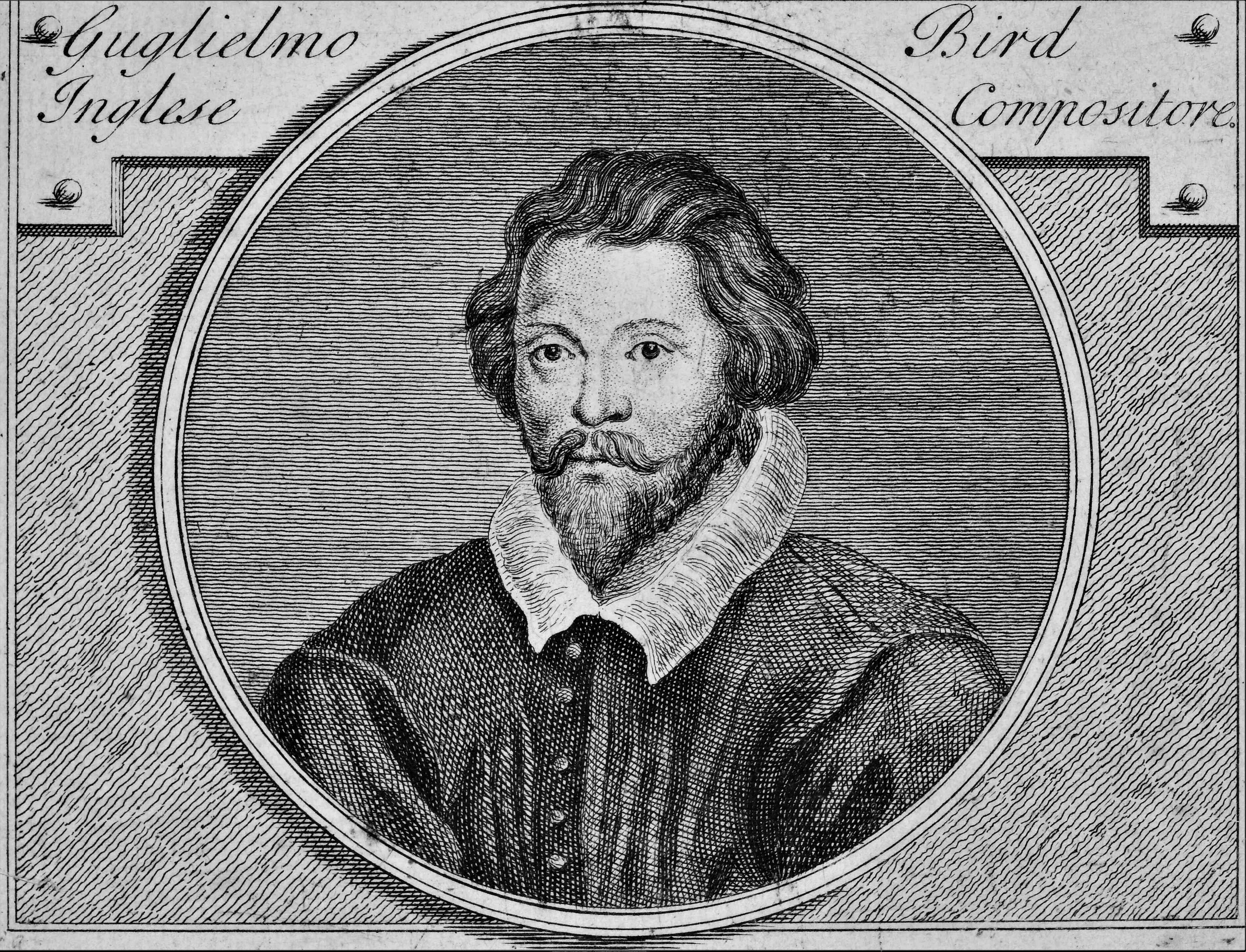
Seicento’s ‘Rare Byrd’ features viols, not ornithology

400th anniversary of English composer’s death brings varied program

By Peter Alexander Nov. 15 at 8:45 p.m.

The New York Times has called William Byrd “an essential English composer for four centuries.”

William Byrd

If you are not familiar with his music, he may be the greatest composer you don’t know. But observations this year of the 400th anniversary of his death show the esteem with which he is regarded by musicians.

Boulder’s Seicento Baroque Ensemble joins the party this weekend with “Rare Byrd,” a varied program of music for voices and viols that will be presented in Denver, Boulder and Longmont Friday, Saturday and Sunday respectively (details below).

A recusant Catholic in 17th-century England, when it was illegal to remain loyal to the Catholic Church, Byrd is best known to musicians for his settings of the Catholic Mass. These works, which could only be performed or circulated in private, are well known and frequently performed today within the early-music movement.

Seicento’s program is titled “Rare Byrd” because it avoids those celebrated mass settings and instead offers a variety of shorter, lesser known works. These rarities including madrigals, part songs, anthems and verse anthems. Conductor Evanne Browne says that when she was planning the concert, “it was a major turning point for me to think, ‘You know what? It’s OK [to omit the masses]. There’s so much that hasn’t been heard that audiences deserve to hear!’”

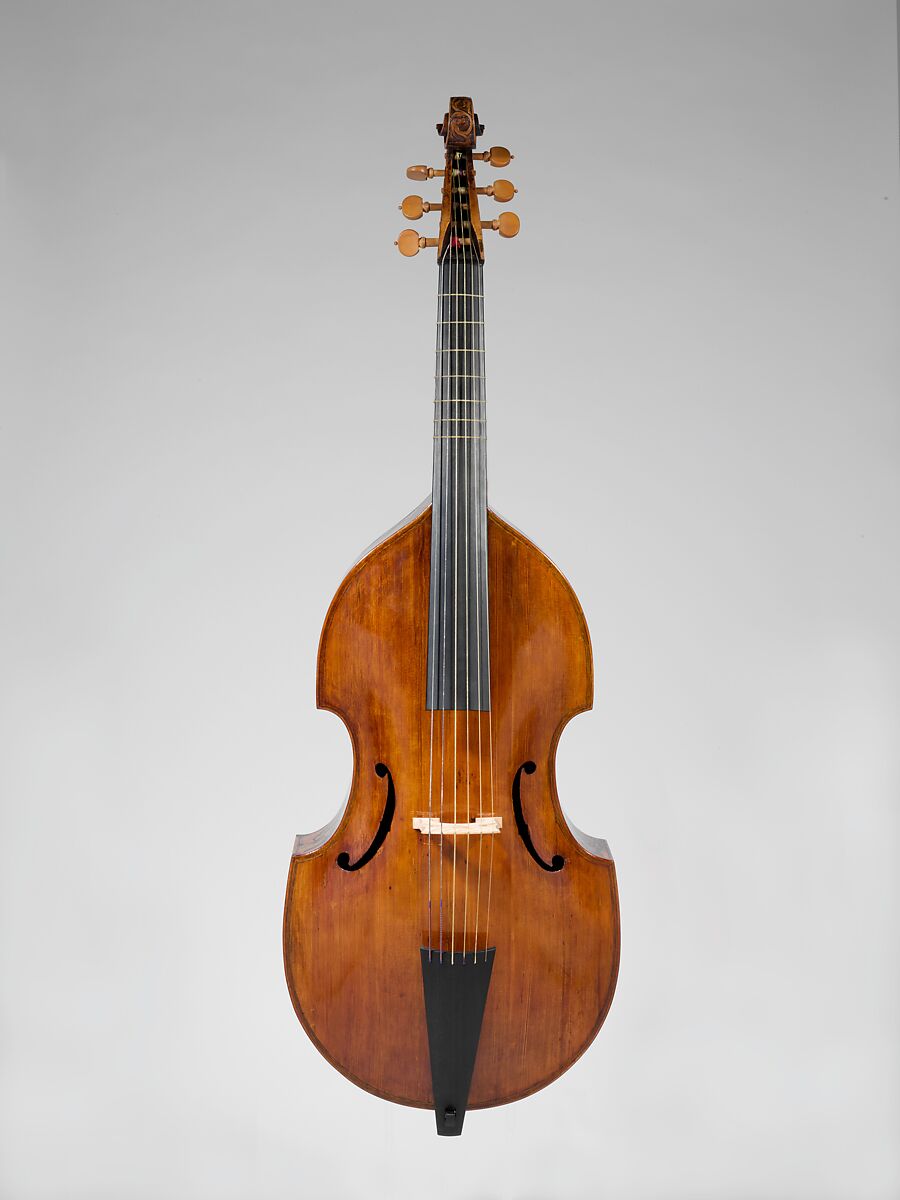
Available in several sizes, the viola da gamba looks like a cello, but has more strings and is played without an end pin.

Another turning point in planning the program was the decision to collaborate with five viola da gamba (viol) players. Only a few years ago, Seicento had to bring in viol players from Chicago in order to include them in a performance. Today, Browne says, “there are plenty of first-rate viol players in Colorado that are professional level.

“Using the viol consort is a joy. There’s so much fun to be had with consort songs and part songs and madrigals, and we’re doing some sacred things with the viol consort that normally would be done with organ. We’re having a great time!”

If you don’t know the different genres that Browne mentions, the madrigals are entertaining settings of secular poetry for voices, generally expressive texts about love and nature. They would often be performed in a social gathering, with people getting together in someone’s home to sing the latest madrigals. When these secular texts are sung by a soloist or soloists and accompanied by viols, then it is known as a part song or a consort song. 

The sacred pieces on the program are multi-voice settings of Psalms and other sacred texts. The verse anthems alternate between full choir and a soloist or, in one case, two soprano soloists. These pieces were often accompanied by organ in church, but they could also be performed with viols playing an arrangement of the organ part, which is how Seicento will present them.

Evanne Browne

In addition to the choral music, the viol consort will perform two pieces separately. One is a piece known as the “Browning Variations,” based on a folk song that was well known in Byrd’s time. “In the variations Byrd takes this little eight-measure theme and goes wild with it,” Browne explains. “(Byrd takes) that little bit and then just goes crazy, ‘let’s do duple (time), let’s do triple, let’s augment it, just change the rhythm’—that’s a lot of fun.”

The pieces sung by Seicento include some that are familiar to early-music enthusiasts, including the madrigals “The Fleet and Merry Month of May” and “Though Amaryllis Dance in Green.” Browne knows both from her experience singing in early-music ensembles, but there are also “a couple that I never heard of,” she says. One of these is “Who made thee, Hob, forsake the plough?”

Browne observes that this playful song is “one of those dialogs for shepherds,” a common type of madrigal text in the Renaissance. “I have two guys doing the solos with the viols, and talking about, what took you away from your work, Hob? And the answer of course is love.”

The inclusion of a number of anthems has also allowed Browne to explore repertoire she had not known before. “There are a couple of pieces on this concert that I could just do over and over and over again,” she says. “One is called ‘Christ Rising,’ which is a verse anthem. I’ve never sung that, even though it has two beautiful soprano solos. 

“When the soloists sing a verse the choir kind of echoes the main point, and it is just fabulous. The word painting is great. The beginning goes up (an interval of) a fourth, up a fifth, up a sixth, up a seventh—so the climax on the words ‘Christ rising’ is spectacular.”

One more factor Browne hopes people will recognize is how well Byrd writes for voices. “His music is just so easily sung,” she says. “Although some of the rhythms are killers. The rhythm’s always tricky, (but it’s) beautifully set for the voice. He can certainly set the words so that you know what it means. I’m really excited about this program.”

Her final thought for the audience? “Come with the expectation to be surprised at how wonderful and varied the music is.”

# # # # #

“Rare Byrd”
Seicento Baroque Ensemble, Evanne Brown, conductor
With Adaiha MacAdam-Somer, Zoe Weiss, Sarah Graf, Sarah Biber and Karl Reque, viols

Music of William Byrd:

  • Haec Dies (anthem)
  • Praise our Lord, All ye Gentiles (anthem)
  • Have Mercy upon me, God (verse anthem)
  • Alack, when I look back (verse anthem)
  • Come Woeful Orpheus (madrigal)
  • Fantasia: Browning/The leaves be green (viol consort)
  • Christ Rising Again (verse anthem)
  • This Sweet and Merry Month of May (madrigal)
  • Ye Sacred Muses (elegy for Thomas Tallis)
  • If Women could be Fair (part song)
  • Who made, Thee, Hob? (part song)
  • Pavan and Galliard in A minor (viol consort)
  • Though Amarillis dance in green (madrigal)
  • O God that guides the cheerful sun (verse anthem)

7:30 p.m. Friday, Nov. 16, St. Paul’s Lutheran Church, 1600 Grant St., Denver
7:30 p.m. Saturday, Nov. 17, Mountain View Methodist, 355 Ponca Place, Boulder
3 p.m. Sunday, Nov. 18, United Church of Christ, 1500 9th St., Longmont

Tickets are available HERE in person for for all three performances and for the live stream of the Denver performance.  

Rare performance of major work by Bach in Boulder, Denver

Seicento presents original instrument version of St. John Passion

By Peter Alexander May 4 at 10:40 p.m.

Seicento, Boulder’s choral group that specializes in Baroque music, is thriving—and it’s thanks to Bach.

“I had a number of singers who asked me, could I be with you in the choir this year?” artistic director Evanne Browne says. “They want to do something this important!”

That “something important” is a historically informed performance of J.S. Bach’s 1724 St. John Passion. According to Browne that will be a first in Colorado. Performances will be Friday through Sunday in Arvada, Denver and Boulder (May 5–7; details below).

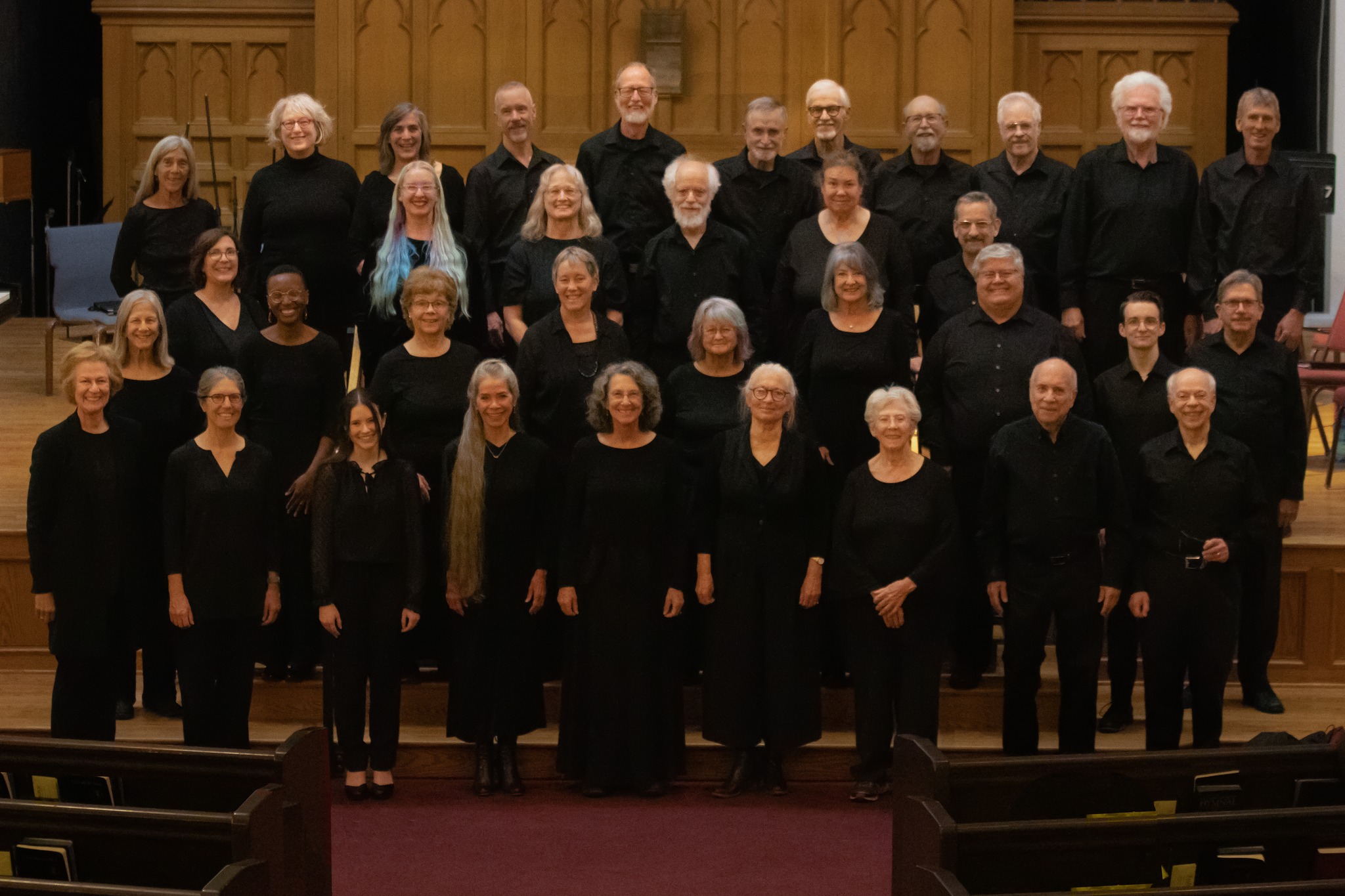
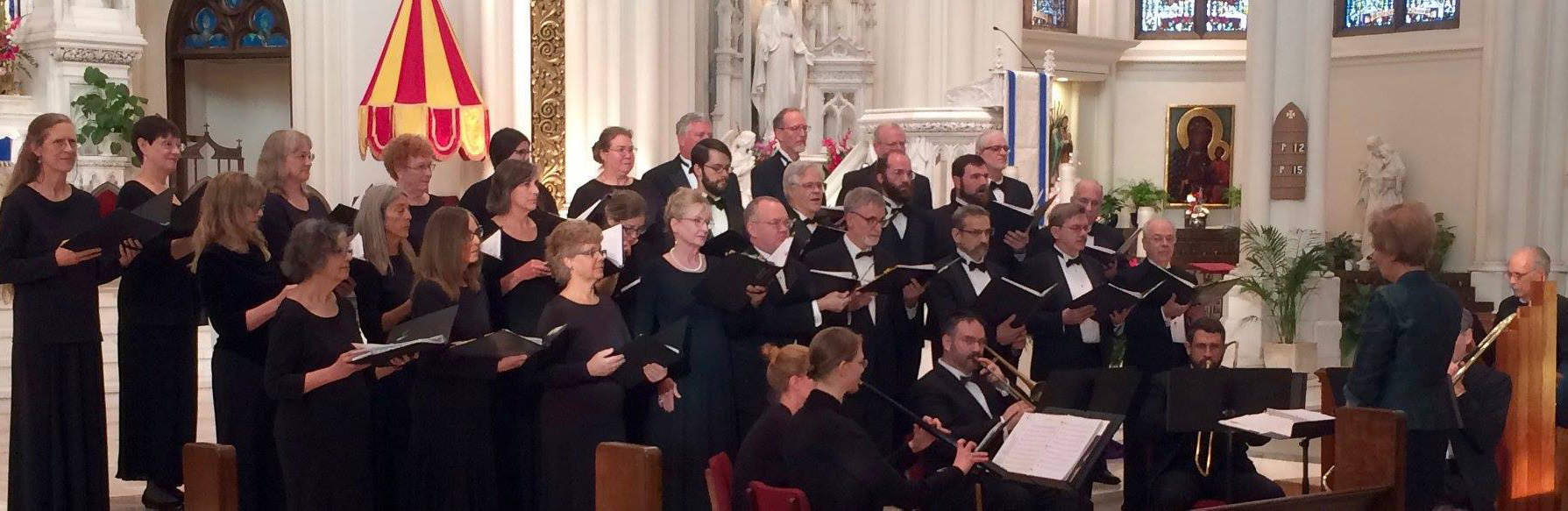
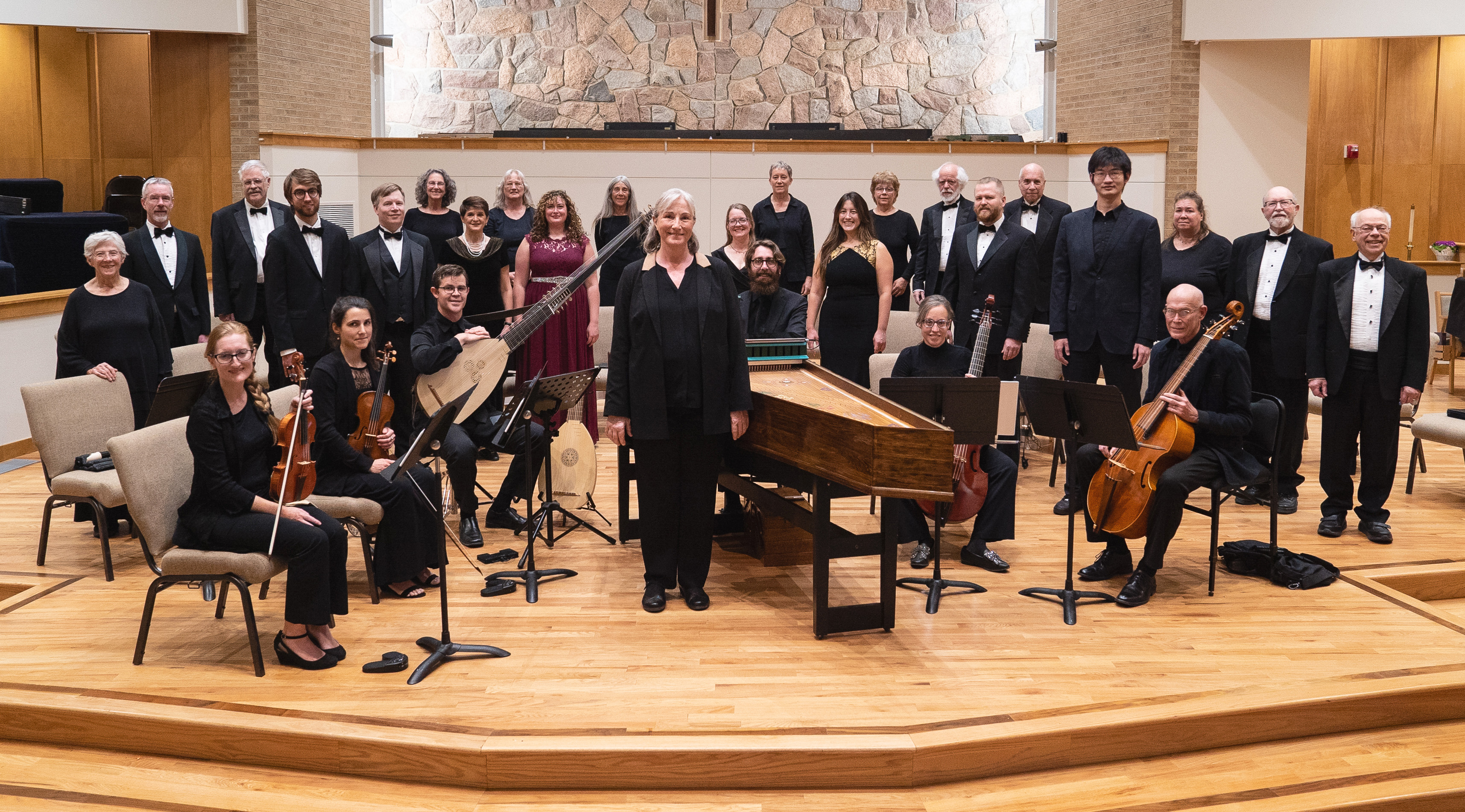
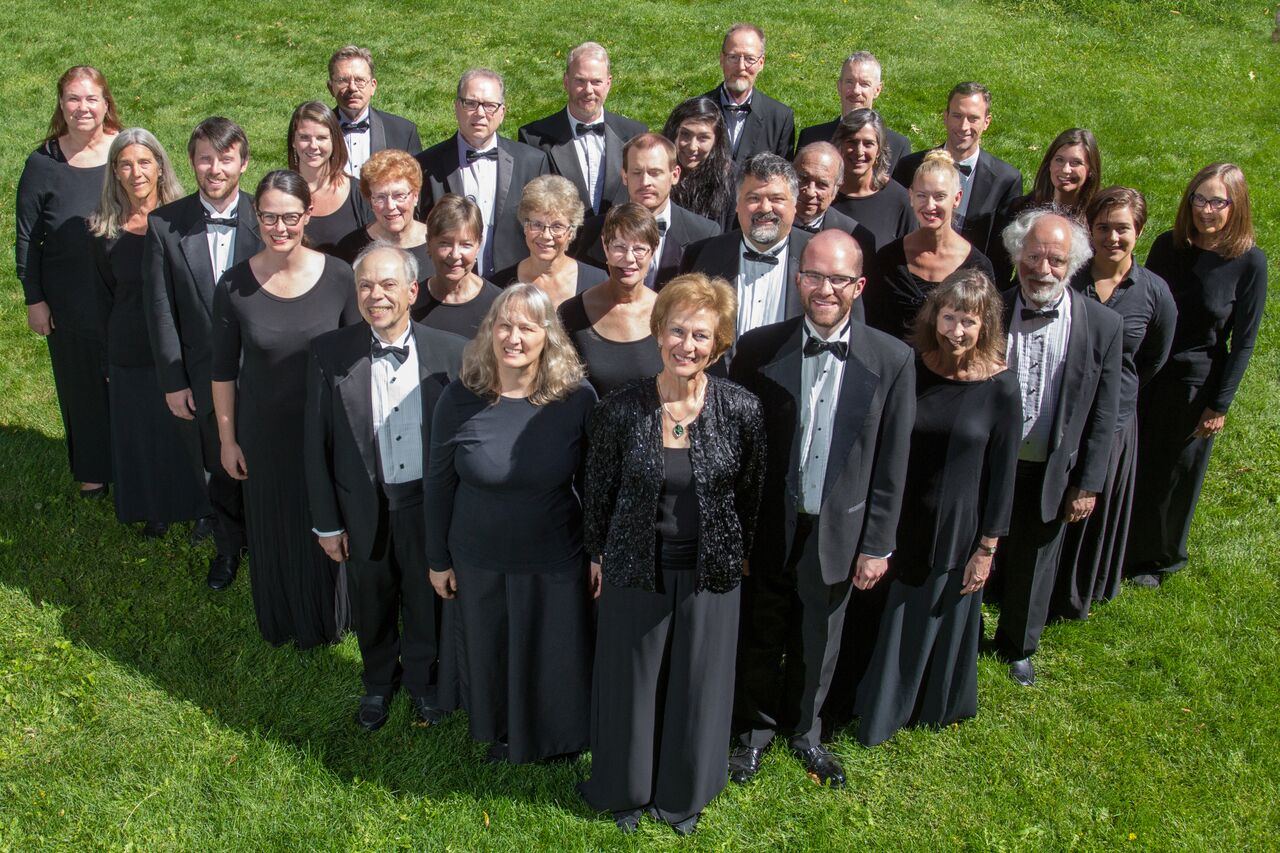
Seicento Baroque Ensemble with artistic director Evanne Browns (first row, left)

This major work is done a little less frequently than Bach’s St. Matthew Passion or Mass in B minor. And while modern instrument performances do happen from time to time, the difficulty of assembling all the pieces for a historically informed, original instrument performance makes that even more rare.

In addition to Seicento’s usual chorus, Browne had to assemble an orchestra of Baroque-era string and wind players from around the world. Colorado has Baroque string players, Browne says, but wind players—and especially Baroque bassoonists—are harder to find. Collecting the players was like putting together a jigsaw puzzle where the pieces are scattered around the world.

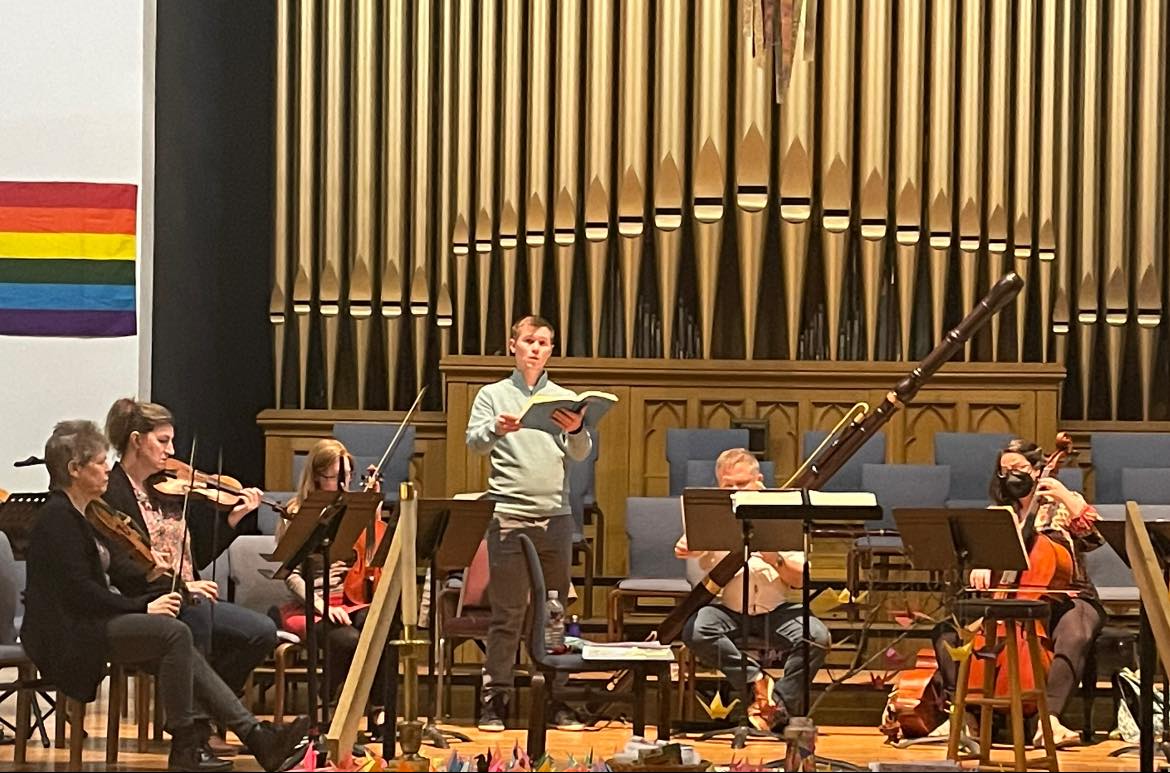
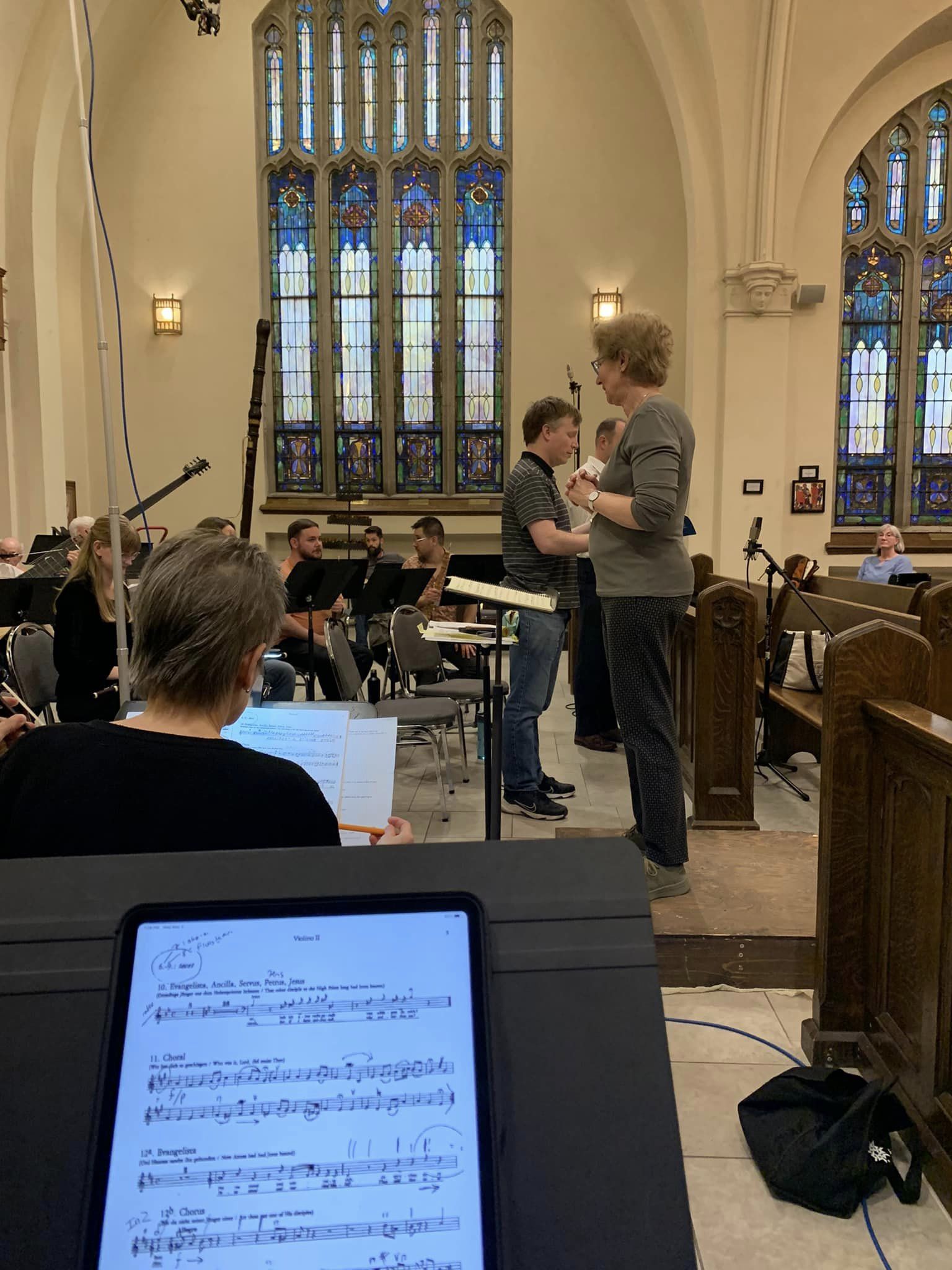
Rehearsal of the St. John passion featuring the Baroque contrabassoon played by Keith Collins

“I call it a Tetris puzzle,” Browne says. “It’s not just ‘it takes a village,’ it takes a city to do this! It is a huge administrative task, to fly these people in and figure out when they’re coming to the airport and where they can stay and all of that.”

Browne points out that there are a lot of people working behind the scenes who will not be seen onstage. “I have a good board, and I also have four or five excellent volunteers who have done incredible work. And donors and grant writers and publicity! It’s a bigger undertaking than anything that Seicento has done.”

Among the specialized instruments required are the Baroque bassoon, a contrabassoon that stands more than seven feet tall, and such rarities as the oboe ‘d’amore and oboe de caccia—oboes with distinctive sounds that are pitched differently than the modern instrument. “It’s not just using the instruments, it’s having knowledgeable instrumentalists who have spent years studying the style as well as perfecting the sound,” Browne explains.

She also has worked with the choir to achieve a historically informed stye of performance. She has trained the singers to achieve a sound that is brighter in places and less open on the higher notes. Another issue is the way musical phrases are shaped. “The choir is doing a lot of sub-phrasing within a long phrase,” Browne says. “Within one long phrase there are many divisions—it’s lots more detailed.”

Evanne Browne rehearing the St. John Passion with Seicento

A performance of the St. John Passion unfolds on several levels. The text from the Gospel of John is sung by a soloist identified as the Evangelist. His narration lays out the story of Jesus’s arrest, trial and crucifixion. Lutheran chorales are sung by the chorus, representing the response of the congregation of believers. The choir also sings the words of the crowd in John’s story, and framing choruses that open and close Bach’s score. Arias are sung by soloists that are settings of poetic texts chosen by Bach to illuminate the story.

Portions of the Passion that pose issues for contemporary listeners are passages considered antisemitic, when the crowd described as Juden (Jews) calls for Jesus to be killed. “There are issues with the text,” Browne acknowledges. “There’s a strong emotional response, and I think Bach’s music contributes to the controversy because it’s so well done.

“We’re not softening that, but what we are hoping to do is raise the consciousness of people who might not think about the presentation being antisemitic. We have talked about it, we have had good discussions. I wrote about it in the program notes, because I want people to know we’re not making a religious statement, we are presenting an historical work that is musically very worth while.”

That last point is especially important for Browne: the opportunity to present an important work as it would have been heard by the composer. It’s both an aesthetic and an educational mission. “Part of Seicento’s mission is about education,” she says. “That doesn’t just mean that we go to a school where there are children that haven’t heard Bach before—although we have done that.”

The mission includes helping the performers learn Baroque style and giving the audience the opportunity to learn about the musical works of the Baroque era. In fact, to reach the audience Browne has already posted an introduction the St. John Passion online (here.)

In the meantime, she is looking forward to the upcoming performances. “The choir is doing fabulously,” she says. “I think it’s going to be exciting for everybody. 

“It certainly is for me!”

# # # # #

J.S. Bach: St. John Passion
Seicento Baroque Ensemble, Evanne Brown, conductor

7 p.m. Friday, May 5, Arvada United Methodist Church, Arvada
7 p.m. Saturday, May 6, St. Paul Lutheran Church, Denver
3 p.m. Sunday, May 7, Mountain View Methodist Church, Boulder

TICKETS for live performances and livestream

Grace Notes: Boulder’s Choral Groups’ 2022–23 Seasons

Ars Nova Singers, Boulder Chorale and Seicento lay out plans for 2022-23

By Peter Alexander Oct. 12 at 2:52 p.m.

The Ars Nova Singers, the Boulder Chorale and Seicento Baroque Ensemble—three of Boulder’s leading choral groups—have distinct qualities, in terms of repertoire and performance style. All three groups have now announced their concert schedules for the 2022–23 season:

# # # # #

Under director Tom Morgan, Ars Nova generally avoids the historical middle of standard repertoire, preferring music either side of the 18th and 19th centuries—the Renaissance or the 20th and 21st centuries. Their concerts are challenging to the singers, and can be equally so to audiences, but they are always interesting as well.

On Nov. 4 they will be the first of the three to present a concert this season (see time and place below). Their opening program is devoted to one of the most fascinating figures of the late Renaissance. Carlo Gesualdo, the Prince of Venosa and Count of Conza, was the composer of harmonically advanced, highly chromatic madrigals unlike anything else of their time. He was also known for having murdered his first wife and her lover when he found them together in bed, a fact that has not gone unnoticed in appreciation of his extreme music.

Performances of Gesualdo’s music are rare, as is often the case with Ars Nova programming, so this performance is worth noting.

One major event of the Ars Nova season will be the presentation in March of the world-touring British a cappella group Voces 8. Their two performances under Ars Nova’s auspices will be Wednesday March 1, 2023 in Macky Auditorium (7:30 p.m., details below) and Thursday, March 2, at St. John’s Cathedral in Denver (7:30 p.m.; tickets on sale Oct. 15). Please note that these are two separate programs. (details below).

Here is a full listing of the Ars Nova 2022–23 season:

“Wonder”
Ars Nova Singers, Tom Morgan, director
With Sandra Wong, violin and nyckelharpa, and Ann Marie Morgan, viola da gamba
Carlo Gesualdo: Madrigals from Books 5 and 6

  • 7:30 p.m. Friday, Nov. 4
    St. John Episcopal Church, 1419 Pine St., Boulder
  • 7:30 p.m. Saturday, Nov5
    Stewart Auditorium of the Longmont Museum
  • 4 p.m. Sunday, Nov. 6
    St. Paul’s Lutheran Church, 1600 Grant St., Denver 

“Solstice”
Ars Nova Singers, Tom Morgan, director
With John Gunther, woodwinds
Music for the Winter Solstice and Christmas

  • 7:30 p.m. Friday, Dec. 9
    First Congregational Church, 1500 9th Ave., Longmont
  • 4 p.m. Sunday, Dec. 11
    St. Paul’s Lutheran Church, 1600 Grant St., Denver

“Stardust”
Ars Nova Singers, Tom Morgan, director

  • 7:30 p.m. Friday, Feb 10, 2023
    First United Methodist Church, 1421 Spruce St, Boulder
  • 7:30 p.m. Saturday, Feb. 11, 2023
    Central Presbyterian Church, 1660 Sherman St., Denver

“Choral Dances”
Voces 8
Music by Byrd, Bach, Britten and Berlin

  • 7:30 pm. Wednesday, March 1
    Macky Auditorium

TICKETS 

“Lux Aeterna”
Voces 8
Music by Mendelssohn, Rachmaninoff and Monteverdi

  • 7:30 p.m. Thursday, March 2
    St. John’s Cathedral, 1350 n. Washington St., Denver

TICKETS available Oct. 15

“Reflections”
Ars Nova Singers, Tom Morgan, director
Music by Mahler, Thomas Jennefelt and Caroline Shaw

  • 7:30 p.m. Friday, April 21
    First United Methodist Church, 1421 Spruce St., Boulder
  • 7:30 p.m. Saturday, April 22
    Bethany Lutheran Church, 400 E. Hampden Ave. Cherry Hills Village
  • 7:30 p.m. Saturday, June 3
    TANK Center for Sonic Arts, 233 County Rd. 46, Rangely, Colo

(This program will also be performed on tour in Colorado and New Mexico.)

See more information on the Ars Nova Web page

CORRECTION: The two programs by Voices 8 March 1 and March 2 were originally listed incorrectly. The correct information is “Choral Dances” on March 1 and “Lux Aeterna” on March 2, as now shown above.

# # # # #

The Boulder Chorale is actually three different groups, and serves a role in music education as well as performance—in the words of the Web page, “for singers aged 5 to 85.” The Concert Chorale, the Chamber Chorale and the Children’s Chorale—the last divided by age into four different ensembles—perform separately as well as together. Under director Vicki Burrichter, the repertoire of the adult groups is eclectic, notably including world music, traditional styles from both European and non-European sources, and new works. As in the current season, their repertoire has often included work for chorus and orchestra.

Boulder Chorale opens their season Nov. 5, one day later than Ars Nova. Their opening weekends overlap, but you can easily plan to attend both. The chorale’s program is an example of their pursuit of world music. Titled “Origins: The Fertile Crescent,” the program highlights music from the Middle East and North Africa, including the Chorale’s own arrangements by Adam Waite of music from Israel, Afghanistan, Spain, Morocco and Syria.

Later in the year, the Chorale partners with the Longmont Symphony for performances of Handel’s Messiah (Dec. 17) and a Messiah  singalong (Dec. 18; details below); and with the Boulder Chamber Orchestra for performances of Beethoven’s Mass in C.

Here is the full listing of the Boulder Chorale 2022–23 season through April 2023:

“Origins: The Fertile Crescent”
Boulder Chorale, Vicki Burrichter, conductor, with Catrene Payan, vocalist, and Middle Eastern instrumental ensemble, David Hinojosa,leader

  • 4 pm. Saturday, Nov. 5, and Sunday, Nov. 6
    First United Methodist Church, 1421 Spruce Street, Boulder, CO

“A Celtic Winter”
Boulder Chamber Chorale and Concert Chorale, Vicki Burrichter, director, and Boulder Children’s Chorale, Nathan Wubbena, director

  • 4 p.m. Saturday, Dec. 10, and Sunday, Dec. 11
    First United Methodist Church, Boulder 1421 Spruce Street, Boulder, CO

Handel’s Messiah
Longmont Symphony, Elliot Moore, conductor
With the Boulder Chamber Chorale, Vicki Burrichter, director

  • 4 p.m. Dec. 17
    Westview Presbyterian Church, 1500 Hover St., Longmont

“Hallelujah! A Messiah singalong”
Longmont Symphony, Elliot Moore, conductor
With the Boulder Chamber Chorale, Vicki Burrichter, director

  • 4 p.m. Dec. 18
    Westview Presbyterian Church, 1500 Hover St., Longmont

“A Nation of Immigrants
Boulder Chorale, Vicki Burrichter, conductor

  • 4 p.m. Saturday, March 18, and Sunday, March 19
    First United Methodist Church, 1421 Spruce Street, Boulder, CO

Beethoven Mass in C
Boulder Chamber Orchestra, Bahman Saless, conductor
With the Boulder Chamber Chorale, Vicki Burrichter, director

  • 7:30 p.m. Saturday, April 1
    Boulder Adventist Church, 345 Mapleton Ave., Boulder

For more information on these and other concerts, visit the Boulder Chorale Web page.  

CORRECTION: The concert “Story of My life,“ previously listed here, was included by error. That is a performance by the Boulder Children’s Chorales, and has been removed from this listing. Also, clarification has been added as to which of the three chorales is performing in each of the concerts.

# # # # #

Seicento specializes in Baroque music of the 17th (“Seicento” in Italian) and 18th centuries performed with, to use the currently accepted language, “historically informed” performance practice, including period instruments. Today they are directed by the group’s founder, Evanne Browne.

Founded in 2011, Seicento launches its second decade in December with “Nöel: Christmas in the late Renaissance and Early Baroque” (December 2–4), a program that includes carols still familiar today as well as little known choral works. The major event of the season will take place in May, when Seicento will be joined by an orchestra of historical instrument performers to present Colorado’s first historically informed performance of J.S. Bach’s St. John Passion.

Here is the full listing of Seicento’s season:

“Nöel: Christmas in the late Renaissance and Early Baroque”
Seicento Baroque Ensemble, Evanne Browne, conductor

  • 7:30 p.m. Friday Dec. 2
    St. Paul Lutheran Church, 1600 Grant St., Denver
  • 7:30 p.m. Saturday, Dec. 3
    First United Methodist Church, 1421 Spruce St., Boulder
  • 3 p.m. Sunday, Dec. 4
    First Congregational United Church of Christ, 1500 9th Ave., Longmont

J.S. Bach’s St. John Passion (BWV 245)
Seicento Baroque Ensemble and historical instrument orchestra, Evanne Browne, conductor

  • 7 p.m. Friday, May 5
    Arvada United Methodist Church, 6750 Carr St., Arvada
  • 7 p.m. Saturday, May 6
    St. Paul Lutheran Church, 1600 Grant St., Denver
  • 3 p.m. Sunday, May 7
    Mountain View United Methodist Church, 355 Ponca Place, Boulder 

For more information, see Seicento’s Web page.  

Doing an intricate dance, Seicento switches directors, then back again

The 2022–23 season features “Christmas in the Late Renaissance” and J.S. Bach

By Peter Alexander Sept. 20 at 11:32 a.m.

Changes in leadership for performing organizations happen all the time, but Seicento—Boulder’s semi-professional chamber choir and Baroque performance group—has pulled a double switch that is at least unusual.

Founding, and current, director Evanne Browne leads a concert by Seicento. Photo by John Lamb.

They just recently announced a change in the artistic director position, but to fully understand, you have to go back to the founding of the group in 2011.

Seicento was founded by Evanne Browne, an experienced early-music singer who served as artistic director until 2018, when she moved to Arlington, Virginia—“for love,” she says, moving to “explore a relationship that ended up wonderfully.” Amanda Balestrieri, a long-time friend who had performed alongside Browne in early music groups in the D.C. area and later moved to Boulder, took over and directed the group through COVID.

Now Browne and her husband, John Butterfield, have returned to Boulder, and by a total coincidence it’s Balestrieri who is moving to Virginia at the same time. It’s love again, but in this case a daughter and a grandchild.

Newly returned to Colorado, Browne told Seicento’s board, “I’m available!” And so she is returning to the organization she founded.

Musical pals and alternating Seicento directors Evanne Browne (l) and Amanda Balestrieri (r)

Have you got that? Today the artistic director is whichever of the two is not living in Virginia. Mostly.

That has worked out quite well, since Browne and Balestrieri have worked together enough that they know each other and trust each other explicitly. “That’s the beautiful thing about the two of us having both led Seicento,” Balestrieri says. “Even though Evanne or I leave Seicento, it’s going to be led the way that we both think it should be.”

The two musical partners arrived at this mutual respect from different backgrounds: Balestrieri from England, where she studied German and French at Oxford, and also studied voice in London and in Milan, Italy; and Browne from a musical education in the U.S., including voice studies at Rice University and post-graduate work in choral conducting.

“We come from different emphases and knowledge bases,” is the way Balestrieri puts it. But “the groundwork is always the note.”

In early music performance, not everyone always agrees even about the note, because the mists of time have left a lot to the interpretation of the performer. That’s where the shared background puts Browne and Balestrieri in agreement about the note, and much more. Their common professional experiences have led them to a mutual understanding of early music styles, and a shared interest in exploring the repertoire.

Balestrieri and Browne ended up in the Washington, D.C., area largely by chance, performing with early music ensembles including the Folger Consort and the Smithsonian Chamber Players. As they sang together in the same groups, they soon found great compatibility as singers. In fact, Browne says, “There were times where we could adjust our voices to be so similar that even I would sometimes go, who’s on which line?”

For a while their careers went in different directions. Balestrieri’s singing career took off, while Browne worked at the Smithsonian in Washington, picking up business skills that she has used with Seicento. Then it was again mostly by chance that they both ended up in Colorado.

Former director Amanda Balestrieri with Seicento

“That’s the beautiful thing, because we were not singing and performing together for quite a while,” Balestrieri says. “I wasn’t even assuming we’d see each other again musically, but it was lovely to reconnect, because we did have that background—even though it was not a continuous one.”

The best part of the saga is Balestrieri’s move to Virginia. She was well settled in Boulder, and had an ongoing relationship with Charley Samson of Colorado Public Radio. They both kept their homes, hers in Boulder and his in Denver, but were often together.

“I have two daughters, one was living in Virginia and one in San Francisco,” Balestrieri says. “The one in San Francisco said ‘Mom, are you going to move here?’ What was I supposed to do, choose? And so she moved to Virginia to call my bluff! She had a baby last December and bought a house. I was visiting her and the house next door came up for sale.”

Thinking that she would like to have a place to stay in both Colorado and Virginia, Balestrieri bought the house next door to her daughter. “I was struggling with leaving (the house in Boulder),” she says. “So I called (Samson) from Virginia and said, ‘Guess what I did! But I have this great idea.’

“So what we’ve done is, Charley sold his house, I bought the house next door to my daughter and I’m selling my house to Charley!”

Just like that, Balestrieri will have a base of operations in both places. She hopes to return to singing in D.C., where she still has many friends and professional contacts, and she has plans to perform in the Boulder area as well, both as a visitor with Seicento in the coming season and with other people she knows in this area.

In the meantime, Browne is going full steam ahead for the coming season of Seicento. The repertoire for two concerts—one in December and the other in May—has been set. The holiday concert, scheduled for December 2–4 with a venue tbd, is titled “Seicento’s Roots: Christmas in the late Renaissance.” The program will illustrate the transition from the choral style of the late Renaissance to the more ornate style of the Baroque period. The program will feature carols that are still familiar today, including “Lo How a Rose E’er Blooming” by Michael Praetorius.

The spring concert, scheduled for May 5–7, will be a 300th anniversary performance of J.S. Bach’s St. John Passion, with Balestrieri as featured soloist. As far as Browne knows, this will be the first performance in Colorado of this passion setting with original instruments. This is by far the greater challenge, since it requires hiring specialist performers on the instruments of Bach’s time, but Browne is unafraid.

“Seicento needs to do this because when we do something that everybody wants to come see, and sing, then you get the response that you want,” she says. “I could have picked something very obscure that didn’t have Baroque oboes or Baroque flute players, but the joy of Seicento and the passion for the music is to find these pieces.”

In the meantime, Balestrieri and Browne both believe that Seicento has put the travails of COVID behind them and can return to the level they had achieved before. “I’m excited to see Seicento get the energy back after COVID,” Balestrieri says.

The group’s most recent concert this past April, which she directed, “had a very good feel,” she says. “The cohesion and spirit was back. The audience reviews were great. I’m just excited to see it and to be there when I’m in town.”

NOTE: The announcement of concert venues and tickets for Seicento’s 2022-23 concerts will be available on the group’s Web page.

Exploring a new realm, Seicento offers “silly entertainment” March 16–18

Artistic director emeritus Evanne Browne returns to lead “Mad Madrigals

By Peter Alexander March 16 at 2:48 p.m.

Evanne Browne 009a Color

Evanne Browne

Evanne Browne, the artistic director emeritus of Seicento Baroque Ensemble, has returned to Colorado to conduct performances by Seicento Baroque Ensemble, the group she founded in 2011.

The program, titled “Mad Madrigals,” is one Browne had partially planned last year, before she left Seicento. After Browne moved from Boulder at the end of last season, Kevin Padworski was appointed to succeed her as artistic director.

When Padworksi was unable to conduct the concert scheduled for this weekend (March 16–18), Brown came to the rescue, flying from the east coast to take over leadership of performances scheduled in Denver, Boulder and Longmont. She will share the conducting duties with Amanda Balestrieri, Seicento’s associate artistic director.

In addition to the full Seicento chorus, members of the ensemble will be featured as soloists and in smaller groups. Additional musicians will be Paul Holmes Morton, theorbo; Sandra Miller, Baroque cello; Gerald W. Holbrook, harpsichord; Linda Lubeck, recorder; and Steve Winograd, recorder, pipe and tabor, and Morris bells.

Seicento 3

Seicento Baroque Ensemble

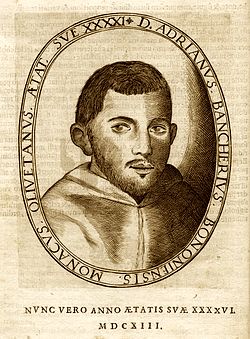
The program is well outside the usual repertoire of Seicento in the past, which has focused on major choral works of the Baroque period. The anchor work on the program, filling most of the second half, will be Festino nella sera del giovedì grasso avanti cena (Fête for the evening of Carnival Thursday before supper), a “madrigal comedy” by Adriano Banchieri.

250px-BANCHIERI-C64_001ritratto

Adriano Banchieri

This is the most famous of the many madrigal comedies written around the year 1600, including several by Banchieri. Like all madrigals, they were written to be sung by amateurs as informal entertainment, often after dinner, and they are generally filled with comic vignettes poking fun at social conventions and stereotypes.

“This is definitely silly entertainment,” Browne says. “I had come across Il Festino a number of years ago. To come across a set of things that are just plain silly, like the madrigal comedies are, was a way to balance what Seicento usually does. It’s very funny.”

For example. Brown mentioned one of Banchieri’s madrigals that has become popular among fans of Renaissance music: Contrapunto bestiale alla mente, or “The Animals sing in counterpoint.” Browne explains: “There is counterpoint for animal sounds. The (text) is ‘bau, bau,’ which is what the dogs say in Italy, and ‘miau, miau,’ and ‘chiu’ and ‘cucu, cucu,’ and the madrigal part is that it has a ‘fa-la-la’ chorus.”

It is the second half of the program that is filled with the silly madrigal comedies. The first half is a survey of madrigal and other informal vocal styles from around the 16th century. “There are some very, very beautiful pieces in the first half,” Browne says. “It will be musically sophisticated on the first half, very comic the second half.”

Musica TrasnsalpinaThe madrigal started as in-home entertainment in Italy but it was spread to England in 1588. In that year an important book, Musica Transalpina (Music from across the alps), was published in London containing Italian madrigals with their texts translated into English. This started a craze for madrigals in England.

“The first half of the program is a view of madrigals starting out with Thomas Morley’s “Sing we and Chant It,” and the Italian version of that (from) Musica Transalpina, which got everybody intrigued and enamored by what was happening in Italy. We’re also doing some music by Monteverdi and Barbara Strozzi, who has become much more well known recently because she’s a female composer.”

Other works on the first half of the program include Gagliarda XI and a Prelude-Passacaglia pair by Giovanni Girolamo Kapsberger for Chitarone (a bass lute also known as theorbo), which will be performed by Morton; a 15th-century French drinking song; and madrigals by Giles Farnaby, Jacques Arcadelt, and Luca Marenzio.

Browne stresses that the program touches only a tiny part of the madrigal repertoire. “In one account I read, there were 40,000 madrigals published before 1630!” she says.

“This will be entertainment, in a way we don’t know how to do any more—where you’re at home and pull out your madrigal books and sing one of the 40,000 madrigals! So the audience should be prepared for a completely different concert than we have done before.

“It’s going to be lots and lots of fun”

# # # # #

“Mad Madrigals”
Seicento Baroque Ensemble
Evanne Browne, artistic director emeritus and conductor
Amanda Balestrieri, associate conductor

7:30 p.m. Friday, March 16, Montview Presbyterian Church, 1980 Dahlia St, Denver
7:30 p.m. Saturday, March 17, First United Methodist Church, 1421 Spruce St., Boulder
3 p.m. Sunday, March 18, First Evangelical Lutheran Church, 805 3rd Ave., Longmont

Tickets

Seicento Baroque Ensemble appoints new artistic director

Kevin T. Padworski will succeed founding director Evanne Browne

By Peter Alexander

Seicento Baroque Ensemble, a Boulder-based choral organization specializing in the music of the early Baroque period, has appointed composer/conductor/organist Kevin T. Padworski to succeed Evanne Browne as artistic director.

At the same time Amanda Balestrieri, a soprano who is well known for her early music performances, has been selected as assistant conductor of the group.

KEVINPadworski

Kevin T. Padworski has been appointed artistic director of Seicento

Browne founded Seicento in 2011 with the goal of “performing worthy but rarely heard music of the early Baroque musical period,” their Web page states. Under Browne’s leadership the auditioned choir has employed historically informed performance practice and period instruments in their performances.

In a statement released by Seicento, Browne praised the choice of Padworski as artistic director, saying, “Seicento is honored to have a musician of this caliber lead our group into the future.”

“Evanne clearly has kind of established a little bit of a legacy here in Colorado,” Padworski says. “I’m following an incredible woman in her field, and I’m excited to work on the repertoire. I’m excited about being able to perform Baroque repertoire up to historically informed performance practice.”

The transition has been made easier by planning that already taken place for the 2017­–18 season. Themes have been selected for two concerts during the year. “The fall theme will be ‘Luther to Bach,’ and that can mean a whole bunch of things,” Padworski says. “That’s really exciting because Luther’s influence was widespread in Europe, so that leaves a lot of composers available to explore.

“Then in the spring they had established a theme called ‘Mad Madrigals.’ It gives us a breadth of madrigal repertoire from a couple of centuries. As I look at that, my initial reaction would be to try to make that as broad as possible.

“I see it as a privilege to work with and collaborate with the people in the ensemble, and to offer music to greater Boulder.”

balestrieri

Amanda Balestrieri will be assistant conductor of Seicento

Balestrieri has been a frequent soloist with Seicento, most recently for Browne’s last performances with the group March 24–26. She worked closely with Browne and the ensemble over the past six years, and has also appeared with the Boulder Bach Festival, Pro Musica Colorado Chamber Orchestra, and other performing organizations in Colorado.

“I think it’s going to be a really good collaboration,” she says of her role working with Padworski as assistant conductor. “Kevin’s skills are huge. He’s a singer and a conductor and a keyboard player, and he has energy and wonderful musicianship. What I bring is how to technically execute some of the more difficult parts of the early music style, and a much longer experience in the early music movement.”

Padworski is a doctoral student in choral conducting at the University of Colorado, Boulder. He is artistic director of the Colorado Chorale and director of music and organist at Calvary Baptist Church in Denver. He is the composer of both choral and instrumental works, available through MusicSpoke and Santa Barbara Music Publishing.

He performs as an organist, singer, pianist and harpsichordist with an interest in early music. He has appeared professionally with the Jubilate Deo Chorale and Orchestra, Dallas Symphony, Colorado Choral Arts Society, Colorado Symphony, Colorado Symphony Chorus, Colorado Children’s Chorale, Opera Colorado and American Baptist Churches USA, among other organizations.

Padworski holds a bachelor’s degree in music education from Eastern University, a certificate in leadership from the Foundations program at Duke Divinity School, and a master’s degree in conducting from the University of Denver’s Lamont School of Music.  He has been a conducting fellow with the Sarteano Chamber Choral Workshop and with Chorus America.

Evanne Browne says farewell with Handel

Seicento performs two early psalm settings composed in Italy

By Peter Alexander

Seicento 3

Seicento Baroque Ensemble

Over the weekend—Friday to Sunday, March 24–26—Evanne Browne will conduct her farewell concerts with Seicento, the Baroque performing group that she founded only six years ago.

Evanne Browne 009a Color

Evanne Browne

The program comprises entirely music by Handel, including settings of Psalm 110, Dixit Dominus, and Psalm 117, Laudate Pueri. Both are set for choir and soloists with strings and will be accompanied by a small orchestra of period instruments, including harpsichord and small organ. There will also be sections of secular cantatas to fill out the program. Performances will be in Denver, Boulder and Estes Park (see below for details).

“It’s my last concert, but it’s the beginning of a new energy with Seicento,” Browne says. “We’re financially sound, we’re finishing the sixth year, and we’ve been well received. People say, ‘oh, that’s your baby,’ but the baby has grown up and is ready for a new influence.”

Interviews have already been held for a new director and auditions will be conducted next week. Browne said the board hopes to announce the new director in April.

Browne moved to the Washington, D.C., area, where she had lived and worked before coming to Boulder, in September and has travelled back to Colorado for all the Seicento’s concerts this year. In the meantime, she has been singing professionally and teaching in the D.C. area since her move.

balestrieri

Amanda Balestrieri

She picked the program for the concert before she knew it would be her last with Seicento, but the choice is appropriate. “I have known Dixit for along time and wanted to do it,” she says. “Dixit is one of his most incredible choral pieces, and both pieces are chorally flamboyant, and difficult choral singing. If you think Messiah has lots of runs, Dixit is that times two or three.”

The second Psalm setting, Laudate Pueri, was pointed out to Browne by Mark Alan Filbert, who has served as musical director in Browne’s absence this year. Both pieces were written in 1707, when Handel was 22. He was living in Rome, where the Pope had banned opera but sacred music filled the void. Roman choirs of the time seem to have been particularly capable, which explains the difficulty of the music in both Psalm settings.

radakovitch

Kathryn Radakovitch

While living in Italy, Handel “was influenced by Corelli and other Italians,” Browne says. “He was into an Italian expressiveness, which is so much about word painting and florid vocal lines. And the crunchiness of the dissonances is very Corelli-like. He took that style into his later works, his operas and his oratorios, but I think he’s really exploring the craft here.”

The two Psalm settings do not quite make an hour of music, so Browne selected movements from three of Handel’s cantatas to fill out the program. She chose them, she says, because they contain music that the audience will recognize—the original versions of melodies that appeared later in Messiah.

“People will recognize [the tunes],” she says. “One is ‘For Unto Us a Child is Born,’ and the other is ‘And He shall Purify.’ It’s great fun to hear these Italian texts and especially the Messiah melodies that we know so well in their original form. It’s so familiar but it’s so different.”

singing-525x394

Barbara Hollinshead

Soloists for the performances will be sopranos Amanda Balestrieri and Kathryn Radakovitch and tenor Todd Teske, all from the Boulder area, and mezzo-soprano Barbara Hollinshead who performs in Washington, D.C. There will also be short bass solos from members of Seicento.

“We have fabulous soloists,” Browne says. “There are two duets and one solo cantata, and the women who are doing the cantatas—oh my gosh, they can sing runs, and beautifully! It’s going to be a lot of fun to hear that.”

Just six years ago, Seicento became one of the first historical performance groups in the Boulder area. “When I first came to Boulder, there was very little Baroque vocal music going on, and a little bit of Baroque stringed period-instrument music,” Browne says, pointing out how much more there is now. “I am very, very proud of this organization and the way it has been managed,” she says.

“I’m grateful and I’m excited for the future of Seicento.”

# # # # #

droppedImage

Seicento Baroque Ensemble
Evanne Browne, artistic director and conductor
Sopranos Amanda Balestrieri and Kathryn Radakovitch, mezzo-soprano Barbara Hollinshead and tenor Todd Teske

Handel: Dixit Dominus and Laudate Pueri
Selections from Italian secular catnatas

7:30 p.m. Friday, March 24
St. Paul Lutheran Church & Catholic Church, 1600 Grant. St. Denver

7:30 p.m. Saturday, March 25
First United Methodist Church, 2412 Spruce St., Boulder

2 p.m. Sunday, March 26
Stanley Hotel Concert Hall, 333 east Wonder View, Estes Park

Tickets


Adventures in geography and gender

Seicento Baroque Ensemble and Boulder Chorale go exploring

By Peter Alexander

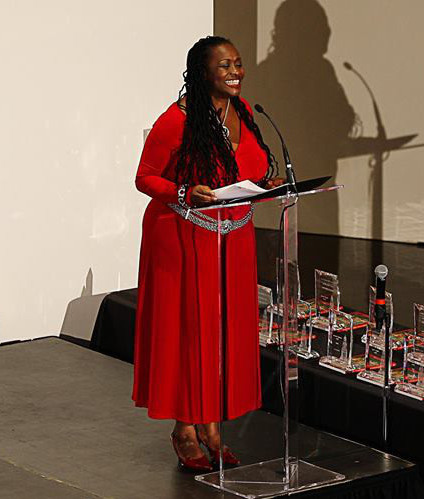
UPDATE: Boulder Chorale announced Friday, Oct. 22, that “due to a family emergency Dominique Christina will not be able to perform with the Boulder Chorale this weekend.” In her place, the Chorale has announced that Colorado singer Sheryl Renee will appear on the concert Saturday evening and Sunday afternoon.

Renee has sung with the Colorado Symphony under the late Marvin Hamlisch and sung the National Anthem for President Barrack Obama.

Two of Boulder’s choral groups will separately spend the weekend exploring geography and gender. Happily, both programs will be given twice in the Boulder area, so if you are looking for musical adventures, you can experience both journeys.

sheryl-renee

Vocalist Sheryl Renee will replace Dominique Christina in the weekend performances.

The Seicento Baroque Ensemble and director Evanne Browne will travel back to the music of 16th- and 17th-century Spanish America. They will perform music by Spanish missionaries and converted Christian natives in Central and South America, sung in Spanish and Latin as well as Nahuatl, the indigenous language of the Aztecs.

At almost the same times, in Boulder and Longmont, Boulder Chorale will be delving into music by and about women. Their program, “Women’s Work: Poetry and Music” will feature the chorale and director Vicki Burrichter performing music from Hildegard to Carly Simon, and settings of religious texts extolling the Virgin Mary. Bringing the performance up to 2016, five-time national poetry slam winner Dominique Christina will poetically address modern social issues that affect women.

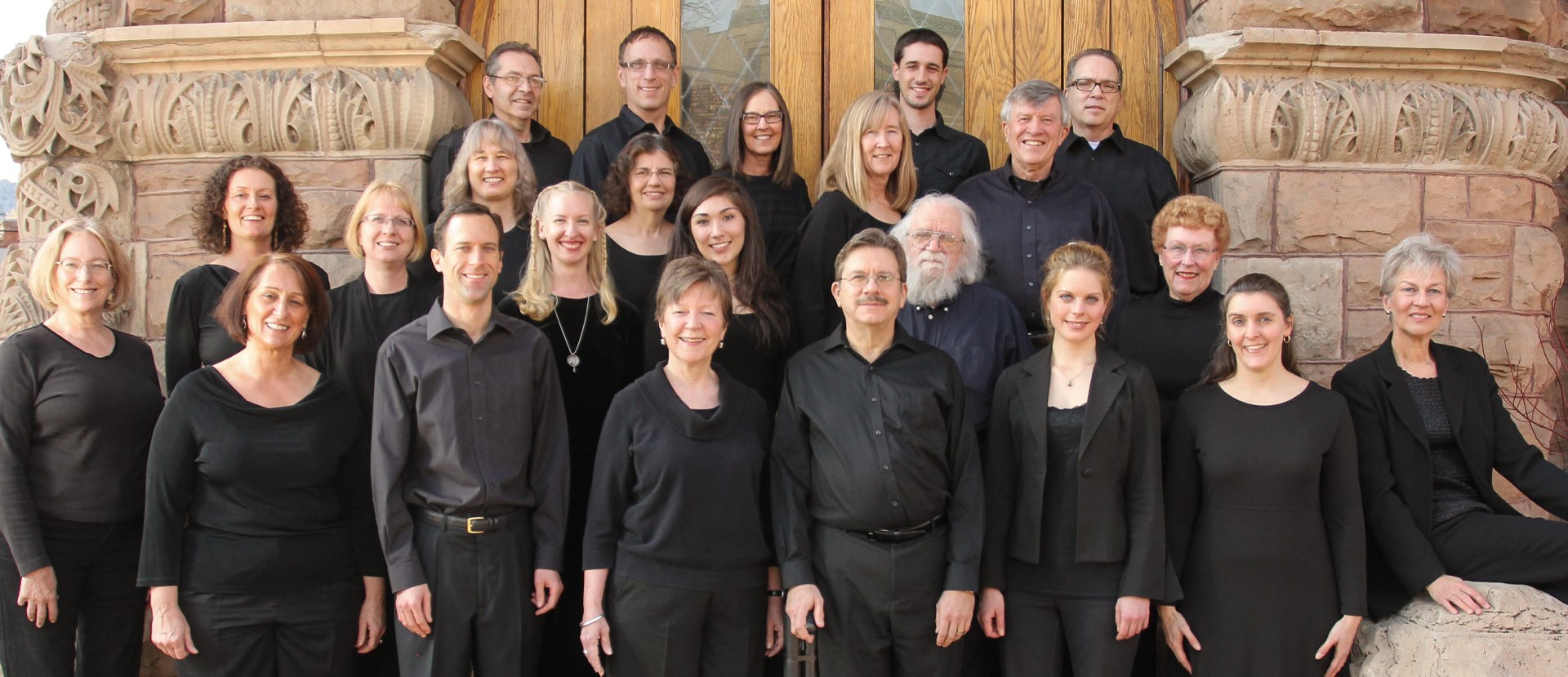
sbe-in-front-of-fumc

Seicento Baroque Ensemble and director Evanne Browne (far right)

Seicento’s mission is to present “worthy but rarely-heard music of the early Baroque period.” That time — around 1600 — coincided with the Spanish colonial era in the Americas. The Spanish missions were rich with musical activities, including choirs of Native Americans who brought their own lively traditions to the performances and in some cases wrote music themselves.

Browne says “there’s been a surge of publications and information about this repertoire. I spent the last year listening and researching and seeing what was online, and thought, ‘This would be really fun!’”

hildegard-of-bingen

Hildegard of Bingen

Boulder Chorale’s concert of “Women’s Work” opens with music by one of the most revered female musicians of European history, the medieval Benedictine abbess, Christian mystic, composer and polymath Hildegard of Bingen. “For me, Hildegard’s O Splendidissima Gemma (O resplendent jewel) is the foundational piece” on the program, Burrichter says.

For the rest of the concert, she says, “I wanted to show the variety of music composed by women and about women, and try to touch on as much of that as I could.” And variety there is, from the medieval mysticism of Hildegard, to a traditional South African song arranged in the spirit of Miriam Makeba, to American modernist Meredith Monk’s “Panda Chant II.” The program ends with a choral arrangement of Carly Simon’s anthem “Let the River Run,” written for the 1988 film Working Girl.

Read more in Boulder Weekly.

# # # # #

“Colonial Latin American and the New World”
Seicento Baroque Ensemble, Evanne Browne, artistic director and conductor

7:30 p.m. Friday, Oct. 21
St. Paul Lutheran & Roman Catholic Church, 1600 Grant St, Denver

7:30 p.m. Saturday, Oct. 22
First United Methodist Church, 1421 Spruce St., Boulder

3 p.m. Sunday, Oct. 23, Longmont Museum Stewart Auditorium, 400 Quail Rd., Longmont
Tickets

“Women’s Work: Poetry and Music”
Boulder Chorale, Vicki Burrichter, director, with Sheryl Renee, guest artist
(Please note the change in the guest artist)

7:30 p.m. Saturday, Oct. 22, and 4 p.m. Sunday, Oct. 23
Boulder Adventist Church, 345 Mapleton Ave.
Tickets


Seicento Celebrates Scarlatti and Son

By Peter Alexander

Evanne Browne, artistic director of the Baroque vocal ensemble Seicento, wants you to know that she is excited about their next concert. Very excited.

Seicento.2015.1

Seicento Baroque Ensemble with director Evanne Browne, center

“I was thrilled to get to put this together,” she says. “This is a joyous concert. It’s just magical!”

This magical concert will be presented Friday through Sunday with performances in Denver, Boulder and Longmont. And although the title, “Scarlatti, Father and Son,” might sound like a trendy Italian trattoria, it actually refers to an important musical family of the 17th and 18th centuries.

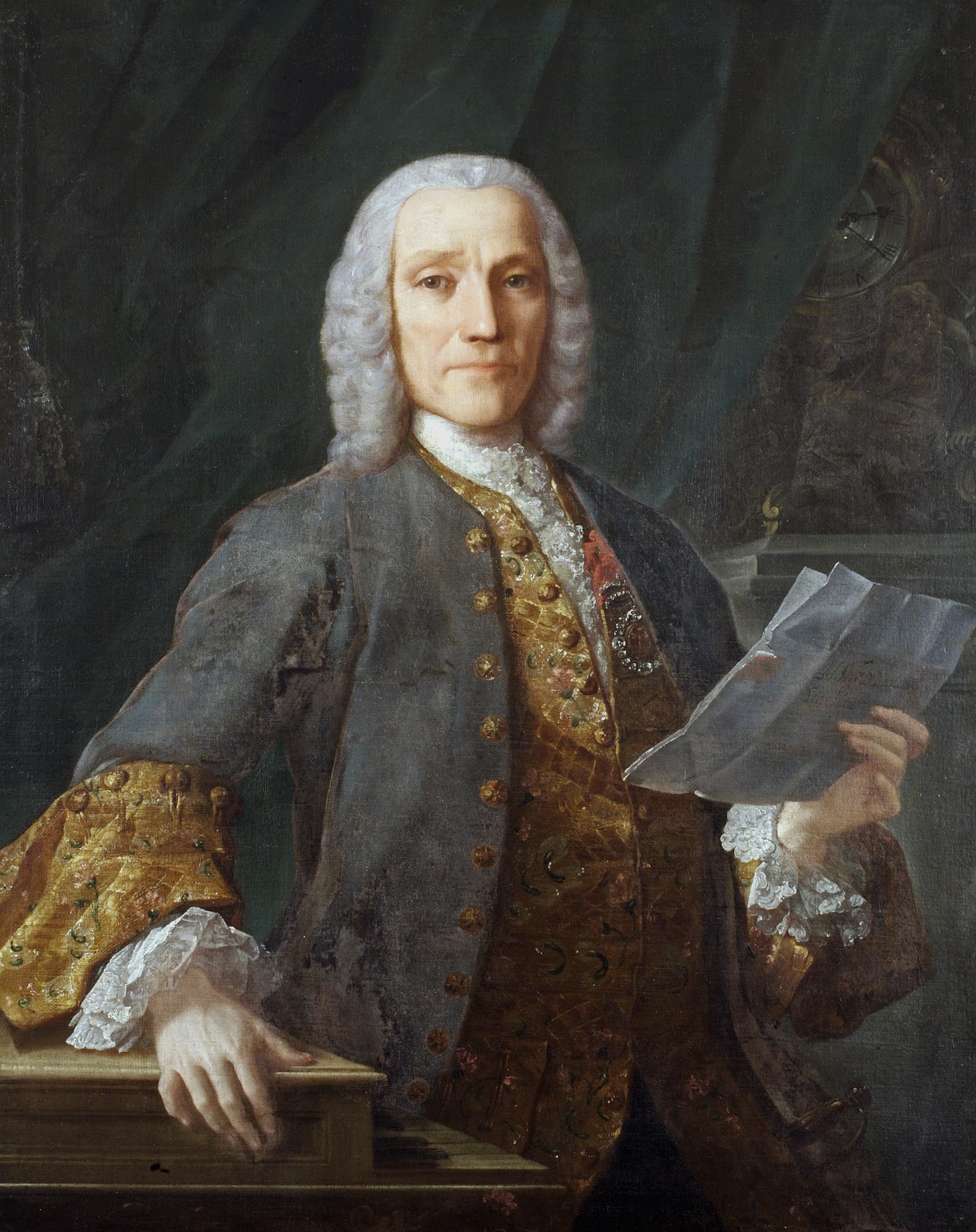
Alessandro Scarlatti spent most of his career at the court in Naples, where his brother Francesco was first violinist. His two children also pursued musical careers, Domenico primarily in service to the royal families of Spain and Portugal, and Francesco in London and Dublin.

Retrato_de_Domenico_Scarlatti

Domenico Scarlatti

Almost anyone who has taken piano lessons as a child—or whose children have taken lessons—knows of Domenico Scarlatti, the titular son of the program. He famously wrote more then 500 one-movement keyboard sonatas that range from short, easy pieces in every teacher’s lesson book to challenging workouts that find their way into virtuoso recital programs.

Browne’s aim is to open up much more of the Scarlatti legacy than the well known sonatas—written for harpsichord but today played mostly on piano. Domenico wrote other works, from operas and cantatas to sacred motets and a 10-voice Stabat Mater that will end the concert. And his father Alessandro was one of Italy’s leading Baroque opera composers, dominating opera in Naples in the 1690s. He also wrote cantatas and other vocal works, and an almost unknown set of madrigals that will be on the program.

Read more at Boulder Weekly.

# # # # #

Scarlatti, Father & Son
Seicento Baroque Ensemble, Evanne Browne, artistic director, with guest artists

7:30 p.m. Friday, March 11, St. Paul Lutheran Church, Denver
7:30 p.m. Saturday, March 12, First United Methodist Church, Boulder
3 p.m. Sunday, March 13, Stewart Auditorium, Longmont

Tickets