Olson heading toward the door after 33 years in Longmont

Saturday will be his last concert as music director, but he’ll be back

By Peter Alexander

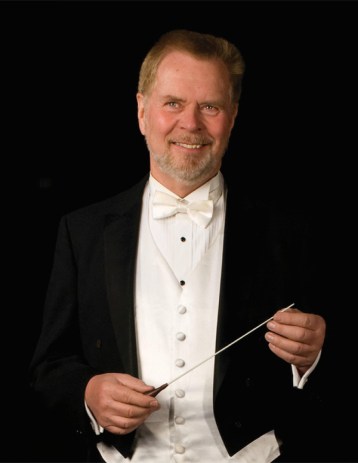
Robert Olson has changed the Longmont Symphony, and the Longmont Symphony has changed him.

Olson photo

Enter a captionRobert Olson. Photo courtesy of Longmont Symphony.

“I’m very, very proud of what we’ve done over three decades,” says the director who brought the LSO from a group of raw amateurs who had to be led measure by measure through Stravinsky’s Firebird to a first-rate community orchestra that tackles major repertoire unafraid. And along the way, he says he learned something, too.

With a concert on Saturday (7:30 p.m. April 9, Vance Brand Civic Auditorium, Longmont), Olson will step down after 33 years as the orchestra’s music director—more than half the LSO’s 50 years of existence. He will return in the fall to conduct the opening concert of the 2016–17 50th-anniversary season, but most of the concerts during the year will be conducted by candidates to take his position.

Saturday’s concert brings to an end a season-long exploration of Russian music. The major work will be Tchaikovsky’s über-popular Piano Concerto, performed with pianist Chih-Long Hu, whom Olson has known for many years. Other works on the program will be the March and Scherzo from Prokofiev’s Love for Three Oranges, familiar from its use in TV shows and commercials; Shostakovich’s youthful Symphony No. 1, written when he was just 19; and one non-Russian work, the Intermezzo from Leoncavallo’s I pagliacci.

If this doesn’t sound like a valedictory program for an outgoing maestro, that’s because Olson doesn’t like to think about making a grand exit. “That’s not in my personality,” he says. “It would be fine with me just to quietly go away.”

Read more in Boulder Weekly.

# # # # #

Tchaikovsky’s Piano Concerto
Longmont Symphony Orchestra, Robert Olson, music director
With Chih-Long Hu, piano

Prokofiev: March and Scherzo from Love for three Oranges
Leoncavallo: Intermezzo from I pagliacci
Shostakovich: Symphony No. 1
Tchaikovsky: Piano Concerto No. 1

7:30 p.m. Saturday, April 9
Vance Brand Civic Auditorium, Skyline High School, Longmont
Tickets

Mozart’s Requiem: “A Musical Miracle and a Mystery Story”

Performances Friday and Saturday by Pro Musica Colorado and St. Martin’s Chamber Choir

By Peter Alexander

It is one of the most famous stories in music history.

Lange_PortraitOfMozart,Unfinished

Unfinished portrait of Mozart by Joseph Lange

It was December, 1791. Mozart lay on his deathbed, with his family and friends gathered around. They sang for the dying composer, music from the Requiem that he might as well have been writing for himself and that he was never to complete. After his death, Mozart’s friends and students gathered up all the bits and pieces of music that lay scattered around the room and worked feverishly to finish the manuscript, so that Mozart’s widow could deliver a completed score to the eccentric count who had paid for it.

Out of all of the confusion there emerged a work that has captivated listeners ever since, in spite of the uncertain authorship of its various parts. “It’s a musical miracle and a mystery story wrapped into one,” says Cynthia Katsarelis, who will conduct performances of the Requiem Friday in Denver and Saturday in Boulder (7:30 p.m. April 8 at First Baptist Church in Denver, and April 9 at First United Methodist Church in Boulder).

Photography by Glenn Ross. http://on.fb.me/16KNsgK

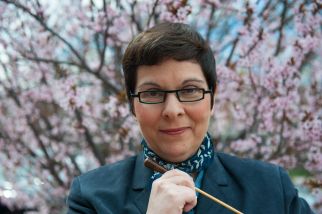
Cynthia Katsarelis. Photography by Glenn Ross.

Katsarelis, director of the Pro Musica Colorado Chamber Orchestra, has put together what she considers just about an ideal group of performers for the Requiem. “Pro Musica and (Denver’s) St. Martin’s Chamber Choir are practically a dream team for the Mozart Requiem,” she says. “And our soloists are all people who are just wonderful artists.

“It’s going to be different from a Mozart Requiem with a large orchestra and choir. Our size is more like the size that Mozart would have had, and there’s a kind of immediacy and a visceral quality to doing it with a chamber orchestra and a chamber choir. I think it’s a special team, and there’s incredible potential of being a worthy Requiem.”

Manuscript_of_the_last_page_of_Requiem

Manuscript page of Mozart’s Requiem

Like all conductors who approach the Requiem, Katsarelis had to decide exactly what to perform. Mozart left different movements in differing degrees of incompletion: some merely had to be filled in according to a partial score, some had to be completed, and some had to be composed more or less from scratch.

Adding to the confusion, Mozart left behind what his widow called “scraps of paper” that may have held music, or instructions, or both. At least two different pupils undertook a completion. And all of their contributions were mixed together, and it was years before scholars were able to separate, more or less, who did what.

FRANZ_XAVER_S_SSMAYR.1239019040

Franz Xaver Süssmahr

Today there are numerous performing versions to choose from. The score that was turned over to the count three months after Mozart’s death was essentially completed by Mozart’s pupil Franz Xaver Süssmayr. But Süssmayr was not a very good composer: Mozart didn’t think much of him, calling him “a duck in a thunderstorm,” and he made numerous mistakes in the score that he hurriedly finished.

And so there have been many subsequent versions that aim to correct and improve on Süssmayr. Some editors have gone so far as to write whole new movements to stand alongside Mozart. Katsarelis has chosen a version created by Franz Beyer in 1971 that sticks largely to Süssmayr’s version, but polishes some of his work.

There are three movements that Mozart never started, but Katsarelis thinks that Süssmayr had some help with those. “He claimed to have composed the Sanctus, the Benedictus and the Agnus Dei, but I’m not convinced of that, for reasons right out of the music,” she says. “I had my doubts to begin with. Süssmayr never, ever composed anything of the caliber of (those movements).”

She has a “sneaking suspicion,” she says, that the scraps of paper that Mozart left had music on them that Süssmayr was able to use. And, she adds conspiratorially, “I have a theory that I actually don’t have an ounce of historical evidence for, but during the time that Süssmayr was completing the Requiem, he was studying with Salieri.”

antonio-salieri-03

Antonio Salieri

That Salieri? The one who definitely didn’t poison Mozart but was still the villain of the play and movie Amadeus?

Yes, that one. “I just have this sneaking suspicion that Salieri might have helped,” she says. And it’s definitely not the craziest theory about the Requiem, which has attracted conspiracy stories from the date its very first performance.

Regardless of who wrote those movements, and whose help they might have had, “the meat of the Requiem is what Mozart wrote,” Katsarelis affirms. And after the disputed movements, the Requiem ends with two more movements that re-use Mozart’s music from the beginning.

Following the Requiem, the concert will include one more short piece, Mozart’s beautiful and elegiac Ave verum corpus, composed only months before the Requiem. “By doing the Ave verum corpus, we’re absolutely sure that we’ll be ending with Mozart, no question,” Katsarelis explains. “It’s a piece that everybody knows and loves, and it’s a very comforting and beautiful piece.”

In spite of the mystery and confusion, the different hands that touched the Requiem, and all of the controversy that has swirled around the piece over the centuries, “the fact the sublime music comes through is pretty miraculous,” Katsarelis says. “It is deeply moving to do the piece that was the last thing Mozart composed.

“He made it the most beautiful music that he could possibly write. That’s his final gift to us, and it’s one that I receive very gratefully, and that we’ll share on Friday and Saturday.”

# # # # #

Mozart’s Requiem

Pro Musica Colorado Chamber Orchestra
Cynthia Katsarelis, music director
St. Martin’s Chamber Choir
Timothy J. Krueger, artistic director
Amanda Balestrieri, soprano
Leah Biesterfeld, alto
Joseph Gaines, tenor:
David Farwig, bass

W.A. Mozart: Requiem, K626
W.A. Mozart: Ave Verum Corpus, K618

Friday, April 8, First Baptist Church, 1373 Grant St., Denver
Saturday, April 9, First United Methodist Church, 1421 Spruce St., Boulder
Both concerts at 7:30 p.m.
Pre-concert talk at 6:30 p.m. both evenings

TICKETS

NB: Edited to correct typos 4.7.16.

Boulder Phil announces 2016–17 Season

Concert for the Kennedy Center, duo concertos mark a year with few blockbusters

By Peter Alexander

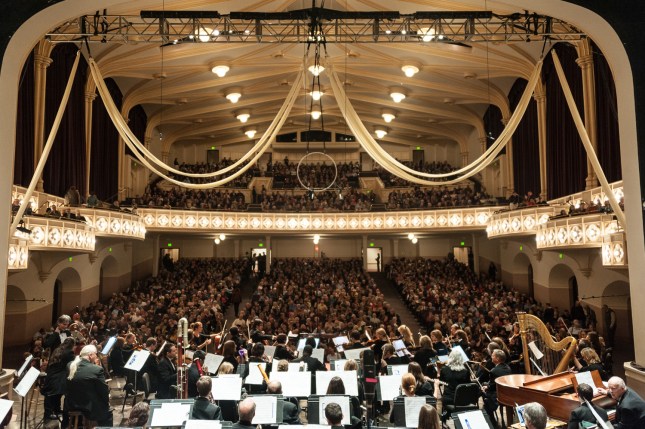
The crowd at Macky Auditorium from the stage - Glenn Ross Photo

Boulder Phil in Macky Auditorium. Photo by Glenn Ross.

Forging its own path, the Boulder Philharmonic has announced a season for 2016–17 that is unlike most orchestra seasons around the country.

Music Director Michael Butterman_2_Credit Rene Palmer.small

Michael Butterman. Photo by Rene Palmer

For one thing, the season marks the Boulder Phil’s tenth year with music director Michael Butterman. Most orchestras would celebrate that with splashy programming, but the Phil is not taking that route. The one semi-splashy event—a concert March 25 that will be taken to the Kennedy Center in Washington D.C. on March 28—offers an eclectic program that, characteristically for the Phil, reflects Boulder’s close relationship to nature.

Otherwise, the season avoids the blockbuster mentality. There will be world premieres, there will be concertos for pairs of soloists, there will be great local musicians from CU Boulder, there will be lighter symphonies from heavyweight composers, and there will be music from less familiar composers. What there will not be will be are the big-name soloists and spectacular works that most orchestras use to fill the hall.

There is no doubt Butterman’s style of programming has drawn audiences over the past ten years. According to figures provided by the Boulder Phil, they have had 10 successive seasons of increasing sales of subscriptions. The current year is up 25% over the previous season, already setting an attendance record for the orchestra even before the last two concerts of the 2015–16 season.

“Whatever we present, we want to make sure it makes some kind of statement that we’re not just another orchestra but something a little bit different and special,” Butterman says. “For the most part we want to be presenting things that are a little more unique, and not exactly replicating (programming) in other places.”

In that they have certainly succeeded. The season is filled with intriguing offerings, music that adventurous listeners will be excited about, and programs that do indeed reflect Boulder’s personality as a community.

The March 25 concert that will travel to the Kennedy Center follows that pattern. “The capstone to this anniversary season is taking this program that is about who we are and the relationship we have with the community and presenting it on a national stage,” Butterman says.

“This is saying to the (classical music) industry ‘Look, here’s how one orchestra has found a way to be successful, to reflect its community, to do all the things that we need to do to continue to matter in the 21st century.”

Lias in GoANP.2

Stephen Lias in Gates or the Arctic National Park. Photo courtesy of the composer.

The concert will open with the world premiere of a new work by adventurer-composer Stephen Lias, whose Gates of the Arctic opened the 2014–15 season. Commissioned in celebration of the 100th anniversary of the National Park Service and inspired by Rocky Mountain National Park, the new score will be accompanied by “choreographed visuals”—projected photos—of the park. Lias will be working on the score while in residence in the park later this year.

Writing from Tongyeong, South Korea, where he is attending the 2016 International Society for Contemporary Music World Music Days, Lias comments, “My plan is to create a dramatic line for the piece based on my many experiences in the park (including an upcoming one this June), and the extensive photographic collection the park has given me access to.

“I hope to write a piece that will capture the dramatic scope of the place, but also the intimate ‘moments’ that we each take home with us. Through the music and the synchronized images, audiences will have a vicarious wilderness experience that will deepen their relationship with this remarkable national park.”

Frequent Flyers A.S.

Frequent Flyers with the Boulder Phil in Macky Auditorium

Other works on the same program will be pieces that reflect the Boulder personality and the city’s relationship with nature. They are also pieces that form part of the orchestra’s history, having been performed in previous seasons: Jeff Midkiff’s Mandolin concerto From the Blue Ridge, with the composer as soloist, previously performed in April 2014; Ghosts of the Grasslands by Steve Heitzeg, performed in March 2014; and Copland’s Appalachian Spring with Boulder’s Frequent Flyers Aerial Dance company, a repeat of a performance from 2013.

As with many orchestras, Boulder Phil announces that “each concert will feature a major symphonic work,” but with the exception of Respighi’s Pines of Rome on the season’s final concert (April 22), they are not orchestral showpieces: Tchaikovsky’s Symphony No 2 (“Little Russian,” Oct. 8); Beethoven’s Symphony No. 8 (Nov. 6); and Schumann’s Symphony No. 4 (Jan. 14). All are first performances by Butterman with the Phil, and all are welcome, but they are not works that most orchestras build seasons around.

Walther & Dusinberre

Takács Quartet members Geraldine Walther and Edward Dusinberre

There are other familiar works that have broad appeal, including Appalachian Spring (March 25). Rachmaninoff’s lyrical and virtuosic Rhapsody on a Theme by Paganini played by pianist Elizabeth Joy Roe will be a draw for the opening concert (Oct. 8). Takács Quartet and CU faculty members Edward Dusinberre and Geraldine Walther will join the orchestra for Mozart’s Sinfonia Concertante for violin and viola (Nov. 6).

Those familiar works will share the season with more adventurous programming, including the Concerto for Two Pianos by Francis Poulenc, performed by the young piano duo Anderson & Roe (Oct. 8); the Concerto for Violin and Horn by Ethel Smyth, performed by Jennifer Frautschi and Eric Ruske (Jan. 14); Luciano Berio’s classically-inflected Four Original Versions of Boccherini’s Return of the Nightwatch from Madrid and the world premiere of the Double Concerto for violin and guitar by Stephen Goss, performed by orchestra concertmaster Charles Wetherbee and CU professor Nicolò Spera (both April 22).

Butterman believes that the Boulder audience will continue to embrace the orchestra’s offbeat programming. “People have come to place a certain amount of faith in the choices we make,” he says. “They seem to be willing to trust that we’ll make choices (that) will be interesting and enjoyable and provocative.”

21jake.jump_

Jake Shimabukuro

As usual, there will be performances outside the main series of classical concerts. The annual performances of Nutcracker with Boulder Ballet will be Nov. 25–27. There will be a concert Feb. 4 with ukulele virtuoso Jake Shimabukuro, performing his own original music as well as unusual arrangements for ukulele and orchestra of classical, popular and contemporary music, from Puccini’s “Nessun Dorma” to Queen’s “Bohemian Rhapsody.”

Alli Mauzey

Alli Mauzey

December 10 the orchestra will welcome Broadway singing star Alli Mauzey, who rose to fame as Glinda in Wicked, singing songs from that show and other Broadway shows. The program, titled “A Wicked Good Christmas,” will also feature music for the holidays.

“It’s a concert that I think will tread the line between being a holiday concert and a Broadway pops concert,” Butterman says. “It’s one that we hope will offer things for the community that are a little beyond what a typical classical audience might expect, and by virtue of that reach more of a family audience.”


# # # # #

Boulder Philharmonic Orchestra
Michael Butterman, Music Director
2016-2017 Season

Saturday, Oct. 8: Opening Night
Poulenc: Concerto for Two Pianos, Anderson & Roe, piano duo
Rachmaninoff: Rhapsody on a Theme by Paganini, Elizabeth Joy Roe, piano
Tchaikovsky: Symphony No. 2 (“Little Russian”)

AndersonRoe+by+Woodrow+Leung

Anderson & Roe. Photo by Woodrow Leung

Sunday, Nov. 6, 7 p.m.: Mozart & Beethoven
Thomas Adès: Three Studies from Couperin
Mozart: Sinfonia Concertante for Violin and Viola, with Edward Dusinberre, violin, and Geraldine Walther, viola
Beethoven: Symphony No. 8

Nov. 25–27: The Nutcracker with Boulder Ballet
Performance times tba

Saturday, Dec. 10: A Wicked Good Christmas, with Alli Mauzey
Songs from Wicked and other Broadway shows, plus Christmas classics

Saturday, Jan. 14, 2017: Brahms & His World
Brahms: Tragic Overture
Ethel Smyth: Concerto for Violin and Horn, with Jennifer Frautschi, violin, and Eric Ruske, horn
Schumann: Symphony No. 4

Saturday, Feb. 4: Jake Shimabukuro, ukulele, with the Boulder Phil
Gary Lewis, conductor

Saturday, March 25: Nature & Music—Kennedy Center Kick-Off Concert
Program to be repeated at the inaugural SHIFT Festival in Washington, D.C., on Tuesday, March 28, 2017
Stephen Lias: World premiere commemorating the 100th anniversary of the National Park Service, with choreographed visuals
Jeff Midkiff: Mandolin Concerto, From the Blue Ridge, with Jeff Midkiff, mandolin
Steve Heitzeg: Ghosts of the Grasslands
Copland: Appalachian Spring, with Frequent Flyers® Aerial Dance

Saturday, April 22: Season Finale: The Pines of Rome
Stravinsky: Monumentum pro Gesualdo
Luciano Berio: Four Original Versions of Boccherini’s Return of the Nightwatch from Madrid
Stephen Goss: Double Concerto for Violin and Guitar (world premiere), with Charles Wetherbee, violin, and Nicolò Spera, guitar
Verdi: Overture to Nabucco
Puccini: The Chrysanthemums
Respighi: The Pines of Rome

All Concerts in Macky Auditorium
All concerts begin at 7:30 p.m. unless otherwise indicated.

Tickets and More Information: Five- and six-concert subscription packages are now available. New subscribers save 50% off single ticket prices. Call 303-449-1343 or click here

Boulder Bach’s Baroque Rock ‘n’ Roll will celebrate “Venice on Fire”

Acoustic and electric groups represent a different kind of authenticity

By Peter Alexander

Zachary Carrettin talks rock ‘n’ roll, but you won’t recognize most of the composers.

ZC 2 Violins (1).Michelle Maloy Dillon

Zachary Carrettin with electric (left) and acoustic (right) violins. Photo by Michelle Maloy Dillon

The artistic director of the Boulder Bach Festival, Carrettin has put together a program he calls “Venice on Fire,” featuring both acoustic and electronic string instruments playing music of the 17th and 18th centuries. Performances will be at 7:30 Friday in Boulder (March 18, Dairy Center) and Saturday in Longmont (March 19, Longmont Museum Stewart Auditorium).

“There’s some great music on the program,” he says, describing pieces by Tarquinio Merula, Marco Uccellini, Giovanni Legrenzi, Barbara Strozzi, Tomasso Albinoni and—the one very familiar name—Antonio Vivaldi.

Carrettin says the program will contrast pieces with “vast, spacious, meditative and vocal melodic lines, with pieces that are rhythmically driven, full of imitation, and wild embellishment.”

But more noticeably, the performances will contrast an electric trio—Carrettin on electric violin, Gal Faganel on electric cello, and Keith Barnhart on a Fender electric guitar—alternating with an acoustic chamber orchestra of traditional stringed instruments.

Read more in Boulder Weekly.

# # # # #

Venice on Fire
Boulder Bach Festival

Zachary Carrettin, artistic director, electric and acoustic violin
Gal Faganel, electric and acoustic cello
Keith Barnhart, electric and acoustic guitars
With other guest artists
Music of Merula, Uccellini, Legrenzi, Barbara Strozzi, Vivaldi and Albinoni

7:30 p.m. Friday, March 18, the Dairy Center, Boulder
Tickets

7:30 p.m. Saturday, March 19, Stewart Auditorium, Longmont
Tickets


This is Jennifer Koh’s Brain on Music

Between a 2014 CMF cancellation and a scheduled 2016 performance, an fMRI

By Peter Alexander

“The musician’s brain is exquisitely sensitive to all aspects of music, be it listening, reading or imagining playing music”—Tobias Overath,
Duke Institute for Brain Sciences

Koh.leather.chair

Jennifer Koh. Photo by Duke University

Jennifer Koh, who will be the soloist for the opening concert of the 2016 Colorado Music Festival, developed an interest in brain science after suffering a concussion in 2014.

The concussion forced Koh to cancel a scheduled appearance at CMF in August of 2014. It affected her speech and memory and temporarily made it impossible for her to practice. Fortunately, she recovered and is back on the performance circuit, but her curiosity about the brain and how it works was stimulated by the experience.

When Koh performed recently at Duke University, Tobias Overath of the Duke Institute for Brain Sciences arranged for her to to have a functional magnetic resonance imaging scan—known as an functional MRI, or fMRI—during which she listened to music, read a score of music, and imagined playing music. The results offer insight into how musicians’ brains work, and also play into a Duke course on “Music and the Brain.”

You can read the full story and see a brief video about the experience at Duke Today.


Olga Kern and Renée Fleming in New York

By Peter Alexander

Fans of Olga Kern—of which there are many in Boulder—will be interested to read the New York Times review of her performance with superstar soprano Renée Fleming Wednesday (Mar. 9) at Carnegie Hall in New York.

Olga Kern

Olga Kern

Kern has become known in Boulder through her performances at the Colorado Music Festival. Particularly memorable were her performances of all of the Rachmaninoff piano concertos and the Rhapsody on a Theme of Paganini in two back-to-back Festival Orchestra concerts—a remarkable feat of pianistic athleticism that was also an outstanding musical accomplishment—July 19 and 21, 2013.

Kern will return to CMF this summer to perform Brahms’s Quintet for piano and strings in F minor on a chamber music concert Saturday, Aug. 6, and the Beethoven “Emperor” Piano Concerto Sunday, Aug 7. Both concerts will be at 7:30 p.m. in the Chautauqua Auditorium.

In a positive review of the Fleming-Kern song recital, James R. Oestreich wrote in the New York Times that Kern, “an established solo artist in her own right, was a strong collaborator throughout, and she had additional moments to shine.” Oestreich called attention to Kern’s solo turns on the program, noting that she “opened the second half, setting the stage brilliantly for the Debussy (song) set with Feu d’Artifices (‘Fireworks’) from the composer’s second book of ‘Préludes.’”

You may read the entire review here.

Seicento Celebrates Scarlatti and Son

By Peter Alexander

Evanne Browne, artistic director of the Baroque vocal ensemble Seicento, wants you to know that she is excited about their next concert. Very excited.

Seicento.2015.1

Seicento Baroque Ensemble with director Evanne Browne, center

“I was thrilled to get to put this together,” she says. “This is a joyous concert. It’s just magical!”

This magical concert will be presented Friday through Sunday with performances in Denver, Boulder and Longmont. And although the title, “Scarlatti, Father and Son,” might sound like a trendy Italian trattoria, it actually refers to an important musical family of the 17th and 18th centuries.

Alessandro Scarlatti spent most of his career at the court in Naples, where his brother Francesco was first violinist. His two children also pursued musical careers, Domenico primarily in service to the royal families of Spain and Portugal, and Francesco in London and Dublin.

Retrato_de_Domenico_Scarlatti

Domenico Scarlatti

Almost anyone who has taken piano lessons as a child—or whose children have taken lessons—knows of Domenico Scarlatti, the titular son of the program. He famously wrote more then 500 one-movement keyboard sonatas that range from short, easy pieces in every teacher’s lesson book to challenging workouts that find their way into virtuoso recital programs.

Browne’s aim is to open up much more of the Scarlatti legacy than the well known sonatas—written for harpsichord but today played mostly on piano. Domenico wrote other works, from operas and cantatas to sacred motets and a 10-voice Stabat Mater that will end the concert. And his father Alessandro was one of Italy’s leading Baroque opera composers, dominating opera in Naples in the 1690s. He also wrote cantatas and other vocal works, and an almost unknown set of madrigals that will be on the program.

Read more at Boulder Weekly.

# # # # #

Scarlatti, Father & Son
Seicento Baroque Ensemble, Evanne Browne, artistic director, with guest artists

7:30 p.m. Friday, March 11, St. Paul Lutheran Church, Denver
7:30 p.m. Saturday, March 12, First United Methodist Church, Boulder
3 p.m. Sunday, March 13, Stewart Auditorium, Longmont

Tickets


Colorado Music Festival announces diverse 39th summer season

Second season under music director Jean-Marie Zeitouni offers many highlights

Former music director Michael Christie returns to Boulder for a Festival Orchestra concert July 14

By Peter Alexander

chautauqua-boulder-colorado

Chautauqua Auditorium, home of the Colorado Music Festival

The program will look both new and familiar at the 2016 Colorado Music Festival.

The CMF announced its 39th festival season last night (March 2) at an event for their friends and supporters. Running from June 30 through August 7, this will be the festival’s second summer series under music director Jean-Marie Zeitouni.

Many of the familiar features of recent festivals will continue—Festival Orchestra and Chamber Orchestra concerts, the Music Mash-Up series, family and young people’s concerts, and chamber music performances. But within that general framework, there will be some new developments as well: chamber music will be presented in the Chautauqua Auditorium; and an imaginative new series of three concerts under the direction of CMF creative partner Joshua Roman, “ArC (Artistic Currents) at the Dairy,” will be presented at the Dairy Center. In a change from previous years, most Festival Orchestra programs will only be presented one night instead of two.
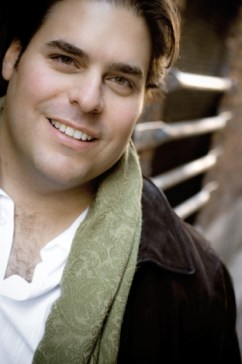
Zeitouni_2

CMF music director Jean-Marie Zeitouni

Innovations for the 2016 season will include the Fêtes Galantes Series of intimate house concerts of chamber music, July 11, 20 and Aug. 5; a partnership with the Boulder Valley Velodrome, “CMF Goes to the Velodrome,” July 29; and a “Festival of Dinners” prepared by chefs from Boulder restaurants to be announced on the CMF Web page.

Ukrainian-Israeli violinist Vadim Gluzman will be one of several artists to have a residency at CMF, a notable expansion of festival activities. There will be several new and contemporary works during the summer, and Peter Brook’s controversial Tragedy of Carmen, a distillation of Bizet’s opera, will be presented July 10.

There will also be notable returns to the festival. Music director laureate Michael Christie will come back to Boulder to conduct a Festival Orchestra concert on July 14, with returning piano soloist Orion Weiss.

Other popular soloists from previous seasons will be back, including violinist Jennifer Koh with the Festival Orchestra on opening night, June 30. At the opposite end of the season, pianist Olga Kern will perform with the CMF Chamber Orchestra on the final concert, Aug. 7.
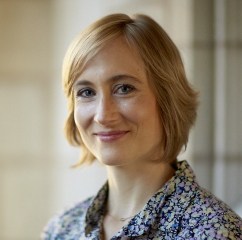
Lash

Click! Commission winner Hannah Lash

The “Click” Commission program that offers new works by composers selected and financed by festival-goers is back, with the premiere of the Second Harp Concerto by Hannah Lash, who will also be the soloist July 31. Lash will take part in a residency at CMF, extending her participation in the festival beyond the premiere of her new concerto.

There will a number of other notable guest artists during the summer: Guzman, pianist Stephen Hough, the vocal ensemble Roomful of Teeth, conductor Christopher Rountree, pianist David Korevaar from CU, and mezzo-soprano Kelley O’Connor, among others.

# # # # #

The season will be packed with so many highlights that it is difficult to list them all. Here is at least an overview of concert events. (All performances begin at 7:30 p.m. in the Chautauqua Auditorium unless otherwise noted.)

SFP-JenniferKoh-03@2x

Jennifer Koh

The festival opens June 30 with “Narratives of Heroism,” a concert Zeitouni describes as “one of the highlights for me.” The program features Koh playing Finnish composer Esa-Pekka Salonen’s Violin Concerto, on a program with Beethoven’s Overture to Egmont and Berlioz’s Symphonie Fantastique. The concert will be preceded by a Pre-Concert Dinner at 5:30 p.m. on the great lawn at Chautauqua.

Also part of the opening weekend will be the residency of Sō Percussion from Brooklyn, currently Ensemble in Residence at Princeton University. They will give a recital July 1 on the Presenting Series of chamber music concerts, and will play Young People’s Concerts with the CMF orchestra at 10 and 11:30 a.m. July 2.
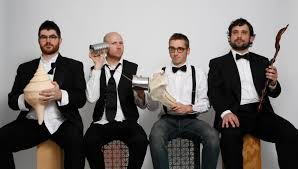
SO Percussion

So Percussion

The holiday weekend will wrap up with “Red, White and Brass,” a patriotic pops concert by the CMF Brass Ensemble at 4 p.m. July 3. Other Family Fun Concerts will be at 3 p.m. July 10 and 31.

The second week will feature “Boulder Brahms,” with the Festival Orchestra playing the four Brahms symphonies in two concerts: Nos. 1 and 2 on July 7; and 3 and 4 on July 8. “We’re not doing a mini-festival proper, like we did last season,” Zeitouni explains. “Instead, there are different themes throughout the summer.

“It’s interesting to hear all (the Brahms symphonies) two by two, but the idea goes beyond this. One of the more long-term ideas for the festival is to do multi-year symphonic cycles, like Michael Christie did with Mahler. The Brahms cycle is, I would say, a pretty conservative first step.”

Zeitouni sees this as a way to open up the repertoire beyond the symphonies that are programmed most often, but without overwhelming the schedule and the audience by trying to fit all of a composer’s symphonies into a single summer. Possible future composers for a multi-year cycle might include Bruckner, Shostakovich, Prokofiev and Dvořák, he said.

July 10 will see the presentation of a work that has become notorious in opera circles: Peter Brook’s abridged version of Bizet’s Carmen. The Tragedy of Carmen boils the opera down to about 80 minutes by paring away everything that does not have directly to do with the central drama of conflicting loves.

This distilled version, which only requires four voices and a chamber orchestra, “makes it a little bit more intense, if that’s even possible,” Zeitouni says. “It just tightens the tension—you have a higher alcohol content, because it’s a more concentrated formula.”

*temp*

DJ Spooky

The Music Mash-Up series will feature three groups: Jazz trio The Bad Plus will present a deconstruction of Stravinsky’s Rite of Spring, enhanced with projections and passages of jazz improvisation, July 12. On July 26, CU faculty Paul Miller, who performs as DJ Spooky, will mix classical pieces using turntables and performing with the Festival Orchestra.

The final Mash-Up brings the Colorado band Paper Bird to Chautauqua Aug. 2 to perform with the orchestra. Christopher Rountree, founder and director of wild Up, a Los-Angeles based chamber orchestra, will conduct the CMF orchestra on the July 26 and Aug. 2 Mash-Up performances.

# # # # #

Michael Christie is very happy to be coming back to Boulder for the July 14 Festival Orchestra concert with pianist Orion Weiss. “We’ve got a great program,” Christie says. “I think its going to be a fun night.”

Christie

Michael Christie

The concert will open with Leonard Bernstein’s Shivaree, a fanfare for brass, followed by Charles Ives’s Unanswered Question for strings and a single trumpet. “The Bernstein is very boisterous and the Ives is extremely quiet,” he says. “I think in Chautauqua it will be quite magical.”

Next will be the suite from Bernstein’s score for the film On the Waterfront, which Christie chose because it is not heard often and it has a lot of solos for his friends in the orchestra. “It’s a beautiful, cinematic work,” he says. The second half of the concert will be a single work, Brahms’s First Piano Concerto with Weiss as the soloist.

“When I think about Chautauqua, there are just so many faces that I can see, because I saw them for so many summers,” Christie says. “I can remember a lot of folks, and I’ll be curious to see if they will still be there.

“The other thing I’m really looking forward to is getting out to do some hikes. When the summer was going and I was music director there were always a billion things to take care of. I’d get to the end of summer and realize that I hadn’t done a single hike. I’m going to try to make up for that, so maybe you’ll see me on the trail!”

# # # # #
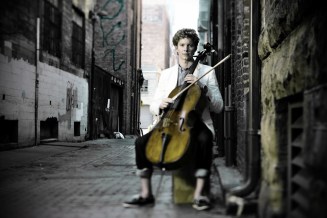
JoshuaRoman_JeremySawatzky04

Joshua Roman. Photo by Jeremy Sawatzky

The ArC at the Dairy series, presented at Boulder’s Dairy Center, has some of the most intriguing programs of the summer. On July 16 series director and cellist Joshua Roman will perform with soprano Jessica Rivera and CMF musicians to present his own song cycle we do it to one another, based on Tracy K. Smith’s Pulitzer Prize-winning poetry collection “Life on Mars”; and one of the iconic works of the 20th century, Olivier Messiaen’s Quartet for the End of Time, written in a World War II prisoner-of-war camp.

On July 23, composer/violinist Daniel Bernard Roumain and spoken word artist Marc Bamuthi Joseph will join together to present “Blackbird, Fly,” a hip-hop influenced program that will address issues of tolerance and inclusion. And July 30 the Grammy-winning contemporary vocal group Roomful of Teeth will bring their unique style to the festival.

10-24-07-Vadim-Gluzman-CD-Cover

Vadim Gluzman

Chamber Orchestra concerts will include “Inspired by Bach” July 17, with violinist Gluzman playing and leading the orchestra in works of Mozart, Shostakovich, and Alfred Schnittke; Mozart’s three final symphonies together on a single concert directed by Zeitouni July 24; and the July 31 premiere of Lash’s Harp Concerto No. 2, the Click! Commission winner, programmed with music by Bach, Beethoven and Richard Strauss.

The Presenting Series will offer chamber music performances at Chautauqua Auditorium. After Sō Percussion opens the series on July 1, Weiss, Roman, Korevaar, Gluzman, Kern, and CMF musicians will perform in various combinations July 15 and 19 and Aug. 6. As part of his week-long residency, Gluzman will also appear with the Festival Orchestra in “Russian Passions,” the one orchestra program to be repeated, July 21 and 22.

In addition to Gluzman’s performance of the Tchaikovsky Violin Concerto, the concerts will feature Liadov’s Enchanted Lake and a special presentation of Mussorgsky’s familiar Pictures at an Exhibition with animation that was created for the first performance in architect Frank Gehry’s New World Center in Miami Beach, Fla.

Stephen Hough

Stephen Hough

British pianist Stephen Hough returns to Boulder for the sixth Festival Orchestra program, “From Prague to Warsaw to Bucharest,” on July 28. Hough will play Liszt’s First Piano Concerto and Polish composer Witold Lutosławski’s Paganini Variations. “In a folkish-inspired program, we will open with the Enescu First Romanian Rhapsody and (close with) Dvořák’s Symphony No. 8,” Zeitouni says of the program.

Zeitouni identifies the Aug. 4 Festival Orchestra concert as one of his favorite programs of the summer. It will feature two major works, the Trois Nocturnes for orchestra of Claude Debussy, and Gustav Mahler’s deeply moving Lied von der Erde (Song of the Earth) with mezzo-soprano Kelley O’Connor and tenor Richard Cox as vocal soloists.

“This music is some of my favorites,” Zeitouni says. “I have a very personal relationship with Das Lied von der Erde, because it was one of the first recordings that I got as a teenager.” He also observes that the piece was requested by orchestra musicians, because they rarely have the chance to play it in their home orchestras, and it is a continuation of the Mahler cycle that Christie had begun.
OK-Red-Dress

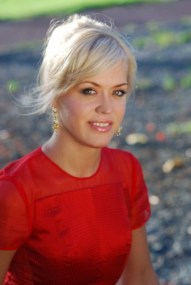
Olga Kern. Photo by Fernando Baez.

The final night of the festival will be a Chamber Orchestra concert on Aug. 7. This program will feature Zeitouni and CMF favorite Olga Kern playing Beethoven’s “Emperor” Concerto on a program with Stravinsky’s “Dumbarton Oaks” Concerto and Schubert’s delightful Symphony No. 5.

Outgoing CMF executive director Andrew Bradford has written that “the offerings of the 2016 Colorado Music Festival are incredibly wide-ranging and diverse,” a claim that is hard to disagree with. “The season includes something that every music lover will enjoy,” he wrote.

# # # # #

UPDATE (3/4/16): The full summer calendar is now available on the CMF Website.

TICKETS: Subscription tickets will go on sale Monday, March 7, and single tickets will be available Monday, April 4. For tickets to most events, click HERE. Tickets to the ArC series at the Dairy Center are available HERE.

Three recent CDs feature artists with Boulder connections

Albums from Takács Quartet, Sphere Ensemble and violinist Karen Bentley Pollick

By Peter Alexander

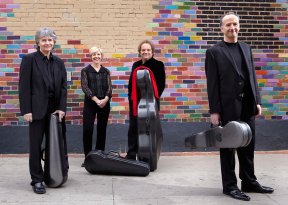
Takasce SQ

Takács Quartet

A number of CD albums of interest to Boulder audiences have come onto the scene in the past several months.

Broadly speaking, they would all fall into the “classical” category. That designation seems increasingly problematic, however, since it includes not only music that is what we generally mean by “classical,” but also contemporary music that isn’t anyone’s idea of classical, music by composers who are influenced by everything from world music to rock, and music for both traditional and a wide variety of non-traditional media.

I have seen several suggestions for a new term: concert music is one that has been floating around for a while without catching on, and Cuepoint blogger Craig Havinghurst recently offered the term “composed music.”

Whatever you want to call it, here are three recordings that I have recently heard with pleasure:

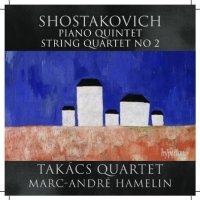
Takacs albumTakács Quartet with Marc-André Hamelin, piano. Shostakovich: String Quartet No. 2 in A major, op. 68; Piano Quintet in G minor, op. 57. Hyperion CDA67987, 2014.

The oldest of the CDs on the list, the Takács Quartet’s disc of Shostakovich’s String Quartet No. 2 and, with Marc-André Hamelin, of the Piano Quintet in G minor, was recorded in 2014. It came to attention recently because it was nominated for the 2015 Grammy Award in chamber music. Although it did not win—the award went to the new-music sextet eighth blackbird—it is nonetheless a recording of great interest.

For one thing it is the quartet’s first recording of music by Shostakovich, one of two great composers of string quartets in the 20th century (along with Bartók, whose music the Takács is renowned for performing). And they are joined here by Marc-André Hamelin, one of the outstanding chamber pianists of our times.

Hamelin

Marc-Andre Hamelin. Photo by Fran Kaufman

Hamelin’s incisive pianism gives the Quintet muscularity and drive. The final two movements, veering from relentless brooding to a fragile and overwrought cheer, are particularly characteristic of the Stalin-era Shostakovich, and here they receive an exemplary performance. Hamelin and the quartet are beautifully balanced throughout their deeply expressive interpretation.

The Second String Quartet lacks the savagery some bring to its performance, but it has the clarity and refinement that mark the best Takács interpretations. The Recitative and Romance movement is especially eloquent, and the individual variations of the last movement are clearly profiled.

# # # # #

Divergence coverSphere Ensemble: Divergence. Various works. Performed and self-produced by the Sphere Ensemble. 2015.
Do you like variety in your musical collection? If so, “Sphere Ensemble: Divergence”—with repertoire ranging from the plush Victorian romanticism of Edward Elgar to a cheeky mashup of Mozart and Daft Punk—is for you!

Billing itself as “Colorado’s exciting new chamber ensemble,” Sphere comprises 11 classical trained string players who currently perform with the Boulder Philharmonic, Opera Colorado, Greeley Philharmonic, Colorado Symphony, Central City Opera, Colorado Springs Philharmonic, Fort Collins Symphony, Cheyenne Symphony and Ensemble Pearl. No strangers to Boulder, Sphere performs all along the front range. Coming events are in Estes Park, Brighton, Broomfield and Loveland. <  >

Daft Punk and Elgar aside, it’s in the material between the extremes that Sphere most comes into its own, pieces that combine pop, bluegrass, jazz, elements from world music and classical bits in various proportions. After an ardent if undernourished movement from Elgar’s spacious Serenade for Strings, the CD proceeds with Regina Spektor’s “All the Rowboats,” spiced with classical quotations; the bluegrass/Irish “Butterfly Jig” of Sphere members Emily Rose Lewis and David Short; a string arrangement of Ravel’s Sonatine for piano that is easily the most ethereally detached music on the disc; and Colorado jazzman Wil Swindler’s gloomy “Divergence,” which gives the album its title.

That is only a small sample of the unexpected pleasures to be found on this disc. A series of largely pop-inflected tracks culminates with the Daft Punk-Mozart mashup, “Get Mozart,” and Leonard Cohen’s “Hallelujah.” But just when you think Sphere has settled into a pop groove, along comes the haunting “Romance” of 20th-century English song composer Gerald Finzi. Every piece is played with expression, energy, and an audible enjoyment of the journey.

My favorites on the album are Spektor’s “All the Rowboats,” Swindler’s “Divergence,” the tango-ish “Nueve Puntos” by Francisco Canaro, Karin Young’s Cajun-inspired “Rooster’s Wife,” and Cohen’s “Hallelujah.” That you will find your own favorites is the whole point. If you like music, you will find something to love on this CD.

# # # # #

peace-piecePeace Piece: Karen Bentley Pollick plays music by Ole Saxe. Karen Bentley Pollick, violin and viola, with Justas Šervenikas and Ivan Solokov, piano, and Volkmar Zimmermann, guitar. Neptunus NEPCD012, 2015.
The extraordinary violinist/violist Karen Bentley Pollick has homes in Evergreen and in Vilnius, Lithuania. She performs widely in the U.S. and in Europe, and has performed in Boulder. (Disclosure: Pollick and I met when we were both graduate students at Indiana University and have remained friends since.)

Her recent disc “Peace Piece” is a good reflection of her interests: contemporary music, some written for her, music for both violin and viola, both accompanied and unaccompanied. In this case, the music is all by the Swedish composer Ole Saxe, and as the title suggests, most pieces are in some way related to the ideas of peace, justice, and human dignity.

Olestudio320

Ole Saxe

The centerpiece of the recording is the title track, Saxe’s “Peace Piece,” originally written for Swedish clarinetist Kjell Fageus and here arranged for violin and viola (both played by Bentley) and piano. This is the most musically dense piece on the CD, and perhaps the least approachable on casual listening. From different realms, the violin and viola seem to reach a musical accord—the symbolism is clear—and end sharing an energetic closing gesture.

The CD opens with “Human Rights Suite,” six pieces for solo violin based on six of the 30 articles of the UN “Universal Declaration of Human Rights.” Titled “Born Free,” “Right to Life,” “No Slavery,” “No Torture,” “Recognition,” and “Asylum,” the individual movements are both musically engaging and clearly expressive of their subjects.

The “Užupis Constitution Song,” celebrates the constitution of a self-declared “Republic of Užupis”—the artists’ district of Vilnius. The constitution, which may or may not be partly tongue in cheek, declares among other principles that “Everyone has the right to appreciate their unimportance,” “Everyone has the right to celebrate or not celebrate their birthday,” and “Everyone has the right to be happy”—or, alternately, unhappy. (Read it all here .) But you can easily appreciate the flowing music, depicting the river Vilnelé that flows through Vilnius and along the border of Užupis, without reading the Užupian constitution.

Other tracks on the CD are dances: Daladans based on the folk music of Dalarna, Sweden; a sultry Tango Orientale; and a cheerfully Latinesque Rhumba de la Luna, part of a suite of dances that Saxe wrote for Pollick. Between the more serious pieces is a funky version of “Happy Birthday”—celebrating the rights of Užupians who choose to celebrate that day, or not?—and a beautiful and comforting final track for viola and guitar, arranged from Saxe’s “Faith” for clarinet and cello.

Pollick is a virtuoso who makes the music sound comfortably under her fingers. It is all played with great commitment, both musically and philosophically, by Pollick and her colleagues. A CD of such ideals and musical interest should find an audience in Boulder.

(Edited 2/29/16 to correct typos.)

Ars Nova Singers will perform pieces for 40 parts in surround sound

Music by Striggio, Tallis and Gesualdo form a “Renaissance Retrospective”

By Peter Alexander

In the history of European choral music, there are two major works that were composed for 40 different voice parts.

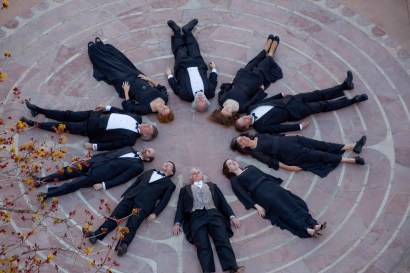
ANScircleground

Ars Nova Singers

Yes, that’s four-zero, 40 parts, which is really a lot, and the size alone has made these Brobdingnagian works well known. For the same reason they are not often heard live, but both will be performed on the same concert by Boulder’s Ars Nova Singers and director Thomas Edward Morgan.

Titled “Renaissance Retrospective,” the concert will be performed in Denver Friday (7:30 p.m. Feb. 19 at St. Paul’s Lutheran Church) and in Boulder Saturday (7:30 p.m. Feb. 20 at St. Johns Episcopal Church).

Tallis for site

Thomas Tallis

Both works were written in the 16th century, and indeed one probably inspired the other. The first was Ecce beatam lucem by Italian composer Alessandro Striggio from the 1560s. Shortly after it was introduced in England in that decade, it was followed by the more famous Spem in alium by English composer Thomas Tallis. Those two works serve as bookends on the program, which opens with Striggio and closes with Tallis, recalling the order in which they were written.

In between, Ars Nova will perform music by Carlo Gesualdo and Orazio Vecchi, Italian composers who were working a couple of decades after Striggio and Tallis. All the music will be sung a capella.

Read more in Boulder Weekly.

# # # # #

Renaissance Retrospective: Music for Many Voices

Morgan.mtntop

Thomas Edward Margan

Ars Nova Singers
Thomas Edward Morgan, artistic director
Music by Alessandro Striggio, Thomas Tallis,
Carlo Gesualdo and Orazio Vecchi

7:30 p.m. Friday, Feb. 19, St. Paul’s Lutheran Church, 1600 Grant St., Denver
7:30 p.m. Saturday, Feb. 20, St. John’s Episcopal Church, 1419 Pine St., Boulder

Tickets