Four finalists chosen for Longmont Symphony position

The candidates will be guest conductors in the orchestra’s 2016–17 season

By Peter Alexander

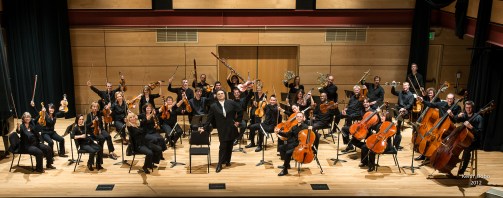
The Longmont Symphony Orchestra (LSO) has announced the four finalists for the position of music director of the orchestra.

The four candidates were selected by the LSO’s search committee from a field of 60 applicants. Each will conduct one concert during the 2016–17 season, which will be the orchestra’s 50th-anniversary year. These concerts will be part of the orchestra’s regular season of concerts in the Vance Brand Auditorium at Skyline High School in Longmont, held Saturdays at 7:30 p.m.
LSOTopBannerM2

The four candidates and the dates of the concerts with the LSO will be:

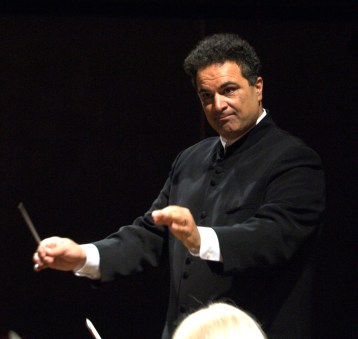
  • Elliot Moore: Nov. 12, 2016
Moore is music director of the Detroit Medical Orchestra, the Blue Period Ensemble, and the Five Lakes Silver Band. He holds a master’s degree in cello performance from Lausanne Conservatory in Switzerland, a master of music in orchestral conducting from Manhattan School of Music, and a doctorate in orchestral conducting from the University of Michigan.
  • David Handel: Jan. 28, 2017
Handel currently resides in the Tampa, Fla., area. He holds a bachelor’s degree in violin and a master’s degree in orchestral conducting from the University of Michigan. His international conducting experience includes orchestras in Russia, Chile and Bolivia; and within the U.S. in Indiana, Kentucky, Texas, California and New York.
  • David Rutherford: Feb. 25, 2017
Rutherford has been the Longmont Symphony’s rehearsal and guest conductor since 2010. He is music director and conductor of the Stratus Chamber Orchestra (formerly Musica Sacra) of Denver and the Valor Symphonics Youth Orchestra in Highlands Ranch. A string bassist, he performs regularly with orchestras along the Front Range. An on-air personality with Colorado Public Radio, he can currently be heard weekday afternoons and Sunday mornings.
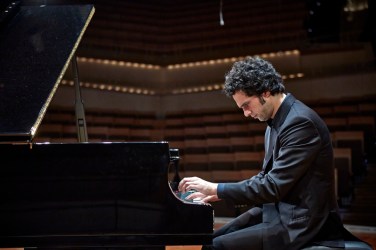
  • Zachary Carrettin: April 8, 2017
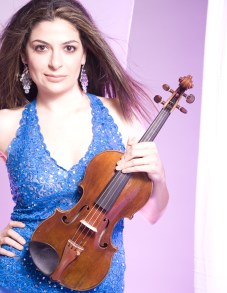
Carrettin is the music director and conductor of the Boulder Bach Festival and interim director of the Early Music Ensemble at University of Colorado, Boulder. Before moving to Colorado he was the director of orchestral studies at Sam Houston State University in Houston, Tex. He pursued doctoral studies in viola at Rice University and holds master’s degrees in orchestral conducting from the University of Illinois at Urbana-Champaign and violin from Rice University.
Olson photo

Recently retired music director Robert Olson

The new director will be selected from among these four conductors, and will announced in May, 2017. He will succeed Robert Olson, who was music director of the LSO for 33 years until his retirement at the end of the soon-to-be concluded 2015–16 season. Olson will return to conduct the opening concert of the 50th-anniversary season, Saturday, Oct. 1.

In a statement released  by the LSO, executive director Kay Lloyd made the following comments: “The selection committee has chosen four very strong candidates that represent high musical values as well as the ability to engage our community. We look forward to their concerts this season and the final selection of a conductor that will lay the groundwork of continuing to provide quality, diverse concerts and outreach programs for another 50 years in this community.”
Force of Nature

Boulder Chamber Orchestra, Boulder Symphony offer similar themes for Mother’s Day

By Peter Alexander

Chloe Trevor.Kate-L-Photography

Chloe Trevor. Kate L.Photography

This Mother’s Day weekend it’s all about nature for Boulder’s classical musicians.

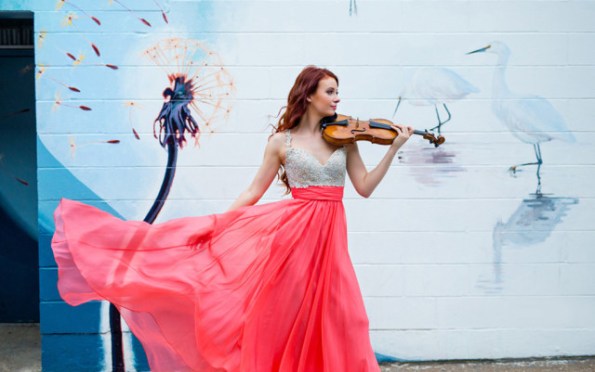
The weekend kicks off Friday night with conductor Bahman Saless and the Boulder Chamber Orchestra performing a concert titled “Mother Nature” in Broomfield (7:30 p.m., Broomfield Auditorium). The concert, which also features violinist Chloe Trevor, will be repeated Sunday evening in Boulder (7:30 p.m., Seventh-Day Adventist Church).

Between those performances, conductor Devin Patrick Hughes and the Boulder Symphony will offer “Nature’s Voice” on Saturday evening (7 p.m., First Presbyterian Church), with guest soloist Gal Faganel, cello.

Friday and Sunday the Boulder Chamber Orchestra will present, somewhat curiously, the only piece overtly about nature: Beethoven’s Symphony No. 6, the “Pastoral Symphony,” depicting an afternoon’s walk through the countryside. The other works on the program—the Tchaikovsky Violin Concerto, with Trevor playing the virtuoso solo part, and the Pavane by Gabriel Fauré—don’t have any apparent connection to nature.

For the Boulder Symphony Saturday evening, it is the composers rather than the pieces that suggested the title “Nature’s Voice.” The major works will be Sibelius’s Third Symphony and Dvořák’s Cello Concerto with Faganel as soloist. Opening the concert will be the world premiere of Everything All at Once by Jonathan Sokol.

Read more at Boulder Weekly.

# # # # #

“Mother Nature”
Boulder Chamber Orchestra, Bahman Saless, music director
Chloe Trevor, violin

7:30 p.m. Friday, May 6, Broomfield Auditorium, Broomfield
7:30 p.m. Sunday, May 8, Seventh-Day Adventist Church, Boulder

Tickets

“Nature’s Voice”
Boulder Symphony, Devin Patrick Hughes, music director
Gal, Faganel, cello

7 p.m. Saturday, May 7, First Presbyterian Church, Boulder

Tickets


Boulder Chamber Orchestra risks “The Curse of the Ninth”

2016–17 season will explore jinxes of a 13th year, and Beethoven’s greatest work

By Peter Alexander

bsaless.4.Keith Bobo

Bahman Saless. Photo by Keith Bobo.

Bahman Saless likes to live dangerously.

The conductor of the Boulder Chamber Orchestra (BCO) just released the group’s 2016–17 season, and they are meeting two great jinxes head-on. Titled in part “The Curse of the Ninth,” the season will feature a season-ending performance of Beethoven’s Ninth Symphony with the Boulder Chorale and soloists, as well as several other works that were created under the shadow of that work—considered one of the greatest creative achievements of Western music.

It is the orchestra’s 13th season, which also leads to the full title of the season: “JINX and the Curse of the 9th.”

Saless says that it was almost inevitable that the next season would include Beethoven’s Ninth. It will be the only Beethoven Symphony he has not conducted, and it is of course a work that can prove the standing of any orchestra and conductor.

Beethoven

Beethoven: Portrait by Joseph Karl Stieler, 1820

To fill out the season around such a bold choice for a chamber orchestra, Saless picked several works that illustrate the curse that supposedly came from Beethoven’s Ninth. It was such an overwhelming work that many composers were intimidated at the very prospect of attempting another symphony after it was completed in 1823.

For example Brahms, who was hailed by many as Beethoven’s successor, was not willing to present a symphony to the public until 1876—after 21 years of work on the piece, when the composer was 43 years of age, and all of 53 years after Beethoven’s Ninth was completed. Brahms First even features a melody that resembles Beethoven’s famous “Ode to Joy” from the Ninth—a similarity that, Brahms said, “any ass can see.”

The symphony was immediately greeted as the true successor to Beethoven’s symphonic legacy, and was referred to by some as “Beethoven’s Tenth.”

Another aspect to the “curse of the Ninth” was the notion that subsequent composers could not complete more than nine symphonies. Mahler famously tried to dodge the curse, finally finishing a Ninth Symphony but dying before he could finish his 10th. Tchaikovsky finished six, started a seventh and reached nine only if you count a couple of tone poems. Others, such as Dvořák and Bruckner, only just managed to finish nine.

Schubert is another composer with a famous final Ninth Symphony, but he also left three unfinished symphonies from the last years of his life. One of these—the most famous “Unfinished” Symphony of all, his Symphony No. 8 in B minor—will also be on the season schedule next year.

Carthy

Nicholas Carthy

The season will offer another final symphony, though not a ninth: Mendelssohn’s rarely performed Symphony No. 5 (“Reformation”), on a concert to be led by guest conductor Nicholas Carthy from the CU Eklund Opera Program. Carthy will also be a soloist on the same concert, playing and conducting Mozart’s Piano Concerto in C minor, K491.

Other soloists during the season will be the young Chinese violinist Yabing Tan, playing Henryk Wieniawski’s Violin Concerto No. 2. Violinist Karen Bentley Pollick will play the U.S. premiere of a Violin Concerto titled How Did it Get so Late so Soon! by David A. Jaffe, a composer best known for his work in computer music and the development of the NeXT Music Kit software. The concerto has been written for Pollick, and will be premiered by her at the Tytuvenai Festival in Lithuania in August.

Deutsch

Lindsay Deutsch

Yet another violin soloist on the season will be Lindsay Deutsch returning to the BCO to perform two pieces written for her. The brand new Beatles Fantasy by video-game composer Maxime Goulet will be premiered with the Bartlesville Symphony in Oklahoma; and Deutsch will also play Saless’s own Tango Variations, based on the popular song “Nature Boy.” It was written for her by the BCO’s conductor and premiered with the BCO in 2010.

Another feature of the season will be the inclusion of works usually thought of as full symphonic repertoire, including the Brahms and Mendelssohn symphonies. Certainly the Beethoven Ninth is not generally considered a chamber orchestra piece. Originally performed in Beethoven’s lifetime with an orchestra of about 78 players, it requires an orchestra large enough to support a full chorus.

Asked about this, Saless says that Beethoven performed by a small orchestra is “much more dramatic” and “more muscular.” Not to get too far into the weeds on a complex historical issue, it is true that in Beethoven’s lifetime, and for much of the 19th century, there were not many large standing orchestras like those we are accustomed to in the 21st century.

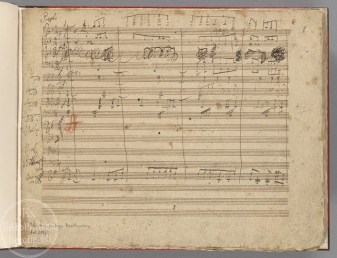
Ninth.Symphony.4 1

Manuscript page of Beethoven’s Ninth Symphony

Small orchestras were common at the smaller courts and regional opera houses around Europe; larger orchestras were only found in the largest cities such as London and Paris, or for festive occasions, as sometimes happened in Vienna. Thus any of the Romantic works that Saless has performed recently—concertos by Brahms and Tchaikovsky, other works from the 19th century—could have been performed by smaller as well as larger orchestras.

And Saless is surely right that hearing music that is most familiar to us with the lush sound of large string sections performed by the BCO does reveal aspects of the music that we may not have heard before. By programming Beethoven’s Ninth, Saless will be giving us another opportunity to hear a familiar work in a new guise.

In addition to the orchestra concerts that have been announced, there will be a concert by the Lebanese darbuka (goblet drum) virtuoso Rony Barrak, and at least two chamber music concerts that will be announced later.


# # # # #

Boulder Chamber Orchestra
Bahman Saless, music director and conductor
2016–17 Season: “JINX and The Curse of the 9th”bconew_1

September 23 & 24
With Yabing Tan, violin
Rossini: Overture to La Gazza Ladra (The thieving magpie)
Henryk Wieniawski: Violin Concerto No. 2 in D minor, Yabing Tan, violin
Brahms: Symphony No. 1 in C minor

Karen B P

Karen Bentley Pollick

November 11 &12
With Karen Bentley Pollick, violin
Samuel Barber: Adagio for Strings
Copland: Appalachian Spring
David A. Jaffe: Violin Concerto How Did it Get So Late So Soon? (U.S. Premiere)

December 10 &11
Nicholas Carthy conductor and pianist
Mendelssohn: Symphony No. 5 in D major (“Reformation”)
Mozart: Piano Concerto in C Minor, K 491
Dvorak: Nocturne in B major for String Orchestra, op. 40

February 10 & 11
With Lindsay Deutsch, violin
Maxime Goulet: Beatles Fantasy
Bahman Saless: Tango Variations (Variations on “Nature Boy”)
Schubert: Symphony No.  8 in B minor (“Unfinished”)

Barrak

Rony Barrak

April 7,8, 9
An Evening with Rony Barrak and Friends.

May 5, 6 & 7
With the Boulder Chorale & soloists TBA
Beethoven: Symphony No. 9 in D minor


Meet the new policy, same as the old?

Rachel Barton Pine and her violin are turned away from a flight, again

By Peter Alexander

I am starting to think I will never get to stop writing stories about traveling musicians being denied service by an airline.

The regulations have been clarified. And changed. And airlines have clarified their policies. And changed them. Airlines have apologized to musicians over and over for pointless interference with their professional lives. Every time they say they will explain the correct policy to their employees.

And still musicians, on their way to performances, are turned away again and again. You would think that traveling musicians are a significant part of airlines’ business, and that the airlines would not want to antagonize them. But apparently, since the musicians have few other options, you would think wrong, because it keeps happening.

Rachel-Barton-Pine-photo

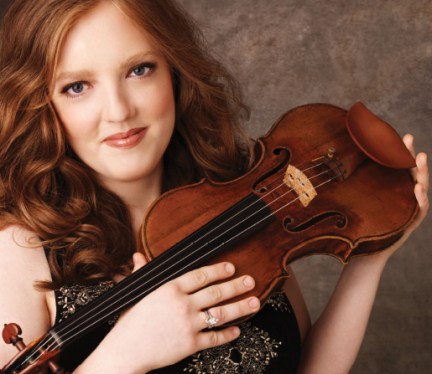
Violinist Rachel Barton Pine with her violin

This time it was a flight captain. Rachel Barton Pine, who performed with the Boulder Philharmonic in 2014, was on her way from Chicago to Albuquerque when the captain of her American Airlines fight refused to allow her to bring her violin into the cabin. She reported she was the first passenger down the jetway, that she explained the airlines’s policy, but the captain said “It is not going on because I say so.”

It is true that the captain has the final authority for a flight. But why would he insist on this? Because he hates violinists? Because he can?

Whatever the reason, Pine was sent back to the terminal and had to reschedule her trip, leaving early the next morning. As reported here, this is not the first time that Pine has had trouble with an airline. In September of last year, she had to spend the night in an airport with her family.

You can read the full, original story about the latest  incident at violinist.com.


Jake Heggie will be the 2016 guest composer for CU NOW

Composer of Dead Man Walking will workshop new opera at CU

By Peter Alexander

heggie_piano16x9

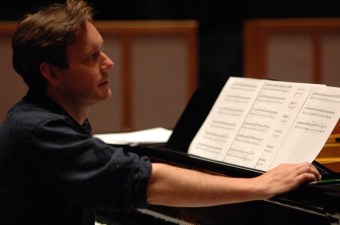
Jake Heggie

Jake Heggie, a composer who achieved considerable renown in 2000 with his opera Dead Man Walking, will visit the University of Colorado College of Music for three weeks in June.

Heggie will be in Boulder to develop a new opera at the Eklund Opera Program’s CU New Opera Workshop (CU NOW). The new work, with a libretto by Gene Scheer, will be based on the 1946 Frank Capra film It’s a Wonderful Life, starring Jimmy Stewart and Donna Reed.

At the end of the workshop period, portions of the new work will be presented at 7:30 p.m. Friday, June 17, and 2 p.m. Sunday , June 19, in the ATLAS Black Box Theater, located in the basement of the Roser ATLAS Building on the CU campus. These performances will be free and open to the public.

Seating will be first come, first served. The ATLAS Black Box Theater seats approximately 80–100.

It's_A_Wonderful_Life

Donna Reed, Jimmy Stewart and Karolyn Grimes in ‘It’s a Wonderful Life’

It’s a Wonderful Life has been commissioned by the Houston Grand Opera (HGO). The workshop process will allow Heggie and Scheer to work with CU students, trying portions of the new opera, making changes and rewriting as they go. Leonard Foglia, director of the HGO who will stage direct the world premier of It’s a Wonderful Life in Houston, will also be working with the student singers during the workshop, along with Jeremy Reger, a vocal coach with the CU Eklund Opera Program.

At the end of the workshop performances, the composer and librettist will ask for questions and feedback from the audience. Leigh Holman, director of the Eklund Opera Program, says “These workshops are for the intellectually curious. With the question and answer sessions, the creative team learns so much from the people asking the questions!”

Dead Man Walking, with a libretto by playwright Terence McNally based on the book by Sister Helen Prejean, took the operatic world by storm in 2000. His other operatic works have included Three Decembers (libretto by Scheer, 2008), Moby Dick (libretto by Scheer, 2010), and Great Scott (libretto by McNally, 2015).

DeadManWalkingJosephSister

Dead Man Walking: Michael Mayes as Joseph De Rocher and Jennifer Rivera as Sister Helen Prejean. Photo by Mark Kiryluk, Central City Opera

Dead Man Walking has been presented more than 50 times around the world. It was produced by CU in 2007 and by Central City Opera in 2014. Central City Opera also presented Heggie’s Three Decembers in 2010.

One of the busiest opera librettists working today, Scheer has collaborated with several prominent composers. In addition to the work he has done with Heggie, his works include An American Tragedy by Tobias Picker, premiered at the Metropolitan Opera in 2005, and last year’s Cold Mountain by Jennifer Higdon, premiered at the Santa Fe Opera.

This will be the seventh year for the CU NOW program. Previous operas that were developed through a CU NOW workshop have included Kirke Mechem’s Pride and Prejudice, Herschel Garfein’s Rosencrantz and Guildenstern are Dead, Alberto Caruso’s The Master, and Zach Redler’s A Song for Susan Smith.


CMF/CMA appoints new executive director

Elizabeth McGuire comes to Boulder from the Cheyenne Symphony

By Peter Alexander

The Colorado Music Festival and Center for Musical Arts (CMF/CMA) has announced the appointment of Elizabeth McGuire as their new executive director, effective May 9.

CMUSIC-Logo-Horizontal1024x192-withJMZ-1024x192

McGuire is currently executive director of the Cheyenne Symphony. She will succeed Andrew Bradford, who left the CMF/CMA on March 25. Bradford had been executive director for 18 months. Before Bradford, the position had been open for a full year, during which time there had been one failed search for executive director (ED), and the position of musical director (MD) was also open.

“I feel honored to be chosen to do this,” McGuire says.

Lupberger.2

Ted Lupberger

In a statement from the CMF/CMA, board president Ted Lupberger commented, “We’re delighted that we were able to move quickly to bring Liz on board before the summer Festival season gets underway. Liz comes to us with extensive orchestra management experience that’s grounded in a solid understanding of the challenges and opportunities of the nonprofit sector.”

McGuire has been ED of the Cheyenne Symphony since 2013. Prior to that she was ED of the Tuscaloosa, Alabama, Symphony Orchestra for more than 5 years and orchestra manager of the Greater Dallas Youth Orchestras. She began her musical career as a horn player, earning a bachelor’s degree in horn performance from Western Carolina University.

“I have not played professionally in a while,” she says. “There are several reasons—one is I don’t have time. Once you’ve been pretty decent on an instrument, it’s all or nothing. You either play at that level or you regret not being able to play at that level.”

Zeitouni_2

Jean-Marie Zeitouni

Music director Jean-Marie Zeitouni noted McGuire’s professional playing experience as a valuable asset. “Liz demonstrates an intuitive understanding of programming, and she’s a professional musician in her own right. That’s exciting—and it’s requisite to help fulfill out top priorities.”

McGuire says she is excited about the future of the CMF/CMA. “What I’ve seen more than anything is an organization that’s really done their homework and gone through a large strategic planning process,” she says. “They have that ready to go now. There were some really great ideas in the strategic plan that I’m excited about.”

Above all, it was the level of music making at the CMF and CMA that drew McGuire to the job. “What motivates me to do what I do has always been about music itself.

“When I saw the extent of the programs offered by the Festival and Center, and how they provide opportunities not only to participate in music-making, but also attend live performances and interact with some of the world’s greatest musicians, I was blown away.

“In some ways it’s maybe selfish, because I think I’m going to enjoy (the music) as much as (people in the audience) do.”

She recognizes the importance of the festival to Boulder’s musical life, and to its audiences. “I know how important it is,” she says. “I can see speaking to the board and the staff how much of a heart and soul that organization has, and how important it is for me to make sure I’m the best caretaker that I can be.”

Boulder Phil will present three works in one

Performances of Bach’s St. Matthew Passion will be a collaboration with several organizations

By Peter Alexander

J.S. Bach’s St. Matthew Passion is at least three different works.

Michael Butterman conducts the Boulder Phil - Glenn Ross Photo.jpg

Michael Butterman and the Boulder Philharmonic. Photo by Glenn Ross.

It is a sacred work, written and performed in Bach’s lifetime as part of Good Friday services at the Thomaskirche in Leipzig. It is a concert work that has been performed apart from religious services for most of the 266 years since Bach’s death. And it is a dramatic work, the closest Bach came to writing an opera.

This weekend’s performances by the Boulder Philharmonic, a semi-staged production presented in conjunction with the Boulder Bach Festival, Central City Opera, the CU College of Music and the Boulder Children’s Chorale, will definitely tilt toward the third option. (Performances will be at 7 p.m. Saturday in Macky Auditorium, with supertitles projected over the stage; and at 2 p.m. Sunday in Denver’s Central Presbyterian Church.)

Bach’s score unfolds on different levels: There is a tenor singing the Biblical narration, a baritone singing the words of Jesus, and individuals from the chorus who sing the words of other characters named by St. Matthew; there is a double chorus, which sings large choral movements that introduce and close the work, the words of the crowd, and Lutheran chorales that symbolically represent the reaction of the congregation; and there are aria soloists who sing non-Biblical poetic texts that reflect upon the story.

To these musical events, this performance will add an onstage dramatization, but not in a literal way. “There’s very little that’s literal action,” stage director Robert Neu says. “What we’re trying to do is take it a little bit out of the realm of a traditional concert performance. The piece is very operatic in the way it’s shaped, it’s very dramatic, but given the nature of the piece, you can’t be overly literal about it.”

Read more in Boulder Weekly.

# # # # #

Bach’s St. Matthew Passion
Boulder Philharmonic, Michael Butterman, music director
A semi-stage production with
Central City Opera, Robert Neu, stage director
Boulder Bach Festival chorus, Zachary Carrettin, artistic director
The University of Colorado, Boulder, University Singers and University Choir, Gregory Gentry, chorus master
Boulder Children’s Chorale, Kate Klotz, artistic director
Vocal soloists

7 p.m. Saturday, April 23 [Note early starting time]
Macky Auditorium, Boulder
Preceded by pre-performance discussion, 6 p.m.

2 p.m. Sunday, April 24
Central Presbyterian Church, Denver

Tickets

Copland’s Tender Land hits close to home

At CU Eklund Opera, art imitates life imitates art

By Peter Alexander

Fiery gypsy smugglers, humpbacked court jesters, cruel tyrants, Japanese geishas and French nuns facing the guillotine—it’s a good bet that most operatic characters are outside the personal experience of the singers who portray them. But CU’s Eklund Opera Program stands that observation on its head this weekend with its production of Aaron Copland’s Tender Land (7:30 p.m. Thursday through Saturday and 2 p.m. Sunday in the Music Theater).

TEnder.Land

Sara Lin Yoder and Michael Hoffman in “The Tender Land” (Photo by Casey A. Cass/University of Colorado)

Partly inspired by Walker Evans’s depression-era photos of rural southern poverty, The Tender Land is the quintessentially American story of Laurie, a young woman graduating from high school. Facing an uncertain future with courage, she strikes out to follow her dreams. In other words, Laurie does exactly what the opera students at CU—and many of the rest of us, for that matter—have done.

The Tender Land takes place on a 1930s Midwestern farm—the realistic CU production places it in Iowa. The night before Laurie’s graduation, two down-and-out drifters arrive at the farm asking for work. Even though they seem more than a little shady, Laurie falls in love with one of them during her graduation party. They make plans to run away, but at the last minute the drifters disappear.

Her bags already packed, Laurie makes the courageous decision to leave on her own. At the end, her mother and younger sister are left at the farm house, just as they were seen at the beginning.

Read more at Boulder Weekly.

# # # # #

Horsch

Music Director Joshua Horsch

The Tender Land by Aaron Copland
CU Eklund Opera Program
Leigh Holman, director
Joshua Horsch, conductor

7:30 p.m. Thursday–Saturday, April 21–23
2 p.m. Sunday, April 24
Music Theater, CU Imig Music Building

Tickets


Boulder Chamber Orchestra mixes very different ingredients

“Virtuosity & Grace” pairs Brahms and Mozart

By Peter Alexander

bsaless.4.Keith Bobo

Bahman Saless. Photo by Keith Bob.

Bahman Saless wants to give you an earworm.

The conductor of the Boulder Chamber Orchestra is preparing to perform Brahms’s massive Second Piano Concerto this weekend with pianist Soheil Nasseri (Friday and Saturday, April 15 and 16, in Broomfield and Boulder), and he says, “The second melody of the first movement is, to me, probably the most gorgeous melody ever written.

“Ever! I cannot think of any other melody that just makes me want to sing it as much as this one. So if you want an earworm, come to the concert!”

Earworms or not, there is no question that the Brahms Second Piano Concert is a serious undertaking for any pianist. At 50 minutes in length and four movements, just the sheer volume of music to be learned is daunting. And it is a powerful, energy-sapping work as well.

Musik

Soheil Nasseri in der Berliner Philharmonie

But Nasseri really wants to perform this concerto.

“It has been his lifetime dream,” Saless says. “He asked me if I would do it and I said, ‘Sure! Let’s give it a shot!’ If he’s got that much passion for it, it’s got to be great.”

That created a problem for Saless, though. The Brahms Second Piano Concerto is a difficult piece to put into a program. “If you want to perform Brahms Two, what do you put it with?” he asks. “There are certain pieces that are just hard to program. And when you’ve got a concerto that’s 50 minutes long, you run the risk of going over an hour and a half.

“It’s just a really hard piece to balance with.”

Saless talked to several other conductors, but he didn’t like any of their ideas. “You need something lighter, something more accessible, something that doesn’t demand so many intellectual calories” from the listeners, he says.

He wanted a piece that’s strong enough on its own to stand up to the Brahms. And he also needed something that used a classical rather than a large Romantic orchestra, because that’s what the Brahms concerto—for all of its imposing impact—calls for. “It’s more massive in length and structure than in orchestration,” he says.

The piece he settled on is Mozart’s Symphony No. 40 in G minor, which he had conducted before and wanted another shot at. “I’ve done it before, and I failed,” he confesses. And citing a Samuel Beckett quote, he added, “I’m going to fail better this time.”

The two pieces—Brahms and Mozart—“in many ways are the antithesis of each other,” he says. “You’ve got this beautiful, compact, very transparent Mozart symphony, versus this gigantic cruise chip of a concerto which is really a symphony for piano and orchestra. In so many ways they’re extremely different, but at the same time, they’re both appealing.”

bconew_1

Bahman Saless with the Boulder Chamber Orchestra. Photo by Keith Bobo.

Is the “gigantic cruise ship of a concerto” well suited for a small orchestra like the BCO? Saless thinks so. “With Brahms it’s always chamber music,” he says. “You can literally do any Brahms big piece with a chamber orchestra. That just brings out all the inner weavings that you don’t generally hear.”

The Mozart Symphony, which opens the program, is a very direct and accessible piece, Saless believes. “It’s right there, it’s all there in all its beauty and glory,” he says. “But it’s a huge challenge for the orchestra. In many ways it’s much harder than the Brahms for us, because it’s so transparent, because it’s Mozart.

“It’s just so tricky with a piece like this, especially because everybody knows it. We need to perfect every bar.”

Just as with the Brahms, Saless thinks the Mozart gains from having a smaller orchestra. “The orchestra needs to suddenly become this completely different animal, because most of the musicians are used to playing with big orchestras,” he says.

“You have to change the range of the entire orchestra. And what’s great about doing it with a chamber orchestra, with smaller string sections, is that the winds come out so much more. And so much of this symphony is all about the writing for the winds, which is outstanding.”

Mozart and Brahms, the two pieces on the program, offer a many contrasts. The title suggests one: Virtuosity and grace. Compact and transparent versus a gigantic cruise ship. Classical versus Romantic. The Mozart symphony is very familiar to classical audiences, while the Brahms concerto is, Saless believes, “not performed often enough.

“You really can’t miss this (opportunity), to hear the Brahms,” he says. And you just might come away with the most beautiful ear worm ever.

# # # # #

newbanner3“Virtuosity and Grace”
Boulder Chamber Orchestra
Bahman Saless, music director, with Soheil Nasseri, piano

Mozart: Symphony No. 40 in G minor, K550
Brahms: Piano Concerto No. 2 in B-flat major, op. 83

7:30 p.m. Friday, April 15
Broomfield Auditorium, Broomfield
Tickets

7:30 p.m. Saturday, April 16
Seventh-Day Adventist Church, 345 Mapleton Ave, Boulder
Tickets 

Santa Fe Opera comes to Denver Friday

World Premiere production of UnShakeable will be at Newman Center

By Peter Alexander

jn06_jd_12feb_unshake1-309x400

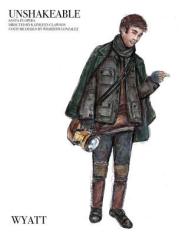
Costume sketch by Wilberth Gonzalez for Wyatt in Unshakeable. (Courtesy of Santa Fe Opera)

Love opera, but you can’t get to Santa Fe? The Santa Fe Opera is coming to Denver!

The SFO will present the world premiere production of UnShakeable, a new opera by Joe Illick with a libretto by Andrea Fellows Walters, at 7 p.m. Friday, April 15, in the Hamilton Recital Hall of the Denver University Newman Center.

The performance, part of tour through New Mexico and southern Colorado, will be free and open to the public.

jn06_jd_12feb_unshake2-309x400

Costume sketch by Wilberth Gonzalez for Meridian in Unshakeable. (Courtesy of Santa Fe Opera)

UnShakeable, which incorporates language from Shakespeare, was written in commemoration of the 400th anniversary of the playwright’s death. The score, designed for touring, calls for two singers and a chamber orchestra. After its April 9 premiere in Santa Fe, it will be on the road for ten free performances.

The action takes place in an abandoned theater in New Mexico 25 years in the future. Wyatt and Meridian (soprano and baritone) are Shakespearean actors and former lovers who have fallen victim to Erasure, a viral pandemic resulting in memory loss. Separated from Meridian at the beginning of the pandemic, Wyattt has been searching for his love ever since.

It was the Shakespeare commemoration that sparked the whole idea, Walters says. “I believe we tell stories to remember,” she says. “Talking to Joseph Illick, the composer, I said ‘I think memory needs to be a core theme.’ He said to me, ‘well then, somebody needs to forget something.’

“So I started with the idea that we were in some sort of future world with lost language, and that these two characters were recovering language through Shakespeare.”

Walters

Librettist Andrea Fellows Walters

As the characters of Wyatt and Meridian evolved in Walters’s imagination, she thought of the pandemic that erased parts of memory to differing degrees for different people. “Meridian is more seriously afflicted than Wyatt,” she says. “He’s spent the last three years looking for her, going to every place they ever performed together as part of a Shakespearean troop, hoping that she’ll be there. And the opera begins with him breaking into the space where she is.”

UnShakeable is part of the Santa Fe Opera’s “Opera for all Ages” outreach program. The SFO stresses that the production is “perfectly suited for audiences of all ages.” This is the 23rd year that the SFO has mounted a spring tour as a public outreach program. Until the past two years, the tour was generally in New Mexico. Last year it they came as far into Colorado as Colorado Springs. This is the first year for a performance in Denver.

The singers for the Denver performance will be soprano Jacquelyn Stucker and baritone Samuel Schultz. Kathleen Clawson, assistant director of the SFO Apprentice Program for Singers, is the stage director. Kristin Ditlow of the University of New Mexico faculty, is the music director for the tour performances.

Illick is general director of Performance Santa Fe, which was formed in 1937 as Santa Fe Community Concert Association. Since that time it has presented music, dance, theater and community opera, and since 1968, youth concerts.

Walters is director of education and community engagement for the Santa Fe Opera.

# # # # #

9twYvNneUnShakeable
By Joe Illick with libretto by Andrea Fellows Walters
7 p.m. Friday, April 15, Hamilton Recital Hall of DU Newman Center
Free and open to the public