Shining a light on a musical ‘blind spot’ in Vienna

One hundred years of music from the Hapsburg Court

By Peter Alexander

Vienna’s rich musical heritage of the Classic-Romantic periods is very familiar to audiences. But for a full century before Haydn or Mozart ever set foot in Vienna, the Austrian capital had a musical culture that scholar/performer Mario Aschauer calls “a phenomenon unique in music history.”

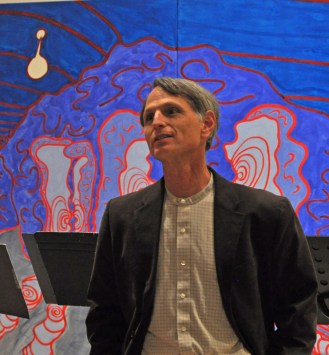
mario-aschauer

Scholar/performer Mario Aschauer uncovers the forgotten music of Vienna with the Boulder Bach Festival

Between 1637 and 1740, four consecutive Hapsburg emperors were trained musicians and composers. “They had an amazing court (music establishment),” Aschauer explains. “They had international personnel and produced an unspeakable amount of music in pretty much every genre that was popular at the time.”

dsc-close-action-spalla-1

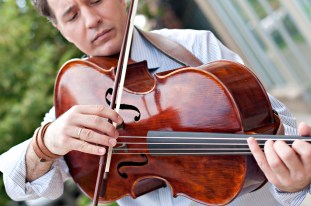
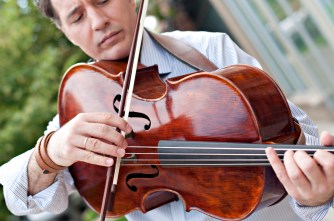
Zachary Carrettin playing the cello da spalla

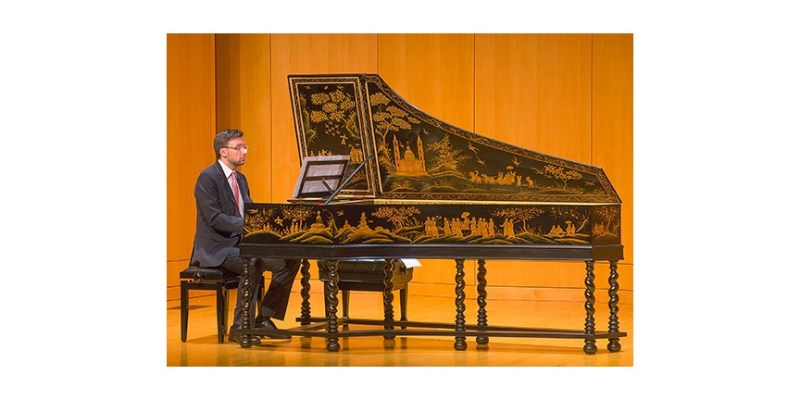
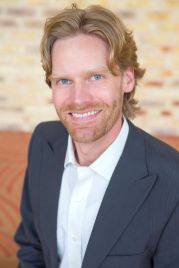
To open the door on these riches of the Baroque era, the Boulder Bach Festival has invited Aschauer to present “A Journey to Vienna with Mario Aschauer,” a concert of music from the Austrian court, to be presented Thursday in Boulder and Saturday in Longmont. The program features both operatic and instrumental selections, performed by Aschauer on harpsichord; the Bach Festival’s director, Zachary Carrettin, on Baroque violin and his recently revived cello da spalla; and by soprano Jennifer Bird-Arvidsson, who performed with the Bach Festival in last season’s performance of Bach’s St. Matthew Passion.

Works on the program include music by one of the emperors and court composers of different generations. There are pieces for keyboard alone, a sonata for violin and keyboard, and several arias with an obbligato instrument—an instrument that becomes a duet partner with the singer.

Read more in Boulder Weekly.

# # # # #


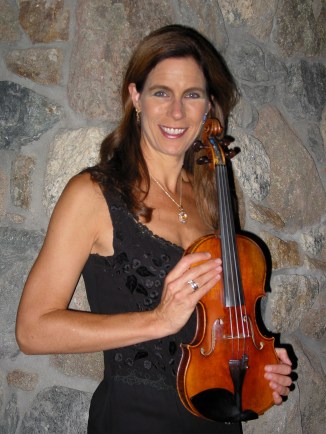
jennifer-bird-arvidsson

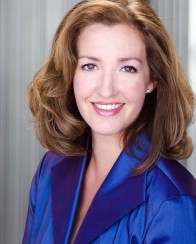
Soprano Jennifer Bird-Arvidsson

Journey to Vienna, with Mario Aschauer, harpsichord
Zachary Carrettin, Baroque violin and cello da spalla
Jennifer Bird-Arvidsson, soprano

Music by Emperor Leopold I, Georg and Gottlieb Muffat, Atonio Caldara, Attilio Ariosti and Johann Joseph Fux.

7 p.m. Thursday, Dec. 8
Grace Lutheran Church, 1001 13th St., Boulder

7:30 p.m. Saturday, Dec. 10
Stewart Auditorium, 400 Quail Rd., Longmont

Tickets


With BCO, comfortably familiar Americana takes many forms

By Peter Alexander

bconew_1

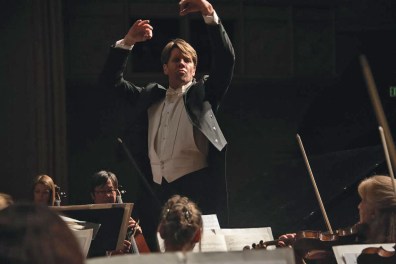
Bahman Saless and the Boulder Chamber Orchestra

“The Americans,” the current program of the Boulder Chamber Orchestra (BCO), offers comfortably familiar Americana in several different guises.

The program, led by conductor Bahman Saless and featuring violinist Karen Bentley Pollick, was performed last night (Nov. 11) in the Broomfield Auditorium. It will be repeated at 7:30 p.m. tonight in the Boulder Adventist Church, 345 Mapleton Ave. (tickets).

The program opens with genteel music from America’s “Gilded Age” of the late 19th century, the Air and Gavotte from Bostonian Arthur Foote’s Serenade for Strings. Here, the American-ness resides mostly in Foote’s careful homage to the music of Europe and avoidance of anything overtly American—characteristic of American high culture at the time, especially in New England.

Tenderly played by the BCO, the Air made a gentle start to the program. The following Gavotte is a Romanticized, drawing-room version of the Baroque dance, but none the less pleasant for that. Both were played with care.

jaffe-003

Composer David Jaffe

Leaping more than 120 years, the BCO followed with the American premiere of David Jaffe’s Violin Concerto, How Did it Get so Late so Soon? This highly personal but unmistakably American work received a vigorous performance from the orchestra and Pollick, for whom the concerto was written, and by whom it was premiered in Lithuania Aug. 27.

A former bluegrass musician, Jaffe has filled the score with quotes and references to American music from the blues to the protest music of the 1930s. You may not hear the Woody Guthrie song he quotes, but the overall tone will be familiar to American audiences. The blues inflections, the outbreaks of Appalachian fiddling, the folk-tune-like melodies all come from a world we recognize.

There are portions of the concerto that sound as American as anything by Copland. But these ideas are always refracted thought a Charles Ives-ian sensibility, so that the music never settles into an extensive folkish groove. To my ears, that makes it all the more interesting: you never know what will happen next, but it all hangs together in a fascinating mélange. Bravo to Saless and the BCO for programming a work that deserves to be heard widely.

k-bentley-large

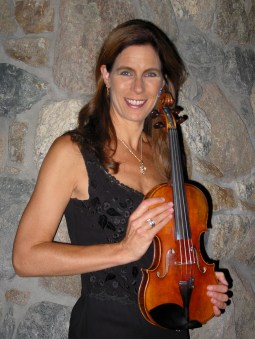
Violinist Karen Bentley Pollick

The orchestra played with a natural and relaxed understanding of Jaffe’s style. The small string section was always solid, and the second movement in particular featured some outstanding wind playing.

An enthusiastic advocate of the music she performs, Pollick played with great energy and conviction. Disclosure: I have known her since we were both music students in the 1980s, but to my entirely non-objective ear, she handled the concerto with virtuosic ease.

The rest of the program is too familiar to require extensive comment. In these fractious times, the Barber Adagio for Strings could be heard as an expression of sorrow for our broken country, and Copland’s Appalachian Spring as the hope that if we follow our hearts, things can be mended. But I doubt that anyone really wants to hear music as political metaphor.

The Barber was played with warmth and careful dynamic control. When played by a chamber orchestra, Appalachian Spring becomes less rugged, more delicate. There were a few bobbles, but Copland’s tender lyricism and robust energy were well conveyed. When everyone was having as much fun as Saless broadcast from the podium, further criticism seems irrelevant.

Boulder Chamber Orchestra presents music grown from friendship

By Peter Alexander

David A. Jaffe’s new Violin Concerto grew out of a friendship between the composer and a Colorado violinist.

k-bentley-large

Karen Bentley Police in her Evergreen home

Karen Bentley Pollick, who lives in Evergreen, will play the American premiere of the concerto, titled How Did it Get so Late so Soon?, Friday in Broomfield and Saturday in Boulder. The concerto is part of “The Americans,” a program by the Boulder Chamber Orchestra (BCO)and conductor Bahman Saless. 

Other works on the program are the Air and Gavotte for strings by Arthur Foote, the Adagio for Strings by Samuel Barber, and Aaron Copland’s much loved Appalachian Spring. The all-American program is designed as a tribute for Veteran’s Day, which coincides with the Friday concert. As part of the observation, BCO is offering free tickets to all veterans, available at the door both dates.

Pollick played the world premiere of Jaffe’s concerto, which was written for her, at the Tytuvenai Festival in Lithuania on Aug. 27 of this year. “I strongly believe music is made between people who know each other,” she says. “The history of music is people writing with and for people that they’re fond of.”

Pollick and Jaffe met in the 1980s, when the composer was working at Stanford University’s Center for Computer Research in Music and Acoustics. Since then, the violinist has played several of his works, including Impossible Animals for violin and computer-generated voices, and his Cluck Old Hen Variations for solo violin.

“Come with open minds, and we’ll have a love fest through Copland’s Appalachian Spring, Barber’s Adagio, and the U.S. premiere of this concerto” Pollick says.“My dream is to unite our audience through the celebration of eloquent varieties of American music, and the U.S. premiere of the violin concerto, creating a transcendent and memorable experience for all present.”

Read more in Boulder Weekly.

# # # # #

“The Americans”
Boulder Chamber Orchestra, Bahman Saless, conductor
With Karen Bentley Pollick, violin

untitled-3_0004_vector-smart-object

Arthur Foote: Air and Gavotte
Samuel Barber: Adagio for Strings
Aaron Copland: Appalachian Spring
David A Jaffe: Violin Concerto, How Did it Get so Late so Soon? (U.S. premiere)

7:30 p.m. Friday, Nov. 11
Broomfield Auditorium, 3 Community Park Rd., Broomfield

7:30 p.m. Saturday, Nov. 12
Boulder Adventist Church, 345 Mapleton Ave., Boulder

Concerts free for Veterans
Tickets


“The most important aspect of an orchestra is to really be in the community.”

—Elliot Moore, candidate for Music Director of the Longmont Symphony

By Peter Alexander

Each of the four candidates for music director of the Longmont Symphony Orchestra will conduct a concert during the 2016–17 season. When each candidate visits Longmont, I will take the opportunity to introduce him (and yes, they are all male). The questions will include serious questions about the job of a music director, but also questions that help introduce each of them to the reader. I hope this will give a clearer picture of the strengths of each candidate.

The first candidate, Elliott Moore, will conduct the orchestra on  Saturday, Nov. 12. The following works are on the program: Mozart’s Symphony No. 32 in G major; Saint-Saëns’ Piano Concerto No. 2 in G minor, with pianist Vivian Choi; and the Ravel orchestration of Mussorgsky’s Pictures at an Exhibition.

Here are his answers to the questions I asked:
moore-photo-conductor-candidate-201x300

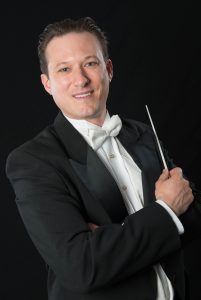
Elliot Moore

PA: What attracted you to the Longmont Symphony?

EM: They seemed to be an orchestra that has, first of all, a presence in the community. They seem to be an orchestra that is well run. There’s a feeling about the orchestra, and I got that already from their online presence, that they’re an orchestra that takes pride in what they do. They’re an orchestra that wants to be playing great music, and they’re an orchestra that wants to be in their community.

How do you think about programming for a community orchestra? What would a season of the LSO with Elliot Moore look like?

Whenever I think about programming, I consider a couple of different things. I consider, what does the audience want to hear, what do they expect to hear? I also always think about what will further the artistic achievement of the orchestra. If they haven’t played much from the classical period, that is something that I would want to begin focusing on, or, if they haven’t done much modern music, perhaps doing some living composers would be good for them to start doing, so that they become a well rounded orchestra in all the different musical genres. And then, once I have sort of the overall season done, I look to see if there’s something for everyone.

I think that pops plays a role in a season’s program, and the orchestra certainly has a pops series. When there are pops concerts, it’s important to still showcase the orchestra. One other thing: Something that should be in the programming would be opportunities to work with other local arts organizations, whether that be modern dance ensembles, or videographers, or choreographers—all kinds of different artistic media that the orchestra can work with in order to connect the dots within the community.

There have recently been alarm bells for classical music and orchestras, especially the larger orchestras that have had serious budget issues and labor disputes. Do you think that these problems will affect community orchestras as well? And if not, what do you think are the challenges for the smaller orchestras?
elliott-moore

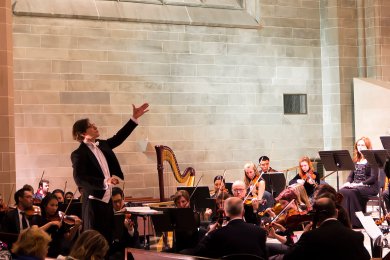
Elliot Moore

I see it as being less of an issue for the Longmont Symphony. What I think is the most important aspect of an orchestra, period, is to really be in the community. What are the specific needs of the community, and is the orchestra playing a role to address those needs? I know in Longmont there is an Hispanic population of approximately 30%, and I know also that they tend not to be coming to the LSO concerts. How, in an authentic way, can the Longmont Symphony bridge the gap to that community? Connecting different organizations, to create one incredible cultural community—I think that that is important. And I think that once you really connect with your community, in an authentic way, really thinking about it, really considering how to make this community better, then go after that. So making a plan and then taking action. When those things are done, the chances of an orchestra folding are much less because they are in the community and they are making a difference, and their presence matters, and the public knows that, they understand that and they feel that.

How do you balance and prepare for the various aspects of the conductor’s job: the musical requirements, the social demands with the public, and the diplomatic demands with contributors, the board and musicians?

That’s a really great question. Let’s talk about the musical first. The job of a conductor is largely one where you are alone a lot of the time, studying the scores. That is what informs inspiring rehearsals. It’s impossible to have inspiring rehearsals if you don’t really know your music, you don’t know the context in which it was written, or you know don’t what inspired the composers of the music you’re performing. That is probably the single most important aspect.

When conducting, I imagine myself as a conduit. I empty out and then I fill up with the music. It’s like a straw that’s flavored with chocolate flavor: when you drink milk through the straw you get chocolate milk. My experiences as a human being, they’re like that straw, so when the music flows though me, it has that flavor of Elliot, Elliot’s experiences, Elliot’s beliefs.

In terms of working with boards, fundraising, interfacing with the audience, a couple of things come into play. First of all, having a fundamental respect for everyone is very important—being able to empathize with people and see their points of view. But also having a business sense is very important. So combining vision with empathy is a very important aspect of working with people.

When the organization is more than just an orchestra, it’s a fundamental part of the community and makes the community better, then it’s easier to go and sell the orchestra to potential donors because the orchestra is not just playing a symphony; the orchestra is playing a symphony that transforms people’s lives and transforms the community. When you see fundraising from that perspective, being part of an organization that is actively fundraising is a great thing because all of these things help contribute to the wellbeing of the community. I think being an empathic person is very important.

About you, now: Where did you grow up?

I grew up in many, many different parts of the United States and the world. I was born in Anchorage, Alaska. I lived in south Denver for 6 months when I was 6 years old. I lived in Texas, for about 10 years, in Midland and Plano. Then I finished high school in Cleveland. I lived in Switzerland for 6 years—I speak French and German, I lived in the French part and the German part. And I’ve lived in New York City and now Detroit.

Did you come from a musical family?

The joke is, my mom plays piano, my dad plays tennis.

Who are your musical mentors?
27rost2-450

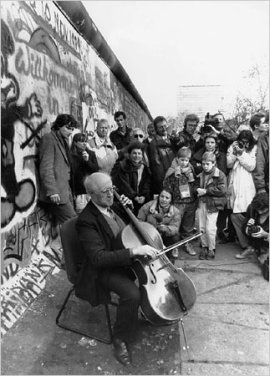
Mstislav Rostropovich presenting an impromptu concert after the fall of the Berlin Wall, Nov. 1989

I have a couple of musical heroes. The first one is Mstislav Rostropovich, the great cellist/conductor, in part maybe because he’s a great cellist and conductor, and I am also a cellist. What I would say about him that has been so inspiring to me over the course of my childhood and career has been the humanity that he shows to everyone. There are so many stories, but one was that there was a stage hand or maybe a custodian at the National Symphony where he worked, who passed away. Rostropovich wanted to go to the funeral, which is amazing for a music director to go to the funeral of a stage hand. He couldn’t make it to the funeral, so he went and privately played his cello at his casket, and said to the orchestra’s executive director, “I don’t want this to be a media thing, this is just me expressing my feelings about this man and to his family.”

There’s a great photo I had up in my bedroom when I was child, a photo of Rostropovich letting a soldier sleep on his shoulder. The soldier was supposed to protect him and he was so exhausted he fell asleep and Rostropovich let him sleep on his shoulder, and there was a gun leaning up against his leg. That sort of attachment to all human beings is something that I certainly strive for. The attachment to music and humanity is why he’s my musical hero.

Are there any conductors today whose work you especially admire?

I really look up to Manfred Honeck, the music director of the Pittsburgh Symphony. There are many things that I enjoy about his music making. One is his authenticity at how he brings his experience to conducting. He’s not about being in the spotlight; he’s about putting the spotlight on the music. I think that resonates with their audiences, with the players, with the orchestras with which he works. It’s a breath of fresh air to see somebody come in and be about the music, as opposed to about the spotlight.

Moving on to some less serious questions: Do you have a favorite food?

I feel like this isn’t a very interesting answer. I love all kinds of foods, and I Iove to cook. Often my wife will choose what she wants to have, and she chooses very interesting things that I would have never chosen, and then I cook them. So I love to cook, and I like trying things that are different. I have tried many different kinds of foods, and basically love them all.

Since you lived in Lausanne, Switzerland, what about raclette?

Raclette! I lived in Lausanne, yes, and I do love raclette and I do love fondue. I find that I it’s not quite the same here.

As you know, Colorado is an outdoor recreation state. Do you have a favorite activity outdoors? Or are you too busy shut up in your studio studying scores?

No, I’m not too busy shut up in my studio. The great conductor Carlo Maria Giulini said that if you have to study a score for 10 hours, you should study your score for one hour every day for 10 days and the rest of the time you should spend walking in the woods. Yesterday I had just an unbelievable experience, going up into the Rocky Mountain National Park, all the way up to the top. I love photography, and so I took some really stunning photos. It’s been a blessing to be here, for many reasons, including the outdoors, but also there are just lovely people here.

Do you follow any sport or team?

I have been a Cubs fan since I was 7 years old! There was an LSO Board meeting on the night of game 7 of the World Series, and as soon as the board meeting was over I ran into a sports bar where they had the game on, and I made a lot of new friends!

__________

11.8. Minor typos corrected on this page


Boulder Phil in fine form for Mozart, Beethoven and Adés

Dusinberre and Walther delightful in Mozart Sinfonia Concertante

By Peter Alexander

The Boulder Philharmonic was in fine form last night (Nov. 6), as they presented two exquisite soloists as part of a season of duo-solo performances.

ed-geri_ellenappel_04-01

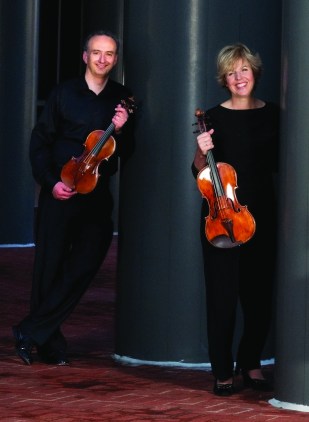
Edward Dusinberre and Geraldine Walther

Violinist Edward Dusinberre and violist Geraldine Walther, members of the Takacs Quartet, played Mozart’s Sinfonia Concertante for violin and viola with the orchestra. Conductor Michael Butterman also led the Phil in a fascinating work by British composer Thomas Adés and a bracing performance of Beethoven’s Eighth Symphony.

But first things first: Mozart. The interplay of the two soloists is central to the Sinfonia Concertante, and it is here that Dusinberre and Walther elevated their performance to the highest level. They are of course great individual players, but as members of a world-class string quartet, chamber music partners who play together professionally virtually every day, they have honed the ability to respond to one another in tone, mood, phrasing and pitch—all the myriad details that make a great performance.

Of all the delights they offered, I will single out one: There is a joint cadenza in the first movement, with the parts written out for the players. Walther and Dusinberre were so perfectly aligned in pitch and rhythm and the freedom of their phrasing that it sounded like one person on two instruments. I have never heard that passage better.

Their experienced partnership made the performance a pleasure to watch as well as hear. You could see the communication between them, as they shared their enjoyment of Mozart’s playful interchanges between soloists in the outer movements, and the beautiful sharing of extended melodies of the slow movement. And through their interactions, they shared that enjoyment with the audience.

It has to be said that Macky is not a great venue for this work There is a reason that Butterman has programmed more Romantic works than Mozart, in order to achieve what he calls “a sonic size appropriate for Macky Auditorium.” At times the Mozart sounded distant—and if it sounds that way from Row M, what must it sound like from the back or the mezzanine?

The concert began with Adés’s Three Studies from Couperin, orchestrations of harpsichord works by the French Baroque composer François Couperin. Himself a keyboard player, Adés has said that the best day he could imagine would be playing Couperin all day. I expect few in the audience have that degree of enthusiasm for the composer, but last night’s performance may well have boosted the appreciation for his strongly characterized and characteristic works.

Like the originals, Adés’s orchestrations are highly individual, offering a wondrous mix of colors. These are watercolors to the bright paintings of some orchestra arrangements—subtle and subdued hues that were given a well blended and warm interpretation by Butterman and the orchestra.

Buttermn.new

Michael Butterman. Photo by Glenn Ross

Beethoven’s Eighth Symphony was the first orchestral score I ever owned, so the rare performances are always both musical and nostalgic treasures for me. I admit I am prejudiced in favor of anyone who programs the Eighth, but I was definitely not disappointed by last night’s performance. Even though the Eighth is scored for a smaller classical orchestra, without trombones or doubled winds, the Phil’s sound was full enough to create a real presence in the hall.

Butterman’s interpretation was highly energetic, a bit on the muscular side, but none the less enjoyable for that. He found a good balance between Beethovenian outbursts, aided and abetted by a vigorous timpanist, and the more lyrical and light-hearted moments of the symphony. The second movement, marked Allegretto scherzando, was very brisk, more scherzando than allegretto. A slightly slower pace would allow the listener to enjoy Beethoven’s good cheer a bit more in this cheeky, clucking stand-in for a slow movement.

The finale was, as it should be, even faster, but here the tempo worked entirely to Beethoven’s advantage. The Boulder Philharmonic stayed right with Butterman’s galloping pace right to the end. Beethoven’s Eighth is perhaps too light hearted to elicit cheers, but the performance was more than worthy of a hearty “Bravo!”

New Starkland CD has the antidote to the news: Accordion tunes

By Peter Alexander

Are you suffering, as I am, from “election stress disorder”?

If so, now would be a good time to take a break from politics and the news, kick back and enjoy some great accordion tunes. And just in time, Boulder’s Starkland CD label has issued a recording of just that: great accordion tunes.

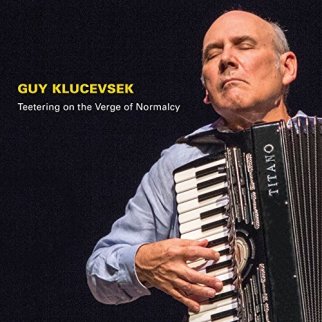
61dics4g8l-_ss500Teetering on the Verge of Normalcy by accordionist Guy Klucevsek and some friends is the latest from Starkland, and it is a delight from beginning to end. From the very first track, “Moose Mouth Mirror” played by Klucevsek and violinist Todd Reynolds, the listener is in a world that is almost familiar, but, as the CD title suggests, not quite. It pulls you right in, gets you smiling and your toes tapping, and then throws you some curves that make you smile even more.

If you are not familiar with Klucevsek, he is a musician who loves the edges. Reviews of his work often stress how he transforms his instrument into something simultaneously familiar and unexpected. Downbeat calls him “A rebel with an accordion . . . . forcing you to rethink the accordion’s limitations.”

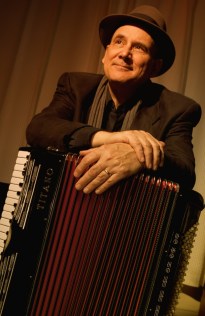
img_3821_ret_sm

Guy Klucevsek

Long a feature of the downtown music scene, Klucevsek has performed with a remarkable list of new music artists and groups, including Laurie Anderson, Bang On a Can, Anthony Braxton, Dave Douglas, Bill Frisell, the Kronos Quartet, Natalie Merchant and John Zorn. He is a founding member of Accordion Tribe, and has now released more than 20 albums. He has played on John Williams’s scores for Steven Spielberg films including The Terminal, Munich and Indiana Jones and the Kingdom of the Crystal Skull.

 One of the things that makes Klucevsek’s music outside of “normalcy” is the use of odd and nonsymmetrical meters—5s, 7s, irregular 8s as 3+3+2. In that not-quite-normal opening track, ¾ is followed by 3/8, then 7/8, and so on. But Klucevsek performs these patterns with such fluency that it sounds smooth, whatever the meter. You don’t even notice until you try to count along.

michaellowenstern

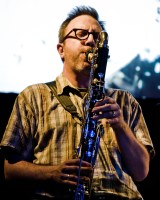
Michael Lowenstern

Some of the most engaging music on the CD was written in memory of, or as an homage to, other composers and friends. Among my favorites are “Little Big Top,” written in memory of Nino Rota, featuring some virtuoso bass clarinet playing by Michael Lowenstern. So well is Rota’s spirit conjured that Fellini scenes from Dolce Vita to 8 ½ flash before my eyes every time I hear it. “Three Quarter Moon” in memory of Kurt Weill evokes just the right tone of decadent melancholy.

Other favorites for me are two waltz tracks: “Bob Flath Waltzes with the Angels” and “Waltzing on the Edge of Dawn.” Klucevsek’s seamless partnering with violinist Todd Reynolds should be mentioned a particular pleasure of the disc.

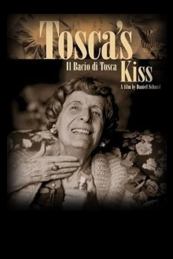
imagesEspecially moving for anyone who loves opera and opera singers is the nostalgic “Song of Remembrance.” It was written for Tosca’s Kiss, a film about the Casa di Riposo per Musicisti, a home for retired musicians and opera singers founded by Giuseppe Verdi. “Pull up a chair, listen with me,” the haunting text begins. “In this beautiful garden, the opera’s about too begin. . . . We remember the rest.”
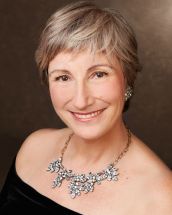
Pianist Alan Bern crashes Klucevsek’s party with a couple of solo pieces, including the wonderfully jazzy 5-beat “Haywire Rag.” Haywire, but delightful.

I won’t describe every track, so just get the CD. Take the advice of Seattle Weekly and “forget everything you thought you knew about the accordion.” Then settle back and go where Klucevsek takes you.

All the way to the edge of normalcy and back.

# # # # #

Guy Klucevsek:  Teetering on the Verge of Normalcy. Guy Klucevsek, accordion, with Todd Reynolds, violin; Alan Bern, piano; Kamala Sankaram, voice; Peggy Kampmeier, piano; Michael Lowenstein, bass clarinet; Pete Donovan, electric bass guitar; and Barbara Merman, drums. Stark land ST-225.

Available from Amazon and iTunes.

Pro Musica and Masterworks Chorus deliver a joyful “Creation”

By Peter Alexander

Conductor Cynthia Katsarelis and her musical colleagues—the Pro Musica Colorado Chamber Orchestra, the Colorado Masterworks Chorus and three outstanding soloists—presented a joyful and enjoyable performance of The Creation by Joseph Haydn last night (Oct. 29).

amanda-balastrieri-2

Amanda Balestrieri

This was the first performance of the 2016–­17 season for Pro Musica, and the only the second outing for the Masterworks Chorus, a new entry into Boulder’s crowded classical music scene. The well matched soloists appearing with them were soprano Amanda Balestrieri, tenor Steven Soph and bass-baritone Jeffrey Seppala. Following a performance Friday in Denver, last night’s performance was in Boulder’s First United Methodist Church.

With the chorus on the broad but shallow sanctuary “stage,” the orchestra had to adopt an unusual seating arrangement, with woodwinds behind the strings on one side, brass behind the strings on the other. In a more complex work with tricky coordination among the winds this might have been a problem, but in this case it seemed to work quite well. The woodwinds in particular sounded bright and clear. In the church’s shoebox space the brass had to be restrained to avoid thickening the texture, but for the most part they succeeded.

seppala

Jeffrey Seppala

The long, deep space of the church favors the lower frequencies. The timpani, for example, had to be discreet to avoid muddying the sound, and usually succeeded. Katsarelis visually restrained the players throughout, generally keeping the orchestra and singers well balanced and the texture transparent.

The choral sound was solid and clear, even with all forces combined, as in the final fugue to the words “The Lord is great, his praise shall last for aye.” While the words from the chorus were not always understandable, the audience had the full text and the lights were, appropriately, left on.

This also benefitted the soloists, who were not always understandable, either. This is not entirely the singers fault, however: it is hard to be clearly understood when singing lines like “Softly purling glides on thro’ silent vales the limpid brook,” or “Most beautiful appear, with verdure young adorn’d, the gently sloping hills.” For this you can blame the Austrian Imperial Court Librarian, Baron Gottfried van Swieten, who wrote Haydn’s English text. Alas, his command of the language was not as fine as he thought.

Soph.jpg

Steven Soph

All three soloists should be commended for their performances. They have fine oratorio voices and sang their solo recitatives and arias with careful attention to expression. One of the highlights was surely the duet between Adam and Eve—Balestrieri and Seppala—with chorus, “By thee with bliss.” Likewise, their lengthy closing duet “Graceful consort!” drew a spontaneous “Bravo!” from the audience. And I could not suppress a chuckle at Seppala’s solemn delivery of the text “In long dimension creeps with sinuous trace the worm,” one of many delightful moments of text painting in Haydn’s score.

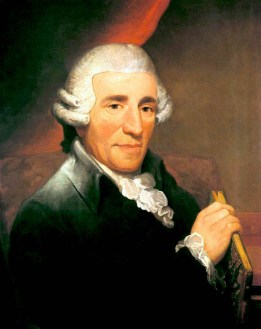
joseph_haydn

Joseph Haydn

One of the hallmarks of Katsarelis’s performances with the Pro Musica has been her careful control of dynamics. From the pianissimo whispers in the “Representation of chaos” and the fourth-day sunrise, to the full climaxes, the large-dimension contours were highly effective, with something held in reserve for the major climaxes. This was particularly evident at the end of the oratorio’s Part I, the much-sung chorus “The heavens are telling,” and the final “Amen.”

Finally, I have to return to Haydn, the genial genius whose lifelong humility and ability to learn paved the way for this great work. Inspired by the London Handel Festival performances of the 1790s, he wrote in his 60s a work unlike anything he had done before—to our eternal benefit. To quote the oratorio’s final chorus, “Let his name resound on high!”

Haydn’s happy creation

By Peter Alexander

There are lightning and thunder, leaping tigers and creeping serpents.

cynthia-katsarellis-2

Cynthia Katsarelis

All of that and more are portrayed musically in The Creation by Joseph Haydn, but conductor Cynthia Katsarelis wants you to know that they are happy tigers. “It’s almost two hours of ecstatic happiness,” she says of Haydn’s oratorio, which she will conduct this weekend in Denver and Boulder with the Pro Musica Colorado Chamber Orchestra and the Colorado Masterworks Chorus.

Soloists will be soprano Amanda Balestrieri, tenor Steven Soph and bass Jeffrey Seppala.

joseph_haydn

Joseph Haydn

Katsarellis particularly appreciates the cheerfulness of Haydn’s score right now, as an antidote to the tense and threatening times we live in. “I was studying the piece this summer after Orlando and Istanbul and Pakistan and all of these terrible things happening,” she says. “So it was kind of a vacation from all of that.”

And maybe, she says, The Creation offers us more than an escape from what we hear on the news. “The happiness and gratitude expressed in the choruses — this is also who we are,” she says.

“So to some extent The Creation can call to us and remind us that we’re more than what’s happening in the news. We are much more than that.”

Read more in Boulder Weekly.

# # # # #

The Creation by Joseph Haydn

orch-chorus

Pro Musica Colorado Chamber Orchestra and the Colorado Masterworks Chorus
Cynthia Katsarelis, conductor
With soprano Amanda Balestrieri, tenor Steven Soph, and bass Jeffrey Seppala
7:30 p.m. Friday, Oct. 28, Central Presbyterian Church, 1660 Sherman St., Denver
7:30 p.m. Saturday, Oct. 29, First United Methodist Church, 2412 Spruce, Boulder

Tickets

Adventures in geography and gender

Seicento Baroque Ensemble and Boulder Chorale go exploring

By Peter Alexander

UPDATE: Boulder Chorale announced Friday, Oct. 22, that “due to a family emergency Dominique Christina will not be able to perform with the Boulder Chorale this weekend.” In her place, the Chorale has announced that Colorado singer Sheryl Renee will appear on the concert Saturday evening and Sunday afternoon.

Renee has sung with the Colorado Symphony under the late Marvin Hamlisch and sung the National Anthem for President Barrack Obama.

Two of Boulder’s choral groups will separately spend the weekend exploring geography and gender. Happily, both programs will be given twice in the Boulder area, so if you are looking for musical adventures, you can experience both journeys.

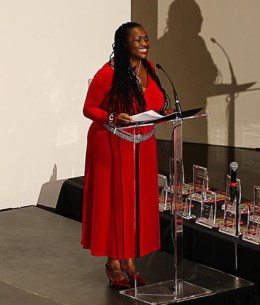
sheryl-renee

Vocalist Sheryl Renee will replace Dominique Christina in the weekend performances.

The Seicento Baroque Ensemble and director Evanne Browne will travel back to the music of 16th- and 17th-century Spanish America. They will perform music by Spanish missionaries and converted Christian natives in Central and South America, sung in Spanish and Latin as well as Nahuatl, the indigenous language of the Aztecs.

At almost the same times, in Boulder and Longmont, Boulder Chorale will be delving into music by and about women. Their program, “Women’s Work: Poetry and Music” will feature the chorale and director Vicki Burrichter performing music from Hildegard to Carly Simon, and settings of religious texts extolling the Virgin Mary. Bringing the performance up to 2016, five-time national poetry slam winner Dominique Christina will poetically address modern social issues that affect women.

sbe-in-front-of-fumc

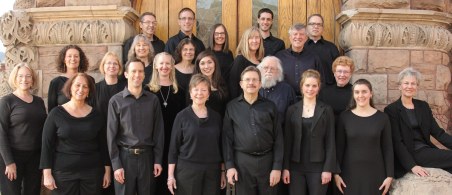
Seicento Baroque Ensemble and director Evanne Browne (far right)

Seicento’s mission is to present “worthy but rarely-heard music of the early Baroque period.” That time — around 1600 — coincided with the Spanish colonial era in the Americas. The Spanish missions were rich with musical activities, including choirs of Native Americans who brought their own lively traditions to the performances and in some cases wrote music themselves.

Browne says “there’s been a surge of publications and information about this repertoire. I spent the last year listening and researching and seeing what was online, and thought, ‘This would be really fun!’”

hildegard-of-bingen

Hildegard of Bingen

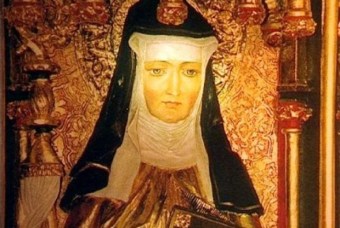
Boulder Chorale’s concert of “Women’s Work” opens with music by one of the most revered female musicians of European history, the medieval Benedictine abbess, Christian mystic, composer and polymath Hildegard of Bingen. “For me, Hildegard’s O Splendidissima Gemma (O resplendent jewel) is the foundational piece” on the program, Burrichter says.

For the rest of the concert, she says, “I wanted to show the variety of music composed by women and about women, and try to touch on as much of that as I could.” And variety there is, from the medieval mysticism of Hildegard, to a traditional South African song arranged in the spirit of Miriam Makeba, to American modernist Meredith Monk’s “Panda Chant II.” The program ends with a choral arrangement of Carly Simon’s anthem “Let the River Run,” written for the 1988 film Working Girl.

Read more in Boulder Weekly.

# # # # #

“Colonial Latin American and the New World”
Seicento Baroque Ensemble, Evanne Browne, artistic director and conductor

7:30 p.m. Friday, Oct. 21
St. Paul Lutheran & Roman Catholic Church, 1600 Grant St, Denver

7:30 p.m. Saturday, Oct. 22
First United Methodist Church, 1421 Spruce St., Boulder

3 p.m. Sunday, Oct. 23, Longmont Museum Stewart Auditorium, 400 Quail Rd., Longmont
Tickets

“Women’s Work: Poetry and Music”
Boulder Chorale, Vicki Burrichter, director, with Sheryl Renee, guest artist
(Please note the change in the guest artist)

7:30 p.m. Saturday, Oct. 22, and 4 p.m. Sunday, Oct. 23
Boulder Adventist Church, 345 Mapleton Ave.
Tickets


Boulder Bach Festival goes exploring in an intriguing concert

Unfamiliar works and an unfamiliar instrument are unexpected treasures

By Peter Alexander

compass-logo-plusThere is a reason that the Boulder Bach Festival (BBF) uses a compass in its logo.
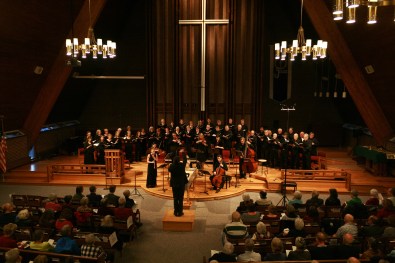
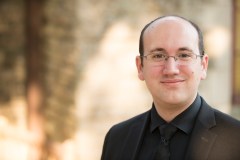
As demonstrated in their 2016–­17 season-opening concert yesterday (Oct. 15), the BBF under music director Zachary Carrettin goes sailing out into Bach’s musical world, looking for new discoveries for players and audiences alike. And usually, like yesterday’s concert, they bring back unexpected treasures.

The performance, given in Boulder’s Adventist Church, was a repetition of a program given Friday evening in St. John’s Episcopal Cathedral in Denver. Titled “Concertos and Chorales Contextualized,” the program explored the many different ways Lutheran chorale tunes were arranged and used as the basis of larger works in the Baroque period (late 1500s to roughly 1750), and also how Bach’s concertos reflected compositional techniques that had been refined through settings of chorale tunes.

Photography by Glenn Ross. http://on.fb.me/16KNsgK

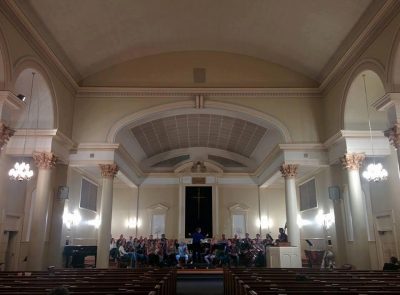
Boulder Bach Festival Chorus and players. Photography by Glenn Ross.

There was music on the program from the early Baroque, starting with a work by the truly obscure Bartholomeus Gesius (1562–1613), through the slightly better known Michael Praetorius (1571–1621), Johann Hermann Schein (1586–1630), and Samuel Scheidt (1587–1654), and culminating with J.S. Bach (1685–1750). (See my preview of the concert here.)

Unfortunately, the space at the Boulder Adventist Church does not lend itself to clarity of the complex counterpoint you find in much Baroque music. This was evident with both the small orchestra assembled for two of J.S. Bach’s concertos, and the Boulder Bach Festival Chorus, which sang several works on the program.

The fault is not with the performers, who sang and played confidently. Carrettin led the program decisively, with a fine sense of style. Nevertheless, works performed from the front of the church were not always as clean as one would wish. Mid- to low-range sounds tended to get murky, and the bass lines were not always clear.

holman-headshot

Organist Christopher Holman

The sound is better when the music originates from the choir loft, at the back of the sanctuary. The choir sounded cleaner and clearer from the loft, and the organ, played splendidly by Christopher Holman, was transparent and at times sparkling.

In spite of any acoustic limitations, it was a thoroughly worthwhile and intriguing program, and may well have been more fully satisfying in the Denver venue.

Before the second half of the concert, Carrettin gave a brief talk on how the word Ach (the German equivalent of “Ahh!”) in Bach’s motet Jesu Meine Freude corresponds to similar exhalations in other cultures and spiritual traditions around the world. This both served to make the music, firmly grounded in north German Lutheran religious practice, more universal, and personified the festival’s motto “Across Time, Across Cultures”—the spirit that underlies the adventurous direction of today’s Boulder Bach Festival.

Three parts of the program were particularly pleasing. The anonymous setting of Ach Gott, vom Himmel sieh darein (Oh God, look down from heaven) for organ was a delightful discovery, with rippling runs and a growing sense of pace. As throughout the concert, Holman’s playing brought the music energetically to life.

Of the two concertos, Bach’s Brandenburg Concerto No. 6 was the best instrumental selection on the concert. A string ensemble with violas at the top of the texture runs the risk of being murky throughout, but the smaller ensemble and careful work by the players mostly overcame the danger. The texture was generally transparent.

The playing by viola soloists Aniel Cabán and Tal McGee was particularly lovely in the slow movement, and the finale romped along with great energy.

dsc-close-action-spalla-1

BBF artistic director Zachary Carrettin with his cello de spalla

A word about the cello da spalla (shoulder cello) that Carrettin introduced in this work. He and Renee Hemsing Patten played two interior parts (originally written for viola de gamba) on this unusual and somewhat awkward looking instrument. When heard individually, they projected a solid, clean string tone, and they obviously filled their parts well. To really judge the instruments, it would be necessary to hear one in a solo role—which Carrettin has planned for the BBF concert Dec. 8 in Boulder and Dec. 9 in Longmont.

The final set of the concert comprised three works for the Christmas season, by Michael Praetorius, J.S. Bach, and Gesius. Each work was pleasing, starting with music sung by a chamber choir, and ending with the Gesius sung in surround sound with a rank of singers in each aisle. This was good program planning: ending with the fullest and clearest choral sound of the concert, and yet another fine discovery brought back from the larger musical world.