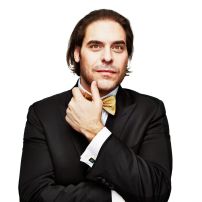
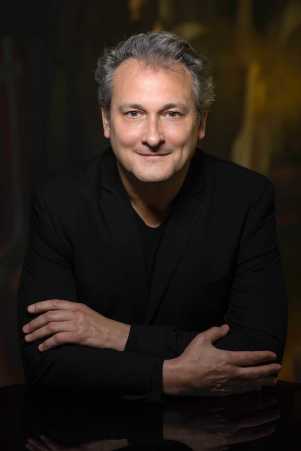
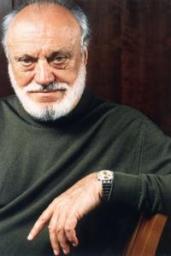
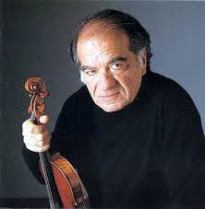
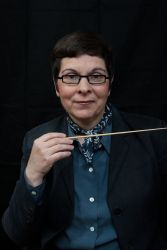
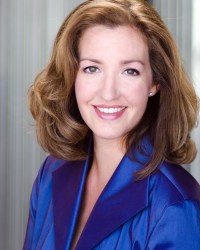
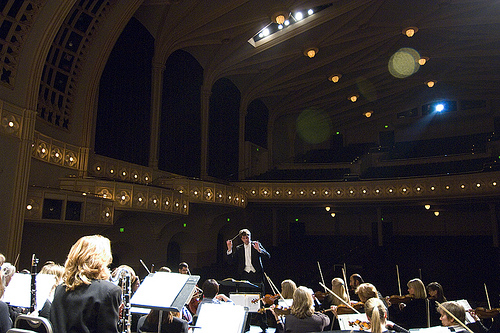
“As a conductor, the role is to help orchestra members . . . . so you’re serving them.”

—David Rutherford, candidate for Music Director of the Longmont Symphony

By Peter Alexander

Each of the four candidates for music director of the Longmont Symphony will conduct a concert during the 2016–17 season. When each candidate visits Longmont, I will take the opportunity to introduce him (and yes, they are all male). The questions will include serious questions about the job of a music director, but also questions that help introduce each of them to the reader. I hope this will give a clearer picture of the strengths of each candidate.
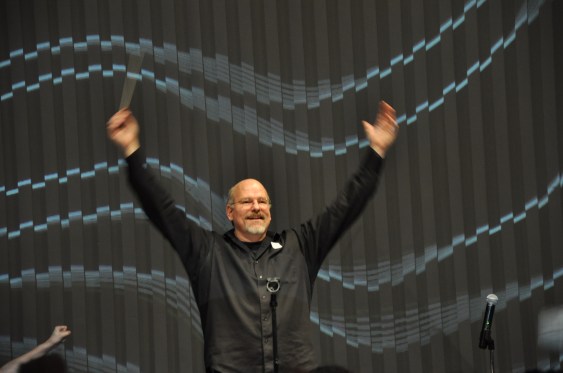
rutherford-energy-3

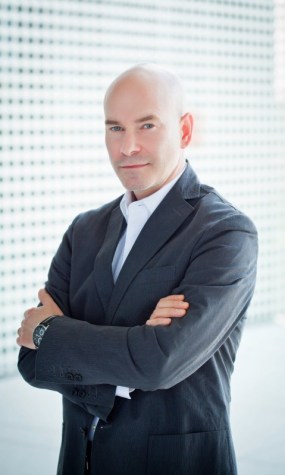
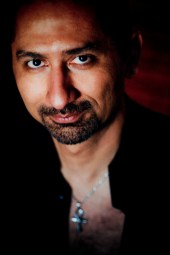
David Rutherford

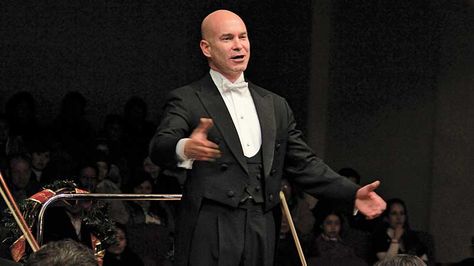
The third candidate, David Rutherford, will conduct the LSO on Saturday, Feb. 25.  Rutherford is well known in Colorado for his position on air with Colorado Public Radio’s Classical Music station, and in Longmont as rehearsal conductor and conductor of family concerts with the LSO.

His program will be: Danzon No. 2 by Arturo Marquez; Five Bagatelles, Op. 23, by Gerald Finzi, with Stephanie Zelnick, clarinet; Symphony No. 2 in D major by Johannes Brahms.

Here are his answers to the questions I asked:

What first attracted you to the Longmont Symphony?

 Years ago [former LSO music director] Bob Olson had programmed the Peter Schickele version of Beethoven’s Fifth where there’s two sports commentators, a play-by-play and a color commentator along with the orchestra, and I got a call to come play one of the commentators. So I came up and did that, and that’s how I first met Bob. There was a need for a substitute rehearsal conductor, and I said, “If you ever need anyone to fill in, let me know.” Bob said “Sure, go ahead and bring him in for a rehearsal.” Bob liked my work, so he asked me to do that again in the next season. He continued to like my work until he was using me exclusively [for rehearsals].

It was never my intent to overplay my role. I was hired as a rehearsal conductor, and that’s what I was. My job was to serve Bob and to serve the orchestra, and to get them ready for him coming in. And I was always really happy in that role.

How do you think about programming for a community orchestra? What would a season of the LSO with David Rutherford look like?

 The audience has to be kept in mind so that they get to hear things that they expect to hear and also get introduced to new works that are worth hearing.  So in any one of my programs you would find familiar and unfamiliar, in a balance that makes sense for that particular program.

A community orchestra is different from a professional orchestra in that these folks aren’t getting paid—or not very much. The reason they’re there is that they want to play—so, programming works for them that they really enjoy playing. Together we can enjoy exploring and making great music together, so that when we’re done with our process and we invite the audience in, sharing music with them and them sharing the experience with us, we all really enjoy what we’re doing.

I like to program in themes, and find music that helps you understand this theme, whatever it might be, in new ways. The nice thing about music is that it helps us understand other experiences. And so music always helps us to understand the rest of our lives.

There have recently been alarm bells for classical music and orchestras, especially the larger orchestras that have had serious labor disputes. Do you think that these problems will affect community orchestras as well? And if not, what do you think are the challenges for the smaller  orchestras?

 I would say that the challenges are very different. Because, once again, this is not a job for [the orchestra members]. Most everybody in a community orchestra is coming from work to something that they enjoy. The people are coming because they really love it and want to make music. And so the orchestra institution in this case exists much more for the players.

In balance, the reason a professional orchestra exists is not for the players, it’s for the audience. In a community orchestra, the orchestra exists in large part just for the players. Now that’s not to say that there is not thought of the audience. In fact, when the audience realizes, ‘Hey, these guys really love it,’ and the music that they’re making is really good, then the audience is brought along for the ride, and together then we become a larger community surrounding this music-making activity.

rutherford-img_3806

David Rutherford

How do you balance and prepare for the various aspects of the conductor’s job: the musical requirements, the social demands with the public, and the diplomatic demands with contributors, the board and musicians?

 Isn’t that the thing about conducting? That it is so multi-faceted, and even when you’re standing up on the podium just doing the conducting thing, there are so many things happening simultaneously. I always describe the conductor’s mind as being in three time zones simultaneously. Because you’re creating the music in your mind ahead of the moment that it happens, and then there is the moment that it happens, and then there’s after it happens you are evaluating what just happened.

That’s analogous to so many things about conducting. Because you’re a cheerleader, you’re an advocate, you’re a disciplinarian, you’re a psychologist, a counselor—and that’s all still just standing on the podium! But then you’re also working with the board, and you’re working with patrons, and you’re working with the audience. And I think what it all comes down to is understanding as a conductor that your role is as a servant in all of these aspects, that you serve the orchestra. As a conductor, the role is to help orchestra members to overcome whatever little issues are here and there, and to come to that point where they can do what they want to do. So you’re serving them.

You’re also serving the audience in helping them to understand what’s going on, and to program in a way that they’re included. And serving the board, making sure that the orchestra that is on stage is the orchestra that the board thinks it is, and that’s a communication issue. So you’re serving the board in giving them the information that they need, and giving them the understanding of the orchestra that they need so that they can continue to do the work that they do. And patrons, in working with them, it’s serving them and trying to figure out how it is that they can understand the orchestra as an asset to our community. It is really the role of a servant in all situations.

About you now: Where did you grow up?

 In two places, but both in Colorado. I was born at Rose Memorial Hospital in Denver, and we lived in Littleton until I was 8, in third grade. We moved up to Grand Lake. So I grew up, really, up in the mountains. I went to elementary school, junior high and high school in Granby, driving that 16 mils every day from Grand Lake to Granby.

Did you come from a musical family?

 My mom played a little piano, my dad played folk guitar, so I know a bunch of old cowboy songs because of him.

I played trumpet in elementary school. In 7th grade I was able to play in the high school band if I switched to horn, so in 7th grade I switched to horn and played all the way through my first year of college. But in high school the big thing is to play in jazz band. So I told my band director, “I want to play in the jazz band!” He sent me home with a book and an electric bass and I started playing in jazz band the next day. That’s how I got started playing bass.
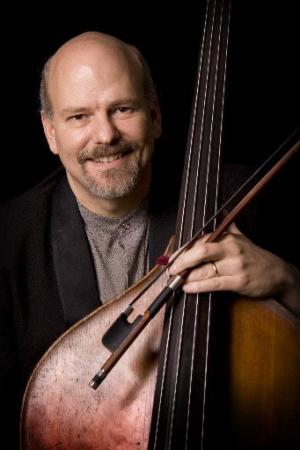
20DNLSOrutherford.jpg David Rutherford, Courtesy photo. David Rutherford

David Rutherford

I went to UNC for the jazz program. But they said, you can’t major in this (miming electric bass), you have to play this (miming upright bass). By the fall of my second year I had really pretty much fallen in love with playing orchestra bass. And so by the time I was a senior I was playing in six orchestras.

Who are your musical mentors?

 First and foremost would be Elza Daugherty, the long-time music education professor at UNC, for his understanding of how it is that we each individually have our own stories and our own connections with music.

Howard Skinner, the long-time conductor of the Greeley Philharmonic and dean of the School of Music at UNC, for his incredible musicality. He was very organized, very professional. I studied conducting with him and he was really amazing—and still is.

And third would be my bass teacher Ed Krolick, who has since passed away. But he taught me to think while I play. He would continually ask you, ‘OK, you just did this. Why did you do that?’ What he’s teaching me is that everything you do in music—that nothing’s left to chance. He also taught me how to play the bass, but he taught me to think while I play.

Are there any conductors today whose work you especially admire?

 You know there’s a lot. I think Andrew Litton really is a terrific conductor. I think John Eliot Gardner is really amazing in  getting what he does out or orchestras. And I really like his approach to that transitional, even late Romantic stuff, the Brahms, the recordings that he’s done with the Romantic & Revolutionary Orchestra. I just think he’s terrific. Yannick Nezit-Seguin is amazing. You could go on and on and on!

Moving on the sillier questions: Do you have a favorite food?

 My favorite restaurant in Denver right now is Café Brazil in Denver. I’ve never been in a restaurant that puts more flavor in its food than Café Brazil. It’s at 44th and Lowell. And so that’s really terrific. I like Asian food. I met my wife when I was living in Hawaii, and I miss the Korean barbecue that’s in Hawaii.

As you know, Colorado is an outdoor recreation state. What is your favorite activity outdoors?

I love to hunt and to hike and to camp. Backpacking is really terrific. I like bicycling. Any excuse I can get to head up into the mountains, because growing up in the mountains—I can’t be a conductor year-round in the mountains, but if I could, I would! I love the fresh air, and when I’m hunting I love being the only person within a mile of where I’m standing. There’s a solitude and a solace and a beauty in the quiet that I miss.

Do you follow any sport or team?

 I am the quintessential fair-weather fan of the Rockies and the Broncos. I don’t always watch.


A star-studded week at CU

By Peter Alexander

It will be a week of superstars in Boulder.

First will be famed Wagnerian soprano Deborah Voigt, presenting her one-woman show Voigt Lessons at Macky Auditorium on Saturday. Then the University of Colorado Boulder’s own superstars, the Takács String Quartet, begin a spring series of concerts in Grusin Hall with some of the stars from the CU Boulder music faculty Sunday and Monday. And next Wednesday, Feb. 22, Yo-Yo Ma presents a concert in Macky that, alas for latecomers, has been sold out for months.

deborah-voigt-4lg-credit-heidi-gutman

Deborah Voigt. Photo by Heidi Gutman.

Voigt’s one-woman show was written for her by Terrence McNally, the Tony-, Obie- and Emmy-award winning playwright, screenwriter and librettist for musicals and operas. A brutally honest retelling of her struggles during her career, the show is, Voigt says, “very much a story about a Midwest girl who turns out to be an international opera diva.”

The script includes songs that are especially meaningful to Voigt — most of them not operatic or art songs. “When people come to the theater, they’re not given a list of songs,” she says. “I want them to be surprised.”

She does reveal that she opens with a Carpenters song, “because I was a huge Karen Carpenter fan, and that’s the music I listened to. There is an art song and a definite nod to opera, of course.”

Voigt Lessons is based in part on Voigt’s 2015 book, Call Me Debbie: True Confessions of a Down-To-Earth Diva. Both the book and the show are remarkably frank about Voigt’s problems with weight, with addictions, and with relationships. “I just wanted to be honest about everything that had happened,” she says.

She’s pretty sure everyone will enjoy the show. “It’s going to be an entertaining evening,” she says. “There are some laughs, maybe a couple of funny expletives, there’s some drama. It’s a very intimate show.”

The Takács Quartet opens its spring series of six concerts performing with percussionist Douglas Walter and clarinetist Daniel Silver, both CU faculty members, Sunday and Monday Feb. 19 and 20. The concert will open with Beethoven’s String Quartet in G major, op. 18 no. 2. Walter will play Michael Colgrass’ Variations for Four Drums and Viola with Takács member Geraldine Walther, and Silver will join the full quartet for Brahms’ Clarinet Quintet in B minor, op. 115.

Takasce SQ

Takacs Quartet. Photo by Keith Saunders.

That pattern of that program — guests from the CU faculty and one Beethoven quartet — will continue in the other concerts this spring. “We are so grateful to have so many talented artists and wonderful people to collaborate with on the music faculty,” Ed Dusinberre, the quartet’s first violinist, says. “This year we decided we would, more than usual, make them a feature of our programming.”

The collaboration with CU faculty is important to the quartet, because it gives them opportunities to perform music that otherwise is difficult for them to put together. “We decided to feature pieces here (in Boulder) that we wouldn’t so easily be able to do on the road,” Dusinberre says.

“When we’re on the road, there’s not a lot of time to rehearse. Those (pieces with CU music faculty) are the sorts of pieces that we wouldn’t typically get together on the road.”

The Beethoven quartets on the concerts form a small sample of the full cycle of the composer’s 16 quartets that the Takacs are playing at Wigmore Hall in London and various places in the U.S. As associate artists of the Wigmore, they were invited to perform the full cycle during the current season.

9780226374369The Beethoven performances also tie in to Dusinberre’s recently published book, Beethoven for a Later Age: Living with the String Quartets, a highly readable personal recollection of Dusinberre’s experiences with the quartets that also provides remarkable insights into the lives of professional quartet players.
The upcoming concerts March 19 and 20 will feature Beethoven’s final String Quartet in F major, op. 135, and Haydn’s String Quartet in F major, op. 77 no. 2. Walther and guests Abigail Nims, alto, and Margaret McDonald, piano, will perform Two Songs for Alto, Viola and Piano by Brahms.

And on April 30 and May 1 the quartet will play Beethoven’s String Quartet in B-flat major, op. 18 no. 6. Soprano Jennifer Bird will perform Chausson’s Chanson perpétuelle with the full quartet and Alexandra Nguyen will perform Clara Schumann’s Three Romances, op. 21, with Dusinberre. That program and the spring concert series will conclude with Schubert’s much-loved “Trout” Quintet, with David Korevaar, piano, and Paul Erhard, double bass.

Read more at Boulder Weekly.

# # # # #

Voigt Lessons
Deborah Voigt, soprano
7:30 p.m.. Saturday, Feb. 18, Macky Auditorium

Takacs Quartet
4 p.m. Sunday, Feb. 19
7:30 p.m. Monday, Feb. 20
Grusin Music Hall, CU Imig Music Building

Tickets

Colorado Music Festival announces its 2017 40th-anniversary season

Beethoven’s Ninth, tributes to the festival’s history will be highlights

Guest artists include CMF founder Giora Bernstein, pianist Olga Kern, Time for Three

By Peter Alexander

Jean-MarieNew1

CMF Music Director Jean-Marie Zeitouni

The Colorado Music Festival will celebrate its 40th anniversary this summer, and music director Jean-Marie Zeitouni has been looking at the festival’s history.

His programs for the coming summer recall the Roman god Janus, looking backward and forward at the same time. “If you look at every series, you will see that they have a commemoration of the past, but at the same time they are moving in a new direction,” Zeitouni says. “I think almost every single work on the program has to do with the history of CMF.”

The full 2017 schedule, opening June 29 and closing Aug. 4, was announced to festival patrons last night (Jan. 22). The season includes Thursday Festival Orchestra concerts, Saturday chamber music concerts, and Sunday Chamber Orchestra concerts, as in past years. In one change from recent seasons, all concerts this summer will be in the Chautauqua Auditorium. With a few exceptions that are noted below, all will begin at 7:30 p.m.

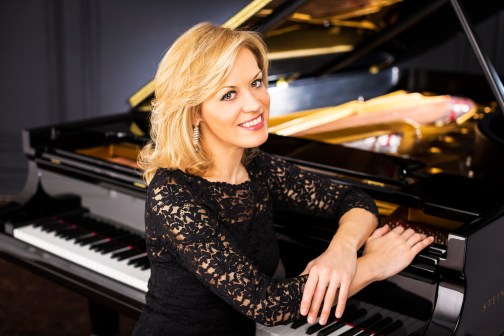
Olga Kern

Olga Kern, photographed by Chris Lee at Steinway Hall, 12/9/13.

As part of Zeitouni’s homage to festival history, long-time  CMF patrons will recognize several guest artists who have been here before:

  • Pianist Olga Kern, who played all the Rachmaninoff piano concertos in two nights during the 2013 Festival, will return to perform with Zeitouni and the Festival Orchestra on opening night, June 29. She will also present a solo recital July 1.
  • The festival’s founder, Giora Bernstein, will return to conduct Mozart and Bach July 2.
  • The popular Time for Three string trio will return to collaborate with Steve Hackman, who led the festival’s “Music Mashup” series for two summers, performing on that series’ successor, now called “Happy Hour @Chautauqua,” July 18.

The summer’s Festival Orchestra lineup is dominated by two massive ninth symphonies:

  • A sure audience favorite, Beethoven’s Ninth will be presented July 13. It will come right in the middle of the CMF calendar, as “a way to mark a certain Apex” of the festival, Zeitouni says. Soloists for the performance will be soprano Mary Wilson, mezzo-soprano Michelle De Young, tenor Jason Baldwin and bass-baritone Keith Miller.

On the same program, De Young will perform Mahler’s Songs of a Wayfarer, and the orchestra will present the North American premiere of A Little Summer Suite by Betsy Jolas.

  • Mahler’s Ninth, the composer’s last completed symphonic work, will form the entire Festival Orchestra program Aug. 3. This concert completes a cycle of Mahler symphonies that was begun by former CMF music director Michael Christie. “The idea is that for the last week of the festival we would do something for the orchestra, and believe me this is a piece that they’ve all been dying to play,” Zeitouni says.

In addition to returning artists listed above, there are a number of notable visiting artists. These include:

  • elina-vahala_vert

    Elina Vähälä

    Finnish violinist Elina Vähälä playing John Corigliano’s “Red Violin” Concerto July 6;

  • Pianists Christopher O’Riley, the host of NPR’s “From the Top,” and Pablo Ziegler playing tangos on the “Happy Hour@Chautauqua” series July 11;
  • Pianist Stewart Goodyear playing Shostakovich’s Piano Concerto No. 1 for piano, trumpet and strings, July 16; and
  • Italian Van Cliburn Competition medalist Benedetto Lupo, playing two Ravel piano concertos July 20. Lupo will be the CMF artist-in-residence for 2017. In addition to the Ravel concertos, he will play a solo/chamber concert with CMF musicians July 22, and a concert with the CMF Chamber Orchestra July 23.
  • Clarinetist Boris Allakhverdyan, a former member of the CMF orchestra and now principal clarinet of the Los Angeles Philharmonic, will perform chamber music with current members of the orchestra July 29, and the Copland Clarinet Concerto on a chamber orchestra concert July 30. The latter, titled “Classically Jazz,” will also feature music by Kurt Weill, Scott Joplin, Leonard Bernstein, George Gershwin and Darius Milhaud.
  • gil-left-2

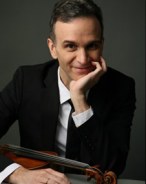
    Gil Shaham

    To round out the summer, superstar violinist Gil Shaham will perform with Zeitouni and the Festival Orchestra for the Festival Finale concert, Aug. 4. One of the most recognized classical artists today, Shaham performs in recital and with orchestras worldwide. In addition to a violin concerto yet to be determined, the program for the Festival Finale will include Beethoven’s joyful and boisterous Seventh Symphony.

# # # # #

Kern’s performances fit nicely into Zeitouni’s plan of commemorating the old alongside the new. On the Opening Night program June 29, Kern will reprise her 2013 performances of Rachmaninoff’s Rhapsody on a Theme of Paganini, but that will be paired with a completely new work for the festival, Prokofiev’s First Piano Concerto.

olga-kern

Olga Kern

The two concertos are part of an all-Russian program, opening with Shostakovich’s brash and colorful Festive Overture and ending with Rachmaninoff’s lushly Romantic Symphony No. 2 in E minor. Both works are part of the festival’s history, but neither has been heard at CMF since the 1990s.

Another example of joining commemoration with new directions will be the CMF’s “mini-festival.” The idea of a series of concerts arranged around a single theme and performed in the same week was started by Christie. Zeitouni brought the model back last year with a Brahms mini-festival. This year, the mini-festival will reflect Zeitouni’s background and specialty: French music.

JMZBowtie

Jean-Marie Zeitouni

“I grew up with the Montreal Symphony playing Ravel and Debussy, so I have a special love for it,” Zeitouni says. “It is repertoire with which I have intimate affinities, but it is also repertoire in which the orchestra is allowed to shine.”

The mini-festival of French music comprises three concerts, July 20–23:

  • A Festival Orchestra concert July 20, featuring Debussy’s impressionist scores Prelude to the Afternoon of a Faun and Iberia; Lupo playing Ravel’s Concerto in G and Concerto for the Left hand; and the orchestral showpiece La Valse.
  • A chamber music concert July 22 will feature Lupo playing a half-recital of Debussy’s music for solo piano, followed by Fauré’s Quartet No. 1 for piano and strings with CMF musicians.
  • The July 23 chamber orchestra concert will present some little known works by Fauré, Dukas, Saint-Saëns and Cecile Chaminade, with orchestra members as featured soloists. The concert will end with music from Offenabch’s saucy comic opera Orpheus in the Underworld.

# # # # #

One new feature of the festival will be “Symphony Sampler” concerts, a series of abridged repeats of Thursday night Festival Orchestra programs presented Fridays at 6:30 p.m. July 14, 21 and 28. These informal concerts will offer only one or two major works from the previous night’s full program, with Zeitouni presenting an introduction to the music for people who might be new to classical performances. The early start time and shortened program leave time for a post-concert dinner, either at the Chautauqua Dining Hall or elsewhere in Boulder.

christopher-oriley

Christopher O’Riley

Another modification of past summers appears with the “Happy Hour@Chautauqua” events, Tuesdays July 11, 18 and 25. An outgrowth of previous Music Mashup events, these concerts are designed to bring classical and popular music together. Presented without intermission, each concert will be preceded by a “happy hour” offering complementary food and drinks.

After performances by pianists Christopher O’Riley and Pablo Ziegler July 11, and Time for Three July 18, the series culminates with Hackman conducting an all-new mashup with the orchestra July 25. Unlike Hackman’s previous scores for CMF, this will not feature just one classical work or pop group, but under the title “Classicalapalooza” it will being together music by various artists from both genres.

The 2017 Click Commission winner by composer Julian Wachner will be performed on the Festival Orchestra concert July 27, along with Scriabin’s Poem of Ecstasy (1908) and The Planets by Gustav Holst (1914–15). There will be little other new music during the summer, however: Corigliano’s Red Violin Concerto from 1997 will be performed on an American program July 6 and Jolas’s Little Summer Suite will precede Beethoven’s Ninth Symphony July 13, but no other works later than the middle of the 20th century are on the schedule.

header-logo

This is only a summary of the full 2017 CMF calendar. A complete listing of the summer’s concerts and ticket information can be found on the CMF’s newly redesigned Web page. Tickets will go on sale to the general public March 20, including season subscriptions, ticket packages and single tickets.

“The role of an orchestra is to reflect the values of the community, just as it is to open doors and windows to the rest of the world.”

—David Handel, candidate for Music Director of the Longmont Symphony

By Peter Alexander

Each of the four candidates for music director of the Longmont Symphony Orchestra will conduct a concert during the 2016–17 season. When each candidate visits Longmont, I will take the opportunity to introduce him with serious questions about the job of a music director, as well as questions that help introduce each of them to the reader. I hope this will give a clearer picture of the strengths of each candidate.

media-6539-m-ee591c19-9240-11e6-844c-22000a5b8733-161014194807

David Handel

The second candidate, David Handel, will conduct the orchestra on Saturday, Jan. 28. The following works are on the program: George Frideric Handel’s Overture to Music for the Royal Fireworks, Mendelssohn’s Violin Concerto with violinist Geoffrey Herd, and the Symphonie Fantastique of Hector Berlioz.

Here are his answers to the questions I asked:

PA: What attracted you to the Longmont Symphony?

DH: There are announcements of these music director positions, and you don’t apply if you’re not interested. And the first thing to do is to investigate the orchestra. I had not heard about the orchestra before, so I investigated online, and I was impressed. And what most impressed me was when I looked for them on YouTube, and I was surprised that a community this size had an orchestra that performed on that level.

The LSO clearly possesses a professional mentality and level of accomplishment, but with a community spirit. I can only imagine that this is due to Robert Olsen’s leadership over 34 years, and the human qualities of the LSO musicians. [Because of] my background and considering my passion for orchestra building, to say nothing of the unique demographics of Longmont and the combined communities’ potential for growth, I thought that this might be a good fit.

How do you think about programming for a community orchestra? What would a season of the LSO with David Handel look like?

It’s precipitous to give you a clear idea. I think before you can structure a season you really need to dig your hands in and get them dirty and get to know the people, their preferences and the different elements in the community.

When you program a season, you really want to be thinking about what’s the makeup of that community. Otherwise, there’s no way you can achieve being relevant to the community and participate in a dynamic dialog with the contents of the community. So that’s essential. I would say that that the role of an orchestra in its programming is to reflect the values of the community as a whole, just as it is to open doors and windows to the rest of the world.

The programs I’ve seen of the orchestra in past years has been very traditional, and there’s nothing wrong with that at all— you don’t want to alienate the public. But at the same time, you want to provide an opportunity to the musicians in the orchestra, because they do it because it’s their passion, and to the public, because they’re thrilled to appreciate the art of members of their community. So you want to achieve the right balance between opening doors and windows, and performing what people in this community love.

There have recently been alarm bells for classical music and orchestras, especially the larger orchestras that have had serious budget issues and labor disputes. Do you think that these problems will affect community orchestras as well? And if not, what do you think are the challenges for the smaller orchestras?

director-david-handel-orquesta-sinfonica_lrzima20111221_0007_3

Conductor David Handel

I think that’s a really interesting question, because I think that in the United States, the community and regional orchestras are really the future of live classical music. They can be more flexible, in terms of the number of programs they present in a year, in terms of making decisions about institutional priorities.

Second, if you look at the enormous orchestras, like the New York Philharmonic, which probably has a $100 million dollar budget, or Buffalo Philharmonic, which has a barely $10 million budget, the issues that they confront of maintaining a staff adequate to meet the needs of the administration are just insane in relation to what an orchestra does. By way of example, the Chicago Symphony up until the 1950s had an administrative staff I think of just five or 10 people. Today, their administrative staff is larger than the orchestra, just to find the money to sustain themselves. So those kinds of organizations are perceived as unhealthy. But of course they can continue on, some better than others, because there is so much wealth concentrated in that community.

On the other end of the spectrum, the community orchestras, which can perform on a very high artistic level, don’t depend on such enormous budgets. They are also linked to the community on a human level—in other words, it’s not just 90 musicians onstage in a city of 10 million people. It may be a community of 100,000, and 90 people onstage that they’re going to see in the restaurants and cafes and diners in their community. In that sense, I think regional and community orchestras are better positioned than the big corporate orchestras.

How do you balance and prepare for the various aspects of the conductor’s job: the musical requirements, the social demands with the public, and the diplomatic demands with contributors, the board and musicians?

I’m the music director of two orchestras, and balancing those demands obviously is critical. I would say principle number one is that you’re not a politician, and by that I mean you’re not there to manipulate and you’re not there to articulate any political perspective. Your group of people, whether it’s the board, the orchestra itself, or the public will have people from every segment of the political spectrum. As the face of the organization, it’s not your job to take a position and suggest that your values reflect the public’s values, the orchestra’s values, or the board’s values.

The number one priority is artistic excellence, and it doesn’t matter whether it’s a professional, semi-professional, or amateur orchestra: all of the people who are performing on stage, every one of them wants to participate in a magical, artistically rewarding experience.

Also part of the balancing act is that your job is to be able to synthesize the values of the board of directors, the musicians and the community, and intuit a vision for the organization, from day one looking five years down the road.

Another element is that to conduct well, you need to somehow be a natural leader. There are all kinds, but you have to somehow have that capacity of persuasion. One of my teachers coined a phrase: the impulse of will. Beyond this part (waving his arms), which is traffic management, you have to be able to project what it is you want. That goes to the rehearsal and the performance, just as it does to the board meeting.

And being a music director means being in some way a brother, an uncle, a father. I can’t tell you how many weddings and funerals that I’ve been to, and that’s been tremendously rewarding for me.

About you, now: Where did you grow up?

I’m from Buffalo New York, until I was 16, and then I went to the University of Michigan in Ann Arbor. I loved it there. I just had wonderful teachers.

Did you come from a musical family?

Yes and no. I’m an adopted child, but I know my biological family. They are all artists—painters and singers and composers. My biological mother taught painting, and they were beatniks! They were crazy people, so I’m glad they offered me up for adoption. I had the most wonderful (adoptive) parents you could dream up. They don’t have a musical background but they are music lovers, so I had the good fortune of having a subscription to the Buffalo Philharmonic from the time I was 10, and started violin at 6. They supported every artistic interest and instinct I had.

masur-kurt-117Who are your musical mentors?
There are a lot of them, but the main mentor was Kurt Mazur, since I served as his assistant conductor. That made a huge impact on me.

Also [violinist] Ruggiero Ricci. At one point my father wanted to put his foot down and say, ‘David, Handel cannot be a musician!’ [laughs] You need to do something serious.’ So I picked up my bike, got on a greyhound bus. I called Ricci and said, this is my situation. He said, ‘Come stay with me,’ so I stayed with him, and the great thing was I had lessons all the time! Then Ricci called my father, and my father felt it was good counsel. He understood.

ricci

Ruggiero Ricci

An additional mentor was Gustav Meier, recently deceased and the dean of conducting teachers in the U.S., a former Bernstein assistant.

Are there any other conductors whose work you especially admire?

The list is long. Wilhelm Furtwangler—his interpretive mind was always working and was very creative. Leonard Bernstein, of course. Colin Davis, Wolfgang Sawallisch, Riccardo Muti—a lot his repertoire is very exciting. Carlos Kleiber of course.

Moving on to some less serious questions: Do you have a favorite food?

I am a foodie, but it’s not just one favorite. I like lots. I love Mexican food—who doesn’t? I love French sauces, I love Russian food. You don’t see many Russian restaurants but its really, really tasty. My wife is from Turkmenistan, a central Asian country, so I like central Asian cuisine. I like sushi. I’m an omnivore.

I eat out on the road, and I love culinary adventure, but at home I love to cook. I think that every conductor thinks of himself as a chef.

As you know, Colorado is an outdoor recreation state. Do you have a favorite activity outdoors? Or are you too busy shut up in your studio studying scores?

I suppose my two favorites are skiing and canoeing. So when you asked about why the Longmont Symphony, that’s a perk.

Do you follow any sport or team?

You know I really don’t follow sports, but if the Buffalo Bills are playing or Michigan is playing, then I take an interest. That has more to do with loyalty than a particular interest. Otherwise, I love baseball, in part because the rules of the game allow for human nature—stealing bases! And because the pitcher’s role is so dynamic. And the rhythm of the game, fast, slow, fast.

Pro Musica Chamber Orchestra gives worthy performance of important music

By Peter Alexander

Denver and Boulder audiences have much for which to thank Cynthia Katsarelis and the Pro Musica Colorado Chamber Orchestra.

cynthia-katsarellis-2

Cynthia Katsarelis

Friday night in Denver and last night in Boulder (Jan. 20 and 21) they presented Shostakovich’s Symphony No. 14. This somewhat gloomy meditation on death is not often given live, partly because of the difficult assignments facing the soprano and bass soloists, but mostly because of the difficult subject matter. But it is a major statement from a great composer—what Katsarelis calls “a piece that needs to be heard”—and so the rare performances are to be treasured.

For the most part, then, Katsarelis and the Pro Musica gave us a worthy performance of an important piece. The soloists, soprano Jennifer Bird-Arvidsson and bass Ashraf Sewailam, sang with deep expression and careful attention to the texts. They ably handled the Spanish, French and German of the original poetry by Garcia Lorca, Apollinaire, Rilke and Wilhelm Kuchelbecker.

bird-7998-copy-6

Jennifer Bird-Arvidsson

Bird-Arvidsson was bright and incisive from her first entrance. She enticed expression from the chant-like phrases, especially in the haunting movement on Apollinaire’s Le Suicidé. Sewailam sang the more brooding texts with great weight and power. At times his notes seemed more placed that phrased, and his sound was rough in the lowest range. Both singers were appropriately dramatic in the dialogue portions of the text.

The orchestral music reflects and amplifies the words of the texts. Katsarelis and the players capably managed the many swings of mood, from deep gloom to poignant sadness to sardonic despair, and provided the singers with expressive and well balanced support.

sewailam-a-headshot

Ashraf Sewailam

The Pro Musica strings provided a meaty and resonant sound, while the two percussionists capably provided the precise punctuation points the score requires. The lower strings were particularly weighty, and the duo between Bird-Arvidsson and the solo cello at the beginning of the fourth movement provided one of the evening’s high points.

Alas, last night’s Boulder performance was marred by what seemed to be noisy air handling at the First United Methodist Church. (I did not hear it in Denver.) The performers did their professional best to not be distracted, but for listeners the noise unavoidably covered musical details and moments that should slowly die into silence. It was equally distracting when the sound suddenly stopped in the middle of a movement. I have never heard this before in the many performances I have attended in this venue; it was most unfortunate for it to happen in any concert, and even more so in a piece that builds so much out of silence.

The concert ended with Schubert’s Fifth Symphony, selected by Katsarelis as a frolicking antidote to Shostakovich’s morbid meditations. For me, this was less successful; whether it was the boomy acoustics in the shoe-box-shaped sanctuary, or the ghost of Shostakovich still haunting the room, the performance was heavy-footed when it should be fleeting. The orchestra, otherwise well balanced, often sounded bottom heavy and murky in the middle register. The winds and upper strings sparkled, but could not always cut through the texture.

Nonetheless, the symphony was played with enthusiasm and a sense of fun. It was well paced from beginning to end, and clearly left the audience in a happier place than where Shostakovich had left them.

# # # # #

As a final thought, the room acoustics and the noisy air handling in the church both serve to point to Boulder’s need for an easily available, acoustically superb, professionally managed concert hall. Many performances take place in churches, and both the performing groups and the churches are to be thanked for their creativity. But such performances are always compromises in one way or another. The performers deserve our gratitude for the musical riches they provide, but they also deserve better performance conditions.

Edited for clarity 1.22.17

From opposite ends of the spectrtum

Pro Music Colorado offers “Love and Death” through Schubert and Shostakovich

By Peter Alexander

The next concert from the Pro Musica Colorado Chamber Orchestra and conductor Cynthia Katsarelis will bring together two opposing worlds.

silver Gelatin Print

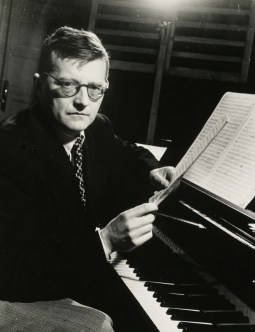
Dmitri Shostakovich

The concert, titled “Love and Death,” will be presented Friday in Denver and Saturday in Boulder. There are only two works on the program: the Symphony No. 14 by Shostakovich, a vocal-orchestral meditation on death; and Schubert’s frolicsome Symphony No. 5. Soloists for the Shostakovich, singing poetic texts by Federico García Lorca, Guillaume Apollinaire, Wilhelm Kuchelbecker and Rainer Maria Rilke, will be soprano Jennifer Bird-Arvidsson and bass Ashraf Sewailam.

The two works come from the opposite ends of the emotional spectrum. “Right, and that’s by design,” Katsarelis says. “The Shostakovich is really intense, and you don’t want to leave people on their own at the end of this piece. The Schubert is a sublimely beautiful feel-good piece, and it will be a good antidote to the emotional intensity of the Shostakovich.”

Read more at Boulder Weekly.

# # # # #

bird-7998-copy-6

Jennifer Bird-Arvidsson

“Love and Death”
Pro Musica Colorado Chamber Orchestra, Cynthia Katsarelis, conductor
Jennifer Bird-Arvidsson, soprano, and Ashraf Sewailam, bass

Shostakovich: Symphony No. 14
Schubert: Symphony No. 5

sewailam-a-headshot

Ashraf Sewailam

7:30 p.m. Friday, Jan. 20, First Baptist Church, 1373 Grant St, Denver
7:30 p.m. Saturday, Jan. 21, First United Methodist Church, 1421 Spruce, Boulder

Tickets

Butterman and Boulder Phil shine in Romantic program

Brahms, Schumann and Dame Ethel Smyth were on the bill

By Peter Alexander

bpo-macky-3

Michael Butterman and the Boulder Philharmonic

In a program of Romantic and very late Romantic music, the Boulder Philharmonic sounded as good last night (Jan. 14) as I have ever heard them.

Most satisfying were two works from the heart of the Romantic era, Brahms’s darkly brooding Tragic Overture of 1880, and Robert Schumann’s Symphony No. 4 in D minor from 1851. These are pieces that suit the orchestra and its conductor, Michael Butterman, particularly well, and they both received warm, suitably emotive interpretations. The third work on the program, Ethel Smyth’s stylistically Romantic Concerto for Violin and Horn, composed in the 1920s, was a more complicated case.

The concert began with the Tragic Overture. A work that reflects the composer’s famously dour persona, it was nonetheless an effective opener. The sound was warm and plush from the very first note. The texture was clean and well balanced—a testament to the quality of players and Butterman’s preparation—even in the contrapuntal passages. Butterman controlled the momentum carefully, doing with interpretation what larger orchestras would do with weight of sound.

ethel-portrait-crop

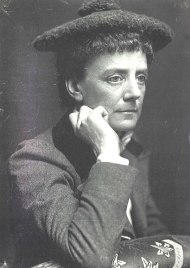
Dame Ethel Smyth

Smyth’s Concerto is an interesting hybrid, a concerto for two instruments that seem not well matched in sound and character. It veers nervously from one musical idea to another, and from concerto to chamber music textures and back. At times one or the other soloist seems relegated to a secondary role, or even blends into the orchestra, while the other takes the spotlight.

Smyth seems to gradually get a handle on the combination. By the final movement they are sharing themes, playing together, and trading motives much more fluidly. Except for an overlong exit from their written-out cadenza, this is the most successful movement.

Frautschi-1-high-res.jpg

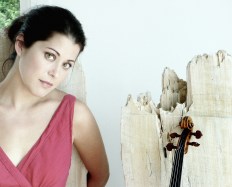
Violinist Jennifer Frautschi

Soloists Jennifer Frautschi on violin and Eric Ruske on horn are outstanding players who had their parts well under control. Still, this may be a piece better heard in recordings, where the soloists can be electronically balanced. Certainly that was my experience; I was sitting on the left front of the house, looking straight into the bell of Ruske’s horn. There were times that was all I could hear, and Frautschi’s violin playing was muffled in comparison. I imagine that the balance was better farther back, or in the center of the hall.

Ruske-MattDine2_zps06350226.jpg

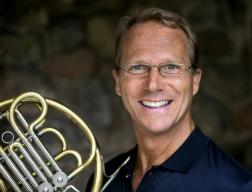
Horn player Eric Ruske

Considering that handicap, I hesitate to say more about the performance, except to note that Frautschi, Ruske and orchestra filled Macky with lovely sounds. The end of the slow movement and the shared material in the finale struck me as particularly enjoyable. The audience responded warmly.

The orchestra was again well balanced in the Schumann symphony. Some over-enthusiastic tympani playing in the first movement added punch to climactic moments, but at the cost of hearing full chords. The surging lines in the lower strings, a critical element of the score, were played with great momentum and richness of sound. The beautiful duo between cello and oboe in the slow movement was particularly effective.

Butterman responded well to Schumann’s sometimes mercurial moods, and controlled the musical flow to bring the symphony to a rousing conclusion. The enthusiasm of the audience was well earned.

The symphony was the first Schumann Butterman has programmed with the Phil. On the evidence of last night’s performance, he should do more; perhaps an orchestra that relishes portraying nature through sound will bring us the “Spring” Symphony in a future season.

Surveying a year of losses

A list of some of who will be long remembered for their contributions to music

By Peter Alexander

Compiling the annual list of musicians we lost in this past year reminded me of a headline from a book of “Flubs from the Nation’s Press”: “Lucky Man Sees Pals Die.”

All of life is kind of like that: if you survive, you have the dubious privilege of watching others die. But 2016 raised that to a higher level, as we lost many great musicians, actors, and other public figures, including literal as well as the figurative nobility of the music world. Most of us didn’t know them personally, and yet we felt personally touched by their work.

Here is my annual list of classical musicians who have passed, and some great popular figures as well. As always, it is a list that reflects my personal interests; you are more than welcome to remember in the comments any others whose loss you will feel.

Dec. 31, 2015: Natalie Cole, the daughter of Nat King Cole and a great singer in her own right, who died at the very end of 2015, after last year’s survey was published, 65

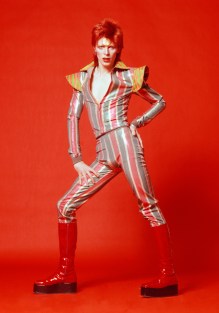
david-bowie-tom-lorenzo-site-1

David Bowie, in one of his many incarnations

Jan. 5, 2016: Pierre Boulez, one-time enfant terrible of the musical avant-garde who called for the destruction of all art from the past, but later became one of the most distinguished conductors of the time, 90

Jan. 10: David Bowie (aka “Ziggy Stardust”), the chameleon man of popular music, a songwriter, singer and actor who released his last album two days before his death, 69

February 4: Leslie Bassett, American composer and distinguished professor at the University of Michigan, 93

February 14: Steven Stucky, Pulitzer-Prize winning composer and composition teacher at the Aspen Music Festival, Cornell University, and the Juilliard School, 66

March 5: Nikolaus Harnoncourt (born Johann Nikolaus Graf de la Fontaine und d’Harnoncourt-Unverzagt), founder of the period-instrument ensemble Concentus Musicus Wien and highly respected conductor, 5 March, 86

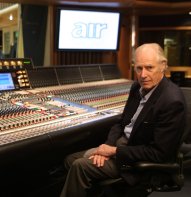
george_martin

Sir George Martin

March 8: Sir George Martin, the record producer who recognized the potential of the Beatles when others had turned them down, sometimes called “The Fifth Beatle,” 90

March 14: Peter Maxwell Davies, English modernist composer, openly gay and an avowed environmentalist who lived for many years in the remote Orkney Islands, 81

March 20: Keith Emerson, English keyboardist known for his rock arrangements of classical music, one third of the progressive rock band Emerson, Lake & Palmer, 71

April 6: Merle Haggard, one of the mainstays of an entire generation of country singers, known for “Okie from Muskogee” (among other songs), who once sang “If God doesn’t live in Colorado/I’ll bet that’s where He spends most of His time,” 79

April 21: Prince Rogers Nelson, flamboyant American singer/songwriter who was one of the most eclectic and prolific musicians of his lifetime, 57

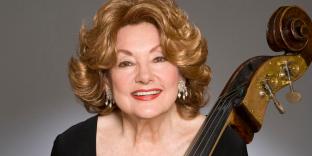
janelittle_020316

Jane Little

May 15: Jane Little, diminutive (4’ 11’’) bass player with the Atlanta Symphony for an amazing 71 years, who collapsed onstage during a performance, 87

June 4: Phyllis Curtin, American soprano long associated with the New York City Opera, who also sang at the Chicago Lyric, the Metropolitan, and major houses world wide, 94

July 12: Gregg Smith, choral conductor who championed the work of American composers and director of the Gregg Smith Singers, 84

July 27: Einojuhani Rautavaara, Finnish composer of works in most classical genres, including operas, symphonies, choral works, and chamber music, 87

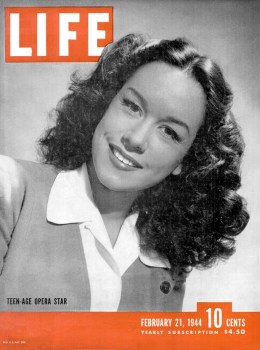
patrice-munsel-life-1944

Patrice Munsel on the cover of Life, 1944

August 4: Patrice Munsel, coloratura soprano who was the youngest singer ever to appear in a leading role at the Metropolitan, at the age of 17, 91

August 22: Toots Thielemans (born Jean-Baptiste Frédéric Isidor, Baron Thielemans), Belgian-American jazz musician, known for playing harmonica and guitar, and whistling, 94

October 2: Sir Neville Marriner, famed conductor and founder of the Academy of St Martin in the Fields chamber orchestra, 92

October 8: Peter Allen, for 19 years the voice of the Saturday afternoon Metropolitan Opera radio broadcasts, 96

November 6: Zoltán Kocsis, Hungarian virtuoso pianist and conductor, 64

November 7: Leonard Cohen, Canadian poet and novelist, later a singer and songwriter as well as painter, composer of the iconic and often covered song “Hallelujah,” 82

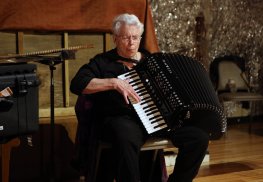
28oliveros-obit-superjumbo

Pauline Oliveros

November 24: Pauline Oliveros, American composer and accordionist, an influential figure on the West-coast experimental and electronic music scene, 84

November 26: Russell Oberlin, American countertenor and founding member of the pioneering early-music group New York Pro Musica Antiqua, 88

December 15: Karel Husa, Czech composer who lived and taught in the U.S. for many years, winner of the Pulitzer Prize and Grawemeyer Award, among other honors, 95

December 21: Weston Noble, renowned music educator, conductor of the Luther College Nordic Choir for 57 years and the Luther College Band for 25 years, 94

December 23: Heinrich Schiff, a highly distinguished Austrian cellist and conductor, 65

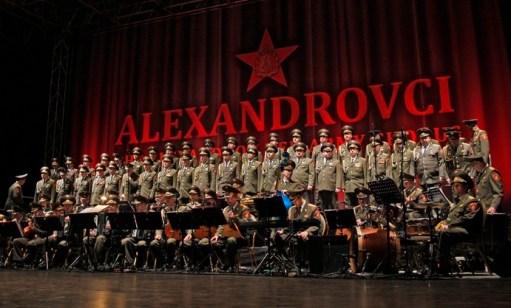
alexandrovci

The Alexandrov Ensemble

December 24: Valery Khalilov and 63 other members of the Alexandrov Ensemble Russian Army Chorus, killed in a crash of a Tu-154 jet off the coast of the Black Sea

December 25: George Michael (born Georgios Kyriacos Panayiotou), English popular singer, songwriter and record producer, 53

NOTE: Edited to correct typos, 1 Jan. 2017.

The Boulder Bach Festival presents a journey of exploration in Longmont

By Peter Alexander

Last night’s concert presented by the Boulder Bach Festival at Longmont’s Stewart Auditorium (Dec. 10, “Journey to Vienna with Mario Aschauer and Friends”) represented an ideal combination of repertoire, instruments and performance space.

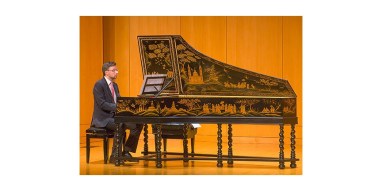
mario-aschauer

Mario Aschauer

The concert featured Aschauer, a musicologist and performer on the faculty of Sam Houston State University in Texas, on harpsichord; Zachary Carrettin, the artistic director of the Boulder Bach Festival, playing Baroque violin and the cello da spalla (“shoulder cello,” a small cello played on the shoulder, like a cross between violin and guitar); and the bright, clear voice of soprano Jennifer Bird-Arvidsson. The program comprised music from the late 17th and early 18th Imperial Court in Vienna, including pieces for harpsichord alone, a sonata for violin and harpsichord, and arias from operas written for court occasions,

Most of the music was discovered by Aschauer in Viennese archives. It had been performed at the court and then set aside, making last night’s concert the modern and U.S. premieres of several pieces. The composers included the Hapsburg Emperor Leopold I as well as court composers George Muffat and his son Gottlieb, Attilio Ariosti, Antonio Caldara and Johann Joseph Fux.

The light and transparent sounds of the harpsichord and Baroque strings fit the repertoire perfectly, as did the lively, intimate space of Stewart Auditorium. Textures were clear and the audience was close enough to hear nuances that easily could be lost in larger halls. The program was presented with passion and an almost sensuous care for the sound. In short: this was as good an argument as you will hear for historical performance practice as a gateway to the sound world of the past.

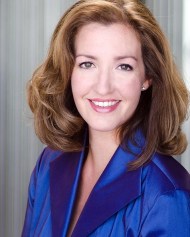
jennifer-bird-arvidsson

Jennifer Bird-Arvidsson

The entire program was both unfamiliar and fascinating. The arias were sung by Bird-Arvidsson with a seamless flow and elegant phrasing that was nicely matched by Aschauer and Carrettin in their obbligato accompaniments. Their committed advocacy for the music suggests that this unknown vocal repertoire is worthy of further exploration.

Of the instrumental works, Georg Muffat’s Sonata for Violin was strikingly strange, with passages of more or less normal Baroque phrases interrupted by sudden and unexpected  harmonic deviations. With the weirdness clearly brought out by the scoring, one wonders: was Muffat showing off for his imperial employer? It is certainly a piece that keeps both performers and listeners engaged.

Aschauer played a Plainte by Gottlieb Muffat in memory of the scholar Allison Dunlop, who tragically died just after completing a groundbreaking study of the composer. He performed this strange little lament with great feeling.

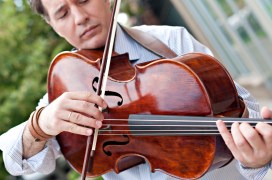
dsc-close-action-spalla-1

Zachary Carrettin with his cello da spalla

Carrettin introduced his cello da spalla to the audience, explaining how it might have been used in Baroque times, and why the instrument disappeared in the later 18th century. Built to order and based on historical models, his is a one-of-a-kind instrument that Carrettin admitted he is still learning. When played with vigor, it produces a gruff, dark sound, but Carrettin showed that it is also capable of more lyrical expression.

With this program, the Boulder Bach Festival has continued its theme using Bach “as a compass,” as Carrettin says, while exploring the musical past with fresh eyes and ears. Aschauer, Carrettin and Bird-Arvidsson made the “Journey to Vienna” one to be relished.

It will be ukuleles and a witch for the holidays

By Peter Alexander

Ah, the holiday season. That wonderful time for your favorite carols, colored lights, egg nog and — ukuleles?

Sure enough, it’s all part of the eclectic mix of holiday music on the Boulder classical scene, featuring not only the Ukulele Orchestra of Great Britain, but also Elphaba from the Broadway hit Wicked, alongside other events that have become part of the annual December concert schedule. The perennial best-sellers — the Nutcrackers and the CU Holiday Festival — are already behind us, but there is still plenty of music to look forward to.

ukulele7-2787x1858

The Ukulele Orchestra of Great Britain

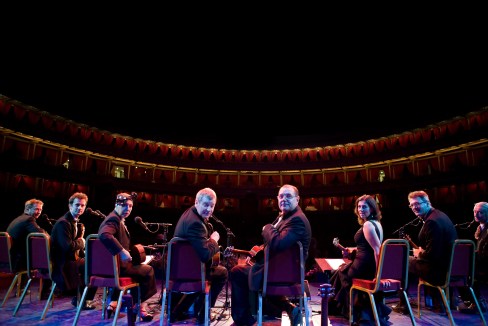
The Ukulele Orchestra of Great Britain will be at Macky Auditorium Thursday (7:30 p.m. Dec. 8) as part of the CU Presents series. Known for their iconoclastic, not to say wacky, programming, the group promises to perform their usual combination of rock and pop covers, including music from Joni Mitchell and Pharrell Williams, some jazz and country songs, and classic Christmas carols.

roscioli_web

Dee Roscioli

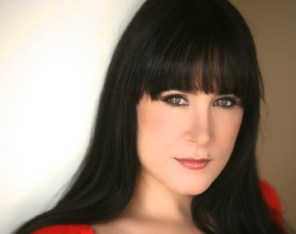
The Wicked Witch of the West sneaks into the Christmas schedule with the Boulder Philharmonic Orchestra, who are presenting A Wicked Good Christmas Saturday in Macky (7:30 p.m. Dec. 10). Scott O’Neil will conduct the performance, which will feature vocalist Dee Roscioli, who played the role of Elphaba in the Broadway and national touring productions of Wicked, and the Fairview High School Festival Choir.

Read more at Boulder Weekly.

# # # # #

Holiday Events in Boulder

Ukulele Orchestra of Great Britain
7:30 p.m. Thursday, Dec. 8
Macky Auditorium
Tickets

A Wicked Good Christmas
Boulder Philharmonic Orchestra, Scott O’Neil, conductor, with Dee Roscioli, vocalist
7:30 p.m. Saturday, Dec. 10
Macky Auditorium
Tickets

dec-2015-bc-w-bcc-pan-crop

Boulder Chorale and Children’s Chorus

A Thousand Beautiful Things
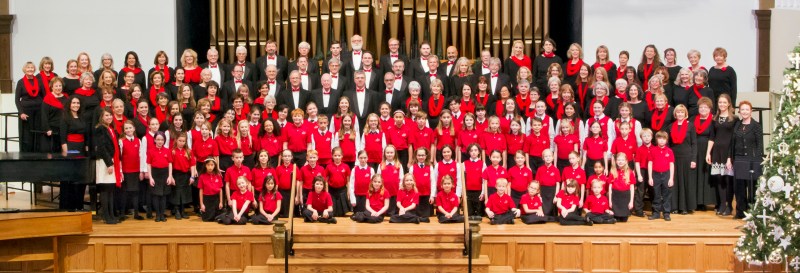
Boulder Chorale, Vicki Burrichter, conductor, and the Boulder Chorale Children’s Chorus
7 p.m. Friday, Dec. 9, and 4 p.m. Sunday, Dec. 11
First United Methodist Church, 1421 Spruce St., Boulder
Tickets

harris-harp

Kathryn Harms

Christmas with Ars Nova
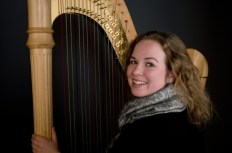
Ars Nova Singers, Thomas Edward Morgan, conductor, with Kathryn Harms, harp.
7:30 p.m. Friday, Dec. 9 and 3 p.m. Sunday, Dec. 11
St. John. Episcopal Church, 1419 Pine St., Boulder

2 p.m. Saturday, Dec. 10
Bethany Lutheran Church, 4500 E. Hampden Ave., Cherry Hills Village

Tickets

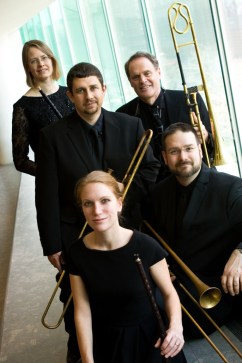
dark-horse-686x1030

Dark Horse Consort

Ein Kind geborn zu Bethlehem: Christmas Music of Praetorius
The Seicento Baroque Ensemble, Evanne Browne, conductor, with the Dark Horse Consort.
7:30 p.m. Saturday, Dec. 10
First United Methodist Church, 1421 Spruce, St., Boulder
Tickets

Candlelight Concert
Longmont Symphony Orchestra, David Rutherford, conductor
7:30 p.m. Thursday, Dec. 15
Westview Presbyterian Church, 15th and Hover, Longmont
Tickets