Boulder Symphony launches “Love’s Arrow” straight at the heart

Concert performance of Bizet’s Carmen is a big undertaking

By Peter Alexander

The Boulder Symphony enters new territory this week.
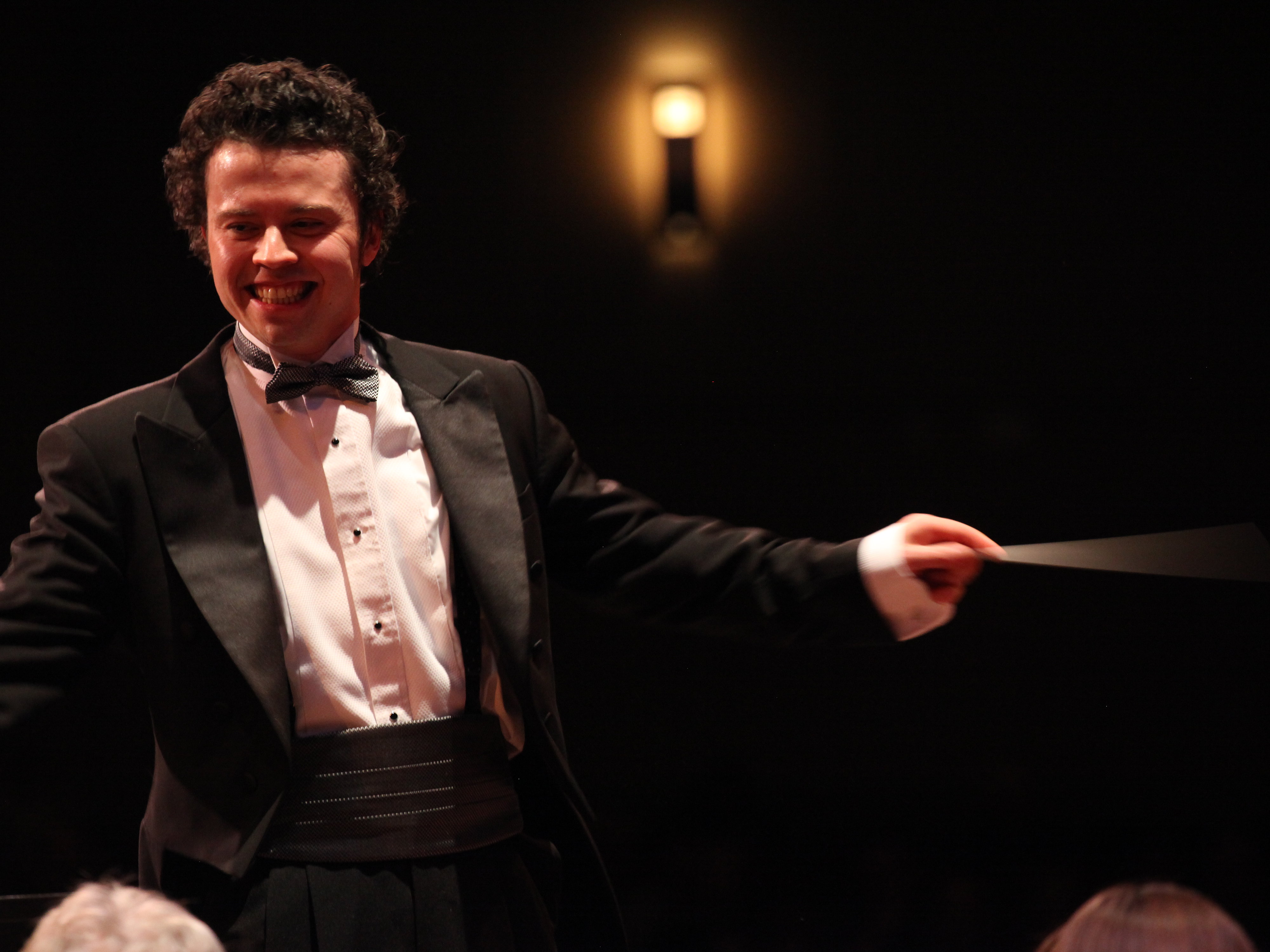
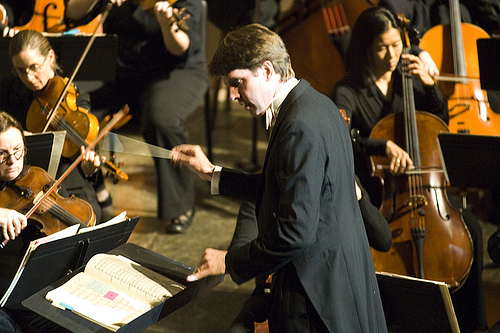
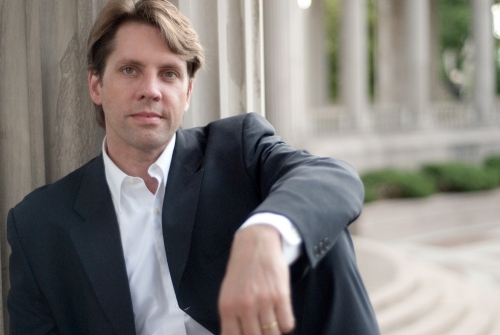
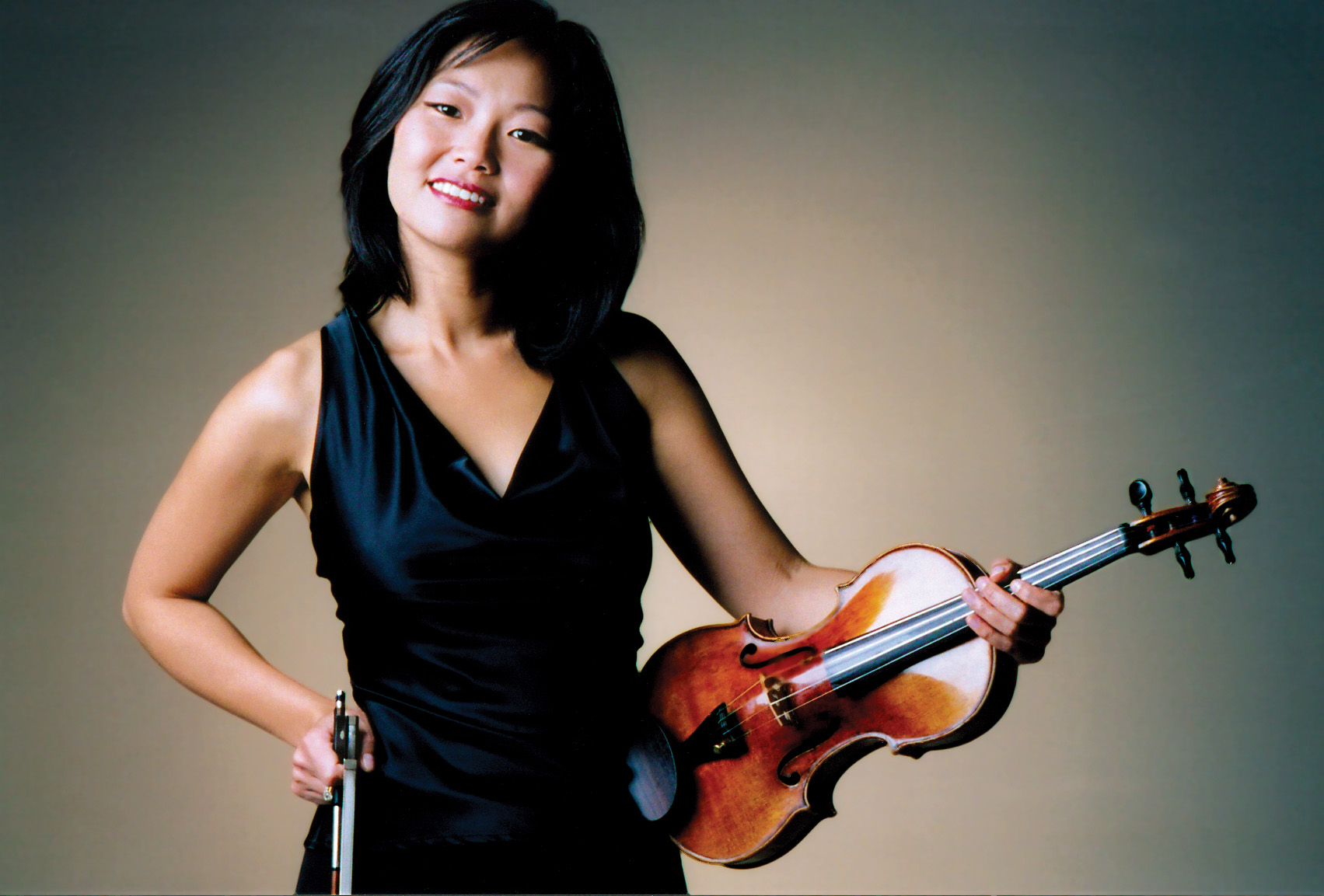
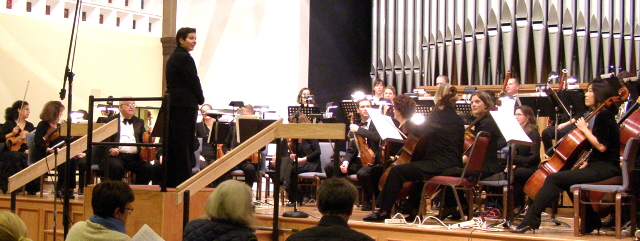
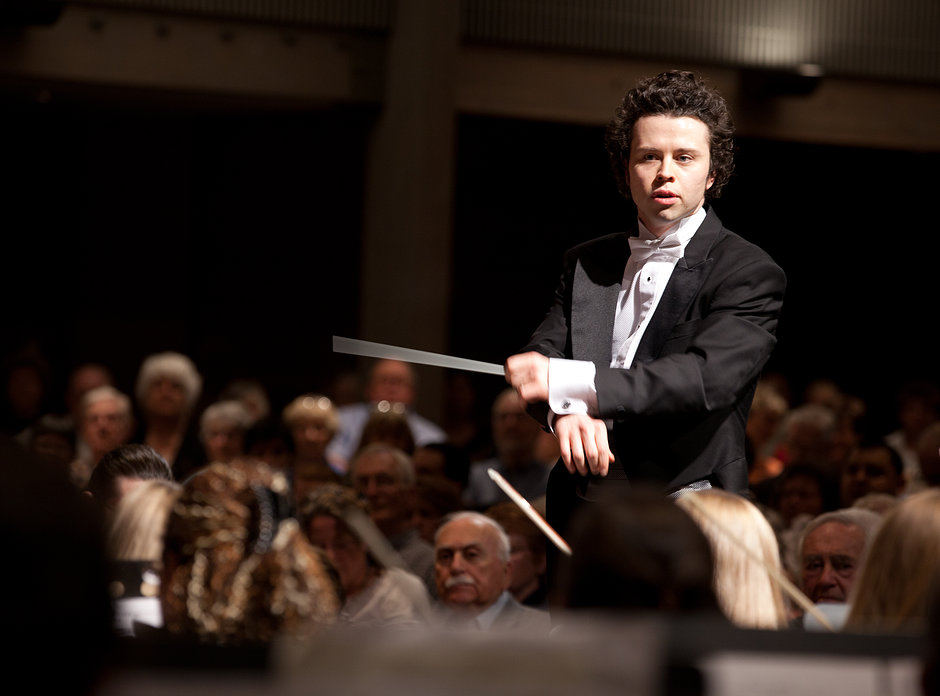
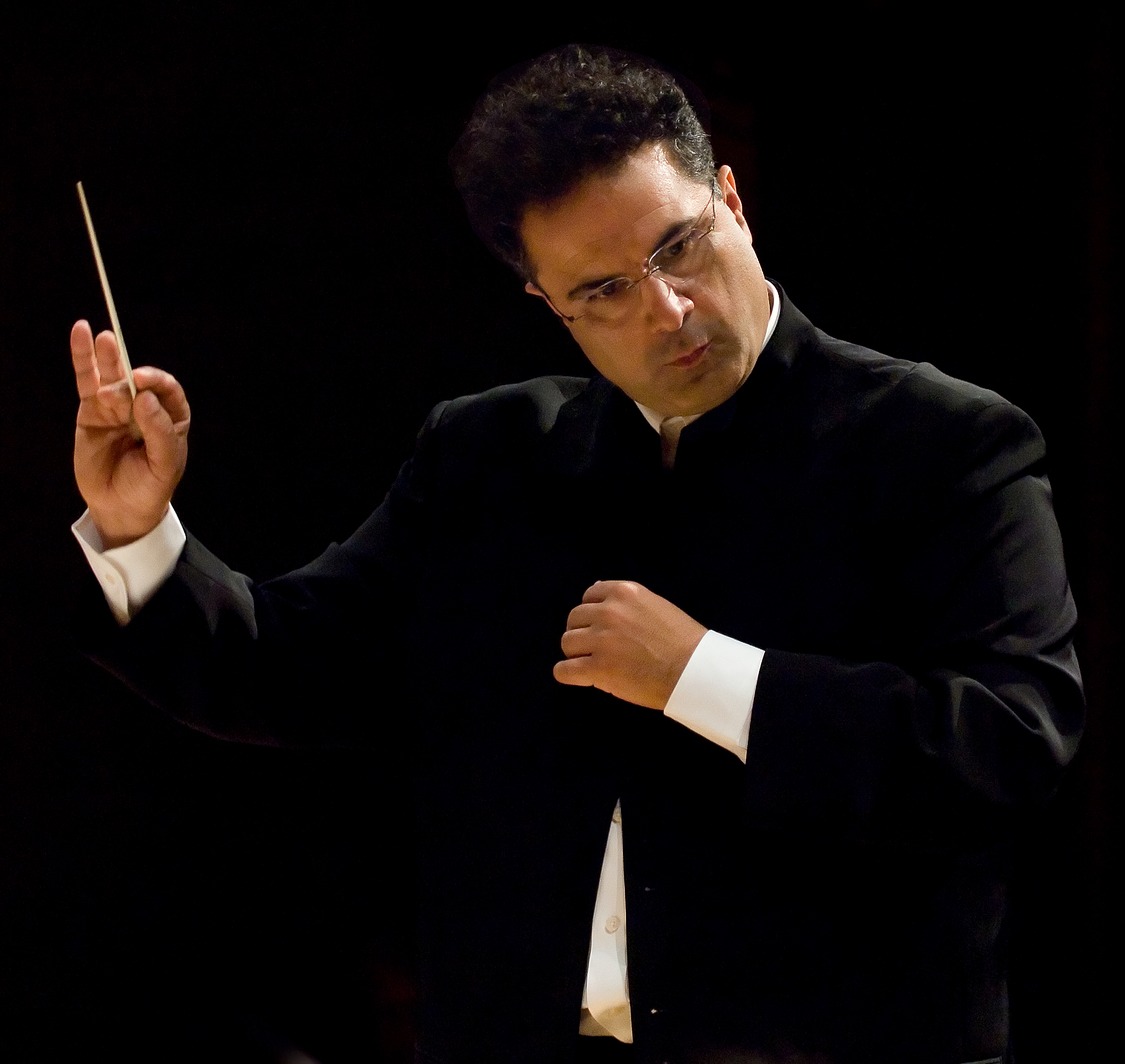
Boulder Symphony conductor Devin Patrick Hughes

Boulder Symphony conductor Devin Patrick Hughes

Under the zingy title “Love’s Arrow,” the orchestra and conductor Devin Patrick Hughes will present a semi-staged performance of Bizet’s Carmen—the first time they have undertaken an entire opera. Featuring a cast of mostly local singers, Carmen will be performed at 7 p.m. Saturday, May 9, in Boulder’s Symphony usual home, the First Presbyterian Church in Boulder (see cast list below).

Putting an opera into a church is a challenge, but Hughes has found a way to make it work. “There’s a lower stage and a higher stage, and the lower stage is almost like a pit,” he says. “It’s not low enough (to be a real pit), so balance is a little bit of an issue, but we have a slightly reduced orchestra to account for that.”

The singers, on the higher level, will be dressed mostly in black, with only a few other elements of costume and a few props. There will be minimal stage direction by Michael Travis Ringer, who also has a role in the opera.

“We are focusing on the music and the drama of Carmen, which of course are my favorite elements,” Hughes says. “We’re a small organization made up of mostly volunteers, and this is a big and exciting undertaking. We’re really blessed to have highly seasoned singers who have done (their roles) before.”

Semi-staged and concert performances of operas have become more common for orchestras in recent years, but there have been relatively few in Boulder. The most recent I could find was a concert performance of Ainadamar by Osvaldo Golijov at the Colorado Music Festival in 2007, and the CMF is scheduled to perform Bartók’s Bluebeard’s Castle July 23 and 24 as part of the 2015 summer festival.

Georges Bizet

Georges Bizet

In case you don’t know the story, love’s arrow is fatal in Carmen. The naive young soldier Don José falls for Carmen, a feisty and independent gypsy woman whom he is supposed to arrest. Instead he lets her escape, and after serving time in jail he joins Carmen and the band of smugglers in their hideout. By then, Carmen has fallen for another man, the handsome torreador Escamillo. In a fit of jealousy, Don José confronts Carmen, with fatal results.

“For me, this opera is all about woman power,” Hughes says. “Carmen gets killed in the end, but she dictates the entire course of events. She’s totally in control of the entire story, to the point that she goes the way that she wants to go and all the male characters are pawns. I think society has been catching up to Carmen for the last 150 years.”

But of course the plot is only one part of the opera. “What drew me to Carmen initially is not the story but it’s how the music conveys the story,” Hughes says. “To me the music is just as powerful as the character of Carmen and Don José.”

The musical appeal makes Carmen an ideal first opera for audiences. Many of the melodies are familiar—such as Escamillo’s “Torreador’s Song” and Carmen’s “Habanera”—and the rest of the score is equally tuneful.

Asheville_Lyric_Opera_Carmen“I would aim (the performance) at people who know these themes, and would like to experience this for the first time and see the entire version,” Hughes says. “That’s what the Boulder Symphony is. We’re trying to build excitement for classical music, which includes opera and orchestral works.”

Hughes believes that opera is a greater challenge for Boulder Symphony than most orchestra programs. “We’re trying to expand on what we’ve done in the past,” he says. “Operatic literature is incredibly difficult for orchestras, because the tempos are changing constantly, you’re having to not only watch the conductor but listen to the singer.”

This expanded challenge to the players is one reason Hughes is wants to perform opera with the Boulder Symphony. Another is what it can mean for the audience: “You hear symphonic music all the time and you hear these cadences and these chord progressions. Opera actually puts a human emotional element (on those sounds). It tells you exactly what that music is saying.”

Hughes and the Boulder Symphony will perform Carmen with spoken dialog between the musical numbers. This is the original version of the opera, which was written for the middle-class audiences of Paris’ Opéra-Comique rather than the aristocratic audiences of the Grand Opera. In this way Carmen is more like a Broadway show, which also enhances its appeal to audiences by making the story easy to follow.

Although Boulder Symphony’s next season has not yet been announced, Hughes lets drop a hint: “Carmen is the first of a planned multi-year operatic exploration,” he says, suggesting there will be other semi-staged operas in the future.

But in the meantime there is Carmen. “When you say Carmen, everybody gets excited,” Hughes says.

To share the excitement, you may purchase tickets here.

# # # # #

20_event“Love’s Arrow”
Boulder Symphony, Devin Patrick Hughes, conductor
With vocal soloists and chorus

Carmen by Georges Bizet (semi-staged performance)
7 p.m. Saturday, May 9
First Presbyterian Church, 16th & Canyon, Boulder
Tickets 

CAST:

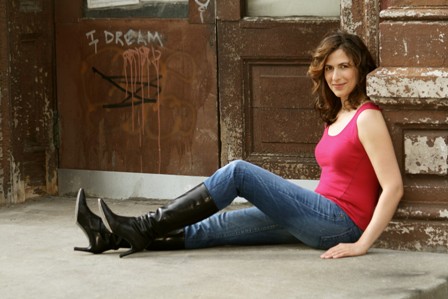
CarmenErica Papillion-Posey, Carmen
Jason Baldwin, Don José
Mica Dominguez-Robinson, Micaëla
Tom Kittle, Escamillo
Tom Sitzler, Moralès
Darci Lobdell, Mercédès
Molly Kittle, Frasquita
Zachary Garcia, Zuniga
Humberto Barboa, Remendado
Michael Travis Risner, Stage Director, Dancaïre
Legendary Concertos Wrap Up Boulder Phil Season

Orchestra presents popular works by Dvořák and Bartók

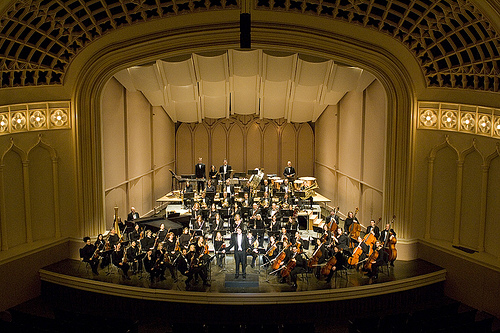
The entire orchestra will be in the solo spotlight when the Boulder Phil performs Bartók's Concerto for Orchestra
The entire orchestra will be in the solo spotlight when the Boulder Phil performs Bartók’s Concerto for Orchestra

By Peter Alexander

The Boulder Philharmonic will conclude its season Saturday (April 24) with “Legendary Virtuosity,” a concert featuring two of the most popular pieces in the orchestra repertoire—coincidentally, both written in the United States.

Both are concertos that call on the virtuosity of the performers, although only one is written for a soloist with orchestra. Dvořák wrote his Cello Concerto in New York in 1894, near the end of his tenure at the National Conservatory of Music. And almost 50 years later, Bartók, a refugee from a European war and working at a retreat in upstate New York, had the idea of featuring the entire orchestra in his Concerto for Orchestra, completed in 1943.

The concert, at 7:30 p.m. in Macky Auditorium, will open with the atmospheric Enchanted Lake of Russian composer Anatoly Liadov. The Boulder Phil’s music director Michael Butterman will conduct, and cellist Zuill Bailey will be the soloist for Dvořák. Tickets are available from the Boulder Phil.

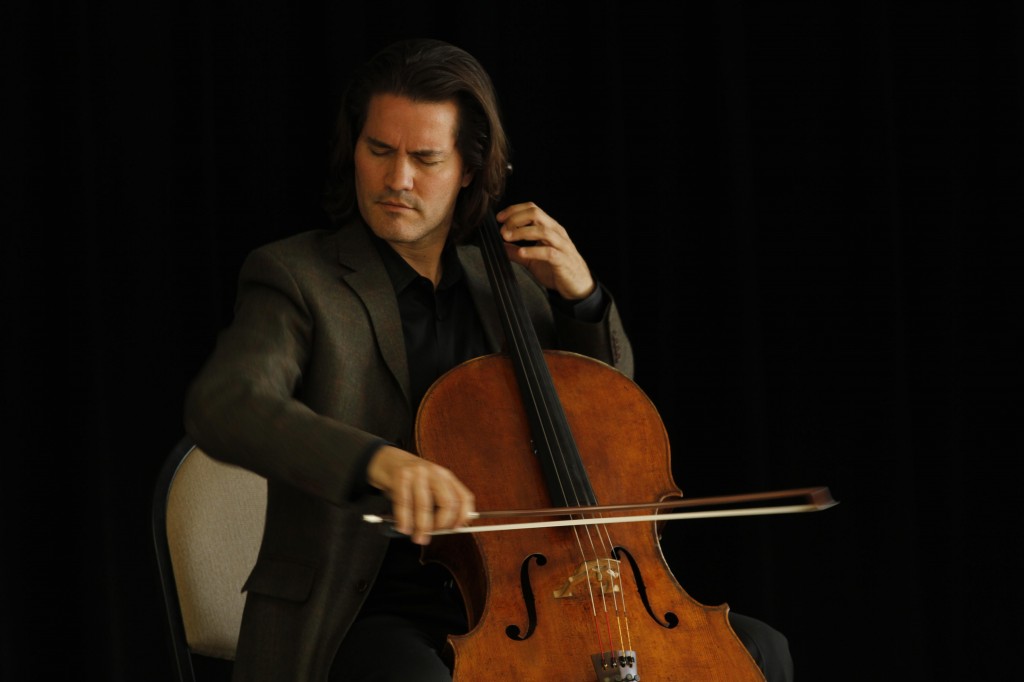
Zuill Bailey

Zuill Bailey

Dvořák taught at the National Conservatory during parts of three years, 1892–94. In the spring of 1894 he heard a new cello concerto by one of his colleagues at the conservatory, the Irish-American cellist and composer, Victor Herbert. Best known for his operettas, including Naughty Marietta and Babes in Toyland, Herbert was an accomplished cellist who had led the cello section at the premiere of Dvořák’s New World Symphony at Carnegie Hall the year before.

Inspired by Herbert’s concerto, and later touched by the death of his sister-in-law—by legend the one true love of his life—Dvořák wrote a work of broad and deep emotional reach. It has remained one of the most beloved works in the repertoire.

“This is a piece that gets deeper as one gets older,” Bailey says. “It is never a piece that I tire of. In fact, I’m always amazed at the goosebumps that happen before my entrance. This has never failed me.

“This is why the orchestras, and audiences, so adore this concerto. Every single time it’s another journey.”

Butterman speaks of the score’s melodic richness as part of its appeal. “Like much of Dvorak’s music it has an abundance of melodic elements that just keep coming at you, one after another,” he says. “He never seemed to run dry.”

Michael Butterman

Michael Butterman

Bailey believes Dvořák not only wrote a great concerto for the cello, he changed the very nature of the concerto. “He changed the landscape of how things were done,” he says. “This is a symphony with a cello part—a very heroic cello part.”

Bailey is pleased to be making his first Boulder concerto appearance with Butterman and the Phil. “I am thrilled to be working with maestro Butterman,” he says. “I think he is one of the great collaborators out there. Every time I’ve worked with him it’s been an absolute pleasure, and it’s really terrific that we get to share the Dvořák (Concerto).”

Butterman reciprocates the compliment. “I’m delighted to have Bailey come into Boulder,” he says. “He’s a wonderful artist, a very intense and charismatic performer.”

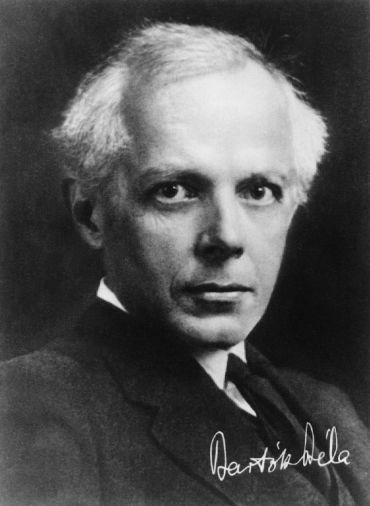
Composer Béla Bartók

Composer Béla Bartók

If the name Bartók suggests difficult modern music, you may not know The Concerto for Orchestra. Written in the last years of Bartók’s life, it is a deliberately accessible piece that at times is downright comical. At one point the orchestra breaks into musical laughter at an interruption by a borrowed melody, and the second movement makes great fun of presenting each of the woodwind instrument pairs matched at different intervals.

“A lot of people may see the name Bartók and think about music that is written in some language that they find foreign sounding,” Butterman says. “But this is a piece that continues to be one of the most popular 20th-century works in the orchestral canon—for good reason.

“It was chosen as kind of bookend to our season opener, Scheherazade, a piece that featured our new concertmaster. (The Concerto for Orchestra) doesn’t put the spotlight on any one person, but on the orchestra as a whole, and particularly the wind section. The solo passages allow you to hear the virtuosity of the orchestra, and the different timbres that make up its character. This is a piece that is incredibly engaging rhythmically and melodically.”

Orchestra players typically relish the chance to play The Concerto for Orchestra. “It’s fun to play, but you’ve got to concentrate like mad,” Butterman says. “There’s a lot of little things that can trip you up, rhythmically in particular, but it works out so well.”

Anatoly Liadov

Anatoly Liadov

The Enchanted Lake is one of the few works left by a very talented composer who was, Butterman says, “an underperforming worker. This is a composer who famously said, ‘Naw, I don’t think I want to do that Firebird piece—there’s this kid Stravinsky, I’m sure he’ll do it for you.’”

Whether or not he really passed on composing The Firebird, Liadov created a quiet masterpiece in The Enchanted Lake, which remains one of the most performed short orchestral tone poems in the repertoire. “It’s a piece that sets a mood and does it very effectively and very beautifully,” Butterman says. “It’s gorgeous.

“The story was that he went down to this lake and just stood there for half an hour or so, watching the whole expanse of things. Essentially nothing happened, so he went home and wrote a piece about it (where) he’s trying to create an atmosphere of absolute placidity and calm and stillness. I think that is its own profundity and depth, if you’re able to capture that sense of stasis and calm.

“This is a beautiful way to begin a concert, because you’ve just come in from parking and hoofing it up the hill, and maybe you just need a moment to settle in. I think this piece allows you to get those beta brain waves flowing.”

# # # # #

logo2Legendary Virtuosity: Season Finale
Boulder Philharmonic, Michael Butterman, music director
With Zuill Bailey, cello

The Enchanted Lake by Anatoly Liadov
Cello Concerto in B minor by Antonín Dvořák
Concerto for Orchestra by Béla Bartók

7:30 p.m. Saturday, April 25
Macky Auditorium

Related events:

Musical Hike. Enchanted Lakes: Music and Pond Ecology
With naturalist Dave Sutherland
5:30–8 p.m., Tuesday, April 21, Sawhill Ponds

Café Phil open rehearsal
7:30 p.m. Wednesday, April 22, The Diary Center

Michael Butterman presents 2015-2016 season.
6:30 p.m. Saturday, April 25, Macky Auditorium (free to concert ticket holders)

CU Presents offers a wide-ranging smorgasbord for 2015–16

Series will include Irish Chamber Orchestra, Indigo Girls, Twyla Tharp—and much more

Soweto Gospel Choir will be one of the colorful attractions of the 2015–16 season of CU Presents

Soweto Gospel Choir will be one of the colorful attractions of the 2015–16 season of CU Presents

By Peter Alexander

CU Presents, the series of ticketed events presented by the University of Colorado, Boulder, has announced their broad array of events for the 2016–16 season.

As in years past, the season encompasses a smorgasbord of events, from classical music and opera to popular music, jazz and gospel. Both professional touring attractions and performances by CU-based groups are included in the season. (See the full season listing below.)

Tákacs Quartet. Photo by Keith Saunders.

Tákacs Quartet. Photo by Keith Saunders.

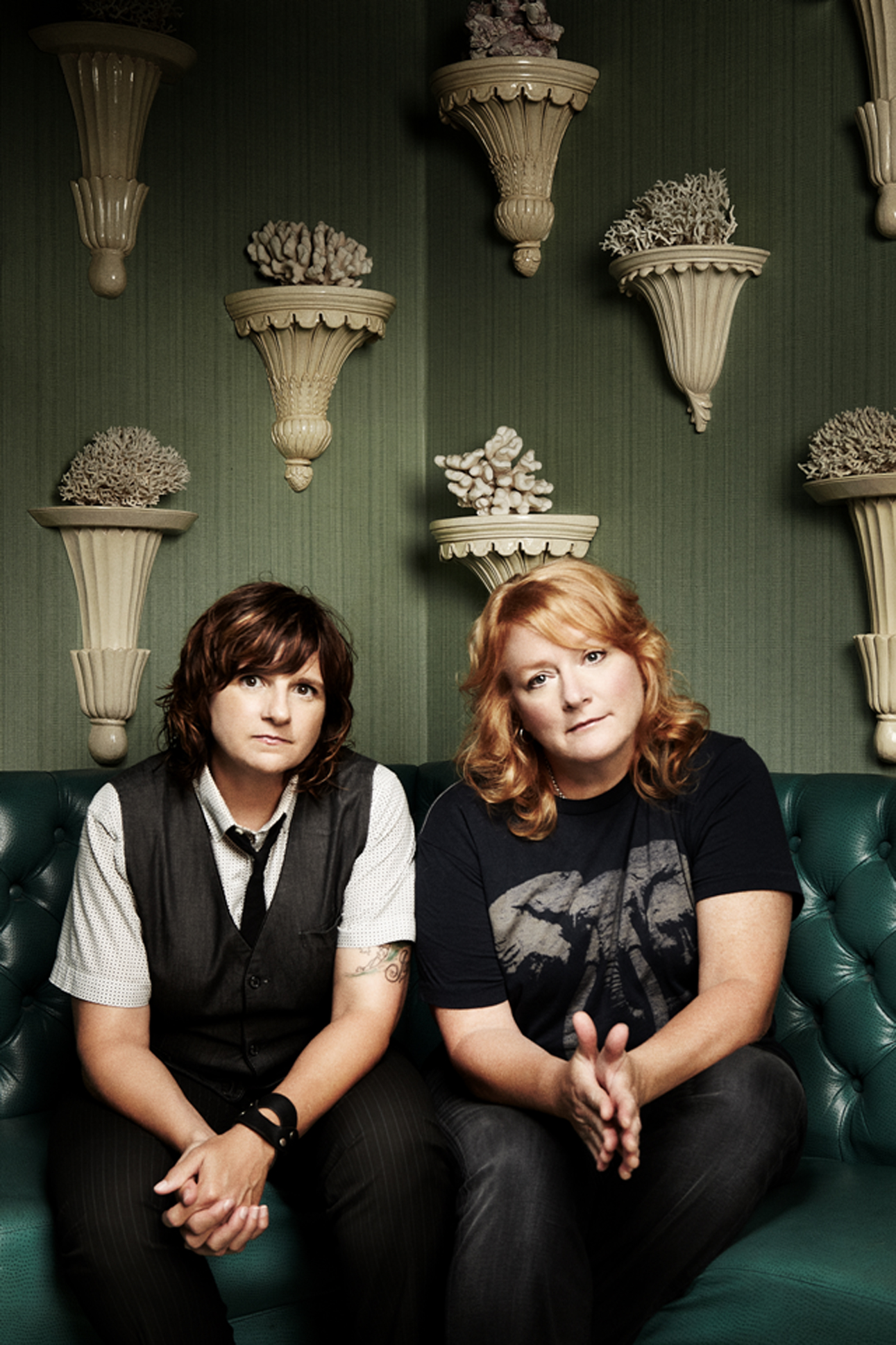
Among the musical highlights will be the Irish Chamber Orchestra conducted by their “principal artistic partner” and former Tákacs quartet member Gábor Tákacs-Nagy in November, the Indigo Girls performing with the CU Symphony in March, and of course the world renowned Tákacs Quartet itself through the season. The Takacs series—divided into the Sunday afternoon Chamber Series and the Monday evening Encore Series—will feature one program by the Attacca Quartet, an award-winning ensemble formed at Juilliard in 2003. You can preview the Attacca with their CD recording, “Fellow Traveler: The Complete String Quartets of John Adams.”

Other musical events will include the San Francisco Jazz Collective performing a “Tribute to Michael Jackson” in October and the Soweto Gospel Choir performing a Christmas concert in December. Rising Stars of the Metropolitan Opera will perform in March, and in April composer/pianist Pablo Ziegler and violinist Lara St. John will perform tangos by Ziegler and Astor Piazzolla.

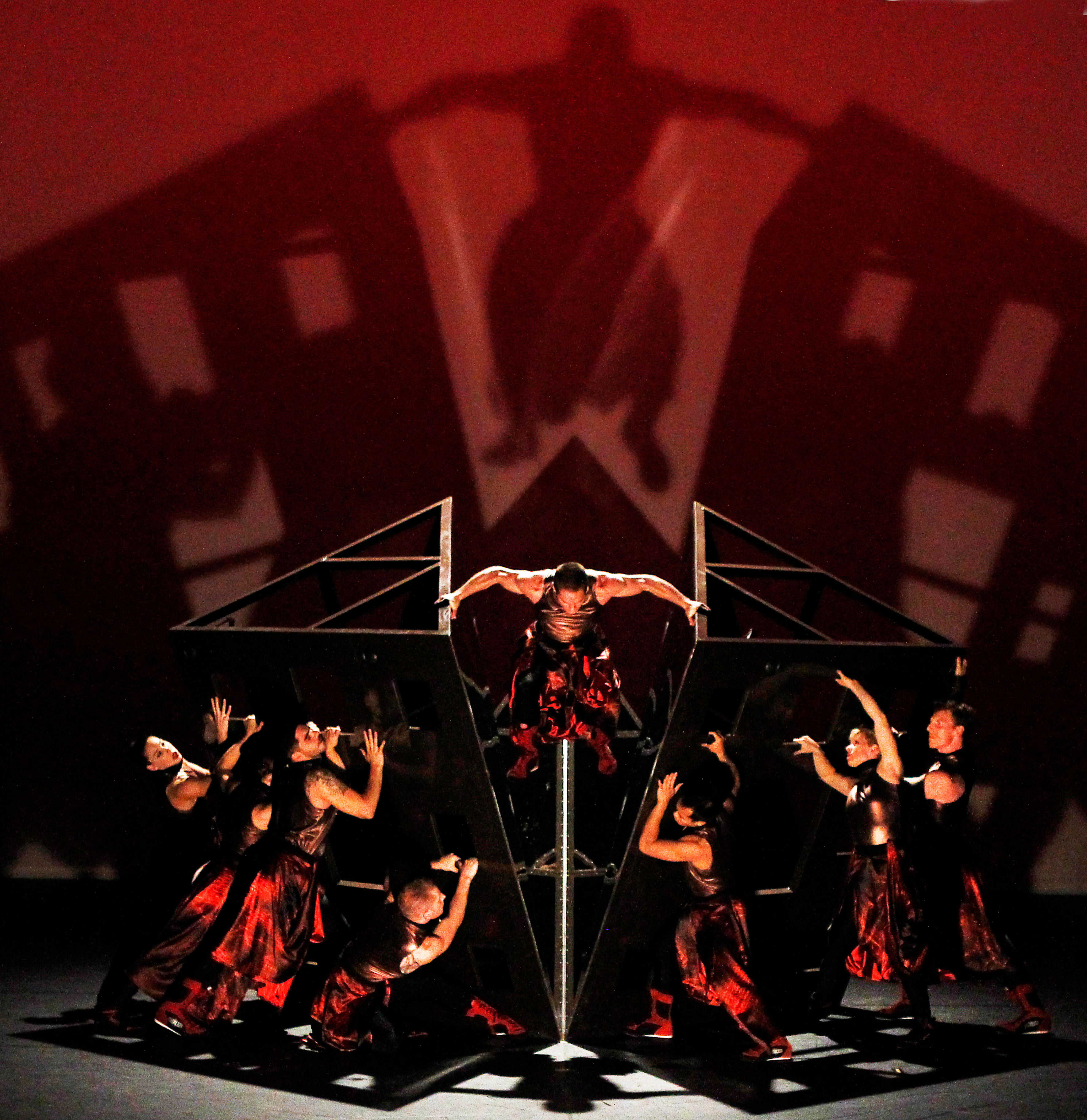
Diavolo Dance Co. Photo by Ammerpohl.

Diavolo Dance Co.

There will be dance performances by Twyla Tharp Dance, celebrating the choreographer’s 50th anniversary and appearing in Boulder for the first time since 1979; the unique Diavolo Dance Co., which bills itself as “architecture in motion”; and LA-based contemporary dance group Bodytraffic.

Next year’s schedule from the CU Eklund Opera Program will feature Macky Auditorium productions of Rossini’s comedy Cenerentola (Cinderella, sung in Italian with English surtitles); and Francis Poulenc’s haunting Dialogues of the Carmelites (sung in French with English subtitles). The spring will also see a Music Theatre production of Aaron Copland’s rarely performed Tender Land.

Series tickets will go on sale Monday (March 30) at cupresents.org.

# # # # #

CU Presents
2015-16 season

Twyla Tharp/ Photo by Marc VanBorstel.

Twyla Tharp. Photo by Marc VanBorstel.

Artist Series

Twyla Tharp Dance
50th Anniversary Tour
Sunday, Sept. 27, 7:30 p.m.

SF Jazz Collective
Tribute to Michael Jackson
Friday, Oct. 9, 7:30 p.m.

Irish Chamber Orchestra, Gábor Takács-Nagy, conductor
Friday, Nov. 6, 7:30 p.m.

Gabor Tákacs-Nagy. Photo by Klaus Rudolph.

Gabor Tákacs-Nagy. Photo by Klaus Rudolph.

Soweto Gospel Choir
Christmas concert
Friday, Dec. 11, 7:30 p.m.

Diavolo Dance Co.
Thursday, Jan. 21, 7:30 p.m.

Bodytraffic
Sunday, Feb. 14, 7:30 p.m.

Rising Stars of the Metropolitan Opera
Tuesday, March 1, 7:30 p.m.

Indigo Girls. Photo by Jeremy Cowart.

Indigo Girls. Photo by Jeremy Cowart.

Indigo Girls with the CU Symphony Orchestra
Thursday, March 31, 7:30 p.m.

Pablo Ziegler and Lara St. John
Piazzolla Central Park Concert Redux
Friday, April 15, 7:30 p.m.

Holiday Festival
7:30 p.m. Friday, Dec. 4
4 p.m. Saturday, Dec. 5
7:30 p.m. Saturday, Dec. 5
4 p.m. Sunday, Dec. 6

Eklund Opera Program
La Cenerentola (Cinderella)
By Gioachino Rossini
(Sung in Italian with English surtitles)
Friday, Oct. 23, 4 p.m.
Saturday, Oct. 24, 7:30 p.m.
Sunday, Oct. 25, 2 p.m.
Tickets start at $14
Macky Auditorium

Dialogues of the Carmelites
By Francis Poulenc
(Sung in French with English surtitles)
Friday, March 11, 7:30 p.m.
Saturday, March 12, 7:30 p.m.
Sunday, March 13, 2 p.m.
Tickets start at $14
Macky Auditorium

The Tender Land
By Aaron Copland
(Sung in English)
Friday, April 22, 7:30 p.m.
Saturday, April 23, 7:30 p.m.
Sunday, April 24, 2 p.m.
Tickets start at $14
Music Theatre

Takács Quartet

Attacca Quartet

Attacca Quartet

Chamber Series
4 p.m. Sunday, Sept. 20
4 p.m. Sunday, Oct. 11 (The Attacca Quartet)
4 p.m. Sunday, Nov. 8
4 p.m. Sunday, Jan. 10
4 p.m. Sunday, Feb. 28
4 p.m. Sunday, April 24

Encore Series
7:30 p.m. Monday, Sept. 21
7:30 p.m. Monday, Oct. 12 (The Attacca Quartet)
7:30 p.m. Monday, Nov. 9
7:30 p.m. Sunday, Jan. 11
7:30 p.m. Monday, Feb. 29
7:30 p.m. Monday, April 25

Spring Swing
CU-Boulder College of Music jazz bands and ensembles
2 p.m. Sunday, April 17

Music for movement, and movement to music

Boulder Bach Festival and 3rd Law Dance/Theater collaborate on “Bach UnCaged”

Zachary Carrettin with dancers from 3rd Law Dance/Theater

Zachary Carrettin with dancers from 3rd Law Dance/Theater

By Peter Alexander

The Boulder Bach Festival (BBF) will reprise its highly successful 2014 partnership with 3rd Law Dance/Theater with a new work that combines the music of J.S. Bach with iconoclastic 20th-century American composer John Cage.

The performance, “Bach UnCaged” (7 p.m. Friday and Saturday, March 27 and 28, at the Dairy Center in Boulder), is part of the festival’s “Compass Series,” which aims to present Bach’s music in new and unexpected contexts.

The performances will feature pieces for solo strings by Bach, played by BBF music director Zachary Carrettin on electric violin; interludes drawn from the sonatas for prepared piano by Cage, played by the festival’s executive director, Marcia Schirmer; and dance by 3rd Law Dance/Theater and choreographer Katie Elliott.

Carrettin will play a series of solo movements by Bach, from both the solo sonatas for violin and the solo suites for cello. Between the Bach movements, Schirmer will play individual sonatas for prepared piano by Cage. The separate pieces will be preceded and linked together by improvised passages by Carrettin—some using the notes C-A-G-E. Only at the end will the music of Bach and Cage sound together.

Read more at Boulder Weekly.

Boulder Phil marks Valentine’s with Legendary Lovers and Red Violin

heart-roses1By Peter Alexander

Valentine’s will be a day for heart-shaped candies; lacy greeting cards; special dinners with your sweetheart; and—thanks to the Boulder Philharmonic—music about a red violin.

Violinist Philippe Quint will join conductor Michael Butterman and the orchestra Saturday evening (7:30 p.m. Feb. 14 in Macky Auditorium) to perform John Corigliano’s Red Violin Concerto. The concert, titled “Legendary Love,” will also feature the Prelude and Liebestod (Love Death) from Wagner’s Tristan und Isolde and Tchaikovsky’s Fantasy-Overture Romeo and Juliet.

Michael Butterman. Photo by Glenn Ross.

Michael Butterman. Photo by Glenn Ross.

As part of a season of musical “Legends,” a concert on Valentine’s Day suggests obvious possibilities. “Fortunately for us, there is no shortage of good pieces that have dealt with this particular topic—literary couples and so on,” Butterman says. “We thought the date was a mixed blessing (but) we hope that people will choose to make it an evening out and make it part of their Valentine’s plans.”

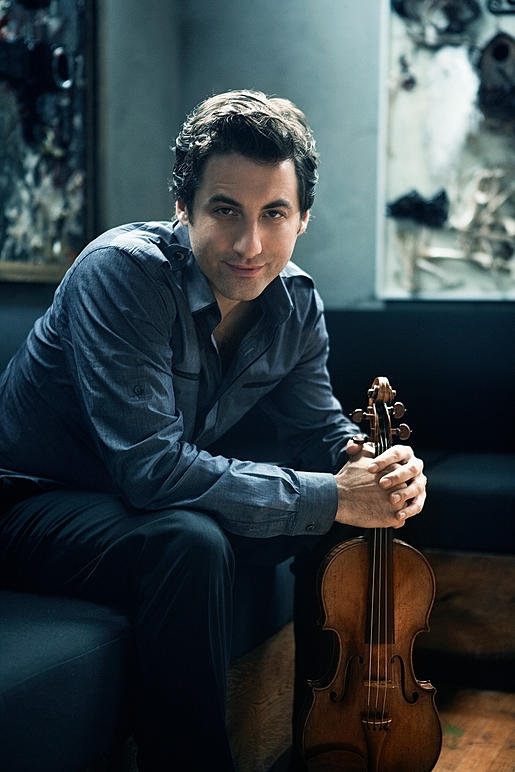
Philippe Quint. Photo by Lisa Marie Mazzucco.

Philippe Quint. Photo by Lisa Marie Mazzucco.

If you don’t know Corigliano’s Red Violin Concerto, Quint thinks you are in for a treat. “Expect the unexpected,” he says.

“Prepare for an emotional roller coaster. It will really take you from a space of meditation into an absolute emotional frenzy and back, and back again.”

The concerto had its origin in the Academy Award-winning score that Corigliano wrote for the 1998 film The Red Violin. The story of tumultuous and passionate events in the 300-year history of a violin that has literally been varnished with blood, the film featured music played by virtuoso violinist Joshua Bell.

While using music from the film score, the concerto is at least one step removed, since ideas from the film are reworked for a completely different genre. After finishing the film score, Corigliano, whose father was the concertmaster of the New York Philharmonic, created several concert pieces for violin from the film music. When he pulled the Red Violin music into the concerto, he was thinking of the performances he had heard his father give in Carnegie Hall.

“This is my first (concerto) for my first love, the violin,” he has written. “It is an ‘in the great tradition’ kind of concerto, because I wrote it in an attempt to write the piece my father would love to play.”

Quint concurs. “This work is mostly a throwback into the Romantic period of great violin writing,” he says. “It’s a very substantial work, where Corigliano takes it to the next level by adding these really unbelievable effects. There are going to be some sounds that you never heard.”

Philippe Quint. Photo by Philipp Jekker

Philippe Quint. Photo by Philipp Jekker

He particularly points to the concerto’s final movement, which the composer describes as “a rollicking race” between soloist and orchestra. Quint compares that movement to a famous scene from another film: “You remember those Indiana Jones movies, with the huge rock that’s running, and you’re running away. The last movement is really like that rock, it’s coming at you at this crazy speed and you’re trying to get away from it.”

By coincidence, Quint himself plays a violin that is known for the reddish tint of its varnish—although there is no blood involved. It is a Stradivarius violin from 1708—near the age of the red violin of the film—that is known as “The Ruby Strad.”

“I love to speculate that this is the violin that inspired the film,” Quint says. “But it’s a fictional story, so any such claim is false.” Noting that the violin belongs to the Stradivari Society of Chicago, Quint adds, “I feel very, very fortunate to have an opportunity to play on this violin.”

The two pieces that comprise the second half of the concert program are about legendary lovers—Tristan and Isolde, and Romeo and Juliet. Both works date from the second half of the 19th century, Wagner’s Tristan und Isolde from 1859, and Tchaikovsky’s Romeo and Juliet from 1870 (revised in 1880). But though they both celebrate famous love stories, they are in many ways very different.

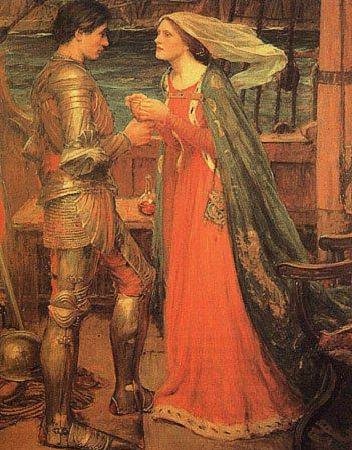
Tristan and Isolde. Painting by John William Waterhouse, 1911.

Tristan and Isolde. Painting by John William Waterhouse, 1911.

Often described as the beginning of modernism in music, Wagner’s Tristan und Isolde is famous for the use of chromatic harmonies to extend a feeling of musical tension across an entire 5-hour opera. Even before it had been premiered, Wagner himself made an arrangement pairing the Prelude—the opera’s opening section, today studied in detail by all music students—and the closing passage, Isolde’s Liebestod (Love death).

“What we have in this piece in particular is, not so much the soaring high moments that one feels in romance, but the longing, the anticipation, the tension, the bittersweet aspects,” Butterman says. “That is wholly the function of Wagner’s ability to create tension and almost never quite give it resolution.”

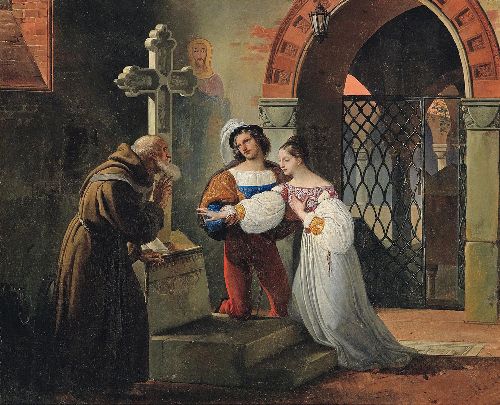
Romeo and Juliet. Painting by Francesco-Paolo-Hayez.

Romeo and Juliet. Painting by Francesco-Paolo-Hayez.

If Wagner’s score lacks the “soaring high moments that one feels in romance,” as Butterman says, that’s just what Tchaikovsky’s Romeo and Juliet offers in its “rhapsodic, passionate melody” representing the lovers.

“The tension that Tchaikovsky creates is not so much with this use of chromatic harmony,” Butterman says, “but with his ability to bring in elements of the conflict between the families with the introduction of brass and percussion.

“You have this soaring theme and all of a sudden (brass and percussion interruptions) and then it goes back to the soaring theme. It’s not a piece where you can follow the story in a linear fashion from beginning to end. I think it is more just ideas from the drama that have gotten mixed together in a 20-minute piece.”

In addition to the Valentine’s Day performance, there will be other events leading up to the concert. From 7:30 to 10 p.m. Wednesday evening (Feb. 11), the Dairy Center in Boulder will present Café Phil—a free open rehearsal of the orchestra with Butterman. This is very much a working rehearsal, and will be without the soloist, but will be a revealing glimpse into the inner workings of the orchestra. Wine, beer, coffee, juice, snacks and pastries are available for purchase until 9:30 p.m.

There is also the opportunity to see the film of The Red Violin, which will be screened at the Dairy Center’s Boedecker Theater. Showings will be at 4 p.m. Wednesday and Friday, Feb. 11 and 13, and at 7 p.m. Thursday, Feb. 12.

# # # # #

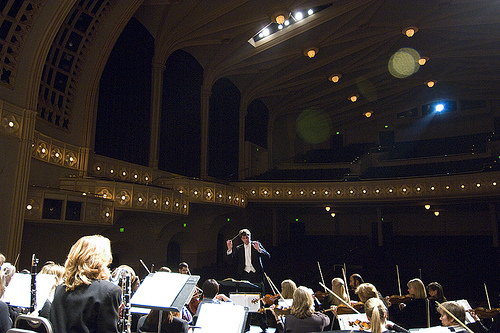
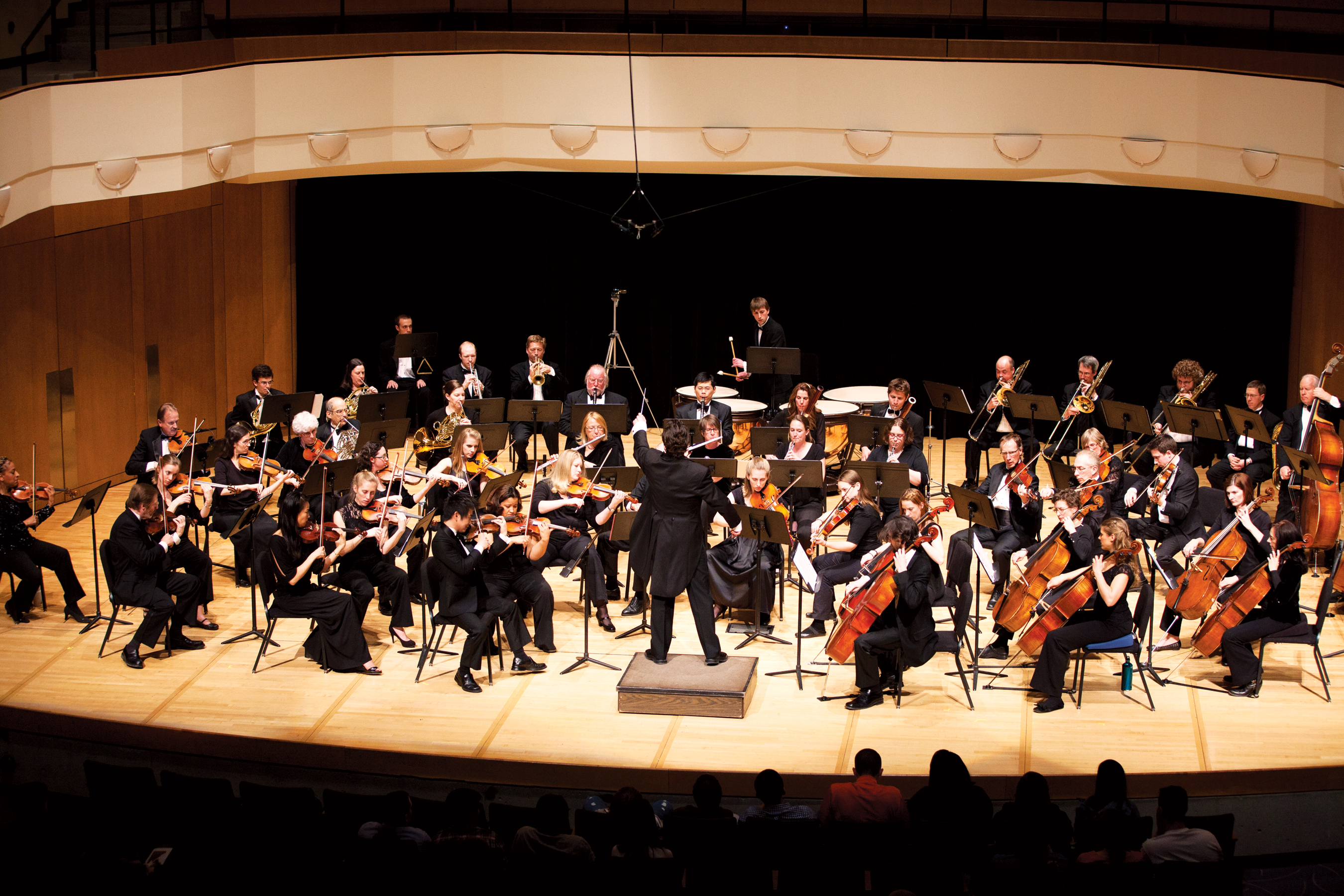
Michael Butterman and the Boulder Philharmonic in Macky Auditorium

Michael Butterman and the Boulder Philharmonic in Macky Auditorium

“Legendary Love”
Boulder Philharmonic, Michael Butterman, conductor Philippe Quint, violin
John Corigliano: Red Violin Concerto
Wagner: Prelude and Liebestod from Tristan und Isolde
Tchaikovsky: Romeo and Juliet

7:30 p.m. Saturday, Feb. 14
Macky Auditorium
Information and tickets

Café Phil open rehearsal
Boulder Philharmonic and Michael Butterman, conductor
7:30–10 p.m. Wednesday, Feb. 11
Dairy Center for the Arts Free

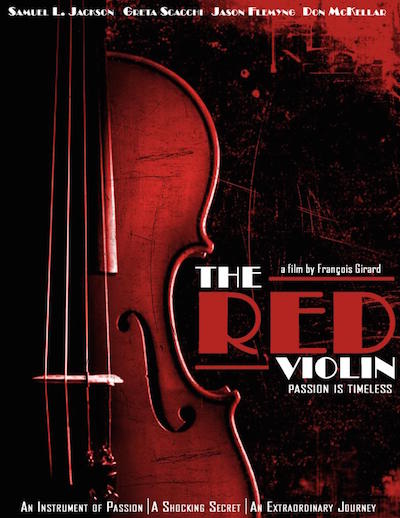
RedViolin400x518Screenings of The Red Violin
4 p.m. Wednesday, Feb. 11
7 p.m. Thursday, Feb. 12
4 p.m. Friday, Feb. 13
The Dairy Center for the Arts
Information and tickets

Pro Musica Colorado Offers Four Seasons, But Can’t Say Which is Which

Also on the program: World Premiere by CU student Daniel Cox

By Peter Alexander

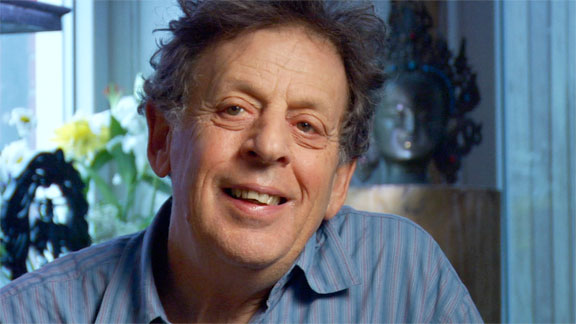
Philip Glass

Philip Glass

The Colorado Pro Musica Chamber Orchestra will perform Philip Glass’ Violin Concerto No. 2: “The American Four Seasons,” but don’t ask which season each movement represents.

Conductor Cynthia Katsarelis explains that the composer left it up to the listener to decide: “The concerto was commissioned by violinist Robert McDuffie,” she says. “But when McDuffie and Glass got together, they didn’t agree on which parts went with which season.

“Glass saw that as an opportunity for the listener to make their own interpretation—and that’s the invitation to our audience.”

yumi-hipThe performances (Friday, Feb. 6, in Denver and Saturday, Feb. 7, in Boulder, both at 7:30 p.m.) will feature violinist Yumi Hwang Williams, concertmaster of the Colorado Symphony as soloist. Other works on the program will be the world premiere of . . . I Give you my Sprig of Lilac by CU composition student Daniel Cox, and the Fantasia on a Theme of Thomas Tallis by Ralph Vaughan Williams.

Katsarelis thinks that Hwang-Williams is the ideal interpreter for Glass’s concerto. “Yumi’s appetite for music goes beyond the orchestral,” Katasrelis says.

“She is a concertmaster who runs the full gamut of repertoire, as concerto soloist she runs the gamut, she has particular experience in the contemporary repertoire, and she’s a formidable chamber musician. All of that comes to bear in making her one of the most fabulously intelligent and deep feeling soloists that you could have.”

Read the full article in Boulder Weekly.

# # #

Cynthia Katsarelis and the Colorado Pro Musica Chamber Orcehstra

Cynthia Katsarelis and the Colorado Pro Musica Chamber Orcehstra

“American Seasons”
Pro Musical Colorado Chamber Orchestra
Cynthia Katsarelis conductor, with Yumi Hwang-Williams, violin

7:30 p.m. Friday, Feb. 6, St. John’s Cathedral, 1350 Washington St., Denver
7:30 p.m. Saturday, Feb. 7, First United Methodist Church, 1421 Spruce St., Boulder

Click here for tickets; or call 720-443-0565

In the nick of time, Boulder Symphony will bring listeners ‘Out of the Darkness’

By Peter Alexander

Boulder Symphony

Boulder Symphony

It wasn’t really planned that way, but the Boulder Symphony’s next concert arrives just in the nick of time.

Only days after Boulder descended from record highs to record lows, into what feels like the depth of winter, the orchestra and conductor Devin Patrick Hughes are offering to bring listeners “Out of the Darkness” Saturday evening (7 p.m. Nov. 22 in Boulder’s First Presbyterian Church: Tickets).

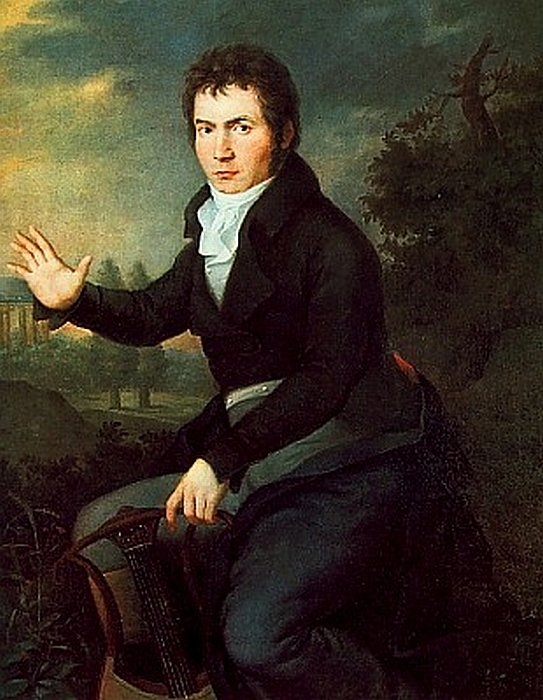
Beethoven ca. 1804–05. Portrait by Joseph Willibrord Mähler.

Beethoven ca. 1804–05. Portrait by Joseph Willibrord Mähler.

The program features two particularly sunny and affirming works that are ideal antidotes to winter shock: Beethoven’s Symphony No. 4, and Aaron Copland’s Appalachian Spring, performed in its original version for 13 instruments.

The concert’s title refers specifically to Beethoven’s symphony, written in 1806. At the time, Beethoven was coping with the onset of his deafness and facing the isolation from society that resulted. Considered one of the darkest periods in Beethoven’s personal life, he nevertheless produced a cheerful and uplifting symphony.

Read more in Boulder Weekly.

# # #

“Out of the Darkness”

Devin Patrick Hughes

Devin Patrick Hughes

Boulder Symphony, Devin Patrick Hughes, conductor

Beethoven: Symphony No. 4
Aaron Copland: Appalachian Spring, original version for 13 instruments

7 p.m. Saturday, Nov. 22
First Presbyterian Church, Boulder

Tickets

Inbal Segev Brings Bach and Gulda to Boulder

Irsraeli-American cellist hopes audiences have fun

By Peter Alexander

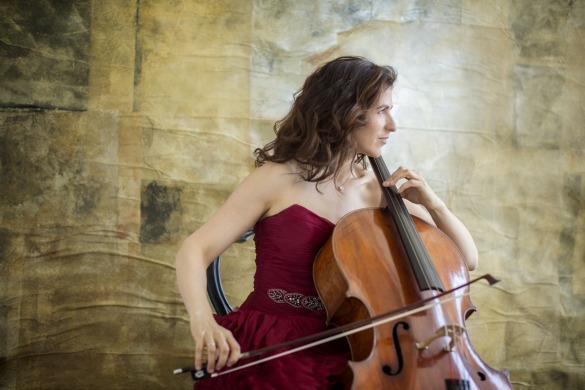
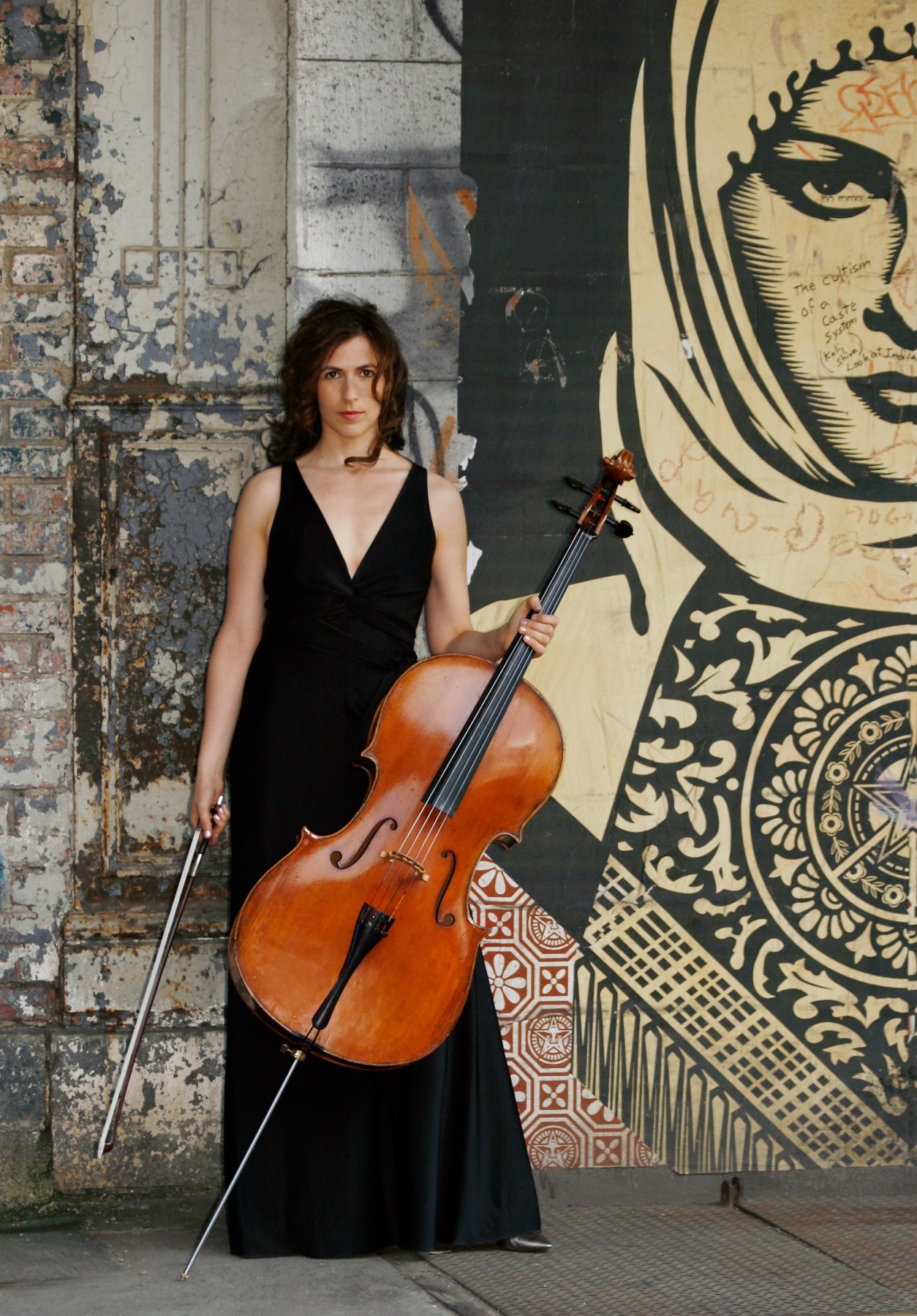
Inbal Segev (Photo by Dario Acosta)

Inbal Segev (Photo by Dario Acosta)

Inbal Segev brings a “tasting menu for the cello” to Boulder this weekend.

The Israeli-American cellist is the soloist with the wind players of the Boulder Chamber Orchestra (BCO) and conductor Bahman Saless for “Allure,” the third concert of BCO’s 2014–15 season (7:30 p.m. Friday in Broomfield, Saturday in Boulder).

In addition to Friedrich Gulda’s Concerto for cello and wind orchestra—Segev’s “tasting menu”—the program features a Serenade for winds by Mozart and Stravinsky’s rarely performed neo-classical gem, the Octet for wind instruments.

Segev will also have some Bach in her luggage: The First, Second and Fourth suites for solo cello, which she will play on a recital Sunday afternoon in Boulder. Billed as a “CD Prerelease Recital,” that performance is the outgrowth of an ongoing recording project that, when completed later this year, will encompass all six Bach solo cello suites.

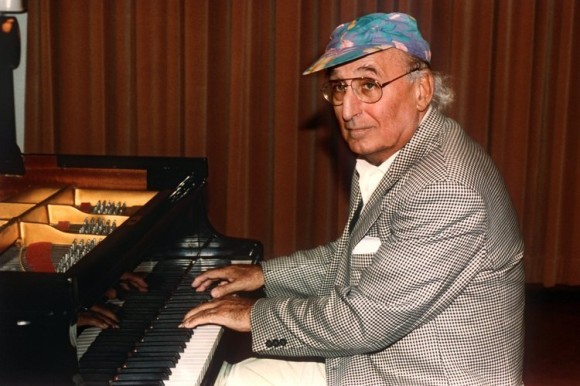
Pianist/composer Friedrich Gulda

Pianist/composer Friedrich Gulda

Gulda’s Concerto, written in 1980, combines influences from the composer’s training as a classical pianist and his love for American jazz. “The concerto has five movements, they are very varied in style,” Segev says. “There’s jazz, there’s Baroque, there’s one movement I call the ‘Ricola!’ movement because of the horns. And the third movement, which is like the heart of the piece in some ways, is a huge cadenza.”

The cadenza movement is a particular challenge from the composer, who included “two spots where the star cellist must improvise,” he wrote.

“That was a big challenge to me,” Segev says. “Back in the days people used to write their own cadenzas all the time, especially violinists and pianists, but cellists—we’re not used to it! I didn’t write it note by note. I wrote a road map to remind myself what I want to do, so I change a little bit” in each performance.

Inbal Segev. Photo courtesy of ME Reps

Inbal Segev. Photo courtesy of ME Reps

Even more difficult for the soloist is the final movement. When I spoke to Segev earlier this week, she said “I’ve been practicing (that movement) this afternoon, and it’s really fast sixteenth notes, very virtuosic, all over the place. It took me quite a long time to find out the right fingerings for it—you play it slowly and it sounds great, and then it doesn’t work fast, because all the times you leap and change!”

Fortunately Gulda himself solved what Segev thinks would have been an even greater challenge. “There’s just no way you can compete against a brass band going full throttle,” she says. “Luckily the cello is amplified, and he did really well by doing that.” She will in fact be playing the same 17th-century cello she uses for the Bach suites, but with a contact microphone mounted on the cello’s bridge.

For the remainder of the BCO program—actually the first half of the concert—Saless decided to pair two relatively short pieces, a Mozart Serenade and the Stravinsky Octet. “It’s very different to put three pieces for wind instruments (on a concert, rather) than having an entire Mahler symphony, because with a Mahler symphony all the winds at some point take rests,” he says. “To put (a long piece for winds) next to the Octet, you would kill them. There is just not that much wind in a human being!

“So one of the things we have to do is we have to play the Mozart at a little bit of a snappy tempo.”

Bahman Saless. Photo by Keith Bobo

Bahman Saless. Photo by Keith Bobo

Saless originally was not sure about programming the Stravinsky, because it is not particularly well known or popular. Then he suggested it to the players.

“The orchestra was really excited about doing Stravinsky, so I said, ‘OK, let’s just do the Stravinsky,’” he recalls. “I’m really enjoying it through my musicians because I can tell they’re having a blast doing it.”

Although Mozart and Stravinsky sound very different, Saless wants you to know that the Octet—written during Stravinsky’s “neo-classical” period in the early 20th century—is actually very classical in conception and structure. “The first movement is a sonata form, the second movement is variations, and the third movement is a rondo with fugue-like themes,” he says.

“Because the Mozart also has a variation movement, I’m going to draw this parallel between the two pieces. One is Mozart 250 years ago, and the other is the same form, but 20th century. I feel like it’s part of my obligation to explain it to the audience before we perform it, because it’s much more modern sounding than it really is.”

Looking ahead to Sunday, Segev’s recital of Bach suites and the Bach recording project are central to her identity as a cellist. “I’ve been preparing for this basically since I’m six,” she explains. “I started working on the First Suite when I was 6 years old. This my life’s work.

“We call it Bach Everest around the house, and it’s not really a joke. It’s really a certain time in a cellist’s life, it’s the pinnacle of our works and it’s a journey to do it well. (When playing the suites,) I try to be honest to who I am as a musician, and bring the best of me.”

In the meantime, Segev likes the Gulda Concerto as a break from working so intensely on Bach. “I just thought it was a really fun concerto,” she says.

“I think it’s something that audiences everywhere can dig, whether they are relating to the Beethoven and the Brahms or they like lighter fare. I just hope people are going to have fun.”

# # #

Cellist Inbal Segev

Cellist Inbal Segev

“Allure”
Boulder Chamber Orchestra, Bahman Saless, conductor
Inbal Segev, cello

Mozart: Serenade for winds
Stravinsky: Octet for winds
Friedrich Gulda: Concerto for cello and wind orchestra

7:30 p.m. Friday, Nov. 7, Broomfield Auditorium
7:30 p.m. Saturday, Nov. 8, First United Methodist Church, Boulder

Solo Recital
Inbal Segev, cello

Bach: Suite No. 1, 2 and 4 for solo cello
1 p.m. Sunday, Nov. 9
Grace Lutheran Church, Boulder

TICKETS

NOTE: This article has been edited 11/6 to correct punctuation.

Experience music, and glimpse culture from a world away

World music concert invites rethinking of the meaning of music

By Peter Alexander

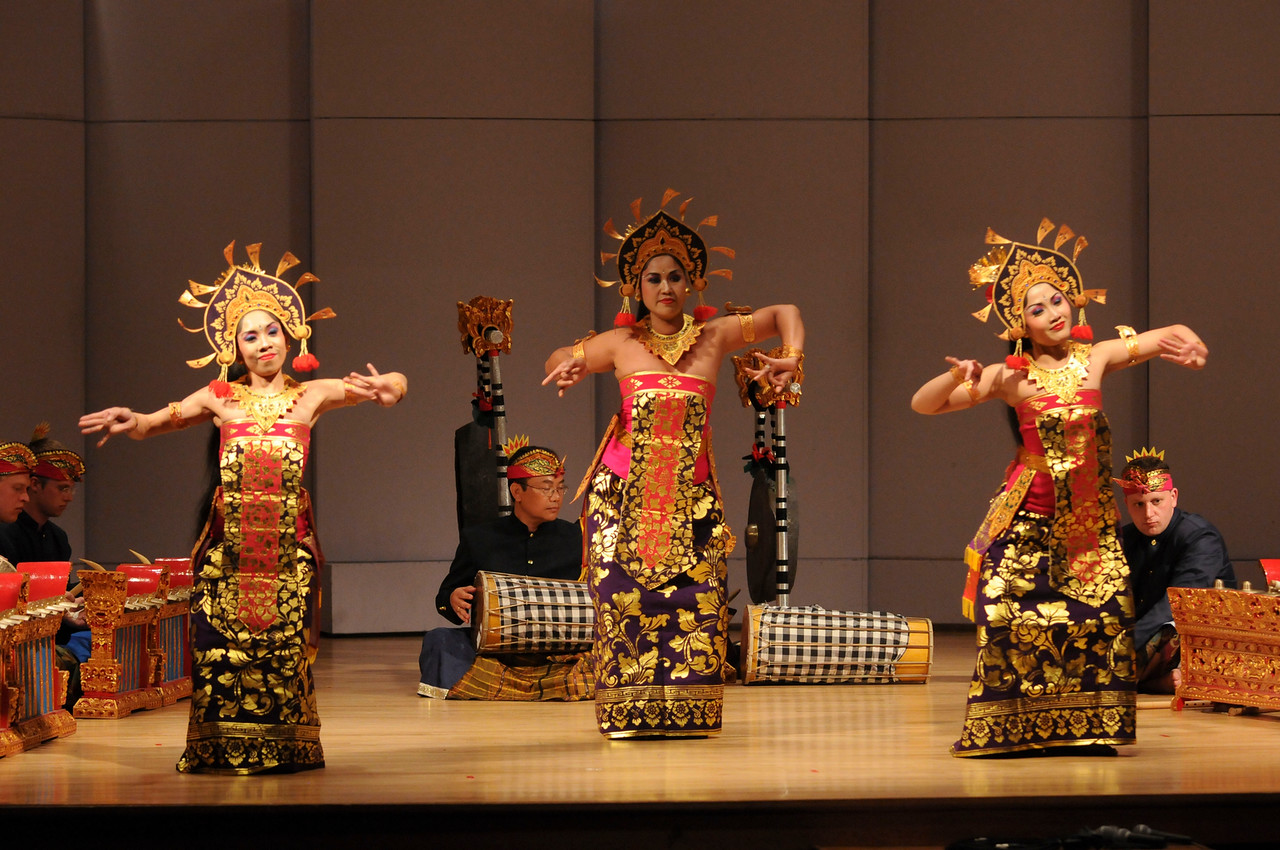
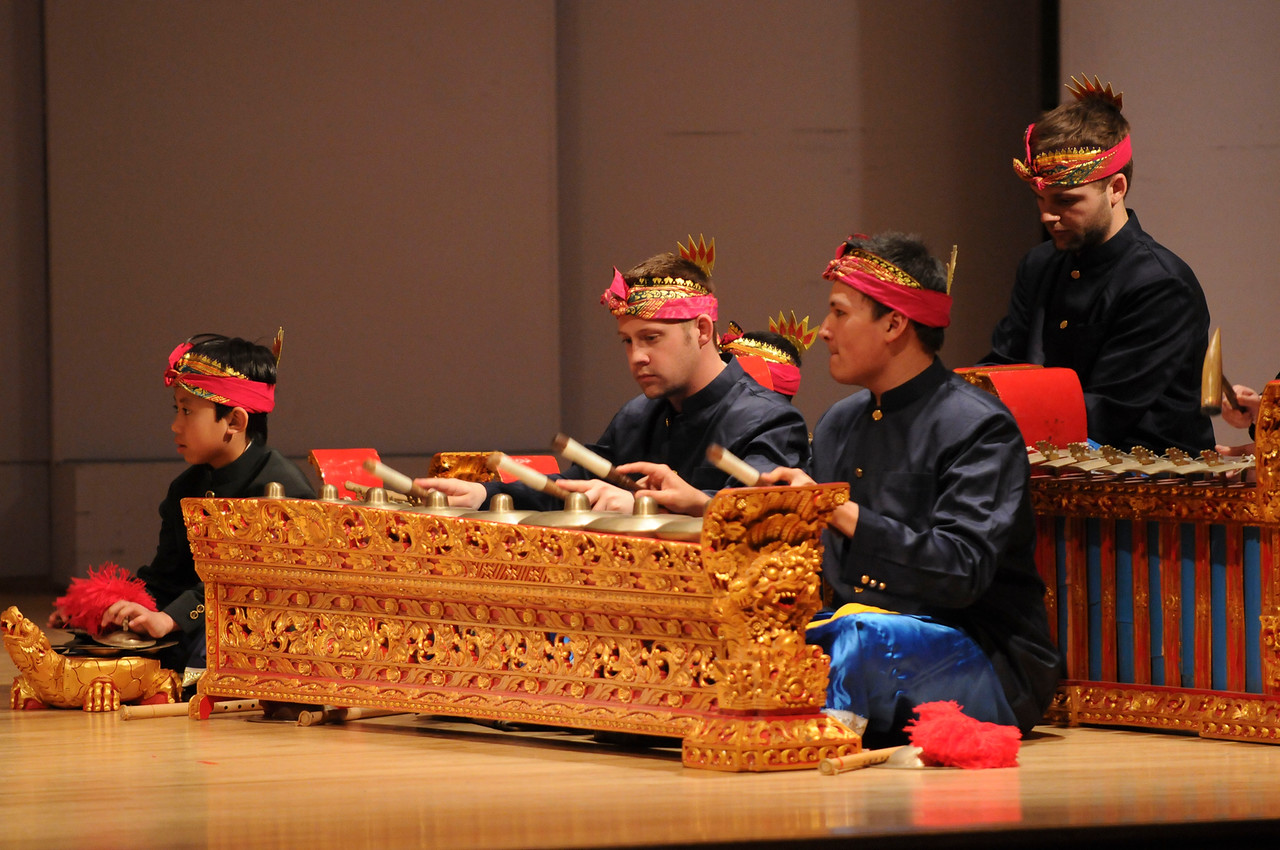
CU Balinese Gamelan and dancers (Photo by Glenn Asakawa/University of Colorado)

CU Balinese Gamelan and dancers (Photo by Glenn Asakawa/University of Colorado)

The University of Colorado College of Music won’t quite take you around the world in 80 minutes, but in one concert of that length they can take you into musical cultures from the other side of the globe.

The occasion is the World Music Concert presented by CU’s Japanese Traditional Music Ensemble and Balinese Gamelan, at 2 p.m. Saturday, Nov. 8 in Grusin Music Hall.

The College of Music offers several world music ensembles, giving students the opportunity to learn a different musical culture from the inside. In addition to the Japanese and Balinese ensembles, there is West African Highlife ensemble, which will perform Saturday at 7:30 p.m., also in Grusin Hall; and in the spring semester there will be a Mexican Mariachi band.

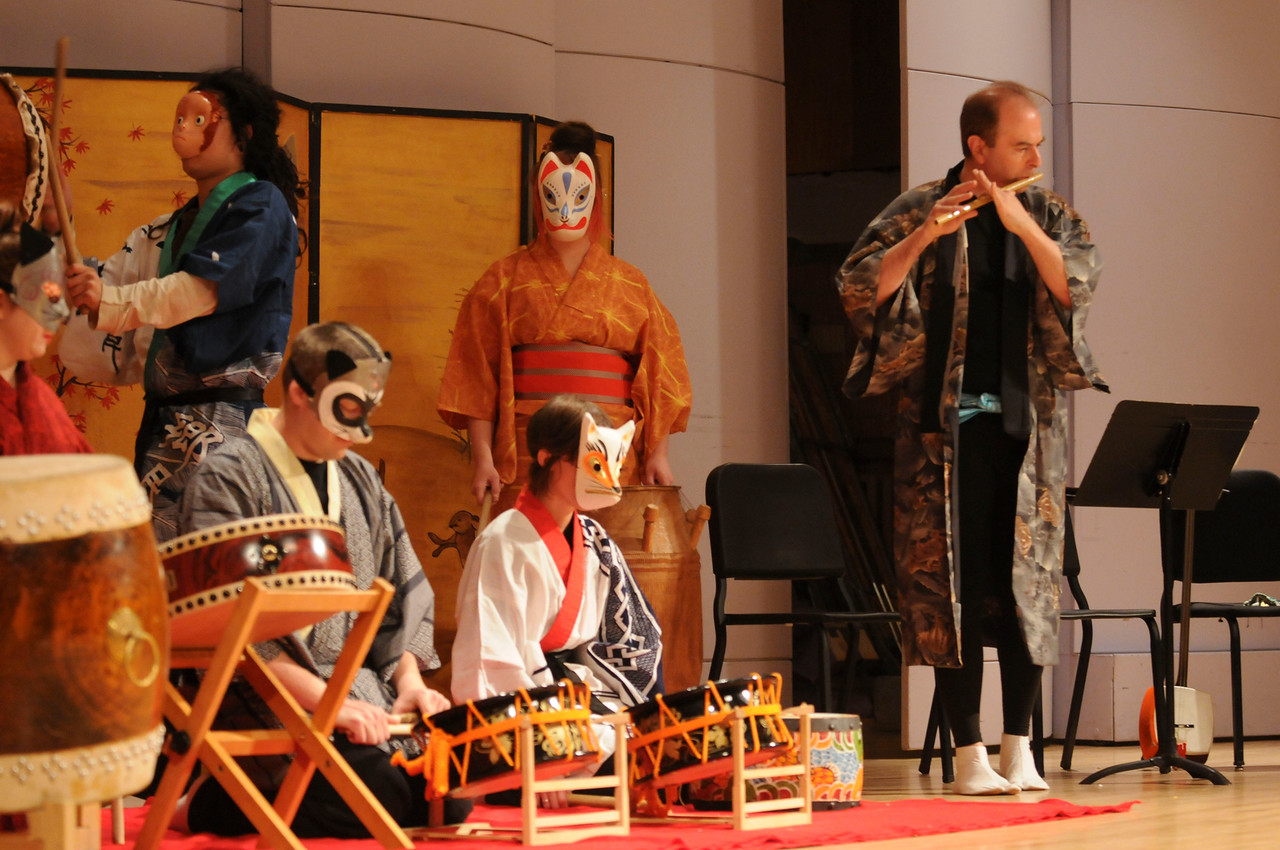
CU Japanese Traditional Music Ensemble (Photo by Glenn Asakawa/University of Colorado)

CU Japanese Traditional Music Ensemble (Photo by Glenn Asakawa/University of Colorado)

The Japanese Traditional Music Ensemble will perform what co-director Jay Keister identifies as “a combination of folk music and theater music.” While he was trained in Japan in classical Japanese music, his wife and co-director of the ensemble, Mami Itasaka-Keister, was trained in Japanese folk music.  Together they cover a variety of Japanese musical styles.  The 14 CU students in the ensemble will sing and perform on the shamisen, a three-stringed lute; the shinobue, a side-blown flute; Japanese taiko drums; and other drums.

The gamelan is a traditional orchestra common in villages on the islands of Bali and Java. It consists of hanging gongs and instruments that are something like xylophones, with resonant metal chimes for the individual notes. The group is led by a drummer, which in this case will be I Made Lasmawan, a Balinese master musician who lives in Colorado and teaches the gamelan at CU and other schools on the Front Range.

Read more in Boulder Weekly.

# # #

CU World Music Concert

CU Balinese Gamelan (Photo by Glenn Asakawa/University of Colorado)

CU Balinese Gamelan (Photo by Glenn Asakawa/University of Colorado)

Japanese Traditional Music Ensemble,
Jay Keister and Mami Itasaka-Keister, directors; and

Balinese Gamelan, I Made Lasmawan, director

2 p.m. Saturday, Nov. 8
Grusin Music Hall, CU Imig Music Building
Free and open to the public

Seicento offers Baroque Music for Halloween, scary, fun and gorgeous

Western Hemisphere premiere of a French grand motet from 1690 anchors the program

By Peter Alexander

Conductor Evanne Browne and Seicento

Conductor Evanne Browne and Seicento. Photo by Rich Saxon.

Evanne Browne really loves the music she is conducting for Halloween with Boulder’s Seicento Baroque Ensemble.

The centerpiece of their season-opening concert “Dies Irae: Halloween Goes Baroque,” (7:30 Friday Oct. 31, at St. Paul Lutheran in Denver and Saturday, Nov. 1, at First United Methodist in Boulder) is the recently rediscovered and reconstructed Dies Irae (Day of wrath) by Michel-Richard Delalande, which she describes as “gorgeous” and “luscious. ”

Another piece on the same program by Delalande, De Profundis (From the depths) is “gorgeous, gorgeous.” And J.S. Bach’s funeral motet Der Gerechte kommt um (The righteous must perish), arranged from music by Johann Kuhnau, is also “gorgeous, gorgeous.”

To set the mood for a Halloween concert, Browne turned to organist Kajsa Teitelbaum. “We open this concert with one of the scariest Halloween Baroque pieces written,” Browne says, “the Bach Toccata and Fugue in D minor. Just in case anybody would get the idea that this whole concert is so serious, I think we’re taking a really lively and exciting approach to celebrating Halloween and All-Souls’ Day.”

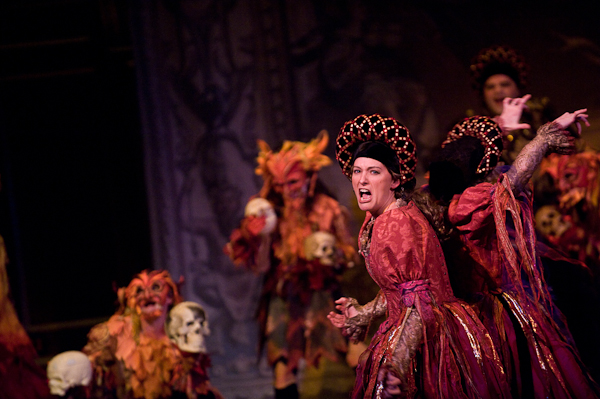
The witches from the Boston Early Music Festival production of Purcell's Dido and Aeneas. Photo André Costantini.

The witches from the Boston Early Music Festival production of Purcell’s Dido and Aeneas. Photo André Costantini.

More Halloween fun will be provided by a scene for witches from Henry Purcell’s opera Dido and Aeneas, which opens with the call “Wayward sisters, you that fright/The lonely traveler by night . . . Appear!” The witches, who keep cackling “Ho, ho, ho, ho, ho,” are clearly up to no good, in spite of their relatively spirited music. They announce their plot to separate the lovers Dido and Aeneas, singing of “The Queen of Carthage, whom we hate.”

If Bach provides some menace and Purcell some light-hearted Halloween fun, the remainder of the program is more serious. The other works are all associated with the liturgy of All Saints or All Souls Day (Nov 1 and 2), the days following Halloween, or All Hallows’ Eve (Oct. 31), in the church calendar; or with liturgical services for the dead.

Michel-Richard Delalande

Michel-Richard Delalande

It was Delalande’s Dies Irae, forming the second half of the concert, that first caught Browne’s attention. A composer and organist at the court of Louis XIV, Delalande is not well known in this country, and the Seicento performance will be the U.S. and Western hemisphere premiere of his Dies Irae.

The text is a rhymed poem from the 13th century that now forms part of the Catholic liturgy for All Souls’ Day and the Requiem Mass. It is the latter context that is most familiar, with the Dies Irae movements from Requiems by Mozart, Berlioz and Verdi being particularly memorable.

“I heard (a commercial recording of Delalande’s piece) months ago, and I thought, this is a work for Seicento,” Browne says. “It’s a fabulous work and needs to be performed, and the French Baroque is a style that we worked on pretty hard in our second year.

“It’s tricky, and it’s got such tremendous tonal chord progressions, and beautiful, beautiful sounds. So after I heard it I thought, well, that’s what we’ll do, and set out to find the music.”

That proved easier said than done. Delalande’s grand motet—a term for sacred music written for orchestra, chorus and soloists—was composed in 1690 for the death of the Dauphine, Princess Marie-Anne-Christine-Victoire, wife of the Grand Dauphin, son of King Louis XIV. It was revised in 1711 at the death of the Dauphin, but then disappeared and was assumed lost.

But as sometimes happens, an unknown copy unexpectedly showed up at an auction in Paris in 1950 and then vanished again after being purchased by a private collector. It was not until 1983—after meeting and wooing the reclusive collector over many years—that the English musical scholar Lionel Sawkins was able to make a microfilm copy of the score, and then only under vanishing late-afternoon light, after being served a five-course meal that took most of the day!

Happily, Browne’s detective work was not nearly as strenuous as that, but she did have to track down Sawkins, make contact through a friend of a friend, and arrange to rent the score and parts for performance. “Because Sawkins knows who has had the score, we know that it has only been performed in the UK, in France, and in Sweden,” Browne says. “And probably fewer than a dozen choirs have actually performed this work in this century, or last century.”

This kind of undiscovered jewel from a little-known repertoire is just the kind of challenge that Browne relishes. “This is the mission of Seicento, to bring the wonderful music of the 1600s to audiences, and mostly music that they probably have never heard,” she says.

SBE in front of FUMC

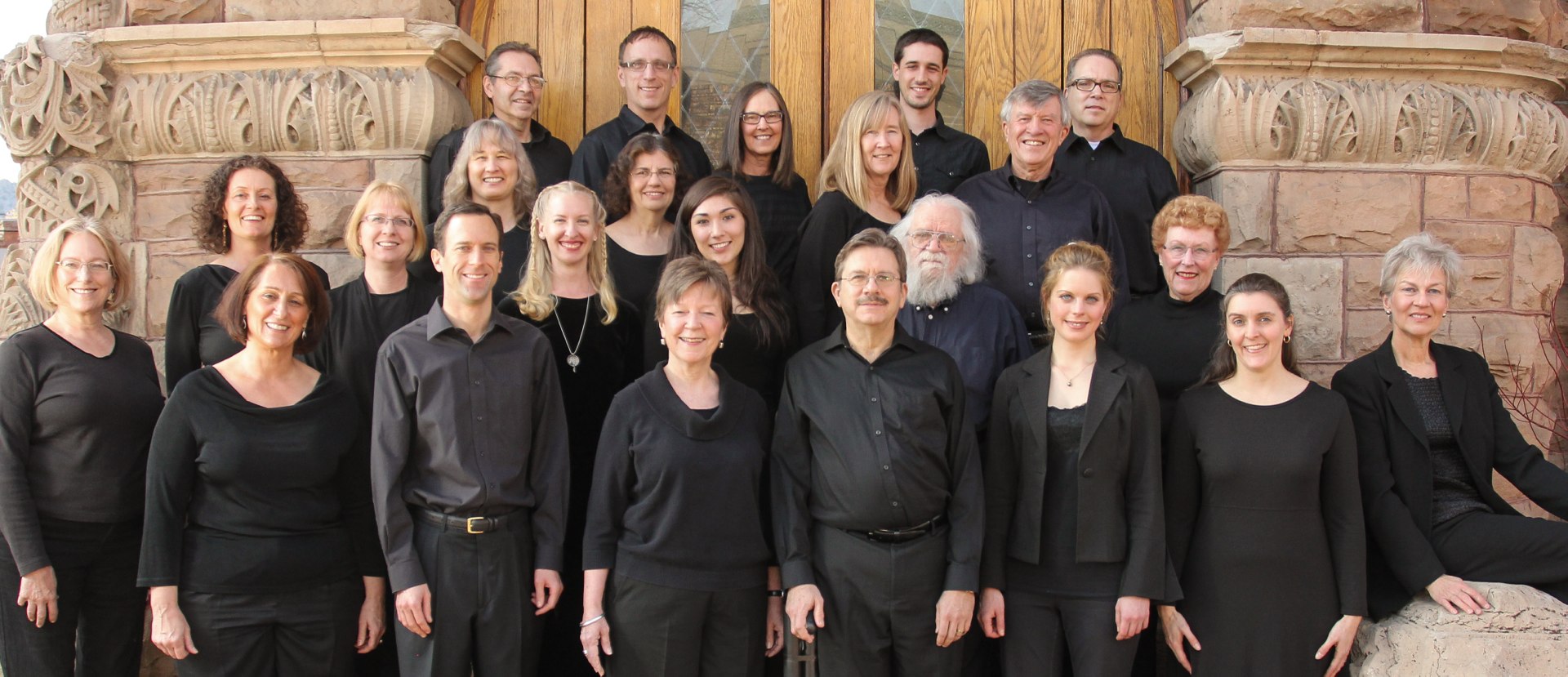
Seicento Baroque Ensemble. Photo by Rich Saxon.

“We’re different from other groups in town because we’re not just looking at Baroque and thinking high Baroque—Handel, Purcell, Bach. We’re doing the earlier things.”

Much of this earlier music requires special performance techniques that go beyond the notation in the original scores. This is particularly true of the French Baroque, which had a tradition and distinct performance styles that differed from the rest of Europe. Many of those performance traditions were forgotten over time, and have to be studied and relearned by specialists such as Seicento.

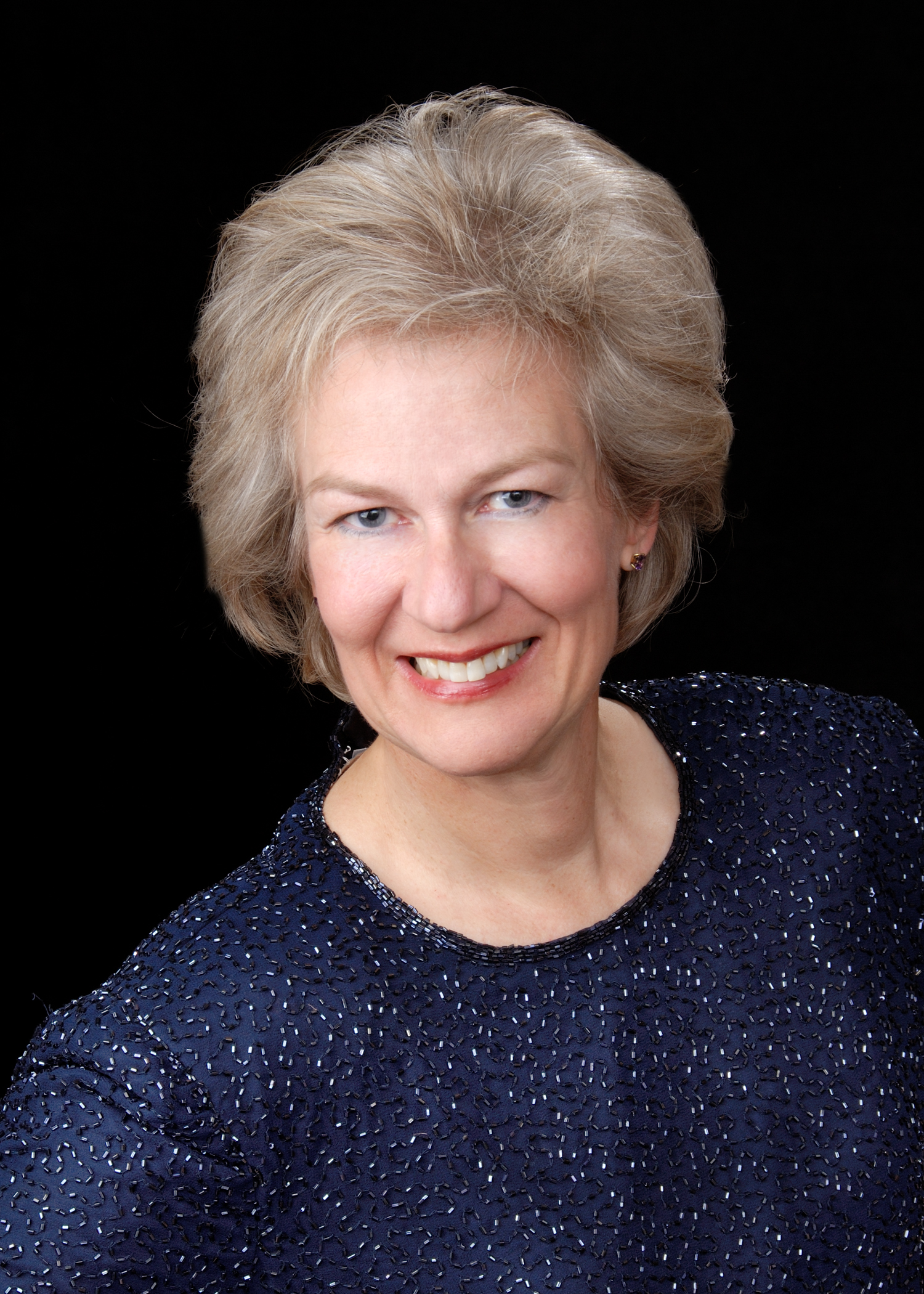
Evanne Browne

Evanne Browne

“There is the language issue, there is the ornamentation issue, there’s the stylistic issue,” Browne says. “If you were to perform this piece of Delalande as it’s written, it wouldn’t have that life, that lilt, that glorious sound” that comes from applying the historical performance techniques of French Baroque music.

“And then also we perform with period instruments,” Browne explains. “That brings (the music) to life in a different way. For this concert we’re using Baroque strings and we have a Baroque flute payer joining us. It’s a different sound.”

Several other pieces will benefit from the Baroque performance techniques that Browne and the singers of Seicento have studied, and the “different sound” they get from the historical instruments. Among these will be portions of Delalande’s grand motet of 1689, De Profundis, a setting of a penitential psalm that is often sung in commemoration of the dead.

Seicento's singers getting in the mood for Halloween

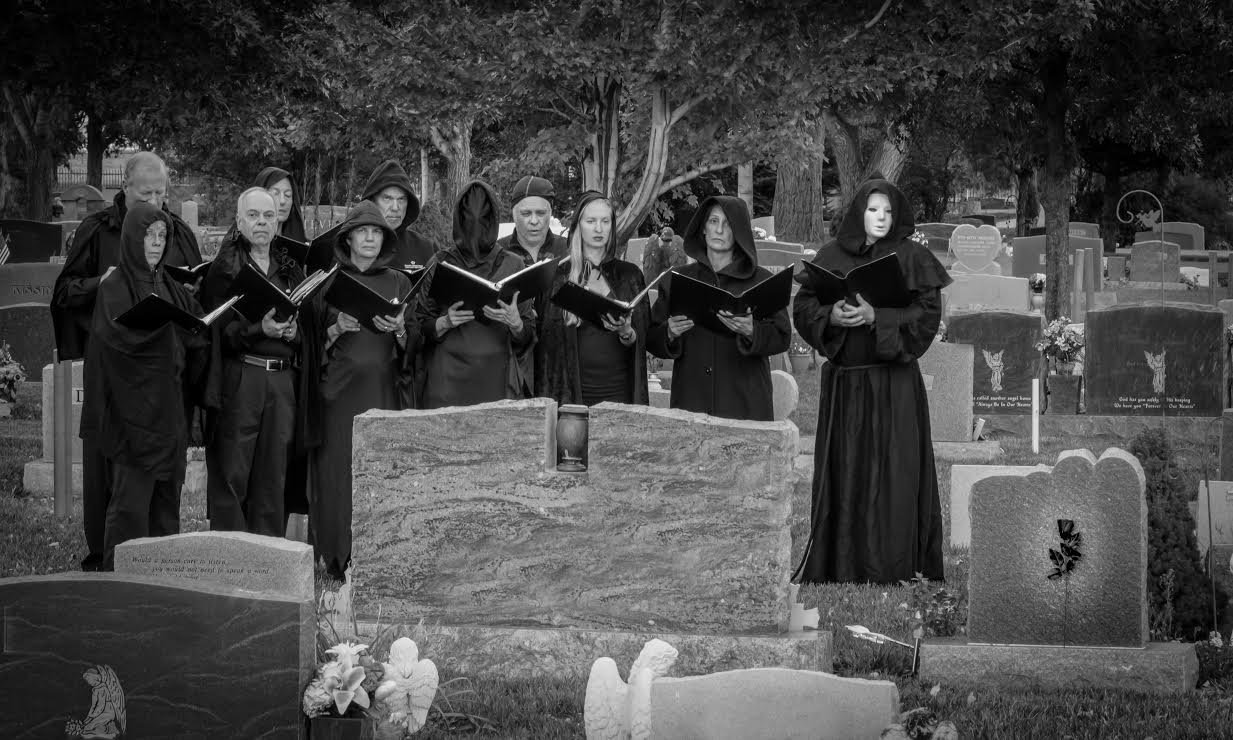
Seicento’s singers getting in the mood for Halloween. Photo by Rich Saxon.

Also on the program will be three motets for All Saints’ Day, conducted by Seicento’s assistant conductor, Alan Filbert: two by the relatively unknown Pompeo Cannicciari and Vincenzo Bertulosi, and one by the great English Renaissance composer William Byrd. And ending the first half of the concert will be the music of the German composer Johann Kuhnau, arranged by J.S. Bach as the funeral motet Der Gerechte kommt um.

Browne admits that’s a lot of music written for the dead. “There’s a little morbidity to this concert,” she says. “But one of the things that is so exciting to me is that we’re having fun with the idea of Halloween and All Saints.”

And did she mention that the music is gorgeous?

# # #

droppedImage_1

Dies Irae: Halloween Goes Baroque
Seicento Baroque Ensemble and soloists
Evanne Browne, artistic director

7:30 p.m. Friday, Oct. 31
St. Paul Lutheran Church, Denver

7:30 p.m. Saturday, Nov. 1
First United Methodist Church, Boulder

Information and tickets