Seicento performs the jazz of the 17th century

Monteverdi’s 1610 Vespers: ‘An album that doesn’t have a bad track’

By Peter Alexander
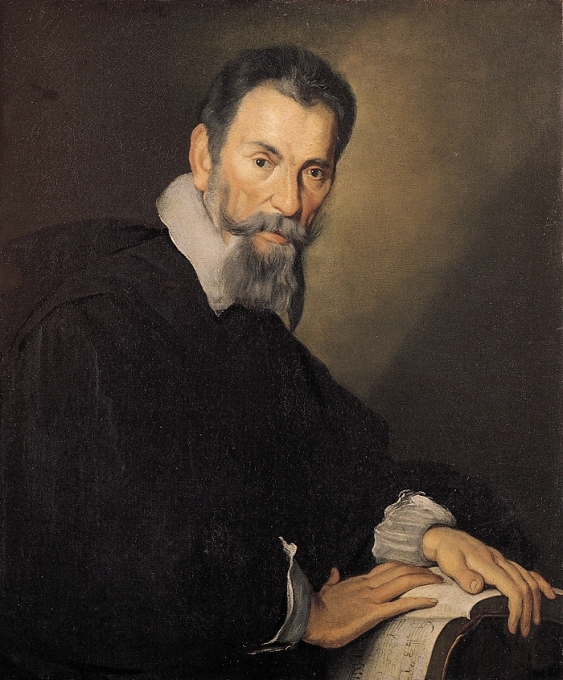
Claudio Monteverdi. Portrait by Bernardo Strozzi.

Claudio Monteverdi. Portrait by Bernardo Strozzi.

Claudio Monteverdi was unhappy in his job.

The year was 1608 and the composer was working in Mantua for the spendthrift Duke Vincenzo Gonzaga. Monteverdi was overworked, he was paid late if at all, and he hated the swampy environment of Mantua. So he did what any artist would do: he put together a portfolio showing skill in all the latest styles, hoping to be hired away from Mantua—hopefully by the Papal Chapel in Rome.

That is the likely story behind Monteverdi’s Vespro della Beata Virgine (Vespers of the Blessed Virgin), known as the “1610 Vespers” for the date the collection was published in Venice. Considered one of the great musical products of the Baroque era, the Vespers return to Boulder and Denver this weekend for performances by Seicento Baroque Ensemble and guest artists under conductor Evanne Browne.
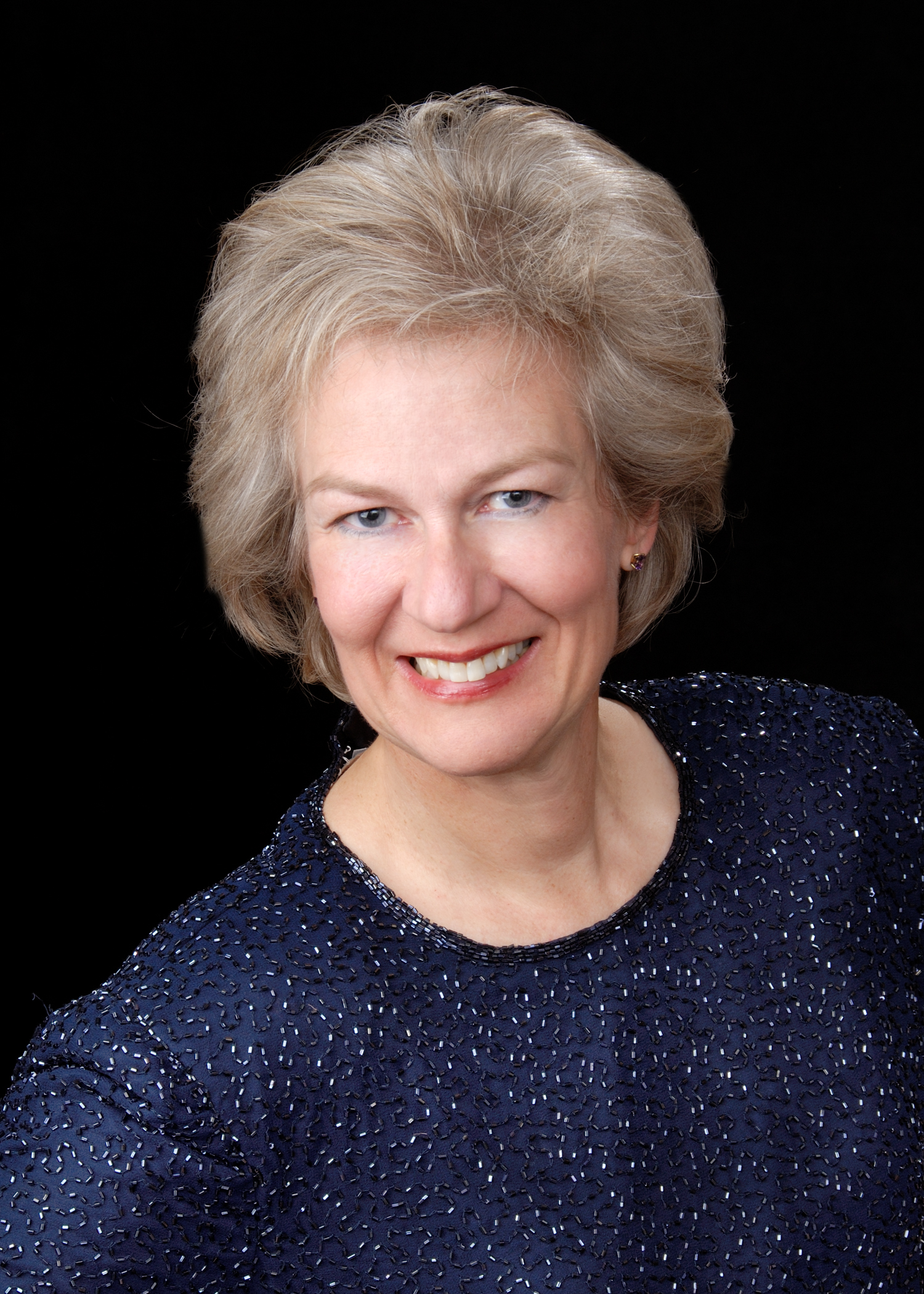
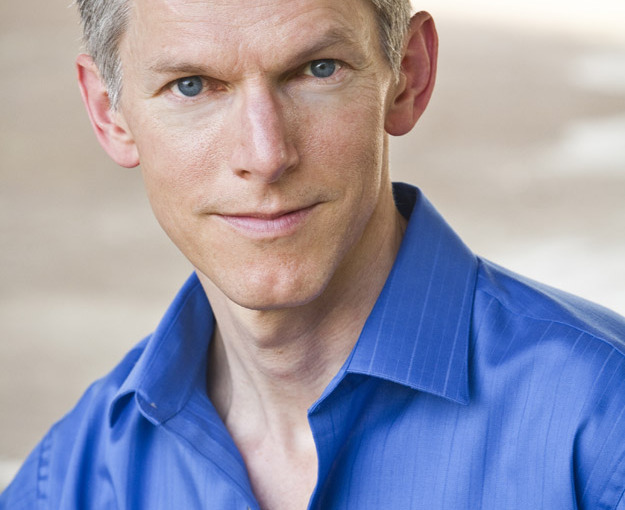
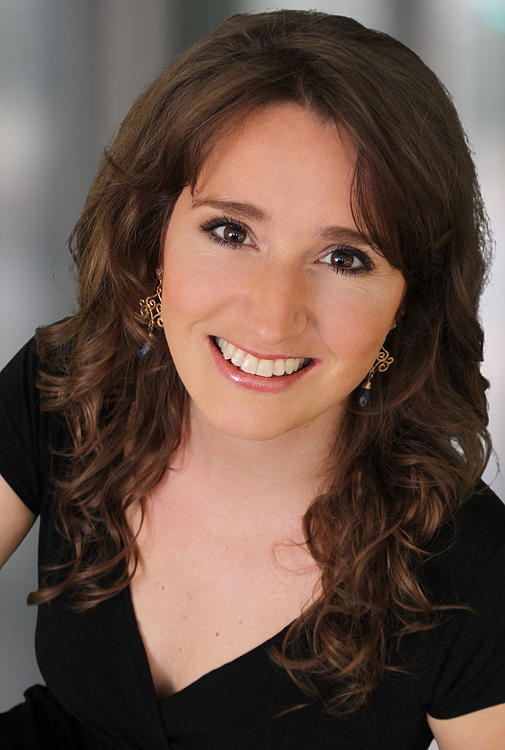
Evanne Browne

Evanne Browne

The guests include vocal soloists and players of historical instruments from the local area, Boston, and Washington, D.C., and Baroque violinist Mimi Mitchell from Amsterdam.

Performances of the complete Vespro della Beata Virgine will be at 7:30 p.m. Saturday, Oct. 24 at First United Methodist Church (1421 Spruce St.) in Boulder, and 2:30 p.m. Sunday, Oct. 25 at St. Paul Lutheran Church (1600 Grant St.) in Denver. There will be a separate concert by the guest soloists, featuring virtuoso vocal music and historical instruments including cornetto and sackbut, at 7:30 p.m. Friday, Oct. 23, at St. Paul Lutheran in Denver. Tickets to all three performances are available here.
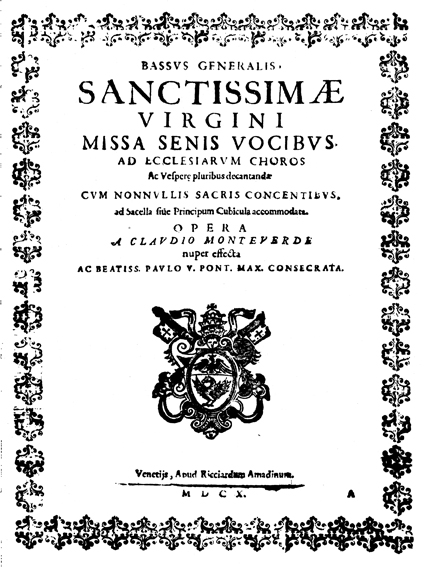
Title page of Monteverdi's 1610 Vespers

Title page of Monteverdi’s 1610 Vespers

To create a musical résumé, Monteverdi put together an anthology of Baroque musical styles. It is, in the words of Mark Dobell of the early-music group The Sixteen, “a really great album that just doesn’t have a bad track.”

The ambitious extent of the Vespers, and its compilation of the radical new styles that were to transform music, are what make the Vespers an important work and one that is widely revered by musicians.

The Vespers are not often performed, however, because the challenges they present are monumental: It’s a long work with virtuosic vocal parts and a choir that divides into up to 10 parts. In many ways, Monteverdi’s notation is only an outline of a finished product: the soloists are expected to add ornamentation, and the instrumental parts don’t indicate what instruments should play.

“It’s the jazz of the 17th century, in that we don’t have everything given to us,” Browne says. “We are expected to modify what’s on the page.”

Read more at Boulder Weekly.

For more background, you may view this BBC documentary about the Vespers.

# # # # #

Monteverdi’s Vespers of 1610
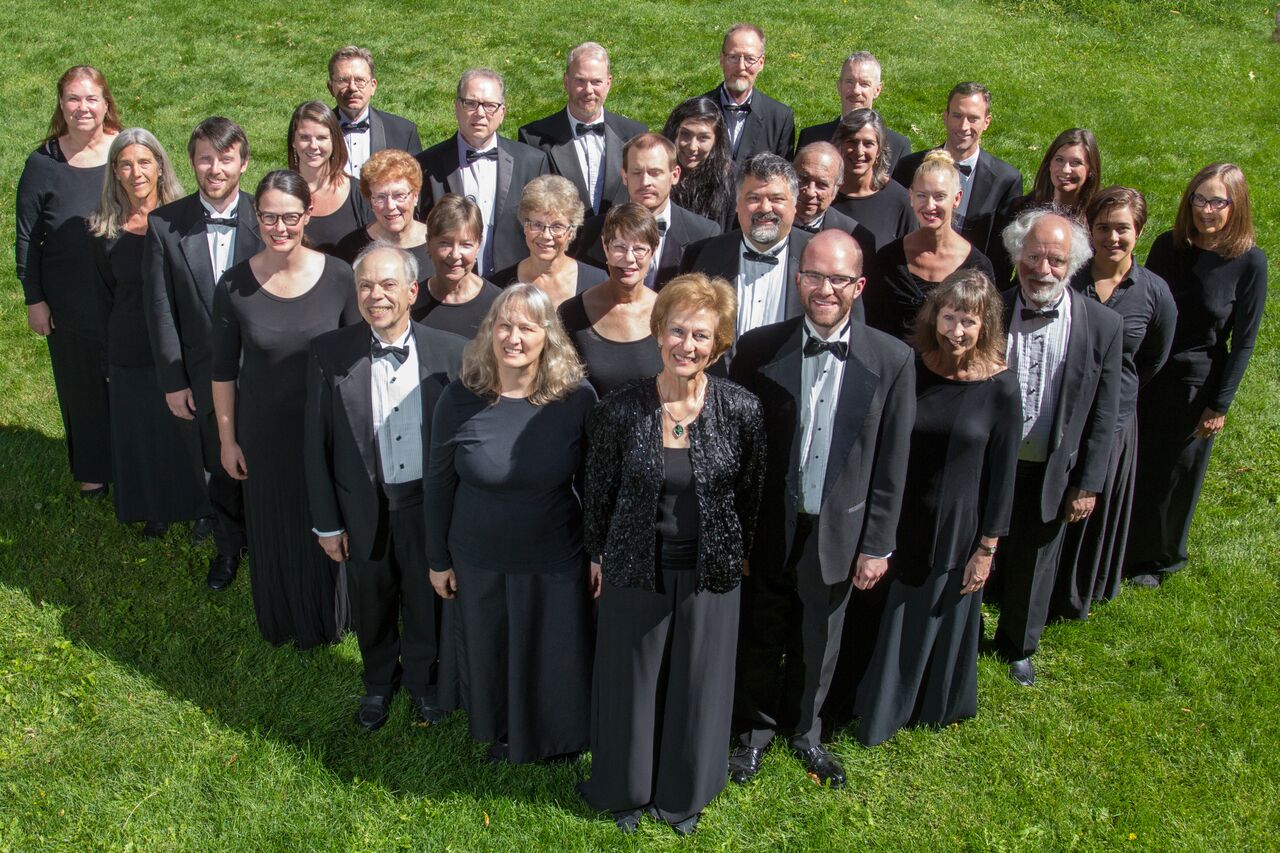
Seicento Baroque Ensemble

Seicento Baroque Ensemble

Seicento Baroque Ensemble with guest artists
Evanne Browne, conductor and artistic director

7:30 p.m. Saturday, Oct. 24
First United Methodist, 1421 Spruce St., Boulder

2:30 p.m. Sunday, Oct. 25
St. Paul Lutheran, 1600 Grant St., Denver

Vocal Soloists:
Amanda Balestrieri, soprano
Marjorie Bunday, mezzo-soprano
Rachel Morrissey, alto
Derek Chester, tenor
John Grau, tenor
Daniel Hutchings, tenor
Kenneth Donahue, bass
Zachary Begley, bass

Orchestra leader, Mimi Mitchell, violin (University of Amsterdam)

Soloists’ Concert
7:30 p.m. Friday, Oct. 23
St. Paul Lutheran, 1600 Grant St., Denver
Tickets

Boulder Bach Festival comes to Longmont—inspired by Pink Floyd

Program “wanders through a labyrinth of pre-Bach Italian mysticism”

By Peter Alexander

compass-manuscript1J.S. Bach never heard Pink Floyd or visited St. Mark’s Cathedral in Venice, but both play a part in the Boulder Bach Festival’s opening program for their 35th season.

The concert, “Italian Roots,” will be performed at 7:30 p.m. Friday in the Stewart Auditorium at the Longmont Museum in Longmont, and at 7:30 p.m. Saturday in St. John’s Episcopal Church in Boulder (tickets). The program includes music by Heinrich Ignaz Franz Biber, Jacques Arcadelt, Dario Castello, Johann Jakob Froberger, Biagio Marini, Marco Uccelini and Johann Christoph Bach on the first half, and two works by festival namesake J.S. Bach after intermission.

The Longmont performance opens the Bach Festival’s 2015–16 season and “Bach in Longmont,” a series of three concerts in the new Stewart Auditorium. The series also includes educational events centered at the Longmont Museum.

Performers will include violinist Zachary Carrettin, musical director of the Boulder Bach Festival (BBF) and the Bach Chamber Singers, a small ensemble of four singers. Featured guest artists will be soprano Josefien Stoppelenburg, who sang on the BBF performance of the Bach B-minor Mass in February of this year; Matthew Dirst, a Grammy-nominated harpsichordist and renowned scholar; and violinist Michiko Theurer, BBF artist-in-residence.

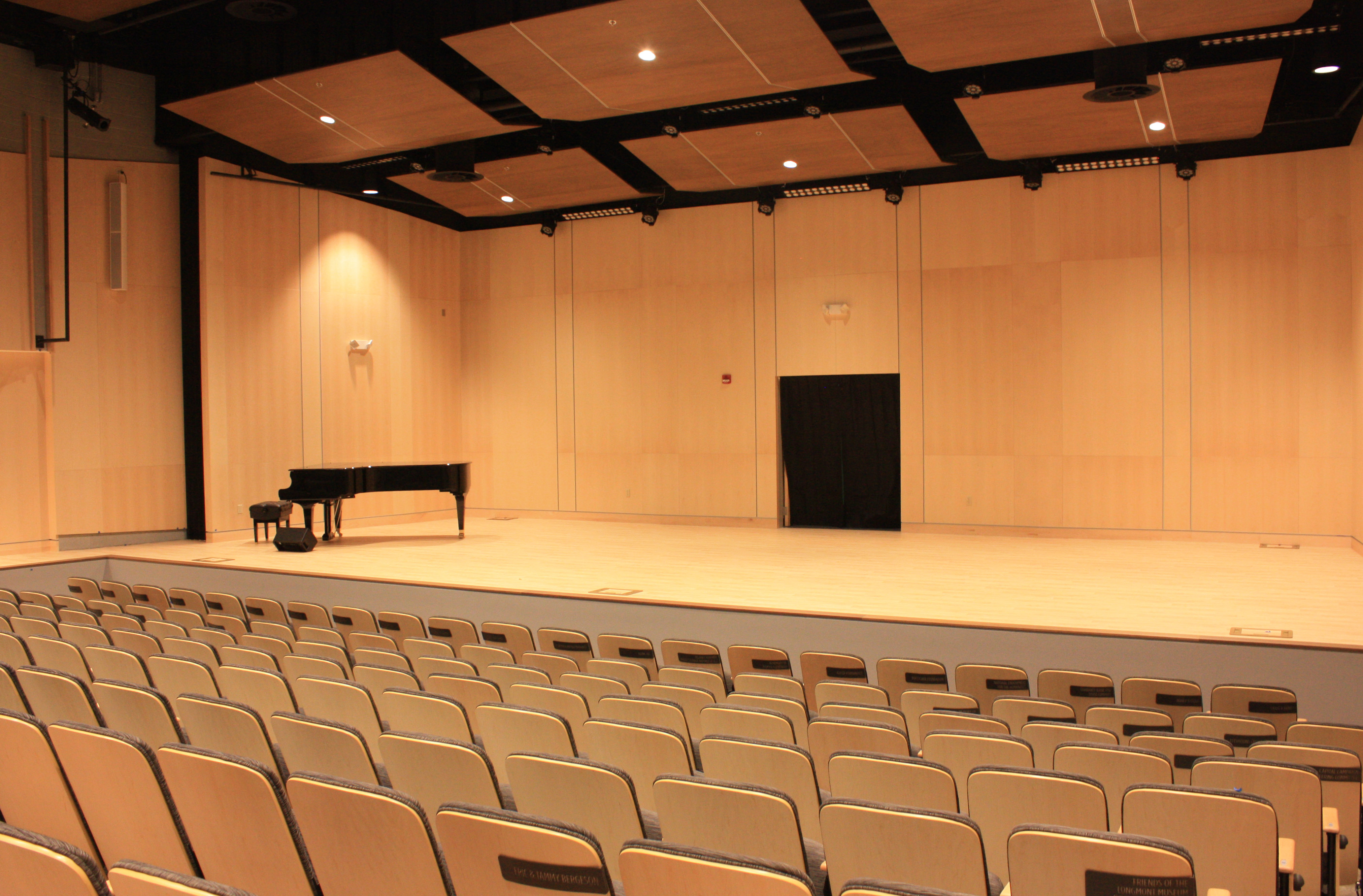
Interior of the new Stewart Auditorium at the Longmont Museum. Photo by Peter Alexander

Interior of the new Stewart Auditorium at the Longmont Museum. Photo by Peter Alexander

Carrettin praises the new auditorium in Longmont. “It’s a beautiful acoustic space, and the lobby is very inviting,” he says. “As (people) walk into the hall, they will realize that it’s an intimate hall, but world class nonetheless.” The connection to St. Mark’s Cathedral, which is famous for having multiple choir lofts so that sounds come from different directions, will be in the creative way Carrettin creates similar effects in the intimate auditorium.

“Whether you want to use the ancient term antiphonal, or the 20th-century term stereophonic, we will be placing artists in different parts of the hall,” he says. “That’s an element of the way we are presenting the entire first half of the program, without pauses between pieces. We’ll improvise transitions from one work to another, and sometimes traveling from left to right on stage.

“The idea is to create half of a concert that is sewn together as its own journey. I have to think of the Pink Floyd albums, or the Yes albums, and the way the artists would weave together pieces of music, sometimes bringing back ideas from previously played songs so that by the end of the album the listener feels that they’ve been told a story.”

According to the BBF Web page, that story will be one of “wandering through a labyrinth of pre-Bach Italian mysticism.” What makes it a labyrinth is perhaps the fact that the composers vary from text-book names unfamiliar to most audience members down to the utterly obscure, but Carrettin is happy to illuminate the various corners of the labyrinth.

“It’s not in the program, [but] I decided to open the program with the Passacaglia for solo violin by [17th-century German composer] Heinrich Biber,” Carrettin says. “The Passacaglia, with its repeated bass line and variations, immediately brings the audience into a space of timelessness.”

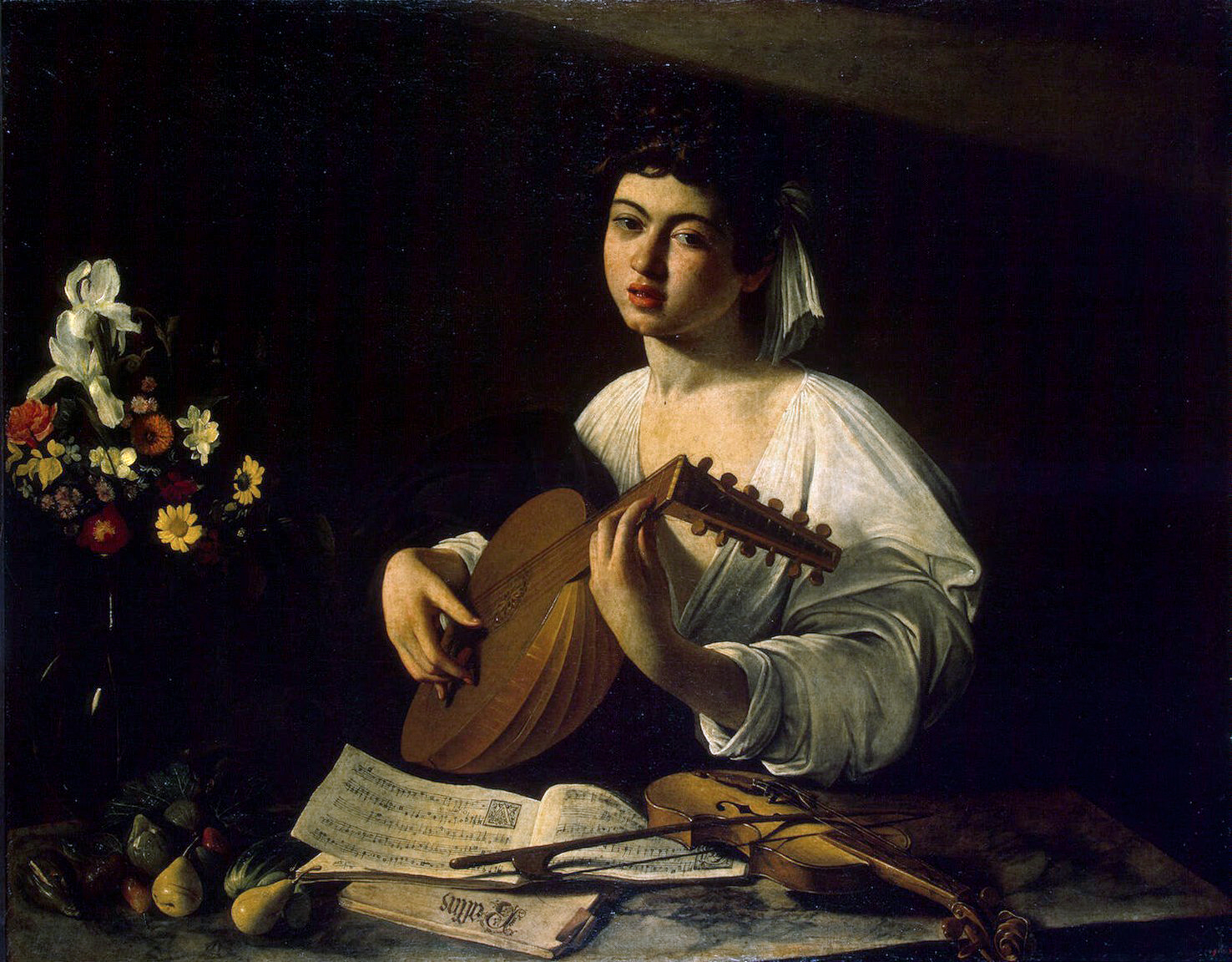
Michelangelo_Caravaggio_020

Caravaggio’s “The Lute Player”

That timelessness sets the stage for the earliest piece on the program, a madrigal by 16th-century Flemish composer Arcadelt. He was so well known in his lifetime that a 1596 painting by Caravaggio, featured on the BBF Web page, shows a lutenist playing one of his pieces. The text, about love and death—like many madrigals—in turn sets the stage for later works on the program.

The next piece returns to the 17th century with a Toccata by Froberger, who was known as a the composer of keyboard suites and descriptive pieces. “Bach was a virtuoso keyboardist and improviser,” Carrettin says, “so Froberger is an opportunity for us to look at other great keyboard composers.

Harpsichordist and scholar Matthew Dirst

Harpsichordist and scholar Matthew Dirst

“Matthew Dirst ,who’s performing [Froberger’s Toccata] is really an incredible, dynamic scholar and author of a recent book called Engaging Bach. He is perfect for bridging the Italian style and Bach, starting with a piece that just plays with the facility of a keyboard instrument.

“As the program progresses, you’ll hear Matthew in various perspectives and lights.”

The rest of the first half plays out with Dirst playing first a sonata for violin and harpsichord by Castello with Theurer; then a set of variations for harpsichord and two violins by Marini, with Theurer and Carrettin; and another piece by Froberger. The first half ends with the Bach Chamber Singers performing music by one of J.S. Bach’s older relatives, Johann Christoph Bach.

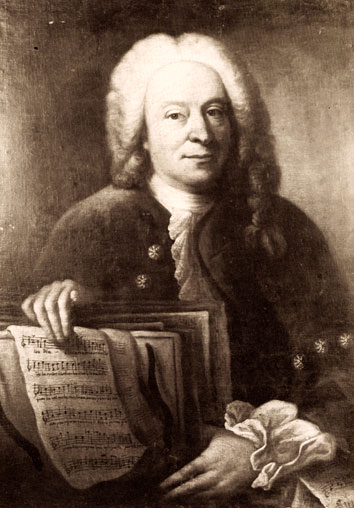
Johann Christoph Bach

Johann Christoph Bach

“He was actually the most known Bach composer before Johann Sebastian, but history doesn’t remember him,” Carrettin says. “This short motet, World, goodnight, is stunningly beautiful, so I think it’s a great way to end the first half.” Like the Arcadelt, this is another piece reflecting on death.

Carrettin describes the first half of the program as “fragments within a dream,” which contrasts with the two very familiar works by J.S. Bach that will be played in full on the second half: the much loved Harpsichord Concerto in D minor, BWV 1052, and a version of the cantata Ich habe genug, BWV82a for soprano—the concert’s final musical meditation on death.

“Dirst will perform the most famous Bach harpsichord concerto,” Carrettin says. “He’ll be just accompanied by string quartet, so you will really get the sound of the harpsichord ringing throughout the hall.”

Soprano Josefien Stoppelenburg

Soprano Josefien Stoppelenburg

Turning to the cantata, Carrettin says “There are several special elements of our performance. One is that we are doing this one per part, featuring Ysmael Reyes on flute. We’ll have two violins one viola, one cello, and one double bass, and Dirst will play harpsichord.

“Soprano Josefien Stoppelenburg, who thrilled audiences in the B minor Mass, will return to sing this. And what’s so special about this performance is that we’re using the rarely performed version that Bach wrote for soprano.”

Bringing together guest artists with local musicians in something Carrettin especially enjoys. “What thrills me is having an internationally recognized harpsichordist, and an internationally recognized virtuoso soprano sharing the stage with expert front-range musicians and young professionals,” he says.

“What I like is bringing together different generations, different life experiences, and artists from different geographical locations. What ends up happening is these paths of discovery and relationships are created. To me that’s as thrilling as the music.”

# # # # #

Italian Roots
Music by Biber, Arcadelt, Castello, Froberger, Marini, Uccelini, Johann Christoph Bach and J.S. Bach
Boulder Bach Festival Chamber Singers with Zachary Carrettin, violin, and guest artists

7:30 p.m. Friday, Oct. 16
Stewart Auditorium at the Longmont Museum, Longmont

7:30 p.m. Saturday, Oct. 17
St. John’s Episcopal Church, Boulder

Tickets

Robert Olson opens his final season as music director of the Longmont Symphony

Olson and the LSO offer Russian masterworks, “War and Peace” for 2015–16

By Peter Alexander

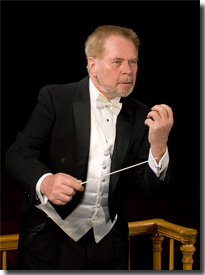
Robert Olson

Robert Olson

Last night (Oct. 1) Robert Olson announced to the Longmont Symphony Orchestra (LSO) that the current season will be his last as the orchestra’s music director.

He had already discussed his decision to retire with the symphony board, but waited until he spoke to the orchestra before making the news public. In a written communication, Olson commented, “I will likely ‘bookend’ the 2016-17 season [i.e, conduct the opening and closing concerts] because that will be the orchestra’s 50th anniversary. The board and orchestra will work together to decide on my successor.”

Olson has been conductor of the LSO for 33 years.

The news came as the LSO was preparing to launch the 2015–16 season on Saturday evening (7:30 p.m. Oct. 3 in Longmont’s Vance Brand Civic Auditorium) with a concert titled “Those Amazing Russians.”

That title is actually one of two headings that Olson selected for the coming year. The 2015–16 season brochure carries that as its title, but as Olson explains, “There are actually two themes throughout the season. One is ‘War and Peace,’ and the other on most of the concerts is highlighting one of the great masterworks by a Russian composer.”

The Russian theme brings attention to some of the abundance of great music that has come to the concert hall from Russia. Tchaikovsky’s Sixth Symphony will be featured on the season-opening concert Saturday; later concerts will feature Prokofiev’s Fifth Symphony, Mussorgsky’s Overture to Khovanshchina, Tchaikovsky’s Piano Concerto No. 1, and Rachmaninoff’s Symphonic Dances.

On the other hand, the “War and Peace” theme comes from the LSO’s biennial collaboration with the Longmont Chorale, which will take place on the second concert of the fall, Saturday, Nov. 14. “They specifically requested the [Vaughan Williams] Dona Nobis Pacem,” Olson says. “That’s a very anti-war statement, so I got thinking, what would I put with it?”

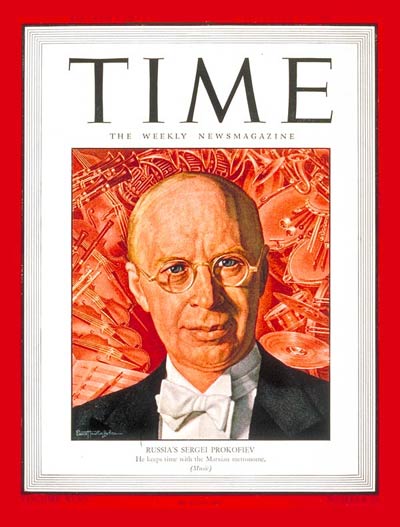
Prokofiev on the cover of Time magazine, Nov. 19, 1945

Prokofiev on the cover of Time magazine, Nov. 19, 1945

He settled on Prokofiev’s Fifth Symphony, which was premiered in Moscow in January, 1945. The Second World War was coming to a close, and the performance was a great occasion for Russian musicians and audiences who had returned to a recently re-opened city. Just as Prokofiev was set to conduct the premiere, the sounds of artillery could be heard, celebrating the success of the Russian army.

“I thought, oh, that would be cool!” Olson says.

That pairing—a composition calling for peace and a composition written during war—became the germ of the larger theme. Works later in the season expand that theme to include emotional and inner struggles as well as overt warfare, with John Corigliano’s Symphony No. 1 (“AIDS” Symphony) and Richard Strauss’s Death and Transfiguration. In fact, Olson says, for the opening concert on Saturday “there’s so much internal strife with Tchaikovsky’s Sixth that I could easily have said that was Part I” of the theme. “That didn’t occur to me until it was too late.”

Tchaikovsky

Tchaikovsky

“As most people know, this is the most intimate of Tchaikovsky’s symphonies,” Olson continues. “He bares his soul trying to reconcile so much pain in his life. Tchaikovsky is the quintessential suffering ‘artiste’ of the Romantic era, so we have a piece that is very dark in a lot of ways.

“The third movement ends with one of the great, glorious marches that Tchaikovsky was so good at writing, (followed by) maybe the most important movement, one that opens with great anguish and ends with peaceful resolution. He does bring a sense of comfort at the very end, (with) that beautiful major theme that’s just played over and over again.”

Sharing the program with the Tchaikovsky symphony will be two works for solo double bass and orchestra performed by CU music faculty member Paul Erhard: Divertimento for bass and orchestra by Nino Rota, and Arioso for bass and orchestra by retired CU professor Luis Gonzalez. The Arioso was written for Erhard in 1992 as a work for bass and piano, and first premiered by Erhard and Gonzalez at an international double bass event in Hungary. The Longmont performance will be the premiere of a new version for bass and orchestra.

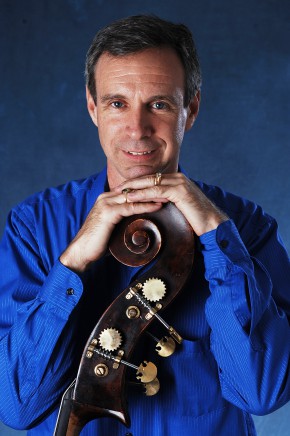
Double bassist Paul Erhard

Double bassist Paul Erhard

Gonzalez’s score reflects the composer’s Argentine heritage in the use of the tango. “There is a tango rhythm that pervades the entire work,” Erhard explains. “Something I find interesting is that the tango originated on the river between Argentina and Uruguay. As I play it with that in mind, I can hear South American birds. They’ve got their different songs, and they don’t all necessarily line up.

“I’m very excited to hear the orchestra part, because I haven’t heard it yet. From the score there’ll be these sounds of birds, if one uses one’s imagination that way. Luis never talked to me about this, but that’s what I’m hearing in it.”

Gonzalez and Erhard performed together often as a piano-bass duo, both before and after the Arioso was written. As a result, Erhard says, “Gonzalez has a very special sense of the double bass. He knew my playing, he knows a lot of wonderful bass players, so the piece is based on things that he heard the bass do, and new things that the bass could do.”

Nino Rota, the composer of the Divertimento that Erhard will play, is known to many as the composer of film music for Federico Fellini (8 ½, La Strada, Juliet of the Spirits), Franco Zeffirelli (Romeo and Juliet) and Francis Ford Coppola (The Godfather), among others. Rota has also written a great deal of concert music, including concertos, chamber music and choral works.

Although the Divertimento is not widely performed, Erhard believes it is the best solo work for bass and orchestra that he knows. He has recently introduced the work to other bass players, who he says quickly added it to their repertoire.

# # # # #

Those Amazing Russians
7:30 p.m. Saturday, Oct. 3
Vance Brand Civic Auditorium, Longmont

Longmont Symphony Orchestra, Robert Olson, conductor
Paul Erhard, double bass

Nino Rota: Divertimento for bass and orchestra
Luis Gonzalez: Arioso for bass and orchestra
Tchaikovsky: Symphony No. 6 (“Pathétique”)

War and Peace, Part I
7:30 p.m. Saturday, Nov. 14
Vance Brand Civic Auditorium, Longmont

Longmont Symphony Orchestra, Robert Olson, conductor
Longmont Chorale, Kara Guggenmos, soprano, and Steven Taylor, baritone
Ralph Vaughan Williams: Dona Nobis Pacem
Sergei Prokofiev: Symphony No. 5

Tickets for these and other concerts by the LSO may be purchased here.

Telling Stories in music

Boulder Philharmonic opens 2015–16 season with two soloists

By Peter Alexander

Pianist Gabriela Montero. Photo by Shelley Mosman

Pianist Gabriela Montero. Photo by Shelley Mosman

The Boulder Philharmonic’s 2015–16 season is titled “Reflections: The Spirit of Boulder,” but the orchestra will open the season by telling stories.

The season’s opening concert under music director Michael Butterman will be at 7 p.m. Sunday, Sept. 13, in Macky Auditorium — a departure from the orchestra’s standard 7:30 p.m. Saturday concert dates.

The program will feature music that tells stories, two soloists with their own stories, and one great concerto that is a story in itself. Butterman will conduct Ravel’s Mother Goose Suite; The Storyteller for violin and orchestra, inspired by Japanese folk tales and written by Korine Fujiwara for the orchestra’s concertmaster, Charles Wetherbee; and Rachmaninoff ’s Piano Concerto No. 2, the piece that salvaged the composer’s career, performed with pianist Gabriela Montero, who has been acclaimed both as “an exciting pianist” (The New York Times) and for her “spectacular improvisation” (Cincinnati Enquirer).

That’s a lot of stories for one concert.

Read more in Boulder Weekly.

# # # # #

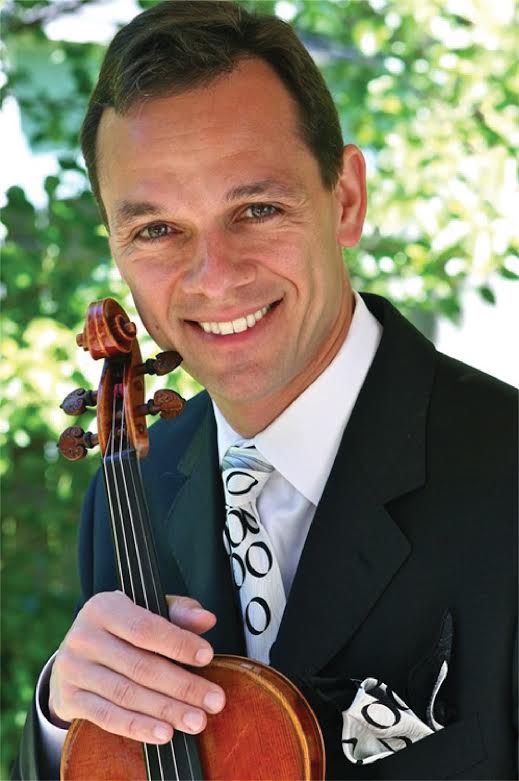
Concertmaster Charles Wetherbee

Concertmaster Charles Wetherbee

Boulder Philharmonic Orchestra: Opening Night
Michael Butterman, director, with
Charles Wetherbee, violin, and Gabriela Montero, piano

Ravel: Mother Goose Suite
Korine Fujiwara: The Storyteller for violin and orchestra
Rachmaninoff: Piano Concerto No. 2

7 p.m. Sunday, Sept. 13 (Note the time and day)
CU Macky Auditorium

Tickets.

logo2

New CMF music director aims to build a relationship with the audience

With the festival under way, Zeitouni can come into his own

By Peter Alexander

Jean-Marie Zeitouni

Jean-Marie Zeitouni

Jean-Marie Zeitouni is excited about his entire first season as music director of the Colorado Music Festival (CMF).

“I love them all!” he says of the festival concert programs. “These are all concerts that I’m looking forward to. [Over the summer] you have every single genre, and every single period in music. You have solo works, you have chamber music, you have recitals, you have chamber orchestra and big orchestra — everything is covered.”

The festival got underway with Young People’s Concerts June 26 and 27 and an opening concert July 1. The festival now gets going in earnest, with weekly performances of chamber music, pairs of Festival Orchestra concerts Thursdays and Fridays through Aug. 7, and Chamber Orchestra concerts on Sundays through Aug. 9. (All orchestra concerts are at 7:30 p.m. in the Chautauqua Auditorium; chamber music will be at the First Congregational Church, 1128 Pine St.)

Scattered through the summer are solo recitals by pianist Olga Kern, who wowed CMF audiences two years ago with her performances of the Rachmaninoff concertos ( July 3); Music Mash-Up programs, combining classical and popular material, planned and directed by Steve Hackman ( July 7, 21 and Aug. 4); and a performance by musical humorists Igudesman & Joo (Aug. 1).

Read more at Boulder Weekly.

See the full CMF schedule and purchase tickets on their Web page.

The times they are a-changin’ for classical music in Boulder

Events at the Dairy Center June 21 & 23 reflect a flourishing concert music scene

By Peter Alexander

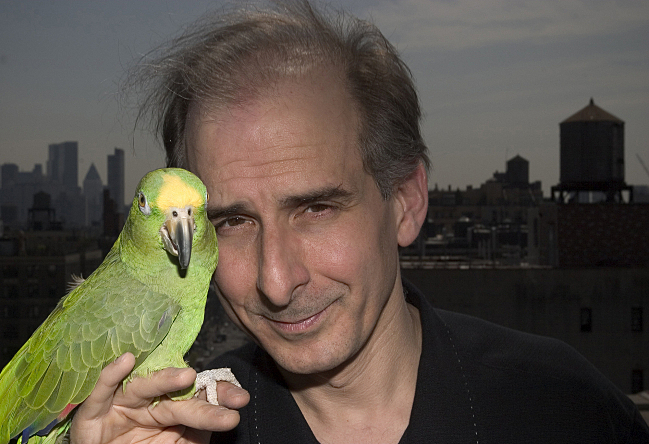
“The Piano Puzzler,” Bruce Adolphe (shown with his parrot, Polly Rhythm), comes to Boulder’s Dairy Center for two performances of his music.

Concert music is a growth industry in Boulder.

It used to be that there just weren’t any classical or new music concerts in Boulder in late May and June—between the end of the standard concert season and the beginning of the summer festival season. It also used to be that the Dairy Center only offered the odd concert once or twice a year.

But not any more. The Dairy’s new “Soundscape” series has made it a major venue for concert music in Boulder, and this year that continues right into June, when the Dairy is offering two concerts of classical and new music in three days: the final event of the 2014–15 “Soundscape” series at 4 p.m. Sunday, June 21, featuring the Miami String Quartet; and “One Night Only,” a concert of music for mezzo-soprano and instruments at 7 p.m. Tuesday, June 23, with soloist Abigail Fischer.

Both concerts will feature the music of composer Bruce Adolphe, who will be in attendance. Adolphe is a composer, educator, performer and author who lives in New York, where he is resident lecturer and director of family concerts for the Chamber Music Society of Lincoln Center. Among other professional and educational activities, he is also the Piano Puzzler for “Performance Today” on public radio.

These concerts are presented in partnership with the Off the Hook Chamber Music Festival in Ft. Collins, where Adolphe is co-artistic director with Jephta Bernstein. Both programs will also be part of the Off the Hook season this summer. (More information Off the Hook is available here.)

James Bailey, the director of the Dairy’s Soundscape series, commented that sharing these two programs with Off the Hook provides “a unique opportunity for Boulder because these are not groups that we would ever be able to afford (as a separate performance)—we don’t have to fly them in, we don’t have to house them.

“It was a real opportunity for us to hear really outstanding talent and great programming, so I jumped on the chance.”

Miami-187-hr

Miami String Quartet (photo by Tara McMullen)

Sunday’s Soundscape performance by the Miami String Quartet offers two works from standard repertoire—Haydn’s early String Quartet in F minor, op 20 no. 5, and Mendelssohn’s Quartet in E minor, op. 44 no. 2—and two works that are much less familiar—Five Pieces for String Quartet by Erwin Schulhoff and Adolphe’s Fra(NZ)g-mentation.

Adolphe’s oddly titled piece is based on an incomplete fragment of a movement for string quartet by Franz Schubert. It was part of a project commissioned by the Brentano Quartet to celebrate their 20th anniversary, comprising six works by six composers, each based on a fragment by another composer.

“It’s not pronounceable,” Adolphe says of his title. “It occurred to me visually and I decided to leave it. Schubert gives you the Franz and the piece is a fragment, so you’ve got a fragmentation and a Franz. It’s kind of a ridiculous title and I tend to call it my Schubert Fragment Piece.”

Bruce Adolphe (photo by Barbara Luisi)

Bruce Adolphe (photo by Barbara Luisi)

When he starting composing his Schubert Fragment Piece, Adolphe found that he was becoming obsessed with the tune and decided to use that obsession productively. “It was almost like an earworm,” he says. “I really couldn’t get rid of it, and at one point it occurred to me if I wanted to be really interesting maybe the piece should be about being obsessed with the melody and trying to get it out of your mind.

“I started with the tune swirling around, and new rhythms, and I sort of let the tune get to the point where the listener also finds it obsessive. Then it splits into fragments itself, which is another way of dealing with the word fragment, and finally comes to an end that is not conclusive—but at least you get a break from the melody.”

Luciano Berio

Luciano Berio

The artistic focus of the June 23 concert will be Luciano Berio’s Folk Songs. Composed in 1964 as a tribute to American singer Cathy Berberian, who was known for her performances of contemporary music, it is based on nine folks songs from several European countries, plus two folk-like American songs by John Jacob Niles (“Black is the Color of My True Love’s Hair” and “I Wonder as I Wander”). In these arrangements, Berio created an accessible work that joins contemporary elements with simple melodies.

“There are folk songs from all over—Italy, America, France, Armenia, Azerbaijan,” Abigail Fischer, the soloist for Folk Songs, says. “Berio brings new life into these pieces. Each has its own personality based on his orchestration and interpretation of the (song’s) character.

Mezzo-soprano Abigail Fischer

Mezzo-soprano Abigail Fischer

“Each song has a slightly different way of singing as well, in order to encapsulate the character of each region. (For example,) the song from Sicily is very guttural and almost sounds like a folk song from Central Asia with the orchestration that Berio chooses.”

Fischer is known for singing contemporary music, and she has also performed a great deal of Baroque opera and other early music. Today she finds herself wishing to sing more of the standard vocal repertoire as well.

“I originally fell into singing Baroque music and contemporary music because I was trained as a cellist and already very experienced with the sophisticated musical sensitivities of these styles,” she says.

“This is probably why I fell into singing more Baroque and new music, because not as many singers really do this well. However, as my voice grows and matures, both materially over time, and as my technical knowledge of how to work with my growing voice increases, I desire more and more to also sing standard repertoire.”

Performing with Fischer on the Berio will be a number of musicians from the Boulder, Denver and Ft. Collins area: Erik Peterson, violin; Brook Ferguson, flute; AnnMarie Liss, harp; Deborah Marshall, clarinet; Judith McIntyre, cello; and Eric Hollenbeck and Mike Tetrault, percussion. Other works on the program will be Rikudim for flute and harp by Adolphe; Jet Whistle for flute and cello by Villa Lobos; and Steve Reich’s New York Counterpoint for clarinet and tape.
None of this is common repertoire. So the Dairy, newly prominent in Boulder’s musical life, is not only filling a gap in the calendar. Their programming is filling a gap in the repertoire you can find here as well.

The times they are a-changin’.

# # # # #

dairy-logoSoundscape
Miami String Quartet and Bruce Adolphe
Haydn: String Quartet in F minor, op. 20 no. 5
Bruce Adolphe: Fra(NZ)g-mentation
Erwin Schulhoff: Five Pieces for String Quartet
Mendelssohn: String Quartet in E minor, op. 44 no. 2

4 p.m. Sunday, June 21
Dairy Center for the Arts, Boulder
Tickets

One Night Only
Abigail Fischer, mezzo-soprano, and instrumental ensemble
Bruce Adolphe: Rikudim (Dances) for flute and harp
Heitor Villa Lobos: Jet Whistle for flute and cello
Steve Reich: New York Counterpoint for clarinet and tape
Luciano Berio: Folk Songs for mezzo-soprano and ensemble

7 p.m. Tuesday, June 23
Dairy Center for the Arts
Tickets

Scenes from Zach Redler’s new opera offer a glimpse into the artistic workshop

CU NOW presents a work in progress with libretto by CU alumnus Mark Campbell

By Peter Alexander

Librettist and CU Alumnus Mark Campbell, who is returning to campus for CU NOW. (Photo by Laura Marie Duncan)

Librettist and CU Alumnus Mark Campbell, who is returning to campus for CU NOW. (Photo by Laura Marie Duncan)

It’s mostly hard work.

It looks like magic from the outside, the process of creating a large-scale, complex work of art like an opera. But the more you are able to see inside the process, the more you see the hard work it takes to get from an idea to a viable piece of art to a fully committed production in front of an audience.

It is part of the wonder of the University of Colorado, Boulder College of Music CU NOW (New Opera Workshop) program that it offers a glimpse into the magic-producing hard work of making a new opera, while advancing students’ careers and the world of opera.

The program, started six years ago by Leigh Holman, director of the CU Eklund Opera Program, and Patrick Mason, a professor of voice, opera and choral studies in the CU College of Music, brings composers to campus to work on developing a new operatic work, working over a couple of weeks with student singers in the CU College of Music. In a win-win-win situation, the students benefit from working closely with a composer on a new work, developing skills useful in the professional world; the composers benefit from hearing their work performed as they write it; and audiences benefit from seeing inside the creative process.

This year’s CU NOW program will come to fruition Friday and Sunday (June 12 and 14) with performances of scenes from an opera in progress by composer Zach Redler and librettist Mark Campbell, a CU alumnus whose other libretti include Kevin Puts’s Silent Night, winner of the 2012 Pulitzer prize in music, and the recently premiered Manchurian Candidate.

Composer Zach Redler

Composer Zach Redler

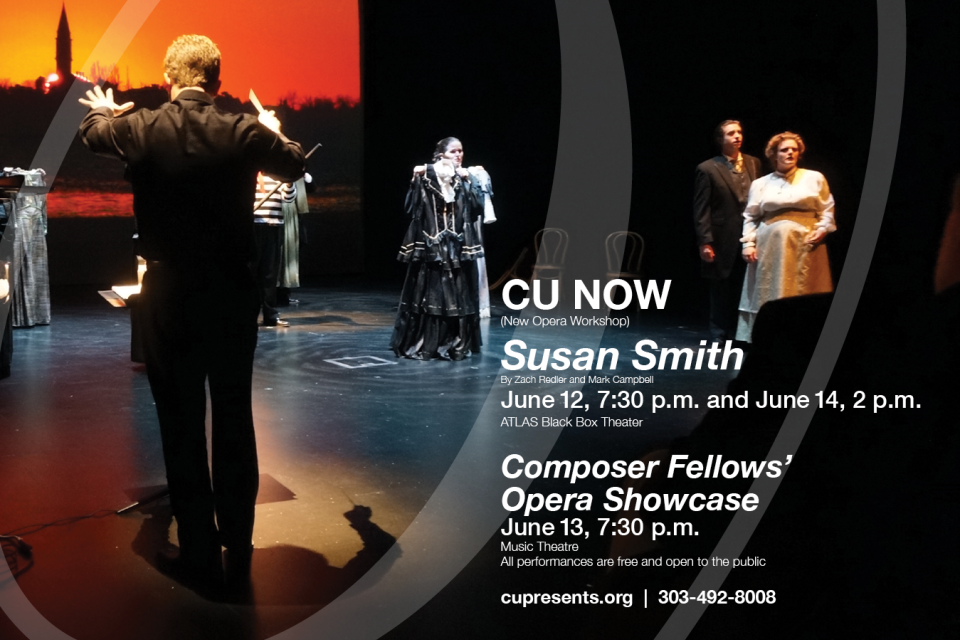
Scenes from Redler and Campbell’s A Song for Susan Smith will be performed with a cast of CU student singers at 7:30 p.m. Friday and 2 p.m. Sunday in the ATLAS Black Box Theater on the CU campus. The scenes will be stage directed by Holman.

The performance will feature six or seven of a projected 15 scenes in a one-act, 90-minute opera. Based on the notorious 1994 case of a woman who was sentenced to life in prison for the deaths of her two sons, A Song for Susan Smith does not dramatize or feature the killings. Instead, it focuses on the period between the killings and Smith’s eventual confession nine days later, and on Smith’s mental state during that time.

Between those two performances, CU NOW will also present the Composer Fellows’ Opera Showcase, scenes by CU student composers who have been working with Redler and other operatic professionals brought to campus for CU NOW, at 7:30 p.m. Saturday, June 13, in the Music Theater inside the CU Imig Music Building. All CU NOW performances are free and open to the public.

A Song for Susan Smith started as a scene that Redler wrote for his wife, soprano Brittney Redler, to sing for a doctoral voice recital. The text came from a completed libretto that Campbell had never used and forms a prologue to the opera, portraying Smith before the killings. That scene has now been performed several times, including as part of the Ft. Worth (Tex.) Opera’s Frontiers program. It will not be included in the CU performances but can be viewed on the composer’s Website (scroll down to the video, featuring the composer at the piano and Brittney Redler singing).

Redler is not unaware that Susan Smith is a difficult subject for an opera, one that might be disturbing to some audience members. “I’m drawn to characters that are hard to comprehend,” he says. “Susan Smith has been through a lot, but because [infanticide] is a too common thing—500 cases a year!—I don’t think it’s exploitive. I think it’s using a very specific instance to tell a very general story.

“It’s a horrible problem, because it’s not that these people are necessarily inherently evil. Susan came from an extremely dysfunctional childhood and household. So it’s about mental health and about mob mentality (when the town turns from supporting Susan to shunning her). A lot of the music is kind of trying to show Susan’s perspective.”

Leigh Holman, director of the CU's Eklund Opera Program and CU NOW (Photo by Glenn Asakawa/University of Colorado)

Leigh Holman, director of the CU’s Eklund Opera Program and CU NOW (Photo by Glenn Asakawa/University of Colorado)

Holman and Mason started CU NOW to give students experience tackling completely new music and new roles. At the time, there were few programs devoted to new opera, but that has changed in the past six years.

“When we started this six years ago, there weren’t many people doing what we’re doing,” Holman says. “Now, people are doing it everywhere.

“The most important thing that was happening at the Opera America Conference two weeks ago was new works—composers there, librettists there, all these big companies looking for new works to do. That’s what audiences want. That’s where the market is now. Six years ago it wasn’t.”

CU’s unique niche in this world is taking works in progress that have not been completed or received a commission, works where the composers are just getting started, and giving them the chance to mold it to living, breathing singers. “We like to do brand new things,” Holman says. “We want our students to have the opportunity to work with a brand new piece.

“The composers are hearing their piece for the first time with our students. And our students get the opportunity to work with the composers. Our students can’t listen to a recording and learn it. There’s no other singer that has already said, ‘This is how it’s supposed to sound.’ It’s really their own interpretation.”

Redler seconds Holman’s comments. “It’s really great for (the students),” he says. “In professional opera companies, it’s the young artists who are doing the workshops and the readings of new works. It’s just such an important skill for them to have, to be able to pick up a new piece of sheet music that no one has ever recorded and learn it.”

He is equally enthusiastic about what the program means for him as a composer. “Hearing scenes that I’ve only heard in my head is just so important,” he says. “The piece changes in front of an audience as well, so to get to see that is fantastic.”

And the value for the audience? You can tell the rest of us: Go to the performances, and post your reaction here afterwards! You too might help open doors for new creations.

# # # # #

CU NOW web ad 1349 x 905CU NOW

Scenes from A Song for Susan Smith
An opera in progress by Zach Redler and Mark Campbell
7:30 p.m. Friday, June 12
2 p.m. Sunday, June 14
ATLAS Black Box Theater on the CU campus

Composer Fellows’ Opera Showcase
Operatic scenes by CU student composers
7:30 p.m. Saturday, June 13
Music Theater, CU Imig Music Building

All performances free and open to the public

Boulder Bach Festival moves six degrees from Bach

Program features Impressionist and 21st-century composers, plus one Bach sonata

By Peter Alexander

Pianist Mina Gajić

Pianist Mina Gajić

The ever-broadening Boulder Bach Festival will end its 2014–15 season with a concert of music for violin and piano by Debussy, Ravel, the great violinist Eugene Ysaÿe, and Ray Granlund, a living and very eclectic American composer.

Oh yes—there will be a Bach sonata, too.

The performance, titled “Six Degrees of Separation,” will be at 7:30 p.m. Saturday (June 6) in Grusin Hall of the CU Imig Music Building. Concert pianist Mina Gajić will perform with violinist Zachary Carrettin, the music director of the Bach Festival. Tickets can be purchased online.

The program covers five composers, four centuries (from the 18th to the 21st), and a glittering array of styles. None of which exactly explains the “Six Degrees,” which seems to refer to all the ways the other composers are related back to Bach. Indeed, it has been a theme of the festival this year to celebrate not only the music of Bach, but the music that he inspired through the centuries.

“Bach had an enormous influence on virtually every subsequent composer,” Carrettin says. “For example, composers studied Bach’s approaches to form and harmony, and especially counterpoint. And also there are commonalities in the priorities of the composers chosen for this concert.”

One of those commonalities, Carrettin explains, is the exploration of musical ideas from other cultures and nationalities.

Zachary Carrettin

Zachary Carrettin

“Bach was influenced by his German organ predecessors, but also wrote frequently in the popular Italian and French styles,” he says. Similarly, “Ray [Granlund] wrote a piece that is supposed to be a tango, and yet has the rhythmic influence of a waltz. And Debussy’s sense of color and cross-cultural explorations cover styles from different countries. Flamenco, blues, wooden flute sounds—all of these are heard in the Violin and Piano Sonata.”

Eugene Ysaÿe

Eugene Ysaÿe

Another obvious connection with Bach is provided by the Sonata for solo violin by Eugene Ysaÿe, a violinist who was both a contemporary and a friend of Debussy. “Ysaÿe wrote six sonatas for unaccompanied violin, and they’re modeled on the six sonatas and partitas that Bach wrote for unaccompanied violin,” Carrettin says. “This sonata begins with movement called ‘Obsession,’ which includes multiple quotations of Bach, from the E-major Partita for solo violin.”

While Debussy, Ravel and Ysaÿe were contemporaries, Carrettin included Granlund as a way of tying the diverse program together, from Bach forward. “I think the composer that bridges this program together is the living composer Raymond Granlund,” he says. “His work is harmonically influenced by impressionism, expressionism, jazz and various world musics, but also his contrapuntal writing is exquisite.”

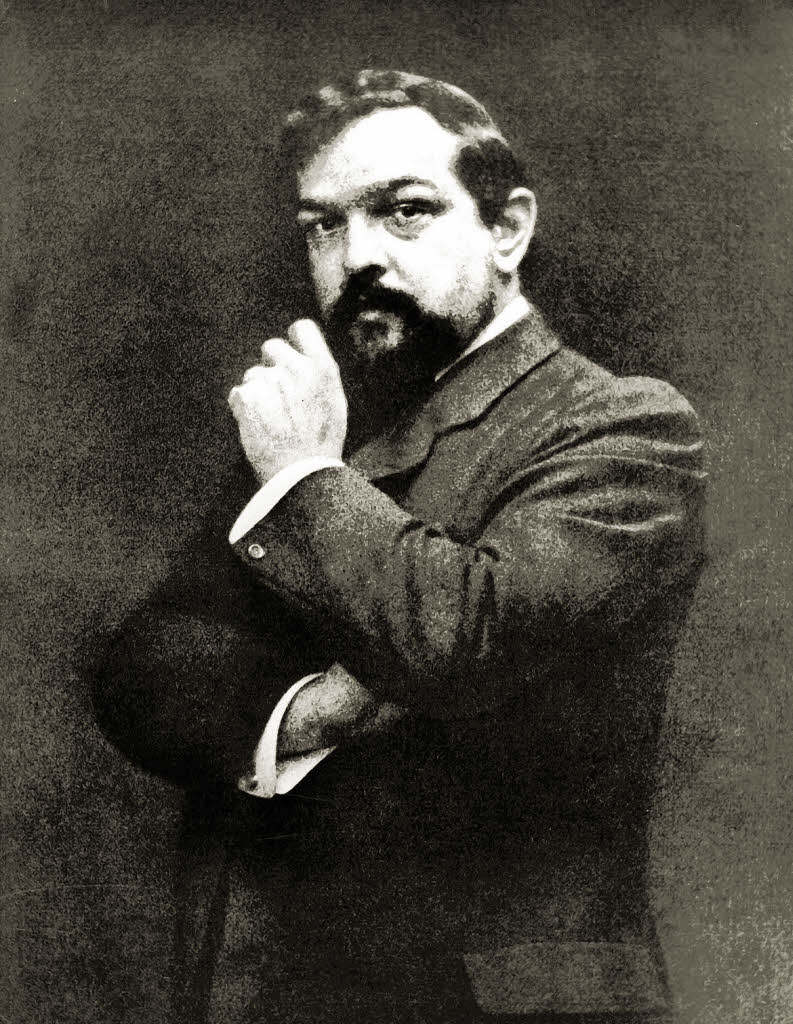
Claude Debussy

Claude Debussy

Beyond these musical and stylistic connections among the composers, Carrettin finds more subtle connections to Bach that he calls poetic: “Debussy once failed a piano exam at the [Paris] Conservatory, because his Bach was, and I quote, ‘too expressive.’ So the program brings up a conversation not only about the connections between the composers, but also the playing styles and how we play Debussy now, in the 21st century, and how we play Bach now.”

For Carrettin, the answer to “how we play Bach” is defiantly non-dogmatic. He has played it with historic instruments; he has also played Bach on electric violin, and interwoven Bach’s music with the music of John Cage. Going into Grussin Hall, he and Gajić will be playing instruments that post-date both Bach and Debussy.

“For this performance, Mina [Gajić ] will be playing one of the extraordinary nine-foot Steinway pianos owned by the university,” he explains. “I’ll be playing a violin made in Chicago in 1963 by a great maker, I and I’ll be playing what we call a modern bow.”

Without going into the intricacies of violin bow history, that means the style of bow developed around 1780—after Bach’s lifetime but well before Debussy—that provides greater tension on the bow hairs. This in turn allows more pressure on the strings, and therefore greater volume.

“The equipment is an interesting question,” Carrettin continues. “When Mina and I rehearse we encounter such fascinating moments of crossroads. She has years of experience playing harpsichords, fortepianos, and especially 19th-century historic pianos, but now she’s playing this recital on a modern Steinway. And I have years of playing Baroque and classical period instruments with sheep-gut strings and convex archaic bows and no chin rests.

“The techniques of playing are different, but also what’s possible on the [modern] instruments is quite different. The timbre of a modern piano will shed light on different aspects inherent in Bach’s compositions. The same with the violin. The fingerings one chooses, or whether to elongate a phrase or break it up into smaller rhetorical statements—sometimes we make these decisions based on what instrument we’re using, and what the strengths are of that instrument.”

As for those famous six degrees of separation, here are some additional thoughts to ponder: Carrettin traces his violin instruction back to Archangelo Corelli, an Italian older contemporary of Bach; almost every pianist in the world can trace their teachers back to Beethoven, who studied Bach’s Well Tempered Clavier; and even the modern Steinway grand can trace its lineage back to Bach’s time, and the invention of the fortepiano by Bartolomeo Cristofori around 1700.

But you’ll have to find your own connections to Kevin Bacon.

# # # # #

Johann_Sebastian_Bach

J.S. Bach

“Six Degrees of Separation”
Presented by the Boulder Bach Festival
Mina Gajić, piano, and Zachary Carrettin, violin
Music of Bach, Debussy, Ysaÿe, Ravel and Granlund
7:30 p.m. Saturday, June 6
Grusin Hall, Imig Music Building, CU Boulder
Tickets

PROGRAM:
J.S. Bach: Sonata in C Minor for violin and clavier obligato, BWV 1017
Eugene Ysaÿe: Sonata #2 in A Minor for violin solo, “Jacques Thibaud”
Raymond Granlund: TangoPeregrino and TangoNometría
Maurice Ravel: Jeux d’eau (for piano solo)
Claude Debussy: Sonata in G Minor for violin and piano

A perfect piece for Robert Olson’s final MahlerFest

By Peter Alexander

Robert Olson with the MahlerFest orchestra. Photo by Keith Bobo.

Robert Olson with the MahlerFest orchestra. Photo by Keith Bobo.

Robert Olson’s final concerts with the Colorado MahlerFest will be memorable occasions — for Boulder audiences, for the festival’s world-wide fans and for Olson himself.

Olson will lead his final two concerts with the festival that he nurtured from the merest of ideas 28 years ago to an event recognized around the world today, at 7:30 p.m. Saturday and 3:30 p.m. Sunday, May 16 and 17. He will conduct Mahler’s Ninth Symphony — the last of the composer’s completed symphonies — which he says is “not only the most perfect piece to end on, but may be one of the most perfect pieces, period.”

The festival will also include film showings at the Boedecker Theater at the Dairy Center, at 2 p.m. Thursday and Friday, May 14 and 15; and a free public symposium on the University of Colorado Boulder campus Saturday, May 16.

Apart from the opportunity to hear one of Mahler’s less frequently performed masterpieces, this year’s concerts will be memorable for audiences because Olson’s appearances at MahlerFest have become a familiar part of the Boulder musical landscape. After these concerts, that landscape changes. It will be memorable for Mahler fans around the world who have come to Boulder over the years because many of them will return to hear Olson conduct one last time. And it will be memorable for Olson for many reasons.

Read more at Boulder Weekly.

# # # # #

Colorado MahlerFest XXVIII

Gustav Mahler. Photo by Moritz Näher.

Gustav Mahler. Photo by Moritz Nähr.

MahlerFest Orchestra, Robert Olson, artistic director and conductor
Mahler: Symphony No. 9
7:30 p.m. Saturday, May 16
3:30 p.m. Sunday, May 17
Mackey Auditorium
Tickets

Film:
For Love of Mahler: The Inspired Life of Henry-Louis de la Grange (World Premiere)
2 p.m. Friday, May 15 SOLD OUT
The Boedecker Theater at the Dairy Center,

Symposium:
8:30 a.m. Saturday, May 16
Morning session: Imig Music Building, Room C-199
Afternoon session: ATLAS 102
University of Colorado, Boulder campus
Free and open to the public

“A crazy piece” tops off Boulder Chamber Orchestra’s season

After Rossini and Chopin, season-ending concert ends with Beethoven’s Fourth Symphony

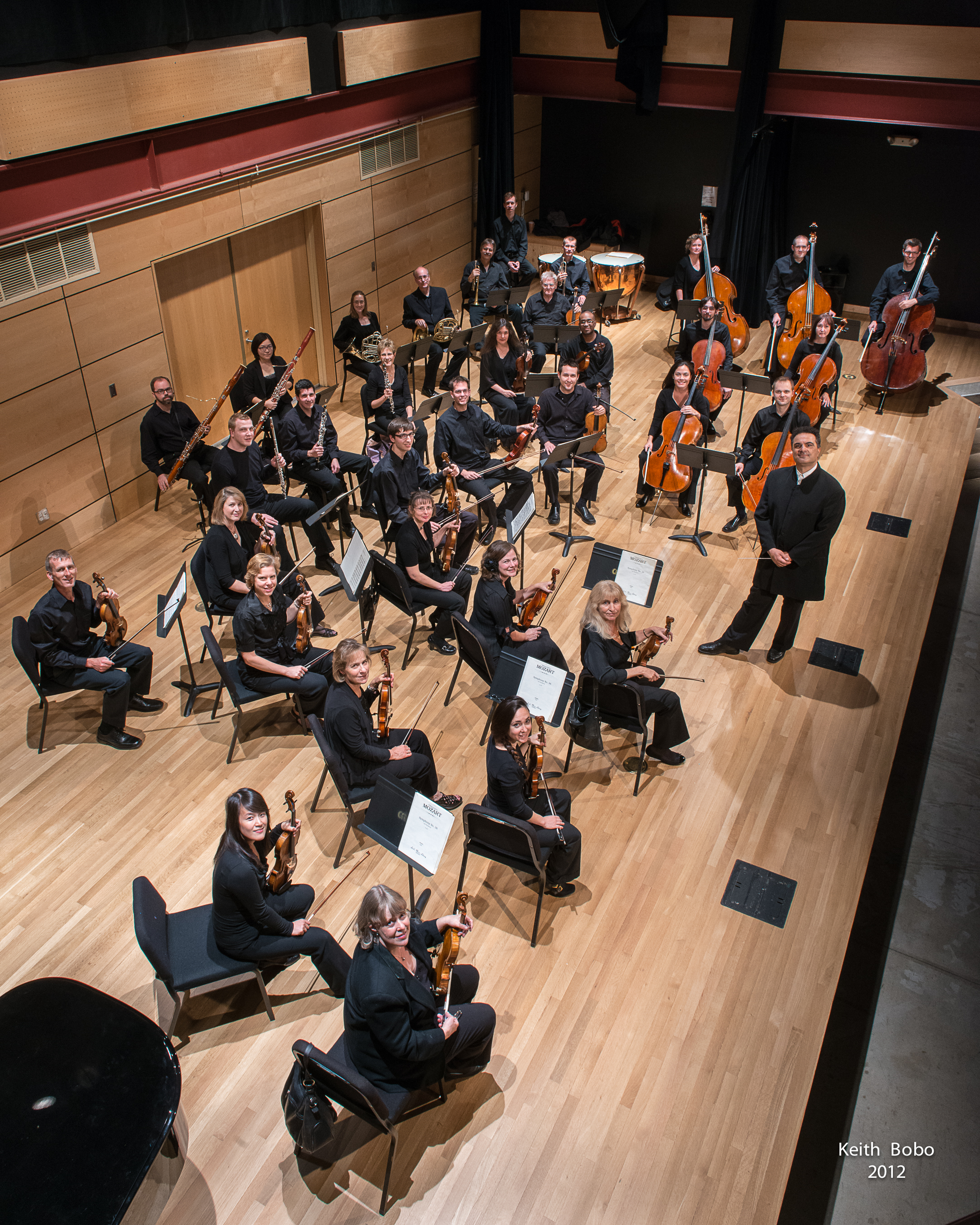
Bahman Saless and the Boulder Chamber Orchestra. Photo by Keith Bobo.

Bahman Saless and the Boulder Chamber Orchestra. Photo by Keith Bobo.

By Peter Alexander

First it’s serious, and then it’s not; then it seems not, but it is.

That’s more or less the way Bahman Saless, music director of the Boulder Chamber Orchestra, describes Beethoven’s Fourth Symphony. Saless and the BCO end their 2014–15 season with that energetic symphony, Saturday in Broomfield and Sunday in Boulder (May 9 and 10, both concerts at 7:30 p.m.; details).

In addition to Beethoven’s symphony—one that is less well known than the Third or the Fifth or Seventh or Ninth— the program features the rollicking Overture to La Scala di seta (The Silken Ladder) by Rossini and Chopin’s Second Piano Concerto, performed by soloist Hsing-ay Hsu. This adds up to a comfortable and enjoyable evening—a humorous Rossini overture, an elegant, decorative piano concerto, and a cheerful Beethoven symphony that Robert Schumann compared to a “slender Greek maiden.”

I’ll get back to Beethoven and that Greek maiden in a moment, but first the concert opens with the overture by Rossini. It is easy to think of all of those bubbly Rossini overtures as being almost interchangeable, but Saless had a reason for choosing the one he did.

“I picked La Scala di seta because we’ve done many of the other ones, and this one seemed just fun to do,” he says. “I listened to three or four of them and I thought it fits the character of this concert, just because it’s kind of comical.”

Next on the program will be Chopin’s Piano Concerto No. 2—actually the first to be written, while the composer was still studying at the Warsaw Academy and first performed in 1830. It is not modeled on the heroic concerto of Beethoven and the later 19th century, but is more lyrical, decorative and free-flowing.

Hsing-ay Hsu. Photo by Cyrus McCrimmon.

Hsing-ay Hsu. Photo by Cyrus McCrimmon.

The concerto was the choice of the soloist, Hsing-ay Hsu. “I think that every great composer has his own voice and there is a lot of poetry in Chopin. It’s emotionally very approachable, and for an audience to experience that kind of soaring and that kind of blissful energy is a great experience.”

Poetry suggests a certain freedom for the soloist, which Hsu identifies as the greatest challenge of the concerto. “What I find really challenging is that on one hand it has to feel completely free and improvised, and on the other hand the rhythmic integrity is very important,” she says. “There’s the sense of very long-reaching lines and having that flexibility within this larger structure is something that is really exciting and really challenging at the same time.”

That flexibility is in turn a challenge for the conductor, who has to follow the soloist without constraining her expressivity. “The pianist can take all of these elaborations on every phrase, with a lot of freedom if they want to, so the rubato (alteration of tempo) is going to challenge any conductor to make sure they play together,” Saless says.

Because he wrote the concerto before leaving Poland, Chopin did not have the Parisian drawing room in mind. In fact, Hsu hears a lot of the composer’s native culture in the music.

“I think of the third movement as a mazurka,” she says, referring to a Polish folk dance. “You might not dance to it because it’s quite complex music, but I think that understanding the rhythm is crucial to the performance, and having that feeling of lifting your dress up and twirling and all that is part of the character of the third movement.

“I think it’s music of the people. It’s a movement that’s meant to be a joyful family gathering.”

Beethoven_Hornemann

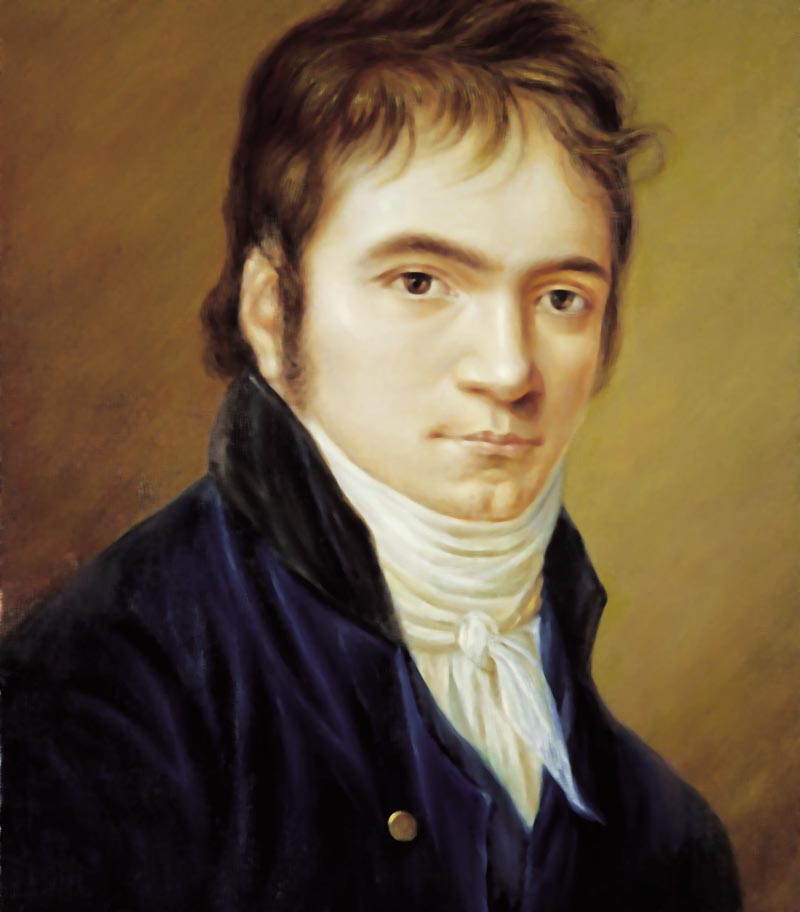
Beethoven around the time of the Fourth Symphony. Portrait by Christian Horneman.

After intermission it’s time for Schumann’s “slender Greek maiden,” a phrase suggesting that Beethoven’s Fourth Symphony is graceful and ingratiating, and avoids the drama of some of his music.

But maybe not. Saless sees far more going on in the symphony than the cheerful surface Schumann describes. “It’s a crazy piece,” Saless says. “It’s lighter and folksier, but at the same time in many ways crazier than even the Third Symphony, in the sense that he’s just pushing the boundaries and experimenting with extremes.”

Saless points to the very beginning of the symphony. It opens with a very somber slow introduction that seems to be building to a dramatic climax when suddenly, a fast and bumptious allegro seems to explode out of nowhere.

In other words, first it’s serious and then it’s not.

“Beethoven tries at first to kind of fool you into thinking this is going to be a serious piece of music,” Saless says. “The first 12, 15 bars is very serious. You think ‘Oh my God, what’s going to happen,’ but then suddenly, brrum! It’s like a horse race!”

Saless compares this beginning, seeming so solemn before bursting into a raucous romp, to Beethoven’s private piano recitals, when he would practically mock his audiences. “He would perform something and purposefully make the music deep,” Saless explains. “Everybody was drawn in, their complete attention was to the music, and then he would suddenly stop and laugh at them!”

The slow movement moves in another direction, from placid beauty to something more troubling. “I think the slow movement has a lot more depth than people have thought,” Saless says.

Bahman Saless.

Bahman Saless. Photo by Keith Bobo.

The movement is dominated by one of Beethoven’s most serene melodies. It seems perfectly calm, but it is accompanied by a constant rhythmic figure that, to Saless, represents the composer’s heartbeat. “Why would you put that against this legato melody?” Saless asks. “He obviously wants to keep you unsettled.”

At one point, the heartbeat figure takes over completely, and is played in unison and forte by the whole orchestra. “It seems like the whole idea of this beautiful melody gets dropped and he’s really concerned about his heart,” Saless says. “What’s that about? It’s nothing musical, it’s not fate knocking on the door, it’s just really amazing.”

So now it doesn’t seem serious, but it is.

After that, the last movement poses virtuoso challenges to the players, but refreshingly few complications to the audience. It moves like the wind from beginning to the end, and is one of the great movements of Beethovenian exuberance. It is, Saless says, “as showoff a piece as anything, if you can pull it off!”

Making a great ending for a concert or a season.

# # # # #

newbanner3“Character”
Boulder Chamber Orchestra
Bahman Saless, conductor, with Hsing-ay Hsu, piano

Rossini: Overture to La Scala di seta
Chopin: Piano Concerto No. 2 in F minor
Beethoven: Symphony No. 4 in B-flat major

7:30 p.m. Saturday, May 9, Broomfield Auditorium, Broomfield
7:30 p.m. Sunday, May 10, Seventh-Day Adventist Church,
345 Mapleton Ave., Boulder

Tickets