Colorado Music Festival announces diverse 39th summer season

Second season under music director Jean-Marie Zeitouni offers many highlights

Former music director Michael Christie returns to Boulder for a Festival Orchestra concert July 14

By Peter Alexander

chautauqua-boulder-colorado

Chautauqua Auditorium, home of the Colorado Music Festival

The program will look both new and familiar at the 2016 Colorado Music Festival.

The CMF announced its 39th festival season last night (March 2) at an event for their friends and supporters. Running from June 30 through August 7, this will be the festival’s second summer series under music director Jean-Marie Zeitouni.

Many of the familiar features of recent festivals will continue—Festival Orchestra and Chamber Orchestra concerts, the Music Mash-Up series, family and young people’s concerts, and chamber music performances. But within that general framework, there will be some new developments as well: chamber music will be presented in the Chautauqua Auditorium; and an imaginative new series of three concerts under the direction of CMF creative partner Joshua Roman, “ArC (Artistic Currents) at the Dairy,” will be presented at the Dairy Center. In a change from previous years, most Festival Orchestra programs will only be presented one night instead of two.
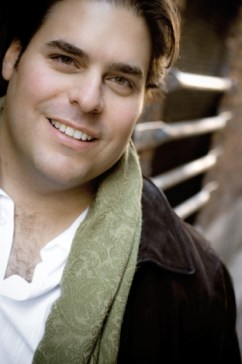
Zeitouni_2

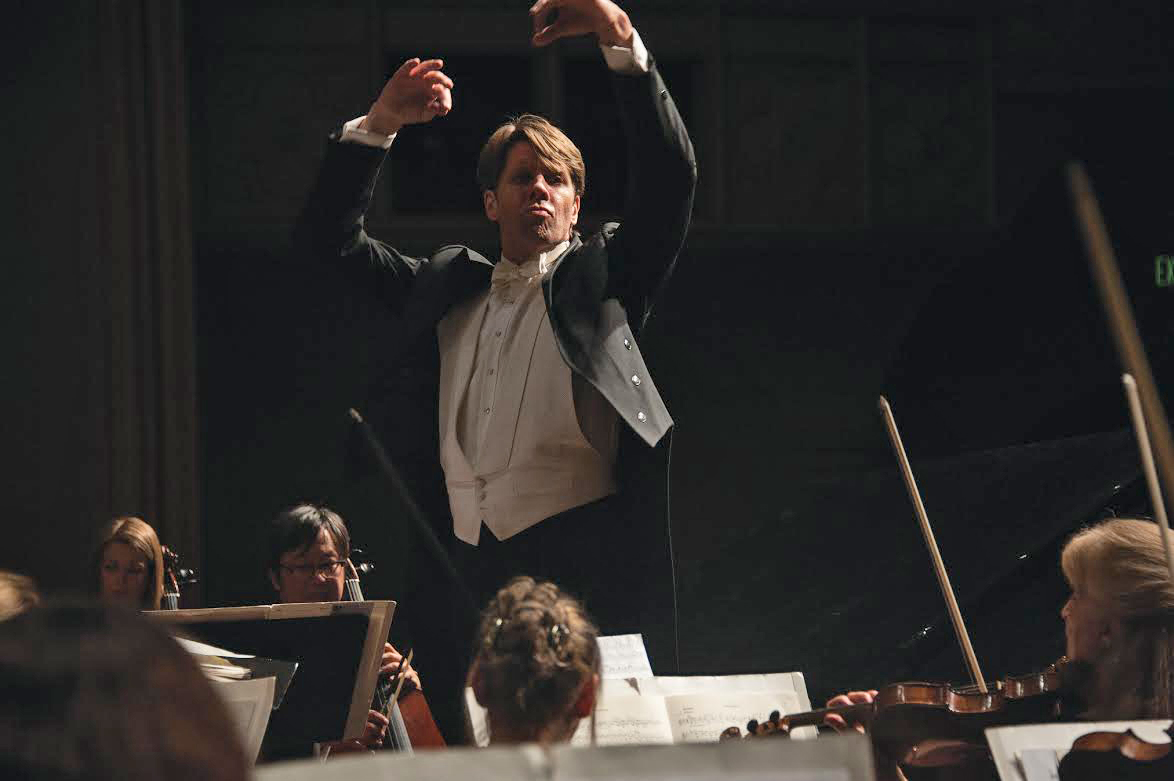
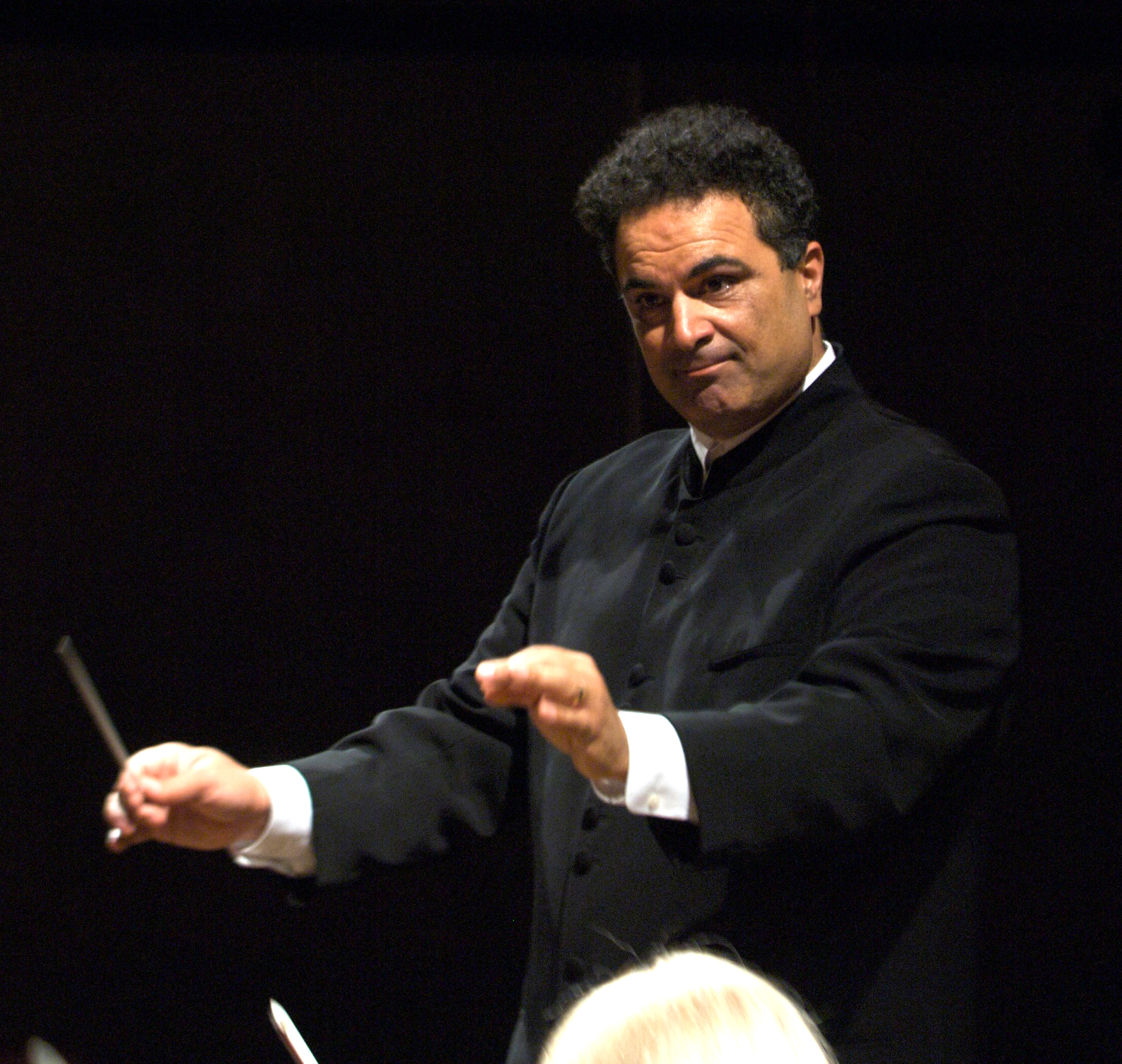
CMF music director Jean-Marie Zeitouni

Innovations for the 2016 season will include the Fêtes Galantes Series of intimate house concerts of chamber music, July 11, 20 and Aug. 5; a partnership with the Boulder Valley Velodrome, “CMF Goes to the Velodrome,” July 29; and a “Festival of Dinners” prepared by chefs from Boulder restaurants to be announced on the CMF Web page.

Ukrainian-Israeli violinist Vadim Gluzman will be one of several artists to have a residency at CMF, a notable expansion of festival activities. There will be several new and contemporary works during the summer, and Peter Brook’s controversial Tragedy of Carmen, a distillation of Bizet’s opera, will be presented July 10.

There will also be notable returns to the festival. Music director laureate Michael Christie will come back to Boulder to conduct a Festival Orchestra concert on July 14, with returning piano soloist Orion Weiss.

Other popular soloists from previous seasons will be back, including violinist Jennifer Koh with the Festival Orchestra on opening night, June 30. At the opposite end of the season, pianist Olga Kern will perform with the CMF Chamber Orchestra on the final concert, Aug. 7.
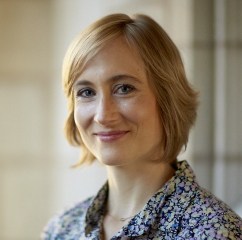
Lash

Click! Commission winner Hannah Lash

The “Click” Commission program that offers new works by composers selected and financed by festival-goers is back, with the premiere of the Second Harp Concerto by Hannah Lash, who will also be the soloist July 31. Lash will take part in a residency at CMF, extending her participation in the festival beyond the premiere of her new concerto.

There will a number of other notable guest artists during the summer: Guzman, pianist Stephen Hough, the vocal ensemble Roomful of Teeth, conductor Christopher Rountree, pianist David Korevaar from CU, and mezzo-soprano Kelley O’Connor, among others.

# # # # #

The season will be packed with so many highlights that it is difficult to list them all. Here is at least an overview of concert events. (All performances begin at 7:30 p.m. in the Chautauqua Auditorium unless otherwise noted.)

SFP-JenniferKoh-03@2x

Jennifer Koh

The festival opens June 30 with “Narratives of Heroism,” a concert Zeitouni describes as “one of the highlights for me.” The program features Koh playing Finnish composer Esa-Pekka Salonen’s Violin Concerto, on a program with Beethoven’s Overture to Egmont and Berlioz’s Symphonie Fantastique. The concert will be preceded by a Pre-Concert Dinner at 5:30 p.m. on the great lawn at Chautauqua.

Also part of the opening weekend will be the residency of Sō Percussion from Brooklyn, currently Ensemble in Residence at Princeton University. They will give a recital July 1 on the Presenting Series of chamber music concerts, and will play Young People’s Concerts with the CMF orchestra at 10 and 11:30 a.m. July 2.
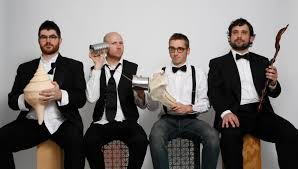
SO Percussion

So Percussion

The holiday weekend will wrap up with “Red, White and Brass,” a patriotic pops concert by the CMF Brass Ensemble at 4 p.m. July 3. Other Family Fun Concerts will be at 3 p.m. July 10 and 31.

The second week will feature “Boulder Brahms,” with the Festival Orchestra playing the four Brahms symphonies in two concerts: Nos. 1 and 2 on July 7; and 3 and 4 on July 8. “We’re not doing a mini-festival proper, like we did last season,” Zeitouni explains. “Instead, there are different themes throughout the summer.

“It’s interesting to hear all (the Brahms symphonies) two by two, but the idea goes beyond this. One of the more long-term ideas for the festival is to do multi-year symphonic cycles, like Michael Christie did with Mahler. The Brahms cycle is, I would say, a pretty conservative first step.”

Zeitouni sees this as a way to open up the repertoire beyond the symphonies that are programmed most often, but without overwhelming the schedule and the audience by trying to fit all of a composer’s symphonies into a single summer. Possible future composers for a multi-year cycle might include Bruckner, Shostakovich, Prokofiev and Dvořák, he said.

July 10 will see the presentation of a work that has become notorious in opera circles: Peter Brook’s abridged version of Bizet’s Carmen. The Tragedy of Carmen boils the opera down to about 80 minutes by paring away everything that does not have directly to do with the central drama of conflicting loves.

This distilled version, which only requires four voices and a chamber orchestra, “makes it a little bit more intense, if that’s even possible,” Zeitouni says. “It just tightens the tension—you have a higher alcohol content, because it’s a more concentrated formula.”

*temp*

DJ Spooky

The Music Mash-Up series will feature three groups: Jazz trio The Bad Plus will present a deconstruction of Stravinsky’s Rite of Spring, enhanced with projections and passages of jazz improvisation, July 12. On July 26, CU faculty Paul Miller, who performs as DJ Spooky, will mix classical pieces using turntables and performing with the Festival Orchestra.

The final Mash-Up brings the Colorado band Paper Bird to Chautauqua Aug. 2 to perform with the orchestra. Christopher Rountree, founder and director of wild Up, a Los-Angeles based chamber orchestra, will conduct the CMF orchestra on the July 26 and Aug. 2 Mash-Up performances.

# # # # #

Michael Christie is very happy to be coming back to Boulder for the July 14 Festival Orchestra concert with pianist Orion Weiss. “We’ve got a great program,” Christie says. “I think its going to be a fun night.”

Christie

Michael Christie

The concert will open with Leonard Bernstein’s Shivaree, a fanfare for brass, followed by Charles Ives’s Unanswered Question for strings and a single trumpet. “The Bernstein is very boisterous and the Ives is extremely quiet,” he says. “I think in Chautauqua it will be quite magical.”

Next will be the suite from Bernstein’s score for the film On the Waterfront, which Christie chose because it is not heard often and it has a lot of solos for his friends in the orchestra. “It’s a beautiful, cinematic work,” he says. The second half of the concert will be a single work, Brahms’s First Piano Concerto with Weiss as the soloist.

“When I think about Chautauqua, there are just so many faces that I can see, because I saw them for so many summers,” Christie says. “I can remember a lot of folks, and I’ll be curious to see if they will still be there.

“The other thing I’m really looking forward to is getting out to do some hikes. When the summer was going and I was music director there were always a billion things to take care of. I’d get to the end of summer and realize that I hadn’t done a single hike. I’m going to try to make up for that, so maybe you’ll see me on the trail!”

# # # # #
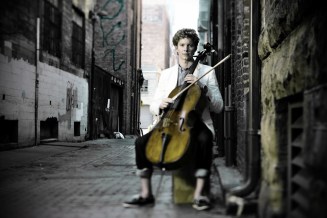
JoshuaRoman_JeremySawatzky04

Joshua Roman. Photo by Jeremy Sawatzky

The ArC at the Dairy series, presented at Boulder’s Dairy Center, has some of the most intriguing programs of the summer. On July 16 series director and cellist Joshua Roman will perform with soprano Jessica Rivera and CMF musicians to present his own song cycle we do it to one another, based on Tracy K. Smith’s Pulitzer Prize-winning poetry collection “Life on Mars”; and one of the iconic works of the 20th century, Olivier Messiaen’s Quartet for the End of Time, written in a World War II prisoner-of-war camp.

On July 23, composer/violinist Daniel Bernard Roumain and spoken word artist Marc Bamuthi Joseph will join together to present “Blackbird, Fly,” a hip-hop influenced program that will address issues of tolerance and inclusion. And July 30 the Grammy-winning contemporary vocal group Roomful of Teeth will bring their unique style to the festival.

10-24-07-Vadim-Gluzman-CD-Cover

Vadim Gluzman

Chamber Orchestra concerts will include “Inspired by Bach” July 17, with violinist Gluzman playing and leading the orchestra in works of Mozart, Shostakovich, and Alfred Schnittke; Mozart’s three final symphonies together on a single concert directed by Zeitouni July 24; and the July 31 premiere of Lash’s Harp Concerto No. 2, the Click! Commission winner, programmed with music by Bach, Beethoven and Richard Strauss.

The Presenting Series will offer chamber music performances at Chautauqua Auditorium. After Sō Percussion opens the series on July 1, Weiss, Roman, Korevaar, Gluzman, Kern, and CMF musicians will perform in various combinations July 15 and 19 and Aug. 6. As part of his week-long residency, Gluzman will also appear with the Festival Orchestra in “Russian Passions,” the one orchestra program to be repeated, July 21 and 22.

In addition to Gluzman’s performance of the Tchaikovsky Violin Concerto, the concerts will feature Liadov’s Enchanted Lake and a special presentation of Mussorgsky’s familiar Pictures at an Exhibition with animation that was created for the first performance in architect Frank Gehry’s New World Center in Miami Beach, Fla.

Stephen Hough

Stephen Hough

British pianist Stephen Hough returns to Boulder for the sixth Festival Orchestra program, “From Prague to Warsaw to Bucharest,” on July 28. Hough will play Liszt’s First Piano Concerto and Polish composer Witold Lutosławski’s Paganini Variations. “In a folkish-inspired program, we will open with the Enescu First Romanian Rhapsody and (close with) Dvořák’s Symphony No. 8,” Zeitouni says of the program.

Zeitouni identifies the Aug. 4 Festival Orchestra concert as one of his favorite programs of the summer. It will feature two major works, the Trois Nocturnes for orchestra of Claude Debussy, and Gustav Mahler’s deeply moving Lied von der Erde (Song of the Earth) with mezzo-soprano Kelley O’Connor and tenor Richard Cox as vocal soloists.

“This music is some of my favorites,” Zeitouni says. “I have a very personal relationship with Das Lied von der Erde, because it was one of the first recordings that I got as a teenager.” He also observes that the piece was requested by orchestra musicians, because they rarely have the chance to play it in their home orchestras, and it is a continuation of the Mahler cycle that Christie had begun.
OK-Red-Dress

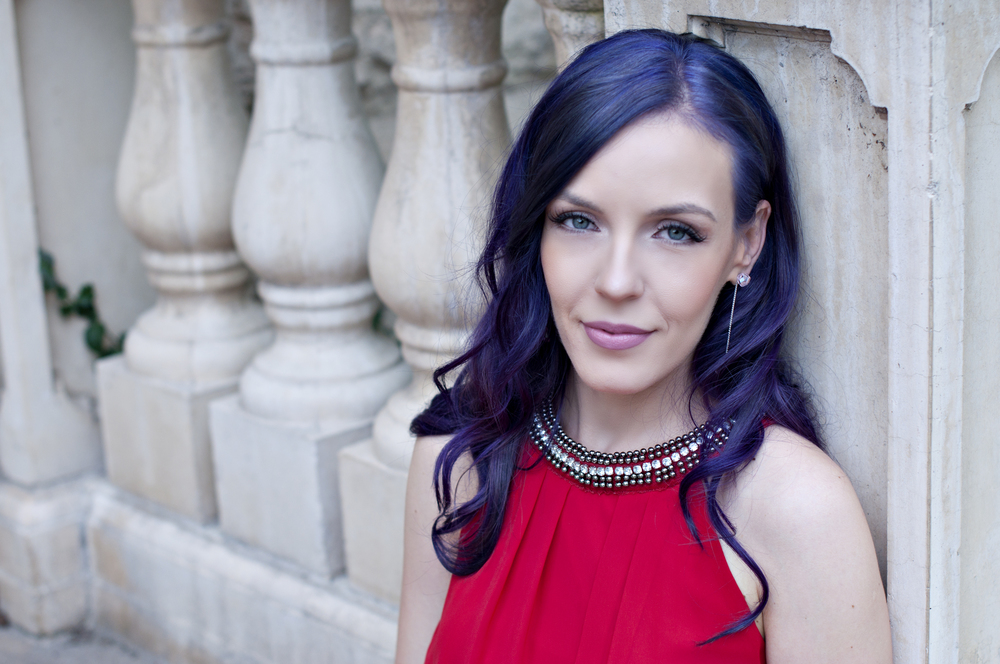
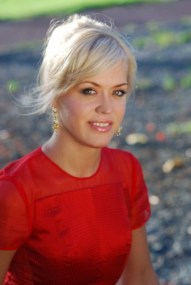
Olga Kern. Photo by Fernando Baez.

The final night of the festival will be a Chamber Orchestra concert on Aug. 7. This program will feature Zeitouni and CMF favorite Olga Kern playing Beethoven’s “Emperor” Concerto on a program with Stravinsky’s “Dumbarton Oaks” Concerto and Schubert’s delightful Symphony No. 5.

Outgoing CMF executive director Andrew Bradford has written that “the offerings of the 2016 Colorado Music Festival are incredibly wide-ranging and diverse,” a claim that is hard to disagree with. “The season includes something that every music lover will enjoy,” he wrote.

# # # # #

UPDATE (3/4/16): The full summer calendar is now available on the CMF Website.

TICKETS: Subscription tickets will go on sale Monday, March 7, and single tickets will be available Monday, April 4. For tickets to most events, click HERE. Tickets to the ArC series at the Dairy Center are available HERE.
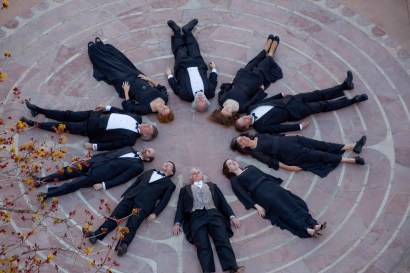
Ars Nova Singers will perform pieces for 40 parts in surround sound

Music by Striggio, Tallis and Gesualdo form a “Renaissance Retrospective”

By Peter Alexander

In the history of European choral music, there are two major works that were composed for 40 different voice parts.

ANScircleground

Ars Nova Singers

Yes, that’s four-zero, 40 parts, which is really a lot, and the size alone has made these Brobdingnagian works well known. For the same reason they are not often heard live, but both will be performed on the same concert by Boulder’s Ars Nova Singers and director Thomas Edward Morgan.

Titled “Renaissance Retrospective,” the concert will be performed in Denver Friday (7:30 p.m. Feb. 19 at St. Paul’s Lutheran Church) and in Boulder Saturday (7:30 p.m. Feb. 20 at St. Johns Episcopal Church).

Tallis for site

Thomas Tallis

Both works were written in the 16th century, and indeed one probably inspired the other. The first was Ecce beatam lucem by Italian composer Alessandro Striggio from the 1560s. Shortly after it was introduced in England in that decade, it was followed by the more famous Spem in alium by English composer Thomas Tallis. Those two works serve as bookends on the program, which opens with Striggio and closes with Tallis, recalling the order in which they were written.

In between, Ars Nova will perform music by Carlo Gesualdo and Orazio Vecchi, Italian composers who were working a couple of decades after Striggio and Tallis. All the music will be sung a capella.

Read more in Boulder Weekly.

# # # # #

Renaissance Retrospective: Music for Many Voices

Morgan.mtntop

Thomas Edward Margan

Ars Nova Singers
Thomas Edward Morgan, artistic director
Music by Alessandro Striggio, Thomas Tallis,
Carlo Gesualdo and Orazio Vecchi

7:30 p.m. Friday, Feb. 19, St. Paul’s Lutheran Church, 1600 Grant St., Denver
7:30 p.m. Saturday, Feb. 20, St. John’s Episcopal Church, 1419 Pine St., Boulder

Tickets

Dairy Center asks “Who is Missy Mazzoli?”

Wednesday’s Soundscape concert poses questions and offers answers

By Peter Alexander

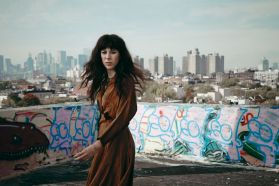
Missy Mazzoli

Missy Mazzoli

“Who is Missy Mazzoli?”

That’s the question being asked—and at least partly answered—by the Dairy Center for the Arts and music curator James Bailey on their Soundscape program at 2 p.m. Wednesday (Feb. 10).

The short answer is that Mazzoli is an adventurous composer from New York who writes in diverse genres, from opera to chamber music. She is in Boulder for a week for a Music Alive Composer Residency with the Boulder Philharmonic. The premiere of a new orchestral version of her Sinfonia (for Orbiting Spheres) by the orchestra and conductor Michael Butterman Friday evening (7:30 p.m. Feb. 12, Macky Auditorium) is only one part of her week-long residency. (More information in Boulder Weekly; tickets for the Boulder Phil concert here.)

Missy.skyline

Mazzoli with New York skyline

But it’s a deeper answer that Bailey is after—one that showcases many facets of a complex and label-defying artist. To give that fuller picture, Mazzoli and Bailey have put together a program that seems to live up to the New York Times’s description of her as “among the more consistently inventive and surprising composers now working in New York.” There will be pieces for solo violin, for viola with electronics, for string quartet, and two pieces for piano and electronics performed by Mazzoli herself. (Click here for tickets.)

weatherbee

Charles Wetherbee

It is the pieces themselves that justify the adjective “inventive.” What is most surprising, however, is the fact that Mazzoli’s works will be presented in alternation with—of all things—the movements of Bach’s monumental Partita in D minor for solo violin, performed by Boulder Phil concertmaster and CU faculty member Charles Wetherbee.

“The motivation to include the Bach was because I have a solo violin piece called ‘Dissolve, O My Heart,’” Mazzoli explains. “It was a commission from the violinist Jennifer Koh, who did a project called ‘Bach and Beyond.’ She commissioned pieces based on existing works by Bach, and my piece (is based on) the famous solo violin Chaconne from the D-minor Partita.

“When (the Dairy Center) came to me for a program, I said why don’t we play the whole Partita and we could intersperse (my pieces). My other music doesn’t come directly out of that, but it has inspiration from Baroque material and ornamentation. There’s a lot of string pieces on this program, a string quartet, solo viola piece, electronic solo violin piece, and I’m also playing two piano pieces some with electronics.”

Altius_2.jpg

Altius String Quartet

The complete list of Mazzoli’s pieces on the program will be: Tooth and Nail for viola and electronics, performed by Wetherbee; Orizzonte for piano and electronics, performed by Mazzoli; A Thousand Tongues for piano and electronics, performed by Mazzoli; Dissolve, O My Heart for solo violin—the piece based on the Bach Chaconne—performed by Wetherbee; and Quartet for Queen Mab performed by the Altius String Quartet, the award-winning Fellowship String Quartet in Residence at CU, Boulder.

Reading about Mazzoli, one quickly becomes aware of how eclectic her work is. She has had commissions from individual artists, including Koh; from orchestras around the country; from the Kronos Quartet; and from the Grammy-nominated adventurous vocal ensemble Roomful of Teeth. Her works sometimes include electronics, sometime not, and she also performs with Victoire, an all-female band described by critic Alan Kozinn as “an art-rock band, a live electronic music group, or both.”

Glenn+and+Mizz

Mazzoli and Kotche. Photo by Michael Woody.

She and Victoire collaborated with Wilco percussionist Glenn Kotche and experimental keyboardist Lorna Dune for her recently recorded Vespers for a New Dark Age. National Public Radio’s “First Listen” asked, “Is Victoire’s music post-rock, post-minimalist or pseudo-post-pre-modernist indie-chamber-electronica? It doesn’t particularly matter. It’s just good music.”

Clearly, Mazzoli is an enthusiastic participant in many of the musical trends of our times. Writing in the Los Angeles Times, Mark Swed said that her “musical influences are John Adams, the Minimalists and the moody vocal sonorities of early sacred music, with a hint of rock.”

Victoire1-1024x1024.jpg

Victoire. Photo by Stephen Taylor.

Mazzoli does not deny these varied sources. “Studying classical music you would be surrounded by all of that, so yeah, I claim all of them proudly,” she says. “It’s become kind of a cliché to say, oh I have so many diverse interests, I’m interested in pop music as well as classical music, but I think it’s kind of a natural state growing up in the ‘80s.

“I wouldn’t even call it a trend. It’s as if the whole palette of sound is available for composers now from throughout history. It’s not as much a self-conscious choice as just sort of pulling from everything you’ve encountered in your life.”

But Mazzoli doesn’t want listeners to get hung up on labels or influences. “I want people to just hear music for what it is,” she says, “and to maybe be intrigued by one of those phrases, because it can sound like any one of those things.

“There’s bits and pieces of all of that in there.”

# # # # #

The Feb. 10 Soundscape concert is only one of many events exploring the world of contemporary musical performance to be presented by the Dairy Center this spring. The full schedule is listed below; visit the Dairy Center Webpage for updates.

 SOUNDSCAPE MATINEE SERIES

2 p.m. Wednesday, March 9: The Austin Piazzolla Quintet and the Boulder Chamber Chorale
After a sold out concert last season, the tango band from Texas returns to perform with the Boulder Chorale Chamber Singers.

Thow Down:Shot Up

CU’s Throw Down or Shut Up

2 p.m. Wednesday, April 13: Classical Music Unbuttoned
One of Boulder’s most innovative groups, Throw Down or Shut Up is a faculty quartet from the University of Colorado, Boulder. They will share the concert with Trio Cordillera another CU faculty trio, performing Argentine and Spanish music.

2 p.m. Wednesday, May 25: The Altius Quartet:  The Passion of the String Quartet
Winners of the silver medal at the 2014 Bischoff Chamber Music Competition, the Altius Quartet was selected to perform at the Melbourne International Chamber Music Competition. At the Dairy they will perform selected movements from quartets by Beethoven, Mendelssohn, Stravinsky, Bolcom—and Led Zepplin!

2 p.m. Wednesday, June 8: Youth be Served
A concert of music featuring some of Colorado’s most talented high school performers and ensembles.

ONE NIGHT ONLY SERIES

 7:30 p.m. Monday, February 22: Voxare Meets the Man with the Movie Camera
The Voxare String Quartet from New York City the soundtrack to Russian filmmaker Dziga Vertov’s remarkable 1929 silent masterpiece The Man with the Movie Camera.

Wendy_Woo

Wendy Woo

7:30 p.m. Friday, March 4: Wendy Woo—A 25 Year Retrospective
An evening with the guitarist and singer/songwriter Wendy Woo, together with musical artists from her 25 years on the Colorado music scene. The concert will be preceded by a First Friday reception in the new Dairy lobby.

7:30 p.m. Wednesday, March 30: Conversations
For Boulder Arts Week, the Dairy will present an evening of duets, including Irish, Indian and Turkish duos. Two performances will also feature Boulder’s Frequent Flyers aerial ballet group.

4 p.m. Sunday, June 26th: The Miami String Quartet
The internationally renowned string quartet returns to the Dairy with a new program.

JAZZ AT THE DAIRY SERIES

 7:30 p.m. Saturday, February 27: Jazz and Vonnegut

brad goode

Brad Goode


A concert with the David Fulker Quartet and jazz singer Robert Johnson in a program of jazz standards thematically wrapped around an unusual short story by Kurt Vonnegut.

7:30 p.m. Wednesday, May 4: The Brad Goode Quartet with Sheila Jordan
Brad Goode, Boulder’s jazz trumpet virtuoso, will appear with his traveling quartet and jazz vocalist Sheila Jordan.

SPECIAL PERFORMANCE

 4 p.m. Sunday, April 17: Never to Be Forgotten
This Dairy collaboration with the Boulder Jewish Community Center and the University of Colorado School of Religious Studies will focus on chamber music by composers who were lost in the Holocaust.

(Edited to correct typos 2/8/16)


Eulogy of Self

Pro Musica Colorado plays music for and by victims of World War II

By Peter Alexander

Photography by Glenn Ross. http://on.fb.me/16KNsgK

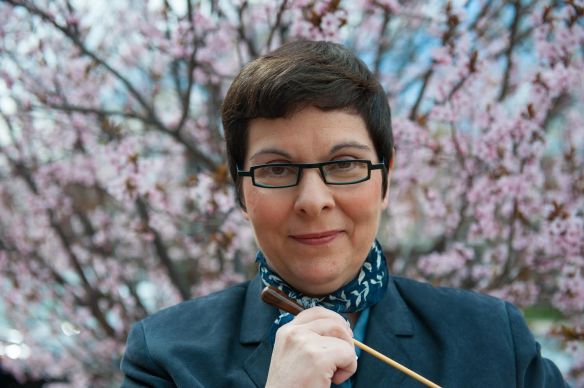
Cynthia Katsarelis. Photo by Glenn Ross.

Composers who write their own musical eulogies do not usually create jolly pieces.

silver Gelatin Print

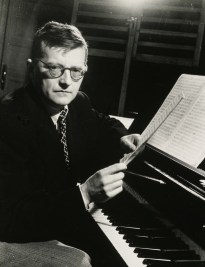
Dmitri Shostakovich

Dmitri Shostakovich, who suffered various forms of personal and artistic oppression throughout his career, was certainly no exception. When he wrote his Eighth String Quartet in 1960 he was contemplating suicide—which his friends prevented, fortunately. The work he wrote, dedicated to “the victims of fascism and war” but also reflecting his own suffering under the Soviet regime, remains a powerful testament to a low point in his life.

“This is really dark” says Cynthia Katsarelis, who will conduct the string orchestra version of the quartet, the Chamber Symphony for String Orchestra, with the Colorado Pro Musica Chamber Orchestra Friday in Denver and Saturday in Boulder. “He thought it was his own eulogy.”

The concerts are part of a two-year celebration of Shostakovich chamber music organized by the Colorado Chamber Players. Other works on the program will be the world premiere of Life Between Lives by American guitarist/composer D.J. Sparr, J.S. Bach’s Third Brandenburg Concerto, and the Study for Strings by Pavel Haas.

For more, see Boulder Weekly.

# # # # #

pmc-logo

Shostakovich: Dedication
Pro Musica Colorado Chamber Orchestra, Cynthia Katsarelis, conductor

J.S. Bach: Brandenburg Concerto No. 3
D.J. Sparr: Life Between Lives (world premiere)
Pavel Haas: Study for Strings
Dmitri Shostakovich: Chamber Symphony for String Orchestra

7:30 p.m. Friday, Jan. 22, First Baptist Church, Denver
7:30 p.m. Saturday, Jan. 23, First United Methodist, Boulder

Tickets


Boulder Phil offers Americana, east and west

“Dance, American Style” features collaboration with Boulder Ballet

By Peter Alexander

They will be dancing in the aisles, and on the stage of Macky Auditorium when the Boulder Philharmonic presents its first concert of 2016.

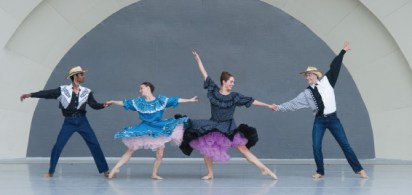
Rodeo

Photo by Keith Bobo

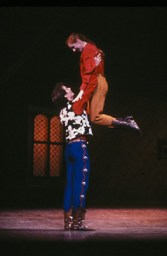
The program, titled “Dance, American Style,” will be presented at 7:30 p.m. Saturday (Jan. 16; tickets). Boulder Ballet will perform the complete ballet Rodeo by Aaron Copland, with choreography by artistic director Ana Claire.

Music director Michael Butterman will conduct the performance, which will also feature concert performances of music from Copland’s Billy the Kid ballet, the Symphonic Dances from West Side Story by Leonard Bernstein, and the New England Triptych of American composer William Schuman.

aa_bernstein_copland

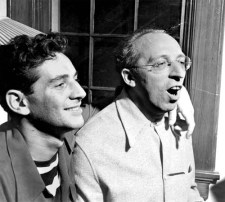
Bernstein and Copland, 1945

The program is an attractive anthology of American music from the mid-20th century. Copland was one of the most prominent composers of that era, with his folkish American style represented by both Billy the Kid and Rodeo, two staples of the orchestral repertoire to this day. Leonard Bernstein was both a champion of Copland’s music and a composer of protean abilities who made a mark on Broadway—the ultimate American musical genre of the 20th century—and in the concert hall. And William Schuman was the composer of acclaimed, accessible concert works, winner of the Pulitzer Prize in music, and a leader of American music for many years as president of first the Juilliard School and later Lincoln Center.

But as the title suggests, the program can also be seen as a tribute to the personalities and companies who established an American world of dance. In fact, it touches many of the legendary dance figures of the mid-20th century.

Billy the Kid was commissioned from Copland by dance impresario Lincoln Kirstein and premiered in 1938 by Kirstein’s Ballet Caravan. That company preceded the New York City Ballet, co-founded by Kirstein and Georges Balanchine. Billy was choreographed by Eugene Loring, who also danced in the premiere and later joined American Ballet Theater.

rodeoslides10p1

De Mille’s Rodeo; photo by Peter Shields

Rodeo was commissioned for the Ballet Russes de Monte Carlo. The choreographer was Agnes de Mille, who also danced the lead role at the 1942 premiere at the Metropolitan Opera House. In the audience that night were Richard Rogers and Oscar Hammerstein, who in turn invited de Mille to choreograph the dance sequences for their upcoming show, Oklahoma, thereby transforming the Broadway musical.

 Symphonic Dances from West Side Story is a suite for symphony orchestra taken from the score for Bernstein’s 1957 Broadway hit. It was compiled in 1961 by Bernstein in collaboration with his colleagues Sid Ramin and Irwin Kostal, who had just finished producing the orchestral score for the film version of the show, employing a much larger orchestra than the original Broadway pit band.

Robbins_rehearsal61

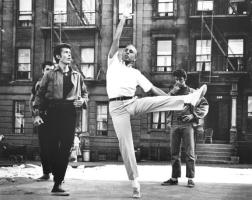
Robbins rehearsing West Side Story

The score incorporates West Side Story’s top hits, “Somewhere” and “Maria,” alongside the many dance sequences from the show. Director and choreographer of the original Broadway production was Jerome Robbins, whose innovative dances for the rival street gangs won the 1957 Tony Award for best choreography. Robbins was for many years one of the most influential American directors, choreographers and producers of ballet, Broadway, film and television.

For the Jan. 16 concert, Rodeo will be the only dance that is brought onto the stage. The performance will conclude with Boulder Ballet performing the full ballet—slightly longer than the familiar orchestral suite—on the front of the stage and in the aisles. Even though the full orchestra will be onstage with the dancers, “we’re going to give them as much room as we can,” Butterman says.

In any case, he adds, “It’s an uncommon chance to experience great concert music and see a short ballet on the same night!”

Butterman (old)

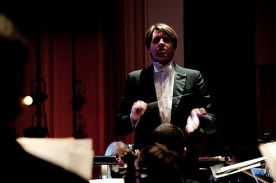
Michael Butterman

The rest of the program, Americana of several types—the “great concert music”—all seems to fit together in a very coherent way. But in fact, Butterman says, “this concert came together in kind of a bizarre way,” with each of the other pieces having been originally planned for another concert. “But I do think the program itself works rather nicely,” he adds.

The least familiar work will be Schuman’s New England Triptych, a work that is deeply rooted in America’s early history. It is based on the work of William Billings, a colonial-era song- and hymn-writer. Three of his songs—“Be glad then America,” “When Jesus Wept” and “Chester”—are the sources of the three movements.

“This is music that a lot of wind players encounter through the wind ensemble literature,” Butterman says. “It’s really attractive, it’s splashy when it needs to be, and yet that middle movement is beautifully introspective. The outer movements are very difficult—quick and very demanding.”

schum2

William Schuman

In fact, he says, the whole concert will be difficult playing. “As I was studying this program over the past few days, I began almost kicking myself,” he says. “What was I thinking? In spite of the fact that the music is pretty familiar, it’s all difficult!”

That would be most obviously true of the Symphonic Dances from West Side Story, which was clearly designed as a jazzy virtuoso showpiece for the musicians of the New York Philharmonic. “A member of a prominent orchestra (told me) a few years ago he thought this was one of the hardest pieces in the standard repertoire,” Butterman says.

“You have to get the swinging right, you have a real sort of screaming trumpet, and you’ve got lots of percussion. It’s really hard stuff to get together. It will be a challenge—it’s a challenge for any orchestra. It just takes some work.”

Fortunately, he adds, the orchestra will have four rehearsals in Macky Auditorium before the concert, instead of having part of their rehearsal week in the Dairy Center or some other location with different acoustics. “We’ll be able to hear it the same way four times in a row,” he says. “That will help a lot, I think.”

Once all the pieces are put in place, Butterman has no doubts that the audience will love the program. It fits Boulder Phil’s winning formula: some familiar pieces, even some pop and jazz-inflected music from Broadway, and a chance for people to discover something new in the New England Triptych.

“It’s all high energy and colorful, fun Americana,” he says, “with the added appeal of seeing the Copland brought to life in the way it was originally conceived—as dance music.”

# # # # #

Dance, American Style
Boulder Philharmonic Orchestra, Michael Butterman, music director
With the Boulder Ballet, Ana Claire, artistic director

7:30 p.m. Saturday, Jan. 16, 2016
Macky Auditorium

William Schuman: New England Triptych
Leonard Bernstein: Symphonic Dances from West Side Story
Aaron Copland: “Prairie Night, “ “Waltz” and “Celebration Dance” from Billy the Kid
Aaron Copland: Rodeo (complete ballet)
Boulder Ballet performing choreography by Ana Claire, artistic director

Tickets

Grammy-nominated Takacs Quartet explores new repertoire

Pianist Margaret McDonald collaborates in performances of Janáček and Elgar

By Peter Alexander

Takasce SQ

Tákacs Quartet. Photo by Keith Saunders.

The Takacs Quartet has such a long and distinguished history, has performed and recorded so much music, that it is surprising to learn that there is major repertoire that has not appeared on their programs.

In fact, their list of unplayed works will shrink by two at their performances Sunday and Monday (4 p.m. Jan. 10 and 7:30 p.m. Jan. 11) in Grusin Music Hall. And unsurprisingly, neither is for string quartet alone: The Takacs and pianist Margaret McDonald will perform Edward Elgar’s Quintet for piano and string quartet; and McDonald and first violinist Edward Dusinberre will present Leoš Janáček’s Sonata for violin and piano.

Completing the program will be Beethoven’s String Quartet in D major, op. 18 no. 3.

This will be the first concert by the Takacs following the announcement in December that their album with pianist Marc-Andre Hamelin of Shostakovich’s Piano Quintet and String Quartet No. 2 has been nominated for a Grammy Award. It is their fifth nomination and will be their second award if they win. The Grammy Awards will be presented Feb. 15.

“We’re always trying to combine music that’s very much our standard repertoire with newer things,” Dusinberre says. “It’s fun with (Elgar and Janáček), since they’re written at a similar time around the First World War, and the musical language couldn’t be more different.”

Read more in Boulder Weekly.

Pro Musica Colorado looks ahead and back

Opening program may be pianist Larry Graham’s farewell orchestra concert — or not

By Peter Alexander

Larry Graham_Dale_Steadman

Larry Graham. Photo by Dale Steadman.

The Pro Musica Colorado Chamber Orchestra will look both forward and back in their 2015–26 season, which music director Cynthia Katsarelis and the orchestra call “Remembrance” (http://www.promusicacolorado.org).

The season will open Friday and Saturday (Nov. 21-22) with the world premiere of a new work by CU composition competition winner Kurt Mehlenbacher—looking ahead—and end (April 8–9) with Mozart’s Requiem—a work that compels us to look back. In between will be a concert of music by J.S. Bach and Dmitri Shostakovich (Jan. 22-23) that will be part of a two-year festival of all of Shostakovich’s chamber music.

This will be the program most closely tied to the theme of remembrance, since Pro Musica will play the string orchestra version of Shostakovich’s String Quartet No. 8, dedicated to “the victims of fascism and war.”

The opening concert features Larry Graham, a revered former CU piano professor, playing Mozart’s C-minor Piano Concert, K491. The concert will open with Mehlenbacher’s Flying Crooked for chamber orchestra, commissioned by an endowment established by the late Thurston E. Manning, and also include Mozart’s Symphony No. 38 in D major, K504, known as the “Prague” Symphony.

Read more at Boulder Weekly.

# # # # #

pmc-logo

Pro Musical Colorado Chamber Orchestra
Cynthia Katsarelis, conductor, with Larry Graham, piano

Kurt Mehlenbacher: Flying Crooked (world premiere)
Mozart: Piano Concerto in C minor, K491
Symphony No. 38 in D major, K. 504 (“Prague”)

 7:30 p.m. Friday, Nov. 20, First Baptist Church, Denver
7:30 p.m. Saturday, Nov. 21, First United Methodist Church, Boulder

Tickets


Brahms’ destiny, Denler’s melodies and Fielder’s photos at Boulder Phil.

Thoreau quotes compliment world concert premiere of Denler’s Portraits in Season.

By Peter Alexander

Charles Denler

Charles Denler

Composer Charles Denler has always felt close to nature, so it makes sense that the world concert premiere of his Portraits in Season for piano and orchestra would be supplemented by the work of two other nature-loving artists: the American essayist Henry David Thoreau and Colorado photographer John Fielder.

Saturday’s performance by the Boulder Philharmonic and conductor Michael Butterman will feature Denler as piano soloist (7:30 p.m. Nov. 14 in Macky Auditorium; tickets). During the performance, Fielder’s photographs will be projected on a screen above the orchestra, where quotes from Thoreau will appear before each of the score’s movements.

Denler’s Portraits will be bookended by two pieces by Brahms, a composer who also enjoyed the natural world on his solitary walks in the Vienna woods. The concert will open with the Schicksalslied (Song of Destiny), performed with the Boulder Chorale in celebration of their 50th anniversary, and end with the Symphony No. 2 in D major.

Sneffels Range Spring, San Juan Mountains. Colorado. Photo by John Fielder

Sneffels Range Spring, San Juan Mountains. Colorado. Photo by John Fielder

Butterman says that the idea of having images accompany Denler’s music occurred to him the very first time he heard it. Denler had compiled digital recordings of the music—now released on an album—as he was working on it.

“I thought it was very fun music,” Butterman says. “But as I was listening to it, I wanted to see something. I wrote back and said this fits with our focus on local composers, and also nature and music together, but what about adding some visuals? He said ‘fantastic!’”

Adding images to Denler’s music was more than logical, since he is best known as a film composer. And Fielder, known for his nature photography throughout Colorado, seemed an ideal choice, too. For one thing, his photos have often been featured with music: this will be the fourth performance by a Colorado orchestra this year to use his photos.

Boulder audiences will remember that Fielder’s work was featured by the Colorado Music Festival last summer in performances of music by Sibelius and Beethoven. His photos were also featured in performances in Breckenridge and Steamboat Springs.

John Fielder. Photo by Cari Linden.

John Fielder. Photo by Cari Linden.

“I’ve been putting music to my slides for years,” Fielder says. “I love the experience—the whole is greater than the sum of the parts when you put music and imagery together.”

Fielder, who is recognized for his books and calendars of Colorado scenes, is deeply devoted to the outdoors. “I regard nature as not just views,” he says. “I enjoy being outdoors in the wilderness. The sound, the smell, the taste and the touch, as well as the views, are what make nature sublime for me.”

Portraits in Season has movements that pass through two complete years, and then suggest the start of another of life’s continuing cycles. And Denler intends this very much as a metaphor.

“The underlying meaning is walking through life,” he says. “I want people to think about that— to listen to this music and see that growing older is a gift. We should celebrate every single day and embrace the idea of aging.”

Denler’s music is often inspired by visual images, whether films that he is writing for, or personal experiences for his concert music. “This particular suite is based on visuals that I have from hiking the ponds and lakes (of) South Platte Park, walking along the Highline Canal, and even in my backyard,” he says.

Each movement is associated with a specific memory, even though the listeners will not know the locations they are associated with. And the Thoreau quotes are not directly associated with the locations, either.

“I’m a native New Englander, and I always gravitated toward (Thoreau’s) work,” Denler explains. “He wrote about nature from the context of living inside of it, and I wanted that reflected in the music. Sometimes, the quote just made sense for that season, (so) it may not reflect particular areas here in Colorado.”

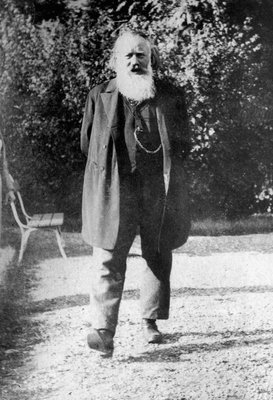
Johannes Brahms

Johannes Brahms

Butterman chose Brahms for Denler’s companion on the program, because he sees a connection between Denler, nature, and the Viennese composer. “Brahms never wrote anything that he called ‘Babbling Brook’ or something,” he says. “But yet, when I think about composers who drew nourishment from nature, he’s actually the first composer that comes to my mind.

“The energy and the centeredness that he drew from long walks in the Vienna Woods strikes me as a little bit like Thoreau—somebody who needed to be away from people and by himself in nature. They (both) found their batteries recharged by the experience.”

Of the two works by Brahms, the Second Symphony will be the most familiar. “It’s full of all of the hallmarks of Brahms’s music that I really love,” Butterman says. “The rhythmic ambiguity, his ability to mix the serenade-like quality of his woodwind writing with much more accented and aggressive writing in the strings. But there’s an overlaying of sort of a placid character to it.”

Michael Butterman

Michael Butterman

The Schicksalslied, on the other hand, has placid moments, but they are definitely not part of Brahms’s depiction of human destiny, which is one of turbulence and forces beyond human control. “I love the beauty of the outer segments,” Butterman says, “and then the turbulence of what the chorus sings in the middle is a dramatic contrast.”

The beginning seems to be a description of Elysium, but that peaceful realm is contrasted with our life on earth. In the central choral section, “we are buffeted by fate, thrown hither and yon by forces that we have no ability to influence or control,” Butterman says. “It basically says that things are really nice up above, wherever that may be, but down here it’s every man for himself.”

Henry David Thoreau

Thoreau

The text ends there, but Brahms has added a closing orchestral section that provides a ray of hope for a better existence at the end. Which brings us back to Denler’s contemplative and comforting Classical/New Age score, which seems to evoke the peace that Brahms only hinted.

Or in the words from Thoreau’s Walden that Denler has chosen for one of the movements, when “the day and night are such that you greet them with joy, and life emits a fragrance like flowers and sweet-scented herbs . . . all nature is your congratulation and you have cause momentarily to bless yourself.”

# # # # #

Portraits in Seasons

Boulder Philharmonic Orchestra, Michael Butterman, music director,
with Boulder Chorale, Charles Denler, piano, and photos by John Fielder

World concert premiere of Portraits in Season for piano and orchestra, by Charles Denler
Johannes Brahms: Schicksalslied and Symphony No. 2 in D major

7:30 p.m. Saturday, Nov. 14
Macky Auditorium

Tickets

Related events:
7:30 p.m. Wednesday, Nov. 11: Free Café Phil open rehearsal at the Dairy Center for the Arts
6:30 p.m. Saturday Nov. 14, before the concert: Pre-concert talk at Macky

Charles Denler’s CDs and John Fielder’s books will be on sale in the lobby before and after the performance.

Boulder Chamber Orchestra presents a slightly crazy “Spook Symphony”

Music from Psycho and a 19th-century piano highlight Halloween concert

By Peter Alexander

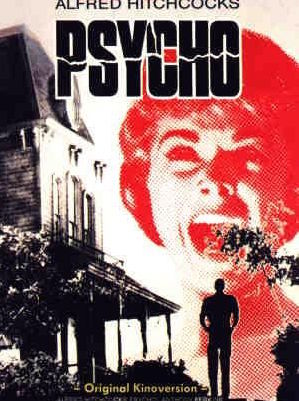
psycho-posterBe sure to take a shower before you go the Boulder Chamber Orchestra’s concert Friday (7:30 p.m. Oct. 30, First United Methodist Church, Boulder). You may not want to afterwards.

Director Bahman Saless has programmed the music from Alfred Hitchcock’s horror classic Psycho, including the slashing chords from Hollywood’s most famous shower scene. “The central idea was spook,” Saless says of the concert, which he has titled, in honor of Halloween, “Spook Symphony.”

In addition to Psycho and other pieces he picked to go with the spooky theme, the concert will also feature pianist Mina Gajić performing two works with the orchestra. She will give the first U.S. performance on a historical piano that she owns, one that was built in Paris in 1895 by the piano maker Sebastian Érard.

Pianist Mina Gajić

Pianist Mina Gajić

Érard’s pianos were owned and played by many of the leading composers and pianists throughout the century, including Haydn, Beethoven, Liszt, Chopin, Mendelssohn, Ravel, Fauré, and many others.

Gajić will play two works for piano and string orchestra: the Malédiction (Curse) by Liszt, and Young Apollo by Benjamin Britten. Other works on the program for strings alone will be the Adagio and Fugue in C minor, K546, by Mozart, and the Little Suite for Strings, Op. 1, by Carl Nielsen.

Tickets for the concert are available here.

Bahman Saless. Photo by Keith Bob.

Bahman Saless. Photo by Keith Bob.

“I wanted to do the music to Psycho, because people really liked it the last time we did it,” Saless says. “I think (composer Bernard) Herrmann was one of the best (of the classic film composers). He did a lot of Alfred Hitchcock movies, and they’re all absolutely, as far as I’m concerned, ideal for the genre.

“The question is what goes with Psycho, sticking to classical music (and) our routine of doing things that are not played enough. I knew the Nielsen Little Suite, which is not spooky but has a waltz that has a very macabre type of sound to it. And then another unique, spooky, crazy, lunatic piece is the Britten Young Apollo. It’s almost like the dance of ghouls—it’s very comic ghoulishness.

“And Malédiction also, just from the name of it sounded very apt, and it has crazy harmonies, really out of this world unexpected harmonic changes and modulations. And I thought it’s a very good partner to the Britten.”

__________

It’s not spooky, but for many people the greatest draw of the concert will be Gajić’s Érard piano. She found it in Amsterdam in 2014, at Maison Érard, a preserver and restorer of Érard pianos. She had played more than 100 historic pianos in her career, and was looking for one that she could purchase for her own.

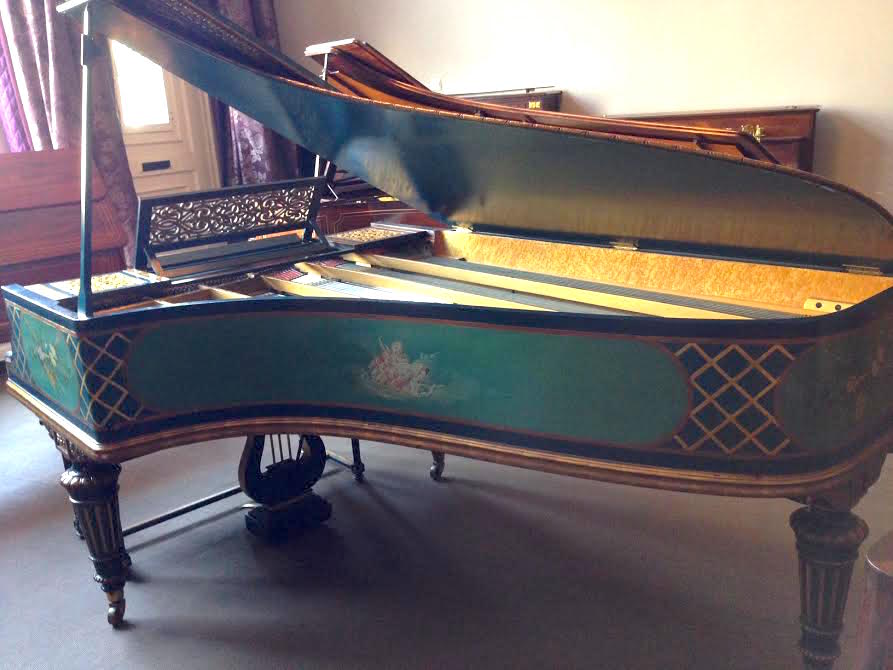
1895 piano by Érard.

The 1895 Érard piano of Mina Gajić.

“We walked into this beautiful canal house and there were 30 pianos in one show room,” she says. “I spent about a week there, playing all of those pianos. This one stood out because of the clarity of its tone, the color of the sound, and the fact that it is really a virtuosic instrument, and yet it has such richness and fullness to the tone which really comes to life in a concert hall.”

The piano has all original parts, including the case, ivory keys, the original soundboard, dampers and hammers, and even a few of the original strings from 120 years ago. At seven feet, it is a full concert grand of the time.

The piano “is one of a kind because of the (custom) artwork on the case,” Gajić says. The instrument was made “for a Belgian noble family that had a chamber salon and concert series at the turn of the (20th) century.

“I am hoping to some day learn that Debussy, Fauré, or Ravel played upon this very instrument. It is in fact likely, given this piano lived in Brussels. However, all I know at this point is that it is a one-of-a-kind Érard, among the best instruments they made.”

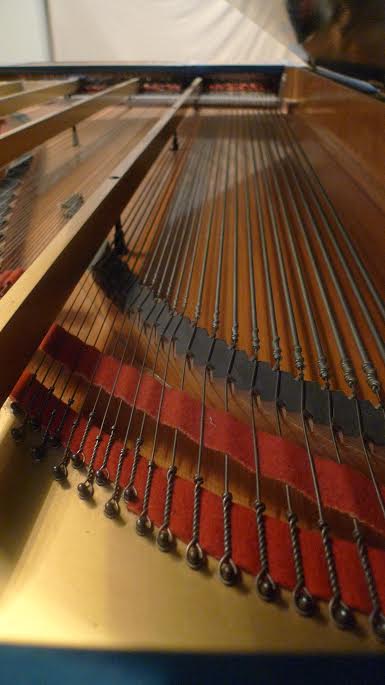
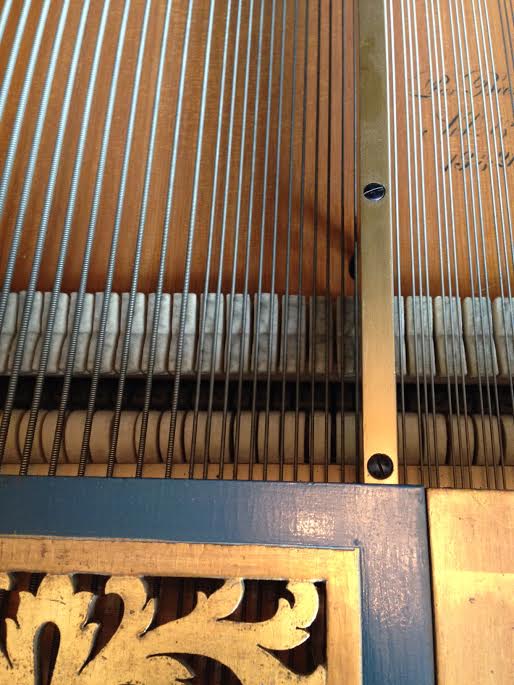
Erard piano.3There are three things that are particularly distinctive about the piano, that give it qualities unlike modern concert grands. For one, it is straight-strung, like many instruments of the 19th century. In other words, all the strings run parallel to one another, at a 90 degree angle to the keyboard, whereas modern pianos are cross-strung, with the bass strings crossing diagonally over the higher strings. This newer design gives a rich sound, but one that is heavier and thicker—and sometimes murkier—than straight-strung pianos.

The second distinctive feature is that the grain of the wood in the soundboard runs parallel to the strings, directly away from the keyboard. This too is unlike modern pianos, where the grain goes diagonally from right to left, across the direction of the strings. With the diagonal grain, the soundboard resonates all together, whereas when the grain parallels the strings, each portion of the soundboard will resonate separately, giving a different timbre to different registers of the piano.

These two features combine to create a distinctive sound many performers prefer for the music of the 19th century. Indeed, the pianist Daniel Barenboim has recently designed a modern instrument for his own use that has straight strings and the wood grain in parallel.

The dampers under the strings in Gajić's Érard piano.

The dampers under the strings in Gajić’s Érard piano.

The third distinctive quality of Gajić’s Érard is that the dampers (felt pads that stop the strings from sounding) are set below the strings. Pianos today all have dampers above the strings, which is easier is one respect, since gravity will cause them to fall onto the strings. The disadvantage is that the dampers can make a thump when they hit the strings that can even be heard in some recordings, whereas dampers under the strings are much quieter.

Gajić suggested several things the audience can listen for when they hear her piano. One is the clarity of the sound, especially in the bass. “Also there is a very distinct registral quality at the top of the piano,” she says. “In the very, very highest register it’s very clear and very special. It sounds like pure bells.”

Below that, each register of the piano has a distinctive sound, much like different voices in a choir, with a “soulful mid-register and a lot of power in the bass. And this piano has a lot of power and a lot of projection,” she says.

Erard piano.4“Nowadays we hear a lot of the period instruments from the classical era and Baroque era—strings, winds, singing styles—but we don’t really have such an opportunity to hear a piano which is in its original condition from the 19th century. I would definitely encourage everybody to hear the piano, because it offers an insight not only into how composers of the 19th century were writing music, but also how the audiences were hearing it.

“You can really hear all the nuances in the voicing and the textures when it’s in a larger hall. We already moved the piano to the hall and it sounds fantastic. I’m really excited and really, really happy that we’re playing these pieces on this piano and in this hall.”

___________

Liszt’s “Curse,” Hitchcock’s Psycho, a remarkable old piano, and Britten’s “lunatic piece” Young Apollo. It all sounds slightly crazy.

But as Norman Bates said, “We all go a little mad sometimes. Haven’t you?”

# # # # #

Spook Symphony

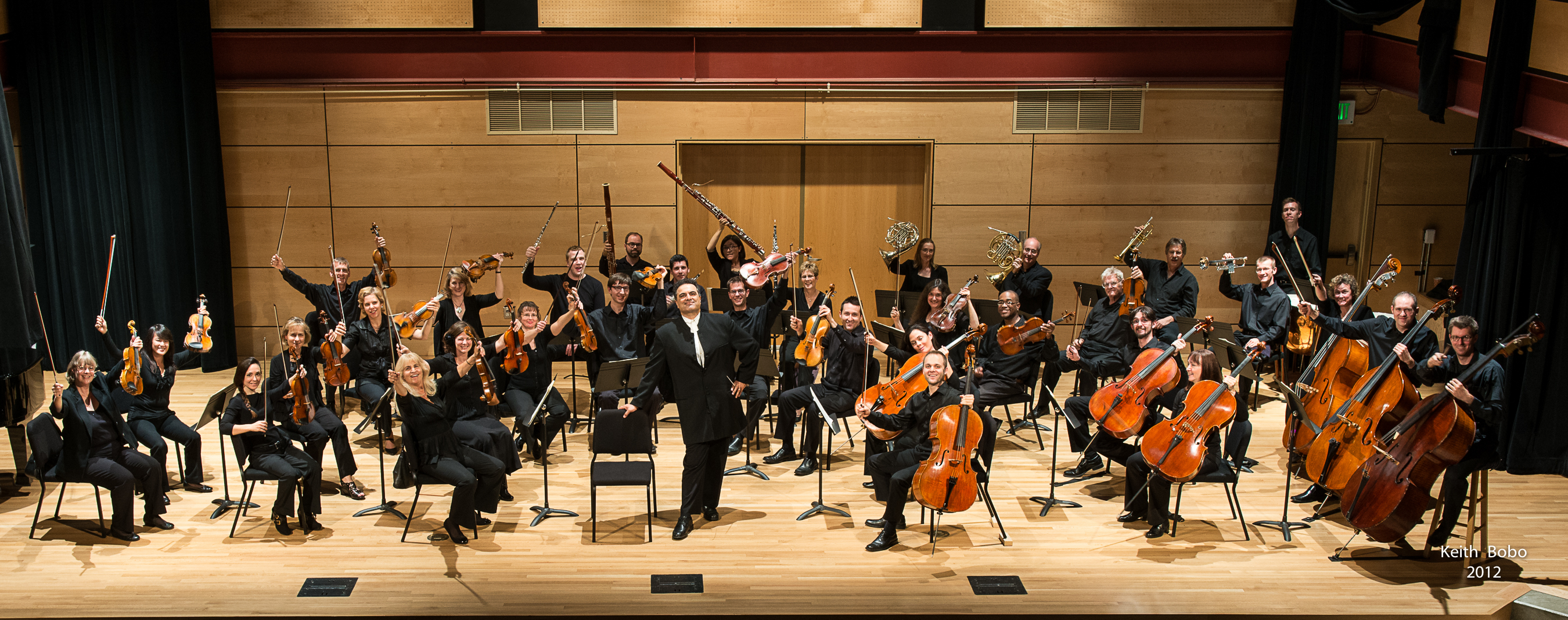
Bahman Saless with the Boulder Chamber Orchestra. Photo by Keith Bobo.

Bahman Saless with the Boulder Chamber Orchestra. Photo by Keith Bobo.

Boulder Chamber Orchestra,
Bahman Saless, conductor, with
Mina Gajić, piano

Bernard Herrmann: Music to Psycho
Mozart: Adagio and Fugue in C minor, K546
Carl Nielsen: Little Suite for Strings, Op. 1
Liszt: Malédiction
Benjamin Britten: Young Apollo

7:30 p.m. Friday, Oct. 30
First United Methodist Church
1421 Spruce St., Boulder

Tickets

No glass slippers, but it’s still Cinderella

CU Eklund Opera Program presents Rossini’s La Cenerentola

By Peter Alexander

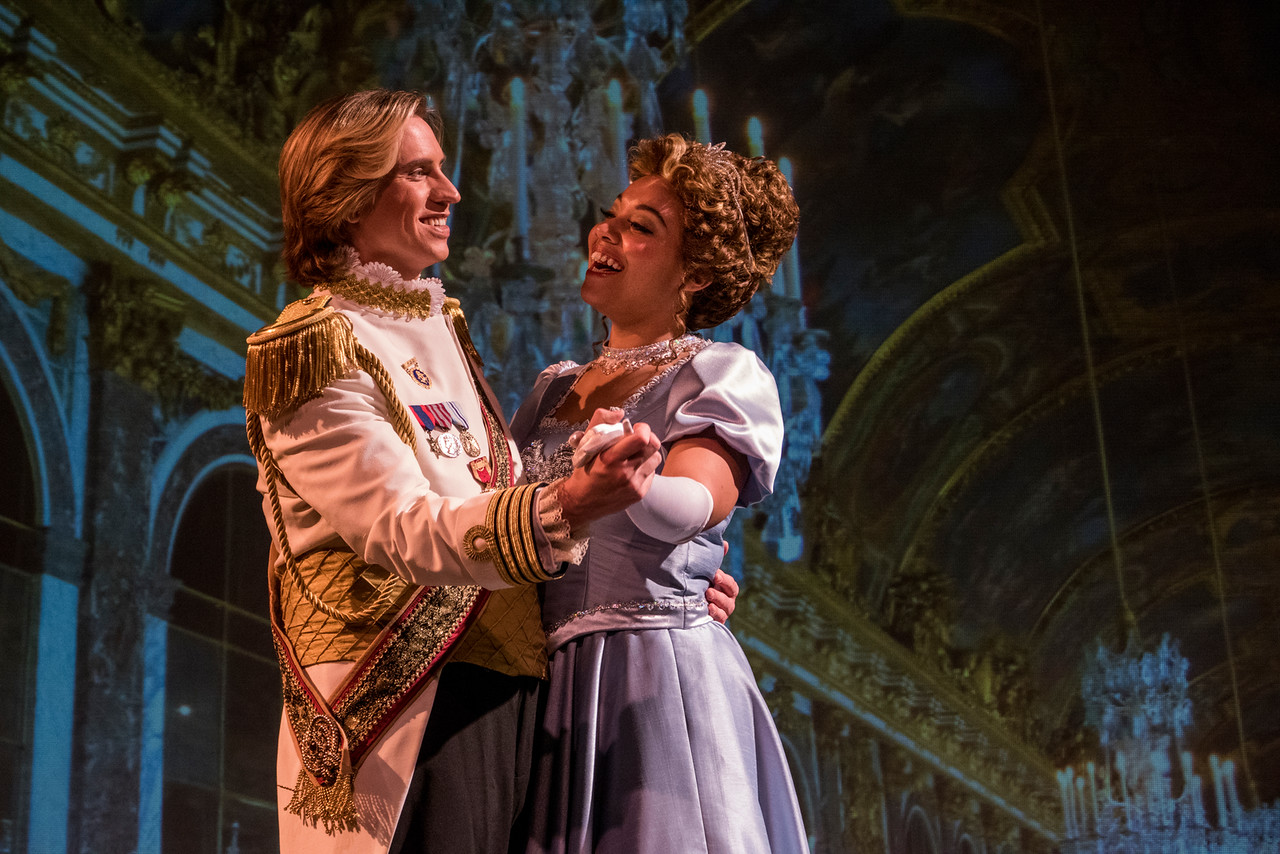
Max Hosmer and Taylor Raven in the Eklund Opera Program production of Rossini's La Cenerentola Ro(Photo by Glenn Asakawa/University of Colorado)

Max Hosmer and Taylor Raven in the Eklund Opera Program production of Rossini’s La Cenerentola (Photo by Glenn Asakawa/University of Colorado)

No glass slippers or fairy godmother? What kind of Cinderella is that?

Actually, it’s Rossini’s opera La Cenerentola (Cinderella), and it’s the current production of the CU Eklund Opera Program. Performances this weekend will be Friday and Saturday (Oct. 23–24) at 7:30 p.m. and Sunday (Oct. 25) at 2 p.m. in CU Macky Auditorium. CU faculty member Nicholas Carthy will conduct the student orchestra and guest artist Bill Fabris will direct.

The cast features three graduate students—one performance each—in the demanding mezzo-soprano role of Cinderella: Taylor Raven, Rebecca Robinson and Christina Adams. The tenor role of Ramiro, aka the Prince, will be sung by Max Hosmer, a CU post-graduate, and CU faculty member Matthew Chellis (Saturday only).

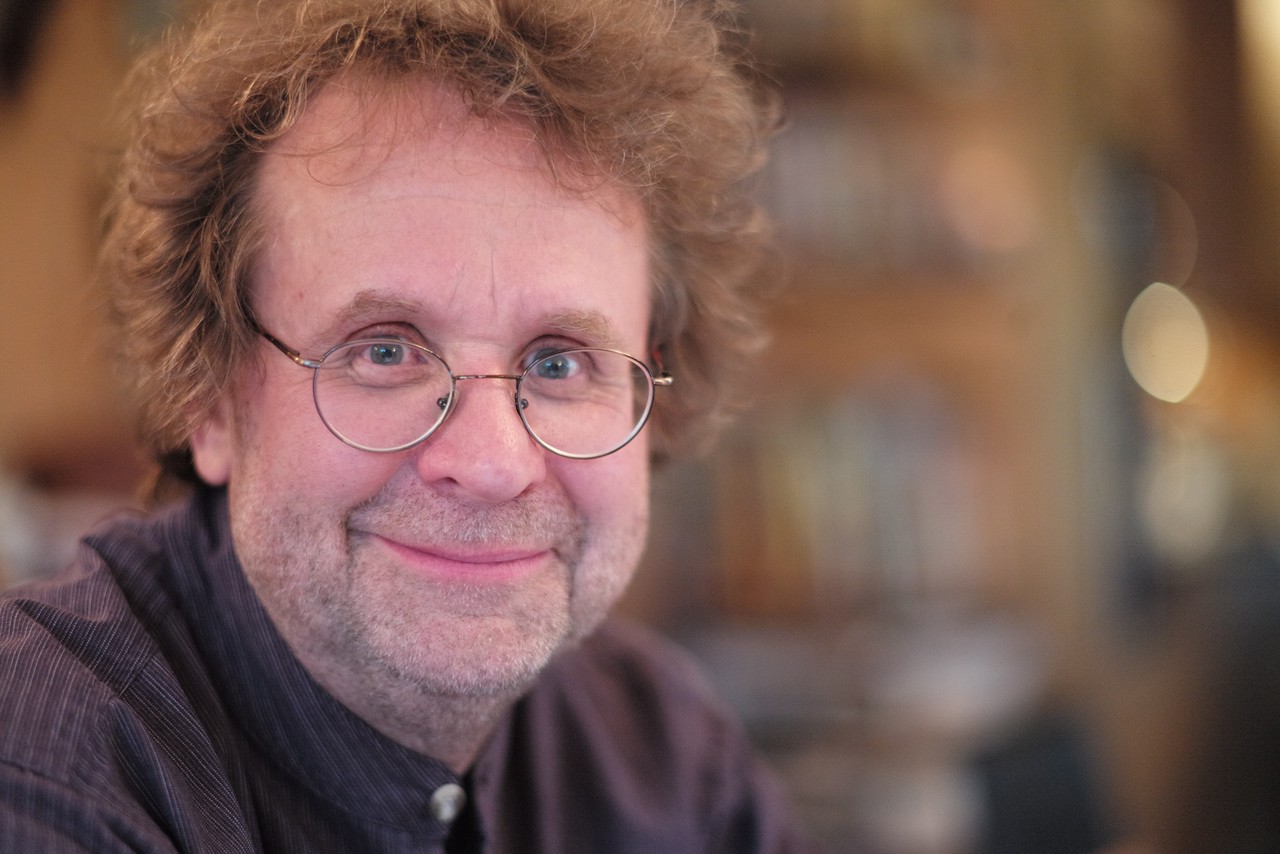
CarthyAlthough it is based on the familiar Charles Perrault version of the fairy-tale, Rossini’s opera makes several changes to downplay magic and put more stress on Cinderella’s goodness of heart. The glass slippers are gone; instead, the prince recognizes Cinderella by a bracelet that she has worn at the ball. The cruel stepmother is replaced by a cruel stepfather, and the fairy godmother is replaced by a philosopher.

However, the greatest change makes the prince more of an actor in the drama. Because he wants to know the true nature of the young women he might marry, he switches places with his servant. In this way he learns about the selfishness of Cinderella’s sisters. Likewise, he observes the cruelty and arrogance of Cinderella’s stepfather, who is desperate to marry one of his daughters to the prince, and he experiences Cinderella’s kindness.

Aldoro, the philosopher who stands in for the usual fairy godmother, also appears in disguise, and sees that Cinderella is the one truly good person of her family. It is for that reason that he intervenes to get her to the ball.

Leigh Holman, director of the Eklund Opera Program, described the CU Cenerentola as a “relatively traditional” production set at the turn of the 20th century. “It’s hilarious, truly a comedy,” she says. “But unlike the Disney version, it’s also more grounded and realistic.

“What I enjoy most about this opera are its pervasive themes of character development. Cinderella is neglected and oppressed by an abusive father, but she learns to let that go. Because of the glorious love she’s found, forgiveness grows before regret and resentment take root. It’s a story of transcendence.”

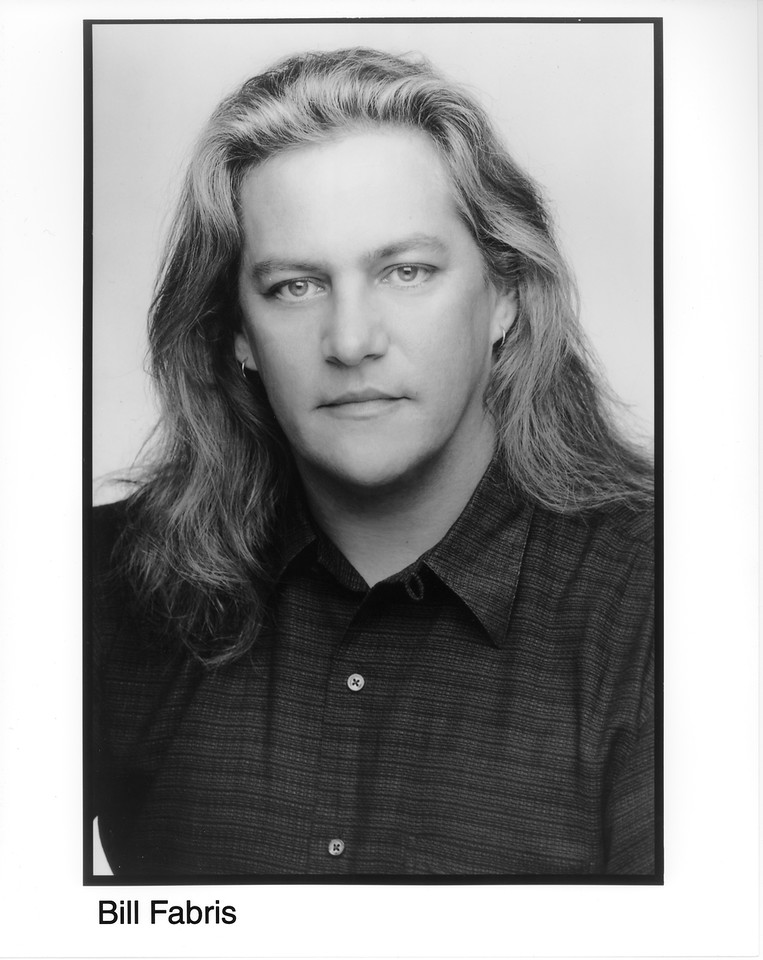
Guest stage director Bill Fabris

A free-lance stage director who works in opera and music theater around the country, Fabris was engaged for the CU production on short notice when Holman was unable to be in Boulder for the rehearsals and performances. Not having done La Cenerentola for some time, he was happy not to deal with an unusual concept for the show. “It’s a little updated but still a traditional production,” he says, “which is fine with me, coming late in the process.”

When he arrived, Fabris was impressed with the student cast. “When I found out that most all of the roles are double cast, I thought, wow! And then I got here, and they’re doing it! They know what they’re singing they know how to manipulate all the fast runs.

“These wonderful young artists and their vocal gymnastics are amazing. Wait until you see it!”

# # # # #

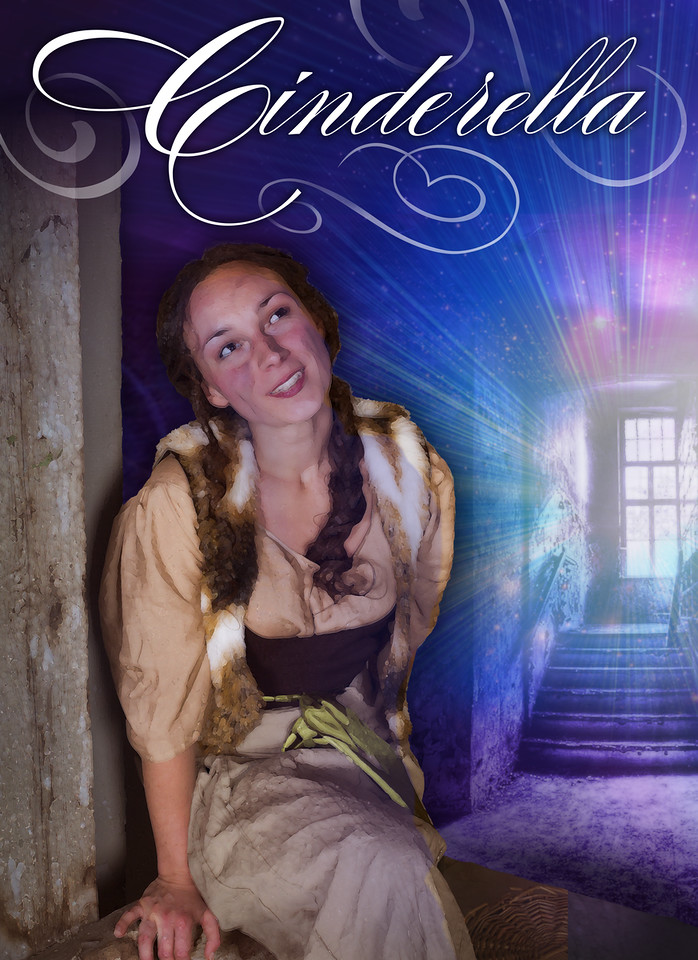
Cinderella_FINALfull-X2La Cenerentola (Cinderella) by Gioachino Rossini

CU Eklund Opera Program
Bill Fabris, stage director
Nicholas Carthy, conductor

7:30 p.m. Friday, Oct. 23, and Saturday, Oct. 24
2:00 pm. Sunday, Oct. 25
Macky Auditorium

Tickets