Once a year on the prairie

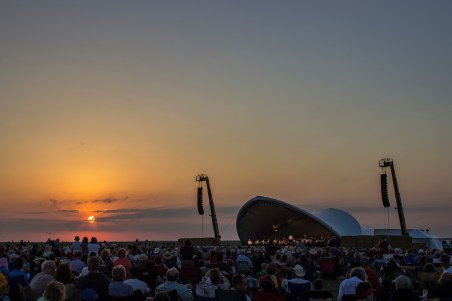
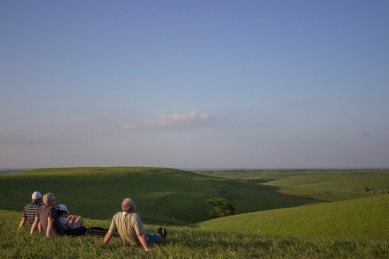
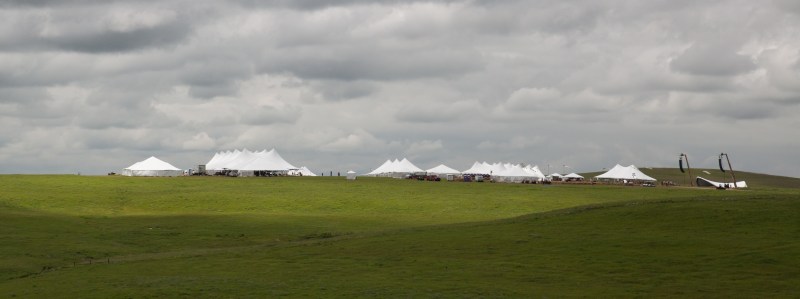
Symphony in the Flint Hills joins conservation with symphonic music

Boulder Bach Festival will remove the veil from Romanticism

In Longmont, J.S. Bach shares the program with Brahms songs and Horn Trio

By Peter Alexander

zacharycarrettin

Zachary Carrettin

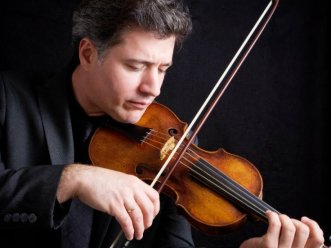
Zachary Carrettin, artistic director of the Boulder Bach Festival, has an apparently inexhaustible supply of surprises.

He and the festival have offered Bach in many different guises—on historical instruments, on traditional modern instruments with a full-sized symphony, on electronic instruments—always revealing new discoveries. And now they are heading down one of the most well traveled paths in the concert repertoire, the music of Romanticism.

You might think that era would not hold many surprises today, but the festival’s next concert—5 p.m. Sunday, May 15, in the Stewart Auditorium of the Longmont Museum (tickets)—promises to present “Romanticism Unveiled.” The program features the Horn Trio in E-flat of Johannes Brahms played on historical—that is, Romantic-era—instruments, as well as a familiar piece by Bach in a late-19th-century arrangement, and several Brahms songs.

Performers will be Carrettin, playing a modern violin but with types of strings that would have been used in Brahms’s lifetime; pianist Mina Gajic playing her straight-strung 1895 Érard piano; horn player Thomas Jöstlein playing a 19th-century natural horn; and soprano Amanda Balestrieri applying what is known of 19th-century vocal style.

The Brahms Horn Trio is a fairly well known work, but as Carrettin explains, today it is usually played on modern instruments, including a valved horn and a grand piano. “There is content in this music that is revealed when it is played on the instruments of the time,” he says. “So we are unveiling some of the colors, and some of the meaning in the music that is different when played on the original instruments.”

Carrettin admits that the modern instrument are technologically advanced, and in some ways easier to play than older versions of the same instruments. At the same time, though, the older instruments reveal aspects of the music that modern instruments may conceal—or veil from view.

“When you open the can of worms with period instruments, you have to explore different techniques, different intonation, different balance, and also (different) phrasing,” he says. “The instruments teach you how they want to be played. Certain things are possible and other things are more difficult.”

old interior

1895 Érard piano

Gajic’s Érard piano was made in Paris in 1895. It is straight strung, meaning that the strings all run parallel, which creates a different sound from the modern cross-strung grand piano. The Érard is clearer than the modern piano, and each register has its own sound. (Read my earlier description of this piano here.)

Carrettin will play his modern violin, which is essentially the same as the violins of Brahms’s era, but with strings that reflect 19th-century practice. “I’m using a combination of gut, wound gut and steel strings,” he says. “I’ll have (natural) gut wound in silver on the G, and I’m still playing with all other options. Typically for this kind of setup my two middle strings are pure gut, not wound, (with a steel E string).”

Another issue you may not have thought of is the use of a chin rest. In the Baroque and early classical era, violinists did not have chin rests, but during Brahms’s lifetime chin rests were in wide use. “One day I practice with no chin rest, which gives the violin a rounder, darker sound. The next day I practice with the chin rest which gives the violin more focus,” Carrettin says. The decision to use the chin rest will depend on how the violin sounds with the other instruments.

Jostlein

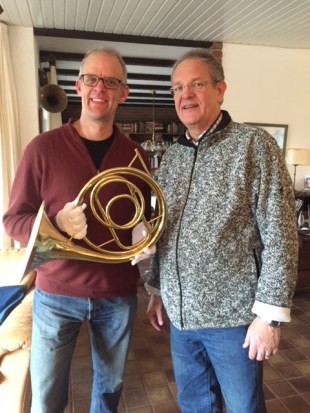
Thomas Jöstlein (l) with his 1815 natural horn and Ab Koster (r), the German horn player from whom he purchased the horn

The third member of the trio, Jöstlein, will be playing a natural horn, without valves. Even though the valved horn that we know today had been invented during Brahms’s lifetime, it was not the composer’s first choice. “He played (natural horn) as a child and always preferred it over the pistons and valves,” Carrettin says. “He wrote all four symphonies with the natural horn in mind.”

As principal horn of the St. Louis Symphony, Jöstlein has plenty of experience on the modern instruments, but he also owns and performs widely on natural horns from the 18th and 19th centuries. For “Romanticism Unveiled,” he will play a horn from about 1815 that he purchased in Europe.

Other works on the program will include a 19th-century arrangement of Bach’s “Air on the G string” for violin and piano. “We’ve talked so much in our concerts about electric violins and Baroque violins and Steinway pianos and harpsichords,” Carrettin says. “We typically have modern instruments and Baroque instruments, but this is the first time the Bach Festival has played Bach on 19th-century Romantic instruments with a style influenced by research on Romantic chamber music style.”

Amanda Balastrieri

Amanda Balestrieri

To fill out the Romantic program, Balestrieri will sing an aria from Bach’s cantata BWV 196 and three Brahms songs with piano. “Amanda is the perfect artist for this program,” Carrettin says. “She has spent her career performing with period and modern instruments and in a variety of historically informed styles.”

He is particularly pleased to be performing music from the 19th century in a smaller facility. “We’re performing in the beautiful Stewart Auditorium of the Longmont Museum,” he says. “It’s a 250-seat hall. It’s very much a salon setting, so we don’t have to worry about projecting to a 3,000 seat house. That has in it an authenticity in the way that we can craft the interpretation.”

It all adds up to an unusual opportunity for local audiences, Carrettin says. “It’s a rare thing to hear Romantic period chamber music on original instruments in this part of the country,” he says.

# # # # #

IMG_0993

Stewart Auditorium in the Longmont Museum

“Romanticism Unveiled”
Boulder Bach Festival

Zachary Carrettin, violin
Mina Gajic, piano (Érard, 1895)
Thomas Jöstlein, natural horn
Amanda Balestrieri, soprano

Program includes several short selections by J.S. Bach, Lieder by Brahms, and the Brahms Horn Trio in E-flat major, op. 40, performed on Romantic-era instruments

5 p.m. Sunday, May 15
Stewart Auditorium at the Longmont Museum, Longmont

Tickets

5/12/16 Edited for grammar

Boulder Chorale Brings Brubeck Mass to Colorado

Hope and celebration mark the end of 50th-anniversary season

By Peter Alexander

Dec-2014-BC-adults

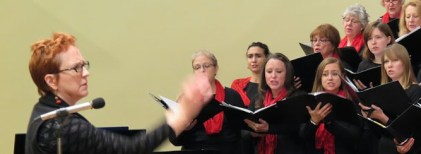
Boulder Chorale

The Boulder Chorale will close its 50th-anniversary season this weekend with hope and a celebration.

To be more precise, the Chorale and artistic director Vicki Burrichter will close the season with the first Colorado performance of “To Hope—A Celebration,” a setting of portions of the Catholic Mass by Dave Brubeck as arranged by Adam Waite. Performances will be at 7:30 p.m. Friday, May 13, and 4 p.m. Sunday, May 15, at First United Methodist Church in Boulder (tickets).

Nickydrake_jofoke_nashville10-e1454195745104

JoFoKe

Joining the chorale for the Brubeck performance will be vocalist Joslyn “JoFoKe” Ford-Keel and a jazz quintet featuring Waite on piano, bassist Ken Walker, and other local jazz musicians. The remainder of the program, forming the first half of the concert, will be music of the African Diaspora sung by the full Chorale and the 24-voice Chamber Chorale.

Saying they are performing Brubeck’s Mass is actually a tricky statement for anyone to make. Brubeck wrote the piece for orchestra and chorus, but he performed and recorded it with his own quartet performing alongside the orchestra. As Burrichter explains, “When I got the score, it did not have the jazz combo that the recording does. I said, ‘Where are the combo parts?’ and (the publisher) said, ‘Well, they’re not available.’”

dave-brubeck-08

Dave Brubeck

With or without the combo, the orchestral version posed several problems: “It’s a really odd orchestra with unusual instrumentation, and it’s difficult to find a space in Boulder where we could do that,” Burrichter says. “And I really liked the whole jazz combo feel. To me, that was the whole point of the piece.”

She found a version on YouTube with jazz quintet—piano, bass, drums, trumpet and trombone. She tracked down the arranger of that version, who was Adam Waite. She contacted him by email and he replied that he had just taken a job as director of music at Montview Presbyterian in Denver and would be moving to Colorado in two months.

adam-waite-headshot

Adam Waite

“I said ‘You’ve got to be kidding me!’” Burrichter recalls. “Talk about fate or something!

“That’s how we found it, and Adam will play and work with the band. I’m very excited because it’s the first time it’s been done in Colorado in this setting.”

Another complication in performing the piece is how much of what Brubeck wrote to perform. According to Burrichter, not all of the movements are suitable for a jazz combo arrangement. Besides, she says, “Brubeck says very clearly that he wants people to change it if it’s for a concert setting as opposed to a church setting, and he gives his thoughts on how to do that.

“We left out four or five of (Brubeck’s original) movements. How Waite described it to me is, we’re leaving out the parts that are aimed more at a church service instead of a concert setting. Because we’re not offering mass, we’re leaving out some.”

holiday-2015-photo-by-bob-evans

Burrichter with Boulder Chorale. Photo by BobEvans

As Burrichter describes the movements included on the program, “We’re doing a processional, which is a great opening. Then the cantor and choir sing ‘Lord Have Mercy’—the Kyrie (of the Catholic Mass)—then the soloist does ‘In the Desert and the Parched Land,’ which leads into ‘The Peace of Jerusalem.’ That sounds very middle eastern (with) a great drum background.”

Among the familiar movements of the mass that are omitted is the Gloria. “Instead we’re doing an Alleluia that’s in 5/4 time, so it’s wonderfully disjointed,” Burrichter says. “Then ‘Through Him, With Him,’ leading to a great Amen, the Doxology, ‘The Lamb of God’ (Agnus Dei) and then the last movement, ‘All my Hope,’ which is a gospel piece. It builds to a big climax with lots of improvisation and the choir functioning as a big band in the background. It’s a really exciting way to end it.”

Before intermission, Burrichter and the chorale will perform music from the African Diaspora in America, starting with the spirituals “My Lord, What a Mornin’” and “Elijah Rock” as arranged by Moses Hogan. A smaller group out of the full chorale, the Chamber Chorale, will perform music by Mary Lou Williams.

Mary_Lou_Williams_(Gottlieb_09231)

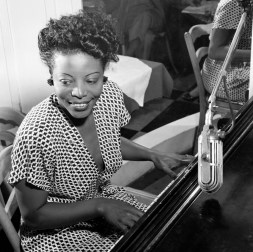
Mary Lou Williams

A prolific jazz composer and pianist who wrote for Ellington, Williams later taught some of the jazz players of the next generation, including Charlie Parker, Dizzy Gillespie and Miles Davis. The Chamber Chorale will sing two pieces from “Mary Lou’s Mass,” which in 1964 became the first jazz mass performed in the Catholic Church.

Rounding out this segment of the concert will be “Orange Colored Sky,” a jazz standard that was first popularized by Nat King Cole, and “Total Praise.” “I just wanted to touch a little bit on the African-American traditions, starting with the earliest forms,” Burrichter says.

“To me, (the music on the program) is all basically the same—it’s music of the African Diaspora. Sure, Dave Brubeck was a Caucasian guy, but he was immersed in America’s classical music, which is jazz.

“This concert is an opportunity to hear something that’s never been done here. It’s fun and moving, and it’s a great chance to have a really exciting night and hear some of the best jazz players in the state.”

# # # # #

To Hope! A Celebration—The Boulder Chorale’s Next 50 Years
Boulder Chorale, Vicki Burrichter, artistic director and conductor
With Joslyn “JoFoKe” Ford-Keel
Adam Waite, piano, and jazz quintet

7:30 p.m. Friday, May 13
4 p.m. Sunday, May 15
First United Methodist Church, 1421 Spruce St., Boulder

Tickets

Edited 5/7/16 to correct the title of “Total Praise” and clean up syntax in two quotes.

Force of Nature

Boulder Chamber Orchestra, Boulder Symphony offer similar themes for Mother’s Day

By Peter Alexander

Chloe Trevor.Kate-L-Photography

Chloe Trevor. Kate L.Photography

This Mother’s Day weekend it’s all about nature for Boulder’s classical musicians.

The weekend kicks off Friday night with conductor Bahman Saless and the Boulder Chamber Orchestra performing a concert titled “Mother Nature” in Broomfield (7:30 p.m., Broomfield Auditorium). The concert, which also features violinist Chloe Trevor, will be repeated Sunday evening in Boulder (7:30 p.m., Seventh-Day Adventist Church).

Between those performances, conductor Devin Patrick Hughes and the Boulder Symphony will offer “Nature’s Voice” on Saturday evening (7 p.m., First Presbyterian Church), with guest soloist Gal Faganel, cello.

Friday and Sunday the Boulder Chamber Orchestra will present, somewhat curiously, the only piece overtly about nature: Beethoven’s Symphony No. 6, the “Pastoral Symphony,” depicting an afternoon’s walk through the countryside. The other works on the program—the Tchaikovsky Violin Concerto, with Trevor playing the virtuoso solo part, and the Pavane by Gabriel Fauré—don’t have any apparent connection to nature.

For the Boulder Symphony Saturday evening, it is the composers rather than the pieces that suggested the title “Nature’s Voice.” The major works will be Sibelius’s Third Symphony and Dvořák’s Cello Concerto with Faganel as soloist. Opening the concert will be the world premiere of Everything All at Once by Jonathan Sokol.

Read more at Boulder Weekly.

# # # # #

“Mother Nature”
Boulder Chamber Orchestra, Bahman Saless, music director
Chloe Trevor, violin

7:30 p.m. Friday, May 6, Broomfield Auditorium, Broomfield
7:30 p.m. Sunday, May 8, Seventh-Day Adventist Church, Boulder

Tickets

“Nature’s Voice”
Boulder Symphony, Devin Patrick Hughes, music director
Gal, Faganel, cello

7 p.m. Saturday, May 7, First Presbyterian Church, Boulder

Tickets


Boulder Phil will present three works in one

Performances of Bach’s St. Matthew Passion will be a collaboration with several organizations

By Peter Alexander

J.S. Bach’s St. Matthew Passion is at least three different works.

Michael Butterman conducts the Boulder Phil - Glenn Ross Photo.jpg

Michael Butterman and the Boulder Philharmonic. Photo by Glenn Ross.

It is a sacred work, written and performed in Bach’s lifetime as part of Good Friday services at the Thomaskirche in Leipzig. It is a concert work that has been performed apart from religious services for most of the 266 years since Bach’s death. And it is a dramatic work, the closest Bach came to writing an opera.

This weekend’s performances by the Boulder Philharmonic, a semi-staged production presented in conjunction with the Boulder Bach Festival, Central City Opera, the CU College of Music and the Boulder Children’s Chorale, will definitely tilt toward the third option. (Performances will be at 7 p.m. Saturday in Macky Auditorium, with supertitles projected over the stage; and at 2 p.m. Sunday in Denver’s Central Presbyterian Church.)

Bach’s score unfolds on different levels: There is a tenor singing the Biblical narration, a baritone singing the words of Jesus, and individuals from the chorus who sing the words of other characters named by St. Matthew; there is a double chorus, which sings large choral movements that introduce and close the work, the words of the crowd, and Lutheran chorales that symbolically represent the reaction of the congregation; and there are aria soloists who sing non-Biblical poetic texts that reflect upon the story.

To these musical events, this performance will add an onstage dramatization, but not in a literal way. “There’s very little that’s literal action,” stage director Robert Neu says. “What we’re trying to do is take it a little bit out of the realm of a traditional concert performance. The piece is very operatic in the way it’s shaped, it’s very dramatic, but given the nature of the piece, you can’t be overly literal about it.”

Read more in Boulder Weekly.

# # # # #

Bach’s St. Matthew Passion
Boulder Philharmonic, Michael Butterman, music director
A semi-stage production with
Central City Opera, Robert Neu, stage director
Boulder Bach Festival chorus, Zachary Carrettin, artistic director
The University of Colorado, Boulder, University Singers and University Choir, Gregory Gentry, chorus master
Boulder Children’s Chorale, Kate Klotz, artistic director
Vocal soloists

7 p.m. Saturday, April 23 [Note early starting time]
Macky Auditorium, Boulder
Preceded by pre-performance discussion, 6 p.m.

2 p.m. Sunday, April 24
Central Presbyterian Church, Denver

Tickets

Copland’s Tender Land hits close to home

At CU Eklund Opera, art imitates life imitates art

By Peter Alexander

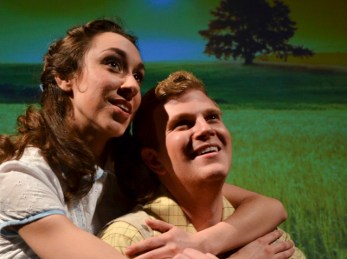
Fiery gypsy smugglers, humpbacked court jesters, cruel tyrants, Japanese geishas and French nuns facing the guillotine—it’s a good bet that most operatic characters are outside the personal experience of the singers who portray them. But CU’s Eklund Opera Program stands that observation on its head this weekend with its production of Aaron Copland’s Tender Land (7:30 p.m. Thursday through Saturday and 2 p.m. Sunday in the Music Theater).

TEnder.Land

Sara Lin Yoder and Michael Hoffman in “The Tender Land” (Photo by Casey A. Cass/University of Colorado)

Partly inspired by Walker Evans’s depression-era photos of rural southern poverty, The Tender Land is the quintessentially American story of Laurie, a young woman graduating from high school. Facing an uncertain future with courage, she strikes out to follow her dreams. In other words, Laurie does exactly what the opera students at CU—and many of the rest of us, for that matter—have done.

The Tender Land takes place on a 1930s Midwestern farm—the realistic CU production places it in Iowa. The night before Laurie’s graduation, two down-and-out drifters arrive at the farm asking for work. Even though they seem more than a little shady, Laurie falls in love with one of them during her graduation party. They make plans to run away, but at the last minute the drifters disappear.

Her bags already packed, Laurie makes the courageous decision to leave on her own. At the end, her mother and younger sister are left at the farm house, just as they were seen at the beginning.

Read more at Boulder Weekly.

# # # # #

Horsch

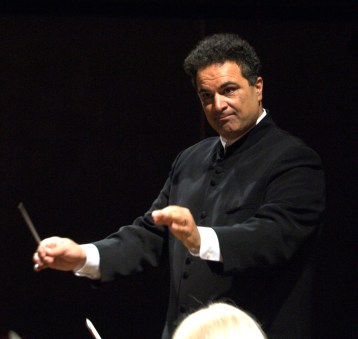
Music Director Joshua Horsch

The Tender Land by Aaron Copland
CU Eklund Opera Program
Leigh Holman, director
Joshua Horsch, conductor

7:30 p.m. Thursday–Saturday, April 21–23
2 p.m. Sunday, April 24
Music Theater, CU Imig Music Building

Tickets


Boulder Chamber Orchestra mixes very different ingredients

“Virtuosity & Grace” pairs Brahms and Mozart

By Peter Alexander

bsaless.4.Keith Bobo

Bahman Saless. Photo by Keith Bob.

Bahman Saless wants to give you an earworm.

The conductor of the Boulder Chamber Orchestra is preparing to perform Brahms’s massive Second Piano Concerto this weekend with pianist Soheil Nasseri (Friday and Saturday, April 15 and 16, in Broomfield and Boulder), and he says, “The second melody of the first movement is, to me, probably the most gorgeous melody ever written.

“Ever! I cannot think of any other melody that just makes me want to sing it as much as this one. So if you want an earworm, come to the concert!”

Earworms or not, there is no question that the Brahms Second Piano Concert is a serious undertaking for any pianist. At 50 minutes in length and four movements, just the sheer volume of music to be learned is daunting. And it is a powerful, energy-sapping work as well.

Musik

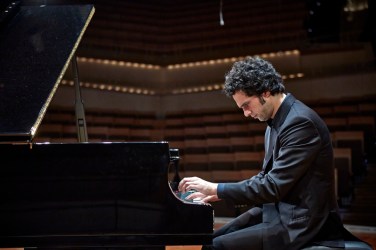
Soheil Nasseri in der Berliner Philharmonie

But Nasseri really wants to perform this concerto.

“It has been his lifetime dream,” Saless says. “He asked me if I would do it and I said, ‘Sure! Let’s give it a shot!’ If he’s got that much passion for it, it’s got to be great.”

That created a problem for Saless, though. The Brahms Second Piano Concerto is a difficult piece to put into a program. “If you want to perform Brahms Two, what do you put it with?” he asks. “There are certain pieces that are just hard to program. And when you’ve got a concerto that’s 50 minutes long, you run the risk of going over an hour and a half.

“It’s just a really hard piece to balance with.”

Saless talked to several other conductors, but he didn’t like any of their ideas. “You need something lighter, something more accessible, something that doesn’t demand so many intellectual calories” from the listeners, he says.

He wanted a piece that’s strong enough on its own to stand up to the Brahms. And he also needed something that used a classical rather than a large Romantic orchestra, because that’s what the Brahms concerto—for all of its imposing impact—calls for. “It’s more massive in length and structure than in orchestration,” he says.

The piece he settled on is Mozart’s Symphony No. 40 in G minor, which he had conducted before and wanted another shot at. “I’ve done it before, and I failed,” he confesses. And citing a Samuel Beckett quote, he added, “I’m going to fail better this time.”

The two pieces—Brahms and Mozart—“in many ways are the antithesis of each other,” he says. “You’ve got this beautiful, compact, very transparent Mozart symphony, versus this gigantic cruise chip of a concerto which is really a symphony for piano and orchestra. In so many ways they’re extremely different, but at the same time, they’re both appealing.”

bconew_1

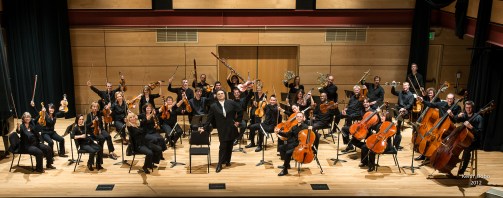
Bahman Saless with the Boulder Chamber Orchestra. Photo by Keith Bobo.

Is the “gigantic cruise ship of a concerto” well suited for a small orchestra like the BCO? Saless thinks so. “With Brahms it’s always chamber music,” he says. “You can literally do any Brahms big piece with a chamber orchestra. That just brings out all the inner weavings that you don’t generally hear.”

The Mozart Symphony, which opens the program, is a very direct and accessible piece, Saless believes. “It’s right there, it’s all there in all its beauty and glory,” he says. “But it’s a huge challenge for the orchestra. In many ways it’s much harder than the Brahms for us, because it’s so transparent, because it’s Mozart.

“It’s just so tricky with a piece like this, especially because everybody knows it. We need to perfect every bar.”

Just as with the Brahms, Saless thinks the Mozart gains from having a smaller orchestra. “The orchestra needs to suddenly become this completely different animal, because most of the musicians are used to playing with big orchestras,” he says.

“You have to change the range of the entire orchestra. And what’s great about doing it with a chamber orchestra, with smaller string sections, is that the winds come out so much more. And so much of this symphony is all about the writing for the winds, which is outstanding.”

Mozart and Brahms, the two pieces on the program, offer a many contrasts. The title suggests one: Virtuosity and grace. Compact and transparent versus a gigantic cruise ship. Classical versus Romantic. The Mozart symphony is very familiar to classical audiences, while the Brahms concerto is, Saless believes, “not performed often enough.

“You really can’t miss this (opportunity), to hear the Brahms,” he says. And you just might come away with the most beautiful ear worm ever.

# # # # #

newbanner3“Virtuosity and Grace”
Boulder Chamber Orchestra
Bahman Saless, music director, with Soheil Nasseri, piano

Mozart: Symphony No. 40 in G minor, K550
Brahms: Piano Concerto No. 2 in B-flat major, op. 83

7:30 p.m. Friday, April 15
Broomfield Auditorium, Broomfield
Tickets

7:30 p.m. Saturday, April 16
Seventh-Day Adventist Church, 345 Mapleton Ave, Boulder
Tickets 

Santa Fe Opera comes to Denver Friday

World Premiere production of UnShakeable will be at Newman Center

By Peter Alexander

jn06_jd_12feb_unshake1-309x400

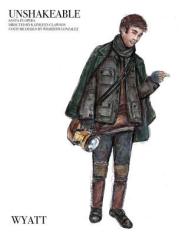
Costume sketch by Wilberth Gonzalez for Wyatt in Unshakeable. (Courtesy of Santa Fe Opera)

Love opera, but you can’t get to Santa Fe? The Santa Fe Opera is coming to Denver!

The SFO will present the world premiere production of UnShakeable, a new opera by Joe Illick with a libretto by Andrea Fellows Walters, at 7 p.m. Friday, April 15, in the Hamilton Recital Hall of the Denver University Newman Center.

The performance, part of tour through New Mexico and southern Colorado, will be free and open to the public.

jn06_jd_12feb_unshake2-309x400

Costume sketch by Wilberth Gonzalez for Meridian in Unshakeable. (Courtesy of Santa Fe Opera)

UnShakeable, which incorporates language from Shakespeare, was written in commemoration of the 400th anniversary of the playwright’s death. The score, designed for touring, calls for two singers and a chamber orchestra. After its April 9 premiere in Santa Fe, it will be on the road for ten free performances.

The action takes place in an abandoned theater in New Mexico 25 years in the future. Wyatt and Meridian (soprano and baritone) are Shakespearean actors and former lovers who have fallen victim to Erasure, a viral pandemic resulting in memory loss. Separated from Meridian at the beginning of the pandemic, Wyattt has been searching for his love ever since.

It was the Shakespeare commemoration that sparked the whole idea, Walters says. “I believe we tell stories to remember,” she says. “Talking to Joseph Illick, the composer, I said ‘I think memory needs to be a core theme.’ He said to me, ‘well then, somebody needs to forget something.’

“So I started with the idea that we were in some sort of future world with lost language, and that these two characters were recovering language through Shakespeare.”

Walters

Librettist Andrea Fellows Walters

As the characters of Wyatt and Meridian evolved in Walters’s imagination, she thought of the pandemic that erased parts of memory to differing degrees for different people. “Meridian is more seriously afflicted than Wyatt,” she says. “He’s spent the last three years looking for her, going to every place they ever performed together as part of a Shakespearean troop, hoping that she’ll be there. And the opera begins with him breaking into the space where she is.”

UnShakeable is part of the Santa Fe Opera’s “Opera for all Ages” outreach program. The SFO stresses that the production is “perfectly suited for audiences of all ages.” This is the 23rd year that the SFO has mounted a spring tour as a public outreach program. Until the past two years, the tour was generally in New Mexico. Last year it they came as far into Colorado as Colorado Springs. This is the first year for a performance in Denver.

The singers for the Denver performance will be soprano Jacquelyn Stucker and baritone Samuel Schultz. Kathleen Clawson, assistant director of the SFO Apprentice Program for Singers, is the stage director. Kristin Ditlow of the University of New Mexico faculty, is the music director for the tour performances.

Illick is general director of Performance Santa Fe, which was formed in 1937 as Santa Fe Community Concert Association. Since that time it has presented music, dance, theater and community opera, and since 1968, youth concerts.

Walters is director of education and community engagement for the Santa Fe Opera.

# # # # #

9twYvNneUnShakeable
By Joe Illick with libretto by Andrea Fellows Walters
7 p.m. Friday, April 15, Hamilton Recital Hall of DU Newman Center
Free and open to the public

Mozart’s Requiem: “A Musical Miracle and a Mystery Story”

Performances Friday and Saturday by Pro Musica Colorado and St. Martin’s Chamber Choir

By Peter Alexander

It is one of the most famous stories in music history.

Lange_PortraitOfMozart,Unfinished

Unfinished portrait of Mozart by Joseph Lange

It was December, 1791. Mozart lay on his deathbed, with his family and friends gathered around. They sang for the dying composer, music from the Requiem that he might as well have been writing for himself and that he was never to complete. After his death, Mozart’s friends and students gathered up all the bits and pieces of music that lay scattered around the room and worked feverishly to finish the manuscript, so that Mozart’s widow could deliver a completed score to the eccentric count who had paid for it.

Out of all of the confusion there emerged a work that has captivated listeners ever since, in spite of the uncertain authorship of its various parts. “It’s a musical miracle and a mystery story wrapped into one,” says Cynthia Katsarelis, who will conduct performances of the Requiem Friday in Denver and Saturday in Boulder (7:30 p.m. April 8 at First Baptist Church in Denver, and April 9 at First United Methodist Church in Boulder).
Photography by Glenn Ross. http://on.fb.me/16KNsgK

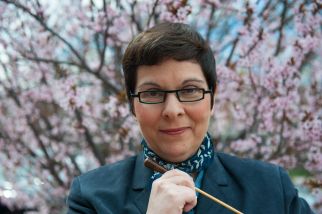
Cynthia Katsarelis. Photography by Glenn Ross.

Katsarelis, director of the Pro Musica Colorado Chamber Orchestra, has put together what she considers just about an ideal group of performers for the Requiem. “Pro Musica and (Denver’s) St. Martin’s Chamber Choir are practically a dream team for the Mozart Requiem,” she says. “And our soloists are all people who are just wonderful artists.

“It’s going to be different from a Mozart Requiem with a large orchestra and choir. Our size is more like the size that Mozart would have had, and there’s a kind of immediacy and a visceral quality to doing it with a chamber orchestra and a chamber choir. I think it’s a special team, and there’s incredible potential of being a worthy Requiem.”

Manuscript_of_the_last_page_of_Requiem

Manuscript page of Mozart’s Requiem

Like all conductors who approach the Requiem, Katsarelis had to decide exactly what to perform. Mozart left different movements in differing degrees of incompletion: some merely had to be filled in according to a partial score, some had to be completed, and some had to be composed more or less from scratch.

Adding to the confusion, Mozart left behind what his widow called “scraps of paper” that may have held music, or instructions, or both. At least two different pupils undertook a completion. And all of their contributions were mixed together, and it was years before scholars were able to separate, more or less, who did what.

FRANZ_XAVER_S_SSMAYR.1239019040

Franz Xaver Süssmahr

Today there are numerous performing versions to choose from. The score that was turned over to the count three months after Mozart’s death was essentially completed by Mozart’s pupil Franz Xaver Süssmayr. But Süssmayr was not a very good composer: Mozart didn’t think much of him, calling him “a duck in a thunderstorm,” and he made numerous mistakes in the score that he hurriedly finished.

And so there have been many subsequent versions that aim to correct and improve on Süssmayr. Some editors have gone so far as to write whole new movements to stand alongside Mozart. Katsarelis has chosen a version created by Franz Beyer in 1971 that sticks largely to Süssmayr’s version, but polishes some of his work.

There are three movements that Mozart never started, but Katsarelis thinks that Süssmayr had some help with those. “He claimed to have composed the Sanctus, the Benedictus and the Agnus Dei, but I’m not convinced of that, for reasons right out of the music,” she says. “I had my doubts to begin with. Süssmayr never, ever composed anything of the caliber of (those movements).”

She has a “sneaking suspicion,” she says, that the scraps of paper that Mozart left had music on them that Süssmayr was able to use. And, she adds conspiratorially, “I have a theory that I actually don’t have an ounce of historical evidence for, but during the time that Süssmayr was completing the Requiem, he was studying with Salieri.”

antonio-salieri-03

Antonio Salieri

That Salieri? The one who definitely didn’t poison Mozart but was still the villain of the play and movie Amadeus?

Yes, that one. “I just have this sneaking suspicion that Salieri might have helped,” she says. And it’s definitely not the craziest theory about the Requiem, which has attracted conspiracy stories from the date its very first performance.

Regardless of who wrote those movements, and whose help they might have had, “the meat of the Requiem is what Mozart wrote,” Katsarelis affirms. And after the disputed movements, the Requiem ends with two more movements that re-use Mozart’s music from the beginning.

Following the Requiem, the concert will include one more short piece, Mozart’s beautiful and elegiac Ave verum corpus, composed only months before the Requiem. “By doing the Ave verum corpus, we’re absolutely sure that we’ll be ending with Mozart, no question,” Katsarelis explains. “It’s a piece that everybody knows and loves, and it’s a very comforting and beautiful piece.”

In spite of the mystery and confusion, the different hands that touched the Requiem, and all of the controversy that has swirled around the piece over the centuries, “the fact the sublime music comes through is pretty miraculous,” Katsarelis says. “It is deeply moving to do the piece that was the last thing Mozart composed.

“He made it the most beautiful music that he could possibly write. That’s his final gift to us, and it’s one that I receive very gratefully, and that we’ll share on Friday and Saturday.”

# # # # #

Mozart’s Requiem

Pro Musica Colorado Chamber Orchestra
Cynthia Katsarelis, music director
St. Martin’s Chamber Choir
Timothy J. Krueger, artistic director
Amanda Balestrieri, soprano
Leah Biesterfeld, alto
Joseph Gaines, tenor:
David Farwig, bass

W.A. Mozart: Requiem, K626
W.A. Mozart: Ave Verum Corpus, K618

Friday, April 8, First Baptist Church, 1373 Grant St., Denver
Saturday, April 9, First United Methodist Church, 1421 Spruce St., Boulder
Both concerts at 7:30 p.m.
Pre-concert talk at 6:30 p.m. both evenings

TICKETS

NB: Edited to correct typos 4.7.16.

Seicento Celebrates Scarlatti and Son

By Peter Alexander

Evanne Browne, artistic director of the Baroque vocal ensemble Seicento, wants you to know that she is excited about their next concert. Very excited.

Seicento.2015.1

Seicento Baroque Ensemble with director Evanne Browne, center

“I was thrilled to get to put this together,” she says. “This is a joyous concert. It’s just magical!”

This magical concert will be presented Friday through Sunday with performances in Denver, Boulder and Longmont. And although the title, “Scarlatti, Father and Son,” might sound like a trendy Italian trattoria, it actually refers to an important musical family of the 17th and 18th centuries.

Alessandro Scarlatti spent most of his career at the court in Naples, where his brother Francesco was first violinist. His two children also pursued musical careers, Domenico primarily in service to the royal families of Spain and Portugal, and Francesco in London and Dublin.

Retrato_de_Domenico_Scarlatti

Domenico Scarlatti

Almost anyone who has taken piano lessons as a child—or whose children have taken lessons—knows of Domenico Scarlatti, the titular son of the program. He famously wrote more then 500 one-movement keyboard sonatas that range from short, easy pieces in every teacher’s lesson book to challenging workouts that find their way into virtuoso recital programs.

Browne’s aim is to open up much more of the Scarlatti legacy than the well known sonatas—written for harpsichord but today played mostly on piano. Domenico wrote other works, from operas and cantatas to sacred motets and a 10-voice Stabat Mater that will end the concert. And his father Alessandro was one of Italy’s leading Baroque opera composers, dominating opera in Naples in the 1690s. He also wrote cantatas and other vocal works, and an almost unknown set of madrigals that will be on the program.

Read more at Boulder Weekly.

# # # # #

Scarlatti, Father & Son
Seicento Baroque Ensemble, Evanne Browne, artistic director, with guest artists

7:30 p.m. Friday, March 11, St. Paul Lutheran Church, Denver
7:30 p.m. Saturday, March 12, First United Methodist Church, Boulder
3 p.m. Sunday, March 13, Stewart Auditorium, Longmont

Tickets