Colorado Music Festival announces its 2017 40th-anniversary season

Beethoven’s Ninth, tributes to the festival’s history will be highlights

Guest artists include CMF founder Giora Bernstein, pianist Olga Kern, Time for Three

By Peter Alexander
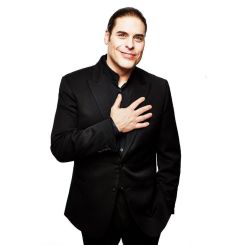
Jean-MarieNew1

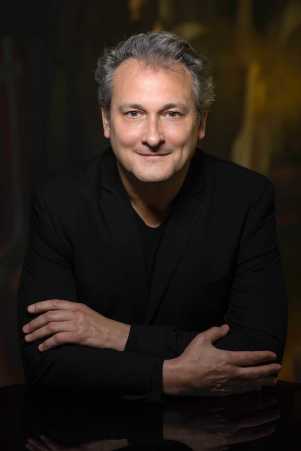
CMF Music Director Jean-Marie Zeitouni

The Colorado Music Festival will celebrate its 40th anniversary this summer, and music director Jean-Marie Zeitouni has been looking at the festival’s history.

His programs for the coming summer recall the Roman god Janus, looking backward and forward at the same time. “If you look at every series, you will see that they have a commemoration of the past, but at the same time they are moving in a new direction,” Zeitouni says. “I think almost every single work on the program has to do with the history of CMF.”

The full 2017 schedule, opening June 29 and closing Aug. 4, was announced to festival patrons last night (Jan. 22). The season includes Thursday Festival Orchestra concerts, Saturday chamber music concerts, and Sunday Chamber Orchestra concerts, as in past years. In one change from recent seasons, all concerts this summer will be in the Chautauqua Auditorium. With a few exceptions that are noted below, all will begin at 7:30 p.m.
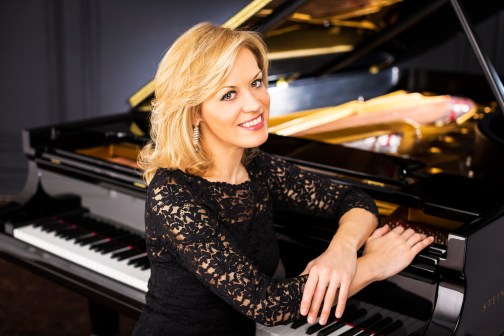
Olga Kern

Olga Kern, photographed by Chris Lee at Steinway Hall, 12/9/13.

As part of Zeitouni’s homage to festival history, long-time  CMF patrons will recognize several guest artists who have been here before:

  • Pianist Olga Kern, who played all the Rachmaninoff piano concertos in two nights during the 2013 Festival, will return to perform with Zeitouni and the Festival Orchestra on opening night, June 29. She will also present a solo recital July 1.
  • The festival’s founder, Giora Bernstein, will return to conduct Mozart and Bach July 2.
  • The popular Time for Three string trio will return to collaborate with Steve Hackman, who led the festival’s “Music Mashup” series for two summers, performing on that series’ successor, now called “Happy Hour @Chautauqua,” July 18.

The summer’s Festival Orchestra lineup is dominated by two massive ninth symphonies:

  • A sure audience favorite, Beethoven’s Ninth will be presented July 13. It will come right in the middle of the CMF calendar, as “a way to mark a certain Apex” of the festival, Zeitouni says. Soloists for the performance will be soprano Mary Wilson, mezzo-soprano Michelle De Young, tenor Jason Baldwin and bass-baritone Keith Miller.

On the same program, De Young will perform Mahler’s Songs of a Wayfarer, and the orchestra will present the North American premiere of A Little Summer Suite by Betsy Jolas.

  • Mahler’s Ninth, the composer’s last completed symphonic work, will form the entire Festival Orchestra program Aug. 3. This concert completes a cycle of Mahler symphonies that was begun by former CMF music director Michael Christie. “The idea is that for the last week of the festival we would do something for the orchestra, and believe me this is a piece that they’ve all been dying to play,” Zeitouni says.

In addition to returning artists listed above, there are a number of notable visiting artists. These include:

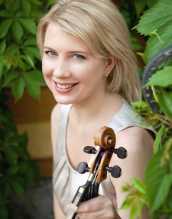
  • elina-vahala_vert

    Elina Vähälä

    Finnish violinist Elina Vähälä playing John Corigliano’s “Red Violin” Concerto July 6;

  • Pianists Christopher O’Riley, the host of NPR’s “From the Top,” and Pablo Ziegler playing tangos on the “Happy Hour@Chautauqua” series July 11;
  • Pianist Stewart Goodyear playing Shostakovich’s Piano Concerto No. 1 for piano, trumpet and strings, July 16; and
  • Italian Van Cliburn Competition medalist Benedetto Lupo, playing two Ravel piano concertos July 20. Lupo will be the CMF artist-in-residence for 2017. In addition to the Ravel concertos, he will play a solo/chamber concert with CMF musicians July 22, and a concert with the CMF Chamber Orchestra July 23.
  • Clarinetist Boris Allakhverdyan, a former member of the CMF orchestra and now principal clarinet of the Los Angeles Philharmonic, will perform chamber music with current members of the orchestra July 29, and the Copland Clarinet Concerto on a chamber orchestra concert July 30. The latter, titled “Classically Jazz,” will also feature music by Kurt Weill, Scott Joplin, Leonard Bernstein, George Gershwin and Darius Milhaud.
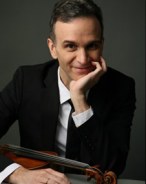
  • gil-left-2

    Gil Shaham

    To round out the summer, superstar violinist Gil Shaham will perform with Zeitouni and the Festival Orchestra for the Festival Finale concert, Aug. 4. One of the most recognized classical artists today, Shaham performs in recital and with orchestras worldwide. In addition to a violin concerto yet to be determined, the program for the Festival Finale will include Beethoven’s joyful and boisterous Seventh Symphony.

# # # # #

Kern’s performances fit nicely into Zeitouni’s plan of commemorating the old alongside the new. On the Opening Night program June 29, Kern will reprise her 2013 performances of Rachmaninoff’s Rhapsody on a Theme of Paganini, but that will be paired with a completely new work for the festival, Prokofiev’s First Piano Concerto.
olga-kern

Olga Kern

The two concertos are part of an all-Russian program, opening with Shostakovich’s brash and colorful Festive Overture and ending with Rachmaninoff’s lushly Romantic Symphony No. 2 in E minor. Both works are part of the festival’s history, but neither has been heard at CMF since the 1990s.

Another example of joining commemoration with new directions will be the CMF’s “mini-festival.” The idea of a series of concerts arranged around a single theme and performed in the same week was started by Christie. Zeitouni brought the model back last year with a Brahms mini-festival. This year, the mini-festival will reflect Zeitouni’s background and specialty: French music.
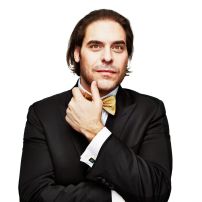
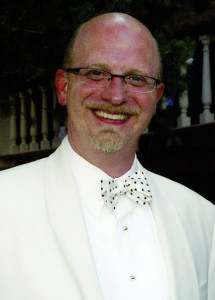
JMZBowtie

Jean-Marie Zeitouni

“I grew up with the Montreal Symphony playing Ravel and Debussy, so I have a special love for it,” Zeitouni says. “It is repertoire with which I have intimate affinities, but it is also repertoire in which the orchestra is allowed to shine.”

The mini-festival of French music comprises three concerts, July 20–23:

  • A Festival Orchestra concert July 20, featuring Debussy’s impressionist scores Prelude to the Afternoon of a Faun and Iberia; Lupo playing Ravel’s Concerto in G and Concerto for the Left hand; and the orchestral showpiece La Valse.
  • A chamber music concert July 22 will feature Lupo playing a half-recital of Debussy’s music for solo piano, followed by Fauré’s Quartet No. 1 for piano and strings with CMF musicians.
  • The July 23 chamber orchestra concert will present some little known works by Fauré, Dukas, Saint-Saëns and Cecile Chaminade, with orchestra members as featured soloists. The concert will end with music from Offenabch’s saucy comic opera Orpheus in the Underworld.

# # # # #

One new feature of the festival will be “Symphony Sampler” concerts, a series of abridged repeats of Thursday night Festival Orchestra programs presented Fridays at 6:30 p.m. July 14, 21 and 28. These informal concerts will offer only one or two major works from the previous night’s full program, with Zeitouni presenting an introduction to the music for people who might be new to classical performances. The early start time and shortened program leave time for a post-concert dinner, either at the Chautauqua Dining Hall or elsewhere in Boulder.
christopher-oriley

Christopher O’Riley

Another modification of past summers appears with the “Happy Hour@Chautauqua” events, Tuesdays July 11, 18 and 25. An outgrowth of previous Music Mashup events, these concerts are designed to bring classical and popular music together. Presented without intermission, each concert will be preceded by a “happy hour” offering complementary food and drinks.

After performances by pianists Christopher O’Riley and Pablo Ziegler July 11, and Time for Three July 18, the series culminates with Hackman conducting an all-new mashup with the orchestra July 25. Unlike Hackman’s previous scores for CMF, this will not feature just one classical work or pop group, but under the title “Classicalapalooza” it will being together music by various artists from both genres.

The 2017 Click Commission winner by composer Julian Wachner will be performed on the Festival Orchestra concert July 27, along with Scriabin’s Poem of Ecstasy (1908) and The Planets by Gustav Holst (1914–15). There will be little other new music during the summer, however: Corigliano’s Red Violin Concerto from 1997 will be performed on an American program July 6 and Jolas’s Little Summer Suite will precede Beethoven’s Ninth Symphony July 13, but no other works later than the middle of the 20th century are on the schedule.

header-logo

This is only a summary of the full 2017 CMF calendar. A complete listing of the summer’s concerts and ticket information can be found on the CMF’s newly redesigned Web page. Tickets will go on sale to the general public March 20, including season subscriptions, ticket packages and single tickets.
Surveying a year of losses

A list of some of who will be long remembered for their contributions to music

By Peter Alexander

Compiling the annual list of musicians we lost in this past year reminded me of a headline from a book of “Flubs from the Nation’s Press”: “Lucky Man Sees Pals Die.”

All of life is kind of like that: if you survive, you have the dubious privilege of watching others die. But 2016 raised that to a higher level, as we lost many great musicians, actors, and other public figures, including literal as well as the figurative nobility of the music world. Most of us didn’t know them personally, and yet we felt personally touched by their work.

Here is my annual list of classical musicians who have passed, and some great popular figures as well. As always, it is a list that reflects my personal interests; you are more than welcome to remember in the comments any others whose loss you will feel.

Dec. 31, 2015: Natalie Cole, the daughter of Nat King Cole and a great singer in her own right, who died at the very end of 2015, after last year’s survey was published, 65

david-bowie-tom-lorenzo-site-1

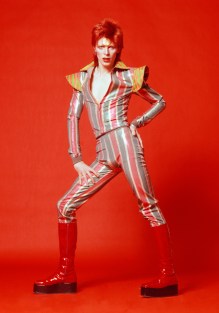
David Bowie, in one of his many incarnations

Jan. 5, 2016: Pierre Boulez, one-time enfant terrible of the musical avant-garde who called for the destruction of all art from the past, but later became one of the most distinguished conductors of the time, 90

Jan. 10: David Bowie (aka “Ziggy Stardust”), the chameleon man of popular music, a songwriter, singer and actor who released his last album two days before his death, 69

February 4: Leslie Bassett, American composer and distinguished professor at the University of Michigan, 93

February 14: Steven Stucky, Pulitzer-Prize winning composer and composition teacher at the Aspen Music Festival, Cornell University, and the Juilliard School, 66

March 5: Nikolaus Harnoncourt (born Johann Nikolaus Graf de la Fontaine und d’Harnoncourt-Unverzagt), founder of the period-instrument ensemble Concentus Musicus Wien and highly respected conductor, 5 March, 86

george_martin

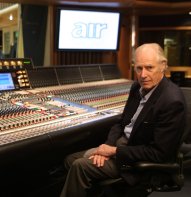
Sir George Martin

March 8: Sir George Martin, the record producer who recognized the potential of the Beatles when others had turned them down, sometimes called “The Fifth Beatle,” 90

March 14: Peter Maxwell Davies, English modernist composer, openly gay and an avowed environmentalist who lived for many years in the remote Orkney Islands, 81

March 20: Keith Emerson, English keyboardist known for his rock arrangements of classical music, one third of the progressive rock band Emerson, Lake & Palmer, 71

April 6: Merle Haggard, one of the mainstays of an entire generation of country singers, known for “Okie from Muskogee” (among other songs), who once sang “If God doesn’t live in Colorado/I’ll bet that’s where He spends most of His time,” 79

April 21: Prince Rogers Nelson, flamboyant American singer/songwriter who was one of the most eclectic and prolific musicians of his lifetime, 57

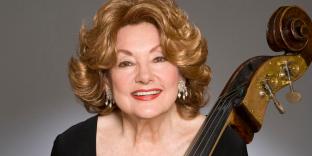
janelittle_020316

Jane Little

May 15: Jane Little, diminutive (4’ 11’’) bass player with the Atlanta Symphony for an amazing 71 years, who collapsed onstage during a performance, 87

June 4: Phyllis Curtin, American soprano long associated with the New York City Opera, who also sang at the Chicago Lyric, the Metropolitan, and major houses world wide, 94

July 12: Gregg Smith, choral conductor who championed the work of American composers and director of the Gregg Smith Singers, 84

July 27: Einojuhani Rautavaara, Finnish composer of works in most classical genres, including operas, symphonies, choral works, and chamber music, 87

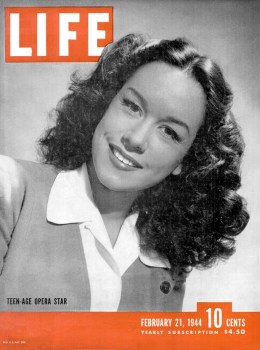
patrice-munsel-life-1944

Patrice Munsel on the cover of Life, 1944

August 4: Patrice Munsel, coloratura soprano who was the youngest singer ever to appear in a leading role at the Metropolitan, at the age of 17, 91

August 22: Toots Thielemans (born Jean-Baptiste Frédéric Isidor, Baron Thielemans), Belgian-American jazz musician, known for playing harmonica and guitar, and whistling, 94

October 2: Sir Neville Marriner, famed conductor and founder of the Academy of St Martin in the Fields chamber orchestra, 92

October 8: Peter Allen, for 19 years the voice of the Saturday afternoon Metropolitan Opera radio broadcasts, 96

November 6: Zoltán Kocsis, Hungarian virtuoso pianist and conductor, 64

November 7: Leonard Cohen, Canadian poet and novelist, later a singer and songwriter as well as painter, composer of the iconic and often covered song “Hallelujah,” 82

28oliveros-obit-superjumbo

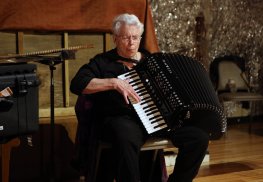
Pauline Oliveros

November 24: Pauline Oliveros, American composer and accordionist, an influential figure on the West-coast experimental and electronic music scene, 84

November 26: Russell Oberlin, American countertenor and founding member of the pioneering early-music group New York Pro Musica Antiqua, 88

December 15: Karel Husa, Czech composer who lived and taught in the U.S. for many years, winner of the Pulitzer Prize and Grawemeyer Award, among other honors, 95

December 21: Weston Noble, renowned music educator, conductor of the Luther College Nordic Choir for 57 years and the Luther College Band for 25 years, 94

December 23: Heinrich Schiff, a highly distinguished Austrian cellist and conductor, 65

alexandrovci

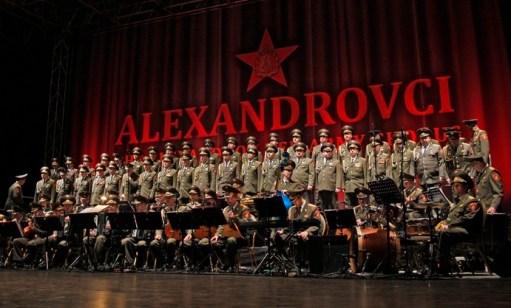
The Alexandrov Ensemble

December 24: Valery Khalilov and 63 other members of the Alexandrov Ensemble Russian Army Chorus, killed in a crash of a Tu-154 jet off the coast of the Black Sea

December 25: George Michael (born Georgios Kyriacos Panayiotou), English popular singer, songwriter and record producer, 53

NOTE: Edited to correct typos, 1 Jan. 2017.

Composers go into the wild and come home transformed

By Peter Alexander

13770305_594539797385216_1263754727297728400_n

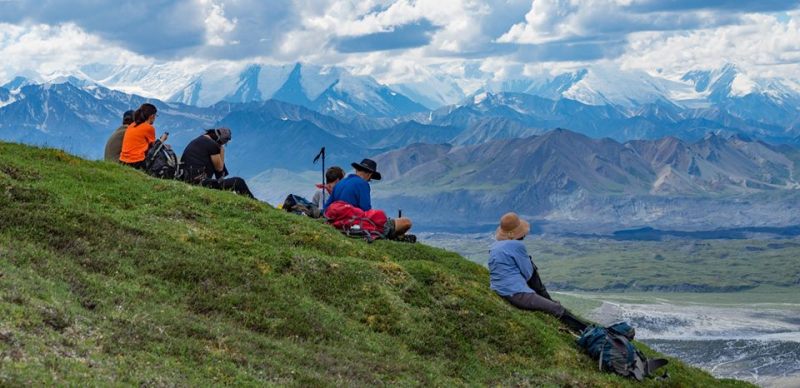
Composers in the Wilderness, Denali National Park and Preserve

There is a wildness in the natural world that most of us never meet. But when we do, we are likely to be transformed.

“I definitely feel changed as a person,” Alondra Vega says after brushing against the Alaskan wilderness. “The experience almost seems like it was too extraordinary to have happened,” Cassie To writes.

13690752_594538287385367_7602763590110916242_nFor Sam Young, an ex-Boulderite living in Los Angeles, touching the wild was an epiphany: “Whenever I come to a place like this, I re-evaluate my entire life and think, ‘Is it all wrong, what I’m doing?’”
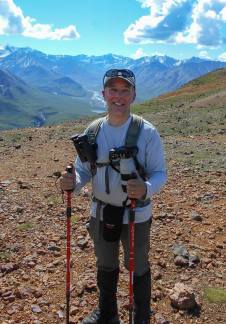
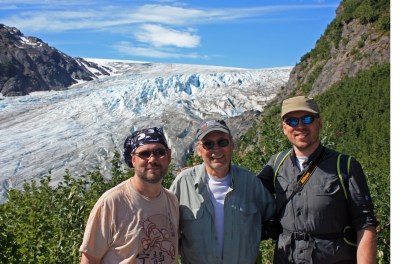
Vega, To and Young were three of nine participants in “Composing in the Wilderness,” a workshop led by composer Stephen Lias in Alaska this past summer. The goal of the workshop, Lias says, is to give composers the transformative experience that comes from stepping into the natural world.

“Going into the backcountry of Alaska, I know the experience will change people,” he says. “I wouldn’t presume to guess in what way, but the art that they create will be a manifestation of whatever the change was.

“My favorite thing is putting these composers in that environment and just watching Alaska do its thing on them.”

13775456_594537694052093_1485552333946828857_n

Composer Stephen Lias

Lias is known to Boulder audiences for his orchestral piece Gates of the Arctic, premiered by the Boulder Philharmonic in 2014 — a product of Alaska doing its thing on him. He will be back this year, when his All the Songs that Nature Sings will be premiered by the orchestra and conductor Michael Butterman March 25, 2017, and subsequently performed by them at the Kennedy Center in Washington, D.C., March 28.

Working in cooperation with Alaska Geographic, the National Park Service and the Fairbanks Arts Festival, Lias has presented the workshop every year since 2012. It is designed as both an outdoors and an artistic adventure. The composers gather in Denali National Park, where they hike and explore the backcountry. They learn about the wilderness environment from rangers and naturalists.

After Denali, the composers transfer to the remote Yukon-Charley Rivers National Preserve, where they have four days to compose a new piece inspired by their experiences. Written for performers from the Fairbanks Arts Festival, the pieces are all trios or quartets, but adding to the musical adventure, the composers don’t know in advance what instruments they will write for.

The pieces have to be fairly short and simple, because they have to be written quickly and learned even more quickly by the performers. That forms the third and final segment of the workshop: in just a few days the completed pieces are rehearsed and performed, first in Denali National Park, and then as part of the Fairbanks Summer Arts Festival.

The workshop takes nine participants on a first-come, first-served basis. This year there were five women and four men, ranging in age from early 20s to AARP-eligible. They came from all over: two from Australia, one from New Zealand by way of New York, one from Cuba by way of Canada, the rest from around the U.S.

img_1851

The author in Alaska with sons Michael (l) and Ivan (r): Kenai Fjords National Park

As it happens, I had my own Alaskan adventure this summer, driving, hiking and flightseeing in the state with my two oldest sons. I timed my trip to hear this year’s workshop concert, “Sounds of Nature: Alaska Premieres,” July 26 at the Fairbanks Summer Arts Festival. I saw glaciers larger than counties, and stretches of boreal forest larger than several states. And like the composers in the workshop, the vast land profoundly moved me.

When you face such an overwhelming immensity of nature, full of life but devoid of visible human presence, it’s hard not to be affected.

. . . . .

We are often told that nature is cruel, but that is not really true. Nature understands neither kindness nor cruelty; it is indifferent. That is the great lesson of the wilderness, as I was reminded in Anaktuvuk Pass and the composers, well cared for as they were, encountered in Denali: When we leave our well insulated lives to venture into the real world of nature, we have to be prepared to take responsibility for ourselves.

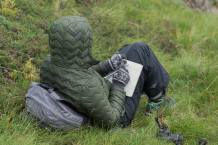
13718714_594543404051522_4074485623699253369_nWashington, very much a city-dweller from New York, had an experience that captures just what Lias hopes the composers will discover in their brush with nature. “We hiked up this high mountain pass and we were given space to go out on our own and just sit quietly and reflect,” she recalls. “I felt like an intruder in some ways — like my breathing was too loud.
“A moth came and landed on my hand, and I didn’t want to move because I was interrupting its space. It was really peaceful, and really real because everything has been undisturbed for so long. Being able to trespass there for a couple of days has been really calming.”

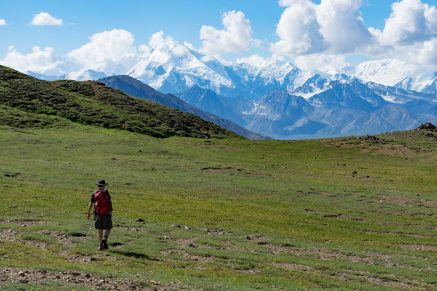
13718623_594538980718631_7012257335267384579_nOf all the participants, David John Lang may have captured the power of wilderness most eloquently. After returning to his home, in Adelaide, South Australia, he writes: “I took my journal, in which I often write letters to God, but I was surprised at how little I wrote while I was in Alaska. It was like I was too busy being a listener for once, hearing and seeing and loving God’s creation.
“I felt really, really small, and it was awesome.”

Read the entire article in Boulder Weekly.

Central City Opera reaches out for new audiences

A conversation with general director Pat Pearce

By Peter Alexander

Central City Opera Opening Night 2006- Page 2 of Book

Opening Night at Central City Opera. Featured in Central City Opera’s 75th anniversary book, “Theatre of Dreams, The Glorious Central City Opera- Celebrating 75 Years.”

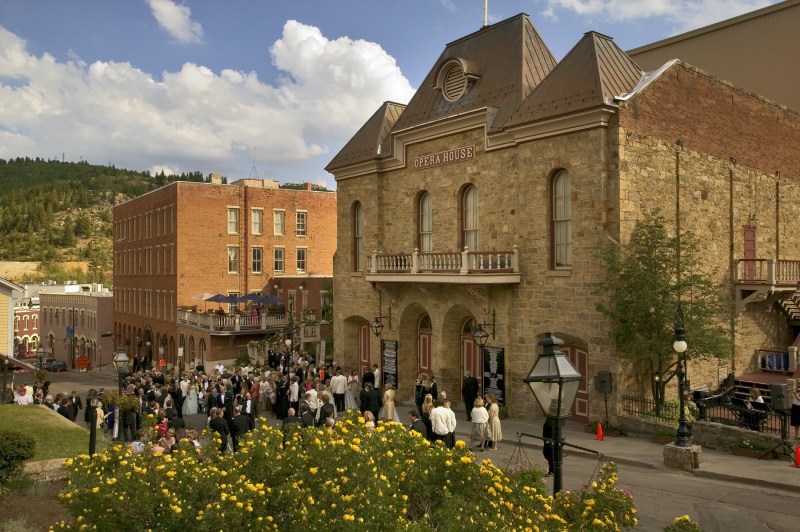
Central City Opera opens its 2016 Summer Season tonight (July 9) with their 60th anniversary production of Douglas Moore’s Ballad of Baby Doe, which premiered at the Central City Opera House July 7, 1956. (A review will appear in Boulder Weekly July 14).

Other works on the summer season will be Puccini’s Tosca and two shorter works—The Impresario by Mozart and Later the Same Evening by John Musto—which will be performed both in Central City and on the road in Boulder and Colorado Springs, respectively. Those shorter works take the place in the company’s schedule of a third production in Central City, and they represent an effort to reach out and build new audiences for opera.

I recently had the opportunity to speak with Pelham (Pat) Pearce, general/artistic director of Central City Opera, about the motivations for taking those shorter works on the road, and on the condition of opera in American today. Here is part of that conversation, lightly edited for clarity:

Alexander: Over the past few seasons, you have been looking for the right menu for Central City Opera—is that fair to say?

PatPearce-215x300

Pelham “Pat” Pearce

Pearce: I think so. These days, everybody is having to adjust and in many cases, shift and change for the environment we’re living in. But ultimately everything we’ve done over these past oh-so-many-years has been about finding and developing new audiences for this art form. That’s really what it’s been about.

Some of it involved taking a show that we were doing up here (in Central City) down to Denver. Other things involved us actually creating down in Denver in the music theater vein. And what we’ve done in the last year, and what we’re doing this is year, is taking one of our slots and devoting it to an effort to find and drive new audiences for this art form.

We’ve come up with a list of things that we felt were barriers for people, and we think we’re right about this. One of them is price, and opera tickets everywhere can run to be fairly expensive, mostly because it’s the most expensive art form in the world—and even with those expensive tickets that’s still only a small percentage of what it actually costs to do it. But for something that you either don’t know or don’t think you’re going to like in the first place, you’re hesitant to spend a lot of money to try something out. So price was a deal.

Length was a deal—perceptions about how long opera is, how long the sit is, so we created things that were around an hour in length.

The fact that it’s in a foreign language is another perception, and so we tried to basically focus on things that were written in English. This year we have one piece, the Mozart Impresario, that we will be doing in translation, from its original German to English.

CCO.Interior.3x4-large

Historic Central City Opera House, interior

And the other thing is making people come to you. Doing opera in spaces that were created for doing that is the easiest way to do it. We have everything we need—dressing rooms, lighting, pit—all of those things we need to produce the art form. But we find that crossing that threshold is problematic for some people. So, we have said that we will do these pieces in non-traditional places, so that any pre-conception about what you have to be, who you have to be, what you have dress like—all of those things are shifted to the side and we’ll do these pieces in nontraditional places.

So those four things are sort of the drivers for us, in addressing how we take this third of our offerings in the summer and translate it into something we think will address all of those barriers. So this year that happens to be Mozart’s Impresario and John Musto’s Later the Same Evening. That was a long answer to your question, but I think that’s absolutely the correct answer in the end.

This fascinates me, because there are areas of opera that are thriving right now. For example, I’ve been to some very successful premieres in the past year: Manchurian Candidate by Kevin Puts at the Minnesota opera; Cold Mountain by Jennifer Higdon at Santa Fe; and The Shining by Paul Moravec, again at the Minnesota Opera. And we had Scarlet Letter by Lori Laitman at Opera Colorado this spring.

 People do seem to respond to new work, at least the first time. There’s always a cachet with a world premiere, especially these days. It becomes an event, a “thing” that everybody feels like they need to be there, which is great, especially for the original commissioner and presenter. The subsequent productions of it, in other places, (are another matter).

In the 1980s and ‘90s Opera America and the National Endowment for the Arts gave out money for people to commission new work. And what they found was that people were willing to commission new work, but the work was not really going anywhere because there weren’t subsequent productions. It didn’t have the opportunity to grow and to evolve, and for more people to see it. And so in the next couple of decades they gave money to encourage people to take the risk of that second production of the work.

In many cases these days, people have co-commissioned new works and they’ve set up, like they did with Moby Dick (by Jake Heggie), and like they did with Cold Mountain, multiple presenters. That cuts down on the risk and the cost of the original commission. As part of doing that, they have first dibs (on subsequent productions in other places). And so Cold Mountain went from Santa Fe last summer to Philadelphia over the course of this past season. The largest one in recent memory was Moby Dick, which started off in Dallas and it took it almost two and a half years to get through all of the co-commissioners.

DeadManWalkingExecution4

Dead Man Walking execution scene. Photo by Mark Kiryluk. Central City Opera, 2014.

Today, some pieces do go on to have real success around the country. Jake Heggie’s Dead Man Walking, which you produced in 2014, is a good example.

 Dead Man Walking is a really wonderful piece. It works, and nine times out of ten, new work is not going to work. I mean, that’s the reason most people don’t present new productions of works after the premiere—because having everything come together and have a piece actually work is hard, and it’s rare. Even back in the heyday of opera, there were lots of operas written, but the ones that we still see today are the ones that rose to the top.

There are many operas we’ve never heard of, for good reason.

 There are a lot of different ways to develop a new audience. And in addition to people that are commissioning these new works, in big houses, and doing them in their home theaters, there are also a plethora of new, very small opera companies that are popping up in larger cities, usually, that do work in non-traditional places—in warehouses, that sort of thing. Nobody gets paid much and they don’t charge much for the tickets, but people show up to see it. And so far they’ve managed to do it.

So everybody’s trying a lot of different things, and we’re all trying to learn as quickly as we can, from other people’s risk-taking, about what seems to work, and we try to adapt our offerings to that. Or at least a portion of our offering, so that at the same time we’re producing standard repertoire and interesting repertoire for our current audiences, we’re also working to develop new audiences. We set out a goal last year of having at least 50% of the people that bought tickets to the shows be new audience. We actually did 55%, so we did really well with that last year.

My concern was that our current audiences would want to see everything that we were doing, and would fill up all of the seats—which is a wonderful thing, but ultimately wasn’t the reason specifically we were doing it. Which is why we’ve taken at least a few of these performances off the hill, away from here. Last year we went up to Ft. Collins and down to Colorado Springs. This year, we’re going to go down to Colorado Springs and to Denver with Later the Same Evening, and to Boulder with two performances of The Impresario. So we’re taking it off the hill on purpose, and that’s often where we get the new audience.

# # # # #

Central City Opera
2016 Summer Season

CCOperaLogoPreferredThe Ballad of Baby Doe by Douglas Moore
2:30 p.m. July 13, 15, 17, 19, 21, 23, 27, 31; Aug. 2, 4
8 p.m. July 9, 29; Aug. 2, 6
Central City Opera House

Tosca by Giacomo Puccini
2:30 p.m. July 20, 24, 26, 30; August 3, 5, 7
8 p.m. July 16, 22
Central City Opera House

The Impresario by W.A. Mozart
12 noon July 27 and Aug. 3, William’s Stables Theater, Central City (sold out)
6 and 8 p.m. Thursday, July 28, Nomad Playhouse, 1410 Quince Ave., Boulder

Later the Same Evening by John Musto
7 p.m. Thursday, July 28, Pikes Peak Center Studio Bee, 190 S. Cascade Ave., Colorado Springs
8 p.m. Saturday, July 30, Denver Art Museum, Denver
7 p.m. Friday, Aug. 5, Gilman Studio, Lanny and Sharon Martin Foundry Rehearsal Center, Eureka St., Central City

Tickets

Edited 7/10/16 to correct typos


Composer Stephen Lias reveals his plan for a new piece for Boulder Phil

Rocky Mountain N.P. provides the inspiration for All the Songs that Nature Sings

By Peter Alexander

IMG_0454

Stephen Lias on the porch of the William Allen White Cabin in Rocky Mountain National Park. Photos by Peter Alexander.

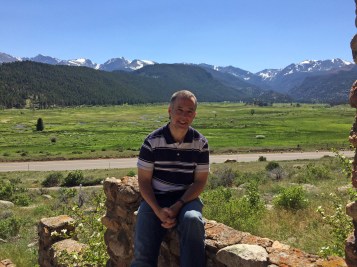
Composer Stephen Lias sits on the porch of the William Allen White Cabin in Rocky Mountain National Park and looks over the Moraine Park meadow.

“It feels right to me to have formed this plan, based on words by Enos Mills, read from a book in this cabin, looking at this scenery,” he says. “Everything about its connectedness to this place feels just right.”

The plan he is referring to is for a new piece that he has been commissioned to write for the Boulder Philharmonic. It will be premiered by the Boulder Phil and conductor Michael Butterman at their subscription concert March 25, 2017, and subsequently performed by them at the SHIFT Festival in the Kennedy Center in Washington, D.C, March 28.

IMG_0458

The view from the cabin: Lias in front of the Moraine Park meadow

Lias has just spent nearly two weeks in the cabin, which is reserved by the park for artists in residence. Although he was not technically an artist in residence this year, as he was in 2010, the cabin was unoccupied for a few days in early June, and the park invited Lias to stay there while preparing his piece for the Boulder Philharmonic.

Known as an adventurer/composer, Lias has written a number of pieces portraying his experiences in national parks. In 2014, the Boulder Phil opened their season with his Gates of the Arctic, conceived during a National Parks Residency in Alaska’s Gates of the Arctic National Park. It was performed with synchronized images from the park, as will be the piece to be premiered in March.

The Boulder Phil won a National Endowment for the Arts grant to support their participation in the 2017 SHIFT Festival. They chose Lias for the commission because the theme of their participation in the festival is the orchestra’s ongoing celebration of music and nature.

The title of Lias’s new piece will be All the Songs that Nature Sings, which comes from a book by Enos Mills, The Rocky Mountain National Park, that Lias found on the shelves of the William Allen White Cabin. Sometimes called “The Father of Rocky Mountain National Park,” Mills was a naturalist and nature writer in the early years of the 20th century who championed the establishment of the park.

The title “is a beautiful quote in Mills’s book,” Lias says. “He’s talking about how the trails take us to all of these amazing places and scenes and wildlife and it has at its heart ‘all the songs that nature sings.’”

Lias has only written a few musical ideas at this point, but he has formed an overall design for the piece in his mind. Based on visual images taken in the park, the plan is virtually cinematic in nature. “Imagine a camera starting with something small and intimate in nature and then slowly zooming outward, bit by bit until you can see a rock, and then a bush, and then a tree, and then a river, and then a waterfall, and then a mountain, and then a range of mountains,” he explains.

“When we can see this amazing place, the range of mountains that sits here in this park, that will be the climax of the piece, and then it will start panning back in again, zooming slowly, slowly, slowly until we end the piece with another intimate shot of some very small thing. So it’s going to be a slow growth outward, and then a slow growth back inward.”

That visual plan grew out of Lias’s poring through photos of the park. “We knew from the beginning that this commission involved a composition that would have synchronized images with it,” he says.

IMG_0461

Lias working in the William Allen White Cabin in Rocky Mountain National Park

“Back in January I came up to the park and met with the staff and we talked about the imagery that might be used. The park gave me a hard drive of 700 and some images that we had culled from their archives, and so in addition to thinking about what I wanted the musical shape to be, I’ve known that there needed to be visual material.”

With the inspiration strong and the plan firmly in mind, Lias packs up his bags to get on with the rest of his summer plans—including leading a workshop on “Composing in the Wilderness” in Alaska. But none of that, he says, will get in the way of a piece firmly rooted in Rocky Mountain National Park.

“The very beginning notes of the piece have been written here in this cabin,” Lias says. “It will take me many months to complete, but it will still be deeply grounded to this place.”

# # # # #

Information and tickets for the Boulder Philharmonic’s 2016–17 season may be found here.

Four finalists chosen for Longmont Symphony position

The candidates will be guest conductors in the orchestra’s 2016–17 season

By Peter Alexander

The Longmont Symphony Orchestra (LSO) has announced the four finalists for the position of music director of the orchestra.

The four candidates were selected by the LSO’s search committee from a field of 60 applicants. Each will conduct one concert during the 2016–17 season, which will be the orchestra’s 50th-anniversary year. These concerts will be part of the orchestra’s regular season of concerts in the Vance Brand Auditorium at Skyline High School in Longmont, held Saturdays at 7:30 p.m.

LSOTopBannerM2

The four candidates and the dates of the concerts with the LSO will be:

  • Elliot Moore: Nov. 12, 2016
Moore is music director of the Detroit Medical Orchestra, the Blue Period Ensemble, and the Five Lakes Silver Band. He holds a master’s degree in cello performance from Lausanne Conservatory in Switzerland, a master of music in orchestral conducting from Manhattan School of Music, and a doctorate in orchestral conducting from the University of Michigan.
  • David Handel: Jan. 28, 2017
Handel currently resides in the Tampa, Fla., area. He holds a bachelor’s degree in violin and a master’s degree in orchestral conducting from the University of Michigan. His international conducting experience includes orchestras in Russia, Chile and Bolivia; and within the U.S. in Indiana, Kentucky, Texas, California and New York.
  • David Rutherford: Feb. 25, 2017
Rutherford has been the Longmont Symphony’s rehearsal and guest conductor since 2010. He is music director and conductor of the Stratus Chamber Orchestra (formerly Musica Sacra) of Denver and the Valor Symphonics Youth Orchestra in Highlands Ranch. A string bassist, he performs regularly with orchestras along the Front Range. An on-air personality with Colorado Public Radio, he can currently be heard weekday afternoons and Sunday mornings.
  • Zachary Carrettin: April 8, 2017
Carrettin is the music director and conductor of the Boulder Bach Festival and interim director of the Early Music Ensemble at University of Colorado, Boulder. Before moving to Colorado he was the director of orchestral studies at Sam Houston State University in Houston, Tex. He pursued doctoral studies in viola at Rice University and holds master’s degrees in orchestral conducting from the University of Illinois at Urbana-Champaign and violin from Rice University.
Olson photo

Recently retired music director Robert Olson

The new director will be selected from among these four conductors, and will announced in May, 2017. He will succeed Robert Olson, who was music director of the LSO for 33 years until his retirement at the end of the soon-to-be concluded 2015–16 season. Olson will return to conduct the opening concert of the 50th-anniversary season, Saturday, Oct. 1.

In a statement released  by the LSO, executive director Kay Lloyd made the following comments: “The selection committee has chosen four very strong candidates that represent high musical values as well as the ability to engage our community. We look forward to their concerts this season and the final selection of a conductor that will lay the groundwork of continuing to provide quality, diverse concerts and outreach programs for another 50 years in this community.”

Boulder Chamber Orchestra risks “The Curse of the Ninth”

2016–17 season will explore jinxes of a 13th year, and Beethoven’s greatest work

By Peter Alexander

bsaless.4.Keith Bobo

Bahman Saless. Photo by Keith Bobo.

Bahman Saless likes to live dangerously.

The conductor of the Boulder Chamber Orchestra (BCO) just released the group’s 2016–17 season, and they are meeting two great jinxes head-on. Titled in part “The Curse of the Ninth,” the season will feature a season-ending performance of Beethoven’s Ninth Symphony with the Boulder Chorale and soloists, as well as several other works that were created under the shadow of that work—considered one of the greatest creative achievements of Western music.

It is the orchestra’s 13th season, which also leads to the full title of the season: “JINX and the Curse of the 9th.”

Saless says that it was almost inevitable that the next season would include Beethoven’s Ninth. It will be the only Beethoven Symphony he has not conducted, and it is of course a work that can prove the standing of any orchestra and conductor.

Beethoven

Beethoven: Portrait by Joseph Karl Stieler, 1820

To fill out the season around such a bold choice for a chamber orchestra, Saless picked several works that illustrate the curse that supposedly came from Beethoven’s Ninth. It was such an overwhelming work that many composers were intimidated at the very prospect of attempting another symphony after it was completed in 1823.

For example Brahms, who was hailed by many as Beethoven’s successor, was not willing to present a symphony to the public until 1876—after 21 years of work on the piece, when the composer was 43 years of age, and all of 53 years after Beethoven’s Ninth was completed. Brahms First even features a melody that resembles Beethoven’s famous “Ode to Joy” from the Ninth—a similarity that, Brahms said, “any ass can see.”

The symphony was immediately greeted as the true successor to Beethoven’s symphonic legacy, and was referred to by some as “Beethoven’s Tenth.”

Another aspect to the “curse of the Ninth” was the notion that subsequent composers could not complete more than nine symphonies. Mahler famously tried to dodge the curse, finally finishing a Ninth Symphony but dying before he could finish his 10th. Tchaikovsky finished six, started a seventh and reached nine only if you count a couple of tone poems. Others, such as Dvořák and Bruckner, only just managed to finish nine.

Schubert is another composer with a famous final Ninth Symphony, but he also left three unfinished symphonies from the last years of his life. One of these—the most famous “Unfinished” Symphony of all, his Symphony No. 8 in B minor—will also be on the season schedule next year.

Carthy

Nicholas Carthy

The season will offer another final symphony, though not a ninth: Mendelssohn’s rarely performed Symphony No. 5 (“Reformation”), on a concert to be led by guest conductor Nicholas Carthy from the CU Eklund Opera Program. Carthy will also be a soloist on the same concert, playing and conducting Mozart’s Piano Concerto in C minor, K491.

Other soloists during the season will be the young Chinese violinist Yabing Tan, playing Henryk Wieniawski’s Violin Concerto No. 2. Violinist Karen Bentley Pollick will play the U.S. premiere of a Violin Concerto titled How Did it Get so Late so Soon! by David A. Jaffe, a composer best known for his work in computer music and the development of the NeXT Music Kit software. The concerto has been written for Pollick, and will be premiered by her at the Tytuvenai Festival in Lithuania in August.

Deutsch

Lindsay Deutsch

Yet another violin soloist on the season will be Lindsay Deutsch returning to the BCO to perform two pieces written for her. The brand new Beatles Fantasy by video-game composer Maxime Goulet will be premiered with the Bartlesville Symphony in Oklahoma; and Deutsch will also play Saless’s own Tango Variations, based on the popular song “Nature Boy.” It was written for her by the BCO’s conductor and premiered with the BCO in 2010.

Another feature of the season will be the inclusion of works usually thought of as full symphonic repertoire, including the Brahms and Mendelssohn symphonies. Certainly the Beethoven Ninth is not generally considered a chamber orchestra piece. Originally performed in Beethoven’s lifetime with an orchestra of about 78 players, it requires an orchestra large enough to support a full chorus.

Asked about this, Saless says that Beethoven performed by a small orchestra is “much more dramatic” and “more muscular.” Not to get too far into the weeds on a complex historical issue, it is true that in Beethoven’s lifetime, and for much of the 19th century, there were not many large standing orchestras like those we are accustomed to in the 21st century.

Ninth.Symphony.4 1

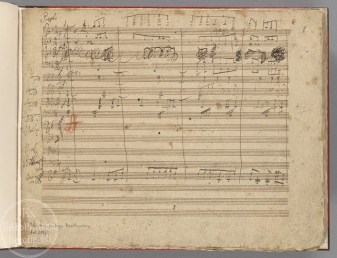
Manuscript page of Beethoven’s Ninth Symphony

Small orchestras were common at the smaller courts and regional opera houses around Europe; larger orchestras were only found in the largest cities such as London and Paris, or for festive occasions, as sometimes happened in Vienna. Thus any of the Romantic works that Saless has performed recently—concertos by Brahms and Tchaikovsky, other works from the 19th century—could have been performed by smaller as well as larger orchestras.

And Saless is surely right that hearing music that is most familiar to us with the lush sound of large string sections performed by the BCO does reveal aspects of the music that we may not have heard before. By programming Beethoven’s Ninth, Saless will be giving us another opportunity to hear a familiar work in a new guise.

In addition to the orchestra concerts that have been announced, there will be a concert by the Lebanese darbuka (goblet drum) virtuoso Rony Barrak, and at least two chamber music concerts that will be announced later.


# # # # #

Boulder Chamber Orchestra
Bahman Saless, music director and conductor
2016–17 Season: “JINX and The Curse of the 9th”bconew_1

September 23 & 24
With Yabing Tan, violin
Rossini: Overture to La Gazza Ladra (The thieving magpie)
Henryk Wieniawski: Violin Concerto No. 2 in D minor, Yabing Tan, violin
Brahms: Symphony No. 1 in C minor

Karen B P

Karen Bentley Pollick

November 11 &12
With Karen Bentley Pollick, violin
Samuel Barber: Adagio for Strings
Copland: Appalachian Spring
David A. Jaffe: Violin Concerto How Did it Get So Late So Soon? (U.S. Premiere)

December 10 &11
Nicholas Carthy conductor and pianist
Mendelssohn: Symphony No. 5 in D major (“Reformation”)
Mozart: Piano Concerto in C Minor, K 491
Dvorak: Nocturne in B major for String Orchestra, op. 40

February 10 & 11
With Lindsay Deutsch, violin
Maxime Goulet: Beatles Fantasy
Bahman Saless: Tango Variations (Variations on “Nature Boy”)
Schubert: Symphony No.  8 in B minor (“Unfinished”)

Barrak

Rony Barrak

April 7,8, 9
An Evening with Rony Barrak and Friends.

May 5, 6 & 7
With the Boulder Chorale & soloists TBA
Beethoven: Symphony No. 9 in D minor


Meet the new policy, same as the old?

Rachel Barton Pine and her violin are turned away from a flight, again

By Peter Alexander

I am starting to think I will never get to stop writing stories about traveling musicians being denied service by an airline.

The regulations have been clarified. And changed. And airlines have clarified their policies. And changed them. Airlines have apologized to musicians over and over for pointless interference with their professional lives. Every time they say they will explain the correct policy to their employees.

And still musicians, on their way to performances, are turned away again and again. You would think that traveling musicians are a significant part of airlines’ business, and that the airlines would not want to antagonize them. But apparently, since the musicians have few other options, you would think wrong, because it keeps happening.

Rachel-Barton-Pine-photo

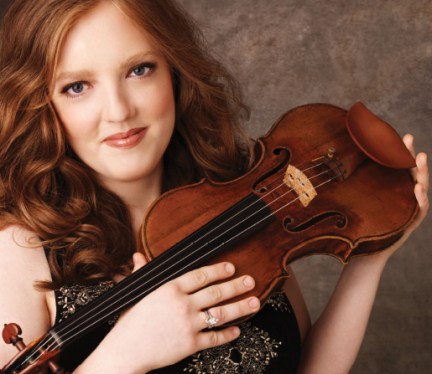
Violinist Rachel Barton Pine with her violin

This time it was a flight captain. Rachel Barton Pine, who performed with the Boulder Philharmonic in 2014, was on her way from Chicago to Albuquerque when the captain of her American Airlines fight refused to allow her to bring her violin into the cabin. She reported she was the first passenger down the jetway, that she explained the airlines’s policy, but the captain said “It is not going on because I say so.”

It is true that the captain has the final authority for a flight. But why would he insist on this? Because he hates violinists? Because he can?

Whatever the reason, Pine was sent back to the terminal and had to reschedule her trip, leaving early the next morning. As reported here, this is not the first time that Pine has had trouble with an airline. In September of last year, she had to spend the night in an airport with her family.

You can read the full, original story about the latest  incident at violinist.com.


Jake Heggie will be the 2016 guest composer for CU NOW

Composer of Dead Man Walking will workshop new opera at CU

By Peter Alexander

heggie_piano16x9

Jake Heggie

Jake Heggie, a composer who achieved considerable renown in 2000 with his opera Dead Man Walking, will visit the University of Colorado College of Music for three weeks in June.

Heggie will be in Boulder to develop a new opera at the Eklund Opera Program’s CU New Opera Workshop (CU NOW). The new work, with a libretto by Gene Scheer, will be based on the 1946 Frank Capra film It’s a Wonderful Life, starring Jimmy Stewart and Donna Reed.

At the end of the workshop period, portions of the new work will be presented at 7:30 p.m. Friday, June 17, and 2 p.m. Sunday , June 19, in the ATLAS Black Box Theater, located in the basement of the Roser ATLAS Building on the CU campus. These performances will be free and open to the public.

Seating will be first come, first served. The ATLAS Black Box Theater seats approximately 80–100.

It's_A_Wonderful_Life

Donna Reed, Jimmy Stewart and Karolyn Grimes in ‘It’s a Wonderful Life’

It’s a Wonderful Life has been commissioned by the Houston Grand Opera (HGO). The workshop process will allow Heggie and Scheer to work with CU students, trying portions of the new opera, making changes and rewriting as they go. Leonard Foglia, director of the HGO who will stage direct the world premier of It’s a Wonderful Life in Houston, will also be working with the student singers during the workshop, along with Jeremy Reger, a vocal coach with the CU Eklund Opera Program.

At the end of the workshop performances, the composer and librettist will ask for questions and feedback from the audience. Leigh Holman, director of the Eklund Opera Program, says “These workshops are for the intellectually curious. With the question and answer sessions, the creative team learns so much from the people asking the questions!”

Dead Man Walking, with a libretto by playwright Terence McNally based on the book by Sister Helen Prejean, took the operatic world by storm in 2000. His other operatic works have included Three Decembers (libretto by Scheer, 2008), Moby Dick (libretto by Scheer, 2010), and Great Scott (libretto by McNally, 2015).

DeadManWalkingJosephSister

Dead Man Walking: Michael Mayes as Joseph De Rocher and Jennifer Rivera as Sister Helen Prejean. Photo by Mark Kiryluk, Central City Opera

Dead Man Walking has been presented more than 50 times around the world. It was produced by CU in 2007 and by Central City Opera in 2014. Central City Opera also presented Heggie’s Three Decembers in 2010.

One of the busiest opera librettists working today, Scheer has collaborated with several prominent composers. In addition to the work he has done with Heggie, his works include An American Tragedy by Tobias Picker, premiered at the Metropolitan Opera in 2005, and last year’s Cold Mountain by Jennifer Higdon, premiered at the Santa Fe Opera.

This will be the seventh year for the CU NOW program. Previous operas that were developed through a CU NOW workshop have included Kirke Mechem’s Pride and Prejudice, Herschel Garfein’s Rosencrantz and Guildenstern are Dead, Alberto Caruso’s The Master, and Zach Redler’s A Song for Susan Smith.


CMF/CMA appoints new executive director

Elizabeth McGuire comes to Boulder from the Cheyenne Symphony

By Peter Alexander

The Colorado Music Festival and Center for Musical Arts (CMF/CMA) has announced the appointment of Elizabeth McGuire as their new executive director, effective May 9.

CMUSIC-Logo-Horizontal1024x192-withJMZ-1024x192

McGuire is currently executive director of the Cheyenne Symphony. She will succeed Andrew Bradford, who left the CMF/CMA on March 25. Bradford had been executive director for 18 months. Before Bradford, the position had been open for a full year, during which time there had been one failed search for executive director (ED), and the position of musical director (MD) was also open.

“I feel honored to be chosen to do this,” McGuire says.

Lupberger.2

Ted Lupberger

In a statement from the CMF/CMA, board president Ted Lupberger commented, “We’re delighted that we were able to move quickly to bring Liz on board before the summer Festival season gets underway. Liz comes to us with extensive orchestra management experience that’s grounded in a solid understanding of the challenges and opportunities of the nonprofit sector.”

McGuire has been ED of the Cheyenne Symphony since 2013. Prior to that she was ED of the Tuscaloosa, Alabama, Symphony Orchestra for more than 5 years and orchestra manager of the Greater Dallas Youth Orchestras. She began her musical career as a horn player, earning a bachelor’s degree in horn performance from Western Carolina University.

“I have not played professionally in a while,” she says. “There are several reasons—one is I don’t have time. Once you’ve been pretty decent on an instrument, it’s all or nothing. You either play at that level or you regret not being able to play at that level.”

Zeitouni_2

Jean-Marie Zeitouni

Music director Jean-Marie Zeitouni noted McGuire’s professional playing experience as a valuable asset. “Liz demonstrates an intuitive understanding of programming, and she’s a professional musician in her own right. That’s exciting—and it’s requisite to help fulfill out top priorities.”

McGuire says she is excited about the future of the CMF/CMA. “What I’ve seen more than anything is an organization that’s really done their homework and gone through a large strategic planning process,” she says. “They have that ready to go now. There were some really great ideas in the strategic plan that I’m excited about.”

Above all, it was the level of music making at the CMF and CMA that drew McGuire to the job. “What motivates me to do what I do has always been about music itself.

“When I saw the extent of the programs offered by the Festival and Center, and how they provide opportunities not only to participate in music-making, but also attend live performances and interact with some of the world’s greatest musicians, I was blown away.

“In some ways it’s maybe selfish, because I think I’m going to enjoy (the music) as much as (people in the audience) do.”

She recognizes the importance of the festival to Boulder’s musical life, and to its audiences. “I know how important it is,” she says. “I can see speaking to the board and the staff how much of a heart and soul that organization has, and how important it is for me to make sure I’m the best caretaker that I can be.”