Pops series, soloists and women composers highlight ‘18–19 Boulder Phil season

“Open Space” season opens with Star Wars and ends with “Space Oddity”

By Peter Alexander April 6 at 6 a.m.

The Boulder Philharmonic is booming.
BPO.Macky.2

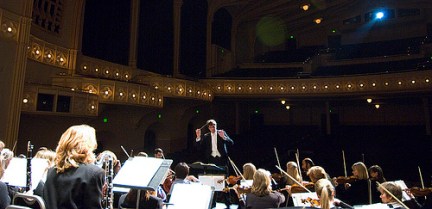
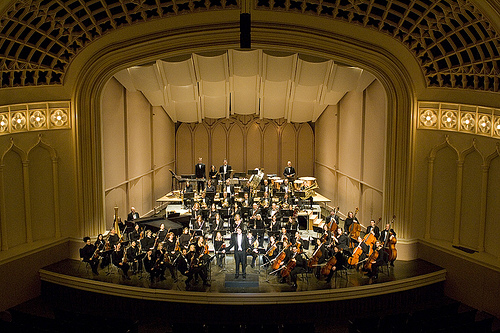
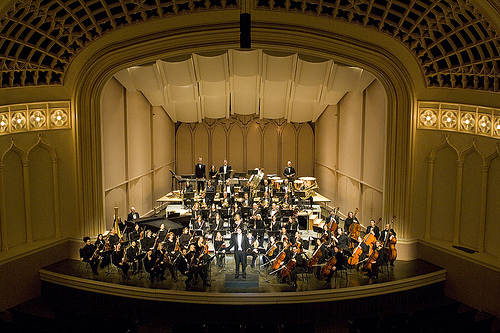
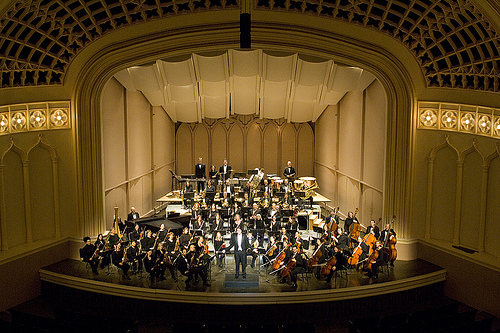
Conductor Michael Butterman and the Boulder Philharmonic in Macky Auditorium

That is one of the messages of the 2018–19 season, titled “Open Space,” which the orchestra is announcing today. There will be a new series of three pops concerts over the course of the season, which will run from Sept. 29 to May 5—longer than in past years. (See the entire season below.)

The additional series means more performances—six Main Series concerts, three Pops Series concerts, plus the annual Nutcracker performances with Boulder Ballet in November. And more performances means an expanding budget—a sign of the Phil’s success.

“It’s a modest expansion of what we’ve done in the past, and it reflects our desire to serve the community in a somewhat more expansive way,” Katie Lehman, the orchestra’s executive director, says.
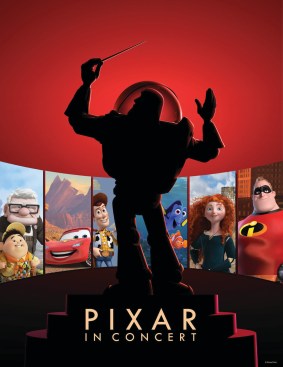
pixarinconcert_previewThe concerts of the Pops Series will be “A Tribute to John Williams” on Sept. 29, with music from some of Williams’ most popular film scores; “Pixar in Concert,” an event with family appeal featuring music from some of Pixar Animation Studio’s films including Toy Story, Finding Nemo, The Incredibles and others; and “The Music of David Bowie with the Boulder Phil,” an event presented by Windborne Productions featuring singer Tony Vincent that will be a combination rock concert and orchestra performance.

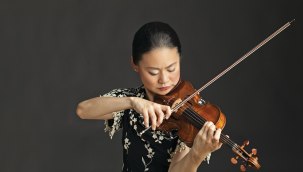
The pops series is not the only newsworthy part of the season. The roster of soloists will include two genuine classical superstars, starting in November with violinist Midori, who has chosen the Phil as a recipient of her Orchestra Residency Program grant. She will perform the Sibelius Violin Concerto with the Phil Nov. 4, and perform with the Greater Boulder Youth Orchestras (GBYO) the following day.
Midori credit Timothy Greenfield Sanders_preview

Midori. Photo by Timothy Greenfield Sanders.

While in Boulder Midori will present master classes and participate in neighborhood outreach activities, school events, civic presentations, and the Boulder Phil’s annual gala Nov. 3. The Nov. 5 concert by the GBYO will include the world premiere of a work for violin and string orchestra by CU assoc. prof. of composition Daniel Kellogg.

Pianist Garrick Ohlsson will return to Boulder for the first time in many years to perform Rachmaninoff’s First Piano Concerto with the Phil on Jan. 19. Ohlsson, who rose to fame when he won the 1970 Chopin International Piano Competition, played at the Colorado Music Festival several times in the 1980s and ‘90s.

Other soloists during the season will be soprano Mary Wilson, singing Samuel Barber’s nostalgic Knoxville, Summer of 1915 and Mahler’s elegiac Fourth Symphony with the orchestra Feb. 9; and cellist Astrid Schween of the Juilliard String Quartet and the Juilliard School faculty, performing Elgar’s Cello Concerto March 2.
amadeus-webThe main series will conclude with a collaboration with the CU Department of Theatre and Dance, with the orchestra playing onstage during a performance of Peter Schaffer’s play Amadeus April 27. While the Phil has done performances with the Colorado Shakespeare Festival in the past, this will be the first theatrical collaboration in several years.

Michael Butterman, the Boulder Phil’s music director, explains that the performance will include virtually the entire play, with extended musical interludes. “The play indicates places where music is to be played,” he says. “At the beginnings and ends of the two acts we have more extended pieces, so it becomes about 50-50 in terms of play and concert.”

New for the 2018–­19 season will be the Encore Concert, a community engagement event that gives amateur musicians the opportunity to play side by side with members of the Boulder Phil. The performance will be Sunday, Sept. 30, in Macky Auditorium. (The full schedule of activities will be announced later.)
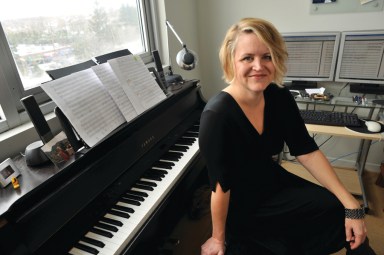
Kristin Kuster_preview

Boulder native Kristin Kuster

The season will notably include five pieces by living composers, three of them women: Circuits by Cindy McTee and Celestial Suite by James Stephenson Oct. 13 and 14; Passacaglia: Secret of Wind and Birds by Tan Dun Nov. 4; Starburst by Jessie Montgomery Feb. 9; and Dune Acres by Boulder native Kristin Kuster March 2.

The number of women composers is particularly noteworthy. The world of classical music has been heavily criticized for the male-dominated repertoire in the year of #MeToo and #Time’sUp. Specifically, the Chicago Symphony, Cleveland Orchestra and Philadelphia Orchestra together had a total of zero women composers—in seasons far longer than that of the Boulder Phil—and the New York Philharmonic included only one. (One of many articles on this issue can be seen here.)
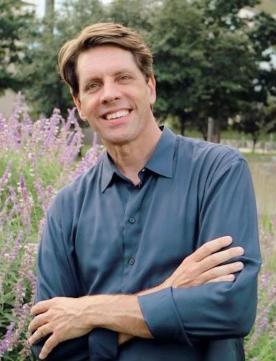
MB-Jiah 2

Michael Butterman

Butterman identified a couple of other “subthemes” to the season. “There’s some substantial stuff for the orchestra to dig into,” he said, speaking of large orchestral works that will appeal to the traditional classical audience. These include Holst’s Planets Oct. 13 and 14; Brahms Third Symphony Nov. 4; Prokofiev’s Fifth Symphony Jan. 19 and 20; and Mahler’s Fourth Symphony Feb. 9.

The world of technology shows up in various ways, including McTee’s Circuits. Tan Dun’s Secret of the Wind and Birds calls for both orchestra and audience to play previously downloaded musical passages on their cell phones—“hopefully in a way that is intentional,” Butterman says. In a similar vein, the pops concert “Pixar in Concert” celebrates the world of computer animation.

The theme of “Open Spaces” continues the Boulder Phil’s history of seasonal themes around the community’s relationship to the outdoors, and it implies the extension of that vision into outer space. Thus, the first program of the season, the pops program on Sept. 29, includes Williams’ music from Star Wars and E.T., and the final program May 5 includes Bowie’s “Space Oddity.”

The Main Series opens Oct. 13 and 14 with “Infinite Space,” a concert featuring Stephenson’s Celestial Suite and Holst’s Planets. The rest of the season is sprinkled with pieces that suggest either “Open Spaces” or outer space, including Alexander Borodin’s In the Steppes of Central Asia Jan. 19 and 20; and Montgomery’s Starburst and Mahler’s vision of heaven in the Fourth Symphony, Feb. 9.

But the most significant aspect of the upcoming season is the way recent success has led to an expanded presence for the orchestra. “We have been extremely successful with ticket sales, and we’re ending the year particularly well this year,” Lehman says.

She stresses that the expansion not only gives more choices to the public, it benefits the orchestra’s musicians as well. “We are very interested in building the loyalty of our core orchestra, our most talented, exciting musicians, and to that end we want to be able to offer them more work,” she says. “We want to offer them more projects that they have more input into, because the best orchestra is going to be the one that wants to be on the stage.

“For us, building the loyalty of musicians that we really love to have with us means giving them what they want.”

The bottom line, she says, is responding to what both the musicians and the public want and will respond to: “We are in the process of doing a careful job of listening to our people and our city, and thinking about ways that we can move into the future.”

# # # # #

Boulder Philharmonic Orchestra 2018-19 Season-at-a-Glance
Except as noted all concerts are in Macky Auditorium on the CU campus.


John_Williams_preview

John Williams

A Tribute to John Williams—Pops Series
Michael Butterman, conductor
Program includes music from Star Wars, E.T., Jaws, Harry Potter, Indiana Jones and Schindler’s List
7:30 p.m. Saturday, Sept. 29

Encore Concert (Community Side-by-Side)­­
Michael Butterman and members of the Boulder Philharmonic with amateur musicians.
Sunday, September 30, time TBA
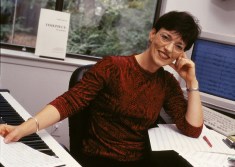
CINDY MCTEE (OP 3) MAR 25, 09

Cindy McTee

Infinite Space­—Main Series
Michael Butterman, conductor
Cindy McTee: Circuits
James Stephenson: Celestial Suite
Gustav Holst: The Planets with women’s chorus
7:30 p.m. Saturday, Oct. 13
2 p.m. Sunday, October 14 (Pinnacle PAC, 1001 W. 84th Avenue, Denver, without video)

Midori Plays Sibelius—Main Series
Michael Butterman, conductor, with Midori, violin
Tan Dun: Passacaglia: Secret of Wind and Birds
Jean Sibelius: Violin Concerto
Brahms: Symphony No. 3
7 p.m. Sunday, Nov. 4.

The Nutcracker with Boulder Ballet
Gary Lewis, conductor
Tchaikovsky: The Nutcracker, Op. 71
2 p.m. Friday, Nov. 23, Saturday, Nov. 24,  and Sunday, Nov. 25
7 p.m. Saturday, Nov. 24
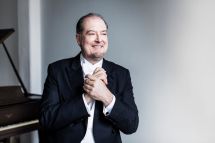
Ohlsson2(c)DarioAcosta_preview

Garrick Ohlsson. Photo by Dario Acosta

Ohlsson Plays Rachmaninoff—Main Series
Alexander Borodin: In the Steppes of Central Asia
Sergei Rachmaninoff: Piano Concerto No. 1
Sergei Prokofiev: Symphony No. 5
7:30 p.m. Saturday, Jan. 19
2 p.m. Sunday, Jan. 20 (Pinnacle PAC)

The Heavenly Life—Main Series
Michael Butterman, conductor, with Mary Wilson, soprano
Jessie Montgomery: Starburst
Samuel Barber: Knoxville, Summer of 1915
Mahler: Symphony No. 4
Saturday, Feb. 9, 7:30 p.m.
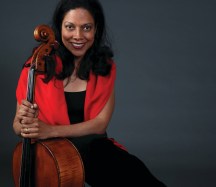
Astrid-Schween-by-Steve-Sherman 2015-01_preview

Astrid Schween. Photo by Steve Sherman.

Elgar & Beethoven—Main Series
Michael Butterman, conductor, with Astrid Schween, cello
Kristin Kuster: Dune Acres
Edward Elgar: Cello Concerto
Ludwig van Beethoven: Symphony No. 4
7:30 p.m. Saturday, March 2

Pixar in Concert—Pops Series
Gary Lewis, conductor
Program includes music from Toy Story, Finding Nemo, The Incredibles and Monsters, Inc.
7:30 p.m. Saturday, March 23

Peter Shaffer’s Amadeus—Main Series
Michael Butterman, conductor
Directed by Bud Coleman, with the CU Department of Theatre & Dance and choir
Music from Mozart’s “Jupiter” Symphony, “Haffner” Symphony, Don Giovanni, The Marriage of Figaro, Gran Partita, Requiem, and more
7:30 p.m. Saturday, April 27
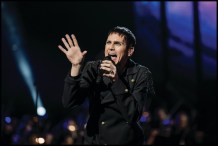
Tony_Vincent music of david bowie_preview

Tony Vincent in ‘The Music of David Bowie’

The Music of David Bowie with the Boulder Phil—Pops Series
Brent Havens, conductor, with Tony Vincent, vocalist
David Bowie hits including Space Oddity, Changes, Under Pressure, Heroes, Fame, and China Girl
7:30 p.m. Sunday, May 5

Tickets and more information: Five- and six-concert main series packages are on sale now. New subscribers save 50% off single ticket prices. Pops series subscribers receive 10% off three concerts. Click here or call 303-449-1343.

Single tickets go on sale June 4, 2018.
 

Boulder Phil collaborates with Cleo Parker Robinson for ‘Lark Ascending’

Emerging superstar violinist Stefan Jackiw plays Prokofiev on the same program

By Peter Alexander May 1 at 5:50 p.m.

“The idea of connecting orchestral music with other art forms has been very much on my mind.”

That statement from Michael Butterman, conductor of the Boulder Philharmonic, is clearly reflected in the orchestra’s recent seasons. Concerts have included projected visual images, and there have been collaborations with Boulder Ballet, Frequent Flyers Aerial Dance and Central City Opera.


Raindance_blog_header

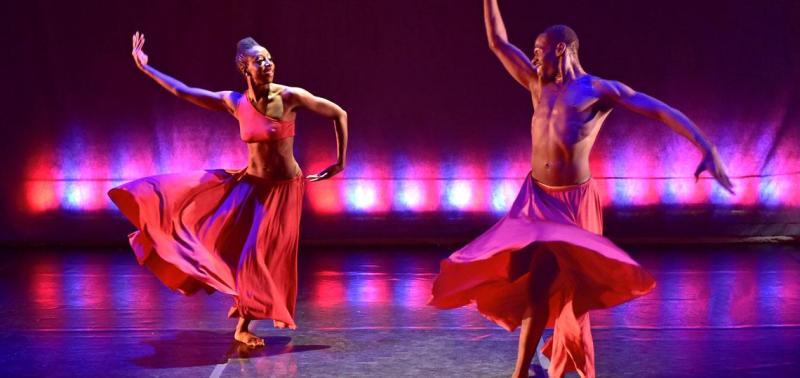
Dancers from the Cleo Parker Robinson Dance Ensemble

Now you can add Denver’s Cleo Parker Robinson Dance Ensemble to the list, with Robinson’s original choreography for Vaughan Williams’s Lark-Ascending for Saturday’s concert (April 7). The performance will feature the orchestra’s concertmaster, Charles Wetherbee, playing the solo violin part, with the dancers arrayed on the front of the stage.

Two other works will complete the concert program: Sibelius’s Symphony No. 5, and the emerging superstar violinist Stefan Jackiw playing Prokofiev’s Second Violin Concerto.

The collaboration with Robinson is one that Butterman has been planning for some time. “I wanted to work with Cleo’s company since I first came to Boulder,” he says. “It was just a question of (finding) something that would be a good fit for them and for us.”

The Lark Ascending came to mind as a suitable piece. “I thought it was a captivating piece of music, and it certainly has a sensibility that invited storytelling and choreography,” Butterman says. “So I approached Cleo about coming up with her own approach to this.”

1358795352-cleo_parker_robinson

Cleo Parker Robinson

Robinson loves the celebrated choreography that Alvin Ailey created for the piece, but she had no trouble finding her own interpretation. She was inspired in part by the writing of Maya Angelou, she says: “As soon as I began to hear the music and think about the theme, (I remembered that) she wrote ‘I know why the caged bird sings.’

“I had seen choreography with the lark being female, but I shifted it, (because) we’re seeing so many young people incarcerated. Usually it’s young Black men, brown men, and those without resources. I was overwhelmed with this.”

Robinson visualized a piece that was universal at the same time that it portrays an unjustly imprisoned Black man. “Who do people listen to once they are in such a dark place?” she asks. Her answer involves a quartet of dancers: the prisoner and three women.

“We have the mother coming to him as a voice of compassion,” she explains. “Then his sister comes to him as a voice of hope. And the woman that he loves comes to him as a voice of love, sharing that she carries his child. Their child, if nothing else, (gives him) a purpose to live.”

MB-Jiah 2

Michael Butterman. Photo:  Jiah Kyun

The Fifth will be the first Sibelius symphony that Butterman has performed with the Phil. “It seems like time to do one,” he says. “If you’re doing the Fifth you naturally think of the association of the last movement with swans. Sibelius wrote about being on the edge of a lake when an assemblage of swans flew overhead. He wanted to somehow capture that moment in the last movement.”

That beautiful tune he wrote to represent the flight of swans has made the symphony popular, but in other ways, Butterman says, Sibelius can be difficult for performers and audience both. “Many composers present a theme in its fully formed state, take it apart in what we would call the development section, then put it back together,” he says. “We don’t have that overview in most of Sibelius.

“His approach is to present a series of ideas, not apparently related, over the course of a movement or an entire symphony. He begins to put the pieces together, and we then see the big picture toward the end. It’s like uncovering puzzle pieces or little glimpses of an idea, maybe excavating something and over time you’re able to reveal the treasure underneath.”

Prokofiev’s Second Violin Concerto was written around the same time as the composer’s popular ballet Romeo and Juliet, and on the surface it has some of the same lyrical, accessible qualities as the ballet. Jackiw, however, hears darker elements below the surface.

Stefan J

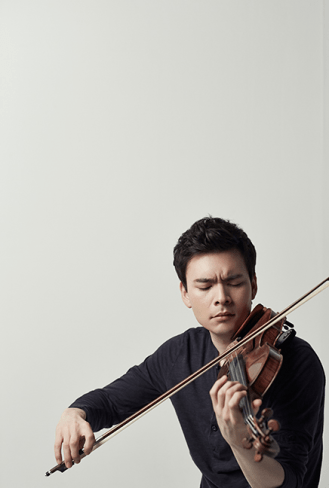
Violinist Stefan Jackiw

“There are certainly lyrical moments, like the second theme of the first movement,” he says. “And the second movement is one of the most beautiful things Prokofiev ever wrote. But I wouldn’t say that the piece on the whole is genial. I think actually there’s a lot of menace and nihilism as well.”

Jackiw points particularly to the opening theme for solo violin, which is flowing and lyrical but written in a five-beat pattern, and to the following orchestral entrance, which is tonally disorienting. These together, he says, “contribute to a sense of un-moored-ness and ungrounded-ness and discomfort. There’s a lot of this eerie quality in the first movement.

“The third movement also has the sense of throwing the performers and the listeners off kilter. It starts as a wild dance, and the road of the piece is a descent into madness. So while there are sweet moments, there’s a lot of demonic chaos.”

But the combination of sweetness and chaos, Jackiw believes, is what makes the concerto worthwhile. “A lot of this piece is about the dramatic tension between darkness and light, despair and hope,” he says.

“Listening out for that dramatic tension and seeing how that arc travels throughout the piece—that’s really what this is about, and a big part of what makes this piece special.”

# # # # #

BPO.Macky.3.cropped

Michael Butterman and the Boulder Philharmonic in Macky Auditorium

“A Song for Swans”
Boulder Philharmonic Orchestra, Michael Butterman, conductor

Vaughan Williams: The Lark Ascending
With Charles Wetherbee, violin, and the Cleo Parker Robinson Dance Ensemble
Sibelius: Symphony No. 5
Prokofiev: Violin Concerto No. 2
With Stefan Jackiw, violin

7:30 p.m. Saturday, April 7
Macky Auditorium

Tickets

Cirque de la Symphonie makes fourth appearance with Boulder Phil

‘World’s Only Aerial Violinist’ Janice Martin performs with the company

By Peter Alexander Feb. 1 at 11:30 a.m.

The circus is coming back to town, and this time they’re bringing a fiddler.

J.Martin

Aerial violinist Janice Martin

The circus is the acrobatic troupe Cirque de la Symphonie, returning to perform with the Boulder Philharmonic in a program titled Cirque Goes to the Movies. And the fiddler is Janice Martin, “The World’s Only Acrobatic Aerial Violinist,” who will play the theme from Cinema Paradiso and two movements of “Winter” from Vivaldi’s Seasons while performing an aerial act above the stage.

A company of acrobats, dancers, aerialists, jugglers and other cirque artists, Cirque de la Symphonie has performed three times before with the Boulder Phil. The current production of Cirque Goes to the Movies features acts performing to film music played live by the orchestra.

Selections will be from movies including Superman, Star Wars, Titanic, West Side Story and Mission: Impossible. The Boulder Phil, under music director Michael Butterman, will also present concert performances of music from Gone With the Wind, Pirates of the Caribbean and other films.

Read more in Boulder Weekly.

# # # # #

“Cirque Goes to the Movies”
Boulder Philharmonic, Michael Butterman, conductor
Cirque de la Symphonie with Janice Martin, Aerial Violinist

2 and 7:30 p.m. Saturday, Feb. 3
Macky Auditorium

Tickets

Simone Dinnerstein brings performance magic and a new piece to Boulder

Concerto by Philip Glass receives standing ovation at Macky Auditorium

By Peter Alexander

Simone.D.2.by Lisa-Marie Mazzucco

Simone Dinnerstein. Photo by Lisa-Marie Mazzucco

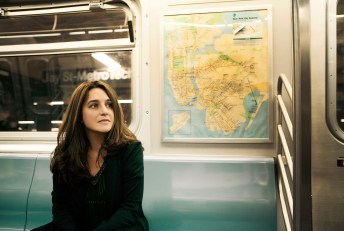
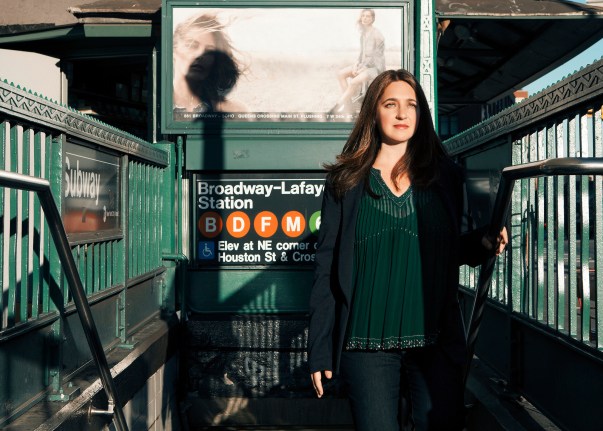
Pianist Simone Dinnerstein brought her deep sensitivity and considerable magic to Macky Auditorium last night, performing a remarkable new piano concerto by Philip Glass with the string sections of the Boulder Philharmonic and conductor Michael Butterman.

Glass’s Piano Concerto No. 3 was written for Dinnerstein, and her Boulder performance was part of the world premiere tour of the concerto. It is a major work that should achieve considerable success with audiences in the years to come, as it did last night in Macky.

Glass’s characteristic gestures are easily found in the score, but they have been transfigured. His usual pulsing rhythms are more gentle, serving and supporting melody and harmony. The music has an emotional immediacy throughout, and the third movement in particular has moments of seductive beauty. The ending is extended, creating a hypnotic, almost ritualistic quality around lovely bits of melody. The slow unfolding of these final thoughts quietly recalls compelling passages from Glass’s previous works.

Glass-Photo

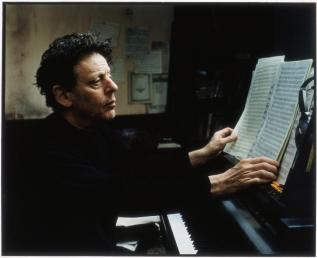
Philip Glass

At 80, Glass is entitled to write with a more valedictory and consoling tone, but there are likely two specific reasons for the nature of this piece. First, it was written for Dinnerstein. When she told Glass how much it fit her playing and her personality, he said “Well, I wrote it for you.” It’s hard to know how her influence manifests itself, but I heard a deep poeticism and introspective lyricism, qualities associated with Dinnerstein’s playing that also mark many moments in the concerto.

The other reason is the influence of J.S. Bach, a composer Dinnerstein is renowned for playing and whose Keyboard Concerto in G minor will be paired with the Glass on the current tour. There are no quotes or direct echoes of that specific piece in the Glass score, but I found it notable that the music is shaped largely by harmonic patterns, as if it were based on a Bach-like chorale, but one that wanders into unpredictable turns and paths.

Dinnerstein had both the notes and the inner life of the piece well under her fingers. Playing with evident love for the concerto, she found depths of expression in the music, including some of the simpler moments technically. Her playing was ably supported by Butterman and the Phil.

Not everyone loves Glass, but for me the performance was deeply moving, revealing both the quiet humanity of the composer and the commitment of the soloist. Standing ovations are de rigueur in Boulder, but this one seemed especially heartfelt.

The rest of the program was musically fascinating—a symphony by C.P.E., son of J.S. Bach, and Schoenberg’s Verklärte Nacht (Transfigured Night) on the fist half, and J.S. Bach’s G minor Concerto preceding the Glass. However, all three works, calling for only strings, suffered the same fate of being swallowed by Macky Auditorium’s unforgiving acoustics. Small ensembles, and strings in particular, invariably sound distant and a little cold in the hall.

The C.P.E. Bach Symphony received a refined performance, with transparent textures, and a smooth transition between the first two movements. But the characteristics of C.P.E. Bach’s mid-18th-century Rococo style, the use of sudden and shocking harmonic jolts and unexpected stops and starts, lost the larger share of its impact in the hall. The more’s the pity: C.P.E. Bach is a fascinating composer who should spice up any program—but only if the effects land with the audience.

Butterman introduced Schoenberg’s piece with a useful listener’s guide to the main ideas of the music, and how they are laid out in the score. One of the great musical/emotional outpourings of the late Romantic musical style, Verklärte Nacht portrays a passionate story of forgiveness and redemption, in which a dark and gloomy forest path is transfigured into a glittering scene of starlit beauty by the power of love.

The audience is meant to be enveloped in the lush harmonies of the score, and indeed I could see that the orchestra was playing with great intensity. Alas, the sound again was swallowed by the hall. It was well conducted and well played by the orchestra, but from Row U, it sounded all too polite and restrained to fit a story of passion.

The performance of J.S. Bach’s G-minor Concerto was a little cotton-woolish in the orchestra when more lean muscle would serve the music better, but likely this is another manifestation of Macky’s acoustics. Dinnerstein played with a clear sense of line and overall form. With a Steinway grand and modern string instruments, this was not a historically-informed performance, but Bach’s music is so ideal in conception that it does not depend on the medium.

All other issues aside, Dinnerstein, Butterman and the Boulder Phil scored a great success with the Glass Concerto. It’s only January, but that should be on any list of the year’s highlights.

Pianist Simone Dinnerstein returns to the Boulder Phil for new concerto

Philip Glass wrote his Third Piano Concerto for his former young fan

By Peter Alexander

The first time Simone Dinnerstein attended a concert alone she was 12, and she heard music by Philip Glass.

Simone.D.by Lisa-Marie Mazzocco

Simone Dinnerstein. Photo by Marie Mazzocco.

Dinnerstein has since become an internationally known concert pianist and Glass has turned 80. And remarkably, he has now written a new piano concerto for his former young fan, which she will play Jan 13 and 14 for her return to the Boulder Phil.

“It’s exciting when you discover music as a young person, and it’s your own music that has not been shown to you by a parent or a teacher,” Dinnerstein says. “So there is something kind of surreal about having him write something for me! And the fact that he wrote something as magnificent as this piano concerto is really an incredible honor.

“I can’t quite digest the fact that he wrote that for me.”

Glass’s Piano Concerto No. 3 will be on a program titled “Bach Transfigured.” The concert, featuring the orchestra’s strings under music director Michael Butterman, will also feature the Symphony in C Major by C.P.E. Bach, Transfigured Night by Arnold Schoenberg, and J.S. Bach’s Keyboard Concerto in G minor.

# # # # #

“Bach Transfigured”
Boulder Philharmonic Orchestra, Michael Butterman, conductor
With Simone Dinnerstein, piano

C.P.E. BACH  Symphony in C Major, Wq 183, no.. 3
ARNOLD SCHOENBERG  Transfigured Night
J.S. BACH  Keyboard Concerto in G minor, BWV 1058
PHILIP GLASS  Piano Concerto No. 3
     Colorado premiere, a Boulder Phil co-commission

7:30 p.m. Saturday, Jan. 13, Macky Auditorium
2 p.m. Sunday, Jan. 14, Pinnacle Performing Arts Complex, Denver

Tickets


2017: The Year in Classical Music

Some outstanding concerts, and some changes of leadership in Boulder

By Peter Alexander

With the year drawing to a close, it is time to look back at 2017. It has been a tumultuous year in many realms, including some aspects of Classical music. But before that, it is good to remember the outstanding musical experiences of 2017 here in the Boulder area.

Pro Musica

The year began on an expressive high point when Pro Musical Colorado Chamber Orchestra, conductor Cynthia Katsarelis and soloists Jennifer Bird-Arvidsson, soprano, and Ashraf Sewailam, bass, presented Shostakovich’s rarely-heard Symphony No. 14.

I wrote at the time: “This somewhat gloomy meditation on death is not often given live, partly because of the difficult assignments facing the soprano and bass soloists, but mostly because of the difficult subject matter. But it is a major statement from a great composer—what Katsarelis calls ‘a piece that needs to be heard’—and so the rare performances are to be treasured.”

The February visit of Deborah (Call Me Debbie) Voigt to Macky Auditorium will be a cherished memory for fans of the classical voice. Voigt Lessons, the superstar soprano’s candid retelling of her struggles with relationships, substances, and weight that clouded her career not only showed some realities of life at the top of the opera world, it also revealed the very human person beneath the superstar image. For both reasons, this was a meaningful event.

Takasce SQ

Takacs Quartet

The Takacs Quartet always provides some of the year’s best performances. It’s hard to chose just one, but for 2017 I would single out their February concert including Beethoven’s Quartet in G major, op. 18 no. 2—performed while the Takacs was in the midst of a full Beethoven cycle at several venues—and CU music faculty Daniel Silver, clarinet, playing the Brahms Quintet in B minor, op. 115. An especially beautiful rendering of this beautiful work had at least one audience member in tears by the end.

March saw the arrival of another superstar in Boulder when Sir James Galway played at Macky Auditorium, and the departure of an important member of Boulder’s classical music community when Evanne Browne gave her farewell concert with Seicento Baroque Ensemble, the organization she founded in 2011.

BPhil.onstage

Boulder Phil at Kennedy Center

One of the biggest events of the year for Boulder performing arts was the visit in March of the Boulder Philharmonic Orchestra, conductor Michael Butterman and Frequent Flyers Aerial Dance Company to the Kennedy Center in Washington, D.C., for the first annual Shift Festival of American Orchestras. The Phil repeated a concert they had given in Boulder a few days earlier, including the world premiere of All the Songs that Nature Sings by Stephen Lias and Copland’s Appalachian Spring, performed with Frequent Flyers.

An audience favorite of the festival, the Boulder Phil played to a sold out house. Butterman wrote the next day, “It was a peak experience for me, and, I think, for all of us at the Phil. . . . To be there with our orchestra, with that crowd and with that repertoire—it was something I shall never forget. We had a great sense of pride in representing our hometown.”

Several important changes of personnel were announced for Boulder classical scene in the spring. In April, Jean-Marie Zeitouni announced that he was stepping down as music director of the Colorado Music Festival. He will remain with CMF as principal guest conductor, and conductor/violinist Peter Oundjian will serve as artistic advisor for the 2018 season. Later the same month, James Bailey left his position as music curator of the Dairy Arts Center, to be replaced by Sharon Park.

Elliot Moore at Lake McIntosh - credit - Photography Maestro (1)

Elliott Moore

In May, Seicento Baroque Ensemble announced the appointment of Kevin T. Padworksi as artistic director, succeeding Browne, and the Longmont Symphony announced the appointment of Elliot Moore to succeed long-time music director Robert Olson.

The same month, the Boulder Chamber Orchestra wrapped up its 2016–17 season with its largest performance to date, Beethoven’s Ninth Symphony presented in Macky Auditorium. The performance under conductor Bahman Saless was unfortunately the occasion of a protest by the anti-fracking group East Boulder County United. Seven members of EBCU blew whistles, shouted slogans and left flyers before the concert to voice their opposition to the orchestra having accepted a contribution from Extraction Oil & Gas.

Olga Kern

Olga Kern, photographed by Chris Lee at Steinway Hall.

Zeitouni proved to be anything but a lame duck conductor at the Colorado Music Festival. The 2017 season started at the end of June with an all-Russian program featuring exciting performances of Shostakovich’s Festive Overture and Rachmaninoff’s Second Symphony. On the same concert, one of Boulder’s favorite guest artists, pianist Olga Kern, gave scintillating performances of Prokofiev’s First Piano Concerto and Rachmaninoff’s Rhapsody on a Theme of Paganini.

Other high points over the summer included the return of CMF’s founding director Giora Bernstein to lead a concert of Mozart, Zeitouni conducting Beethoven’s Ninth as the CMF centerpiece, and the visit of violinist Gil Shaham at the end of the summer season. Up in the mountains, Central City Opera’s Downton-Abbey-inspired Victorian-era production of Mozart’s Così fan tutte was one of the year’s highlights for opera lovers.

Another delight for the opera crowd came in the fall, with the CU Eklund Opera Program’s serio-comic production of Lehar’s Merry Widow. In November, Saless and the Boulder Chamber Orchestra returned to its core repertoire with a lively concert featuring two youthful works for smaller ensemble: the Concerto for piano, violin and strings by the 14-year-old Mendelssohn, with violinist Zachary Carrettin and pianist Mina Gajić, and Janáček’s Idyll for Strings.

Zachary & Mina

Carrettin and Gajic

Carrettin and Gajić were featured performers in December when the Boulder Bach Festival gave one of its most intriguing and adventurous concerts in its increasingly adventurous schedule. With guest artist Richie Hawley, the program offered insight into the instruments and performance practices of the early 20th century, performed on Hawley’s 1919 Buffet clarinet, Gajić’s 1895 Érard piano, and Carrettin’s violin set up with strings typical of the period.


# # # # #

For the classical music world outside of Boulder, the biggest news was certainly the intrusion of a long-overdue reckoning for sexual misconduct that is going on in our society generally. The first bombshell, not unexpected by people in the business but a bombshell nonetheless, landed Dec. 3 with the suspension of conductor James Levine from the Metropolitan Opera and other organizations, including the Boston Symphony and the Ravinia Festival. Accusations against Charles Dutoit, artistic director and principal conductor of the Royal Philharmonic Orchestra in London, surfaced later in the month.

levine

James Levine

Both conductors are in the twilight of long careers. Rumors about Levine have been widely known in the classical music world; indeed I first heard them in the 1980s. Every music journalist I know has heard the same stories, but so far as I am aware, no one who experienced Levine’s assaults was previously willing to speak publicly. In the case of Dutoit, I had not heard the rumors, but I do know one of the women who spoke publicly about what happened to her, and I believe her unquestioningly.

As the controversy has swirled about the subject of sexual abuse, harassment and assault in classical music, several critics have written powerfully about the subject: Anne Midgette of the Washington Post, Jennifer Johnson of the Guardian, Andrew Riddles of Classical Ottawa to name three. Singer Susanne Mentzer has written about her personal experiences in the opera world for the Huffington Post, as has Dan Kempson for Medium.

There are certain to be more revelations. One major journalist has more first-hand information, with names including some of the of the most famous classical artists, and is preparing an article. I have no doubt that several men are nervously awaiting that story, or some other revelation that reveals past misdeeds.

Will this tidal wave reach Boulder?

It’s hard to say with certainty. I have spoken with many on the classical scene here, and the only rumor I have heard, from several sources, has been of inappropriate comments and behavior by one person, none of which reached the level of abuse or assault. “He might not have been hired today,” one person speculated, but as so often happens, the people who heard the comments preferred not to make an issue of it.

Another person told me he had never heard any rumor from the College of Music, so Boulder may escape the worst of this necessary but unhappy process. In the meantime, it is my wish for 2018 that society in general and the music world specifically create a safe environment, where powerful men do not feel free to behave like adolescent boys.

___________

Edited for clarity 12.31.17

Boulder Philharmonic brings “Music of Resistance” to Macky

Pieces by Benjamin Britten, Beethoven and Shostakovich

By Peter Alexander

The Boulder Philharmonic calls their next concert “Music of Resistance,” but it might more accurately be called “Music of Conscience.”

BPO.Macky.2

Boulder Philharmonic

The concert, at 7:30 p.m. Saturday (Oct. 14) in Macky Auditorium, features three pieces, each of which expresses a message of conscience from the composer—two of them explicit, one more murky and controversial. Music director Michael Butterman will conduct.

Plenk

Tenor Matthew Plenk

The first piece will be Benjamin Britten’s Ballad of Heroes for tenor, chorus and orchestra, composed in 1939 for a “Festival of Music for the People” held in London. A setting of poetry by W.H. Auden and Randall Swingler, it is a response to the Spanish Civil War. The overtly political text roundly condemns the “numberless Englishmen” who have forgotten those who “fight for peace, for liberty, for you.” Matthew Plenk, a faculty member at the University of Denver’s Lamont School of Music, will be the tenor soloist.

The second is Beethoven’s Fantasy for Piano, Vocal Soloists, Chorus and Orchestra, composed in 1808 for a massive concert that included the Fifth and Sixth Symphonies, the Fourth Piano Concerto, two movements from the Mass in C major. The Fantasy was hurriedly composed as a concert-ending piece that would bring all of the performers together.

The text, suggested by Beethoven and written mostly by the poet Christoph Kuffner, expresses the composer’s idealistic conviction that music can bestow “outer peace and inner bliss,” and the blessings of the gods upon mankind. CU music professor David Korevaar will be the soloist.

The final and more controversial piece is Shostakovich’s Symphony No. 5, composed in 1937. The score was written after the composer was sharply criticized and threatened under orders from Stalin. Shostakovich stated that the subsequent symphony was “a Soviet artist’s creative response to justified criticism,” and it ends with a march that expresses either the triumph of the Soviet state, or its brutality, depending on the interpretation.

MB-jiah 1

Michael Butterman

“There are different views of this,” Butterman says. “Certainly one of the more prevalent is the notion that Shostakovich was more or less pinned against the wall and told, ‘it would be a shame if anything happened to your career.’ So the question is, did he just say, ‘You want something that’s life-affirming? I can do that.’ Or was it a veiled protest?

“There is a way that rings in the Shostakovich that could be interpreted as compelled, or rejoicing that is done for show. Of course I don’t know, but I tend to think it’s that.”

The other two works are unfamiliar, but both can be seen as early, small-scale versions of larger and more familiar works written later in the composer’s career. Britten’s Ballad of Heroes shares many traits with the composer’s War Requiem, written in 1962, including the textual contrast between the quiet British homefront and the horror of war, brass fanfares, and Britten’s characteristic style of vocal writing for the soloist.

Similarly, Beethoven’s Fantasy sounds very much like the Ninth Symphony written 16 years later. The regular phrasing and simple outline of the theme, the combination of chorus, soloists and orchestra, and the use of variations leading to a triumphant close inevitably remind listeners of the symphony’s famous finale.

In spite of being unfamiliar, both works are “worth hearing and also interesting because of their better known analogs,” Butterman says. “You get some insight into the world views and the frames of mind of these two (composers), through the text and the quality of the music carrying the text.”

The Britten was suggested to Butterman by an orchestra member. He didn’t know the score, but once he listened, he said, “I thought it was really effective.

britten_benjamin

Benjamin Britten

“It’s fascinating because Britten was a pacifist, and yet this piece is celebrating those who went off in the International Brigade to fight in the Spanish civil, against fascism. He’s saying, If you believe in something, you’ve got to stand up for it.”

Plenk had not heard the piece before, either. As in much of Britten’s music, he says, “there’s a somewhat instrumental character to the way he writes for tenor.”

As for the political content of the text, “any time you’re performing, you’re trying to express what the composer intended, whether it’s political or not,” he says. “I’d urge people to let the text lead them (in how they listen to the music). I would say that with any music, but this was written for a specific purpose, to memorialize the fallen soldiers from the International Brigade of the Spanish Civil War.”

korevaar.2.jpg

David Korevaar

Korevaar relishes the opportunity to play Beethoven’s Fantasy. “One of the reasons we play it is because it has this wonderful sense of uplift,” he says. “It starts in C minor, a key that Beethoven uses for drama and tragedy. And C major (where it ends) is a key of joy and light. And so there is an aspect of a ritual experience” when you hear it.

One thing Korevaar particularly enjoys is the way “the piano is given a sort of Promethean role,” he says. “When I play this piece I have the feeling of having magical powers.

“The piano begins alone, and then we add the instruments one at a time. It’s like you’re giving life to all these figures, and then once the orchestra and the piano have had their say, what more can you do? Then you conjure up human voices, first solos and then a chorus!

“It’s really marvelous.”

# # # # #

Music of Resistance
Boulder Philharmonic Orchestra, Michael Butterman, conductor
Matthew Plenk, tenor, and David Korevaar, piano
CU Boulder and Western Illinois University choirs
7:30 p.m. Saturday, Oct. 14, Macky Auditorium

Tickets

Boulder Phil opens their season with an outstanding soloist, great works

Pianist Jon Nakamatsu weds technique and expression for Schumann’s Concerto

By Peter Alexander

Last night (Sept. 24) conductor Michael Butterman and the Boulder Philharmonic opened their 2017–18 season with “The Boulder Phil at 60,” a successful and well balanced program that featured an outstanding soloist, two great works, and a (relatively) new piece that that was co-commissioned with 47 other orchestras around the country.

BPO.Macky.2

Boulder Philharmonic Orchestra

The performance was introduced by Boulder City Council Member Jan Burton reading from a proclamation declaring Boulder Philharmonic Day, congratulating the orchestra for realizing its mission to reflect the Boulder community as well as for its longevity. While the program did not have the Boulder-centric focus of the recent seasons, it was received with enthusiasm.

The concert opened with Dreamtime Ancestors by Christopher Theofanidis. Commissioned by a consortium of orchestras in 48 of the 50 states, including the Boulder Phil for Colorado, it has been played around the country starting with its world premiere in 2015, and has now made its way to Boulder.

Dreamtime Ancestors was supposedly inspired by, and has titles reflecting, Australian Aboriginal spiritual beliefs, but you would be hard pressed to discern that in the music. The highly characteristic and mystical Aboriginal beliefs are reflected in only the most general way; about the best you can say is that Theofanidis tastefully avoids any patronizing faux-exoticism in the music.

Instead, the score is composed in a more-or-less contemporary Western orchestral style, with a discernable profile and structure that makes the music easily accessible. Avoiding any bold gestures, the music holds nothing that would disconcert a contemporary classical-music audience. Played with warmth and firm musicality by the Boulder Philharmonic, it made an unchallenging but agreeable opening for the concert.

JonNakamatsu

Pianist Jon Nakamatsu

The first of the two great works was Schumann’s familiar Piano Concerto in A minor, played by soloist Jon Nakamatsu. The pianist’s sure technique was used in service of a deeply expressive performance that clearly moved the audience. In a work of many moods, his interpretation was striking for its use of gentle lyricism in the quiet, reflective moments to contrast with the more robust portions of the concerto.

This was especially effective in the slower middle movement, which was played with great beauty and tenderness. In the first movement, however, I found the style of the quieter moments overdrawn. Nakamatsu’s lyricism was lovely, but the tempo sometimes slowed so much that these quieter passages seemed to interrupt the overall momentum and continuity of the movement.

The contrasting moods were better matched in the finale, which danced along convincingly as Nakamatsu met every expressive demand. Butterman and the orchestra provided secure support for his interpretation. A standing ovation from a nearly-full Macky Auditorium brought Nakamatsu back onstage for a lovely and touching encore performance of Chopin’s Fantasie-Impromptu.

MB-jiah 1

Michael Butterman

The orchestra came into its own for the other great work, forming the full second half of the concert: Dvořák’s Symphony No. 7 in D minor. Sometimes celebrated as the composer’s greatest symphony, the Seventh is less known, and notably more somber than either the cheerful. folkish Eighth Symphony or the ever-popular Ninth Symphony, famously composed in the New World.

This symphony is a challenge for both conductor and orchestra, requiring stylistic commitment and perception, as well as musical precision and control. Butterman and the Phil met the challenges head on, with a strong conception of the work. The very beginning was a little ragged in pitch and rhythm—a reflection of the musicians having been apart for the summer?—and the orchestral sound was not initially consistent, lacking a solid core.

Happily, the players soon settled in and the performance grew stronger and stronger. Individual moments were musically expressive throughout, and the first movement ended forcefully. The second movement was stylish and well paced. The third movement, titled only “Scherzo,” has an obvious folk-dance quality throughout, a feeling that was well captured by Butterman and the Phil.

The stormy finale was the best movement, with well controlled pacing that reflected the composer’s calculated withholding of a major-key resolution until the very last measures. Individual players shone in their solo passages, including one of the best propulsive punches for a timpanist to be found anywhere in the orchestral world. Once again the audience stood, celebrating Boulder’s fine orchestra, its remarkable 60-year history, and the successful start of a new season.

Takács Quartet and Boulder Phil deliver a classical double-header

The missing composer in both concerts? Beethoven.

By Peter Alexander

Takasc String Quartet

Takacs Quartet. Photo by Keith Saunders.

Boulder will see a classical-music double-header Sunday, Sept. 24 as the Takács Quartet and the Boulder Philharmonic both open their seasons the same day.

The Takács goes first, at 4 p.m. in Grusin Music Hall on the CU campus with a program of Haydn, Mendelssohn and Brahms. And at 7 p.m. in Macky Auditorium, the Boulder Phil will open their 60th anniversary season with the music of Dvorák, Schumann and Christopher Theofanidis. The Takács will repeat their concert on Monday at 7:30 p.m.

That Takács program, and later programs during the year, are noticeably missing one composer. There are classical works during the fall (Haydn, Mozart), Romantic works (Mendelssohn, Brahms), and one new piece (Carl Vine). But there is no Beethoven.

That’s because the Takács played the full cycle of Beethoven quartets several times last year, and they decided enough was enough. “We’re definitely taking a breather from Beethoven this year,” the quartet’s first violinist, Edward Dusinberre, says.

# # # # #

JonNakamatsu

Jon Nakamatsu

Music director Michael Butterman and the Boulder Philharmonic will open their 60th season with a work co-commissioned with orchestras in all 50 states, Dreamtime Ancestors by Christopher Theofanidis. Other works on the program are Schumann’s Piano Concerto in A minor with pianist Jon Nakamatsu, and Dvorák’s Symphony No 7. in D minor.

Nakamatsu is looking forward to playing the Schumann Concerto, even though he has played it many times before. “People say if it’s really familiar to the audience, it’s more difficult to play because everyone has an opinion,” he says. “But I find if you don’t have to win people over with the piece, you just have to play. Playing something everyone loves already, you have happy people in the hall. That’s a good place to start.”

Read more in Boulder Weekly.

# # # # #

Takacs Quartet
Haydn, Mendelssohn and Brahms
4 p.m. Sunday, Sept. 24 (sold out)
7:30 p.m. Monday, Sept. 25
Grusin Music Hall

Tickets

Boulder Philharmonic, Michael Butterman, conductor
Jon Nakamatsu, piano
“Boulder Phil at 60”
7 p.m. Sunday, Sept. 24
Macky Auditorium

Tickets


Boulder Phil ends remarkable season with a remarkable concert

CU faculty Charles Wetherbee and Nicolò Spera featured in world premiere

By Peter Alexander

butterman.andorch

Michael Butterman and the Boulder Philharmonic

Last night the Boulder Philharmonic and conductor Michael Butterman ended a remarkable season with a remarkable concert, one of the most interesting they have done.

The mostly-Italian program included one of the most brilliant orchestral showpieces of all time, a world premiere, and several pieces that are rarely played. If you love making new discoveries, as I do,  this was a fun program.

First the world premiere—and the one non-Italian piece on the program: Invisible Cities, Double Concerto for violin, guitar strings and percussion by Stephen Goss. The composer is Welsh, although the concerto is based on the fascinating novel of the same title by the 20th-century Italian writer Italo Calvino. Soloists were Charles Wetherbee, violin and Nicolò Spera, guitar.

The novel imagines a series of conversations between Marco Polo and the Mongol Emperor Kublai Khan. In an intricate design, the novel has Polo describe 55 cities to the Emperor, all of which turn out to be facets of Venice, his home. Dispersed among the cities are a series of conversations, in which Polo and Kublai Khan are gradually able to communicate more clearly across their linguistic and cultural barriers.

SteveGoss_10

Stephen Goss

In a similarly intricate design, the concerto alternates between orchestrally accompanied movements representing cities and duos without orchestra representing the conversations. Particularly ingenious are the duos, which represent musically the growing accord between Polo and the Emperor through music of growing lyrical beauty.

The musical design is clever but not cryptic, and it is executed without ever seeming forced. The piece as a whole is accessible, expressively convincing and well constructed. This is a work of significance that should be taken up by other guitar-violin duos.

Wetherbee.1

Charles Wetherbee

The style is largely based in conventional gestures of contemporary orchestral music. If not original, the musical elements are used to good effect, as listeners can recognize and enter the expressive realm of each movement. Where the music is more imaginative, as in the interaction between the soloists, the creativity is never originality for originality’s sake; it always serves the expressive goals.

nicolo.spera

Niccolò Spera

The soloists played with sweet expression together, and with greater intensity when required. Their sounds were well balanced, reflecting prior work together as a duo. At their best they rose to all the demands of Goss’s pleasing new work.

The two works preceding the concerto were undoubtedly new discoveries for most in the audience, and both were 20th-century pieces based on older music. The first was Stravinsky’s Monumentum pro Gesualdo, orchestral arrangements of uniquely strange and adventurous Renaissance madrigals by Carlo Gesualdo.

Stravinsky’s setting is strange in its own way, with discontinuous bits of harmonic and instrumental color shifting about the orchestra and managing to sound like both Gesualdo and Stravinsky. This score, nicely played last night, fits the Boulder Philharmonic and its outstanding individual players well.

That was followed by Luciano Berio’s Four Original Versions of Boccherini’s Return of the Nightwatch from Madrid. Sometimes an enfant terrible of modern music, Berio also wrote highly approachable scores built from older music, of which this is one.

Four different versions of a movement by the 18th-century Italian composer Boccherini are arranged for modern orchestra and layered on top of one another. At times they match perfectly, but at other times they do not, creating delicious and unexpected dissonances that pass quickly.

Depicting the approach and departure of the Nightwatch, the score culminates in a rousing setting of the tune, and then dissipates into silence. It was played with verve, as once again the individual contributions of the players fit well into the orchestral mosaic.

After intermission, Butterman and the orchestra gave an invigorating reading of Verdi’s Overture to Nabucco, with all the turns of mood well traversed and quite a bit of excitement for the explosive ending. Puccini’s Chrysanthemums, an ingratiating minor work, was played with expression, if not the plush, ermine-fringed sound one would like to hear.

Respighi

Ottorino Respighi

The concert ended with a sure bet, Respighi’s Pines of Rome, a piece guaranteed to rouse the audience from their seats. In the hands of the Boulder Phil, Respighi’s orchestra worked its magic: it shone when it should shine and sparkled when it should sparkle, the sudden contrasts were contrasting and the abrupt changes of scene were well delineated.

The winds deserve special recognition, from the brass flourishes in “The Pines of the Villa Borghese,” to the delicate woodwind solos of “The Pines of the Janiculum,” to the massive fanfares of “The Pines of the Appian Way.” Once again the Roman Legions advanced, a brass choir sounded from the balcony—although how effectively depended on where you were sitting—and Respighi brought the crowd to its feet.

You could not have a more rousing ending for a season.