‘Thread of destiny’ runs through Longmont Symphony’s Feb. 15 program

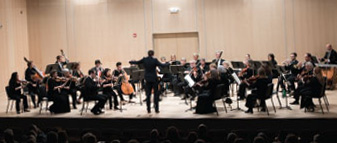
Violinist Andrew Sords and Longmont Youth Symphony will join the LSO onstage

By Peter Alexander Feb. 13 at 2:20 p.m.

The next concert by the Longmont Symphony Orchestra (7:30 p.m. Saturday at Vance Brand Civic Auditorium) is steeped in the idea of destiny.

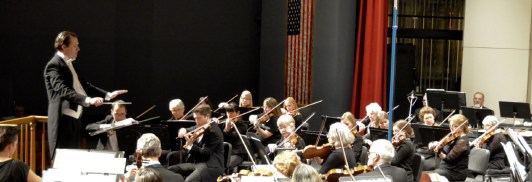
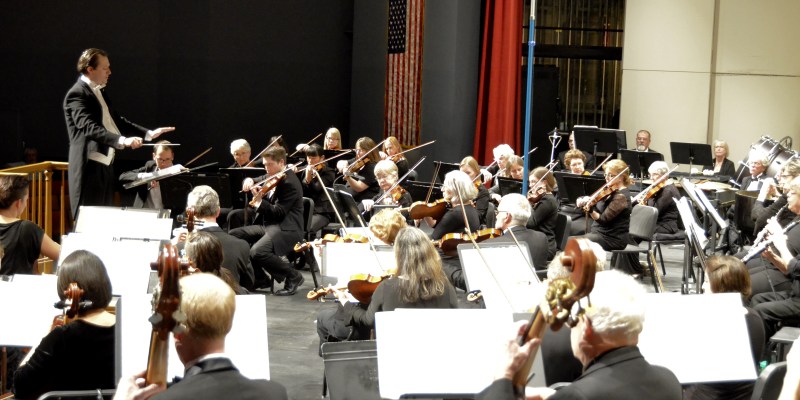
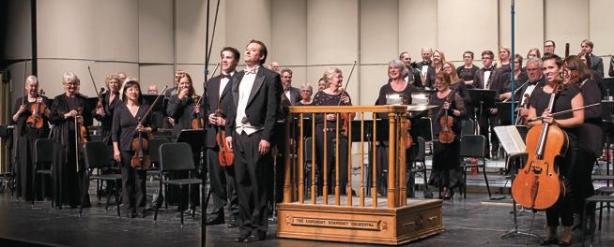
elliotandlso-1

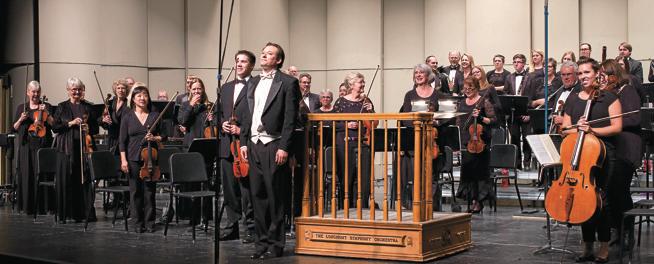
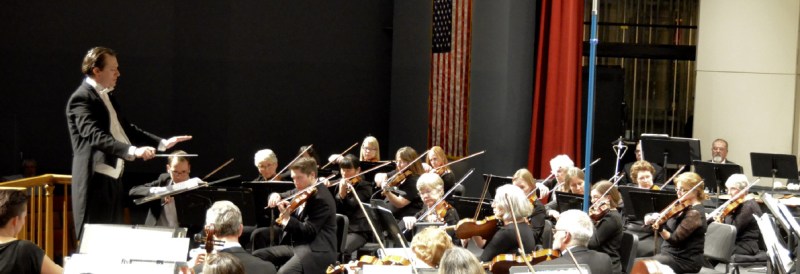
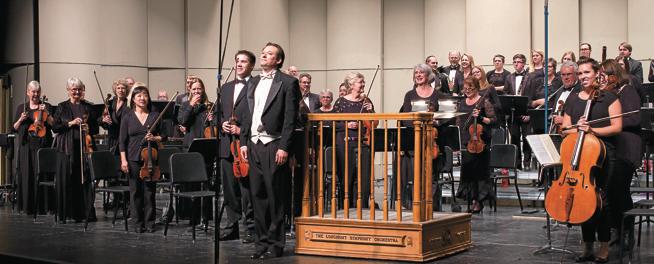
Elliot Moore and the Longmont Symphony Orchestra

The concert is titled “The Force of Destiny,” a title taken from the opening Overture to La Forza del destino by Verdi, but the idea of “destiny” goes much farther than that. “I believe that in this program there’s a thread of destiny,” Elliot Moore, the LSO’s conductor, says.

LSO Music Director Elliot Moore_preview

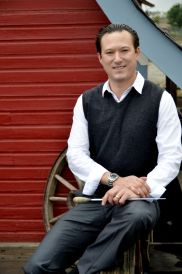
Elliot Moore

In fact, Moore finds a sense of destiny everywhere he looks: in the pieces he has selected for the program, in the violin that his soloist Andrew Sords will play, in the instruments in the orchestra, in the inclusion of the Longmont Youth Symphony in the performance of one piece on the program, and even in the future of the arts in Longmont.

“In Longmont, we’re living into this possibility of the arts being a real economic driver, and putting the arts on the map here” he says. “It’s something that’s going on. So I find that the music, our soloist, all of these things are all coming together—I believe it’s our destiny.”

After Verdi’s Overture, the next piece on the program will be John Corigliano’s The Red Violin: Chaconne, based on music from the 1998 film The Red Violin, about the twisted fate—or destiny?—of a fictional violin that is traced from 17th-century Italy to England and China, an auction in Montreal and eventually New York. In the film, music by Corigliano was played by violinist Josh Bell. Corigliano later adapted the music to make several concert pieces, including The Red Violin Concerto and The Red Violin: Chaconne.

Andrewproof2-1-large

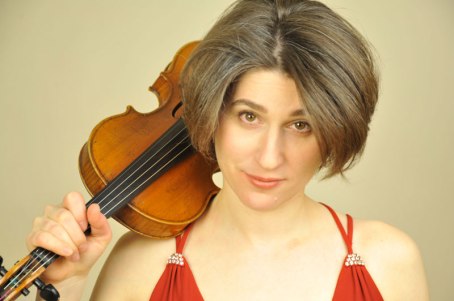
Andrew Sords

Sords, who will play the Chaconne with the LSO, says that Corigliano’s score for the film is “one of the genius pieces of the last 23 years. It’s cinematic even without a movie to go with it.”

Sords’ own violin does not quite have the romance and mystique of the fictional “Red Violin,” but it inspires Sords to think about its history. “I think about my own violin, which is only 100 years old: who played on it before me, where did it go? The movie [has] those Hollywood elements, but it really does make you think about these instruments, who played on them, what blood, sweat and tears went into them.”

“That was one of the things that I wanted to do with this program,” Moore says. “Each one of the instruments [in the LSO] has a story. It has some kind of destiny. If it’s to inspire our community or to make its way into the hands of a child, it can change their life. I want to underscore how instruments have life, and they can impact the world.”

Sords will also play La Campanella (The little bell), a movement from Paganini’s Violin Concerto No. 2. Paganini was the greatest violin virtuoso of his time. A great showman, he was known for playing things that others considered impossible. As a result, he was rumored to be in league with the devil—which is the connection that Moore sees to the idea of destiny.
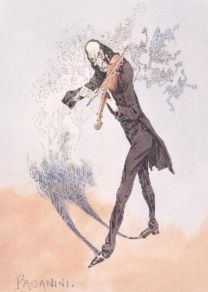
Paganini charicature

Charicature of Paganini

“Paganini was thought of as this devilish character who could do insane feats on the violin,” he says. “To me, that’s how it goes together with The Red Violin, as well as with the rest of the program—this sort of unbelievable ability to do the impossible.”

La Campanella is the last movement of the concerto, written to end the piece with a flourish of virtuoso pyrotechnics. The piece proved to be so catchy that another great virtuoso, Franz Liszt, wrote a brilliant etude based on Paganini’s theme. “If he were alive today, Paganini would probably be writing for Lady Gaga,” Sords says.

But is the movement that difficult for today’s violinists? “I think everything’s difficult,” Sords says. “Intellectually it’s not as hard as others, but you still have to have that little bit of thought and pizzazz and architecture to it in order to pull it off.”

The final work on the concert will be The Pines of Rome by Respighi, one of the great orchestral showpieces, from the eerie depiction of catacombs to the inexorable advance of Roman legions in the finale, “The Pines of the Appian Way.” In addition to the offstage brass that give an extra impact to the finale, The Pines of Rome is also notable as the first piece to combine live performance with an electronic effect: a recording of a nightingale in the peaceful “Pines of the Janiculum.”

LYS.2019

Longmont Youth Symphony (May, 2019)

For this performance, members of the LSO will sit side-by-side with the Longmont Youth Symphony. “Tying us back into the theme of destiny, I think about what this experience may give these young people who are so passionate about music,” Moore says, “where this may lead them down the road—whether they be the future musicians of the Longmont Symphony or any symphony across the United States.

“Including youth in this program is so important to what the Longmont Symphony’s committed to: fostering a love of music for every single person in our community.”

# # # # #

“The Force of Destiny”
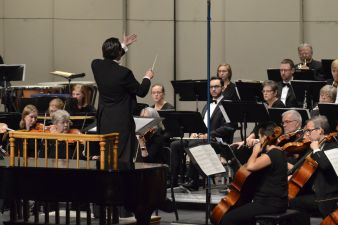
Elliot Moore with the Longmont Symphony_preview
Longmont Symphony, Elliot Moore, conductor
With Andrew Sords, violin
The Longmont Youth Symphony

7:30 p.m. Saturday, Feb, 15, Vance Brand Civic Auditorium

Verdi: Overture to La forza del destino (The force of destiny)
John Corigliano: The Red Violin: Chaconne for violin and orchestra
Paganini: La Campanella (The little bell) from Violin Concerto No. 2
Respighi: The Pines of Rome (side-by-side with the Longmont Youth Symphony)
Tickets


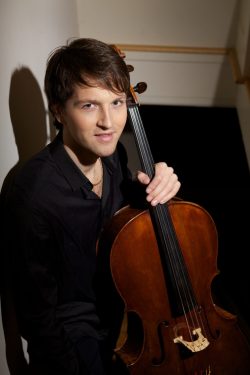
Cellist Adrian Daurov joins Longmont Symphony for Shostakovich Concerto

LSO extends its Beethoven symphony cycle with “Eroica” Nov. 9

By Peter Alexander Nov. 4 at 4:50 p.m.

The Longmont Symphony’s current cycle of Beethoven symphonies enters a new phase next Saturday (Nov. 9), when the full orchestra performs the popular Third Symphony, known as the “Eroica,” in Vance Brand Civic Auditorium.

20170927__29AELSO~1

LSO and Eliot Moore in Vance Brand Civic Auditorium

The first and second symphonies were performed by the LSO’s smaller chamber orchestra in Stewart Auditorium of the Longmont Museum. The Third, however, was a breakthrough work for Beethoven and the history of the symphony. It is larger in every way than any previous symphony—longer, more intense—and as such needs a larger venue and larger performing forces.

It will be performed Saturday on a program with Shostakovich’s daunting First Cello Concerto, played by Russian-born cellist Anton Daurov. Opening the concert will be the very rarely heard Prelude in Unison from Georges Enesco’s Suite No. 1 for orchestra.

LSO Music Director Elliot Moore_preview

Elliot Moore

The Enesco score is, as the title says, entirely for strings in unison, with occasional punctuation from a timpani. “The Prelude in Unison is a piece that called out to me because there’s something about everyone playing in unison,” LSO conductor Elliot Moore says.

“There’s something that’s very moving about all of those string voices being one, while they’re all singing the same thing. How their voices come together is very beautiful, very moving. It’s a beautiful thing to experience.”

The Cello Concerto occupies a special place for both Moore and Daurov. Moore is a cellist as well as conductor, and both he and Daurov grew up listening to recordings of the concerto by the Russian cellist Mstislav Rostropovich, for whom it was written.

“It’s one of the pieces that made me really fall in love with classical music,” Moore says. “It’s just an incredible masterpiece for the cello.”

Adrian1-copy-1160x1740

Adrian Daurov

Daurov confirmed the concerto’s reputation as one of the most difficult pieces in the cello repertoire. “It’s emotionally as well as musically hard,” he says. “There’s a lot of work for the brain as well as the fingers.

“From the first there is not a moment to relax. Even in the slow movement it’s not like your nice and Romantic slow movement than you can just enjoy playing. You really need to build the tension throughout. It’s challenging.”

Unlike most concertos, Shostakovich’s Concerto No.. 1 has a lengthy, fully written out cadenza that leaves the soloist completely exposed. “Not many concertos have a in-written cadenza for 10 minutes in the middle of the piece,” he says.

“You sit in front of people in front of you in the hall, and 100 people behind you in the orchestra, and you have to play this really musically and emotionally challenging cadenza when you are already tired from the first two movements.”

Daurov does feel a special connection to the concerto having grown up in Russia. Like Shostakovich, he attended the St. Petersburg Conservatory. “He went up the same steps and studied in the same classrooms that I did,” he said. “The atmosphere was there and I captured the spirit of the epoch that he was in.”

Because of that connection—and how well he plays the concerto—it is a piece that Daurov is often asked to perform. “I’ve played it with many, many different orchestras,” he says. “I love playing it, I never get tired of it.”

For Moore, Beethoven’s Third Symphony represents a major turning point for the symphony in general. “The ‘Eroica,’ is so much larger than the first or second symphony, or any symphony really that came before it,” he says. “It is the work that ushered in the romantic period. It’s where he breaks new ground.

“It’s big, and I’m really thrilled with what all the musicians are bringing to this performance. I think that the orchestra is bringing a lot of heart and soul and vigor to making this performance something that really is heroic work”

“I think it’s going to be really exciting how we bring these notes off the page!”

# # # # #


Longmont Symphony Orchestra, Elliot Moore, conductor
With Adrian Daurov, cello

Georges Enesco: Prelude in Unison
Shostakovich: Cello Concerto No. 1
Beethoven: Symphony No 3 (“Eroica”)

7:30 pm. Saturday, Nov. 9, Vance Brand Civic Auditorium, Longmont

Tickets

Mozart is paired with Stravinsky in Longmont Symphony’s Museum concerts

LSO conductor Elliot Moore finds common threads in contrasting music

By Peter Alexander Oct. 17 at 1:20 p.m.

Some of the most interesting classical music programs include apparently contrasting pieces, and then find the common links between them.

Elliot-Moore-conductor-LSO-77e252865056b36_77e253a4-5056-b365-ab0a8f2286ade3b0

Elliot Moore, conductor of the Longmont Symphony

For example, the next concert by the Longmont Symphony Orchestra, titled La commedia dell’arte (Saturday and Sunday, Oct. 19 and 20, in the Longmont Museum’s Stewart Auditorium), juxtaposes works by Mozart and Stravinsky, two composers of different eras and different aesthetics that we do not usually think of together. But LSO conductor Elliot Moore finds connections between the two.

The works are the Overture and three well-loved arias from Le nozze di Figaro (The marriage of Figaro) by Mozart; a little known concert aria by Mozart; and the full score of Stravinsky’s ballet Pulcinella. Moore will be joined by soprano Christie Conover, tenor Joseph Gaines, and bass Joshua South. The performance is part of the LSO’s chamber orchestra series at the Longmont Museum.

f80b44_cc8e5c3c4f03483b8036503d1d3343c8~mv2

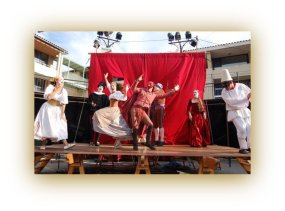
Outdoor commedia dell’arte performance

“I was very intentional about pairing Mozart with Stravinsky, and in particular this Stravinsky,” Moore says. But exactly how they fit together takes a little explaining, starting with the title of the program. Commedia dell’arte is a form of improvised comedy that originated in Italy in the 16th century and spread across Europe.

“It’s sort of the Saturday Night Live of the time,” Moore says. Taken from village to village and city to city by travelling troupes, it was often performed outdoors. Commedia performances relied upon stock characters, including scheming servants, foolish old men, naive lovers and know-it-all doctors.

The connection to Mozart is that his comic operas, including The Marriage of Figaro, were part of a tradition of Italian comic opera that went back to the commedia dell’arte. Figaro himself, for example, is a direct descendent of the commedia’s scheming servants.

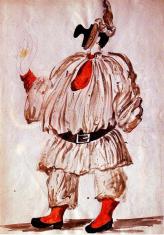
design-of-costume-for-pulcinella-1920-1.jpg!Large

Pulcinella costume design by Pablo Picasso

Stravinsky’s score, based on music by the 18th-century composer Giovanni Battista Pergolesi and others, was written for a ballet to be produced by the great Russian impresario Sergei Diaghilev. The ballet was a modern gloss on the commedia characters and situations, and takes its title from one of those characters, Pulcinella.

But Moore had other connections in mind, too. “The pairing has an Italian thread, obviously, but also it has this older, Baroque music thread,” he said. The Baroque connection is clear with Stravinsky, whose source was Baroque music. In the case of Mozart, the genre of opera, and many of the musical traditions of 18th-century comic opera—structure, character types, styles of arias, plot design—were developed in the Baroque period from the commedia tradition.

conover2

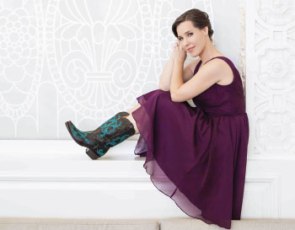
Soprano Christie Conover

In Moore’s words, “Mozart took these Baroque ideas and concepts, through his music for the stage, and Stravinsky was inspired by Baroque music. These things in many ways are cyclical. They make comebacks.”

On the concert, Mozart’s arias will be sung by Conover. The three arias from Marriage of Figaro are among the musical highlights of the opera: Porgi amor (Grant, love, some comfort) and Dove sono (Where are the lovely moments), both sung by the Countess, and Susanna’s aria Deh vieni, non tadar (Oh come, don’t delay).

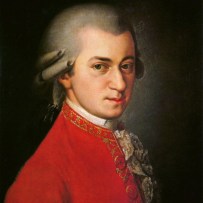
wolfgang-mozart-9417115-2-402

Mozart

In Mozart’s day, operatic roles and their arias were written to suit the individual singers in the original cast. When another singer took a role in a later production, they often asked for a composer—and not necessarily the original composer—to write a new aria that suited them better.

Mozart wrote many such arias, including Voi Avete un cor fedel (You have a faithful heart). A brilliant aria for coloratura soprano, it was most likely written to be substituted in the opera Le nozze di Dorinda (Dorinda’s marriage) by Baldassari Galuppi.

Stravinsky composed Pulcinella in the years after World War I. In 1919 Diaghilev, for whom Stravinsky had written the modernist scores for The Firebird, Petrushka and The Rite of Spring, approached the composer with a totally different idea: orchestrating the music of Pergolesi for a new ballet based on commedia dell’arte characters. At first Stravinsky rejected the idea, but eventually agreed to take a look at the music.

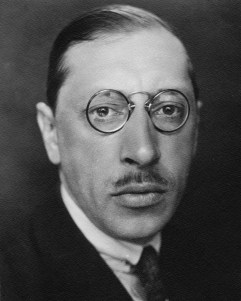
И._Стравинский_(cropped)

Stravinsky ca. 1920. By Pierre Choumoff.

“I looked and I fell in love,” he wrote later. His approach to the music—much of it actually not by Pergolesi, as it turned out—was completely new and helped create the style known today as neoclassicism.

“I began by composing on the Pergolesi manuscripts themselves, as though I were correcting an old work of my own,” Stravinsky wrote. “I knew that I could not produce a ‘forgery’ of Pergolesi; at best, I could repeat him in my own accent. . . . The remarkable thing is not how much but how little has been added or changed.”

Stravinsky kept the melodies and the bass lines of the Baroque-era originals, but rewrote the inner parts and then orchestrated the music in his own style. The result is a hybrid that keeps the charm of the original melodies, but adds a tartness that is pure Stravinsky. When the composer was criticized for not respecting the classics, he replied, “you respect, but I love.”

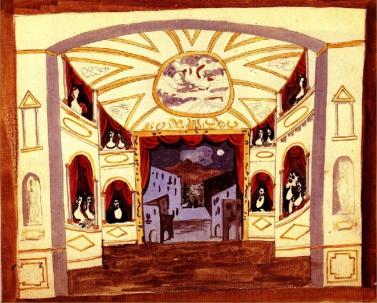
scene-design-for-pulcinella-1920.jpg!Large

Scenic design for Pulcinella by Pablo Picasso

The completed score, which calls for a small orchestra and three singers, was premiered in 1920 with choreography by the celebrated Russian dancer Léonide Massine, and with scenery and costumes by Picasso. The production was a popular and critical success, but today the ballet has faded from memory and only the music is still remembered.

“This is the first time I’ve brought Stravinsky to our stage,” Moore says. “I think Pulcinella is a wonderful choice for our audience to get to know Stravinsky. And what I think is so cool about this piece is that Picasso did the costumes.

“I just love that combination, Stravinsky and Picasso; it brings that period to life, for me.”

# # # # #

museumconcert.cropped

Longmont Symphony in Stewart Auditorium

La commedia dell’arte
Longmont Symphony, Elliot Moore, conductor
With Christie Conover, soprano; Joseph Gaines, tenor; and Joshua South, bass

Mozart: Overture to Le Nozze di Figaro (The marriage of Figaro)
Mozart: Three arias from Le Nozze di Figaro: Porgi amor,” “Dove sono,” and “Deh vieni”
Mozart: Concert aria, Voi Avete un cor fedel
Stravinsky: Pulcinella (complete ballet music)

7 p.m. Saturday, Oct. 19
4 p.m. Sunday, Oct. 20
Stewart Auditorium, Longmont Museum

Tickets

Longmont Symphony opens new season, “Music is Life,” with music for organ

Program also inspired by the tragic burning of Notre Dame Cathedral in Paris

By Peter Alexander Oct. 3 at 2 p.m.

The Longmont Symphony Orchestra will open their 2019–20 season, “Music is Life,” at 7:30 p.m. Saturday (Oct. 5) in Vance Brand Auditorium, with three pieces that celebrate the wealth and variety of music for organ.

20170927__29AELSO~1

Elliot Moore with the Longmont Symphony

The program comprises Leopold Stokowski’s orchestral arrangement of J.S. Bach’s Passacaglia and Fugue in C minor; Francis Poulenc’s Concerto for organ, strings and timpani; and Camille Saint-Saëns’ Symphony No. 3, known as the “Organ Symphony” for the prominent part for that instrument within the orchestra. The guest organist is Brian du Fresne.

But if you have been in Vance Brand Auditorium, you know that there is no grand pipe organ, or any other kind of organ in the hall. Nonetheless, LSO conductor Elliot Moore says that is not a problem. He has known from the time he arrived in Longmont that digital organs that can be transported, installed and played for a single performance are available locally.

Finding an organ to use with the LSO “was in my mind as a possibility,” he says. “I thought that it was an exciting possibility, one that I wanted to do at some point.” For Saturday’s concert, the LSO has rented a Viscount three-manual, 51-stop digital organ provided by Church Organ Works of Loveland.

saint-saens-organ-1374509465-view-1

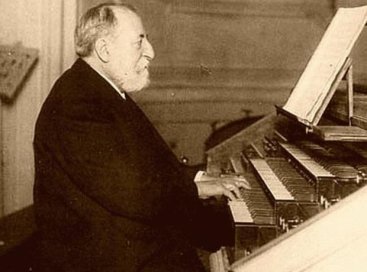
Saint-Saëns playing the organ

The program fit into this year in part because of the season theme, or “thread” as Moore calls it, “Music is Life.” “I knew that I wanted to open the season, not just with something that’s big and bombastic, something that is going to set the tone for our season, but something that is uplifting, and tells some kind of narrative about life,” he says.

“There is something about Saint-Saëns’ ‘Organ Symphony’ that I find to be very organic, and while it is certainly not program music, it does take us through a process that winds up in triumph. It is one of my favorite pieces, because it seems to have everything. It has incredible lyricism, it has sorrow, it has angst, it has passion, and all of these things are elements that are in life.”

poulenc-1346321280-editorial-long-form-0

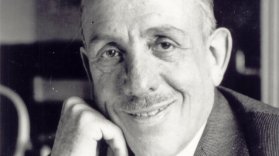
Francis Poulenc

Once he had an organ for the concert, Moore says, he thought of performing another piece that would not be possible without an organ. One of the pieces he thought of is the Organ Concerto by Poulenc, a much more delicate and light-hearted work that Saint-Saëns’ dramatic symphony.

“It was my idea [to add the Poulenc Concerto to the program], but I spoke to du Fresne to see if that was a piece that he wanted to bring to our audience, and it was a resounding ‘yes.’ He was very enthusiastic about pairing these two works.”

Both works are by French composers, which is one reason they are not heard as often in this country as are the more standard classical works from Austria and Germany. Moore believes both works will receive their first Longmont performance on Saturday.

Opening the concert will be conductor Leopold Stokowski’s orchestral arrangement of Bach’s Passacaglia and Fugue in C minor. Its place on the program comes from a tragedy that occurred while Moore as thinking about the program: the burning of Notre Dame Cathedral in Paris.

notre_dame_017.0

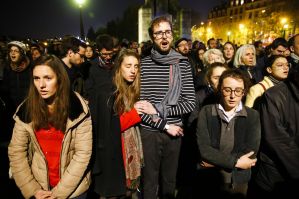
Conductor Elliot Moore was inspired by the Parisian crowds singing as Notre Dame burned

“I went home one day and saw Notre Dame on CNN, burning,” Moore says. “It was an emotional experience for me in the sense that I lived in Paris for 6 months and had been inside of Notre Dame several times. And then they were showing pictures of Parisians singing together.

“All these people were coming together, to mourn, to present a united voice for culture, to console one another—all of these things. The image of the church burning and of people coming together was a very moving juxtaposition. That was where I had the idea to program the Bach/Stokowski Passacaglia and Fugue in C minor, because that work is the equivalent of Gothic architecture—how it’s structured and how it builds to soaring lines and how it represents something more than itself.

“That was very moving to me.”

# # # # #

elliotandlso-1

Longmont Symphony Orchestra,, Elliot Moore, conductor
With Brian du Fresne, organ
“Opening Night: The Organ Symphony”

J.S. Bach/Stokowski: Passacaglia and Fugue in C minor
Poulenc: Concerto for organ, strings and timpani
Saint-Saëns: Symphony No. 3 (“Organ Symphony”)

7:30 p.m. Saturday, Oct. 5
Vance Brand Civic Auditorium

Tickets


Longmont Symphony announces 2019–2020 season, “Music is Life”

Handel’s Messiah and ongoing Beethoven cycle will be among season’s highlights

By Peter Alexander May 15 at 2:15 p.m.

The 53rdseason of the Longmont Symphony will include a performance of Handel’s Messiah, two programs in the orchestra’s ongoing Beethoven cycle, and two performances each of two chamber orchestra programs in the Longmont Museum’s Stewart Auditorium.

Elliot Moore with the Longmont Symphony 3.smiling_elk

Elliot More with there Longmont Symphony. Smiling Elk Photography.

Under the title “Music is Life,” the 2019–20 season is the third under music director Elliot Moore. There will be six concerts in the LSO’s home, Vance Brand Auditorium, including a Pops concert, “LSO at the Movies!” (May 9, 2020), and a family concert (Jan. 18, 2020; see full schedule below).

LSO Music Director Elliot Moore_preview

Elliot Moore

During Moore’s first two years with the LSO, the Beethoven cycle included performances of the First and Second symphonies by a chamber orchestra in Stewart Auditorium. For 2019–20, the cycle moves into Vance Brand Auditorium for a performance of the Third Symphony by the full LSO (Nov. 9), followed by the Fourth Symphony performed by the Longmont Chamber Orchestra back in Stewart Auditorium (March 7 & 8).

A longstanding tradition of the LSO, performances of Tchaikovsky’s Nutcracker with Boulder Ballet, will continue on Dec. 7 & 8. The “Gentle Nutcracker,” a sensory-friendly performance of the beloved ballet designed for individuals with special needs and their families, will be presented Dec. 7.

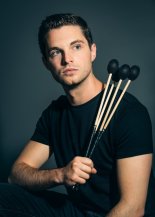
The Main Series opening night, Oct. 5, will feature organist Brian du Fresne playing Francis Poulenc’s Concerto for Organ and the organ part of Camille Saint-Saëns’ Symphony No. 3 “avec orgue” (with organ), popularly known as the “Organ Symphony.” Other soloists during the season will include Russian cellist Adrian Daurov, playing Shostakovich’s Cello Concerto No. 1 (Nov. 9); the return to Longmont of violinist Andrew Sords for John Corigliano’s Violin Concerto “The Red Violin” (Feb. 15); and percussionist Cameron Leach performing Jennifer Higdon’s Percussion Concerto (April 4).

conover2

Christie Conover

The Messiah performance (Dec. 15) will feature the Longmont Chorale Singers and vocal soloists TBA. Soprano Christie Conover and bass Joshua South will perform Stravinsky’s complete Pulcinella ballet with the Chamber Orchestra in Stewart Auditorium (Oct. 19­–20), on a program that will also include Conover singing Mozart arias with the orchestra.

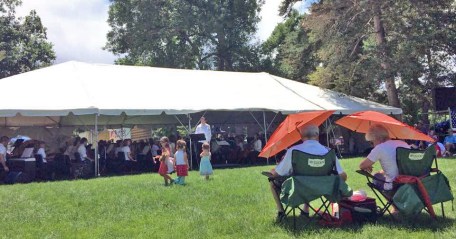
Kicking off the entire season is the LSO’s annual free concert July 4 in Thompson Park. As in past years, the program will be shared with the Longmont Chorale and the Longmont Youth Symphony.

Six‐concert subscription packages for the LSO’s 53rdseason go on sale on Monday, May 20 (call 303‐772‐5796;10 a.m.–2 p.m. Mondays; and 10 a.m.–4 p.m. Tuesdays, Thursdays and Fridays). Series subscribers receive up to 20% off single ticket prices. Single tickets for Main Series concerts are $25 for adults, $22 for seniors and active military, $5 for children/students ($10 for the Pops and Messiah performances).

All LSO Museum concerts are $35 (includes a glass of wine and post‐concert reception). Handel’s Messiah tickets are $30 for adults; children/students $10. Family Concert tickets are $10. Single tickets go on sale on Monday, Aug. 26, via phone and online here.

# # # # #

JULY 4TH CONCERT IN THE PARK

7.4.LSO.2

LSO in Thompson Park. Photo by Peter Alexander.

Thursday, July 4, 11:30 a.m.
Thompson Park, 420 Bross Street, Longmont (Free and open to the public)
11:30 a.m. – Longmont Youth Symphony
12:30 p.m. – Longmont Chorale
1 p.m. – Longmont Symphony, Elliot Moore, conductor

MAIN SERIES CONCERTS
All Main Series Concerts are conducted by Elliot Moore and performed at Vance Brand Civic Auditorium at Skyline High School. 

Opening Night: The Organ Symphony
7:30 p.m. Saturday, Oct. 5
With Brian du Fresne, organ

J.S. Bach, arr. Stokowski: Passacaglia and Fugue
Francis Poulenc: Concerto for Organ
Saint‐Saëns: Symphony No. 3, “Organ Symphony” 

Adrian1-copy-1160x1740

Adrian Daurov

Beethoven Cycle
7:30 p.m. Saturday, Nov. 9
With Adrian Daurov, cello

George Enescu: Prelude in Unison
Shostakovich: Cello Concerto No. 1
Beethoven: Symphony No. 3, “Eroica”

The Force of Destiny
7:30 p.m. Saturday, Feb. 15
With Andrew Sords, violin

Verdi: Overture to La forza del destino
John Corigliano: The Red Violin Violin Concerto
Paganini: Violin Concerto No. 2, Rondo (“La Campanella”)
Respighi: The Pines of Rome

Cameron+Leach+18-19+Headshot+COLOR

Cameron Leach

A Fanfare for All: Sidebyside with the Longmont Youth Symphony
7:30 p.m. Saturday, April 4
With Cameron Leach, percussion

Gwyneth Walker: Open the Door
Jennifer Higdon: Percussion Concerto
Copland: Symphony No. 3

Pops Concert: LSO at the Movies!
7:30 p.m. Saturday, May 9

Music from Chariots of Fire, Cinema Paradiso, Batman, Titanic, Lord of the Rings, and other films

MUSEUM CONCERTS
Stewart Auditorium, Longmont Museum

museumconcert.cropped

La Commedia dell’arte
Longmont Chamber Orchestra
Elliot Moore, conductor, with Christie Conover, soprano; tenor TBA; and Joshua South, bass

7 p.m. Saturday, Oct. 19
4 p.m. Sunday, Oct. 20

Mozart: Overture to Le nozze di Figaro
Mozart: Selected arias for soprano and orchestra
Stravinsky: Pulcinella (complete ballet)

Beethoven_Hornemann

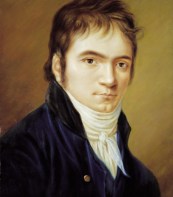
Beethoven. Portrait by Christian Horneman, 1803

Beethoven Cycle: Schubert & Beethoven
Longmont Chamber Orchestra, Elliot Moore, conductor

7 p.m. Saturday, March 7
4 p.m. Sunday, March 8

Schubert: Symphony No. 5
Beethoven: Symphony No. 4


HOLIDAY EVENTS

 The Nutcracker with the Boulder Ballet
Music by Tchaikovsky
Elliot Moore, conductor

4 p.m. Saturday, Dec. 7,
2 p.m. Sunday, Dec. 8
Vance Brand Civic Auditorium 

The Gentle Nutcracker
1 p.m. Saturday, Dec. 7, 1 p.m.
Vance Brand Civic Auditorium

A sensory‐friendly performance for individuals with special needs and their families.


Handel’s Messiah
Longmont Chamber Orchestra and Longmont Chorale Singers
Elliot Moore, conductor, with vocal soloists TBA

4 p.m. Sunday, Dec. 15
Westview Presbyterian Church, Longmont

FAMILY CONCERT


Longmont Symphony Orchestra, Elliot Moore, conductor
4 p.m. Saturday, Jan. 18
Vance Brand Civic Auditorium

Saint‐Saëns: Selections from Carnival of the Animals
Bizet: Les Toreadores from Carmen
Prokofiev: Peter and the Wolf 

LSOTopBannerM2

Subscription tickets for the LSO go on sale Monday, may 20. Call 303-772-5796. Single tickets will go on sale Monday, Aug. 26.

Longmont Symphony continues Beethoven cycle with Symphony No. 2

“One of the greatest symphonies ever” is paired with Shostakovich

By Peter Alexander April 9, 2019, at 10:45 p.m.

Beethoven is consistently one of the top two classical composers by numbers of performances around the world—alongside Mozart—but not in Longmont.

Elliot Moore - credit - Photography Maestro

Elliot Moore. Photography Maestro.

“Particularly the earlier symphonies of Beethoven have been underperformed here,” Elliot Moore, the director of the Longmont Symphony, says. To change that, Moore has planned a complete cycle of Beethoven’s symphonies, more or less in order, over several years.

The First Symphony was played last year, and the Second Symphony, one of the least performed of Beethoven’s symphonies, will be performed this weekend (Saturday and Sunday in the Longmont Museum’s Stewart Auditorium; see details below). The program also includes Beethoven’s Overture to Egmont and Shostakovich’s Chamber Symphony.

“There was very little early Beethoven, very little Mozart, Haydn, being performed here for many years,” Moore says. And as a result, “there’s a freshness to the music here in Longmont that I’m not sure would be the case in New York.”

The documented history of the LSO supports Moore’s description. In the years since 1987 until last year, records that were easily found, there were no performances of symphonies Nos. 1, 2, or 4. There were two of No. 3, but only one each of 5 and 8. The later symphonies fared relatively better, with two each of Nos. 6 and 7, and three of No. 9.

Beyond the freshness and novelty of early Beethoven symphonies for Longmont audiences, Moore sees another reason to perform them. “Learning how the progression of the symphony has taken place helps inform our performances of music that was written later,” he says.

Elliot Moore with the Longmont Symphony 3_preview

Moore with the LSO. Smiling Elk Photography.

“In order to figure out how to play later symphonies, whether Berlioz, or Mendelssohn, or the orchestral works of Bartók, we need to know where the symphony came from. It’s important to understand how the early Beethoven symphonies helped bring the symphony into its current form.”

If this sounds like an educational project, Moore doesn’t deny that. And it is aimed at two constituencies. “There are two different groups that are evolving in terms of our listening ability and playing ability,” Moore says. “One is the audience, the other is the orchestra.”

Beethoven_Hornemann

Beethoven ca. 1802. Portrait by Christian Horneman. (fi.wikipedia.org, Public Domain)

The two major works on the current program—Beethoven’s Symphony No. 2 and Shostakovich’s Chamber Symphony—were written at low points in each composer’s life. Beethoven wrote his Second Symphony in 1802, at the time he first learned that he was going permanently deaf—when he wrote his famous “Heiligenstadt Testament” expressing his anguish. “I endured this wretched existence,” he wrote; “only art it was that withheld me” from ending his own life.

The chamber symphony is a string orchestra arrangement of Shostakovich’s Eighth String Quartet, written in 1960, during a similar emotional crisis in the composer’s life, caused by a diagnosis of ALS (“Lou Gehrig’s Disease”) and a period of extreme political pressure from Soviet authorities. Shostakovich did not write a testament, but friends and family reported that he too thought about suicide.

The musical responses of the two composers to their crises was utterly different. Shostakovich’s Eighth Quartet is an anguished work, reflecting the composer’s despair, but Beethoven’s Second Symphony is one of his happiest and most serene works. If you are looking for a musical expression of the composer’s anguish, you just will not find it in the Second Symphony.

TestamentHeiligenstadt_Fin

Beethoven’s signature on the Heiligenstadt Testament

“The Second is really one of my favorites of [Beethoven’s] symphonies,” Moore says. “There’s a lightness, there’s a freshness to the music that I have adored for years. It’s one of the greatest symphonies ever composed. I love it.”

Officially, Shostakovich’s Eighth Quartet was written for a film about art treasures stolen from Dresden by the Nazis during World War II, and it carries the dedication “to the victims of fascism and the war.” But the composer really wrote the quartet for himself, as reported by confidants and confirmed in a letter he wrote later. “It’s hardly likely that anybody will ever write a work dedicated to my memory,” he wrote. “So I have decided to write one myself.”

Shostakovich.1959

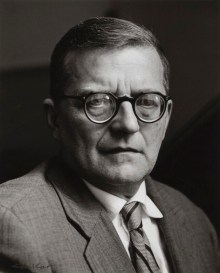
Shostakovich in 1959. Photo by Ida Kar.

“This is all about his experience, his life, and he’s pouring himself into the music,” Moore says. “That makes it his most personal work. How he made it so personal was by including the anagram of his name (D. Sch—D, Eb, C, B in German musical notation). He painted himself into this work, in each of the movements.”

Shostakovich wrote the String Quartet in Dresden. The city had been destroyed by the allies’ firebombing in February 1945. Even in 1960 Shostakovich was “shaken by the scenes of devastation,” a friend wrote, and managed to write the quartet in just three days.

Most commentators believe that the despair expressed in the quartet is as appropriate for the ruins of Dresden as for the ruins of Shostakovich’s emotions in 1960. The arrangement of the quartet for string orchestra that the LSO will perform was made by violist Rudolf Barhsai and approved by the composer.

ls2k8y5k2wd01

Ruins of Dresden, 1945.

Shostakovich fits well with Beethoven, Moore believes. “What I love about Beethoven and Shostakovich paired together is that in their own ways, they are both revolutionary composers,” he says. “The piece we’re opening with, Beethoven’s Egmont Overture, is about Count Egmont and how he stood up to an oppressor.

In this and other works, Moore says, “Beethoven paved the path for other composers to respond politically to what was going on. That’s often what Shostakovich was doing. They use different language, they used different approaches, but there’s something Shostakovich got from Beethoven.”

# # # # #

museumconcert

Longmont Symphony in Stewart Auditorium

“Beethoven Cycle”
Longmont Symphony, Elliot Moore, conductor

Beethoven: Overture to Egmont
Shostakovich: Chamber Symphony
Beethoven: Symphony No. 2 in D major

7 p.m. Saturday, April 13
4 p.m. Sunday, April 14 (SOLD OUT)
Stewart Auditorium at the Longmont Museum

Tickets (April 13 only)

 

Longmont Symphony’s ‘Musical Journeys’ take many forms

Violinist Sharon Roffman will play Tchaikovsky’s Violin Concerto April 6

By Peter Alexander April 4 at 3:30 p.m.

DSC_7067

Violinist Sharon Roffman

“Musical Journeys” is the thread running through the 2018–19 season of the Longmont Symphony Orchestra (LSO), and it takes different forms in each of three works on their next concert, to be performed Saturday(April 6).

Most obvious is Smetana’s tone poem The Moldau, which describes the river Moldau flowing from the mountains, though the villages of Bohemia and on to the sea.

Also on the program is Tchaikovsky’s Violin Concerto in a performance that recalls career journeys of the soloist, Sharon Roffman, and the LSO’s conductor, Elliot Moore, who have known each other since they were 15. The Tchaikovsky is one of the first concertos Roffman learned, and she has recently returned to it after 10-plus years. Her journey over that time, playing chamber music, solo engagements, and in orchestras, has deepened her understanding of the concerto.

The final piece on the program is Bartók’s Concerto for Orchestra, which the Hungarian composer wrote at the end of a journey that brought him to the United States during World War II. More significantly, Moore programmed the Concerto for Orchestra in order to highlight the LSO’s journey during his two years as music director.

Read more in Boulder Weekly.

# # # # #

elliotandlso-1

Conductor Elliot Moore and the LSO

Tchaikovsky Violin Concerto
Longmont Symphony Orchestra, Elliot Moore, conductor
With Sharon Roffman, violin

Smetana: The Moldau
Tchaikovsky: Violin Concerto
Bartók: Concerto for Orchestra

7:30 p.m. Saturday, April 6
Vance Brand Civic Auditorium, Longmont

Tickets


Longmont Symphony presents “Sounds of America”

Soprano Christie Conover inspired the program with a Cowboy Song

By Peter Alexander Feb. 20 at 6:30 p.m.

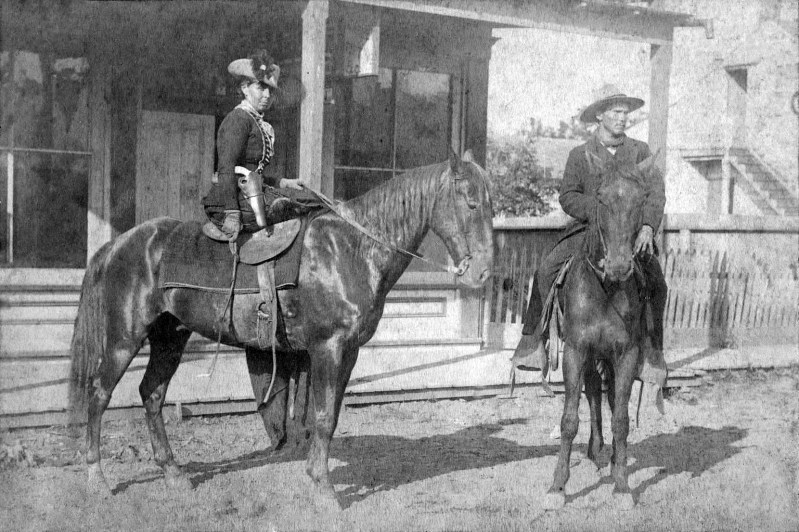
The next concert of the Longmont Symphony started with, of all things, the notorious outlaw Belle Starr.

Belle_Starr,_Fort_Smith,_Arkansas,_1886

Belle Starr (l)
The program includes composer Libby Larsen’s Cowboy Songs, a set of three songs for voice and orchestra that opens with “Bucking Bronco,” a text loosely attributed to Starr. A warning to young girls, the text concludes “Now all young maidens, where e’er you reside/Beware of the cowboy who swings rawhide/He’ll court you and pet you and leave you to go/In the spring up the trail on his bucking bronco.”

Elliot Moore - credit - Photography Maestro

Elliot Moore, by Photography Maestro.

Elliot Moore, conductor of the Longmont Symphony, heard soprano Christie Conover sing the song at an audition and fell in love with it. “She sang stunningly beautifully,” he says. “I thought (the song) was fantastic and I thought that she really sold it.”

Deciding that he wanted to have Conover perform the Cowboy Songs with the LSO, Moore thought that another piece that would fit her voice would be Samuel Barber’s sweet recollection of childhood, Knoxville, Summer of 1915.  

With an American theme starting to come together, he decided that Aaron Copland’s ballet Rodeo would be the perfect companion to the Cowboy Songs. The final piece of the puzzle—or the program—is an American piece that is little known but that Moore really wanted to present, the Symphony No. 2 of Robert Kurka.

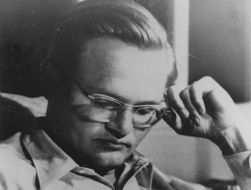
Robert Kurka

Robert Kurka

“It is an amazing American symphony that has been forgotten and deservers a spot in the repertoire,” Moore says. “Kurka was born in 1921 and died at 36, in 1957. He was being compared to Copland, (as) the next great American composer, but he died, so there’s very little of his work performed.”

The Symphony is a relatively short work in three movements. “The first movement has a gravitas to it, the second movement has kind of a lilting, dance feeling to it, and the last movement is just super, super joyful,” Moore says. “It’s been recorded I think twice, and it has remained on the shelf for 60 some odd years. It’s exciting that we have an opportunity to bring it out.”

A graduate of the CU Boulder College of Music , Conover relates naturally to the Cowboy Songs. “I’m from Montana, and a lot of my family is still out on the farm and the ranch,” she says. “My parents both grew up on farms and ranches, and I grew up going to the farms and ranches of my family.”

After the first song, which Moore describes as “cute and fun,” the second has a bluesy quality “It’s called ‘Lift me Into Heaven,’ and it is more (about) the physical aches that come from working on the farm. It’s not about dying and going into heaven, simply ‘I need you to lift me into bed so that I can go to sleep after a hard day.’ That to me sounds like what heaven is in this song.”

conover2

Christie Conover

Moore and Conover both describe the third song as “sassy.” It’s very short, about Billy the Kid and all the people he shot, “one every morning.” “Billy was a bad man,” the song states. “One day he met a man who was a whole lot badder/And now he’s dead and we ain’t none the sadder.”

As a true Westerner, Conover knows that some of the wild-west mythology is exaggerated. “But there has to be some truth to legend, in order for the stories to take shape,” she says. “I think there’s some truth to it.”

She also believes American audiences should hear music of their own culture on concerts. “It’s our repertoire, and it is important that we experience our own culture through music,” she says. “This is who we are.”

For many Americans, so is Barber’s Knoxville: Summer of 1915, a setting of James Agee’s description of a idyllic summer evening on the front porch and in the back yard with his family. It was published as a prologue to Agee’s Pulitzer Prize-winning autobiographical novel A Death in the Family.

Ostensibly the description of a time of happiness, the poem takes on a darker meaning in connection with the novel, which relates how the death of the author’s father shatters the family. It is both a depiction of innocence through the eyes of a child, and a premonition of the loss of innocence, through the eyes of the adult recalling childhood.

“I think that Barber did such an incredible job that the sense of nostalgia and innocence paired with loss of innocence comes out in the harmonies,” Moore says.

Barber paints the images of the summer evening in the music. “As an example, the rocking of the rocking chair is painted with a triplet figure in the flute,” Moore says. “(The text) talks about street cars being noisy in the traffic, and he puts in the French horn that makes a clanging sound. There’s a lot that Barber has put into the music to really bring the text into musical relief.”

Since beginning her study to Knoxville: Summer of 1915, Conover has found a deeper meaning from becoming a mother. “I have a 5-month-old now, and it’s a child talking,” she says. “He speaks about how his mother and his father are good to him, and how amazing that we are put on this earth at the same time, and I kind of easily well up.”

She read the text over and over before learning the notes. “It has to be me singing the (words of the text), whether the specific part I think about my son, or the part I think about my own mother and my own memories. You have to have those sensations in your mind as you’re singing it.

“If you’re feeling it and you’re visualizing it, the way the music comes out of you is different. That’s what’s so great about live music!”

4-Rodeo-Gallery_Largest_816x450

Agnes de Mille’s choreography for Rodeo. Pennsylvania Ballet, photo by Alexander Ilziliaev.

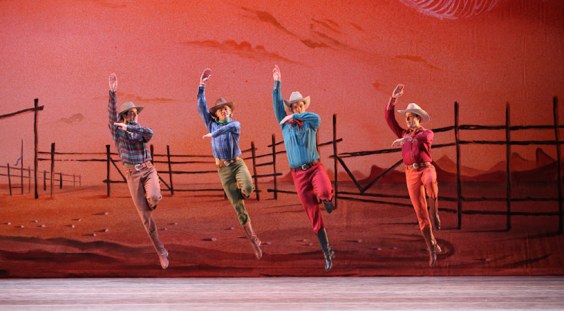
Following up the cowboy theme of Larsen’s songs, Moore and the LSO will perform the entire score of Copland’s ballet Rodeo. The ballet tells the story the courting of a shy cowgirl during a party with the ranch hands. The score includes a number of folk songs and fiddle tunes from American history, including “If He’d be a Buckaroo,” “Sis Joe,” “I Ride an old Paint,” “Bonaparte’s Retreat,” and “Miss McLeod’s Reel.”

“We’re performing is the complete ballet, which includes a movement that features a saloon-style solo piano called ‘Ranch-House Party,’ and that movement is generally omitted,” Moore says. “There’s also a big clarinet solo in the ‘Ranch House Party’ that is rarely heard.

“I think it’s neat that we’re bringing the complete music of the ballet to Longmont.”

# # # # #

elliotandlso-1Sounds of America
Longmont Symphony Orchestra, Elliot Moore, music director
With Christie Conover, soprano

Robert Kurka: Symphony No. 2 (Colorado premiere)
Samuel Barber: Knoxville, Summer of 1915
Libby Larsen: Cowboy Songs
Aaron Copland: Rodeo

7:30 p.m. Saturday, Feb 23
Vance Brand Civic Auditorium, Longmont

Tickets

Longmont Symphony connects with sister city, explores Japanese influences in music

“A Cultural Affair” introduces pianist Taka Kigawa from Chino, Japan

By Peter Alexander Nov. 8 at 10:05 p.m.

The next concert of the Longmont Symphony, titled “A Cultural Affair,” features a Colorado premiere and a Colorado debut.

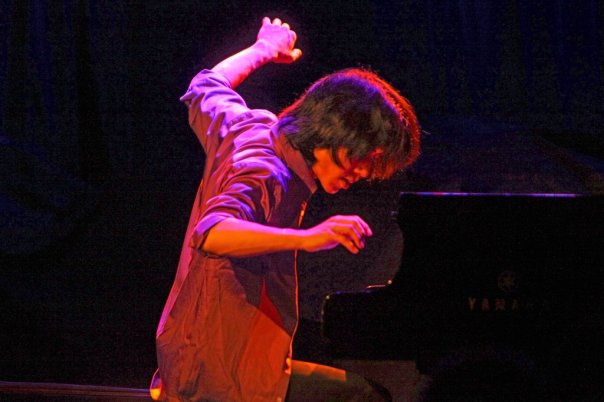
taka-Ruby Washington:The New York Times

Taka Kigawa makes his Colorado debut with the Longmont Symphony. Photo by Ruby Washington/New York Times

The performance, at 7:30 p.m. Saturday (Nov. 10) in Vance Brand Civic Auditorium, introduces pianist Taka Kigawa in his first performance in Colorado. The premiere, on the other hand, is not so much an introduction, since it features a composer from Altona, Colorado: Conor Brown, whose How to Relax with Origami was premiered by the Detroit Symphony in 2017 but has not yet been played in the composer’s home state.

In addition to Brown’s piece, the program features Kigawa playing Ravel’s Concerto in G, and the LSO will conclude the concert with Debussy’s La Mer.

The genesis of the concert was the fact that Kigawa is from Longmont’s sister city of Chino, Japan. “When I did my audition (with the LSO in 2016), I was made aware that Longmont has two sister cities,” Moore says. “And it happens that Taka is from Longmont’s sister city in Japan! One of my goals is to connect people through music, and I think that right now is a great time for this.”

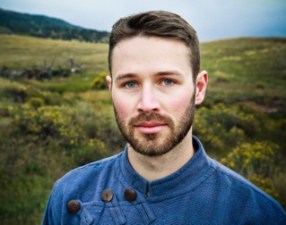
C.Brown

Conor Brown

Another theme of the concert is influences that cross cultures. That is evident in Brown’s How to Relax with Origami, which has been shaped in some very specific ways by the principles of origami.

“Japanese origami is very intricate but small,” Moore says. “But it’s a very specific, intentional, beautiful, small art. And each one of the eight movements in Brown’s piece is a very intricately designed compact composition that in that way relates to origami.”

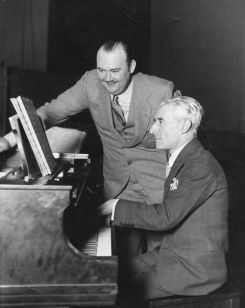
ravel-analyse

Ravel (seated) with American bandleader Paul Whitman

With the Ravel Concerto, one of the external influences is American jazz, which Ravel had heard in a tour of the United States. This is something that Kigawa, the native of Chino, Japan, has come to feel very comfortable with.

“Living in New York I have not only classical musician friends but also jazz music friends,” he says. “They quite often invite me, ‘Hey Taka, let’s jam!’ And I say ‘sure,’ just for fun.”

The Concerto in G is one of Kigawa’s favorites. “I think this concerto is one of the best concertos,” he says. “I mean literally ‘concerto,’ concerto means ‘playing with.’

“This concerto is not like Tchaikovsky or Rachmaninoff, the pianist showing off his hand dexterity and power. This is really chamber music. I would be very happy if the audience will listen to the mixture of piano sound and other instrument sounds, and how Ravel pulls that into a coherent piece of music.”

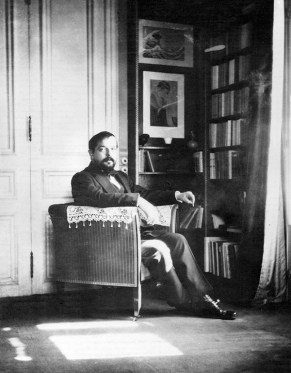
Debussy.by Stravinsky.Hokusai

Debussy in his home with Hokusai’s print on the wall.

To fill out the concert, Moore wanted another piece with a Japanese connection. This led him to Debussy’s La Mer, which was inspired by a famous print by the 18th– and 19th-century Japanese artist Hokusai, The Great Wave off Kanagawa. Debussy, who was very interested in Asian art, had a copy of Hokusai’s print in his home.

Moore finds a Japanese imprint on La Mer not only in the inspiration from Hokusai’s print but in the music itself. For example, Debussy uses pentatonic (five-note scale) fragments of melody, which sound Asian to Western ears. Those fragments appear and disappear throughout the piece, in a way that Moore relates to eastern philosophical ideas of impermanence.

He also points out that the very opening of the piece represents dawn on the sea—which occurs in the east, not the view of the sea from France. “The sun rising in the east is depicting that we are taking this voyage to an eastern country,” Moore says.

“Of course the piece is about the sea, and there’s a lot of things about the sea in the music,” he adds. For example, each of the three movements portrays a different aspect of the sea: “From dawn to noon on the sea,” “Play of the waves,” and “Dialog of the wind and the sea.”

In the first movement, Moore says that the instrumental sound becomes brighter and warmer as the movement proceeds toward noon. Then, “certainly the second movement is about the play of the waves,” he says. “It’s much more playful than the first movement. One of the images that I have is bubbles coming up to the surface—I hear that sort of lightness and buoyancy in the music.”

Great Wave:Kanagawa

The Great Wave off Kanagawa by Hokusai

And he believes the Japanese influence makes one last appearance before the end: “In the last movement Debussy does put in the buildup and the crash of the great wave off Kanagawa.”

That moment, with it’s connection from a Japanese artist, to a French composer, to American listeners, is the kind of cultural connection that Moore wants the audience to recognize. “I want to use music as a catalyst to connect people, whether it’s people from Japan to Colorado, or people within the city of Longmont.

“That’s the main point of this performance.”

# # # # #

20170927__29AELSO~1

A Cultural Affair
Longmont Symphony, Elliot Moore conductor, with Taka Kigawa, piano
7:30 p.m. Saturday, Nov. 10
Vance Brand Civic Auditorium, Longmont

Conor Brown: How to Relax with Origami (Colorado premiere)
Ravel: Piano Concerto in G major
Debussy: La Mer

Tickets

Longmont Symphony schedules chamber orchestra concerts at Stewart Auditorium

Moore: Classical works will “further the orchestra’s artistic achievement”

By Peter Alexander Oct. 18 at 8:40 p.m.

Elliott Moore, conductor of the Longmont Symphony, wants the orchestra to play more music from the Classical era.

Elliot Moore with the Longmont Symphony_preview

Conductor Elliot Moore with the Longmont Symphony.  Smiling Elk Photography.

The standard works of the 19th-century Romantic era have been staples of the orchestra for many years, but the LSO has not played much Haydn, Mozart and early Beethoven. To remedy the imbalance, they have started scheduling chamber orchestra concerts in the intimate Stewart Auditorium of the Longmont Museum. Last year there was one; this year there will be two, at 4 p.m. Sunday afternoons Oct. 21 (sold out) and April 14. Similar concerts are planned for future seasons as well.

The orchestra will perform three works Oct. 21: Lacrimae Beati by American composer Richard Danielpour, which is derived from the last notes Mozart wrote before his death; Haydn’s Cello Concerto No. 1 in C major with soloist Alice Yoo; and Mozart’s Symphony No. 41 in C major, known as the “Jupiter” Symphony. The April 14 concert will feature Beethoven’s Overture to Egmont, the Chamber Symphony, op. 110a, by Shostakovich; and Beethoven Symphony No. 2 in D major, performed as part of a multi-year Beethoven cycle that will include all nine symphonies.

Elliott.Moore.2

Eliot Moore

The programming of Classical-era pieces, as well as contemporary works for smaller orchestra, accomplishes two things, Moore says. “Haydn and Mozart are not composers that have been performed a great deal in Longmont,” he explains. “It still has a feeling of being fresh here, and it’s important that the Longmont Symphony bring this to our audiences.”

The second thing it accomplishes is more important, Moore believes. “One of the aspects of what a music director does is to further the orchestra’s artistic achievement,” he says. “You use the repertoire to further that artistic achievement.

“For example, our performance of Mozart’s final symphony, the ‘Jupiter’ Symphony, will influence how we perform our Beethoven Second Symphony, and how we perform our Beethoven Second Symphony will influence how we perform Brahms. This music all goes together, and for us to jump to Brahms without having a background in the performance of Mozart and early Beethoven, and then of late Beethoven—we are missing some steps.”

richard-danielpour

Richard Danielpour

Of the works on the sold-out Oct. 21 concert, Moore is especially excited about Danielpour’s Lacrimae Beati. “I’m thrilled that Longmont will see the Colorado premiere of this fantastic work,” he says. “To me that’s very exciting, that we are able to bring [that] to our audience.

“What’s important is that Danielpour quotes Mozart’s Lachrymosa from his Requiem. It’s a direct quote, and the piece is based on the last eight notes that Mozart wrote. I wrote to Dr. Danielpour, and he is very honored that his piece is on the same program with Mozart’s final symphony.”

The April concert features music by two composers, Beethoven and Shostakovich. “These two composers go together so well, because while they lived in different times, they both are revolutionary composers,” Moore says. “Beethoven was doing so many new, exciting things, and it packs a punch in what he’s delivering. Shostakovich does the same thing in a different way.

“What is compelling about the program is the old and the new and how it relates.”

Of the works on the program, the Shostakovich Chamber Symphony is a string orchestra arrangement of the composer’s Eighth String Quartet, one of his most emotionally powerful pieces. In contrast to the sometimes anguished Shostakovich score, Beethoven’s Symphony No. 2 is one of the composer’s sunniest work. Its programming represents a continuation of the Beethoven cycle that began last year with the First Symphony.

# # # # #

Longmont Symphony at the Stewart Auditorium

IMG_0633

Stewart Auditorium at the Longmont Museum. Photo by Peter Alexander.

Haydn & Mozart
4 .m. Sunday, Oc.t 21, 2018
Longmont Museum Stewart Auditorium
Elliot Moore, conductor, with Alice Yoo, cello

Richard Danielpour: Lacrimae Beati
Haydn: Cello Concerto No. 1 in C major
Mozart: Symphony No. 41 in C major (“Jupiter”)

SOLD OUT

Beethoven Cycle
4 p.m. Sunday, April 14, 2019
Longmont Museum Stewart Auditorium
Elliot Moore, conductor

Beethoven: Overture to Egmont
Shostakovich: Chamber Symphony, op. 110a
Beethoven: Symphony No. 2 in D major

Tickets