Eklund Opera will present Tchaikovsky’s Eugene Onegin in Russian with English titles

‘Wonderfully Romantic piece’ is musically appealing, educationally valuable

By Peter Alexander March 14 at 1:22 p.m.

The University of Colorado Eklund Opera Program is doing something it has never done before: perform a full opera in Russian, with English surtitles.

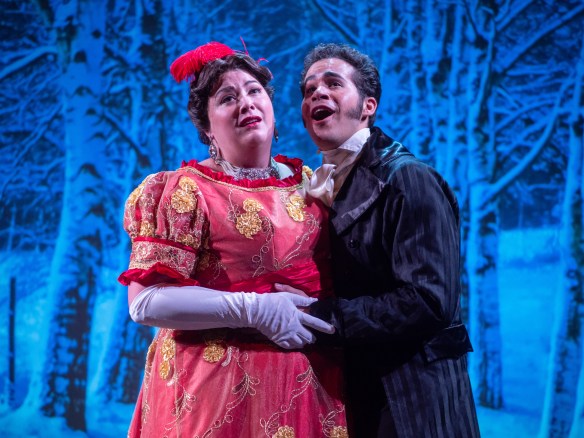
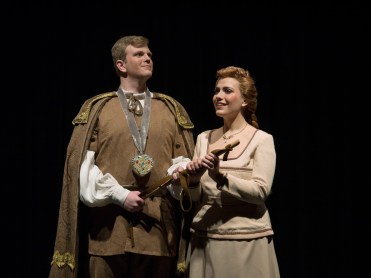
AC_Eugene_Glenn-Asakawa

Publicity still for CU Opera production of Eguene Onegin. (Photo by Glenn Asakawa/University of Colorado)

The opera is Tchaikovsky’s Eugene Onegin, one of the most well known and popular Russian operas, in and outside of Russia. Performances will be March 15–17 in Macky Auditorium. The cast of CU students will be directed by Leigh Holman, director of the Eklund Opera Program, and conducted by Nicholas Carthy, the program’s music director.

Eugene Onegin is about the unrequited love between Onegin, a bored ne’er-do-well aristocrat, and Tatyana, a naive country girl whose sister is engaged to Onegin’s friend, Lensky. Tatyana impulsively writes a letter declaring her love to Onegin, who brushes her aside.

Soon after, Onegin kills Lensky in an impetuous duel that neither man wants, and then wanders the world for several years in despair. Returning to St. Petersburg, he realizes he is in love with Tatyana, now married to an older nobleman. When he declares his love, Onegin finds the shoe is on the other foot, as Tatyana turns him aside out of loyalty to her husband.

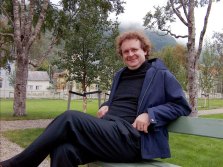
Carthy.in.nordlanden

Nicholas Carthy

Carthy has wanted to conduct Eugene Onegin since he coached singers in a production at the Salzburg Festival 30 year ago. “I thought, ‘I really need to do this,’ and I’ve been waiting ever since,” he says.

Because it requires bigger voices, Onegin is not an opera that a university company can always perform. This year the stars aligned and the singers were available for Onegin at CU. Holman called Carthy while he was on sabbatical last year to say she thought this would be the year.

“We’re just excited to have the big voices now that can do [Onegin]”, she says.

Read more in Boulder Weekly.

# # # # #

EugeneOnejin-X4 copyEugene Onegin by Tchaikovsky
CU Eklund Opera Program
Leigh Holman, director and Nicholas Carthy, conductor
Sets designed by Peter Dean Beck, costumes by Tom Robbins

7:30 p.m. Friday and Saturday, March 15 and 16
2 p.m. March 17
Macky Auditorium

Sung in Russian with English titles

Tickets 


‘West Side Story’: 61 years old and still as relevant as today’s headlines

CU Eklund Opera presents Bernstein’s masterpiece

By Peter Alexander Oct. 25 at 12:15 p.m.

Leonard Bernstein’s West Side Story opened on Broadway just over 61 years ago — Sept. 26, 1957 — but for Leigh Holman, the story does not get old.

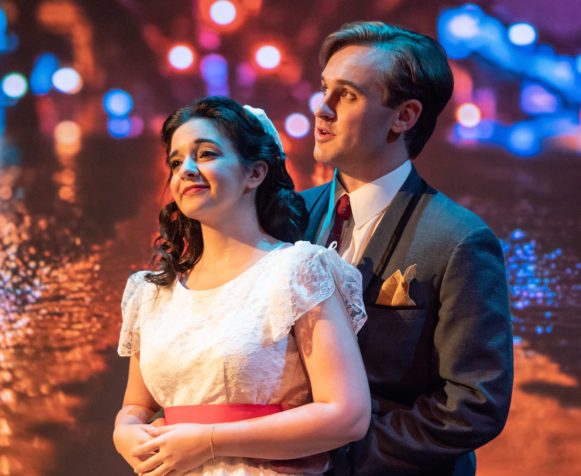
Overtones_-10-25_Glenn-AsakawaUniversity-of-Colorado-1-1024x839

West Side Story cast members Christine Honein as Maria and Patrick Bessenbecher as Tony. Photo by Glenn Asakawa/University of Colorado.

Holman is the director of the Eklund Opera Program at the CU College of Music, which will be presenting Bernstein’s masterpiece Friday through Sunday, Oct. 26–28. The cast of CU students, freshman though graduate students, will be stage-directed by Holman. Guest conductor Philip Hesketh will lead the singers and student orchestra.

The show is a transplanted version of Romeo and Juliet, with New York street gangs replacing the rival families. The conflict is between immigrants and newer immigrants, the Jets and the Sharks, a white gang and a Puerto Rican gang.

West Side Story has a theme that’s important to talk about right now,” Holman says. “It’s a story about people who are immigrants, and nothing could be more relevant. When someone moves into our area, is in the workplace or in school with us, people who don’t look like us, what sort of fear ignites in us and how do we act upon that?

“To me it sounds like a story from 2018.”

Read more in Boulder Weekly.

# # # # #

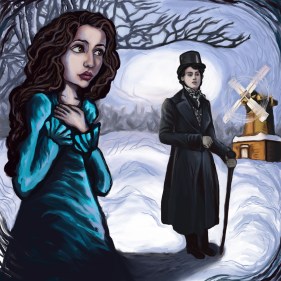
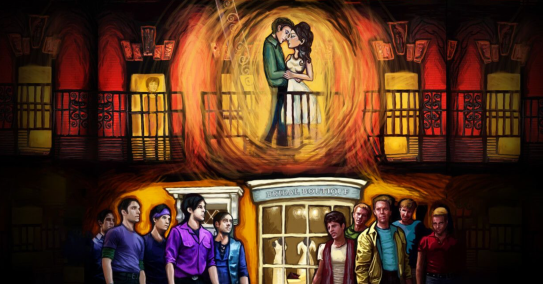
Art by Janalee Robison for CU Presents

West Side Story
By Leonard Bernstein
Book by Arthur Laurents; Lyrics by Stephen Sondheim
Eklund Opera Theater

7:30 pm. Friday Oct. 26 and Sunday, Oct. 27
2 p.m. Sunday, Oct. 28
Macky Auditorium

Tickets

CU NOW presents selections from new opera by Jake Heggie and Gene Scheer

If I Were You’ addresses questions of identity, life and death

By Peter Alexander June 14 at 6:30 p.m.

Jake Heggie, composer of the opera Dead Man Walking, and Gene Scheer, who wrote librettos for Heggie’s Moby Dick and It’s a Wonderful Life, are hard at work again.

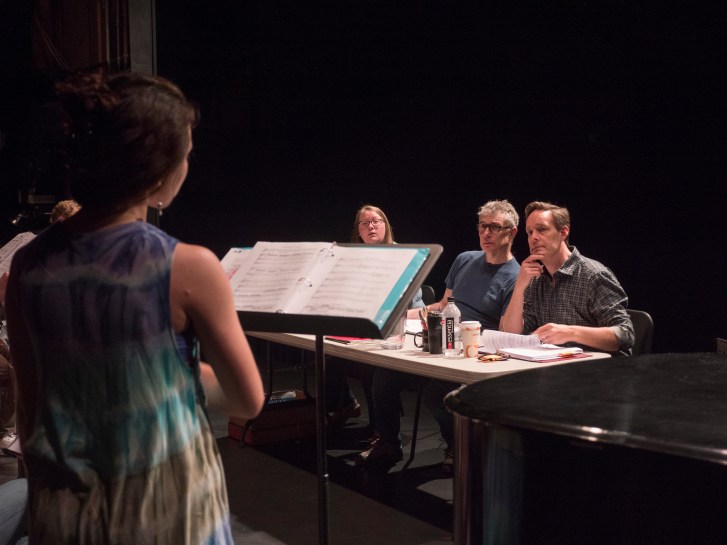
CU_Now_Rehearsal10GA-X5

CU NOW Rehearsal. L to R: Erin Hodgson, assistant to the composer and librettist; Gene Scheer, librettist; Jake Heggie, composer (photo by Glenn Asakawa)

Their latest project, an opera that addresses existential questions about identity, life and death, has brought them to Boulder and CU Eklund Opera’s New Operatic Workshop (CU NOW). Selected excerpts from the new work, If I Were You, will be presented to the public for free, performed by CU student singers.  The Composer Fellows’ Initiative (CFI), a separate project of CU NOW will present four short operas by CU composition students: three 8-minute works and one 30-minute work.

CU NOW invites a composer and librettist every year to come to Boulder for a couple of weeks in June as they develop a new opera and work with student singers. The composers have the opportunity to hear portions of their own work and make changes as necessary before it’s complete. As part of his association with CU NOW, Heggie has also been working with the students whose works will be presented by the Composer Fellows’ Initiative.

If I Were You, as Heggie describes it, is “a modern-day Faust story” with an overlay of Gothic romance. “It’s about a disillusioned young man who wishes he could be anyone else,” he says. Heggie and Scheer will decide which portions of the opera to perform during the workshop. They will introduce the musical excerpts to the audience and explain the plot as they go along.

Read more in Boulder Weekly.

# # # # #

CU New Opera Workshop festival (CU NOW)
Leigh Holman, director
Jeremy Reger, director of music


If I Were You (selected excerpts)
Libretto by Gene Scheer
Music by Jake Heggie
Adam Turner, guest conductor

7:30 p.m. Friday, June 15, and 2 p.m. Sunday, June 17
Music Theater, CU Imig Music Building

Composer Fellows’ Initiative (CU NOW—CFI)
Daniel Kellogg, managing director
Four short operas by student composers
Steven Aguillo, guest music director
Bud Coleman, stage director

7:30 p.m. Saturday, June 16
ATLAS Blackbox, Roser ATLAS Center

Performances free and open to the public


CU Presents Update: Eklund Opera will present ‘West Side Story’ Oct. 26–28

By Peter Alexander May 1 at 5:40 p.m.

When first announced as part of the coming 2018–19 CU Presents season, Eklund Opera’s major fall production was listed somewhat mysteriously as Title TBA, music by Leonard Bernstein.

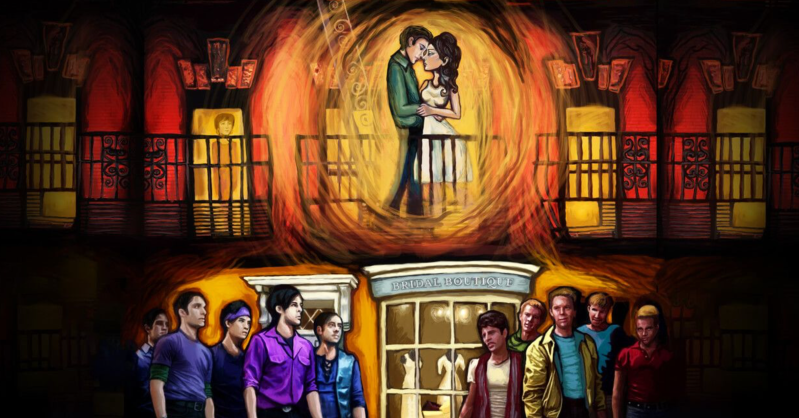
Art by Janalee Robison for CU Presents.png

Art by Janalee Robison for CU Presents

In case you haven’t guessed, the title, which can NBA (now be announced), is West Side Story. As noted previously, contractual arrangements did not allow for the title to be revealed until May 1.

1024px-Leonard_Bernstein_NYWTS_1955

Leonard Bernstein

The production will be part of the year-long, globe-spanning celebration of of the 100th anniversary of Bernstein’s birth. Boulder has already seen a sold-out concert performance of West Side Story presented by the Boulder Philharmonic and Central City Opera (April 28).

Later this month the Colorado Symphony will present music by Bernstein paired with one of his favorite composers, Gustav Mahler (May 25–27),  and several Bernstein works will be featured as part of this summer’s Colorado Music Festival. It is not difficult to find other Bernstein tributes at summer festivals around the country, including Bravo! Vail and the Aspen Music Festival.

o-WEST-SIDE-STORY-ORIGINAL-BROADWAY-facebook

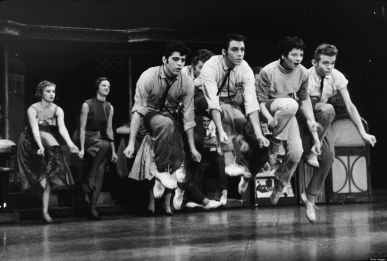
Scene from the original 1957 production of ‘West Side Story’ with Jerome Robbins’ landmark choreography

When it first appeared in 1957, West Side Story was truly genre-changing for Broadway. A New York-based updating of Shakespeare’s Romeo and Juliet, the show did not shy away from  serious social issues or a tragic ending. Its book, lyrics, music and dance were conceived not as separate pieces but as a unified work of art, which therefore required a cast equally skilled as actors, dancers and singers. Bernstein’s music was unusually complex and difficult for both players and singers, and Jerome Robbins’ choreography set a new standard for singer-dancers.

With the combined team of Bernstein, Robbins and lyricist Stephen Sondheim, West Side Story is certainly one of the most influential musicals in the history of Broadway. It has also become one of the most loved Broadway shows in history, revived by theaters and opera companies world wide. And be warned: it often sells out.

# # # # #

West Side Story
Music by Leonard Bernstein
Book by Arthur Laurents; lyrics by Stephen Sondheim
Based on a concept by Jerome Robbins
7:30 p.m. Friday, Oct. 26, and Saturday, Oct. 27
2 p.m. Sunday, Oct. 28
Macky Auditorium

Subscription tickets 2018–19 CU Presents performances, including West Side Story and other Eklund Opera performances, are available here.

Tickets to individual performances will be available starting Aug. 20.
_______________

Edited 5/1 to replace generic West Side Story poster image with art created for CU Presents by Janalee Robison.

CU Eklund Opera melds Handel’s Ariodante with Game of Thrones

‘Probably a dozen of the greatest arias of the early 18th century’

By Peter Alexander April 26 at 11:40 p.m.

Handel’s opera Ariodante is as old as 1516 when its story was first recorded, and as new as today.

Ariodante_PR107GA-X5

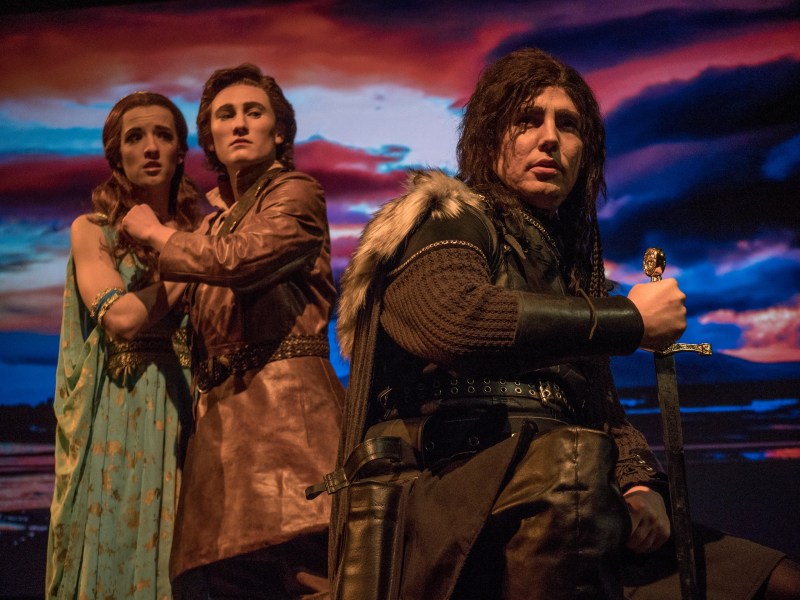
Photo by Glenn Asakawa, courtesy of  CU Presents. L to R: Maureen Bailey, Rebecca Myers, Steven Groth

Its theme, the lynchpin of many operas, is timeless: a man being believed before a woman. “Hashtag MeToo, right?” Leigh Homan, the director of CU’s Eklund Opera Program, says. “This is so relevant!”

The next CU opera production, Ariodantewill be presented Thursday through Sunday (April 26–29) in the intimate Music Theatre. Holman is the stage director, and Zachary Carrettin, director of the Boulder Bach Festival, will conduct the orchestra and a cast of CU students.

For a Baroque opera, the plot is fairly simple, a human drama with no divine intervention and no magic. The scheming Polinesso wants to marry princess Ginevra in order to gain the throne of Scotland, but Ginevra and her father, the King, are celebrating her engagement to Ariodante. With the help of Dalinda, a lady-in-waiting, Polinesso frames Ginevra for infidelity. The King cancels the wedding and renounces his daughter.\

“It says a lot that they believe the male who’s not in the royal family over the princess,” Carretin says. But all is not lost: Ariodante, who is thought to have killed himself in despair, returns in time to implicate Polinesso, the latter is killed in a duel, and the opera ends with the villain vanquished and the true lovers wed.

Read more in Boulder Weekly.

# # # # #

Ariodante by George Frideric Handel
CU Eklund Opera Program
Zachary Carrettin, conductor
Leigh Holman, stage director

7:30 p.m. Thursday-Saturday, April 26–28
2 p.m. Sunday, April 29
Music Theatre, Imig Music Building

Tickets 


CU Presents Artists Series 2018–19 features Venice Baroque, Sarah Chang, Tafelmusik

Dates announced for Takács Quartet, Eklund Opera performances, other events

By Peter Alexander April 1 at 11:40 p.m.

CU Presents has announced its 2018–19 season of music, dance and theater, including significant classical music performances by guest artists and CU organizations.

Venice-1

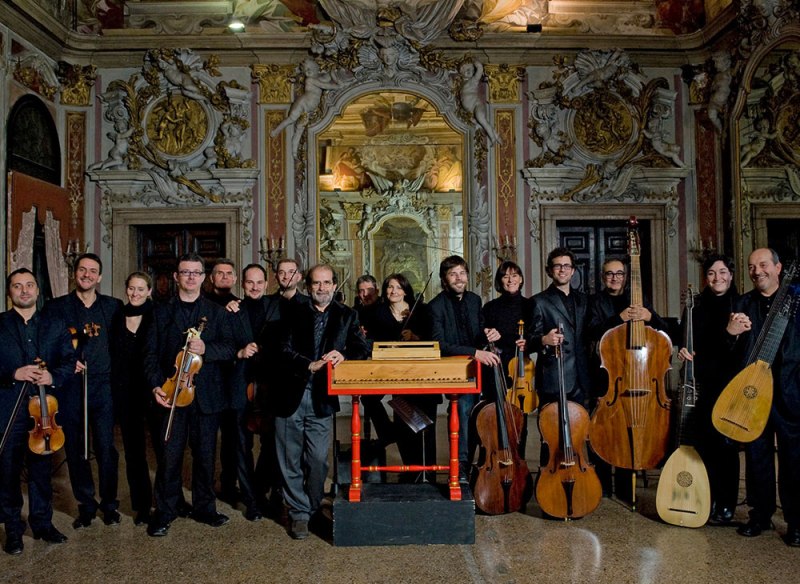
Venice Baroque Orchestra

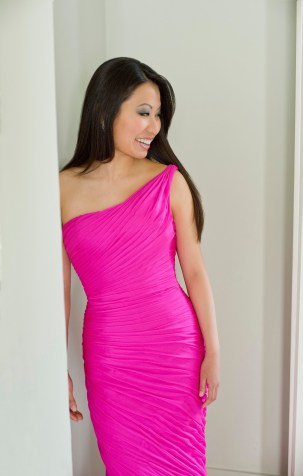
The return of the Venice Baroque Orchestra to Macky Auditorium  will lead off the schedule of classical guest artists Nov. 2. Violinist Sarah Chang will present a solo recital Nov. 16, and Tafelmusik Baroque Orchestra, the Toronto-based historical-performance group, will present “The Leipzig-Damascus Coffee House” March 4.

i-vGLjwxH-X4

Sarah Chang. Photo by Colin Bell for EMI

There is also good news for those interested in world music. The Silkroad Ensemble, founded 20 years ago by cellist Yo-Yo Ma, will perform in Macky Jan. 31, and the remarkable Japanese drumming ensemble Kodo is scheduled for Feb. 16.

Boulder audiences have long relished the world-renowned Takács Quartet. With new second violinist Harumi Rhodes, they will present two performances each of five programs September through April. The Carpe Diem Quartet, featuring CU assistant prof. and Boulder Philharmonic concertmaster Charles Wetherbee as first violinist, will appear on another pair of concerts on the Takács series in November.

Finally, the Eklund opera program will feature two Macky Auditorium productions—a work celebrating the Leonard Bernstein centennial Oct. 26–28, and Tchaikovsky’s Eugene Onegin March 15–17—and Benjamin Britten’s setting of Henry James’s creepy ghost story Turn of the Screw in the Imig Music Building Music Theatre April 25–28.

The full listing of classical music events is below. Season ticket sales begin at 10 a.m. Monday, April 2, and single tickets will be available beginning Aug. 20. A listing of all CU Presents events, including theater and dance, popular attractions, and Holiday performances, can be found at the CU Presents Web page.

Tickets are available here,  or by phone at 303-942-8008.

# # # # #

CU Presents Classical Guest Artists 2018–19
Performances in Macky Auditorium

Venice Baroque Orchestra
With Anna Fusek, recorder
7:30 p.m. Friday, Nov. 2

Sarah Chang, violin
7:30 p.m. Friday, Nov. 16

Tafelmusik
“The Leipzig-Damascus Coffee House”
7:30 p.m. Monday, March 4

Tafelmusik.i-zTMS7Cz-X5

Tafelmusik. Photo by Sian Richards.

Takács Quartet
Sundays sold out by subscription; Mondays have limited availability
All performances in Grusin Music Hall

4 p.m. Sunday, Sept. 23
7:30 p.m. Monday, Sept 24

4 p.m. Sunday, Oct. 28
7:30 p.m. Monday, Oct. 29

Sunday, Nov. 25, 4 p.m. (featuring the Carpe Diem String Quartet)
7:30 p.m. Monday, Nov. 26 (featuring the Carpe Diem String Quartet)

4 p.m. Sunday, Jan. 13
7:30 p.m. Monday, Jan. 14

4 p.m. Sunday, Feb. 10,
7:30 p.m. Monday, Feb. 11

4 p.m. Sunday, April 28
7:30 p.m. Monday, April 29

Eklund Opera Program

Title TBA*
Music by Leonard Bernstein
7:30 p.m. Friday, Oct. 26, and Saturday, Oct. 27
2 p.m. Sunday, Oct. 28
Macky Auditorium
*Due to contractual obligations, the title of this production will not be announced until May 1, 2018

Eugene Onegin
By Pyotr Ilyich Tchaikovsky
7:30 p.m. Friday, March 15, and Saturday, March 16
2 p.m. Sunday, March 17
Macky Auditorium

The Turn of the Screw
By Benjamin Britten
7:30 p.m. Thursday, April 25; Friday, April 26; and Saturday, April 27
2 p.m. Sunday, April 28
Music Theatre, Imig Music Building

World Music Events

Silkroad Ensemble
7:30 p.m.. Thursday, Jan. 31
Macky Auditorium

Kodo
7:30 p.m. Saturday, Feb. 16, 7:30 p.m.
Macky Auditorium

Eklund Opera, guest director Garfein selected semifinalist for national award

The American Prize in Stage Direction honors CU’s 2017 Magic Flute

By Peter Alexander March 28 at 2:20 p.m.

Magic_Flute_PR103GA

Michael Hoffman and Katia Kotcherguina in the CU Eklund Opera production of The Magic Flute (Photo by Glenn Asakawa/University of Colorado)

The American Prize recently announced 13 semi-finalists for the 2017–18 prize for stage directors, including Herschel Garfein for his direction of the CU Eklund Opera’s production of Mozart’s Magic Flute, performed in Macky Auditorium March 17–18, 2017.

The American Prize is a series of national competitions in the performing arts that was founded in 2009. Every year awards are given in 16 categories, including composition, soloists, chamber ensembles, orchestras, opera companies, theater companies and stage directors.

The winners represent the best performance in each category, as determined by the judges. The panel of judges in the opera categories includes soprano Sharon Sweet and mezzo-soprano Susanne Mentzer, both artists who have performed at opera houses around the world, including New York’s Metropolitan Opera. Winners will receive a modest cash prize and award certificate.

Garfein

Herschel Garfein

Garfein is a stage director, opera librettist and two-time Grammy Award-winning composer. He teaches music composition and script analysis at the Steinhardt School of Culture, Education, and Human Development of New York University, where he has won an NYU Teaching Excellence Award.

In addition to his stage direction, Garfein also adapted the English dialog for The Magic Flute. He has written librettos for Sister Carrie and Elmer Gantry with composer Robert Aldridge, and both music and libretto for an operatic adaptation of Tom Stoppard’s Rosenkrantz and Guildenstern are Dead that was presented as part of the CU New Opera Workshop (CU NOW) program.

Read more about The American Prize on their Web page.  The full list of semi-finalists may be seen here.

The American Prize is administered by Hat City Music Theater, a 501(c)3 non-profit arts organization based in Danbury, Conn.

CU Eklund Opera Brings Sondheim’s “Demon Barber” to the Macky stage

Victorian production with a twist aims to make Sweeney Todd at least human

By Peter Alexander March 15 at 1:50 p.m.

Stephen Sondheim’s demon barber of Fleet Street is a hard character to like. He is after all a serial killer with a dark heart, but with a production of Sondheim’s Sweeney Todd, Leigh Holman of CU’s Eklund Opera Program aims to make him likable.

At least a little.

AC_Sweeney_PR12GA_3-X2

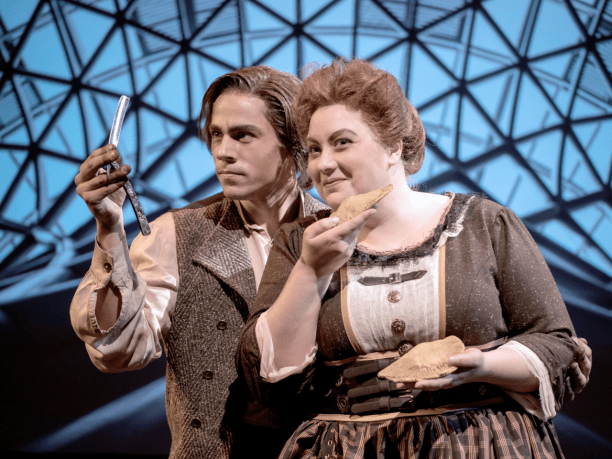
Sklyer Schlenker (Sweeney Todd) and Erin Hodgson (Mrs. Lovett) in the CU Eklund Opera production of  Sweeney Todd. Photo courtesy CU Presents.

“I don’t want him to appear already as a villain” at the beginning of the show, she says. “I want to see a human being, and it’s not until he learns what (happened) to his wife that we start to see the change” into a calculated killer.

“I want to see that arc,” she says. “He’s an anti-hero that’s cutting throats, but somehow you find yourself on his side.”

The production of Sweeney Todd by CU’s Eklund Opera program, with Holman’s semi-likable anti-hero and the rest of the gory story, will take the Macky Auditorium stage this weekend, with performances Friday through Sunday (March 16–18). The cast and orchestra of CU students will be led by guest conductor Caleb Harris, a member of the Vanderbilt University faculty who is a sabbatical replacement for CU’s Nick Carthy.

Other artistic contributors to the production include set and lighting designer Peter Dean Back, costume designer Tom Robbins, chorus master Jeremy Reger and choreographer Stephen Bertles. In addition to CU students, the cast will include CU faculty Andrew Garland as Todd and guest artist and CU alumnus Wei Wu as Judge Turpin.

Read more in Boulder Weekly.

# # # # #

Sweeney Todd
Eklund Opera Program, University of Colorado, Boulder
Leigh Holman, director
Caleb Harris, conductor

7:30 p.m. Friday, March 16 and Saturday, March 17
2 p.m. Sunday, March 18
Macky Auditorium

Tickets

More information available here.
View the full program here.

2017: The Year in Classical Music

Some outstanding concerts, and some changes of leadership in Boulder

By Peter Alexander

With the year drawing to a close, it is time to look back at 2017. It has been a tumultuous year in many realms, including some aspects of Classical music. But before that, it is good to remember the outstanding musical experiences of 2017 here in the Boulder area.

Pro Musica

The year began on an expressive high point when Pro Musical Colorado Chamber Orchestra, conductor Cynthia Katsarelis and soloists Jennifer Bird-Arvidsson, soprano, and Ashraf Sewailam, bass, presented Shostakovich’s rarely-heard Symphony No. 14.

I wrote at the time: “This somewhat gloomy meditation on death is not often given live, partly because of the difficult assignments facing the soprano and bass soloists, but mostly because of the difficult subject matter. But it is a major statement from a great composer—what Katsarelis calls ‘a piece that needs to be heard’—and so the rare performances are to be treasured.”

The February visit of Deborah (Call Me Debbie) Voigt to Macky Auditorium will be a cherished memory for fans of the classical voice. Voigt Lessons, the superstar soprano’s candid retelling of her struggles with relationships, substances, and weight that clouded her career not only showed some realities of life at the top of the opera world, it also revealed the very human person beneath the superstar image. For both reasons, this was a meaningful event.

Takasce SQ

Takacs Quartet

The Takacs Quartet always provides some of the year’s best performances. It’s hard to chose just one, but for 2017 I would single out their February concert including Beethoven’s Quartet in G major, op. 18 no. 2—performed while the Takacs was in the midst of a full Beethoven cycle at several venues—and CU music faculty Daniel Silver, clarinet, playing the Brahms Quintet in B minor, op. 115. An especially beautiful rendering of this beautiful work had at least one audience member in tears by the end.

March saw the arrival of another superstar in Boulder when Sir James Galway played at Macky Auditorium, and the departure of an important member of Boulder’s classical music community when Evanne Browne gave her farewell concert with Seicento Baroque Ensemble, the organization she founded in 2011.

BPhil.onstage

Boulder Phil at Kennedy Center

One of the biggest events of the year for Boulder performing arts was the visit in March of the Boulder Philharmonic Orchestra, conductor Michael Butterman and Frequent Flyers Aerial Dance Company to the Kennedy Center in Washington, D.C., for the first annual Shift Festival of American Orchestras. The Phil repeated a concert they had given in Boulder a few days earlier, including the world premiere of All the Songs that Nature Sings by Stephen Lias and Copland’s Appalachian Spring, performed with Frequent Flyers.

An audience favorite of the festival, the Boulder Phil played to a sold out house. Butterman wrote the next day, “It was a peak experience for me, and, I think, for all of us at the Phil. . . . To be there with our orchestra, with that crowd and with that repertoire—it was something I shall never forget. We had a great sense of pride in representing our hometown.”

Several important changes of personnel were announced for Boulder classical scene in the spring. In April, Jean-Marie Zeitouni announced that he was stepping down as music director of the Colorado Music Festival. He will remain with CMF as principal guest conductor, and conductor/violinist Peter Oundjian will serve as artistic advisor for the 2018 season. Later the same month, James Bailey left his position as music curator of the Dairy Arts Center, to be replaced by Sharon Park.

Elliot Moore at Lake McIntosh - credit - Photography Maestro (1)

Elliott Moore

In May, Seicento Baroque Ensemble announced the appointment of Kevin T. Padworksi as artistic director, succeeding Browne, and the Longmont Symphony announced the appointment of Elliot Moore to succeed long-time music director Robert Olson.

The same month, the Boulder Chamber Orchestra wrapped up its 2016–17 season with its largest performance to date, Beethoven’s Ninth Symphony presented in Macky Auditorium. The performance under conductor Bahman Saless was unfortunately the occasion of a protest by the anti-fracking group East Boulder County United. Seven members of EBCU blew whistles, shouted slogans and left flyers before the concert to voice their opposition to the orchestra having accepted a contribution from Extraction Oil & Gas.

Olga Kern

Olga Kern, photographed by Chris Lee at Steinway Hall.

Zeitouni proved to be anything but a lame duck conductor at the Colorado Music Festival. The 2017 season started at the end of June with an all-Russian program featuring exciting performances of Shostakovich’s Festive Overture and Rachmaninoff’s Second Symphony. On the same concert, one of Boulder’s favorite guest artists, pianist Olga Kern, gave scintillating performances of Prokofiev’s First Piano Concerto and Rachmaninoff’s Rhapsody on a Theme of Paganini.

Other high points over the summer included the return of CMF’s founding director Giora Bernstein to lead a concert of Mozart, Zeitouni conducting Beethoven’s Ninth as the CMF centerpiece, and the visit of violinist Gil Shaham at the end of the summer season. Up in the mountains, Central City Opera’s Downton-Abbey-inspired Victorian-era production of Mozart’s Così fan tutte was one of the year’s highlights for opera lovers.

Another delight for the opera crowd came in the fall, with the CU Eklund Opera Program’s serio-comic production of Lehar’s Merry Widow. In November, Saless and the Boulder Chamber Orchestra returned to its core repertoire with a lively concert featuring two youthful works for smaller ensemble: the Concerto for piano, violin and strings by the 14-year-old Mendelssohn, with violinist Zachary Carrettin and pianist Mina Gajić, and Janáček’s Idyll for Strings.

Zachary & Mina

Carrettin and Gajic

Carrettin and Gajić were featured performers in December when the Boulder Bach Festival gave one of its most intriguing and adventurous concerts in its increasingly adventurous schedule. With guest artist Richie Hawley, the program offered insight into the instruments and performance practices of the early 20th century, performed on Hawley’s 1919 Buffet clarinet, Gajić’s 1895 Érard piano, and Carrettin’s violin set up with strings typical of the period.


# # # # #

For the classical music world outside of Boulder, the biggest news was certainly the intrusion of a long-overdue reckoning for sexual misconduct that is going on in our society generally. The first bombshell, not unexpected by people in the business but a bombshell nonetheless, landed Dec. 3 with the suspension of conductor James Levine from the Metropolitan Opera and other organizations, including the Boston Symphony and the Ravinia Festival. Accusations against Charles Dutoit, artistic director and principal conductor of the Royal Philharmonic Orchestra in London, surfaced later in the month.

levine

James Levine

Both conductors are in the twilight of long careers. Rumors about Levine have been widely known in the classical music world; indeed I first heard them in the 1980s. Every music journalist I know has heard the same stories, but so far as I am aware, no one who experienced Levine’s assaults was previously willing to speak publicly. In the case of Dutoit, I had not heard the rumors, but I do know one of the women who spoke publicly about what happened to her, and I believe her unquestioningly.

As the controversy has swirled about the subject of sexual abuse, harassment and assault in classical music, several critics have written powerfully about the subject: Anne Midgette of the Washington Post, Jennifer Johnson of the Guardian, Andrew Riddles of Classical Ottawa to name three. Singer Susanne Mentzer has written about her personal experiences in the opera world for the Huffington Post, as has Dan Kempson for Medium.

There are certain to be more revelations. One major journalist has more first-hand information, with names including some of the of the most famous classical artists, and is preparing an article. I have no doubt that several men are nervously awaiting that story, or some other revelation that reveals past misdeeds.

Will this tidal wave reach Boulder?

It’s hard to say with certainty. I have spoken with many on the classical scene here, and the only rumor I have heard, from several sources, has been of inappropriate comments and behavior by one person, none of which reached the level of abuse or assault. “He might not have been hired today,” one person speculated, but as so often happens, the people who heard the comments preferred not to make an issue of it.

Another person told me he had never heard any rumor from the College of Music, so Boulder may escape the worst of this necessary but unhappy process. In the meantime, it is my wish for 2018 that society in general and the music world specifically create a safe environment, where powerful men do not feel free to behave like adolescent boys.

___________

Edited for clarity 12.31.17

Lehár’s Merry Widow waltzes into Macky Auditorium (and does other dances, too)

Classic Viennese operetta gives its characters a second chance Oct. 27–29

By Peter Alexander

Franz Lehár’s Merry Widow, the classic Viennese operetta, is a delicious platform for wonderful singing, graceful dancing, colorful costumes, and an inexhaustible supply of humor. But in the hands of stage director Leigh Holman, director of the CU Eklund Opera Program, there is a serious side too.

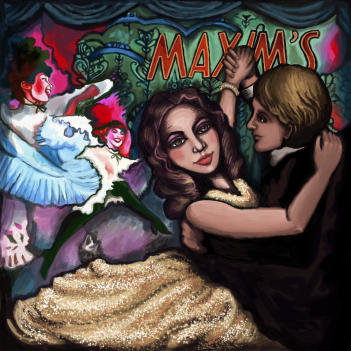
The Merry Widow-X4The CU production will be presented Friday–Sunday, Oct. 27–29, in Macky Auditorium. Nicholas Carthy will conduct an orchestra and cast of CU students. Other artistic staff of the production are set and lighting designer Peter Dean Beck; costume designer Tom Robbins; choreographer Stephen Bertles; and technical director Ron Mueller.
The major roles are double cast, with different singers on Saturday and Friday/Sunday. The performances will be sung in German with English titles.

“People think of it as light, and it is a funny show,” Holman says. “But I’ve taken a little bit more serious tone with it—not to scare anyone off because it’s still very hilarious and fun, but I’ve been doing a lot of thinking about second chances.”

In fact, it’s a second chance for the two main characters that drives the plot of The Merry Widow.

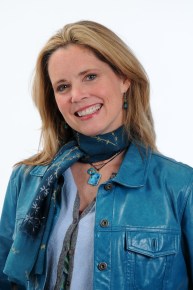
Holman,Leigh-X4

Leigh Holman

As the operetta opens, the fictional east-European country of Pontevedro is facing a budget crisis. At their embassy in Paris, the ambassador hopes to arrange the marriage of the wealthy widow Hanna Glawari with Ponetvedro’s most eligible bachelor, Danilo. That would, he believes, save the country by keeping her money in Pontevedro. But Paris is filled with men—bachelors and married alike—who would love to get their hands on her and her money, making the ambassador’s matchmaking all the more urgent.

Of course there are many other comic-opera complications with many other couples, but you want to keep your eye on the ball, which is the Hanna-Danilo relationship. As Holman explains, this is where the second chance comes in, because they have a history.

“They fell in love years ago when she was a farm girl,” Holman says. “He was wealthy and a nobleman, and his uncle did not approve of their relationship.” Because Danilo hesitated to oppose his uncle, Hanna ended the relationship and got revenge by marrying another wealthy suitor.

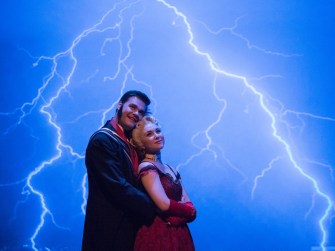
Merry_WidowPR48GA-X5

Lightening strikes twice for Danilo (Bryce Bartu) and Hanna (Anna Whiteway) in CU’s “Merry Widow.” (Photo by Glenn Asakawa)

“I wanted to deepen the understanding of the audience for what this couple had gone through,” Holman says. “So I decided to do a pantomime during the Overture, with a young Danilo and a young Hanna in front of the curtain. We get to experience their young love, and the situation where the uncle disapproves and Danilo hesitates. He eventually asks her to marry him, but she shows him her ring, that she’s already married. So we get all of that before the curtain opens.”

After the Overture, the curtain opens on the embassy party. Hanna’s much older husband has now died, leaving her a fortune, and Danilo has buried his sorrows by being a feckless man about Paris. ”They see each other again after all these years,” Holman explains. “Now they just love to spar with each other all the time, always testing each other.

“We really wanted to play on the idea, what would happen if we all got a do-over, if we had the chance to go back again? The question is, would we love to [do that]? We don’t know how it would end up, but we all wonder.”

This being operetta, you can count this second chance ending up with a happy outcome for all of the mixed-up couples. And you can also count on a lot of great entertainment along the way: a bit of farce and mistaken identities, gorgeous individual arias, hilarious ensembles, wonderful “Pontevedrian” folk music and costumes, and plenty of dancing.

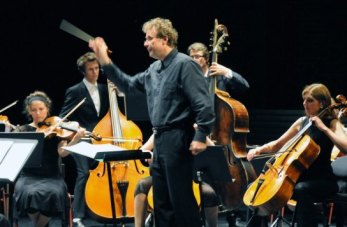
carthy

Conductor Nicholas Carthy

“We are having a wonderful time,” Holman says of herself and the cast. “It’s just a joy to go to work every day. We walk into the rehearsal hall and they’re all warming up, everybody’s dancing, the Viennese Waltz, the polka, the mazurka, the everything!”

Because Holman is devoted educator as well as opera director, “the everything” has great benefits for the students. “It’s the whole triple threat,” she says. “They’re singing, dancing, and acting with [spoken] dialog, so it’s a great opportunity for them. And comic timing! There really is an art to that and it’s something that has to be learned. They’re really grasping it and that’s exciting to see.

“Our goal is that when they leave CU they’re ready for whatever life brings. With musical theater and opera melding ever closer and closer together, I think this will get them ready for whatever opportunities they have.”

In other words, young opera singers have to be ready when they leave school because—unlike Hanna and Danilo—they won’t always get second chances when opportunities appear. And neither do audiences; The Merry Widow is only in Macky this weekend.

# # # # #

The Merry Widow by Franz Lehár
CU Eklund Opera Program
Leigh Holman, stage director
Nicholas Carthy, music director and conductor

7:30 p.m. Friday & Saturday, Oct. 27 & 28
2 p.m. Sunday, Oct. 29
Macky Auditorium

Tickets