Pro Musica concerts, and season, culminate with Beethoven’s “Eroica”

From Creation to love and death to triumph in just three concerts

By Peter Alexander

Pro Musica

Pro Musica Colorado Chamber Orchestra

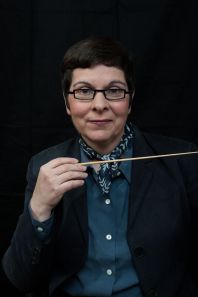
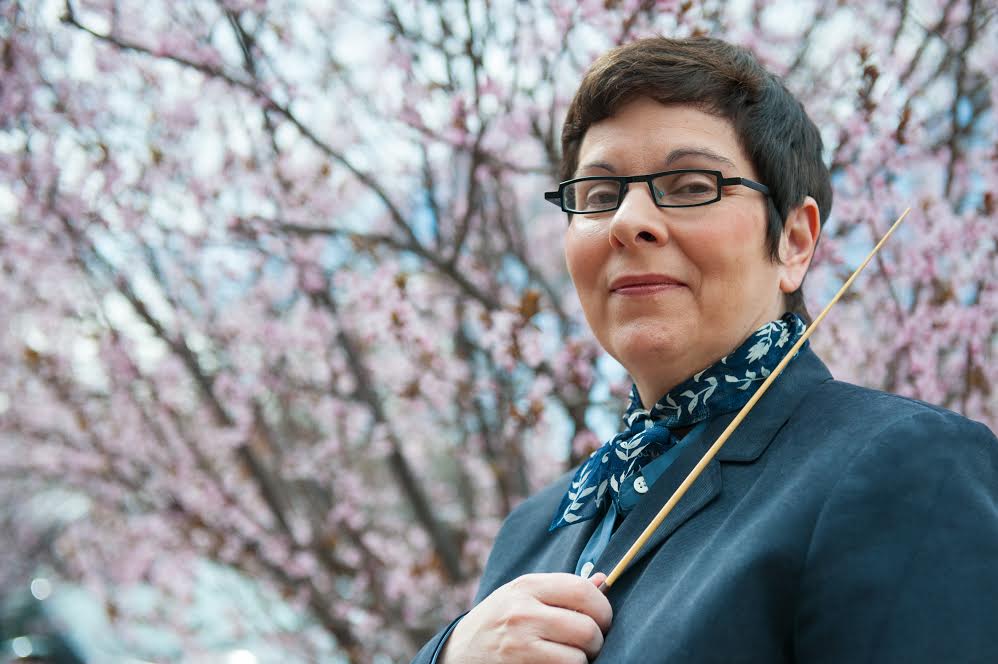
Cynthia Katsarelis first played Beethoven’s “Eroica” Symphony when she was 16. Since then she has played it, and conducted it, dozens of times, but she still feels she has more to learn.

“That’s what’s so great about great music,” she says. “Every time I look at it there’s something new that I discover.”

Photography by Glenn Ross. http://on.fb.me/16KNsgK

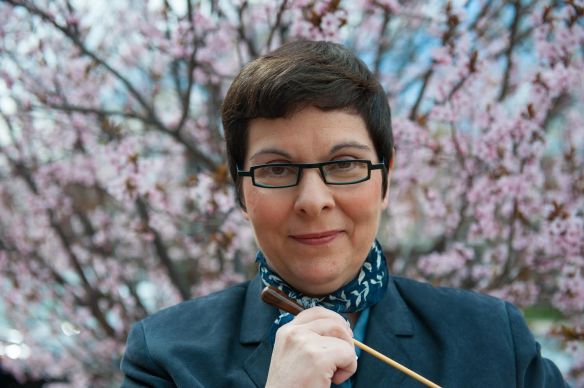
Cynthia Katsarelis. Photo by Glenn Ross.

Katsarelis’ latest opportunity to look at the “Eroica” comes this weekend, when it will be the culmination of not just a pair of concerts in Denver and Boulder (details below), but in fact the whole 2016–17 season of the Colorado Pro Musica Chamber Orchestra.

The Pro Musica’s season opened in October with a performance of Joseph Haydn’s Creation. A second concert in January paired a joyful symphony by Schubert with Shostakovich’s dark meditation on death in his 14th Symphony. And now Beethoven: in Katsarelis’s description of the season, “We started with creation, we went into love and death, and we come out in triumph.”

The concerts Friday and Saturday will open with the world premiere of a new piece by CU composition student Egemen Kesikli, Weltschmerz (world-weariness or world’s pain). Also on the program is Carl Nielsen’s neo-classical Flute Concert, performed by CU flute professor Christina Jennings. The concerts will end, after intermission, with Beethoven’s Symphony.

A piece about world weariness and resignation seems like a strange place to begin a concert titled “Triumph,” but Katsarelis thinks it fits right in. “It’s great because we get to kind of replay the arc of the season within the concert,” she says. “We are starting from pain, finding joy in the Nielsen, and overcoming in the Beethoven. It’s a microcosm of the season.”
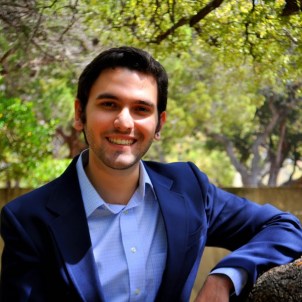
kesliki

Egemen Kesliki

Weltschmerz was commission by Pro Musica Colorado. The CU composition faculty selected scores by several students, which they presented to Katsarelis. Based on the scores she saw, she selected Kesikli to write a new piece for the 2016–17 season.

“It’s a really beautiful piece,” she says. “It has some interesting effects—playing with the wooden part of the bow, raindrop effects that some players do with their left hand, violin parts that are written in eight different parts. It will have an interesting sound to it, and the piece has a nice arc to it.”

Nielsen is best known for his expansive, lushly Romantic symphonies, but Katsarelis stresses that the Flute Concerto is not like those works at all. “It’s really a charming, neo-classical piece,” she says.
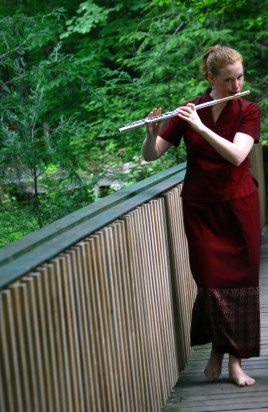
gallery-Christina569f

Christina Jennings

“I guess mercurial is the word for it. You think it might be a majestic piece, but then it has these charming 1/16-notes with off-beats in the accompaniment, and then it goes on to a really sweet melody. It covers a range of emotions, and does it rather quickly. So it’s very mercurial, but it’s fun.”

Beethoven’s Third Symphony is one of the best known works in the classical canon, and Katsarelis says it is one of the greatest symphonies ever written. It was longer and more powerful than any symphony written before. But what makes it great, Katsarelis says, is the way Beethoven’s personal struggles turned the symphony into a universal statement of triumph.

It was written soon after Beethoven discovered that he was going deaf, and that his deafness would only get worse. Rather than give in to thoughts of suicide, he turned his suffering into music that speaks of overcoming pain and hardship.

“He says it’s his art that keeps him alive,” Katsarelis explains. “He makes peace with the deafness, and out of that despair he enters his ‘Heroic’ period. The sense of Beethoven bringing the inspiration of heaven starts with the opening chords of the ‘Eroica’.”

bee1804_f1

Portrait of Beethoven by Joseph Mähler, painted around the time of the Eroica Symphony

It is also well known that Beethoven originally intended to dedicate the symphony to Napoleon, until he crowned himself emperor. Out of disillusionment, Beethoven violently removed the emperor’s name from the cover page. “When Beethoven scratched out the dedication to Napoleon and made it to ‘a great person,’ he turned it into something universal,” Katsarelis says.

The universality of the symphony’s message can also generate personal impact. “It gets personal, as certain pieces do,” Katsarelis says. “I was playing in an orchestra when my grandmother died. I missed one rehearsal, and when I got back we were doing the Eroica and the first thing we rehearsed was the funeral march.

“I see it personally, but I also see it universally. I think the personal connection helps me to see the universal.”

Katsarelis says that “everybody should come” to the concert, because the message of Beethoven’s music is still relevant today. “The triumph in Beethoven’s Eroica was more aspirational than accomplished, even when Beethoven wrote it,” she says.

“I think that taps into our aspirations today, and can really ignite our inspiration to strive for a better world, in just being the best that we can be.”

# # # # #

“Triumph”
Pro Musica Chamber Orchestra of Colorado
Cynthia Katsarelis, conductor, with Christina Jennings, flute

Egemen Kesikli: Weltschmerz (world premiere)
Carl Nielsen: Concerto for Flute
Beethoven: Symphony No. 3 in E-flat major, op. 55 (“Eroica”)

7:30 p.m. Friday, April 7, First Baptist Church, 1371 Grant St., Denver
7:30 p.m. Saturday, April 8, First United Methodist Church, 1412 Spruce St., Boulder
Pre-concert talk, 6:30 p.m. both evenings.
Tickets


From opposite ends of the spectrtum

Pro Music Colorado offers “Love and Death” through Schubert and Shostakovich

By Peter Alexander

The next concert from the Pro Musica Colorado Chamber Orchestra and conductor Cynthia Katsarelis will bring together two opposing worlds.

silver Gelatin Print

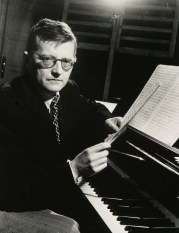
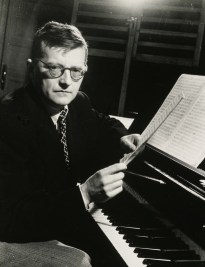
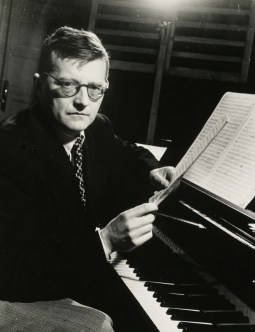
Dmitri Shostakovich

The concert, titled “Love and Death,” will be presented Friday in Denver and Saturday in Boulder. There are only two works on the program: the Symphony No. 14 by Shostakovich, a vocal-orchestral meditation on death; and Schubert’s frolicsome Symphony No. 5. Soloists for the Shostakovich, singing poetic texts by Federico García Lorca, Guillaume Apollinaire, Wilhelm Kuchelbecker and Rainer Maria Rilke, will be soprano Jennifer Bird-Arvidsson and bass Ashraf Sewailam.

The two works come from the opposite ends of the emotional spectrum. “Right, and that’s by design,” Katsarelis says. “The Shostakovich is really intense, and you don’t want to leave people on their own at the end of this piece. The Schubert is a sublimely beautiful feel-good piece, and it will be a good antidote to the emotional intensity of the Shostakovich.”

Read more at Boulder Weekly.

# # # # #

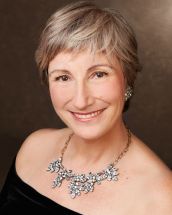
bird-7998-copy-6

Jennifer Bird-Arvidsson

“Love and Death”
Pro Musica Colorado Chamber Orchestra, Cynthia Katsarelis, conductor
Jennifer Bird-Arvidsson, soprano, and Ashraf Sewailam, bass

Shostakovich: Symphony No. 14
Schubert: Symphony No. 5

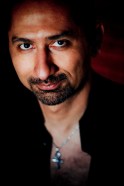
sewailam-a-headshot

Ashraf Sewailam

7:30 p.m. Friday, Jan. 20, First Baptist Church, 1373 Grant St, Denver
7:30 p.m. Saturday, Jan. 21, First United Methodist Church, 1421 Spruce, Boulder

Tickets

Pro Musica and Masterworks Chorus deliver a joyful “Creation”

By Peter Alexander

Conductor Cynthia Katsarelis and her musical colleagues—the Pro Musica Colorado Chamber Orchestra, the Colorado Masterworks Chorus and three outstanding soloists—presented a joyful and enjoyable performance of The Creation by Joseph Haydn last night (Oct. 29).

amanda-balastrieri-2

Amanda Balestrieri

This was the first performance of the 2016–­17 season for Pro Musica, and the only the second outing for the Masterworks Chorus, a new entry into Boulder’s crowded classical music scene. The well matched soloists appearing with them were soprano Amanda Balestrieri, tenor Steven Soph and bass-baritone Jeffrey Seppala. Following a performance Friday in Denver, last night’s performance was in Boulder’s First United Methodist Church.

With the chorus on the broad but shallow sanctuary “stage,” the orchestra had to adopt an unusual seating arrangement, with woodwinds behind the strings on one side, brass behind the strings on the other. In a more complex work with tricky coordination among the winds this might have been a problem, but in this case it seemed to work quite well. The woodwinds in particular sounded bright and clear. In the church’s shoebox space the brass had to be restrained to avoid thickening the texture, but for the most part they succeeded.

seppala

Jeffrey Seppala

The long, deep space of the church favors the lower frequencies. The timpani, for example, had to be discreet to avoid muddying the sound, and usually succeeded. Katsarelis visually restrained the players throughout, generally keeping the orchestra and singers well balanced and the texture transparent.

The choral sound was solid and clear, even with all forces combined, as in the final fugue to the words “The Lord is great, his praise shall last for aye.” While the words from the chorus were not always understandable, the audience had the full text and the lights were, appropriately, left on.

This also benefitted the soloists, who were not always understandable, either. This is not entirely the singers fault, however: it is hard to be clearly understood when singing lines like “Softly purling glides on thro’ silent vales the limpid brook,” or “Most beautiful appear, with verdure young adorn’d, the gently sloping hills.” For this you can blame the Austrian Imperial Court Librarian, Baron Gottfried van Swieten, who wrote Haydn’s English text. Alas, his command of the language was not as fine as he thought.

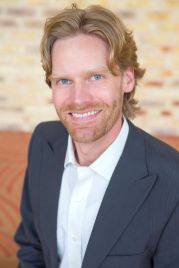
Soph.jpg

Steven Soph

All three soloists should be commended for their performances. They have fine oratorio voices and sang their solo recitatives and arias with careful attention to expression. One of the highlights was surely the duet between Adam and Eve—Balestrieri and Seppala—with chorus, “By thee with bliss.” Likewise, their lengthy closing duet “Graceful consort!” drew a spontaneous “Bravo!” from the audience. And I could not suppress a chuckle at Seppala’s solemn delivery of the text “In long dimension creeps with sinuous trace the worm,” one of many delightful moments of text painting in Haydn’s score.

joseph_haydn

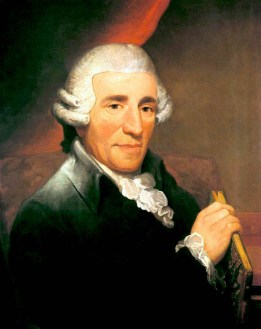
Joseph Haydn

One of the hallmarks of Katsarelis’s performances with the Pro Musica has been her careful control of dynamics. From the pianissimo whispers in the “Representation of chaos” and the fourth-day sunrise, to the full climaxes, the large-dimension contours were highly effective, with something held in reserve for the major climaxes. This was particularly evident at the end of the oratorio’s Part I, the much-sung chorus “The heavens are telling,” and the final “Amen.”

Finally, I have to return to Haydn, the genial genius whose lifelong humility and ability to learn paved the way for this great work. Inspired by the London Handel Festival performances of the 1790s, he wrote in his 60s a work unlike anything he had done before—to our eternal benefit. To quote the oratorio’s final chorus, “Let his name resound on high!”

Haydn’s happy creation

By Peter Alexander

There are lightning and thunder, leaping tigers and creeping serpents.

cynthia-katsarellis-2

Cynthia Katsarelis

All of that and more are portrayed musically in The Creation by Joseph Haydn, but conductor Cynthia Katsarelis wants you to know that they are happy tigers. “It’s almost two hours of ecstatic happiness,” she says of Haydn’s oratorio, which she will conduct this weekend in Denver and Boulder with the Pro Musica Colorado Chamber Orchestra and the Colorado Masterworks Chorus.

Soloists will be soprano Amanda Balestrieri, tenor Steven Soph and bass Jeffrey Seppala.

joseph_haydn

Joseph Haydn

Katsarellis particularly appreciates the cheerfulness of Haydn’s score right now, as an antidote to the tense and threatening times we live in. “I was studying the piece this summer after Orlando and Istanbul and Pakistan and all of these terrible things happening,” she says. “So it was kind of a vacation from all of that.”

And maybe, she says, The Creation offers us more than an escape from what we hear on the news. “The happiness and gratitude expressed in the choruses — this is also who we are,” she says.

“So to some extent The Creation can call to us and remind us that we’re more than what’s happening in the news. We are much more than that.”

Read more in Boulder Weekly.

# # # # #

The Creation by Joseph Haydn

orch-chorus

Pro Musica Colorado Chamber Orchestra and the Colorado Masterworks Chorus
Cynthia Katsarelis, conductor
With soprano Amanda Balestrieri, tenor Steven Soph, and bass Jeffrey Seppala
7:30 p.m. Friday, Oct. 28, Central Presbyterian Church, 1660 Sherman St., Denver
7:30 p.m. Saturday, Oct. 29, First United Methodist Church, 2412 Spruce, Boulder

Tickets

Mozart’s Requiem: “A Musical Miracle and a Mystery Story”

Performances Friday and Saturday by Pro Musica Colorado and St. Martin’s Chamber Choir

By Peter Alexander

It is one of the most famous stories in music history.

Lange_PortraitOfMozart,Unfinished

Unfinished portrait of Mozart by Joseph Lange

It was December, 1791. Mozart lay on his deathbed, with his family and friends gathered around. They sang for the dying composer, music from the Requiem that he might as well have been writing for himself and that he was never to complete. After his death, Mozart’s friends and students gathered up all the bits and pieces of music that lay scattered around the room and worked feverishly to finish the manuscript, so that Mozart’s widow could deliver a completed score to the eccentric count who had paid for it.

Out of all of the confusion there emerged a work that has captivated listeners ever since, in spite of the uncertain authorship of its various parts. “It’s a musical miracle and a mystery story wrapped into one,” says Cynthia Katsarelis, who will conduct performances of the Requiem Friday in Denver and Saturday in Boulder (7:30 p.m. April 8 at First Baptist Church in Denver, and April 9 at First United Methodist Church in Boulder).

Photography by Glenn Ross. http://on.fb.me/16KNsgK

Cynthia Katsarelis. Photography by Glenn Ross.

Katsarelis, director of the Pro Musica Colorado Chamber Orchestra, has put together what she considers just about an ideal group of performers for the Requiem. “Pro Musica and (Denver’s) St. Martin’s Chamber Choir are practically a dream team for the Mozart Requiem,” she says. “And our soloists are all people who are just wonderful artists.

“It’s going to be different from a Mozart Requiem with a large orchestra and choir. Our size is more like the size that Mozart would have had, and there’s a kind of immediacy and a visceral quality to doing it with a chamber orchestra and a chamber choir. I think it’s a special team, and there’s incredible potential of being a worthy Requiem.”

Manuscript_of_the_last_page_of_Requiem

Manuscript page of Mozart’s Requiem

Like all conductors who approach the Requiem, Katsarelis had to decide exactly what to perform. Mozart left different movements in differing degrees of incompletion: some merely had to be filled in according to a partial score, some had to be completed, and some had to be composed more or less from scratch.

Adding to the confusion, Mozart left behind what his widow called “scraps of paper” that may have held music, or instructions, or both. At least two different pupils undertook a completion. And all of their contributions were mixed together, and it was years before scholars were able to separate, more or less, who did what.

FRANZ_XAVER_S_SSMAYR.1239019040

Franz Xaver Süssmahr

Today there are numerous performing versions to choose from. The score that was turned over to the count three months after Mozart’s death was essentially completed by Mozart’s pupil Franz Xaver Süssmayr. But Süssmayr was not a very good composer: Mozart didn’t think much of him, calling him “a duck in a thunderstorm,” and he made numerous mistakes in the score that he hurriedly finished.

And so there have been many subsequent versions that aim to correct and improve on Süssmayr. Some editors have gone so far as to write whole new movements to stand alongside Mozart. Katsarelis has chosen a version created by Franz Beyer in 1971 that sticks largely to Süssmayr’s version, but polishes some of his work.

There are three movements that Mozart never started, but Katsarelis thinks that Süssmayr had some help with those. “He claimed to have composed the Sanctus, the Benedictus and the Agnus Dei, but I’m not convinced of that, for reasons right out of the music,” she says. “I had my doubts to begin with. Süssmayr never, ever composed anything of the caliber of (those movements).”

She has a “sneaking suspicion,” she says, that the scraps of paper that Mozart left had music on them that Süssmayr was able to use. And, she adds conspiratorially, “I have a theory that I actually don’t have an ounce of historical evidence for, but during the time that Süssmayr was completing the Requiem, he was studying with Salieri.”

antonio-salieri-03

Antonio Salieri

That Salieri? The one who definitely didn’t poison Mozart but was still the villain of the play and movie Amadeus?

Yes, that one. “I just have this sneaking suspicion that Salieri might have helped,” she says. And it’s definitely not the craziest theory about the Requiem, which has attracted conspiracy stories from the date its very first performance.

Regardless of who wrote those movements, and whose help they might have had, “the meat of the Requiem is what Mozart wrote,” Katsarelis affirms. And after the disputed movements, the Requiem ends with two more movements that re-use Mozart’s music from the beginning.

Following the Requiem, the concert will include one more short piece, Mozart’s beautiful and elegiac Ave verum corpus, composed only months before the Requiem. “By doing the Ave verum corpus, we’re absolutely sure that we’ll be ending with Mozart, no question,” Katsarelis explains. “It’s a piece that everybody knows and loves, and it’s a very comforting and beautiful piece.”

In spite of the mystery and confusion, the different hands that touched the Requiem, and all of the controversy that has swirled around the piece over the centuries, “the fact the sublime music comes through is pretty miraculous,” Katsarelis says. “It is deeply moving to do the piece that was the last thing Mozart composed.

“He made it the most beautiful music that he could possibly write. That’s his final gift to us, and it’s one that I receive very gratefully, and that we’ll share on Friday and Saturday.”

# # # # #

Mozart’s Requiem

Pro Musica Colorado Chamber Orchestra
Cynthia Katsarelis, music director
St. Martin’s Chamber Choir
Timothy J. Krueger, artistic director
Amanda Balestrieri, soprano
Leah Biesterfeld, alto
Joseph Gaines, tenor:
David Farwig, bass

W.A. Mozart: Requiem, K626
W.A. Mozart: Ave Verum Corpus, K618

Friday, April 8, First Baptist Church, 1373 Grant St., Denver
Saturday, April 9, First United Methodist Church, 1421 Spruce St., Boulder
Both concerts at 7:30 p.m.
Pre-concert talk at 6:30 p.m. both evenings

TICKETS

NB: Edited to correct typos 4.7.16.

Pro Musica Colorado delivers a performance to be remembered

Shostakovich’s personal expression of suffering anchors a fascinating program

By Peter Alexander

Pro Musica Colorado Chamber Orchestra and conductor Cynthia Katsarelis presented a concert last night in Boulder (Jan. 23) that deserved a far larger audience than it drew.

OLYMPUS DIGITAL CAMERA

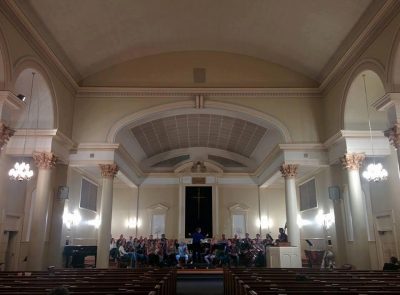
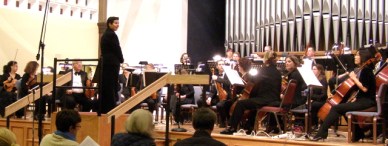
Cynthia Katsarellis and the Pro Music Colorado Chamber Orchestra

Perhaps it was the gloomy-sounding topic—music for and by victims of World War II—but the sanctuary of the First United Methodist Church was not quite half filled. Anyone who stayed away missed an extraordinary program and one exceptional performance.

The centerpiece and foundation of the program—and final work of the evening—was Shostakovich’s Chamber Symphony, op. 110, a string orchestra setting of the composer’s String Quartet No. 8. Dedicated to “the victims of fascism and war,” the Quartet is more than that; it is a personal expression of deep suffering, possibly a self-eulogy from a composer who was contemplating suicide.

silver Gelatin Print

Dmitri Shostakovich

The evidence of the composer’s real intent lies in the quotations from his own works scattered through the score—particularly works written under the oppressive yoke of Stalinism. The quartet’s most prominent theme, D-E-flat-C-B, is an anagram of his own name in German musical notation: DSCH.

As gloomy as that may sound, the Quartet No. 8 is one of Shostakovich’s greatest works, and one of the great string quartets of the 20th century. Last night’s performance was evocative, powerful and beautifully crafted. The unity of performance within the individual sections—corresponding to the four parts of the quartet—was remarkable, in pitch, in rhythm, in phrasing. Katsarelis led the performance with commitment and careful control of the quartet’s emotional flow.

The translation to a string orchestra changes the score in some ways. In the quartet version, the single instruments seem to represent individual voices crying out, a poignant reminder of both Shostakovich’s plight and the individual lives lost in the war. On the other hand, the added force of the orchestra version effectively conveys the weight of oppression. This is most notable with the fierce, pounding three-note motive representing the KGB and their feared late-night knock at the door. That motive, and the anguished passages that follow, were the most powerful moments of the concert.

While I am inclined to prefer the original version, because of its intimacy and because it was the composer’s first intention, last night’s performance made a strong case for the Chamber Symphony version as well. It was a performance to be remembered.

The rest of the program was creatively put together, with three pieces that complimented one another nicely: Bach’s Brandenburg Concerto No. 3; the world premiere of Life Between Lives by D.J. Sparr, loosely derived from the Bach; and the Study for String Orchestra by Pavel Haas, a genuine victim of the Second World War. Unfortunately, none of these works quite reached the heights of the Shostakovich.

The concert opened with the Bach Brandenburg. A delightful score, it was given a sprightly performance, but the church’s acoustics—about which I have complained before—made Bach’s sparkling counterpoint sound tubby and turgid. The closely spaced parts, especially in the lower register, just cannot be heard clearly in that space.

The use of the slow movement from Bach’s G-major Sonata for violin and harpsichord to fill out the Brandenburg’s enigmatic two-chord slow movement was an interesting choice, and one that worked well as it moved nicely into the key-defining chords.

DJ Sparr

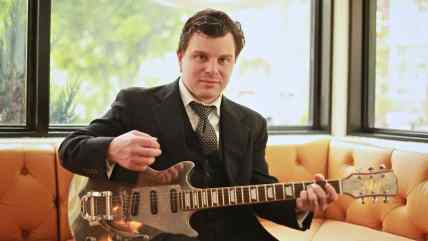
Composer/guitarist D.J. Sparr

Sparr’s Life Between Lives was composed for the Colorado Pro Musica and plays with the same instruments and textures as the Bach. It opens with mysterious chords, representing “Moment before Breath” (as the movement is titled), just before the beginning of life. This movement seems to recall Sparr’s performing career as an electric guitarist, with sounds resembling electric guitar effects transferred to strings.

Slow moving lines hovering within and above the often dissonant chords gradually accumulate, creating a dramatic sense of breath withheld. That texture soon becomes animated by pizzicato rhythms beneath the surface texture. This is the second movement, “Moment Before Thought,” but other than the pizzicato stirrings, the sound is very much like the first movement.

A sudden acceleration signals the last movement, “Life Between Lives,” where the increasing speed is created by a pulsing repetition of notes and chords, still within the same sound palette. The repetitive rhythms provide the only sense of direction, while the lack of contrast casts a pall of timbral monotony over the texture. There is an increase in intensity with an ascending line in the violins; and then the piece stops with, to my ear, no sense of arrival.

PavelHaas

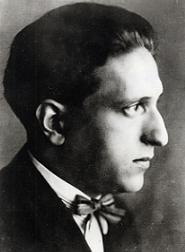
Pavel Haas

Ending the concert’s fist half was Haas’s Study for String Orchestra. A victim of the Nazis who was interned in the Terezín concentration camp and later killed at Auschwitz, Haas is known as part of the missing generation of German and Austrian Jewish musicians who perished in the Holocaust. The Study is a pleasant, entertaining work written under the most difficult of circumstances—in the camp, where it was premiered in 1943.

This is a work that, as Katsarelis has said, “speaks marvelously to the human spirit—and to the power of music.” The performance was on a very high level, especially the fugue that drives the piece to its end. That said, in spite of the work’s history, it is neither as profound nor as moving as the Shostakovich that ended the concert.

In the end, then, Katsarelis and the orchestra gave us a fascinating combination of composers and works, much to think about, some wonderful playing, and one great performance to be remembered.

Eulogy of Self

Pro Musica Colorado plays music for and by victims of World War II

By Peter Alexander

Photography by Glenn Ross. http://on.fb.me/16KNsgK

Cynthia Katsarelis. Photo by Glenn Ross.

Composers who write their own musical eulogies do not usually create jolly pieces.

silver Gelatin Print

Dmitri Shostakovich

Dmitri Shostakovich, who suffered various forms of personal and artistic oppression throughout his career, was certainly no exception. When he wrote his Eighth String Quartet in 1960 he was contemplating suicide—which his friends prevented, fortunately. The work he wrote, dedicated to “the victims of fascism and war” but also reflecting his own suffering under the Soviet regime, remains a powerful testament to a low point in his life.

“This is really dark” says Cynthia Katsarelis, who will conduct the string orchestra version of the quartet, the Chamber Symphony for String Orchestra, with the Colorado Pro Musica Chamber Orchestra Friday in Denver and Saturday in Boulder. “He thought it was his own eulogy.”

The concerts are part of a two-year celebration of Shostakovich chamber music organized by the Colorado Chamber Players. Other works on the program will be the world premiere of Life Between Lives by American guitarist/composer D.J. Sparr, J.S. Bach’s Third Brandenburg Concerto, and the Study for Strings by Pavel Haas.

For more, see Boulder Weekly.

# # # # #

pmc-logo

Shostakovich: Dedication
Pro Musica Colorado Chamber Orchestra, Cynthia Katsarelis, conductor

J.S. Bach: Brandenburg Concerto No. 3
D.J. Sparr: Life Between Lives (world premiere)
Pavel Haas: Study for Strings
Dmitri Shostakovich: Chamber Symphony for String Orchestra

7:30 p.m. Friday, Jan. 22, First Baptist Church, Denver
7:30 p.m. Saturday, Jan. 23, First United Methodist, Boulder

Tickets


Pro Musica Colorado opens season with bustle and energy

Larry Graham plays Mozart concerto on a program with a world premiere

By Peter Alexander

Photography by Glenn Ross. http://on.fb.me/16KNsgK

Cynthia Katsarelis, conductor of Pro Musica Colorado

Pro Musica Colorado Chamber Orchestra, the last of the local orchestras to launch the 2015–16 season, got underway in Boulder last night (Nov. 21) with a bustling, energetic program featuring the world premiere of Kurt Mehlenbacher’s Flying Crooked and two major pieces by Mozart.

Cynthia Katsarelis directed the performance in the First United Methodist Church with her usual focus on the overall architecture and momentum of the pieces, and retired CU prof. Larry Graham gave a fluid, nuanced reading Mozart’s C-minor Concerto, K491. The same program had been played Friday night in Denver.

In remarks before the concert began, Mehlenbacher explained that the title Flying Crooked was only applied after the piece was completed. Based on a suggestion from his roommate, it carries no implication that the music should be seen as deliberately descriptive or programmatic.

Be that as it may, the propulsive rhythms that dominate the texture do suggest flying, or other kinds of movement—by turns rushing, loping, flitting and soaring. The thoroughly enjoyable score contains many short episodes that are sometimes contrasting, but the impulsive motor rhythms are rarely absent from the background. Based on this performance, I would urge other smaller orchestras to take up Flying Crooked as an energetic and effective way to open any program.

For better or worse, Mozart’s C-minor Concerto sounded just like what it was: a performance on modern instruments and piano in a highly reverberant space. The First United Methodist sanctuary is a long, rectangular shoebox, perfectly suitable for services but less than ideal for orchestras.

Bass notes in particular tend to spread and muddy the texture, so that every timpani stroke, for example, threatens to cover details in the music. This is not a question of orchestral numbers—with only one string bass and three cellos, the ensemble is well balanced. The timpanist used the appropriate hard mallets for an incisive sound. But there is little players can do when notes continue to resonate too long after they are sounded. Unfortunately, Boulder does not have an ideal small auditorium, so Pro Musica and other groups will continue to rely on churches for the foreseeable future.

(I did not hear the Friday performance in Denver’s First Baptist Church, but I heard reports that the sound was much less problematic there.)

Larry Graham2_Dale_Steadman

Larry Graham. Photo by Dale Steadman.

The lack of clarity aside, Graham played with great facility. He had full command of dynamics and control of the individual voices in the texture, providing as much clarity as possible in the space. His playing was especially lovely in the slow movement, where the softer and thinner orchestral texture allowed him to be distinctly heard throughout. His sparkling performance of the sprightly finale was enhanced by lovely playing from the Pro Musica winds.

Graham has long been a popular fixture on the Boulder classical music scene. It has been reported that this might be his last performance with orchestra, although he seems to be less than emphatic on that subject. His playing is more than effective, and he continues to enjoy intimate concerts, so there should be no hint that he is loosing any ground as a performer. Perhaps the right concerto will be found to entice him back onto the concert stage.

Pro Musica

Pro Musica Colorado

The other Mozart on the program was the Symphony in D major, K504, known as the “Prague” Symphony because of where it was written. It begins with a brooding slow introduction that contains more than a hint of the D minor of Don Giovanni, the opera Mozart was soon to write for the theater in Prague. Katsarelis and Pro Musica brought out all the pathos of the opening gestures before launching on a rhythmically energized performance of the main movement.

The contrast between the dramatic, driven first allegro theme and the tenderness of the second theme was carefully managed and highly effective. Here, the drama inherent in the formal structure of the 18th-century symphony came vividly to life. In the contrapuntal development section, the entrances were well marked, leading to a satisfying climax before settling back down into a gentle transition back to the first theme for the recapitulation.

The slow movement flowed comfortably and smoothly, and as it should the symphony ended with an exuberant romp. Katsarelis’s wise decision to honor the repeats in the finale provided a touch of humor when the piece came scurrying to a definite end, only to launch suddenly and busily back into a developmental passage. The ending was consequently all the more effective the second time.

Pro Musica Colorado looks ahead and back

Opening program may be pianist Larry Graham’s farewell orchestra concert — or not

By Peter Alexander

Larry Graham_Dale_Steadman

Larry Graham. Photo by Dale Steadman.

The Pro Musica Colorado Chamber Orchestra will look both forward and back in their 2015–26 season, which music director Cynthia Katsarelis and the orchestra call “Remembrance” (http://www.promusicacolorado.org).

The season will open Friday and Saturday (Nov. 21-22) with the world premiere of a new work by CU composition competition winner Kurt Mehlenbacher—looking ahead—and end (April 8–9) with Mozart’s Requiem—a work that compels us to look back. In between will be a concert of music by J.S. Bach and Dmitri Shostakovich (Jan. 22-23) that will be part of a two-year festival of all of Shostakovich’s chamber music.

This will be the program most closely tied to the theme of remembrance, since Pro Musica will play the string orchestra version of Shostakovich’s String Quartet No. 8, dedicated to “the victims of fascism and war.”

The opening concert features Larry Graham, a revered former CU piano professor, playing Mozart’s C-minor Piano Concert, K491. The concert will open with Mehlenbacher’s Flying Crooked for chamber orchestra, commissioned by an endowment established by the late Thurston E. Manning, and also include Mozart’s Symphony No. 38 in D major, K504, known as the “Prague” Symphony.

Read more at Boulder Weekly.

# # # # #

pmc-logo

Pro Musical Colorado Chamber Orchestra
Cynthia Katsarelis, conductor, with Larry Graham, piano

Kurt Mehlenbacher: Flying Crooked (world premiere)
Mozart: Piano Concerto in C minor, K491
Symphony No. 38 in D major, K. 504 (“Prague”)

 7:30 p.m. Friday, Nov. 20, First Baptist Church, Denver
7:30 p.m. Saturday, Nov. 21, First United Methodist Church, Boulder

Tickets


Pro Musica Colorado presents a rich exploration of sound and expression

By Peter Alexander

Cynthia Katsarelis, conductor of Pro Musica Colorado

Cynthia Katsarelis, conductor of Pro Musica Colorado

The Pro Music Colorado Chamber Orchestra performed a concert of music for strings last night (Feb. 7) with pieces that were inspired by poetry, by earlier music, and by nature.

Cynthia Katsarelis conducted Pro Musica’s string sections with both intensity and control. The performance proved to be a beautiful and rich exploration of sound and expression.

All three pieces on the program—Ralph Vaughan Williams’s Fantasia on a Theme of Thomas Tallis, Philip Glass’s Violin Concerto No. 2, “The American Four Seasons,” and the world premiere of . . . I give you my sprig of lilac by CU composition student Daniel Cox—originated in roughly the past 100 years, and all three impressed with the depth and breadth of sound that a string ensemble can produce.

The program opened with Cox’s brief, elegiac score. The winner of a composition competition, Cox turned to Walt Whitman’s memorial poem for Abraham Lincoln, “When Lilacs Last in the Dooryard Bloom’d,” for inspiration. The title comes from lines in the poem, describing the passage of Lincoln’s coffin through the streets: “With the tolling, tolling bells’ perpetual clang,/Here coffin that slowly passes,/I give you my sprig of lilac.”

The sound is warm and comforting as the music gradually emerges, swells, then trails into silence. The obvious comparison is of the funeral cortege slowly passing, but it would undervalue the music to hear it only in pictorial terms. Cox has written a polished and assured work that reaches deeper levels of emotion and honors Whitman’s poem.

The earliest piece on the program was Vaughan Williams’s Fantasia, finalized 1919 and inspired by the music of the 16th-century English composer Thomas Tallis. The score harkens back to the idyllic days before the First World War, expressing the very apotheosis of the English pastoral style that emerged from the composer’s study of folk song.

The performance by Katsarelis and the Pro Musica players was impressive for both the fullness of sound—the sheer volume—that can be achieved by a small group of string players, and by the careful control of the music’s contour. Katsarelis loves to talk about the “journey” of each piece; here that journey was clearly delineated in her interpretation.

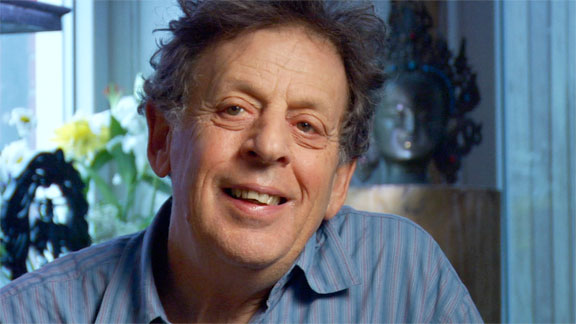
Philip Glass

Philip Glass

The second half of the concert was filled by Glass’s Concerto, written as a companion for the much loved Four Seasons concertos of Antonio Vivaldi. Although Glass has declined to indentify which seasons the individual movements represent, there is a sense of a journey—that word again!—through time and the stages of the year. And while Glass sticks mostly to the stylistic paths that he has long followed in his career, the music is varied in its expressive content and always rewarding.

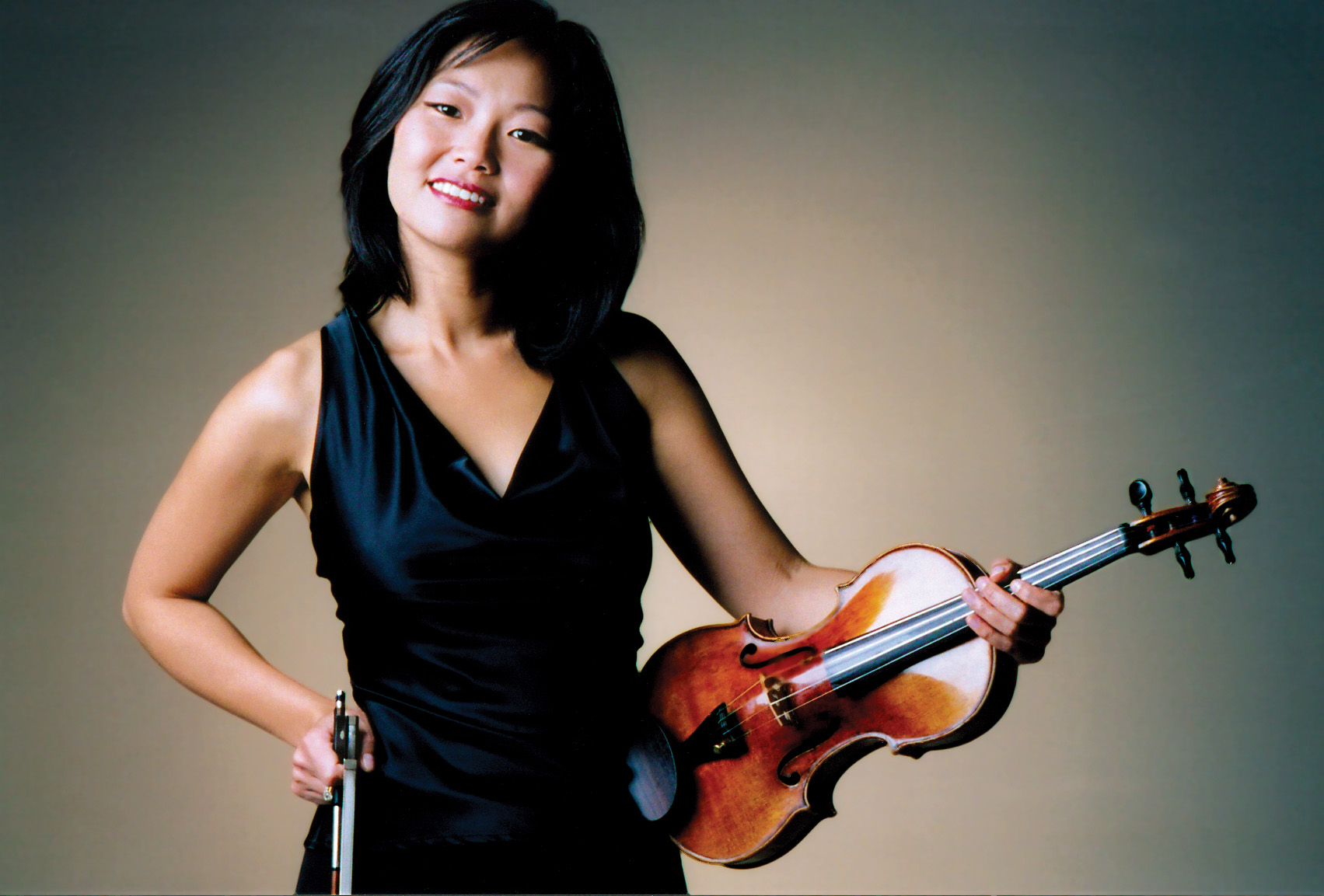
Yumi Hwang-Williams. Photo by r r jones

Yumi Hwang-Williams. Photo by r r jones

The concerto’s eloquent soloist was Yumi Hwang-Williams, concertmaster of the Colorado Symphony and an accomplished solo artist and chamber musician. She was equally impressive in the solo part’s seamless long lines, the breathless pianissimos, and the cascading arpeggios for which Glass is so well known.

Katsarelis and Pro Music provided full-bodied support, with great rhythmic propulsion when needed, the requisite chugging that never flagged in the lower parts, and delicately balanced chords in the gentler moments. This is a style that we do not hear often in Boulder, and it was delightful to hear Glass’s music so enthusiastically championed.

But which season is which? I have my ideas, but you won’t find an answer here. As a Buddhist, Glass likely honors the journey over the destination. So you will have to find your own answers; I would not deny my readers that personal journey of discovery.