After three sets of designs, Central City Opera is ready to open

2021 Summer season at Hudson Gardens and outdoors in Central City

By Peter Alexander July 1 at 4:10 p.m.

Central City Opera (CCO) is ready to go for the 2021 summer season, but it wasn’t easy to get here. 

From July 3 to Aug. 1, the season offers Rodgers and Hammerstein’s Carousel, opening the season Saturday, July 3Verdi’s Rigoletto, opening Saturday July 10; and an English Baroque opera, Henry Purcell’s Dido and Aeneas (sold out; see full schedule below). Because the opera house in Central City is too small to allow safe distancing, all three will be performed outdoors. 

The two larger productions, Rigoletto and Carousel, will be performed on the outdoor stage at Hudson Gardens in Littleton. The sold-out performances of Dido and Aeneas will take place in Central City.
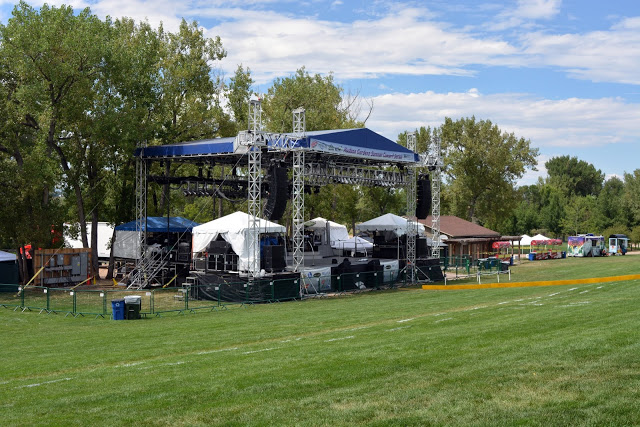
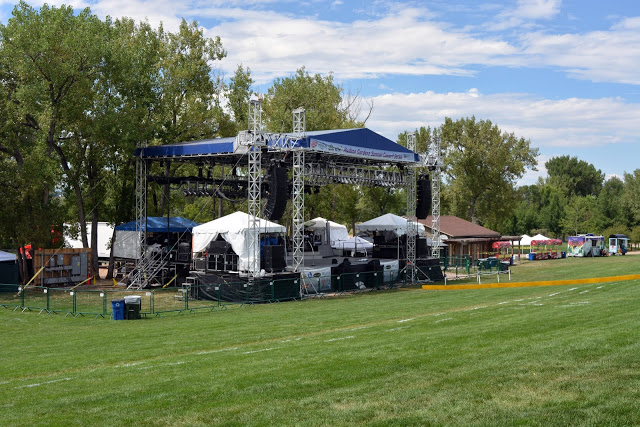
Hudson Gardens outdoor stage

It all sounds simple enough. After all, this was the same season that was planned for 2020 and simply postponed for a year. Most of the same singers were able to move their schedules to 2021. So half the work was already done, right? What could be the problem?

Design, for one thing. CCO general/artistic director Pelham (“Pat”) Pearce explains: “The designers had originally conceived these shows in the opera house. Then last fall we thought we would be producing (in a facility near Central City), so there was an awful lot of thought given to how that would be done.

CCO GEneral/artistic director “Pat” Pearce

“Then we found out in January that we would not be given the ability to do that, so on a dime we had to turn and find a place to produce this summer. And so we spent four to five weeks trying to find a place to go. And when we had a good idea about what that was going to be, not only did they have to re-design again, but they had to re-design together, because they would have to use the same floor.”

At that point they were down to only about four months to get the sets designed and built, a process that normally takes most of a year. And they were going into a space that they knew almost nothing about, either acoustically or physically, an outdoor space previously used for pop and rock music acts. In fact, they had so much to build that they had to get a building permit for their sets!

The partnership with Hudson Gardens was a real stroke of fortune for CCO. “As soon as we saw we did not have access to where we thought we were going to be, we put out the call to our friends in the (Scientific and Cultural Facilities District), does anybody have a space outdoors where we can produce a season,” Pearce explains. 

They got several responses. But Hudson Gardens was the best possibility, particularly because of parking and the availability of electricity, which is crucial for theatrical lighting. “We’ve worked with the people at Hudson Gardens, because they have a rhythm about how they have always worked with these outdoor concerts,” Pearce says.

“They’re been very, very helpful, helping us navigate these unusual conditions—overnight security, things that we never think about because we can walk away from the building (in Central City) and lock it, but we can’t do that here.”

Of course another issue is weather. “We’re going to learn a great deal about outdoor performing and working with the elements,” Pearce says. “I’m used to people complaining to me that it’s too cold or its too hot, but I can’t control the weather. So this is going to be a large learning experience for everybody. None of us, not any of us, are used to performing this way.”

One concession to weather is that the stage will be covered by a large tent that will extend back of the stage to cover the orchestra as well. That in turn means that every single performer has to be mic’d—every singer and every orchestral player will have their own microphone. “The sound designer will be constructing what people hear and what they don’t hear,” Pearce says. “All of that will done by a single person sitting at a sound board.

“The orchestra will be behind the set and the conductor will be behind the set. Everyone will be working with monitors for sight, and in some cases monitors for sound. So it’s going be all kinds of challenges. But we have been determined to produce and have figured out a way to do it.”

The circumstances will affect performances in other ways. For one, both works have been shortened to about 90–100 minutes, so they can be performed without intermission—in order to reduce the mingling among audience members. Instead, Pearce suggests that people come early and wander through the gardens before the performance. “They’re absolutely gorgeous, right up against the Platte River,” he says.

For another, both shows will be set in a time closer to now than is usual. This is partly to avoid heavy costumes that would be unbearable outdoors on a hot night. For another, Rigoletto will be placed more outdoors than usual. “The duke may be dressed for doing things outdoors, and Gilda is actually going to be on a swing,” Pearce says. 

The designers “embraced the setting we’re in, and they’re telling the story using where we are. We will tell the story well, but we’re going to tell it not ignoring the fact that we are outdoors.”
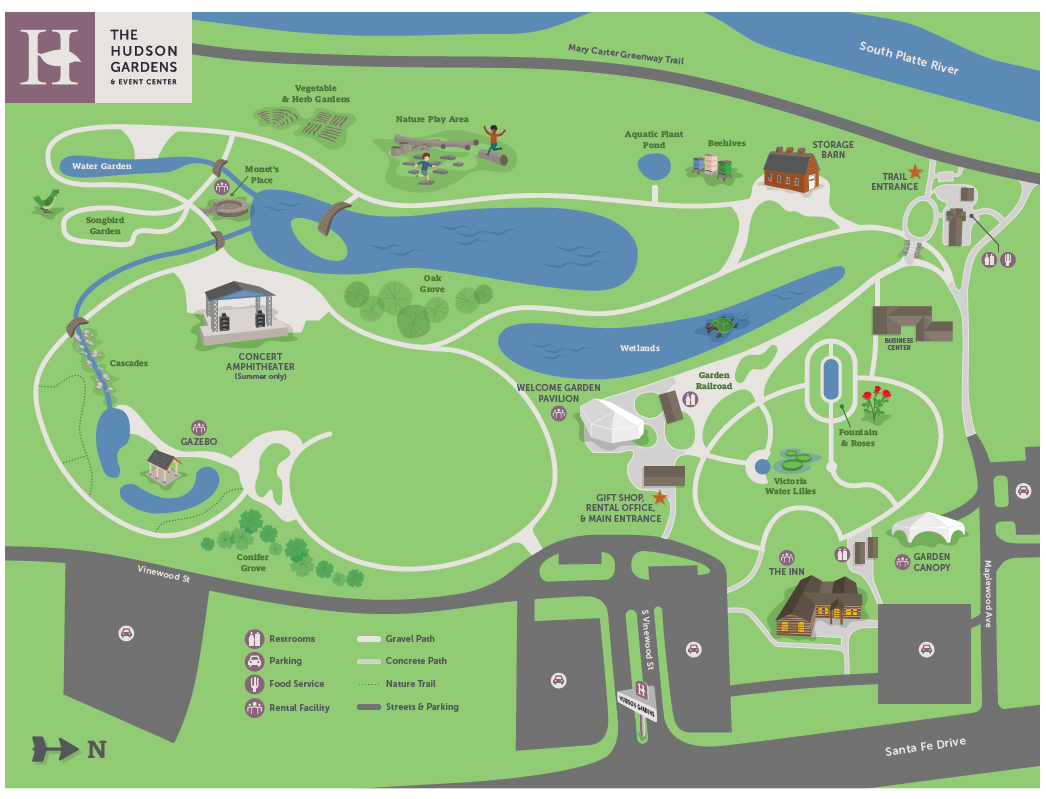
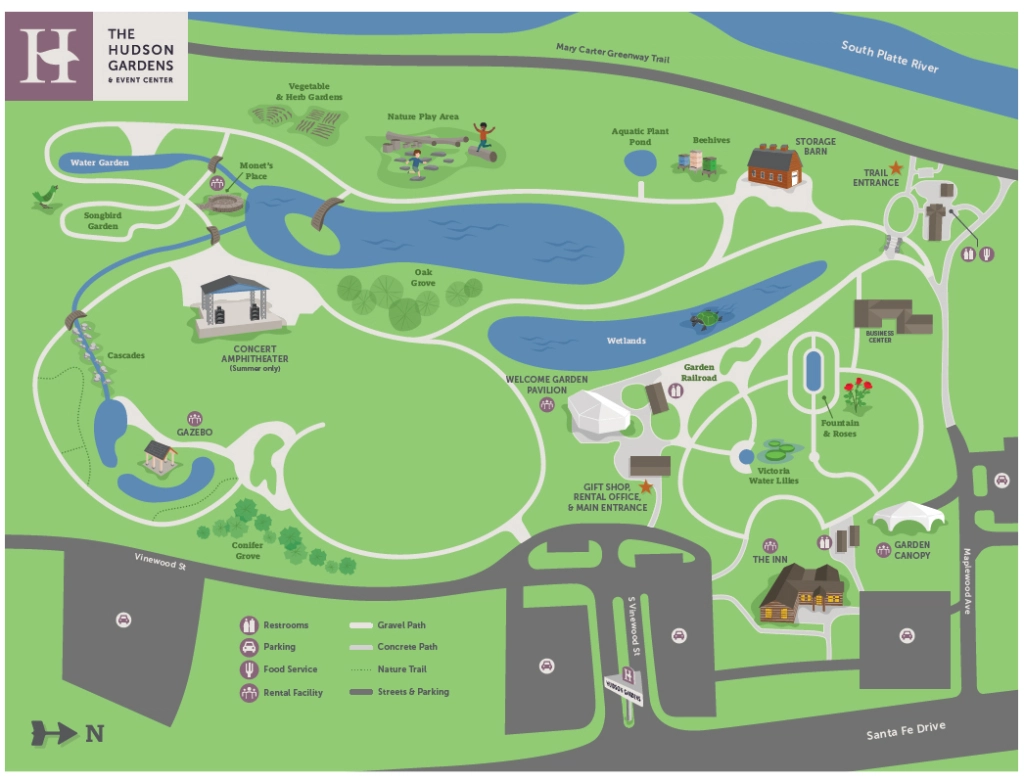
Hudson Gardens, Littleton, Colo. map of grounds.

Carousel will be stage directed by Ken Cazan and conducted by Christopher Zemliauskas, both veterans of previous CCO seasons. The director of Rigoletto will be Jose Maria Condemi, who directed Carmen at CCO in 2017. Conductor will be John Baril, a longtime mainstay at CCO, and stage design is by Steven C. Kemp. Dan Wallace Miller will direct Dido and Aeneas and Brandon M Eldredge will conduct. Full cast and credits are posted on the CCO Web pages for each production. 

You may want to consult the 2021 Summer Festival FAQ page for the latest information. Ticket-holders will receive detailed “know before you go” information via email prior to their purchased performance. 

# # # # #

Central City Opera
Summer Festival 2021

Carousel
Music by Richard Rogers, book by Oscar Hammerstein

7 p.m. Saturday, July 3; Friday, July 9; Tuesday, July 13; Thursday, July 15; Saturday, July 17; Friday, July 23; Tuesday, July 27; Thursday, July 29
3 p.m. Wednesday July 7; Sunday, July 11; Sunday, July 25; Thursday, July 29; Sunday, August 1

Hudson Gardens, Littleton, Colo.

Rigoletto
Music by Giuseppe Verdi, libretto by Francesco Maria Piave

7 p.m. Saturday, July 10; Friday, July 16; Tuesday, July 20; Thursday, July 22; Saturday, July 24; Wednesday, July 28; Friday, July 30
3 p.m. Wednesday, July 14; Sunday, July 18; Tuesday, July 27

Hudson Gardens, Littleton, Colo.

Dido and Aeneas
Music by Henry Purcell, libretto by Nahum Tate

1 p.m. Saturday, July 17; Tuesday, July 20; Thursday, July 22; Wednesday, July 28

Central City Opera House Gardens 
Information and tickets

Boulder-area summer festival tickets go on sale

Central City Opera, Colorado Music Festival tickets now available for purchase

By Peter Alexander April 21 at 10:15 p.m.

Two area organizations have now put tickets on sale for their summer festival seasons. Both Central City Opera and the Colorado Music Festival had announced their summer seasons earlier, but now tickets to individual events may be purchased for both. Both festivals will take place more or less as in past years, but with some important changes in access and ticketing brough about by the COVID-19 pandemic.

Central City Opera will present all of its performances this summer at outdoor venues. Two mainstage productions—Rodgers and Hammerstein’s Carousel and Verdi’s Rigoletto—will be presented at Hudson Gardens in Littleton, Colorado. There will be three differently-priced seating sections: a “VIP Section” closest to the stage, with seats provided; and two areas on the lawn farther back from the Hudson Gardens Concert Amphitheater where patrons can bring their own chair or blanket. 

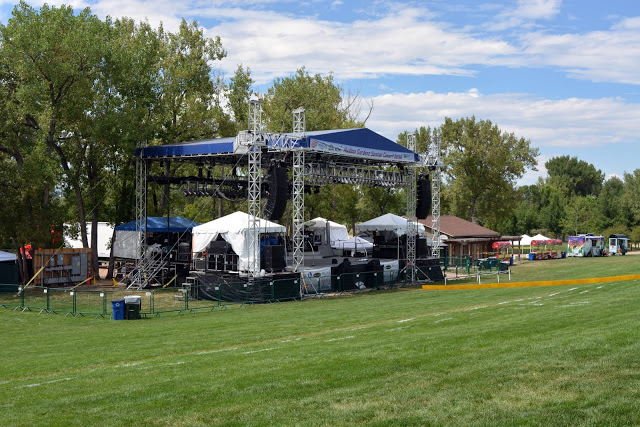
Concert Amphitheater at Hudson Gardens

A smaller production of Henry Purcell’s Baroque-era opera Dido and Aeneas will be performed in the Central City Opera House Gardens. Relatively few seats are available for these performances.

For more information and dates of performances, see the previous article on Central City Opera on this blog, or the Central City Opera’s 2021 Festival listing. 

Tickets for all three productions may be purchased through the Central City Web page or or by phone through the Central City Opera box office, at (303) 292-6700. Due to COVID, there are no in-person box office sales. Frequently asked questions (FAQ) for the 2021 Central City Opera summer festival are listed here.  

The Colorado Music Festival will return to their usual home at the Chautauqua Auditorium for all summer programs—a total of 22 performances—but because it is an indoor facility, the auditorium brings its own problems.

Chautauqua Auditorium

The CMF will address health concerns by selling tickets in “bubbles” of 2, 3 or 4 seats, with appropriate distance between the bubbles. All tickets within each bubble will be sold together, so there will be no single tickets available for the summer. Because the orchestra has to expand the stage to maintain safe distances between the musicians, the first six rows of seats will not be available. Most aisle seats will be held back as well.

A full chart of seats available for sale, as well as answers to ticketing FAQs, can be found here. For a description of the 2021 summer festival, you may read the previously published post on this blog, or consult the calendar on the CMF Web page. You may also purchase tickets through the CMF calendar page.

Central City Opera moves 2021 mainstage productions to Hudson Gardens

Outdoor venue will host socially-distanced RigolettoCarousel

By Peter Alexander March 19 at 1:50 p.m.

Central City Opera has announced that due to COVID precautions, their 2021 mainstage productions—Verdi’s Rigoletto and Rogers and Hammerstein’s Broadway hit Carousel—will not be performed in their intimate theater in Central City.

Hudson Gardens Concert Amphitheater

Instead, CCO has partnered with Hudson Gardens in Littleton to present both productions in an open-air theater. The summer’s third production, Henry Purell’s Dido and Aeneas, will be presented outdoors in Central City, in the Opera House Gardens, as will the CCO AL Fresco concert series. All three operas were postponed from the planned 2020 season, which was canceled.

In a media release sent out in early March, Central City Opera’s general/artistic director Pelham “Pat” Pearce was quoted saying, “We had hoped that by now it would be safe to return to the Opera House and resume normal operations.

“In order to prioritize the health and safety of our patrons, performers and company members, we determined it was necessary to secure an outdoor venue in order to return to live, in-person performances this summer. We are thrilled to partner with Hudson Gardens to host our 2021 Festival in their beautiful outdoor amphitheater.”

CCO will release tickets in phases, in accordance with the State of Colorado and CDC guidelines for capacity in the Hudson Gardens Concert Amphitheater. Subscribers to the 2020 season will be contacted b the CCO Box Office about tickets options for the 2021 season. Single tickets will go on sale in late April. Free parking will be available at Hudson Gardens, and subscribers will have priority access to purchase reserved parking. Other policies for the summer—including weather policies and the opera bus—are currently under review and will be announced in coming days. For more information, access CCOs 2021 Festival Frequently Asked Questions here

# # # # #

Central City Opera
Summer Festival 2021

Carousel
Music by Richard Rogers, book by Oscar Hammerstein

7 p.m. Saturday, July 3; Friday, July 9; Tuesday, July 13; Thursday, July 15; Saturday, July 17; Friday, July 23; Tuesday, July 27; Thursday, July 29
3 p.m. Wednesday July 7; Sunday, July 11; Sunday, July 25; Thursday, July 29; Sunday, August 1

Hudson Gardens, Littleton, Colo.

Rigoletto
Music by Giuseppe Verdi, libretto by Francesco Maria Piave

7 p.m. Saturday, July 10; Friday, July 16; Tuesday, July 20; Thursday, July 22; Saturday, July 24; Wednesday, July 28; Friday, July 30
3 p.m. Wednesday, July 14; Sunday, July 18; Tuesday, July 27

Hudson Gardens, Littleton, Colo.

Dido and Aeneas
Music by Henry Purcell, libretto by Nahum Tate

1 p.m. Saturday, July 17; Tuesday, July 20; Thursday, July 22; Wednesday, July 28

Central City Opera House Gardens

Information and tickets

Taking a summer festival apart: Central City Opera

“We will all work it out because that’s what we do.” —”Pat” Pearce

By Peter Alexander May 23 at 11:12 a.m.

CCO House stageCentral City Opera (CCO) was in a better position than most summer festivals when the Coronavirus pandemic hit.
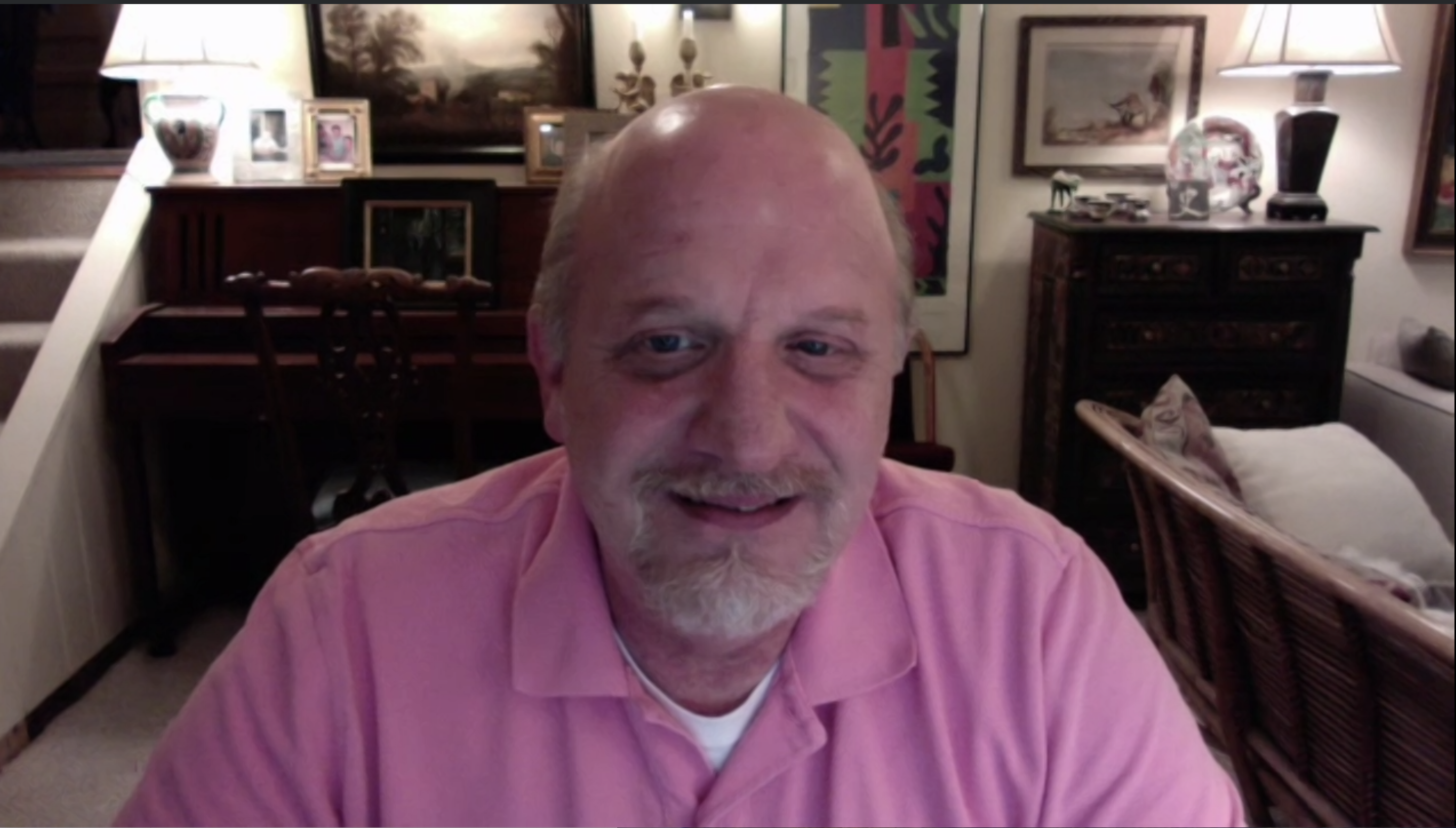
“We were in the unique position of being able to pick this year’s season up and drop it into next season,” CCO artistic director Pelham (“Pat”) Pearce says from his home office in Denver. “While we had lots of things on hold [for 2021], we had not issued the first contract.“

Screen Shot 2020-05-13 at 2.18.21 PM

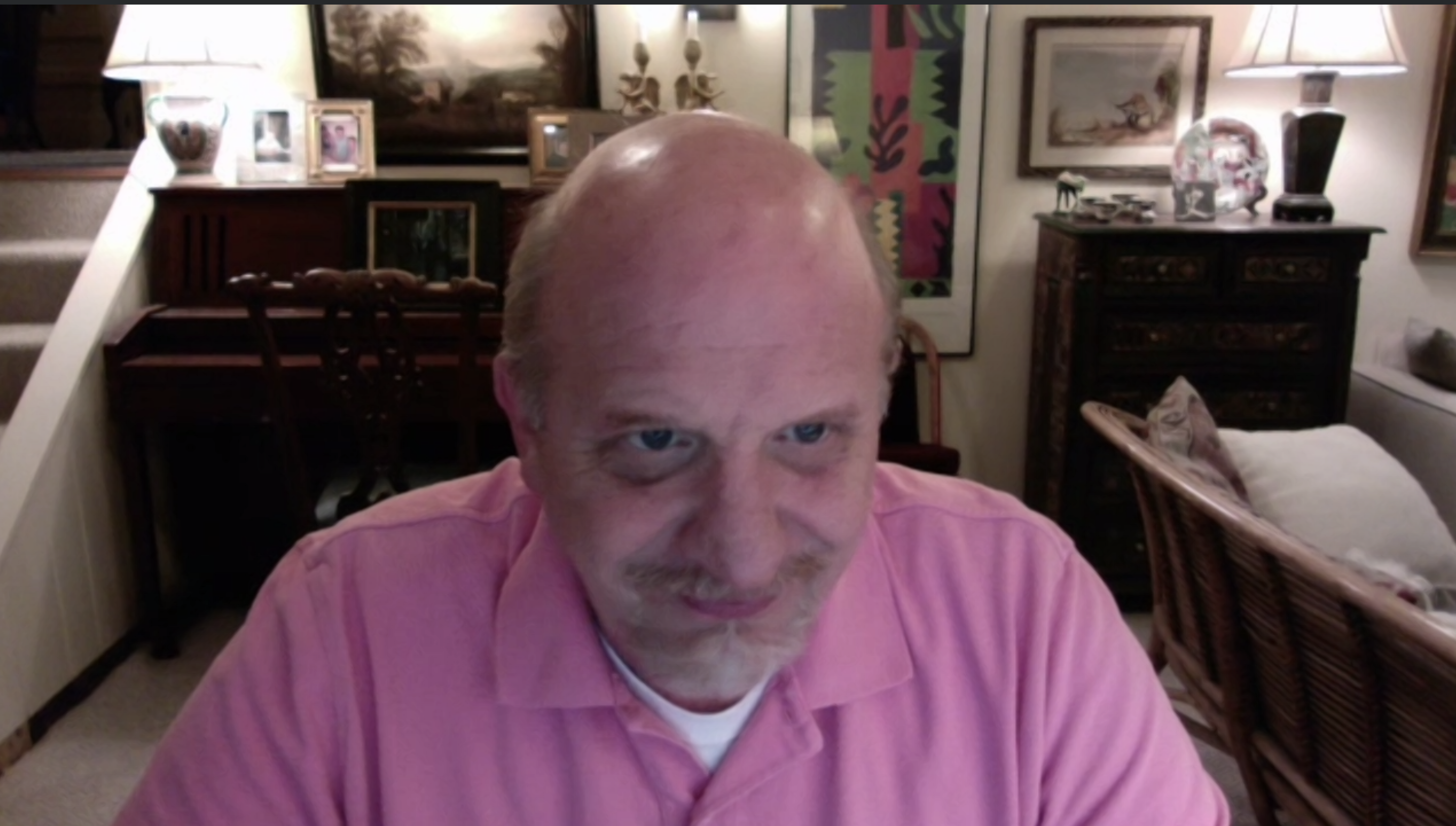
Pelham (Pat) Pearce in his basement office at home in Denver

So rather than outright cancel the three-work season that they had announced—Verdi’s Rigoletto, Rogers & Hammerstein’s Carousel and Henry Purcell’s Dido and Aeneas—they simply postponed the entire season for a year. They could do that because of factors unique to an opera festival like Central City: They own their own facilities; they had planned only three works, rotated over the summer; and many of their employees apart from artists engaged for specific roles—the orchestra, stagehands, administrative staff and so on—are the same from year to year.

The singers engaged for the three works were offered the same roles next year. “Nobody out of any of the artists has wanted to pull out,” Pearce says. “Nobody has expressed a desire not to come and do this next year. And some of them did say that they’re excited that we didn’t cancel—especially the Carousel people, because they had invested a great deal of time learning dialog.”

In the past, Pearce noted, singers were often booked many years in advance, but since the economic crash of 2008–09, that has changed. “Because everyone had to deal with (having) so many contracts out when the bottom fell out in ‘09, that time span has shrunk for everybody,” he says. Not having future contracts to maneuver around was clearly an advantage.

As for the physical productions for the three works, the set and costume designs were done but nothing had been built yet. And since CCO owns their own opera house, there was no difficulty about dates or storage of supplies.

Like most summer festivals, Central City provides housing for the artists who come from out of state, but here again they were ahead of the game. “We own most of the housing we use,” Pearce says. “We were in the process of [arranging] for additional housing, which we ended up not having to do because we never signed the contracts.”

Screen Shot 2020-05-13 at 2.18.03 PMThe main question became the timing of the announcement. “We decided to wait until we could wait no longer, and see where we were at that point,” Pearce says. “We had to roll back probably 30 days from the first day that we would be working in Central City—in the time frame when people would have to make travel arrangements, giving people at least a month’s notice that they were not going to be employed with us this summer.
“We were in a spot where if we went a week or so longer, we would start incurring things that we couldn’t get out of. But the important thing was that we waited as long as we could, and we could not see that the situation was going to change for the better.”

Like literally everyone else in the performing arts, Pearce and Central City Opera don’t know when audiences will be able—or willing—to return. “Until there’s a vaccine, frankly, we don’t know that we will have the ability to gather in large numbers again without any risk,” Pearce says. “Audiences will have a reentry period, probably, where they have to get used to being around other people and not having to be fearful.

“People will be reticent at the beginning, but our desire to engage and to consume art collectively is a very strong impulse, and I think that impulse remains. I believe that for our experience—music and theater—live is the primary experience. That is the true and honest experience of humans exchanging information and telling stories.”

Another way that CCO differs from other festivals is that within their home community, they are only a very small part of a huge economic engine: tourism. “We drive between 15 and 20,000 people up there, over [the summer], but the casinos represent somewhere between 80 and 90%” of Central City’s economy, Pearce says. “That revenue is how the city’s budget is paid for. It’s going to be very difficult for them.”

Pearce acknowledges that much remains unknown about when and how Central City and other opera companies around the country will get back to what looks like “normal.” There are too many uncertainties to make solid predictions.

“There are so many things that normally are fixed that all of a sudden became very fluid,” he says. “We know that something will happen that will allow people to gather again. It always has been that way and it will go that way again. So we fully intend to be in business next summer.

“We will all work it out because that’s what we do. We’re creative people and we are creative problem solvers. We will work it out.”

CCO Night.2.Sewailam

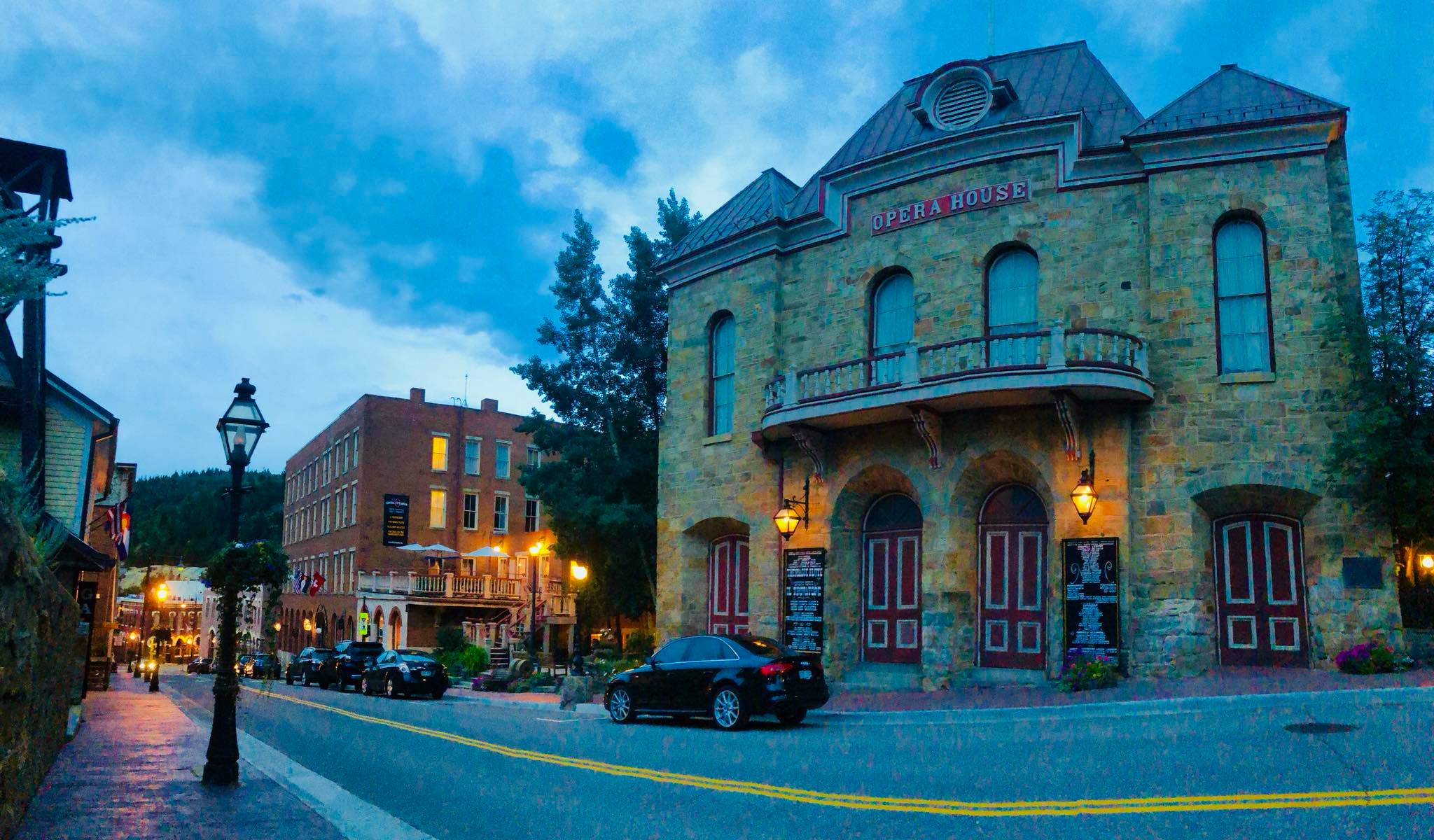
Central City Opera House. Photo by Ahsraf Sewailam.

Central City summer season is “postponed to 2021”

Previously announced schedule for 2020 will be presented next summer

By Peter Alexander May 4 at 10:25 a.m.

In a release sent out this morning, Central City Opera announced that its planned summer 2020 season has been postponed to next year.

unnamedThis year’s schedule was to have featured Rodgers & Hammerstein’s Carousel, Verdi’s Rigoletto and Purcell’s Dido and Aeneas. All  three will be presented in the summer of 2021.
In the message sent out this morning, Central City Opera general/artistic director Pelham “Pat” Pearce is quoted as saying “This news is extremely disappointing, but the decision is in the best interest of our audience, artists, staff and the community. The COVID-19 crisis is drastically impacting the livelihoods of hundreds of performers, musicians and technicians who bring stories to life on our historic Opera House stage.

“We are heartbroken audiences won’t experience their work this summer.”

Current ticket holders have the option to donate the cost of their ticket back to Central City Opera’s newly established COVID-19 Relief Fund, which will support the organization’s commitment to pay all of its 2020 Festival artists and staff a portion of their contracts and assist CCO during this unprecedented time.

Donations will be matched up to $100,000 by Carousel performance sponsors and long-time CCO supporters Pam and Dutch Bansbach. Additional matching support will be provided by the Central City Opera Board of Directors. Full refunds and transfer of tickets to 2021 are also available to patrons.

Ticket holder options are described here.  You can also call the box office for assistance at (303) 292-6700. You may read Pearce’s message to Central City Opera patrons here.

CCO Night.2.Sewailam

Central City Opera House. Photo by Ashraf Sewailam.


Central City emphasizes intimate aspects of Britten’s Billy Budd

Emotionally powerful production has impact

By Peter Alexander July 19 at 1:30 p.m.

Benjamin Britten’s Billy Budd is a large-scale opera that usually receives a large-scale production.

Based on a novella by Herman Melville, it takes place on a British man-of-war in 1797, during England’s war with France. The cast is large, all male: officers, sailors, marines, midshipmen, powder monkeys. That often leads to a very large set, such as the massive 1978 Metropolitan Opera production—still in use—that revealed multiple levels and decks of the MHS Indomitable, shifted up and down by theatrical elevators.

2019 Billy Budd - Central City Opera - Amanda Tipton Photography (03)

A portion of the large cast of Billy Budd fills Central City’s stage. Joshua Hopkins as Budd, center. Photo by Amanda Tipton, courtesy of Central City Opera.

It was all the more surprising then, when Central City Opera announced the Colorado premiere of Billy Budd in their intimate opera house. The production, now running at CCO though Aug. 2, reflects general/artistic director Pelham Pearce’s devotion to Britten’s operas.

Billy Budd offers perhaps the stiffest challenge of all of Britten’s operas for the company to mount on its small stage. The result is an emotionally powerful production, but one that has traded grandeur for a more intimate impact.

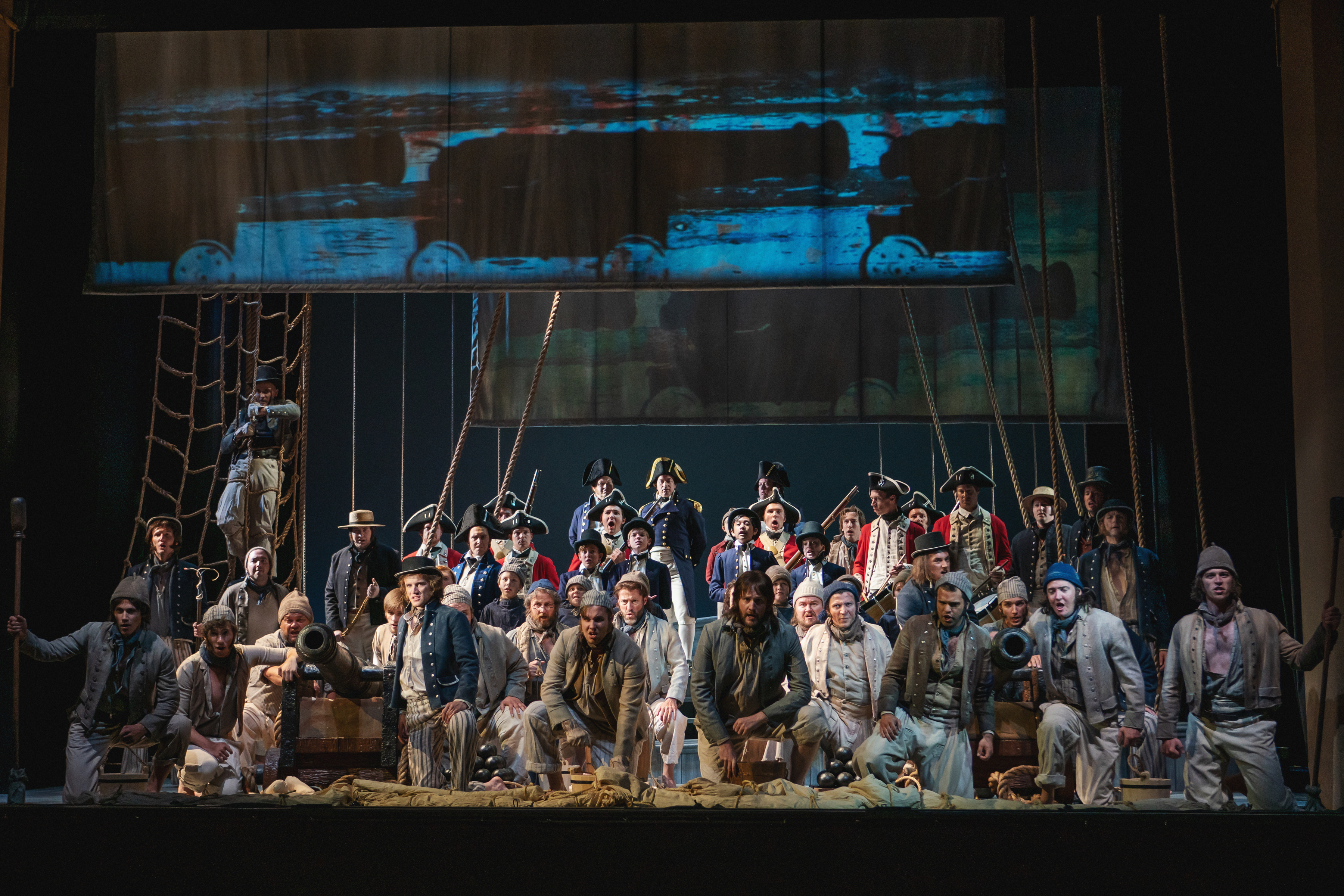
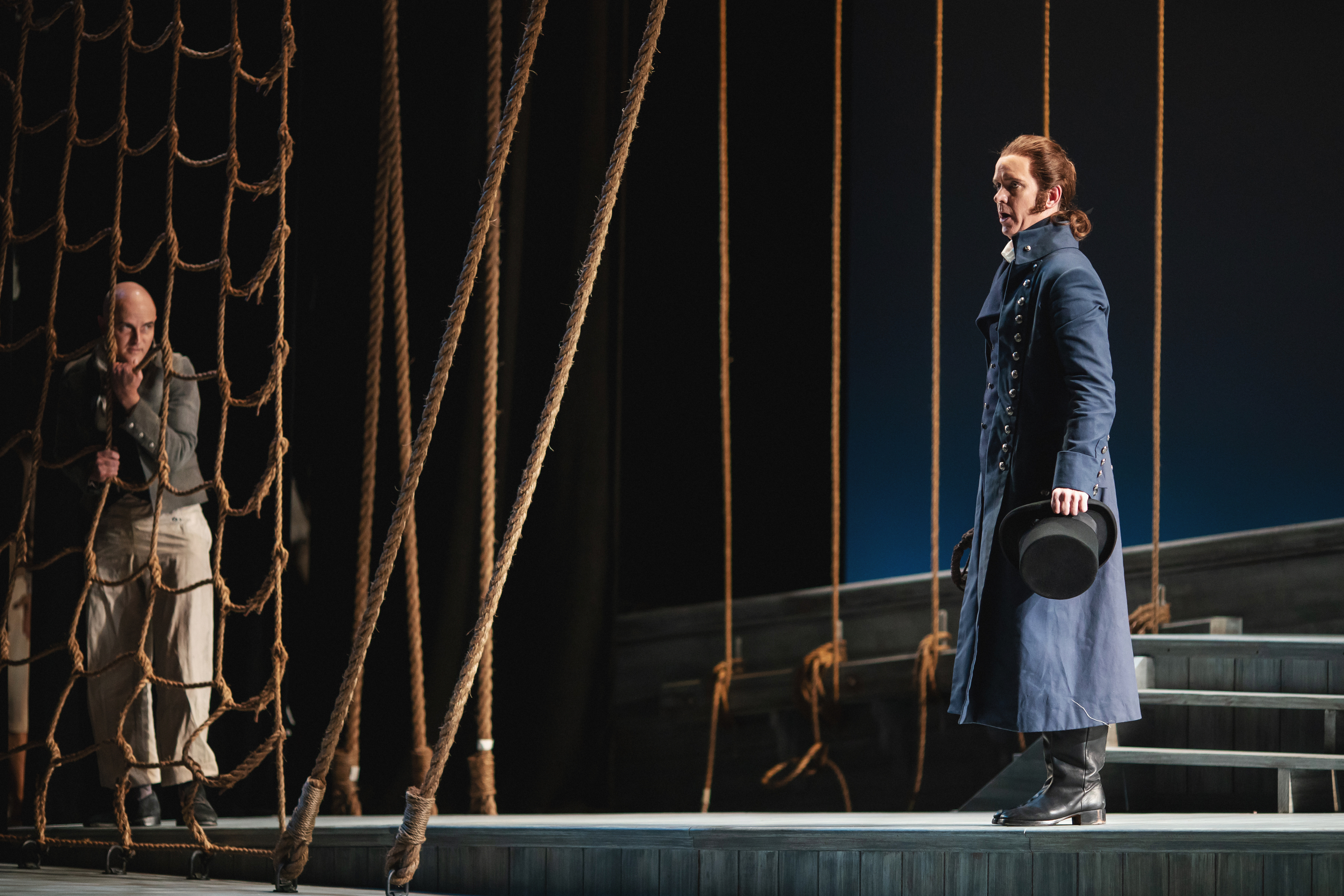
The scenic design by Takeshi Kata and David Martin Jacques is attractive, evoking a sailing ship from only ropes and tilted pieces of deck, and worked efficiently for all but the largest choral scenes. Projections by Sean Cawelti displayed on screens that doubled as ship’s sails were effective in enlarging the scope of the stage, and crisscrossing ropes became symbols of the naval regulations that confine everyone on board the ship.

2019 Billy Budd - Central City Opera - Amanda Tipton Photography (7)

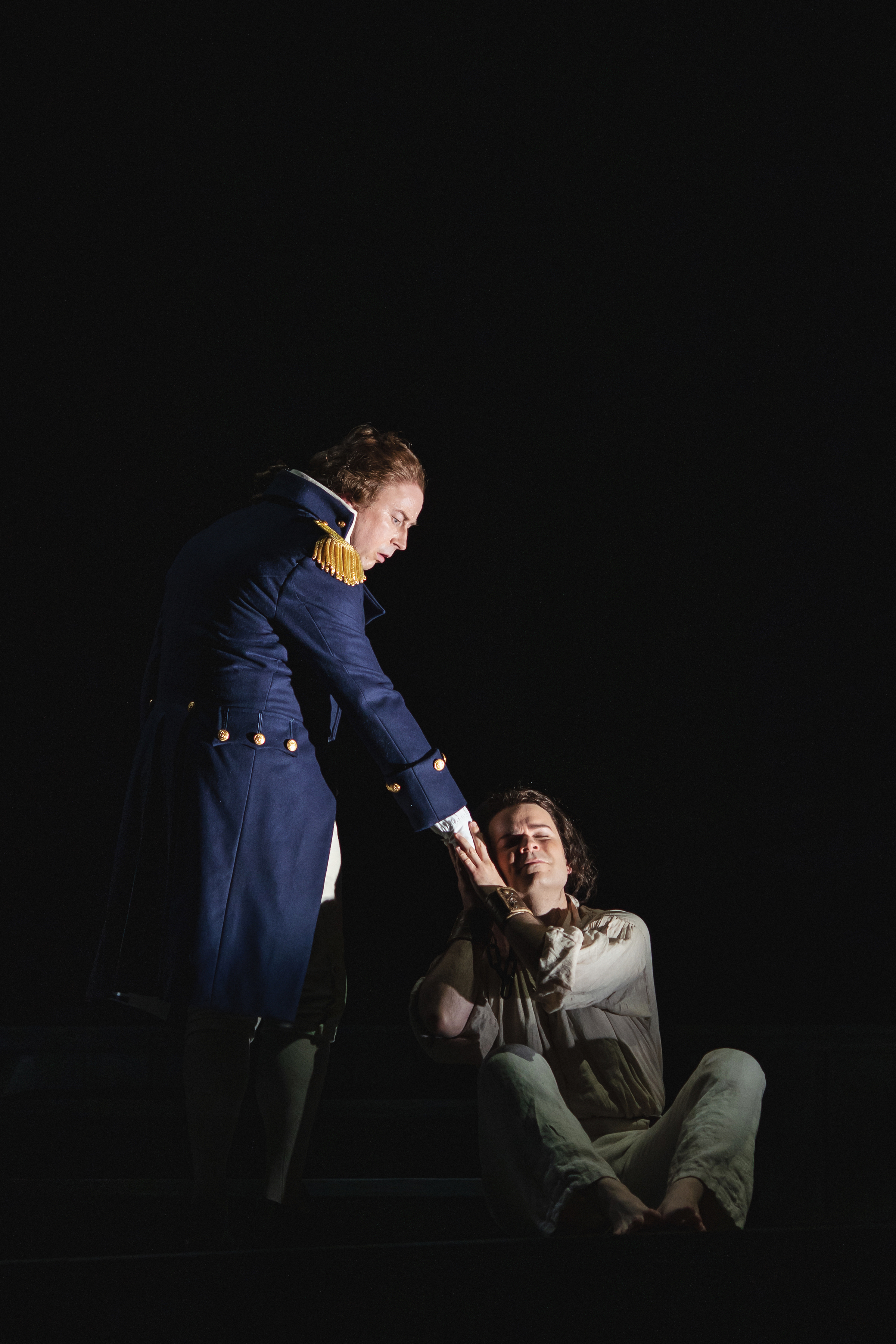
Intimate scene between Vere (Daniel Norman, left) and Billy (Joshua Hopkins). Photo by Amanda Tipton.

There are many scenes of distinct intimacy: the prologue and postlude by Edward Fairfax Vere, captain of the Indomitable; Vere with his fellow officers in his cabin; Budd with other sailors below decks; Budd with Vere and his subsequent trial; Budd in prison before his execution. In fact, the most important moments of the opera are moments of intimacy, and with the audience so close to the actors every glance and gesture had impact.

A notable aspect of the production was how powerfully it communicated the casual cruelty of an 18th-century naval ship. The flogging of a young novice sailor hit hardest, but there were many moments of routine brutality by officers toward the sailors, effectively revealing the crew’s suppressed emotions.

On the other side of the ledger, the small theater limits the range of musical dynamics and impact. Even moderately loud choral and orchestral sounds are felt viscerally in the tiny house, making distinctions among musical climaxes difficult; they’re all loud. Nonetheless, the big choral scene “This is our Moment,” when the Indomitable is chasing a French ship and the full cast comes onstage, is undeniably exciting.

2019 Billy Budd - Central City Opera - Amanda Tipton Photography (4)

Full cast of Billy Budd singing “This is our Moment.” Photo by Amanda Tipton.

Negatively, it was so crowded that it was difficult to take in all the different parts of the crew. It was impossible to separate officers from men, for example, or to show the place onboard of the young midshipmen and the powder monkeys who bring powder to the guns. That scene turned the crew into a single mass, obscuring hierarchical nuances.

2019 Billy Budd - Central City Opera - Amanda Tipton Photography (5)

Daniel Norman as Vere (center in officer’s uniform). Photo by Amanda Tipton.

In spite of the opera’s title, performances of Billy Budd depend most on the ambivalent character of Vere. Sympathetic to Billy, whom he knows to have been falsely accused, he is unable to free himself from routine and regulation in order to save him—a fact that haunts him to the end.

Daniel Norman brought a light, flexible, floating tenor to the part, capable of handling the meandering vocal lines eloquently. His transformation from old man (Prologue) to virile commander and back again (Postlude) was effective, in both staging and Norman’s physical appearance. His singing throughout was effective, with especially clear diction.

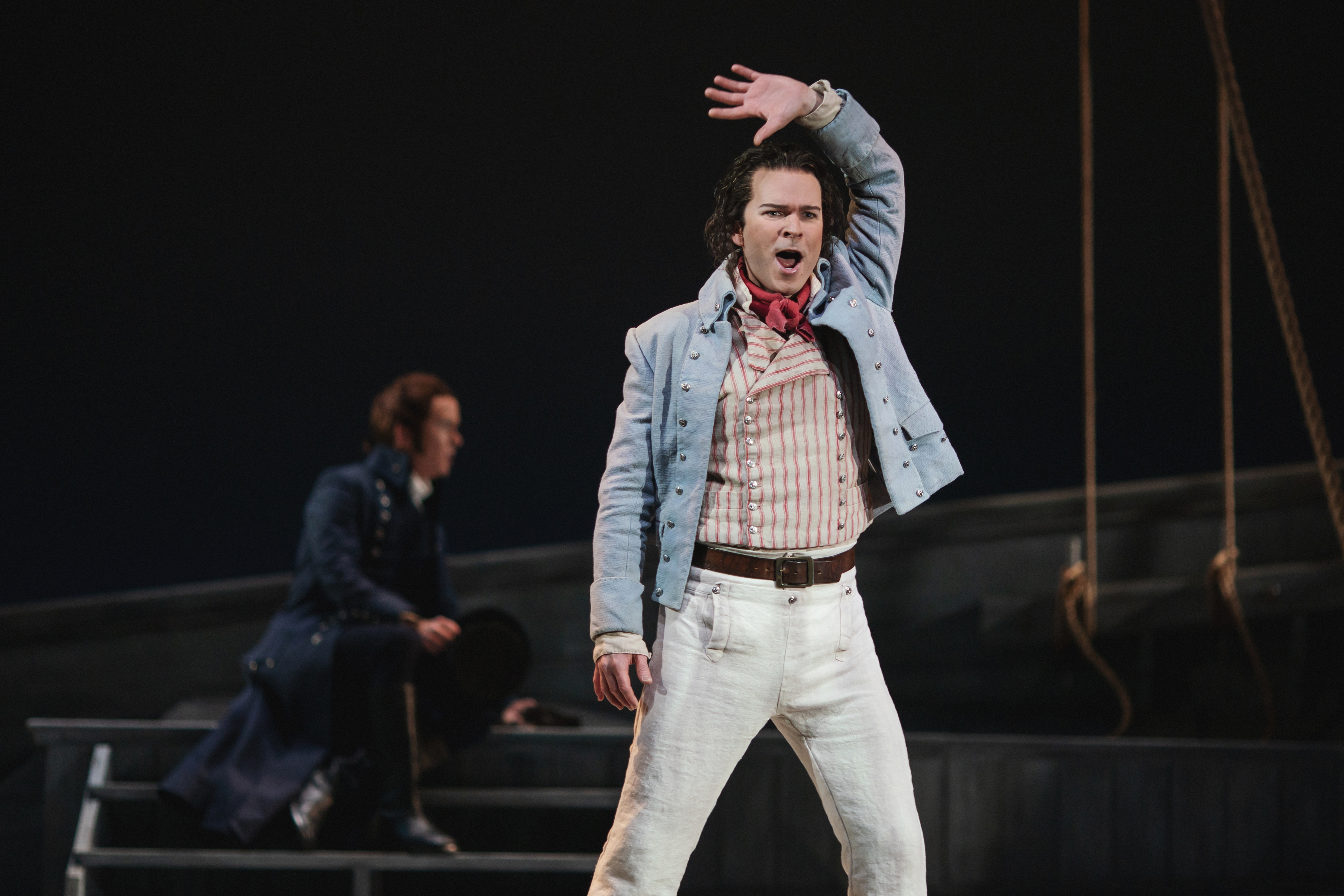
2019 Billy Budd - Central City Opera - Amanda Tipton Photography (0)

Joshua Hopkins as Billy Budd. Photo by Amanda Tipton.

Joshua Hopkins was everything Budd needs to be: attractive, innocent, naive. In fact, he was so appropriately a blank slate that he registered less than other more strongly marked personalities in the cast. He portrayed Billy’s relationships with fellow sailors well. His singing was always direct and expressive. His ballad, “Billy in the Darbies”—with a text by Melville—was simple and heartfelt, if not quite beautiful.

The other major character, master-at-arms John Claggart, is one of the great villains of opera. He even has a solo number to rival Iago’s famous “Credo” from Verdi’s Othello, singing “O beauty, o handsomeness, goodness . . . I will destroy you.”

2019 Billy Budd - Central City Opera - Amanda Tipton Photography (2)

Kevin Burdette (r) as Claggart; Joseph Gaines (l) as Squeak. Photo by Amanda Tipton.

Kevin Burdette seemed to relish this juicy role—and the boos that came with his curtain call. His voice took on a menacing edge, well conveying Claggart’s evil, but unremittingly so. He was effective in showing Claggart’s fundamental malignity, but the portrayal was one-dimensional. There was never the smooth, seductive sound that would have mitigated the vocal harshness and lent more depth to his cunning.

The many smaller roles surrounding these main characters were all ably handled by the cast. As Vere’s fellow offices Mr. Redburn and Mr. Flint, Dennis Jesse and Federico De Michelis were vocally solid and appropriately reserved and aloof. They brought a welcome moment of humor to their duet “Don’t like the French.”

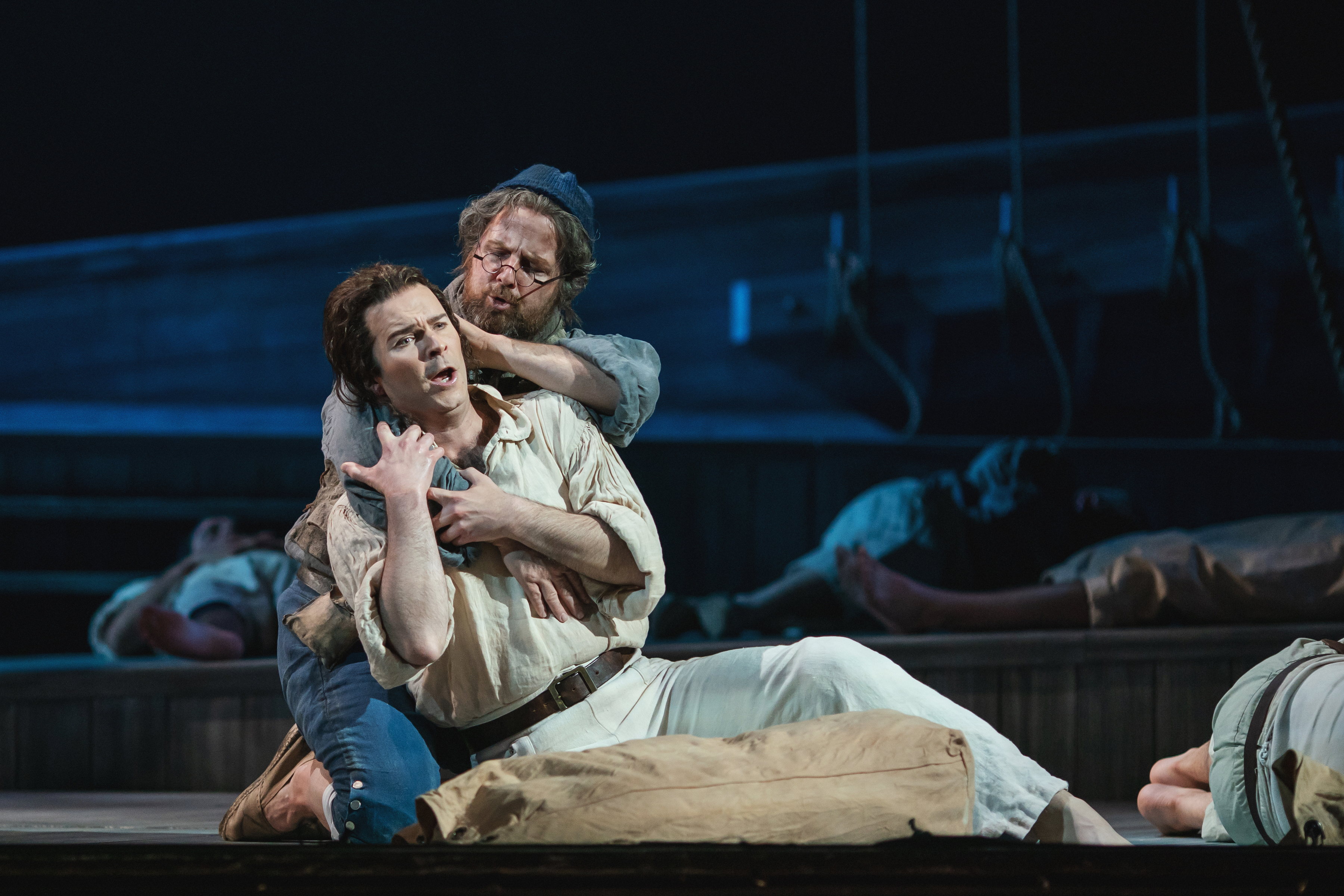
2019 Billy Budd - Central City Opera - Amanda Tipton Photography (3)

Joshua Hopkins as Billy Budd (front) with Matthew Burns as Dansker. Photo by Amanda Tipton.

Joseph Gaines was a tellingly whiny Squeak and Jonas Hacker suffered convincingly in the unhappy role of the Novice. Benjamin Werley (Red Whiskers), Jonathan Hayes (Donald), Sean Stanton (Bosun) and Brian Kontes (Lt. Ratcliffe) were all fine in their smaller roles. Matthew Burns brought warmth and sympathy as Billy’s truest friend, Dansker. Ethan Conklin made a good impression as the cabin boy, and the Midshipmen and Powder Monkeys were valuable to the success of the production.

Stage director Ken Cazan made creative use of the small stage, using levels and spaces to delineate differences of rank. There was never any doubt where every character stood in the moral hierarchy that lies at the heart of the story.

One negative note, for me: Vere’s apparent heart attack as he was singing his final words struck me as melodramatic and grotesque. It would be better to let the words speak of the approaching end without unnecessarily pounding the point home.

Conductor John Baril, who is CCO’s music director, led the excellent orchestra with great sensitivity. He maintained a careful balance between pit and stage—with help from Britten’s expert orchestration—and kept the opera moving resolutely to its tragic end. He moved more resolutely than most through the sequence of 32 chords that represents Vere’s private conversation with Billy after his trial, a choice possibly shaped by the unusual staging that left Vere onstage throughout.

A special word must be said for the orchestra, who handled Britten’s score beautifully. Although Billy Budd calls for large orchestra, and it was heard with great force when needed, much of the scoring is delicate. There are many wind solos, by saxophone, by flute, by clarinet, by bassoon, and all were wonderfully played.

One final note about the summer’s pair of mainstage productions: Madama Butterfly and Billy Budd are both stories of innocence betrayed. It is fascinating to see this common theme explored in such different musical styles and contexts. This may be just a happy coincidence, but seeing both in one summer deepens the experience of each opera.

Billy Budd continues through Aug. 2 with both evening performances and matinees. Anyone who loves Britten or cares about opera should take the drive up to Central City to hear this relative rarity live.

# # # # #

Central City Opera
Benjamin Britten: Billy Budd
Libretto by Eric Crozier and E.M. Forster
John Baril, conductor; Ken Cazan, director

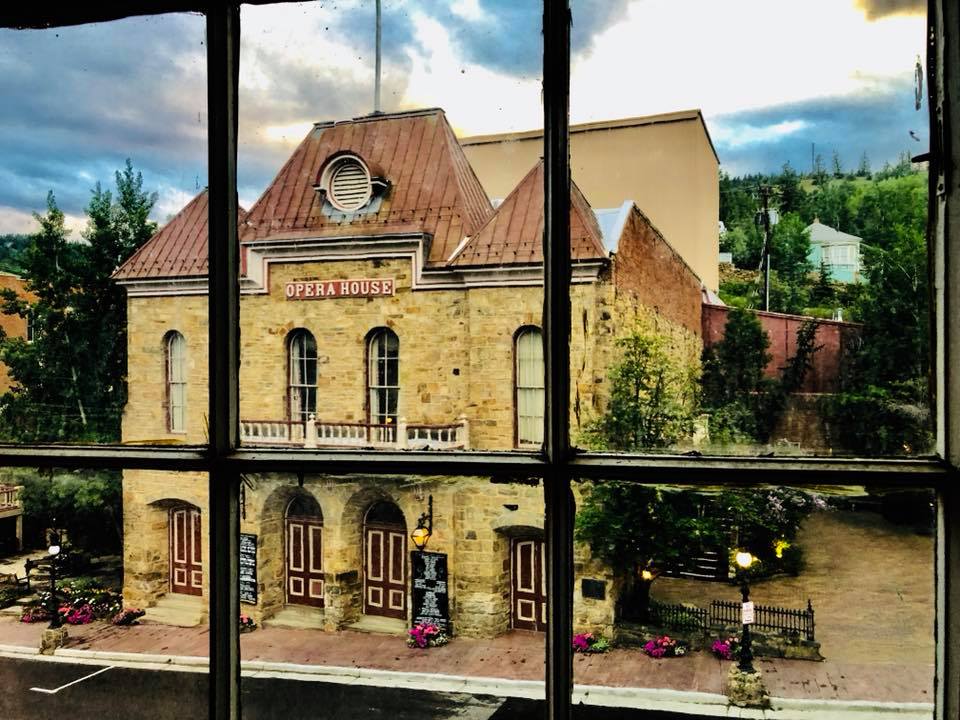
CCO House by Ashraf Sewaiilam

Central City Opera House. Photo by Ashraf Sewailam

Remaining performances:

8 p.m. July 19 and 25
2:30 p.m. July 21, 23, 27, 31; Aug. 2

Central City Opera House

Full cast, credits and tickets at the CCO Web page.

Central City opens 2019 festival with a deeply moving Butterfly

In title role, Raquel Gonzáles leads a strong cast

By Peter Alexander July 8 at 2:45 p.m.

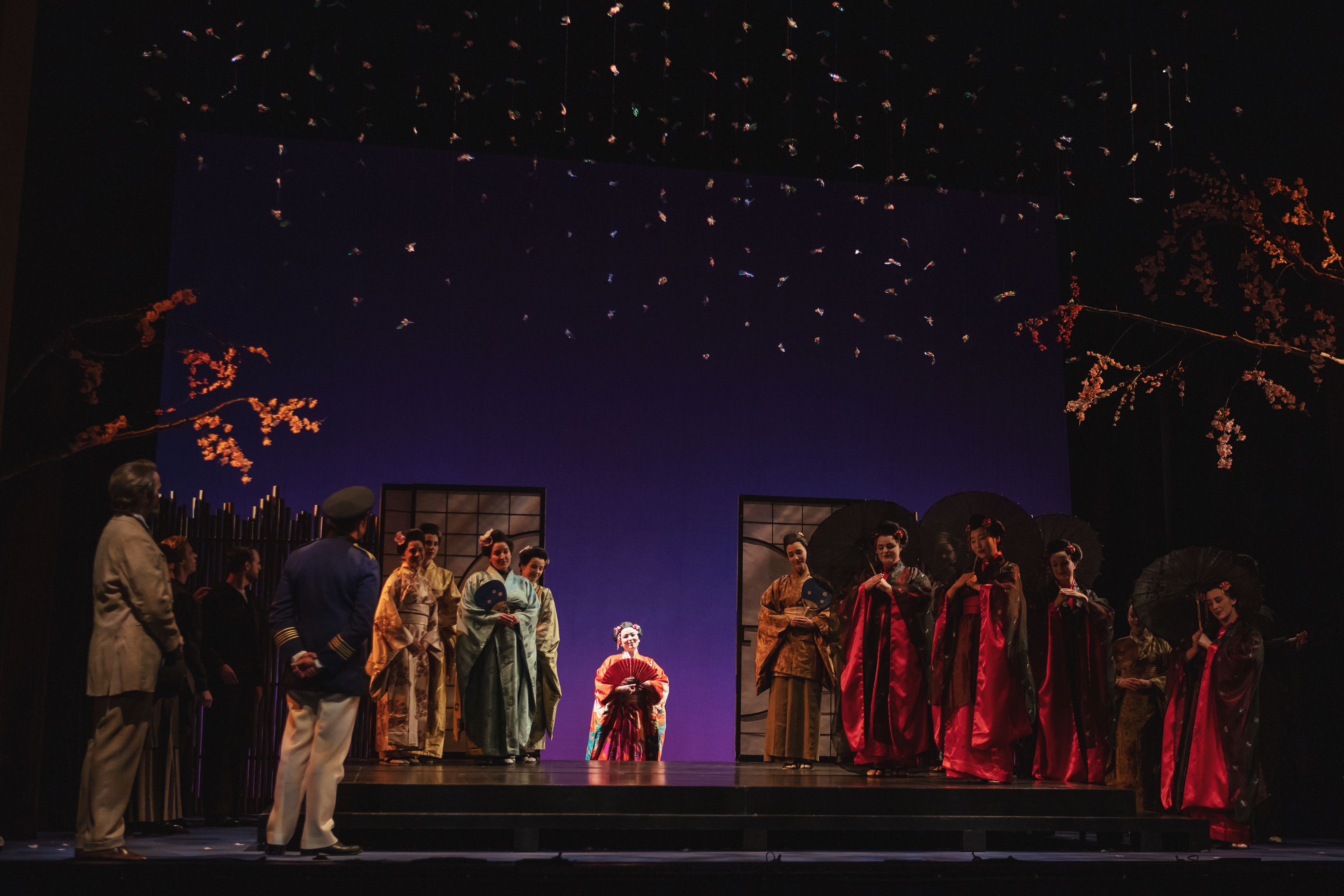
Central City Opera opened its 2019 festival season Saturday (July 6) with a powerful and dramatic Madama Butterfly.

The scene and costume design by Dany Lyne were first used in 2005, in a production directed by the soprano Catherine Malfitano. She has sung the role of Butterfly, and she appeared in her first operatic role at the CCO in 1972 so it was natural for her to return to Central City 33 years later for her directorial debut. The physical production was used again in 2010, and for this year’s production directed by Alison Moritz.

Madama Butterfly - CCO 2019 - Amanda Tipton Photography (04)

Butterfly’s Entrance, Act I of Madama Butterfly. Photo by Amanda Tipton, courtesy of Central City Opera.

The scenery is minimal but lovely, and the open design allows for considerable flexibility in representing different spaces in Butterfly’s house, where all action takes place. The costumes are effective and appropriate throughout; those for Butterfly’s family in the first act are strikingly colorful, standing out beautifully against the set. Moritz made creative use of the limited space available on the Central City stage, giving the audience an effective and deeply moving interpretation.

Madama Butterfly - CCO - Amanda Tipton Photography

Raquel González as Butterfly

As Butterfly, Raquel González shone within a generally strong cast. Her beautiful voice was used to good effect for both musical and dramatic expression. To mention but a few details: she started softly and hesitantly, befitting a 15-year-old girl who has been sold into marriage. But once she and Pinkerton were alone, both her singing and Moritz’s sensitive direction revealed her growing passion.

Her strength and volume grew throughout the long love duet, symbolizing her growing confidence, swelling to her greatest volume on the very last note of the act. In the second act, her voice was aglow when she thought Pinkerton was returning, then lost all warmth and color when she realized that he was not coming back.

One final note: her death scene is hard to get right, but her hesitation when she heard Pinkerton’s voice, her resolve to go ahead with suicide, the staging of her ritual death were terribly realistic, avoiding the empty clichés that too many productions resort to. This amplifies the impact of the ending, which was reserved, tellingly, for just Pinkerton and Butterfly.

Madama Butterfly - CCO 2019 - Amanda Tipton Photography (19)

Cody Austin as Pinkerton. Photo by Amanda Tipton, courtesy of Central City Opera.

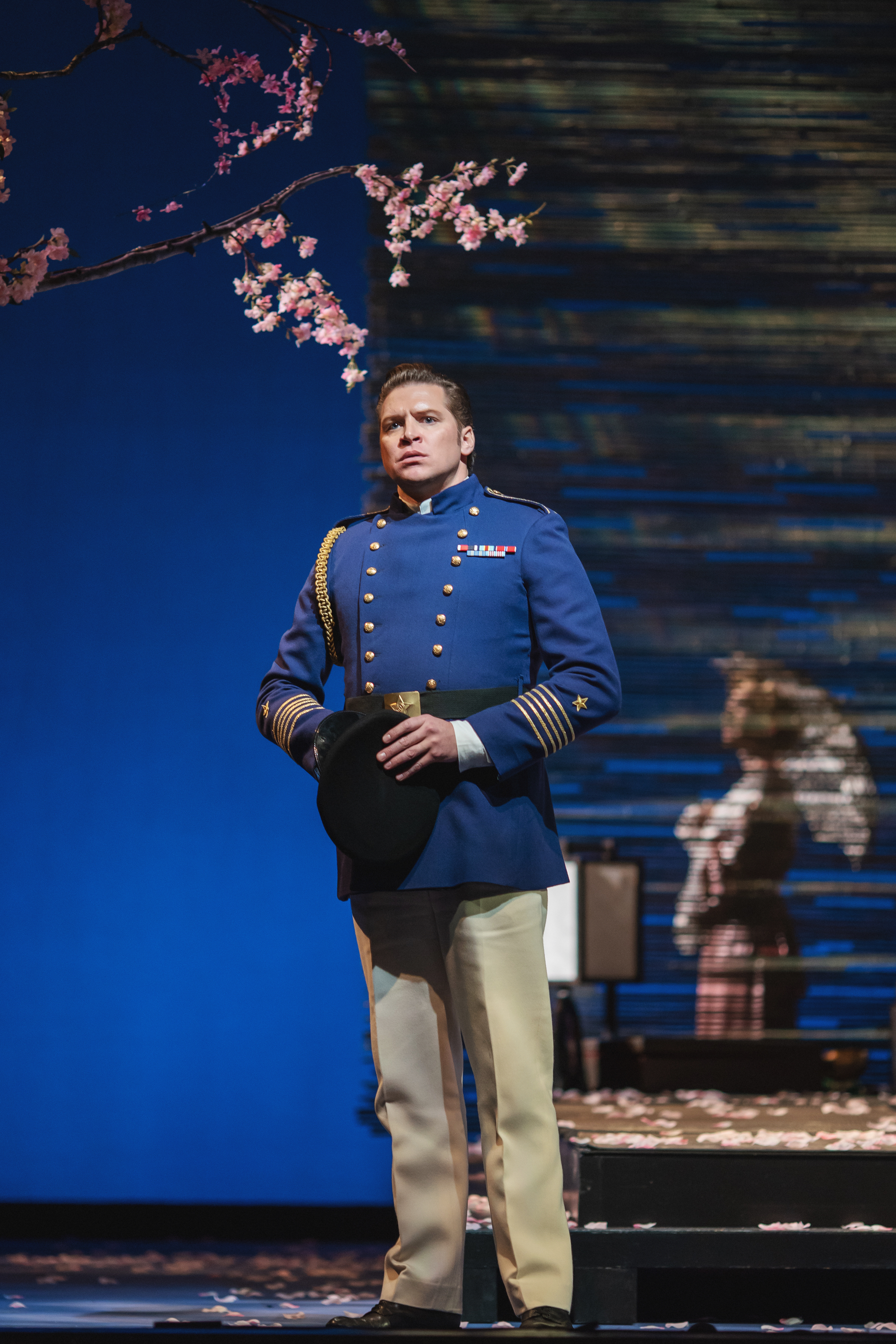
Cody Austin’s Pinkerton was strong, direct, and touched with the swagger of a feckless young naval officer. His voice was powerful and well heard throughout, with a bright tenor sound that developed a harsher edge when pushed at the top. The thoughtless Pinkerton is not an ingratiating role, but Austin managed to make him both attractive enough in his casual manner to be a believable lover, and callous enough to heighten the pitch of Butterfly’s tragedy. This is a difficult and crucial line to observe, and both Moritz as director and Austin as actor/singer found a good balance.

Troy Cook was a forthright, steady presence, vocally and dramatically, as the American consul Sharpless. His part contains no vocal fireworks, since he suffers none of the violent passions, but his solid baritone was comfortingly smooth throughout. The conscience of the opera, he came across as sympathetic, frustrated, then angry with Pinkerton, in this respect standing in for the audience.

Madama Butterfly 3 - CCO - Amanda Tipton Photography

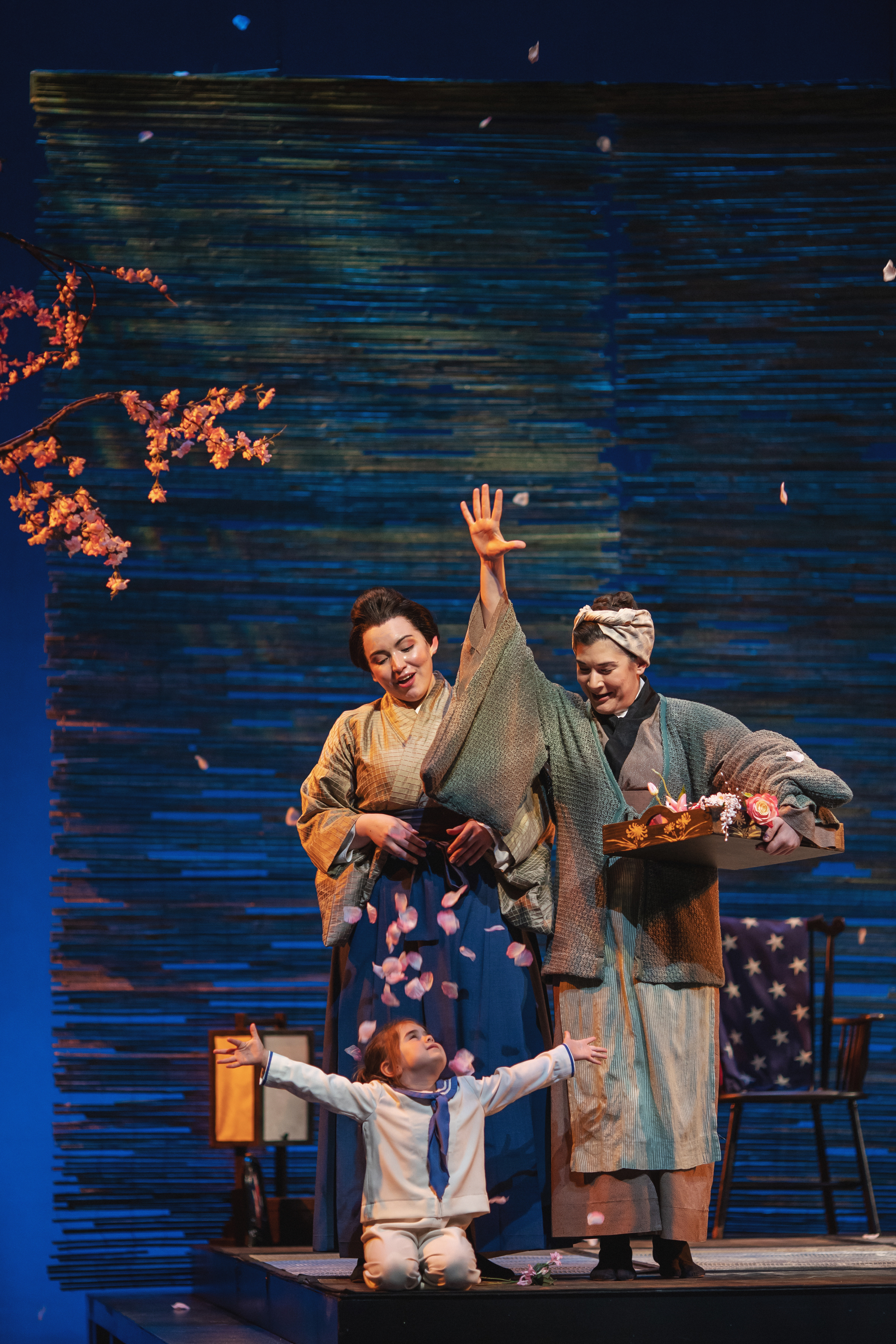
Act II: Raquel González (l), Annie Rosen (r), and Isla Burdette (kneeling). Photo by Amanda Tipton, courtesy of Central City Opera.

Suzuki is an absolutely vital role that is too easy to take for granted. Annie Rosen was exemplary as Butterfly’s servant, her warm sound as comforting and reliable as Suzuki’s love and support for her mistress. In the context of Butterfly’s Japanese environment, she is the understanding common woman who observes Butterfly’s unwavering love for an American with sympathy and apprehension. She was in fact the ideal comprimario, as roles are called that are identified as being “with the primary” characters—musically supportive, solid as a duet partner, never outshining the star.

Joseph Gaines was just obsequious and servile enough as Goro the marriage broker. He sang clearly, with just a touch of the oily flatterer in his sound. Brian Kontes made a very strong impression as the Bonze. His denunciation of Butterfly’s conversion to Christianity was imperious, vocally the curse of a religious tyrant. Thaddeus Ennen sang well in the thankless role of Prince Yamadori, and Christina Pezzarossi was effective in the even more thankless role of Kate Pinkerton.

I should devote a few words to Isla Burdette, the child who played “Trouble,” Butterfly’s son. She had more to do than is often the case, and she carried it off like a pro—perhaps reflecting the fact that her father, Kevin Burdette, is an opera singer? (He will be heard later in the CCO production of Britten’s Billy Budd.) I cannot resist the emotional tug of children on stage, and she is one of the best I have seen.

Conductor Adam Turner had all of the flexibility, the push and pull of tempos and emotional turns of Puccini’s score well in hand. The orchestra played with sensitivity and great expression, especially in the tender moments of the score. The humming chorus and orchestra interlude in Act II were especially beautiful.

Alison-Moritz-for-website

Stage director Alison Moritz

But it is the stage direction and deeply human, emotive performances that carried the night. There were many small touches that brought the characters to life—the photographer who records the marriage party, so that Butterfly later has a framed photo on hand; the costumes that showed the westernization of Japan in the early years of the 20thcentury, thus highlighting the cultural clash that underlies the story.

For me, the most telling detail was Butterfly’s mother, clinging tearfully to her daughter when the family abandons her after the Bonze’s denunciation. This wrenching moment makes clear the totality of Butterfly’s isolation when Pinkerton leaves Japan. In comments before the performance, Moritz said that she wanted to make Madama Butterfly “a story about a family.” In this and other moments she succeeded, devastatingly.

Madama Butterfly continues at Central City Opera through Aug. 4 (see dates below). Tickets are available through the CCO Web page.

# # # # #

CCO House by Ashraf Sewaiilam

Central City Opera House. Photo by Ashraf Sewialam

Giacomo Puccini: Madama Butterfly
Adam Tuner, conductor; Allison Moritz, director

Remaining performances:
8 p.m. 18, 26 and 30
2:30 p.m. July 10, 12, 14, 16, 20, 24, 28; Aug. 1 and 4
Central City Opera House

Full cast, credits, and tickets here.


Revised 7.10.19 to include production photos, courtesy of Central City Opera.

Puccini, Britten, and two short sacred works at Central City Opera

‘The roof is going to come off’ says Central City Opera general director

By Peter Alexander July 3 at 2:30 p.m.

Central City Opera (CCO) opens its 2019 festival season Saturday (July 6) with one of opera’s most loved works, Puccini’s Madama Butterfly.

2019 Central City Opera Festival.Madama Butterly

Madama Butterfly. Courtesy of Central City Opera.

Other works on the schedule are less familiar: Billy Budd by Benjamin Britten, which has an all-male cast; and a double bill of two short works for all women, Debussy’s Blessed Damozel and Francis Poulenc’s Litanies to the Black Virgin. Puccini and Britten will be presented in the Central City Opera House, and the shorter works in St. Mary of the Assumption Catholic Church, at 135 Pine St. in Central City.

The season came together around the choice of Billy Budd for one of the mainstage productions. Pelham Pearce, the general/artistic director of CCO, is a fan of Britten’s music and aims to eventually do all of his operas at CCO. So far they have done six.

Billy Budd, with its large all-male cast and setting on a British man-of-war, is a challenge for any opera company, much less a small house like Central City. “Billy Budd is, at this point, the biggest show we will ever have done inside the theater,” Pearce says. “There are so many people it’s just crazy, but it’s such a glorious work, I swear the roof is going to come off.”

Read more in Boulder Weekly.

# # # # #

Central City Opera
Summer 2019


Giacomo Puccini:  Madama Butterfly

Adam Tuner, conductor; Allison Moritz, director
8 p.m. July 6, 18, 26 and 30
2:30 p.m. July 10, 12, 14, 16, 20, 24, 28; Aug. 1 and 4
Central City Opera House

Full cast, credits, and tickets  here.

Billy Budd

Billy Budd. Courtesy of Central City Opera.

Benjamin Britten: Billy Budd
Libretto by Eric Crozier and E.M. Forster

John Baril, conductor; Ken Cazan, director
8 p.m. July 13, 19 and 25
2:30 p.m. July 17, 21, 23, 27, 31; Aug. 2
Central City Opera House

Full cast, credits and tickets here.

Double Bill
Debussy: The Blessed Damozel
Libretto by Dante Rosetti
Francis Poulenc: Litanies to the Black Virgin

Peter Walsh, music director; Alessandro Talevi, director
1 p.m. July 23, 24, 31 and Aug. 1
St. Mary of the Assumption Catholic Church, 135 Pine St., Central City

Tickets here.

Madama Butterfly, Billy Budd to be presented by Central City Opera in 2019

The schedule also includes smaller works by Debussy and Poulenc

By Peter Alexander July 27 at 5:20 p.m.

While you were busy watching the operas, Central City Opera Company slipped some news into the program book.

CCO House by Ashraf Sewaiilam

Central City Opera House (photo by Ashraf Sewailam)

Page 10 of the deluxe 2018 season book lists the 2019 season, which will offer the opportunity to hear one of the most popular operas ever, as well as three works that are genuine rarities in the opera house. The latter include two smaller works more often classified as oratorios, and one major opera by a truly great opera composer.

The season will follow the pattern of recent years, with two large-scale productions in the Central City Opera House, and two smaller one-act works in more intimate venues in Central City:

* Madama Butterfly by Giacomo Puccini
* Billy Budd by Benjamin Britten
* La Damoiselle élue (The blessed damozel) by Claude Debussy
* Litanies à la Vierge noire (Litanies to the Black Virgin) by Francis Poulenc

CCO Butterfly 2010 Yunah Lee.Chad Shelton

Yunah Lee and Chad Shelton in Madama Butterfly, Central City 2010

According to the Web site Operabase, Butterfly was the seventh most frequently performed opera in 2017–18, with 2,428 performances world wide. It was last performed by CCO in 2010. That production will be returning, but with a different director.

It was long been the ambition of CCO’s general/artistic director Pelham G. Pearce, Jr., to present all of the operas by Benjamin Britten in Central City. “Oh, I love Britten!” he says.

Of the Britten operas yet to be done at Central City, Billy Budd, which calls for a very large cast of all men and takes place on a British man-o’-war, would seem to pose the greatest challenge in the intimate Central City Opera House.

glyndebourne-billy-budd

Billy Budd at the Glyndebourne Festival

Billy Budd is at this point the biggest show we will ever have done inside the theater,” Pearce says. “I’m really excited about it. There are so many people in Billy Budd it’s just crazy, but it’s such a glorious work. I swear the roof is going to come off in that space!”

In contrast, the smaller works next year will feature female voices. “Because Billy Budd is all male, outside of the main stage we will be staging Debussy’s Blessed Damozel, which is all female” Pearce says. “And going along with that will be The Litany of the Black Virgin by Poulenc, also for all female voices.”

Offering two shorter works each year is a plan that Pearce has become attached to. “We do really well with these (shorter) shows,” he says. “And they provide a really great opportunity to show off young artists. So I’m pleased with them.

“It provides me the opportunity to play a little bit in areas of repertory that we normally don’t get into. There’s a whole lot of stuff that’s written that’s not a full evening in the theater, and that often gets neglected. So having the opportunity to play in that pond of work has been really a lot of fun for me.”

Pat.Pearce.2018

Pelham (Pat) Pearce

Pearce is especially happy to offer the two works for all female voices. “I have a thing about just women voices,” he says. “Blessed Damozel is a gorgeous piece that (Debussy) wrote when he was very young. He originally wrote it for just piano, which is how we’re going to do it. It’s glorious music, (and all) you’re going to have to do is walk into the church, sit down, and be immersed in the sound.”

He first heard Blessed Damozel years ago when he bought a recording. He had never heard it before, but, he says, “I put this on and said ‘My god, that’s the most beautiful thing I’ve heard in my life!’ So that’s been stuck in the back of my head for years. And now I have an opportunity to do it!”

Although the season has been announced, tickets are not yet available for 2019. Cast members and production details are generally announced in the fall, with subscriptions going on sale in December and single tickets in the spring preceding the summer season. Watch for further announcements on the CCO Web page.


Central City Opera one-acts offer fun, joy

Mollicone’s Face on the Barroom Floor, Handel’s Acis and Galatea

By Peter Alexander July 27 at 12:45 p.m.

Central City Opera is offering two one-act operas this summer, in addition to their two full-scale productions in the main opera house (Verdi’s Il Trovatore and Mozart’s Magic Flute).

Handel’s Acis and Galatea is receiving its first CCO production, while The Face on the Barroom Floor by Henry Mollicone was written for the company 40 years ago and was performed annually until a few years ago. It is being revived this year for its fortieth anniversary. Both shows are cast with members of the Bonfils-Stanton Foundation Artists Training Program.

FaceI may be the last person in Colorado who has not seen Face on the Barroom Floor, but if you find yourself in the same category, it’s too late this year; remaining performances of this modest 25-minute work are all sold out. The opera is presented in the Williams’ Stables, an intimate theater space across the street from the main Central City Opera House. And that is both the joy and the one drawback of the performance.

It is a joy, because everyone in the 90-seat Williams’ Stables performance space is close enough to interact with the singers. In fact, members of the audience are recruited to stand in as the barroom’s patrons for about half of the opera. But the drawback is that it is a small space, with a low ceiling, easily filled by operatic voices. Between pure volume and some imperfect diction, not all of the text can be understood.

williams-stables-central-city-colorado-BK4KWP

Williams’ Stables in Central City

That aside, the performance is great entertainment. It is a young person’s story, brim full of youthful passions, ideally suited for the young artists of the training program. The cast I saw had Gillian Hollis as Isabelle/Madeline, who becomes the face; Zachary Johnson as the hotheaded barman of past and present (Tom/John), and Martin Luther Clark as his sarcastic, skeptical rival for Isabelle/Madeline’s attentions (Larry/Matt). All were delightful.

Hollis was pert, pretty and bright-voiced in the central role—can we call it the title role? She sang with convincing expression throughout, capturing the audience’s sympathies as she tries to keep the testosterone-fueled macho outbursts of the men under control. Of course, sopranos often have to die in opera, but it must be a record that she, poor thing, is shot dead twice in about 15 minutes.

Johnson was the very image of the bartender, solicitous of the guests from the audience, then on alert both times Larry/John came into his bar. His voice is clear and strong, his acting effective and believable. In spite of his morally ambiguous role in both scenes, he remained a sympathetic character.

Clark has a solid tenor voice, with clear diction throughout; not a word was lost. He put across Larry’s sarcasm in the present-day scenes so well that one understood the bartender’s antagonism but not why Isabelle was with him in the first place. His fights with Tom/John were well done, by both actors and in both eras.

The small accompanying ensemble (piano, flute, cello) played well, the costumes are effective in both delineating character and distinguishing eras, the staging fitting. If you missed it, you may need to lobby CCO to produce it again; it is a Central City tradition well worth enjoying.

# # # # #

AcisHandel is a world away from the old West and Mollicone’s gritty barroom drama, but Acis and Galatea is another opera well suited to young singers. Populated by shepherds, nymphs and a monstrous cyclops from Greek mythology, it has the same central conflict as Face: two men fighting for a woman’s love. Performed before a house of 120 seats set up in an open rehearsal room of the Martin Foundry in Central City, Acis is as intimate as Face, with members of the audience invited the help during the performance.
In Handel’s “Pastoral Entertainment” (as it was billed in 1718), Acis and Galatea are deeply in love and pine for one another when separated. The cyclops Polyphemus desires Galatea, and in his raging jealousy he kills Acis. But just as the spirit of Madeline haunts the barroom in Face, Acis lives on in a stream so that Galatea can swim in his love forever.

Acis18_0005

Acis and Galatea cast, left to right: Chris Mosz (Damon), George Milosh (Acis), Matthew Peterson (Polyphemus), Graycen Gardner (Galatea), Benjamin DaCosta-Kaufman (Corydon). Photo by Amanda Tipton

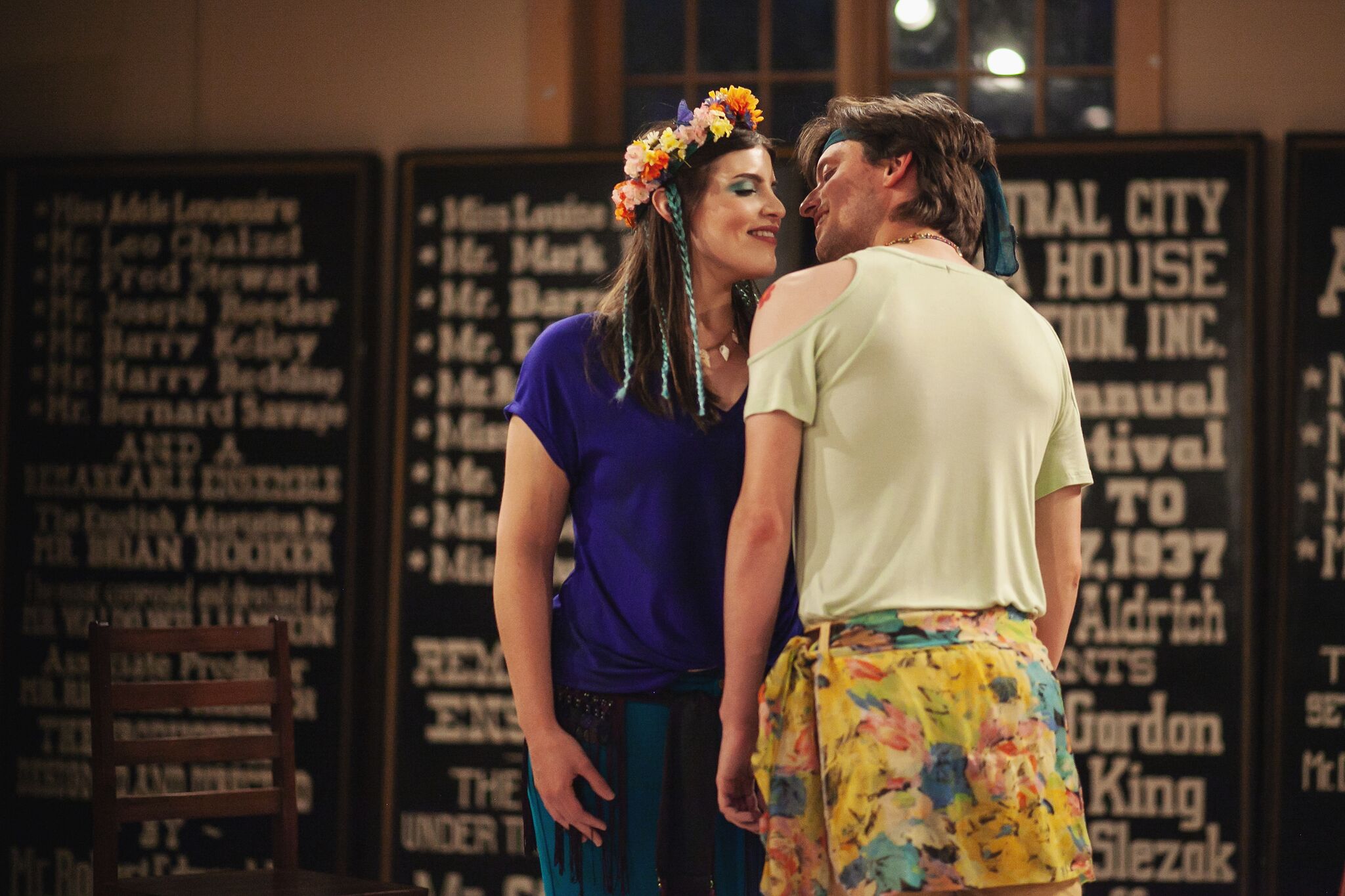
Director Ken Cazan has cleverly updated the setting to a Woodstock-like ‘60s hippie haven, an effective modern analogue to the pleasure-seeking Arcadian world evoked by the pastoral poetry of Handel’s time. Lines such as “Love on her breast sits panting” and “When he returns, no more she mourns, but loves the live-long day” certainly suggest the era of “make love, not war.” Cazan even takes in the modern sense the words of the opening chorus: “Happy nymphs and happy swains, harmless, merry, free and gay, dance and sport the hours away.”

The set—a long, narrow platform that runs the full diagonal length of the hall—, the costumes by Stacie Logue, and the hippy-dippy manner of the five-member cast all support the transformation to the sixties. The music, however, is pure Handel, and some of his most gorgeous music at that—stylishly played and sung by the cast and a small orchestra under the able direction of Christopher Zemliauskas. It was a joy to hear.

Acis 18_0018

Graycen Gardner (Galatea) and George Milosh (Acis). Photo by Amanda Tipton.

The 18th-century English of the libretto does not lend itself to easy understanding by a modern audience. Texts such as “Ye verdant plains and woody mountains, purling streams and bubbling fountains,” and “Where shall I seek the charming fair?” are not easily grasped, especially when diction is compromised by elaborate twists and turns of the vocal lines, but the simple plot is easily conveyed through action.

The cast were all strong and well rehearsed, keeping ensembles together even when wide apart on the runway set and facing different directions. (A mirror at one of the room allowed them to see Zemliauskas even with their back to him.) Phrasing and sound were all fit well to Handel’s style.

Acis 18_0041

Matthew Peterson (Polyphemus). Photo by Amanda Tipton.

As Galatea, Graycen Gardner sang with a flexible soprano, handling leaps and flourishes with apparent ease. Her musicality and exquisite phrasing were a source of pleasure. George Milosh brought a light, lyrical tenor voice to the role of Acis. His command of the text was evident, as almost every word came through. Baritone Matthew Peterson coped well with the rapid coloratura lines of “the monster Polypheme,’ keeping his musical focus even while being wheeled up and down the set, standing on a chair. Chris Mosz and Benjamin DaCosta-Kaufman, the designated “free and gay” members of the hippy band, were effective in their smaller parts as Damon and Corydon.

The orchestra provided more than support for the singers. From a stylishly played overture to the closing chorus (“Galatea, dry thy tears, Acis now a god appears!”) they performed the Baroque score on the highest level—the more credit to conductor Zemliauskas, whose barefoot entrance, flashing peace signs to the audience set the scene as well as his leadership set the musical level.

Acis and Galateais a great opportunity to hear some little known, enchanting music by Handel. Tickets are still available for the performance at 8 p.m. Aug. 1.