Kronos Quartet delivers powerful, disturbing, and inspired performance

By Peter Alexander

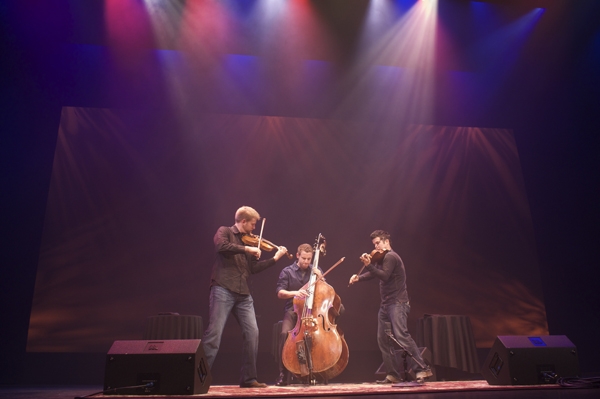
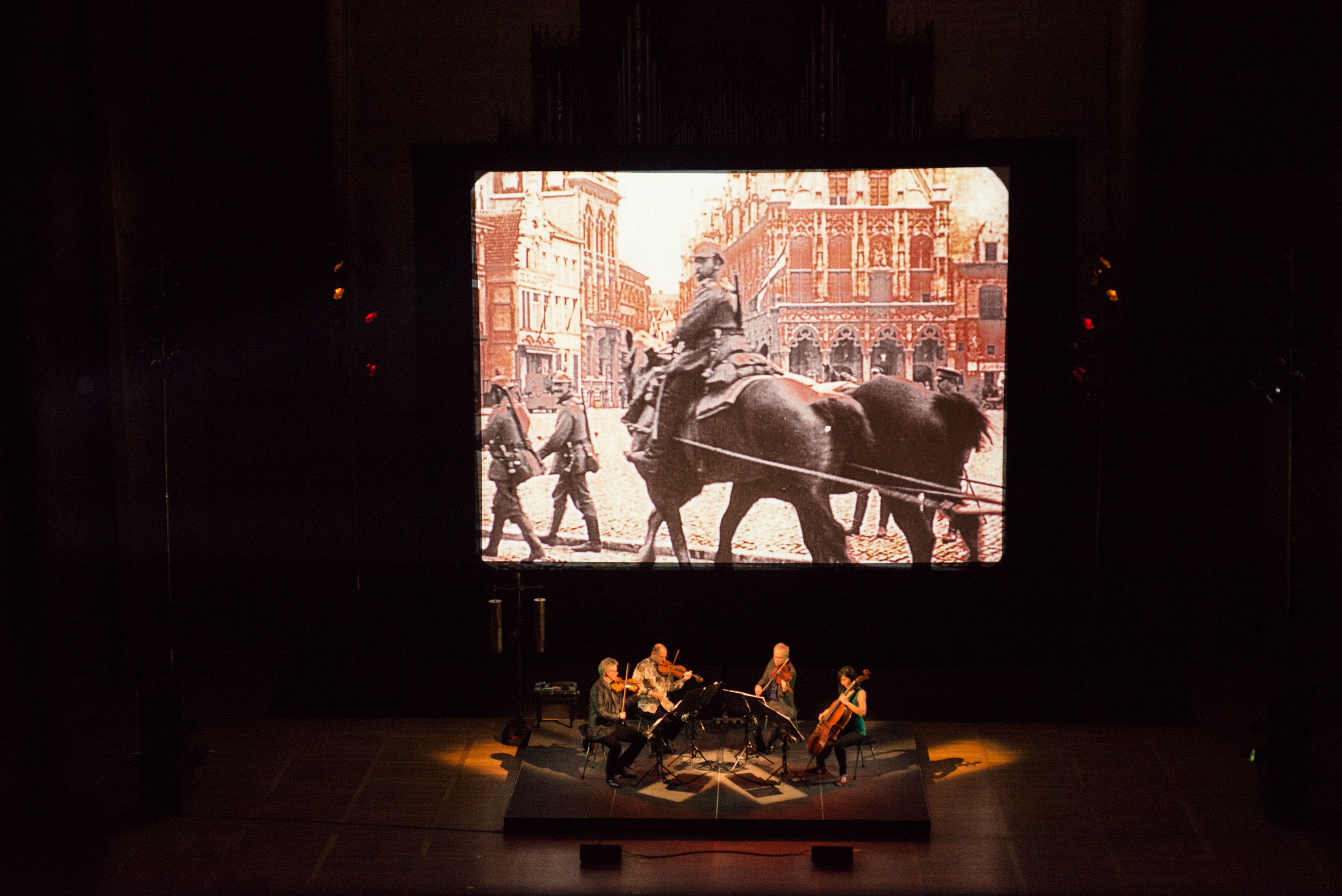
Kronos Quartet performing Beyond Zero. Photo courtesy of Kronos Quartet

Kronos Quartet performing Beyond Zero. Photo courtesy of Kronos Quartet

Kronos’ Quartet performance of Aleksandra Vrebalov’s Beyond Zero: 1914–1918, Wednesday night (Oct. 8) at Macky Auditorium, was the one of the most powerful concert experiences I can recall.

Commissioned by Kronos to mark the centennial of the beginning of World War I, Beyond Zero is by turns beautiful, disturbing, haunting and almost unbearably intense—as befits the subject, one of the most brutal and tragic events of human history. Kronos’ performance was an inspired feat of musicianship and athletic endurance: once begun, the music scarcely lets up until the very end, with harsh, rhythmic chords propelling the piece from climax to climax.

There are times that the music becomes almost unendurable in its intensity, but that again is an expression of a war that was literally unendurable for millions. How else can you put into music the suffering of a continent and the agony of the soldiers in the trenches, year after year? Like a visit to the battlefields, it is sometimes disturbing, but it is a vital and deeply moving experience that enlarges the soul.

Included in the performance are recordings that Vrebalov collected from the time of the war, including military commands, air raid sirens, inflammatory speech, the composer Bartók playing his own music, and ending with the chanting of Byzantine monks fading into deep silence. These imported sounds heighten the music’s impact.

BZ 1058

Still image from Bill Morisson’s film accompanying ‘Beyond Zero’

Beyond Zero is performed in front of a screen on which are projected archival films from the time of the war, restored by experimental film maker Bill Morrison. The film, most of it badly deteriorated, was scanned in high definition and includes both the original filmed images and the marks of deterioration—oxidation, discoloration and other forms of physical degradation. The sometimes ghostly images are evocative of a world long past, and in their imperfections are eloquent commentary on the war itself.

There are many images that will long remain with me, but I will mention just two: the opening sequence, in which a flickering blue fog of discolored film gradually reveals an approaching line of early tanks, which seems to symbolize the world’s gradual but inexorable descent into mechanized war; and a large group of uniformed men whose image is consumed by the loss of the crumbling film, much as an entire generation of young European men was consumed by the war.

The whole multi-media experience is far too much to grasp in a single performance. I didn’t know whether to watch the film, listen to the music, attend to the combination of music and captured sound, or simply admire the sheer hard work and technical accomplishment of the players. I for one will eagerly await the release of a DVD of Beyond Zero, so I can come to grips with all that it expresses.

Beyond Zero was the second half of a concert that also included a world premiere and an appearance by David Barsamian of Boulder’s Alternative Radio. The first half opened with Death to Kosmische by Nicole Lizée. Kronos’ first violinist, David Harrington, says that Death to Kosmische is “sonic fun,” but you would not get the whole joke if you didn’t know that “Kosmische” is a form of East German electro-pop music from the 1960s and ‘70s.

Knowing that, you hear the humor as the music sonically eats its own tail and ends in a burst of electronic distortion. Clearly, the composer was no fan of “Kosmische” music, and she revels in its death. Equally, Kronos relishes playing the piece, including a variety of electronic devices; their fun is infectious even if you don’t know what or whom is being threatened with death.

Kronos next played the world premiere of Speak, Time, an accomplished score by Yuri Boguinia, a young composer who grew up in Boulder and now lives in New York. The score is an episodic exploration of sounds from the quartet, all skillfully knitted together by Boguinia into a mostly-balanced whole. I say mostly, because some sections seemed overly long in relation to the rest, but the music, which seems to trace an unspecified narrative arc, is intriguing throughout.

David Barsamian of Boulder's Alternative Radio

David Barsamian of Boulder’s Alternative Radio

David Barsamian was introduced to the audience as one of Harrington’s “favorite persons.” He has worked with Kronos several times in the past, providing spoken texts over their playing. On this occasion Kronos played four songs from Turkey, Greece, Poland and Armenia—cultures deeply impacted by World War I—as an informal prelude to the second half of the concert. Barsamian gave thoughts relevant to the first three countries, and played a recording of his mother, a survivor of the First World War’s Armenian genocide, for the last.

Everything Barsamian had to say was articulate and appropriate for the occasion—although even in Boulder I don’t suppose everyone agrees with his left-wing point of view. Nonetheless, Harrington’s decision to bring him in for the performance strikes me as both meaningful and confounding. His words would have more impact if they were heard apart, without music that divided the attention and occasionally covered Barsamian’s voice. I for one would rather have heard the music—beautiful and touching folk songs that represent the kind of cross-cultural performance that Kronos does so well—and had time later to reflect on Barsamian’s literary contribution.
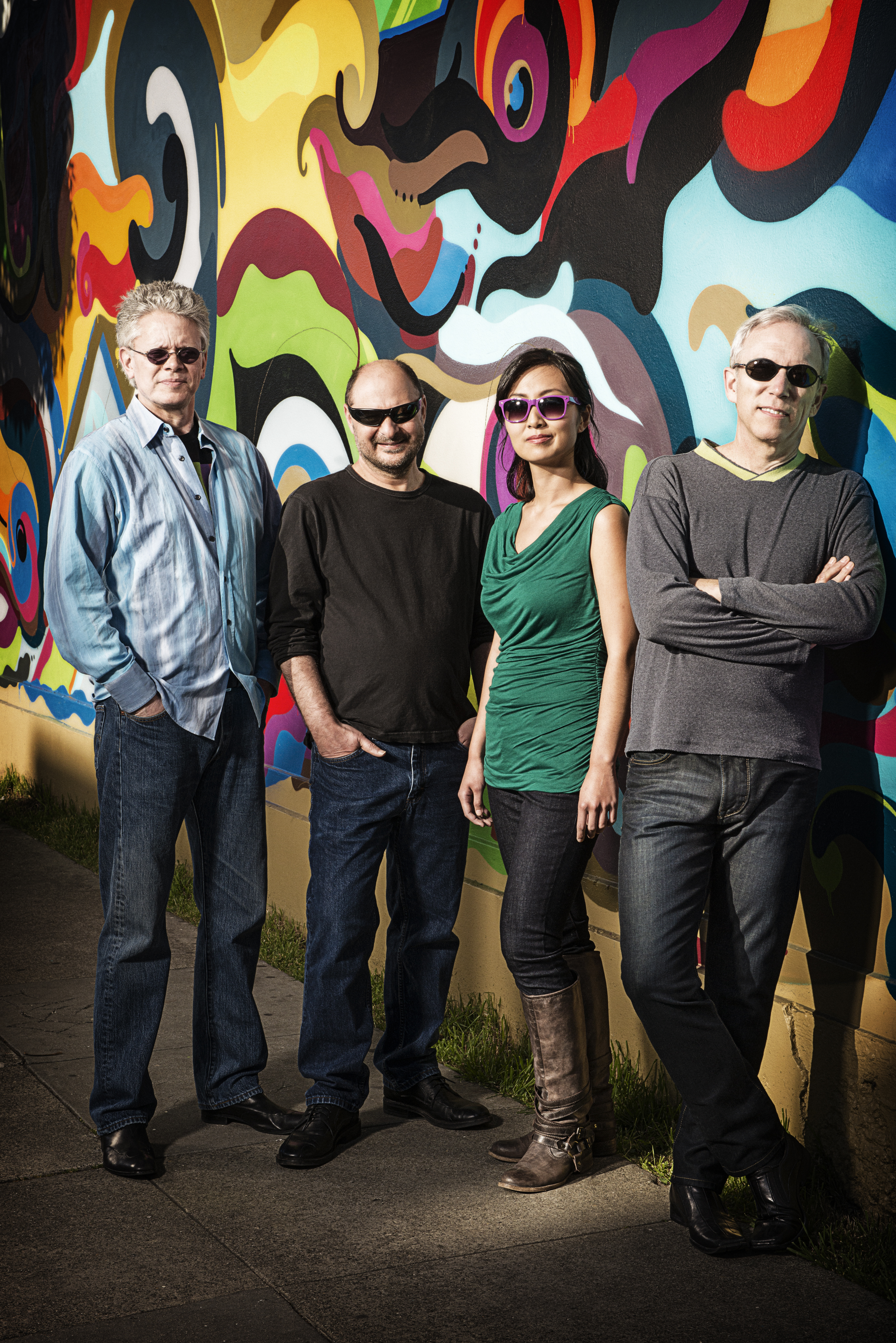
Kronos Quartet: David Harington, John Sherba, Sunny Yang and Hank Dutt. Photo courtesy of Kronos Quartet.

Kronos Quartet: David Harrington, John Sherba, Sunny Yang and Hank Dutt. Photo courtesy of Kronos Quartet.

One reason for Kronos’ commissioning of Beyond Zero is the fact that as a country, we have largely forgotten World War I. In comparison to World War II, the “good war” of the celebrated “greatest generation,” it hardly registers in our consciousness. And yet we still live in the world that was created by the barbarity of the war and blunders of the post-war peace process. Harrington wanted to remind us all of that, and in that context Barsamian has much to say. But I am not convinced that making an artistic performance into a didactic exercise serves either the music or the message being conveyed.

In the end, it is the music that matters. And because Kronos plays such exceptional and striking music, music that itself monopolizes our attention, it is easy to forget how good they are at what they do, and how their adventurous, passionate explorations have changed the musical landscape. Whether or not you like the music they play—and I admittedly don’t like everything they have done over the years—it is always worth hearing. From the most tender and gentle pieces to the most fierce and aggressive, Kronos crosses borders, explores limits, and takes us all along for the journey.

They have been doing this for 40 years now, and remarkably all but the cellist are founding members. Such longevity is remarkable, especially when you see how physically demanding some of their playing can be. Whatever they do, they do it with commitment and technical polish. Long may their adventure continue!
Jean-Marie Zeituoni reflects on his new role as Music Director

The newly appointed Music Director of the Colorado Music Festival endorses the role of new music, chamber music, and festival themes.

By Peter Alexander

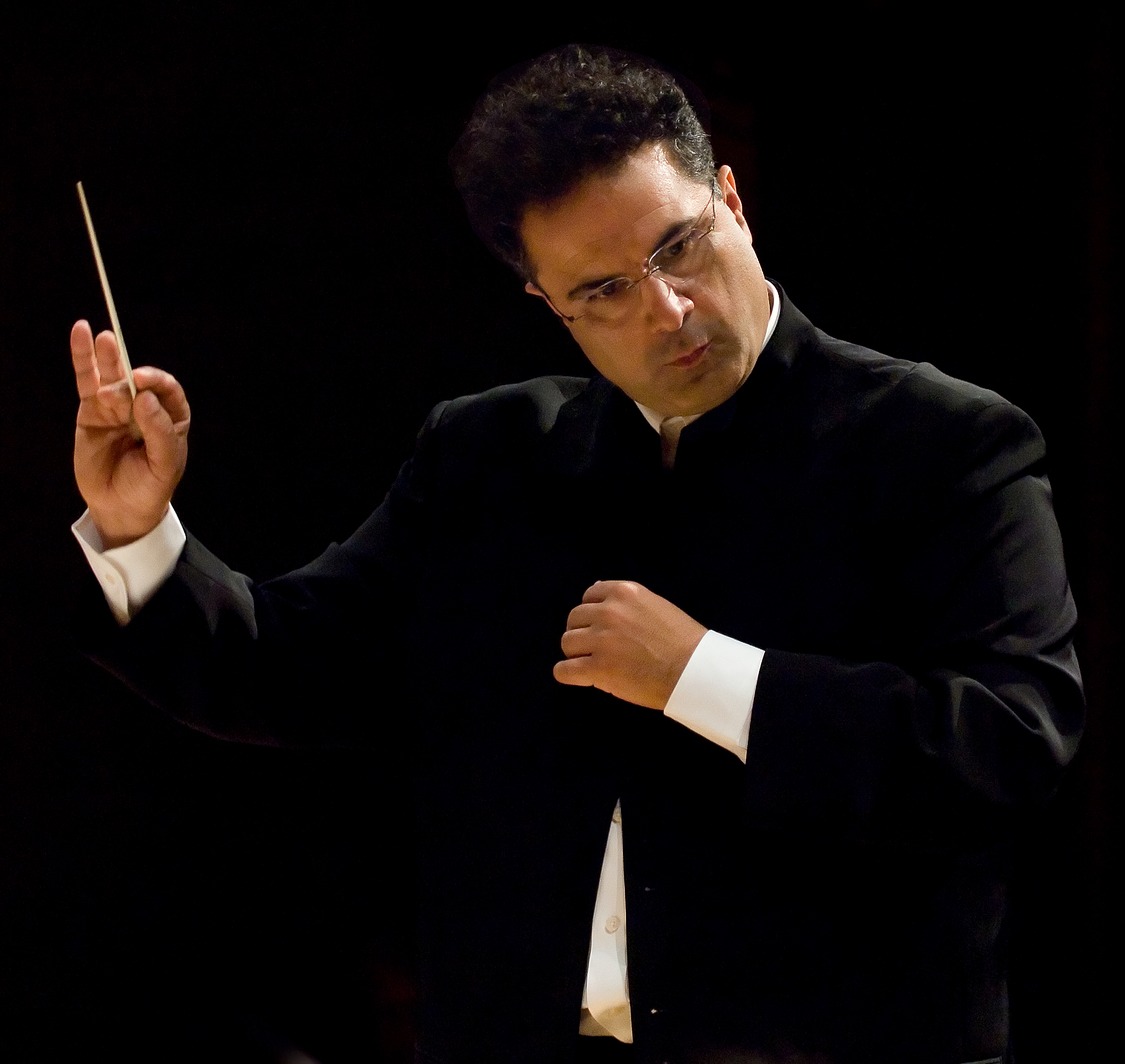
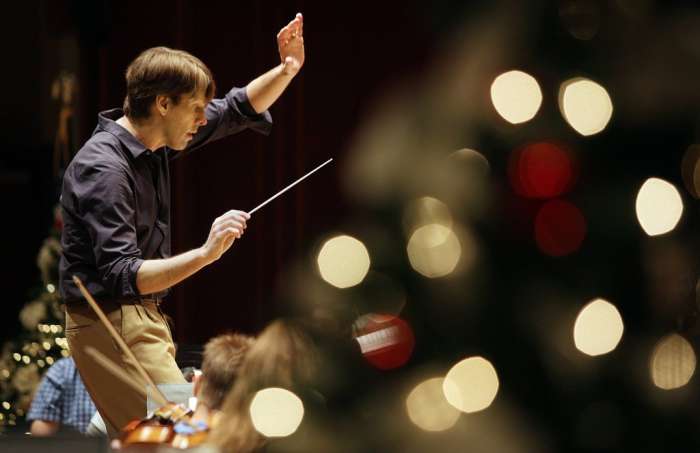
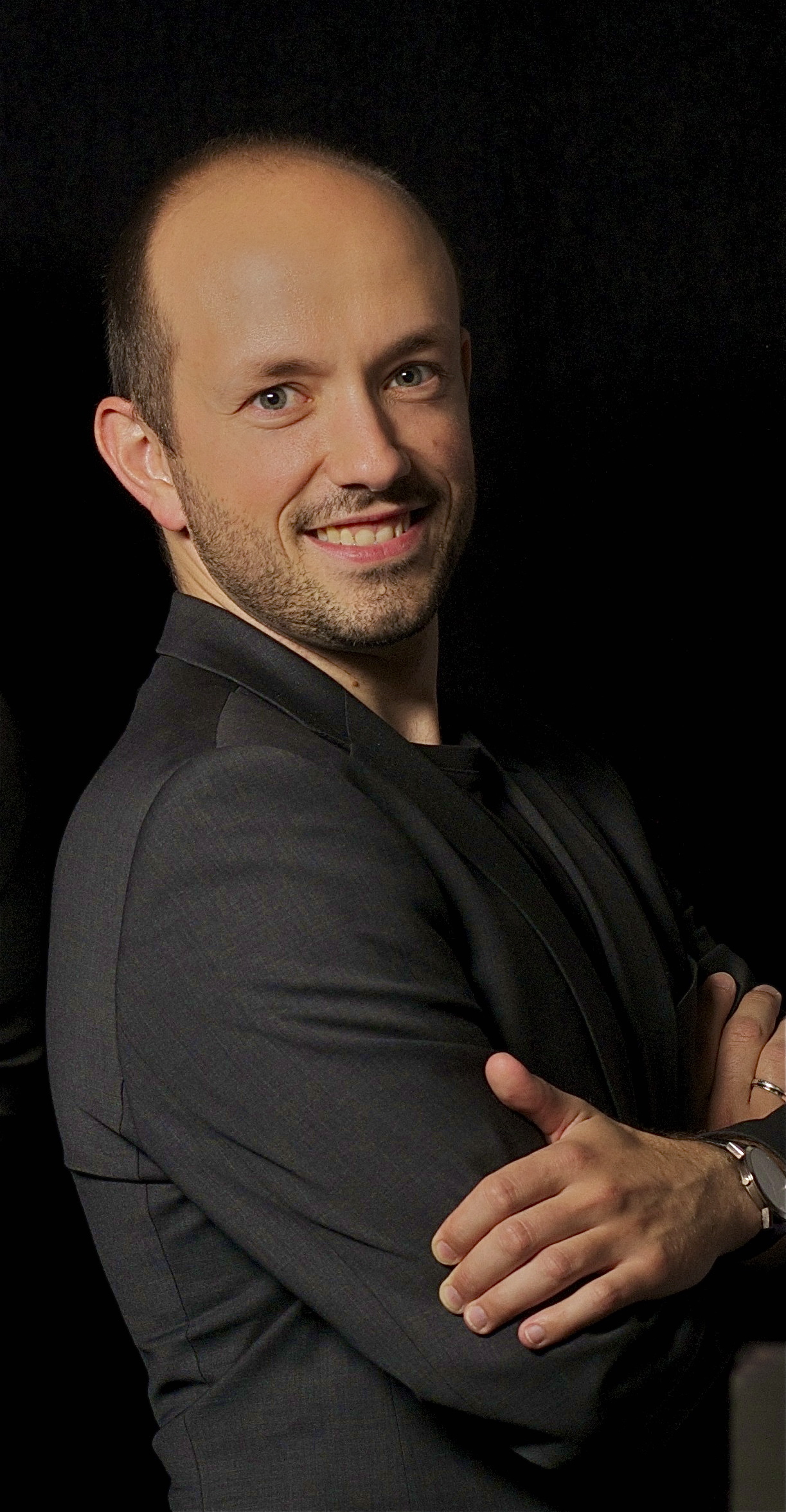
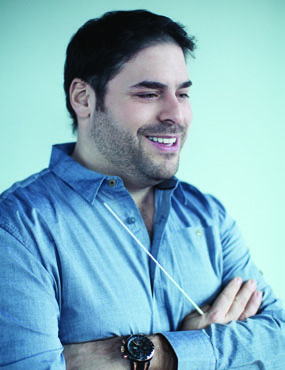
Jean-Marie Zeitouni

Jean-Marie Zeitouni

The following Q&A interview with Jean-Marie Zeitouni covers some of the issues facing the new music director of Boulder’s beloved Colorado Music Festival. The questions were presented to Zeitouni by email, giving him the opportunity to write careful and thorough answers to each question. This also allows him to introduce himself and his thoughts about the festival directly to our readers. The 12 questions I asked were intended to cover many of the most historically prominent aspects of the festival, including mini-festivals, commissions of new works, chamber music events, and guest soloists, and to give opportunity for comments on their future importance to the festival.

His answers are presented unedited, except for minor corrections to capitalization and punctuation. Additions for clarity are placed in brackets. Otherwise, the words are exactly as Zeitouni wrote them.

QUESTION: I assume it is too early to talk about specific programming for the 2015 festival, but I wonder if you have any thoughts about the general nature of programming for an intensive, six-week summer festival as opposed to a nine-month-long subscription season.

JEAN-MARIE ZEITOUNI: The keyword here is “intensity,” to which I would add creativity, originality and some balance. Some audience members are also yearlong classical concertgoers and are not always interested in listening to the same things they hear all year long; others however will get their first concert music experiences in the summer at a festival. It’s important to keep them also in mind as we elaborate programs. I’ve been involved with numerous festivals over the past 15 years (notably the Festival International de Lanaudière, where I’ve been conducting the festival orchestra for the past nine years, and with the Festival International du Domaine Forget, for the past 15 first with Violons du Roy and now with I Musici de Montréal, but also at Grant Park, Banff, Mostly Mozart, Parry Sound, and the Opera Festivals of Glimmerglass, St. Louis, Cincinnati, etc.), and what always strikes me is that they each have a distinct personality and audience that is reflected in their choices of programs, guest artists and explorations.

I’m looking forward to bringing along my experiences and ideas to Boulder, but I’m also allowing myself a bit of time to digest and understand what CMF is all about, from its roots to its fruits.

There is also the wonderful CMF orchestra. We need to develop our way of making music together, and some of next summer will be about that.

Chautauqua Auditorium, home to the CMF Festival Orchestra

Chautauqua Auditorium, home to the CMF Festival Orchestra

Q: How do you feel about “themes” for a festival—musical topics such a Russian music or great violin concertos—to be explored during all or part of a festival?

JMZ: I like themes and thematics in general, especially for concert programs. I think that coherent and original pairings can help us enjoy more and differently some pieces we don’t know, and even some others we think we know so well. “Mini-festivals” are also interesting if the circumstances are right. The nature of a festival allows us to explore a subject more deeply in an intensive period of time and is a good setting for organizing parallel activities (film, seminars, lectures, etc.) for audiences looking for a more complete immersion.

Q: How do you feel about programming that crosses genres and styles, such as the “mashup” programs blending pop and classical styles we have had at CMF the past two years, or the “World Music” series of earlier festivals that blended classical with music of other cultures (Klezmer, Asian styles, jazz, etc.)?

JMZ: My personal taste is very eclectic. I like great music whether it’s Western classical or Eastern or Afro-Cuban or old or modern, etc. . . . (the list goes on and on). I think it’s very natural to blend and cross styles and genres as long as we are presenting good music and at a high level of performance.

The other major factor is having the sensational Festival Orchestra, which is an invaluable asset. We want to program music that will display this ensemble’s colors and possibilities.

CMR Festival Orchestra onstage in Chautauqua Auditorium

CMF Festival Orchestra onstage in Chautauqua Auditorium

Q: What do you see as the role for new music in the festival?

JMZ: The festival has a long history of playing new music and even commissioning works. I think every arts organization should be involved in both the performance and creation of art. As for programming, it’s like creating a menu at a great restaurant—accords and contrasts, themes and threads, originality and references. Balancing the flavors.

Q: Would you like to continue the CMF’s history of commissioning new works?

JMZ: Yes, no doubt.

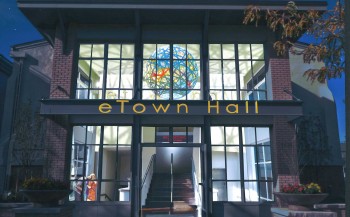
eTown Hall, home of CMF's chamber music concerts

eTown Hall, home of CMF’s chamber music concerts

Q: What do you think should be the role of chamber music performances in the festival?

JMZ: I don’t know where to start. . . . There are so many positive aspects of having the chamber music series in the festival. First, of course, there is the vast repertoire that is complementary to what we do with the orchestra, with so many masterpieces available for the audience to discover. Second, the intimacy and proximity between the artists and the audience that is incomparable. It’s also a great way to showcase some of the musicians of the CMF orchestra (and guest artists) and introduce them to the community in a more personal way.

Q: In picking soloists for the festival, how do feel about inviting well known artists as opposed to younger artists who may not be as well known? Do you think there is a role for each within the festival?

JMZ: There is definitely a role for both in the festival. We have the responsibility to both get the best artists possible on our stage and to be scouting for the best new talents to introduce them to the audience.

Jean-Marie Zeitouni

Jean-Marie Zeitouni

Q: How do you expect to be involved in the educational aspects of the organization? 

JMZ: Much yet has to be defined. We are looking at creating more activities for the younger ones, and I have some ideas to share with the team. There is of course the very popular young people concerts, and I hope in the future, finding the right channels to involve the kids who attend CMA in original projects.

Q: Do you anticipate any issues in maintaining balance between the two arms of the organization—the school and the festival?

JMZ: No. In fact, it is important to me that we not only strive to take both the Festival and Center to new heights, but that we also look for ways to create greater synergies between the two.

Q: Do you have specific plans for attracting new audiences to the festival?

JMZ: Although [Executive Director] Andrew [Bradford] and I are both still fairly new to the organization, we have already spent a lot of time talking about this subject. We are both committed to collaborating with some of the many arts organizations in Boulder, which we hope will lead to, among other things, new audiences attending our concerts. Also, Andrew is carefully examining how we have approached marketing and public outreach in the past, and is looking for new, more creative ways to increase awareness of the organization.

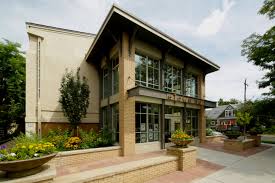
The Dining Hall, on the beautiful CMF Chautauqua campus

The Dining Hall, on the spectacular CMF Chautauqua campus

Q: What is your initial impression of Boulder?

JMZ: What is there not to love? My first impression was as positive as could be! I got to know many people and found them all to be extremely friendly. I also managed to make time to try many of Boulder’s best restaurants. The location is fantastic and the landscape is literally breathtaking. It’s a place I’m looking very forward to spending my summers in with my daughter, Gabrielle, who will turn two in a couple of months.

Q: What would be your message for Boulder audiences, and the supporters and fans of the Colorado Music Festival?

JMZ: I want them to know that I feel blessed to have been given the opportunity to serve as Music Director of this wonderful organization, and that I take this responsibility with great respect and care. I think I am coming to understand the great love and passion so many people in this community have for CMF and CMA, and I intend not only to create new, exciting programs for their enjoyment but also to be a steward of the organization.

Edited 10/7 to put back one word that dropped out in transmission.

BCO and pianist Victoria Aja in a delightfully designed program

By Peter Alexander

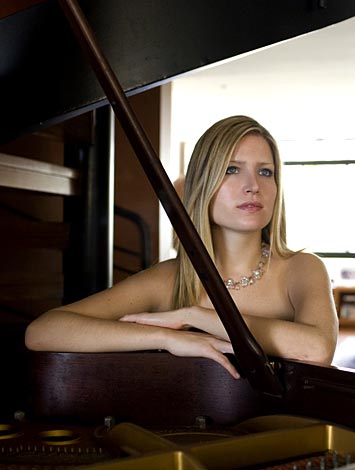
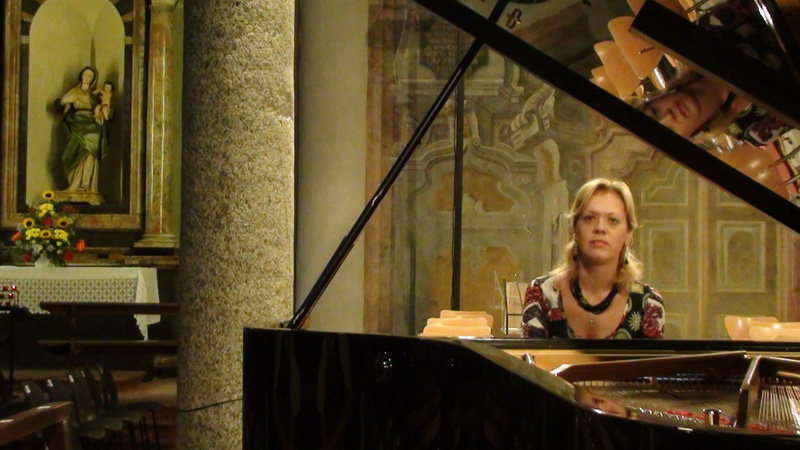
Pianist Victoria Aja

Pianist Victoria Aja

Conductor Bahman Saless and the Boulder Chamber Orchestra were joined by Spanish pianist Victoria Aja for a program of French and Spanish music Friday and Saturday, Oct. 3 and 4. The program was wonderfully planned, if somewhat uneven in execution on Saturday.

The first drawback of that performance was the venue, Broomfield Auditorium. Part of a larger complex that includes a public library, the auditorium looks like a barely completed warehouse, with an open ceiling that reveals pipes, light instruments, ducts and conduits. Spare stands and chairs are stacked on the edge of the stage, and a ladder can be seen backstage as the artists enter and exit.

More troubling than the inelegant appearance, however, is the sound. The stage is shallow and flat, and the hard concrete walls bounce the sound directly into the small seating area (fewer than 300 seats on the main floor), rather than blending it or in any way cushioning the sound waves, as more suitable acoustic materials would do.

Because the sound is so present, it was hard to achieve the needed balance and contrasts in the opening work, Manuel de Falla’s popular “Ritual Fire Dance” from El Amor Brujo. This exciting orchestral work was well played, but the winds—almost hidden on the flat stage—were often unbalanced, while the bright sound made it especially difficult to achieve the kind of dynamic contrasts that would give impact to the fiery climaxes.

The second work on the program introduced the soloist in de Falla’s impressionistic Nights in the Gardens of Spain. Normally a work for large orchestra, Saless used a chamber-orchestra version that suited his smaller ensemble. This version lost none of the score’s exotic color, but the reduced strings gave up some of the mysterious atmosphere of the original.

Clearly having a full grasp of de Falla’s style, Aja played with great flair and expression. Saless’s accompaniment was sympathetic, but the soloist sometimes struggled to be heard, even over the reduced orchestra, in the hall’s vivid acoustic environment.

The second, French half of the program fared better. César Franck’s Symphonic Variations treats the piano and orchestra not as contestants in a heroic concerto or as soloist with accompaniment, but as two equal partners that share the material. This disposition eliminates many of the balance problems the hall imposes.

Consequently, Aja could be heard as a thoroughly worthy partner to the orchestra. She certainly has the technique and the interpretive gifts to bring Franck’s somewhat academic work to life. I especially enjoyed the spirited final variations.

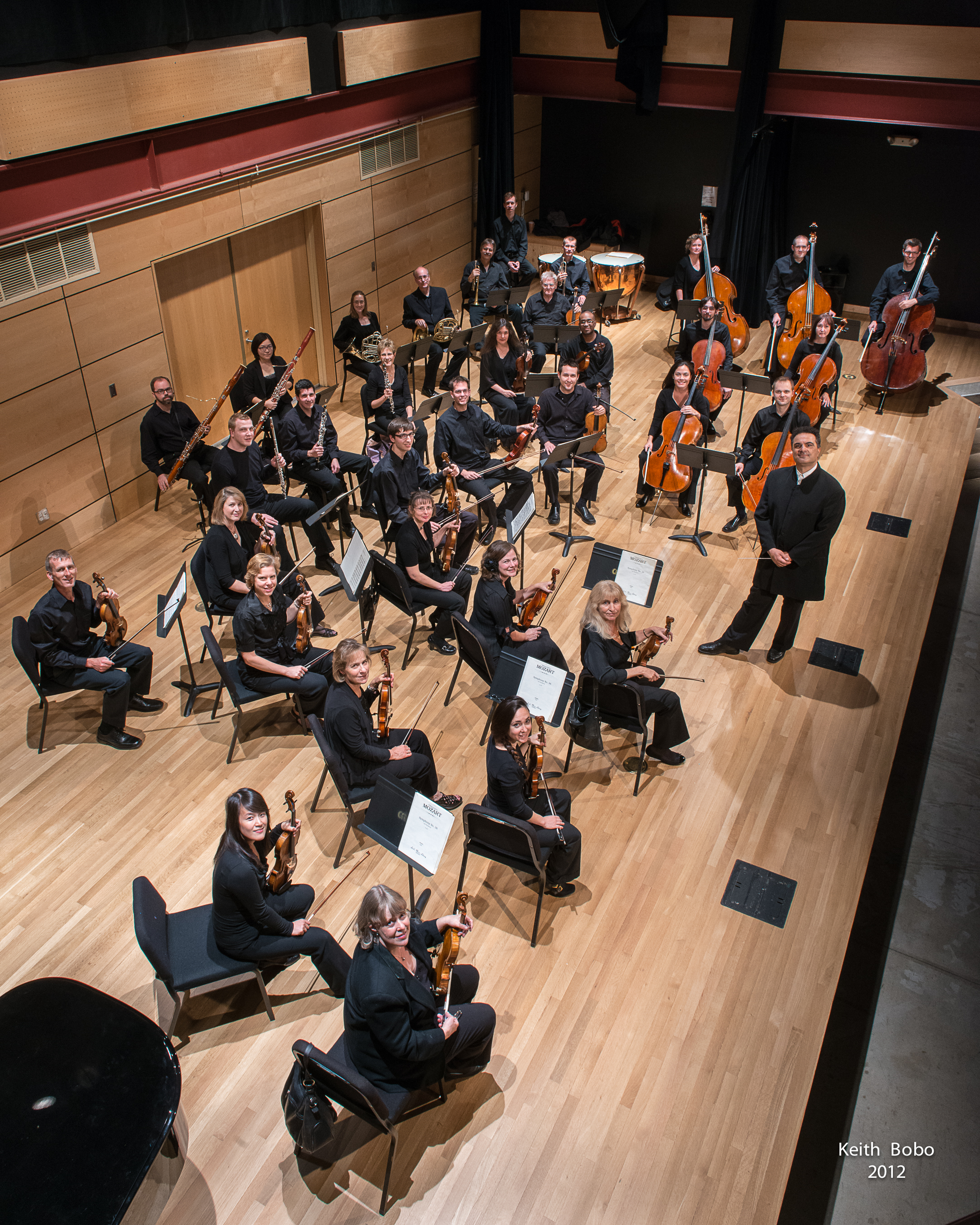
Boulder Chamber Orchestra. Photo by Keith Bobo.

Boulder Chamber Orchestra. Photo by Keith Bobo.

In this case, the greatest drawback was the size of the BCO. Saless said that the Symphonic Variations was written for a “Beethoven orchestra,” which might be true of the wind section. But when it was completed in 1885 (not 1955 as the program anachronistically stated), string sections of 50 or more had been commonplace for more than 20 years, whereas BCO only mustered about 30 for Saturday’s concert. (The program lists 34, but there did not appear to be that many on the Broomfield stage.) While the performance on the whole was satisfactory, the string section sound was audibly underweight in some full-bodied passages.

To close the program, Saless chose Bizet’s early Symphony in C major, written when the composer was a 17-year-old student in the Paris Conservatory. Both the size and the personnel of the BCO are ideally suited to this delightful work, which was pure pleasure from beginning to end. The spirited wind solos were notable throughout, and oboist Max Soto deserves special recognition for his lovely solos throughout the tender second movement.

In spite of any shortcomings, Saless’s thoughtful programming and Aja’s pianism afforded an enjoyable evening of music, topped off with Bizet’s refreshing little symphony. In a more hospitable performance space, such as the Methodist Church where the BCO performed on Friday, it may well have been even more satisfying.

# # # # #

NOTE: After intermission, Saless characterized the first half of the concert as “tapas” that preceded a main course of French cuisine. If you would like more than an appetizer of Iberian music—paella or a Spanish omelet, perhaps?—Aja is playing an entire solo piano recital of “Spanish Piano Masterpieces” at 7:30 p.m. Friday, Oct. 10, in Grace Lutheran Church, Boulder. The program, about an hour to be played without intermission, will include music by Albéniz, de Falla, Joaquin Larregla and Padre Jose Antonio Donostia.

“A Night of Spanish Piano Masterpieces”

Victoria Aja, piano
Presented by the Boulder Chamber Orchestra
7:30 p.m. Friday, Oct. 10
Grace Lutheran Church, Boulder

Tickets

Piano virtuosity, with and without the Boulder Chamber Orchestra

Spanish pianist Victoria Aja will be heard in two performances in Boulder

By Peter Alexander

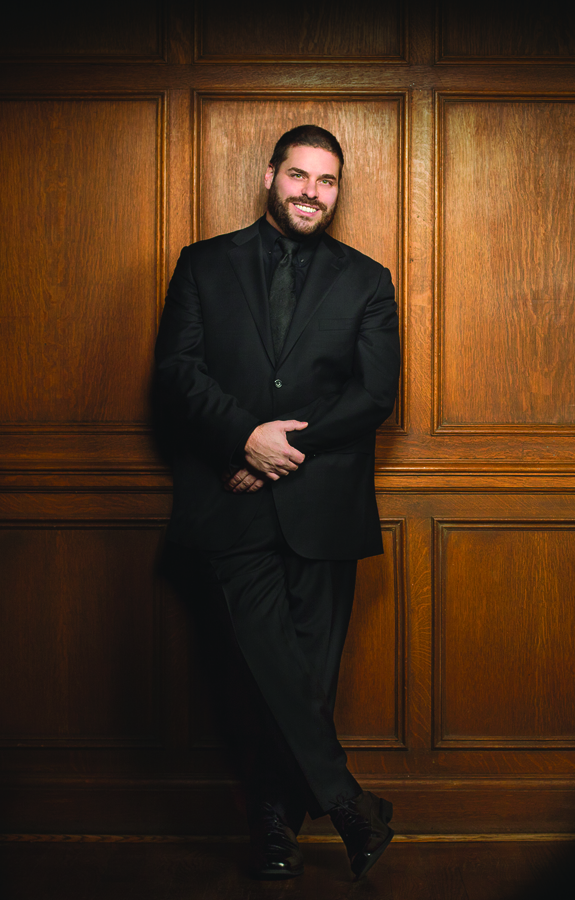
Bahman Saless. Photo by Keith Bobo

Bahman Saless. Photo by Keith Bobo

When a soloist comes all the way across the Atlantic, Bahman Saless likes to give her a real opportunity to be a star.

That is certainly the case for Victoria Aja, a Spanish pianist who has played extensively in Europe but is not well known here. Aja will be the soloist with Saless and the Boulder Chamber Orchestra on their next concert, at 7:30 p.m. Friday, Oct. 3, in the First United Methodist Church in Boulder (program to be repeated at 7:30 p.m. Saturday in the Broomfield Auditorium; tickets). And a week later, she will play a solo recital, “A Night of Spanish Piano Masterpieces,” at 7:30 p.m. Friday, Oct. 10, in Grace Lutheran Church in Boulder (tickets).

“I really wanted to expose her to the Boulder audiences, in her own intimate setting, which is she does a lot of piano recitals,” Saless says. “I decided, she’s come all the way from (Spain) to here, we will basically host her the entire week, and have her do another recital program of just Spanish music.”

Pianist Victoria Aja

Pianist Victoria Aja

For the orchestra program, Aja will play two large pieces, virtual concertos, with the BCO: a chamber orchestra version of Manuel de Falla’s atmospheric piano showpiece Nights in the Gardens of Spain; and French composer Cesar Franck’s more serious work Symphonic Variations for piano and orchestra.

The orchestra will also play two works that complete the Spanish/French pairing: de Falla’s “Ritual Fire Dance” from El Amor Brujo and the early Symphony in C major by Georges Bizet.

The solo recital program of Spanish music, to be played without intermission, will include the complete Suite from El Amor Brujo, arranged for piano, as well as other works by de Falla, Isaac Albeniz, Joaquin Larregla, and two of the Fifteen Basque Preludes by Padre Jose Antonio Donostia.

Aja comes from the Basque region of Spain, near the border with France. A Basque musicologist and composer, Donostia based his Basque Preludes on the traditional music of the region.

Saless learned of Aja when she wrote to him a few years ago, including a resume and several DVD recordings of her solo recitals. “I had been wanting to do a Spanish program for quite a while, and I thought she would probably be a good fit,” Saless says.

“She is really from the more gypsy end of Spanish pianists—very sort of hot blooded, you know, rubatos, a crazy pianist. She specializes in de Falla, so I thought, let’s bring her in, we’ll do something cool and crazy.”

Boulder Chamber Orchestra. Photo by Keith Bobo.

Boulder Chamber Orchestra. Photo by Keith Bobo.

Friday and Saturday’s orchestra program, Oct. 3 and 4, is titled “Glamour,” but not for the exotic European piano virtuoso. “No,” Saless says, “really the glamour comes from the French-Spanish (culture) of that era, when the music was written. It’s very chic.

“It’s an amazing, exquisite program. It’s really very luscious. Sandwiched by the “Fire Dance” at the beginning and the Bizet Symphony at the end, it’s a really fun and jolly concert. In between, the de Falla pieces are so exotic and I think people are not used to hearing so much color. Color is everywhere with de Falla, and with that sense it’s a really unusual concert for us because you don’t do much color with a chamber orchestra.”

But Saless believes that the Oct. 10 solo recital will be Aja’s “signature event.”

“She is much more of a recital pianist than an orchestra pianist,” he explains. “I think that concert is really going to be fun, filled with music that you just will not hear here in the US. It will showcase her very stylistic, gypsy sort of piano.

“She’s extremely musical— she cannot not be musical!”

# # # # #

“Glamour”

Boulder Chamber Orchestra
Bahman Saless, conductor, with Victoria Aja, piano
“Ritual Fire Dance” from El Amor Brujo by Manuel de Falla
Nights in the Gardens of Spain by Manuel de Falla
Symphonic Variations for piano and orchestra by Cesar Franck
Symphony in C major by Georges Bizet

7:30 p.m. Friday, Oct. 3, First United Methodist Church, Boulder
7:30 p.m. Saturday, Oct. 4, Broomfield Auditorium

Tickets

“A Night of Spanish Piano Masterpieces”

Victoria Aja, piano
Presented by the Boulder Chamber Orchestra
7:30 p.m. Friday, Oct. 10
Grace Lutheran Church, Boulder

Tickets

Boulder’s Barsamian joins Kronos Quartet for Oct. 8 concert at Macky

Concert will feature music commemorating the 1914 outbreak of World War I

By Peter Alexander

Kronos Quartet performing Beyond Zero. Photo courtesy of Kronos Quartet

Kronos Quartet performing Beyond Zero. Photo courtesy of Kronos Quartet

The Kronos Quartet, always bold, brings Boulder artists to Boulder for their appearance at Macky Auditorium at 7:30 p.m. Wednesday, Oct. 8.

The concert will feature the world premiere of Speak, Time by Yuri Boguinia, who grew up in Boulder; and an appearance by broadcaster and writer David Barsamian, who founded Boulder’s Alternative Radio in 1986.

Barsamian will speak while Kronos performs songs from the early years of the 20th century. That performance will lead to the major work of the program, filling the second half of the concert: Beyond Zero: 1914–1918, a new multimedia work for string quartet and film that Kronos commissioned for the centennial of the outbreak of World War I.

Kronos

Courtesy of Kronos Quartet

Beyond Zero was written by Serbian composer Aleksandra Vrebalov and will be performed with film restored by experimental filmmaker Bill Morrison from extremely rare and badly deteriorated original films of the war.

Read more in Boulder Weekly.

# # # # #

CU Presents: Kronos Quartet
Death to Kosmische by Nicole Lizée
World premiere of Speak, Time by Yuri Boguinia
Four songs from the time of World War I with David Barsamian
Beyond Zero: 1914–1918 by Aleksandra Vrebalov, with film by Bill Morrison
7:30 p.m. Wednesday, Oct. 8, Macky Auditorium
Tickets

Boulder Symphony Opens Season with ‘Passionate Collisions’

By Peter Alexander

A premiere, a concerto and a symphony.

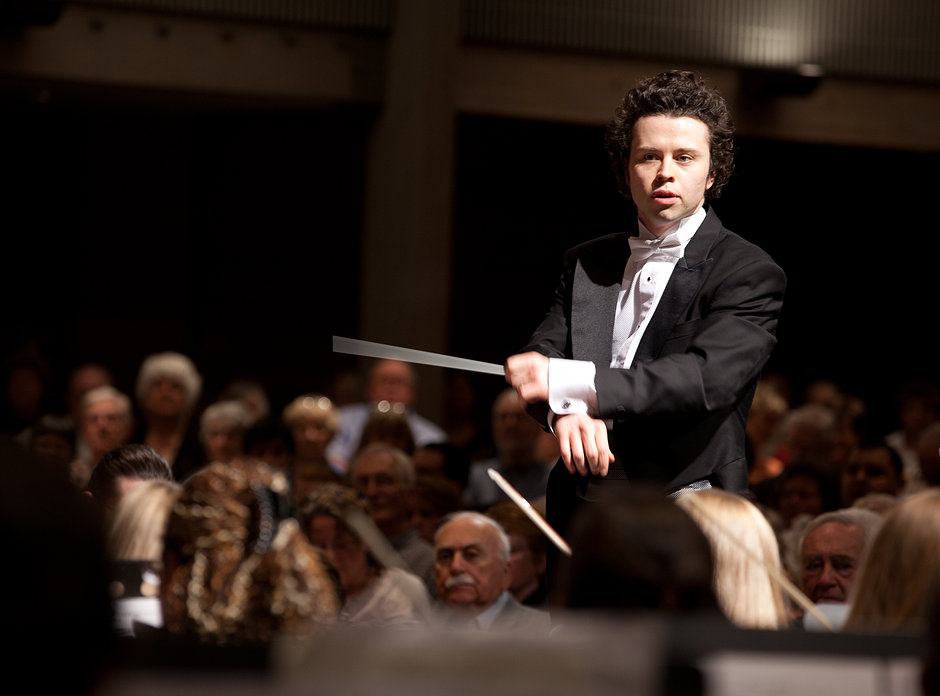
Those are the ingredients in “Passionate Collisions,” the season-opening program of the Boulder Symphony, to be performed at 7 p.m. Saturday, Sept. 20, at the First Presbyterian Church in Boulder. The largely volunteer orchestra’s music director, Devin Patrick Hughes, will conduct and pianist Toku Kawata will be the soloist for Rachmaninoff’s Second Piano Concerto.

Devin Patrick Hughes will lead the Boulder Symphony in their season-opening concert Sept. 20

Devin Patrick Hughes will lead the Boulder Symphony in their season-opening concert Sept. 20

Other works on the program are the premiere of What Trees May Speak by one of Boulder Symphony’s composers-in-residence, Jonathan Sokol, and the Symphony No. 1 of Jean Sibelius. (Purchase tickets here.)

What Trees May Speak continues a trend in Boulder of orchestral pieces that call on natural inspirations, including last week’s season opener of the Boulder Philharmonic (Gates of the Arctic by Steven Lias), pieces performed last season by the Phil (“Formations” Symphony by Jeffrey Nytch and Ghosts of the Grasslands by Steve Heitzig, among others), and other works from Pro Musica Colorado and the Colorado Music Festival in recent seasons.

In his composer’s notes, Sokol describes his score, which incorporates recordings of bird songs, as “a musical investigation into the ever-dwindling bird population. The piece embraces several facets of bird life . . . but ultimately centers on an impending, growing silence as their numbers continue to decrease.”

Jonathan Sokol. © Kelly Rae Griffith

Jonathan Sokol. © Kelly Rae Griffith

This sounds like a kind of avian “Farewell” Symphony, but Hughes believes that it is not a pessimistic piece. “It’s hopeful,” he says. “In a way, his music is very melodically American. It’s got a little of the industrial characteristic, but I really don’t think it’s tragic.”

Hughes sees a link from the Sokol piece to Sibelius. “I’m thinking of Sibelius as an outdoorsman,” he explains. “(He) basically thrived in these remote locations and was inspired by birds but also by the rest of nature.

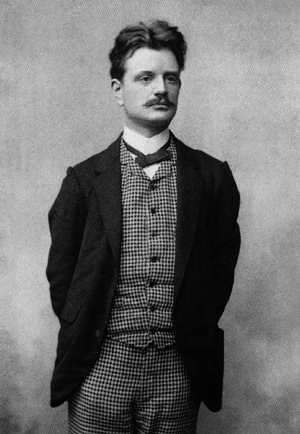
Jean SIbelius

Jean Sibelius

“Sibelius is one of my favorite composers. It’s my goal to play all of the symphonies that are unknown. I think they’re all just as powerful as the Second and Fifth. To me what’s fascinating about this composer is his music created a national identity” for Finland.

Living in the late 19th and early 20th centuries, a time that Finland was not yet an independent nation, Sibelius drew on Finnish mythology and literary sources such as the Kalevala epic as subjects for many of his orchestral works. The Finnish people embraced his music as a symbol of their culture and desire for independence from the Swedes and Russians who had long ruled their country. This was expressed most overtly in Sibelius’s tone poem Finlandia, which was conceived in part as a protest against oppressive Russian rule over Finland.

The First Symphony is a little bit of a surprise choice for the program. Written in 1898, when Sibelius was 33, it is not as well known as some of Sibelius’s later symphonies, especially the Second and Fifth. It has many of the characteristics of the composer’s mature style, including use of woodwind solos, a spare orchestral sound that seems evocative of Finland’s landscape, and a highly individualistic, indirect approach to melodic construction.

The Rachmaninoff is another surprise choice for a largely volunteer orchestra whose size is limited by the space available in the First Presbyterian Church where they perform. Most of us are used to hearing Rachmaninoff’s lush, Romantic scores played by a full symphonic contingent of 100 to 120 players and a string section of 60 or more.

“That’s what we have in our ear, these great recordings,” Hughes admits. “It’s difficult— we’re probably at about 70 or 80 musicians right now—so yeah, a lot of people have to give a lot. And maybe get a massage after!”

While the church limits the size of the orchestra, Hughes says it can also be an advantage. “It helps that the performance space is not a real performance hall where you need a much bigger orchestra. At our size you can pretty much fill up the space.”

Toku Kawata

Toku Kawata

Hughes and Kawata met when they were both at Aspen a number of years ago. Having met again when Kawata came to Boulder for doctoral studies, this will be their first opportunity to perform together. It is also Kawata’s first opportunity to play the Rachmaninoff concerto, as well as his first appearance in Colorado.

Kawata is a doctoral piano student of Andrew Cooperstock in the CU College of Music. In addition to holding degrees from the University of North Texas and the University of Central Arkansas, he has studied at the New England Conservatory and the Aspen Music Festival. He is also the winner of several competitions and made a solo debut at Carnegie Hall in 2010.

You may be wondering, what are the “Passionate Collisions” that provide the title for this concert? New and old? Soloist and orchestra? Natural sounds and instruments in Sokol’s score, representing the collision of man and nature?

No to all of those. It turns out Hughes had something more specific in mind with the title: a political collision between cultures and peoples.

“Finland was basically taken over for hundreds of years and (during Sibelius’s lifetime) they were under the thumb of the Russians,” Hughes told me recently. “That’s where you kind of get the passionate collisions between the (Russian) Rachmaninoff and the (Finnish nationalist) Sibelius.”

And then he quietly adds, “You’re the first person I’ve told that to.”

# # # # #

Boulder Symphony, Devin Patrick Hughes, Music Director
“Passionate Collisions”
Jonathan Sokol: What Tress May Speak (World Premiere)
Sergei Rachmaninoff: Piano Concerto No. 2
Toku Kawata, piano
Jean Sibelius: Symphony No. 1
7 p.m. Saturday, Sept. 20
First Presbyterian Church, 15th & Canyon, Boulder

Details and tickets

Boulder Phil’s Season of ‘Legends’ Opens Strongly

By Peter Alexander

From the Arctic tundra to the Arabian sea, the Boulder Philharmonic opened their 2014-15 season in Macky Auditorium with a strong performance of a strong program.

Butterman.2

Michael Butterman, Music Director of the Boulder Philharmonic

Music Director Michael Butterman led the orchestra in the world premiere of Gates of the Arctic by Stephen Lias; the Second Piano Concerto of Camille Saint-Saëns with soloist Gabriela Martinez; and Scheherazade by Nicolai Rimsky-Korsakov, which gave the orchestra the opportunity to introduce new concertmaster Charles Wetherbee.

Speaking before the performance, Butterman explained that this is the orchestra’s season of “Legends,” featuring pieces that tell stories drawn from a variety of myths and legends. I have frequently enjoyed Butterman’s programming, and this concert, combining a provocative and intriguing new piece, a highly interesting soloist playing repertoire beyond the usual warhorses, and a virtuoso orchestra showpiece, hit all the right notes for a season opener.

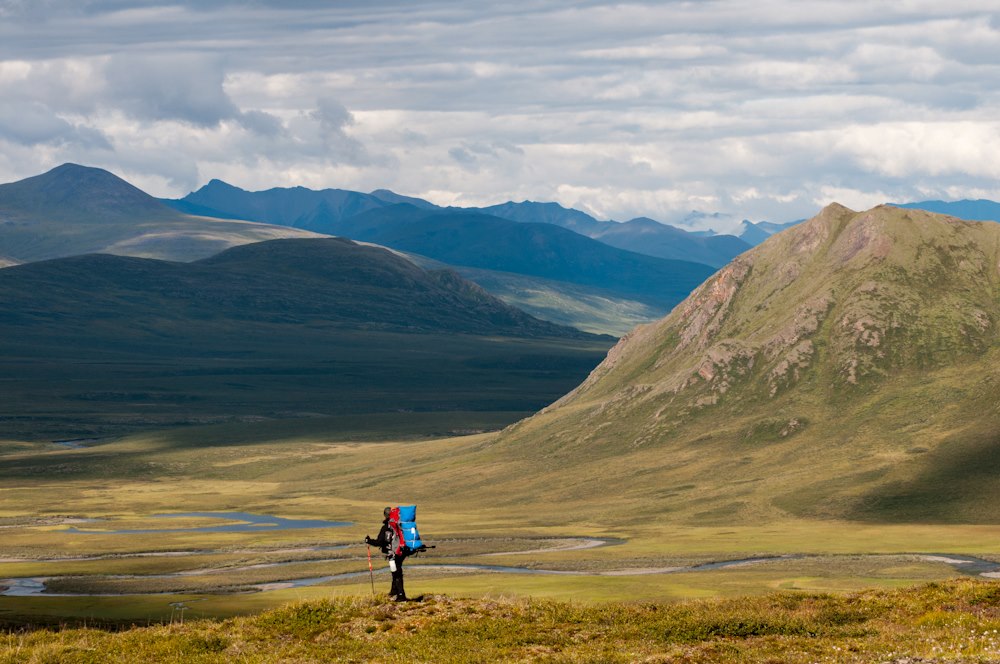
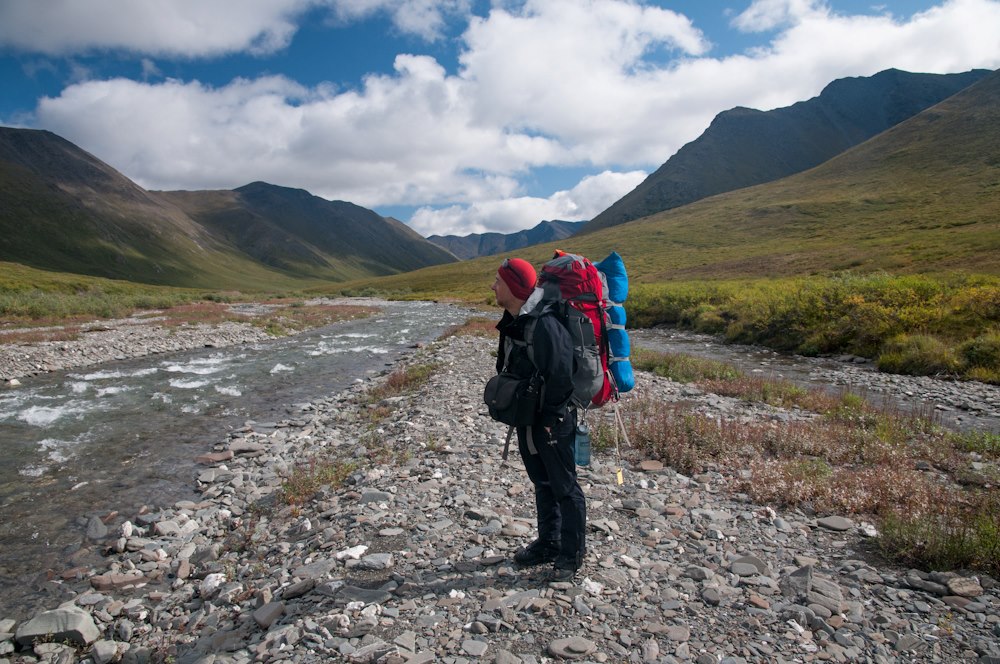
Gates of the Arctic is an unabashedly programmatic piece that describes Lias’ 2012 residency in Gates of the Arctic National Park. He backpacked with a ranger within the park—which is entirely wilderness, without a visitor’s center or even a single road within its boundaries—for 10 days, following a caribou migration. In performance, the music was closely coordinated with photos of the park, some taken by Lias.

Stephen Lias in Gates of the Arctic National Park

Stephen Lias backpacking in Gates of the Arctic National Park

In addition to being visually spectacular, the photos left no doubt what was being portrayed in the music, from the long hours of trekking with a heavy backpack, to sightings of caribou, bears and wolves, and finally a placid lake that mirrored the spectacular mountains in the park. Gates of the Arctic is thoroughly entertaining, especially with the photographic accompaniment. But it is also a well crafted and skillfully designed piece that features strong contrasts and great musical drama, woven into an effective orchestral score.

Some of my more curmudgeonly composer friends might ask, “but is it great music?” In answer I would say, Bach, Mozart and Verdi didn’t sit down to write “great music.” They sat down to write music for their audiences, much of it purely for entertainment. Time will tell us if Lias’ music survives our generation, but it is music that clearly reached the Boulder audience, who gave it a standing ovation.

Gabriela Martinez

Gabriela Martinez

The Saint-Saëns concerto is a piece that comes much more alive in performance than in any recording. Martinez, a Venezuelan who has performed with the famed Simon Bolivar Youth Orchestra and is now being championed by superstar conductor Gustavo Dudamel, was especially convincing in the free, fantasy-like opening movement. I especially liked her dynamic control, and the sense of spontaneity and freedom that she conveyed. Her sparkling runs and bounding arpeggios showed full technical command in the remaining movements, but the piano sound seemed underpowered at times—perhaps a victim of Macky’s inhospitable acoustics?

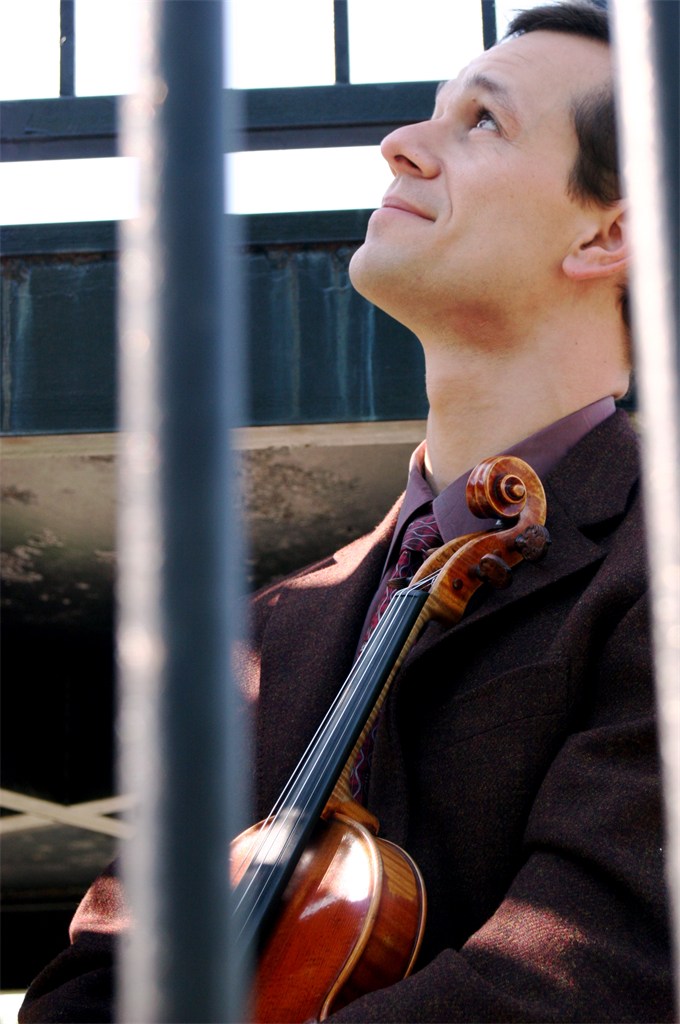
Charles Wetherbee

Charles Wetherbee

Another piece of program music, Scheherazade is always an audience pleaser—as it was for Butterman and the Boulder Phil. Wetherbee played the extensive violin solos with a sweetness and purity of tone that was exemplary. The solos in the cello and the wind sections were all well played, although coordination between players in the back of Macky’s deep stage and those in front was at times a little rocky.

Tricky acoustics aside, Butterman led a carefully modulated performance. The Boulder Phil strings cannot provide the sound that we hear on recordings by the Philadelphia and other orchestras with 60-plus players in the string sections and more hospitable acoustics, but the orchestra made effective work of all the big moments in the score, once again compelling the audience to their feet. It was, in the end, a satisfying performance of a much-loved piece.

Like Sinbad’s ship, the Boulder Philharmonic is well launched on a season that will feature many “Legends” and other stories in music. Let’s hope that the storm at sea where “The Ship Goes to Pieces on a Rock” remains confined to Rimsky-Korsakov’s evocative score.

# # # # #

Author’s Note: I do not plan on reviewing every concert that I preview here, or every one that is worthy of such coverage. But as the beginning of a new season by one of Boulder’s older musical institutions, and with a world premiere, this concert perhaps earned a little more attention—especially since I and the audience enjoyed it so much.

# # # # #

This post has been edited to correct grammar and typos.

With engineers in the cab, it’s time to fix the tracks

My thoughts and recommendations for the future of the Colorado Music Festival

By Peter Alexander

Boulder’s Colorado Music Festival is now back to full administrative strength. The railroad that is the CMF was not running as smoothly this past summer as it had in the past, largely due to the the lack of a music director  and the need to bring in multiple conductors to try out for the music director slot. But now that there are permanent musical and executive directors back running the railroad, the train can once again get up to speed. But first, it would be a good idea to clear the tracks of any unnecessary obstacles.

So to speak.

Andrew Bradford

Andrew Bradford

Metaphors aside, it is time for the CMF’s two recent hires, Musical Director Jean-Marie Zeitouni and Administrative Director Andrew Bradford, to start shaping the future of the festival. Since they are both new to Boulder, I offer here six suggestions that would draw on what I believe have been the strengths of the festival, as I experienced it over several years.

Reinstate the “Click” Commission. This was one of the most creative approaches to commissioning new music I have seen. If you have not taken part, the festival chose three composers each year, one of whom would be commissioned a new piece to open the next year’s festival. Each composer’s biography and sample works were posted on the CMF Web page, and audience members could vote for their preferred composer—by making donations to the commission. All donations went into a common pot to fund the commission, and the composer who raised the most money in their name received the commission—and the full pot.

This ingenious approach got the audience involved much more than in traditional commissioning schemes, where the festival would say, ‘We’ve selected a terrific composer (whose music you may not have heard). Trust us—it will be wonderful, if you give us some money for the commission.’

With the “Click” Commission, the contributors were part of the selection process, and they felt a great sense of ownership when the piece was premiered the next year. And the CMF received some pretty terrific pieces from composers who knew that they were a popular choice from the audience. Everyone benefited: the composer got a commission from a prominent musical institution, the festival got a new piece written for its opening concert each year, and the audience got the satisfaction of being involved from the choice of composer to the premiere.

Jean-MarieZeitouni

Jean-MarieZeitouni

Treasure the orchestra. Just about all of the guest conductors have I talked to have mentioned the orchestra as one of the strengths of the CMF. The quality of the orchestral performances is the main thing that brings audiences to Chautauqua in the summer. You may disagree about repertoire—more new music, less new music; more Beethoven, less Beethoven; more mashups, fewer mashups—but without first-rate orchestral performances of the repertoire, the discussions are irrelevant. No one travels to hear mediocre performances of their favorite pieces.

The quality of orchestra that we have enjoyed at CMF is extraordinarily high, but it is also very delicate. Such quality can easily be lost very quickly, but it can only be built over a long time. It would represent a long-term setback for the festival if the quality of the orchestra was allowed to slip. Among other things, that means treating the orchestral players as equal partners in the festival. It is not clear whether that was the case over the search process. I have heard many stories, not all reliable, but it appears that players were included in some parts of the search process but not others. But whatever the truth about the search process, everyone at CMF should remember that the trust and confidence of the players is not a commodity than should be spent carelessly.

Going forward, every effort should be made to honor the players in the way they are treated, from consulting and respecting their opinions, to pay and housing and other forms of support.

eTown Hall, Boulder

eTown Hall, Boulder

Speaking of honoring the orchestra, start by expanding the chamber music performances. The chamber concerts at eTown Hall have become one of the great jewels of the CMF. They give audiences access to a wholly different repertoire than the rest of the festival, and they present the musicians in a much more intimate setting. They give the players the opportunity to make their individual contributions as artists, to select what they want to play, and to craft their own interpretations. There is no better way to support and honor the players than giving them opportunities to perform chamber music. The musicians win and the audiences win; what could be better?

Find challenging and intriguing ways to explore music by living composers. I have said this before, but it is worth saying again: Everyone loves to talk about taking risks, but risk means the real possibility of failure. If you have no failures, you have not taken any risks. In music, this means any commissioning or presenting program for new music will include some pieces that don’t find an audience or just turn out to be duds. So it goes. CMF has to decide: does it want to stick to predictable, unexciting programming and watch the audience slowly shrink away, or do they want to find exciting and challenging new ways of engaging with the audience, at the cost of the occasional failure?

Drop the pop-concert portions of the “Musical Mashup” series and return to the kind of diversity that was created by the “World Music” series. The CMF Mashup concerts conducted by Steve Hackman have attracted sell-out crowd and should be continued on both commercial and artistic grounds. The other two concerts on the series this year, however, attracted small audiences and did not meet their projected goals. I see no reason to continue what was, quite frankly, a very conventional approach to programming: presenting pop artists (who may or may not have a significant following in Colorado) with an under-utilized orchestra.

tf3

Time for Three

There are other ways of positioning concerts along the boundaries between Western classical music and other traditions, including jazz, pop, folk, or music of other cultures. Whether you call it “World Music” or “Blurred Lines” or “New Approaches” doesn’t matter. What does matter is the creativity it spawns and the enthusiasm it generates. CMF would benefit from having a way of presenting a group like Time for Three, new music by Chris Brubeck, or collaborations with fiddler Mark O’Connor and the klezmer clarinetist David Krakauer, to name a few of the festival’s past endeavors that were not only fascinating and engaging, but performances on the very highest technical and artistic level. The best way to grow the festival is to engage with a wider and more diverse audience, and that should remain a focus for the festival in the future as it was in the recent past.

Incidentally, it should be noted the Zeitouni, a French-Canadian whose father is Egyptian and mother is Belgian, seems well positioned to sell the importance of multiculturalism (or multi-stylism) for creating musical strength and building an audience.

Pianist Olga Kern played all the Rachmaninoff concertos over two nights in 2013

Pianist Olga Kern played all the Rachmaninoff concertos over two nights in 2013

Bring back the concept of the “mini-festival within the festival.” One of the glories of the summer has been past mini-festivals of Beethoven symphonies, violin concertos, and music from the holocaust. And who can forget hearing all of the Rachmaninoff piano concertos in two nights? That was both an amazing feat of musical athletics and a remarkable artistic experience. These are the kinds of themes that distinguish a festival from a subscription season.

But above all, what the festival needs now is imaginative, professional leadership. Let us all hope that with the new Music Director Jean-Marie Zeitouni working with new Executive Director Andrew Bradford, CMF has the team in place to provide just that. We need to get the trains back on schedule.

Boulder Phil launches ‘Legends’ season with a bang

By Peter Alexander

Stephen Lias in Gates or the Arctic National Park. Photo courtesy of the composer.

Stephen Lias in Gates or the Arctic National Park. Photo courtesy of the composer.

Opening night for the Boulder Philharmonic offers a real triple threat.

The concert under music director Michael Butterman, at 7 p.m. Sunday, Sept. 14, in Macky Auditorium, launches the 2014-15 season with three pieces that would each be noteworthy on any program (http://boulderphil.org/concerts/opening-night).

The very opening piece will be the world  premiere of Gates of the Arctic, an avowedly pictorial work portraying the Gates of the Arctic National Park, written by composer Stephen Lias, who describes himself as an “adventurer/ composer.”

Gabriela Martinez

Gabriela Martinez

If that doesn’t capture your imagination, next on the program will be the Second Piano Concerto by Camille Saint-Saëns. That performance will introduce Gabriela Martinez, an emerging pianist from Venezuela whose career has been boosted by Gustavo Dudamel, the young conductor who created a sensation when he moved from Venezuela’s Simon

Charles Wetherbee

Charles Wetherbee

Bolivar Youth Orchestra to the podium of the Los Angeles Philharmonic.

And third will be Rimsky- Korsakov’s brilliant Scheherazade, which is not only a crowd-pleaser but also an

opportunity to introduce the orchestra’s new concertmaster, Charles Wetherbee, who will play the prominent violin solos throughout the score.

Read more in Boulder Weekly

.

Delayed but not Washed Out in Lyons

At ‘Sounds of Lyons,’ the flood of 2013 is past but not forgotten

By Peter Alexander

MinTze Wu, founder and director of Sounds of Lyons

MinTze Wu, founder and director of Sounds of Lyons

MitTze Wu is modern-day musical Molly Brown.

Brown survived the sinking of the Titanic in 1912 and came back stronger than ever. Wu and her Sounds of Lyons chamber music festival survived the flood of 2013 and have come back with a robust and eclectic series of concerts that are better than ever.

Like Brown, Wu seems to be unsinkable.

The 2014 festival will take place in various venues in Lyons Friday through Sunday, Sept. 12 through 14. This is a displacement from the usual timing of the festival in May and early June, but that slight delay is the only sign that the flood has directly affected the festival.

Indirectly, however, you could say that the flood runs through and under everything in this year’s Sounds of Lyons.

The major events of the festival maintain what has become Sounds of Lyons’ signature: three principal concerts, ranging from world music crossovers to serious classical chamber music. Surrounding the three main concert events are activities for children and families in Sandstone Park, culminating at 3 p.m. Sunday, Sept. 14, in an event titled “Celebrating Lyons II.” (For full concert programs and tickets, click here.)

“This has been the same format since the first year,” Wu says. “It will be balanced and dynamic—that’s just the way my brain works.”

Filmmaker Jem Moore

Filmmaker Jem Moore

The Saturday night concert, at 8 p.m. in Rogers Hall (4th and High streets in Lyons), is the festival’s central event, both in the order of events and emotionally in that it is the concert most directly inspired by the flood. Titled “Life True,” the performance will feature movements from string quartets by Haydn and Beethoven interspersed among four short documentary films by Jem Moore, profiling four remarkable characters in Macau, China.

“The flood is very present with everybody here in Lyons,” Wu says. “It is definitely present in the psychic space. Since I do much of the programming in exploration of what is happening in me and around me, I think the flood entered my consciousness of wanting to find strength. And for that I always, always turn to the music of Beethoven, especially the late string quartets.”

Wu likens the four films to the movements of a classical symphony or string quartet. The first film is preceded by a string quartet movement by Haydn, and then each film is followed by a carefully selected movement from a Beethoven quartet.

All four films were made in Macau, a ”special administrative region” within mainland China, similar to Hong Kong, which is right across the bay. Macau is best known for gambling, which is one of its primary sources of income, and as an offshore tax haven.

“It’s a four movement form,” Wu explains. “It goes like film, music, film, music—each film and music pair is grouped to make one large movement.

Coffee Plantation from "Life True" I

Coffee Plantation from “Life True” I

“The first movement is a coffee plantation owner, the second movement is a singer-songwriter. The third movement is a very poignant one about an immigrant massage therapist who left a very poor village in the Philippines to go to work in Macau, which is kind of her salvation (as well as) a place of sin. And the last movement is about a Buddhist calligrapher/chef.”

The musical performances will be by the Sage Quartet, consisting of Wu and Margaret Gutierrez, violin; Chieh-Fan Yiu, viola; and Michael Graham, cello. They are more or less the resident quartet for Sounds of Lyons, except that the personnel varies from year to year. In fact, “Sage Quartet’ Is more of a concept and an approach to music making than a specific collection of players.

“It doesn’t matter to me who is in the Sage Quartet at Sounds of Lyons,” Wu says. “I keep myself anonymous. The quartet is a collective spirit, I would say. And the really beautiful thing is how we work together.”

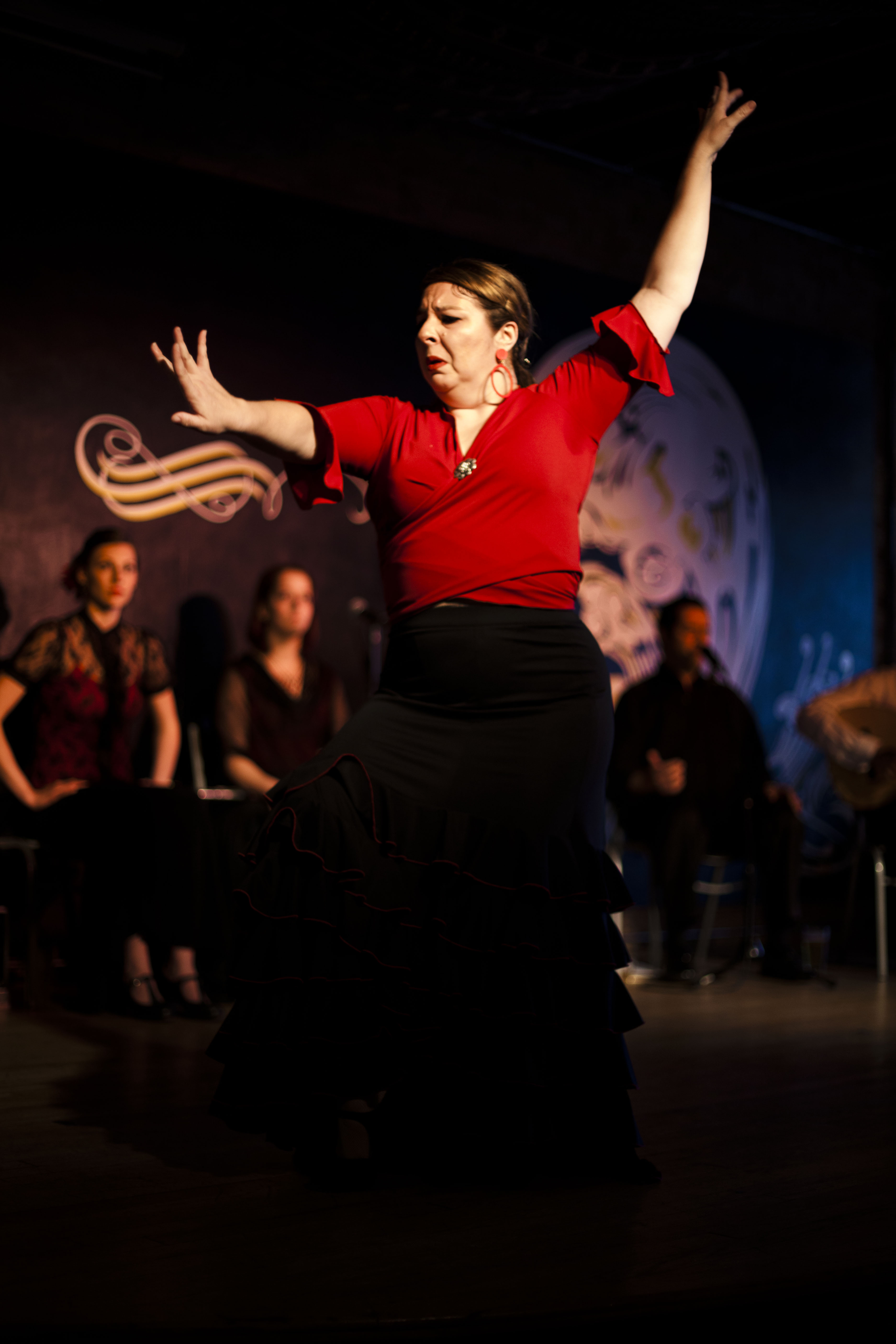
Flamenco dancer Natalia Perez del Villar

Flamenco dancer Natalia Perez del Villar

It has traditionally been the opening concerts of Sounds of Lyons that have the most eclectic and genre-blending programs. This year’s opener, “Crazy About You,” will continue that pattern at 8 p.m. Friday in

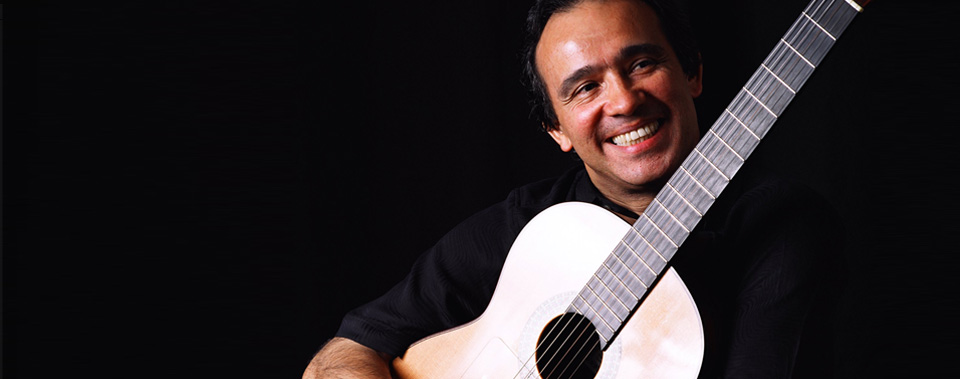
Alfredo Muro

Alfredo Muro

Rogers Hall. As described on the festival’s Web page, it will be “a tapestry woven through classical, flamenco, Brazilian, Spanish, original, folk music, songs and dances.”

Performers will be the Sage Ensemble—a trio of violin, viola and cello from the Sage Quartet joining with the guitar-flute duo of Alfredo Muro and Emma Shubin, vocalist Shannon Johnson, and the Flamenco Underground duo of guitarist/singer Mark Herzog and dancer Natalia Pérez del Villar.

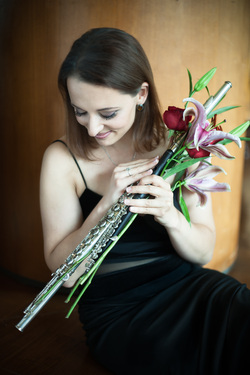
SoL.Emma.Shubin

Emma Shubin

The wide-ranging program includes Brazilian choros—a melancholy style of dance music that often includes extensive improvisation similar to jazz—bossa nova, samba, tango, and Spanish folk dance, as well as more classical compositions by Isaac Abeniz, Heitor Villa Lobos and the 17th-century German composer Heinrich Ignaz von Biber.

But listing the titles hardly does the planned concert justice. “There’s room for each group to present their art form,” Wu says. “Then there will be numbers that we all work together, to bring flamenco, and classical and folk and all that together.’ Even the Biber—a rather strict passacaglia from Renaissance times—will “sort of turn flamenco at the end,” she says.

The final concert, Sunday at 8 in Lyons Community Church at 350 Main Street, will feature a single piece: The Goldberg Variations by J.S. Bach. But characteristically, these will be the Goldberg Variations as you’ve never heard them before.

To begin with, the Variations have been transcribed from Bach’s keyboard original into an arrangement for the same string trio that plays on opening night. But the transcribed music is only part of the performance. Wu love to tell stories, and the Goldberg Variations, written to be played late nights for an insomniac German count, gave her all the inspiration she needs. In between the variations, the musicians will engage in a conversation with each other and the audience about insomnia.

“We’ll be kind of bouncing back and forth some quotes and some essays, some thoughts, about insomnia,” Wu says. “Some could be spontaneous and some could be quotes. We’re leaving some space for spontaneity amongst the performers on stage, so I can’t quite tell what’s going to happen.”

Returning to the subject of the flood, Wu is clear that it was never a thought that she would not hold the festival this year. Making and sharing music is too much a part of Lyons to be left behind.

“Lyons is culturally a very spiritual kind of place,” she says. “In one way we are doing absolutely what’s needed to flood recovery—fixing the roads, and raising funds, and doing everything that’s necessary. But you also see that huge need and desire to raise ourselves above that feeling of devastation, to be uplifted and to uplift others.”

# # # # #

SoundsOfLyonsLOGOSounds of Lyons

Friday–Sunday, Sept. 12–14

Complete program and tickets here.