2015: The year in music

A belated look back at classical music in Boulder during the past year

By Peter Alexander

Here’s wishing all of my readers a Happy New Year!

I hope your Holiday Season was filled with good cheer as mine was, with family coming to Colorado from north and south and three other time zones. And if it was, I hope you recovered faster than I have, since this story was on my schedule for a week ago!

Better late than never, here is my wrap-up of the events and the concerts that made 2015 memorable for classical music audiences in Boulder.
Zeitouni_2

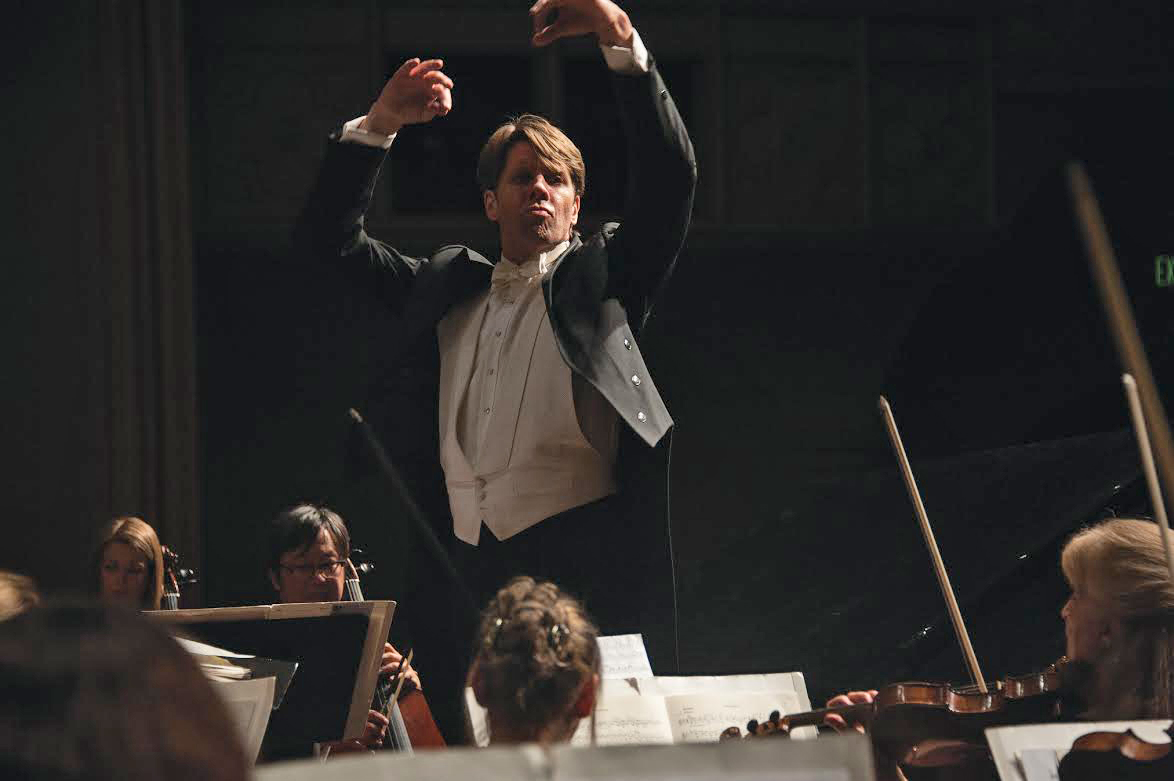
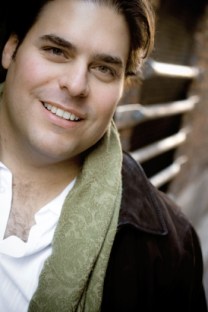
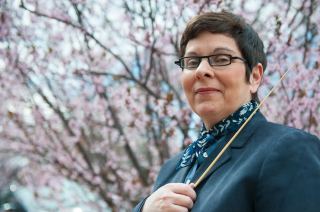
CMF music director Jean-Marie Zeitouni

Near the top of the list would have to be the arrival of Jean-Marie Zeitouni as the new music director of the Colorado Music Festival. An accomplished orchestra leader, he put his stamp on the summer season from start to finish, programming more French music than we have heard here for some time, and also featuring vocal music—a special love—on several occasions. These interests gave us some of the memorable concerts of the year, noted below.

The other big news on the Boulder orchestra scene was the selection of the Boulder Philharmonic as one of only four orchestras from across North America that will participate in the inaugural SHIFT Festival at the Kennedy Center in Washington, D.C, in March 2017. The selection was announced May 28, but the story did not end there. In December, the orchestra received its first-ever grant from the National Endowment for the Arts, making it possible to commission a brand new work from adventurer/composer Stephen Lias. The work, which is to be inspired by Rocky Mountain National Park, will be premiered by the Boulder Phil in Boulder and at the SHIFT Festival.

Among the many memorable performances of the past year were a number of intriguing discoveries—a new venue, and old instrument, and great masterpieces that are broadly underappreciated. (Of course, I am unable get to all the first-rate classical concerts in Boulder, so if you had any favorite performances that you think should have been included, I would love to have your comments at the end of the article.)

Feb. 28: The Boulder Bach Festival returned to its original pattern of offering one of Bach’s monumental works as its centerpiece, in this case an imaginative and provocative interpretation of the Mass in B minor. Leading his first performance of a major work since becoming musical director of the festival, Zachary Carrettin delivered a performance that was musically solid, with immaculate choral singing, superb orchestral playing, and five well matched soloists. But what made it especially memorable was that Carrettin carefully rethought the work from beginning to end, from the placement of the “intermission” break to the allocation of choral and solo parts.
 

art14125nar

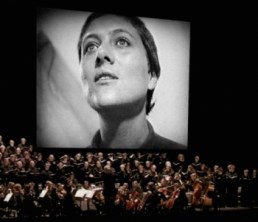
Renée Jeanne Falconetti as Joan in The Passion of Joan of Arc. Photo courtesy of Alliance Artist Management.

March 14: Conductor Cynthia Katsarelis and Pro Musica Colorado Chamber Orchestra, chorus and soloists lovingly performed Richard Einhorn’s oratorio Voices of Light as it was intended to be heard, accompanying a screening of Carl Theodore Dreyer’s 1928 silent film The Passion of Joan of Arc. Noted particularly for the acting of Renée Jeanne Falconetti as Joan, the film is regarded as one of the greatest silent films ever made, and it is greatly enhanced by Einhorn’s evocative score.

April 23–26: The CU Eklund Opera Program presented one of the first masterpieces of the operatic repertoire, Claudio Monteverdi’s Coronation of Poppea from 1643, in a musical realization by the conductor, Nicholas Carthy. A great work of dramatic imagination and musical genius that is not often performed today, Coronation of Poppea is always welcome. But it was the production concept from stage director Leigh Holman that made the performances especially memorable. I don’t often enjoy “updated” productions of operas and plays, but in this case the transposition into modern times worked very well. “Coronation of Poppea is all about sex and politics and power, and if you’ve seen House of Cards, it’s the exact same thing,” Holman said, explaining her decision to place the opera in modern Washington, D.C.. “It’s about a power hungry, vicious man and his power-hungry, vicious girlfriend.”
MahlerFest_DSC_8552

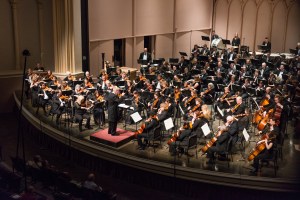
Robert Olson with the MahlerFest orchestra. Photo by Keith Bobo.

May 16–17: Founding director Robert Olson appropriately ended his 28-year tenure at the helm of Boulder’s Mahlerfest with a moving performance of the Ninth Symphony, the last of the composer’s symphonies to be completed. It was, he said, “not only the most perfect piece to end on, but may be one of the most perfect pieces, period.”

At the same time it was announced that Kenneth Woods, artistic director and principal conductor of the English Symphony Orchestra located in Worcestershire, UK, would succeed Olson as music director and conductor. Woods will direct the 29th MahlerFest later this year, with performances of the Symphony No. 7 scheduled for May 21 and 22.

July 1: The Colorado Music Festival opened the Jean-Marie Zeitouni era with a concert reflecting two of the conductor’s passions: the music of France, represented by Debussy’s orchestral showpiece La Mer; and music for the voice, represented by Ravel’s ravishing Shéhérazade
 and a grouping of Rossini arias, brilliantly sung by the Canadian contralto Marie-Nicole Lemieux. Zeitouni delivered sensitively crafted performances, Lemieux delivered the requisite vocal fireworks, and it all ended with a loud, brassy Pines of Rome by Respighi that sent everyone home happy.

July 23–24: A second highlight from the CMF was the evening that featured Stravinsky’s Firebird Suite and a concert performance of Bartók’s one-act opera Bluebeard’s Castle. The latter featured the distinguished American baritone Samuel Ramey as a last-minute stand-in for Bluebeard. Bluebeard’s Castle was a work that Zeitouni was especially eager to share with CMF audiences, and he saw it as a centerpiece of the festival from the time the schedule was announced in February. Here is another operatic work that deserves to be better known: It is a brilliant and disturbing psychological work, and it was given a stunning performance by Zeitouni, the CMF orchestra, and singers Ramey and soprano Krisztina Szabó.
IMG_0988

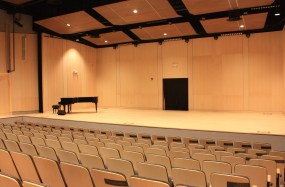
Interior of the new Stewart Auditorium at the Longmont Museum. Photo by Peter Alexander

Oct. 16–17: The Boulder Bach Festival made another memorable contribution to musical life by bringing attention to something that Boulder doesn’t have: a first-rate concert hall for chamber music. The BBF opened the 2015–16 season with the kind of eclectic concert that Carrettin often puts together—music not only by J.S. Bach but also Heinrich Ignaz Franz Biber, Jacques Arcadelt, Dario Castello, Johann Jakob Froberger, Biagio Marini, Marco Uccelini and Johann Christoph Bach. But the concert was not in Boulder; it was in the Longmont Museum’s splendid new Stewart Auditorium, a lovely facility that offers excellent sound, clean modernist lines and a welcoming feel.

Oct. 24: Like the Boulder Bach Festival, the composer Claudio Monteverdi makes a second appearance on this list, with another work of great scope and ambition that really should be more widely known for the masterpiece that it is: the Vespers of 1610. Conductor Evanne Browne, the Seicento Baroque Ensemble, and artists gathered from the world of historical performance gave us a splendid realization of Monteverdi’s score, which is virtually an anthology of early-Baroque virtuoso styles and techniques.
Erard piano.1

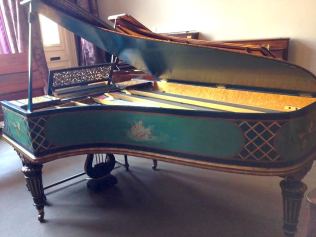
The 120-year-old debutante: an 1895 piano by Érard.

Oct. 30: A 120-year-old debutante made a strong impression on a concert by the Boulder Chamber Orchestra and conductor Bahman Saless. In this case, the debutante wasn’t a person; it was a piano, made in Paris in 1895 by the firm of Sébastien Érard. It was played by the evening’s outstanding soloist, Mina Gajić, who purchased the piano in Amsterdam in 2014 and brought it to Boulder. The concert was the first performance on the instrument in the U.S. Because the strings all run parallel to one another, instead of the bass strings beings crossed over the higher strings as in most modern pianos, the instrument has an unusually clear and transparent sound. Under Gajić‘s hands, it was a revelation to hear a piano that combined clarity and power in a way we are not accustomed to hearing.
Gábor Takács-Nagy_1-X2

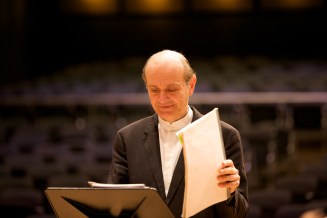
Back again after 20 years: Gábor Takács-Nagy. Photo courtesy of CU, Boulder.

 Nov. 6: Boulder welcomed an old friend back to town when Gábor Takács-Nagy, a founding member of the Takacs Quartet, came through town on tour with the Irish Chamber Orchestra. It was his first visit to Boulder in nearly 20 years. Takács-Nagy no longer performs in public as a violinist, but maintains a thriving career as conductor. As conductor of the Irish Chamber Orchestra, he led a thoroughly enjoyable program of Haydn, C.P.E. Bach, and some idiomatically performed music from his homeland in Hungary, Bartók’s Divertimento for String Orchestra. “I talked with the orchestra about the Hungarian language, and even sang them Hungarian folk songs,” Takács-Nagy said. “Somehow they feel it very, very well!”

2015 in review

The WordPress.com stats helper monkeys prepared a 2015 annual report for this blog.

Here’s an excerpt:

The concert hall at the Sydney Opera House holds 2,700 people. This blog was viewed about 14,000 times in 2015. If it were a concert at Sydney Opera House, it would take about 5 sold-out performances for that many people to see it.

Click here to see the complete report.

Remembering those who are no longer with us

A year-end list of musicians we lost in 2015, but who left much behind to be grateful for

By Peter Alexander

Here is my annual list of musicians who passed in the last year. This is a personal list; it includes people who were recognized worldwide as great artists, as well as people whose work I admire and respect, and people I was fortunate enough to know personally.

But they all deserve to be remembered as we turn the corner into 2016. Each affected a great many people, whether other musicians or members of audiences around the world. And we should not forget that each was a person who left friends, family, students and others who were touched deeply by their lives.

May you all rest in peace. And may we all try to be worthy of your various legacies in the coming year.

January 19: Ward Swingle, founder and arranger for the Swingle Singers, 87
February 1: Aldo Ciccolini, Italian-born French pianist, 89
February 16: Lesley Gore, popular singer best known for the proto-feminist anthem “You Don’t Own Me“ and “It’s My Party,” 68
March 24: Soprano Maria Radner, 34, and baritone Oleg Bryjak, 54, who died on the Germanwings flight that was crashed in the Alps days after singing in Wagner’s Siegfried in Barcelona
April 3: Andrew Porter, longtime influential music critic for The New Yorker as well as The Financial Times and other publications in England; also known as a librettist, scholar and editor, 86
May 14: Blues legend B.B. King, 89
May 31: Nico Castel, comprimario tenor at the Metropolitan Opera who was best known to many opera singers as one of the foremost diction coaches of the 20th century, 83
June 2: Günther Schneider-Siemssen, German opera stage designer, 88
June 13: Ronald Wilford, American artist agency manager and executive, 87
June 21: Gunther Schuller, American composer, conductor, teacher and author, known for coining the term “third-stream” for music that was between classical and jazz, 89
July 10: Jon Vickers, Canadian tenor known for singing Siegfried and other Wagnerian heldentenor roles, as well as many other leading tenor roles, 88
June 11: Great jazz saxophonist and innovator Ornette Coleman, 85
July 15: Alan Curtis, American harpsichordist, conductor and scholar, 80
July 26: Vic Firth, percussionist and timpanist with the Boston Symphony 1952–2002, familiar to anyone who attended Boston Symphony Orchestra performances, and the many who watched BSO television broadcasts, during those years, 85
September 17: Sir David Willcocks, British choirmaster, director of the Choir of King’s College, Cambridge, 95
November 10: Robert Craft, American classical music writer, conductor, and amanuensis to Igor Stravinsky, 92
November 21: violinist Joseph Silverstein, concertmaster of the Boston Symphony for 22 years, and conductor with several orchestras, 83
December 2: John Eaton, a composer known for working with quarter-tones—the pitches midway between the chromatic halfsteps of our more familiar scales—and composition professor at Indiana University and the University of Chicago, 80
December 19: Kurt Masur, conductor of the Leipzig Gewandhaus Orchestra who in 1989 played an important role in the peaceful resolution of demonstrations in the former East Germany; also led the New York Philharmonic 1991–2002, 88


Boulder Philharmonic receives its first NEA grant

Funds will commission a new work by Stephen Lias celebrating Rocky Mountain National Park

By Peter Alexander

BPO.Macky.2

The Boulder Phil onstage at Mackey Auditorium

The Boulder Philharmonic Orchestra has received its first-ever grant from the country’s premiere arts granting agency, the National Endowment for the Arts (NEA).

The $15,000 award was announced by the NEA and the National Park Service as part of the “Imagine Your Parks” initiative. The grant will fund a commission from adventurer-composer Stephen Lias of a new 20-minute orchestral work inspired by Rocky Mountain National Park and celebrating the centennial of the National Park Service.

Kennedy Ctr

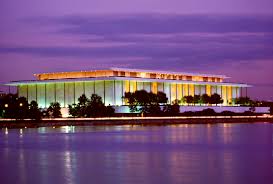
Kennedy Center for the Performing Arts, Washington, D.C.

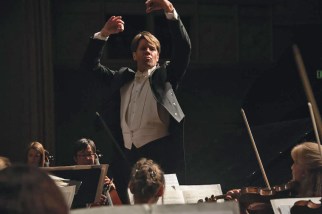
The Boulder Philharmonic and conductor Michael Butterman will premiere the new work at Macky Auditorium as part of their 2016–17 subscription concert series, and subsequently at the Kennedy Center in Washington, D.C., as part of the inaugural SHIFT Festival of American Orchestras in March, 2017. The Boulder Phil is one of only four orchestras selected to participate in the festival.

“This recognition that we’re honored to receive feels like an affirmation of the work we have been doing for the past decade or more,” Butterman says. “We’ve been trying to reflect our community and find entry points for people to engage with classical music who had not regularly encountered it before.

Buttermn.new

Boulder Phil Music Director Michael Butterman

“The focus in particular on the natural world and the relationship that people in Boulder have to it is something that is very special for the orchestra, and we’re just delighted to be able to bring a brand new piece like this to life, both in Boulder and then of course on the national stage at the Kennedy Center.”

Of course, there are many classical pieces inspired by nature, dating back to Bach’s “Peasant” Cantata, Seasons by Vivaldi and Haydn, Beethoven’s “Pastoral” Symphony No. 6 and Smetana’s musical description of the river The Moldau. “The idea of being inspired by your natural surroundings is as old as humanity,” Butterman says. “But there’s something different when we do it in Boulder, just because hiking and being outside is so much a part of the daily life of most Boulderites.”

Lias expressed excitement at receiving the grant-supported commission from the Boulder Phil. “It’s just a dream come true,” he says.

Lias has a long association with the national parks. He has received several artistic residency grants in national parks, and has written several pieces inspired by these residencies. The first was his “Timberline Sonata” for trumpet and piano, written following a 2010 residency in Rocky Mountain National Park and premiered in Estes Park. Other pieces have been inspired by Big Bend, Kings Canyon, Sequoia, Denali, Wrangell-St. Elias, Carlsbad Cavern and Mesa Verde national parks, among others. Several of these works have been compiled onto a CD recording, “Encounters.”

Lias in GoANP

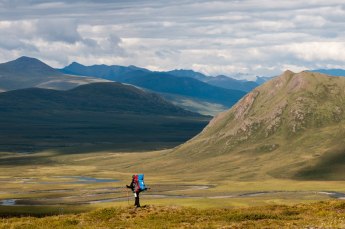
Stephen Lias in Gates of the Arctic National Park

In Sept. 2014, the Boulder Philharmonic presented the premiere of Lias’s orchestral work Gates of the Arctic, inspired by a residency and backpacking journey in America’s northernmost and second-largest national park. “(Lias) had both a great experience in Boulder and a very positive reception from our audience,” Butterman says of the premiere. “So for us he’s someone whose aesthetic will produce something special.”

Lias said that the new work will build on the success of Gates of the Arctic. “(Butterman and the orchestra) were so pleased with how Gates of the Arctic was received that our plan is to use that framework again,” Lias says. “Probably it will be grouped into thematic ideas where certain musical sections will be related to some event or experience that people have in the park, or perhaps a location or time of day or season.

Lias-5

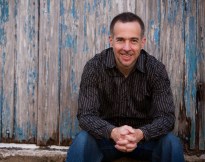
Composer Stephen Lias

“The stature of the situation in which this will be premiered demands a piece of greater heft from me, so I suspect that I will lace this piece with broader contrasts, and I may dig a little deeper compositionally.”

Lias admits to being a little nervous every time he starts a new piece, and this commission will be no different. “I approach each major new project with a certain amount of trepidation about how I’m going to come up with new music ideas,” he says.

“The order of events will be not to worry about what kind of piece I’ll write, but instead start thinking about what makes Rocky Mountain National Park such an inspiring subject. And as I answer that question, suddenly I’ll discover that I have a list of things that will inform the shape of the piece. And at that moment, the piece is already begun.”

‘Tis The Seasons, north and south

Zachary Carrettin joins the BCO for Vivaldi and Piazzolla

By Peter Alexander

zacharycarrettin

Zachary Carrettin

The next performance of the Boulder Chamber Orchestra will transport listeners to 18th-century Venice and 20th-century Buenos Aires, and several points in between.

The program, “The Seasons,” will feature two of Vivaldi’s Baroque-era Four Seasons and equivalent works from Astor Piazzolla’s tango-inflected Four Seasons of Buenos Aires, as well as music depicting a late-night stroll in Madrid and the hustle and bustle of a Metro stop in Mexico City.

Also on the concert, to be presented at 7:30 p.m. Friday in Boulder and Saturday in Broomfield, will be Introduction, Aria and Presto by the late Baroque Italian composer Benedetto Marcello. The violin soloist for Vivaldi and Piazzolla will be Zachary Carrettin, director of the Boulder Bach Festival.

“We wanted to have some variety,” says Bahman Saless, director of the BCO. “This one will be fun!”

Read more at Boulder Weekly.

# # # # #

The Seasons

1449254846569Boulder Chamber Orchestra, Bahman Saless, conductor, with
Zachary Carrettin, violin

Javier Alvarez: Metro Chabacano
Luigi Boccherini: Night Music from the Streets of Madrid
Antonio Vivaldi: Autumn and Winter from The Seasons
Benedetto Marcello: Introduction, Aria and Presto
Astor Piazzolla: Spring and Summer from The Four Seasons of Buenos Aires

7:30 p.m. Friday, Dec. 4, First United Methodist Church, 1421 Spruce St., Boulder
Tickets

7:30 p.m. Saturday, Dec. 5, Broomfield Auditorium, Broomfield
Tickets


Ars Nova Singers celebrate the holidays with “Happiness and Cheer”

Music from Gregorian chant to ‘A Charlie Brown Christmas’

By Peter Alexander

“Happiness and Cheer,” the 2015 edition of Ars Nova Singers’ annual holiday concert, will offer music from Gregorian chant to A Charlie Brown Christmas.

And at least five centuries of music in between.

Ars Nova — the name means “New Art” and is taken from a style of music that was new in the 14th century — has been performing music from both ends of the historical spectrum for 30 years.

“We’ve prided ourselves on the fact that we do early music as well as contemporary music,” says Thomas Edward Morgan, the group’s founding director. “Our Christmas concert, when we reach our widest audiences, is meant to give them a range of what we do.”

Chronologically, that range runs from the 13th-century “Song of the Nuns of Chester,” through music of the Middle Ages and Renaissance, to 20th-century Christmas pieces by Rachmaninoff, Poulenc and Holst, and ending with music and arrangements by Morgan. Almost all will be new to the audience.

There will be four performances of the program, in Englewood (Dec. 12), Denver (Dec. 13) and Boulder (Dec. 17–18). Ars Nova will sing unaccompanied under Morgan’s direction, with oboist James Brody appearing as a guest artist for a portion of the program. (Note: Other Holiday concerts are listed here.)

Read more at Boulder Weekly.

# # # # #

Happiness and Cheer: Christmas with Ars Nova
Ars Nova Singers, Tom Morgan, director, with James Brody, oboe

 pondreflect•2 p.m. Saturday, Dec. 12, Bethany Lutheran Church, 4500 E. Hampden Blvd., Englewood
•3 p.m. Sunday, Dec. 13, St. Paul’s Lutheran Church, 1600 Grant St., Denver
•7:30 p.m. Thursday & Friday, Dec. 17 & 18, St. John’s Episcopal Church, 1419 Pine St., Boulder

Tickets

# # # # #

A selected listing of classical-music Holiday events in the Boulder area can be found here.

NOTE: Edited on 3 Dec. to correct typos and errors introduced by copying from one format to another.


Pro Musica Colorado opens season with bustle and energy

Larry Graham plays Mozart concerto on a program with a world premiere

By Peter Alexander

Photography by Glenn Ross. http://on.fb.me/16KNsgK

Cynthia Katsarelis, conductor of Pro Musica Colorado

Pro Musica Colorado Chamber Orchestra, the last of the local orchestras to launch the 2015–16 season, got underway in Boulder last night (Nov. 21) with a bustling, energetic program featuring the world premiere of Kurt Mehlenbacher’s Flying Crooked and two major pieces by Mozart.

Cynthia Katsarelis directed the performance in the First United Methodist Church with her usual focus on the overall architecture and momentum of the pieces, and retired CU prof. Larry Graham gave a fluid, nuanced reading Mozart’s C-minor Concerto, K491. The same program had been played Friday night in Denver.

In remarks before the concert began, Mehlenbacher explained that the title Flying Crooked was only applied after the piece was completed. Based on a suggestion from his roommate, it carries no implication that the music should be seen as deliberately descriptive or programmatic.

Be that as it may, the propulsive rhythms that dominate the texture do suggest flying, or other kinds of movement—by turns rushing, loping, flitting and soaring. The thoroughly enjoyable score contains many short episodes that are sometimes contrasting, but the impulsive motor rhythms are rarely absent from the background. Based on this performance, I would urge other smaller orchestras to take up Flying Crooked as an energetic and effective way to open any program.

For better or worse, Mozart’s C-minor Concerto sounded just like what it was: a performance on modern instruments and piano in a highly reverberant space. The First United Methodist sanctuary is a long, rectangular shoebox, perfectly suitable for services but less than ideal for orchestras.

Bass notes in particular tend to spread and muddy the texture, so that every timpani stroke, for example, threatens to cover details in the music. This is not a question of orchestral numbers—with only one string bass and three cellos, the ensemble is well balanced. The timpanist used the appropriate hard mallets for an incisive sound. But there is little players can do when notes continue to resonate too long after they are sounded. Unfortunately, Boulder does not have an ideal small auditorium, so Pro Musica and other groups will continue to rely on churches for the foreseeable future.

(I did not hear the Friday performance in Denver’s First Baptist Church, but I heard reports that the sound was much less problematic there.)

Larry Graham2_Dale_Steadman

Larry Graham. Photo by Dale Steadman.

The lack of clarity aside, Graham played with great facility. He had full command of dynamics and control of the individual voices in the texture, providing as much clarity as possible in the space. His playing was especially lovely in the slow movement, where the softer and thinner orchestral texture allowed him to be distinctly heard throughout. His sparkling performance of the sprightly finale was enhanced by lovely playing from the Pro Musica winds.

Graham has long been a popular fixture on the Boulder classical music scene. It has been reported that this might be his last performance with orchestra, although he seems to be less than emphatic on that subject. His playing is more than effective, and he continues to enjoy intimate concerts, so there should be no hint that he is loosing any ground as a performer. Perhaps the right concerto will be found to entice him back onto the concert stage.

Pro Musica

Pro Musica Colorado

The other Mozart on the program was the Symphony in D major, K504, known as the “Prague” Symphony because of where it was written. It begins with a brooding slow introduction that contains more than a hint of the D minor of Don Giovanni, the opera Mozart was soon to write for the theater in Prague. Katsarelis and Pro Musica brought out all the pathos of the opening gestures before launching on a rhythmically energized performance of the main movement.

The contrast between the dramatic, driven first allegro theme and the tenderness of the second theme was carefully managed and highly effective. Here, the drama inherent in the formal structure of the 18th-century symphony came vividly to life. In the contrapuntal development section, the entrances were well marked, leading to a satisfying climax before settling back down into a gentle transition back to the first theme for the recapitulation.

The slow movement flowed comfortably and smoothly, and as it should the symphony ended with an exuberant romp. Katsarelis’s wise decision to honor the repeats in the finale provided a touch of humor when the piece came scurrying to a definite end, only to launch suddenly and busily back into a developmental passage. The ending was consequently all the more effective the second time.

Pro Musica Colorado looks ahead and back

Opening program may be pianist Larry Graham’s farewell orchestra concert — or not

By Peter Alexander

Larry Graham_Dale_Steadman

Larry Graham. Photo by Dale Steadman.

The Pro Musica Colorado Chamber Orchestra will look both forward and back in their 2015–26 season, which music director Cynthia Katsarelis and the orchestra call “Remembrance” (http://www.promusicacolorado.org).

The season will open Friday and Saturday (Nov. 21-22) with the world premiere of a new work by CU composition competition winner Kurt Mehlenbacher—looking ahead—and end (April 8–9) with Mozart’s Requiem—a work that compels us to look back. In between will be a concert of music by J.S. Bach and Dmitri Shostakovich (Jan. 22-23) that will be part of a two-year festival of all of Shostakovich’s chamber music.

This will be the program most closely tied to the theme of remembrance, since Pro Musica will play the string orchestra version of Shostakovich’s String Quartet No. 8, dedicated to “the victims of fascism and war.”

The opening concert features Larry Graham, a revered former CU piano professor, playing Mozart’s C-minor Piano Concert, K491. The concert will open with Mehlenbacher’s Flying Crooked for chamber orchestra, commissioned by an endowment established by the late Thurston E. Manning, and also include Mozart’s Symphony No. 38 in D major, K504, known as the “Prague” Symphony.

Read more at Boulder Weekly.

# # # # #

pmc-logo

Pro Musical Colorado Chamber Orchestra
Cynthia Katsarelis, conductor, with Larry Graham, piano

Kurt Mehlenbacher: Flying Crooked (world premiere)
Mozart: Piano Concerto in C minor, K491
Symphony No. 38 in D major, K. 504 (“Prague”)

 7:30 p.m. Friday, Nov. 20, First Baptist Church, Denver
7:30 p.m. Saturday, Nov. 21, First United Methodist Church, Boulder

Tickets


Making music at a time of tragedy

A personal reflection in the form of a concert review.

By Peter Alexander

12239638_10153709043612365_7450372887197993418_nLast night, the Boulder Philharmonic played a concert.

They played music by Brahms and Charles Denler, the last accompanied by photographs by John Fielder. That was what was on the program, but before the announced program began, they also played the “Nimrod” variation from Edward Elgar’s Enigma Variations as a moment of solace for all of us who were feeling battered by the fierce winds blowing across our world, and as a moment of tribute to those suffering after the atrocities in Paris.

And presumably, since Paris was not even mentioned, for others around the world who are suffering in these terrible times—in Lebanon, in Syria, across Europe, in Africa, and in our own country.

One of the most beautiful four minutes of music I know, “Nimrod” is as fine an offering of solace as musicians could make. It was followed by a long period of silence, as conductor Michael Butterman and members of the orchestra held their positions from the final note. And after a smattering of applause—I will take it as an expression of gratitude for the gesture, rather than anything so routine as reward for the performance—Butterman spoke some touching and very appropriate words about how we all are feeling today.

As one of those affected by the events of the past 36 hours, the past week, the past year, I was both thankful for the opportunity to hear music lovingly played, and aware what a tiny thing a concert is in the world we now live in. Sometimes, just getting on with life is the best thing that we can do—literally the best of many choices. In that respect, the people of Paris may be an example for us all. But sometimes, too, it feels insufficient.

While “Nimrod” was sounding, the familiar words of Leonard Bernstein were projected above the orchestra: ““This will be our reply to violence: to make music more intensely, more beautifully, more devotedly than ever before.”

Sadly, these words are familiar because they seem to be quoted more and more often in these times. They are beautiful, but at some point, they are no longer enough. We will either find a way to get beyond the expression of our ideals and find a way to make a world that will accept difference, one that will make room for all of the world’s children—those of any God you prefer—or this grand experiment of human culture and civilization will come to an end.

It was a meaningful coincidence that the program opened with Brahms’s Schicksalslied (Song of destiny), performed by the orchestra with the Boulder Chorale in celebration of the group’s 50th anniversary. A setting of a poem by Friedrich Hölderlin, the work contrasts the peace of Elysium with human life, where we suffer the batterings of forces we cannot control. The central choral section, essentially a musical depiction of life in a world of chaos, is followed by music that seems to offer comfort and hope.

It turns out Boulder Phil could not have selected a better message for Nov. 14, 2015.

After a satisfying and meaningful performance of Brahms, Butterman and the orchestra turned their attention to music that strives for the same peace that Brahms suggests at the end of the Schicksalslied. The concert premiere of Denler’s Portraits in Season offered meditative music for piano supported and gently amplified by the orchestra. With the composer playing the solo piano part, the performance created a fitting mood of calm and contemplation.

Denler explained before the performance that the piece was not really about the seasons, but about the passages of life and the pleasure that one can find from growing older. This too seemed to fit the mood of the first half of the concert. The beautiful photography of John Fielder projected above the orchestra, and the quotes from Henry David Thoreau that appeared on some slides, added greatly to the pleasure of the occasion, and provided still more food for reflection.

The concert concluded with a mostly satisfying performance of Brahms’s Second Symphony. Here the key of D major casts a layer of light and serenity over the entire work. The audience responded with warmth.

France-Paris-Attacks_Horo-1

Candles and flowers outside La Belle Equipe restaurant in Paris, Nov. 14, 2015.

Leaving the concert hall, one re-enters a world that is not as safe or well ordered as a Brahms symphony. On a personal note, I was all the more thoughtful about humanity’s capacity for inflicting horror because just the day before—near the same time as the attacks in Paris—I happened to visit the site of one of the worst tragedies in our own country’s history: the Sand Creek Massacre by U.S. volunteers of Cheyenne and Arapahoe women, children, and men who were flying the stars and stripes and a white flag.

Suffering, it seems, is ageless. So as we enjoy the best fruits that human culture has to offer, whether it be in the music of Johannes Brahms and Charles Denler, or the photos of John Fielder, or whatever art, music and literature you may enjoy in the coming weeks, we should all take the time to reflect on how precious and fragile is the world we imagine that we live in. If we fail to do so, we may pay a terrible price.

_____

Lightly edited for clarity Nov. 15, 2015.


Brahms’ destiny, Denler’s melodies and Fielder’s photos at Boulder Phil.

Thoreau quotes compliment world concert premiere of Denler’s Portraits in Season.

By Peter Alexander

Charles Denler

Charles Denler

Composer Charles Denler has always felt close to nature, so it makes sense that the world concert premiere of his Portraits in Season for piano and orchestra would be supplemented by the work of two other nature-loving artists: the American essayist Henry David Thoreau and Colorado photographer John Fielder.

Saturday’s performance by the Boulder Philharmonic and conductor Michael Butterman will feature Denler as piano soloist (7:30 p.m. Nov. 14 in Macky Auditorium; tickets). During the performance, Fielder’s photographs will be projected on a screen above the orchestra, where quotes from Thoreau will appear before each of the score’s movements.

Denler’s Portraits will be bookended by two pieces by Brahms, a composer who also enjoyed the natural world on his solitary walks in the Vienna woods. The concert will open with the Schicksalslied (Song of Destiny), performed with the Boulder Chorale in celebration of their 50th anniversary, and end with the Symphony No. 2 in D major.

Sneffels Range Spring, San Juan Mountains. Colorado. Photo by John Fielder

Sneffels Range Spring, San Juan Mountains. Colorado. Photo by John Fielder

Butterman says that the idea of having images accompany Denler’s music occurred to him the very first time he heard it. Denler had compiled digital recordings of the music—now released on an album—as he was working on it.

“I thought it was very fun music,” Butterman says. “But as I was listening to it, I wanted to see something. I wrote back and said this fits with our focus on local composers, and also nature and music together, but what about adding some visuals? He said ‘fantastic!’”

Adding images to Denler’s music was more than logical, since he is best known as a film composer. And Fielder, known for his nature photography throughout Colorado, seemed an ideal choice, too. For one thing, his photos have often been featured with music: this will be the fourth performance by a Colorado orchestra this year to use his photos.

Boulder audiences will remember that Fielder’s work was featured by the Colorado Music Festival last summer in performances of music by Sibelius and Beethoven. His photos were also featured in performances in Breckenridge and Steamboat Springs.

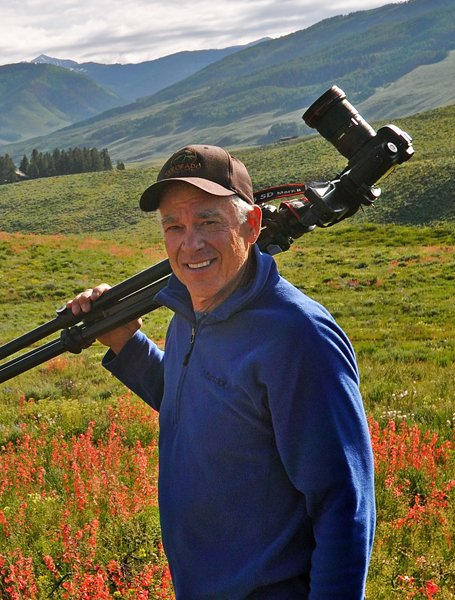
John Fielder. Photo by Cari Linden.

John Fielder. Photo by Cari Linden.

“I’ve been putting music to my slides for years,” Fielder says. “I love the experience—the whole is greater than the sum of the parts when you put music and imagery together.”

Fielder, who is recognized for his books and calendars of Colorado scenes, is deeply devoted to the outdoors. “I regard nature as not just views,” he says. “I enjoy being outdoors in the wilderness. The sound, the smell, the taste and the touch, as well as the views, are what make nature sublime for me.”

Portraits in Season has movements that pass through two complete years, and then suggest the start of another of life’s continuing cycles. And Denler intends this very much as a metaphor.

“The underlying meaning is walking through life,” he says. “I want people to think about that— to listen to this music and see that growing older is a gift. We should celebrate every single day and embrace the idea of aging.”

Denler’s music is often inspired by visual images, whether films that he is writing for, or personal experiences for his concert music. “This particular suite is based on visuals that I have from hiking the ponds and lakes (of) South Platte Park, walking along the Highline Canal, and even in my backyard,” he says.

Each movement is associated with a specific memory, even though the listeners will not know the locations they are associated with. And the Thoreau quotes are not directly associated with the locations, either.

“I’m a native New Englander, and I always gravitated toward (Thoreau’s) work,” Denler explains. “He wrote about nature from the context of living inside of it, and I wanted that reflected in the music. Sometimes, the quote just made sense for that season, (so) it may not reflect particular areas here in Colorado.”

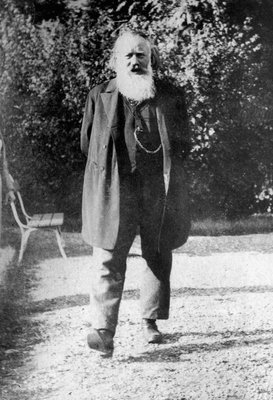
Johannes Brahms

Johannes Brahms

Butterman chose Brahms for Denler’s companion on the program, because he sees a connection between Denler, nature, and the Viennese composer. “Brahms never wrote anything that he called ‘Babbling Brook’ or something,” he says. “But yet, when I think about composers who drew nourishment from nature, he’s actually the first composer that comes to my mind.

“The energy and the centeredness that he drew from long walks in the Vienna Woods strikes me as a little bit like Thoreau—somebody who needed to be away from people and by himself in nature. They (both) found their batteries recharged by the experience.”

Of the two works by Brahms, the Second Symphony will be the most familiar. “It’s full of all of the hallmarks of Brahms’s music that I really love,” Butterman says. “The rhythmic ambiguity, his ability to mix the serenade-like quality of his woodwind writing with much more accented and aggressive writing in the strings. But there’s an overlaying of sort of a placid character to it.”

Michael Butterman

Michael Butterman

The Schicksalslied, on the other hand, has placid moments, but they are definitely not part of Brahms’s depiction of human destiny, which is one of turbulence and forces beyond human control. “I love the beauty of the outer segments,” Butterman says, “and then the turbulence of what the chorus sings in the middle is a dramatic contrast.”

The beginning seems to be a description of Elysium, but that peaceful realm is contrasted with our life on earth. In the central choral section, “we are buffeted by fate, thrown hither and yon by forces that we have no ability to influence or control,” Butterman says. “It basically says that things are really nice up above, wherever that may be, but down here it’s every man for himself.”

Henry David Thoreau

Thoreau

The text ends there, but Brahms has added a closing orchestral section that provides a ray of hope for a better existence at the end. Which brings us back to Denler’s contemplative and comforting Classical/New Age score, which seems to evoke the peace that Brahms only hinted.

Or in the words from Thoreau’s Walden that Denler has chosen for one of the movements, when “the day and night are such that you greet them with joy, and life emits a fragrance like flowers and sweet-scented herbs . . . all nature is your congratulation and you have cause momentarily to bless yourself.”

# # # # #

Portraits in Seasons

Boulder Philharmonic Orchestra, Michael Butterman, music director,
with Boulder Chorale, Charles Denler, piano, and photos by John Fielder

World concert premiere of Portraits in Season for piano and orchestra, by Charles Denler
Johannes Brahms: Schicksalslied and Symphony No. 2 in D major

7:30 p.m. Saturday, Nov. 14
Macky Auditorium

Tickets

Related events:
7:30 p.m. Wednesday, Nov. 11: Free Café Phil open rehearsal at the Dairy Center for the Arts
6:30 p.m. Saturday Nov. 14, before the concert: Pre-concert talk at Macky

Charles Denler’s CDs and John Fielder’s books will be on sale in the lobby before and after the performance.