Cirque de la Symphonie makes fourth appearance with Boulder Phil

‘World’s Only Aerial Violinist’ Janice Martin performs with the company

By Peter Alexander Feb. 1 at 11:30 a.m.

The circus is coming back to town, and this time they’re bringing a fiddler.

J.Martin

Aerial violinist Janice Martin

The circus is the acrobatic troupe Cirque de la Symphonie, returning to perform with the Boulder Philharmonic in a program titled Cirque Goes to the Movies. And the fiddler is Janice Martin, “The World’s Only Acrobatic Aerial Violinist,” who will play the theme from Cinema Paradiso and two movements of “Winter” from Vivaldi’s Seasons while performing an aerial act above the stage.

A company of acrobats, dancers, aerialists, jugglers and other cirque artists, Cirque de la Symphonie has performed three times before with the Boulder Phil. The current production of Cirque Goes to the Movies features acts performing to film music played live by the orchestra.

Selections will be from movies including Superman, Star Wars, Titanic, West Side Story and Mission: Impossible. The Boulder Phil, under music director Michael Butterman, will also present concert performances of music from Gone With the Wind, Pirates of the Caribbean and other films.

Read more in Boulder Weekly.

# # # # #

“Cirque Goes to the Movies”
Boulder Philharmonic, Michael Butterman, conductor
Cirque de la Symphonie with Janice Martin, Aerial Violinist

2 and 7:30 p.m. Saturday, Feb. 3
Macky Auditorium

Tickets

Takacs Quartet welcomes pianist Cooperstock and tenor Chellis Feb. 4-5

Pieces by Mozart, Vaughan Williams and Dohnányi are on the program

By Peter Alexander Feb. 1 at 8:00 a.m.

One of the attractions that brought pianist Andrew Cooperstock to the University of Colorado faculty 18 years ago was, he says, “the idea of chamber music and collaboration among the faculty.”

Cooperstock1-X4

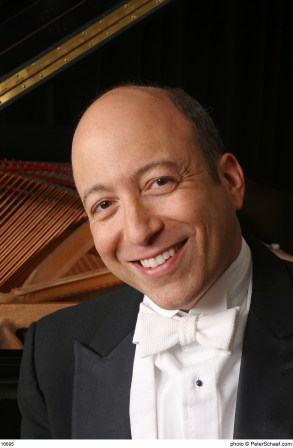
Pianist Andrew Cooperstock. Photo by Peter Schaaf.

Nothing embodies the collaborative environment in the College of Music better than the Takacs Quartet, with whom Cooperstock will be performing in Grusin Hall Sunday and Monday (4 p.m. Feb. 4 and 7:30 p.m. Feb. 5). “I love that they want to collaborate with faculty,” he says. “It’s been wonderful over the years.”

Members of the quartet feel the same way. “We have such a close connection with the faculty,” second violinist Károly Schranz says. “It’s always a great feeling to play with them.”

For the upcoming concert, Cooperstock and the Takacs will repeat a piece they first played together in 2002, the Second Quintet for piano and strings by the Hungarian composer Ernö Dohnányi. Another faculty guest will also appear on the program when tenor Matthew Chellis joins Cooperstock and Takacs violist Geraldine Walther to perform Four Hymns for tenor, viola and piano by Ralph Vaughan Williams.

The Takacs will open the concert with Mozart’s String Quartet in G major, K387. The first of the quartets Mozart dedicated to Joseph Haydn, it is sometimes known as the “Spring” Quartet in spite of having been finished on Dec. 31, 1782.

More than just an homage to the older composer, K387 and the other quartets dedicated to Haydn show Mozart’s full understanding of the new quartet style Haydn had developed. Compared to Mozart’s earlier divertimento-like quartets, the movements are more expansive and serious, the voices are more independent, and there is much more use of counterpoint. Indeed, Mozart’s “Haydn Quartets” are considered among the greatest works of the Classical period.

While Mozart’s quartets are familiar to chamber music audiences, the same cannot be said of anything by Dohnányi. Active in the early 20th century, he wrote in an attractive late-Romantic style. “The Quintet is just a gorgeous piece,” Cooperstock says. “It’s very tightly composed, with themes that come back in the last movement to tie everything together. Everybody gets solos, and the interaction of the piano and strings is great!”

Takasce SQ

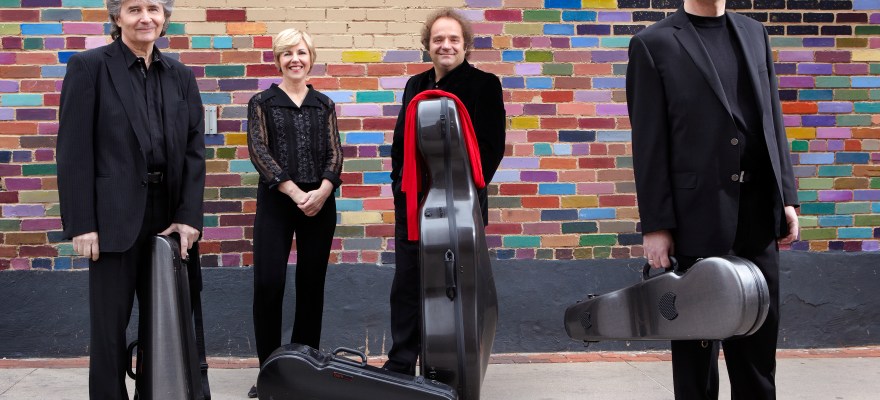
Takacs Quartet: Károly Schranz, Geraldine Walther,  András Fejér, Edward Dusinberre. Photo by Keith Saunders

He is delighted to have the chance to play the quintet again so many years after his first performance with the Takacs. “It’s one of my favorite quintets,” he says. “In 16 years, you have a chance to forget and remember, so we’re learning it all over again.”

The original members of the Takas Quartet, who came from Hungary in the 1980s, have their own link to the composer. Denes Koromzay, the CU faculty member who brought the Takacs to Boulder as CU quartet-in-residence and served as a mentor, had studied with Dohnányi in Budapest.

“We heard many stories about Dohnányi from Koromzay,” Schranz says.  “He was student at the Franz Liszt Academy when Dohnányi was teaching there. He told us Dohnányi was not only a great composer, but also an amazing artist and piano player.”

chellis

Matthew Chellis

Vaughan Williams’s Four Hymns is one of very few pieces written for the combination of tenor, viola and piano. “I’ve played a fair amount with viola, and I’ve played a fair amount with singers, but to get to play with both at the same time is very special,” Cooperstock says. “It’s a privilege to play with Matthew Chellis. He’s a terrific tenor.”

The hymns are based on religious poetry by four different English writers, from the 17th to the 19th centuries. “The pieces are very powerful,” Cooperstock says. “They’re very tuneful, but with a lot of contrast of character and sound and tempo. And there’s a certain soulfulness that the viola adds into the mixture.”

As much as he likes the music on the program, Cooperstock is particularly outspoken about the experience of performing with the Takacs Quartet. “It’s amazing to play with a group that’s been together for so long, because the ensemble is so tight, and their sense of timing and sound is so unified,” he says. “There’s a depth that they have that other quartets don’t have. To get to come into that picture is amazing.

“I’m very honored to participate with them, and I’m glad that they asked me to play with them again.”

# # # # #

Takacs Quartet with Matthew Chellis, tenor, and Andrew Cooperstock, piano

Mozart: String Quartet No. 14 in G Major, K.387
Vaughan Williams: Four Hymns for Tenor, Viola and Piano
Matthew Chellis, tenor; Geraldine Walther, viola; and Andrew Cooperstock, piano
Dohnányi: Quintet No. 2 in E-flat minor for Piano and Strings, Op. 26
With Andrew Cooperstock, piano

4 p.m. Sunday, Feb. 4
7:30 p.m. Monday, Feb. 5

Tickets


Colorado Music Festival features illustrious soloists during 2018 season

Fresh Fridays return, Mashups and Happy Hour Concerts do not

By Peter Alexander  Jan. 26, 2018 at 12:10 a.m.

There will be some things old, some things new, and a few things gone missing at the Colorado Music Festival (CMF) this summer.
http://www.jaimehogge.com

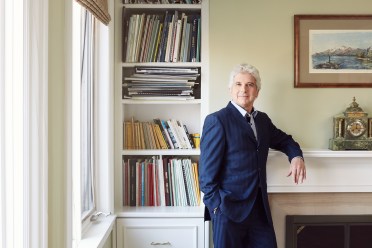
CMF artistic advisor Peter Oundjian. Photo by Jaime Hogge.

The 2018 season, announced by the festival today, was assembled by artistic advisor Peter Oundjian in association with the CMF board of directors and the summer’s slate of guest conductors. Oundjian was appointed in place of former music director Jean-Marie Zeitouni, who stepped down after the 2017 season.

Zeitouni remains as principal guest conductor, and will lead three concerts during the summer. Oundjian will conduct eight concerts, including one pair with the same program, and guest conductors will take the remaining orchestral concerts.

A quick glance at the schedule shows that there will be fewer performances than in most recent summers. The season will largely comprise more-or-less standard orchestra programs, performed by either the full Festival Orchestra on Thursdays and Fridays, or the CMF Chamber Orchestra on Sundays. Over the summer, Saturdays will offer two family concerts, two chamber concerts performed by members of the CMF orchestra, and one vocal-piano recital. An additional “Family Fun” concert will be on a Friday (see full schedule below).

All concerts will be in the Chautauqua Auditorium, and nothing has been scheduled for Monday–Wednesday. But Oundjian has brought in a dazzling array of soloists that should attract audience interest, and there will be some hugely popular pieces along the way. The interest of variety is served by a season-long emphasis on music made in America, which brings a number of newer and less familiar works into the schedule.
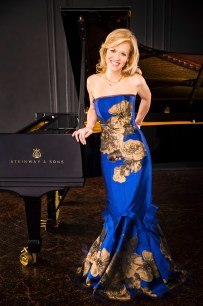
Olga Kern

Pianist Olga Kern returns to the CMF Aug. 4

The six-week season opens Thursday, June 28, with Brazilian-born conductor Marcelo Lehninger, music director of the Grand Rapids Symphony, and violinist Vadim Gluzman, and ends with the Festival Finale concert Saturday, Aug. 4, featuring the return of the popular pianist Olga Kern to play Gershwin’s Rhapsody in Blue on an all-American program conducted by Oundjian.

In addition to Kern, returning soloists over the summer will be pianist Orion Weiss, who will play Beethoven’s “Emperor” Concerto July 1, and mezzo-soprano Michelle DeYoung will sing the Liebestod from Wagner’s Tristan und Isolde July 19, Abschied from Mahler’s Das Lied von der Erde July 29, and a song recital July 28.
A

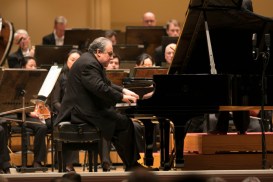
Pianist Yefim Bronfman. Photo by Todd Rosenberg

Other soloists include several with illustrious careers, as well as promising younger artists. Two of the best known are friends that Oundjian invited to perform here: pianist Yefim Bronfman, who will make his CMF debut with Brahms’s First Piano Concerto July 12 and 13 on the only program to be repeated in its entirety; and violinist Robert McDuffie, who will play Philip Glass’s “American Four Seasons” July 15. The Glass piece was written for McDuffie, and premiered by him with Oundjian conducting in 2009.

“I came (to Boulder) last summer, and I was overwhelmed by the beauty of Chautauqua,” Oundjian says. “This is just such a beautiful place. And I thought the orchestra was wonderful. And so I said to everyone, ‘C’mon, you should come out here, it will be great fun!’”

Other soloists over the summer will be violinists Gluzman, Philippe Quint and Augustin Hadelich; pianist Gabriela Martinez; and cellist Narek Hakhnazaryan.

A prominent feature of the season is music by American composers of the 20th and 21st centuries. Samuel Barber, Philip Glass, John Adams, George Gershwin, Aaron Copland, John Corigliano, Joan Tower and George Walker are all on the schedule, as is Leonard Bernstein, whose centennial is being celebrated on seven of the summer’s performances.
Bernstein_2000_07_c_REDUCED-1481918492-960x480

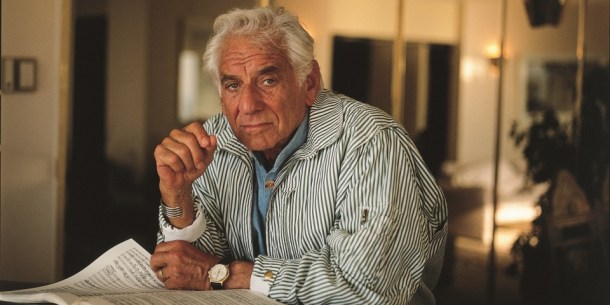
Leonard Bernstein, whose centennial shapes much of the festival

But as Oundjian explains, the theme is broader than that. “The 100th anniversary of Bernstein was my starting point,” he says. “Everything I’m conducting is connected in one way or another with Bernstein: music that would have inspired him, which is a lot of the American music, and then music that he inspired.
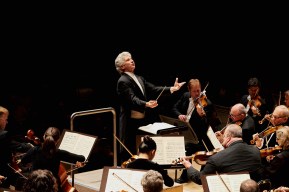
Peter Oundjian 2017-18 - 3 - credit Malcolm Cook

Peter Oundjian

“There are several pieces by European composers written on American soil. The only two pieces I’m conducting that were not written on American soil were two of Bernstein’s favorite pieces. One is the Abschied from Mahler’s Das Lied von der Erde, which he considered one of the greatest masterpieces of all time” (July 29).

The second piece is the Brahms First Piano Concerto (July 12–13), which Bernstein conducted in a notorious performance with pianist Glenn Gould in 1962. Bernstein gave a famous speech before the performance in which he stated both his disagreement with Gould’s interpretation, and support for his right to that interpretation.

The pieces written in America by European composers will be Rachmaninoff’s Symphonic Dances (July 12), Dvořák’s “American” String Quartet (July 21) and Cello Concerto (Aug. 2), Hindemith’s Symphonic Metamorphosis on Themes by Carl Maria von Weber (July 26) and Bartók’s Concerto for Orchestra (Aug. 2).
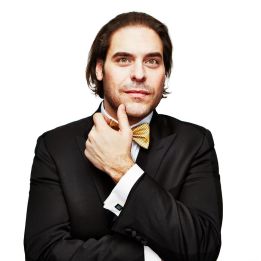
JMZBowtie

Jean-Marie Zeitouni

Each of the other conductors created their own programs apart from Oundjian’s American theme. In his one week at Chautauqua, Zeitouni continues showing his love for great vocal music with the performance of the Prelude and Liebestod from Wagner’s Tristan und Isolde.

There are other classical blockbusters on the guest-conductor programs. Zeitouni will conduct Rimsky-Korsakov’s Scheherazade July 19 and 20, and Beethoven’s “Eroica” Symphony July 21. Lehninger will conduct Tchaikovsky’s Symphony No. 4 on opening night, and Beethoven’s “Emperor Concerto” with Weiss July 1, and conductor David Danzmayr has programmed Mahler’s First Symphony July 5.

There are some obvious changes from past seasons, partly on account of decisions made by the board. For example, there will be no Tuesday night performances, and the series that previously occupied those nights—Mashup concerts and their successor, Happy Hour concerts—are missing from the schedule. “Fresh Fridays,” short, informal concerts on Friday evenings that start at 6:30, will continue for a second year.

“We found last year that the sales for our Friday nights were actually higher than the Tuesday nights,” CMF executive director Elizabeth McGuire explains. “Those (‘Fresh Friday’) concerts point more directly to our core product, so we were thrilled about that. We wanted to put emphasis on these concerts.”

There will be two “Fresh Fridays” during the summer, one conducted by Zeitouni on July 20 and one conducted by Oundjian on July 27. Each will repeat one work from the full orchestral program of the preceding evening, and one work selected for its popular appeal.

Another reason McGuire cited for the decrease in the overall number of concerts was that the musicians believed the schedule had become too full. “They were concerned about (repetitive motion) injury, because we were typically offering more (rehearsals and concerts) per week than they would have in their home orchestras,” she says. “They felt that it was just too much in the span of one week.

“We wanted to listen to what the musicians were telling us. They are our greatest asset, so we tried to give them a day off during the week, and we also are increasing their pay this year. Those were ways to make our musicians know that we were listening to them and that we wanted to support them.”

Also missing this year is a “Click” Commission premiere. “The reason is, we didn’t get a lot of enthusiasm” last year, McGuire says. “If we’re going to do something like that, we want people to be engaged and interested in it.”

She does point out that there will be two world premieres during the summer, both pieces by Australian composer Tim Collins, Buch des Sängers (The singers’ book) performed by De Young and the Festival Orchestra under Zeitouni July 19, and LOVES CRUSADE performed by De Young with pianist Cody Garrison July 28.

A new feature of the CMF’s concerts for children and families is that they have been designated “sensory-friendly,” meaning they have been designed to be welcoming to families with children who have “sensory sensitivities.” The accommodations at these performances include leaving the house lights on during the concert and providing a movement area at the back of the hall. (See the full description of these concerts below.)

Season subscriptions for the 2018 Colorado Music Festival are on sale now through the Chautauqua Box Office (phone: 303.440.7666). Single tickets will go on sale March 12.


The next Music Director: No news is good news
Peter Oundjian was hired as artistic advisor to CMF, not as a permanent music director. The search for a new music director is entirely private, and none of this summer’s guest conductors should be considered a candidate for the position, according the executive director Elizabeth MGuire. “There’s no public aspect of (the search) whatsoever,” she says.
“The more we talk about it, the less chance we have of attracting who we want, so it’s all under wraps. Hopefully, people will understand why we’re so close-lipped about it.
No timetable has been announced for filling the position.

# # # # #

Colorado Music Festival
Peter Oundjian, Artistic Advisor
2018 Season
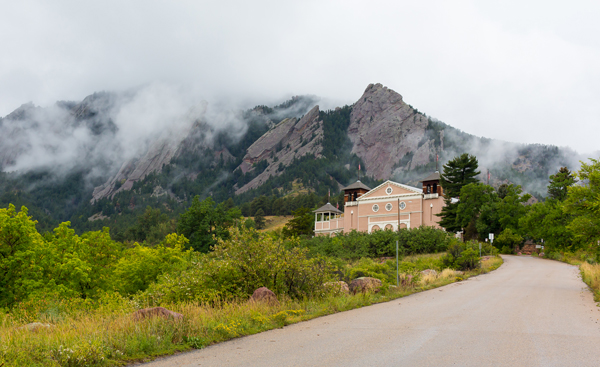
chautauqua-boulder-coloradoAll concerts at Chautauqua Auditorium


WEEK 1

7:30 p.m. Thursday, June 28: Opening Night
Marcelo Lehninger, conductor, with Vadim Gluzman, violin
John Corigliano: Promenade Overture

Bernstein: Serenade (After Plato’s Symposium)
Tchaikovsky: Symphony No. 4, op. 36

2 p.m. Saturday, June 30: Family Fun Concert “Meet the Strings”
Members of the CMF Orchestra. SENSORY FRIENDLY PERFORMANCE

7:30 p.m. Sunday, July 1
Marcelo Lehninger, conductor, with Orion Weiss, piano

Stravinsky: Suite No. 1 for Small Orchestra
Mozart: Symphony No. 35 (“Haffner”)
Beethoven: Piano Concerto No. 5 (“Emperor”)

WEEK 2 
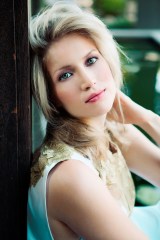
Gabriela Martinez:Lisa-Marie Mazzucco

Gabriela Martinez. By Lisa-Marie Maszucco

7:30 p.m. Thursday, July 5
David Danzmayr, conductor, with Gabriela Martinez, piano

Mozart: Piano Concerto No. 20, K466 in D minor
Mahler: Symphony No. 1

2 p.m. Saturday, July 7: Young People’s Concert: “Dances From Around the World”
Radu Paponiou, conductor
SENSORY FRIENDLY PERFORMANCE

7:30 p.m. Sunday, July 8
David Danzmayr, conductor, with Philippe Quint, violin

Bartók: Romanian Folk Dances
Piazzolla: The Four Seasons of Buenos Aires
Schubert: Symphony No. 3

WEEK 3

7:30 p.m. Thursday, July 12, and Friday, July 13
Peter Oundjian, conductor, with Yefim Bronfman, piano

Leonard Bernstein: Overture to Candide
Brahms: Piano Concerto No. 1
Rachmaninoff: Symphonic Dances, op. 45 

7:30 p.m. Saturday, July 14: Chamber Music with CMF Chamber Players
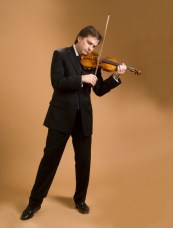
robert_mcduffiebyChristianSteiner

Robert McDuffie. By Christian Steiner

Stravinsky: Octet for Wind Instruments
Prokofiev: Two Pieces for String Octet
Mendelssohn: String Octet, op. 20

7:30 p.m. Sunday, July 15
Peter Oundjian, conductor, with Robert McDuffie, violin

Copland: Appalachian Spring Suite
Barber: Adagio for Strings
Philip Glass: Concerto No. 2 for Violin, “American Four Seasons”

WEEK 4

7:30 p.m. Thursday, July 19
Jean-Marie Zeitouni, conductor, with Michelle DeYoung, mezzo-soprano

Wagner: Prelude and Liebestod from Tristan and Isolde
Timothy Collins: Buch des Sängers (World Premiere)
Rimsky-Korsakov: Scheherazade

6:30 p.m. Friday, July 20: FRESH FRIDAYS*
Conductor: Jean-Marie Zeitouni, conductor

Borodin: In the Steppes of Central Asia
Rimsky-Korsakov: Scheherazade 

7:30 p.m. Saturday, July 21: Chamber Music with CMF Chamber Players

Philip Glass: String Quartet No. 2 (“Company”)
Barber: String Quartet
Dvořák: String Quartet No. 12, op. 96 (“American”)

7:30 p.m. Sunday, July 22
Jean-Marie Zeitouni, conductor

Ravel: Mother Goose
Beethoven: Symphony No. 3 (“Eroica”)

WEEK 5

7:30 p.m. Thursday, July 26
Peter Oundjian, conductor, with Augustin Hadelich, violin

Paul Hindemith: Symphonic Metamorphosis of Themes by Carl Maria von Weber
Samuel Barber: Violin Concerto
George Walker: Lyric for Strings
John Adams: “Doctor Atomic” Symphony 

6:30 p.m. Friday, July 27 FRESH FRIDAYS*
Peter Oundjian, conductor

Bernstein: Symphonic Dances from West Side Story
Adams: Doctor Atomic Symphony
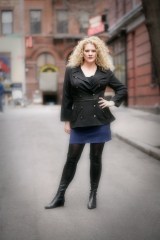
1922 Michelle DeYoung HI RES_blur ART 1 version

Michelle DeYoung

7:30 p.m. Saturday, July 28
Michelle DeYoung, mezzo-soprano, and Cody Garrison, piano

Art songs by Brahms, Richard Strauss and Samuel Barber.
Timothy Collins: LOVES CRUSADE (world premiere) 

7:30 p.m. Sunday, July 29
Peter Oundjian, conductor, with Michelle DeYoung, mezzo-soprano

Joan Tower: Made in America
Stravinsky: Pulcinella Suite
Mahler: Abschied from Das Lied von der Erde

WEEK 6

7:30 p.m. Thursday, Aug. 2
Peter Oundjian, conductor, with Narek Hakhnazaryan, cello

Leonard Bernstein: Three Dance Variations from Fancy Free
Dvořák: Cello Concerto
Béla Bartók: Concerto for Orchestra 

2 p.m. Friday, Aug. 3: Family Fun Concert “Meet the Brass”
Members of the CMF Orchestra. SENSORY FRIENDLY PERFORMANCE

7:30 p.m. Saturday, Aug. 4: Festival Finale
Peter Oundjian, conductor, with Olga Kern, piano

Leonard Bernstein: Three Dance Variations from Fancy Free
Samuel Barber: Symphony No. 1 in One Movement, op. 9
George Gershwin: An American in Paris
George Gershwin: Rhapsody in Blue

 _____________________ 

*Fresh Fridays: Start at 6:30 p.m. with an hour-long, intermission free concert, leaving patrons time to go out for post-concert dinner and drinks.

Family Fun Concerts give younger children a chance to meet different sections of the orchestra, as small ensembles perform short, informal 45-minute programs.

The Young People’s Concert is designed for children ages 4 and older and includes events after the concert on the great lawn, with costumed characters, hands-on instruments, creative face painting, and other activities.

Sensory-Friendly Concerts are designed to create a performing arts experience that is welcoming to all families with children with autism or other conditions that create sensory sensitivities. Accommodations: house lights will remain on during the performance; microphone volumes will be decreased; staff will be easily accessible for any problems or questions; involuntary movements and noises are acceptable and welcomed; a designated movement area in the back of the auditorium for anyone who feels the need to move during the performance; and general admission seating, so that everyone may find a comfortable place to sit.

NOTE: Edited to correct typos, Jan. 26 at 8:48 a.m.


Renowned Children’s Author Jack Prelutsky joins LSO for Jan. 27 Family Concert

Longmont Youth Symphony, Young Artist Competition winner Alisa Johnson will also be featured

By Peter Alexander

When Elliot Moore wanted to bring in a superstar for the Longmont Symphony’s Family Concert, he knew whom to call.

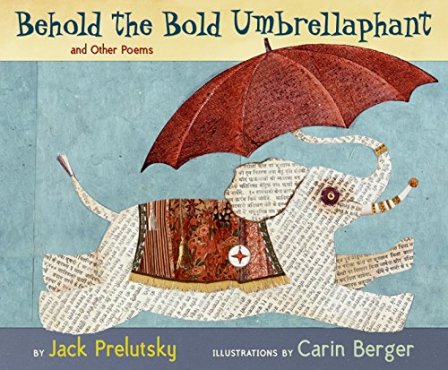
BeholdtheBoldUmbrellaphantIn the world of children’s literature, no stars are more super then Jack Prelutsky, the first-ever U.S. Children’s Poet Laureate and multi-award winning author of more than 50 collections of poetry for children. He is also a friend of Moore’s family, and has had one of his most popular books of poems set to music, making him the perfect choice.
For the concert (4 p.m. Saturday, Jan. 27, in Longmont’s Vance Brand Civic Auditorium), Prelutsky will narrate the performance of composer Lucas Richman’s score for Prelutsky’s Behold the Bold Umbrellaphant, and also read his poems for selections from Camille Saint-Saëns’s classic Carnival of the Animals.

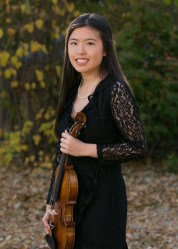
Other works on the program will be the first movement of Mendelssohn’s Violin Concerto, featuring the LSO’s Young Artist Competition winner Alisa Johnson, a senior at Niwot High School and student of James Maurer; and the finale of Sibelius’s Symphony No. 2 in D major, performed together with the Longmont Youth Symphony.

Prelutsky

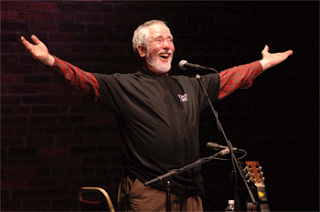
Jack Prelutsky

Prelutsky is a musician as well as an author. A folk singer in the late 1950s and early ‘60s, he sang for several years in the Bainbridge Island (Washington) Evergreen Singers, which was conducted by Moore’s mother. “At some point he told her that somebody had set his poetry to music, and it had been recorded with the San Diego Symphony,” Moore says. “My mom gave me a phone call, so that’s how I heard about Jack and this piece, Behold the Bold Umbrellaphant.”

The book is a set of poems about creatures that are part animals and part inanimate objects, such as the umbrellaphant, the panthermometer and the clocktopus. Prelutsky says the poems were written when he was sitting in a hotel in Hawaii, unable to go to the beach because his foot hurt. “I wrote the poem ‘Shoehornets,’ thinking about shoes and feet and pain,” he says. “I had done a book, Scranimals, where I combined animals with each other and with flowers and trees. I thought this was the next step, to combine them with ordinary objects. And so it grew from there.”

Later Prelutsky met Richman, who is conductor of the Bangor (Maine) Symphony Orchestra as well as an accomplished composer. “I was very lucky to meet him,” Prelutsky says. “We’ve become friends and we work well together.”

061-IMG_1597.JPG

Lucas Richman. Photo: Jeff Kirlin, Bangor Symphony Orchestra

Richman’s music takes eager advantage of all the musical hints in the poems. Every piece has its own character, across a wide variety of styles and musical types. The Umbrellaphant features horn calls that recall elephants’ trumpeting. The Panthermometer is a cool cat who can tell you the temperature. “He gives that one all kinds of incredible jazzy things,” Moore says.

“When we read through it, we got to the end of the Panthermometer, and we all laughed! We had a lot of fun rehearsing it, and bringing more of that jazz quality into our playing.”

Prelutsky’s poems for Carnival of the Animals came about it a completely different way, since the music existed first. The American humorous poet Ogden Nash had written a set of poems to accompany Saint-Saëns popular music in the 1940s, but Prelutsky’s publisher wanted him to write a new set of poems, because Nash’s originals were outdated. His editor called and asked, “Can you write me poems to go along with the music?”

“I said ‘I’m not sure, I don’t know, no I can’t,’” Prelutsky recalls. “I said, ‘the problem is that most of these animals I’ve already written about, and I’m not sure I have anything else to say.’ And I really meant that, but she said, ‘Give me a break, just do it.’”

“So I called her the next day and I said, ‘I finished.’”

LSO Music Director Elliot Moore_preview

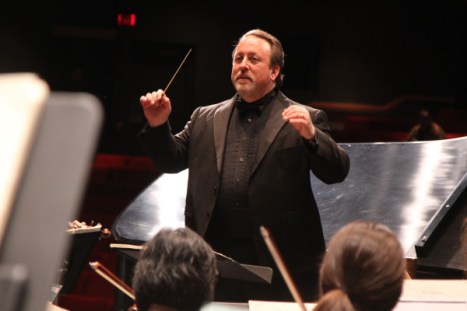
Elliot Moore

Prelutsky’s appearance perfectly matches Moore’s philosophy in programming family concerts. “For me, one goal for the this concert would be to show what fun can be had in classical music, whether performing, or listening, or taking part in some other way,” he says.“Behold the Bold Umbrellaphant is the most fun work on the program. However, the Longmont Symphony has things that they have traditionally done to make this family concert engaging for youth. They have featured the Young Artist Competition winner, and I think that’s a brilliant thing to do, because it allows the children to see that mastery of your instrument by a certain age is possible.

“This concert will feature Alissa Johnson, and she sounds fantastic. And another thing that I’m really excited about is sharing the stage with the Longmont Youth Symphony. This is another way for children to say to themselves, ‘Wow! There are kids doing this, they’re receiving applause, and it looks like fun!’”

Prelutsky agrees that above all, the performance should be fun for the audience. “I hope it makes you enjoy language,” he says. “And I hope you get a laugh out of it.”

# # # # #

Family Concert: Behold the Bold Umbrellaphant
Longmont Symphony Orchestra, Elliot Moore, conductor

Alyssa Johnson

Alissa Johnson

LUCAS RICHMAN: Behold the Bold Umbrellaphant
     Jack Prelutsky, narrator
SAINT-SAËNS: Selections from Carnival of the Animals
     Jack Prelutsky, narrator
MENDELSSOHN: Violin Concerto, 1st movement
Alisa Johnson, violin, Young Artist Competition Winner
SIBELIUS: Symphony No. 2 (Finale)
With the Longmont Youth Symphony

4 p.m. Saturday, Jan. 27
Vance Brand Civic Auditorium, Longmont
Tickets


Busy Altius Quartet returns to CU Jan. 21–22

Three concerts by the Takacs Quartet will feature appearances by CU faculty artists

By Peter Alexander

The Altius Quartet is on the move.

Overtones-Casual.Courtney-Hudffman

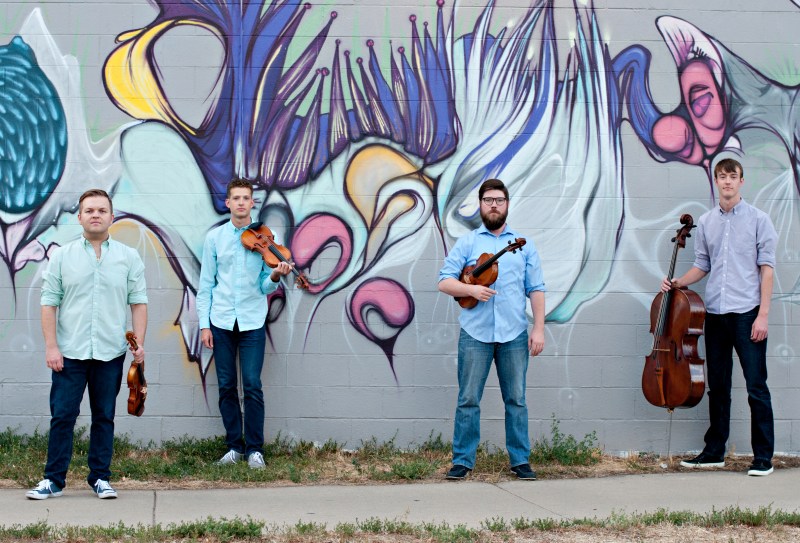
altos Quartet. Photo by Courtney Huffmann.

Formerly quartet-in-residence with CU’s esteemed Takacs Quartet, Altius has found themselves very busy, building their already-blossoming career. Since completing the residency, the group—comprising Andrew Giordano and Joshua Ulrich, violin, Andrew Krimm, viola, and Zachary Reaves, cello—has kept Colorado as their home base while recording two CDs, taking a trip to Beijing to collaborate with composer Bright Sheng, completing a tour of California, and giving other performances in Boulder and elsewhere.

Next they will appear on the Takacs concert series, with performances in CU’s Grusin Music Hall Sunday and Monday, Jan. 21 and 22. The series continues through the spring, with performances by the Takacs Quartet Feb. 4-5, March 11-12 and April 29-30.

A major work on the Jan. 21-22 program is taken from Altius’s recent CD of music by Shostakovich, the personal and darkly expressive String Quartet No. 8. Written in a time of despair for the composer, it is dedicated “to the victims of fascism and war,” but it is above all a reflection of Shostakovich’s own bleak thoughts at the time.

Other works on the program are Haydn’s well known “Emperor” String Quartet in C major, which includes a set of variations on “God Save Emperor Francis,” the anthem the composer wrote for Austrian Emperor Francis III; Through Fog, written for the Altius Quartet by JP Merz; and Mendelssohn’s String Quartet in E minor, op. 44 no. 2.

Read more in Boulder Weekly.

# # # # #

Altius Quartet
Music of Haydn, Shostakovich, JP Merz and Mendelssohn

4 p.m. Sunday, Jan. 21
7:30 p.m. Monday, Jan. 22
Grusin Music Hall

Takacs Quartet
Music of Mozart, Vaughan-William and Dohnányi
With Matthew Chellis and Andrew Cooperstock, piano

4 p.m. Sunday, Feb. 4
7:30 p.m. Monday, Feb. 5
Grusin Music Hall

Music of Mozart, Boccherini, Castelnuovo-Tedesco and Beethoven
With Nicolò Spera, guitar

4 p.m. Sunday, March 11
7:30 p.m. Monday, March 12
Grusin Music Hall

Music of Dohnányi, Shostakovich and Tchaikovsky
With Erika Eckert, viola, and David Requiro, cello

4 p.m. Sunday, April 29
7:30 p.m. Monday, April 30
Grusin Music Hall

All tickets through CU Presents

Simone Dinnerstein brings performance magic and a new piece to Boulder

Concerto by Philip Glass receives standing ovation at Macky Auditorium

By Peter Alexander

Simone.D.2.by Lisa-Marie Mazzucco

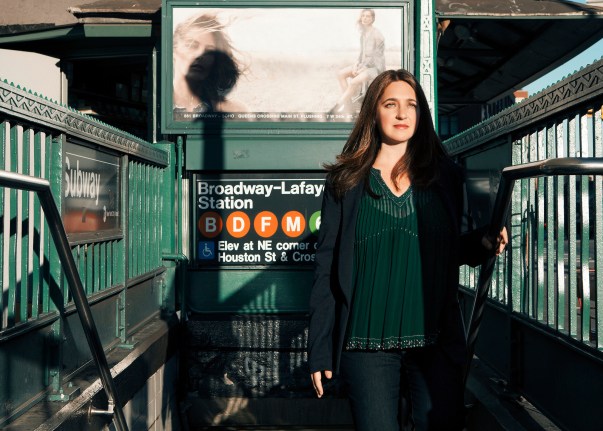
Simone Dinnerstein. Photo by Lisa-Marie Mazzucco

Pianist Simone Dinnerstein brought her deep sensitivity and considerable magic to Macky Auditorium last night, performing a remarkable new piano concerto by Philip Glass with the string sections of the Boulder Philharmonic and conductor Michael Butterman.

Glass’s Piano Concerto No. 3 was written for Dinnerstein, and her Boulder performance was part of the world premiere tour of the concerto. It is a major work that should achieve considerable success with audiences in the years to come, as it did last night in Macky.

Glass’s characteristic gestures are easily found in the score, but they have been transfigured. His usual pulsing rhythms are more gentle, serving and supporting melody and harmony. The music has an emotional immediacy throughout, and the third movement in particular has moments of seductive beauty. The ending is extended, creating a hypnotic, almost ritualistic quality around lovely bits of melody. The slow unfolding of these final thoughts quietly recalls compelling passages from Glass’s previous works.

Glass-Photo

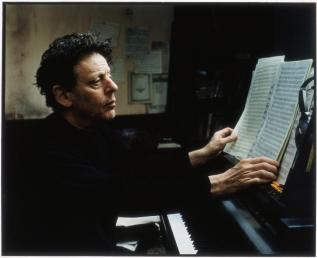
Philip Glass

At 80, Glass is entitled to write with a more valedictory and consoling tone, but there are likely two specific reasons for the nature of this piece. First, it was written for Dinnerstein. When she told Glass how much it fit her playing and her personality, he said “Well, I wrote it for you.” It’s hard to know how her influence manifests itself, but I heard a deep poeticism and introspective lyricism, qualities associated with Dinnerstein’s playing that also mark many moments in the concerto.

The other reason is the influence of J.S. Bach, a composer Dinnerstein is renowned for playing and whose Keyboard Concerto in G minor will be paired with the Glass on the current tour. There are no quotes or direct echoes of that specific piece in the Glass score, but I found it notable that the music is shaped largely by harmonic patterns, as if it were based on a Bach-like chorale, but one that wanders into unpredictable turns and paths.

Dinnerstein had both the notes and the inner life of the piece well under her fingers. Playing with evident love for the concerto, she found depths of expression in the music, including some of the simpler moments technically. Her playing was ably supported by Butterman and the Phil.

Not everyone loves Glass, but for me the performance was deeply moving, revealing both the quiet humanity of the composer and the commitment of the soloist. Standing ovations are de rigueur in Boulder, but this one seemed especially heartfelt.

The rest of the program was musically fascinating—a symphony by C.P.E., son of J.S. Bach, and Schoenberg’s Verklärte Nacht (Transfigured Night) on the fist half, and J.S. Bach’s G minor Concerto preceding the Glass. However, all three works, calling for only strings, suffered the same fate of being swallowed by Macky Auditorium’s unforgiving acoustics. Small ensembles, and strings in particular, invariably sound distant and a little cold in the hall.

The C.P.E. Bach Symphony received a refined performance, with transparent textures, and a smooth transition between the first two movements. But the characteristics of C.P.E. Bach’s mid-18th-century Rococo style, the use of sudden and shocking harmonic jolts and unexpected stops and starts, lost the larger share of its impact in the hall. The more’s the pity: C.P.E. Bach is a fascinating composer who should spice up any program—but only if the effects land with the audience.

Butterman introduced Schoenberg’s piece with a useful listener’s guide to the main ideas of the music, and how they are laid out in the score. One of the great musical/emotional outpourings of the late Romantic musical style, Verklärte Nacht portrays a passionate story of forgiveness and redemption, in which a dark and gloomy forest path is transfigured into a glittering scene of starlit beauty by the power of love.

The audience is meant to be enveloped in the lush harmonies of the score, and indeed I could see that the orchestra was playing with great intensity. Alas, the sound again was swallowed by the hall. It was well conducted and well played by the orchestra, but from Row U, it sounded all too polite and restrained to fit a story of passion.

The performance of J.S. Bach’s G-minor Concerto was a little cotton-woolish in the orchestra when more lean muscle would serve the music better, but likely this is another manifestation of Macky’s acoustics. Dinnerstein played with a clear sense of line and overall form. With a Steinway grand and modern string instruments, this was not a historically-informed performance, but Bach’s music is so ideal in conception that it does not depend on the medium.

All other issues aside, Dinnerstein, Butterman and the Boulder Phil scored a great success with the Glass Concerto. It’s only January, but that should be on any list of the year’s highlights.

Pianist Simone Dinnerstein returns to the Boulder Phil for new concerto

Philip Glass wrote his Third Piano Concerto for his former young fan

By Peter Alexander

The first time Simone Dinnerstein attended a concert alone she was 12, and she heard music by Philip Glass.

Simone.D.by Lisa-Marie Mazzocco

Simone Dinnerstein. Photo by Marie Mazzocco.

Dinnerstein has since become an internationally known concert pianist and Glass has turned 80. And remarkably, he has now written a new piano concerto for his former young fan, which she will play Jan 13 and 14 for her return to the Boulder Phil.

“It’s exciting when you discover music as a young person, and it’s your own music that has not been shown to you by a parent or a teacher,” Dinnerstein says. “So there is something kind of surreal about having him write something for me! And the fact that he wrote something as magnificent as this piano concerto is really an incredible honor.

“I can’t quite digest the fact that he wrote that for me.”

Glass’s Piano Concerto No. 3 will be on a program titled “Bach Transfigured.” The concert, featuring the orchestra’s strings under music director Michael Butterman, will also feature the Symphony in C Major by C.P.E. Bach, Transfigured Night by Arnold Schoenberg, and J.S. Bach’s Keyboard Concerto in G minor.

# # # # #

“Bach Transfigured”
Boulder Philharmonic Orchestra, Michael Butterman, conductor
With Simone Dinnerstein, piano

C.P.E. BACH  Symphony in C Major, Wq 183, no.. 3
ARNOLD SCHOENBERG  Transfigured Night
J.S. BACH  Keyboard Concerto in G minor, BWV 1058
PHILIP GLASS  Piano Concerto No. 3
     Colorado premiere, a Boulder Phil co-commission

7:30 p.m. Saturday, Jan. 13, Macky Auditorium
2 p.m. Sunday, Jan. 14, Pinnacle Performing Arts Complex, Denver

Tickets


Musicians we lost in 2017

Classical, jazz and pop artists who will be missed

By Peter Alexander

Here is my annual sad tally of musicians we lost in the past year. The list is admittedly idiosyncratic: most classical artists, with a few jazz and pop greats as well, but reflecting my own interests and tastes. If there are people you cared about who are not on the list, feel free to add their names in comments.

Jan. 4: Georges Pretre, globe-trotting French conductor who had a second home in Vienna, musically and physically, 92

hentoff8n-1-web

Nat Henthoff

Jan. 7: Nat Henthoff, author, journalist, jazz critic and civil libertarian who called himself a troublemaker, 91 (His son Nicholas said he was surrounded by family members and listening to Billie Holiday when he died.)

Jan. 8: Nicolai Gedda, Swedish tenor known for his mastery of many languages and the original Anatol in Samuel Barber’s Vanessa, 91

OLYMPUS DIGITAL CAMERA

Roberta Peters

Jan. 18: Roberta Peters, coloratura soprano who sang for 35 years at the Metropolitan Opera and appeared frequently on TV, particularly the Ed Sullivan Show, 86

Jan. 27: Henry-Louis de La Grange, a scholar who devoted his life to studying the life of Gustav Mahler, 92

Feb. 3: Gervase de Peyer, principal clarinetist of the London Symphony Orchestra for 17 years and a founding member of the Chamber Music Society of Lincoln Center and Melos Ensemble, 90

Feb. 7: Svend Asmussen, Danish jazz violinist who collaborated with practically everyone of his generation, 100

Feb. 11: Harvey Lichtenestein, known for making the Brooklyn Academy of Music (“BAM”) into a performing arts center specializing in contemporary arts, 87

Feb. 12: Al Jarreau, legendary jazz singer, called “the voice of versatility” by the Chicago Tribune, 76

4cfbf2-20121005-conductor-skrowaczewski

Stanislaw Skrowaczewski

Feb. 21: Stanisław Skrowaczewski, former conductor of the Minnesota Orchestra, 93

March 5: Kurt Moll, German operatic singer known for performances as Baron Ochs and Der Rosenkavalier, among other very low bass roles.

March 18: Chuck Berry, the genre-defining rock ‘n’ roll guitarist, 90

chuck.b

Chuck Berry

April 16: Allan Holdsworth, British fusion guitarist and composer, 70

April 27:Eduard Brunner, Swiss clarinetist who was principal clarinet of the Bavarian Radio Symphony Orchestra, 77

May 1: Erkki Kurenniemi, Finnish composer of electronic music, 76

May 2: Peter Komlós, founding first violin of the Bartók Quartet, 81

May 27: Greg Allman, founding member of the Allman Brothers Band, 69

May 31: Jiří Bělohlávek, Czech conductor who gained international renown for performances of works by Dvořák and other Czech composers.

June 2: Jeffrey Tate, principal conductor in the 1980s of the English Chamber Orchestra and the Royal Opera House, in spite of having spina bifida, 74

June 6: Violinist Paul Zukovsky, a student of Ivan Galamian who premiered (among other works) Philip Glass’s Violin Concerto and appeared as Einstein in Einstein on the Beach, 73

PhilipGossett

Philip Gossett

June 13: Musicologist Philip Gossett, a genial scholar who worked tirelessly to restore Italian operas of the 18th and 19th centuries and served as general editor of the operas of Rossini and Verdi, 75

July 5: Pierre Henry, innovative composer of musique concrete and electroacoustic music, 89

Aug. 6: David Maslanka, composer of many works for wind ensemble as well as 8 symphonies and other orchestral works; 73

barbara cook

Barbara Cook

Aug. 8: Barbara Cook, the original Cunegonde in Leonard Bernstein’s Candide and Marian the Librarian in Meredith Willson’s Music Man, later renowned as a cabaret singer, 89

Aug. 8: Glenn Campbell, crooning and guitar-playing country singer, known as “The Rhinestone Cowboy” after one of his hit songs, 81

Sept. 3: Walter Becker, guitarist and co-founder of Steely Dan, 67

Sept. 27: Zuzuna Ruzickova, renowned harpsichordist and Nazi concentration camp survivor, 90

Oct. 2: Tom Petty, iconic leader of Tom Petty and the Heartbreakers, 66

American Masters: Fats Domino and the Birth of Rock ‘n’ Roll

Fats Domino

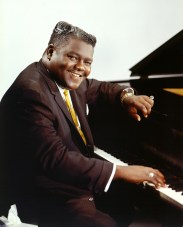
Oct. 24: Fats Domino, famed New Orleans R&B singer and boogie-woogie pianist, 89

Oct. 27: Ladislaw Kubík, Czech-American composer, 68

Nov. 11: Frank Corsaro, provocative and prolific director of opera productions at New York City Opera and other companies, 92

Nov. 12: Eric Salzman, composer and music critic, 84

Nov. 18: Malcom Young, guitarist/songwriter and co-founder of the Australian hard-rock band AC/DC, 64

2014-05-19-DmitriHvorostovsky2.PhotoPavelAntonov-thumb

Dmitri Hvorostovsky

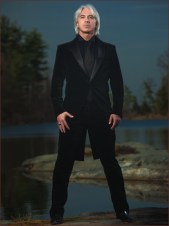
Nov. 22: Dmitri Hvorostovsky, charismatic Siberian baritone who beat Bryn Terfel for the Cardiff Singer of the World award in 1989 and went on to world-wide popularity and fame, 55

Nov. 23: Carol Neblett, soprano who sang at the New York City Opera, the Metropolitan, and major opera houses around the world, 71

Nov. 30: Jim Nabors, a popular nightclub singer as well as a sitcom star of The Andy Griffith Show and Gomer Pyle U.S.M.C., 87

____________

Typo corrected, 12/31/17

2017: The Year in Classical Music

Some outstanding concerts, and some changes of leadership in Boulder

By Peter Alexander

With the year drawing to a close, it is time to look back at 2017. It has been a tumultuous year in many realms, including some aspects of Classical music. But before that, it is good to remember the outstanding musical experiences of 2017 here in the Boulder area.

Pro Musica

The year began on an expressive high point when Pro Musical Colorado Chamber Orchestra, conductor Cynthia Katsarelis and soloists Jennifer Bird-Arvidsson, soprano, and Ashraf Sewailam, bass, presented Shostakovich’s rarely-heard Symphony No. 14.

I wrote at the time: “This somewhat gloomy meditation on death is not often given live, partly because of the difficult assignments facing the soprano and bass soloists, but mostly because of the difficult subject matter. But it is a major statement from a great composer—what Katsarelis calls ‘a piece that needs to be heard’—and so the rare performances are to be treasured.”

The February visit of Deborah (Call Me Debbie) Voigt to Macky Auditorium will be a cherished memory for fans of the classical voice. Voigt Lessons, the superstar soprano’s candid retelling of her struggles with relationships, substances, and weight that clouded her career not only showed some realities of life at the top of the opera world, it also revealed the very human person beneath the superstar image. For both reasons, this was a meaningful event.

Takasce SQ

Takacs Quartet

The Takacs Quartet always provides some of the year’s best performances. It’s hard to chose just one, but for 2017 I would single out their February concert including Beethoven’s Quartet in G major, op. 18 no. 2—performed while the Takacs was in the midst of a full Beethoven cycle at several venues—and CU music faculty Daniel Silver, clarinet, playing the Brahms Quintet in B minor, op. 115. An especially beautiful rendering of this beautiful work had at least one audience member in tears by the end.

March saw the arrival of another superstar in Boulder when Sir James Galway played at Macky Auditorium, and the departure of an important member of Boulder’s classical music community when Evanne Browne gave her farewell concert with Seicento Baroque Ensemble, the organization she founded in 2011.

BPhil.onstage

Boulder Phil at Kennedy Center

One of the biggest events of the year for Boulder performing arts was the visit in March of the Boulder Philharmonic Orchestra, conductor Michael Butterman and Frequent Flyers Aerial Dance Company to the Kennedy Center in Washington, D.C., for the first annual Shift Festival of American Orchestras. The Phil repeated a concert they had given in Boulder a few days earlier, including the world premiere of All the Songs that Nature Sings by Stephen Lias and Copland’s Appalachian Spring, performed with Frequent Flyers.

An audience favorite of the festival, the Boulder Phil played to a sold out house. Butterman wrote the next day, “It was a peak experience for me, and, I think, for all of us at the Phil. . . . To be there with our orchestra, with that crowd and with that repertoire—it was something I shall never forget. We had a great sense of pride in representing our hometown.”

Several important changes of personnel were announced for Boulder classical scene in the spring. In April, Jean-Marie Zeitouni announced that he was stepping down as music director of the Colorado Music Festival. He will remain with CMF as principal guest conductor, and conductor/violinist Peter Oundjian will serve as artistic advisor for the 2018 season. Later the same month, James Bailey left his position as music curator of the Dairy Arts Center, to be replaced by Sharon Park.

Elliot Moore at Lake McIntosh - credit - Photography Maestro (1)

Elliott Moore

In May, Seicento Baroque Ensemble announced the appointment of Kevin T. Padworksi as artistic director, succeeding Browne, and the Longmont Symphony announced the appointment of Elliot Moore to succeed long-time music director Robert Olson.

The same month, the Boulder Chamber Orchestra wrapped up its 2016–17 season with its largest performance to date, Beethoven’s Ninth Symphony presented in Macky Auditorium. The performance under conductor Bahman Saless was unfortunately the occasion of a protest by the anti-fracking group East Boulder County United. Seven members of EBCU blew whistles, shouted slogans and left flyers before the concert to voice their opposition to the orchestra having accepted a contribution from Extraction Oil & Gas.

Olga Kern

Olga Kern, photographed by Chris Lee at Steinway Hall.

Zeitouni proved to be anything but a lame duck conductor at the Colorado Music Festival. The 2017 season started at the end of June with an all-Russian program featuring exciting performances of Shostakovich’s Festive Overture and Rachmaninoff’s Second Symphony. On the same concert, one of Boulder’s favorite guest artists, pianist Olga Kern, gave scintillating performances of Prokofiev’s First Piano Concerto and Rachmaninoff’s Rhapsody on a Theme of Paganini.

Other high points over the summer included the return of CMF’s founding director Giora Bernstein to lead a concert of Mozart, Zeitouni conducting Beethoven’s Ninth as the CMF centerpiece, and the visit of violinist Gil Shaham at the end of the summer season. Up in the mountains, Central City Opera’s Downton-Abbey-inspired Victorian-era production of Mozart’s Così fan tutte was one of the year’s highlights for opera lovers.

Another delight for the opera crowd came in the fall, with the CU Eklund Opera Program’s serio-comic production of Lehar’s Merry Widow. In November, Saless and the Boulder Chamber Orchestra returned to its core repertoire with a lively concert featuring two youthful works for smaller ensemble: the Concerto for piano, violin and strings by the 14-year-old Mendelssohn, with violinist Zachary Carrettin and pianist Mina Gajić, and Janáček’s Idyll for Strings.

Zachary & Mina

Carrettin and Gajic

Carrettin and Gajić were featured performers in December when the Boulder Bach Festival gave one of its most intriguing and adventurous concerts in its increasingly adventurous schedule. With guest artist Richie Hawley, the program offered insight into the instruments and performance practices of the early 20th century, performed on Hawley’s 1919 Buffet clarinet, Gajić’s 1895 Érard piano, and Carrettin’s violin set up with strings typical of the period.


# # # # #

For the classical music world outside of Boulder, the biggest news was certainly the intrusion of a long-overdue reckoning for sexual misconduct that is going on in our society generally. The first bombshell, not unexpected by people in the business but a bombshell nonetheless, landed Dec. 3 with the suspension of conductor James Levine from the Metropolitan Opera and other organizations, including the Boston Symphony and the Ravinia Festival. Accusations against Charles Dutoit, artistic director and principal conductor of the Royal Philharmonic Orchestra in London, surfaced later in the month.

levine

James Levine

Both conductors are in the twilight of long careers. Rumors about Levine have been widely known in the classical music world; indeed I first heard them in the 1980s. Every music journalist I know has heard the same stories, but so far as I am aware, no one who experienced Levine’s assaults was previously willing to speak publicly. In the case of Dutoit, I had not heard the rumors, but I do know one of the women who spoke publicly about what happened to her, and I believe her unquestioningly.

As the controversy has swirled about the subject of sexual abuse, harassment and assault in classical music, several critics have written powerfully about the subject: Anne Midgette of the Washington Post, Jennifer Johnson of the Guardian, Andrew Riddles of Classical Ottawa to name three. Singer Susanne Mentzer has written about her personal experiences in the opera world for the Huffington Post, as has Dan Kempson for Medium.

There are certain to be more revelations. One major journalist has more first-hand information, with names including some of the of the most famous classical artists, and is preparing an article. I have no doubt that several men are nervously awaiting that story, or some other revelation that reveals past misdeeds.

Will this tidal wave reach Boulder?

It’s hard to say with certainty. I have spoken with many on the classical scene here, and the only rumor I have heard, from several sources, has been of inappropriate comments and behavior by one person, none of which reached the level of abuse or assault. “He might not have been hired today,” one person speculated, but as so often happens, the people who heard the comments preferred not to make an issue of it.

Another person told me he had never heard any rumor from the College of Music, so Boulder may escape the worst of this necessary but unhappy process. In the meantime, it is my wish for 2018 that society in general and the music world specifically create a safe environment, where powerful men do not feel free to behave like adolescent boys.

___________

Edited for clarity 12.31.17

Bahman Saless and the Boulder Chamber Orchestra celebrate all the holidays

Music from a Mexican beach and a crazy Brazilian conductor

By Peter Alexander

Conductor Bahman Saless and the Boulder Chamber Orchestra (BCO) have a couple of holiday traditions.

chaconne.3

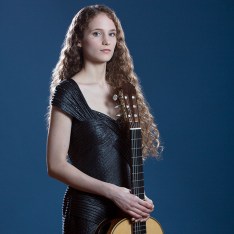
Guitarist Chaconne Klaverenga will be featured soloist with the BCO

Every year they honor the December holidays as ecumenically as possible with a concert titled “A Gift of Music,” performed mid-month in Broomfield and Boulder. After that they present a New Year’s Eve concert in Lakewood featuring Viennese and other light classical selections.

This year’s “Gift of Music” doesn’t have any traditional holiday music on the program, “because we want it to be multi-denominational,” Saless says. Instead, the program reflects the holidays through music of lighthearted beauty and good cheer.

BCO&Cobus+(6)

Flutist Cobus du Toit is a member of the BCO

Saless selected three works for the program: the Concierto de Aranjuez by Joaquín Rodrigo, featuring young guitar virtuoso Chaconne Klaverenga as soloist; Pastorale Suite for flute and strings by Gunnar de Frumerie, with the BCO’s Cobus du Toit as soloist; and Franz Schubert’s Symphony No. 5.

With all the Nutcrackers, Messiahs and other traditional musical performances in December, New Year’s almost gets overlooked by classical musicians in this country. But in Europe, it is the focus of many performances, particularly the annual New Year’s Day concert of the Vienna Philharmonic.

It is that tradition that the BCO channels every year with its New Year’s Eve concert.

This year, Saless steps aside for guest conductor Claudio Cohen, director of the National Orchestra of Brasilia in Brazil. He and Saless are doing a “podium exchange,” with Cohen conducting here New Year’s Eve, and Saless traveling to Brazil in October.

Read more in Boulder Weekly.

# # # # #

Boulder Chamber Orchestra

The Gift of Music
Bahman Saless, conductor, with
Chaconne Klaverenga, guitar, and Cobus du Toit, flute
7:30 p.m. Friday, Dec. 15, Broomfield Auditorium, Broomfield
7:30 p.m. Saturday, Dec. 16, Boulder Adventist Church, Boulder

A New Year’s Eve Celebration
Claudio Cohen, guest conductor
6:30 p.m., Sunday, Dec. 31, Lakewood Cultural Center, Lakewood

Information and tickets