It’s a Deal at the Metropolitan Opera

Tentative agreement with two unions forestalls lockout at the Met

By Peter Alexander

Metropolitan Opera House, Lincoln Center, New York

Metropolitan Opera House, Lincoln Center, New York

The New York Times reports this morning, Monday, Aug. 18, that “the Metropolitan opera reached tentative agreements with the unions representing its orchestra and chorus.”

This agreement, which was announced about 6:15 a.m. today, forestalls the possibility of a lockout and means that the Met could still open on its scheduled date of Sept. 22. Opening night is to be a new production of Mozart’s Marriage of Figaro and a Met debut by the young American soprano Amanda Majeski, who is cast in the major role of the Countess.

Negotiations went all night Sunday night and extended several hours past the previously announced deadline of midnight. The deal was announced by Allison Beck, a federal mediator who was brought in just before the previous deadline for an agreement.

The agreement does not include the stagehands’ union, which is the third major union at the Met, nor any of the smaller unions that have contracts due for negotiation this year. However, the agreement with unions representing the orchestra and chorus likely paves the way for the other unions to reach an agreement.

Because details of the agreement have not yet been released, it is impossible to declare “winners” or “losers,” or to know how much each side gave in order to save the season. The one thing that is certain, though, is that not only opera lovers, but the American arts world wins from the resolution of a long and bitter battle between unions and Peter Gelb, the general manager of the Met.

Prince Igor poppies

The famous poppies in Price Igor. © Jonathan Tichler/Metropolitan Opera

In the runup to negotiations, Gelb, who was asking for 17-percent pay cuts from workers at the Met, traded accusations with the unions. Attention was placed on the highly expensive and critically unsuccessful productions Gelb has mounted since becoming general manager in 2006. But as extravagant as some productions have been—a $169,000 poppy field in Prince Igor has become particularly notorious—independent analyses of the Met’s budget suggested that production cuts alone could not solve the Met’s financial problems, and that the unions would have to give some ground as well.

While the Metropolitan Opera seems like it is a long way from Colorado, this resolution is important here and around the country. For one thing, the Met “Live in HD” broadcasts to movie theaters are popular all across the country. So there is a local audience for the Met in Boulder, Denver, and anywhere else movie theaters carry the broadcasts. It has been reported that the theaters were very reluctant to lose the income they receive from the broadcasts.

Beyond that, the Met is the most prominent advocate for opera in the country, and the loss of such a high-profile company, performing on the highest artistic level, would be a blow to the art form, to singers and opera lovers and musicians everywhere. The successes and failures of the Met influence the success and failure of opera companies everywhere, including Central City and Opera Colorado.

Until details are released and all the unions reach agreements with management we cannot consider the labor disputes totally resolved. But today there is room to breathe and reason for hope.

 # # # # # 

Update: 2:40 p.m. 18 Aug. This story from the Wall St. Journal adds some details about the agreement. If these are accurate, they certainly sound reasonable, with cuts in both salaries and production costs. Not all the details are yet clear on how the cuts are to be accomplished, but presumably that will be worked out in the coming weeks.

One thing to keep in mind is that one reason labor costs that have been so high has to do with rules about overtime pay. Because the Met has mounted so many large productions of operas that are long, or have complex scenery changes, or both, it is difficult to separate production costs and labor costs. In other words, an overly complex production will cost a lot to mount, and part of that cost comes from extended hours from the stagehands and other production staff.

 # # # # # 

Tuesday, 19 August: Today’s story from the New York Times adds more details. You should read the whole article, but here are the most critical parts:

The workers agreed to a 3.5 percent cut in wages upon ratification, and another 3.5 percent reduction six months later — either in the form of another wage cut or, if they agree in further negotiations, as a change in benefits. Part of those cuts would be restored with a 3 percent raise in the second half of the fourth year.

. . .

[T]he Met’s management agreed not only to match the value of the labor cuts on the administrative side, but also to cut $11.25 million worth of other expenses — which may include cutting costs, scheduling more carefully, or reducing rehearsals — in each of the four years of the contract. And in an unusual provision eagerly sought by the unions, the Met’s management agreed to have an independent analyst monitor its finances.

It appears everyone realized that a prolonged lockout or work stoppage would be disastrous for the Met, for opera in general, and also for them individually. Happily for everyone, rehearsals for the coming season can now continue uninterrupted.

Decision time is at hand for Colorado Music Festival

CMF Music Director search now in the hands of festival officials

By Peter Alexander

And then there were none.

Chautauqua Auditorium home of the Colorado Music Festival

Chautauqua Auditorium, home of the Colorado Music Festival

All of the conductors have come and gone: the three official candidates to succeed Michael Christie as music director of the Colorado Music Festival, the unofficial candidates, the popular favorites, and the other guest conductors.

It has been an interesting few weeks, with rumors swirling and unexpected statements from the search committee—in one case, from the stage before a concert. As a professional violinist who has played worldwide and participated in several conductor searches wrote to me recently, “Nothing brings the blood to a full boil as a conductor search can!”

Now it’s up to the CMF board, the search committee, and the new executive director, Andrew Bradford. The decision will be entirely in their hands: there will be no musicians from the orchestra and no CMF staff members other than the newly-arrived Bradford at the table. Deliberations will begin this coming week, with a decision to be announced after all the details fall into place. Let’s hope everyone’s blood has gone off the boil as the decision gets made.

Here is what we know: the committee originally selected five finalists. These were culled from recommendations to the board as well as applicants who contacted the CMF. Of those five, three were able to schedule a full week of concerts here at Chautauqua during the summer, with two different programs each—one for the full symphony and one for chamber orchestra.

These were the summer’s official music director candidates. I have posted interviews with all three: William Boughton, Carlos Miguel Prieto, and Jean-Marie Zeitouni.

Over the summer, the festival was in the hands of several other guest conductors—a fact that gave the season a rather colorless quality compared to the vivid festivals Michael Christie put together, and probably contributed to the lower attendance this year. (This does not reflect on the quality of the guests, official candidates and others, some of whom gave excellent and exciting concerts.)

Many of the guest conductors were clearly not in the running for music director. Michael Butterman, the director of the Boulder Philharmonic who conducted the opening night concert, has stated he did not want to take on the festival. Cynthia Katsarellis, director of the Colorado Pro Music Chamber Orchestra in Boulder who conducted children’s concerts, was not in contention.

With some of the other guests, the status is more murky. With word getting around that some of the guests were popular with musicians and others in the community, the search committee released a statement Aug. 1 that concluded “we will be looking at everyone we have seen,” a splendidly ambiguous sentence that might refer to the other guest conductors. Or might not.

The most surprising announcement from the search committee was that violinist/conductor Andrés Cardenes, who taught at CU-Boulder for two years and is co-director of String Music Festival in Steamboat Springs, was “a fourth finalist” who was “unable to conduct in Boulder this summer.”

In reality, however, Cardenes can be ruled out as a serious candidate. The board would be unlikely (and unwise) to hire someone who has never conducted the CMF orchestra and is unknown to the public, after so much time and energy has been invested in the other candidates.

The music director’s job is far more than what the orchestra and the public see on the podium. He has to maintain relations with the executive director, the board, major contributors, and other cultural leaders in the community. He has to help raise funds for the festival. And he has to be able to plan a six-week festival that engages successfully with all of these constituencies. Much of this work is done behind closed doors and is invisible to public and critics alike.

But of course he must also excite musicians and audiences with his performances. In other words, the public part of his job has to be exciting, if not spectacular.

With that in mind, here are my impressions of the conductors who have a shot at the job of music director:

William Boughton; photo by Harold Shapiro

William Boughton; photo by Harold Shapiro

The first to appear this summer, William Boughton has a British charm that Americans love. He would be excellent in the social aspects of the job—working with boards and contributors. He is also a decent conductor who did a good job with the concerts he led. But it was no more than that. The performances were solid but not exciting, and I fear that the festival under his direction would not have the cutting edge it needs to keep growing. As much as I enjoyed Boughton’s presence at the festival, he would be my third choice of the three official candidates.

Zeitouni

Jean-Marie Zeitouni

Jean-Marie Zeitouni, the most recent of the candidates, would be second choice. He led an impressive performance of a couple of virtuoso orchestra show pieces, the Richard Strauss tone poems Don Juan and Ein Heldenleben (A hero’s life). The performances showed off the orchestra’s skill and Zeituoni’s ability to manage the orchestral forces. But the interpretation was too one-dimensional, with too much reliance on the orchestra’s ability to deliver a impressive sound. A more nuanced interpretation would show a more consistent balance within the orchestra, create a contour over the entire span of a large work, and deliver a greater impact at the end.

In other ways Zeitouni does not seem a good fit for Boulder. He is more of a maestro than the others, which implies a kind of distance that could create barriers. I do not believe he would work effectively with the public, the board and the donors.

Carlos Miguel Prieto. Photo by Peter Schaaf

Carlos Miguel Prieto. Photo by Peter Schaaf

My first choice of the official candidates is Carlos Miguel Prieto. I loved his program of Diaghilev ballets, and it was especially exciting to hear the full, original version of Stravinsky’s Petrushka, which is exactly the kind of programming that a summer festival can exploit. In that one concert he showed the knack for creating a program that is both musically exciting and intellectually engaging.

His rapport with the musicians and the genuine enthusiasm with which he recognized the players was evident. Because the Colorado Music Festival depends to a larger extent than standing symphonies on the personal relationships among conductor, players and public, that is an especially important quality for the next musical director.

His past record of leading a festival in Mexico City and creating programs based around interesting ideas is very appealing for the CMF. He was very approachable, he seems gracious and personally charming, and shows a great enthusiasm for the music he is conducting. I believe he has the ability to take the festival into the future.

One other conductor needs to be mentioned. I have never seen a greater show of enthusiasm for a conductor from an orchestra than the CMF players showed to Andrew Grams at the end of his very exciting concert of Russian masterworks. The entire program was electrifying, and his work with piano soloist William Wolfram was magical.

Grams is not an official candidate, but he has a very interesting perspective on his time here this summer. He considers every guest

Andrew Grams

Andrew Grams

conducting engagement an opportunity to build relationships for the future.

“I approach every engagement that I have as a potential time to forge new and hopefully lasting relationships,” Grams said. “To me, it’s not that important to get a job. It’s much more important to find those connections that can make good quality work possible. When you find it, you want to nurture it and keep it going.”

Whether as guest or in a more permanent relationship, there is no doubt that Grams is interested in the Colorado Music Festival. “The time that I’ve had here, just with the musicians alone, has made this whole festival seem incredibly attractive,” he said.

Grams confirmed that he met with at least some members of the search committee while he was in Boulder. “They would ask me questions and I answered them, and I asked them questions,“ is the way he put it. “It was productive in that I think it really helped clarify where everybody stands.”

It should be noted that neither Grams, nor anyone from the festival, used the word “interview” to describe the contacts. But the concert he conducted, and the rapport he established with the musicians, were such that we should all hope that the connectivity he found here will continue into the future in one form or another.

Michael Christie. So-Min Kang Photography

Michael Christie. So-Min Kang Photography

The final word about the search should go to Michael Christie, a music director so beloved to Boulder audiences that I heard several festival patrons discussing the newest addition to his family on the Hop2 Chautauqua bus after a concert. He truly became like family to many in Boulder.

Earlier this summer, I asked him if he had any thoughts about the future of the festival he had led so successfully. “Naturally, I wish them and their future leaders well,” he said.

“A lot of blood, sweat and tears went into the success of that festival over my time and certainly many years before then. There’s a solid artistic foundation a music director can build upon and I can’t imagine anyone would put anything less than 100% into it.”

The stakes are high. Let us all hope that the board has found the director who can build on Christie’s foundation, and that he will rebuild the festival’s impressive momentum from past years.

 # # # # # 

NOTE: Corrections have been made to this post on 8/10/14. I inadvertently typed “Colorado Springs” instead of Steamboat Springs as the location of the String Music Festival, and I originally typed “about six” candidates when in fact my notes show that I was told there were five.

CMF’s “Music Mash-up” series earns mixed review

Beethoven/Coldplay and other blurred lines at Colorado Music Festival

By Peter Alexander

Let’s get one thing out of the way: mashups are nothing new.

Today the term usually means the blending together of music by different pop artists, by overlaying tracks from separate recordings into a new piece. This concept is the basis of the “Music Mash-up” series at the Colorado Music Festival, which just finished its second year.

Steve Hackman, music director of CMF's "Music Mash=up" series

Steve Hackman, music director of CMF’s “Music Mash-up” series

But it is also just about as old as written music. Remixes and what were called “break-in” songs go back just about as far as recordings. The history of recorded mashups is complex and fascinating, from “Stairway to Gilligan’s Island” (a mashup of Led Zeppelin’s “Stairway to Heaven” and the theme from the “Gilligan’s Island” TV show) to the world of hip-hop DJs and “turntablism.”

But composers were borrowing from each other long before recordings. In the 16th century the “parody mass” was music written for performance in the Catholic mass using music from secular songs and other sources, with new music interposed into the original song. This became so popular that in 1562 the church’s Council of Trent banned the use of secular music in services.

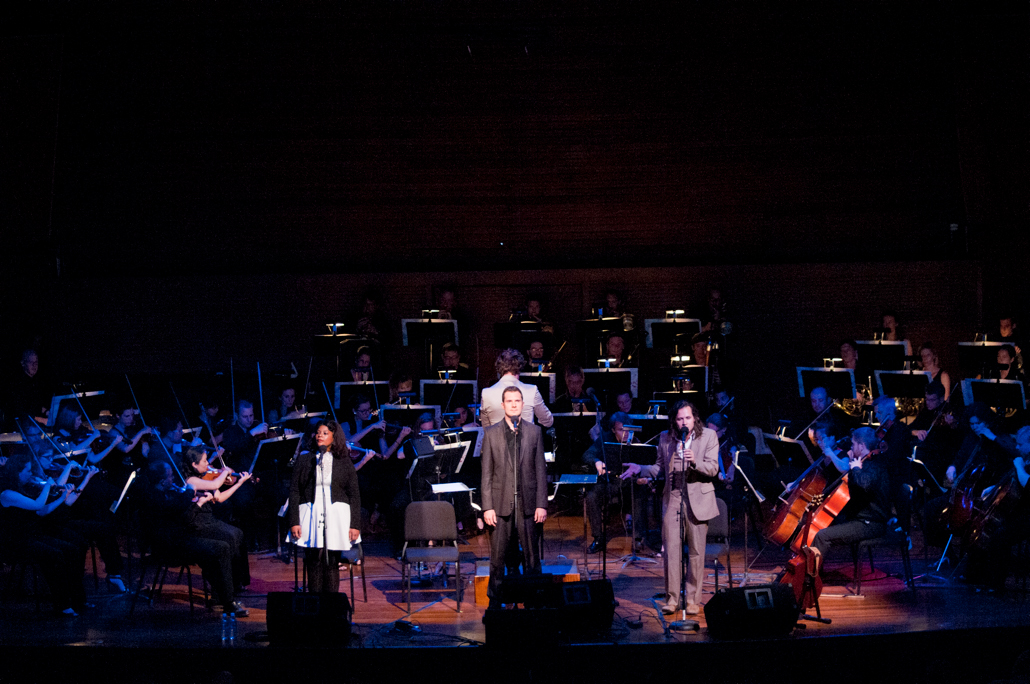
At the CMF the mashups have taken two forms. One is the creation of a new score by combining a classical piece with music by a contemporary popular group or artist. In 2013, it was Brahms’s First Symphony and Radiohead’s album “OK Computer” that were blended together in a score written and conducted by Steve Hackman. That performance featured the CMF orchestra performing Brahms and material written or arranged by Hackman, and three vocalists singing music and lyrics by Radiohead.

This year, it was Beethoven’s Third Symphony and music by the British rock band Coldplay that were blended, again in a score created and conducted by Hackman. The performance again featured the orchestra and the same three singers. (Hackman, a conservatory-trained musician with an equal love for popular and classical music, was named Music Director for the 2014 Mash-up series.)

These are genuine mashups, putting together music from two different sources. I will have more to say about them, but first I want to turn to the second form of event in CMF’s “Music Mash-up” series. Two performances on this year’s festival fall into this second category, and they are in fact little more than traditional pops concerts, featuring an orchestra and a guest artist from the popular music world—something Arthur Fielder was doing with the Boston Pops in the 1940s and ‘50s.

San Fermin

San Fermin

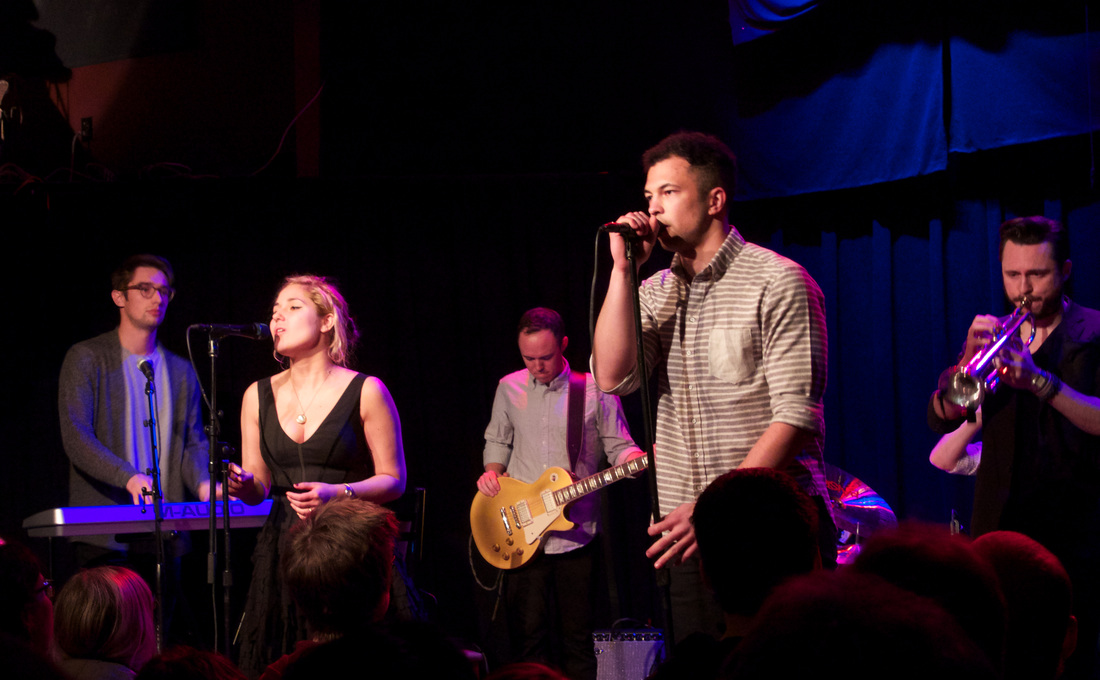
One of the two pops/mashups (as I will call these concerts to distinguish them from the Music Mash-up series as a whole) this year featured three female vocalists, singing their own material in arrangements for orchestra. The second featured the Brooklyn-based San Fermin—sometime called a Baroque-pop band—performing material from their self-titled first album and some newer pieces.

I only heard the second of these, with San Fermin, and on that concert the orchestra contributed very little. It was essentially a San Fermin concert with backup—something that makes sense for a popular concert series, but seems out of place in the Colorado Music Festival.

San Fermin itself is an interesting band with a unique sound. The songs from their original album were a little too much alike, but the new material was inventive and intriguing. I remain unconvinced by the claim that the band is focused on “life’s top-shelf issues,” which are enumerated in the program notes as “youth, nostalgia, anxiety, unrequited love.” These are not really life’s top-shelf issues—but maybe that’s just the over-30 (admittedly way over 30) curmudgeon in me.

It’s clear to anyone who attended this summer’s Music Mash-up concerts that while Beethoven/Coldplay had a sold-out and enthusiastic audience, the house was much smaller for the two pops/mashup events. There were some fans in the audience—San Fermin got some loud cheers from the back of the house—but not enough of them to meet what I assume were the expectations. Perhaps San Fermin is not well known in Boulder; perhaps other, better known artists would have attracted an equally enthusiastic and larger audience.

In any case, I question whether pops concerts of this type are the best use of the CMF’s resources. This year the three Music Mash-up concerts took all three Tuesday nights that previously had been devoted to the World Music series. That series featured some of the most creative and intriguing performances of the festival, and had the potential to energize new audiences. (Need I mention that the inclusion of various ethnicities in the World Music categories could reach portions of Colorado’s population that are conspicuously absent most nights at Chautauqua?)

Brahms/Radiohead at the 2013 Colorado Music Festival

Brahms/Radiohead at the 2013 Colorado Music Festival

Turning to the concerts that I consider to be genuine mashups, the perspective is more positive. The 2013 Brahms/Radiohead combo was very successful. Hackman said specifically that he chose those two sources because of stylistic compatibility, and the score flows seamlessly in and out of the Brahms symphony. It is not entirely to my taste—I prefer Brahms neat, thank you—but I still consider it a worthy and successful mashup of two creative and interesting artists. With the increasingly eclectic tastes of younger listeners (and not so young, for that matter), this is a project worthy of the festival.

That said, I found this year’s mashup to be less successful. Hackman says he chose Coldplay to go with Beethoven not for its musical or stylistic similarity, but because of “a feeling and a universality that they have in common, because of the simplicity of their music and yet the beauty of it, and the themes that are prevalent in the music.”

He is talking about the way that Beethoven tackles, even without words, major humanistic issues through his music. That is part of the profundity we feel in Beethoven’s music, which Hackman aligns with Coldplay lyrics such as “nobody said it was easy” and “when you try so hard but you don’t succeed.”

“How Beethoven are those lines?” Hackman asks.

To answer him honestly, not very. Simplicity and universality are not the same as profundity.

Comparing those quotes to what Beethoven is expressing is like comparing greeting card sentiments to Shakespeare. And as Hackman suggested, the stylistic combination was awkward at best, so the mashup of Beethoven with Coldplay was not nearly as seamless or successful as Brahms/Radiohead. In short, while I admire Hackman’s ambition and his work as an arranger, the two mashup scores are not equally successful.

Another point is worth mentioning. In fascination over the pop-music part of his arrangements, it is easy to overlook the fact that Hackman is conducting a symphony orchestra in major portions of symphonies by Brahms and Beethoven. His conducting is clear and efficient, and the performances of Brahms and Beethoven that he elicited from CMF’s excellent orchestra were eloquent.

On the basis of two years of Music Mash-up concerts at the Colorado Music Festival, I think the genuine mashups are worth pursuing. Hackman’s arrangements are never less than skillful and intriguing. He should search out new and more far-ranging sources and combinations. I look forward to his next mashup score.

On the other hand, something better than pops concerts are needed to fill out a series. And none of this is worth giving up the World Music concerts from past years. CMF has to go forward, and it needs to do so with insight into both audience building and first-rate musical values.

It’s about to get even nastier at the Metropolitan Opera

General Manager Peter Gelb threatens a lockout

By Peter Alexander

Metropolitan Opera House, Lincoln Center, New York

Metropolitan Opera House, Lincoln Center, New York

The New York Times reports today that Metropolitan Opera General Manager Peter Gelb is threatening to lock out workers from the Met within a week:

The labor strife at the Metropolitan Opera took on a new urgency Wednesday when its general manager, Peter Gelb, sent the company’s orchestra, chorus, stagehands and other workers letters warning them to prepare for a lockout if no contract deal is reached by next week.

This is a continuation of the struggles at the Met that I reported earlier. This is in part a New York labor dispute, in which every side will act tough up to the last minute. But in the case of the Met, it is more than that.

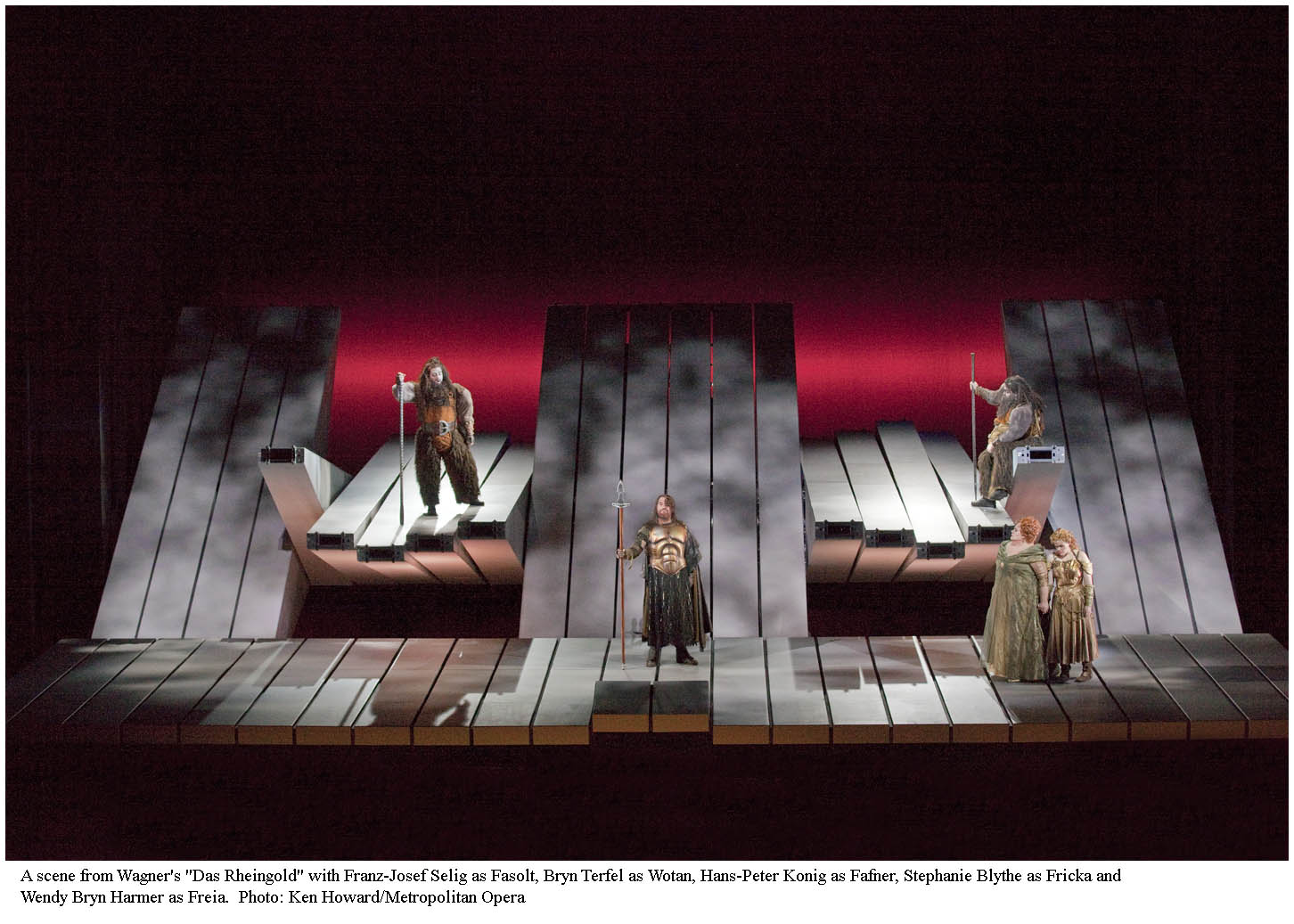
In fact, a lot of the fight is about Gelb himself. There has been criticism of his leadership almost from the day he took over as the Met’s general manager in August 2006, particularly over the lavish productions he has mounted. These have included Robert Lepage’s mechanically lavish but visually dull staging of Wagner’s Ring Cycle—a production so immense that the Met had to spend something between $1.5 and $5 million just to reinforce the floor. The production as a whole cost something around $16–20 million.

A scene from Wagner's "Das Rheingold" in Robert Lepage's production. Photo: Ken Howard/Metropolitan Opera

Criticism of the production has been harsh, with the New York Times critic Anthony Tommasini calling it “the most frustrating opera production I have ever had to grapple with” and The New Yorker’s Alex Ross declaring that “Pound for pound, ton for ton, it is the most witless and wasteful production in modern operatic history.” And those were among the kinder assessments.

As a result, many critics and others have called for a return to the Met’s more traditional Ring staging by Otto Schenk—a move that would concede that the Lepage staging was a a $16-million gamble that failed.

Rigoletto, production by Michael Mayer at the Metropolitan Opera. Piotr Beczala at the Duke of Mantua. Photo: Sara Krulwich, New York Times.

Rigoletto, production by Michael Mayer at the Metropolitan Opera. Piotr Beczala as the Duke of Mantua. Photo: Sara Krulwich, New York Times.

Another controversial production was of Verdi’s Rigoletto, placed in Las Vegas. Featuring a Sinatra-like lounge singer for the Duke, a Don Rickles-like insult comic for Rigoletto, and even a gratuitous pole dancer in the final scene, it became known as the “Rat-Pack Rigoletto.” 

Gelb justified his approach as a way of attracting new, younger, affluent and more hip audiences to the Met. But the history seems to be that these splashy productions attracted a lot of attention when they opened, but audiences fell off significantly when they were revived a year or more later. And that represents a situation that a major opera house like the Met cannot sustain. Productions of the standard operas have to remain profitable, year in and year out.

So there are legitimate questions about the direction of the Met under Gelb’s direction. And all of that controversy is coming to a head as the union contract deadline approaches. Gelb is not one to back down, especially with his own reputation part of the battle, and New York unions are not known for their compliance.

It’s hard to foresee an easy settlement. But it would be a great shame if Gelb’s tenure as director, which was supposed to “save” the Met as it faced changing demographics and an uncertain future, were to end up damaging one of the country’s most esteemed cultural and musical institutions. And while none of this has direct impact on Colorado’s musical culture, any longterm troubles at the Met will assuredly affect the entire operatic world, both nationally and internationally.

Stay tuned.

The Crisis in Classical Music: Latest thoughts and developments

The future of classical musicians and institutions and why we should all think about it

By Peter Alexander

In 2014, almost all stories about classical music have a subtext: crisis.

The crisis boils down to two trends: the increasing cost of doing business—salaries, facility and production costs—combined with decreasing income—aging and shrinking audiences, loss of revenue from tickets and recordings, declining contributions. Just about all of our classical music institutions have to address both trends.

Sometimes the crisis is the actual subject of media stories, as in my earlier post about financial issues at the Metropolitan and other opera companies around the country. But whether previewing concerts at the Colorado Music Festival, discussing candidates for CMF music director, or previewing the 2015 season at Central City Opera, that crisis is always part of the story.

Several recent articles I have seen touched directly on the crisis and the future of classical music:

Controversy continues to rage about the claim by Metropolitan Opera general director Peter Gelb that the Met has to retrench because opera attendance is falling everywhere. While Gelb’s remarks are partly a negotiating tactic aimed at the powerful musicians’ and stage hands’ unions, they touched issues that many people have been thinking about.

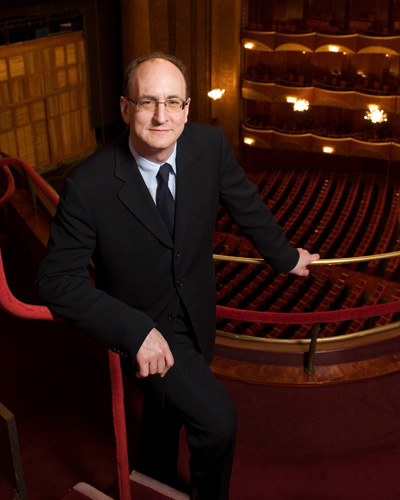
Peter Gelb, general manager of the Met

Peter Gelb, general manager of the Met

They also aroused a whole hornet’s nest of responders. One commentator known for his gossipy style, Norman Lebrecht, even accused Gelb of lying. Arts blogger Greg Sandow, who writes explicitly on the “the future of classical music,” gave a measured response to the furor that—having actual facts and figures about classical audiences—is definitely worth a read.

Elsewhere, the Wall Street Journal had its own appraisal of Gelb’s remarks, and several other bloggers joined the fray, here and here. There’s more, if you are willing to search the internet.

co_symphony

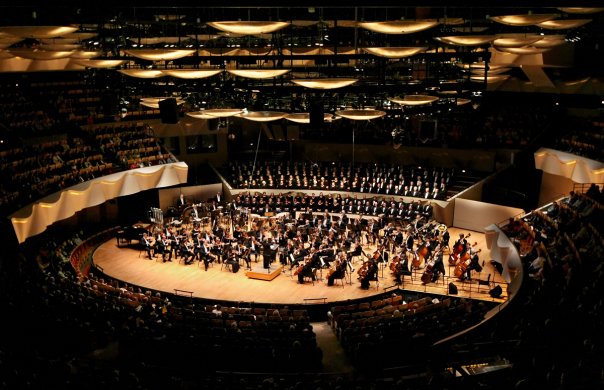
Colorado Symphony in Boettcher Concert Hall

Closer to home, Colorado Public Radio reports that the Colorado Symphony has found a creative way to cover some of their overhead costs: paying the rent for Denver’s Boettcher Concert Hall in part with tickets that the city’s arts agency, Denver Arts and Ventures, can distribute to people who would otherwise not be able to attend symphony performances.

On the basis of CPR’s story, this appears to be a classic win-win. The orchestra saves on their costs, they likely don’t lose any ticket sales, and the city has the opportunity to increase the reach of one of its flagship cultural institutions.

This is a promising idea. We should all watch how it plays out for both the orchestra—which faces a new challenge in 2015 when Boettcher Hall is closed for renovations—and the City of Denver.

UPDATE: Read this story by Ray Mark Rinaldi in the Denver Post on the future of the Denver Perfroming Arts Complex and  Boettcher Concert Hall.

Apart form these two organizations, the question remains just how much of a crisis classical music faces in 2014. First some perspective on the question. As long as I have been working in classical music, there has been talk about crisis. The audiences have been getting older for so long that, Lazarus-like, the thread of their lives must have been retied by someone.

Nevertheless, there can be little doubt that audiences have been shrinking for some time—shrinking more in some places, less in others, and in a few happy outliers, growing. (The figures graphed by Greg Sandow are particularly illuminating.)

The shrinkage has reached the point that directors of classical music institutions are talking openly about it—whether it’s Peter Gelb saying the Metropolitan Opera is facing bankruptcy, or Central City Opera’s Pat Pearce seeking ways to find new audiences, or Andrew Bradford, the new executive director of the Colorado Music Festival, saying “I don’t buy at all this argument that . . . classical music is dying.”

Time for Three at Colorado Music Festival

Time for Three at Colorado Music Festival

The critical word here is institutions. Young musicians are finding exciting and creative ways to reach audiences. Of the many examples I could cite, look at Time for Three: This young alternative trio of classically-trained musicians who mix anything and everything into their repertoire without compromising their standards has been very successful in Boulder and around the world.

Composer Michael Daugherty

Michael Daugherty

Or Steve Hackman, the director of CMF’s “Musical Mash-up” series, who combined his conservatory training with a love of popular music to build a whole career around various ways of crossing musical boundaries. (Or in a similar vein, think of the many composers who have successfully incorporated popular idioms into their work, including George Gershwin and Leonard Bernstein in earlier times, or Michael Daugherty and David Lang today.)

But the large institutions—symphony orchestras, opera companies, music festivals—with their extensive costs for personnel, facilities, and logistical support, are struggling to maintain their financial viability. Part of the problem is that most of those institutions do only one thing well: present performances of a very specific repertoire. That one thing is what their founders wanted, so that’s what they were meant to do. But now that we are in more eclectic times, with all of us sampling from a wider pool of entertainment choices, musical styles and cultural trends, the large institutions can come across as Johnny One-Notes, and that is no longer enough.

We know that large institutions are rarely nimble. And nimbleness is required to respond to changing times. Obviously, individual artists and small, self-contained groups, can be more nimble. That is why Time for Three and Steve Hackman and Michael Daugherty can more easily build their own individual careers.

What all of these success stories have in common is the blurring of the line between classical and pop styles. I have written about this before, and it is the whole basis of CMF’s popular “Musical Mash-up” concerts.

If the one mashup performance I have attended at CMF is any indication, it is a very successful venture for the festival and may be a harbinger of things to come. I was impressed by three things: Chautauqua Auditorium was sold out; the audience included all ages, with people that looked like the typical symphony audience alongside much younger listeners; and the audience had an almost rock-concert vibe, with cheering and applause throughout.

Apart from the artistic validity of the mashup enterprise, that was an audience that any orchestra would love to have. So much so that at some point, artistic validity becomes, not irrelevant, but something that has to be addressed within the mashup genre, not from outside of it.

I believe that point has now been reached: the mashup (or crossover, or whatever you want to call it) horse is out of the barn, and it’s not going back. CMF is not alone in this enterprise—look at the program of symphonies around the country, playing film music, sometimes live with films, bringing in pop artists, commissioning new works that cross boundaries.

Like it or not, mashups of one form or another will be part of the future of our musical life. And not only for orchestras and festivals: opera has embraced a similar aesthetic by presenting Broadway musicals. The use of popular idioms in opera is as old as Porgy and Bess and as new as Jake Heggie’s Dead Man Walking presented this summer at Central City. (And that is overlooking the fact that for most of its life, opera was a popular idiom!)

The more you consider these trends, the more you realize that any decision made by our classical music institutions—programming, hiring, choice of soloists, venues, the pricing of tickets, outreach programs, and so forth—is, or should be, made with eyes on the future. If the directors of those institutions are thinking that way, shouldn’t we, the audience, think that way, too? After all, they are asking for our financial support, not the other way around.

# # # # #

To explore the subject a little further, here are two excellent articles by Sandow again: “Pop Fiction” and “Why Classical Music Needs Rock & Roll.” I think both are important reading for anyone thinking about the future of classical music.

New Formula for Central City Opera’s 2015 Season

“The one thing you cannot do is stand still”

by Peter Alexander

2015OverviewFromAdPat Pearce knows he is navigating difficult waters.

The general/artistic director of the Central City Opera is facing the same problems as every opera company in the country: falling revenues and shrinking audiences. Tied to both the recession and to changing demographics, these are the twin elephants in the opera house—and for that matter, the concert hall, the theater and the museum gallery—throughout the country.

Fortunately, the problems have not been as drastic for CCO as the recent and well publicized troubles at Opera Colorado, the San Diego Opera, and even the staid Metropolitan Opera in New York. (I wrote about those companies in an earlier post on this blog.)

“Everyone has been affected by what’s been happening,” Pearce says. “Some people were better able to navigate it, but everyone is looking to do things differently.”

Pearce believes that it’s not enough to bring in new audiences, if you don’t also find new sources of income. And the other way around: income is not enough if you are not finding the audiences for the future of opera.

Pelham "Pat" Pearce

Pelham “Pat” Pearce

“The smartest people will do both—raise more money and get new audiences,” he says. “Nobody has figured it out yet. (But) the one thing you cannot do is stand still.”

With that in mind, Pearce and CCO have charted a new course for their 2015 season. As Pearce explained in the press release announcing the coming season, “We are adjusting our strategy . . . to create a deeper connection with our current and future audiences.”

To help connect with new audiences, CCO will take three one-act chamber operas on the road next year, visiting communities around Colorado with full productions featuring casts of professional and apprentice artists and orchestra (if called for). The three touring operas will represent an intriguing mix of styles and periods: The Prodigal Son, a church parable by Benjamin Britten; The Blind, an unusual a capella concept opera by Lera Auerbach; and Don Quixote and the Duchess (Don Quichotte chez la Duchesse) by the French Baroque composer Joseph Bodin de Boismortier. (See descriptions of these unusual works below.)

Locations and dates of these performances will be announced soon. In the meantime, Pearce estimates that there will be a total of 9–12 performances of the three in churches and other venues around the state. Each production will also have a performance in Central City during the summer season.

These traveling productions will compliment two productions to be performed in repertory in the beautiful Central City Opera House. Continuing a recent trend at Central City and other opera companies around the world, one will be a Broadway musical—Man of La Mancha—and one will be from the traditional grand opera repertoire—Verdi’s La Traviata.

For the past three years plus the current season, CCO has taken a production down the mountains and into Denver as a means of seeking out new audiences. Three of those years, the Denver performance has been a Broadway musical.

“We’ve been in experimentation for three or four years, some of which worked and some of which didn’t” Pearce says. “The reason we did the (Broadway) musical theater pieces in Denver was to see if we could find a new audience.”

CCO.Interior.3x4-large

Central City Opera House interior. Photo by Mark Kiryluk.

In fact, those performances did bring in new audiences, as planned, but attendance remained more or less level, meaning that about the same number of people who were regulars in Central City did not make the trip to Denver. It was that outcome that led to intensive strategic planning over the past year and the development of CCO’s new format. Pearce said that every possibility was considered, including selling the company’s Central City property and moving their headquarters to Denver.

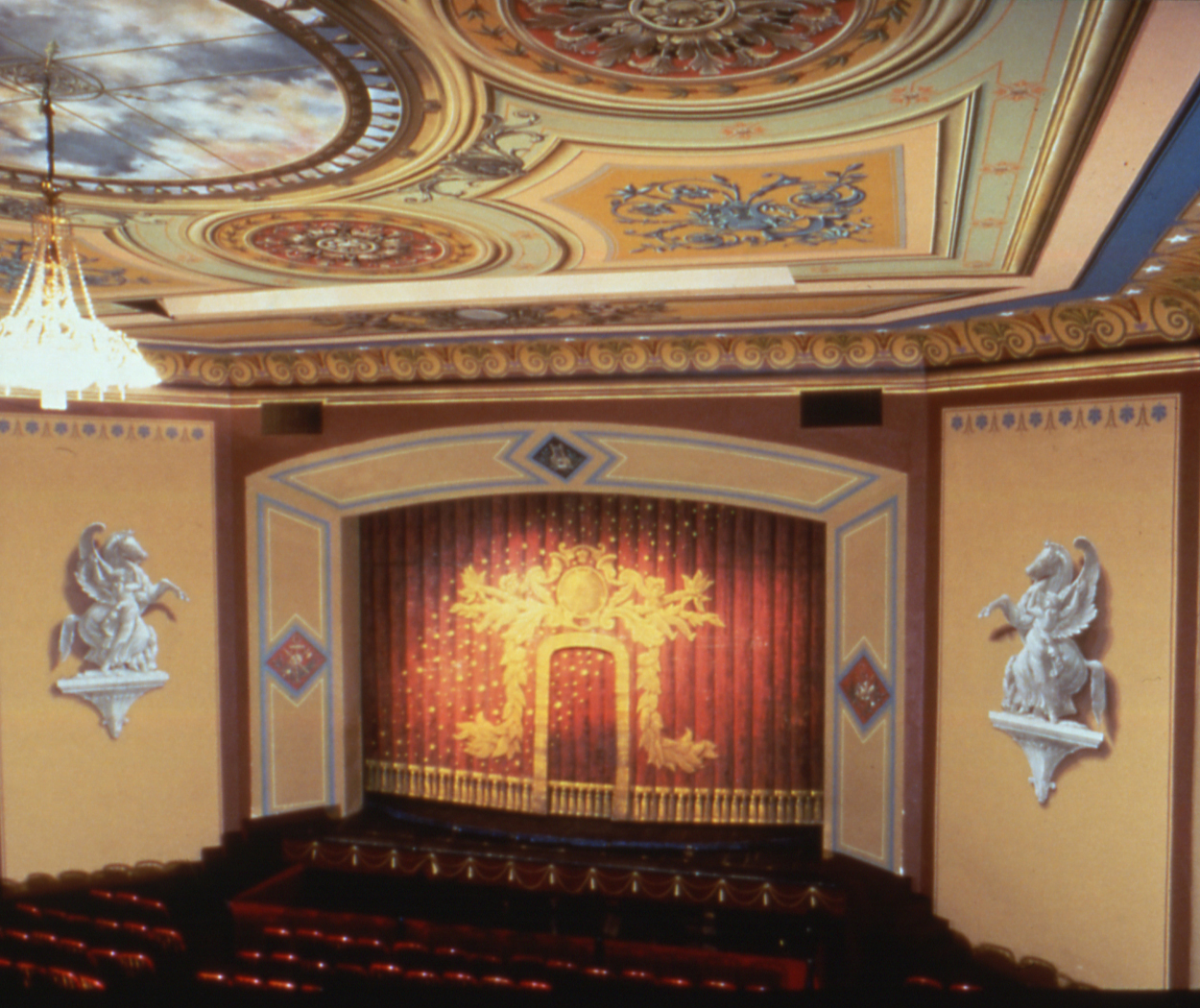
Fortunately, that scenario was quickly rejected as the CCO administration recognized how much their success is tied to their unique location in a Colorado mining town, and their historic jewel-box opera house. “Partly what people pay for is the experience here (in Central City),” Pearce says, looking around at the audience gathering on the opera house grounds.

“Part of our brand is this experience.”


For those unfamiliar with the one-act operas on CCO’s 2015 season schedule, the company has provided the following descriptions:

One of Benjamin Britten’s three church parable operas, which also include Curlew River and The Burning Fiery Furnace, The Prodigal Son is based on the Biblical story of the same name. With a libretto by William Plomer and a score dedicated to Shostakovich, this one-act opera centers on the well-known parable about a son, bored with life on his father’s farm, who asks for his inheritance to go seek an exciting life in a far-off city where he is deprived of his fortune and left penniless. When the son returns home to ask for forgiveness, his father receives him with open arms, but his angry older brother who has loyally worked his father’s fields doesn’t feel the same. The Prodigal Son will be performed in English at church venues in Central City and throughout the state.
“It’s not the characters who are blind,” said composer Lera Auerbach in a New York Times interview about the one-act opera The Blind. “The message is that we are the blind. With all our means of communication we see each other less and connect to each other less. We have less understanding and compassion for other people…” First performed in October 2011, this unconventional a capella opera for 12 singers requires that audience members be blindfolded so they can enter the world of its sightless characters. Adapted from an 1890 play by Maurice Maeterlinck, the story is about a dozen blind people who are taken by their priest on an outing. When the elderly priest suddenly dies, they are stranded on an island left helpless and scared. The group realizes that they never really knew the priest as a person as they stumble upon his cold, dead body. A Russian- American composer, Lera Auerbach wrote The Blind in 1994 while she was a student at Colorado’s Aspen Music Festival. Central City Opera’s production is in partnership with American Opera Projects, the company who presented the opera for the 2013 Lincoln Center Festival in a production touted by the New York Times as “An adventurous, eerie and thoroughly engaging example of immersive theater.” The Blind will be performed in English at non-traditional venues in Central City and across the region.
As its final traveling one-act production for 2015, Central City Opera presents Don Quixote and the Duchess (Don Quichotte chez la Duchesse), by French baroque composer Joseph Bodin de Boismortier. This piece is adapted from Cervantes’ novel Don Quixote with a libretto by Charles Simon Favart. First performed in Paris in 1743, the opera is based on one episode in the novel. The story follows a Duke and Duchess who amuse themselves by creating an elaborate ruse to fool the title character. The story is rich with incisive, quick and ironic turns. A rarely performed piece, this production will be the regional premiere of the opera and will provide a completely different take on the same story of Don Quixote presented as part of Central City Opera’s production of the musical Man of La Mancha also being presented in 2015. Don Quixote and the Duchess will be performed in English in both Central City venues and across Colorado.


CENTRAL CITY OPERA 2015 SEASON

July 11 to August 9, 2015

Productions in Central City:

LA TRAVIATA by Giuseppe Verdi

MAN OF LA MANCHA by Leigh, Darion & Wasserman

­­­­­­­­­­_______________

Touring productions throughout Colorado:

THE PRODIGAL SON by Benjamin Britten

THE BLIND by Lera Auerbach

DON QUIXOTE AND THE DUCHESS by Joseph Bodin de Boismortier

Season details

Is the Metropolitan Opera in danger?

Opinions vary, but some details emerge.

By Peter Alexander

Metropolitan Opera House, Lincoln Center, New York

Metropolitan Opera House, Lincoln Center, New York

Anyone who follows the world of opera has noticed the news.

First, the San Diego Opera was going to close. Then it was saved by a public groundswell, and the longtime artistic director, Ian Campbell, was gone (and his massive salary as well). The company has announced a three-opera season for 2014–15.

Here in Colorado, Denver’s Opera Colorado had to cancel the anticipated premiere of Lori Laitman’s Scarlet Letter. The company was left with a two-opera “season,” including a bare-bones presentation of Carmen with the orchestra on stage and tickets prices up to $167.60. In case you have missed this saga, the various missteps by the company have been dissected by the Denver Post music critic, Ray Mark Rinaldi.

The troubles these two companies find themselves in are clearly financial. Unlike Broadway, where only most investments fail, opera has never been a money-making proposition; it has always depended upon financial support way beyond the cost of tickets, either from the court (early opera in Italy, 18th-century Versailles or Mozart’s Vienna, for example), or wealthy aristocrats (18th-century London), or the government (all across Europe today), or private donors (in the United States). To music historians, the financial ups and downs of opera in London are famously convoluted, with one scheme appearing after another, and all of them failing eventually. Handel, after all, turned to oratorios like Messiah because they were essentially opera on the cheap—all the singing, fewer singers and none of the sets and costumes. Similar histories crop up over and over again, wherever opera is produced. The culprits are usually the salaries of super-star singers, or the cost of fantastic productions, or sometimes the ineptitude of the management. Or all three. But the result is always, and always will be, the same: Opera costs way more to put on than any business can sustain without massive subsidies.

Here in the U.S., we like to imagine that our leading cultural institutions are rock solid. They have a dependable donor base and they are well run within a reasonable budget.

Dream on.

Peter Gelb, general manager of the Met

Peter Gelb, general manager of the Met

There is no larger or more established or more revered cultural institution in the country than the Metropolitan Opera, but its history is not one of outstanding management. (If you want details, read this fascinating, and disheartening, account by Johanna Fiedler.) And now Peter Gelb, the current general manager, says the company stands “on the edge of a precipice.” This comes after several massively expensive new productions mounted by the company, including one that required a $1.4 million investment just to reinforce the Met stage so it could support the set (Robert LePage’s Ring cycle; the cost of the reinforcement has been variously reported, up to $5 million), and another that included a $169,000 poppy field (Prince Igor). But amid criticism of his spending on those productions, Gelb says it is the labor costs that are out of control. They may or may not be, depending on your perspective, but it seems that is not the only problem.

It is no accident that Gelb is raising the alarm just when the Met is in negotiations with unions whose members make the company go, most notably the musicians’ union. This being New York, it is hard to separate facts from negotiating tactics, but a new analysis of the Met’s finances by the Wall St. Journal brings a few facts and some clarity to the issue. For one thing, we can learn that some of Gelb’s expensive and highly promoted new productions have not done well after their first year. But read the whole article to get the full meaning.

Another analysis can be found in The Guardian.

And just to put all of this in an even more interesting light, two of the world’s other major opera companies—the Chicago Lyric and Vienna State Opera—have recently announced that they have completed very successful, even record-breaking, seasons. The timing is at least inconvenient for Gelb and the Met management.

CCOperaLogoPreferredI will have more to say about the current condition of opera in a future article on the announcement of Central City Opera‘s 2015 season, which is going in an interesting new direction. In the meantime, for some perspective on the San Diego Opera and the Metropolitan’s various concerns, I recommend this article written by Los Angeles Times critic Mark Swed. Google searches on the principals and the organizations involved will turn up many more.

The lines between Classical and Pop continue to dissolve

By Peter Alexander

Music Mash-Up concert at the 2013 Colorado Music Festival

Music Mash-Up concert at the 2013 Colorado Music Festival

In my recent Boulder Weekly article about Music Mashup concerts at the Colorado Music Festival (CMF), I quoted Steve Hackman, the director of this summer’s series of three concerts, as saying:

“I am . . . somebody who lives in the classical and the pop worlds. I am someone who’s interested in making creative new works, who doesn’t see a huge difference between a masterwork of Beethoven and a masterwork of Coldplay.

“I just don’t see those lines.”


Not everyone will agree with Hackman that Coldplay has masterpieces comparable to Beethoven, or even that layering their songs over recomposed Beethoven is a valid artistic goal—but that is a discussion for another time. For now I am more interested in the notion of crossing and blurring musical lines. Regular patrons of the CMF probably remember the remarkable trio Time for Three, who freely mix their formal training in classical performance with their individual backgrounds playing jazz, gypsy fiddling, folk and popular styles. As they boast on their Web page, they perform “music from Bach and Brahms to their own arrangements of The Beatles, Katy Perry, Kanye West and Justin Timberlake.” This sounds just like Hackman and the Music Mash-ups at CMF.

earthen-grave

Rachel Barton Pine with Earthen Grave, her doom-metal band

Boulder audiences also may recall Rachel Barton Pine, who offered Alban Berg’s Violin Concerto with the Boulder Philharmonic in the spring. In addition to performing virtuoso concertos of the 19th and 20th centuries and a wide variety of classical violin showpieces, Pine also plays with a Baroque original-instrument ensemble, the Trio Settecento, and a heavy-metal band, Earthen Grave. That’s a remarkable level of versatility, and would have been unthinkable to most concerto soloists of previous generations. Isaac Stern and Jascha Heifitz would not have given a moment’s thought to using original instruments, or enjoying (or—heaven forbid!— playing) heavy metal. But Pine does both in addition to her straight classical solo career.

It would not be hard to find more examples of this kind of versatility. And that is the point I want to make: The ability of musicians to perform in more than one style is one of the most notable trends in classical music today. If you visit the music schools and conservatories—from CU to Eastman and Juilliard—you will find them filled with young musicians who grew up listening to all kinds of popular music. From anodyne pop styles to all the different styles of rock, indie bands, hip hop, ska, reggae, salsa—they’ve heard it all, and it’s all part of the general musical stew.  In this environment, it’s likely that shredding means just as much to them as etudes. Like Hackman, they just don’t see the lines between styles that older musicians do.

And now, the Daily Telegraph in London is reporting exactly the same story:

POP AND CLASSICAL: TOGETHER AT LAST?

Radiohead’s guitarist has done it, and so has The National’s Bryce Dessner. As Richard Reed Parry releases his classical debut, are the barriers between pop and ‘serious music’ finally crumbling? Or were they meaningless all along?  (more)

This may be surprising to some people. But in 2014 Boulder, it should not be. We have seen plenty of evidence right here at home, of which the success of the Music Mash-up concerts at the CMF is just the tip of the iceberg.