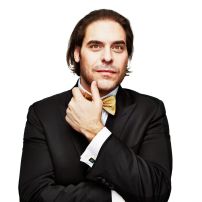
Josh Bell, Quicksilver Baroque on the 2017–18 CU Presents Series

By Peter Alexander

Quicksilver

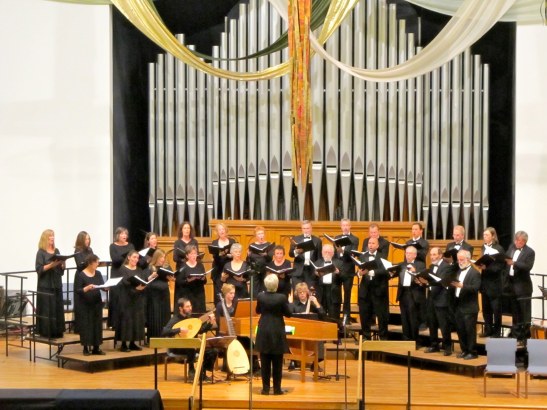
Quicksilver Baroque Ensemble

CU Presents, the performing arts series on the University of Colorado, Boulder campus, has announced several noteworthy classical music events as part of the 2017–18 season.

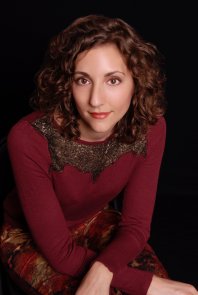
Josh Bell by Lisa Marie Mazzucco

Josh Bell. Photo by Lisa Marie Mazzocco.

Among these are a solo recital by award-winning violinist Joshua Bell Feb. 9, 2018, and a concert by the historically informed Quicksilver Baroque Ensemble April 20, 2018. The yet-to-be-selected winner of the 2017 Van Cliburn International Piano Competition will perform a solo recital Nov. 3, 2017. This year’s competition will be held in Ft. Worth, Tex., May 25–June 10.

Other Artist Series events in Macky Auditorium will include the Martha Graham Dance Company, Oct. 5, 2017; jazz and R&B vocalist Dianne Reeves Dec. 16, 2017; and Béla Fleck and Brooklyn Rider Jan. 20, 2018.

This season also features five concert pairs by the Takács Quartet and a performance by CU Boulder’s current graduate quartet-in-residence, the Altius Quartet. The Eklund Opera Program’s season features productions of Franz Lehár’s Merry Widow Oct. 27–29, the Stephen Sondheim musical Sweeney Todd March 16–18, and Handel’s Ariodante April 26–29.

The full CU Presents season is listed below. More information is available on the CU Presents Web page. Season ticket sales begin Monday, April 3 at 10 a.m., and single tickets will be available beginning Monday, Aug. 14. Tickets will be available here, or over the phone at 303-492-8008.

# # # # #

CU PRESENTS 2017–18 SEASON

Artist Series at Macky Auditorium

Martha Graham Dance Company
Thursday, Oct. 5, 2017

The Triplets of Belleville
Sunday, Oct. 15, 2017

Dianne Reeves

Dianne Reeves

Van Cliburn Gold Medal Winner
Friday, Nov. 3, 2017

Dianne Reeves 
Saturday, Dec. 16, 2017
Holiday Concert

Béla Fleck and Brooklyn Rider
Saturday, Jan. 20, 2018

Joshua Bell
Friday, Feb. 9, 2018

Ailey II
Saturday, Feb. 17, 2018

Lila Downs
Saturday, March 3, 2018

RUBBERBANDance
Saturday, March 24, 2018

Holiday_Concert.CC310

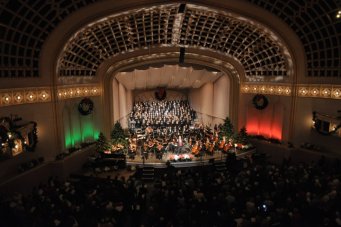
Holiday Festival in Macky Auditorium

Quicksilver Baroque Ensemble
Friday, April 20, 2018
Stile Moderno: 17th Century Italy

Holiday Festival
Friday, Dec. 8, 2017, 7:30 p.m.
Saturday, Dec. 9, 2017, 1 p.m.
Saturday, Dec. 9, 2017, 4 p.m.
Sunday, Dec. 10, 2017, 4 p.m.
Macky Auditorium

Eklund Opera Program

The Merry Widow
By Franz Lehár
(Sung in German with English surtitles)
Friday, Oct. 27, 2017, 7:30 p.m.
Saturday, Oct. 28, 2017, 7:30 p.m.
Sunday, Oct. 29, 2017, 2 p.m.
Macky Auditorium

Sweeney Todd
By Stephen Sondheim
Friday, March 16, 2018, 7:30 p.m.
Saturday, March 17, 2018, 7:30 p.m.
Sunday, March 18, 2018, 2 p.m.
Macky Auditorium

Ariodante
By George Frideric Handel
Thursday, April 26, 2018, 7:30 p.m.
Friday, April 27, 2018, 7:30 p.m.
Saturday, April 28, 2018, 7:30 p.m.
Sunday, April 29, 2018, 2 p.m.
Music Theatre, Imig Music Building

Takács Quartet

Takasce SQ

Takacs Quartet

Chamber Series (sold out by subscription)
Sunday, Sept. 24, 2017, 4 p.m.
Sunday, Oct. 29, 2017, 4 p.m.
Sunday, Jan. 21, 2018, 4 p.m. (Altius Quartet)
Sunday, Feb. 4, 2018, 4 p.m.
Sunday, March 11, 2018, 4 p.m.
Sunday, April 29, 2018, 4 p.m.
Grusin Music Hall

Encore Series (limited availability)
Monday, Sept. 25, 2017, 7:30 p.m.
Monday, Oct. 30, 2017, 7:30 p.m.
Monday, Jan. 22, 2018, 7:30 p.m. (Altius Quartet)
Sunday, Feb. 5, 2018, 7:30 p.m.
Monday, March 12, 2018, 7:30 p.m.
Monday, April 30, 2018, 7:30 p.m.
Grusin Music Hal

Evanne Browne says farewell with Handel

Seicento performs two early psalm settings composed in Italy

By Peter Alexander

Seicento 3

Seicento Baroque Ensemble

Over the weekend—Friday to Sunday, March 24–26—Evanne Browne will conduct her farewell concerts with Seicento, the Baroque performing group that she founded only six years ago.

Evanne Browne 009a Color

Evanne Browne

The program comprises entirely music by Handel, including settings of Psalm 110, Dixit Dominus, and Psalm 117, Laudate Pueri. Both are set for choir and soloists with strings and will be accompanied by a small orchestra of period instruments, including harpsichord and small organ. There will also be sections of secular cantatas to fill out the program. Performances will be in Denver, Boulder and Estes Park (see below for details).

“It’s my last concert, but it’s the beginning of a new energy with Seicento,” Browne says. “We’re financially sound, we’re finishing the sixth year, and we’ve been well received. People say, ‘oh, that’s your baby,’ but the baby has grown up and is ready for a new influence.”

Interviews have already been held for a new director and auditions will be conducted next week. Browne said the board hopes to announce the new director in April.

Browne moved to the Washington, D.C., area, where she had lived and worked before coming to Boulder, in September and has travelled back to Colorado for all the Seicento’s concerts this year. In the meantime, she has been singing professionally and teaching in the D.C. area since her move.

balestrieri

Amanda Balestrieri

She picked the program for the concert before she knew it would be her last with Seicento, but the choice is appropriate. “I have known Dixit for along time and wanted to do it,” she says. “Dixit is one of his most incredible choral pieces, and both pieces are chorally flamboyant, and difficult choral singing. If you think Messiah has lots of runs, Dixit is that times two or three.”

The second Psalm setting, Laudate Pueri, was pointed out to Browne by Mark Alan Filbert, who has served as musical director in Browne’s absence this year. Both pieces were written in 1707, when Handel was 22. He was living in Rome, where the Pope had banned opera but sacred music filled the void. Roman choirs of the time seem to have been particularly capable, which explains the difficulty of the music in both Psalm settings.

radakovitch

Kathryn Radakovitch

While living in Italy, Handel “was influenced by Corelli and other Italians,” Browne says. “He was into an Italian expressiveness, which is so much about word painting and florid vocal lines. And the crunchiness of the dissonances is very Corelli-like. He took that style into his later works, his operas and his oratorios, but I think he’s really exploring the craft here.”

The two Psalm settings do not quite make an hour of music, so Browne selected movements from three of Handel’s cantatas to fill out the program. She chose them, she says, because they contain music that the audience will recognize—the original versions of melodies that appeared later in Messiah.

“People will recognize [the tunes],” she says. “One is ‘For Unto Us a Child is Born,’ and the other is ‘And He shall Purify.’ It’s great fun to hear these Italian texts and especially the Messiah melodies that we know so well in their original form. It’s so familiar but it’s so different.”

singing-525x394

Barbara Hollinshead

Soloists for the performances will be sopranos Amanda Balestrieri and Kathryn Radakovitch and tenor Todd Teske, all from the Boulder area, and mezzo-soprano Barbara Hollinshead who performs in Washington, D.C. There will also be short bass solos from members of Seicento.

“We have fabulous soloists,” Browne says. “There are two duets and one solo cantata, and the women who are doing the cantatas—oh my gosh, they can sing runs, and beautifully! It’s going to be a lot of fun to hear that.”

Just six years ago, Seicento became one of the first historical performance groups in the Boulder area. “When I first came to Boulder, there was very little Baroque vocal music going on, and a little bit of Baroque stringed period-instrument music,” Browne says, pointing out how much more there is now. “I am very, very proud of this organization and the way it has been managed,” she says.

“I’m grateful and I’m excited for the future of Seicento.”

# # # # #

droppedImage

Seicento Baroque Ensemble
Evanne Browne, artistic director and conductor
Sopranos Amanda Balestrieri and Kathryn Radakovitch, mezzo-soprano Barbara Hollinshead and tenor Todd Teske

Handel: Dixit Dominus and Laudate Pueri
Selections from Italian secular catnatas

7:30 p.m. Friday, March 24
St. Paul Lutheran Church & Catholic Church, 1600 Grant. St. Denver

7:30 p.m. Saturday, March 25
First United Methodist Church, 2412 Spruce St., Boulder

2 p.m. Sunday, March 26
Stanley Hotel Concert Hall, 333 east Wonder View, Estes Park

Tickets


The gold standard

Boulder Phil previews its Kennedy Center performance

By Peter Alexander

Creative programming, extensive community engagement and thoughtful collaborations have paid off for the Boulder Philharmonic.

AC-3-23-640x401

Boulder Phil with Frequent Flyers. Photo by Glenn Ross.

The big reward comes this week. Their next concert, Saturday, March 25, will be repeated Tuesday, March 28, at the Kennedy Center in Washington D.C., where they will be recognized as one of four orchestras, and the only regional orchestra, chosen for the inaugural Shift Festival of American Orchestras. 

The program for the two concerts reflects several of the Boulder Phil’s recent initiatives, particularly the theme of “Nature and Music” that has informed several recent seasons and the collaboration with other local arts organizations. The program opens with the premiere of a new work by Stephen Lias, All the Songs that Nature Sings, commissioned as part of the National Endowment of the Arts (NEA) “Imagine Your Parks” initiative and specifically celebrating Rocky Mountain National Park.

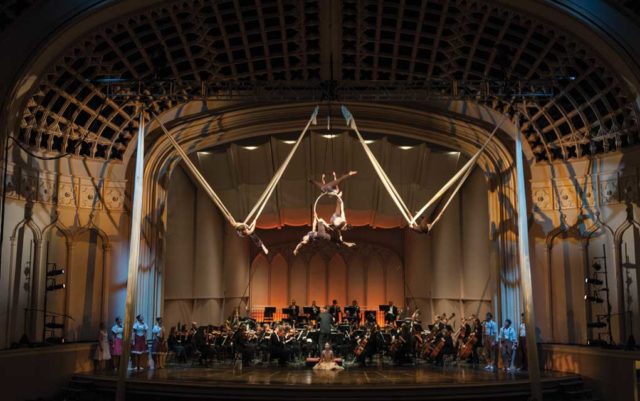
Other works on the program represent what Butterman calls “greatest hits of the last five years.” Jeff Midkin’s Mandolin Concerto “From the Blue Ridge” and Steve Heitzig’s Ghosts of the Grasslands were both introduced to Boulder audiences in the spring of 2014 and were highly successful with audiences. And the final work on the concert will reprise one of the orchestra’s most creative collaborations: their 2013 partnering with Frequent Flyers Aerial Dance for Aaron Copland’s Appalachian Spring.

The combination of the Shift Festival and the “Imagine Your Parks” commission seemed tailor-made for the Boulder Phil. In fact, the Boulder Phil’s Executive Director Kevin Shuck says, “we had what in the words of the festival’s selection panel members was ‘the gold standard’ of what they were looking for.”

The festival will certainly put a national spotlight on the Boulder Phil, but the same activities that were the basis of the festival application have paid off locally as well. The programming of the past few years, community outreach, collaborations with Frequent Flyers and other arts groups, and educational programs have all helped build local audiences. Since 2009, overall ticket sales for the orchestra have risen 67 percent and subscription sales 44 percent. And Saturday’s concert is on track to be a sellout.

Read more in Boulder Weekly.

# # # # #

Nature & Music
Boulder Philharmonic Orchestra, Michael Butterman, music director

All the Songs that Nature Sings by Stephen Lias (world premiere)
Mandolin Concert, From the Blue Ridge by Jeff Midkin
Jeff Midkin, mandolin
Ghosts of the Grassland by Steve Heitzig
Appalachian Spring by Aaron Copland
With Frequent Flyers Aerial Dance

2 p.m. Saturday, March 25
Free concert for community organizations

7:30 p.m. Saturday, March 25, Macky Auditorium
Tickets: 303-449-1343

8 p.m. Tuesday, March 28, Kennedy Center Concert Hall, Washington, D.C.
Tickets: 202-467-4600

Magic flutes, golden flutes and flutists of all ages

From Sir James Galway to CU Opera, a week of flutes at CU

By Peter Alexander

3737-16+Sir+James+Galway+by+Paul+Cox+2

Sir James Galway

There will be many kinds of flutes at the University of Colorado Boulder next week: Magic, golden, and from piccolo to bass.

The central event will be a two-day meeting of flutists at the College of Music, Tuesday and Wednesday, March 21–22. Under the title “Once a Flutist: Rekindling the flutist within,” this free event is open to flutists young and old.

The culminating events will be a masterclass for CU flute students with Sir James Galway —“The Man with the Golden Flute” — at 1:30 p.m. Tuesday in Grusin Music Hall, and a concert by Galway and his wife, Lady Jeanne Galway, Wednesday at 7:30 p.m. in Macky Auditorium.

Sir James Galway, who has recorded just about the entire classical flute repertoire, has performed with Stevie Wonder, Joni Mitchell and Sir Elton John, and recorded film music for The Lord of Rings, is one of the world’s best known musicians of any genre.

But before all of that gets underway, CU’s Eklund Opera Program will set the scene with Mozart’s Magic Flute, Friday, Saturday and Sunday, March 17–19, in Macky Auditorium.

# # # # #

Christina Jennings organized “Once a Flutist” to celebrate her 10th year teaching flute at CU.

“There are a lot of flute players out there,” she says. “I can’t tell you how many times [I’ve met] people who say, ‘I used to play the flute!’ Or ‘My daughter plays the flute!’

“The idea for this festival came from that.”

Jennings will play a recital March 21 for the College of Music “Faculty Tuesdays” series, at 7:30 p.m. in Grusin Hall. But she will not hog the stage: appearing with her will be a flute orchestra of no fewer than 60 players, all on the Grusin stage.

ISS27_Catherine_Coleman_plays_a_flute

Astronaut-flutist Catherine Coleman, playing on the International Space Station. Photo courtesy of NASA.

Another guest is literally an out-of-this-world flute player: astronaut Cady Coleman, who took her flutes onto the International Space Station. In 2011 she played live from orbit on National Public Radio.

Now well into his eighth decade, Galway shows no sign of slowing down. “That’s what I do,” he says. “That’s why I’m here: to play the flute.”

The Macky concert will feature both Galways with Cathal Breslin, a young Irish pianist who is accompanying the flutists on their current U.S. tour. The program will include a sonata by Philippe Gaubert, who Galway describes as “The Brahms of the flute.”

“And we’re playing a few little pieces which I’m well know for as encore pieces — we’re putting those in the middle of the program,” he says. “And Carnival of Venice, which everybody knows.”

# # # # #

Buzz-3-16-2-Glenn-AsakawaUniversity-of-Colorado

Michael Hoffman inThe Magic Flute. Photo by Glenn Asakawa.

The CU production of The Magic Flute will be directed by Herschel Garfein, a Grammy Award-winning librettist, a composer and a stage director. And if you know the rather fantastic plot of The Magic Flute, he wants you to know that he does not see the opera as a fairy tale.

“From the beginning, I’ve seen it as sort of a metaphysical comedy of manners,” Garfein says. “I think it can be taken both more seriously, and more comically, than usual. There’s a very compelling love story between Prince Tamino and Pamina, and there’s also a huge strain of philosophical thought that runs through the opera.”

Read more at Boulder Weekly.

# # # # #

The Magic Flute by W.A. Mozart
University of Colorado Eklund Opera Program
Nicholas Carthy, conductor
Herschel Garfein, stage director
Peter Dean Beck, stage and lighting design

7:30 p.m. Friday and Saturday, March 17–18
2 p.m. Sunday, March 19
Macky Auditorium

Tickets

Christina Jennings

Christina Jennings

Once a Flutist: Rekindling the flutist within!
Tuesday and Wednesday, March 21–22
CU Imig Music Building

All events free and open to the public, including:

James Galway Master Class
1:30 p.m. Tuesday, March 21, Grusin Hall

Christina Jennings, flute, recital with Eisenhower Elementary School and CU Choirs, CU Family Flute Orchestra
7:30 p.m. Tuesday, March 21, Grusin Hall

Lady Galway Master Class
1 p.m. Wednesday, March 22, Macky Auditorium

Full schedule online at http://www.colorado.edu/music/academics/departments/woodwinds/flute-studio/once-flutist

Sir James and Lady Jeanne Galway and Friends
7:30 p.m. Wednesday, March 22
Macky Auditorium

Tickets

Priests, thugs and pickpockets all part of the program for Boulder Bach Festival

Concerts in Boulder, Denver and Longmont explore music from Spain and the Americas

By Peter Alexander

The Boulder Bach Festival has become an explorer through the history of music.

That is the work of artistic director Zachary Carrettin, who has led the festival since the fall of 2013. A Baroque violinist, electric violinist and conductor of broad tastes, he has played early music and various styles of chamber music around the world, but also shared the stage with Yanni, Ray Charles and Cake. And as director of the Boulder Bach Festival (BBF), he wants to broaden audiences’ knowledge of the music of the past and all the ways it can be experienced.

zachary+carrettin

Zachary Carrettin. Photo by Courtney Lee.

The festival’s next program, to be presented Thursday through Saturday in Boulder, Denver and Longmont (see below) is a case in point. Titled “Spain and the Americas,” it will not include a single piece by Bach. It will, however, bring to light a repertoire from just before and during Bach’s lifetime that is little known today. And like most performances Carrettin has presented with the BBF, it will explore ways the music can be presented, using both guitar and lute with the bass part and different combinations of instruments with solo voice.

“It is part of my personal mission that we examine performance practices, but not only with the mission of authenticity, or bringing back to life old practices,” Carrettin says. “Also I’m engaging in a dialog about the various instruments then and now, and how they influence our approach to the various musics we play and sing.”

This particular program is a collaboration between Carrettin and Richard Savino, a lutenist and guitarist who also directs El Mundo, a Renaissance and Baroque performance ensemble. Carrettin has played on concerts and recordings with Savino and El Mundo, and he invited Savino to appear with the BBF for this concert.

“I always enjoyed playing with (Savino and El Mundo),” Carrettin says. “His style of playing is so full of life and imagination that it influences everybody else in the band.”

RSavino-Publicity-pic-2

Richard Savino

Savino will play both Spanish guitar and lute on the concert, and Carrettin will be one of two Baroque violinists. A second violinist will be Adam LaMotte, concertmaster of the Portland Baroque Orchestra who has known Carrettin since they were both high school freshmen. The cello/continuo will be played by Guy Fishman, principal cellist of the Boston Handel and Haydn Society and a member of the Colorado Music Festival orchestra in the summers.

Vocal soloist for the concert will be mezzo-soprano Clea Huston, an artist-in-residence for the BBF this season. A native of Denver, Huston has sung a diverse repertoire, including music by Wagner, Verdi, Mozart, Handel and Bach.

The music for the BBF concert comes partly from one of Savino’s recordings with El Mundo, The Kingdoms of Castile, but it also reflects Savino’s long-time interest in the music of Spain and the Spanish colonies in the New World. “It’s an area of work that I’ve been researching since the mid-‘90s,” he says.

“Growing up a guitar player you’re always fascinated with Spanish music. Somewhere in the 1990s I became more and more interested in the colonial repertory of the 16th through the 19th centuries, and the music that emanated from the different missions, cathedrals, convents and court environments in Latin America.”

Huston.promo02

Mezzo-soprano Clea Huston

The program includes music by composers from Mexico, Guatemala and Spain, as well as composers from southern Italy, which was under Spanish rule in the Baroque era. Surprisingly, there is also a piece by Handel. Although he was certainly not a Spanish composer, Handel lived for a while in Naples, the seat of the Spanish Viceroy, where he wrote a song in Spanish.

“It’s his only work in Spanish, and it says specifically on the title page ‘con chitarra Espagnola’ (with Spanish guitar),” Savino says. “He basically adopts every Spanish characteristic for it. He’s the great chameleon—he can do it all.”

Savino singles out one of the composers on the program as a favorite. “Jose Marin is a fascinating character,” he says. “He was a Catholic priest, and he was also a thug—I mean like a Tony Soprano thug. He was convicted in some kind of extortion scheme, was defrocked and run out of Madrid. He was caught trying to sneak back in, and then was implicated in a murder scheme.

“But his songs are stunningly beautiful.”

Carrettin shares Savino’s regard for Marin’s music. “We’re ending the first half with a duo by Marin, and it is just sublime,” he says. “It’s so special and intimate, it’s probably my favorite piece on the program.”

A contrasting piece is a Xacara (or Jácara), a type of lively Spanish dance song that was somehow associated with pickpockets. Oygan una Xacarilla was composed by Rafael Castellano, the chapel master at the cathedral in Guatemala City. “It’s a funky pop tune,” Savino says. “It’s great!”

Other works on the program include a set of pieces for guitar alone, by Spanish composer Gaspar Sanz; a two-part piece that opens with a slow, reserved chorale section celebrating the birth of Jesus, followed by a guaracha, a style of Cuban dance that Savino again describes as a “pop tune”; and several instrumental pieces for two violins with cello and guitar continuo.

Savino believes that the most important thing to listen for on the program is an unmistakable Hispanic, or Latino, element to the music. “There is a discernible lineage to Hispanic music that you can hear from the 16th through the 20th century,” he says.

“When you hear Tito Puente, for example, and then you hear a 17th-century guaracha, there’s a connection, and you know that they both are derived from Hispanic musical practices. You can put it together right away.

“And it’s a vibrant repertory.”

# # # # #

newBBFLogoSquareWebsiteSpain and the Americas
Boulder Bach Festival, Zachary Carrettin, director
With Richard Savino, guitar and lutes
Clea Huston, mezzo-soprano
Adam LaMotte and Zachary Carrettin, Baroque violins
Guy Fishman, cello

7 p.m. Thursday, March 16, Grace Lutheran Church, 1001 13th St., Boulder
7:30 p.m. Friday, March 17, St. Andrew’s Episcopal Church,2015 Glenarm St., Denver
7:30 p.m. Saturday, March 18, Stewart Auditorium, 400 Quail Road Longmont

Tickets

Boulder Phil announces 60th anniversary season

Commissioned works, returning guests and works suggested by players are on the schedule

By Peter Alexander

The Boulder Philharmonic will present the Colorado premieres of two new works co-commissioned by the orchestra as part of its 2017–18 season.
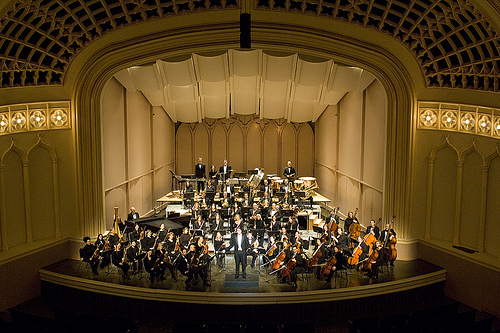
bpo-macky-2

Boulder Philharmonic in Macky Auditorium

Other highlights of the coming season will be the return of popular attraction Cirque de la Symphonie for two performances of “Cirque Goes to the Movies” Feb. 3, 2018, and the orchestra’s second season-ending collaboration with Central City Opera, this time for a concert performance of Leonard Bernstein’s West Side Story April 28, 2018.

The season program, which was announced to patrons and the public yesterday afternoon (March 5), celebrates the orchestra’s 60th anniversary. The celebration includes the return of guest artists who have appeared with the orchestra before, including pianists Jon Nakamatsu for Schumann’s Piano Concerto Sept. 24; David Korevaar for Beethoven’s Choral Fantasy, Oct. 14; and Simone Dinnerstein for concertos by J.S. Bach and Philip Glass Jan. 13, 2018.

Other collaborations will be with violinist and Boulder Phil concertmaster Charles Wetherbee for The Lark Ascending by Ralph Vaughan Williams, violinist Stefan Jackiw for Prokofiev’s Violin Concerto No. 2, and choirs from CU Boulder, Western Illinois University, and Metropolitan State University in Denver.
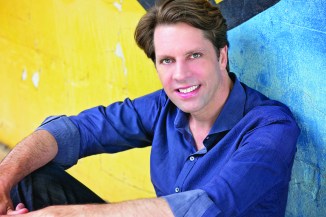
music-director-michael-butterman_2_credit-rene-palmer

Michael Butterman. Photo by Rene Palmer

“What you see [in the 2017–18 season] is a continuation of some of the characteristics of our programing that have worked well for us,” Boulder Philharmonic Music Director Michael Butterman says. “It’s not so much looking back at 60 years as it is looking back at the last eight or nine. There’s the idea of collaborations and of championing successful new music.”

Missing is any season-long programming theme, such as this year’s duo soloists, or recent seasons built around music and nature—although nature is not completely absent next year.

“The music and nature connection is there, in one concert in early April,” Butterman says. The April 8, 2018, concert, titled “A Song for Swans,” includes Sibelius’s Symphony No 5, whose last movement was inspired when the composer saw a flight of 16 swans pass overhead. “One of the great experiences of my life,” Sibelius wrote in his diary. “God, how beautiful!”

Sibelius was one of several composers that members of the orchestra suggested for the season. “We worked with the players early on to get their input, asking what are some pieces that you would like to play,” Butterman says. Among the composers they suggested were Sibelius, who appears on the April 7 concert; Dvořák, whose Seventh Symphony will be performed on the season opener Sept. 24; and Shostakovich, whose Symphony No. 5 will be performed Oct. 14.
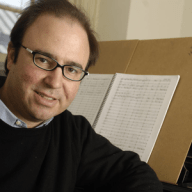
theofinadis

Christopher Theofanidis

The season’s first Colorado premiere will be Dreamtime Ancestors by Christopher Theofanidis, which will open the very first concert. The score was commissioned by a consortium of 50 orchestras, one in each state, that was put together by New Music for America. The world premiere was given by the Plymouth, Mass., Philharmonic Orchestra in October 2015, with other performances around the country following within a roughly two-year period.

“Theofanidis is certainly one of the leading living composers,” Butterman says. “We had  a relationship with him, when we performed his Rainbow Body a few years ago, and trusted the kind of product he was going to provide. So we agreed to take part in that project.”
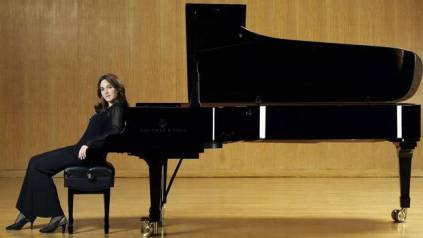
rv-dinnerstein-0717rv1

Simone Dinnerstein

In a concert titled “Bach Transfigured,” scheduled for Jan. 13, 2018, the orchestra will present the Colorado premiere of Philip Glass’s Piano Concerto No. 3, performed by Dinnerstein. Glass admires her playing, and approached her to say he would like to write a concerto for her.

“She approached some orchestras that she had a relationship with, and conductors, and most of us bought into it,” Butterman says. The Boulder Phil raised their share of the commission from local donors and joined a smaller consortium of orchestras, including A Far Cry, a self-conducted orchestra in Boston, who will give the world premiere of the concerto.

Because Dinnerstein is widely known and admired for her performances of Bach, Glass has asked that the concerto be paired in concert with Bach’s Keyboard Concerto in G minor, as it will be in Boulder.

The season will close out with the commemoration of the 100th anniversary of Leonard Bernstein’s birth. In collaboration with Central City Opera (CCO) and choirs from Metropolitan State University in Denver, the orchestra will present Bernstein’s 1957 Broadway hit West Side Story. Butterman and the Phil worked with CCO at the end of the 2015–16 season to present a semi-staged performance of Bach’s St. Matthew Passion and they were eager to repeat the collaboration.

“We had such a positive experience doing that,” Butterman said. “Hopefully it’s something we can do in other years.” For West Side Story, he said that Central City will provide the cast and some kind of direction, so that it will be “essentially in concert, but with a certain amount of theatrical elements.”

With the announcement of the anniversary season, the Boulder Philharmonic becomes the second local orchestra to build a season around an anniversary. Earlier this year the Colorado Music Festival announced its 2017 40th-anniversary season, also featuring the return of popular soloists.

The full Boulder Philharmonic program for the 2017–18 season is listed below.

# # # # #
logo2

Boulder Philharmonic Orchestra
2017-2018 Season
All concerts in Macky Auditorium
(Additional outreach events and repeat performances of selected programs
in metro Denver locations will be announced.)

7 p.m. Sunday, Sept. 24, 2017—Opening Night: Boulder Phil at 60
Christopher Theofanidis: Dreamtime Ancestors
(Colorado premiere and Boulder Phil co-commission)
Schumann: Piano Concerto in A minor, Jon Nakamatsu, piano
Dvořák: Symphony No. 7
korevaar

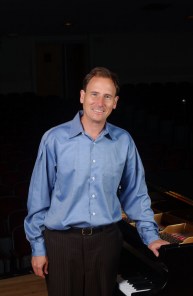
David Korevaar

7:30 p.m. Saturday, Oct. 14, 2017—Music of Resistance
Beethoven: Choral Fantasy, David Korevaar, piano
CU Boulder and Western Illinois University Choirs
Britten: Ballad of Heroes
CU Boulder and Western Illinois University Choirs
Shostakovich: Symphony No. 5

November 24 through November 26, 2017
The Nutcracker with Boulder Ballet

 7:30 p.m. Saturday, Jan. 13, 2018—Bach Transfigured
C.P.E. Bach: Symphony in C Major, Wq 182
J.S. Bach: Keyboard Concerto in G minor, BWV 1068, Simone Dinnerstein, piano
Phillip Glass: Piano Concerto No. 3, Simone Dinnerstein, piano
(Colorado premiere and Boulder Phil co-commission)
Arnold Schoenberg: Verklärte Nacht (Transfigured Night)
janicemartin3-small

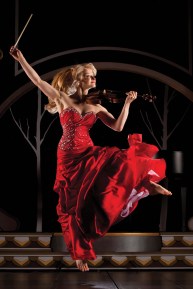
Janice Martin

2 and 7:30 p.m. Saturday, Feb. 3, 2018—Cirque Goes to the Movies
Cirque de la Symphonie, with Janice Martin, aerial violinist
Featuring film scores including Harry Potter, Mission Impossible, Pirates of the Caribbean and On the Town.

7:30 p.m. Saturday, April 7, 2018—A Song for Swans
Vaughan Williams: The Lark Ascending with dancers and Charles Wetherbee, violin
Sibelius: Symphony No. 5
Prokofiev: Violin Concerto No. 2, Stefan Jackiw, violin

7:30 p.m. Saturday, April 28, 2018—West Side Story: Bernstein at 100
Bernstein: West Side Story in Concert with Central City Opera and Metropolitan State University of Denver Choirs

Tickets: Subscription packages are now available.
Single tickets go on sale June 1, 2017.

————

CORRECTION 3.6.17: An earlier version of this article incorrectly said that the world premiere of Philip Glass’s Piano Concerto No. 3 would be given the Mitteldeutsche Radiofunk Orchester of Leipzig. The world premiere will be given by A Far Cry in Boston.

Standing still and a lust for bass at The Dairy

One Night Only concert features new music “Alive”

By Peter Alexander

The clarinetist says the hardest part is standing still. The violinist also plays the piano because she has a “lust for bass.”

It should be an interesting concert.

OLYMPUS DIGITAL CAMERA

Carter Pann

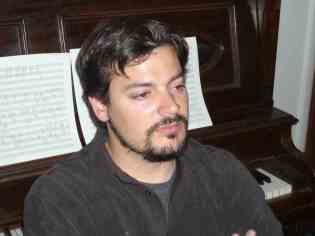
Saturday, March 4, the Dairy Arts Center will present “Alive,” a program of new music as part of its One Night Only concert series. The program will feature two world premieres, as well as the regional premiere of The Mechanics: Six from the Shop Floor for saxophone quartet by CU music professor Carter Pann, a Pulitzer Prize finalist in 2016.

“Alive” is the first of six One Night Only concerts scheduled for the spring. Those and other upcoming performances are listed on the Dairy Center website.

copy-of-dsc02021-2-small

Black Diamond Quartet

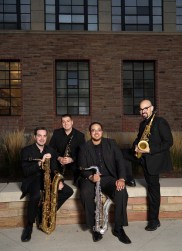
The Mechanics, performed by the Black Diamond Quartet, will close the program. Pann’s suite of six short movements was written for the Capitol Quartet, a group that Pann heard when they played on tour at Grusin Hall on the CU campus.

The “Alive” program opens with Serenity Diptych, a multi-media work for violin, tape and still images by Lithuanian composer Ziboukle Martinaityte. It was composed for violinist Karen Bentley Pollick, who will perform with photographic and video imagery by Philip VanKeuren.

OLYMPUS DIGITAL CAMERA

Deborah Marshall

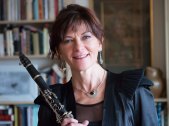
Pollick switches to piano to play the world premiere of the Andante for Contrabassoon and Piano by Russian composer Ivan Sokolov, with contrabassoonist Michael Christoph of the Boulder Bassoon Quartet. The program’s second world premiere will be Danse for solo clarinet by Dirk-Michael Kirsch, performed by Deborah Marshall.

Also on the eclectic program are Etudes for Piano by David Rakowski, played by Amy Briggs; Briggs and Pann playing the Study No. 6 for player piano by Conlon Nancarrow; and the Boulder Bassoon Quartet accompanying ALT, a short film starring Abby Brammell.

Read more in Boulder Weekly.

Nineteen voices a snap for Ars Nova singers

Music of Renaissance England forms “Voices and Viols” program

By Peter Alexander

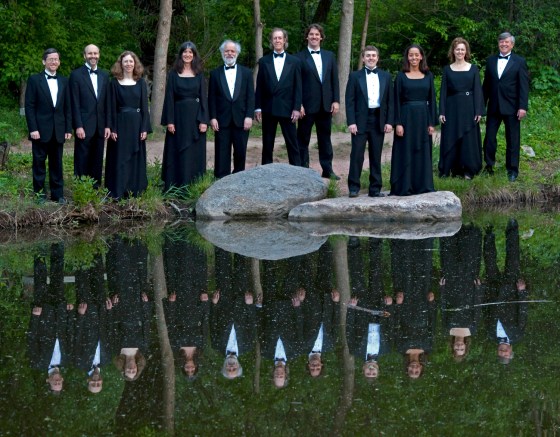
A choral piece for “only” 19 parts is almost too easy for the experienced voices of Boulder’s Ars Nova Singers.

pondreflect

Ars Nova Singers

Last year they sang two pieces in 40 parts, which artistic director Thomas Edward Morgan admits was “a challenging thing to do — in the middle of winter and flu season!” Each of the 40 parts had to be sung by only a single singer, so any absences would have scuttled the performance. 

With those works successfully performed last year, the group is now adding a 19-voice motet from the Renaissance to their list of musical accomplishments. “The group discovered that having done [the 40-voice pieces] last year, this other piece is considerably more accessible,” Morgan says.

The piece is “O bone Jesu” (Oh, good Jesus), by the 16th-century Scottish composer Robert Carver, which Morgan has wanted to perform for a long time. It will be part of “Voices and Viols,” a joint concert between Ars Nova and STRING, a viola da gamba trio directed by Ann Marie Morgan. “Voices and Viols” will be performed Saturday evening, Feb. 25, in Boulder and Sunday afternoon, Feb. 26, in Denver.

STRING (2).jpg

STRING

The viola da gamba is a fretted string instrument of the Renaissance period that is played with a bow. The name, meaning “viol for the leg,” refers to the fact that the instruments are held between the legs, like a modern cello. STRING was formed in 2016 by Anne Marie Morgan with fellow gambists Sarah Biber and Sandra Miller to perform music for gamba as it was originally heard.

Because the gamba was particularly popular in England during the 16th and 17th centuries, that was the music that was the natural fit for their joint program with Ars Nova. “Voices and Viols” will include verse anthems works by William Byrd, Thomas Morley and Orlando Gibbons, three of the most important Renaissance English composers. STRING will also play works for gambas alone on each half of the concert.

Morgan is excited about the opportunity to perform with the gambas. “Because they don’t use modern vibrato, the gamba doesn’t have as directly emotional a sound,” he says. “It’s a much more subtle thing.

“It makes for a unique showcase of this repertoire, and challenges both the singers and the audience to tune in to the details.”

Read more at Boulder Weekly.

# # # # #

Voices and Viols
Ars Nova Singers, Thomas Edward Morgan, director
STRING, Ann Marie Morgan, director

7:30 p.m. Saturday, Feb. 25, St. John’s Episcopal Church, 1419 Pine St., Boulder
4 p.m. Sunday, Feb. 26, St. Paul’s Lutheran Church, 1600 Grant St., Denver

Tickets

A star-studded week at CU

By Peter Alexander

It will be a week of superstars in Boulder.

First will be famed Wagnerian soprano Deborah Voigt, presenting her one-woman show Voigt Lessons at Macky Auditorium on Saturday. Then the University of Colorado Boulder’s own superstars, the Takács String Quartet, begin a spring series of concerts in Grusin Hall with some of the stars from the CU Boulder music faculty Sunday and Monday. And next Wednesday, Feb. 22, Yo-Yo Ma presents a concert in Macky that, alas for latecomers, has been sold out for months.

deborah-voigt-4lg-credit-heidi-gutman

Deborah Voigt. Photo by Heidi Gutman.

Voigt’s one-woman show was written for her by Terrence McNally, the Tony-, Obie- and Emmy-award winning playwright, screenwriter and librettist for musicals and operas. A brutally honest retelling of her struggles during her career, the show is, Voigt says, “very much a story about a Midwest girl who turns out to be an international opera diva.”

The script includes songs that are especially meaningful to Voigt — most of them not operatic or art songs. “When people come to the theater, they’re not given a list of songs,” she says. “I want them to be surprised.”

She does reveal that she opens with a Carpenters song, “because I was a huge Karen Carpenter fan, and that’s the music I listened to. There is an art song and a definite nod to opera, of course.”

Voigt Lessons is based in part on Voigt’s 2015 book, Call Me Debbie: True Confessions of a Down-To-Earth Diva. Both the book and the show are remarkably frank about Voigt’s problems with weight, with addictions, and with relationships. “I just wanted to be honest about everything that had happened,” she says.

She’s pretty sure everyone will enjoy the show. “It’s going to be an entertaining evening,” she says. “There are some laughs, maybe a couple of funny expletives, there’s some drama. It’s a very intimate show.”

The Takács Quartet opens its spring series of six concerts performing with percussionist Douglas Walter and clarinetist Daniel Silver, both CU faculty members, Sunday and Monday Feb. 19 and 20. The concert will open with Beethoven’s String Quartet in G major, op. 18 no. 2. Walter will play Michael Colgrass’ Variations for Four Drums and Viola with Takács member Geraldine Walther, and Silver will join the full quartet for Brahms’ Clarinet Quintet in B minor, op. 115.

Takasce SQ

Takacs Quartet. Photo by Keith Saunders.

That pattern of that program — guests from the CU faculty and one Beethoven quartet — will continue in the other concerts this spring. “We are so grateful to have so many talented artists and wonderful people to collaborate with on the music faculty,” Ed Dusinberre, the quartet’s first violinist, says. “This year we decided we would, more than usual, make them a feature of our programming.”

The collaboration with CU faculty is important to the quartet, because it gives them opportunities to perform music that otherwise is difficult for them to put together. “We decided to feature pieces here (in Boulder) that we wouldn’t so easily be able to do on the road,” Dusinberre says.

“When we’re on the road, there’s not a lot of time to rehearse. Those (pieces with CU music faculty) are the sorts of pieces that we wouldn’t typically get together on the road.”

The Beethoven quartets on the concerts form a small sample of the full cycle of the composer’s 16 quartets that the Takacs are playing at Wigmore Hall in London and various places in the U.S. As associate artists of the Wigmore, they were invited to perform the full cycle during the current season.

9780226374369The Beethoven performances also tie in to Dusinberre’s recently published book, Beethoven for a Later Age: Living with the String Quartets, a highly readable personal recollection of Dusinberre’s experiences with the quartets that also provides remarkable insights into the lives of professional quartet players.
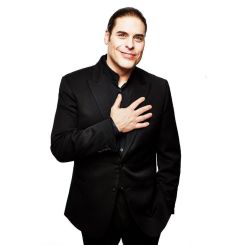
The upcoming concerts March 19 and 20 will feature Beethoven’s final String Quartet in F major, op. 135, and Haydn’s String Quartet in F major, op. 77 no. 2. Walther and guests Abigail Nims, alto, and Margaret McDonald, piano, will perform Two Songs for Alto, Viola and Piano by Brahms.

And on April 30 and May 1 the quartet will play Beethoven’s String Quartet in B-flat major, op. 18 no. 6. Soprano Jennifer Bird will perform Chausson’s Chanson perpétuelle with the full quartet and Alexandra Nguyen will perform Clara Schumann’s Three Romances, op. 21, with Dusinberre. That program and the spring concert series will conclude with Schubert’s much-loved “Trout” Quintet, with David Korevaar, piano, and Paul Erhard, double bass.

Read more at Boulder Weekly.

# # # # #

Voigt Lessons
Deborah Voigt, soprano
7:30 p.m.. Saturday, Feb. 18, Macky Auditorium

Takacs Quartet
4 p.m. Sunday, Feb. 19
7:30 p.m. Monday, Feb. 20
Grusin Music Hall, CU Imig Music Building

Tickets

Colorado Music Festival announces its 2017 40th-anniversary season

Beethoven’s Ninth, tributes to the festival’s history will be highlights

Guest artists include CMF founder Giora Bernstein, pianist Olga Kern, Time for Three

By Peter Alexander

Jean-MarieNew1

CMF Music Director Jean-Marie Zeitouni

The Colorado Music Festival will celebrate its 40th anniversary this summer, and music director Jean-Marie Zeitouni has been looking at the festival’s history.

His programs for the coming summer recall the Roman god Janus, looking backward and forward at the same time. “If you look at every series, you will see that they have a commemoration of the past, but at the same time they are moving in a new direction,” Zeitouni says. “I think almost every single work on the program has to do with the history of CMF.”

The full 2017 schedule, opening June 29 and closing Aug. 4, was announced to festival patrons last night (Jan. 22). The season includes Thursday Festival Orchestra concerts, Saturday chamber music concerts, and Sunday Chamber Orchestra concerts, as in past years. In one change from recent seasons, all concerts this summer will be in the Chautauqua Auditorium. With a few exceptions that are noted below, all will begin at 7:30 p.m.

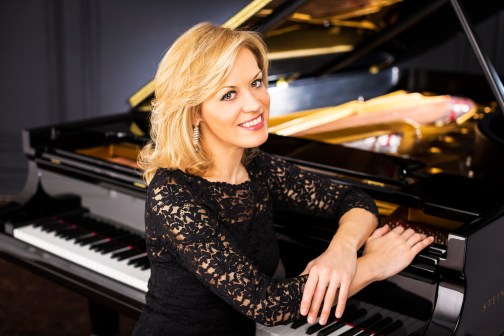
Olga Kern

Olga Kern, photographed by Chris Lee at Steinway Hall, 12/9/13.

As part of Zeitouni’s homage to festival history, long-time  CMF patrons will recognize several guest artists who have been here before:

  • Pianist Olga Kern, who played all the Rachmaninoff piano concertos in two nights during the 2013 Festival, will return to perform with Zeitouni and the Festival Orchestra on opening night, June 29. She will also present a solo recital July 1.
  • The festival’s founder, Giora Bernstein, will return to conduct Mozart and Bach July 2.
  • The popular Time for Three string trio will return to collaborate with Steve Hackman, who led the festival’s “Music Mashup” series for two summers, performing on that series’ successor, now called “Happy Hour @Chautauqua,” July 18.

The summer’s Festival Orchestra lineup is dominated by two massive ninth symphonies:

  • A sure audience favorite, Beethoven’s Ninth will be presented July 13. It will come right in the middle of the CMF calendar, as “a way to mark a certain Apex” of the festival, Zeitouni says. Soloists for the performance will be soprano Mary Wilson, mezzo-soprano Michelle De Young, tenor Jason Baldwin and bass-baritone Keith Miller.

On the same program, De Young will perform Mahler’s Songs of a Wayfarer, and the orchestra will present the North American premiere of A Little Summer Suite by Betsy Jolas.

  • Mahler’s Ninth, the composer’s last completed symphonic work, will form the entire Festival Orchestra program Aug. 3. This concert completes a cycle of Mahler symphonies that was begun by former CMF music director Michael Christie. “The idea is that for the last week of the festival we would do something for the orchestra, and believe me this is a piece that they’ve all been dying to play,” Zeitouni says.

In addition to returning artists listed above, there are a number of notable visiting artists. These include:

  • elina-vahala_vert

    Elina Vähälä

    Finnish violinist Elina Vähälä playing John Corigliano’s “Red Violin” Concerto July 6;

  • Pianists Christopher O’Riley, the host of NPR’s “From the Top,” and Pablo Ziegler playing tangos on the “Happy Hour@Chautauqua” series July 11;
  • Pianist Stewart Goodyear playing Shostakovich’s Piano Concerto No. 1 for piano, trumpet and strings, July 16; and
  • Italian Van Cliburn Competition medalist Benedetto Lupo, playing two Ravel piano concertos July 20. Lupo will be the CMF artist-in-residence for 2017. In addition to the Ravel concertos, he will play a solo/chamber concert with CMF musicians July 22, and a concert with the CMF Chamber Orchestra July 23.
  • Clarinetist Boris Allakhverdyan, a former member of the CMF orchestra and now principal clarinet of the Los Angeles Philharmonic, will perform chamber music with current members of the orchestra July 29, and the Copland Clarinet Concerto on a chamber orchestra concert July 30. The latter, titled “Classically Jazz,” will also feature music by Kurt Weill, Scott Joplin, Leonard Bernstein, George Gershwin and Darius Milhaud.
  • gil-left-2

    Gil Shaham

    To round out the summer, superstar violinist Gil Shaham will perform with Zeitouni and the Festival Orchestra for the Festival Finale concert, Aug. 4. One of the most recognized classical artists today, Shaham performs in recital and with orchestras worldwide. In addition to a violin concerto yet to be determined, the program for the Festival Finale will include Beethoven’s joyful and boisterous Seventh Symphony.

# # # # #

Kern’s performances fit nicely into Zeitouni’s plan of commemorating the old alongside the new. On the Opening Night program June 29, Kern will reprise her 2013 performances of Rachmaninoff’s Rhapsody on a Theme of Paganini, but that will be paired with a completely new work for the festival, Prokofiev’s First Piano Concerto.

olga-kern

Olga Kern

The two concertos are part of an all-Russian program, opening with Shostakovich’s brash and colorful Festive Overture and ending with Rachmaninoff’s lushly Romantic Symphony No. 2 in E minor. Both works are part of the festival’s history, but neither has been heard at CMF since the 1990s.

Another example of joining commemoration with new directions will be the CMF’s “mini-festival.” The idea of a series of concerts arranged around a single theme and performed in the same week was started by Christie. Zeitouni brought the model back last year with a Brahms mini-festival. This year, the mini-festival will reflect Zeitouni’s background and specialty: French music.

JMZBowtie

Jean-Marie Zeitouni

“I grew up with the Montreal Symphony playing Ravel and Debussy, so I have a special love for it,” Zeitouni says. “It is repertoire with which I have intimate affinities, but it is also repertoire in which the orchestra is allowed to shine.”

The mini-festival of French music comprises three concerts, July 20–23:

  • A Festival Orchestra concert July 20, featuring Debussy’s impressionist scores Prelude to the Afternoon of a Faun and Iberia; Lupo playing Ravel’s Concerto in G and Concerto for the Left hand; and the orchestral showpiece La Valse.
  • A chamber music concert July 22 will feature Lupo playing a half-recital of Debussy’s music for solo piano, followed by Fauré’s Quartet No. 1 for piano and strings with CMF musicians.
  • The July 23 chamber orchestra concert will present some little known works by Fauré, Dukas, Saint-Saëns and Cecile Chaminade, with orchestra members as featured soloists. The concert will end with music from Offenabch’s saucy comic opera Orpheus in the Underworld.

# # # # #

One new feature of the festival will be “Symphony Sampler” concerts, a series of abridged repeats of Thursday night Festival Orchestra programs presented Fridays at 6:30 p.m. July 14, 21 and 28. These informal concerts will offer only one or two major works from the previous night’s full program, with Zeitouni presenting an introduction to the music for people who might be new to classical performances. The early start time and shortened program leave time for a post-concert dinner, either at the Chautauqua Dining Hall or elsewhere in Boulder.

christopher-oriley

Christopher O’Riley

Another modification of past summers appears with the “Happy Hour@Chautauqua” events, Tuesdays July 11, 18 and 25. An outgrowth of previous Music Mashup events, these concerts are designed to bring classical and popular music together. Presented without intermission, each concert will be preceded by a “happy hour” offering complementary food and drinks.

After performances by pianists Christopher O’Riley and Pablo Ziegler July 11, and Time for Three July 18, the series culminates with Hackman conducting an all-new mashup with the orchestra July 25. Unlike Hackman’s previous scores for CMF, this will not feature just one classical work or pop group, but under the title “Classicalapalooza” it will being together music by various artists from both genres.

The 2017 Click Commission winner by composer Julian Wachner will be performed on the Festival Orchestra concert July 27, along with Scriabin’s Poem of Ecstasy (1908) and The Planets by Gustav Holst (1914–15). There will be little other new music during the summer, however: Corigliano’s Red Violin Concerto from 1997 will be performed on an American program July 6 and Jolas’s Little Summer Suite will precede Beethoven’s Ninth Symphony July 13, but no other works later than the middle of the 20th century are on the schedule.

header-logo

This is only a summary of the full 2017 CMF calendar. A complete listing of the summer’s concerts and ticket information can be found on the CMF’s newly redesigned Web page. Tickets will go on sale to the general public March 20, including season subscriptions, ticket packages and single tickets.