
LSO presents Bach’s “Magnum Opus,” Takács Quartet partners with Nicoló Spera
By Peter Alexander April 9 at 5:20 p.m.
The Longmont Symphony Orchestra (LSO) and conductor Elliot Moore end their season with one of the most significant pieces by J.S. Bach, his monumental Mass in B minor.
The performance of this large-scale work will be Saturday evening at Vance Brand Civic Auditorium in Longmont (7 p.m. April 12; details below). Moore and the LSO will team up with the Boulder Chamber Chorale, a select group from the Boulder Chorale directed by Vicki Burrichter. Soloists will be soprano Dawna Rae Warren, countertenor Elijah English, tenor Joseph Gaines and baritone Andy Konopak.
Choral settings of the Mass ordinary—the five texts sung every week in Catholic church services, as opposed to texts that vary with the liturgical calendar—had a long history in Europe. However, Bach’s setting is too long to be easily incorporated into a normal service, which is why it is generally performed as a concert piece rather than a liturgical mass.
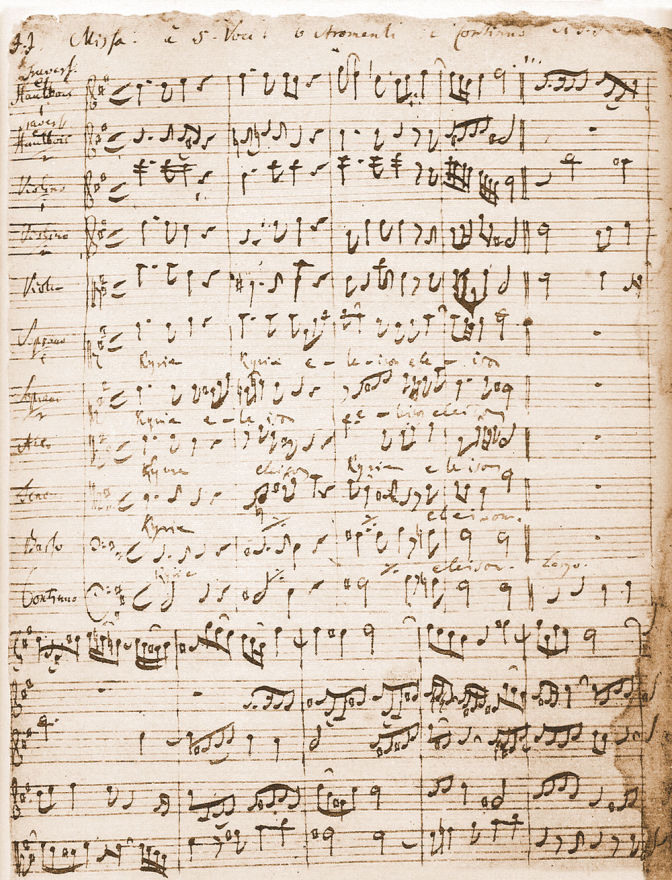
The structure and composition history of the Mass are complicated. The final work as we know it today comprises the main sections of the Catholic Mass ordinary—Kyrie, Gloria, Credo, Sanctus and Agnus Dei—in 27 separate movements for orchestra, choir and soloists. Bach composed the first two portions of the Mass, Kyrie and Gloria, in 1733. These are the portions that are common to both Catholic and Lutheran services and were theoretically usable at the Lutheran Thomaskirche in Leipzig where Bach was employed.
Bach presented those two movements to the incoming Elector of Saxony, a Catholic ruler, in 1733. He did not compose the remaining portions of the Mass, which were exclusive to the Catholic services, until the final years of his life. Some of the music was newly composed, but other movements were reworkings of music from earlier cantatas and other works.
It is remarkable that a piece written over so many years with many different sources would emerge as a unified work universally revered as one of Bach’s crowning achievements. But the entire B-minor Mass was probably never performed in Bach’s lifetime, and clearly would not have been suitable for a service in Bach’s church. It includes music written over 35 years of the composer’s lifetime, assembled and re-appropriated into a final form dictated by the structure of the Catholic Mass, by a resolutely Lutheran composer.
# # # # #
“A Magnum Opus”
Longmont Symphony Orchestra, Elliot Moore, conductor
With the Boulder Chamber Chorale, Vicki Burrichter, direcotr; Dawna Rae Warren, soprano; Elijah English, countertenor; Joseph Gaines, tenor; and Andy Konopak, baritone
- J.S. Bach: Mass in B minor
7 p.m. Saturday, April 12
Vance Brand Civic Auditorium
# # # # #
The Takács Quartet and guitarist Nicoló Spera will come together over the weekend for concerts in Grusin Hall on the CU Campus (Sunday, April 13, and Monday, April 14; details below).
Their joint performance of the Quintet for guitar and string quartet by Giacomo Susani will be framed by two works from the standard string quartet repertoire, Haydn’s late Quartet in G major, op. 77 no. 1, written in 1799; and Dvořák’s Quartet in F major, op. 96, composed during the composer’s visit to the Czech immigrant community of Spillville, Iowa, in the summer of 1893.
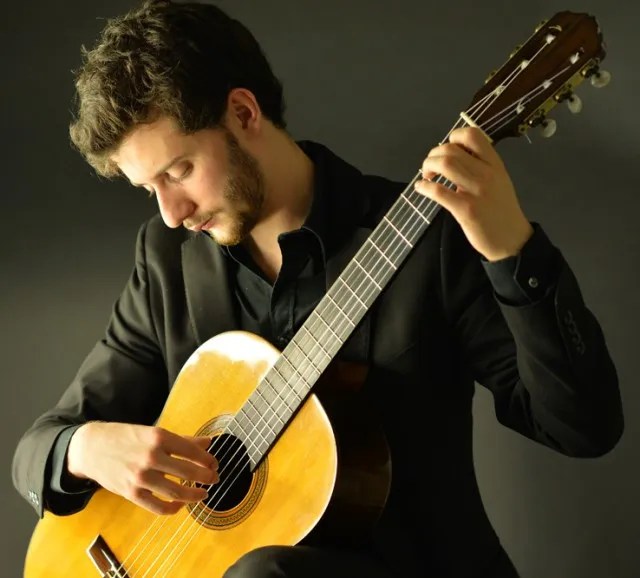
Susani keeps very busy, with a performing career on guitar in Europe and the United States, a compositional career, and as artistic director of the Homenaje International Guitar Festival in Padova, Italy. As a performer he has released four recordings on the Naxos label. He conducted the world premier of his Concerto for 10-string guitar and orchestra in Boulder this past December, with Spera and the Boulder Chamber Orchestra. The Guitar Quintet was written in 2016.
Listeners may be familiar with the string and guitar quintets of Luiggi Boccherini, the best known but not the only works for that combination of instruments. There were several written in the 20th century, including one by Italian composer Mario Castelnuovo-Tedesco. That work is recognized in the last of Susani’s three movements, “Omaggio a Castelnuovo-Tedesco” (Homage to Castelnuovo-Tedesco). The first two movements are titled respectively “La Tempesta” (The storm) and “Liberamente, non trope lento” (Freely, not too slow).
At the age of 67 Haydn began a set of string quartets commissioned by the wealthy aristocratic patron and music lover Prince Lobkowitz. He completed two quartets of a likely set of six, but other projects intervened before he could complete a larger set. The two quartets were published as Op. 77 nos. 1 and 2, and were his final completed string quartets. He only completed two movements of another planned quartet, published in 1806 as Op. 103.
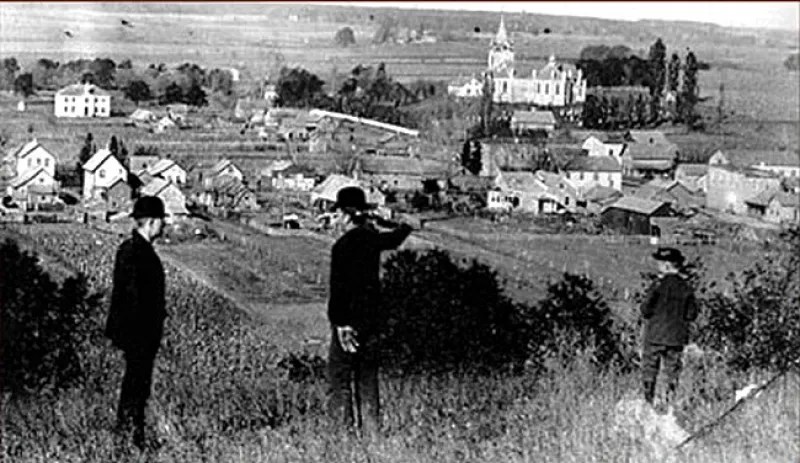
Dvořák wrote many of his best known pieces in the United States. He spent the years 1892–95 as director of the National Conservatory of Music in New York. Intrigued by the idea of a village of Czech immigrants on the Western plains, he spent an idyllic summer in the tiny village of Spillville, Iowa, in 1893. While in the United States he wrote his Symphony No. 9, “From the New World” and his Cello Concerto in New York, and a string quartet and string quintet, now known as the “American” Quartet and Quintet, in Spillville.
Spillville was very much a Czech community, with the people speaking Czech and observing Czech customs that Dvořák found congenial. He frequently played the organ at the local church, which is still standing, and made many friends in the community.
Dvořák was deeply moved in Spillville, especially by the emptiness of the prairie, perhaps reflected in the Quartet’s melancholy slow movement, and the singing of birds, quoted in the scherzo. Attempts to connect the Quartet’s uncomplicated musical style to American influences have met skepticism. The composer himself once wrote, “I wanted to write something for once that was very melodious and straightforward . . . and that is why it all turned out so simply.
“And it’s good that it did.”
# # # # #
Takács Quartet with Nicoló Spera, guitar
- Haydn: String Quartet in G Major, op. 77 no. 1
- Giacomo Susani: Quintet for Guitar and String Quartet
- Dvořák: String Quartet in F Major, op. 96 (“American”)
4 p.m. Sunday, April 13, and 7:30 p.m. Monday, April 14
Grusin Hall
In-person and streaming tickets HERE.
 Sharps & Flatirons
So is it Spera or Susani on guitar?!
Sent from my iPad
Were you confused by the picture of Susani with a guitar? The article states that Spera and the Takács Quartet together will PERFORM the quintet, which was WRITTEN by Susani. I decided to give information on the composer because I believe that he is not well known here. Susani is professionally both a composer and a performer, and the only suitable promotional photo that I could use was with his guitar, so that is the one I used. I’m sorry if this is confusing.