News on the boil in the World of Classical Music

Controversy and a milestone at the MET; Trouble in Atlanta

By Peter Alexander

It’s the unwatched pot that boils, and if you haven’t been watching, there’s been lots of boiling going on in the classical music world this fall.
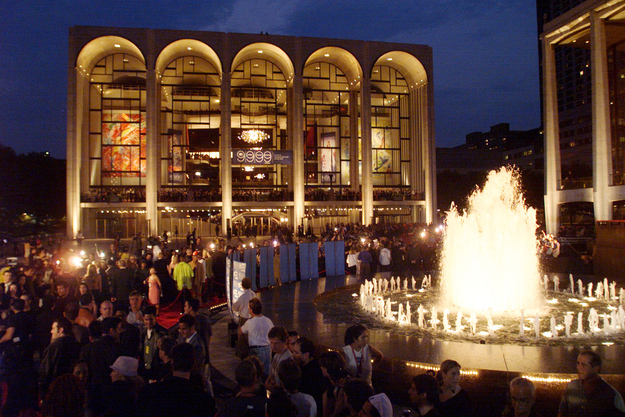
Lincoln Center Plaza and the Metropolitan Opera House

Lincoln Center Plaza and the Metropolitan Opera House

This summer I reported several times on the labor dispute that threatened to cause a lockout and the cancellation of the season for the Metropolitan Opera. Happily, the lockout was averted, but that has not kept the Met from being a center of controversy.

As part of their season, the Met had announced performances of The Death of Klinghoffer by John Adams. This opera was composed in 1991 on the subject of the 1985 hijacking of the cruise ship the Achille Lauro by members of the Palestinian Liberation Front and the subsequent murder of Leon Klinghoffer, a wheelchair-bound 69-year old Jewish American tourist whose body was dumped into the Mediterranean.
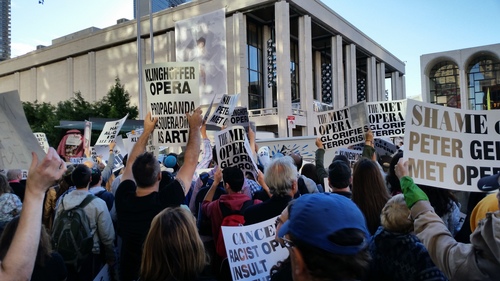
Klinghoffer protesters

Protesters outside the Metropolitan Opera House in Lincoln Center

The opera was originally created with the cooperation of Klinghoffer’s family, who later objected that it glorified the hijackers. Nevertheless, the opera has been performed uneventfully in several locations—but the Metropolitan is not just any opera company, and New York is always in the spotlight. And it is an especially important location for American Jews. So when Met General Manager Peter Gelb announced that The Death of Klinghoffer would be featured on the Met’s Live in HD series broadcast live to movie theaters around the world, there were protests and loud criticism of the Met. The claim was repeatedly made that the opera, by humanizing, or glorifying (depending on your point of view) the killers, was anti-semitic.

Scene from 'The Death of Klinghoffer.' Photo by Ken Howard/Metropolitan Opera

Scene from ‘The Death of Klinghoffer.’ Photo by Ken Howard/Metropolitan Opera

Eventually, The Death of Klinghoffer was dropped from the Live in HD broadcast series, but it remained on the Met season. It opened last Monday (Oct. 20), with a phalanx of protesters filling the Lincoln Center plaza, some minor disturbances inside the house, and generally glowing reviews for the work and the performance.

For anyone who cares about opera, or gives much thought to contemporary art forms, The Death of Klinghoffer has been a remarkable case study. Regardless of your personal opinion, the decision to write an opera on such a volatile contemporary subject, and the decision to produce it at the Met, are worthy of serious consideration and discussion. Rather than reconstruct what people who have seen the production have said, here are links to more about this remarkable opera and production.

Just about the best review and report of opening night was that written by Alex Ross for The New Yorker.  Anthony Tommasini wrote an even longer report in the New York Times.  And David Patrick Stearns had a slightly different take on the events for the Philadelphia Inquirer.

There are many more reviews. The Chicago Tribune complied a handy list of reviews and articles. Almost all are worth reading.
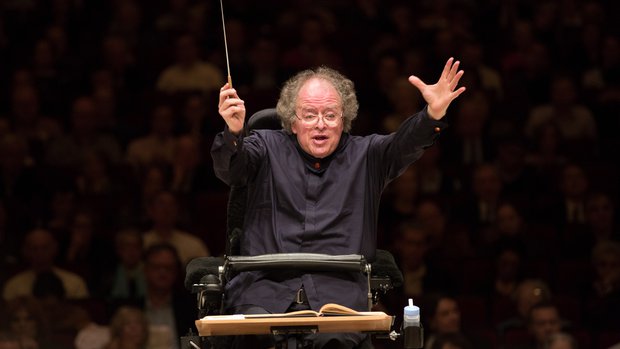
James Levine leading the Met Orchestra in 2013. (AP Photo/Metropolitan Opera, Marty Sohl)

James Levine leading the Met Orchestra in 2013. (AP Photo/Metropolitan Opera, Marty Sohl)

But not all the news from the Metropolitan Opera has been disturbing, or even controversial. This past weekend, James Levine conducted his 2,500th performance at the Met—a staggering number that is just about beyond comprehension. It is more than twice as many as the next most prolific conductor in the Met’s history, the long-forgotten Arthur Bodanzky. The milestone performance was Mozart’s Nozze di Figaro (Marriage of Figaro) Saturday night—only the 77th time he has conducted that particular work. (Those and other numbers from Levin’s remarkable Met career were reported by the New York Times.)

This would be a remarkable milestone for any conductor, but in Levine’s case, it is especially noteworthy since it was only two years ago that it appeared his conducting career might be over. But he has come back from serious injuries, and is back at work in the opera house—to the relief of his fans and fans of the Met who have a hard time imagining how anyone can follow him and maintain the reputation Levine has created for the Met and its orchestra.
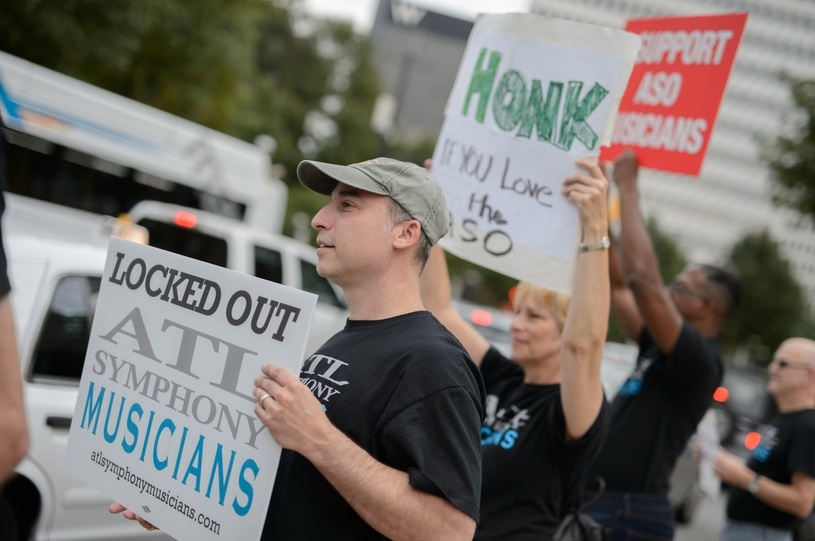
Daniel Laufer was among the supporters of the Atlanta Symphony Orchestra musicians who was picketing outside the Woodruff Arts Center in Atlanta. (Michael A. Schwarz/For the Washington Post)

Daniel Laufer was among the supporters of the Atlanta Symphony Orchestra musicians who was picketing outside the Woodruff Arts Center in Atlanta. (Michael A. Schwarz/For the Washington Post)

While the Met was resolving a labor dispute and averting a lockout this summer, the Atlanta Symphony has been dealing with a lockout and at least a partial cancellation of their season.

The sticking point in Atlanta is the proposal by management to further cut the size of the orchestra, which had previously been reduced to 88 musicians from an original compliment of 95 players. As a means of fighting deficits, the management wanted full control of the orchestra’s size and proposed cutting the orchestra—largely by leaving positions unfilled—to 76 players. Both the players and the orchestra’s conductors said that the Atlanta Symphony, an honored ensemble that has counted Robert Shaw and Yoel Levi among its music directors, could not maintain it’s standing with only 76 players.

After a bitter battle that eventually led to mediation, this one issue seems to have brought all negotiations to a halt. After the 15-month lockout nearly closed the Minnesota Orchestra permanently, this is very disheartening news. The most recent news about the ASO comes from the Atlanta Arts and Culture Blog, here and here. Earlier articles from NPR and the Washington Post provide more of the background.

A second major orchestra lockout in only a few years is bad news for America’s musicians, and those who support them and their work. The only silver lining from here is that we are not facing a similar crisis in Boulder, and we still have great riches of orchestral music to chose from. But it is interesting background for the still unfolding issue in Denver, concerning the Colorado Symphony’s future in Boettcher Concert Hall—where the pot, watched or not, boils on.

Barking pirates, Barbies and a parasol

Gilbert and Sullivan’s Pirates of Penzance opens at CU

By Peter Alexander

Paul Kroeger as Frederic and Frank Fainer as the Pirate King in the CU production of 'Pirates of Penzance' (Photo by Glenn Asakawa/University of Colorado)

Paul Kroeger as Frederic and Frank Fainer as the Pirate King in the CU production of ‘Pirates of Penzance’
(Photo by Glenn Asakawa/University of Colorado)

Watch for the Barbie dolls.

They will be part of the fun when the University of Colorado Opera Theater, with two full casts of students and the CU orchestra in the pit, presents Gilbert and Sullivan’s Pirates of Penzance.

Not that the production will be a post-modern reinterpretation of the classic British musical comedy.

“The pirates will be pirates,” stage director and CU director of opera Leigh Holman says. “No Martians. Nothing on the moon. It’s straightforward and very colorful.”

General Stanley, one of the central comic characters, will definitely be a general, although British humor being what it is, he will be, Holman says, “a general with a parasol.”

The pirates will even have a ship. “Pirates of Penzance is not usually done on a ship,” she explains. “But I told the [set] designer [Peter Dean Beck] I want those guys to be on a ship, so we’ve got ropes hanging and they can swing from the ropes.”

Read more in Boulder Weekly—including Malibu Barbie!

# # #

Rex Smith as Frederic, Linda Ronstadt as Mabel, and Kevin Kline as the Pirate King in a famous 1980 production of 'Pirates of Penzance' that was a favorite of CU Opera director Leigh Holman.

Rex Smith as Frederic, Linda Ronstadt as Mabel, and Kevin Kline as the Pirate King in a famous 1980 production of ‘Pirates of Penzance’ that was a favorite of CU Opera director Leigh Holman.

Pirates of Penzance
CU Opera Theater
Leigh Holman, stage director
Nicholas Carthy, music director
Peter Dean Beck, deisgner

7:30 p.m. Friday and Saturday, Oct. 24 and 25
2 p.m. Sunday, Oct. 26
CU Macky Auditorium

Get tickets to the CU Opera production of Pirates of Penzance here.

Winners and Losers

One last assessment of the Metropolitan Opera’s labor agreements

By Peter Alexander

Who won and who lost at the Met? It depends.

THe Metropolitan Opera House (interior)

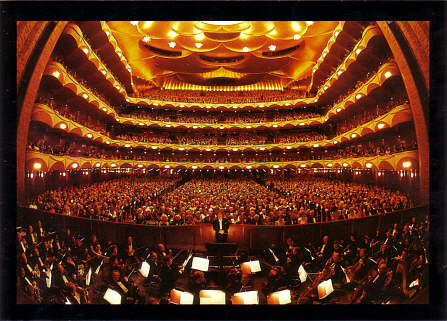
The Metropolitan Opera House (interior)

On Wednesday (Aug. 20), the New York Times reported on the agreement that was reached with the third of the Metropolitan Opera’s three major unions, Local 1 of the International Alliance of Theatrical Stage Employees, representing stagehands, carpenters and electricians.

The other two major unions, representing the orchestra and the chorus members, had reached agreement with the Met early on Monday. (See my post on that agreement here.) And an agreement with the remaining unions at the Met was reached on Thursday night, as reported again by the New York Times. These include unions representing scenic artists and designers, the costume department, and others.

These agreements end the conflict between management that has raged for several months and resulted in Peter Gelb, the Met’s general manager, withdrawing the threat of a lockout. He has confirmed that the Met will open its fall season as scheduled on Sept. 22, with a performance of The Marriage of Figaro conducted by James Levine.

Lincoln Center Plaza and the Metropolitan Opera House

Lincoln Center Plaza and the Metropolitan Opera House

The deal with the musicians’ unions called for an immediate 3.5 percent pay cut, followed by another 3.5 percent six months later, and no raise until the fourth year of the contract. The agreement with the stagehands has been reported to provide comparable cuts in labor costs, although the deal had to be written differently because of the different work rules and benefits packages in the contract with that union’s workers, and because their agreement is for six years instead of four.

But if it sounds like the concessions from the unions—the first pay cut accepted by the Met’s union workers in many years—represent a win by the management, that would be a hasty conclusion, for three reasons. In the first place, Peter Gelb had demanded a 17 percent pay cut from labor, and said that the Metropolitan would have to close otherwise. So the much smaller size of the pay cut than what Gelb was demanding makes his “win” look much less significant.

In the second place, the unions won some battles as well, in that the settlement calls for management to make its own, comparable cuts in the budget. The unions had argued that extravagant production expenses were part of the problem, and while there simply were not enough savings to be made in production costs to solve the Met’s budget woes, the fact that the final agreement took the form it did implies that the federal mediator for the negotiations with the musicians found merit in the union’s complaints. (The stagehands had separate negotiations that did not involve a mediator.)

Finally—and this speaks directly to the union’s complaints about Gelb’s leadership—the deal calls for an independent

Peter Gelb, general manager of the Met

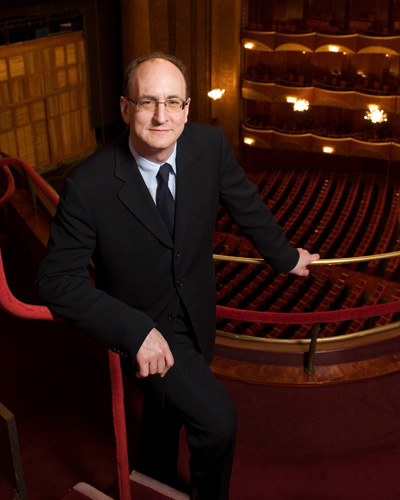
Peter Gelb, general manager of the Met

monitor to keep an eye on the Met’s budget and expenses. This must be a particularly galling concession for Gelb, whose rather freewheeling, pop culture approach to opera was supposed to bring in larger, younger audiences and save the Met.

Apparently he has not accomplished either of those goals.

The question remains what effect this will have on regional opera throughout the country and here in Colorado. Will this settlement make it possible for other companies to ask for pay cuts from their employees, and to reign in costs in other ways? Will it put pressure on other companies to trim their production costs, or to make their finances more transparent, as the Met was forced to do in the course of negotiations?

For now, leaders of opera companies in this area have declined to comment on the Met’s settlement, although they do say they are keeping an eye on the situation.

 # # # # # 

For other perspectives of the Metropolitan Opera and it’s labor settlement, read these articles:

Jennifer Maloney’s highly complementary evaluation of Peter Gelb’s leadership of the Met can be read here.

Her previous, more balanced, assessment of the deal is here.

Blogger Greg Sandow’s more critical take on Gelb can be found in three installments linked from here.

The cheeky opera-fanatic blog “Parterre Box” has posted a copy of the agreement between the Met and the American Guild of Musical Artists, representing the Met Chorus, here.

The gossipy blogger Norman Lebrecht’s take on the settlement, which he sees as a “surrender” and a “humiliation for Peter Gelb,” can be found here

It’s about to get even nastier at the Metropolitan Opera

General Manager Peter Gelb threatens a lockout

By Peter Alexander

Metropolitan Opera House, Lincoln Center, New York

Metropolitan Opera House, Lincoln Center, New York

The New York Times reports today that Metropolitan Opera General Manager Peter Gelb is threatening to lock out workers from the Met within a week:

The labor strife at the Metropolitan Opera took on a new urgency Wednesday when its general manager, Peter Gelb, sent the company’s orchestra, chorus, stagehands and other workers letters warning them to prepare for a lockout if no contract deal is reached by next week.

This is a continuation of the struggles at the Met that I reported earlier. This is in part a New York labor dispute, in which every side will act tough up to the last minute. But in the case of the Met, it is more than that.

In fact, a lot of the fight is about Gelb himself. There has been criticism of his leadership almost from the day he took over as the Met’s general manager in August 2006, particularly over the lavish productions he has mounted. These have included Robert Lepage’s mechanically lavish but visually dull staging of Wagner’s Ring Cycle—a production so immense that the Met had to spend something between $1.5 and $5 million just to reinforce the floor. The production as a whole cost something around $16–20 million.

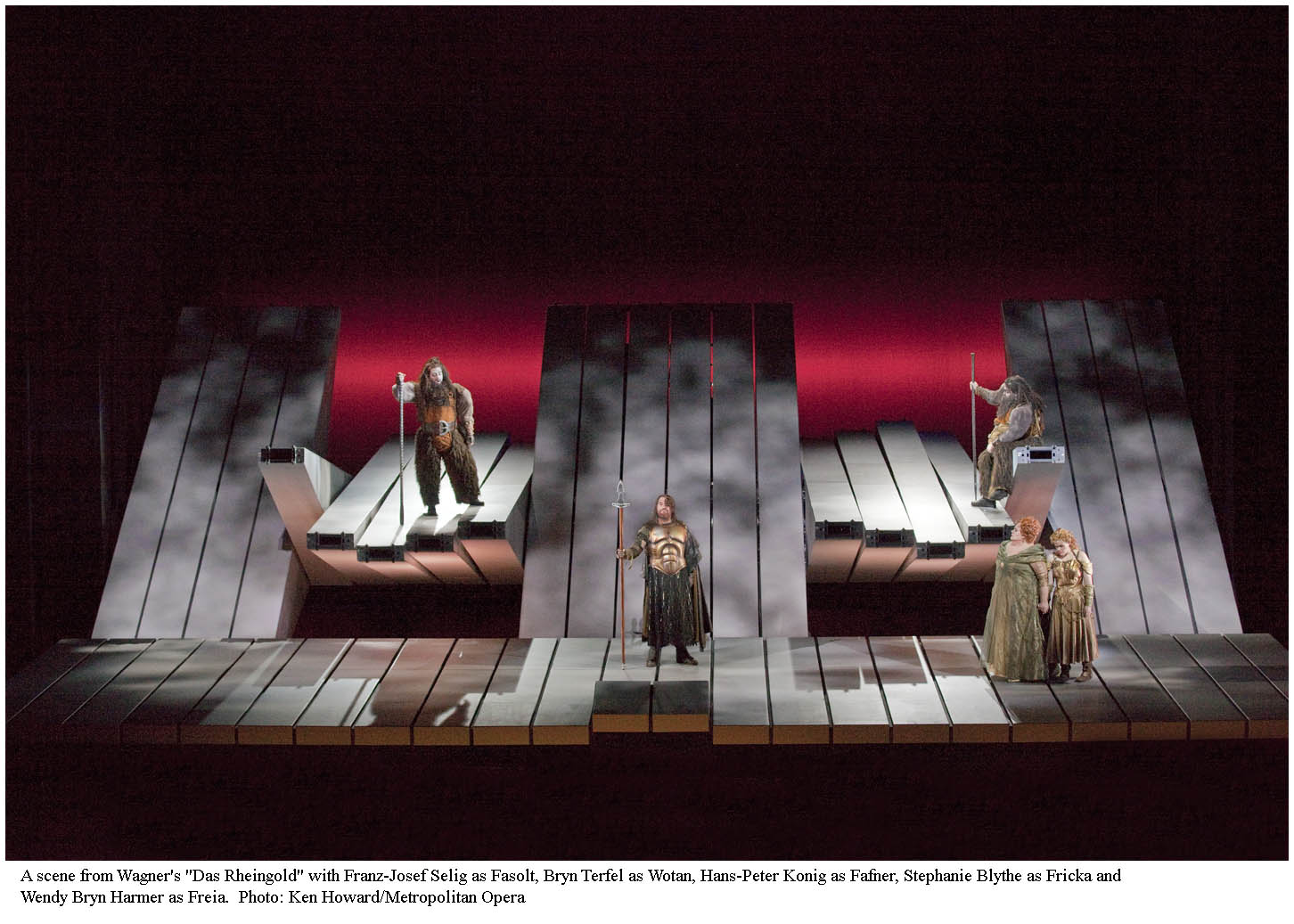
A scene from Wagner's "Das Rheingold" in Robert Lepage's production. Photo: Ken Howard/Metropolitan Opera

Criticism of the production has been harsh, with the New York Times critic Anthony Tommasini calling it “the most frustrating opera production I have ever had to grapple with” and The New Yorker’s Alex Ross declaring that “Pound for pound, ton for ton, it is the most witless and wasteful production in modern operatic history.” And those were among the kinder assessments.

As a result, many critics and others have called for a return to the Met’s more traditional Ring staging by Otto Schenk—a move that would concede that the Lepage staging was a a $16-million gamble that failed.

Rigoletto, production by Michael Mayer at the Metropolitan Opera. Piotr Beczala at the Duke of Mantua. Photo: Sara Krulwich, New York Times.

Rigoletto, production by Michael Mayer at the Metropolitan Opera. Piotr Beczala as the Duke of Mantua. Photo: Sara Krulwich, New York Times.

Another controversial production was of Verdi’s Rigoletto, placed in Las Vegas. Featuring a Sinatra-like lounge singer for the Duke, a Don Rickles-like insult comic for Rigoletto, and even a gratuitous pole dancer in the final scene, it became known as the “Rat-Pack Rigoletto.” 

Gelb justified his approach as a way of attracting new, younger, affluent and more hip audiences to the Met. But the history seems to be that these splashy productions attracted a lot of attention when they opened, but audiences fell off significantly when they were revived a year or more later. And that represents a situation that a major opera house like the Met cannot sustain. Productions of the standard operas have to remain profitable, year in and year out.

So there are legitimate questions about the direction of the Met under Gelb’s direction. And all of that controversy is coming to a head as the union contract deadline approaches. Gelb is not one to back down, especially with his own reputation part of the battle, and New York unions are not known for their compliance.

It’s hard to foresee an easy settlement. But it would be a great shame if Gelb’s tenure as director, which was supposed to “save” the Met as it faced changing demographics and an uncertain future, were to end up damaging one of the country’s most esteemed cultural and musical institutions. And while none of this has direct impact on Colorado’s musical culture, any longterm troubles at the Met will assuredly affect the entire operatic world, both nationally and internationally.

Stay tuned.

Opposite poles attract success at Central City Opera

Dead Man Walking and Marriage of Figaro are worth the trip into the mountains.

By Peter Alexander

Central City Opera House. Photo by Mark Kiryluk.

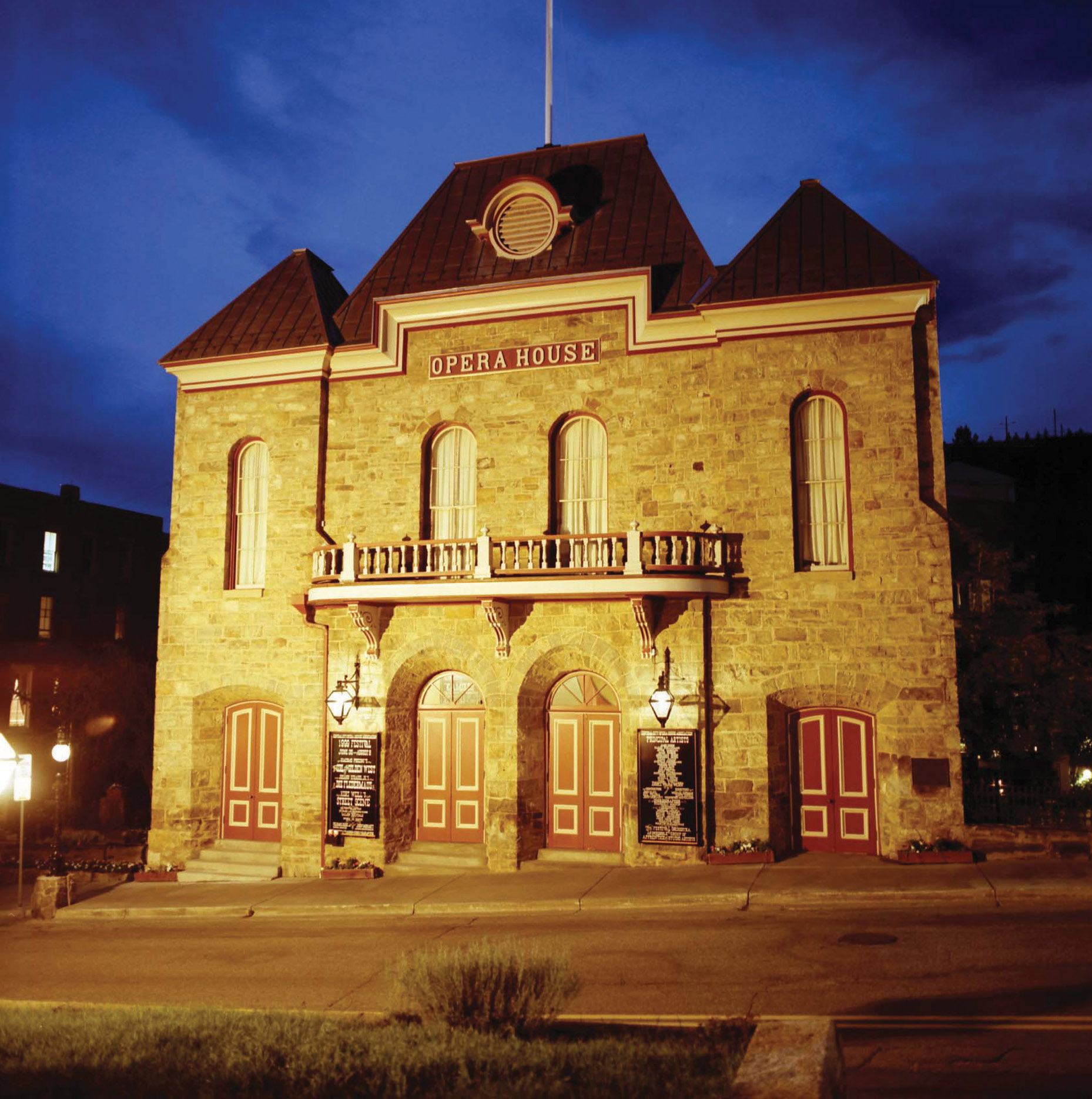
Central City Opera House. Photo by Mark Kiryluk.

The two productions currently running at the Central City Opera (CCO) are not so much contrasting shades of opera as opposite poles.

At the dark end of spectrum is Jake Heggie’s Dead Man Walking, a setting of playwright Terence McNally’s powerful libretto, based on the book by Sister Helen Prejean. The true story of a nun’s efforts to reach out to a brutal death row convict, the book also inspired the 1995 film starring Susan Sarandon and Sean Penn. This seems unlikely material for operatic treatment—the drama is largely psychological and very little happens in the conventional sense—but Heggie and McNally have created a gripping work of musical theater that keeps the audience riveted, even as they know the inevitable outcome.

The opposite pole is represented by Mozart’s Marriage of Figaro, one of the greatest and most luminescent operatic explorations of human emotions ever created. A politically and socially dangerous work written on the eve of the French Revolution, it cloaks its subversive message with the light of compassion and humor in Mozart’s transcendent setting of a masterful libretto by Lorenzo da Ponte.

As different as they are, these works are given wholly satisfying and powerfully moving productions by the Central City Opera company. With strong casts, well conceived productions and thoughtful direction, both operas are well worth the drive into the mountains—even if you don’t need an excuse to drive into the mountains.

In his notes for Dead Man Walking, director Ken Cazan observes that the opera “doesn’t tell the viewer what to think and feel. . . . [It] poses questions, not answers.” Indeed, one of the most remarkable things about the work is how well it conveys understanding and sympathy for all of the characters, even the murderer Joseph De Rocher.

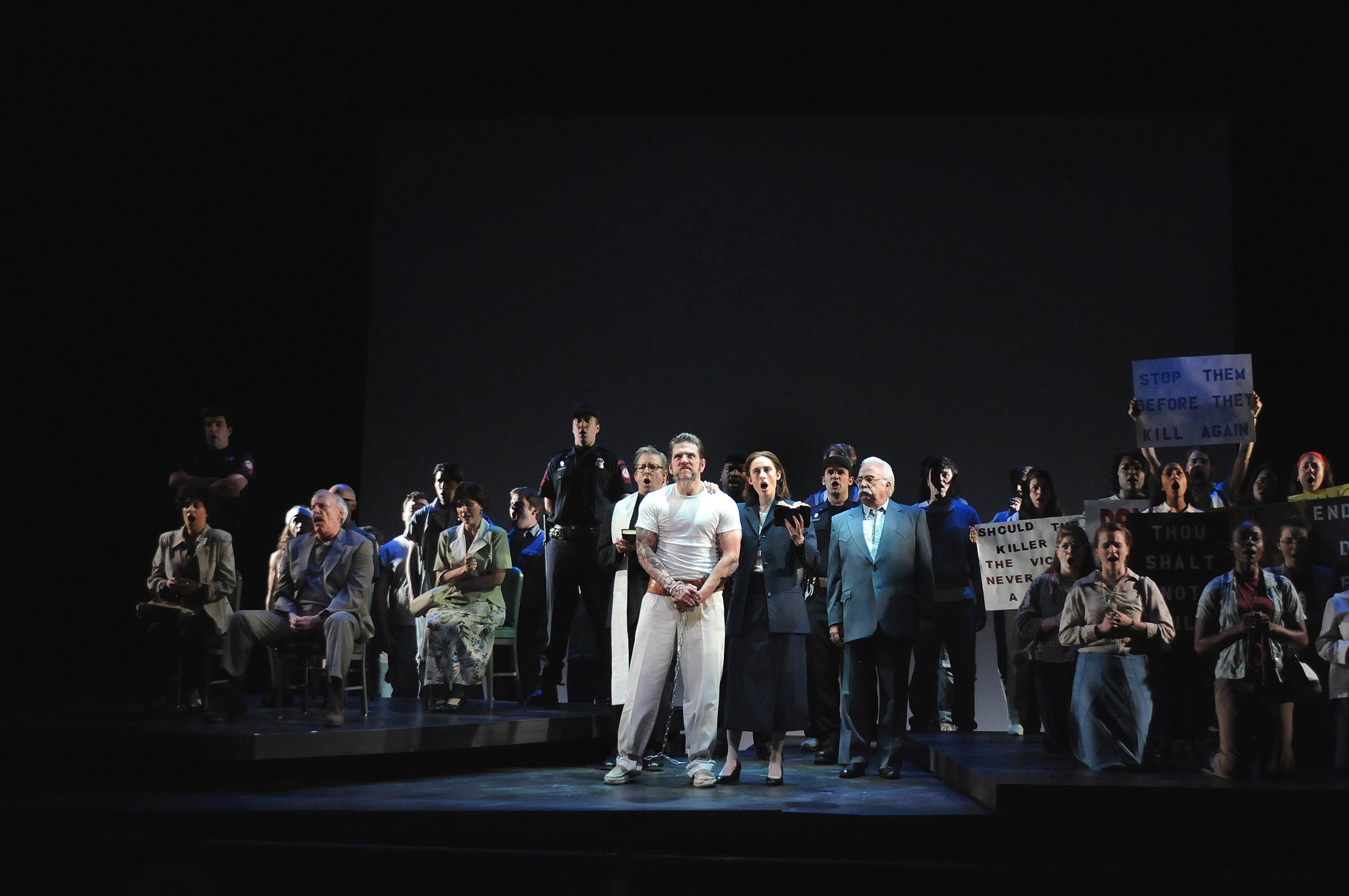
Dead Man Walking execution scene. Photo by Mark Kiryluk.

Dead Man Walking execution scene. Photo by Mark Kiryluk.

If the work has a flaw, it is the sustained intensity of its emotional expression. Though unavoidable considering the subject matter, the unrelenting high tension of the music leaves no scope for the shattering musical climax we might expect. As a result, the ending, when De Rocher finally faces his execution, provides a dramatic resolution but not a musical one. The final scene, where Sister Helen returns to the tender hymn that opened the opera, “He Will Gather Us Around,” rounds out the opera on a quiet note that feels inconclusive.

But perhaps that reflects the reality that the questions faced by the opera’s characters—questions of guilt, of punishment, of retribution and redemption—remain unanswered for the characters and for us, as they must always be.

As the murderer De Rocher, Michael Mayes gave a committed and muscular performance—even singing while doing pushups in one scene. His voice conveyed menace and danger from his very first entrance, only softening in the second act when he sang of being “Down by the river with your woman.” The transformation from the threatening figure of Act I to someone who could admit his fear and his guilt and tell Sister Helen “I love you” at the end is an accomplishment of both vocal and dramatic artistry.

Jennifer Rivera ably filled the role of Sister Helen, who is onstage for most of the opera. The throbbing orchestral accompaniment, the range and contours of her part push her into an intensity of expression that make vocal control difficult. Fortunately, she was able to convey small contrasting moments of humor and tenderness as well as the overarching spiritual struggle that defines her role.

Of the many supporting roles, several stand out: Maria Zifchak as De Rocher’s mother was especially moving in the final scenes when she has to face her son’s death; and Robert Orth as Owen Hart commanded attention as an angry father whose daughter died at De Rocher’s hands, but who manages to move toward acceptance by the end.

Other, more one-dimensional supporting roles are well handled: Thomas Hammons as the warden; Jason Baldwin as the unsympathetic Father Grenville; Karina Brazas, Claire Shackleton and Joseph Gaines as mourning parents. Jeanine De Bique was on target but vocally strained as Sister Rose. John David Nevergall added a light touch as the Motorcycle Cop.

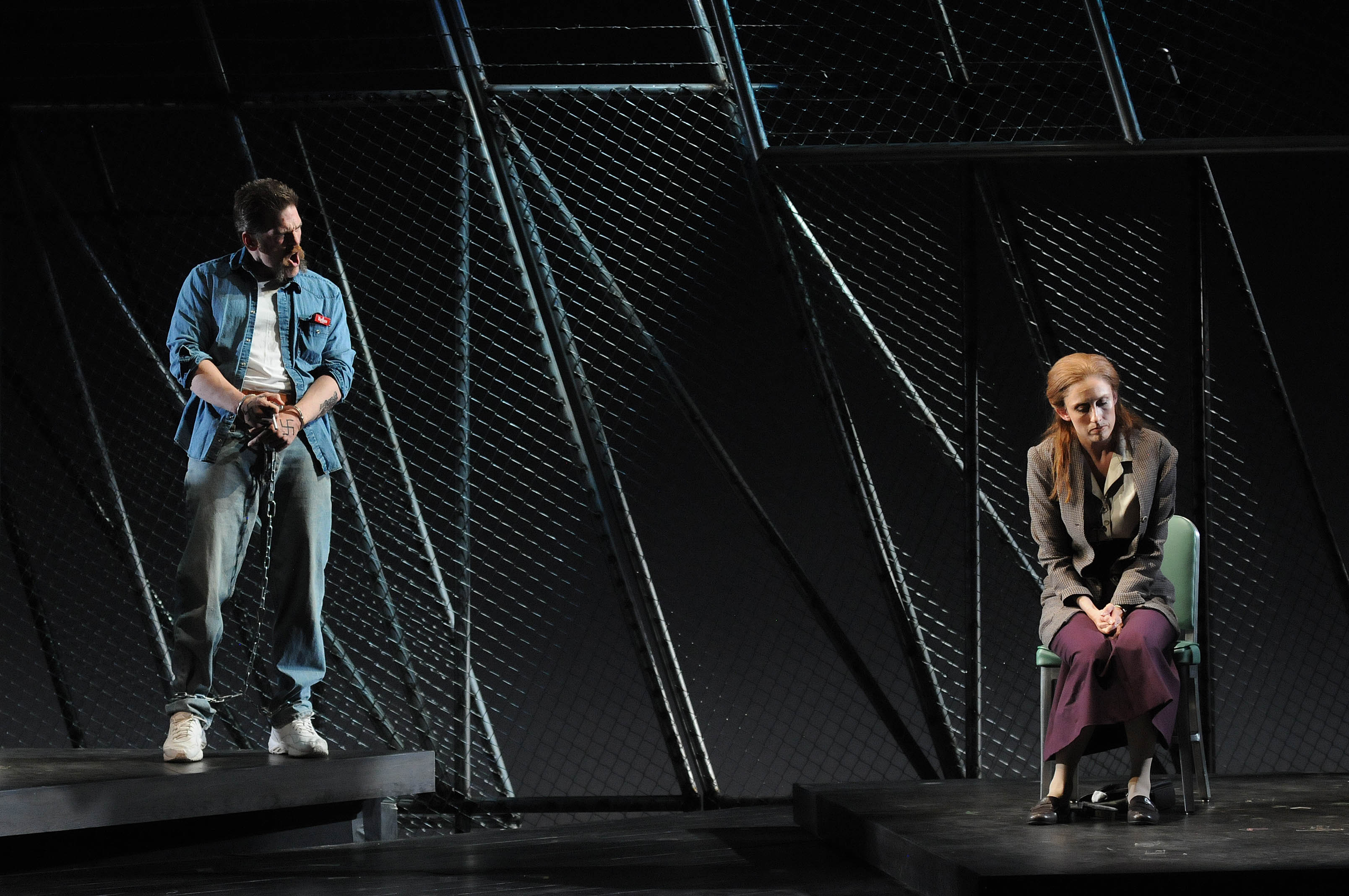
Dead Man Walking: Michael Mayes as Joseph De Rocher and Jennifer Rivera as Sister Helen Prejean. Photo by Mark Kiryluk.

Dead Man Walking: Michael Mayes as Joseph De Rocher and Jennifer Rivera as Sister Helen Prejean. Photo by Mark Kiryluk.

The coloring of vowels by the singers to suggest the Louisiana locale of the story was only intermittently successful, and considering the universality of the questions we are asked to ponder, I am not sure that it is necessary.

One of the pleasures of opera at Central City is seeing the creative ways the company makes use of its limited stage and wing space. Alan E. Muraoka’s minimalist stage designs were highly effective, using angled fences to convey the enclosed space of the prison as well as the emotionally closed world of the convicts. In other scenes, pieces of furniture—two chairs, a table and a chair—or the execution gurney that De Rocher is strapped to, Christ-like, at the end, were sufficient to set the changing scenes and illuminate the changing relationships.

Ken Cazan’s direction was efficient and effective, especially in making use of the limited space to convey relationships among the principal characters. John Baril lead Central City’s fine orchestra with a firm hand.

# # # # #

CCO’s production of The Marriage of Figaro has been updated from the 18th century to Spain in the 1920s. Director Alessandro Talevi justifies this through the political situation of the time. “Spain . . . .was deeply conservative and religious in conflict with dynamic progressive movement of secularism,” he writes, establishing a parallel with the pre-revolutionary Europe of Mozart’s time.

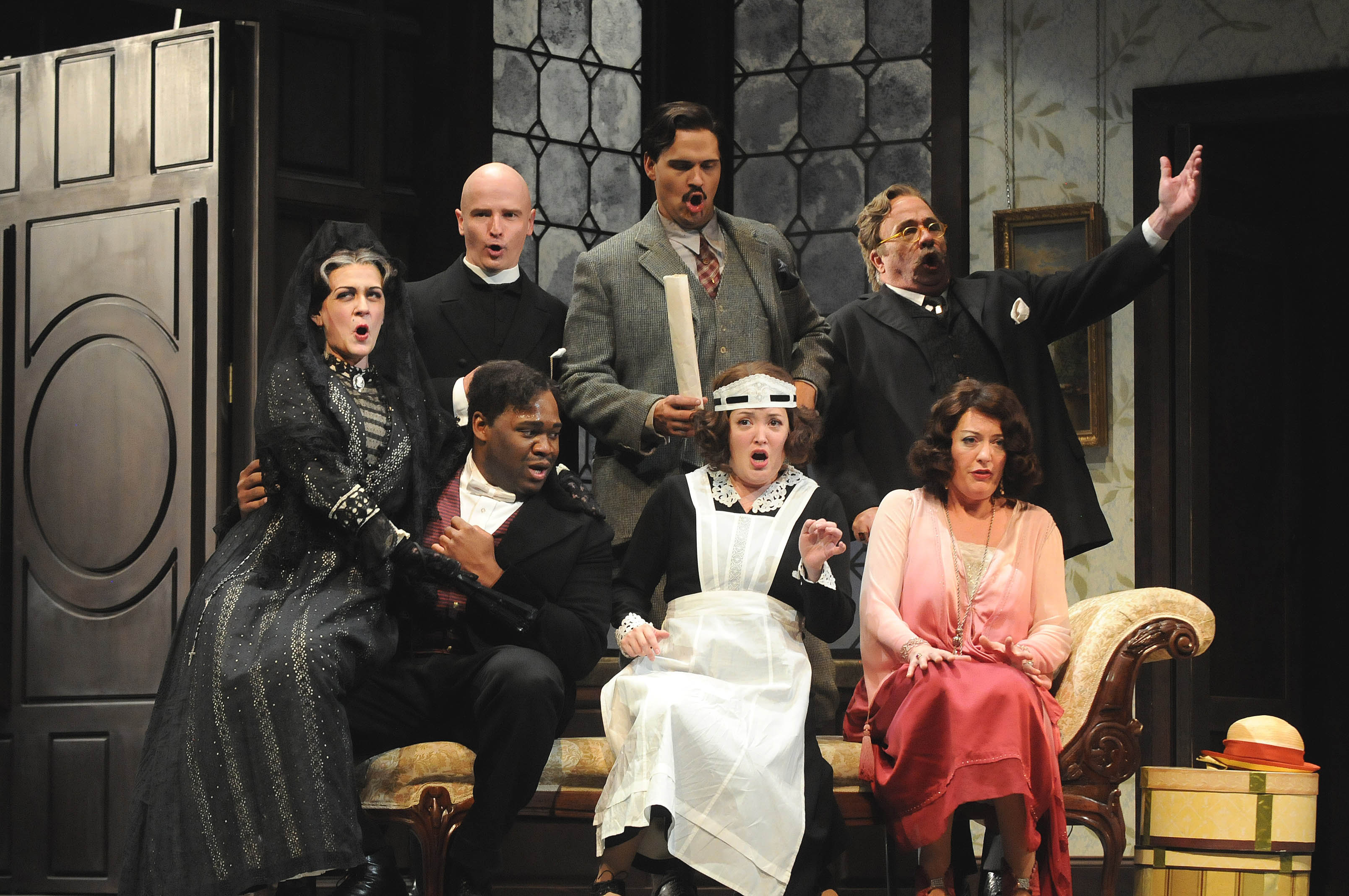
Act II Finale, Marriage of Figaro. Photo by Mark Kiryluk

Act II Finale, Marriage of Figaro. Photo by Mark Kiryluk

I am not sure the intellectual justification is necessary, or even helps for that matter.

For the most part the setting and costumes were successful, the 1920s being long enough ago that audiences readily accept the social hierarchies and conflicts of the plot. That said, I do have one reservation, in that British costume dramas are now so familiar to American audiences that many must have thought of Downton Abbey, and the Count reminded me inescapably of John Cleese in Fawlty Towers. These resonances do not enhance Mozart’s masterpiece.

The one essential of any production of the opera is a Figaro who can command the stage. CCO is fortunate to have a vocally secure Figaro in Michael Sumuel, whose genial presence was always welcome onstage. He sang expressively, handling Figaro’s wide range of emotions with aplomb.

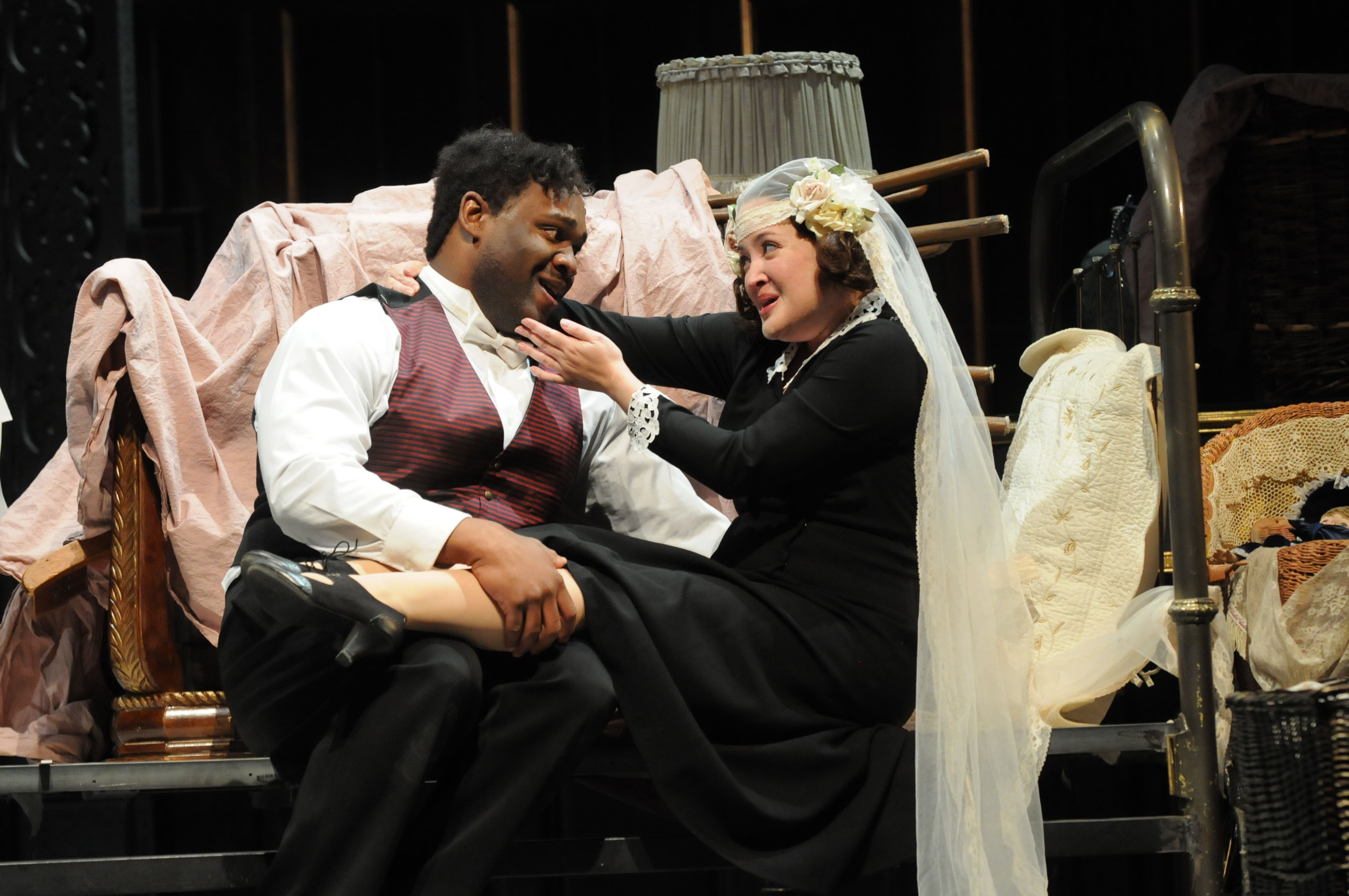
Michael Sumuel as Figaro and Anna Christy as Susanna. Photo by Mark Kiryluk.

Michael Sumuel as Figaro and Anna Christy as Susanna. Photo by Mark Kiryluk.

As Figaro’s intended bride Susanna, Anna Christy was a secure vocal partner in her many duets and ensembles with the other cast members. It is her relationship to each of the other principal characters that drives the plot, and Christy was a solid anchor for the drama. In spite of an occasionally nasal sound, her expressive phrasing brought her character warmly to life.

Another critical role is Cherubino, a “pants” role taken by a female mezzo as an adolescent boy who is in love with every woman he sees, from the young Barbarina and Susanna to his godmother the Countess. Tamara Gura was excellent from her first entrance, moving with all the awkwardness of a teenager. I found her unusually convincing throughout, and her aria “Voi che sapete” was especially charming.

As the Count, Edward Parks was perhaps too measured at the outset, neither commanding enough nor bombastic enough in the first two acts. He grew into the role, however, and by the end his confession and plea for forgiveness brought the opera to an effective end.

Anna Christy as Susanna and Sinéad Mulhern as the Countess. Photo by Mark Kiryluk.

Anna Christy as Susanna and Sinéad Mulhern as the Countess. Photo by Mark Kiryluk.

Sinéad Mulhern played the countess with grace and delicacy. Her lovely voice lost quality when pushed, but otherwise her portrayal was pleasing.

Madeleine Boyd’s flexible sets made effective use of the limited stage, even if they recalled an English country house. Talevi’s direction captured the comic qualities of the libretto perfectly, with one exception: the unnecessary comic business during the Count’s Act III aria badly upstaged the singer and undermined the emotion of the scene.

Conductor Adrian Kelly led the performance ably, setting solid tempos and supporting the singers well for most of the opera. The opening overture was full of energy but occasionally smudged, a minor flaw that recurred during the opera as well.

Unfortunately, Central City does not have a genuine harpsichord at its disposal—perhaps due to limited space in the pit or the difficult of caring for a natural instrument at 8,500 ft.—and has to resort to a Kawai electronic keyboard. This is unfortunate whatever the reason. The sound may be adequate for amateur keyboard players who fancy 18th-century music, but it is not suitable for a truly professional performance.

But make no mistake: All reservations aside, this is a sparkling production, full of comic energy and good spirits. The stark contrast between this Figaro and the darkly impressing Dead Man Walking only enhances them both.


Central City Opera

The Marriage of Figaro by Mozart
2:30 pm July 15, 16, 20, 22, 26
8:00 pm July 10, 12, 18
Central City Opera House
For tickets, click here

Dead Man Walking by Jake Heggie
2:30 pm July 13, 19, 23, 25
8:00 pm July 11, 17
Central City Opera House
For tickets, click here  

Is the Metropolitan Opera in danger?

Opinions vary, but some details emerge.

By Peter Alexander

Metropolitan Opera House, Lincoln Center, New York

Metropolitan Opera House, Lincoln Center, New York

Anyone who follows the world of opera has noticed the news.

First, the San Diego Opera was going to close. Then it was saved by a public groundswell, and the longtime artistic director, Ian Campbell, was gone (and his massive salary as well). The company has announced a three-opera season for 2014–15.

Here in Colorado, Denver’s Opera Colorado had to cancel the anticipated premiere of Lori Laitman’s Scarlet Letter. The company was left with a two-opera “season,” including a bare-bones presentation of Carmen with the orchestra on stage and tickets prices up to $167.60. In case you have missed this saga, the various missteps by the company have been dissected by the Denver Post music critic, Ray Mark Rinaldi.

The troubles these two companies find themselves in are clearly financial. Unlike Broadway, where only most investments fail, opera has never been a money-making proposition; it has always depended upon financial support way beyond the cost of tickets, either from the court (early opera in Italy, 18th-century Versailles or Mozart’s Vienna, for example), or wealthy aristocrats (18th-century London), or the government (all across Europe today), or private donors (in the United States). To music historians, the financial ups and downs of opera in London are famously convoluted, with one scheme appearing after another, and all of them failing eventually. Handel, after all, turned to oratorios like Messiah because they were essentially opera on the cheap—all the singing, fewer singers and none of the sets and costumes. Similar histories crop up over and over again, wherever opera is produced. The culprits are usually the salaries of super-star singers, or the cost of fantastic productions, or sometimes the ineptitude of the management. Or all three. But the result is always, and always will be, the same: Opera costs way more to put on than any business can sustain without massive subsidies.

Here in the U.S., we like to imagine that our leading cultural institutions are rock solid. They have a dependable donor base and they are well run within a reasonable budget.

Dream on.

Peter Gelb, general manager of the Met

Peter Gelb, general manager of the Met

There is no larger or more established or more revered cultural institution in the country than the Metropolitan Opera, but its history is not one of outstanding management. (If you want details, read this fascinating, and disheartening, account by Johanna Fiedler.) And now Peter Gelb, the current general manager, says the company stands “on the edge of a precipice.” This comes after several massively expensive new productions mounted by the company, including one that required a $1.4 million investment just to reinforce the Met stage so it could support the set (Robert LePage’s Ring cycle; the cost of the reinforcement has been variously reported, up to $5 million), and another that included a $169,000 poppy field (Prince Igor). But amid criticism of his spending on those productions, Gelb says it is the labor costs that are out of control. They may or may not be, depending on your perspective, but it seems that is not the only problem.

It is no accident that Gelb is raising the alarm just when the Met is in negotiations with unions whose members make the company go, most notably the musicians’ union. This being New York, it is hard to separate facts from negotiating tactics, but a new analysis of the Met’s finances by the Wall St. Journal brings a few facts and some clarity to the issue. For one thing, we can learn that some of Gelb’s expensive and highly promoted new productions have not done well after their first year. But read the whole article to get the full meaning.

Another analysis can be found in The Guardian.

And just to put all of this in an even more interesting light, two of the world’s other major opera companies—the Chicago Lyric and Vienna State Opera—have recently announced that they have completed very successful, even record-breaking, seasons. The timing is at least inconvenient for Gelb and the Met management.

CCOperaLogoPreferredI will have more to say about the current condition of opera in a future article on the announcement of Central City Opera‘s 2015 season, which is going in an interesting new direction. In the meantime, for some perspective on the San Diego Opera and the Metropolitan’s various concerns, I recommend this article written by Los Angeles Times critic Mark Swed. Google searches on the principals and the organizations involved will turn up many more.