Michael Christie returns to CMF for concerts Thursday and Friday

Returns to a place “full of so many memories”

By Peter Alexander July 17 at 10:20 p.m.

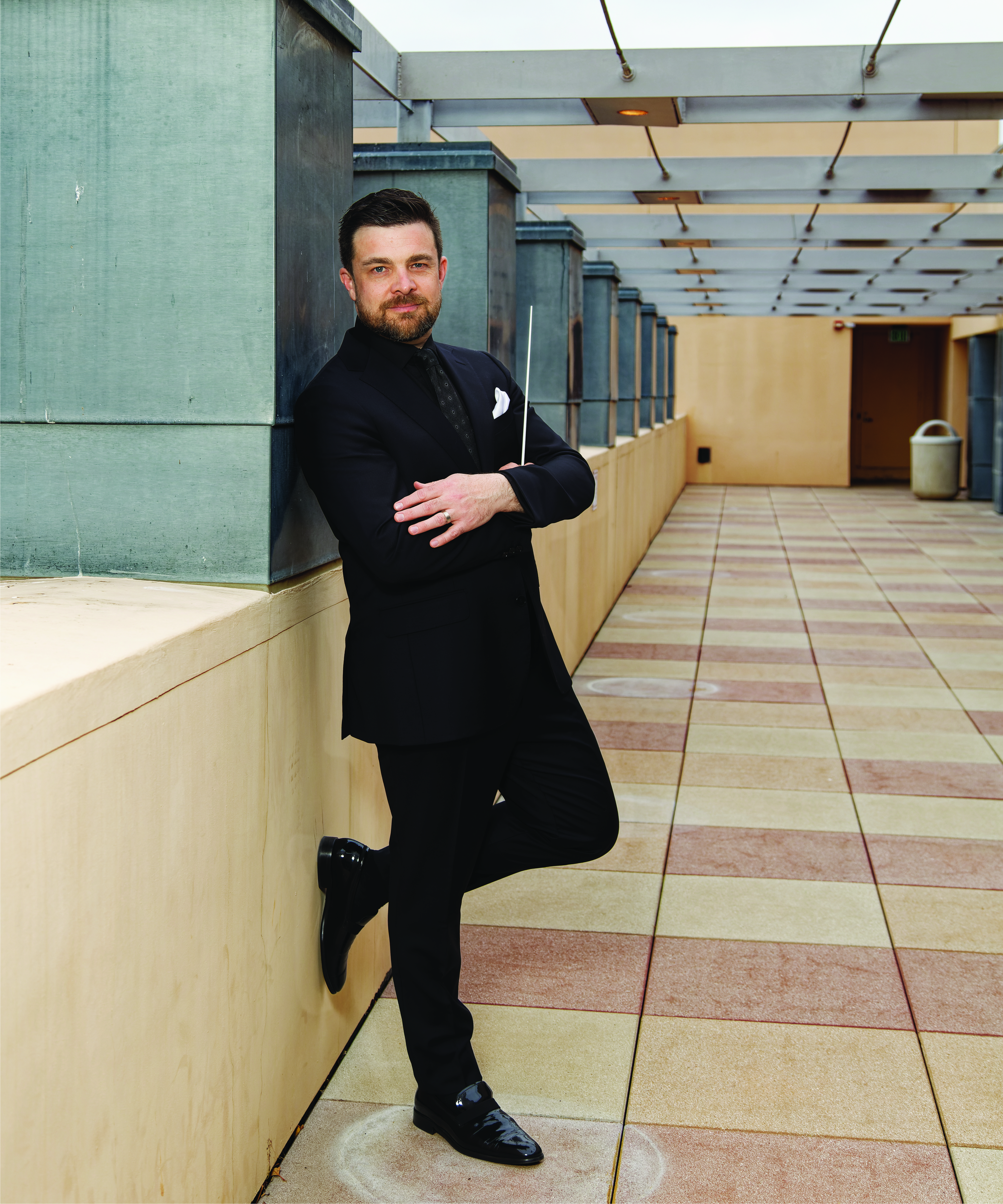
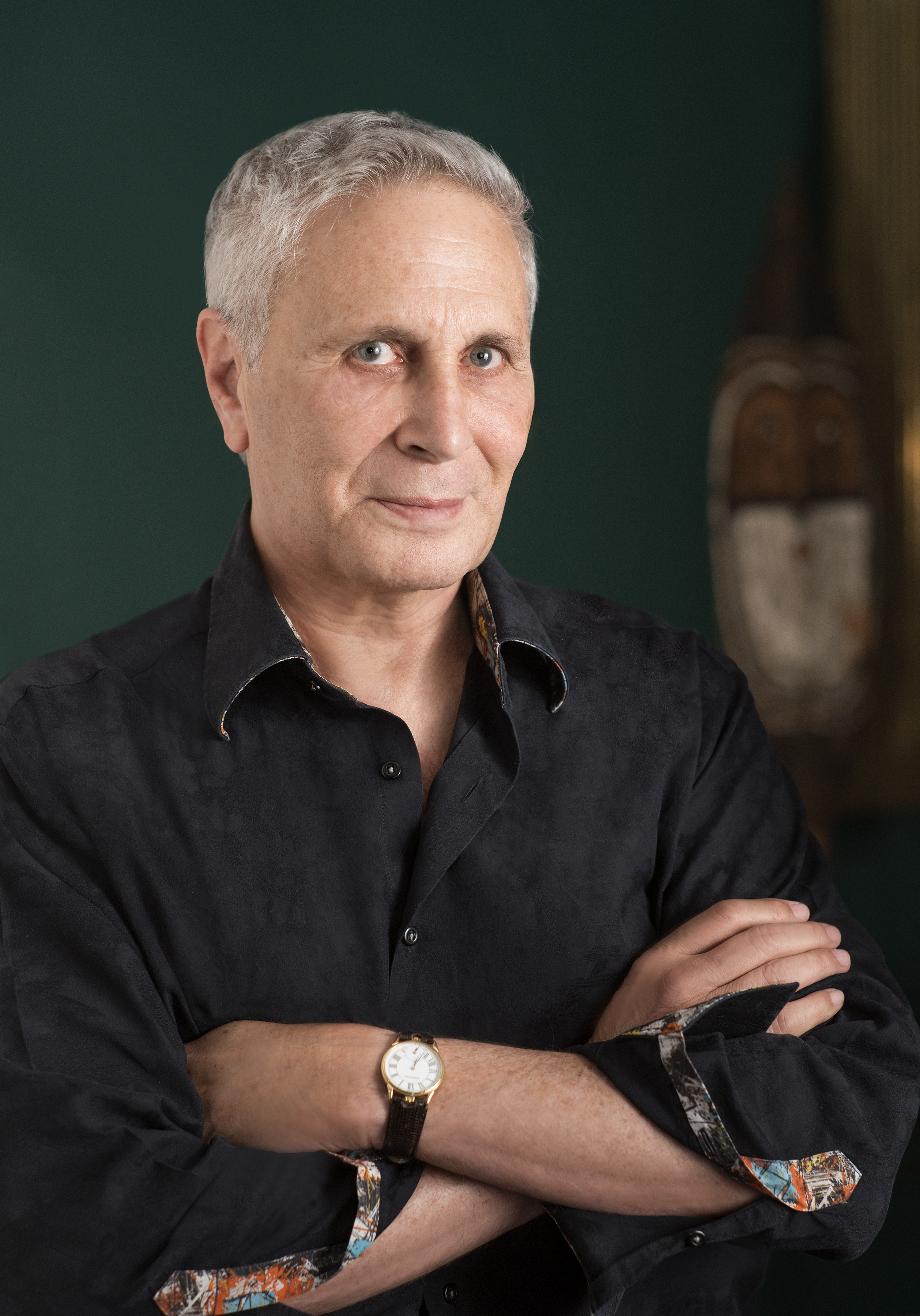
Michael Christie is looking forward to being back at Chautauqua this week.

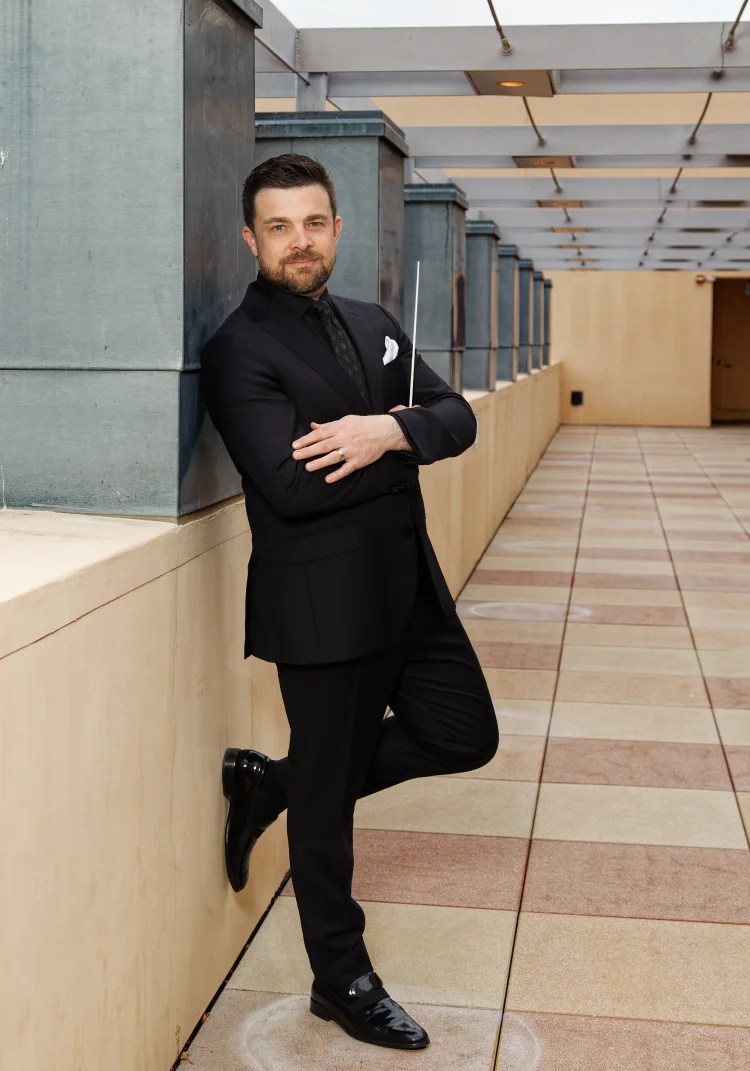
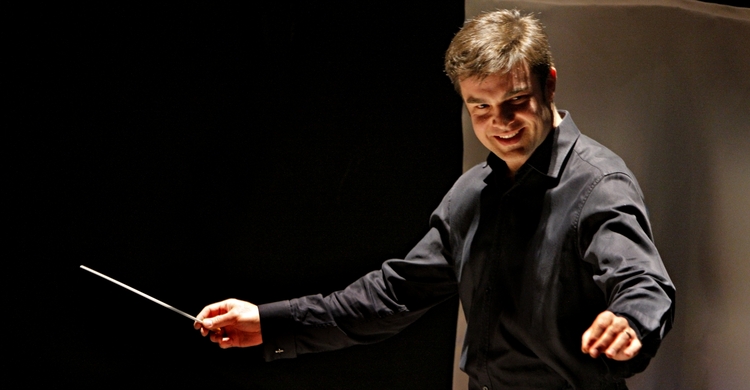
Michael Christie

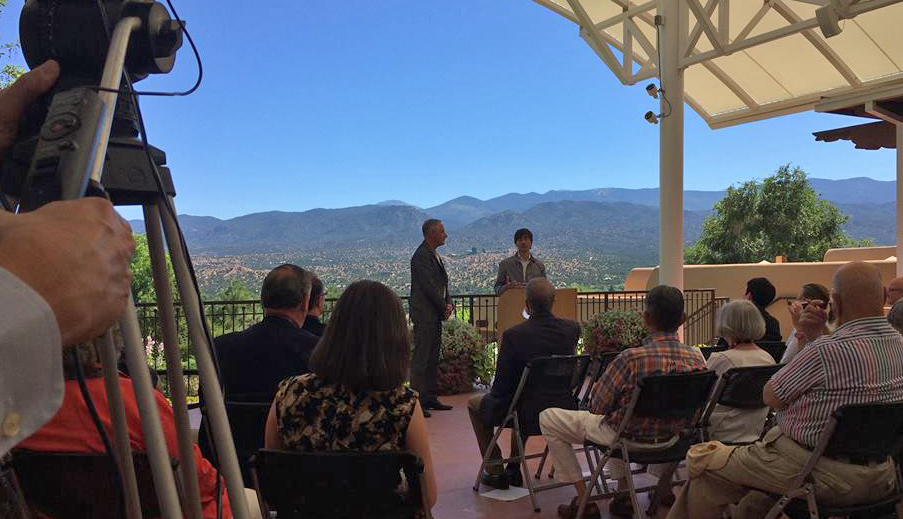
Christie, who was music director of the Colorado Music Festival (CMF) 2000–13, will lead the Festival Orchestra in a pair of concerts Thursday and Friday (7:30 and 6:30 p.m. respectively in the Chautauqua Auditorium; see program below). Since leaving CMF at the end of the 2013 festival, Christie spent eight years at the Minnesota Opera, conducted at the Santa Fe Opera, and is now music director of the New West Symphony in Los Angeles.

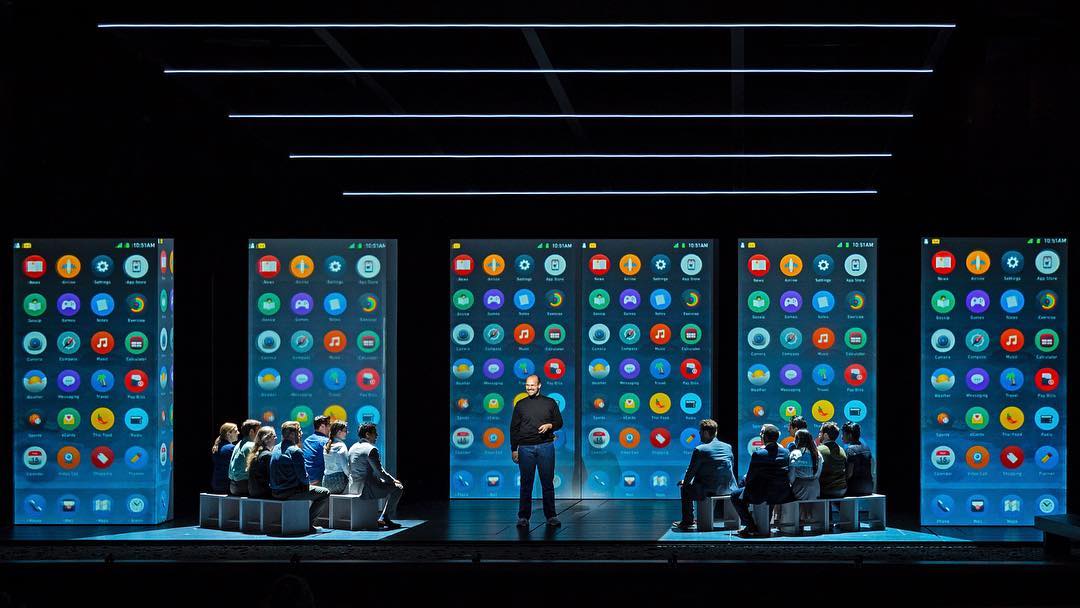
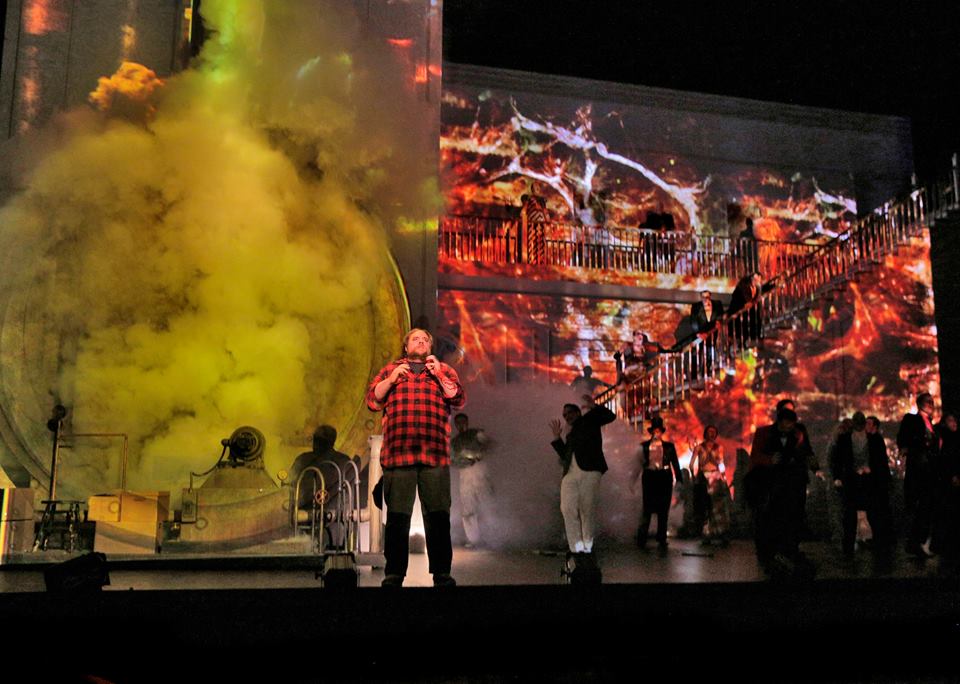
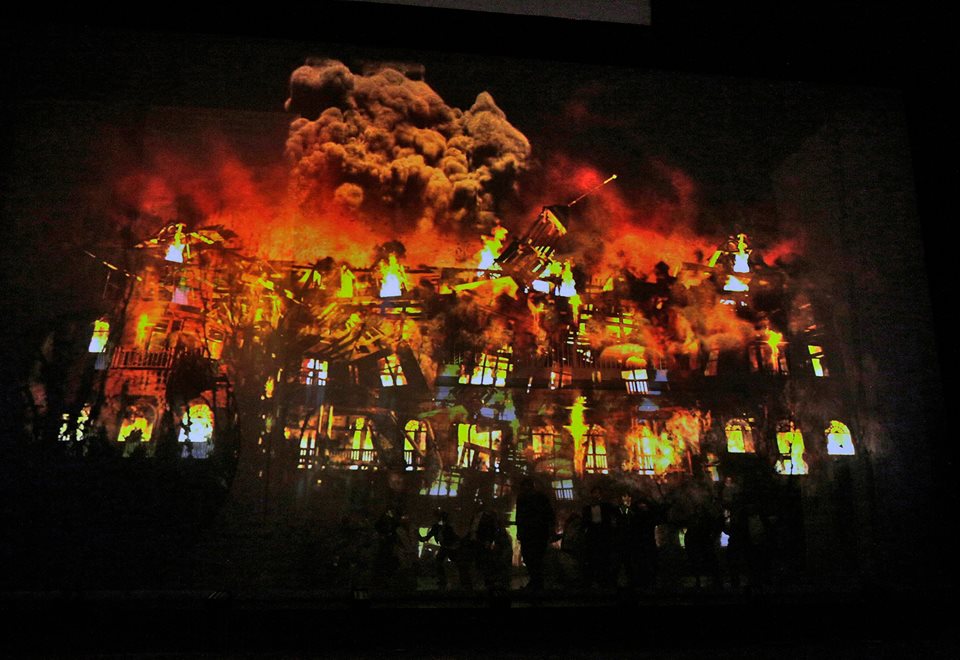
Among other world premieres, he has conducted Manchurian Candidate by Kevin Puts and Mark Campbell, and The Shining by Paul Moravec and Campbell at Minnesota Opera; The Gospel of Mary Magdalene by Mark Adamo at San Francisco Opera; and The ( R)evolution of Steve Jobs by Mason Bates and Campbell at the Santa Fe Opera.

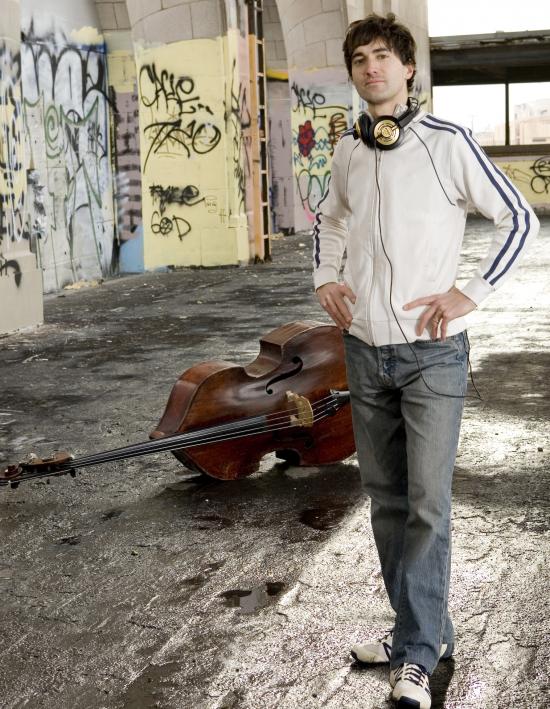
Now designated CMF Music Director Laureate, Christie returned as guest conductor once before, in the summer of 2016. “It was really wonderful to see all those faces again and inhabit that space,” he says. The Chautauqua Auditorium “is so unique and full of so many memories and such a great place to have a musical experience.

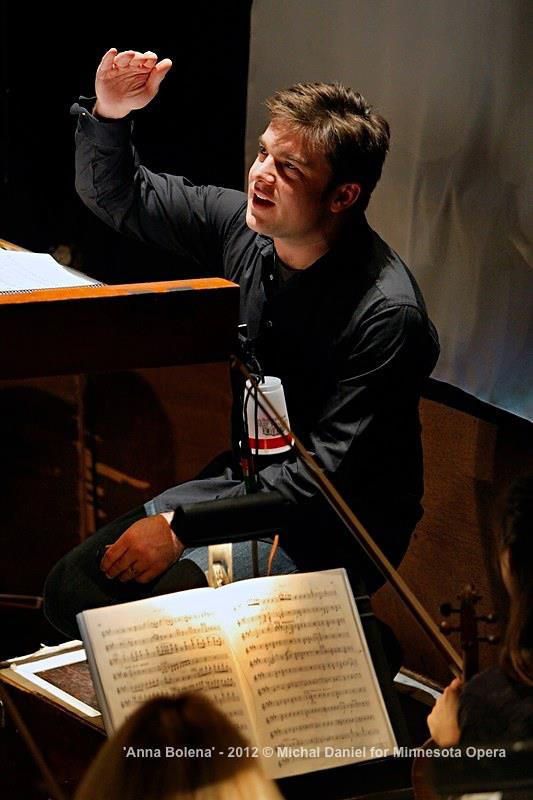
Michael Christie at the Minnesota Opera. Photo by Michael Daniel

“(The hall) is one of the truly great aspects of the CMF—the enduring part that transcends all of us, audience members or performers. There’s still that auditorium—it’s just always there.”

One of his most recent appearances around the world was as a conductor for the 2023 “Singer of the World” contest in Cardiff, Wales. A biennial contest for classical singers that was established in 1983, the Singer of the World has launched many great careers including those of Finnish soprano Karita Mattila, Welsh baritone Bryn Terfel and Russian baritone Dmitri Hvorostovsky.

You may see Christie conducting the final concert with this year’s prize winner on the OperaVision Website.

The diversity of his career post-CMF, including both opera and symphonic performances, is not an accident. “I have been working very hard to escape the pigeon holing that can happen to people,” Christie says. “I love both opera and symphonic music, and they speak to each other so clearly.

“I feel strongly that to conduct a symphonic work when a composer has also composed a lot of ballet or a lot of opera, and not to have done those pieces, you’re missing a huge part of the story. There is a different kind of emotion that composers are able to express with the voice.”

The New West Symphony is a regional orchestra, equivalent in size and scheduling to the Boulder Philharmonic. It has the advantage of drawing on the pool of freelance musicians in Los Angeles, but Christie chose that job for another reason. “I thought it would be a wise choice to have an orchestra that had a lean schedule, so that I could take the longer periods for opera,” he says. “That’s worked out quite well.”

Working over a period of years with a smaller orchestra has also been an educational experience. “With smaller orchestras, the conductor really has to be way more involved,” he says. “I have learned a huge amount.

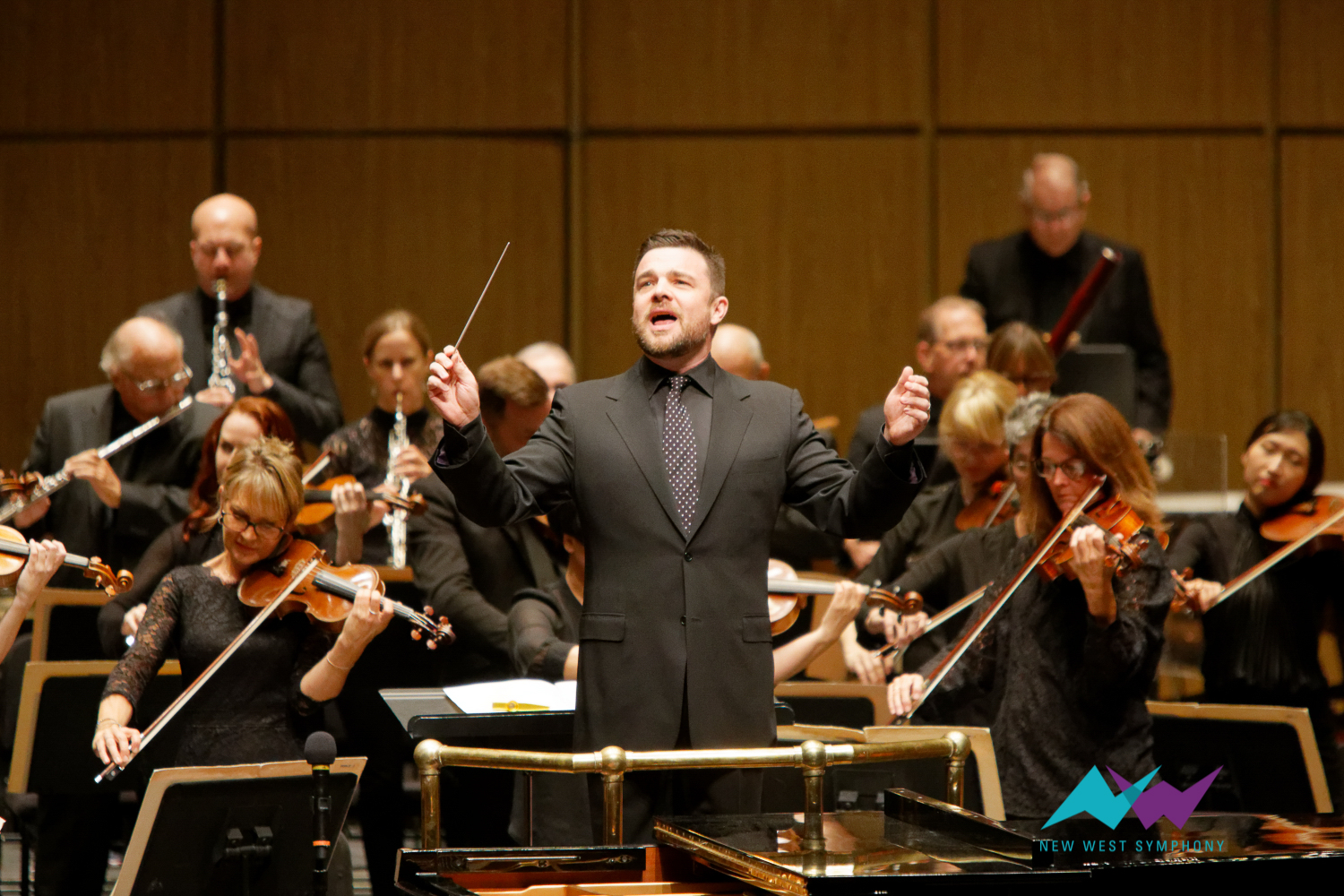
Michael Christie with the New West Symphony

“The conductor is much more hand-on about community engagement that in bigger orchestras is handled by the general manager. I found with the smaller orchestra that I’m having way more specific conversations about what (community partners’) needs are. It’s been really eye-opening and very immediately engaging every day.”

Christie has a list of favorite things about Chautauqua concerts that he’s looking forward to. “I’m looking forward to how the audience spills out of the hall afterward, and that moment where folks are sharing with each other and talking to the musicians. I’m looking forward to seeing that. 

“I love the auditorium just before the concert starts. People are milling about, there’s this lovely energy that happens—a very friendly energy that happens among everybody in the hall. The musicians gathering near the green room, standing around and chatting before the concert starts—there’s always a special human easiness about things before and after those concerts.

“I always treasure those moments.”

# # # # #

COLORADO MUSIC FESTIVAL

Festival Orchestra, Music Director Emeritus Michael Christie, conductor
With Michelle Cann, piano

  • Ravel: Piano Concerto in G Major
  • Florence Price: Piano Concerto in One Movement
  • Tchaikovsky: Symphony No. 4 in F Minor, op. 36

7:30 p.m. Thursday, July 20, and 6:30 p.m. Friday, July 21
Chautauqua Auditorium

TICKETS

NOTE: Minor typos corrected 7/18

New Music and Conductor Michael Christie at the Colorado Music Festival

Peter Oundjian leads All-Corigliano program, world premieres for ‘Music of Today’

By Peter Alexander July 7 at 12:10 p.m.

The next two weeks of the Colorado Music Festival (CMF) will see the 2023 season in full swing.

The Robert Mann Chamber Music Series—named in honor of the founding first violinist of the esteemed Juilliard String Quartet—gets underway with performances by the JACK Quartet (July 11; program details below) and the Brentano Quartet (July 18). The performance by JACK also initiates a week of “Music of Today” featuring an all-John Corigliano program by the Festival Orchestra with saxophone soloist Timothy McAllister (July 13) and a program with three world premieres by Carter Pann of CU, his former student Jordan Holloway, and Adolphus Hailstork (July 16).

The festival’s third week embraces more familiar repertoire, with some excursions. The Brentano Quartet embellishes a program of Mozart and Beethoven with works by Scottish composer James MacMillan (July 16). CMF Music Director Emeritus Michael Christie marks his return to Chautauqua Auditorium with Tchaikovsky’s familiar Fourth Symphony and an interesting pairing of piano concertos by Ravel and Florence Price performed by Michelle Cann (July 20 and 21). The week closes with an all-Mozart program led by guest conductor François López-Ferrer and featuring violinist Grace Park (July 23).

JACK Quartet. Photo by Shervin Lainez

Known for their committed performances of new music, the JACK Quartet is the musical heir of the mold-breaking Kronos Quartet. “Kronos really paved the way,” first violinist Austin Wulliman says. “They were role models for people in our generation, and JACK modeled the way we commission (new works) after the way Kronos did it.”

Titled “New York Stories,” the July 11 concert features works by five composers: Morton Feldman, Caleb Burhans, Philip Glass, Caroline Shaw and John Zorn. The program came from “an intuitive feeling about New York, which is a place that is so now,” violist John Richards explains. “Cultural changes begin or are reflected very early on in New York, and I feel the longing for ‘before’ as a part of the experience of ‘now’ in New York.

Caroline Shaw. Photo by Kait Moreno

“This program gets into that, through a beautiful, melancholic longing that’s in Caroline Shaw’s (Entr’acte, which is) also filled with the kind of playful experimentation with form and instrumental techniques that can only be done today. It’s a beautiful marriage of those things.”

The players find the same duality in Zorn’s Remedy of Fortune, which they compare to standing in the Cloisters, a museum of medieval art in upper Manhattan, and hearing the sound of visitors’ cell phones alongside the echoes of medieval music.

Zorn is known for pieces inspired by the frenetic pace of early cartoons, but his latest pieces are more varied. “He draws on so many interesting influences now,” Wulliman says. “I hear the music of Alban Berg at the same time that I hear Art Tatum and Beethoven and medieval music.”

Wulliman suggests that when listening to Feldman’s Structures for String Quartet, you think of a painting rather than a narrative. “That’s a helpful inroad to how to listen to it,” he says. “It’s a visual arts approach to the page, where he’s filling our auditory field with splotches, textures and patterns that weave together.”

The least known composer on the program is probably Burhans, whom the JACK players knew as undergraduates at the Eastman School of Music. “The beauty and the emotional catharsis of that piece is a real lynchpin of the program,” Wulliman says. Richards adds that Burhans “joined the choir at Trinity Church Wall Street (in New York), and this music draws from that experience. There’s a beautiful middle section that grows and grows into a prayerful, ecstatic feeling of release.”

John Corigliano. Photo by J. Henry Fair

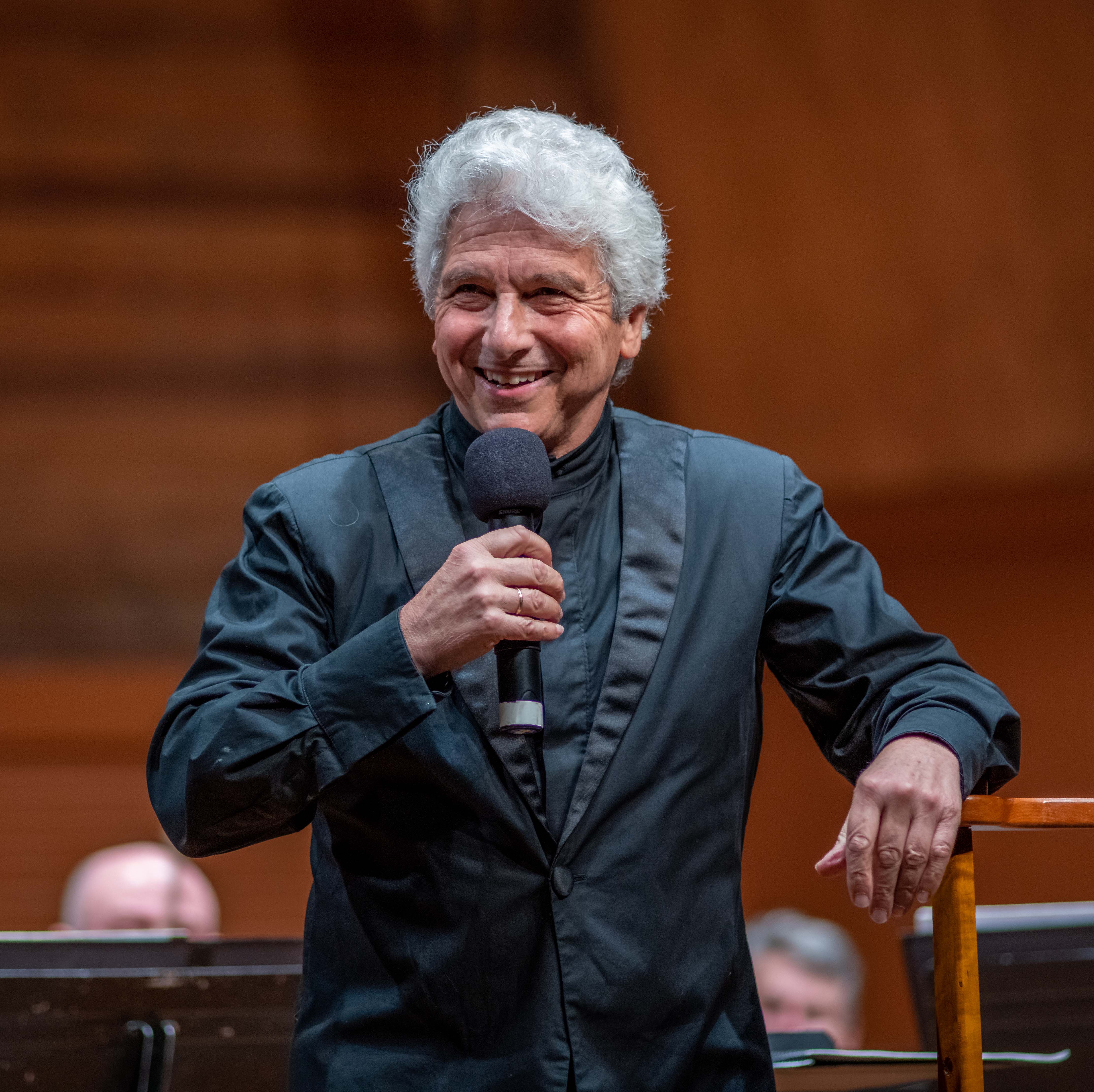
The most distinctive program of the summer is the concert devoted entirely to works by composer John Corigliano. That almost never happens with living composers, conductor and CMF Music Director Peter Oundjian says, but he also likes to remind people that new music today is not as daunting as it once was.

“I remember a time when if you presented one piece of contemporary music you could loose half your audience,” he says. But Corigliano is from “a generation that got a language that was astonishingly contemporary but acceptable at the same time.”

Oundjian wanted to present works from different parts of the composer’s career. “I said to John, ‘I want to do a piece from each of your periods’,” Oundjian says. “’I want to make you into Beethoven, (with) early, middle and late’.”

From the early period, he chose the Gazebo Dances (1972), which was likely inspired by the music of Leonard Bernstein. A suite in four contrasting movements, it has a Bernstein-like energy and flirtation with popular/Broadway idioms, which is not surprising since Corigliano’s father was concertmaster of the New York Philharmonic under Bernstein.

Next is One Sweet Morning (2010), written to commemorate the anniversary of the 9/11 attacks in New York. “Oh boy is it ever incredibly profound and moving,” Oundjian says. “It’s music of staggering beauty and depth, so it’s a fantastic contrast to the Gazebo Dances.”

The concert will conclude with Corigliano’s most recent concerto, Triathlon for saxophone and orchestra (2020). The soloist will be Timothy McCallister, who was featured last summer. “It’s a complete masterpiece,” Oundjian says. “I don’t know how these brilliant composers get their ideas, but it’s an honor to study the works and prepare to conduct them.”

Adolphus Hailstork. Photo by Jin Hailstork.

The centerpiece of the July 16 concert of world premieres will be JFK: The Last Speech, a work for orchestra, soprano and narrator by Adolphus Hailstork. The soloists will be soprano Janice Chandler-Eteme and bass-baritone Eric Owens as narrator.

The libretto incorporates parts of a speech President John F. Kennedy gave at Amherst College Oct. 26, 1963, 27 days before his assassination in Dallas. Kennedy’s speech was given in honor of poet Robert Frost, who had died nine months before. Neil Bicknell, who heard the speech as an Amherst senior, crafted the libretto combining Kennedy’s words, which will be spoken by the narrator, and Frost’s poetry, which will be sung by the soprano.

A project of the Amherst Class of 1964, JFK: The Last Speech will be performed around the country and at Amherst College this fall. Hailstork writes in his program notes, “My writing will reflect the autumn season, the solemnity of the moment, and the unique oratorical gifts of Kennedy the president and the profound literary gifts of Frost the poet.”

Holloway’s Flatirons Escapades was composed for the 125th anniversary of Boulder’s Colorado Chautauqua. A graduate of CU, Holloway recalls in his program notes both his positive experiences in the Chautauqua Park that served as an inspiration for his score, and the healing quality of the space during times of “anxiety and internal chaos” that “are woven into the piece as well.”

Pann was Holloway’s composition teacher at CU. He writes that his Dreams I Must Not Speak “emerged from a cathartic attempt to realize, in music, three dreams I experience during sleep with noticeable regularity. These are not nightmares nor are they pleasant images, but rather odd and somewhat psychedelic scenes that have remained distinct in my awakened conscience over the years.”

Michael Christie. Photo by Eugene Yankevich

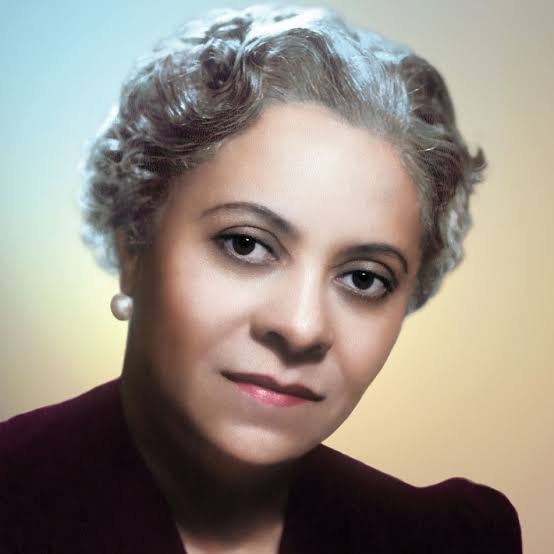
For his return to Chautauqua Auditorium, CMF Music Director Emeritus Michael Christie will team up with pianist Michelle Cann to present concertos by Ravel and the remarkable African-American composer Florence Price. A graduate of the New England Conservatory, Price is recognized as the first African-American woman to have a work played by a major orchestra. “Price is one of these people that when an audience member hears the music, people are just bowled over by the inventiveness, by the grandness of it,” Christie says.

Price played her Piano Concerto in One Movement once in 1934, after which it was thought to be lost. However, some parts were found in 2009 at her former summer home, shortly before it was to be demolished, and other fragments turned up later. The score has been reconstructed, and the concerto has had real success in recent years. Curiously, the Concerto in One Movement actually has three movements, played without break

Florence Price

The combination of Price’s African-American heritage and her classical training led to what Christie calls “this wonderful blending of American and European traditions speaking to each other.” And he finds a parallel for that combination in the Ravel Concerto. “You have Maurice Ravel just oozing with American jazz throughout this piece,” he explains.

“You’re looking Florence Price being influenced by Europe and having her own American language, and then Ravel on the other side of the Atlantic, looking at America through the lens of his own language. So the concertos kind of cross each other, over the ocean.”

The Tchaikovsky Symphony that closes the program is a great showpiece for the orchestra, and it’s also one of the most familiar pieces on the summer program. Christie remembers that when he was music director at CMF, he would “throw lots of new things at the orchestra, and they were just exhausted by the end of the summer. I realized over time that balance (between familiar and unfamiliar pieces) is not only for the audience, it’s for the orchestra too.

“It’s always a relief for an orchestra to be able to kick back and play something that they know inside and out.”

# # # # #

COLORADO MUSIC FESTIVAL
Performances July 11–23
All performances at Chautauqua Auditorium

7:30 p.m. Tuesday, July 11
Robert Mann Chamber Music Series: JACK Quartet

  • Morton Feldman: Structures for String Quartet (1951)
  • Caleb Burhans: Contritus (2010) 
  • Philip Glass: String Quartet No. 5 (1991)
  • Caroline Shaw: Entr’acte (2011)
  • John Zorn: The Remedy of Fortune for String Quartet (2016)

7:30 p.m. Thursday, July 13
Festival Orchestra, Peter Oundjian, conductor
With Timothy McAllister, saxophone

  • John Corigliano: Gazebo Dances (for orchestra) (1974)
    One Sweet Morning for voice and orchestra (2010)
    Triathlon for saxophone and orchestra (2020)

6:30 p.m. Sunday, July 16
World premieres: Festival Orchestra, Peter Oundjian, conductor
With Janice Chandler-Eteme, soprano, and Eric Owens, narrator

  • Jordan Holloway: Flatiron Escapades (world premiere commission)
  • Carter Pann: Dreams I Must Not Speak (world premiere commission)
  • Adolphus Hailstork: JFK: The Last Speech (world premiere)

7:30 p.m. Tuesday, July 18
Robert Mann Chamber Music Series: Brentano String Quartet

  • Mozart: String Quartet in D Major, K499
  • James MacMillan: Memento for string quartet (1994)
    For Sonny for string quartet (2011)
  • Beethoven, String Quartet No. 13 in B-flat Major, op. 130

7:30 p.m. Thursday, July 20, and 6:30 p.m. Friday, July 21
Festival Orchestra, Music Director Emeritus Michael Christie, conductor
With Michelle Cann, piano

  • Ravel: Piano Concerto in G Major
  • Florence Price: Piano Concerto in One Movement
  • Tchaikovsky: Symphony No. 4 in F Minor, op. 36

6:30 p.m. Sunday, July 23
Festival Orchestra, François López-Ferrer, conductor
With Grace Park, violin

  • Mozart: Overture to The Impresario K486
    —Violin Concerto No. 3 in G Major, K216
    —Adagio and Fugue in C Minor, K546
    —Symphony No. 36 in C Major, (“Linz”) K425

TICKETS

Colorado Music Festival announces 2023 concerts

Joshua Bell as artist-in-residence, John Corigliano composer-in-residence

By Peter Alexander Jan. 25 at 11 a.m.

The Colorado Music Festival (CMF) has announced their 2023 summer season at Chautauqua. 

Peter Oundjian. Photo by Geremy Kornreich

The formal announcement of the season was made last night (Jan, 24) at the Center for Musical Arts in Lafayette, which is the sister organization of the CMF. The event was live streamed to the public.

Before the introduction of the concerts by music director Peter Oundjian, executive director Elizabeth McGuire announced that the CMF’s 2022 world premiere performance of Flying On the Scaly Backs of Our Mountains by Wang Jie had reached more than a million listeners world-wide through radio—“more than doubling the reach of the festival over its history with one performance,” she said.

Oundjian has written of the 2023 season, We are so fortunate to bring to you some of the greatest performers alive today, including artist-in-residence Joshua Bell, along with the extraordinary talents of eight of today’s brilliant composers. It is such a thrill to hear today’s voices alongside—and interacting with—groundbreaking voices from the past, giving us a unique window into centuries of the greatest in creativity.”

John Corigliano. Photo by J. Henry Fair

Since his appointment as music director in 2018, Oundjian has made the music of today a focus of the festival. Among the living composers whose music will be performed this summer is John Corigliano, winner of the Pulitzer Prize, four Grammies and an Academy Award. As composer-in-residence, Corigliano will be present at the festival for a concert devoted entirely to his music on July 13 (see full programs below).

Premieres will be presented of works by Jordan Holloway, CU faculty member Carter Pann, and Adolphus Hailstork. All three will be performed on July 16, as the culmination of a week of “Music of Today.” A preview of music by five other living composers will be offered by Bell, who has commissioned a five-movement suite for violin and orchestra from five different composers.

Joshua Bell. Photo by Phillip Knott

The suite, titled Elements, will have its official premiere later, but all five movements will be previewed over two concerts at CMF—the final two concerts of the season (Aug. 3 and 6). The composers who have contributed to Elements are among the most important composers working today: Jake Heggie, Jessie Montgomery, Edgar Meyer, Jennifer Higdon and Kevin Puts.

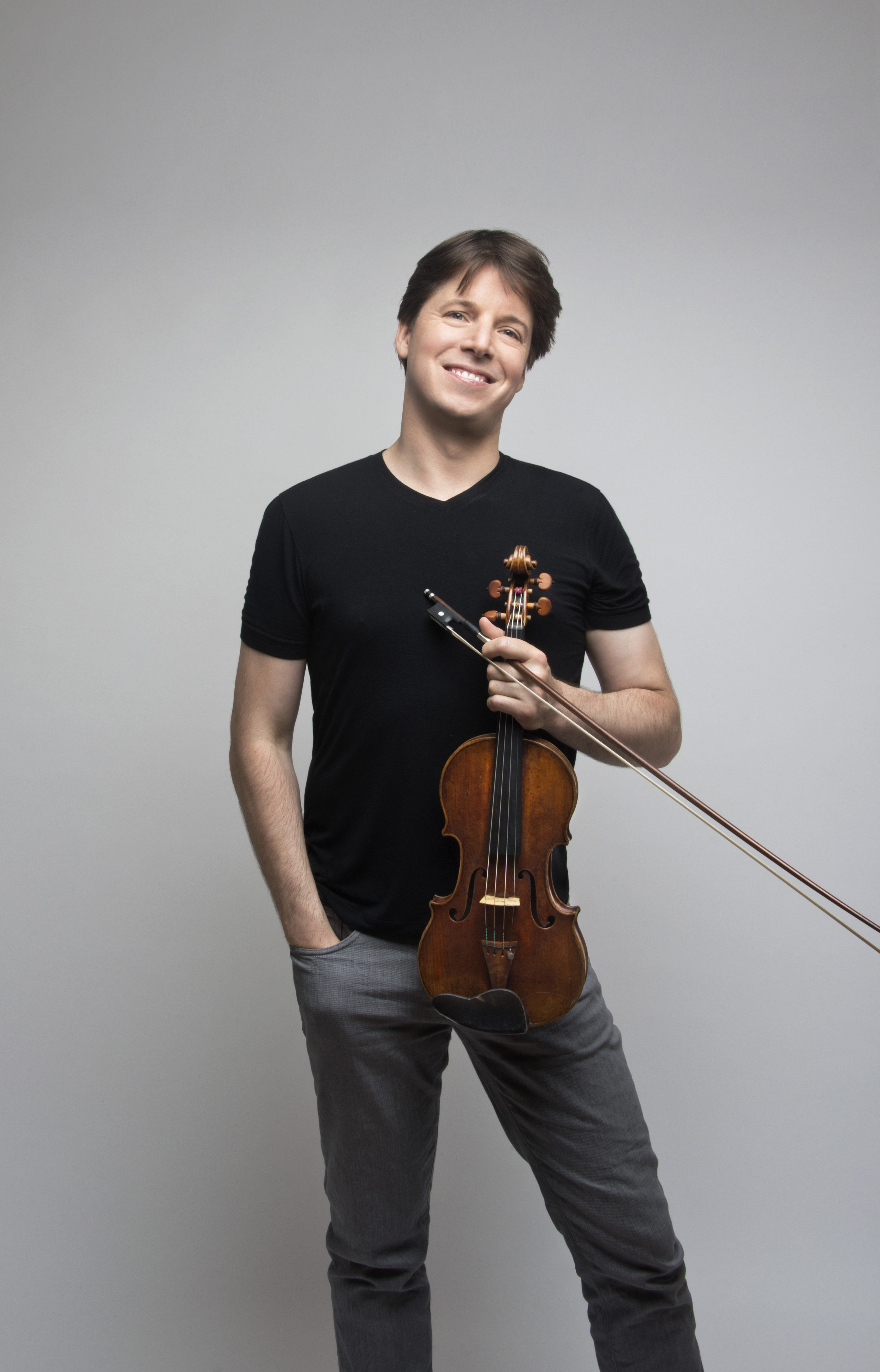
Bell will also be at CMF for the first week of the festival and will play Max Bruch’s Violin Concerto in G minor on the opening program, June 29 and 30.

A highlight of the 2023 festival will be two programs celebrating the 150th anniversary of the birth of composer Sergei Rachmaninoff (July 6–7 and July 9). Oundjian said that it seemed appropriate in 2023 to perform works composed outside Russia, many of them in the United States which was Rachmaninoff’s home in the later years of his life. These works include the Third and Fourth piano concertos, the beloved Rhapsody on a Theme of Paganini, and the rarely performed Symphony No. 3.

Michael Christie. Photo by Bradford Rogne

Another feature of the 2023 festival of which Oundjian is particularly proud is the continuation of the Robert Mann Chamber Music Series, named for the founding first violinist of the Juilliard String Quartet. In addition to performances by members of the Festival Orchestra, the four-concert series will also feature guest performances by the JACK Quartet, renowned for their performances of contemporary music, and the Brentano String Quartet.

The 2023 festival will also see the return of Music Director Emeritus Michael Christie to conduct concerts on July 20 and 21. Christie was the CMF music director 2000–13.

“Not only does the 2023 season promise to be artistically stunning, I know our audiences will appreciate the way the programming weaves so many diverse, timely, and relevant voices into the fabric of classical music,” executive director Elizabeth McGuire wrote.

Performances this summer will be at 7:30 p.m. on Tuesdays and Thursdays, and 6:30 p.m. Fridays and Sundays. As in past years, Tuesdays will be devoted to chamber music, other days to Festival Orchestra performances. In response to comments from patrons, the Family Concert on Sunday, July 2, has been moved earlier in the day, to 10:30 a.m. Other updates to the festival this year include a new ticketing system through the Chautauqua Box Office, and meals available for pre-order through the ticketing system.

Subscription tickets for the 2023 festival are available here. Single-concert tickets go on sale March 7 through the CMF Web page, or by phone at the Chautauqua Box Office at 303-440-7666. New for 2023, CMF is offering $10 tickets for youth (ages 18 and under) and students with current school identification. More information can be found HERE.

# # # # #

COLORADO MUSIC FESTIVAL
2023 Performance Schedule
All performances at Chautauqua Auditorium

7:30 p.m. Thursday June 29 and 6:30 p.m. Friday, June 30: Festival Opening Program
Festival Orchestra, Peter Oundjian, conductor
With Joshua Bell, violin

  • Carlos Simon: “Motherboxx Connection” from Tales: A Folklore Symphony for orchestra
  • Max Bruch: Violin Concerto No. 1 in G minor
  • Mussorgsky: Pictures at an Exhibition (orchestrated by Ravel)

Family Concert: 10:30 a.m. Sunday, July 2
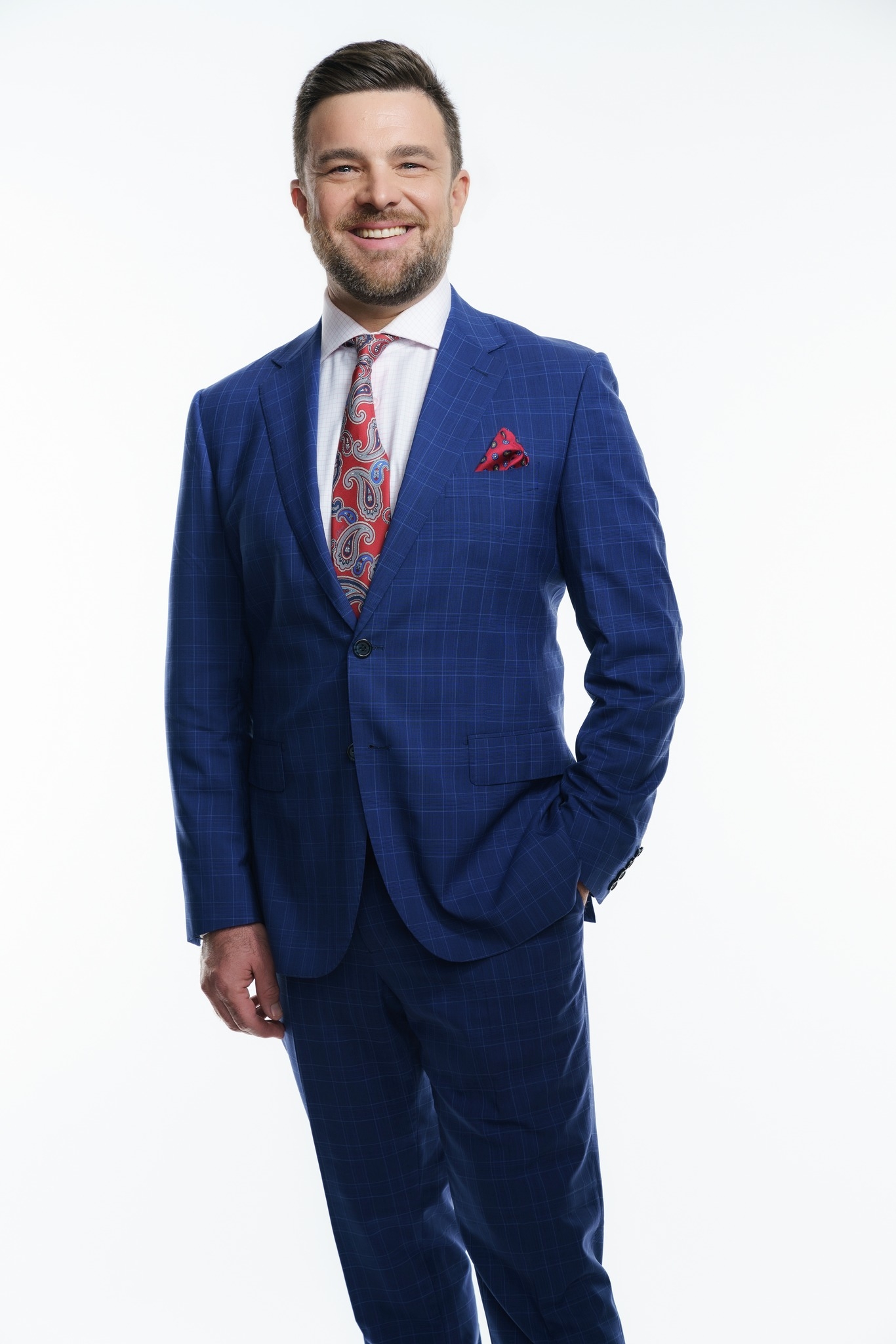
Festival Orchestra, Kalena Bovell, conductor
With Jennifer Bird-Arvidsson, soprano, and Janae Burris, narrator

  • Bizet: Carmen Suite No. 1
  • Eric Whitacre: Goodnight Moon
  • Samuel Coleridge-Taylor: “Danse Nègre” from African Suite
  • Prokofiev: Peter and the Wolf

7:30 p.m. Thursday, July 6 and 6:30 p.m. Friday July 7
Festival Orchestra, Peter Oundjian, conductor
With Nicolai Lugansky, piano

  • Rachmaninoff: Piano Concerto No. 3 in D Minor,
    —Symphony No. 3 in A Minor

6:30 p.m. Sunday, July 9
Festival Orchestra, Peter Oundjian, conductor
With Nicolai Lugansky, piano

  • Rachmaninoff: Rhapsody on a Theme of Paganini
    —Piano Concerto No. 4 in G Minor
    Symphonic Dances

7:30 p.m. Tuesday, July 11
Robert Mann Chamber Music Series: JACK Quartet

  • Morton Feldman: Structures for String Quartet (1951)
  • Caleb Burhans: Contritus (2010) 
  • Philip Glass: String Quartet No. 5 (1991)
  • Caroline Shaw: Entr’acte (2011)
  • John Zorn: The Remedy of Fortune for String Quartet (2016)

7:30 p.m. Thursday, July 13
Festival Orchestra, Peter Oundjian, conductor
With Timothy McAllister, saxophone

  • John Corigliano: Gazebo Dances (for orchestra) (1974)
    One Sweet Morning for voice and orchestra (2010)
    Triathlon for saxophone and orchestra (2020)

6:30 p.m. Sunday, July 16
World premieres: Festival Orchestra, Peter Oundjian, conductor
With Janice Chandler-Eteme, soprano, and Eric Owens, narrator

  • Jordan Holloway: Flatiron Escapades (world premiere commission)
  • Carter Pann: Dreams I Must Not Speak (world premiere commission)
  • Adolphus Hailstork: JFK: The Last Speech (world premiere)

7:30 p.m. Tuesday, July 18
Robert Mann Chamber Music Series: Brentano String Quartet

  • Mozart: String Quartet in D Major, K499
  • James MacMillan: Memento for string quartet (1994)
    For Sonny for string quartet (2011)
  • Beethoven, String Quartet No. 13 in B-flat Major, op. 130

7:30 p.m. Thursday, July 20, and 6:30 p.m. Friday, July 21
Festival Orchestra, Music Director Emeritus Michael Christie, conductor
With Michelle Cann, piano

  • Ravel: Piano Concerto in G Major
  • Florence Price: Piano Concerto in One Movement
  • Tchaikovsky: Symphony No. 4 in F Minor, op. 36

6:30 p.m. Sunday, July 23
Festival Orchestra, François López-Ferrer, conductor
With Grace Park, violin

  • Mozart: Overture to The Impresario K486
    —Violin Concerto No. 3 in G Major, K216
    —Adagio and Fugue in C Minor, K546
    —Symphony No. 36 in C Major, (“Linz”) K425

7:30 p.m. Tuesday, July 25
Robert Mann Chamber Music Series: Members of the Colorado Music Festival Orchestra

  • Benjamin Britten: Phantasy Quartet for Oboe and Strings, op. 2
  • Francis Poulenc: Sextet in C Major for Piano and Winds
  • Brahms: String Sextet No. 2 in G Major, op. 36

7:30 p.m. Thursday, July 27, and 6:30 p.m. Friday, July 28
Festival Orchestra: Eun Sun Kim, conductor
With Johannes Moser, cello

  • Mason Bates: The Rhapsody of Steve Jobs (2021)
  • Shostakovich: Cello Concerto No. 1 in E-flat Major, op. 107
  • Brahms: Symphony No. 2 in D Major, op. 73

6:30 p.m. Sunday, July 30
Festival Orchestra, Hannu Lintu, conductor,
With Lise de la Salle, piano

  • Einojuhani Rautavaara: Cantus Arcticus (1974)
  • Schumann: Piano Concerto in A Minor
  • Haydn: Symphony No. 96 in D Major (“Miracle”)

7:30 p.m. Tuesday, Aug. 1
Robert Mann Chamber Music Series: Members of the Colorado Music Festival Orchestra

  • Beethoven: String Trio in C Minor, op. 9 no. 3
  • Debussy: Danses sacrée et profane (Sacred and profane dances)
  • Dvořák: Piano Quintet No. 2 in A Major, op. 81

7:30 p.m. Thursday, Aug. 3
Festival Orchestra, Peter Oundjian, conductor
With Joshua Bell, violin

  • The Elements: Suite for Violin and Orchestra (commissioned by Joshua Bell)
    “Fire” by Jake Heggie
    “Ether” by Jessie Montgomery
    “Water” by Edgar Meyer
  • Debussy: La Mer

6:30 p.m. Sunday, Aug. 6: Festival Finale Concert
Festival Orchestra, Peter Oundjian, conductor
With Joshua Bell, violin

  • The Elements: Suite for Violin and Orchestra (commissioned by Joshua Bell)
    “Air” by Jennifer Higdon
    “Earth” by Kevin Puts
  • Mahler: Symphony No. 1 in D Major (“Titan”)

Musicians in their Lairs I: Michael Christie

Creating wide-ranging playlists, learning while homeschooling

By Peter Alexander April 22 at 7:05 p.m.

NOTE: This is the first of a series of posts about musicians with Boulder connections, and what they are doing while they can’t rehearse or perform. You can expect a non-formal photo to accompany each story.

Michael Christie is listening to music. A lot of music.

Christie, who was music director of the Colorado Music Festival in Boulder 2001-13 is spending the COVID-19 quarantine at this home in Minneapolis. Because his wife is a physician, a large part of his time is taken with homeschooling their two children while she is on the front lines of the pandemic.

Screen Shot 2020-04-17 at 11.24.12 AM

Michael Christie, inside his home in Minneapolis, planning another playlist

When he’s not tied up with those duties, he’s creating online playlists, under the title “Michael Christie’s Jukebox.

So far he has posted 10 lists, nine that reflect his own thoughts, and one in collaboration with composer Kevin Puts, whose opera Silent Night Christie conducted at Minnesota Opera in 2011. The complete opera serves as the anchor piece of “Jukebox #8.”

It turns out there is a lot of listening involved in creating each playlist. He has to not only select the pieces, but also the individual performances of those pieces. “The process of selecting the pieces encourages me to listen to full albums,” he says. “So that I’ve enjoyed, but the tricky part is that I’ve tried to keep the bites fairly digestible, except for the showpiece of each list.”

The playlists are a way for Christie, who is now music director of the New West Symphony in Thousand Oaks, Calif., to stay in touch with audiences during the pandemic. “I observed as COVID was shutting things down that people were hunkering down—hunkering down in their homes but also hunkering down in their own areas of expertise, musically,” he says.

“I thought ’what a pity!’ These people listen to a lot of other things, and yet they’re only talking about the narrow window that they’re professionally working in. That was the genesis of the playlists, and then it was trying to make sure that I was being faithful to that by looking at 400 years of music then saying, ‘Alright, what’s interesting’?”

One feature of Christie’s playlists that will seem familiar to those who recall his years with CMF is the breadth of the music that he finds interesting. It includes portions of standard classical repertoire by Haydn, Beethoven, Rossini, Dvořák and others that you would expect. But there is also world music; jazz by Branford, Wynton and the late Ellis Marsalis; Bill Haley and the Comets, the Beatles and Radiohead; an excerpt from Hamilton; stunning Baroque selections by Jean-Philippe Rameau and Claudio Monteverdi; newer music from Benjamin Britten and Philip Glass; and even Dolly Parton’s Nine to Five.

From creating his own lists it was an easy step to start asking other musicians what they were listening to. “I thought people are going to get sick of hearing my thoughts, and also, I’ll run out of ideas eventually,” he says. “I’ve reached out to a lot of people, and no one has said no yet.

“The interesting thing is that all of the composers that I’ve been in contact with have said, we’re using this time to catch up. They’re so busy right now taking advantage of the time to not be traveling, and as a consequence they get to focus in a different way.”

Christie says he learns as much homeschooling his two children, ages five and 11,  as they do. “It’s a big learning process every day,” he says. “It definitely takes more patience and a different time scale. Time has to stretch out to flow with the day a bit more. Things that they do in 25 minutes in school take more time than that. But there are so many resources online, that’s amazing!

“Mercifully this is happening in springtime. If this was happening in November, I think—boy! Stuck in the cold and snow? I just can’t even imagine.”

But he definitely relishes the time spent at home. “The children are very different, but curious about the world, clever and sympathetic,” he says. “Being home steadily after years on the road is a great joy!”

Christie spends some of his time planning for his next season at the New West Symphony, particularly the new pieces that the orchestra will introduce. One feature of the concerts began at CMF as “Intermission Insights” interviews. The New West Symphony now has “Entr’acte Composers,” in which a composer is introduced at the beginning of intermission in a conversation with Christie, much as occured at CMF. Later, their piece is played first thing after intermission, giving the audience members the choice to linger in the lobby or hear the new work.

“So far, we’ve only had a handful of people willingly not listen to the new piece,” he says. “The vast majority stay for the interview, like they did in Boulder, and the vast majority come back for the new piece. I’m very careful about what that new piece is, and trying to get [it into a] five- to eight-minute time frame.

“But it’s great, because people have the opportunity to interact with the artist, and people have the opportunity to hear something they’ve never heard before at every concert.”

And in that respect, Christie is not doing anything new at all, quarantine or no quarantine. It’s what he did at CMF, and what he now does for audiences in Thousand Oaks.

You can access all of Christie’s playlists at Michael Christie’s Jukebox.


Michael Christie, former music director of CMF, wins Grammy for Best Opera Recording

Live Recording from Santa Fe Opera also features CU alumnus Wei Wu

By Peter Alexander Feb. 12 at 12 noon

Michael Christie, who was music director of the Colorado Music Festival 2001–2013, won a Grammy for a live recording from the Santa Fe Opera.

Steve.full stage

Santa Fe Opera: The (R)evolution of Steve Jobs. Photo by Ken Howard.

The two-CD set of composer Mason Bates’ and librettist Mark Campbell’s The (R)evolution of Steve Jobs was recorded during the world premiere run of the opera at the Santa Fe Opera’s summer festival in 2017. It was released on the PENTATONE label. It beat a recording from the Metropolitan Opera and three other nominees to win the category.

Christie, who was recently appointed music director of the New West Symphony in Thousand Oaks, Calif., conducted the opera in Santa Fe, and later at the Indiana University Opera Theater in Bloomington, Ind.

wei_grammy_1

Wei Wu celebrates his Grammy.

Among other cast members, the recording includes a performance by bass Wei Wu, an alumnus of the CU College of Music, as Jobs’ guru Kobu. Others in the cast included tenor Garrett Sorenson, mezzo-soprano Mariya Kaganskaya, mezzo-soprano Sasha Cooke, baritone Kelly Markgraf, baritone Edward Parks, and soprano Jessica Jones.

Christie is currently conducting performances of Verdi’s La Traviata at the Lyric Opera of Chicago and was unable to attend the Grammy ceremonies. He issued a statement this morning: “I can say the whole experience was quite surreal.

6c87ed_1eca035339c64860aca4ecb7ada3abec~mv2

Michael Christie

“I’m in Chicago at the moment getting ready to open La Traviata at the Lyric Opera of Chicago so couldn’t be present in LA for the award. I have to tell you though, I’m not sure I could have handled being in the audience waiting for that envelope to be opened! Instead, I was in Macy’s (so grateful they provided wifi in the store!!!) alternately shopping for socks and watching the live stream when the award was announced! I just started laughing.

“Any one of the five outstanding nominees should have won and yet they called out ours. I’m so grateful to Santa Fe Opera, our marvelous colleagues of the Santa Fe Opera Orchestra and its powerful chorus, (CD producer) Elizabeth Ostrow, creators Mason Bates and Mark Campbell, my amazing colleagues on stage.

“I also want to shout out to the extraordinary artists at Indiana University who gave the second performances of the opera in September. You all made an indelible impression on the piece and you share in its history.

“Congratulations to everyone involved!”

Christie joins a distinguished roster of Grammy winners in the Best Opera Recording category, including Seiji Ozawa, James Conlon, Alan Gilbert, Kent Nagano and Sir Charles Mackerras.

The recording of The (R)evolution of Steve Jobs can be purchased from ArkivMusik or Amazon.

Other nominees for Best Opera Recording were John Adams’ Doctor Atomic by the BBC Symphony and BBC Singers John Adams conducting; Jean-Baptiste Lully’s Alceste by Les Talents Lyriques and Choeur de Chamber de Namur, Christophe Rousset conducting; Richard Strauss’ Der Rosnekavalier by the Metropolitan Opera Orchestra and Metropolitan Opera Chorus, Sebastian Weigle conducting; and Verdi’s Rigoletto by the Kaunas City Symphony Orchestra and the Men of the Kaunas State Choir, Constantine Orbelian conducting.

Former CMF music director Christie returns to a warm welcome

‘Up to his old tricks again,’ including a dramatic entrance from the audience

By Peter Alexander

Michael Christie.03

Michael Christie. Photo by Steve J. Sherman

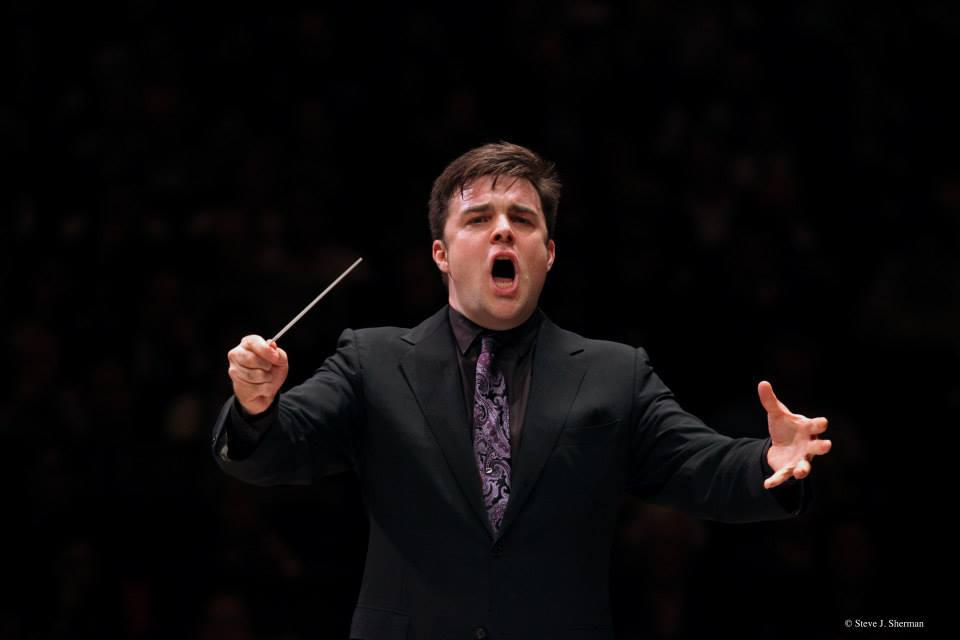
Michael Christie, for 13 years music director of the Colorado Music Festival and now conductor laureate, returned to lead the Festival Orchestra last night (July 14) in a program of music by Leonard Bernstein, Charles Ives and Johannes Brahms. Appearing with him was pianist Orion Weiss, a frequent partner with Christie during his years at CMF.

In planning the program, Christie said he wanted “to come back with a presentation style that everybody would say, ‘I remember that guy! He’s up his old tricks again.’”

New tricks or old, there is no doubt that the dramatic opening of the concert caught the audience’s attention.

The program started with concert sponsor Paul Repetto introducing Christie with great warmth but more or less in absentia, since the conductor was not on the stage. But as soon as Repetto finished his remarks Christie, standing out among the audience, gave the downbeat for brass and percussion on the sides of the hall to begin Bernstein’s noisy, boisterous Shivaree, a brief, exciting program opener.

As the last note of the Bernstein faded away, the strings sitting onstage had already began Ives’s mystical Unanswered Question. The strings, playing barely audible, slow-moving chords, were led by their section leaders while a solo trumpet, posing the titular question, sounded from backstage. The woodwinds, with Christie leading them now from the side of the house, offered energetic but inconclusive non-answers that seem to not resolve anything.

At the end the trumpet is heard one last time, over slowly dying string chords, still asking, asking, asking.

This is great musical drama. I have never heard the Ives more effectively introduced: the sudden hushed chord after the last loud flourish of the Bernstein was breathtaking. May I recommend this pairing to other conductors out there?

After such a theatrical beginning, Christie needed a powerful piece to round out the first half, and he found it in the suite from Bernstein’s music for the film On the Waterfront. A gritty, jazzy precursor to the music for West Side Story, On the Waterfront is vintage Bernstein, pure big-city Americana from the 1950s.

Christie and the Festival Orchestra gave a performance bursting with the raw energy of the streets and docks of Hoboken, but also imbued with tenderness and the aching regrets of the “contender” who never was. There was one shaky moment at the beginning, and the bluesy touches seemed a little on the careful side, but otherwise the performance was exceptional.

IMG_4013BCjpg

Michael Christie and Orion Weiss. Photo by Tom Steenland.

Weiss joined Christie and the orchestra for the second half of the program, playing Brahms’s muscular Piano Concerto No. 1 in D minor. Very few pieces open more stormily than this concerto, and from the opening timpani thunderclaps, the Festival Orchestra gave a vigorous performance. Mention should be made of the principal horn, who effectively negotiated exposed solos in both the Bernstein and the Brahms.

The powerful moments of the concerto’s first movement are so memorable that it is easy to forget that there are many passages of great delicacy. It is one of the delights of the Chautauqua Auditorium that music played softly has great presence throughout the hall. These portions of the concerto were especially effective; Weiss’s clean sound and control made every ripple, every filigreed decoration deliciously clear. He had an attentive partner in Christie, who allowed the soloist to shine through.

In contrast, some of the heavier passages lost transparency, as the piano was swallowed in a reverberant wash of sound. This is where recordings have spoiled our ears: it is too easy for the engineer to boost the piano, so that the soloist can dominate in even the strongest orchestral passages. In the real world, that is more difficult.

The practiced, responsive interplay between Christie and Weiss was one of the pleasures of the performance. I thought the final rondo was particularly enjoyable, as each episode had its own character, helped along by sparkling winds. The final measures built to a rousing end. The full house, happy to see two old friends back for a visit, responded with enthusiastic ovations.

________________

NOTE: For anyone who wants to hear more of his work, Christie will be conducting at the Breckenridge Music Festival Aug. 5 and 6.

Return of CMF mini-festival and former director

Zeitouni offers Brahms, while Christie’s ‘up to his old tricks again’

By Peter Alexander

Michael Christie.03

Former Music Director Michael Christie returns to CMF July 8.   Photo by Steve J. Sherman

Fans of Brahms’s warm Romanticism (and who in the classical audience isn’t?) have much to look forward to.

In three concerts, the Colorado Music Festival (CMF) will present five of his most popular works. First, CMF music director Jean-Marie Zeitouni will lead the Festival Orchestra in a cycle of the four symphonies on two nights, July 7 and 8. Then a week later, former director Michael Christie makes his first return to the festival to conduct a program including the Brahms First Piano Concerto with pianist Orion Weiss July 14.

The performances of the four symphonies — Nos. 1 and 2 on July 7, 3 and 4 on July 8 — represents a return of the CMF’s mini-festival concept of works by a single composer.

Read more in Boulder Weekly.

# # # # #

Colorado Music Festival
Jean-Marie Zeitouni, Music Director

Jean-MarieNew1

Jean-Marie Zeitouni

Boulder Brahms
Jean-Marie Zeitouni, conductor

Part I: Symphonies 1 & 2
7:30 p.m. Thursday, July 7, Chautauqua Auditorium

Part 2: Symphonies 3 & 4
7:30 p.m. Friday July 8, Chautauqua Auditorium


Brahms and Bernstein
Michael Christie, conductor, with Orion Weiss, piano
Program including Brahms’ Piano Concerto No. 1 in D minor
7:30 p.m. Thursday, July 14
Chautauqua Auditorium

Tickets
CMF 2016 season schedule

At Minnesota Opera, “The Shining” dazzles

World premiere of Paul Moravec’s opera promises future success

By Peter Alexander

The Saturday (May 7) premiere of The Shining by Paul Moravec at the Minnesota Opera was clear evidence of the vigor of contemporary opera in America.

13173843_10153765505072979_4910527002593047546_n

The Shining by Paul Moravec. All photos by Ken Howard for the Minnesota Opera

The opera, based on the Stephen King novel (but resolutely not on the Stanley Kubrick film), has sold out its opening run of four performances. It is a solid piece of work, dramatically effective, musically successful, and destined to be popular. And in the hands of the team from the Minnesota Opera—conductor Michael Christie, stage director Eric Simonson, scenery and properties designer Erhard Rom, the craftsmen of 59 Productions and their many colleagues—The Shining received a stunning production that realized the full potential of the score. The cast was uniformly first rate. At the end, the sold-out Ordway Music Theater audience stood and cheered.

13151477_10153761432822979_8358473026070436581_n

Brian Mulligan as Jack Torrance, with the massive boiler

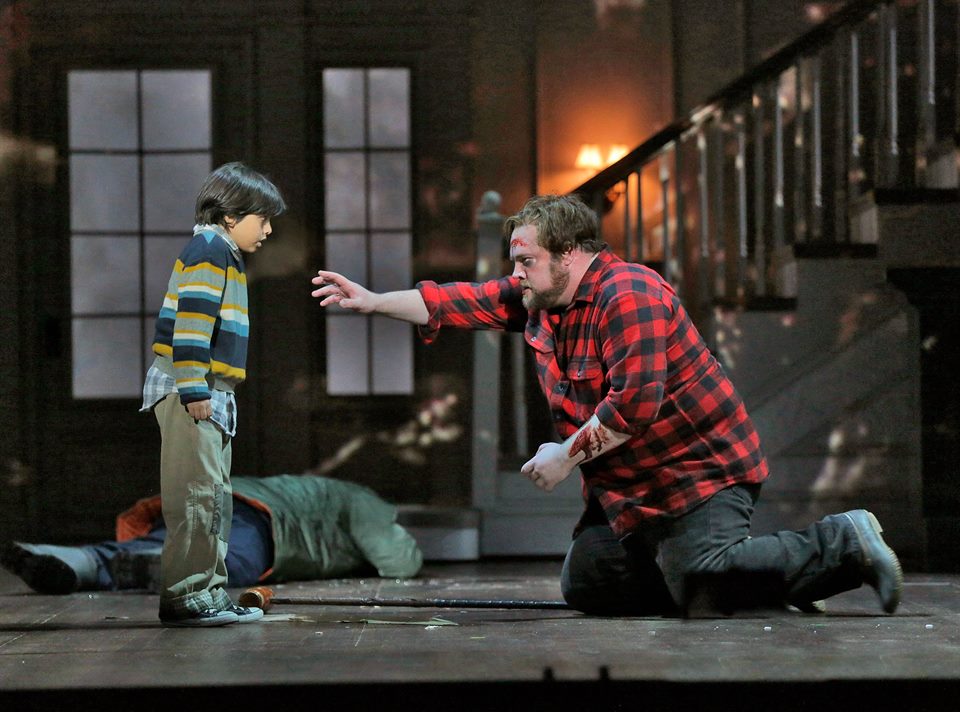
If you don’t know the story, Jack Torrance, a writer, has taken a job as winter caretaker of the isolated Overlook Hotel (loosely inspired by Estes Park’s Stanley Hotel), a seemingly elegant relic that turns out to be haunted. Jack brings his wife, Wendy, and young son, Danny, with him. Jack and Wendy are hoping to restore their damaged marriage, but under the sway of the hotel and its ghosts, the already fragile Jack turns violent.

Librettist Mark Campbell has done an effective job of reducing King’s 400+ page novel into a two-hour opera. The essential elements of King’s tale are present: the evil spirits that control the hotel, the temperamental boiler that threatens to blow the place to bits, the smothering snow that creates a barrier from rescue, the child with second sight (or the “shining” of the work’s title), and his hair-triggered father’s troubling past. It’s a lot to get into a compact libretto, but Campbell has managed to keep the spirit of the original while necessarily cutting some elements (including several of the haunted rooms, the topiary animals standing guard and the malevolent wasps).

13179410_10153765506357979_1954666156422704678_n

Alejandro Vega as Danny and Brian Mulligan as Jack

There is one significant change that King’s fans will notice, and it is not an improvement. At the end of the novel, Danny confronts his father fearlessly, because he knows something that Jack has forgotten: the boiler, which is close to blowing. When Danny reminds him of this, Jack rushes to the basement, leaving only enough time for the three survivors to escape. In other words, the Overlook has completely taken over Jack, who becomes a tragic figure brought down by his own weakness.

13151382_10153761433622979_8768870567870682339_n

Brian Mulligan as Jack, surrounded by evil spirits just before the boiler destroys the Overlook Hotel

In the opera, Jack allows Danny to go, and when the hotel’s spirits remind him of the boiler, he defies them and decides not to relieve the built-up pressure so that his family can escape. When he chooses to die in the resultant explosion, the story becomes a more conventional one of Jack’s redemption, a point made clear in the staging. In King’s bleaker vision, there is no such redemption.

Moravec has set this tale with accessible, expressive music. The text can be clearly understood, thanks to both composer and cast, and supertitles are often not needed. There are moments of affecting lyrical beauty, particularly the moving (if predictable) final aria by Halloran, the resort’s cook and the story’s rescuer, who reassures Danny that “You’re doing fine by yourself . . . Just fine.” Other major characters—Jack, Wendy, and the spectral figure of Jack’s brutal father—all have expressive music. If the ghostly chorus of evil spirits sounds a little too real, that is a consequence of portraying incorporeal beings with corporeal actors.

13178017_10153765506462979_5945586431432079112_n

The exploding Overlook Hotel

The horror genre is of course a well worked musical field, through opera and especially film. It is probably inevitable that Moravec incorporated some familiar clichés to represent menace, the sinister noises of malevolent spirits, ghostly voices and the ratcheting up of suspense, but it is a testament to his skill as a composer that these clichés are elevated by his score.

The orchestral writing is especially outstanding. The orchestra supports but never obscures the vocal lines. Sounds from the orchestra fit the text and mood, and the final powerful cataclysm is one of the most effective moments of musical pictorialism I can recall. That orchestral explosion and the subsequent relaxation into the comfortable and comforting music of the final scene make a satisfying ending.

13124956_10153765506557979_586500643969602035_n

Kelly Kaduce, Arthur Woodley and Alejandro Vega in the final scene

Minnesota Opera’s production is a dazzling tour de force. The beautiful projections that place the actors on a mountain road and beside a peaceful lake are impressive enough, but even more impressive are the scenes in the hotel, with a combination of atmospheric projections that heighten the mood and sliding units that shift (almost) seamlessly from room to room, with only the occasional “thump” to remind us of the stage machinery. Kudos to the designers and 59 Productions for the magic. The hulking boiler and its spectacular destruction of the hotel deserve special notice.

Of the singers, Arthur Woodley is magisterial as Halloran. The hearty cheers he received were well deserved: his robust baritone filled the hall and captured the brief scenes where he appears, at beginning and end.

13178841_10153761432417979_7664365553339574570_n

Brian Mulligan as Jack and Kelly Kaduce as Wendy

As Jack, Brian Mulligan added physical menace to a steel-cored voice. If his rapid swings early in the opera between loving family man and brutal tyrant seemed too precipitous, they were indeed frightening, as they should be. His deterioration in the second act was especially effective, as the Overlook asserts control and less and less of Jack is left. The power of the performance comes from growing intensity of his interpretation rather than any specific musical numbers along the way.

Kelly Kaduce, who sang Wendy Torrance, is deservedly a Minnesota Opera favorite. She sang with expression and beauty of sound, but her role stays long in a limited emotional range, mostly expressing fear of her husband and comfort for her son. Her aria at the beginning, “I never stopped loving you” helps suggest a warmer relationship with Jack, but in that one moment the music doesn’t quite rise to the needs of the text.

It would be remiss not to observe that the teasing and sexy moments between Jack and Wendy are well written, and that both text and actors captured well the mood of King’s novel. In the pared down, two-hour stage presentation they seem too ephemeral, as if squeezed in for relief; expansion of those moments, musically or dramatically, could restore the balance found in the novel’s more thorough back story.

13096261_10153761432437979_1411098242275429888_n

Alejandro Vega (Danny) and Arthur Woodley (Halloran)


Alejandro Vega, the 10-year-old who brings Danny movingly to life, shows great talent. His assurance and the authenticity of his emotional reactions to the story reveal a natural actor, but also one who is skillfully trained and directed in the role. He was on stage for much of the performance, and he was fully the equal of the adults with whom he shared the stage. For later productions this will be a make-or-break role. Vega definitely made it.

Minnesota Opera has put together an able ensemble cast for the other roles as well. Mark Walters as Jack’s father who reaches from beyond the grave to drive his son toward murder; David Walton as the seductive former caretaker and multi-murderer Delbert Grady; Robb Asklof as haughty hotel manager Stuart Ullman; Alex Ritchie as the hotel’s depraved founder Horace Derwent: all were scarily effective.

13124879_10153765505342979_5349882607679914159_n

Wendy, Danny and Jack surrounded by ghosts and ghouls

Christie led the Minnesota Opera’s excellent orchestra with care and sensitivity to the singers. I could not find a serious flaw in the balance, and—considering I had not heard the piece before—the pacing seemed just right. We in Boulder, and now audiences in Minnesota, know that his is an important career.

I have no doubt that The Shining will go on to other productions, especially in the United States where Stephen King’s works loom so large in the popular culture. Many more audiences will stand and cheer.

# # # # #

Minnesota Opera has become one of the most ardent and consistent supporters of new opera in the country. When you consider the record of some of the financially larger companies, their record of world premieres in four of the last five seasons (Kevin Puts, Silent Night, 2011; Douglas J. Cuomo, Doubt, 2013; Kevin Puts, Manchurian Candidate, 2015; and Paul Moravec, The Shining, 2016) puts them in a league with the adventurous Santa Fe Opera and few other professional companies.

And they have announced another premiere next season, Dinner at Eight by William Bolcom, based on the play by George S. Kaufman and Edna Ferber (March 11, 16, 18 and 19, 2017; you may see the entire, enticing season here.) I find it particularly exciting that our own American culture is being mined for operatic subjects, much as European opera has mined their shared culture for generations. This is certainly one of the reasons that contemporary opera is growing in popularity. There is more evidence than The Shining of American opera’s vigor today.

Colorado Music Festival announces diverse 39th summer season

Second season under music director Jean-Marie Zeitouni offers many highlights

Former music director Michael Christie returns to Boulder for a Festival Orchestra concert July 14

By Peter Alexander

chautauqua-boulder-colorado

Chautauqua Auditorium, home of the Colorado Music Festival

The program will look both new and familiar at the 2016 Colorado Music Festival.

The CMF announced its 39th festival season last night (March 2) at an event for their friends and supporters. Running from June 30 through August 7, this will be the festival’s second summer series under music director Jean-Marie Zeitouni.

Many of the familiar features of recent festivals will continue—Festival Orchestra and Chamber Orchestra concerts, the Music Mash-Up series, family and young people’s concerts, and chamber music performances. But within that general framework, there will be some new developments as well: chamber music will be presented in the Chautauqua Auditorium; and an imaginative new series of three concerts under the direction of CMF creative partner Joshua Roman, “ArC (Artistic Currents) at the Dairy,” will be presented at the Dairy Center. In a change from previous years, most Festival Orchestra programs will only be presented one night instead of two.
Zeitouni_2

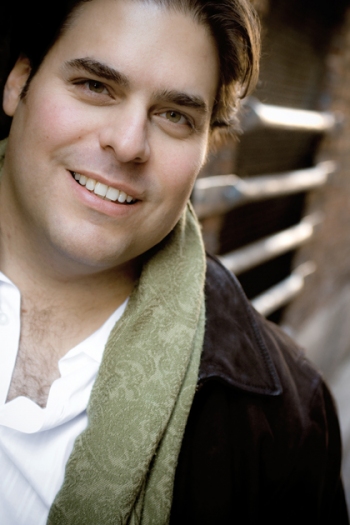
CMF music director Jean-Marie Zeitouni

Innovations for the 2016 season will include the Fêtes Galantes Series of intimate house concerts of chamber music, July 11, 20 and Aug. 5; a partnership with the Boulder Valley Velodrome, “CMF Goes to the Velodrome,” July 29; and a “Festival of Dinners” prepared by chefs from Boulder restaurants to be announced on the CMF Web page.

Ukrainian-Israeli violinist Vadim Gluzman will be one of several artists to have a residency at CMF, a notable expansion of festival activities. There will be several new and contemporary works during the summer, and Peter Brook’s controversial Tragedy of Carmen, a distillation of Bizet’s opera, will be presented July 10.

There will also be notable returns to the festival. Music director laureate Michael Christie will come back to Boulder to conduct a Festival Orchestra concert on July 14, with returning piano soloist Orion Weiss.

Other popular soloists from previous seasons will be back, including violinist Jennifer Koh with the Festival Orchestra on opening night, June 30. At the opposite end of the season, pianist Olga Kern will perform with the CMF Chamber Orchestra on the final concert, Aug. 7.

Lash

Click! Commission winner Hannah Lash

The “Click” Commission program that offers new works by composers selected and financed by festival-goers is back, with the premiere of the Second Harp Concerto by Hannah Lash, who will also be the soloist July 31. Lash will take part in a residency at CMF, extending her participation in the festival beyond the premiere of her new concerto.

There will a number of other notable guest artists during the summer: Guzman, pianist Stephen Hough, the vocal ensemble Roomful of Teeth, conductor Christopher Rountree, pianist David Korevaar from CU, and mezzo-soprano Kelley O’Connor, among others.

# # # # #

The season will be packed with so many highlights that it is difficult to list them all. Here is at least an overview of concert events. (All performances begin at 7:30 p.m. in the Chautauqua Auditorium unless otherwise noted.)

SFP-JenniferKoh-03@2x

Jennifer Koh

The festival opens June 30 with “Narratives of Heroism,” a concert Zeitouni describes as “one of the highlights for me.” The program features Koh playing Finnish composer Esa-Pekka Salonen’s Violin Concerto, on a program with Beethoven’s Overture to Egmont and Berlioz’s Symphonie Fantastique. The concert will be preceded by a Pre-Concert Dinner at 5:30 p.m. on the great lawn at Chautauqua.

Also part of the opening weekend will be the residency of Sō Percussion from Brooklyn, currently Ensemble in Residence at Princeton University. They will give a recital July 1 on the Presenting Series of chamber music concerts, and will play Young People’s Concerts with the CMF orchestra at 10 and 11:30 a.m. July 2.

SO Percussion

So Percussion

The holiday weekend will wrap up with “Red, White and Brass,” a patriotic pops concert by the CMF Brass Ensemble at 4 p.m. July 3. Other Family Fun Concerts will be at 3 p.m. July 10 and 31.

The second week will feature “Boulder Brahms,” with the Festival Orchestra playing the four Brahms symphonies in two concerts: Nos. 1 and 2 on July 7; and 3 and 4 on July 8. “We’re not doing a mini-festival proper, like we did last season,” Zeitouni explains. “Instead, there are different themes throughout the summer.

“It’s interesting to hear all (the Brahms symphonies) two by two, but the idea goes beyond this. One of the more long-term ideas for the festival is to do multi-year symphonic cycles, like Michael Christie did with Mahler. The Brahms cycle is, I would say, a pretty conservative first step.”

Zeitouni sees this as a way to open up the repertoire beyond the symphonies that are programmed most often, but without overwhelming the schedule and the audience by trying to fit all of a composer’s symphonies into a single summer. Possible future composers for a multi-year cycle might include Bruckner, Shostakovich, Prokofiev and Dvořák, he said.

July 10 will see the presentation of a work that has become notorious in opera circles: Peter Brook’s abridged version of Bizet’s Carmen. The Tragedy of Carmen boils the opera down to about 80 minutes by paring away everything that does not have directly to do with the central drama of conflicting loves.

This distilled version, which only requires four voices and a chamber orchestra, “makes it a little bit more intense, if that’s even possible,” Zeitouni says. “It just tightens the tension—you have a higher alcohol content, because it’s a more concentrated formula.”

*temp*

DJ Spooky

The Music Mash-Up series will feature three groups: Jazz trio The Bad Plus will present a deconstruction of Stravinsky’s Rite of Spring, enhanced with projections and passages of jazz improvisation, July 12. On July 26, CU faculty Paul Miller, who performs as DJ Spooky, will mix classical pieces using turntables and performing with the Festival Orchestra.

The final Mash-Up brings the Colorado band Paper Bird to Chautauqua Aug. 2 to perform with the orchestra. Christopher Rountree, founder and director of wild Up, a Los-Angeles based chamber orchestra, will conduct the CMF orchestra on the July 26 and Aug. 2 Mash-Up performances.

# # # # #

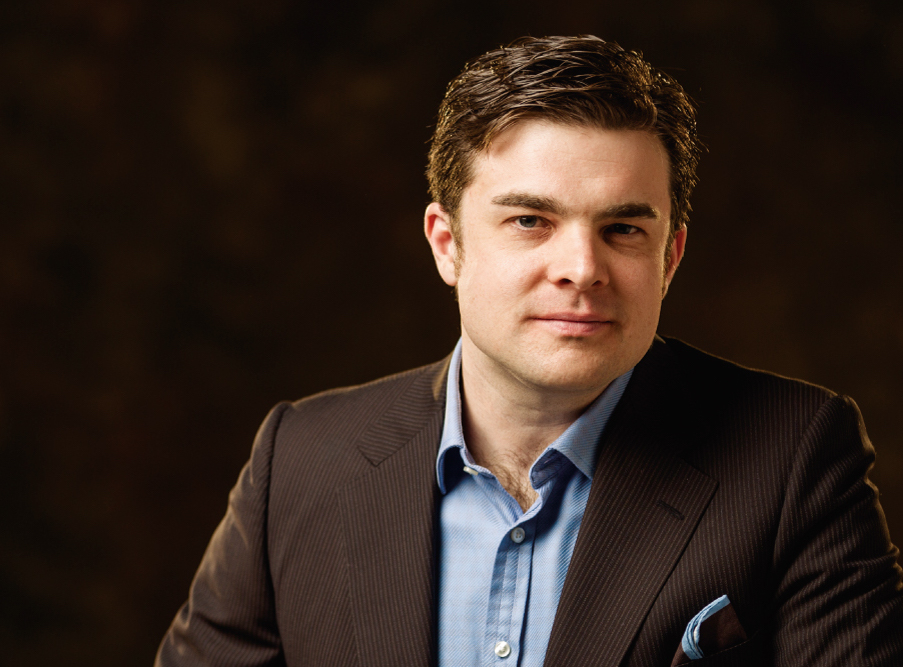
Michael Christie is very happy to be coming back to Boulder for the July 14 Festival Orchestra concert with pianist Orion Weiss. “We’ve got a great program,” Christie says. “I think its going to be a fun night.”
Christie

Michael Christie

The concert will open with Leonard Bernstein’s Shivaree, a fanfare for brass, followed by Charles Ives’s Unanswered Question for strings and a single trumpet. “The Bernstein is very boisterous and the Ives is extremely quiet,” he says. “I think in Chautauqua it will be quite magical.”

Next will be the suite from Bernstein’s score for the film On the Waterfront, which Christie chose because it is not heard often and it has a lot of solos for his friends in the orchestra. “It’s a beautiful, cinematic work,” he says. The second half of the concert will be a single work, Brahms’s First Piano Concerto with Weiss as the soloist.

“When I think about Chautauqua, there are just so many faces that I can see, because I saw them for so many summers,” Christie says. “I can remember a lot of folks, and I’ll be curious to see if they will still be there.

“The other thing I’m really looking forward to is getting out to do some hikes. When the summer was going and I was music director there were always a billion things to take care of. I’d get to the end of summer and realize that I hadn’t done a single hike. I’m going to try to make up for that, so maybe you’ll see me on the trail!”

# # # # #

JoshuaRoman_JeremySawatzky04

Joshua Roman. Photo by Jeremy Sawatzky

The ArC at the Dairy series, presented at Boulder’s Dairy Center, has some of the most intriguing programs of the summer. On July 16 series director and cellist Joshua Roman will perform with soprano Jessica Rivera and CMF musicians to present his own song cycle we do it to one another, based on Tracy K. Smith’s Pulitzer Prize-winning poetry collection “Life on Mars”; and one of the iconic works of the 20th century, Olivier Messiaen’s Quartet for the End of Time, written in a World War II prisoner-of-war camp.

On July 23, composer/violinist Daniel Bernard Roumain and spoken word artist Marc Bamuthi Joseph will join together to present “Blackbird, Fly,” a hip-hop influenced program that will address issues of tolerance and inclusion. And July 30 the Grammy-winning contemporary vocal group Roomful of Teeth will bring their unique style to the festival.

10-24-07-Vadim-Gluzman-CD-Cover

Vadim Gluzman

Chamber Orchestra concerts will include “Inspired by Bach” July 17, with violinist Gluzman playing and leading the orchestra in works of Mozart, Shostakovich, and Alfred Schnittke; Mozart’s three final symphonies together on a single concert directed by Zeitouni July 24; and the July 31 premiere of Lash’s Harp Concerto No. 2, the Click! Commission winner, programmed with music by Bach, Beethoven and Richard Strauss.

The Presenting Series will offer chamber music performances at Chautauqua Auditorium. After Sō Percussion opens the series on July 1, Weiss, Roman, Korevaar, Gluzman, Kern, and CMF musicians will perform in various combinations July 15 and 19 and Aug. 6. As part of his week-long residency, Gluzman will also appear with the Festival Orchestra in “Russian Passions,” the one orchestra program to be repeated, July 21 and 22.

In addition to Gluzman’s performance of the Tchaikovsky Violin Concerto, the concerts will feature Liadov’s Enchanted Lake and a special presentation of Mussorgsky’s familiar Pictures at an Exhibition with animation that was created for the first performance in architect Frank Gehry’s New World Center in Miami Beach, Fla.
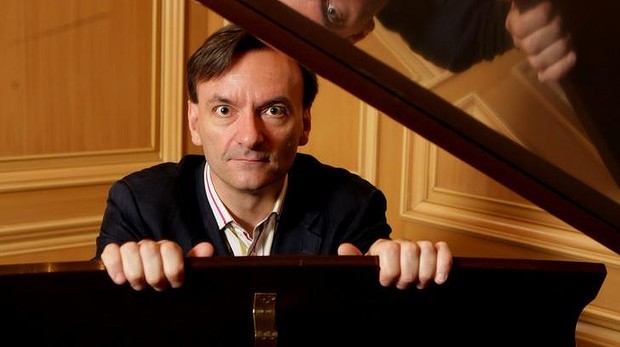
Stephen Hough

Stephen Hough

British pianist Stephen Hough returns to Boulder for the sixth Festival Orchestra program, “From Prague to Warsaw to Bucharest,” on July 28. Hough will play Liszt’s First Piano Concerto and Polish composer Witold Lutosławski’s Paganini Variations. “In a folkish-inspired program, we will open with the Enescu First Romanian Rhapsody and (close with) Dvořák’s Symphony No. 8,” Zeitouni says of the program.

Zeitouni identifies the Aug. 4 Festival Orchestra concert as one of his favorite programs of the summer. It will feature two major works, the Trois Nocturnes for orchestra of Claude Debussy, and Gustav Mahler’s deeply moving Lied von der Erde (Song of the Earth) with mezzo-soprano Kelley O’Connor and tenor Richard Cox as vocal soloists.

“This music is some of my favorites,” Zeitouni says. “I have a very personal relationship with Das Lied von der Erde, because it was one of the first recordings that I got as a teenager.” He also observes that the piece was requested by orchestra musicians, because they rarely have the chance to play it in their home orchestras, and it is a continuation of the Mahler cycle that Christie had begun.
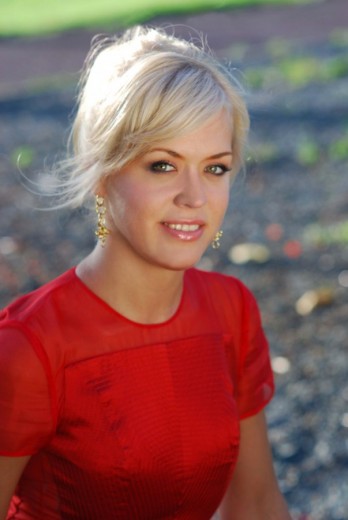
OK-Red-Dress

Olga Kern. Photo by Fernando Baez.

The final night of the festival will be a Chamber Orchestra concert on Aug. 7. This program will feature Zeitouni and CMF favorite Olga Kern playing Beethoven’s “Emperor” Concerto on a program with Stravinsky’s “Dumbarton Oaks” Concerto and Schubert’s delightful Symphony No. 5.

Outgoing CMF executive director Andrew Bradford has written that “the offerings of the 2016 Colorado Music Festival are incredibly wide-ranging and diverse,” a claim that is hard to disagree with. “The season includes something that every music lover will enjoy,” he wrote.

# # # # #

UPDATE (3/4/16): The full summer calendar is now available on the CMF Website.

TICKETS: Subscription tickets will go on sale Monday, March 7, and single tickets will be available Monday, April 4. For tickets to most events, click HERE. Tickets to the ArC series at the Dairy Center are available HERE.

Michael Christie will conduct world premiere at the Santa Fe Opera in 2017

Santa Fe’s 2016 season has also been announced

By Peter Alexander

Michael Christie conducts the Minnesota Opera

Michael Christie conducts the Minnesota Opera

Santa Fe Opera (SFO) general director Charles McKay has announced that The (R)evolution of Steve Jobs, a new opera by Mason Bates, will have its world premiere as part of the company’s 2017 season.

The announcement was made Aug. 5 at a press conference in Santa Fe. The opera’s libretto will be by Mark Campbell, who is well known as the librettist of the Pulitzer Prize-winning opera Silent Night. The stage director will be Kevin Newberry, and the conductor will be Michael Christie, music director of the Minnesota Opera and former music director of Boulder’s Colorado Music Festival. This will be Christie’s Santa Fe Opera debut.

The (R)evolution of Steve Jobs has been commissioned by the SFO, where it will be the company’s 15th world premiere.

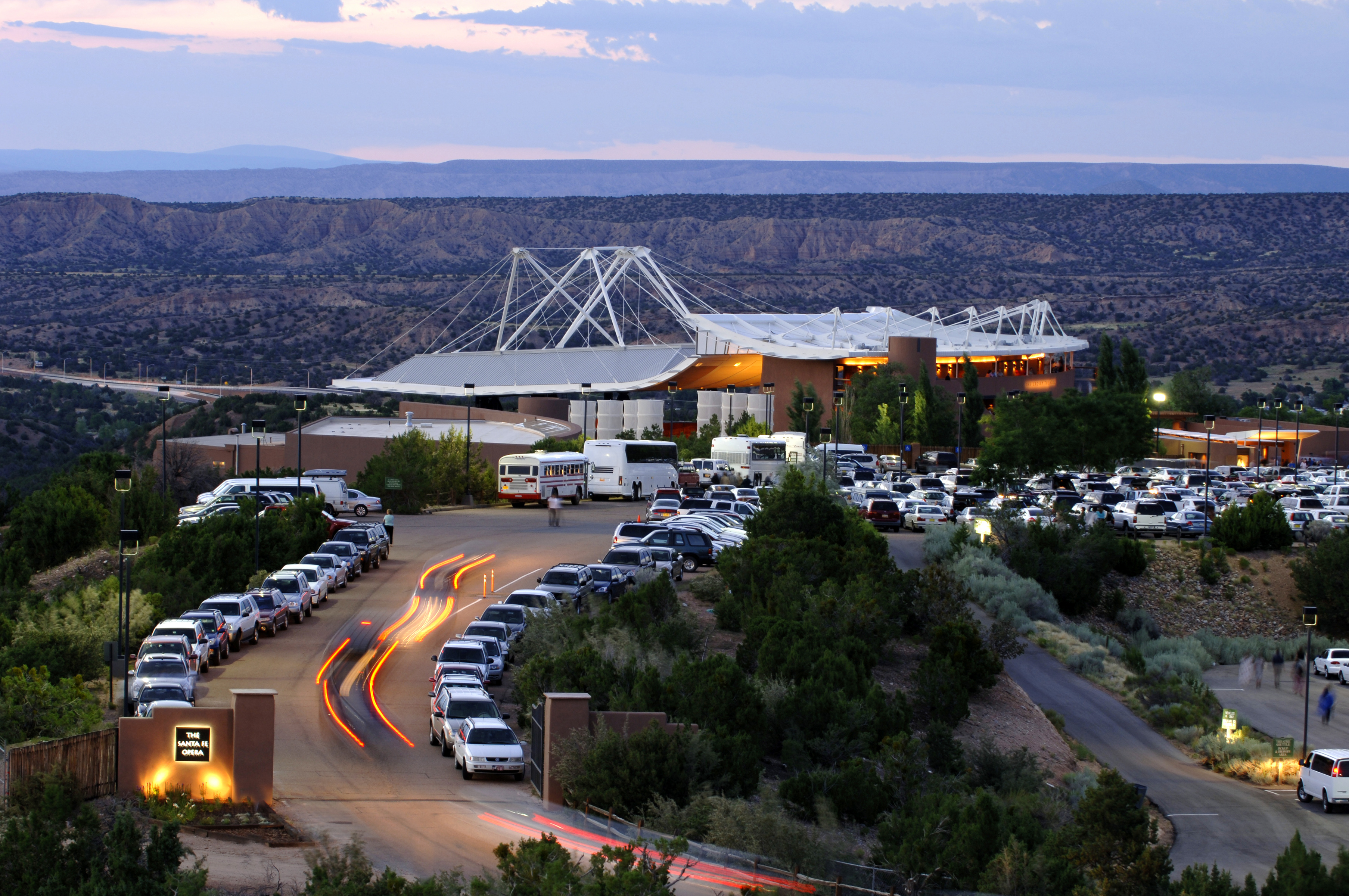
Santa Fe's unique opera house

Santa Fe’s unique opera house

Known as an adventurous company, the Santa Fe Opera has attracted both audiences and press from around the world for their world premieres, including this year’s production of Jennifer Higdon’s Cold Mountain, co-commissioned with Opera Philadelphia and the Minnesota Opera, in collaboration with North Carolina Opera. (Limited seats are still available for Cold Mountain performances Aug. 17, 22 and 14.)

The company has also recently announced their 2015–16 season, which will not include premieres, but will feature several operas that are not often heard. The operas scheduled for July and August 2016 are Romeo et Juliette by Charles Gounod; Capriccio by Richard Strauss; Vanessa by Samuel Barber; La Fanciulla del West (The girl of the golden West) by Giacomo Puccini; and Don Giovanni by Mozart. Tickets will be on sale on the SFO Web page in the fall.

# # # # #

Librettist ark Campbell (left) and composer Mason Bates (right) at the Santa Fe Opera press conference announcing the premiere of Bates's

Librettist Mark Campbell (left) and composer Mason Bates (right) at the Santa Fe Opera press conference announcing the premiere of Bates’s “(R)evolution of Steve Jobs.”

Mason Bates is known both as a composer and as a DJ in the San Francisco Bay Area. His compositions are characterized by the inclusion of electronic effects into orchestral works and other music. His “Observer in the Magellanic Cloud” for chorus with electronic sounds was performed last year by Boulder’s Ars Nova Singers and director Thomas Edward Morgan.

For The (R)evolution of Steve Jobs, Bates said that he will include electronic elements, some based on samples of early computing gear, and acoustic guitar, an instrument that Jobs especially loved. “You will not have heard these sounds before in an opera house,” he said at the press conference.

In a statement on his Web page, Bates wrote “What fascinates me about the story of Steve Jobs is that it exists at the intersection of creativity, technology, and human communication—and I think that can make for thrilling opera.

Mason Bates. Photo by Lydia Danmiller.

Mason Bates. Photo by Lydia Danmiller.

“Imagine, for example, the possibilities for bringing to life Kobun, the spiritual advisor to Steve Jobs—an important and overlooked figure who receives stunning treatment by librettist Mark Campbell. A panoply of Tibetan prayer bowls and Chinese gongs drift across the electronics, sometimes sounding purely ‘acoustic,’ sometimes imaginatively processed as if in a nirvana-esque limbo. Think of how eerily beautiful those sounds can sound when supporting the mystical textures of a low bass voice.

“In fact, Jobs’ search for inner peace is the story of the opera—which, in a sentence, is about a man who learns to be human again. The key role in this journey is his wife Laurene, who acted as the electrical ‘ground’ to the positive and negative charges of Jobs. . . .

“Because the subject is so well known, we’ve taken a poetic and non-linear approach. Anchoring this imaginative, non-chronological telling are numbers—real musical numbers—and a clear-as-crystal through-line: how can you can simplify human communication onto sleek beautiful devices, when people are so messy? We’ll travel with Jobs on his journey from hippie idealist to techno mogul and, ultimately, to a deeper understanding of true human connection.”

NOTE: Edited Aug. 16 to include that fact that The (R)evolution of Steve Jobs will be Michael Christie’s debut with the SFO.