Boulder Phil will present three works in one

Performances of Bach’s St. Matthew Passion will be a collaboration with several organizations

By Peter Alexander

J.S. Bach’s St. Matthew Passion is at least three different works.

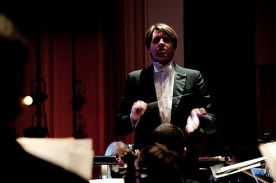
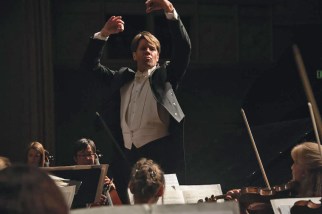
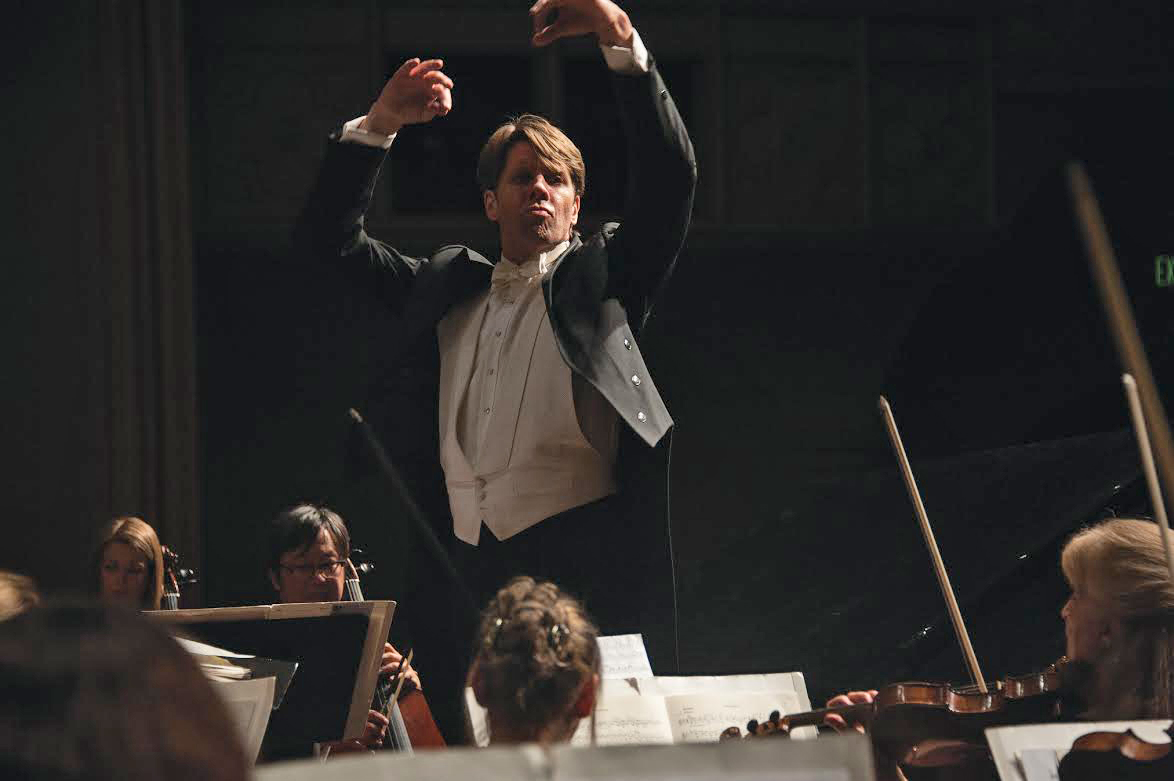
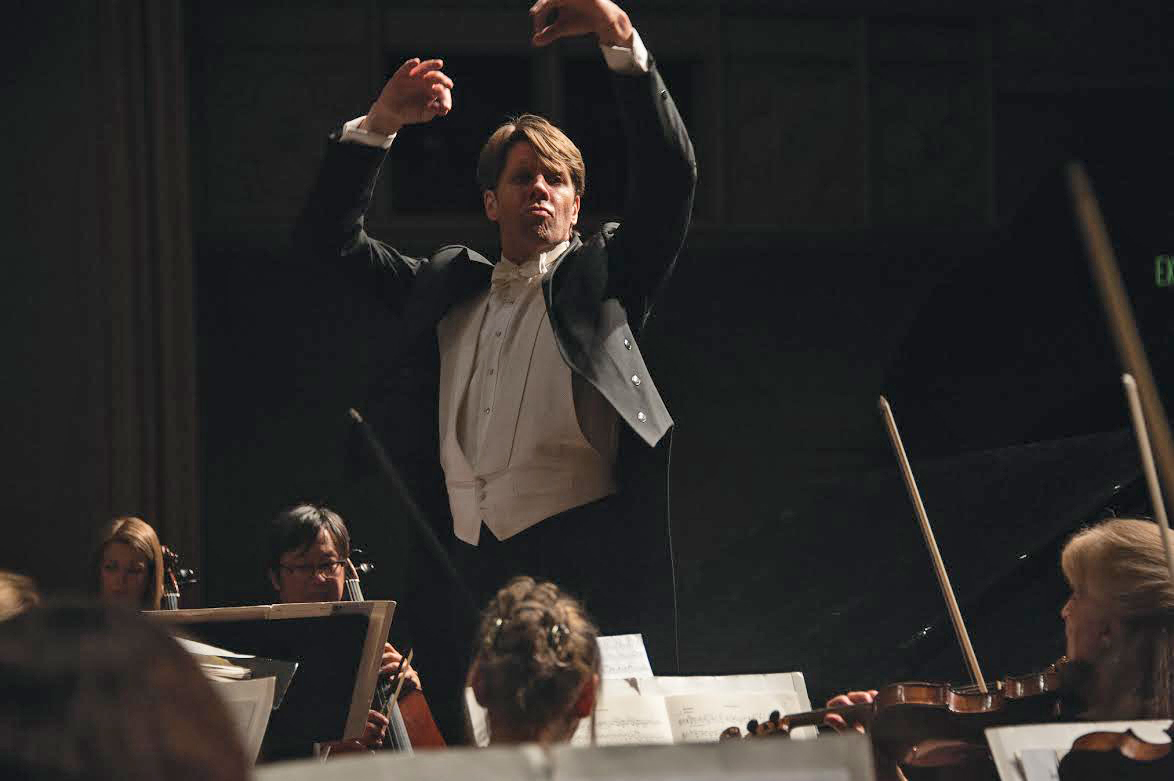
Michael Butterman conducts the Boulder Phil - Glenn Ross Photo.jpg

Michael Butterman and the Boulder Philharmonic. Photo by Glenn Ross.

It is a sacred work, written and performed in Bach’s lifetime as part of Good Friday services at the Thomaskirche in Leipzig. It is a concert work that has been performed apart from religious services for most of the 266 years since Bach’s death. And it is a dramatic work, the closest Bach came to writing an opera.

This weekend’s performances by the Boulder Philharmonic, a semi-staged production presented in conjunction with the Boulder Bach Festival, Central City Opera, the CU College of Music and the Boulder Children’s Chorale, will definitely tilt toward the third option. (Performances will be at 7 p.m. Saturday in Macky Auditorium, with supertitles projected over the stage; and at 2 p.m. Sunday in Denver’s Central Presbyterian Church.)

Bach’s score unfolds on different levels: There is a tenor singing the Biblical narration, a baritone singing the words of Jesus, and individuals from the chorus who sing the words of other characters named by St. Matthew; there is a double chorus, which sings large choral movements that introduce and close the work, the words of the crowd, and Lutheran chorales that symbolically represent the reaction of the congregation; and there are aria soloists who sing non-Biblical poetic texts that reflect upon the story.

To these musical events, this performance will add an onstage dramatization, but not in a literal way. “There’s very little that’s literal action,” stage director Robert Neu says. “What we’re trying to do is take it a little bit out of the realm of a traditional concert performance. The piece is very operatic in the way it’s shaped, it’s very dramatic, but given the nature of the piece, you can’t be overly literal about it.”

Read more in Boulder Weekly.

# # # # #

Bach’s St. Matthew Passion
Boulder Philharmonic, Michael Butterman, music director
A semi-stage production with
Central City Opera, Robert Neu, stage director
Boulder Bach Festival chorus, Zachary Carrettin, artistic director
The University of Colorado, Boulder, University Singers and University Choir, Gregory Gentry, chorus master
Boulder Children’s Chorale, Kate Klotz, artistic director
Vocal soloists

7 p.m. Saturday, April 23 [Note early starting time]
Macky Auditorium, Boulder
Preceded by pre-performance discussion, 6 p.m.

2 p.m. Sunday, April 24
Central Presbyterian Church, Denver

Tickets

Boulder Phil announces 2016–17 Season

Concert for the Kennedy Center, duo concertos mark a year with few blockbusters

By Peter Alexander
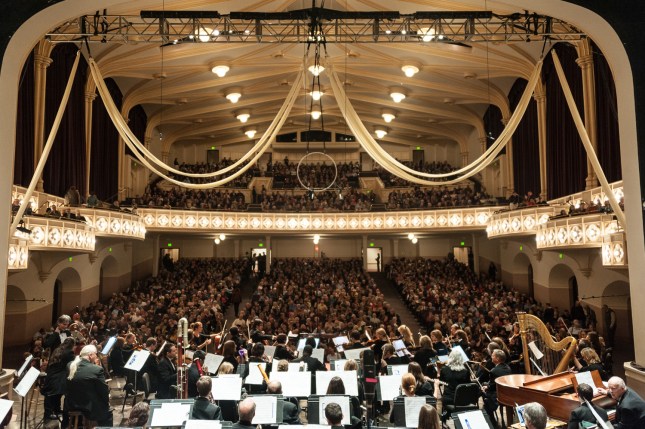
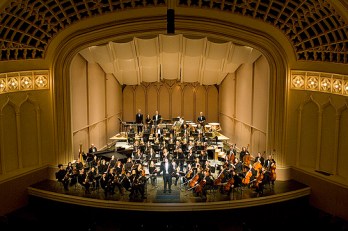
The crowd at Macky Auditorium from the stage - Glenn Ross Photo

Boulder Phil in Macky Auditorium. Photo by Glenn Ross.

Forging its own path, the Boulder Philharmonic has announced a season for 2016–17 that is unlike most orchestra seasons around the country.

Music Director Michael Butterman_2_Credit Rene Palmer.small

Michael Butterman. Photo by Rene Palmer

For one thing, the season marks the Boulder Phil’s tenth year with music director Michael Butterman. Most orchestras would celebrate that with splashy programming, but the Phil is not taking that route. The one semi-splashy event—a concert March 25 that will be taken to the Kennedy Center in Washington D.C. on March 28—offers an eclectic program that, characteristically for the Phil, reflects Boulder’s close relationship to nature.

Otherwise, the season avoids the blockbuster mentality. There will be world premieres, there will be concertos for pairs of soloists, there will be great local musicians from CU Boulder, there will be lighter symphonies from heavyweight composers, and there will be music from less familiar composers. What there will not be will be are the big-name soloists and spectacular works that most orchestras use to fill the hall.

There is no doubt Butterman’s style of programming has drawn audiences over the past ten years. According to figures provided by the Boulder Phil, they have had 10 successive seasons of increasing sales of subscriptions. The current year is up 25% over the previous season, already setting an attendance record for the orchestra even before the last two concerts of the 2015–16 season.

“Whatever we present, we want to make sure it makes some kind of statement that we’re not just another orchestra but something a little bit different and special,” Butterman says. “For the most part we want to be presenting things that are a little more unique, and not exactly replicating (programming) in other places.”

In that they have certainly succeeded. The season is filled with intriguing offerings, music that adventurous listeners will be excited about, and programs that do indeed reflect Boulder’s personality as a community.

The March 25 concert that will travel to the Kennedy Center follows that pattern. “The capstone to this anniversary season is taking this program that is about who we are and the relationship we have with the community and presenting it on a national stage,” Butterman says.

“This is saying to the (classical music) industry ‘Look, here’s how one orchestra has found a way to be successful, to reflect its community, to do all the things that we need to do to continue to matter in the 21st century.”

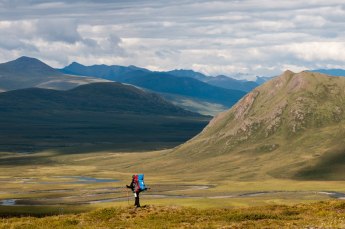
Lias in GoANP.2

Stephen Lias in Gates or the Arctic National Park. Photo courtesy of the composer.

The concert will open with the world premiere of a new work by adventurer-composer Stephen Lias, whose Gates of the Arctic opened the 2014–15 season. Commissioned in celebration of the 100th anniversary of the National Park Service and inspired by Rocky Mountain National Park, the new score will be accompanied by “choreographed visuals”—projected photos—of the park. Lias will be working on the score while in residence in the park later this year.

Writing from Tongyeong, South Korea, where he is attending the 2016 International Society for Contemporary Music World Music Days, Lias comments, “My plan is to create a dramatic line for the piece based on my many experiences in the park (including an upcoming one this June), and the extensive photographic collection the park has given me access to.

“I hope to write a piece that will capture the dramatic scope of the place, but also the intimate ‘moments’ that we each take home with us. Through the music and the synchronized images, audiences will have a vicarious wilderness experience that will deepen their relationship with this remarkable national park.”

Frequent Flyers A.S.

Frequent Flyers with the Boulder Phil in Macky Auditorium

Other works on the same program will be pieces that reflect the Boulder personality and the city’s relationship with nature. They are also pieces that form part of the orchestra’s history, having been performed in previous seasons: Jeff Midkiff’s Mandolin concerto From the Blue Ridge, with the composer as soloist, previously performed in April 2014; Ghosts of the Grasslands by Steve Heitzeg, performed in March 2014; and Copland’s Appalachian Spring with Boulder’s Frequent Flyers Aerial Dance company, a repeat of a performance from 2013.

As with many orchestras, Boulder Phil announces that “each concert will feature a major symphonic work,” but with the exception of Respighi’s Pines of Rome on the season’s final concert (April 22), they are not orchestral showpieces: Tchaikovsky’s Symphony No 2 (“Little Russian,” Oct. 8); Beethoven’s Symphony No. 8 (Nov. 6); and Schumann’s Symphony No. 4 (Jan. 14). All are first performances by Butterman with the Phil, and all are welcome, but they are not works that most orchestras build seasons around.

Walther & Dusinberre

Takács Quartet members Geraldine Walther and Edward Dusinberre

There are other familiar works that have broad appeal, including Appalachian Spring (March 25). Rachmaninoff’s lyrical and virtuosic Rhapsody on a Theme by Paganini played by pianist Elizabeth Joy Roe will be a draw for the opening concert (Oct. 8). Takács Quartet and CU faculty members Edward Dusinberre and Geraldine Walther will join the orchestra for Mozart’s Sinfonia Concertante for violin and viola (Nov. 6).

Those familiar works will share the season with more adventurous programming, including the Concerto for Two Pianos by Francis Poulenc, performed by the young piano duo Anderson & Roe (Oct. 8); the Concerto for Violin and Horn by Ethel Smyth, performed by Jennifer Frautschi and Eric Ruske (Jan. 14); Luciano Berio’s classically-inflected Four Original Versions of Boccherini’s Return of the Nightwatch from Madrid and the world premiere of the Double Concerto for violin and guitar by Stephen Goss, performed by orchestra concertmaster Charles Wetherbee and CU professor Nicolò Spera (both April 22).

Butterman believes that the Boulder audience will continue to embrace the orchestra’s offbeat programming. “People have come to place a certain amount of faith in the choices we make,” he says. “They seem to be willing to trust that we’ll make choices (that) will be interesting and enjoyable and provocative.”
21jake.jump_

Jake Shimabukuro

As usual, there will be performances outside the main series of classical concerts. The annual performances of Nutcracker with Boulder Ballet will be Nov. 25–27. There will be a concert Feb. 4 with ukulele virtuoso Jake Shimabukuro, performing his own original music as well as unusual arrangements for ukulele and orchestra of classical, popular and contemporary music, from Puccini’s “Nessun Dorma” to Queen’s “Bohemian Rhapsody.”

Alli Mauzey

Alli Mauzey

December 10 the orchestra will welcome Broadway singing star Alli Mauzey, who rose to fame as Glinda in Wicked, singing songs from that show and other Broadway shows. The program, titled “A Wicked Good Christmas,” will also feature music for the holidays.

“It’s a concert that I think will tread the line between being a holiday concert and a Broadway pops concert,” Butterman says. “It’s one that we hope will offer things for the community that are a little beyond what a typical classical audience might expect, and by virtue of that reach more of a family audience.”


# # # # #

Boulder Philharmonic Orchestra
Michael Butterman, Music Director
2016-2017 Season

Saturday, Oct. 8: Opening Night
Poulenc: Concerto for Two Pianos, Anderson & Roe, piano duo
Rachmaninoff: Rhapsody on a Theme by Paganini, Elizabeth Joy Roe, piano
Tchaikovsky: Symphony No. 2 (“Little Russian”)

AndersonRoe+by+Woodrow+Leung

Anderson & Roe. Photo by Woodrow Leung

Sunday, Nov. 6, 7 p.m.: Mozart & Beethoven
Thomas Adès: Three Studies from Couperin
Mozart: Sinfonia Concertante for Violin and Viola, with Edward Dusinberre, violin, and Geraldine Walther, viola
Beethoven: Symphony No. 8

Nov. 25–27: The Nutcracker with Boulder Ballet
Performance times tba

Saturday, Dec. 10: A Wicked Good Christmas, with Alli Mauzey
Songs from Wicked and other Broadway shows, plus Christmas classics

Saturday, Jan. 14, 2017: Brahms & His World
Brahms: Tragic Overture
Ethel Smyth: Concerto for Violin and Horn, with Jennifer Frautschi, violin, and Eric Ruske, horn
Schumann: Symphony No. 4

Saturday, Feb. 4: Jake Shimabukuro, ukulele, with the Boulder Phil
Gary Lewis, conductor

Saturday, March 25: Nature & Music—Kennedy Center Kick-Off Concert
Program to be repeated at the inaugural SHIFT Festival in Washington, D.C., on Tuesday, March 28, 2017
Stephen Lias: World premiere commemorating the 100th anniversary of the National Park Service, with choreographed visuals
Jeff Midkiff: Mandolin Concerto, From the Blue Ridge, with Jeff Midkiff, mandolin
Steve Heitzeg: Ghosts of the Grasslands
Copland: Appalachian Spring, with Frequent Flyers® Aerial Dance

Saturday, April 22: Season Finale: The Pines of Rome
Stravinsky: Monumentum pro Gesualdo
Luciano Berio: Four Original Versions of Boccherini’s Return of the Nightwatch from Madrid
Stephen Goss: Double Concerto for Violin and Guitar (world premiere), with Charles Wetherbee, violin, and Nicolò Spera, guitar
Verdi: Overture to Nabucco
Puccini: The Chrysanthemums
Respighi: The Pines of Rome

All Concerts in Macky Auditorium
All concerts begin at 7:30 p.m. unless otherwise indicated.

Tickets and More Information: Five- and six-concert subscription packages are now available. New subscribers save 50% off single ticket prices. Call 303-449-1343 or click here

Boulder Phil offers Americana, east and west

“Dance, American Style” features collaboration with Boulder Ballet

By Peter Alexander

They will be dancing in the aisles, and on the stage of Macky Auditorium when the Boulder Philharmonic presents its first concert of 2016.

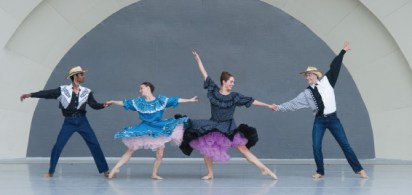
Rodeo

Photo by Keith Bobo

The program, titled “Dance, American Style,” will be presented at 7:30 p.m. Saturday (Jan. 16; tickets). Boulder Ballet will perform the complete ballet Rodeo by Aaron Copland, with choreography by artistic director Ana Claire.

Music director Michael Butterman will conduct the performance, which will also feature concert performances of music from Copland’s Billy the Kid ballet, the Symphonic Dances from West Side Story by Leonard Bernstein, and the New England Triptych of American composer William Schuman.

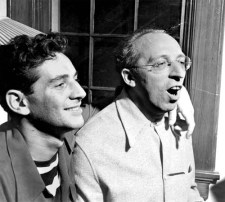
aa_bernstein_copland

Bernstein and Copland, 1945

The program is an attractive anthology of American music from the mid-20th century. Copland was one of the most prominent composers of that era, with his folkish American style represented by both Billy the Kid and Rodeo, two staples of the orchestral repertoire to this day. Leonard Bernstein was both a champion of Copland’s music and a composer of protean abilities who made a mark on Broadway—the ultimate American musical genre of the 20th century—and in the concert hall. And William Schuman was the composer of acclaimed, accessible concert works, winner of the Pulitzer Prize in music, and a leader of American music for many years as president of first the Juilliard School and later Lincoln Center.

But as the title suggests, the program can also be seen as a tribute to the personalities and companies who established an American world of dance. In fact, it touches many of the legendary dance figures of the mid-20th century.

Billy the Kid was commissioned from Copland by dance impresario Lincoln Kirstein and premiered in 1938 by Kirstein’s Ballet Caravan. That company preceded the New York City Ballet, co-founded by Kirstein and Georges Balanchine. Billy was choreographed by Eugene Loring, who also danced in the premiere and later joined American Ballet Theater.

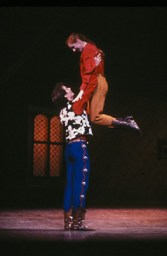
rodeoslides10p1

De Mille’s Rodeo; photo by Peter Shields

Rodeo was commissioned for the Ballet Russes de Monte Carlo. The choreographer was Agnes de Mille, who also danced the lead role at the 1942 premiere at the Metropolitan Opera House. In the audience that night were Richard Rogers and Oscar Hammerstein, who in turn invited de Mille to choreograph the dance sequences for their upcoming show, Oklahoma, thereby transforming the Broadway musical.

 Symphonic Dances from West Side Story is a suite for symphony orchestra taken from the score for Bernstein’s 1957 Broadway hit. It was compiled in 1961 by Bernstein in collaboration with his colleagues Sid Ramin and Irwin Kostal, who had just finished producing the orchestral score for the film version of the show, employing a much larger orchestra than the original Broadway pit band.

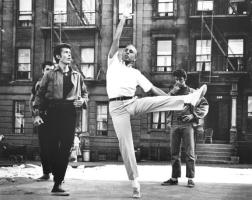
Robbins_rehearsal61

Robbins rehearsing West Side Story

The score incorporates West Side Story’s top hits, “Somewhere” and “Maria,” alongside the many dance sequences from the show. Director and choreographer of the original Broadway production was Jerome Robbins, whose innovative dances for the rival street gangs won the 1957 Tony Award for best choreography. Robbins was for many years one of the most influential American directors, choreographers and producers of ballet, Broadway, film and television.

For the Jan. 16 concert, Rodeo will be the only dance that is brought onto the stage. The performance will conclude with Boulder Ballet performing the full ballet—slightly longer than the familiar orchestral suite—on the front of the stage and in the aisles. Even though the full orchestra will be onstage with the dancers, “we’re going to give them as much room as we can,” Butterman says.

In any case, he adds, “It’s an uncommon chance to experience great concert music and see a short ballet on the same night!”

Butterman (old)

Michael Butterman

The rest of the program, Americana of several types—the “great concert music”—all seems to fit together in a very coherent way. But in fact, Butterman says, “this concert came together in kind of a bizarre way,” with each of the other pieces having been originally planned for another concert. “But I do think the program itself works rather nicely,” he adds.

The least familiar work will be Schuman’s New England Triptych, a work that is deeply rooted in America’s early history. It is based on the work of William Billings, a colonial-era song- and hymn-writer. Three of his songs—“Be glad then America,” “When Jesus Wept” and “Chester”—are the sources of the three movements.

“This is music that a lot of wind players encounter through the wind ensemble literature,” Butterman says. “It’s really attractive, it’s splashy when it needs to be, and yet that middle movement is beautifully introspective. The outer movements are very difficult—quick and very demanding.”

schum2

William Schuman

In fact, he says, the whole concert will be difficult playing. “As I was studying this program over the past few days, I began almost kicking myself,” he says. “What was I thinking? In spite of the fact that the music is pretty familiar, it’s all difficult!”

That would be most obviously true of the Symphonic Dances from West Side Story, which was clearly designed as a jazzy virtuoso showpiece for the musicians of the New York Philharmonic. “A member of a prominent orchestra (told me) a few years ago he thought this was one of the hardest pieces in the standard repertoire,” Butterman says.

“You have to get the swinging right, you have a real sort of screaming trumpet, and you’ve got lots of percussion. It’s really hard stuff to get together. It will be a challenge—it’s a challenge for any orchestra. It just takes some work.”

Fortunately, he adds, the orchestra will have four rehearsals in Macky Auditorium before the concert, instead of having part of their rehearsal week in the Dairy Center or some other location with different acoustics. “We’ll be able to hear it the same way four times in a row,” he says. “That will help a lot, I think.”

Once all the pieces are put in place, Butterman has no doubts that the audience will love the program. It fits Boulder Phil’s winning formula: some familiar pieces, even some pop and jazz-inflected music from Broadway, and a chance for people to discover something new in the New England Triptych.

“It’s all high energy and colorful, fun Americana,” he says, “with the added appeal of seeing the Copland brought to life in the way it was originally conceived—as dance music.”

# # # # #

Dance, American Style
Boulder Philharmonic Orchestra, Michael Butterman, music director
With the Boulder Ballet, Ana Claire, artistic director

7:30 p.m. Saturday, Jan. 16, 2016
Macky Auditorium

William Schuman: New England Triptych
Leonard Bernstein: Symphonic Dances from West Side Story
Aaron Copland: “Prairie Night, “ “Waltz” and “Celebration Dance” from Billy the Kid
Aaron Copland: Rodeo (complete ballet)
Boulder Ballet performing choreography by Ana Claire, artistic director

Tickets

Boulder Philharmonic receives its first NEA grant

Funds will commission a new work by Stephen Lias celebrating Rocky Mountain National Park

By Peter Alexander

BPO.Macky.2

The Boulder Phil onstage at Mackey Auditorium

The Boulder Philharmonic Orchestra has received its first-ever grant from the country’s premiere arts granting agency, the National Endowment for the Arts (NEA).

The $15,000 award was announced by the NEA and the National Park Service as part of the “Imagine Your Parks” initiative. The grant will fund a commission from adventurer-composer Stephen Lias of a new 20-minute orchestral work inspired by Rocky Mountain National Park and celebrating the centennial of the National Park Service.

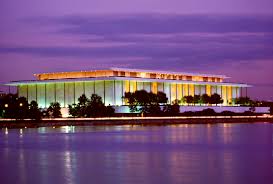
Kennedy Ctr

Kennedy Center for the Performing Arts, Washington, D.C.

The Boulder Philharmonic and conductor Michael Butterman will premiere the new work at Macky Auditorium as part of their 2016–17 subscription concert series, and subsequently at the Kennedy Center in Washington, D.C., as part of the inaugural SHIFT Festival of American Orchestras in March, 2017. The Boulder Phil is one of only four orchestras selected to participate in the festival.

“This recognition that we’re honored to receive feels like an affirmation of the work we have been doing for the past decade or more,” Butterman says. “We’ve been trying to reflect our community and find entry points for people to engage with classical music who had not regularly encountered it before.

Buttermn.new

Boulder Phil Music Director Michael Butterman

“The focus in particular on the natural world and the relationship that people in Boulder have to it is something that is very special for the orchestra, and we’re just delighted to be able to bring a brand new piece like this to life, both in Boulder and then of course on the national stage at the Kennedy Center.”

Of course, there are many classical pieces inspired by nature, dating back to Bach’s “Peasant” Cantata, Seasons by Vivaldi and Haydn, Beethoven’s “Pastoral” Symphony No. 6 and Smetana’s musical description of the river The Moldau. “The idea of being inspired by your natural surroundings is as old as humanity,” Butterman says. “But there’s something different when we do it in Boulder, just because hiking and being outside is so much a part of the daily life of most Boulderites.”

Lias expressed excitement at receiving the grant-supported commission from the Boulder Phil. “It’s just a dream come true,” he says.

Lias has a long association with the national parks. He has received several artistic residency grants in national parks, and has written several pieces inspired by these residencies. The first was his “Timberline Sonata” for trumpet and piano, written following a 2010 residency in Rocky Mountain National Park and premiered in Estes Park. Other pieces have been inspired by Big Bend, Kings Canyon, Sequoia, Denali, Wrangell-St. Elias, Carlsbad Cavern and Mesa Verde national parks, among others. Several of these works have been compiled onto a CD recording, “Encounters.”

Lias in GoANP

Stephen Lias in Gates of the Arctic National Park

In Sept. 2014, the Boulder Philharmonic presented the premiere of Lias’s orchestral work Gates of the Arctic, inspired by a residency and backpacking journey in America’s northernmost and second-largest national park. “(Lias) had both a great experience in Boulder and a very positive reception from our audience,” Butterman says of the premiere. “So for us he’s someone whose aesthetic will produce something special.”

Lias said that the new work will build on the success of Gates of the Arctic. “(Butterman and the orchestra) were so pleased with how Gates of the Arctic was received that our plan is to use that framework again,” Lias says. “Probably it will be grouped into thematic ideas where certain musical sections will be related to some event or experience that people have in the park, or perhaps a location or time of day or season.

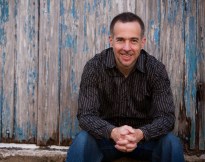
Lias-5

Composer Stephen Lias

“The stature of the situation in which this will be premiered demands a piece of greater heft from me, so I suspect that I will lace this piece with broader contrasts, and I may dig a little deeper compositionally.”

Lias admits to being a little nervous every time he starts a new piece, and this commission will be no different. “I approach each major new project with a certain amount of trepidation about how I’m going to come up with new music ideas,” he says.

“The order of events will be not to worry about what kind of piece I’ll write, but instead start thinking about what makes Rocky Mountain National Park such an inspiring subject. And as I answer that question, suddenly I’ll discover that I have a list of things that will inform the shape of the piece. And at that moment, the piece is already begun.”

Making music at a time of tragedy

A personal reflection in the form of a concert review.

By Peter Alexander

12239638_10153709043612365_7450372887197993418_nLast night, the Boulder Philharmonic played a concert.

They played music by Brahms and Charles Denler, the last accompanied by photographs by John Fielder. That was what was on the program, but before the announced program began, they also played the “Nimrod” variation from Edward Elgar’s Enigma Variations as a moment of solace for all of us who were feeling battered by the fierce winds blowing across our world, and as a moment of tribute to those suffering after the atrocities in Paris.

And presumably, since Paris was not even mentioned, for others around the world who are suffering in these terrible times—in Lebanon, in Syria, across Europe, in Africa, and in our own country.

One of the most beautiful four minutes of music I know, “Nimrod” is as fine an offering of solace as musicians could make. It was followed by a long period of silence, as conductor Michael Butterman and members of the orchestra held their positions from the final note. And after a smattering of applause—I will take it as an expression of gratitude for the gesture, rather than anything so routine as reward for the performance—Butterman spoke some touching and very appropriate words about how we all are feeling today.

As one of those affected by the events of the past 36 hours, the past week, the past year, I was both thankful for the opportunity to hear music lovingly played, and aware what a tiny thing a concert is in the world we now live in. Sometimes, just getting on with life is the best thing that we can do—literally the best of many choices. In that respect, the people of Paris may be an example for us all. But sometimes, too, it feels insufficient.

While “Nimrod” was sounding, the familiar words of Leonard Bernstein were projected above the orchestra: ““This will be our reply to violence: to make music more intensely, more beautifully, more devotedly than ever before.”

Sadly, these words are familiar because they seem to be quoted more and more often in these times. They are beautiful, but at some point, they are no longer enough. We will either find a way to get beyond the expression of our ideals and find a way to make a world that will accept difference, one that will make room for all of the world’s children—those of any God you prefer—or this grand experiment of human culture and civilization will come to an end.

It was a meaningful coincidence that the program opened with Brahms’s Schicksalslied (Song of destiny), performed by the orchestra with the Boulder Chorale in celebration of the group’s 50th anniversary. A setting of a poem by Friedrich Hölderlin, the work contrasts the peace of Elysium with human life, where we suffer the batterings of forces we cannot control. The central choral section, essentially a musical depiction of life in a world of chaos, is followed by music that seems to offer comfort and hope.

It turns out Boulder Phil could not have selected a better message for Nov. 14, 2015.

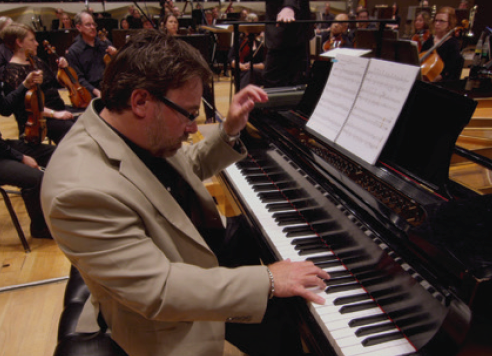
After a satisfying and meaningful performance of Brahms, Butterman and the orchestra turned their attention to music that strives for the same peace that Brahms suggests at the end of the Schicksalslied. The concert premiere of Denler’s Portraits in Season offered meditative music for piano supported and gently amplified by the orchestra. With the composer playing the solo piano part, the performance created a fitting mood of calm and contemplation.

Denler explained before the performance that the piece was not really about the seasons, but about the passages of life and the pleasure that one can find from growing older. This too seemed to fit the mood of the first half of the concert. The beautiful photography of John Fielder projected above the orchestra, and the quotes from Henry David Thoreau that appeared on some slides, added greatly to the pleasure of the occasion, and provided still more food for reflection.

The concert concluded with a mostly satisfying performance of Brahms’s Second Symphony. Here the key of D major casts a layer of light and serenity over the entire work. The audience responded with warmth.

France-Paris-Attacks_Horo-1

Candles and flowers outside La Belle Equipe restaurant in Paris, Nov. 14, 2015.

Leaving the concert hall, one re-enters a world that is not as safe or well ordered as a Brahms symphony. On a personal note, I was all the more thoughtful about humanity’s capacity for inflicting horror because just the day before—near the same time as the attacks in Paris—I happened to visit the site of one of the worst tragedies in our own country’s history: the Sand Creek Massacre by U.S. volunteers of Cheyenne and Arapahoe women, children, and men who were flying the stars and stripes and a white flag.

Suffering, it seems, is ageless. So as we enjoy the best fruits that human culture has to offer, whether it be in the music of Johannes Brahms and Charles Denler, or the photos of John Fielder, or whatever art, music and literature you may enjoy in the coming weeks, we should all take the time to reflect on how precious and fragile is the world we imagine that we live in. If we fail to do so, we may pay a terrible price.

_____

Lightly edited for clarity Nov. 15, 2015.


Brahms’ destiny, Denler’s melodies and Fielder’s photos at Boulder Phil.

Thoreau quotes compliment world concert premiere of Denler’s Portraits in Season.

By Peter Alexander

Charles Denler

Charles Denler

Composer Charles Denler has always felt close to nature, so it makes sense that the world concert premiere of his Portraits in Season for piano and orchestra would be supplemented by the work of two other nature-loving artists: the American essayist Henry David Thoreau and Colorado photographer John Fielder.

Saturday’s performance by the Boulder Philharmonic and conductor Michael Butterman will feature Denler as piano soloist (7:30 p.m. Nov. 14 in Macky Auditorium; tickets). During the performance, Fielder’s photographs will be projected on a screen above the orchestra, where quotes from Thoreau will appear before each of the score’s movements.

Denler’s Portraits will be bookended by two pieces by Brahms, a composer who also enjoyed the natural world on his solitary walks in the Vienna woods. The concert will open with the Schicksalslied (Song of Destiny), performed with the Boulder Chorale in celebration of their 50th anniversary, and end with the Symphony No. 2 in D major.

Sneffels Range Spring, San Juan Mountains. Colorado. Photo by John Fielder

Sneffels Range Spring, San Juan Mountains. Colorado. Photo by John Fielder

Butterman says that the idea of having images accompany Denler’s music occurred to him the very first time he heard it. Denler had compiled digital recordings of the music—now released on an album—as he was working on it.

“I thought it was very fun music,” Butterman says. “But as I was listening to it, I wanted to see something. I wrote back and said this fits with our focus on local composers, and also nature and music together, but what about adding some visuals? He said ‘fantastic!’”

Adding images to Denler’s music was more than logical, since he is best known as a film composer. And Fielder, known for his nature photography throughout Colorado, seemed an ideal choice, too. For one thing, his photos have often been featured with music: this will be the fourth performance by a Colorado orchestra this year to use his photos.

Boulder audiences will remember that Fielder’s work was featured by the Colorado Music Festival last summer in performances of music by Sibelius and Beethoven. His photos were also featured in performances in Breckenridge and Steamboat Springs.

John Fielder. Photo by Cari Linden.

John Fielder. Photo by Cari Linden.

“I’ve been putting music to my slides for years,” Fielder says. “I love the experience—the whole is greater than the sum of the parts when you put music and imagery together.”

Fielder, who is recognized for his books and calendars of Colorado scenes, is deeply devoted to the outdoors. “I regard nature as not just views,” he says. “I enjoy being outdoors in the wilderness. The sound, the smell, the taste and the touch, as well as the views, are what make nature sublime for me.”

Portraits in Season has movements that pass through two complete years, and then suggest the start of another of life’s continuing cycles. And Denler intends this very much as a metaphor.

“The underlying meaning is walking through life,” he says. “I want people to think about that— to listen to this music and see that growing older is a gift. We should celebrate every single day and embrace the idea of aging.”

Denler’s music is often inspired by visual images, whether films that he is writing for, or personal experiences for his concert music. “This particular suite is based on visuals that I have from hiking the ponds and lakes (of) South Platte Park, walking along the Highline Canal, and even in my backyard,” he says.

Each movement is associated with a specific memory, even though the listeners will not know the locations they are associated with. And the Thoreau quotes are not directly associated with the locations, either.

“I’m a native New Englander, and I always gravitated toward (Thoreau’s) work,” Denler explains. “He wrote about nature from the context of living inside of it, and I wanted that reflected in the music. Sometimes, the quote just made sense for that season, (so) it may not reflect particular areas here in Colorado.”

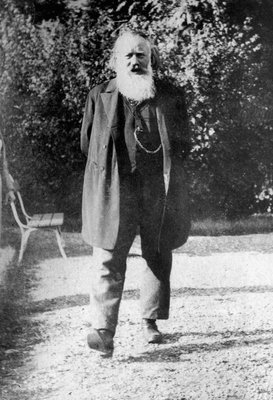
Johannes Brahms

Johannes Brahms

Butterman chose Brahms for Denler’s companion on the program, because he sees a connection between Denler, nature, and the Viennese composer. “Brahms never wrote anything that he called ‘Babbling Brook’ or something,” he says. “But yet, when I think about composers who drew nourishment from nature, he’s actually the first composer that comes to my mind.

“The energy and the centeredness that he drew from long walks in the Vienna Woods strikes me as a little bit like Thoreau—somebody who needed to be away from people and by himself in nature. They (both) found their batteries recharged by the experience.”

Of the two works by Brahms, the Second Symphony will be the most familiar. “It’s full of all of the hallmarks of Brahms’s music that I really love,” Butterman says. “The rhythmic ambiguity, his ability to mix the serenade-like quality of his woodwind writing with much more accented and aggressive writing in the strings. But there’s an overlaying of sort of a placid character to it.”

Michael Butterman

Michael Butterman

The Schicksalslied, on the other hand, has placid moments, but they are definitely not part of Brahms’s depiction of human destiny, which is one of turbulence and forces beyond human control. “I love the beauty of the outer segments,” Butterman says, “and then the turbulence of what the chorus sings in the middle is a dramatic contrast.”

The beginning seems to be a description of Elysium, but that peaceful realm is contrasted with our life on earth. In the central choral section, “we are buffeted by fate, thrown hither and yon by forces that we have no ability to influence or control,” Butterman says. “It basically says that things are really nice up above, wherever that may be, but down here it’s every man for himself.”

Henry David Thoreau

Thoreau

The text ends there, but Brahms has added a closing orchestral section that provides a ray of hope for a better existence at the end. Which brings us back to Denler’s contemplative and comforting Classical/New Age score, which seems to evoke the peace that Brahms only hinted.

Or in the words from Thoreau’s Walden that Denler has chosen for one of the movements, when “the day and night are such that you greet them with joy, and life emits a fragrance like flowers and sweet-scented herbs . . . all nature is your congratulation and you have cause momentarily to bless yourself.”

# # # # #

Portraits in Seasons

Boulder Philharmonic Orchestra, Michael Butterman, music director,
with Boulder Chorale, Charles Denler, piano, and photos by John Fielder

World concert premiere of Portraits in Season for piano and orchestra, by Charles Denler
Johannes Brahms: Schicksalslied and Symphony No. 2 in D major

7:30 p.m. Saturday, Nov. 14
Macky Auditorium

Tickets

Related events:
7:30 p.m. Wednesday, Nov. 11: Free Café Phil open rehearsal at the Dairy Center for the Arts
6:30 p.m. Saturday Nov. 14, before the concert: Pre-concert talk at Macky

Charles Denler’s CDs and John Fielder’s books will be on sale in the lobby before and after the performance.

Michael Butterman debuts with Philadelphia Orchestra, in costume

Boulder Phil music director is guest conductor for a family concert

By Peter Alexander

Verizon Hall, home of the Philadelphia Orchestra

Verizon Hall, home of the Philadelphia Orchestra

“When you image your debut with a great orchestra,” Michael Butterman, music director of the Boulder Philharmonic says, “you don’t usually imagine yourself wearing a Jack Skellington costume.”

I certainly don’t. But Butterman recently did just that with the renowned Philadelphia Orchestra—with a concertmaster dressed as the Pope, and other costumes among the players. You will be relieved to know that it was a Halloween family concert.

The event was part of a series of outreach concerts that Butterman conducted throughout the northeastern states over about a 30-day period, including a week of young people’s concert’s with the National Symphony in Washington, D.C.; a week of education concerts with the Pennsylvania Philharmonic, a regional orchestra of which he is music director; a family concert in Rochester, N.Y.; and the Oct. 31 “Halloween Costume Party” with the Philadelphia Orchestra in Verizon Hall.

Michael Butterman, not in costume as Jack Skellington

Michael Butterman, not in costume as Jack Skellington

“It’s kind of invigorating to see that you can still make a difference to people when you present things in a fun and attractive way,” Butterman says about the concerts. “I think people are interested in what orchestras are doing. And that makes me feel a little bit optimistic anyway about the future.”

But the culmination was the opportunity to lead one of the nation’s “Big Five” orchestras in their home concert hall in Philadelphia. “It was a nice compliment,” he says. “The audience was great, it was a nice full house and a lot of enthusiastic young people there.”

In addition to Danny Elfman’s Suite from Nightmare before Christmas, Butterman’s program with the Philadelphia Orchestra included music by Khachaturian, Prokofiev and Rimsky-Korsakov; Adam Glaser’s March of the Little Goblins; and Liadov’s Baba-Yaga, from a Russian folk tale about a witch who lives in a hut on chicken’s legs.

Big-name orchestras sometimes have the reputation of being hostile to guest conductors, but Butterman says there was nothing like that in Philadelphia. “Quite the opposite,” he says. “They were very collegial and I really felt great afterwards. I felt appreciated. Being able to work very efficiently and quickly, I think they valued that.

“Obviously there are still things you can work on even with a great orchestra, but whatever it is you’re asking for they just do it immediately and it’s a real pleasure. What was really nice was they had a great attitude, and you wouldn’t necessarily be expecting that, coming in on a Saturday morning and putting something together really quickly, but they really did.”

Butterman was especially pleased and honored that the Pope—that is, the orchestra’s concertmaster—volunteered to play the concert, even though he could have taken the afternoon off. “That just set a really beautiful tone for the whole event,” Butterman says.

As for the Jack Skellington costume: Boulder should ask the maestro to wear it here. It’s something our audience deserves to see.

Boulder Phil opens season with fairy tales and virtuosity

Two contrasting concertos contribute to a well balanced program

By Peter Alexander

Boulder Phil Music Director Michael Butterman

Boulder Phil Music Director Michael Butterman

The Boulder Philharmonic opened its 2015–16 season last night (Sept. 13) in Macky Auditorium with an intriguing mix of ingredients that added up to a well balanced—and well received—program.

Music Director Michael Butterman, returning for his tenth season with the orchestra, opened the program with Ravel’s Mother Goose Suite. The unusual addition of two soloists filled out the program, with the orchestra’s concertmaster, Charles Wetherbee, performing The Storyteller by Korine Fujiwara, a concerto for violin and strings that was written for him; and Venezuelan pianist Gabriela Montero playing Rachmaninoff’s massive Second Piano Concerto.

The two concertos provided a nice contrast. Fujiwara’s Storyteller is a lovely, cheerful piece very much in the playful spirit of the Japanese fairy tales they portray, while Rachmaninoff’s Second Concerto is one of the great virtuoso challenges of the pianist’s repertoire. The two pieces balanced one another nicely, and the Ravel added an opening touch of color that was very engaging.

Butterman and the orchestra presented Ravel’s original suite of five movements—“The Pavane of Sleeping Beauty,” “Tom Thumb,” “Empress of the Pagodas,” “Beauty and the Beast” and “The Fairy Garden”—and not the seven-movement ballet suite that the program listed. The performance was marked by delicate playing from the winds and a sense of magic that is largely created by Ravel’s brilliant sense of orchestral color.

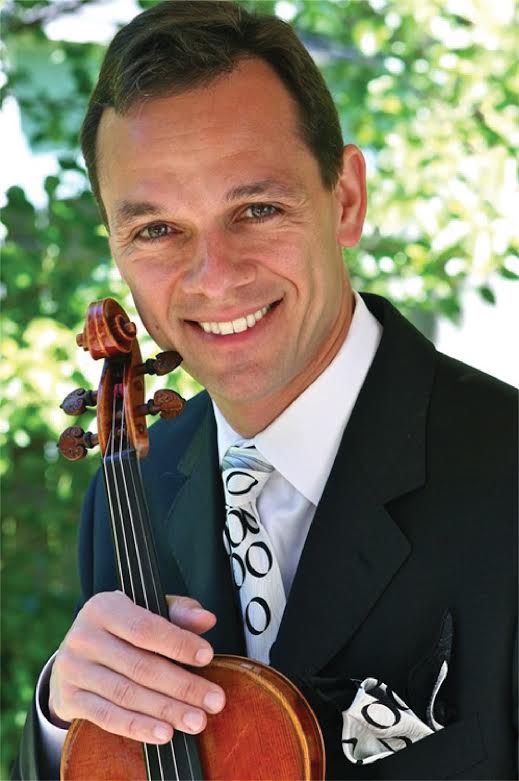
Charles Wetherbee

Charles Wetherbee

After fulfilling his concertmaster duties for the Ravel, Wetherbee left the stage and returned in a dark red jacket that somehow evoked the storyteller of the concerto’s title. The piece opens with a long, genial violin solo, as if Wetherbee were saying “Come, gather around, and I will tell you stories of magic and wonder.”

After this inviting opening, played warmly by Wetherbee, the concerto goes into a largely episodic series of scenes that sound descriptive—of what being largely left to the imagination of the audience, even though Fujiwara had mentioned earlier that there were slamming doors, cicadas and battle scenes within the score. The various moods and characters are colorfully evoked by the string orchestra.

A string player who knows well how to write for the violin, Fujiwara fills the solo part with graceful lines and ornamented passages that always seem purposeful. There is no great momentum developed; it is more as if there is some mysterious purpose unfolding, but one that lacks deep threat or tumult.

A special word should be said for the slow movement, where Fujiwara honors the many maltreated women of folk legends with music of gentle, compassionate beauty. Wetherbee played with great sweetness of sound and sure technique. Though lacking bravura display, The Storyteller is an accessible and charming concerto that would create a welcome moment of comfort next to more dramatic fare.

Pianist Gabriela Montero. Photo by Shelley Mosman

Pianist Gabriela Montero. Photo by Shelley Mosman

Montero gave a steely, powerful performance of Rachmaninoff’s concerto. Although I found her sound hard-edged in the louder passages, her dynamic control was impressive, ranging from thundering octaves to delicate, whispering filigree. She showed great technical control of Rachmaninoff’s most fearsome passages and created an exciting sense of momentum for the climaxes.

The orchestra under Butterman played with a fullness of sound, but without the plush cushion of strings that best suits Rachmaninoff’s Romantic score. In the loudest passages the brass dominated the sound, and elsewhere the string section is not quite large enough to pull off the rich sonic embrace that larger orchestras can create. There were a few moments of push and pull between pianist and orchestra, perhaps the result of short rehearsal times. Mostly it was not obvious, except when Montero ended the first movement just ahead of the orchestra.

All shortcomings aside, the performance built to a splendid finish, and Boulder’s delighted audience answered with loud cheers and a standing ovation. After several bows, Montero came on stage with a microphone and said that she would like to improvise her encore. She explained that she has improvised since childhood, telling stories in music, and that it seemed to happen without her knowing how. “I am very much a witness,” she said, “as are you.”

She asked for a tune from the audience, and one person offered “Row, Row, Row your Boat”—actually a brilliant suggestion, since the simplest melodies provide the greatest scope for creative variation. After playing the tune alone three times while possibly working out an idea or two in her mind—unconsciously?—Montero launched into a remarkable seven or eight minute expansion of the well known tune, filled with surprising key changes, unexpected textures, sudden appearances of the unadorned tune, and a dazzling variety of sounds. A sudden turn to a lilting, swingy style drew chuckles form the audience before she ended with a final brash flourish.

This was as stunning a display of improvisational brilliance as I have ever heard from a classical pianist—and then some. The encore alone was well worthy of the standing ovation; I would happily have stayed for many more.

Telling Stories in music

Boulder Philharmonic opens 2015–16 season with two soloists

By Peter Alexander

Pianist Gabriela Montero. Photo by Shelley Mosman

Pianist Gabriela Montero. Photo by Shelley Mosman

The Boulder Philharmonic’s 2015–16 season is titled “Reflections: The Spirit of Boulder,” but the orchestra will open the season by telling stories.

The season’s opening concert under music director Michael Butterman will be at 7 p.m. Sunday, Sept. 13, in Macky Auditorium — a departure from the orchestra’s standard 7:30 p.m. Saturday concert dates.

The program will feature music that tells stories, two soloists with their own stories, and one great concerto that is a story in itself. Butterman will conduct Ravel’s Mother Goose Suite; The Storyteller for violin and orchestra, inspired by Japanese folk tales and written by Korine Fujiwara for the orchestra’s concertmaster, Charles Wetherbee; and Rachmaninoff ’s Piano Concerto No. 2, the piece that salvaged the composer’s career, performed with pianist Gabriela Montero, who has been acclaimed both as “an exciting pianist” (The New York Times) and for her “spectacular improvisation” (Cincinnati Enquirer).

That’s a lot of stories for one concert.

Read more in Boulder Weekly.

# # # # #

Concertmaster Charles Wetherbee

Concertmaster Charles Wetherbee

Boulder Philharmonic Orchestra: Opening Night
Michael Butterman, director, with
Charles Wetherbee, violin, and Gabriela Montero, piano

Ravel: Mother Goose Suite
Korine Fujiwara: The Storyteller for violin and orchestra
Rachmaninoff: Piano Concerto No. 2

7 p.m. Sunday, Sept. 13 (Note the time and day)
CU Macky Auditorium

Tickets.

logo2

Central City Opera Announces 2016 summer season of performances in Central City

Two major operas in the historic opera house, two one-acts in alternative venues

By Peter Alexander

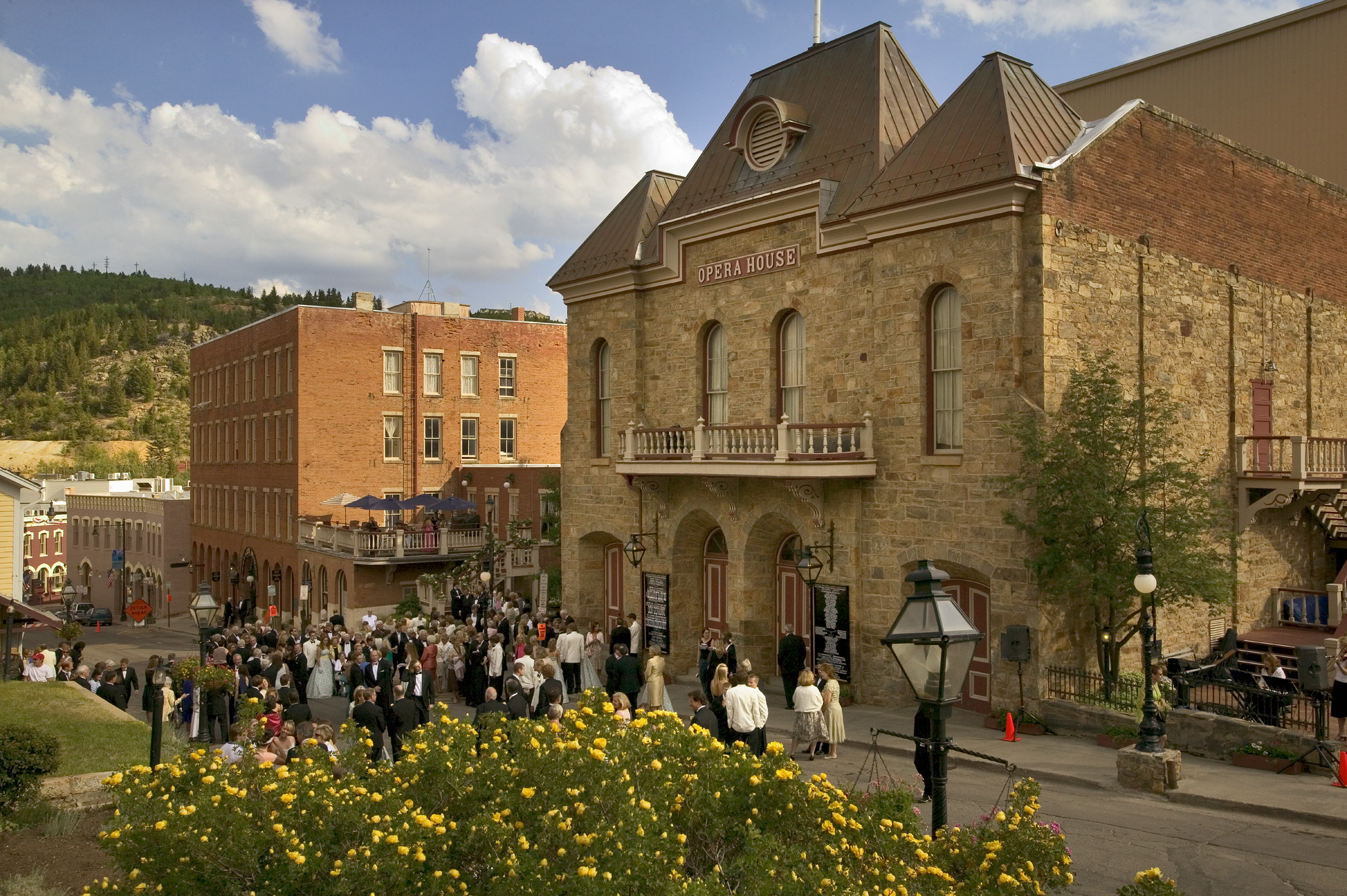
Opening Night at Central City Opera.  (From Central City Opera's 75th anniversary book,

Opening Night at Central City Opera. (From Central City Opera’s 75th-anniversary book, “Theatre of Dreams, The Glorious Central City Opera—Celebrating 75 Years.”)

The Central City Opera, having impressively opened their 2015 summer season last Saturday (July 11) with a highly satisfying production of Verdi’s La Traviata, has now announced their 2016 summer season of performances in Central City. There will be two major productions in the historic Central City Opera House, and two one-act operas in alternative locations in Central City, during a season that runs from July 9 to Aug. 7.

The season will open July 9 with a 60th-anniversary production of The Ballad of Baby Doe by Douglas Moore, which had its world premiere at the Central City Opera in 1956. Based on the true story of two of Colorado’s colorful figures from the days of the silver boom, roughly 1879 to 1893, the English-language opera has enjoyed considerable success since its first performances in the Central City Opera House.

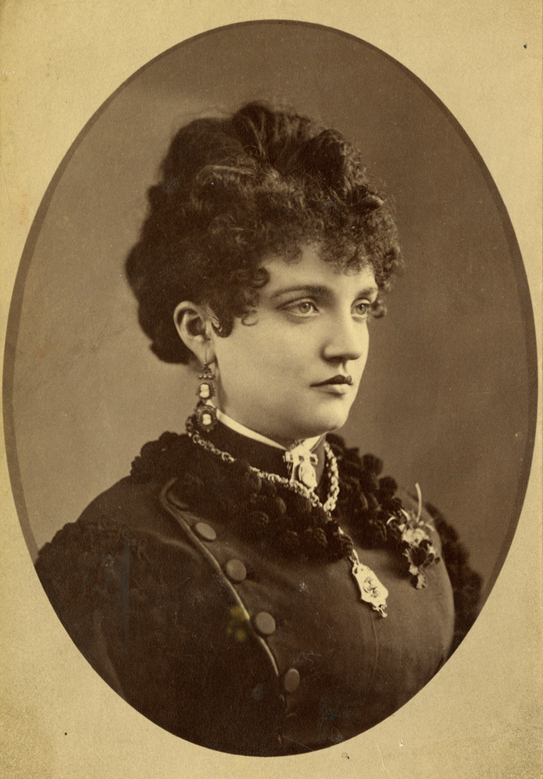
Baby Doe Tabor.

Baby Doe Tabor (by Webster, Oshkosh; licensed under public domain via Wikimedia Commons)

The opera is the tale of a classic love triangle: Horace Tabor, known as “The Bonanza King” of Leadville, Colo., was a respectably married businessman and politician. In the 1880s, at the height of the silver boom, he met and fell in love with Elizabeth “Baby Doe” McCourt. He divorced his wife, Augusta Tabor, and married Baby Doe in Washington, D.C, in 1883. Their society wedding was considered the scandal of the age. Not long after, the collapse of the silver market wiped out Tabor’s fortune. After he died in 1899, Baby Doe lived on in poverty at the Matchless Mine—now a tourist attraction in Leadville—until her death in 1935.

The Ballad of Baby Doe will run in repertory at the Central City Opera House through Aug. 6, 2016.

Tosca, Puccini’s tragic opera of passion and betrayal, will be Central City Opera’s second offering of the 2016 Festival. This production opens on July 16 and runs through Aug. 7, 2016, also in the Central City Opera House.

One of the most popular operas in the repertoire, Tosca is set in 1800 Rome. It follows the story of a fiery prima donna, Floria Tosca, who struggles to rescue her true love, the painter Mario Cavaradossi, from the clutches of Baron Scarpia, the evil chief of police. Tosca will be performed in Italian with English supertitles.

“It’s a lullaby to New York,” composer John Musto said on NPR’s Weekend Edition Sunday. He was talking about his opera Later the Same Evening, which will be the third offering of Central City Opera’s 2016 Festival. One of the two one-acts to be presented next summer, this contemporary opera with a libretto by Mark Campbell had its professional premiere at Glimmerglass Opera in 2011.

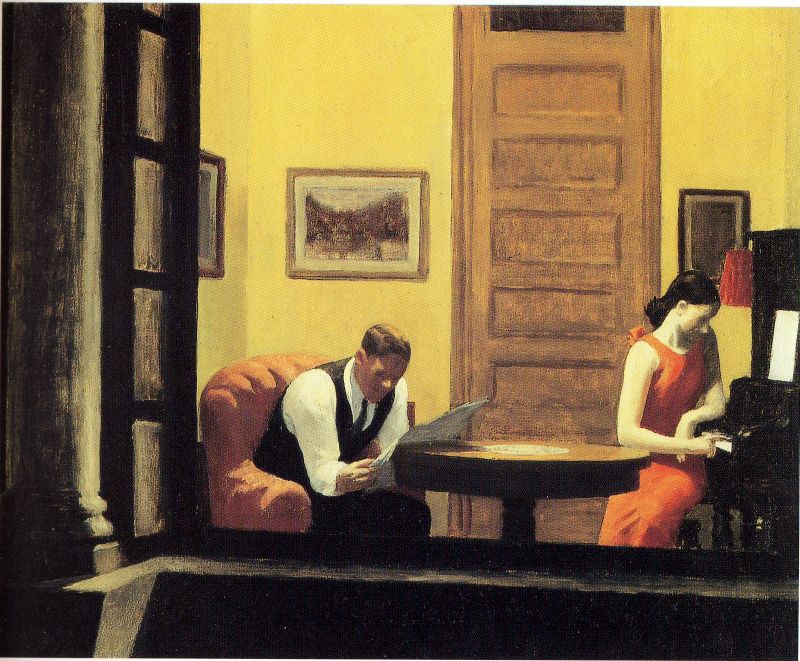
Edward Hopper,

Edward Hopper, “Room in New York,” one of the paintings that inspired composer John Musto.

The opera imagines the lives of the figures in five paintings by American painter Edward Hopper, weaving a narrative that connects them on a single night in New York City in 1932. Later the Same Evening will be performed in English at an alternative venue in Central City.

As its final production for 2016, Central City Opera presents Mozart’s comic one-act opera, The Impresario. The opera tells the whimsical story of an entrepreneur who is required to put together a company of actors and singers while dealing with their whims, rivalries and demands for exorbitant amounts of money. Through a number of twists and turns, the performers and the impresario find a way to reconcile all in the end. The Impresario will be performed in English at an alternative venue in Central City.

This season of four operas follows several years when Central City Opera has sought new audiences around Colorado, first by presenting musicals in Denver, and now this year by taking one-act chamber operas on tour to smaller venues in Colorado Springs and Ft. Collins. The 2016 season follows the general plan of the current season, with two major productions in the Central City Opera House and two smaller productions in other locations; touring performances for the one-act operas have not been announced for 2016.

“We have been experimenting over the past few seasons with the way we deliver our product,” Central City Opera general director Pelham (Pat) Pearce says. “While we met thousands of new friends through our offerings presented in Denver at the Buell and the Ellie, we determined that the most important thing Central City Opera can provide to our patrons—in addition to a great production—is the truly unique experience we provide in Central City.”

Additional performance dates, as well as artistic staff announcements and casting for the 2016 Summer Festival, will be announced at a later date. Subscription packages for the 2016 Festival will go on sale in the fall of 2015. Further information on the 2016 season will be available at the Central City Opera Web page.

# # # # #

Central City Opera
2016 Summer Season

CCOperaLogoPreferredThe Ballad of Baby Doe by Douglas Moore (60th-anniversary production)
July 9–Aug. 6, Central City Opera House

Tosca by Giacomo Puccini
July 16–Aug. 7, Central City Opera House

Later the Same Evening by John Musto
Dates and location in Central City tba

The Impresario by Wolfgang Amadeus Mozart
Dates and location in Central City tba

# # # # #

There will be a collaborative program with the Boulder Philharmonic during the spring of 2016:

St. Matthew Passion
 by J.S. Bach
Semi-staged production by the Boulder Philharmonic, Central City Opera, Boulder Bach Festival & CU Choruses
Michael Butterman, conductor
7 p.m. April 23, 2016, Macky Auditorium, Boulder