Central City Opera Announces 2016 summer season of performances in Central City

Two major operas in the historic opera house, two one-acts in alternative venues

By Peter Alexander
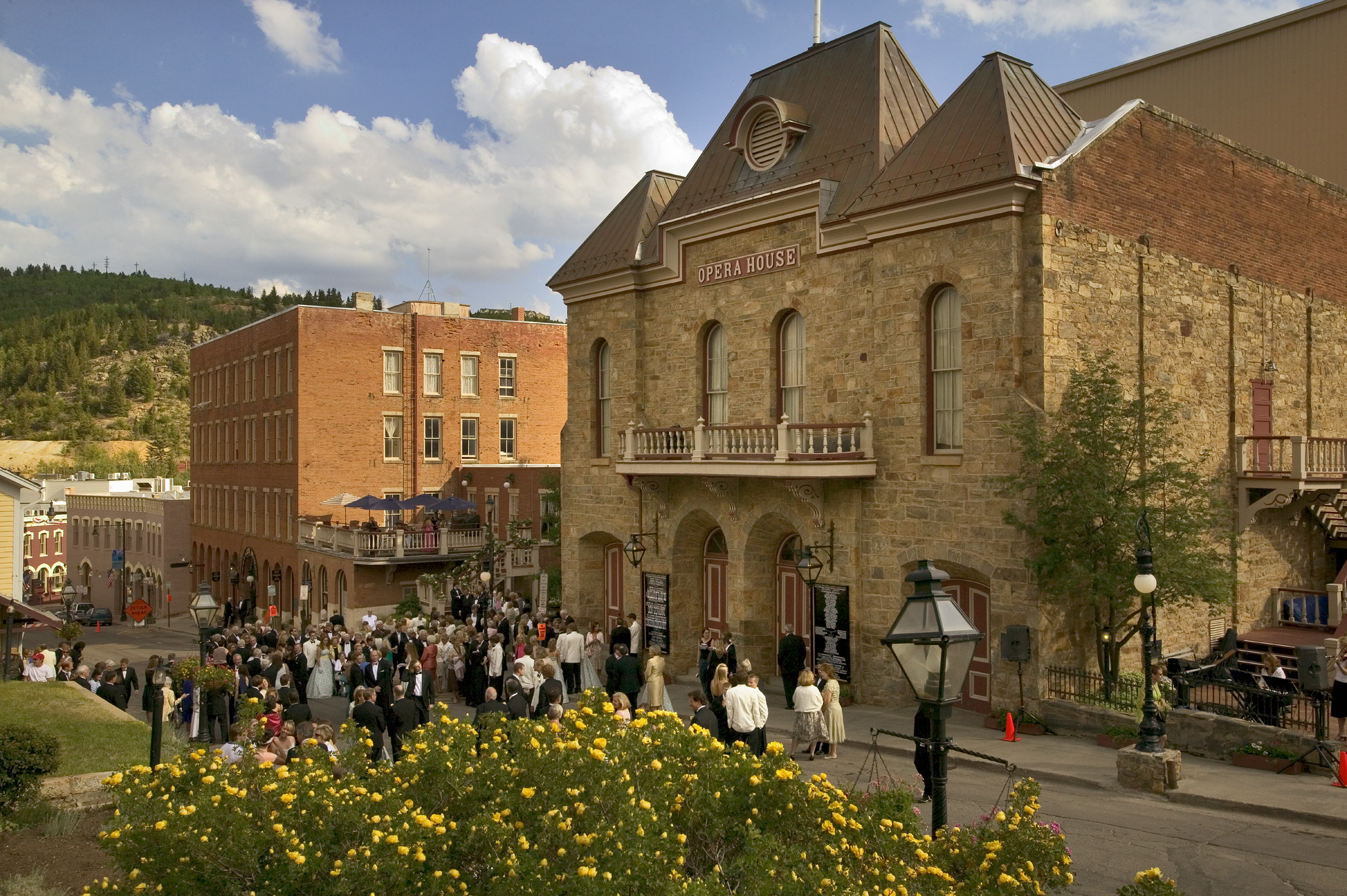
Opening Night at Central City Opera.  (From Central City Opera's 75th anniversary book,

Opening Night at Central City Opera. (From Central City Opera’s 75th-anniversary book, “Theatre of Dreams, The Glorious Central City Opera—Celebrating 75 Years.”)

The Central City Opera, having impressively opened their 2015 summer season last Saturday (July 11) with a highly satisfying production of Verdi’s La Traviata, has now announced their 2016 summer season of performances in Central City. There will be two major productions in the historic Central City Opera House, and two one-act operas in alternative locations in Central City, during a season that runs from July 9 to Aug. 7.

The season will open July 9 with a 60th-anniversary production of The Ballad of Baby Doe by Douglas Moore, which had its world premiere at the Central City Opera in 1956. Based on the true story of two of Colorado’s colorful figures from the days of the silver boom, roughly 1879 to 1893, the English-language opera has enjoyed considerable success since its first performances in the Central City Opera House.
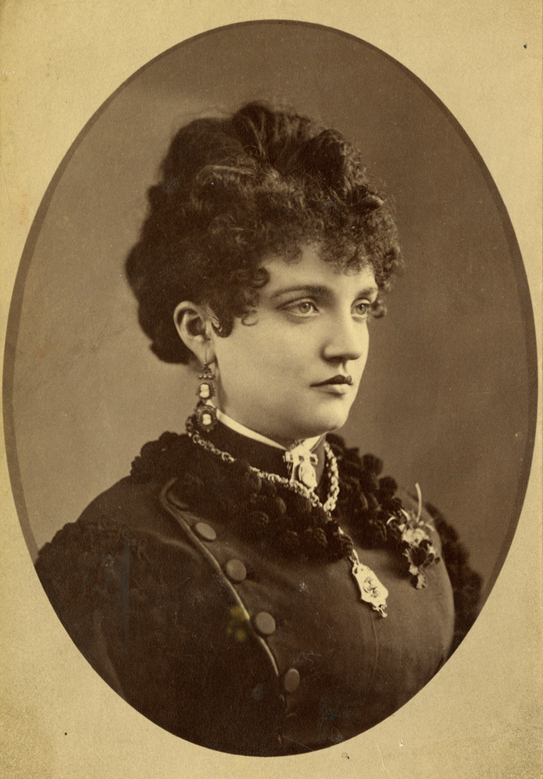
Baby Doe Tabor.

Baby Doe Tabor (by Webster, Oshkosh; licensed under public domain via Wikimedia Commons)

The opera is the tale of a classic love triangle: Horace Tabor, known as “The Bonanza King” of Leadville, Colo., was a respectably married businessman and politician. In the 1880s, at the height of the silver boom, he met and fell in love with Elizabeth “Baby Doe” McCourt. He divorced his wife, Augusta Tabor, and married Baby Doe in Washington, D.C, in 1883. Their society wedding was considered the scandal of the age. Not long after, the collapse of the silver market wiped out Tabor’s fortune. After he died in 1899, Baby Doe lived on in poverty at the Matchless Mine—now a tourist attraction in Leadville—until her death in 1935.

The Ballad of Baby Doe will run in repertory at the Central City Opera House through Aug. 6, 2016.

Tosca, Puccini’s tragic opera of passion and betrayal, will be Central City Opera’s second offering of the 2016 Festival. This production opens on July 16 and runs through Aug. 7, 2016, also in the Central City Opera House.

One of the most popular operas in the repertoire, Tosca is set in 1800 Rome. It follows the story of a fiery prima donna, Floria Tosca, who struggles to rescue her true love, the painter Mario Cavaradossi, from the clutches of Baron Scarpia, the evil chief of police. Tosca will be performed in Italian with English supertitles.

“It’s a lullaby to New York,” composer John Musto said on NPR’s Weekend Edition Sunday. He was talking about his opera Later the Same Evening, which will be the third offering of Central City Opera’s 2016 Festival. One of the two one-acts to be presented next summer, this contemporary opera with a libretto by Mark Campbell had its professional premiere at Glimmerglass Opera in 2011.
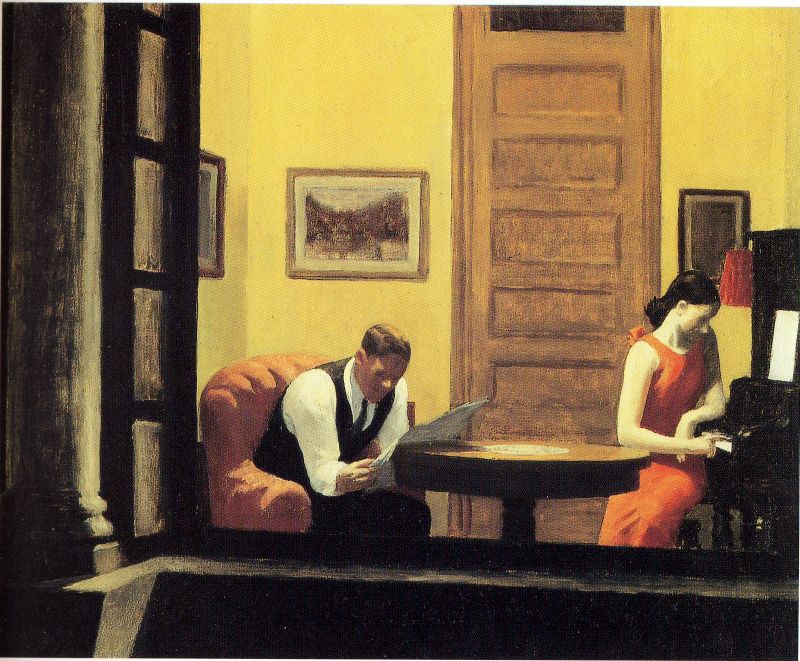
Edward Hopper,

Edward Hopper, “Room in New York,” one of the paintings that inspired composer John Musto.

The opera imagines the lives of the figures in five paintings by American painter Edward Hopper, weaving a narrative that connects them on a single night in New York City in 1932. Later the Same Evening will be performed in English at an alternative venue in Central City.

As its final production for 2016, Central City Opera presents Mozart’s comic one-act opera, The Impresario. The opera tells the whimsical story of an entrepreneur who is required to put together a company of actors and singers while dealing with their whims, rivalries and demands for exorbitant amounts of money. Through a number of twists and turns, the performers and the impresario find a way to reconcile all in the end. The Impresario will be performed in English at an alternative venue in Central City.

This season of four operas follows several years when Central City Opera has sought new audiences around Colorado, first by presenting musicals in Denver, and now this year by taking one-act chamber operas on tour to smaller venues in Colorado Springs and Ft. Collins. The 2016 season follows the general plan of the current season, with two major productions in the Central City Opera House and two smaller productions in other locations; touring performances for the one-act operas have not been announced for 2016.

“We have been experimenting over the past few seasons with the way we deliver our product,” Central City Opera general director Pelham (Pat) Pearce says. “While we met thousands of new friends through our offerings presented in Denver at the Buell and the Ellie, we determined that the most important thing Central City Opera can provide to our patrons—in addition to a great production—is the truly unique experience we provide in Central City.”

Additional performance dates, as well as artistic staff announcements and casting for the 2016 Summer Festival, will be announced at a later date. Subscription packages for the 2016 Festival will go on sale in the fall of 2015. Further information on the 2016 season will be available at the Central City Opera Web page.

# # # # #

Central City Opera
2016 Summer Season
CCOperaLogoPreferredThe Ballad of Baby Doe by Douglas Moore (60th-anniversary production)
July 9–Aug. 6, Central City Opera House

Tosca by Giacomo Puccini
July 16–Aug. 7, Central City Opera House

Later the Same Evening by John Musto
Dates and location in Central City tba

The Impresario by Wolfgang Amadeus Mozart
Dates and location in Central City tba

# # # # #

There will be a collaborative program with the Boulder Philharmonic during the spring of 2016:

St. Matthew Passion
 by J.S. Bach
Semi-staged production by the Boulder Philharmonic, Central City Opera, Boulder Bach Festival & CU Choruses
Michael Butterman, conductor
7 p.m. April 23, 2016, Macky Auditorium, Boulder

Boulder Philharmonic Announces season of collaborations for 2015–16

“Reflections: The Spirit of Boulder” will offer soloists, dance, visiting composers, photography, and a great choral work

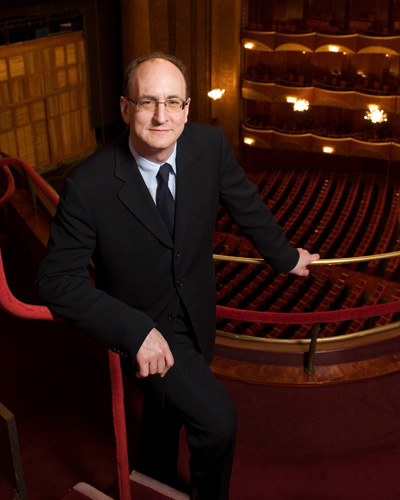
Michael Butterman. Photo by Glenn Ross

Michael Butterman. Photo by Glenn Ross

By Peter Alexander

Next year will be a season of collaborations for the Boulder Philharmonic Orchestra and music director Michael Butterman.

The 2015–16 season, which has just been announced, will include a broad array of collaborative work, from the usual appearances of renowned visiting soloists to the season finale, a semi-staged performance of Bach’s St. Matthew Passion presented in conjunction with Central City Opera, the Boulder Bach Festival, and choruses from the CU College of Music.

In between, there will be two visiting composers, a performance enhanced by the photography of John Fielder, two joint performances with Boulder Ballet, and a return of the aerial and stage performers of Cirque de la Symphonie. (Unless otherwise noted, performances mentioned below are at 7:30 p.m. in Macky Auditorium.)

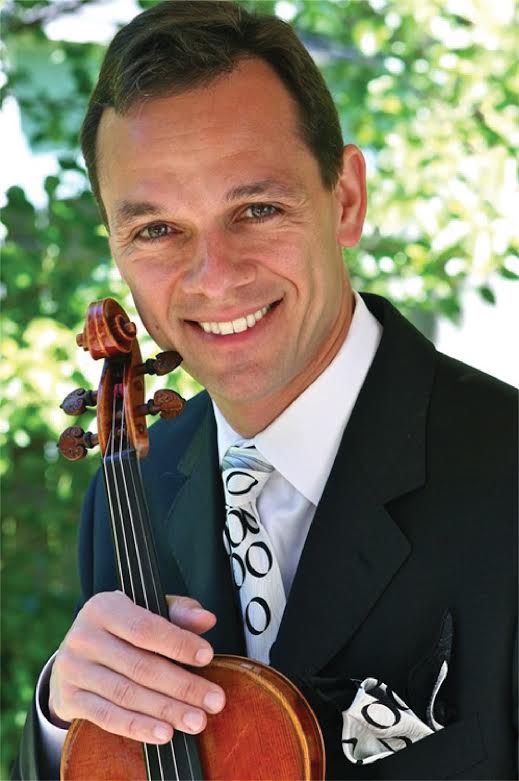
Charles Wetherbee

Charles Wetherbee

Billed as “Reflections: The Spirit of Boulder” (see full schedule below), the season gets underway at 7 p.m. Sept. 13—a Sunday evening performance—with a program featuring two soloists. Charles Wetherbee, the orchestra’s concertmaster will perform The Storyteller, a piece based on Japanese folk tales that was written for him by Korine Fujiwara; and Gabriela Montero will perform Rachmaninoff’s Piano Concerto No. 2.

Gabriela Montero. Photo by Uli Weber.

Gabriela Montero. Photo by Uli Weber.

Montero is sometimes remembered for her participation in President Obama’s first inaugural, when it was notoriously too cold to play live outside and a recorded performance was substituted, but she is also renowned as a virtuoso pianist who performs to acclaim around the globe. But Butterman is looking forward to her visit for another reason.

“The thing that’s so amazing about her, and quite unique, is her ability to improvise—it’s straight out of another era,” he says. “I‘ve heard her do this a number times and it’s just remarkable— everything from what seems like perfectly worked out Bachian counterpoint to ragtime, to impressionistic, Debussy-esque sort of things.

“What’s so amazing about it is that it seems so beautifully worked out, through all these different styles.”

Charles Den;er/ Photo courtesy of Grumpy Monkey Music.

Charles Denler. Photo courtesy of Grumpy Monkey Music.

The November subscription concert (Nov. 14) will offer the world premier of a new work for piano and orchestra by Denver composer/pianist Charles David Denler, who will also play the solo part. Inspired by the nature writing of American author Henry David Thoreau, Denler’s Portraits in Seasons will be presented with projections of images selected by Colorado photographer John Fielder.

“I would describe the music as certainly tuneful, pictorial, a little bit atmospheric,” Butterman says. “I thought this would be really nice with something to look at and to read. It occurred to everybody that Fielder is so well known and is such a fine artist that we approached him with this particular proposition.”

Fielder has said that to illustrate the seasons, he will choose photographs that are more intimate in scale than many of the large-scale mountain landscapes that he is well known for.

Following the traditional Nutcracker performances over Thanksgiving weekend—this year with new scenery—and the return of the popular “Christmas with the Phil” concerts in December, January will see the orchestra sharing the stage with the Boulder Ballet for a subscription concert. Titled “Dance, American Style,” the Jan. 16 performance will feature the full ballet of Rodeo by Aaron Copland.

Filling out the program will be orchestral performances of the New England Triptych by William Schuman, Leonard Bernstein’s Symphonic Dances from West Side Story, and three excerpts from Copland’s Billy the Kid.

Anne Akiko Meyers. Photo by Molina Visuals.

Anne Akiko Meyers. Photo by Molina Visuals.

February brings a Friday concert (Feb. 12), with another acclaimed guest soloist, Anne Akiko Meyers playing Mendelssohn’s much loved Violin Concerto in E minor, and the season’s second visiting composer, in the form of an artistic residence by Missy Mazzoli.

Dubbed “the coolest thing to happen to the violin since Stradivari” by the Denver Post, Meyers is one of the leading violin soloists of her generation. Her playing has been featured on practically everything from CBS “Sunday Morning” to “The Good Wife” on television, many CDs, and countless radio broadcasts.

Missy Mazzoli. Photo by Stephen S. Taylor.

Missy Mazzoli. Photo by Stephen S. Taylor.

Missy Mazzoli may not be well known in Colorado, but she is, Butterman says, “a pretty hot composer in the New York scene in particular.” Her week-long residency will include educational activities and chamber performances, as well as the Boulder Phil’s premiere of a new version of her Sinfonia (for Orbiting Spheres).

The title refers, Butterman explains, not to planets but “the idea of circularity and cycles.” The title takes the 18th-century term “Sinfonia,” in reference to ideas from Baroque music and ornamentation that the composer used.

“It’s not exactly a neo-Baroque piece, but it certainly has some connections to earlier periods,” Butterman says—which led him to the other pieces on the concert program: Shostakovich’s Haydn-esque Symphony No. 9, Tchaikovsky’s Mozartiana and the classically inspired Mendelssohn Violin Concerto.

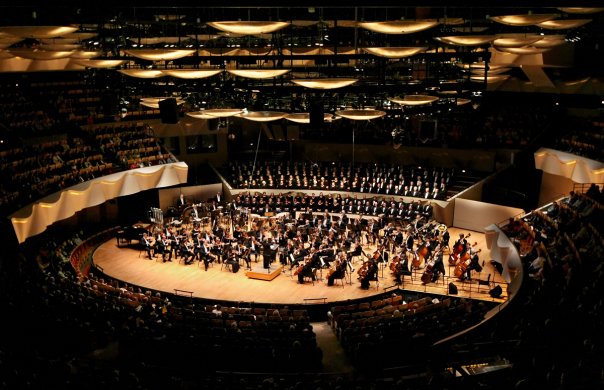
Boulder Philharmonic with Cirque de la Symphonie. Photo by Glenn Ross.

Boulder Philharmonic with Cirque de la Symphonie. Photo by Glenn Ross.

Cirque de la Symphonie will make its third appearance with the Boulder Philharmonic with two performances, at 2 and 7:30 p.m. April 2. Building off the famed Cirque du Soleil and other cirque programs, the troop presents aerial flyers, acrobats, contortionists, dancers, jugglers, balancers and strongmen choreographed to classical music.

“What I like about them is their ability to appeal very, very broadly to an audience, but to do so while allowing us to present just great classical music,” Butterman says. Based on their previous appearances in Boulder, he says that the audience will “know the basic concept of what they’re going to see, but their repertoire will be different enough that it will be fresh and people will enjoy it.”

The success of the previous sold-out performances led the Boulder Phil to expand to two performances in 2016, adding the 2 p.m. matinee the same day as the evening concert.

Macky Auditorium

Macky Auditorium

The season-ending semi-staged performance of the St. Matthew Passion will also have two performances, 7 p.m. Saturday, April 23, in Macky Auditorium, and at a time and place to be determined on Sunday, April 24. Although it was written as a sacred oratorio, in modern times the St. Matthew Passion has sometimes been staged. One recent notable production, directed by Peter Sellars with conductor Simon Rattle and the Berlin Philharmonic, was imported into the U.S. for performances in New York City last year.

“This piece is positively operatic in its sweep and pacing,” Butterman says. “However, I don’t think its been done (in a staged performance) in Colorado.”

The idea originated with a proposal from Central City Opera for some kind of collaboration with Boulder Phil. After various ideas were discussed, the two groups, along with the Boulder Bach Festival and the CU College of Music, settled on the St. Matthew Passion.

“We’re going to do it at Macky, but we’re going to be able to use the space creatively,” Butterman says. “(Central City Opera General/Artistic Director) Pat Pearce said Central City was looking for was some kind of immersive experience, where the audience feels enveloped in the drama.

“The Bach repertoire is delicate for us, because we are not a chamber orchestra, and there is already an entity in town that has laid claim to that. So if we were ever going to tackle something like this, we had to have a reason that was unique enough and compelling enough, and this potential four-way collaboration would be just that.”

In addition to Butterman and players from the Boulder Philharmonic, the performance will feature choruses from the CU College of Music and the Bach Festival Chorus, specialized instrumentalists from the Bach Festival, and stage direction by Central City Opera. The Macky stage will be modified, similar to what the CU does every year for their Holiday Festival.

In addition to the subscription concerts, the Boulder Philharmonic will offer Discovery Concerts for local elementary students, free “Cafe Phil” open rehearsals at the Dairy Center, and “Nature & Music” guided hikes with the cooperation of Boulder Open Space & Mountain Parks.

Season subscriptions packages are available here. Check the Boulder Philharmonic Web page for more information.

# # # # #

Boulder Philharmonic Orchestra
2015-2016 Season—Reflections: The Spirit of Boulder

logo2September 13, 2015 (Sunday): Opening Night
Maurice Ravel: Mother Goose Suite
Korine Fujiwara: The Storyteller, with Charles Wetherbee, violin
Sergei Rachmaninoff: Piano Concerto No.2, with Gabriela Montero, piano

CANCELED: October 10, 2015: Gregory Alan Isakov with the Boulder Phil
Gregory Alan Isakov, singer-songwriter, guitar

November 14, 2015: Portraits in Season
Johannes Brahms: Schicksalslied (Song of Destiny), with Boulder Chorale
Charles Denler: Portraits in Season, with Charles Denler, piano; photography by John Fielder
Johannes Brahms: Symphony No. 2

November 27 through November 29, 2015: The Nutcracker with Boulder Ballet

December 20, 2015: Christmas with the Phil, Venue TBD, Boulder
December 21, 2015: Christmas with the Phil, Vilar Performing Arts Center, Beaver Creek
December 22, 2015: Christmas with the Phil, Lone Tree Arts Center, Lone Tree, with Boulder Bach Festival Chorus

January 16, 2016: Dance, American Style (with Boulder Ballet)
January 17, 2016: Dance, American Style, St. Luke’s, Highlands Ranch (without dancers)
William Schuman: New England Triptych
Leonard Bernstein: Symphonic Dances from West Side Story
Aaron Copland: “Prairie Night,” “Waltz” and “Celebration Dance” from Billy the Kid
Aaron Copland: Rodeo (complete ballet), with Boulder Ballet

February 12, 2016 (Friday): Spheres of Influence
Missy Mazzoli: Sinfonia (for Orbiting Spheres), a Music Alive Composer Residency
Dmitri Shostakovich: Symphony No. 9
Pyotr Tchaikovsky: Mozartiana
Felix Mendelssohn: Violin Concerto in E minor, with Anne Akiko Meyers, violin

April 2, 2016: Cirque de la Symphonie (2 p.m. & 7:30 p.m.)

April 23 & 24, 2016: Season Finale
Bach: St. Matthew Passion
Semi-staged production with Central City Opera, Boulder Bach Festival & CU Choruses

NOTE: Edited 22 April to reflect an unexpected change in the season schedule.

The Crisis in Classical Music: Latest thoughts and developments

The future of classical musicians and institutions and why we should all think about it

By Peter Alexander

In 2014, almost all stories about classical music have a subtext: crisis.

The crisis boils down to two trends: the increasing cost of doing business—salaries, facility and production costs—combined with decreasing income—aging and shrinking audiences, loss of revenue from tickets and recordings, declining contributions. Just about all of our classical music institutions have to address both trends.

Sometimes the crisis is the actual subject of media stories, as in my earlier post about financial issues at the Metropolitan and other opera companies around the country. But whether previewing concerts at the Colorado Music Festival, discussing candidates for CMF music director, or previewing the 2015 season at Central City Opera, that crisis is always part of the story.

Several recent articles I have seen touched directly on the crisis and the future of classical music:

Controversy continues to rage about the claim by Metropolitan Opera general director Peter Gelb that the Met has to retrench because opera attendance is falling everywhere. While Gelb’s remarks are partly a negotiating tactic aimed at the powerful musicians’ and stage hands’ unions, they touched issues that many people have been thinking about.

Peter Gelb, general manager of the Met

Peter Gelb, general manager of the Met

They also aroused a whole hornet’s nest of responders. One commentator known for his gossipy style, Norman Lebrecht, even accused Gelb of lying. Arts blogger Greg Sandow, who writes explicitly on the “the future of classical music,” gave a measured response to the furor that—having actual facts and figures about classical audiences—is definitely worth a read.

Elsewhere, the Wall Street Journal had its own appraisal of Gelb’s remarks, and several other bloggers joined the fray, here and here. There’s more, if you are willing to search the internet.

co_symphony

Colorado Symphony in Boettcher Concert Hall

Closer to home, Colorado Public Radio reports that the Colorado Symphony has found a creative way to cover some of their overhead costs: paying the rent for Denver’s Boettcher Concert Hall in part with tickets that the city’s arts agency, Denver Arts and Ventures, can distribute to people who would otherwise not be able to attend symphony performances.

On the basis of CPR’s story, this appears to be a classic win-win. The orchestra saves on their costs, they likely don’t lose any ticket sales, and the city has the opportunity to increase the reach of one of its flagship cultural institutions.

This is a promising idea. We should all watch how it plays out for both the orchestra—which faces a new challenge in 2015 when Boettcher Hall is closed for renovations—and the City of Denver.

UPDATE: Read this story by Ray Mark Rinaldi in the Denver Post on the future of the Denver Perfroming Arts Complex and  Boettcher Concert Hall.

Apart form these two organizations, the question remains just how much of a crisis classical music faces in 2014. First some perspective on the question. As long as I have been working in classical music, there has been talk about crisis. The audiences have been getting older for so long that, Lazarus-like, the thread of their lives must have been retied by someone.

Nevertheless, there can be little doubt that audiences have been shrinking for some time—shrinking more in some places, less in others, and in a few happy outliers, growing. (The figures graphed by Greg Sandow are particularly illuminating.)

The shrinkage has reached the point that directors of classical music institutions are talking openly about it—whether it’s Peter Gelb saying the Metropolitan Opera is facing bankruptcy, or Central City Opera’s Pat Pearce seeking ways to find new audiences, or Andrew Bradford, the new executive director of the Colorado Music Festival, saying “I don’t buy at all this argument that . . . classical music is dying.”

Time for Three at Colorado Music Festival

Time for Three at Colorado Music Festival

The critical word here is institutions. Young musicians are finding exciting and creative ways to reach audiences. Of the many examples I could cite, look at Time for Three: This young alternative trio of classically-trained musicians who mix anything and everything into their repertoire without compromising their standards has been very successful in Boulder and around the world.

Composer Michael Daugherty

Michael Daugherty

Or Steve Hackman, the director of CMF’s “Musical Mash-up” series, who combined his conservatory training with a love of popular music to build a whole career around various ways of crossing musical boundaries. (Or in a similar vein, think of the many composers who have successfully incorporated popular idioms into their work, including George Gershwin and Leonard Bernstein in earlier times, or Michael Daugherty and David Lang today.)

But the large institutions—symphony orchestras, opera companies, music festivals—with their extensive costs for personnel, facilities, and logistical support, are struggling to maintain their financial viability. Part of the problem is that most of those institutions do only one thing well: present performances of a very specific repertoire. That one thing is what their founders wanted, so that’s what they were meant to do. But now that we are in more eclectic times, with all of us sampling from a wider pool of entertainment choices, musical styles and cultural trends, the large institutions can come across as Johnny One-Notes, and that is no longer enough.

We know that large institutions are rarely nimble. And nimbleness is required to respond to changing times. Obviously, individual artists and small, self-contained groups, can be more nimble. That is why Time for Three and Steve Hackman and Michael Daugherty can more easily build their own individual careers.

What all of these success stories have in common is the blurring of the line between classical and pop styles. I have written about this before, and it is the whole basis of CMF’s popular “Musical Mash-up” concerts.

If the one mashup performance I have attended at CMF is any indication, it is a very successful venture for the festival and may be a harbinger of things to come. I was impressed by three things: Chautauqua Auditorium was sold out; the audience included all ages, with people that looked like the typical symphony audience alongside much younger listeners; and the audience had an almost rock-concert vibe, with cheering and applause throughout.

Apart from the artistic validity of the mashup enterprise, that was an audience that any orchestra would love to have. So much so that at some point, artistic validity becomes, not irrelevant, but something that has to be addressed within the mashup genre, not from outside of it.

I believe that point has now been reached: the mashup (or crossover, or whatever you want to call it) horse is out of the barn, and it’s not going back. CMF is not alone in this enterprise—look at the program of symphonies around the country, playing film music, sometimes live with films, bringing in pop artists, commissioning new works that cross boundaries.

Like it or not, mashups of one form or another will be part of the future of our musical life. And not only for orchestras and festivals: opera has embraced a similar aesthetic by presenting Broadway musicals. The use of popular idioms in opera is as old as Porgy and Bess and as new as Jake Heggie’s Dead Man Walking presented this summer at Central City. (And that is overlooking the fact that for most of its life, opera was a popular idiom!)

The more you consider these trends, the more you realize that any decision made by our classical music institutions—programming, hiring, choice of soloists, venues, the pricing of tickets, outreach programs, and so forth—is, or should be, made with eyes on the future. If the directors of those institutions are thinking that way, shouldn’t we, the audience, think that way, too? After all, they are asking for our financial support, not the other way around.

# # # # #

To explore the subject a little further, here are two excellent articles by Sandow again: “Pop Fiction” and “Why Classical Music Needs Rock & Roll.” I think both are important reading for anyone thinking about the future of classical music.

Opposite poles attract success at Central City Opera

Dead Man Walking and Marriage of Figaro are worth the trip into the mountains.

By Peter Alexander

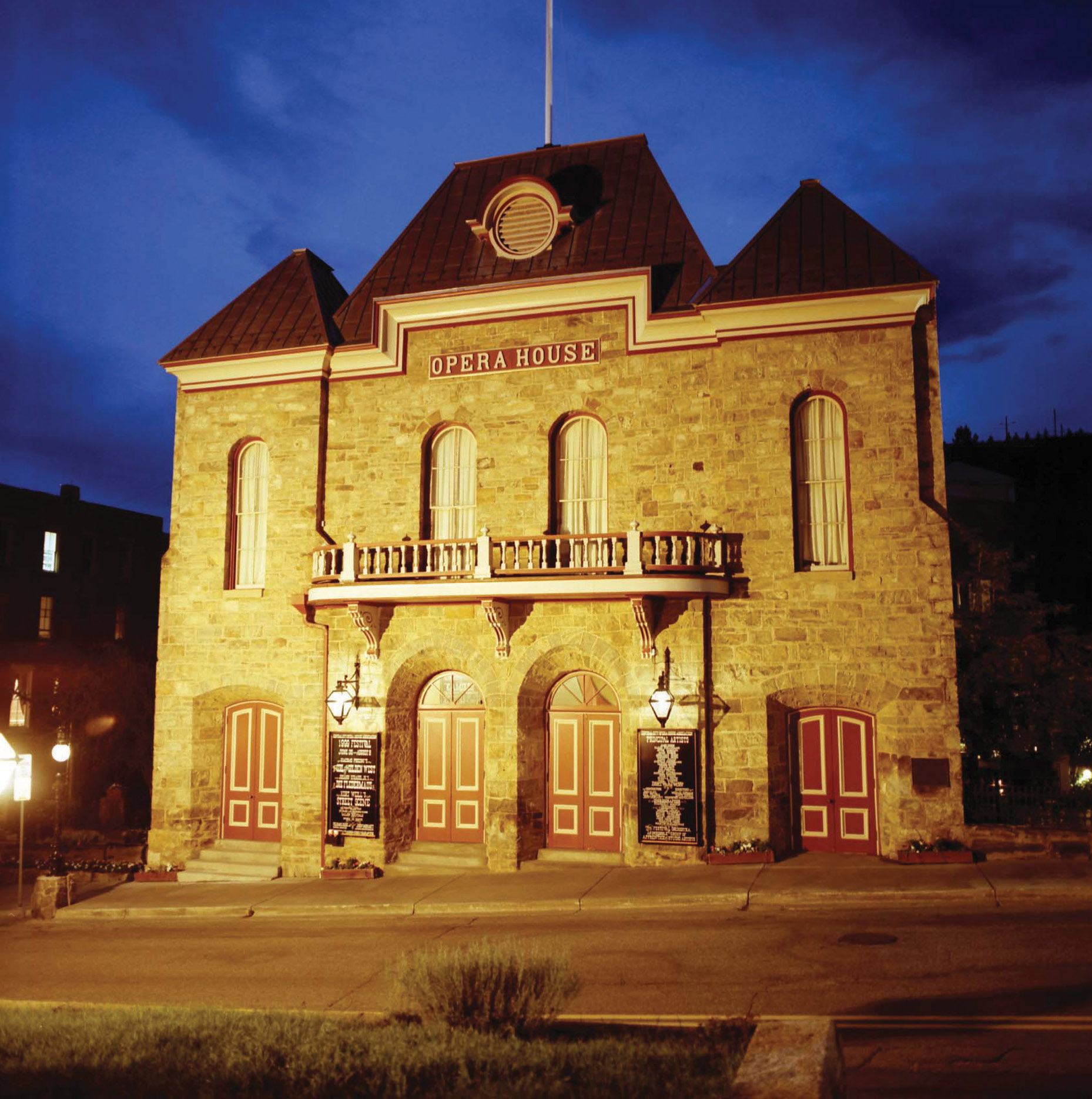
Central City Opera House. Photo by Mark Kiryluk.

Central City Opera House. Photo by Mark Kiryluk.

The two productions currently running at the Central City Opera (CCO) are not so much contrasting shades of opera as opposite poles.

At the dark end of spectrum is Jake Heggie’s Dead Man Walking, a setting of playwright Terence McNally’s powerful libretto, based on the book by Sister Helen Prejean. The true story of a nun’s efforts to reach out to a brutal death row convict, the book also inspired the 1995 film starring Susan Sarandon and Sean Penn. This seems unlikely material for operatic treatment—the drama is largely psychological and very little happens in the conventional sense—but Heggie and McNally have created a gripping work of musical theater that keeps the audience riveted, even as they know the inevitable outcome.

The opposite pole is represented by Mozart’s Marriage of Figaro, one of the greatest and most luminescent operatic explorations of human emotions ever created. A politically and socially dangerous work written on the eve of the French Revolution, it cloaks its subversive message with the light of compassion and humor in Mozart’s transcendent setting of a masterful libretto by Lorenzo da Ponte.

As different as they are, these works are given wholly satisfying and powerfully moving productions by the Central City Opera company. With strong casts, well conceived productions and thoughtful direction, both operas are well worth the drive into the mountains—even if you don’t need an excuse to drive into the mountains.

In his notes for Dead Man Walking, director Ken Cazan observes that the opera “doesn’t tell the viewer what to think and feel. . . . [It] poses questions, not answers.” Indeed, one of the most remarkable things about the work is how well it conveys understanding and sympathy for all of the characters, even the murderer Joseph De Rocher.

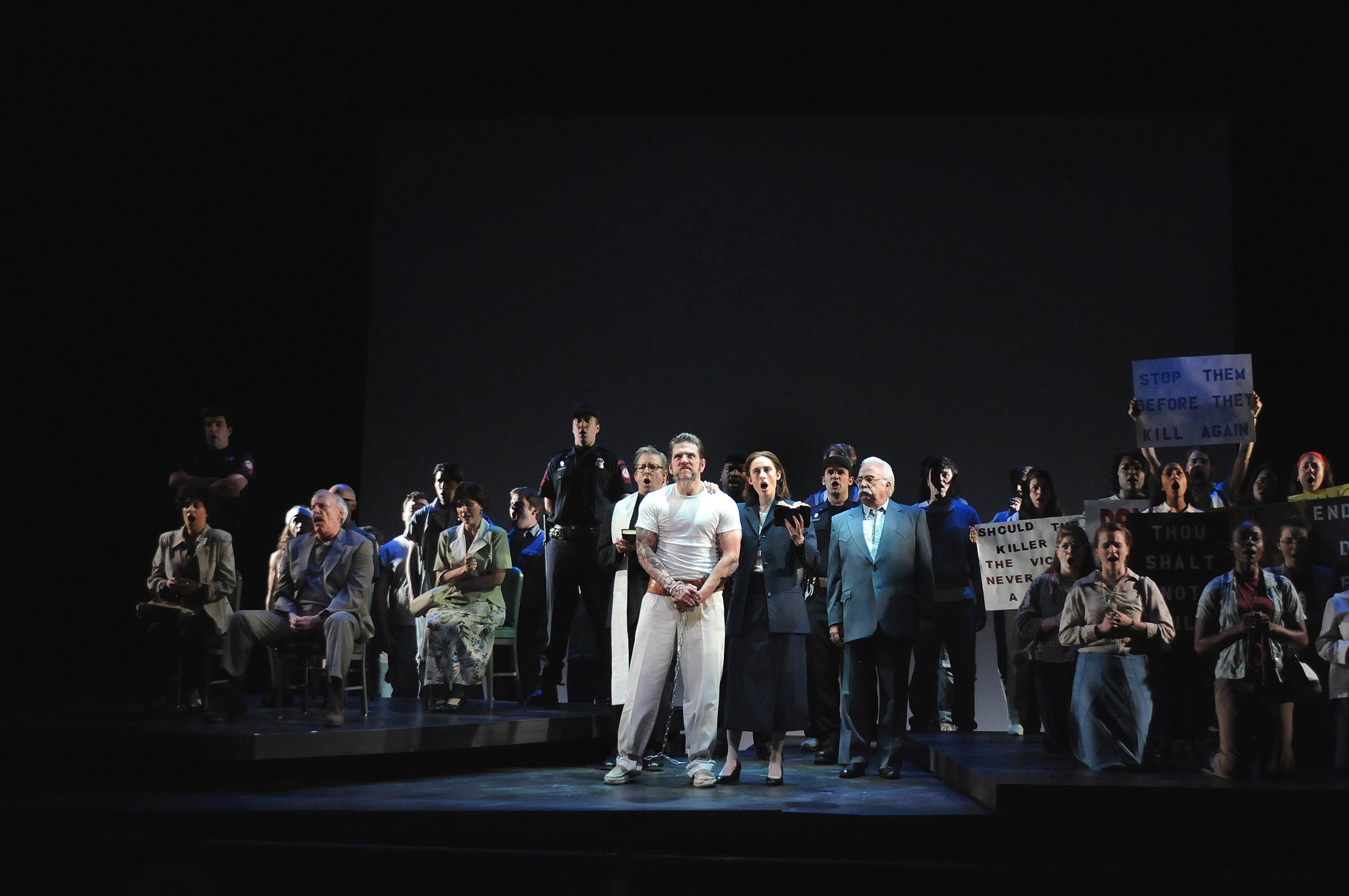
Dead Man Walking execution scene. Photo by Mark Kiryluk.

Dead Man Walking execution scene. Photo by Mark Kiryluk.

If the work has a flaw, it is the sustained intensity of its emotional expression. Though unavoidable considering the subject matter, the unrelenting high tension of the music leaves no scope for the shattering musical climax we might expect. As a result, the ending, when De Rocher finally faces his execution, provides a dramatic resolution but not a musical one. The final scene, where Sister Helen returns to the tender hymn that opened the opera, “He Will Gather Us Around,” rounds out the opera on a quiet note that feels inconclusive.

But perhaps that reflects the reality that the questions faced by the opera’s characters—questions of guilt, of punishment, of retribution and redemption—remain unanswered for the characters and for us, as they must always be.

As the murderer De Rocher, Michael Mayes gave a committed and muscular performance—even singing while doing pushups in one scene. His voice conveyed menace and danger from his very first entrance, only softening in the second act when he sang of being “Down by the river with your woman.” The transformation from the threatening figure of Act I to someone who could admit his fear and his guilt and tell Sister Helen “I love you” at the end is an accomplishment of both vocal and dramatic artistry.

Jennifer Rivera ably filled the role of Sister Helen, who is onstage for most of the opera. The throbbing orchestral accompaniment, the range and contours of her part push her into an intensity of expression that make vocal control difficult. Fortunately, she was able to convey small contrasting moments of humor and tenderness as well as the overarching spiritual struggle that defines her role.

Of the many supporting roles, several stand out: Maria Zifchak as De Rocher’s mother was especially moving in the final scenes when she has to face her son’s death; and Robert Orth as Owen Hart commanded attention as an angry father whose daughter died at De Rocher’s hands, but who manages to move toward acceptance by the end.

Other, more one-dimensional supporting roles are well handled: Thomas Hammons as the warden; Jason Baldwin as the unsympathetic Father Grenville; Karina Brazas, Claire Shackleton and Joseph Gaines as mourning parents. Jeanine De Bique was on target but vocally strained as Sister Rose. John David Nevergall added a light touch as the Motorcycle Cop.

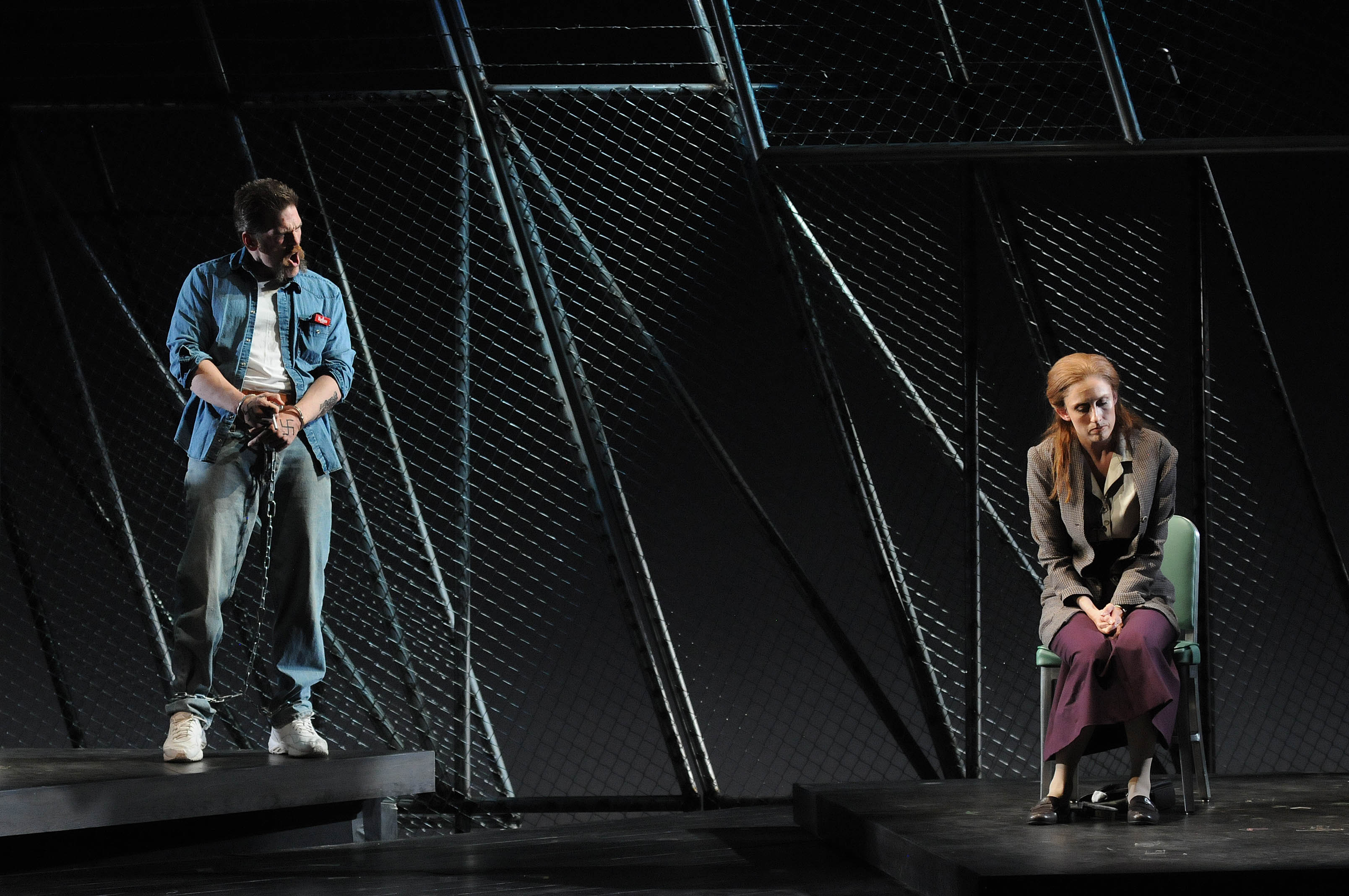
Dead Man Walking: Michael Mayes as Joseph De Rocher and Jennifer Rivera as Sister Helen Prejean. Photo by Mark Kiryluk.

Dead Man Walking: Michael Mayes as Joseph De Rocher and Jennifer Rivera as Sister Helen Prejean. Photo by Mark Kiryluk.

The coloring of vowels by the singers to suggest the Louisiana locale of the story was only intermittently successful, and considering the universality of the questions we are asked to ponder, I am not sure that it is necessary.

One of the pleasures of opera at Central City is seeing the creative ways the company makes use of its limited stage and wing space. Alan E. Muraoka’s minimalist stage designs were highly effective, using angled fences to convey the enclosed space of the prison as well as the emotionally closed world of the convicts. In other scenes, pieces of furniture—two chairs, a table and a chair—or the execution gurney that De Rocher is strapped to, Christ-like, at the end, were sufficient to set the changing scenes and illuminate the changing relationships.

Ken Cazan’s direction was efficient and effective, especially in making use of the limited space to convey relationships among the principal characters. John Baril lead Central City’s fine orchestra with a firm hand.

# # # # #

CCO’s production of The Marriage of Figaro has been updated from the 18th century to Spain in the 1920s. Director Alessandro Talevi justifies this through the political situation of the time. “Spain . . . .was deeply conservative and religious in conflict with dynamic progressive movement of secularism,” he writes, establishing a parallel with the pre-revolutionary Europe of Mozart’s time.

Act II Finale, Marriage of Figaro. Photo by Mark Kiryluk

Act II Finale, Marriage of Figaro. Photo by Mark Kiryluk

I am not sure the intellectual justification is necessary, or even helps for that matter.

For the most part the setting and costumes were successful, the 1920s being long enough ago that audiences readily accept the social hierarchies and conflicts of the plot. That said, I do have one reservation, in that British costume dramas are now so familiar to American audiences that many must have thought of Downton Abbey, and the Count reminded me inescapably of John Cleese in Fawlty Towers. These resonances do not enhance Mozart’s masterpiece.

The one essential of any production of the opera is a Figaro who can command the stage. CCO is fortunate to have a vocally secure Figaro in Michael Sumuel, whose genial presence was always welcome onstage. He sang expressively, handling Figaro’s wide range of emotions with aplomb.

Michael Sumuel as Figaro and Anna Christy as Susanna. Photo by Mark Kiryluk.

Michael Sumuel as Figaro and Anna Christy as Susanna. Photo by Mark Kiryluk.

As Figaro’s intended bride Susanna, Anna Christy was a secure vocal partner in her many duets and ensembles with the other cast members. It is her relationship to each of the other principal characters that drives the plot, and Christy was a solid anchor for the drama. In spite of an occasionally nasal sound, her expressive phrasing brought her character warmly to life.

Another critical role is Cherubino, a “pants” role taken by a female mezzo as an adolescent boy who is in love with every woman he sees, from the young Barbarina and Susanna to his godmother the Countess. Tamara Gura was excellent from her first entrance, moving with all the awkwardness of a teenager. I found her unusually convincing throughout, and her aria “Voi che sapete” was especially charming.

As the Count, Edward Parks was perhaps too measured at the outset, neither commanding enough nor bombastic enough in the first two acts. He grew into the role, however, and by the end his confession and plea for forgiveness brought the opera to an effective end.

Anna Christy as Susanna and Sinéad Mulhern as the Countess. Photo by Mark Kiryluk.

Anna Christy as Susanna and Sinéad Mulhern as the Countess. Photo by Mark Kiryluk.

Sinéad Mulhern played the countess with grace and delicacy. Her lovely voice lost quality when pushed, but otherwise her portrayal was pleasing.

Madeleine Boyd’s flexible sets made effective use of the limited stage, even if they recalled an English country house. Talevi’s direction captured the comic qualities of the libretto perfectly, with one exception: the unnecessary comic business during the Count’s Act III aria badly upstaged the singer and undermined the emotion of the scene.

Conductor Adrian Kelly led the performance ably, setting solid tempos and supporting the singers well for most of the opera. The opening overture was full of energy but occasionally smudged, a minor flaw that recurred during the opera as well.

Unfortunately, Central City does not have a genuine harpsichord at its disposal—perhaps due to limited space in the pit or the difficult of caring for a natural instrument at 8,500 ft.—and has to resort to a Kawai electronic keyboard. This is unfortunate whatever the reason. The sound may be adequate for amateur keyboard players who fancy 18th-century music, but it is not suitable for a truly professional performance.

But make no mistake: All reservations aside, this is a sparkling production, full of comic energy and good spirits. The stark contrast between this Figaro and the darkly impressing Dead Man Walking only enhances them both.


Central City Opera

The Marriage of Figaro by Mozart
2:30 pm July 15, 16, 20, 22, 26
8:00 pm July 10, 12, 18
Central City Opera House
For tickets, click here

Dead Man Walking by Jake Heggie
2:30 pm July 13, 19, 23, 25
8:00 pm July 11, 17
Central City Opera House
For tickets, click here  

Is the Metropolitan Opera in danger?

Opinions vary, but some details emerge.

By Peter Alexander

Metropolitan Opera House, Lincoln Center, New York

Metropolitan Opera House, Lincoln Center, New York

Anyone who follows the world of opera has noticed the news.

First, the San Diego Opera was going to close. Then it was saved by a public groundswell, and the longtime artistic director, Ian Campbell, was gone (and his massive salary as well). The company has announced a three-opera season for 2014–15.

Here in Colorado, Denver’s Opera Colorado had to cancel the anticipated premiere of Lori Laitman’s Scarlet Letter. The company was left with a two-opera “season,” including a bare-bones presentation of Carmen with the orchestra on stage and tickets prices up to $167.60. In case you have missed this saga, the various missteps by the company have been dissected by the Denver Post music critic, Ray Mark Rinaldi.

The troubles these two companies find themselves in are clearly financial. Unlike Broadway, where only most investments fail, opera has never been a money-making proposition; it has always depended upon financial support way beyond the cost of tickets, either from the court (early opera in Italy, 18th-century Versailles or Mozart’s Vienna, for example), or wealthy aristocrats (18th-century London), or the government (all across Europe today), or private donors (in the United States). To music historians, the financial ups and downs of opera in London are famously convoluted, with one scheme appearing after another, and all of them failing eventually. Handel, after all, turned to oratorios like Messiah because they were essentially opera on the cheap—all the singing, fewer singers and none of the sets and costumes. Similar histories crop up over and over again, wherever opera is produced. The culprits are usually the salaries of super-star singers, or the cost of fantastic productions, or sometimes the ineptitude of the management. Or all three. But the result is always, and always will be, the same: Opera costs way more to put on than any business can sustain without massive subsidies.

Here in the U.S., we like to imagine that our leading cultural institutions are rock solid. They have a dependable donor base and they are well run within a reasonable budget.

Dream on.

Peter Gelb, general manager of the Met

Peter Gelb, general manager of the Met

There is no larger or more established or more revered cultural institution in the country than the Metropolitan Opera, but its history is not one of outstanding management. (If you want details, read this fascinating, and disheartening, account by Johanna Fiedler.) And now Peter Gelb, the current general manager, says the company stands “on the edge of a precipice.” This comes after several massively expensive new productions mounted by the company, including one that required a $1.4 million investment just to reinforce the Met stage so it could support the set (Robert LePage’s Ring cycle; the cost of the reinforcement has been variously reported, up to $5 million), and another that included a $169,000 poppy field (Prince Igor). But amid criticism of his spending on those productions, Gelb says it is the labor costs that are out of control. They may or may not be, depending on your perspective, but it seems that is not the only problem.

It is no accident that Gelb is raising the alarm just when the Met is in negotiations with unions whose members make the company go, most notably the musicians’ union. This being New York, it is hard to separate facts from negotiating tactics, but a new analysis of the Met’s finances by the Wall St. Journal brings a few facts and some clarity to the issue. For one thing, we can learn that some of Gelb’s expensive and highly promoted new productions have not done well after their first year. But read the whole article to get the full meaning.

Another analysis can be found in The Guardian.

And just to put all of this in an even more interesting light, two of the world’s other major opera companies—the Chicago Lyric and Vienna State Opera—have recently announced that they have completed very successful, even record-breaking, seasons. The timing is at least inconvenient for Gelb and the Met management.

CCOperaLogoPreferredI will have more to say about the current condition of opera in a future article on the announcement of Central City Opera‘s 2015 season, which is going in an interesting new direction. In the meantime, for some perspective on the San Diego Opera and the Metropolitan’s various concerns, I recommend this article written by Los Angeles Times critic Mark Swed. Google searches on the principals and the organizations involved will turn up many more.