Grace Notes: Short Operas and Beethoven Symphonies

Boulder Opera’s “Operatizers,” Boulder and Longmont symphonies’ Beethoven 3 and 9

By Peter Alexander April 17 at 4:30 p.m.
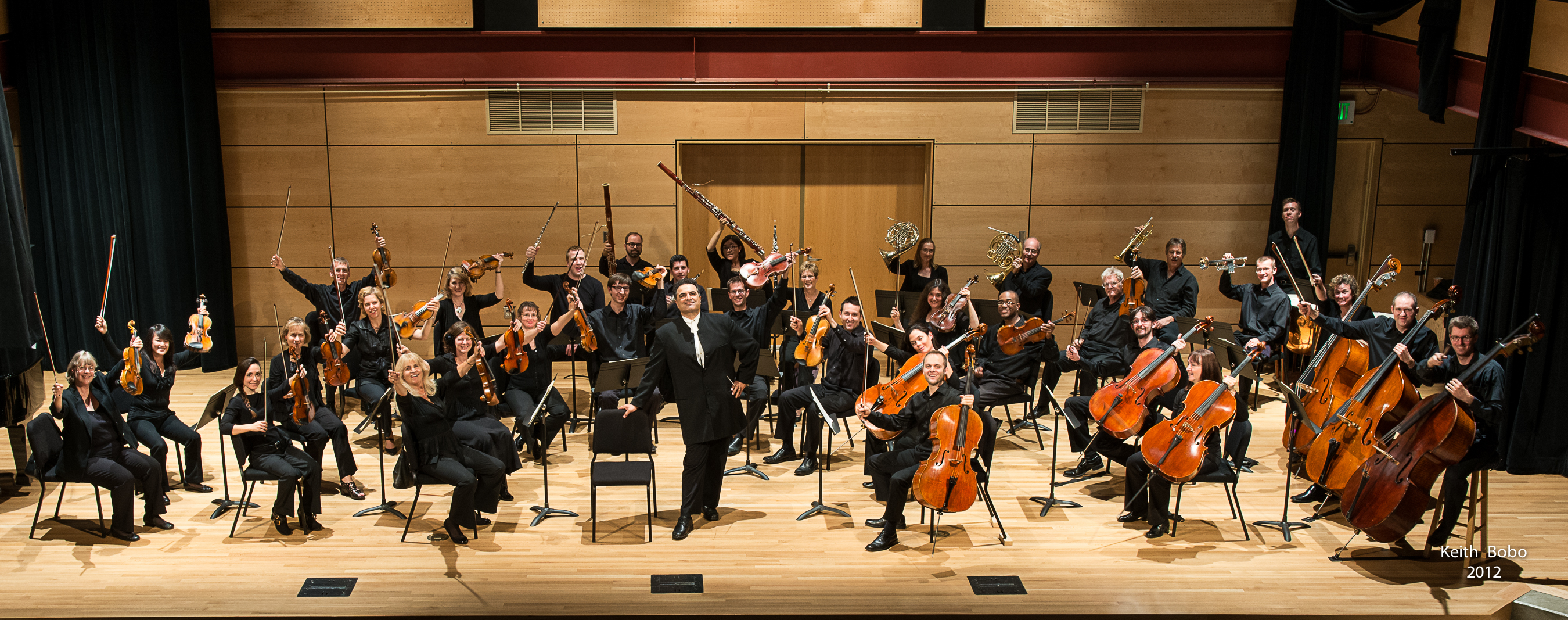
The Boulder Symphony will present Beethoven’s Symphony No. 3—known as the “Eroica”—along with Grieg’s Piano Concerto and the “Lullaby” for string orchestra by George Gershwin Friday evening (7:30 p.m. April 19; details below).

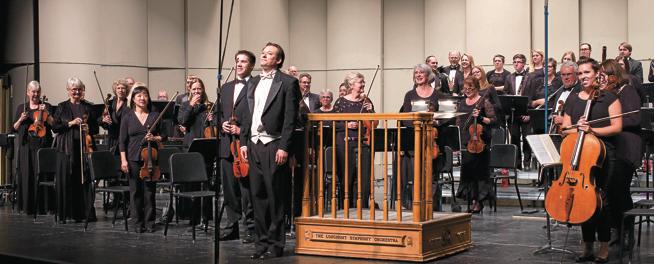
Devin Patrick Hughes will conduct. Soloist for the Grieg Concerto will be Canadian pianist Lorraine Min, who has toured and performed extensively in North and South America, Europe and Asia. 

Originally written as a composition exercise on the piano, Gershwin’s “Lullaby” was arranged by the composer for string quartet. He later incorporated the tune into his 1922 musical, Blue Monday. The show was not a success, and it was not until 1967 that it became better known in performances by the Juilliard String Quartet. Today, performances by full orchestral string sections are common.

Grieg composed his Piano Concerto over the summer of 1868, during a vacation in the village of Søllerød, now part of København, Denmark. Although Grieg was never fully satisfied with the score, the concerto has remained one of his most popular pieces. A review of the premiere praised the concerto as “all Norway in its infinite variety and unity,” and fancifully described the  second movement as “a lonely mountain-girt tarn that lies dreaming of infinity.”

Beethoven’s Third Symphony is one of those musical works that are often described as a turning point in music history. It is nearly twice as long as any previous symphony, and indeed heroic in scope and feeling.

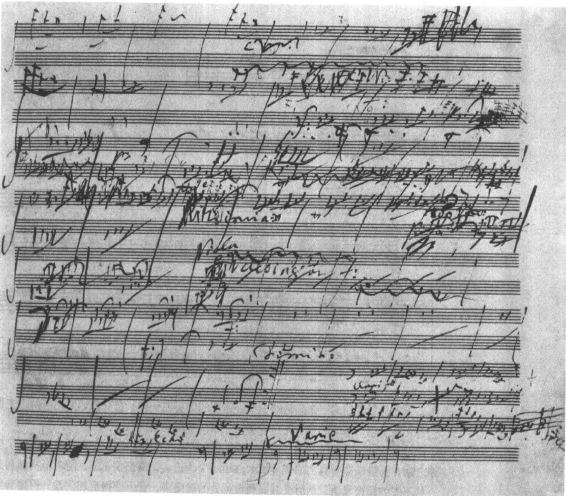
Beethoven’s title page to his Third Symphony, with “Bonaparte” forcefully scratched out

When he wrote it, Beethoven famously titled the symphony “Bonaparte” in honor of Napoleon, but scratched out the dedication in his manuscript when the French general crowned himself emperor. It was published in 1806 with the title “Heroic Symphony . . . composed to celebrate the memory of a great man.”

In place of a traditional slow introduction, Beethoven starts the symphony with two brash chords and spins out a lengthy movement starting with only the notes of the tonic E-flat chord. The second movement is an intense funeral march, a much more dramatic and powerful movement than his audience would have expected. In place of the normal minuet, Beethoven composed a rambunctious scherzo. 

In these first three movement, the realm of the symphony has been expanded. The finale is more typical of the times, a set of variations on a theme from Beethoven’s ballet The Creatures of Prometheus. But even here, the number of variations, a fugue on the theme and a section of development represent an extension beyond the normal variation finale of the time. Again, Beethoven expanded the scope of the symphony.

# # # # #

Boulder Symphony, Devin Patrick Hughes, conductor
With Lorraine Min, piano

  • Gershwin: “Lullaby” for string orchestra
  • Grieg: Piano Concerto in A minor
  • Beethoven: Symphony No. 3 in E-flat major, op. 55 (“Eroica”)

7:30 p.m. Friday, April 19
Grace Commons Church

TICKETS

# # # # #

Boulder Opera opens the door on “North American storytelling” with “Operatizers,” a program of five short operas by composers from American master Samuel Barber to contemporary operatic star composer Jake Heggie to Ft. Collins-based composer/songwriter Ilan Blanck.

Subjects of the opera include a parody of television soap operas to various meditations on modern love. Performances Saturday and Sunday (7 p.m. April 20 and 3 p.m. April 21 at the Diary Arts Center) will feature a “Maestro’s Reception” at intermission where audience members can meet cast members and directors and ask questions about the productions. 

Composer Ilan Blanck

The five operas and their plots are described on the Boulder Opera Web page:

  • Avow by Mark Adamo imagines a conflicted bride, her avid mother, the haunted groom, the ghost of his father, and a celebrant who really should make better efforts to remember which ceremony he’s performing.
  • At the Statue of Venus by Jake Heggie tells the story of an attractive woman waiting in a museum by the statue of the goddess of love to meet a man she has never seen before. Will he like her? Will she like him? We all know Mr. Right doesn’t exist – or does he?
  • A Hand of Bridge by Samuel Barber consists of two unhappily married couples playing a hand of bridge, during which each character has a brief aria expressing his or her inner desires.
  • Gallantry by Douglas Moore is parody of hospital soap operas with commercial interruptions.
  • Spare Room with a Shag Rug by lan Blanck is written in English and Spanish, plus a touch of Yiddish, paying homage to the composer’s own Mexican-Jewish heritage.

# # # # #

“Operatizers”
Boulder Opera Company

  • Mark Adamo: Avow
  • Jake Heggie: At the Statue of Venus
  • Samuel Barber: A Hand of Bridge
  • Douglas Moore: Gallantry
  • Ilan Blanck: Spare Room with a Shag Rug

7 p.m. Saturday, April 20
3 p.m. Sunday, April 21
Dairy Arts Center

TICKETS, including add-on tickets for the Maestro’s Reception at intermission

# # # # #
The Longmont Symphony Orchestra (LSO) and conductor Elliot Moore conclude their cycle of all nine Beethoven symphonies Saturday (7 p.m. Vance Brand Civic Auditorium; details below) with the massive Ninth Symphony, one of the symphonic icons of the 19th century.

The Longmont Chorale joins the LSO for this performance. Soloists will be soprano Dawna Rae Warren, mezzo-soprano Gloria Palermo, tenor Javier Abreu and bass-baritone Michael Leyte-Vidal. The LSO has performed the full Beethoven cycle over the past five seasons, starting in April, 2018.

Vaughan Williams wrote his Serenade to Music, based on a text by Shakespeare, as a tribute to conductor Henry Wood. Scored for orchestra and 16 vocal soloists, it was later arranged for orchestra with four soloists and chorus. Since the first performance in 1938, it has been loved by singers and audiences both for the sheer beauty of the vocal writing and the harmonies.
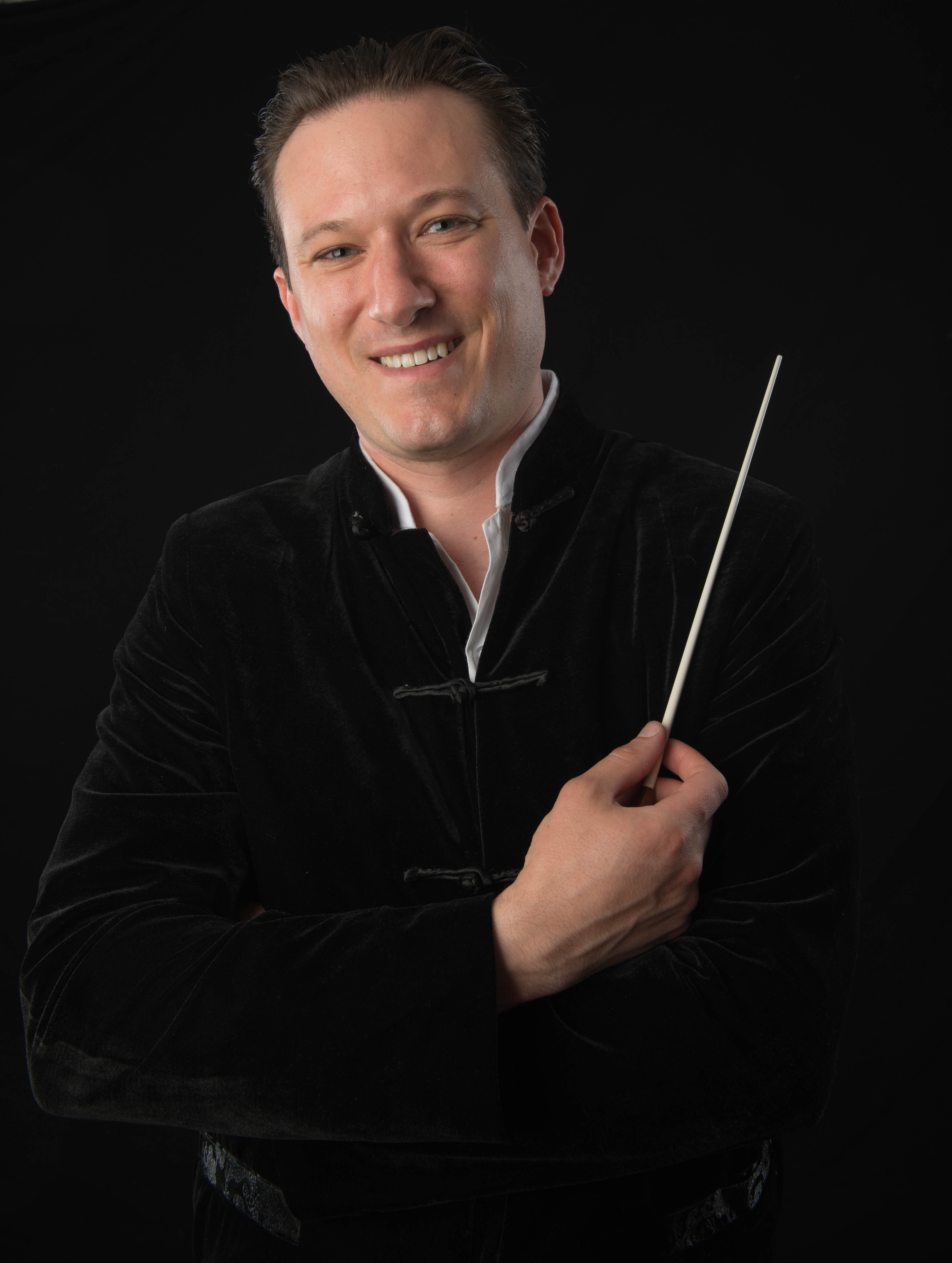
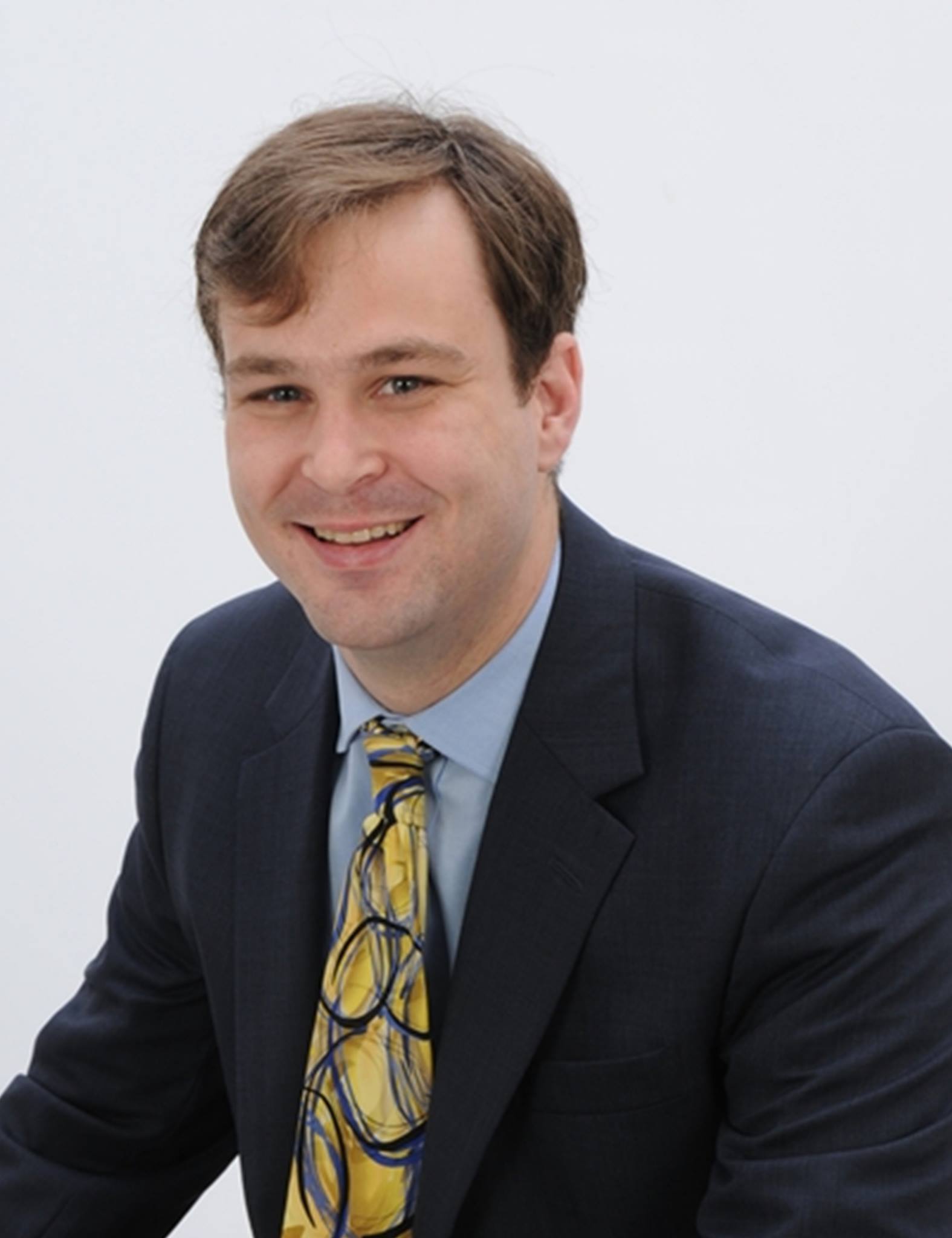
Elliot Moore

Beethoven’s Ninth Symphony, the first by a major composer with chorus in addition to orchestra, is one of the most performed and most loved works in the classical repertoire. It was composed in 1822-24, and first performed in Vienna May 7, 1824. 

The orchestra was led by Austrian composer and violinist Michael Umlauf with Beethoven, stone deaf by that time, standing at his side. In one famous anecdote, the composer was unable to hear the cheers of the audience at the end of the performance and the alto soloist, Caroline Ungar, had to take him by the hand and turn him around to see the enthusiasm of the listeners.

The choral last movement uses a text by German poet Friedrich Schiller that celebrates the brotherhood of men: “All men shall become brothers, wherever the gentle wings [of joy] hover. . . . Every creature drinks in joy at nature’s breast.” Because of this message of universal love, the symphony has been performed for many special occasions in history, including the original opening Wagner’s Bayreuth Festspielhaus (festival hall) and for its reopening after World War II, in 1989 to celebrate the fall of the Berlin Wall, and for the opening of the 1988 Winter Olympics in Japan, and other ceremonial occasions.

Performances of the Ninth Symphony are almost always considered special occasions, and almost always sell out. In addition to its popularity, the symphony has influenced composers from Dvořák to Bartók, and especially the symphonies by the Austrian composer Anton Bruckner.

# # # # #

Beethoven Cycle: Symphony No. 9
Longmont Symphony, Elliot Moore, conductor
With the Longmont Chorale, Nathan Wubbena, conductor 
Soprano Dawna Rae Warren, mezzo-soprano Gloria Palermo, tenor Javier Abreu and bass-baritone Michael Leyte-Vidal

  • Vaughan Williams: Serenade to Music
  • Beethoven: Symphony No. 9 in D minor (“Choral”)

7 p.m. Saturday, April 20
Vance Brand Civic Auditorium

TICKETS (Note: This concert is close to selling out. Availability of tickets cannot be guaranteed.)

Boulder Chamber Orchestra strings present “Virtuosity!” with Richard O’Neill

Takács Quartet violist plays music by Telemann and Piazzolla Saturday

By Peter Alexander Feb. 29 at 11:07 p.m.

Violist Richard O’Neill has a wide-ranging background, both geographically and musically.

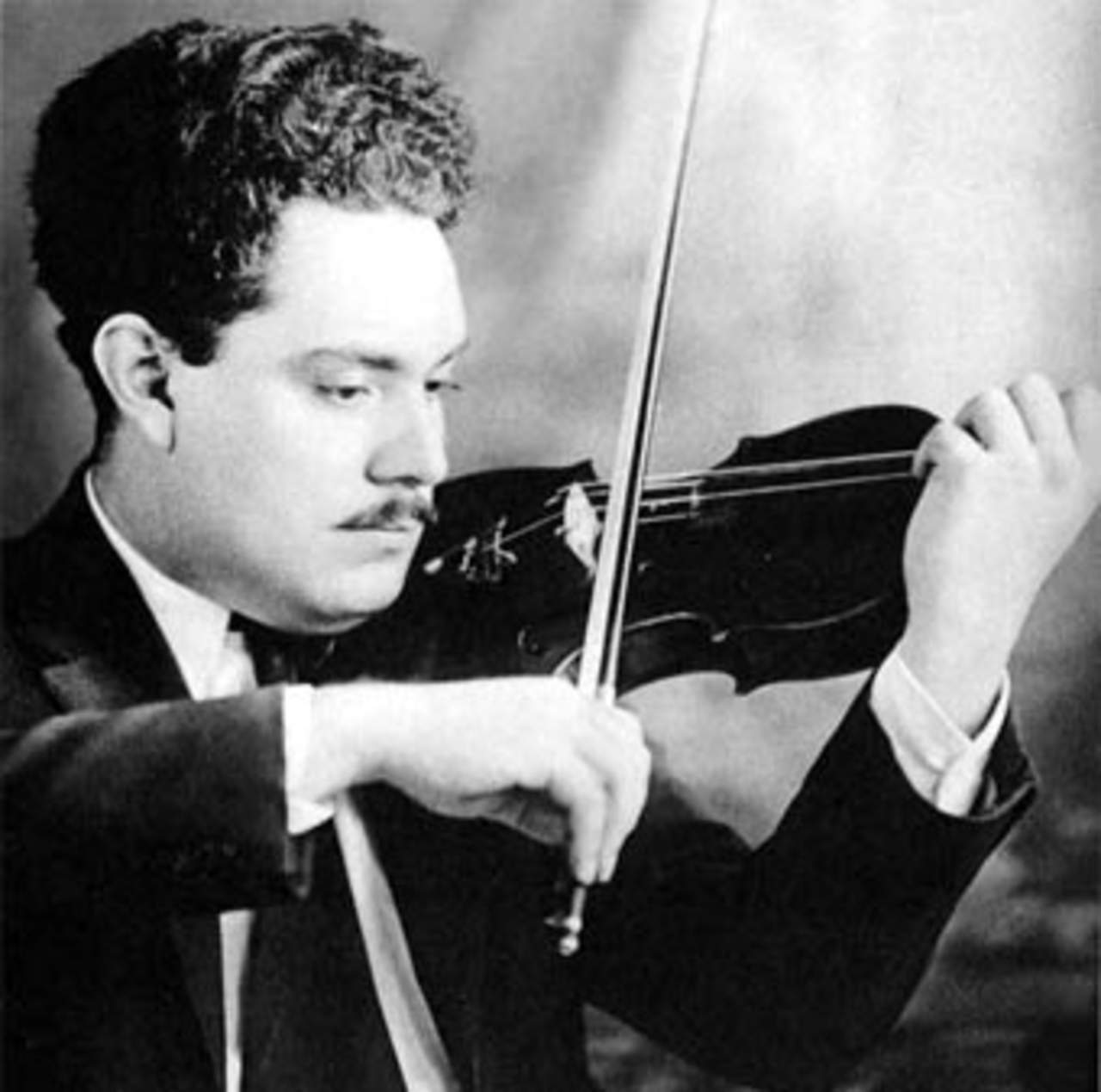
Richard O’Neill

For example, when he plays as soloist with the Boulder Chamber Orchestra Saturday (7:30 p.m. March 2; details below), he polished one of his pieces by playing with members of Germany’s distinguished early-music ensemble Musica Antiqua Köln, and the other he researched near the docks in Buenos Aires, Argentina.

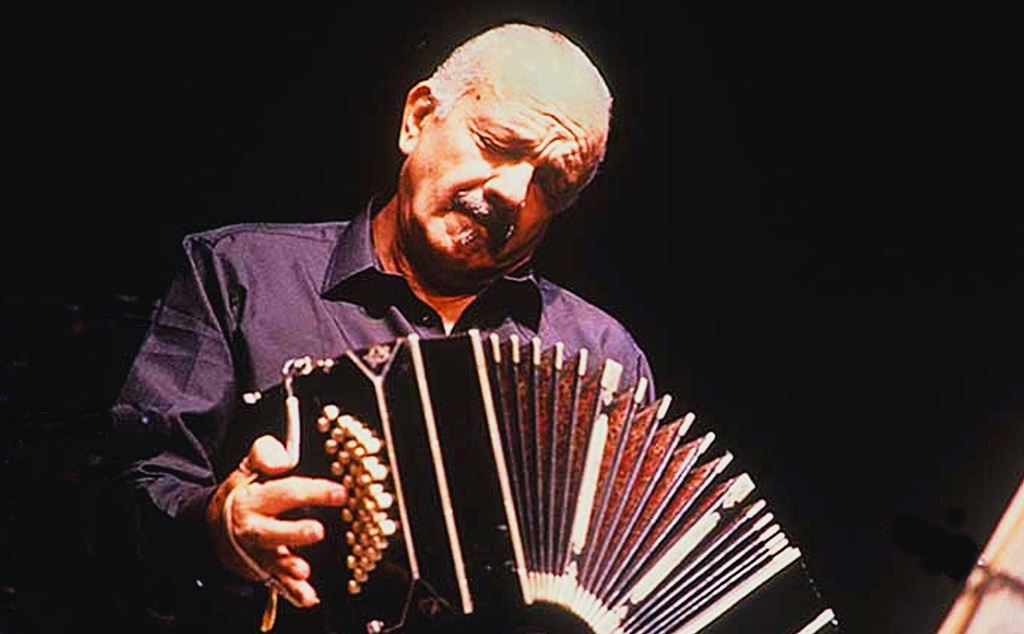
The first would be the Concerto in G major for viola by the prolific Baroque composer Georg Philipp Telemann; the other is the “Grand Tango,” originally for cello, by Argentine bandoneon player and band leader Astor Piazzolla. Other works on the program, featuring the BCO strings under music director Bahman Saless, are Valse Triste by early 20th-century Czech composer Oskar Nedbal, and Beethoven’s Grosse Fuge (Great fugue), originally the finale of the composer’s String Quartet in B-flat, op. 130.

Two more different composers than Telemann and Piazzolla would be hard to imagine. And yet, O’Neill says, they are not incompatible. “They’re very contrasting, probably on polar opposite ends of the musical timeline,” O’Neill says. “But they share some commonalities—most of all the spirit of the dance.”

The Telemann is the first known true viola concerto, and it is a piece that O’Neill plays often. “I think it’s a gorgeous, amazing piece,” he says.

Georg Philipp Telemann

O’Neill recorded the concerto in 2008 when he was asked to make a recording with members of Musica Antiqua Köln. It was definitely a learning experience for O’Neill, giving him an opportunity to work with a Baroque-style bow that has much less tension on the bow hairs, and to improvise in Baroque music. 

The latter did not come naturally, he admits. “I remember them asking me, ‘play a cadenza, be free! Do whatever you like!’” O’Neill says. “I did something, and it was free for sure! I was stopped and it was like, ‘Who are you, Yo-Yo Ma?’ But it was all said with a smile.

“One thing I learned, things were a lot different when performers and composers were the same person. And it was amazing how prolific (Telemann) was. A lot of times you look at the score and it’s very bare, but in some ways it has everything you need—you just have to understand what you’re going to do.”

His approach to Piazzolla’s music was very different. O’Neill first heard Piazolla’s music when he was a 15-year-old student in Las Vegas, and the Cuarteto Latinoamericano played Piazzolla’s “Four, for Tango.” “I was completely blown away!” he says.

“I had never heard anything like this. It was so rhythmic, so fun, the instruments were doing all of these cool, weird effects like percussive effects and (playing) behind the bridge. I was, ‘what is going on there?’ I found the Kronos (Quartet) recording and listened to it all the time. I fell in love with Piazzolla.”

Astor Piazzolla

Later he had the chance to study Piazzolla’s musical origins up close. He was in Buenos Aires, and saw an opportunity to learn more. “I wanted to see what the tango was about,” he says.

“I went down to the docks (in Buenos Aires), where the Argentinian tango was originally from. I was shocked to find out it wasn’t the Parisian version of tango, which is Romantic and dignified. It was actually really rough.  I went to a few tango shows in cafes, but it was mainly the vibe of Buenos Aires that changed me.”

Piazzolla originally wrote the “Grand Tango” for the cellist Mstislav Rostropovich, but the viola arrangement that O’Neill plays fits the instrument very well. “Piazzolla wrote a lot of the (original cello) part very high,” he explains—meaning he can play it at the same pitch on the viola. 

O’Neill loves both pieces he is playing on BCO’s program, but it is the Piazzolla that gets him excited. “The music is just so incredible and evocative,” he says. “It’s almost like it’s so rhythmic that you can’t help being swept away by it.”

Nedbal’s Valse triste is from the ballet Pohadka o Honzov (known in English as the Tale of Simple Johnny). It was composed in 1902 for orchestra, but Nedbal later arranged the Valse for string quartet, in which form it has become especially popular. Trained as a violinist and a composition student of Dvořák, Nedbal was principal conductor of the Czech Philharmonic 1896–1906. 

When Beethoven wrote his String Quartet in B-flat in 1825, he provided an unusual finale: an extensive double fugue that takes up to 16 minutes in performance. That movement was criticized at the time for its complexity and for being “a confusion of Babel.” Since then, however, its standing has risen, to the point that Stravinsky famously said that it “will be contemporary forever.”

Beethoven’s publisher was afraid that such a difficult finale would hinder sales of the quartet, so Beethoven wrote a shorter movement that appeared with the String Quartet in B-flat. He then published the Grosse Fuge separately in 1827. Today it is hailed as one of the composers greatest compositions.

# # # # #

“Virtuosity!”
Boulder Chamber Orchestra, Bahman Saless, conductor
With Richard O’Neill, viola

  • Oskar Nedbal: Valse Triste
  • Telemann: Concerto in G for viola and orchestra
  • Astor Piazzolla: Grand Tango
  • Beethoven: Grosse Fugue, op. 133

7:30 p.m. Saturday, March 2
Seventh-Day Adventist Church, 345 Mapleton, Boulder

TICKETS

Beethoven and Halloween Hit the Concert Stages

Longmont Symphony at Stewart Auditorium, Colorado Chamber Players in Broomfield

By Peter Alexander Oct. 21 at 5:15 p.m.

The Longmont Symphony nears the end of its Beethoven symphony cycle this weekend at the intimate Stewart auditorium of the Longmont Museum.

Conductor Elliot Moore leads the orchestra in the next-to-last of the composer’s nine symphonies, in a cycle that was begun in 2018 and continued nearly unabated through the recent pandemic. The Symphony No. 8 in F major, op. 93, will be joined on the program by the Symphony in G major by Beethoven’s contemporary and lifelong friend Anton Reicha.

The concert will be presented twice, at 7 p.m. Saturday, Oct. 2s2, and 4 p.m. Sunday, Oct. 23. Tickets are available here.

Beethoven referred to his Eight Symphony, one of his lighter and more cheerful works, as “my little symphony in F.” It is more classical in structure and style than either the Sixth or Seventh symphonies, which were more revolutionary than the 8th. Written while Beethoven was trying to prevent his brother Nikolaus Johann from marrying, the score reveals none of the emotional turmoil that both were undergoing at the time.

Reicha became Beethoven’s friend when both played in the court orchestra in Bonn. Only a few of his wind quintets are known today, and his orchestral works, because they were never adequately catalogued, are almost never played. The Longmont Symphony is calling their performance of the Symphony in G “its premiere performance as a fully restored work after a very long 200 year wait.”

# # # # #

Longmont Symphony, Elliot Moore, conductor

  • Anton Reicha: Symphony in G major (premiere of restored version)
  • Beethoven: Symphony No. 8 in F major, op. 93

7 p.m. Saturday, Oct. 22
4 p.m. Sunday, Oct. 23
Stewart Auditorium, Longmont Museum

TICKETS   

# # # # #

The Colorado Chamber Players aim to transport listeners into the “Twilight Zone” for the Halloween season.

The program, subtitled “Strange and Supernatural Music of the Baroque,” will be presented in Denver (Oct. 21), Montclair (Oct. 22) and Broomfield (7:30 p.m. Broomfield Auditorium; details below). The music selected for the program has been incorporated into a musical and poetic hybrid theater work by John Harwell. Music will be performed by members of the Colorado Chamber Players, and narration and poetry recitation by actor Chris Kendall.

The Baroque era is usually defined as music of the 17th and early 18th centuries. Many of the works from this era, particularly music by Vivaldi, Handel and Bach, have become very popular today, but the word “Baroque” was not originally meant as a compliment. Meaning “bizarre” or “oddly shaped,” it was applied to music that broke from the patterns of Renaissance music in various unexpected ways. As such, programming of Baroque music for Halloween makes sense.

Some of the musical pieces portray grotesque subjects, such as Marin Marias’ Tableau de l’Operation de la Taille (A description of the operation of the stone) for bass viola da gamba and narrator. Others, like Henry Purcell’s Fantasia No 4 in E minor for viols, are included for their unusual and unsettling sound content. 

Tartini’s “Devil’s Trill” Sonata for solo violin and bass is included for it’s legendary origin in a dream where the composer saw the Devil playing the violin. Other works on the program are by Heinrich Biber and Anthony Holborne. 

Now in their 29th season, the Colorado Chamber Players have grown from a string trio in 1993 to a mixed ensemble of 10 players today. The versatile group includes a string quartet, string bass, flute, harp, piano, viola d’amore and voice. Located in Denver, they perform concerts, educational programs and broadcasts of collaborative chamber works throughout the Denver and front-range region.

For more information, visit the CCP Facebook page.

# # # # #

“Twilight Zone: Strange and Supernatural Music of the Baroque”
Music/theater hybrid work by Josh Hartwell
Poetry and narration performed by Chris Kendall
Music performed by Colorado Chamber Players

Program includes:

  • Henry Purcell: Fantasia No 4 in E minor for viols
  • Marin Marais: Tableau de l’Operation de la Taille (A description of the operation of the stone) for bass viola da gamba and narrator
  • Giuseppe Tartini: Violin Sonata in G minor (“Devil’s Trill”)
  • Music by Heinrich Biber and Anthony Holborne, and poetry by Emily Dickinson, Moya Cannon and Robert Herrick

7:30 p.m. Sunday, Oct. 23
Broomfield Auditorium

TICKETS

Longmont Symphony announces 2022–23 season

Season includes Beethoven cycle, Handel’s Messiah, world premieres

By Peter Alexander June 8 at 1:54 p.m.

The Longmont Symphony recently announced their 2022–23 season of concerts. The season features six mainstage concerts, three chamber orchestra concerts, and a Messiah singalong during the Holiday season (Dec. 18; see full season listings below).

The Beethoven symphony cycle will continue with Symphony No. 8 (Oct. 22 and 23), and other familiar orchestral repertoire will be represented by works of Dvořák and Sibelius. There will also be works by less familiar composers, including two world premieres, adding up to a season with intriguing discoveries to be made on most programs.

Composer John Heineken

The first of the two world premieres is Symphony for the Great Return by American composer John Hennecken on the opening night of the new season, Oct. 8. With it on the same program are Dvořák’s familiar Cello Concerto, played by Naumburg Competition winner Clancy Newman, Aaron Copland’s Fanfare for the Common Man, and George Walker’s elegiac Lyric for Strings.

The next installment of the LSO’s Beethoven cycle will feature the Eighth Symphony, possibly the least familiar of the canonical nine symphonies (Oct. 22 and 23 in Stewart Auditorium). Sharing the same chamber orchestral program is a symphony by Anton Reicha, a contemporary and friend of Beethoven. An adventurous and experimental composer for his times, Reicha is little known today, but his work serves to fill in the context in which Beethoven worked.

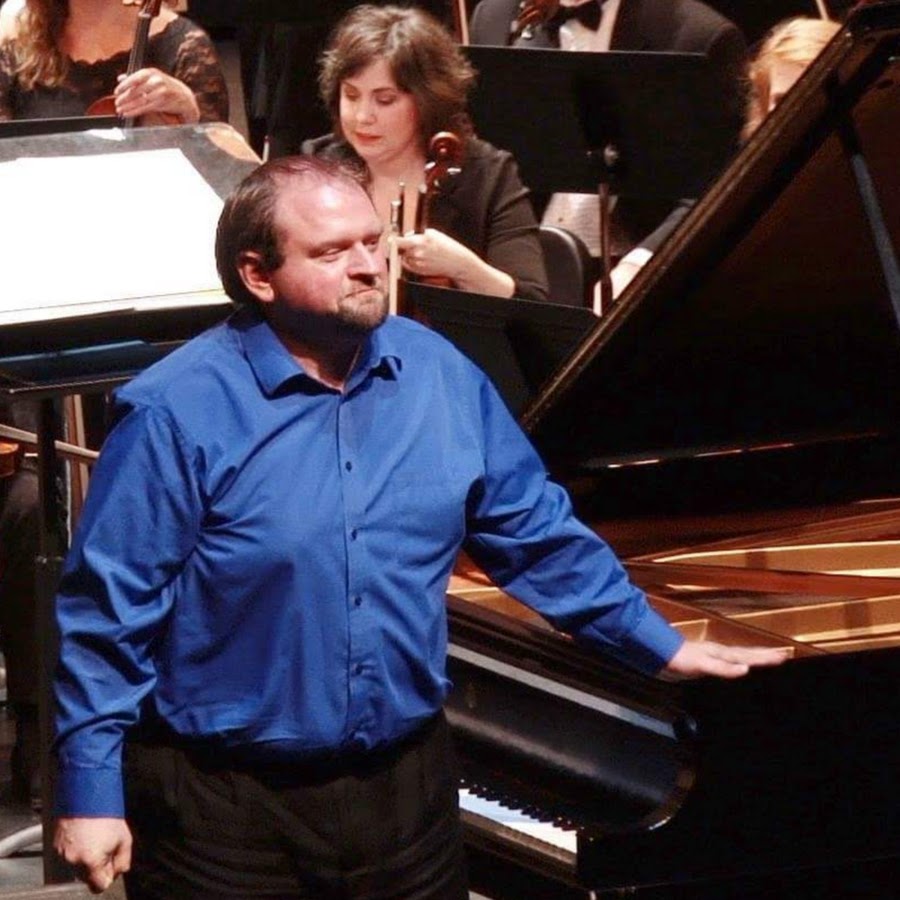
Jerod Impichchaachaaha’ Tate

The major work on the November mainstage concert (Nov. 19) will be Dvořák’s Symphony No. 8 in G major, a cheerful and upbeat piece that was written shortly before the composer’s 1892–93 visit to the United States. It will be preceded by three works that reflect the native American experience: Overture to the choral-orchestral Song of Hiawatha by the black British composer Samuel Coleridge-Taylor; American composer Michael Daugherty’s Trail of Tears for flute, strings and harp, inspired by the forced removal of Cherokees from their homeland; and Chokfi’ (Rabbit) for strings and percussion by Jerod Impichchaachaaha’ Tate, a composer who is a citizen of the Chickasaw Nation in Oklahoma. Flute soloist for Trail of Tears will be Brice Smith.

The LSO will celebrate the Holidays with a complete performance of Handel’s Messiah (Dec. 17), followed by an audience-participation truncated Messiah “singalong.”

Silvestre Revueltas

The new year begins with a family concert (“Painting the Orchestra,” Jan. 21, 2023), followed by an all-Sibelius program (Feb. 18, 2023). Sibelius is generally under-represented in orchestra repertoire now, so it’s good to have a complete concert of his music, even if the program sticks to his more familiar works—Finlandia, the Violin Concerto with soloist Judith Ingolfsson, and the Symphony No. 2 in D major.

March 18 and 19 will see the second concert of the “Made in America” series, opening with Alcancías (Penny banks) for chamber orchestra by the 20th-century Mexican composer Silvestre Revueltas. Jason Shafer, principal clarinet with the Colorado Symphony and a previous soloist with the LSO, returns to play Copland’s Clarinet Concerto. Completing the program are Gershwin’s Lullaby and Ravel’s Le Tombeau de Couperin, written for piano as a tribute to the Baroque composer François Couperin and later transcribed for orchestra.

Tyler Harrison

The season’s second world premiere will be the Symphony No. 3 by pianist/composer and CU, Boulder, alumnus Tyler Harrison. It will be paired with Tchaikovsky’s brooding Symphony No. 6, “Pathétique,” in a program titled “Darkness and Light” (April 15).

The 2022–23 concert season wraps up May 6 with a lighter program, “LSO Goes to the Movies,” featuring music by John Williams, Ennio Morricone and Hans Zimmer. Subscriptions are available through the LSO Web page. Tickets to individual concerts will go on sale Friday, July 29.

# # # # #

2022–23 Concert Season
Longmont Symphony Orhestra

Longmont Symphony and conductor Elliot Moore

“The Great Return”
Elliot Moore, conductor, with Clancy Newman, cello

  • Copland: Fanfare for the Common Man
  • George Walker: Lyric For Strings
  • John Hennecken: Symphony for the Great Return (World premiere)
  • Dvořák: Cello Concerto

7:30 p.m. Saturday, Oct. 8
Vance brand Civic Auditorium

Beethoven Symphony Cycle
Elliot Moore, conductor

  • Anton Reicha: Symphony in G
  • Beethoven: Symphony No. 8

7 p.m. Saturday, Oct. 22
4 p.m. Sunday, Oct. 23
Stewart Auditorium, Longmont Museum

“Made in America,” Part 1
Elliot Moore, conductor, with Brice Smith, flute

  • Samuel Coleridge-Taylor: Overture to Song of Hiawatha
  • Michael Daugherty: Trail of Tears
  • Jerod Impichchaachaaha’ Tate: Chokfi’
  • Dvořák: Symphony No. 8 in G major

7:30 p.m. Saturday, Nov. 19
Vance Brand Civic Auditorium

Candlelight Concert
Elliot Moore, conductor

  • Handel: Messiah

4 p.m. Saturday, Dec. 17
Westview Presbyterian Church

Messiah Singalong
Elliot Moore, conductor

  • Handel: Messiah (selections)

4 p.m. Sunday, Dec. 18
Westview Presbyterian Church

”Painting the Orchestra!” Family Concert
Elliot Moore, conductor
Program includes:

  • Prokofiev: March from The Love for Three Oranges
  • John Williams: Nimbus 2000
  • Prokofiev: Cinderella Ballet Suite (selections)

4 p.m. Saturday, Jan. 21, 2023
Vance Brand Civic Auditorium

“Sibelius: A Portrait”
Elliot Moore, conductor, with Judith Ingolfsson, violin

  • Sibelius: Finlandia
  • —Violin Concerto
  • —Symphony No. 2 in D major

7:30 p.m. Saturday, Feb. 18
Vance Brand Civic Auditorium

“Made in America,” Part 2
Elliot Moore, conductor, with Jason Shafer, clarinet

  • Silvestre Revueltas: Alcancías
  • Copland: Clarinet Concerto
  • Gershwin: Lullaby
  • Ravel: L’Tombeau de Couperin

7 p.m. Saturday, March 18, 2023
4 p.m. Sunday, March 19, 2023
Stewart Auditorium, Longmont Museum

“Darkness and Light”
Elliot Moore, conductor

  • Tchaikovsky: Symphony No. 6, “Pathétique”
  • Tyler Harrison: Symphony No. 3 (World premiere)

7:30 p.m. Saturday, April 15, 2023
Vance Brand Civic Auditorium

“LSO Goes to the Movies”
Elliot Moore, conductor
Program includes:

  • John Williams: Music from Star Wars and Harry Potter films
  • Ennio Morricone: Music from Cinema Paradiso
  • Hans Zimmer: Music from Pirates of the Caribbean

7:30 p.m. Saturday, May 6, 2023
Vance Brand Civic Auditorium

Season tickets now available. Single-even tickets go on sale July 29.

LSO continues Beethoven cycle over next two programs

Symphonies Five, Six and Seven provide musical “comfort food”

By Peter Alexander Feb. 24 at 10:56 p.m.

The Longmont Symphony Orchestra (LSO) and their conductor Elliot Moore continue their ongoing cycle of the nine Beethoven symphonies with their next two concert programs. 

Symphonies Five and Six will be performed Saturday, Feb. 26 (7:30 p.m., Vance Brand Auditorium), and the Seventh Symphony will be performed alongside works by Haydn and Mozart Saturday and Sunday, March 12 and 13 (7 p.m. and 4 p.m. respectively, Stewart Auditorium of the Longmont Museum; full programs below).

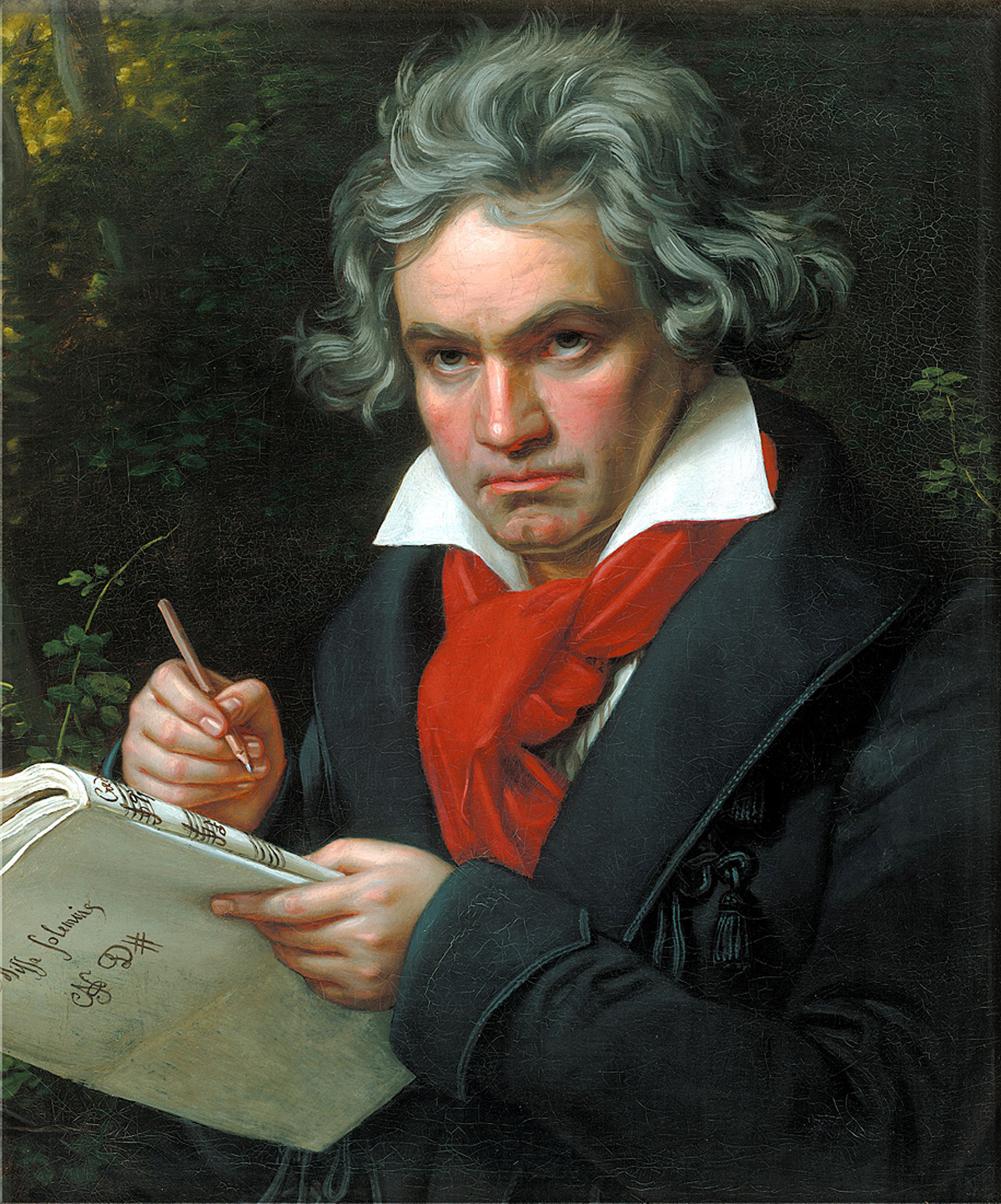
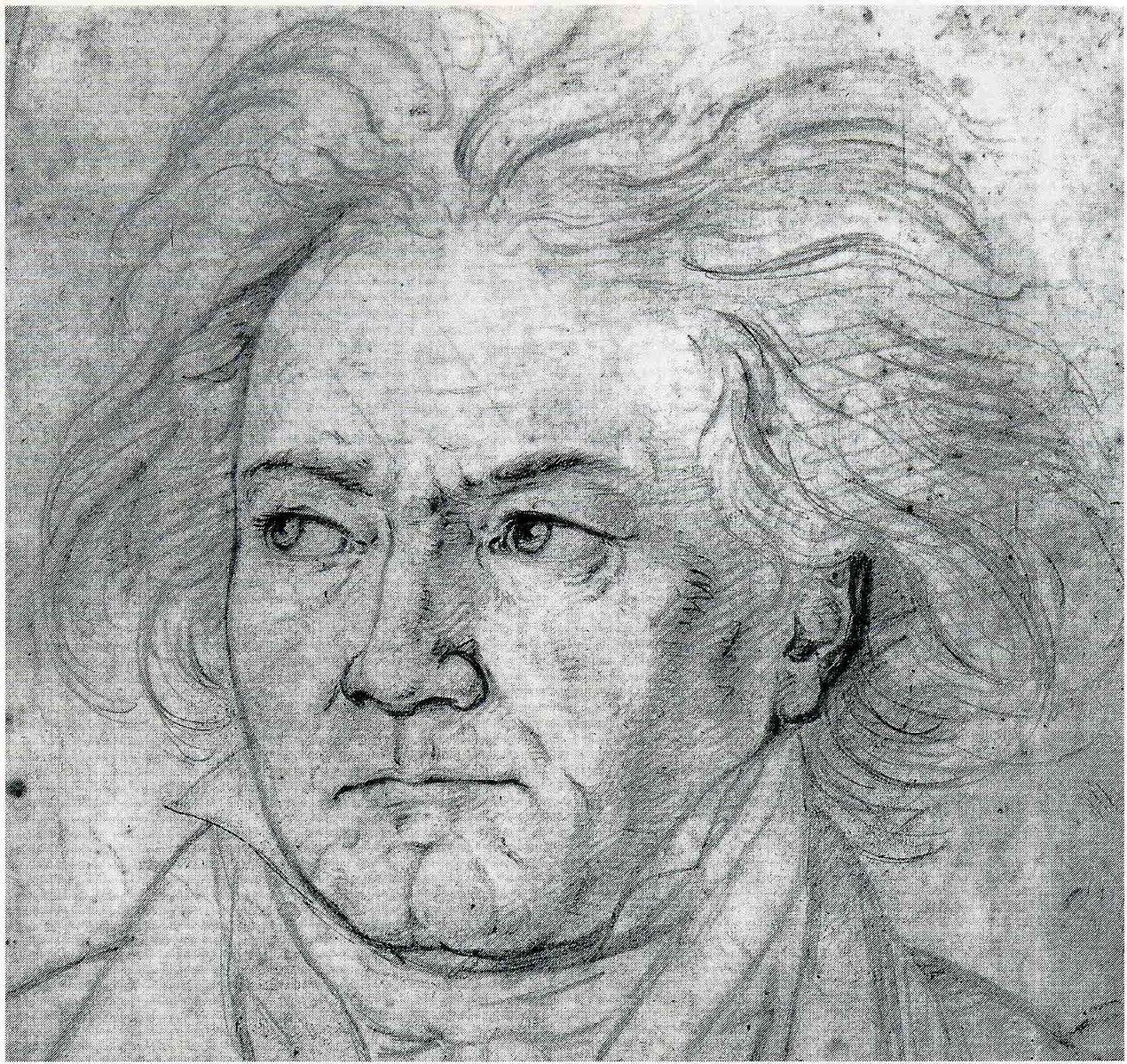
Beethoven. Portrait by Joseph Karl Stieler, 1820

While Beethoven is just about the most frequently performed classical composer in the world, Moore points out that his symphonies have not often been performed in Longmont. When he first announced plans for the full cycle of all nine symphonies, he said “particularly the earlier symphonies of Beethoven have been underperformed here in Longmont. 

“I think it’s important to understand how the Beethoven symphonies helped bring the symphony into its current form.”

He has always been clear that this is part of the educational mission of the LSO as a community-based orchestra. He has named two groups that will benefit: “One is the orchestra, the other is the audience,” he says. “I want (both groups) to experience the freshness of the classical style.”

First up in this next round of the cycle will be Symphonies Five and Six, performed Saturday, Feb. 26, as part of a program titled “Beethoven: A Portrait.” The Fifth Symphony, with its progression from the ominous opening four-note motive to the triumphant finale, has been taken as a symbolic expression of the composer’s own triumph over his deafness.

Because of the uplifting narrative, it has become one of the most familiar orchestral works for audiences everywhere. It has been recorded countless times, by all the great orchestras and conductors, but Moore has no hesitation in having the LSO bring the symphony to its local audience.

“I think it’s important that we know how to play Beethoven’s Fifth Symphony,” he says of the orchestra. And of his opportunity to conduct a work that so may have led before him, he says “What allows me to feel OK is that I’ve spent so much time studying the score. That’s the only reason I have any right to get up in front of those people (in the orchestra).”

Beethoven: sketches for the Sixth Symphony

The Sixth Symphony is known as the “Pastoral” because it describes a day in the country, as the composer often experienced in his walks outside Vienna. The movement titles are “Awakening of cheerful feelings on arrival in the countryside,” “Scene by the brook,” “Merry gathering of country folk,” “Thunderstorm,” and “Shepherd’s song: Cheerful and thankful feelings after the storm.”

Some literal details are embedded in the music, including the sounds of bird songs and the rumbling of the thunder. But Moore sees more than a series of picturesque scenes in the score. “I think that it’s religious music,” he says.

“Beethoven believed in a higher power, which he found in nature, which the ‘Pastoral Symphony’ reflects. How we are rehearsing, how we are bringing out a sound that matches the intent of the work—that is proving very meaningful for the musicians, and hopefully will be meaningful for the audience.”

The program scheduled for March 12 and 13 is titled ““The First Viennese School,” which refers to the three great composers who lived in Vienna just before and after 1800: Haydn, Mozart and Beethoven. Opening the program is Haydn’s Sinfonia, or Overture, to his opera L’incontro improvviso (The unexpected encounter). 

Moore expects this to be a fun piece to perform, because it is an example of a popular musical genre of the late 18th century, “Janissary music.” Based on the music of the Turkish military, Janissary music typically included drums, bells, cymbals, triangles and other percussion, which was not always fully written out.

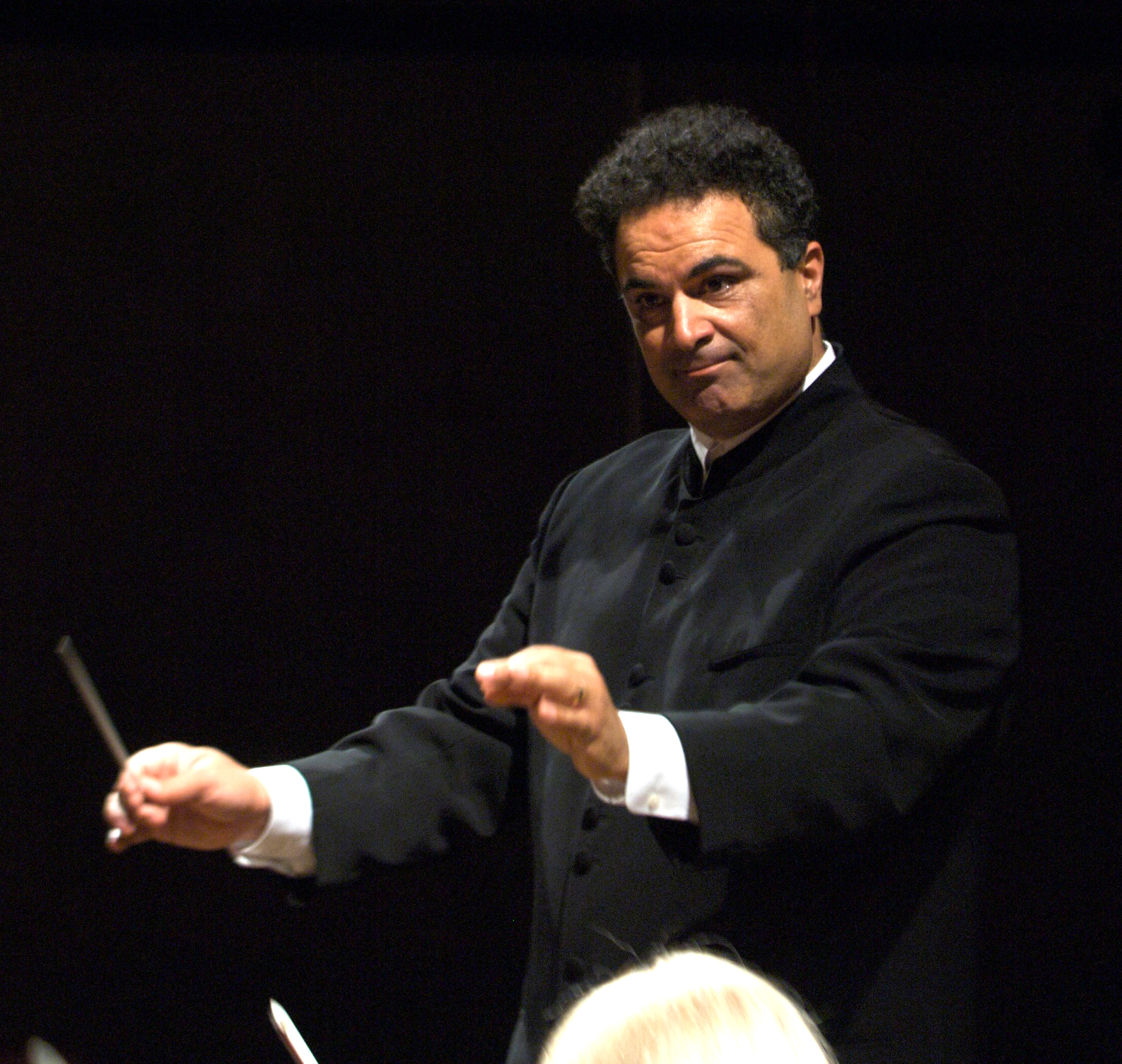
Elliot Moore

“The conductor gets to work with the principal percussionist on what instruments are appropriate,” Moore says. “You have some freedom built in, so I think its going to be a lot of fun to come up with what’s in the style.”

Mozart is represented on the program with his Symphony No. 31 in D major, which was written in 1788 for the Concert Spirituel, a prominent concert series in Paris. At the time Mozart was hoping for a job in Paris, and so he made every effort to please the local audience. He incorporated a number of brilliant orchestral gestures that he knew would please the listeners. 

“The audience was quite carried away,” he wrote afterwards to his father. “There was a great outburst of applause!”

The program concludes with Beethoven’s Seventh Symphony, a work filled with driving rhythms that is one of the most energized works of the time. Among other things, Moore says, it includes “the first time a triple fortissimo arrives in the orchestral repertoire—certainly in Beethoven’s symphonies.” 

He believes that moment, near the end of the finale, should be the high point of the entire work. “You have to keep something in reserve for that moment,” he says.

Moore talks about another facet of the symphony that is not often described. “Beethoven wrote 179 British Isle folk tunes,” he points out. “I think that the folk songs played a pretty large role, especially for the finale of the Seventh Symphony. It sounds like a Scottish reel! I think that is reason that it has energy. It’s an extension of all the things that he had been doing.”

Moore has one more thought about performing so much music by a composer as familiar as Beethoven at this particular time. “There’s been so much trauma in the world in the past two years that I think there’s something about being comfortable,” he says.

“There’s a thing called comfort food, and I think that Beethoven is comforting.”

# # # # #

Elliot Moore with the Longmont Symphony Orchestra

“Beethoven: A Portrait”
Longmont Symphony Orchestra, Elliot Moore, conductor

  • Beethoven: Symphony No. 6 in F major (“Pastoral”)
  • Beethoven: Symphony No. 5 in C minor

7:30 p.m. Saturday, Feb. 26
Vance Brand Auditorium
TICKETS

“The First Viennese School”
Longmont Symphony Orchestra, Elliot Moore, conductor

  • Haydn: Sinfonia from L’incontro improvviso (The unexpected encounter)
  • Mozart: Symphony No. 31 in D major (“Paris”)
  • Beethoven: Symphony No. 7 in A major

7 p.m. Saturday, March 12
4 p.m. Sunday, March 13
Stewart Auditorium, Longmont Museum
Live stream with ticket purchase, beginning Saturday, March 19
TICKETS

Bringing the Beethoven: pianist David Korevaar

CU faculty member will stream all 32 Sonatas

By Peter Alexander March 27 at 2:40 p.m.

Some people who are stuck at home during the coronavirus pandemic will binge-watch old TV shows. David Korevaar plays Beethoven.

And he’s sharing it with anyone who wants to listen.

David-Korevaar-portrait-9_credit-Matthew-Dine

David Korevaar. Photo by Matthew Dine.

Korevaar, the Helen and Peter Weill Faculty Fellow and a distinguished professor of piano at the CU Boulder College of Music, is planning to play all of Beethoven’s 32 piano sonatas over 60 days. Each will be posted in turn on his YouTube channel.

A great musical legacy from the classical period, the 32 Beethoven sonatas have become one of the most important challenges pianists—and their audiences—can undertake. They cover just about his entire creative career, from the first sonatas, published in 1795, to the very last sonata, published five years before his death in 1827. As such, they document his stylistic development better than any other single genre.

As of Friday, March 27, Korevaar has posted performances of sonatas nos. 1 to 5—Op. 2 no. 1 in F minor, Op. 2 no. 2 in A major, Op. 2 no. 3 in C major, Op. 7 in E-flat major and Op. 10 no. 1 in C minor—with the remaining 27 to follow in order, through Sonata No. 32 in C minor, Op. 111.

1270px-Beethoven_1818

Beethoven, 1818. Sketch by August von Kloeber

Playing all the Beethoven sonatas is something that Korevaar had long wanted to do. In a way, the social distancing and self-isolation imposed by the pandemic provided the ideal opportunity. “Artists are finding ways to continue to be artists and for me this seemed like something that I could do at this moment, and share with people,” he says.

“I had been thinking about doing the Beethoven cycle, but I haven’t gotten to the point of really doing it. Here we are, we’re all stuck at home, and so I find myself in this situation of ‘Here is an opportunity to do this project and share it with whoever is interested.’ It’s a gift to myself and a gift to everybody else at the same time.”

One reason for doing all the sonatas one after another is that you can learn from playing or hearing a larger array of Beethoven’s works than from just the greatest hits that are played most often. This provides insight into his revolutionary place in music, Korevaar believes. “With his classic status, we accept Beethoven as normal,” he says. “We’ve normalized him.

“Beethoven, in his time, didn’t represent a norm. He represented something else, he represented something extraordinary. I hope the audience discovers just how wonderful and strange Beethoven is. Beethoven’s a very strange composer, and a very playful composer, and those are things that really come through in these piano sonatas.”

Another point that Korevaar stresses is that Beethoven belonged to the first generation of composers for whom the piano specifically was their natural means of musical expression. Earlier composers—Mozart and Haydn and composers before them—knew a variety of keyboard instruments, harpsichords and clavichords and organs and early pianos.

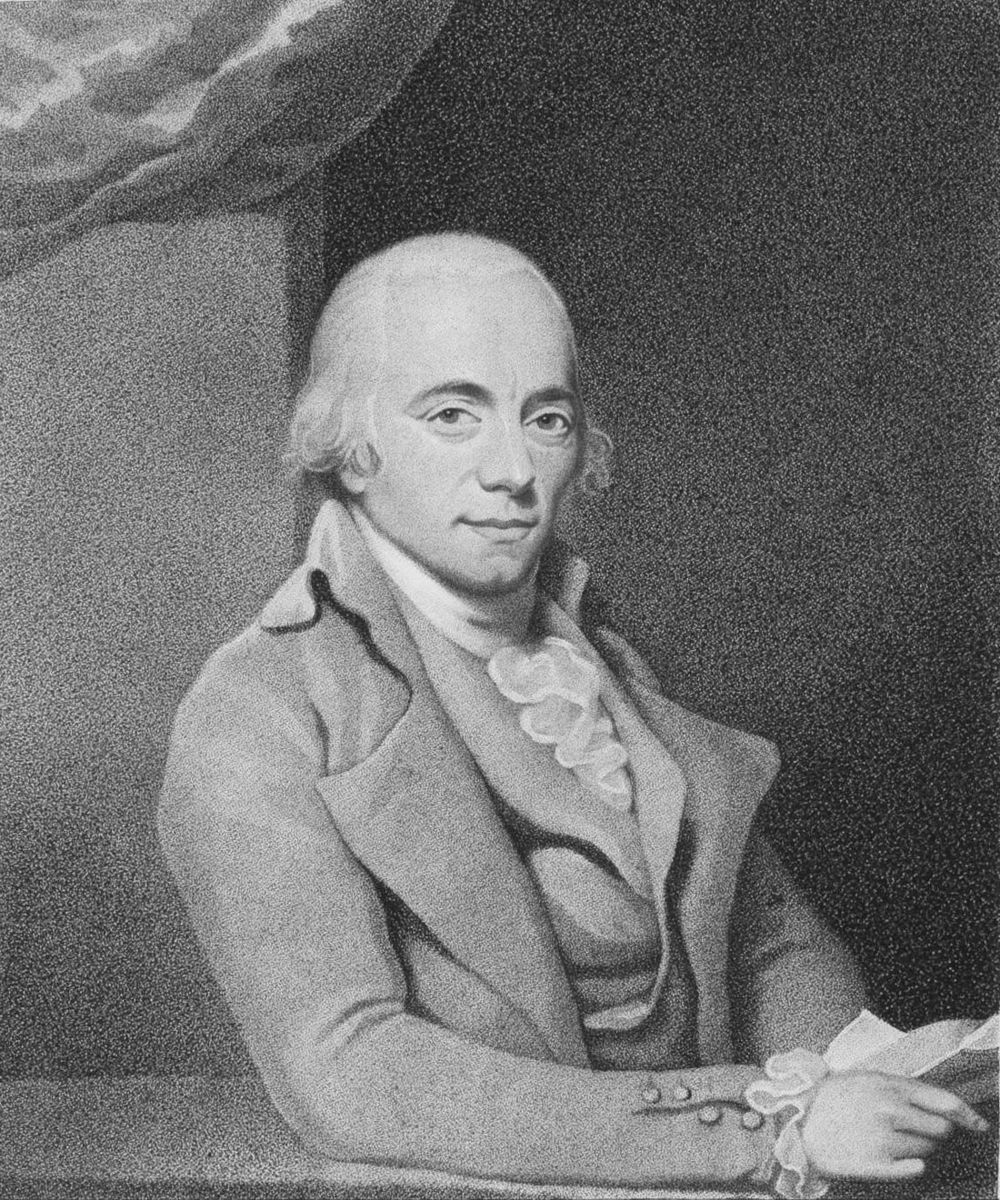
1000px-Muzio_Clementi

Mozio Clementi

“Beethoven is the first composer we talk about a lot in music history who was native to the piano,” Korevaar says. And while there are others of the same generation—the Czech composer Jan Ladislav Dussek and the Italian Muzio Clementi for example—they are largely forgotten today. “Dussek and Clementi are perpetually underrated,” Korevaar says. “They have their strengths and charms, but the truth is Beethoven is a much better composer.”

Knowing that context helps the listener understand why Beethoven’s earliest sonatas are so difficult from the very beginning. “There’s a sense of Beethoven saying ‘Look, I can do things on the piano with my two hands that even the best of the other pianists really can’t quite come up to that level’,” Korevaar says.

Korevaar admits that the sound may not be ideal on his made-from-home recordings. “Resources are limited, and the bandwidth is limited—just the quality of video that one can post off a home internet connection,” he says. “I’m recording QuickTime videos using my laptop camera and external mic. That’s all I’m doing.

“I’ve giving myself multiple shots at these things. With the few that I posted so far, I recorded them twice and then chose the one I like better. If it’s not good I’m not going to put it up. Hopefully people agree that they’re OK.”

In the end, it’s not so important to Korevaar whether a large number of people listen to his performances. “If there are people who are interested, it’s great,” he says. “And if there aren’t, I will still have done it and learned something from the process.”

hqdefault

David Korevaar, playing Beethoven from home

Boulder Chamber Orchestra risks “The Curse of the Ninth”

2016–17 season will explore jinxes of a 13th year, and Beethoven’s greatest work

By Peter Alexander

bsaless.4.Keith Bobo

Bahman Saless. Photo by Keith Bobo.

Bahman Saless likes to live dangerously.

The conductor of the Boulder Chamber Orchestra (BCO) just released the group’s 2016–17 season, and they are meeting two great jinxes head-on. Titled in part “The Curse of the Ninth,” the season will feature a season-ending performance of Beethoven’s Ninth Symphony with the Boulder Chorale and soloists, as well as several other works that were created under the shadow of that work—considered one of the greatest creative achievements of Western music.

It is the orchestra’s 13th season, which also leads to the full title of the season: “JINX and the Curse of the 9th.”

Saless says that it was almost inevitable that the next season would include Beethoven’s Ninth. It will be the only Beethoven Symphony he has not conducted, and it is of course a work that can prove the standing of any orchestra and conductor.

Beethoven

Beethoven: Portrait by Joseph Karl Stieler, 1820

To fill out the season around such a bold choice for a chamber orchestra, Saless picked several works that illustrate the curse that supposedly came from Beethoven’s Ninth. It was such an overwhelming work that many composers were intimidated at the very prospect of attempting another symphony after it was completed in 1823.

For example Brahms, who was hailed by many as Beethoven’s successor, was not willing to present a symphony to the public until 1876—after 21 years of work on the piece, when the composer was 43 years of age, and all of 53 years after Beethoven’s Ninth was completed. Brahms First even features a melody that resembles Beethoven’s famous “Ode to Joy” from the Ninth—a similarity that, Brahms said, “any ass can see.”

The symphony was immediately greeted as the true successor to Beethoven’s symphonic legacy, and was referred to by some as “Beethoven’s Tenth.”

Another aspect to the “curse of the Ninth” was the notion that subsequent composers could not complete more than nine symphonies. Mahler famously tried to dodge the curse, finally finishing a Ninth Symphony but dying before he could finish his 10th. Tchaikovsky finished six, started a seventh and reached nine only if you count a couple of tone poems. Others, such as Dvořák and Bruckner, only just managed to finish nine.

Schubert is another composer with a famous final Ninth Symphony, but he also left three unfinished symphonies from the last years of his life. One of these—the most famous “Unfinished” Symphony of all, his Symphony No. 8 in B minor—will also be on the season schedule next year.

Carthy

Nicholas Carthy

The season will offer another final symphony, though not a ninth: Mendelssohn’s rarely performed Symphony No. 5 (“Reformation”), on a concert to be led by guest conductor Nicholas Carthy from the CU Eklund Opera Program. Carthy will also be a soloist on the same concert, playing and conducting Mozart’s Piano Concerto in C minor, K491.

Other soloists during the season will be the young Chinese violinist Yabing Tan, playing Henryk Wieniawski’s Violin Concerto No. 2. Violinist Karen Bentley Pollick will play the U.S. premiere of a Violin Concerto titled How Did it Get so Late so Soon! by David A. Jaffe, a composer best known for his work in computer music and the development of the NeXT Music Kit software. The concerto has been written for Pollick, and will be premiered by her at the Tytuvenai Festival in Lithuania in August.

Deutsch

Lindsay Deutsch

Yet another violin soloist on the season will be Lindsay Deutsch returning to the BCO to perform two pieces written for her. The brand new Beatles Fantasy by video-game composer Maxime Goulet will be premiered with the Bartlesville Symphony in Oklahoma; and Deutsch will also play Saless’s own Tango Variations, based on the popular song “Nature Boy.” It was written for her by the BCO’s conductor and premiered with the BCO in 2010.

Another feature of the season will be the inclusion of works usually thought of as full symphonic repertoire, including the Brahms and Mendelssohn symphonies. Certainly the Beethoven Ninth is not generally considered a chamber orchestra piece. Originally performed in Beethoven’s lifetime with an orchestra of about 78 players, it requires an orchestra large enough to support a full chorus.

Asked about this, Saless says that Beethoven performed by a small orchestra is “much more dramatic” and “more muscular.” Not to get too far into the weeds on a complex historical issue, it is true that in Beethoven’s lifetime, and for much of the 19th century, there were not many large standing orchestras like those we are accustomed to in the 21st century.

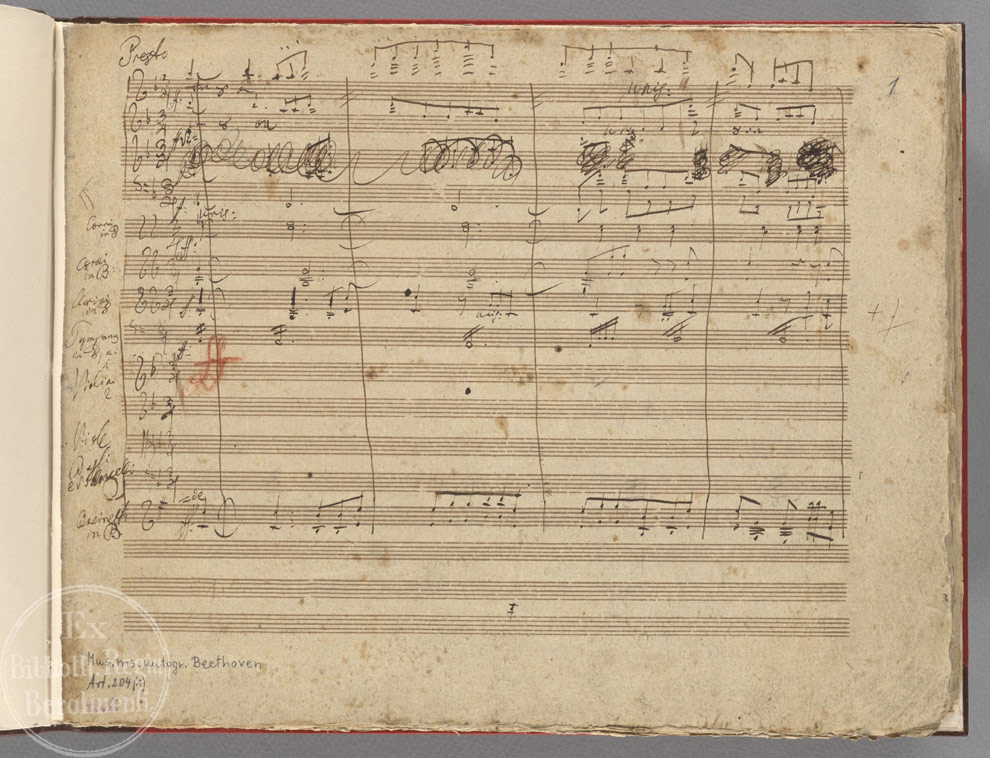
Ninth.Symphony.4 1

Manuscript page of Beethoven’s Ninth Symphony

Small orchestras were common at the smaller courts and regional opera houses around Europe; larger orchestras were only found in the largest cities such as London and Paris, or for festive occasions, as sometimes happened in Vienna. Thus any of the Romantic works that Saless has performed recently—concertos by Brahms and Tchaikovsky, other works from the 19th century—could have been performed by smaller as well as larger orchestras.

And Saless is surely right that hearing music that is most familiar to us with the lush sound of large string sections performed by the BCO does reveal aspects of the music that we may not have heard before. By programming Beethoven’s Ninth, Saless will be giving us another opportunity to hear a familiar work in a new guise.

In addition to the orchestra concerts that have been announced, there will be a concert by the Lebanese darbuka (goblet drum) virtuoso Rony Barrak, and at least two chamber music concerts that will be announced later.


# # # # #

Boulder Chamber Orchestra
Bahman Saless, music director and conductor
2016–17 Season: “JINX and The Curse of the 9th”bconew_1

September 23 & 24
With Yabing Tan, violin
Rossini: Overture to La Gazza Ladra (The thieving magpie)
Henryk Wieniawski: Violin Concerto No. 2 in D minor, Yabing Tan, violin
Brahms: Symphony No. 1 in C minor

Karen B P

Karen Bentley Pollick

November 11 &12
With Karen Bentley Pollick, violin
Samuel Barber: Adagio for Strings
Copland: Appalachian Spring
David A. Jaffe: Violin Concerto How Did it Get So Late So Soon? (U.S. Premiere)

December 10 &11
Nicholas Carthy conductor and pianist
Mendelssohn: Symphony No. 5 in D major (“Reformation”)
Mozart: Piano Concerto in C Minor, K 491
Dvorak: Nocturne in B major for String Orchestra, op. 40

February 10 & 11
With Lindsay Deutsch, violin
Maxime Goulet: Beatles Fantasy
Bahman Saless: Tango Variations (Variations on “Nature Boy”)
Schubert: Symphony No.  8 in B minor (“Unfinished”)

Barrak

Rony Barrak

April 7,8, 9
An Evening with Rony Barrak and Friends.

May 5, 6 & 7
With the Boulder Chorale & soloists TBA
Beethoven: Symphony No. 9 in D minor