Longmont Symphony offers “spectacularly beautiful music”

“Tales from the Sea” features pieces by Mendelssohn, Elgar and Rimsky-Korsakov

By Peter Alexander April 3 at 5:10 p.m.

One of the things Elliot Moore has heard most about since becoming conductor of the Longmont Symphony is the 2013 flood.

FLOODING

2013 Flood in Longmont (Matthew Jonas/Times-Call)

Moore was first interviewed for the position with the LSO in November of 2016 and he was hired the following spring. The current 2017–18 season is his first with the orchestra.

“I heard over and over that the flood of 2013 was a pivotal moment for Longmont,” he says. “Hearing so many stories about the flood, and how it’s still affecting life today, was the impetus behind this program. Because everyone had a story about the flood, I thought a program around water stories would speak to a Longmont audience.”
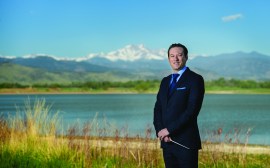
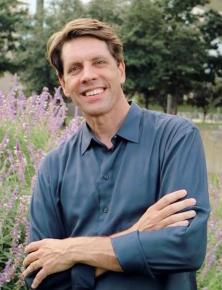
Elliot Moore at Lake McIntosh - credit - Photography Maestro (1)

Elliot Moore. Photo by Photography Maestro

The program in question will be performed 7:30 p.m. Saturday (April 7) in Vance Brand Auditorium. There are many pieces of music about water, but Moore decided on two short pieces before intermission, and one longer one after: Mendelssohn’s overture The Hebrides to open the concert; Sea Pictures by Edward Elgar, with mezzo-soprano Sarah Barber; and filling the second half of the program, Rimsky-Korsakov’s popular Arabian-nights tone-poem, Scheherazade.

The Hebrides are a group of rugged island off the west coast of Scotland. Mendelssohn visited the islands, and a particularly picturesque cave carved from hexagonal columns of basalt known as “Fingal’s Cave” (another name for Mendelssohn’s overture).
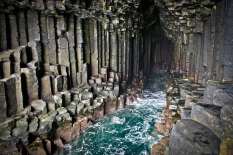
Fingal01

Fingal’s Cave in the Hebrides

“The Hebrides could be described as a postcard that Mendelssohn wrote when he visited the Hebrides,” Moore says. “As an outsider coming into Longmont, all the feelings that people were conveying to me are things that are (in) Mendelssohn’s overture. It’s a nostalgic and lonely piece, but it also includes a communal feeling.”

If Mendelssohn’s overture will be familiar to many in the LSO audience, the same cannot likely be said of Elgar’s Sea Pictures. In fact, it was not well known to Moore before he started preparing for the concert.

“I didn’t know the piece that well when I programmed it,” he admits. “So it’s been a real opportunity for me to get to know the music, and I have fallen in love with this piece. On the program, this is the piece I’m most looking forward to conducting.”
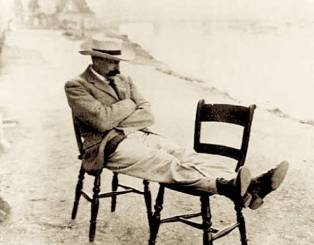
Elgar.Beach.Chair

Sir Edward Elgar at the beach

The Sea Pictures are five short movements, settings for mezzo and orchestra of five different poems by five different poets. “The water represents many things in Sea Pictures,” Moore says.

“It can represent the passage of time, and the feelings and the dangers for people when they’re around water. The third song is about a ship, and it’s a metaphor. The ship is essentially a congregation, and how we relate with other people and survive the challenging moments in our lives.

“It is spectacularly beautiful music that is rarely performed. I’m excited we’re bringing it here.”
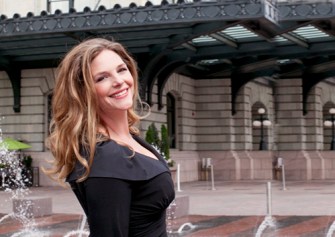
SARAH_HOME_Sm-3a

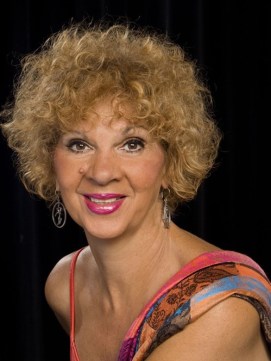
Mezzo Sarah Barber

Barber is a graduate of CU Boulder who has performed extensively in the front range area. She has sung with the Eklund Opera at CU, at Central City Opera, Opera Ft. Collins, the Colorado Symphony, Colorado Springs Philharmonic, and the Black Hills Symphony, among others. Twice a regional finalist of the Metropolitan Opera Guild Competition, she has won other awards in college and professionally.

While the first half of the concert expresses feelings Moore encountered when people talked about the flood—feelings of danger, of uncertainty, of loss—the music of the second half is more exotic and less exclusively about water. Scheherazade is based on the 1001 Nights, in which a young bride keeps herself alive by telling ever more gripping tales to her bloodthirsty husband.

R-3804352-1374178228-1240The piece has four scenes that Rimsky describes in brilliant music that conveys a mood without being too literally programmatic. The first and last scenes are related to water and the sea. The movements are: ”The Sea and Sinbad’s Ship”; “The Kalandar Prince”; “The Young Prince and the Young Princess”; and “Festival at Baghdad. The Sea. The Ship breaks apart against a Cliff surmounted by a Bronze Horseman.”

There is one aspect of the story behind the music that Moore wants the audience to notice. “Over the course of the symphonic work, in many ways it becomes more critical that she tell a great story,” he says. “She’s coming to the end, and the question is, what will the end be? Will it be death?

“You can hear the voice of Scheherazade, which is the violin playing, as it becomes more and more urgent. And the sultan is so dying to know the end that he’s completely wrapped up in this story. So throughout the course of the work there is an evolution of the characters.”

You should also listen to the soloists within the orchestra, because Scheherazade is one of the great orchestra showpieces of the 19th century. “There are a lot of solos, and one of the things that I like about it is that it features all the principal winds—it’s very virtuosic for so many players of the orchestra,” Moore says. “And of course, there’s the violin and there’s the harp as well!

“It’s quite a virtuosic piece for the orchestra.”

# # # # #

“Tales from the Sea”
Longmont Symphony Orchestra, Elliot Moore, conductor
With Sarah Barber, mezzo-soprano
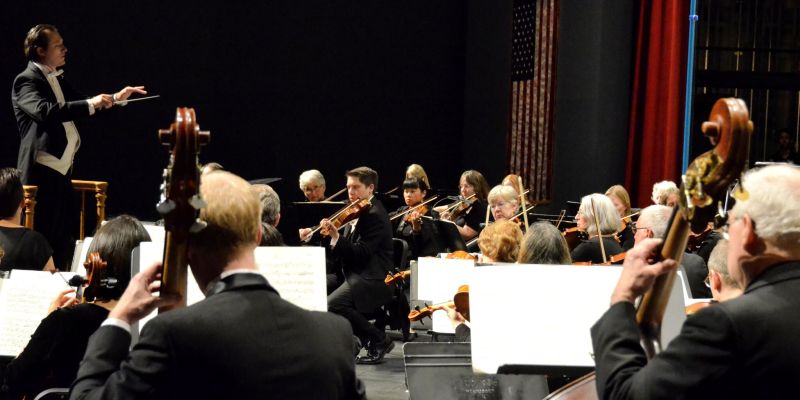
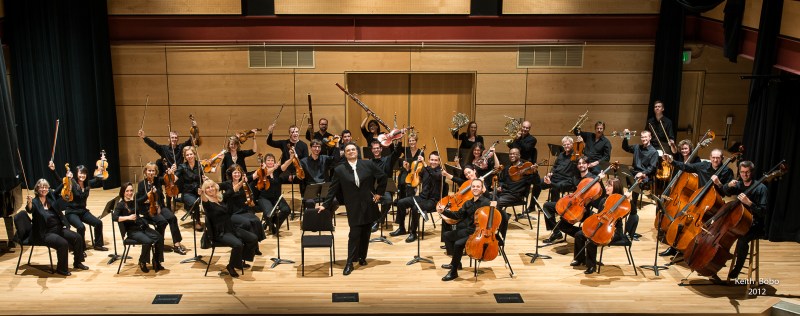
Elliot Moore with the Longmont Symphony 2_preview.smiling_elk

Elliot Moore with the Longmont Symphony

Mendelssohn: The Hebrides (Fingal’s Cave)
Elgar: Sea Pictures
Rimsky-Korsakov: Scheherazade

7:30 p.m. Saturday, April 7
Vance Brand Civic Auditorium, Longmont
Tickets


CU Presents Artists Series 2018–19 features Venice Baroque, Sarah Chang, Tafelmusik

Dates announced for Takács Quartet, Eklund Opera performances, other events

By Peter Alexander April 1 at 11:40 p.m.

CU Presents has announced its 2018–19 season of music, dance and theater, including significant classical music performances by guest artists and CU organizations.

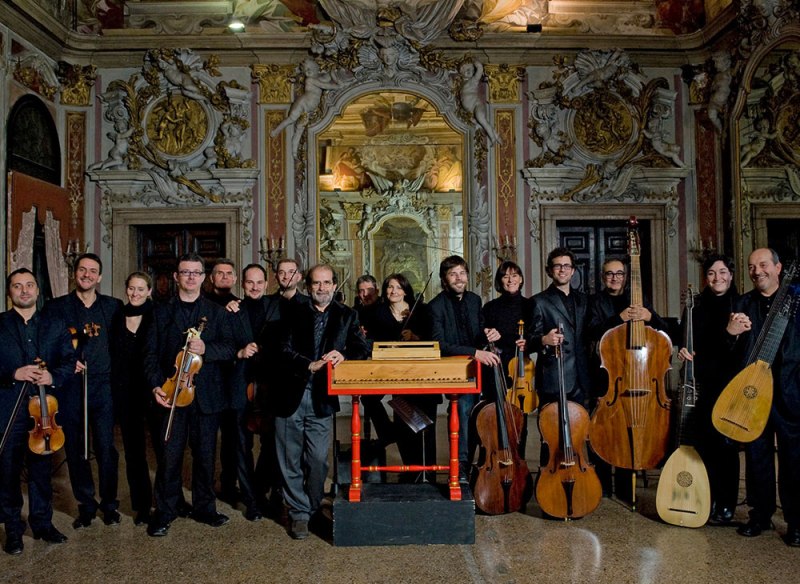
Venice-1

Venice Baroque Orchestra

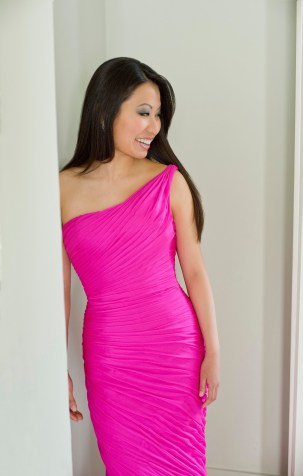
The return of the Venice Baroque Orchestra to Macky Auditorium  will lead off the schedule of classical guest artists Nov. 2. Violinist Sarah Chang will present a solo recital Nov. 16, and Tafelmusik Baroque Orchestra, the Toronto-based historical-performance group, will present “The Leipzig-Damascus Coffee House” March 4.

i-vGLjwxH-X4

Sarah Chang. Photo by Colin Bell for EMI

There is also good news for those interested in world music. The Silkroad Ensemble, founded 20 years ago by cellist Yo-Yo Ma, will perform in Macky Jan. 31, and the remarkable Japanese drumming ensemble Kodo is scheduled for Feb. 16.

Boulder audiences have long relished the world-renowned Takács Quartet. With new second violinist Harumi Rhodes, they will present two performances each of five programs September through April. The Carpe Diem Quartet, featuring CU assistant prof. and Boulder Philharmonic concertmaster Charles Wetherbee as first violinist, will appear on another pair of concerts on the Takács series in November.

Finally, the Eklund opera program will feature two Macky Auditorium productions—a work celebrating the Leonard Bernstein centennial Oct. 26–28, and Tchaikovsky’s Eugene Onegin March 15–17—and Benjamin Britten’s setting of Henry James’s creepy ghost story Turn of the Screw in the Imig Music Building Music Theatre April 25–28.

The full listing of classical music events is below. Season ticket sales begin at 10 a.m. Monday, April 2, and single tickets will be available beginning Aug. 20. A listing of all CU Presents events, including theater and dance, popular attractions, and Holiday performances, can be found at the CU Presents Web page.

Tickets are available here,  or by phone at 303-942-8008.

# # # # #

CU Presents Classical Guest Artists 2018–19
Performances in Macky Auditorium

Venice Baroque Orchestra
With Anna Fusek, recorder
7:30 p.m. Friday, Nov. 2

Sarah Chang, violin
7:30 p.m. Friday, Nov. 16

Tafelmusik
“The Leipzig-Damascus Coffee House”
7:30 p.m. Monday, March 4

Tafelmusik.i-zTMS7Cz-X5

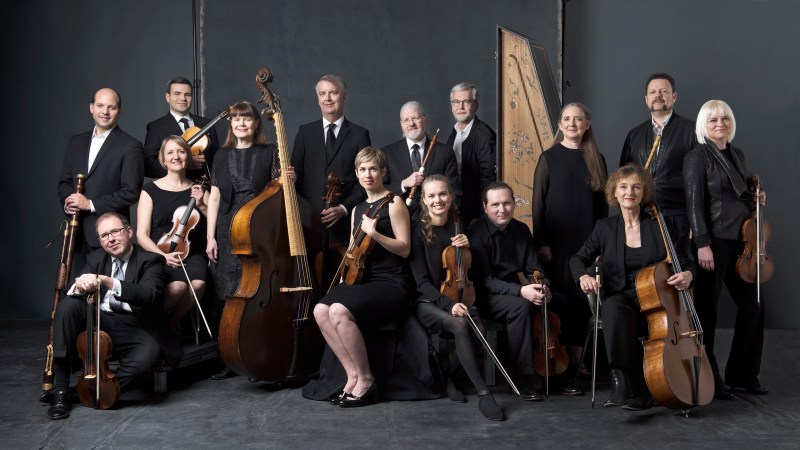
Tafelmusik. Photo by Sian Richards.

Takács Quartet
Sundays sold out by subscription; Mondays have limited availability
All performances in Grusin Music Hall

4 p.m. Sunday, Sept. 23
7:30 p.m. Monday, Sept 24

4 p.m. Sunday, Oct. 28
7:30 p.m. Monday, Oct. 29

Sunday, Nov. 25, 4 p.m. (featuring the Carpe Diem String Quartet)
7:30 p.m. Monday, Nov. 26 (featuring the Carpe Diem String Quartet)

4 p.m. Sunday, Jan. 13
7:30 p.m. Monday, Jan. 14

4 p.m. Sunday, Feb. 10,
7:30 p.m. Monday, Feb. 11

4 p.m. Sunday, April 28
7:30 p.m. Monday, April 29

Eklund Opera Program

Title TBA*
Music by Leonard Bernstein
7:30 p.m. Friday, Oct. 26, and Saturday, Oct. 27
2 p.m. Sunday, Oct. 28
Macky Auditorium
*Due to contractual obligations, the title of this production will not be announced until May 1, 2018

Eugene Onegin
By Pyotr Ilyich Tchaikovsky
7:30 p.m. Friday, March 15, and Saturday, March 16
2 p.m. Sunday, March 17
Macky Auditorium

The Turn of the Screw
By Benjamin Britten
7:30 p.m. Thursday, April 25; Friday, April 26; and Saturday, April 27
2 p.m. Sunday, April 28
Music Theatre, Imig Music Building

World Music Events

Silkroad Ensemble
7:30 p.m.. Thursday, Jan. 31
Macky Auditorium

Kodo
7:30 p.m. Saturday, Feb. 16, 7:30 p.m.
Macky Auditorium

Boulder Phil collaborates with Cleo Parker Robinson for ‘Lark Ascending’

Emerging superstar violinist Stefan Jackiw plays Prokofiev on the same program

By Peter Alexander May 1 at 5:50 p.m.

“The idea of connecting orchestral music with other art forms has been very much on my mind.”

That statement from Michael Butterman, conductor of the Boulder Philharmonic, is clearly reflected in the orchestra’s recent seasons. Concerts have included projected visual images, and there have been collaborations with Boulder Ballet, Frequent Flyers Aerial Dance and Central City Opera.


Raindance_blog_header

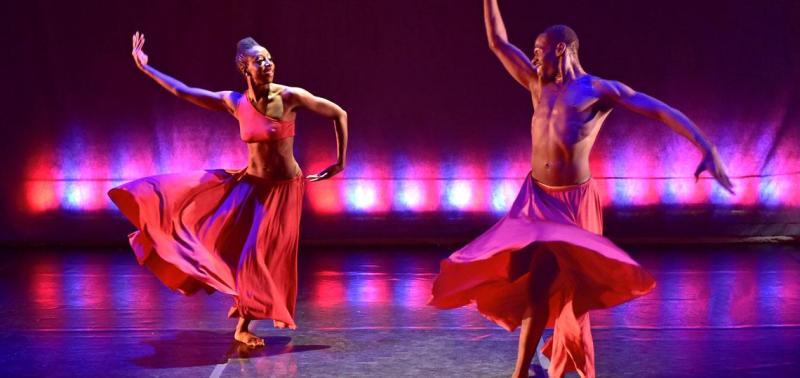
Dancers from the Cleo Parker Robinson Dance Ensemble

Now you can add Denver’s Cleo Parker Robinson Dance Ensemble to the list, with Robinson’s original choreography for Vaughan Williams’s Lark-Ascending for Saturday’s concert (April 7). The performance will feature the orchestra’s concertmaster, Charles Wetherbee, playing the solo violin part, with the dancers arrayed on the front of the stage.

Two other works will complete the concert program: Sibelius’s Symphony No. 5, and the emerging superstar violinist Stefan Jackiw playing Prokofiev’s Second Violin Concerto.

The collaboration with Robinson is one that Butterman has been planning for some time. “I wanted to work with Cleo’s company since I first came to Boulder,” he says. “It was just a question of (finding) something that would be a good fit for them and for us.”

The Lark Ascending came to mind as a suitable piece. “I thought it was a captivating piece of music, and it certainly has a sensibility that invited storytelling and choreography,” Butterman says. “So I approached Cleo about coming up with her own approach to this.”

1358795352-cleo_parker_robinson

Cleo Parker Robinson

Robinson loves the celebrated choreography that Alvin Ailey created for the piece, but she had no trouble finding her own interpretation. She was inspired in part by the writing of Maya Angelou, she says: “As soon as I began to hear the music and think about the theme, (I remembered that) she wrote ‘I know why the caged bird sings.’

“I had seen choreography with the lark being female, but I shifted it, (because) we’re seeing so many young people incarcerated. Usually it’s young Black men, brown men, and those without resources. I was overwhelmed with this.”

Robinson visualized a piece that was universal at the same time that it portrays an unjustly imprisoned Black man. “Who do people listen to once they are in such a dark place?” she asks. Her answer involves a quartet of dancers: the prisoner and three women.

“We have the mother coming to him as a voice of compassion,” she explains. “Then his sister comes to him as a voice of hope. And the woman that he loves comes to him as a voice of love, sharing that she carries his child. Their child, if nothing else, (gives him) a purpose to live.”

MB-Jiah 2

Michael Butterman. Photo:  Jiah Kyun

The Fifth will be the first Sibelius symphony that Butterman has performed with the Phil. “It seems like time to do one,” he says. “If you’re doing the Fifth you naturally think of the association of the last movement with swans. Sibelius wrote about being on the edge of a lake when an assemblage of swans flew overhead. He wanted to somehow capture that moment in the last movement.”

That beautiful tune he wrote to represent the flight of swans has made the symphony popular, but in other ways, Butterman says, Sibelius can be difficult for performers and audience both. “Many composers present a theme in its fully formed state, take it apart in what we would call the development section, then put it back together,” he says. “We don’t have that overview in most of Sibelius.

“His approach is to present a series of ideas, not apparently related, over the course of a movement or an entire symphony. He begins to put the pieces together, and we then see the big picture toward the end. It’s like uncovering puzzle pieces or little glimpses of an idea, maybe excavating something and over time you’re able to reveal the treasure underneath.”

Prokofiev’s Second Violin Concerto was written around the same time as the composer’s popular ballet Romeo and Juliet, and on the surface it has some of the same lyrical, accessible qualities as the ballet. Jackiw, however, hears darker elements below the surface.

Stefan J

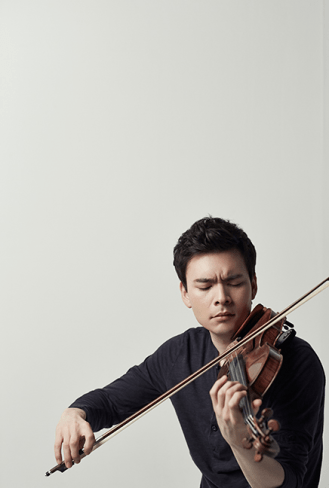
Violinist Stefan Jackiw

“There are certainly lyrical moments, like the second theme of the first movement,” he says. “And the second movement is one of the most beautiful things Prokofiev ever wrote. But I wouldn’t say that the piece on the whole is genial. I think actually there’s a lot of menace and nihilism as well.”

Jackiw points particularly to the opening theme for solo violin, which is flowing and lyrical but written in a five-beat pattern, and to the following orchestral entrance, which is tonally disorienting. These together, he says, “contribute to a sense of un-moored-ness and ungrounded-ness and discomfort. There’s a lot of this eerie quality in the first movement.

“The third movement also has the sense of throwing the performers and the listeners off kilter. It starts as a wild dance, and the road of the piece is a descent into madness. So while there are sweet moments, there’s a lot of demonic chaos.”

But the combination of sweetness and chaos, Jackiw believes, is what makes the concerto worthwhile. “A lot of this piece is about the dramatic tension between darkness and light, despair and hope,” he says.

“Listening out for that dramatic tension and seeing how that arc travels throughout the piece—that’s really what this is about, and a big part of what makes this piece special.”

# # # # #

BPO.Macky.3.cropped

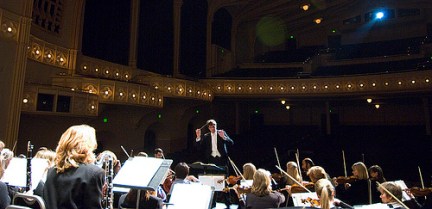
Michael Butterman and the Boulder Philharmonic in Macky Auditorium

“A Song for Swans”
Boulder Philharmonic Orchestra, Michael Butterman, conductor

Vaughan Williams: The Lark Ascending
With Charles Wetherbee, violin, and the Cleo Parker Robinson Dance Ensemble
Sibelius: Symphony No. 5
Prokofiev: Violin Concerto No. 2
With Stefan Jackiw, violin

7:30 p.m. Saturday, April 7
Macky Auditorium

Tickets

Boulder Chamber Orchestra returns to Mozart’s Requiem with Boulder Chorale

Performance will be more transparent than before—and ‘happier’

By Peter Alexander March 29 at 10:15 p.m.

bconew_1Bahman Saless and the Boulder Chamber Orchestra are returning to old territory and making new discoveries.
Friday and Saturday(March 30–31) Saless and the BCO are performing the Mozart Requiem, which they first performed in 2011. But there will be a number of differences from that earlier performance: then they performed with Ars Nova singers, now they will perform with the Boulder Chorale Chamber Choir under Vicki Burrichter. Then they had about 50 singers, now they will have 40 singers and a smaller orchestra.

Then Saless left the choral preparation and the coaching of the soloists entirely to Ars Nova’s conductor, Thomas Edward Morgan; now he is taking a larger role in both. And, he says, he performance will be more transparent and more polished.

He almost makes it sound like a different piece. But it’s not the piece that has changed; it’s Saless, who admits to having been intimidated by the work the first time.

Read more in Boulder Weekly.

# # # # #

Mozart: Requiem
Boulder Chamber Orchestra and Boulder Chorale
Bahman Saless, conductor
With Ekaterina Kotcherguina, soprano; Clea Huston, mezzo-soprano; James Baumgardner, tenor; and Malcolm Ulbrick, bass

7:30p.m. Friday, March 30, Broomfield Auditorium, Broomfield
8 p.m. Saturday, March 31, Seventh-Day Adventist Church, Boulder

Tickets


Eklund Opera, guest director Garfein selected semifinalist for national award

The American Prize in Stage Direction honors CU’s 2017 Magic Flute

By Peter Alexander March 28 at 2:20 p.m.

Magic_Flute_PR103GA

Michael Hoffman and Katia Kotcherguina in the CU Eklund Opera production of The Magic Flute (Photo by Glenn Asakawa/University of Colorado)

The American Prize recently announced 13 semi-finalists for the 2017–18 prize for stage directors, including Herschel Garfein for his direction of the CU Eklund Opera’s production of Mozart’s Magic Flute, performed in Macky Auditorium March 17–18, 2017.

The American Prize is a series of national competitions in the performing arts that was founded in 2009. Every year awards are given in 16 categories, including composition, soloists, chamber ensembles, orchestras, opera companies, theater companies and stage directors.

The winners represent the best performance in each category, as determined by the judges. The panel of judges in the opera categories includes soprano Sharon Sweet and mezzo-soprano Susanne Mentzer, both artists who have performed at opera houses around the world, including New York’s Metropolitan Opera. Winners will receive a modest cash prize and award certificate.

Garfein

Herschel Garfein

Garfein is a stage director, opera librettist and two-time Grammy Award-winning composer. He teaches music composition and script analysis at the Steinhardt School of Culture, Education, and Human Development of New York University, where he has won an NYU Teaching Excellence Award.

In addition to his stage direction, Garfein also adapted the English dialog for The Magic Flute. He has written librettos for Sister Carrie and Elmer Gantry with composer Robert Aldridge, and both music and libretto for an operatic adaptation of Tom Stoppard’s Rosenkrantz and Guildenstern are Dead that was presented as part of the CU New Opera Workshop (CU NOW) program.

Read more about The American Prize on their Web page.  The full list of semi-finalists may be seen here.

The American Prize is administered by Hat City Music Theater, a 501(c)3 non-profit arts organization based in Danbury, Conn.

Boulder Opera’s ‘Così fan tutte’ is baptism by fire for director Ron Ben-Joseph

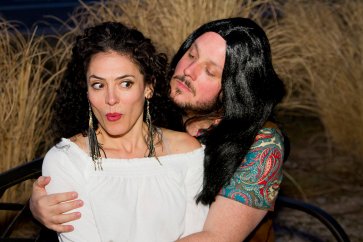
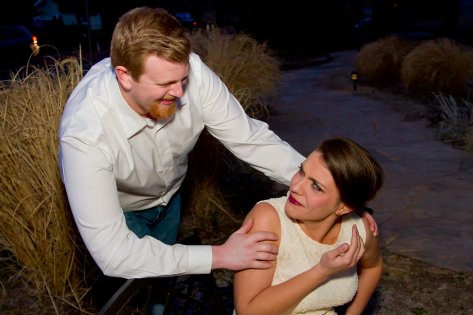
Production set in the 1960s aims to be relevant to the women’s movement

By Peter Alexander March 22 at 9:00 p.m.

Opera is a world of its own. Singers and conductors have their own inside language, they have traditions that seem arcane to outsiders, and they know the works intimately.

Ron Ben-Joseph 092915_0024

Ron Ben-Joseph, stage director of Così fan tutte. Photo courtesy of Big Fish Talent.

Stepping into that world from outside can be intimidating, but that’s the position stage director Ron Ben-Joseph finds himself in. With a background in theater, but not opera, he was engaged to direct this weekend’s performances of Mozart’s Così fan tutte for Boulder Opera (Friday in Longmont, Sunday in Boulder).

Ben-Joseph did bring some skills to the job: As a singer he can read music and follow the score, and he has worked in musical theater. He has taken voice lessons from Dianela Acosta, the artistic director of Boulder Opera and one of the singers in the cast, and in turn he has helped coach her acting in arias that she has learned. But even with that background, it’s not easy to dive into directing an entire opera.

How is he handling this baptism by fire? “I’m learning, I’m learning,” he says.

“One of the first things I did (was) research where theater directors that jump into opera mess up. I do not want to make those mistakes! So I plunged into music theory and the history of opera, and I tried to watch two or three operas a week. I tried to get the sense, the style, just to be respectful and not come in there and go ‘Oh, I know what to do!’

“I didn’t want to be that guy.”

CosiDailyCameraPics0306180015

Dianela Acosta, Boulder opera artistic director Dorabella) and Josh DeVane (Guglielmo) in Così fan tutte. Photo courtesy of  Boulder Opera.

The task was not made easier by the fact that Così is a difficult opera to get right. The plot is artificial and frankly unbelievable on the surface, but at the same time it deals with very basic and deep human emotions that are powerfully expressed in the music. The cast and director have to reconcile these two elements, relishing the humor and silliness of the onstage action without losing the emotional depth of the music.

If you don’t know the opera, it is about two pairs of lovers, two soldiers and a pair of sisters. The men have been bragging extravagantly about their girlfriends’ faithfulness, but a cynical older bachelor, Don Alfonso, challenges them to prove their claims. At Don Alfonso’s direction, the men pretend to march off to war. After leaving the scene, they don disguises and are introduced to the women as foreigners. Each then tries to woo the other’s girlfriend.

Over the course of the opera, the women resist, come to grips with temptation and their own weakness, and ultimately succumb. At the end the rather cruel ruse is revealed. Both men and women realize they have much to forgive. In the traditional ending, the women return to their original partners, but today other ways of ending the story are common as well.

CosiDailyCameraPics0306180028

Michael Hoffman (Ferrando) and Ekaterina Kotcherguina (Fiordiligi) in Così fan tutte. Photo courtesy of Boulder Opera.

“You have two guys who put their girlfriends through torment emotionally, and I think that comes from a very deep insecurity,” Ben-Joseph says. “That was one of the first things I saw. I could judge these guys for being misogynist, but I had a girlfriend once that I was insecure about, so I could kind of see it. Once I saw that personal hook, I really felt for the women, especially with the #MeToo movement.”

With that insight, Ben-Joseph wanted to find a time period that would make the story more relevant today. “This reads to me as if it were set in the late 1960s,” he says. “We’re about to start the female revolution, empowerment and women’s lib. That’s how it started taking shape, and I couldn’t not tell that story, and set it in that world.”

One part of that world was the Viet Nam War, which adds a darker element to the moment when the soldiers seemingly march off to war. Nevertheless, Ben-Joseph aimed to be sensitive to the artwork. “We always stayed true to the libretto, to the score,” he says. “We don’t impose anything. All we’re doing is using a lens for people to view this in a different way.”

Ben-Joseph is extremely complimentary to the performers. “They’re so talented, and they’re doing such a good job of honoring the score and being truthful to it,” he says. “I don’t know that anyone’s going to walk away from this production saying, ‘Oh my goodness! The direction!’ I think they’re going to walk away saying, ‘Those are phenomenal singers! That is a phenomenal orchestra!’

“These performers are starting to have fun and free themselves from feeling structured. You’re seeing real people, and that’s something I’m very proud of. There are a lot of genuine moments that are beautifully acted. That is what I want people to connect with—people that are alive and communicating real emotions in a deep, organic, authentic way.

“That’s what makes it badass.”

# # # # #

Sarah Parkinson-2119

Music director Sara Parkinson

Mozart: Così fan tutte
Boulder Opera
Sara Parkinson, music director
Ron Ben-Joseph, stage director

7:30 p.m. Friday, March 23, Stewart Auditorium Longmont
3 p.m. Sunday, March 25, Dairy Center for the Arts, Boulder

Tickets


New chamber music collective Green Room Artists debuts in Boulder

Little-heard pieces of French music form Friday’s opening concert

By Peter Alexander March 19 at 5:40 p.m.

Leslee Smucker recently graduated with a doctorate in violin performance from CU Boulder, and she is like a lot of new graduates. “I was thinking, ‘what should I do?’” she says.

Unlike most recent graduates, however, she decided to boldly create a new organization to answer that question. Green Room Artists, a collective of chamber musicians that she formed with friends, will give their first concert at 7 p.m. Friday (March 23) in eTown Hall.

image1

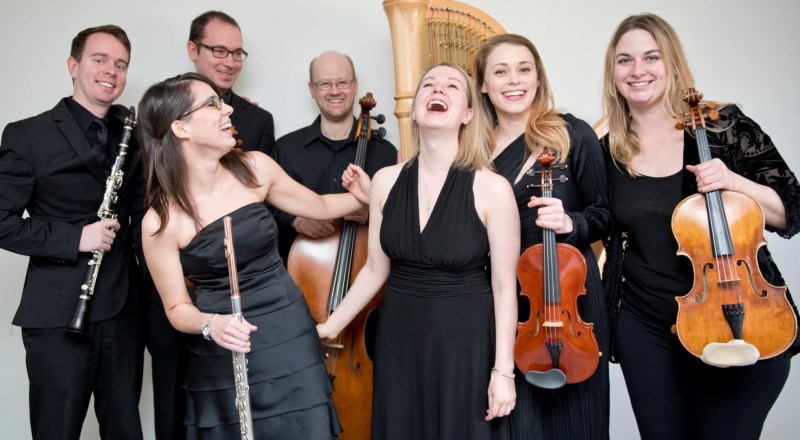
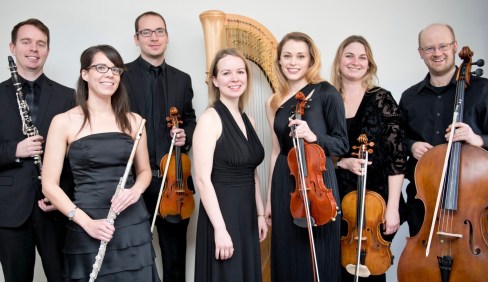
The musicians of Green Room Artists were chosen to be easy to work with. Photo courtesy of Green Room Artists.

The program includes an unpublished and nearly unknown piece by French composer Gabriel Fauré, along with other rarely heard chamber music by French composers of Fauré’s era: Albert Roussel, Maurice Ravel and Claude Debussy.

Leslee So2

Leslee Smucker, artistic director of Green Room Artists

The long-term plan Smucker has for Green Room Artists is not particularly about repertoire—“I’m a little bit genre-less,” she says of her musical interests—but more about the milieu of the performances. “I wanted it to be a casual feeling, like a house concert (with) lots of conversation, building community around new musical ideas.

“I believe that audiences are smart, and I want to give them something that they can really think about, that when they leave they can have something to take with them.”

To bring this about, she called friends among the many outstanding professional musicians in the front-range area. She picked not only people that she knew were good musicians, but also ones that she knew would be good collaborators.

“I want to work with people that I can work with, and that other people can work with,” she says. “If you get along, you don’t always have to agree. If you genuinely respect each other, that translates to an audience.”

The program for Friday’s concert started with a research project Smucker did as part of her doctoral studies at CU. She was taking a graduate seminar with assoc. prof. of musicology Carlo Caballero on the music of Fauré when she discovered the manuscript of a piece that had never been published.

“The Bibliothèque nationale (National library) in France has a lot of things digitized,” she explains. “I was just looking at all of this stuff and I saw the manuscript of this piece.” The music she discovered was written for a play by Georges Clemenceau, who is better known as the Prime Minister of France in the early 20th century than as a writer.

caballero_carlo

CU assoc. prof. Carlo Caballero

When Smucker learned that the incidental music for Clemenceau’s Le Voile de Bonheur (The veil of happiness) had never been published and was once thought to have been lost, she decided to write about it for the seminar. That led to a joint article with Caballero for a forthcoming volume from Cambridge University Press—and to Friday’s performance of the music.

The score calls for an unusual group of instruments, which got the ball rolling on the membership of Green Room Artists: string trio, harp, flute, clarinet and percussion. Because it is a relatively short piece, Smucker looked for other music by French composers around Fauré’s time that used some of the same instruments.

The works she found for the program are Ravel’s Introduction and Allegro for string quartet, harp, flute and clarinet; Roussel’s Serenade for flute, string trio and harp; and Debussy’s Chansons de Bilitis, an instrumental work for two harps, two flutes and celesta based on poems by Pierre Louÿs written in the manner of the Greek poetess Sappho. Smucker will read the Louÿs poems to introduce the individual Debussy movements.

Caballero will present a pre-concert talk at 6:15 p.m. Friday, and will also play the celesta part on the Debussy.

The program is an interesting excursion into an area of French repertoire that is not well known in this country. Consequently the style can be difficult for American audiences and musicians, but Smucker and her friends are excited to bring it to life in Boulder.

“We all love French music,” Smucker says. “There is that kind of gauzy, dreamy quality that is hard to pull off. Try to forget whatever has happened outside and just let yourself be open to those sorts of sounds. You don’t have to be French to be moved by this music. It’s a very enjoyable concert to come to!

“I wouldn’t do it if I didn’t love it.”

As for what comes next for Green Room Artists, Smucker has no shortage of ideas. “I have lists and lists of concerts that I want to do,” she says. “I have probably 50 concerts that I want to do, (and) sometimes I just look through those and I’m like, ‘What should I do next?”

Stay tuned.

# # # # #

image2

Le Voile de Bonheur
Green Room Artists
7 p.m. Friday, March 23
eTown Hall, Boulder

Gabriel Fauré: Incidental music for Le Voile de Bonheur (The vale of happiness)
Ravel: Introduction and Allegro
Albert Roussel: Serenade
Debussy: Les Chansons de Bilitis

Tickets

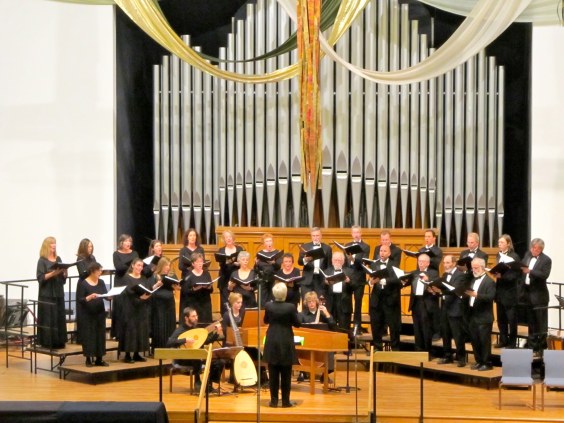
Exploring a new realm, Seicento offers “silly entertainment” March 16–18

Artistic director emeritus Evanne Browne returns to lead “Mad Madrigals

By Peter Alexander March 16 at 2:48 p.m.

Evanne Browne 009a Color

Evanne Browne

Evanne Browne, the artistic director emeritus of Seicento Baroque Ensemble, has returned to Colorado to conduct performances by Seicento Baroque Ensemble, the group she founded in 2011.

The program, titled “Mad Madrigals,” is one Browne had partially planned last year, before she left Seicento. After Browne moved from Boulder at the end of last season, Kevin Padworski was appointed to succeed her as artistic director.

When Padworksi was unable to conduct the concert scheduled for this weekend (March 16–18), Brown came to the rescue, flying from the east coast to take over leadership of performances scheduled in Denver, Boulder and Longmont. She will share the conducting duties with Amanda Balestrieri, Seicento’s associate artistic director.

In addition to the full Seicento chorus, members of the ensemble will be featured as soloists and in smaller groups. Additional musicians will be Paul Holmes Morton, theorbo; Sandra Miller, Baroque cello; Gerald W. Holbrook, harpsichord; Linda Lubeck, recorder; and Steve Winograd, recorder, pipe and tabor, and Morris bells.

Seicento 3

Seicento Baroque Ensemble

The program is well outside the usual repertoire of Seicento in the past, which has focused on major choral works of the Baroque period. The anchor work on the program, filling most of the second half, will be Festino nella sera del giovedì grasso avanti cena (Fête for the evening of Carnival Thursday before supper), a “madrigal comedy” by Adriano Banchieri.

250px-BANCHIERI-C64_001ritratto

Adriano Banchieri

This is the most famous of the many madrigal comedies written around the year 1600, including several by Banchieri. Like all madrigals, they were written to be sung by amateurs as informal entertainment, often after dinner, and they are generally filled with comic vignettes poking fun at social conventions and stereotypes.

“This is definitely silly entertainment,” Browne says. “I had come across Il Festino a number of years ago. To come across a set of things that are just plain silly, like the madrigal comedies are, was a way to balance what Seicento usually does. It’s very funny.”

For example. Brown mentioned one of Banchieri’s madrigals that has become popular among fans of Renaissance music: Contrapunto bestiale alla mente, or “The Animals sing in counterpoint.” Browne explains: “There is counterpoint for animal sounds. The (text) is ‘bau, bau,’ which is what the dogs say in Italy, and ‘miau, miau,’ and ‘chiu’ and ‘cucu, cucu,’ and the madrigal part is that it has a ‘fa-la-la’ chorus.”

It is the second half of the program that is filled with the silly madrigal comedies. The first half is a survey of madrigal and other informal vocal styles from around the 16th century. “There are some very, very beautiful pieces in the first half,” Browne says. “It will be musically sophisticated on the first half, very comic the second half.”

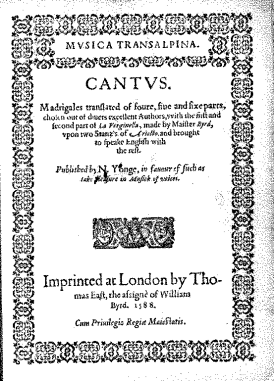
Musica TrasnsalpinaThe madrigal started as in-home entertainment in Italy but it was spread to England in 1588. In that year an important book, Musica Transalpina (Music from across the alps), was published in London containing Italian madrigals with their texts translated into English. This started a craze for madrigals in England.
“The first half of the program is a view of madrigals starting out with Thomas Morley’s “Sing we and Chant It,” and the Italian version of that (from) Musica Transalpina, which got everybody intrigued and enamored by what was happening in Italy. We’re also doing some music by Monteverdi and Barbara Strozzi, who has become much more well known recently because she’s a female composer.”

Other works on the first half of the program include Gagliarda XI and a Prelude-Passacaglia pair by Giovanni Girolamo Kapsberger for Chitarone (a bass lute also known as theorbo), which will be performed by Morton; a 15th-century French drinking song; and madrigals by Giles Farnaby, Jacques Arcadelt, and Luca Marenzio.

Browne stresses that the program touches only a tiny part of the madrigal repertoire. “In one account I read, there were 40,000 madrigals published before 1630!” she says.

“This will be entertainment, in a way we don’t know how to do any more—where you’re at home and pull out your madrigal books and sing one of the 40,000 madrigals! So the audience should be prepared for a completely different concert than we have done before.

“It’s going to be lots and lots of fun”

# # # # #

“Mad Madrigals”
Seicento Baroque Ensemble
Evanne Browne, artistic director emeritus and conductor
Amanda Balestrieri, associate conductor

7:30 p.m. Friday, March 16, Montview Presbyterian Church, 1980 Dahlia St, Denver
7:30 p.m. Saturday, March 17, First United Methodist Church, 1421 Spruce St., Boulder
3 p.m. Sunday, March 18, First Evangelical Lutheran Church, 805 3rd Ave., Longmont

Tickets

CU Eklund Opera Brings Sondheim’s “Demon Barber” to the Macky stage

Victorian production with a twist aims to make Sweeney Todd at least human

By Peter Alexander March 15 at 1:50 p.m.

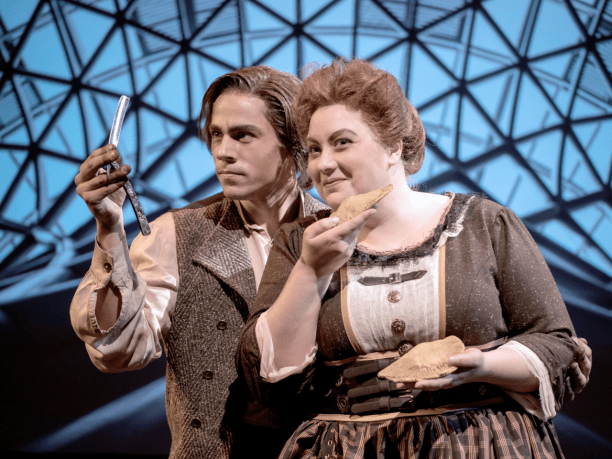
Stephen Sondheim’s demon barber of Fleet Street is a hard character to like. He is after all a serial killer with a dark heart, but with a production of Sondheim’s Sweeney Todd, Leigh Holman of CU’s Eklund Opera Program aims to make him likable.

At least a little.

AC_Sweeney_PR12GA_3-X2

Sklyer Schlenker (Sweeney Todd) and Erin Hodgson (Mrs. Lovett) in the CU Eklund Opera production of  Sweeney Todd. Photo courtesy CU Presents.

“I don’t want him to appear already as a villain” at the beginning of the show, she says. “I want to see a human being, and it’s not until he learns what (happened) to his wife that we start to see the change” into a calculated killer.

“I want to see that arc,” she says. “He’s an anti-hero that’s cutting throats, but somehow you find yourself on his side.”

The production of Sweeney Todd by CU’s Eklund Opera program, with Holman’s semi-likable anti-hero and the rest of the gory story, will take the Macky Auditorium stage this weekend, with performances Friday through Sunday (March 16–18). The cast and orchestra of CU students will be led by guest conductor Caleb Harris, a member of the Vanderbilt University faculty who is a sabbatical replacement for CU’s Nick Carthy.

Other artistic contributors to the production include set and lighting designer Peter Dean Back, costume designer Tom Robbins, chorus master Jeremy Reger and choreographer Stephen Bertles. In addition to CU students, the cast will include CU faculty Andrew Garland as Todd and guest artist and CU alumnus Wei Wu as Judge Turpin.

Read more in Boulder Weekly.

# # # # #

Sweeney Todd
Eklund Opera Program, University of Colorado, Boulder
Leigh Holman, director
Caleb Harris, conductor

7:30 p.m. Friday, March 16 and Saturday, March 17
2 p.m. Sunday, March 18
Macky Auditorium

Tickets

More information available here.
View the full program here.

Takacs Quartet and guest Nicolò Spera will perform music for strings and guitar

‘I cannot wait,’ the guitarist says

By Peter Alexander March 10 at 1:30 p.m.

spera

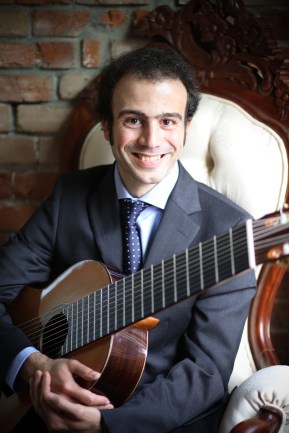
Guitarist Nicolò Spera. Photo courtesy of CU College of Music

Nicolò Spera is excited.

The guitarist and CU College of  Music faculty member will perform Sunday and Monday with the Takacs Quartet, and he’s really pumped for the occasion. “I’m not sleeping at night, because I know it’s going to be one of the most exciting, incredible musical experiences of my life,” he says. “I cannot wait!”

The Takacs has long made it a point to include CU music colleagues on their concerts. In the words of second violinist Karoly Schranz, “it feels like a family, the College of Music. We have such a close connection with the faculty, it’s always a great feeling to play with them.”

In addition to Spera, the Takacs has already appeared this year with tenor Matthew Chellis and pianist Andrew Cooperstock from the CU faculty, and later in the spring they will also host violist Erika Eckert and cellist David Requiro as guest artists.

The program for the March 10–11 concert includes two works for the quartet alone, Mozart’s String Quartet No. 21 in D major, K575, and Beethoven’s String Quartet No. 14 in C-sharp minor, op. 131. Both are late works of the respective composers, and are among the great treasures of the repertoire.

With Spera, they will play portions of two different works: two movements from Boccherini’s Guitar Quintet in D major, known as the “Fandango” Quintet, and a movement from Mario Castelnuovo-Tedesco’s Quintet for Guitar and Strings.

luigi-boccherini-1-sized

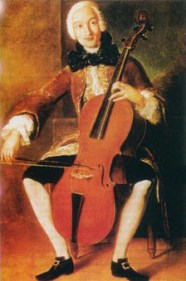
Luigi Boccherini

Spera didn’t want to play only the Boccherini on the concert because he has played it so often. But the entire Castelnuovo-Tedesco Quintet was too long to fit with the rest of the Takacs program, so he and first violinist Ed Dusinberre came up with the idea of playing individual movements from the two pieces.

“As crazy as it may seem, it sort of makes sense, because they have a lot of things in common,” Spera says of the two quintets. “Boccherini and Castelnuovo-Tedesco both loved the guitar, even though they didn’t play it. They both wrote guitar quintets, and Castelnuovo-Tedesco was inspired by Boccherini to write his own.

“The pairing of Fandango Quintet and the second movement of Castelnuovo-Tedesco Quintet works very well, for two reasons. The most important one is that they’re both very Spanish sounding. Boccherini was in Spain when he wrote the Fandango Quintet, and Castelnuovo-Tedesco was from a Sephardic Jewish family from Spain. And the keys (of the movements) work too.”

MCT

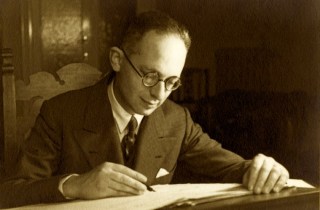
Mario Castelnuovo-Tedesco

The movement by Castelnuovo-Tedesco is specifically about his family’s relationship with Spain. Titled Souvenir de España, it expresses the composer’s nostalgia for Spain when he was living in America, exiled from Europe by World War II. “It has the most beautiful theme which is introduced by the viola, and then one by one by all the members of the quartet, and then last you hear the voice of the guitar,” Spera says.

Returning to the subject of performing with the Takacs, Spera has one more thing he wants to say. “They are humble people, but for me they’re superstars. It’s a very humbling and very beautiful opportunity for me.”

Incidentally, the concert will be the final full performance by the Takacs with Schranz playing second violin. He announced his retirement earlier this year, effective May 1. He will be replaced by Harumi Rhodes, a member of the CU College of Music faculty.

For the Takacs Quartet’s final concert of the 2017–18 season, April 29–30, Schranz will play with the quartet for half of the concert, with Rhodes taking over second violin for a performance of Tchaikovsky’s String Sextet, “Souvenir de Florence.” Eckert and Requiro will complete the ensemble for that work.

Both performances of the coming concert are listed as “sold out,” but there may be tickets available at the last minute from the box office in the lobby of the Imig Music Building.

# # # # #

Takasce SQ

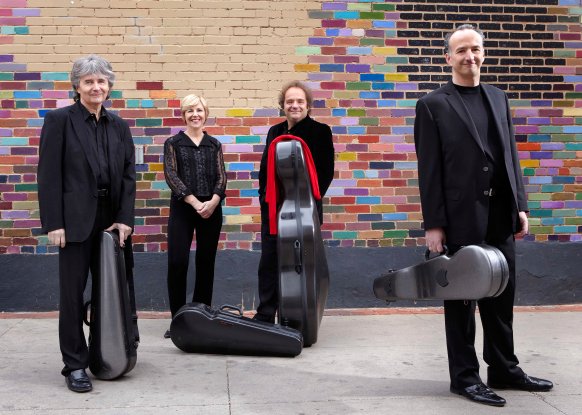
Takacs Quartet. Photo by Keith Saunders

Takacs Quartet with Nicolò Spera, guitar

Mozart: String Quartet No. 21 in D Major, K.575
Excerpts from Boccherini: Guitar Quintet in D Major, G.448; and
Mario Castelnuovo-Tedesco: Quintet for Guitar and Strings, Op. 143
Beethoven: String Quartet No. 14 in C-sharp minor, Op. 131

4 p.m. Sunday, March 11
7:30 p.m. Monday, March 12
Grusin Hall, Imig Music Building

SOLD OUT; last minute seats may be available

EDITED March 11 to add the full name of cellist David Requiro, whose given name was inadvertently omitted in the original article.