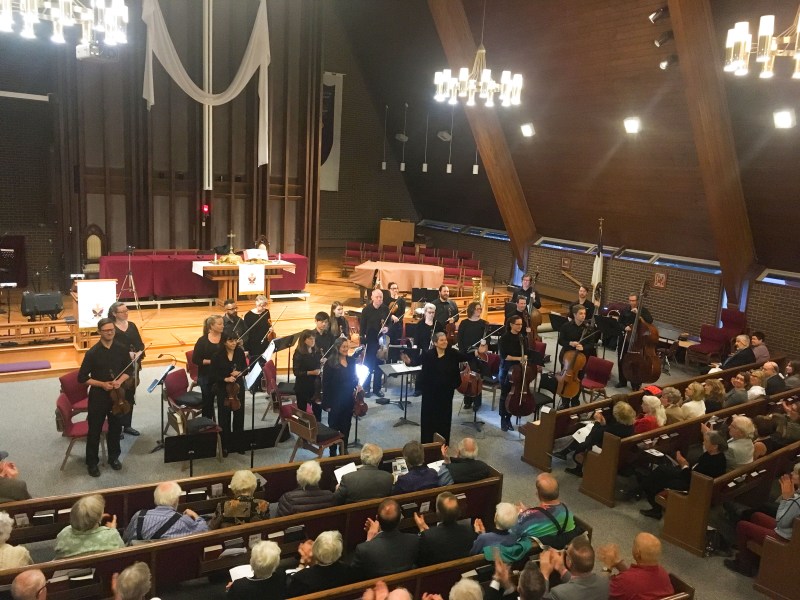
Takács Quartet will play “Three Bs” plus one

Beethoven, Bartok, Beach and Barber part of the varied spring concert series

By Peter Alexander Jan. 10 at 11:30 a.m.

The Takács String Quartet is offering music by “Three Bs” for their spring concert series in Boulder — in fact, “Three Bs” plus one.

04-takacs-quartet-amanda-tipton-photography.jpg

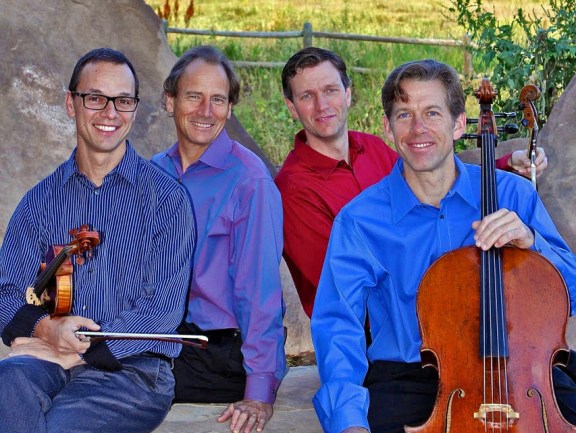
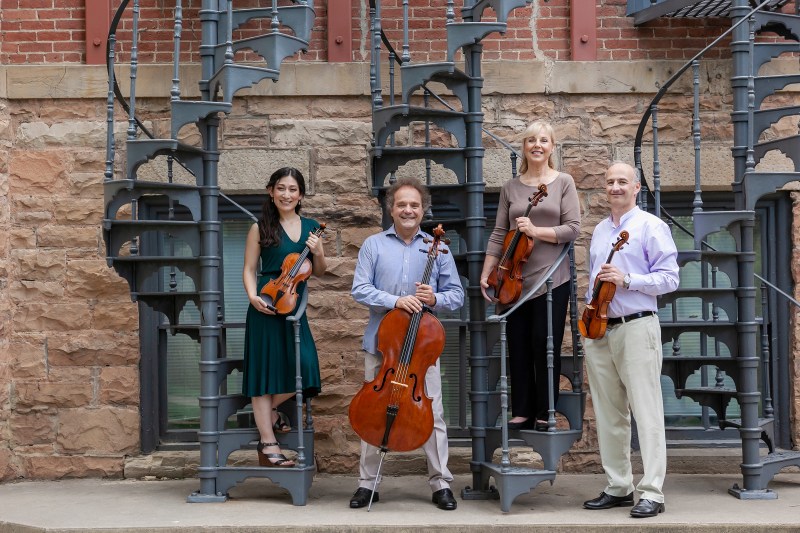
Takács Quartet. Photo by Amanda Tipton.

These are not the traditional “Three Bs” of music history, Bach, Beethoven and Brahms. Beethoven is there, but alongside him will be the Hungarian Béla Bartók, the remarkable American composer Amy Beach, and another American, Samuel Barber.

These composers and others will be featured across three different concert programs, performed on Sunday afternoon and Monday evening pairs: Jan. 13–14, Feb. 10–11 and April 28–29. As they often do, the quartet has invited colleagues from the CU College of Music to join them on two of the programs; pianist Jennifer Hayghe in January and baritone Andrew Garland in February.

The guests bring with them pieces from outside the quartet repertoire. With Hayghe the quartet will play the Quintet for piano and strings by Beach in January. With Garland, the February program will feature songs with string quartet by Barber (Dover Beach) and Ned Rorem (Mourning Scene).

Beyond those pieces, the bulk of the music on the three programs will comprise six works from the quartet repertoire, two each by Haydn, Beethoven and Bartók, and the less known Edvard Grieg String Quartet.

Read more in Boulder Weekly.

# # # # #

Takács String Quartet
All performances in Grusin Music Hall, Imig Music Building

4 p.m. Sunday, Jan. 13 and 7:30 p.m. Monday, Jan. 14

Haydn: String Quartet in G major, op. 76 no. 1
Beethoven: String Quartet in F major, op. 135
Amy Beach: Piano Quintet in F-sharp minor, op. 67
With Jennifer Hayghe, piano

Sold out

4 p.m. Sunday, Feb. 10 and 7:30 p.m. Monday, Feb. 11

Samuel Barber: Dover Beach, op. 3
Ned Rorem: Mourning Scene
With Andrew Garland, baritone
Bartók: String Quartet No. 6
Grieg: String Quartet in G minor, op. 27

Limited seats available

4 p.m. Sunday, April 28 and 7:30 p.m. Monday, April 29

Haydn: String Quartet in C major, op. 33 no. 3
Bartók: String Quartet No. 5
Beethoven: String Quartet in C major, op. 59 no. 3

Limited seats available

Tickets 

CU professor’s book is for musicians, administrators, patrons and board members

Jeffrey Nytch: The Entrepreneurial Muse

By Peter Alexander Jan. 4 at 4:20 p.m.

kglsp_fq

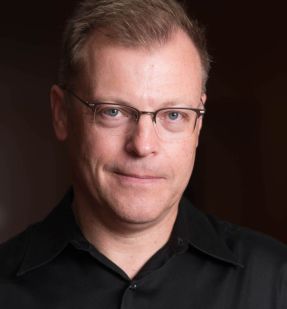
Jeffrey Nytch

Jeffrey Nytch is a composer, an associate professor at the CU College of Music, director of the CU Entrepreneurship Center for Music, author of a text book—and sometimes a translator.

What he translates is the language of business. He translates it into language that anyone can easily grasp, and he does it through teaching as well as through his recently published book, The Entrepreneurial Muse: Inspiring Your Career in Classical Music.

“I feel like I’m a translator taking concepts that are well established in business but foreign to people in the arts,” he says. “It’s being able to say, let’s take ‘opportunity recognition.’ Let me explain to you what that means—translate it such that it demystifies it and helps the artist see that it is relevant to what they do.”

Written as a text book for classes such as “Building Your Music Career,” one of the courses he teaches through the College of Music, The Entrepreneurial Muse also aims at a larger audience. “It’s something that we talked a lot about in the conceptual stage of the book,” he says. “Oxford University Press is an academic press. They know how to market to educational institutions, so it’s been a little bit tricky in that regard.”

Nevertheless, he says, “I do think of a broader readership. I tried to write it in a conversational way, [with] the personal stories that are woven into it. Yes it’s a text book, but I wanted it to be a good read too.”

nytch.museMaking it “a good read” starts at the very beginning, with a personal experience we can all understand, what Nytch calls “The Popcorn Epiphany” (Prologue, p. xv; but you’ll have to read it for yourself). Those kinds of informal, accessible anecdotes can be found throughout the book.

Of course, it necessarily reads like a textbook in some chapters. Nytch is careful to lay the groundwork, explain the concepts, define the terms—in other words, translate the business language for his audience of musicians and music administrators.

One thing that makes the book understandable is that lot of what Nytch describes—concepts like latent and inchoate demand, and long-tail markets—are things that musicians and audiences will intuitively recognize, even if they don’t know the vocabulary. And as you move into the book, it becomes more and more fascinating to anyone who is active in the world of music, as a performer, professional administrator, supporter or consumer. Insights abound.

Music entrepreneurship has emerged as an important field over the past 20–30 years. CU created the first entrepreneurship program in the arts in 1999, and Nytch came to CU as head of the program in 2009. “Now, [the field] has really started to take off,” he says.

“In the last 20 years the numbers of [music students] have continued to grow and there are no longer the jobs for all of those students. Performing arts schools in general and music schools in particular began to recognize that we need to prepare our graduates for professional lives beyond just preparing them to be performers.”

Nytch himself came into the field of music entrepreneurship almost accidentally. Before taking the job at CU he had received a doctorate in composition, managed the Pittsburgh New Music Ensemble, and co-founded a non-profit service organization. As he explains it, “I did not recognize that I was laying the groundwork for this new career. I was just trying to figure out how to keep music in my life and make a living.”

ecmmusicThen in 2008 he heard about the job opening at CU. “I’m reading the job description,” he recalls. “I’ve got a DMA in music, I have 15 years as a freelance composer, I’d run a small arts organization and my day job for six years was being the operations director for a small business. Basically, I checked every box that they were looking for. I read that job description, and I knew it was for me.”

The textbook emerged from his experience teaching entrepreneurship. “The educators, my colleagues in the arts entrepreneurship field, need resources for their own teaching,” Nytch says. In addition, “there are music students, there are individual musicians who are out in the world, especially folks that are in the earlier stages of their career.

“Entrepreneurship is also useful for traditional art management programs. A lot of arts organizations, symphony orchestras and opera companies and chamber music societies, they could benefit from learning to think entrepreneurially as well.”

ecm_main_0.png

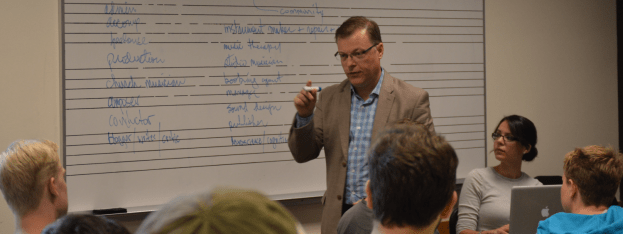
Jeffrey Nytch teaching at the Entrepreneurship Center for Music

One part of the music world in particular gets Nytch’s attention: the amateurs who support professional organizations, as patrons or contributors or board embers. “Those folks are invested in the future of their organizations, but they may not have the mechanism to think about options in a strategic way.

“A lot of boards end up doing what I call shucking peanuts. They say ‘We ought to do this,’ and ‘Actually, we ought to do this,’ or ‘Maybe we could try this.’ You go around the table and you spend two hours shucking peanuts. Some of those might be good ideas, some of them might be terrible ideas. But if there’s no way to evaluate them, then you’re never going to get any further than shucking peanuts. So thereis an audience who would find [the book] useful.”

In other words: If you are a musician in the early stages of your career, you should read this book; if you know a musician, buy it for them. If you are an arts administrator, you should read this book; if you know an arts administrator, buy it for them. If you are a board member of an arts organization, you should read this book; if you know a board member, buy it for them.

More concisely, I recommend this unique and valuable book to anyone who makes, supports or listens to music. It fills a unique and important space in the music world, and it does it extremely well.

The Entrepreneurial Muse: Inspiring Your Career in Classical Music by Jeffrey Nytch. Oxford: Oxford University Press, 2018. 240 pages. ISBN: 9780190630980 $24.99 (paperback; also available in hardback and E-book formats)

Can also be purchased from Amazon.

Edited 1/5/19 to update top photo of Jeffrey Nytch.


Hail and Farewell

Some of the musicians we lost in 2018

By Peter Alexander Dec. 31 at 4:45 p.m.

May the memories of these great musicians, who have enriched so many lives as performers, teachers and leaders, be a blessing to us all.
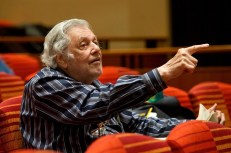
Mann

Robert Mann

Jan. 1: Robert Mann, founding first violinist of the Juilliard String Quartet, whose robust style helped them achieve international renown, 97

Jan. 7: Maurice Peress, conductor who worked with both Leonard Bernstein and Duke Ellington, and an ardent advocate for the influence of Dvořák on American music, 87
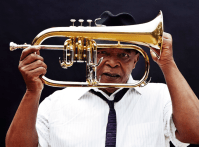
hugh-masekela

Hugh Masakela

Jan. 23: Hugh Masekela, South African trumpeter, singer and anti-apartheid activist, 78

March 2: Harvey Schmidt, composer of the long-running (42 years) off-Broadway sensation The Fantasticks, and also 110 in the Shade, 88

March 2: Jesús López Cobos, Spanish conductor, former music director of the Deutsche Oper Berlin, the Cincinnati Symphony, and other orchestras, 78

March 12: Ivan Davis, internationally known American pianist, a protégé of Vladimir Horowitz, 86

March 16: Buell Neidlinger, versatile bassist who played free jazz as well as John Cage and Igor Stravinsky premieres, and recorded with Dolly Parton and the Eagles, 82
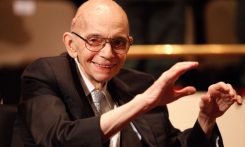
maestro-abreu-1-860x516

José Abreu

March 24: José Abreu,founder of El Sistema, the Venezuelan free-music program aimed at impoverished children that produced the conductor Gustavo Dudamel and remarkable youth orchestras, 78

Mach 31: Michael Tree, founding member of the Guarneri Quartet and the Marlboro Trio, as well as a much loved teacher at the Juilliard School, Manhattan School of Music, and other institutions, 83

April 5: Cecil Taylor, classically-trained jazz pianist, band leader, and sometimes poet, 89

April 10: Yvonne Staples, the baritone voice of the soul group Staples Singers, 80
Malgoire-Chef1

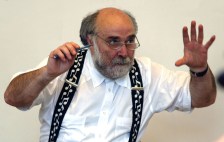
Jean-Claude Malgoire

April 14: Jean-Claude Malgoire, energetic French conductor and champion of his nation’s early music repertoire, 77

May 1: Wanda Wilkomirska, a Polish violinist who performed world wide and was also known for her stand in support of the Solidarity movement, 89
clarence-fountain

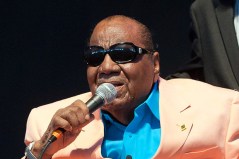
Clarence Fountain

June 3: Clarence Fountain, the last living co-founder of the iconic gospel singing group Blind Boys of Alabama, 88

June 12: Bonaldo Giaiotti, operatic bass who was discovered singing in celebration of his soccer’s team victory in a bar in northern Italy and went on to become a fixture of the Metropolitan Opera, 85

June 16: Gennady Rozhdestvensky, Russian conductor known for performing the works of Alfred Schnittke, Sofia Gubaidulina and other contemporary composers, and for the emotional intensity of his performances, 87 
Liliane+Montevecchi_5a87698ec8e7ec1600298712

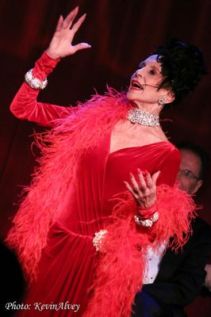
Liliane Montevecchi

June 29: Liliane Montevecchi, Tony-Award winning actress, dancer and singer who performed with the Folies Bergère in Las Vegas and Paris, in addition to Broadway and film roles, 85

June 29: Franz Beyer, a German  violist and musicologist who prepared a revised edition of Mozart’s unfinished Requiem in the early 1970s, 96

July 3: Bill Watrous, a widely respected and acclaimed trombonist, bandleader and teacher, known for studio work with artists including Quincy Jones and Frank Sinatra, 79

July 9: Oliver Knussen, British composer and conductor best known for his opera Where the Wild Things Are based on the beloved children’s book by Maurice Sendak, 66
VH1 Divas Live: The One and Only Aretha Franklin

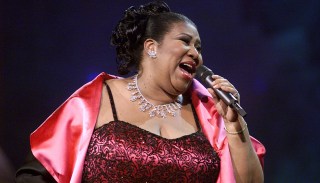
Aretha Franklin

Aug. 16: Aretha Franklin, “The Queen of Soul” and one of the most widely loved and revered singers in America with a 100 singles in the Billboard charts and 20 No. 1 R&B hits, 76

Aug. 23: George Walker, Pulitzer Prize-winning American composer and teacher at Rutgers and other institutions, whose Lyric for Strings was performed during the 2018 Colorado Music Festival, 96
ElektraBorkh-865x780

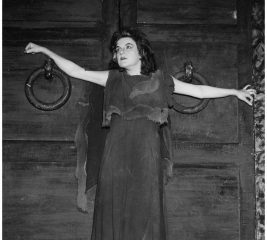
Inge Borkh

Aug. 26: Inge Borkh (born Ingeborg Simon), German/Swiss soprano known for her intense performances as Salome, Elektra, and other daunting roles, 97

Aug. 29: Ellie Mannette, a Trinidadian musician who, as a builder, tuner and teacher of steel drums, help create one of the most recognizable and joyful musical sounds, 90

Sept. 6: Claudio Scimone, Italian conductor and founder of I Solisti Veneti, with which he toured internationally and made many recordings, 83
Capobianco

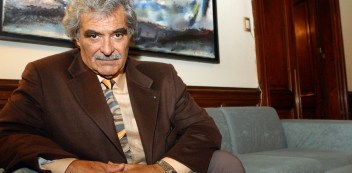
Tito Capobianco

Sept. 8: Tito Capobianco, operatic stage director at the New York City Opera, the Metropolitan Opera and San Diego Opera, and general director of Pittsburgh Opera for 17 years, later a faculty member at Indiana University, 87

Sept. 18: David DiChiera, founder and director of Michigan Opera Theatre in 1971, who helped bring culture into downtown Detroit and stimulate the downtown revival, 83

Sept. 21: Katherine Hoover, flutist and composer who wrote for her own instrument and for strings, woodwinds, full orchestra, and other media, 80

Oct. 1: Charles Aznavour, celebrated French popular singer, song writer and film star who sold more than 100 millions records, and who was also known for his political support of the Armenian people, 94
Caballe

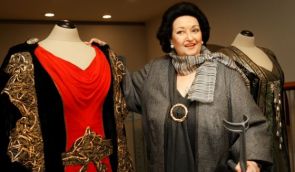
Montserrat Caballé

Oct. 6: Montserrat Caballé, Spanish prima-donna soprano known for the purity of her voice as well as the adulation of her fans, 85

Oct. 31: Wolfgang Zuckerman, developer of the “Z-Box,” the first build-it-yourself harpsichord kit, 96

Nov. 15: Roy Clark, guitar, banjo, mandolin and fiddle virtuoso and country singer who was much more than this TV personality on “Hee-Haw,” a Country Music Hall of Fame inductee in 2009, 85

Dec. 6: Andrew Frierson, groundbreaking African-American bass-baritone who sang at the New York City Opera and other opera stages around the world and at the 1963 March on Washington, was a voice professor at Oberlin and other schools, and co-founded the Independent Black Opera Singers, 94

Dec. 17: Galt MacDermot, Grammy-award winning composer of Hair and Two Gentlemen of Verona, 89 and 364 days

Dec. 29: Aldo Parisot, legendary Brazilian-born cellist and teacher who was the longest-serving faculty member ever at Yale University, 100

 

Starkland’s latest adventurous releases: diverse, fascinating excursions in sound

New works, virtuoso performances

By Peter Alexander Dec. 28 at 12:25 p.m.

With 2018 coming to a close, now is a good time to take note of the past year’s three releases from Boulder’s Starkland Recordings. Specializing in new works, Starkland features performances of the highest quality. And in keeping with the label’s wide-ranging catalogue, the new recordings are very different, but each adventurous and challenging in its own way.

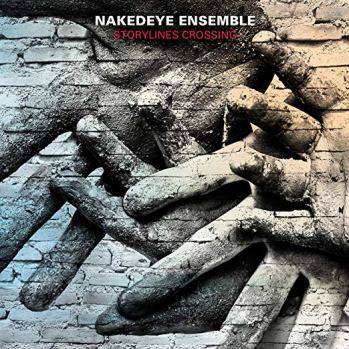
A1AdBe8paYL._SX522_Nakedeye Ensemble: Storylines Crossing. Jonathan Russell: Sextet. Zack Browning: Decade of the Dragon. Richard Belcastro:Smoke n’ Wid. Rusty Banks: Surface Tensions. Randall Woolf: Punching the Clock. Frederic Rzewski: Coming Together, arr. by Belcastro. Starkland ST-228.
The NakedEye Ensemble is a group of eight young musicians based in Lancaster, Penn. Directed by pianist Ju-Ping Song, they have been performing together since at least 2014, and have now released their first recording.

Characterizing themselves as an “electro-acoustic group with classical, rock, and jazz DNA,” their mostly new repertoire reaches back to an arrangement of a work from 1971 by Frederic Rzewski, who remains a touchstone for younger, politically motivated composers. The other five works on the disc all date from the current centurySettings range from a quartet to the full ensemble of eight.

With six such accomplished performances, it seems unfair to single out specific works, but as a child of the 1960s I have to start with Zack Browning’s Decade of the Dragon. Written for NakedEye to mark the 50thanniversary of the beginning of U.S. involvement in the Vietnam War—the dominant event of my generation’s younger lives—it refers to two searing, Pulitzer-Prize winning photographs from that struggle, “Saigon Execution” and “Napalm Girl” (the first and third images here).

The jazzy, rock-inflected score incorporates a traditional Vietnamese song, “City of Dragons.” The music is marked by sudden shifts of sound and mood, including suggestions of the ‘60s and even a trace of Hendrix. Decade of the Dragon is too energetically likable to quite evoke the horror of the subject, but it clearly deserves a place among works inspired by the Vietnam War.

In Randall Woolf’s intriguing Punching the Clock, recordings of work songs from around the world are embedded in the musical texture. The episodic score darts from one musical world to another. It is fascinating to follow Woolf’s blues-inspired imagination from scene to scene, even if it doesn’t quite add up to much more than the individual parts.

Two works on the album are sheer fun to hear. Jonathan Russell’s Sextet is a delight, from the “groovy little bass line” (in the composer’s fitting words) that opens the piece to the long, teasing fadeout ending. Richard Belcastro’s Smoke n’ Wid must be the most playful, cheerful piece ever written about cats in a box with catnip.

Another work that grew from the Vietnam War is Rzewski’s Coming Together, the tour de force and culmination of the album. It is based on a letter written by Sam Harris, who was arrested and convicted for eight bombings in New York protesting the war. Incarcerated at the infamous Attica Prison, he died there in the 1971 riots that he helped organize.

Readings from Harris’s letter are underlaid by repeated bass lines and improvised parts that reflect and surround the spoken texts. The effect is cumulative over the 20-minute duration: the combination of Rzewski’s boundless musical creativity and commitment have made this a masterpiece of political music theater.

NakedEye Ensemble plays with virtuosity and verve, demonstrating what a wealth of musical talent there is beyond our experience in Boulder. This meticulously played, fun and varied album has landed near the top of my list of favorite Starkland albums. Adventurous listeners in love with the new should make it a priority.

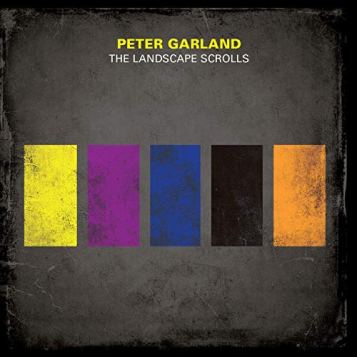
912LkDwsYHL._SS500_Peter Garland: The Landscape Scrolls. 1. mid-day 2. sunset 3. after dark 4. late 5. early morning. John Lane, percussion. Starkland ST-229.
The Landscape Scrolls feature virtuosity of another dimension. There are five monochromatic movements, each inspired by a time of day and an imagined landscape, and each calling for a single percussion sound.

The tour de force here is clearly for percussionist John Lane, who must in sequential movements perform on a set of eight drums, nine rice bowls, three triangles, the glockenspiel, and tubular bells; and then create an arc and a sense of direction out of a limited sound palate in each movement. That he does so is indeed a virtuosic accomplishment.

The drums of the first movement effectively evoke the subject, “jagged peaks, endless mountains, receding in the distance—early spring.” In the second movement, ringing rice bowls recreate the effect of “peepers”—pond frogs—near the composer’s home. In the third movement, the magical sight of fireflies in the summer is reflected in the sound of triangles. That Lane maintains the effect for 10 minutes is a triumph of concentration as much as musical technique.

My favorite movement is the fourth, which refers to van Gogh’s famous painting “Starry Night” through the sound of the glockenspiel. The reference to a much-loved painting , the greater compass of pitch provided by the instrument and the rhythmic variety make this movement stand out from those that went before.

The longest movement is the last, “early-morning: sea smoke on the river—winter.” Using tubular bells—commonly called chimes—the composer aims create a fog of sound that duplicates aurally the sight of the thick fog that often hovers over cold or frozen water. In this he is successful; whether it is worth of 20 minutes of listening will depend on your interest in pure sound and tolerance for near stasis as a single musical idea is repeated and slowly transformed—just like the fog slowly swirling over the river.

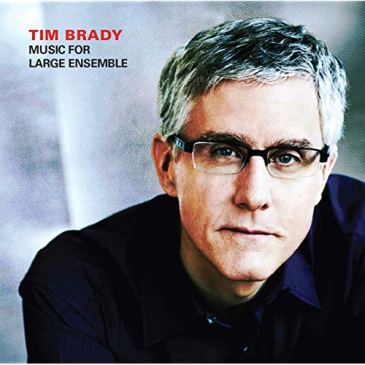
91p1XxsY4+L._SS500_Tim Brady: Music for Large Ensemble. Désir: Concerto for electric guitar and large chamber ensemble; Eight Songs about: Symphony #7. Bradyworks Large Ensemble, Tim Brady, electric guitar and conductor; Cristian Gort, conductor; Sarah Albu, soprano; Vincent Ranallo, baritone. Starkland ST-230.
This disc is Tim Brady’s second appearance on the Starkland label following the strikingly original Instruments of Happiness of 2016. It represents a turn in a different direction from the former recording, which featured an electric guitar quartet.

This time Brady is featured, first as soloist in his Désir: Concerto for electric guitar and large chamber ensemble, and then as conductor in Eight Songs about: Symphony #7. His own Seventh Symphony, this is also a highly original response to the Seventh Symphony of Shostakovich.

The concerto is in the traditional three movements in the order fast-slow-fast. Nothing else about it feels traditional or predictable, however. The first movement, titled “Ecstasy,” is marked by frenetic, driven activity interrupted by sudden stops, then a total change of sound. The frenetic activity returns, as if powered by an internal engine, until it tapers into a cessation of movement at the outset of the second movement, “Beauty.”

In some ways this movement represents a conventional concept of musical beauty—slow moving, more consonant. But it is also uneasy, edgy, unpredictable. This is an uncomfortable beauty that leads into the third movement and a return to frenetic activity. It is titled “Wisdom,” but this is no reflective, contemplative wisdom. It is rather the wisdom of the virtuoso who can make any difficulty seem effortless.

Shostakovich dedicated his Seventh Symphony to the City of Leningrad, where it was performed in 1942, during the German siege of the city. That performance, by a pickup group of Soviet musicians, was broadcast on loudspeakers throughout the city and even to the German troops  outside the city.

Eight Songs about: Symphony #7 is a setting of texts by Douglas Smith, forming a fever dream of that performance as experienced by different people, including a German soldier, a Russian prostitute in the city, musicians in the orchestra and Stalin himself. The texts are sung and declaimed by a soprano and a baritone, accompanied by an ensemble of players who provide what critic Alan Kozinn accurately describes as “ominously opaque musical textures.”

Brady’s music expresses something basic about the despair and brutality of war, and does it in a powerfully original way, but it is not necessarily enjoyable to listen to. The two soloists present vivid characterizations while taking very different approaches to the material: soprano Sarah Albu sounds conversational, almost detached, while baritone Vincent Ranallo gives a more mannered delivery. Brady’s conducting is naturally assured, and the Bradywork’s Large Ensemble performs with commitment.

All Starkland recordings may be purchased through the label’s Webpage.


Boulder Chamber Orchestra’s Gift of Music: “An adventure for the listener”

Mozart concerto, Handel, Corelli, and a kinder, gentler Schoenberg

By Peter Alexander

6783531747_bf465010d0_b

Pianist David Korevaar

You know it’s an unusual Christmas concert when one of the composers is the fearsome atonal composer Arnold Schoenberg.

But conductor Bahman Saless, who has programmed the Schoenberg Christmas Music for concerts with the Boulder Chamber Orchestra Dec. 21 and 22, assures listeners it is thoroughly enjoyable, not written in the composer’s dissonant and fiercely intellectual style. Instead, it is a gentle fantasia on Praetorius’ familiar carol “Es ist ein Ros’ entsprungen” (Lo, how a rose e’er blooming).

“I think in in his spare time he wrote some stuff for fun,” Saless says. “He was probably tired of his own intellect.”

In addition to Schoenberg’s Christmas Music the program will feature Corelli’s Concerto Grosso in B-flat, known as the “Christmas Concerto”; another Concerto Grosso in B-flat by Handel; some regular Christmas carol arrangements; and pianist David Korevaar playing and conducting Mozart’s Piano Concerto in B-flat, K595.

Read more in Boulder Weekly.

# # # # #

“The Gift of Music”
Boulder Chamber Orchestra, Bahman Saless, conductor
With David Korevaar, piano

Mozart: Piano Concerto No. 27 in B-flat major
Handel: Concerto Grosso in B-flat major, Op 3 no. 1
Arnold Schoenberg: Christmas Music
Corelli: Concerto Grosso in G minor, Op. 6 no. 8 (“Christmas Concerto”)
Holiday carols

7:30 p.m. Friday, Dec. 21, Broomfield Auditorium, 3 Community Park Rd., Broomfield
7:30 p.m. Saturday, Dec. 22, Boulder Adventist Church, 345 Mapleton Ave., Boulder

Tickets

Obscure Russian composers provide gems for Boulder Piano Quartet

Music by Sergei Taneyev and Anton Rubinstein at The Academy

By Peter Alexander Dec. 11 at 6:45 p.m.

There is not a lot of music written for piano quartet.

BPQ.cropped

Boulder Piano Quartet

No, not four pianos; the “piano quartet” is an ensemble of piano with violin, viola and cello. As such, it falls between the trio of piano, violin and cello, for which there is a rich repertoire, and the quintet of piano with strings in different combinations that became a major genre for Romantic composers.

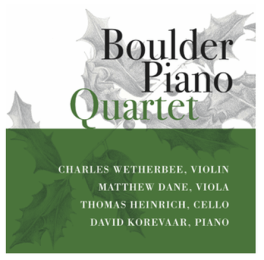
To be sure, Mozart wrote works for piano quartet, and other composers have followed since. Still, there are not that many pieces for the combination, so groups like the Boulder Piano Quartet— David Korevaar, piano; Charles Wetherbee, violin; Matthew Dane, viola; and Thomas Heinrich, cello—sometimes turn to obscure composers to fill out their programs.

That is indeed the case for their next performance, Friday at the Academy in Boulder, featuring one work each by composers that Korevaar refers to as “the obscure Russians.”

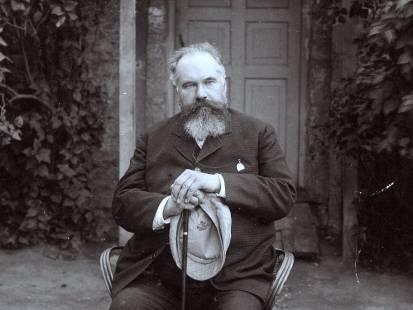
Make no mistake, though: obscure does not translate to unskilled. The two composers—Sergei Taneyev and Anton Rubinstein—were not only among the most prominent Russian musicians and music educators of the 19thcentury, they were highly skilled composers. Taneyev was so skilled writing counterpoint that he was known as “The Russian Bach.” A close friend of Tchaikovsky, he is most remembered for his extensive chamber music output, including his one Piano Quartet

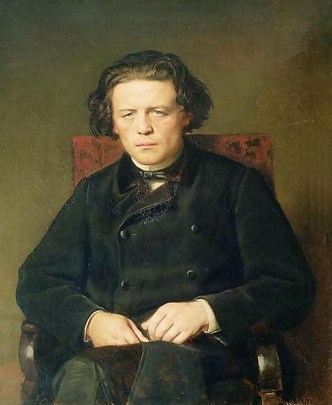
Rubinstein, founder of the St. Petersburg Conservatory of Music was one of the greatest piano virtuosos of the 19thcentury. He is best known for his showy piano pieces, but he also wrote 20 operas, six symphonies, and a host of chamber pieces—including again a single Piano Quartet

“Both Rubinstein and Taneyev represent what was known somewhat disparagingly in Russia as the ‘cosmopolitan school’ of Russian composition,” Korevaar says. “That is to say, they were not nationalists”—meaning they followed the standard European classical models of their times and did not incorporate real or imitated Russian folk music into their compositions. This is in contrast to other Russian musicians, including Borodin and Mussorgsky.

989f75-20170531-taneyev

Sergei Taneyev

“Taneyev’s music is very attractive,” Korevaar says. “It’s also very difficult to play. He’s extraordinarily demanding of his players. The string parts and the piano writing are formidably complex.

“He also loves to show off his contrapuntal acumen, so the last movement of the quartet is filled with all kinds of contrapuntal combinations. It includes a fugue, and the coda brings back every theme from the quartet and combines them in various clever ways.”

But there is more to Taneyev than complexity and counterpoint, Korevaar says. For one thing, he begins the Quartet in a particularly engaging way, “like ballet or opera where something dramatic is already happening,” before introducing the first major theme.

“I have to say, he wrote good tunes,” Korevaar adds. “[The Quartet] is long, but it’s worthwhile long, not tedious long. The last movement is very busy and exciting all the time, so it keeps us all moving.”

portrait-of-the-composer-anton-rubinstein-1870

Anton Rubinstein

Korevaar is equally excited to play the Rubinstein Quartet, which he did not know before learning it for Friday’s concert. “I’m very excited we’re playing it because it’s so beautiful,” he says. “It’s a marvelous example of mid-19th-century Romantic voice. It’s very mainstream, and so the last movement you would never have any reason to think it was written by a Russian.”

Rubinstein’s own virtuosity made his piano writing challenging. “Rubinstein was famous for having very large hands,” Korevaar says. “He does write for the piano in a way that is representative of big-handed composers—there’s a lot more [finger] extensions than some other composers would be using. But in the end, I think it’s beautiful piece.

“It’s kind of a gem.”

# # # # #

0e8e49_5bd3f65d4a8f457b8a57e55e29af37ae~mv2

Boulder Piano Quartet
David Korevaar, piano; Charles Wetherbee, violin; Matthew Dane, viola; and Thomas Heinrich, cello

Sergei Taneyev: Quartet in E major for piano and strings
Anton Rubinstein: Piano in C major for piano and strings

7 p.m., Friday, Dec. 14
The Academy, 970 Aurora Ave., Boulder
(Entrance at 833 10thSt.)

Free; RSVP in advance to ande@theacademyboulder.com

Boulder Opera presents Little Red Riding Hood for young audiences Dec. 7–9

Opera by Russian composer Cesar Cui will have its Colorado premiere

By Peter Alexander Dec. 5 at 2:20 p.m.

César Cui (pronounced SAY-zar KWEE) is not a household name, anywhere. But he was an interesting person who wrote music that is always worth hearing.

240px-Ilya_Repin_-_Cesar_Cui

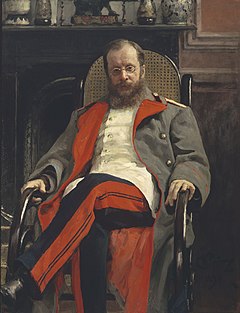
Portrait of César Cui by Ilya Respin

Born in 1835 in Vilnius, now Lithuania and then part of the Russian Empire, his principal career was as an officer and engineer in the Russian Imperial Army. But he also studied piano from childhood and pursued music as an avocation. With Mily Balakirev, Borodin, Mussorgsky and Rimsky-Korsakov, he was one of the Russian nationalist composers known as “Moguchaya kuchka” (the mighty handful).

Among other works, he wrote more than a dozen operas, including several children’s operas—which is what recommended Cui to Dianela Acosta and the Boulder Opera, who will present the first Colorado performances of his 40-minute Little Red Riding Hood this weekend (Friday–Sunday, Dec. 7–9) at Boulder Nomad Playhouse.

“We’re always looking for new material to present,” says Acosta, Boulder Opera’s artistic director who also plays the mother in the production. “Especially stories that are well known, to continue with our mission to introduce the younger generation to opera.”

BOC RR-26

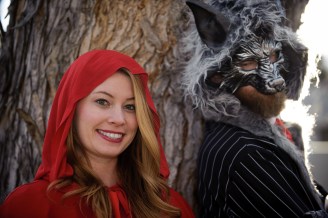
Page Sentianin as Little Red Riding Hood and Joshua South as the Wolf for Boulder Opera Company

For Little Red Riding Hood, they are presenting three performance to school groups Thursday and Friday, with support from the Boulder Arts Commission. They have prepared a study guide that is useful for anyone attending the opera, and each performance will be followed by Q&A session for the audience with cast members.

“We love to do these Q&A at the end of the performances,” Acosta says. “The kids get to ask questions and then we ask them questions, and it’s very engaging. And because the opera is so short we decided to explore a little bit more of Cui’s music. We chose a short piano piece called ‘Orientale’ that our pianist, Deborah Schmit-Lobis, will play between the two acts.”

Cui’s music is in the familiar Romantic style of the mid-19thcentury, but with a definite Russian flavor. “There’s a lot of folkloric elements in the music,” Acosta says. “Vocally it’s not very difficult. The music really is there to tell the story, so it’s very descriptive for each character.

“Its a beautiful piece that just tells the story.”

Cui’s music is not widely available. In this case, Mathieu D’Ordine, who has conducted for Boulder Opera in the past, created a chamber arrangement that will be played by pianist Schmit-Lobis and a quartet of woodwind players.

Dianela.A

Boulder Opera Company’s artistic director Daniela Acosta

In the past, Boulder Opera has toured its productions to Longmont, Broomfield and Lafayette. This year, all their performances—both Little Red Riding Hood and performances in May of Pietro Mascagni’s Cavalleria Rusticana and Thomas Pasatieri’s Signor Deluso—will be presented in Boulder’s Nomad Playhouse.

Staying in one place gives the company the opportunity to build solid sets and invest more in the production, Acosta says. “The logistics of traveling was getting really taxing,” she says. “Instead of putting all of our efforts into touring, we’re enhancing our productions with the costumes and the sets.”

That initiative has been assisted by contributions from Nadia Artman, a member of the Boulder Opera board who is also credited as co-producer of Little Red Riding Hood.

Higher quality sets and costumes are clear signs of success for the Boulder Opera Company, but Acosta stays focused on the mission of the company, to bring opera to new and younger audiences. “It’s such a great thing to introduce children to opera,” she says. “That’s what we’re trying to do.

“It’s a familiar story with a happy ending, so it’s fun and educational at the same time.”

# # # # #

BOC-Little+Red+no+text+Little Red Riding Hood by Cesar Cui (Colorado premiere)
Arranged by Mathieu D’Ordine
Boulder Opera Company

1 and 4 p.m. Friday, Dec. 7
2 and 4 p.m. Saturday, Dec. 8
1 and 3 p.m. Sunday, Dec. 9
The Nomad Playhouse, 1410 Quince Ave., Boulder

Information and tickets 

“Musica Prima” will be a musical adventure for performer and listeners Dec. 3

Charles Wetherbee plays an electronic 5-string violin at the Diary

By Peter Alexander Dec. 2 at 2 p.m.

music-at-the-dairy-right-sideLooking for a musical adventure? The Dairy Arts Center has one on tap Monday (7:30 p.m. Dec. 3).
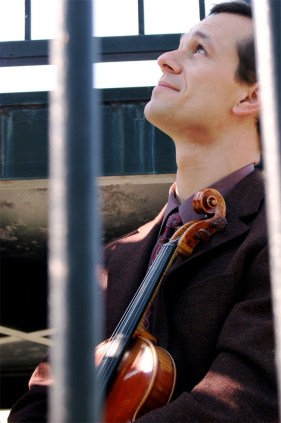
Charles Wetherbee, violin professor at the CU College of Music and concertmaster of the Boulder Philharmonic, will perform one Colorado and three world premieres for a program titled “Musica Prima” (First music). Each work calls for solo violin, although they are not strictly speaking unaccompanied, since they all incorporate electronics, including real-time feedback loops, computer-generated sounds and visual media.

glaseraex5_silvermetallic_headongoogle_2

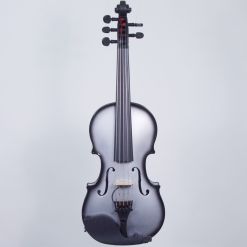
Five-string amplified violin

But that is only part of the adventure. Wetherbee is playing on what is a new instrument for him: an amplified five-string violin. And If you’ve never seen a five-string violin, you are not alone.

“It’s a little experimental,” Wetherbee says, but for him that’s a good thing. “The advance of technology is something that’s exciting, and that expands the musical landscape for us.”

And no, you can’t just buy one at your local music store (although they can be found online). “I was contacted by a representative of a company that wanted me to demo their instrument,” Wetherbee explains. “It coincided with my embarking on (the program of premieres), so it was good  timing.”

The instrument he will play is an acoustic violin with an amplification hookup built in. The addition of the fifth string, tuned to C below the G string, allows the instrument to play music down into the range of the viola, but it has its challenges.

Charles Wetherbee.2

Charles Wetherbee

“It is a little tricky,” Wetherbee says. “On a (four-string) violin or viola, you instinctively know which string you’re going to, with your bow and fingers. But when there’s five it can be a little confusing, and it takes a little extra care and attention.”

The oldest work on the program is Isola Prima (First Island) for 8-channel tape and solo viola, part of a suite of three pieces by Italian composer Nicola Sani. Composed in 1998 and recorded in 2009, it has never been performed live in the United States.

“It’s a really interesting and atmospheric work,” Wetherbee says. “It’s an exploration of the sound of the instrument, (with) recorded sounds of the string instrument combined with the live participation of the performer.”

Two of the world premiere pieces are by Colorado natives, Monica Bolles and Zachary Patten. Bolles’s Architect uses video and audio of the audience, recorded as they arrive, which is fed through a computer that responds to the performer’s improvisations.

“Her work is very interesting,” Wetherbee says. “As I play louder or softer, faster or slower, (the computer) responds. It doesn’t do the same thing every time—it’s like AI (Artificial Intelligence). It has the capacity to perform differently every time I play, and then I respond depending on what I’m hearing the computer do.”

Pando_Image

Pando aspen grove in Utah

Patten’s piece, titled Pando, is partly improvised and incorporates visual images and sounds recorded inside one of the largest living organisms on earth, an aspen grove in Utah. Known as Pando, the grove of 47,000 trees emerges from a single root system, covers 107 acres, and is estimated to weigh more than 6,000 tons. Patten spent time inside Pando, where he captured both visual and audio elements used in his piece.

The fourth piece and third world premiere is Songs of the Wanderers by Chinese composer Fuhong Shi. Like the others, it combines both visuals and a auditory track with live performance. It was inspired by Dunhuang, a way station in far western China that was a part of the legendary Silk Road.

The composer has written “The happiness, fury, sorrow, and joy of the world are all vividly presented in the unrivaled colored frescos and sculptures in the grottos of Dunhuang. Time corrodes the tangible materiality of the world, but human emotions and spirit endure.”

“It’s a pretty big adventure, and I’m excited to be doing this,” Wetherbee says of the program. “I hope people are curious and want to come out and hear it.

“It’s really going to be some beautiful, beautiful music, some explorations—and really fun.”

# # # # #

dairy-exhibition--banner-facade

Musica Prima
Charles Wetherbee, five-string amplified violin

Architect by Monica Bolles (world premiere)
Songs of the Wanderers by Fuhong Shi (world premiere)
Pando by Zachary Patten (world premiere)
Isola Prima by Nicola Sani (Colorado premiere)

7:30 p.m. Monday, Dec. 3
Carsen Theater, Dairy Arts Center
Tickets

Boulder Chamber Orchestra presents Seasons from Italy and Argentina

Violinist Chloe Trevor plays music by Vivaldi and Piazzolla, Friday and Saturday

By Peter Alexander Nov. 29 at 9:25 p.m.

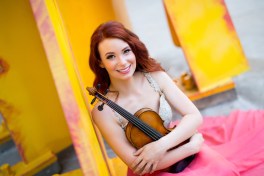
Violinist Chloe Trevor is above all true to herself.

3010773_orig

Violinist Chloe Trevor

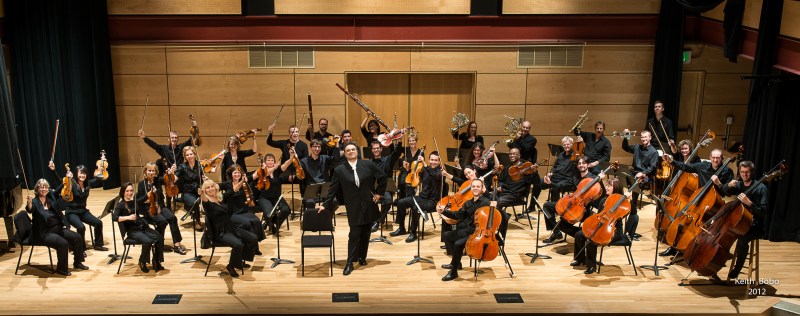
This weekend she will play music by two very distinct and different composers in concerts with conductor Bahman Saless and the Boulder Chamber Orchestra. The program features portions of the well loved Four Seasons of Baroque composer Antonio Vivaldi, combined with the complete Cuatro Estaciones Porteñas (Four Seasons of Buenos Aires) by the innovative composer of the “New Tango,” Argentine Astor Piazzolla.

The concerts—Friday evening in Broomfield and Saturday evening in Boulder—will also include the Suite for Strings by Czech composer Leoš Janáček.

While both Vivaldi and Piazzolla represent distinct styles—the 18th-century string style of Baroque Italy, and the sensual tango of early 20th-century Argentina—Trevor does not feel that she has to create strict versions of either. “I’m playing it more in my style than anything else,” she says.

She’s not saying you can play any way you want, but once you understand a style, you should play what you believe in. “You learn the rules so that you’re aware of them,” is how she explains it. “Once you’ve gotten used to it, you say, ‘Now, I’m going to put my own spin on the whole thing.’ If you’re trying to do it a different way, it sounds like you’re trying too hard.”

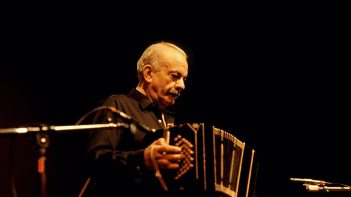
Piazzolla

Astor Piazzola

Written as four separate pieces between 1965 and 1970, Piazzolla’s Seasons were originally composed for the composer’s own quintet. They were arranged for violin and orchestra as a companion to Vivaldi’s Seasons in the 1990s by Russian composer Leonid Desyatnikov. That version became something of a sensation in 1999 when violinist Gidon Kremer and his Kermerata Baltica ensemble recorded both the Vivaldi and the Piazzolla-Desyatnikov sets on a CD titled “Eight Seasons.”

“I got Kremer’s recording when it came out,” Trevor says. “I was in my early teens and I remember being completely fascinated by them. When I finally did get the first opportunity to perform it last year, I was just ecstatic.”

The Piazzolla Seasons are often performed separately, because putting the two sets together on one concert is a challenge. The Vivaldi set is four complete concertos, each comprising three movements, while each of the Piazzolla Seasons is a one-movement work in itself. Played together, both works complete would take at least an hour, which is certainly too long for a soloists’ portion of a standard orchestral concert.

763096_orig

Chloe Trevor

Trevor’s solution is to play the Piazzolla pieces framed by individual movements from Vivaldi. When she first got the music, “I took a few weeks to figure out an order that I wanted,” she says.

“The way I picked it was, what I felt was best to start and end with. It makes the most sense to start with the first movement of Vivaldi’s Spring—it’s one everyone’s familiar with, so it’s the best opener. And I wanted to end with the last movement of Vivaldi’s Summer. That’s the most bombastic movement—it’s a flashy ending. Unfortunately, none of the Piazzolla Seasonshave a great ender.”

In between, she arranged Vivaldi movements around the Piazzolla pieces based on connections that made sense to her. Here is what she settled on: The fist movement from Vivaldi Spring; Piazzolla Spring; a movement of Vivaldi Autumn; Piazzolla Autumn; a movement of Vivaldi Winter; Piazzolla Winter; a movement of Vivaldi Summer; Piazzolla Summer; and ending with the final movement of Vivaldi Summer.

Trevor believes it all makes sense when you hear it. As for switching between Baroque and contemporary tango styles, she says “the pieces are written in such a way that it’s not difficult to go between one and the other. They (each) have their own energy, so you get caught up in that.”

conducting_201110

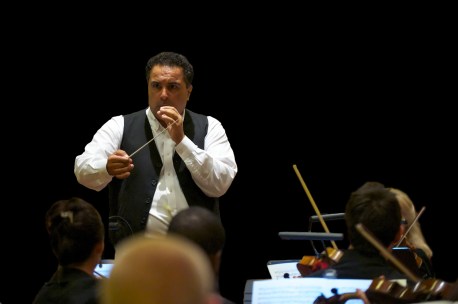
Bahman Saless

Saless noted that he has done music by Janáček before, but the Suite for Strings is harder than others he has done. “This is a difficult one,” he says.

“It has a lot of deep sentiment and you can tell he’s sort of experimenting with his own skill set as a string writer. But it’s got some absolutely gorgeous sonorities. It’s one of those pieces where you hear it and go, ‘Oh my God, why I have not heard that before?’”

Saless has often worked with Trevor’s father, conductor Kirk Trevor. Because of that, he has known Chloe since she was still a child studying with her mother, violinist Heidi Trevor, a member of the Dallas Symphony. Naturally, Saless and Chloe Trevor enjoy times when they can perform together.

“It’s always wonderful to work with Bahman,” Trevor says. “There’s a lot of dreams being realized. The (Vivaldi and Piazzolla Seasons) are such great pieces, and I couldn’t be more thrilled to be here and have a chance to play them again.”

# # # # #


bconew_1.jpgThe Seasons
Boulder Chamber Orchestra, Bahman Saless, conductor
With Chloe Trevor, violin

Vivaldi/Piazzolla: Four Seasons
Janáček: Suite for Strings

7:30 p.m. Friday, Nov. 30, Broomfield Auditorium
7:30 p.m. Saturday, Dec. 1, Boulder Adventist Church

Tickets

Handel’s ‘Messiah,’ tailored for the Christmas season

Pro Musica Colorado and Boulder Chamber Chorale combine for performances

By Peter Alexander Nov. 29 at 3 p.m .

Hungary applause pic 2_edited

Pro Musica Colorado Chamber Orchestra, with conductor Cynthia Katsarelis

It’s been 276 years, and people are still talking about Handel’s Messiah.

Of course, it’s one of the best known and best loved pieces ever written, but that does not make it immune to controversy. One thorny subject is that it has become the quintessential Christmas piece.

But Messiah was not written for Christmas, and only about a third of it has anything to do with Christmas. The rest takes the story through Easter and the Resurrection. The first performances were given in April, 1742, during Lent, and most performances in Handel’s lifetime followed that pattern.

Many people consider performances of the entire piece during the Christmas season inappropriate. Conductor Cynthia Katsarelis is one of those people, but she has found a way to reconcile Messiah’s popularity at Christmas with its content. With the Pro Musica Chamber Orchestra, the Boulder Chamber Chorale and soloists, she will lead performances Dec. 1 and 2 of what she calls “a Christmas version.”

“We’re doing the Christmas section, plus,” she explains. In addition to the full Part One, which is the Christmas portion of the oratorio, “we use elements from Part Two and Part Three that illuminate why this birth is so important.”

The Boulder performances will include a food drive for Community Food Share. Audience members are encouraged to bring non-perishable, packaged food items, such as canned goods, cereal and pasta to be collected at the performances.

Read more in Boulder Weekly.

# # # # #

Handel’s Messiah
Pro Musica Colorado Chamber Orchestra, Cynthia Katsarelis, conductor
With the Boulder Chamber Chorale, Vicki Burrichter, artistic director
Jennifer Bird, soprano; Leah Creek Biesterfeld, alto; Stephen Soph, tenor; Adam Ewing, baritone

7:30 p.m. Saturday, Dec. 1
3 p.m. Sunday, Dec 2
Mountain View Methodist, 355 Ponca Pl., Boulder

Tickets