Music by Luigi Cherubini, an often overlooked composer

Boulder Chamber Orchestra and Chamber Chorale collaborate on Requiem

By Peter Alexander Feb. 13 at 11 p.m.

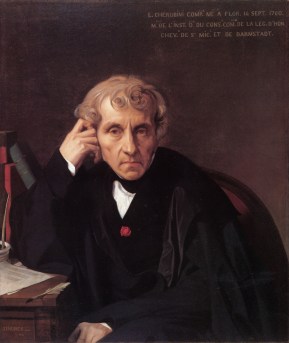
Maria Luigi Carlo Zenobio Salvatore Cherubini just may be the most influential classical composer you have never heard of.

luigi-cherubini-small

Luigi Cherubini. Portrait by Jean-Auguste-Dominiquie Ingres.

As director of the Paris Conservatoire for 20 years (1822-42) and author of an important textbook on counterpoint, he influenced a generation of younger musicians. His many operas and his church works were widely performed and admired in his lifetime.

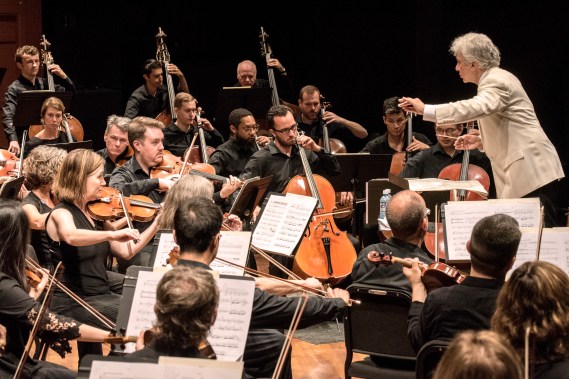
In particular his Requiem in C minor—which will be performed Saturday (Feb. 15) by the Boulder Chamber Orchestra and Boulder Chamber Choir—was admired by Beethoven, who asked that it be performed at his funeral.

“It’s a beautiful, beautiful piece,” says Vicki Burrichter, director of the Boulder Chamber Choir who is preparing the chorus for the performance. “Cherubini’s really extraordinary and was admired by Beethoven and Schumann and Brahms. I think he should be performed a lot more often.”

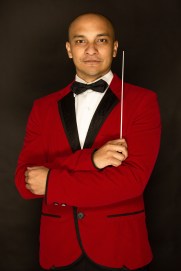
Bahman Saless, the conductor of the Boulder Chamber Orchestra who will lead the performance, agrees. He writes by email from Prague, where he is traveling as a conductor, “What I would like our audience to take away from this concert is that there were many contemporaries of Beethoven and Mozart who were overshadowed by the presence of these titans. Some of them deserve some light to shine on them.”

Read more in Boulder Weekly.

# # # # #

Luigi Cherubini: Requiem in C minor
Boulder Chamber Orchestra, Bahman Saless, conductor
With the Boulder Chamber Chorale, Vicki Burrichter, chorus director

7:30 p.m. Saturday, Feb. 15, First United Methodist Church
1421 Spruce St., Boulder

Tickets

‘Thread of destiny’ runs through Longmont Symphony’s Feb. 15 program

Violinist Andrew Sords and Longmont Youth Symphony will join the LSO onstage

By Peter Alexander Feb. 13 at 2:20 p.m.

The next concert by the Longmont Symphony Orchestra (7:30 p.m. Saturday at Vance Brand Civic Auditorium) is steeped in the idea of destiny.

elliotandlso-1

Elliot Moore and the Longmont Symphony Orchestra

The concert is titled “The Force of Destiny,” a title taken from the opening Overture to La Forza del destino by Verdi, but the idea of “destiny” goes much farther than that. “I believe that in this program there’s a thread of destiny,” Elliot Moore, the LSO’s conductor, says.

LSO Music Director Elliot Moore_preview

Elliot Moore

In fact, Moore finds a sense of destiny everywhere he looks: in the pieces he has selected for the program, in the violin that his soloist Andrew Sords will play, in the instruments in the orchestra, in the inclusion of the Longmont Youth Symphony in the performance of one piece on the program, and even in the future of the arts in Longmont.

“In Longmont, we’re living into this possibility of the arts being a real economic driver, and putting the arts on the map here” he says. “It’s something that’s going on. So I find that the music, our soloist, all of these things are all coming together—I believe it’s our destiny.”

After Verdi’s Overture, the next piece on the program will be John Corigliano’s The Red Violin: Chaconne, based on music from the 1998 film The Red Violin, about the twisted fate—or destiny?—of a fictional violin that is traced from 17th-century Italy to England and China, an auction in Montreal and eventually New York. In the film, music by Corigliano was played by violinist Josh Bell. Corigliano later adapted the music to make several concert pieces, including The Red Violin Concerto and The Red Violin: Chaconne.

Andrewproof2-1-large

Andrew Sords

Sords, who will play the Chaconne with the LSO, says that Corigliano’s score for the film is “one of the genius pieces of the last 23 years. It’s cinematic even without a movie to go with it.”

Sords’ own violin does not quite have the romance and mystique of the fictional “Red Violin,” but it inspires Sords to think about its history. “I think about my own violin, which is only 100 years old: who played on it before me, where did it go? The movie [has] those Hollywood elements, but it really does make you think about these instruments, who played on them, what blood, sweat and tears went into them.”

“That was one of the things that I wanted to do with this program,” Moore says. “Each one of the instruments [in the LSO] has a story. It has some kind of destiny. If it’s to inspire our community or to make its way into the hands of a child, it can change their life. I want to underscore how instruments have life, and they can impact the world.”

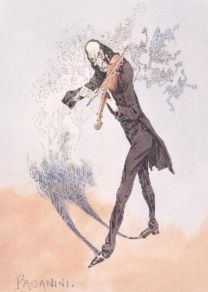
Sords will also play La Campanella (The little bell), a movement from Paganini’s Violin Concerto No. 2. Paganini was the greatest violin virtuoso of his time. A great showman, he was known for playing things that others considered impossible. As a result, he was rumored to be in league with the devil—which is the connection that Moore sees to the idea of destiny.

Paganini charicature

Charicature of Paganini

“Paganini was thought of as this devilish character who could do insane feats on the violin,” he says. “To me, that’s how it goes together with The Red Violin, as well as with the rest of the program—this sort of unbelievable ability to do the impossible.”

La Campanella is the last movement of the concerto, written to end the piece with a flourish of virtuoso pyrotechnics. The piece proved to be so catchy that another great virtuoso, Franz Liszt, wrote a brilliant etude based on Paganini’s theme. “If he were alive today, Paganini would probably be writing for Lady Gaga,” Sords says.

But is the movement that difficult for today’s violinists? “I think everything’s difficult,” Sords says. “Intellectually it’s not as hard as others, but you still have to have that little bit of thought and pizzazz and architecture to it in order to pull it off.”

The final work on the concert will be The Pines of Rome by Respighi, one of the great orchestral showpieces, from the eerie depiction of catacombs to the inexorable advance of Roman legions in the finale, “The Pines of the Appian Way.” In addition to the offstage brass that give an extra impact to the finale, The Pines of Rome is also notable as the first piece to combine live performance with an electronic effect: a recording of a nightingale in the peaceful “Pines of the Janiculum.”

LYS.2019

Longmont Youth Symphony (May, 2019)

For this performance, members of the LSO will sit side-by-side with the Longmont Youth Symphony. “Tying us back into the theme of destiny, I think about what this experience may give these young people who are so passionate about music,” Moore says, “where this may lead them down the road—whether they be the future musicians of the Longmont Symphony or any symphony across the United States.

“Including youth in this program is so important to what the Longmont Symphony’s committed to: fostering a love of music for every single person in our community.”

# # # # #

“The Force of Destiny”

Elliot Moore with the Longmont Symphony_preview
Longmont Symphony, Elliot Moore, conductor
With Andrew Sords, violin
The Longmont Youth Symphony

7:30 p.m. Saturday, Feb, 15, Vance Brand Civic Auditorium

Verdi: Overture to La forza del destino (The force of destiny)
John Corigliano: The Red Violin: Chaconne for violin and orchestra
Paganini: La Campanella (The little bell) from Violin Concerto No. 2
Respighi: The Pines of Rome (side-by-side with the Longmont Youth Symphony)

Tickets


Colorado Music Festival announces 2020 summer season

Beethoven celebration, living composers, chamber music series are scheduled

By Peter Alexander Feb. 6 at 2 p.m.

chautauqua-boulder-colorado

Chautauqua Auditorium, site of Colorado Music Festival performances

The 2020 Colorado Music Festival (CMF) will include concerts celebrating the 250th anniversary of Beethoven’s birth, works by living composers throughout the summer, a chamber music series named in honor of Robert Mann, first violinist of the famed Juilliard String Quartet for more than 50 years, and two Sunday concerts devoted to the music of Mozart. (See the full summer schedule and programs below.)

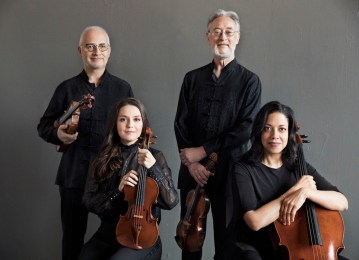
1312 Credit Lisa-Marie Mazzucco low_res.

Juilliard String Quartet. Photo by Lisa-Marie Mazzucco.

The current Juilliard Quartet will launch the Robert Mann Chamber Music Series, June 30. Other prominent guests during the summer will include composer John Adams, conducting his Third Piano Concerto Must the Devil Have all the Good Tunes with pianist Jeremy Denk, July 19; the St. Lawrence String Quartet, July 7; the Brooklyn Rider String Quartet, July 14; and 24-year-old Canadian pianist Jan Lisiecki, playing all of the Beethoven piano concertos on three concerts, July 23–26.

The season was unveiled to the festival contributors and board members Tuesday (Feb. 4). In introducing the concert schedule, the festival’s music director, Peter Oundjian, said “The festival is an inspiration to me. It’s been great fun putting together this season.”

Peter-Oundjian_SmallforWeb

CMF music director Peter Oundjian

This is Oundjian’s second year as music director. He noted that this was the first time that he could plan the entire festival from the very beginning. Consequently, the season reveals his vision for the festival, particularly the inclusion of music by living composers. The emphasis on chamber music reflects the fact that Oundjian was first violinist of the Tokyo String Quartet for 14 years.

The attention to music by living composers includes two world premieres of works commissioned by the CMF. The first concert (June 25–26) will open with Forestallings by Hannah Lash, who was a CMF “Click Commission” composer in 2016, when she performed the premiere of her Second Harp Concerto. The second world premiere, a new work by Chinese-born American composer Wang Jie, will be performed by Oundjian and the Festival Orchestra July 16.

The opening concert combines two main themes from the summer: the Beethoven anniversary and music by living composers. Lash’s score was inspired by Beethoven’s Second Symphony. It will be followed by John Adams’ Absolute Jest, a score that quotes and reshapes music from Beethoven’s late quartets. The performance will feature Boulder’s and CU’s Takács Quartet as guest artists, with the Festival Orchestra. And officially launching the Beethoven celebration, the concert will end with Beethoven’s Seventh Symphony.

At the opposite end of the season, the Festival Finale concert on Aug. 1 will feature a single work, Mahler’s Symphony No. 5 in C-sharp minor. Oundjian will conduct.

John Adams.2 CREDIT Vern Evans

Composer John Adams. Photo by Vern Evans.

John Adams’ music will be heard throughout the festival. In addition to Absolute Jest on the opening concert and his appearance July 19 conducting Must the Devil Have all the Good Tunes, his String Quartet No. 2 will be played July 7 by the St. Lawrence String Quartet; and City Noir will be performed on a Festival Orchestra concert conducted by Oundjian July 16. Extending the Adams’ family presence in the festival, a Chamber Concerto by his son, Samuel Adams, will be performed July 16.

In a welcome contrast to previous years and most orchestras around the country, another trend that emerges from the festival program is the inclusion of women composers. As noted, the entire festival opens with a new piece by Hannah Lash.

BrooklynRider_1600x900-10-1120x630

Brooklyn Rider

The July 14 program by Brooklyn Rider includes works by no fewer than five women: Caroline Shaw, Gabriela Lena Frank, Du Yun, Matana Roberts and Reena Esmail. Wang Jie’s world premiere will be July 16; “Kaleidoscope,” an inventive program of unusual instrumental combinations will open with Joan Tower’s “Fanfare for the Uncommon Woman” No. 5 July 17; and the July 19 orchestra program will open with Tumblebird Contrails by Gabriella Smith.

Maintaining a pattern from previous festivals, major concerts by the Festival Orchestra will be Thursday nights. Three of those programs, including the Festival Opening Night June 25, will be repeated the following Friday. The second and third Festival Orchestra programs will be repeated as well: July 2 and 3, with guest conductor Andrew Grams, featuring guitarist Sharon Isbin and music by Aaron Copland; and July 9 and 10, a program of Russian Masters conducted by former music director and principal guest conductor Jean-Marie Zeitouni.

IMG_6037

Jean-Marie Zeitouni

In addition to Oundjian and Zeitouni, two guest conductors will lead Festival Orchestra concerts during the summer: Andrew Grams, who has been part of the CMF in the past, July 2 and 3; and Gemma New, a young conductor from New Zealand, making her CMF debut July 5. Colorado Symphony associate conductor Christopher Dragon will lead the Family Concert July 11.

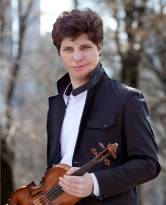
In addition to those already named, a number of guest soloists will appear during the summer. Some of them will be returning after previous performances at CMF, but others will be appearing at the festival for the first time. These guest artists are the piano duo of Christina and Michelle Naughton, June 28; pianist Conrad Tao July 5; pianist Nareh Arghamanyan July 9 and 10; violinist Angelo Xiang Yu and actor John de Lancie July 12; violinist Tessa Lark and saxophonist Timothy McAllister, July 16; pianist Christopher Taylor and marimbist Jisu Jang July 17; and violinist Augustin Hadelich, July 30.

Colorado Music Festival subscription renewals are now available for those who have subscribed in the past. Single tickets will go on sale Monday, March 16. For information on tickets, call 303-440-7666, or click here.

# # # # #

2020 Colorado Music Festival Schedule
All performances in the Chautauqua Auditorium
All performances at 7:30 p.m. unless otherwise specified

CMF - Oundjian - credit Michael Quam EDIT

Photo by Michael Quam (2019)

Opening Night
Thursday, June 25, and Friday, June 26
Festival Orchestra, Peter Oundjian, conductor
Takács Quartet

Hannah Lash: Forestallings (World premiere; Colorado Music Festival commission)
John Adams: Absolute Jest (2012)
Beethoven: Symphony No. 7

Sunday, June 28
Festival Orchestra, Peter Oundjian, conductor

Naugthon_Piano_12

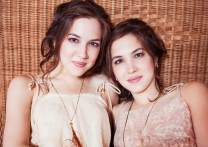
Christina and Michelle Naughton

Christina and Michelle Naughton, piano duo

Mozart: Overture to Così fan tutte
Mozart: Concerto for Two Pianos, K365 (316a)
Mozart; Overture to The Magic Flute
Mozart: Symphony No. 36 in C Major, K425 (“Linz”)

Tuesday, June 30
Robert Mann Chamber Music Series: Juilliard String Quartet

Beethoven: String Quartet in F Major, op. 18 no. 1
Benjamin Britten: String Quartet No. 3
Brahms: String Quartet in A Minor, op. 51 no. 2

Isbin(c)J.HenryFair01

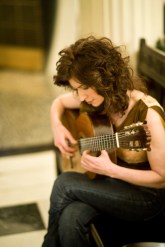
Sharon Isbin. Photo by Henry Fair.

Thursday, July 2, and Friday, July 3
Festival Orchestra, Andrew Grams, conductor
Sharon Isbin, guitar

Ravel: Alborada del gracioso
Joaquín Rodrigo: Concierto de Aranjuez
Chris Brubeck: Affinity (2016)
Copland: “Buckaroo Holiday” from Rodeo
Copland: Suite from Our Town
Copland: “Party Scene” and “The Promise of Living” from The Tender Land
Copland: “Hoe-Down” from Rodeo

Gemma New 3, credit-© Roy Cox (1)

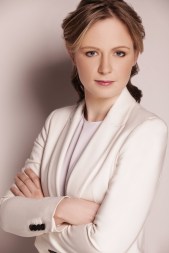
Gemma New. Photo by Roy Cox.

Sunday, July 5
Festival Orchestra, Gemma New, guest conductor
Conrad Tao, piano

Mozart: Chaconne and Pas seul, ballet music from Idomeneo
Mozart: Piano Concerto in A Major, K488
Mozart: Symphony No. 40 in G minor, K550

Tuesday, July 7
Robert Mann Chamber Music Series: St. Lawrence String Quartet

Haydn: Quartet in D Major, op. 20 no. 4
John Adams: String Quartet No. 2 (2014)
Debussy: String Quartet in G minor, op. 10

Thursday, July 9, and Friday, July 10
Russian Masters
Festival Orchestra, Jean-Marie Zeitouni, conductor
Nareh Arghamanyan, piano

Mussorgsky: Night on Bald Mountain
Tchaikovsky: Piano Concerto No. 1 in B-flat minor
Prokofiev: Symphony No. 5 in B-flat Major

ChrisDragonHiRes-178

Christopher Dragon

Saturday July 11 at 11 a.m.
Family Concert
Christopher Dragon, guest conductor
Really Inventive Stuff, guest artists

Bizet: “Les Toreadors” from Carmen
Leopold Mozart: “Toy Symphony” (formerly attributed to Joseph Haydn)
Francis Poulenc: The Story of Babar, the Little Elephant

Sunday, July 12
Festival Chamber Orchestra, Jean-Marie Zeitouni, conductor
Angelo Xiang Yu, violin; John de Lancie, actor

György Ligeti: Concert Românesc (1951)
Ravel: Tzigane, Rapsodie de concert for violin and orchestra
Brahms: Hungarian Dances Nos. 1 and 6
Pablo de Sarasate: Zigeunerweisen
Mendelssohn: Incidental Music for A Midsummer Night’s Dream

Caroline Shaw 724 - credit Kait Moreno 2017

Caroline Shaw. Photo by Kate Moreno.

Tuesday, July 14
Robert Mann Chamber Music Series: Brooklyn Rider String Quartet

Caroline Shaw: Schisma (2018)
Gabriela Lena Frank: Kanto Kechua #2 (2018)
Du Yun: i am my own achilles’ heel, a form that would never shape (2018)
Matana Roberts: borderlands (2018)
Reena Esmail: Zeher (Poison) (2018)
Beethoven: String Quartet No. 15 in A minor, op. 132

Thursday, July 16
Festival Orchestra, Peter Oundjian, conductor
Tesssa Lark, violin, and Timothy McAllister, saxophone

Wang Jie: World premiere (Colorado Music Festival commission)
Samuel Adams: Chamber Concerto (2017)
John Adams: City Noir (2009)

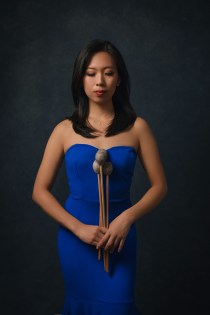
Jisu.Jung

Jisu Jung

Friday, July 17
“Kaleidoscope”
Festival Orchestra members, Christopher Taylor, piano, and Jisu Jung, marimba

Joan Tower: Fanfare for the Uncommon Woman No. 5 (1993)
Nico Muhly: Big Time for string quartet and percussion (2012)
Eric Ewazen: Northern Lights (1989)
Derek Bermel: Turning (1995)
Nebojsa Zivkovic: Trio per Uno (1995/1990)
William Bolcom: Piano Quintet No. 2 (2011)
Keith Jarrett: The Köln Concert (Part IIC) (1975)
Leigh Howard Stevens: Rhythmic Caprice (1989)

Sunday, July 19
Festival Orchestra, Peter Oundjian and John Adams, conductors

Denk3_(c)Dennis Callahan

Jeremy Denk. Photo by Dennis Callahan.

Jeremy Denk, piano

Gabriella Smith: Tumblebird Contrails (2014)
John Adams: Piano Concerto No. 2,  Must the Devil Have All the Good Tunes? (2019)
Christopher Rouse: Symphony No. 6 (2019)

Tuesday, July 21
Robert Mann Chamber Music Series: Festival Orchestra members

Mozart: String Quintet in G minor, K516
Brahms: String Quintet No. 2 in G Major, op. 111

Thursday, July 23
Beethoven Piano Concerto series
Festival Orchestra, Peter Oundjian, conductor
Jan Lisiecki, piano

Beethoven: Overture to Fidelio
Beethoven: Piano Concerto No. 2 in B-flat Major, op. 19
Beethoven: Piano Concerto No. 1 in C Major, op. 15

Friday, July 24
Beethoven Piano Concerto series
Festival Orchestra, Peter Oundjian, conductor
Jan Lisiecki, piano

Beethoven: Coriolan Overture, op. 62
Beethoven: Piano Concerto No. 3 in C minor, op. 37
Beethoven: Piano Concerto No. 4 in G Major, op. 58

Sunday, July 26
Beethoven Piano Concerto series
Festival Orchestra, Peter Oundjian, conductor
Jan Lisiecki, piano

Beethoven: String Quartet in C-sharp minor, op. 131 (arr. Peter Oundjian)
Beethoven: Piano Concerto No. 5 in E-flat Major, op. 73

Tuesday, July 28
Robert Mann Chamber Music Series: Festival Orchestra members

Beethoven: Quintet in E-flat Major for Piano and Winds, op. 16
Beethoven: Septet in E-flat Major, op. 20

AugustinHadelich2

Augustin Hadelich

Thursday, July 30
Festival Orchestra, Peter Oundjian, conductor
Augustin Hadelich, violin

Beethoven: Violin Concerto in D Major, op. 61
Beethoven: Symphony No. 5 in C minor, op. 67

Saturday, August 1
Festival Finale
Festival Orchestra, Peter Oundjian, conductor

Mahler: Symphony No. 5 in C-sharp minor

CMF Orchestra 2019-3

Peter Oundjian conducting the CMF Orchestra (2019)


Boulder Opera presents “purrr-fect introduction to opera”

Montsalvatge’s Puss in Boots will be presented in English and Spanish

By Peter Alexander Jan. 30 at 3:15 p.m.

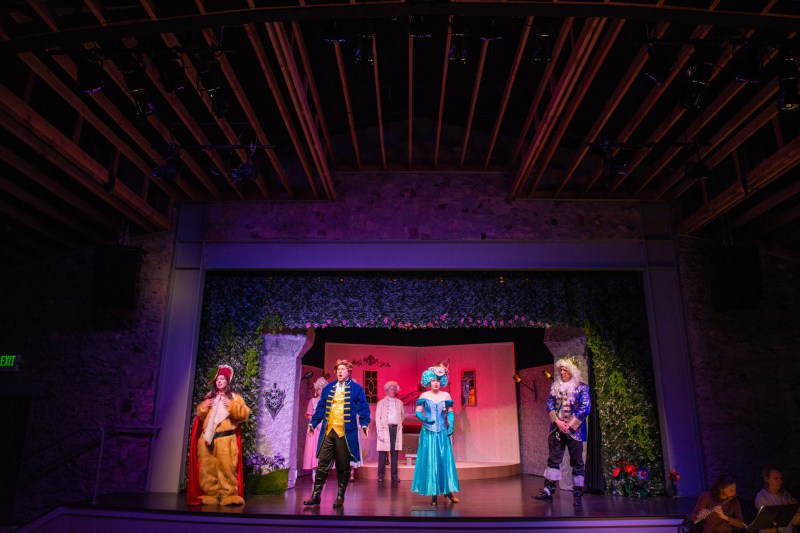
“It’s a purrr-fect introduction to opera,” Dianela Acosta says about the Boulder Opera’s current production of Gato en botas (Puss in boots) by Spanish composer Xavier Montsalvatge.

pussinboots1

Boulder Opera’s production of “Puss in Boots”: Winona Martin, Nathan Snyder, Jennifer Burks, Steven Groth (l-r)

Acosta is the company’s executive artistic director and a cast member, and she is excited about the upcoming performances, which will be offered in both the original Spanish (with English titles) and in English. “The music is gorgeous,” she says.

”There’s moments of Puccini, there’s Mozart, there’s Handel, there’s recitative, it’s very melodic. It’s also very surprising, the music. It’s beautiful.”

With two separate casts, one for each language, the production will be presented six times over the next two weekends, Thursday Jan. 30 through Saturday Feb. 8 (see dates and times below). Performing in both the original Spanish and in an English translation is part of Boulder Opera’s outreach to area schools—in this case bilingual schools in particular.

“We have a lot of partnerships with schools in the area that are bilingual,” Acosta says. “They’re super interested, because there are not a lot of cultural activities in Spanish. We’ve been really successful with this opera in doing outreach.”

Acosta says that they have arranged for 600 students from 10 different school to attend performances. “We tie it to an educational study guide that talks a little bit about the different elements of the opera, a little bit of the history of the composer, and the history of opera,” she says.

Though unfamiliar to American audiences, Montsalvatge (mont-sahl-VAHT-jeh) is well known in Spain. Acosta, who is Spanish, has sung his art songs, but had not known the opera until she was looking for fairy-tale operas for outreach to families and younger audiences. He wrote Gato con Botas in the 1940s, combining traditional operatic forms and styles with contemporary styles including jazz.

ICarriage

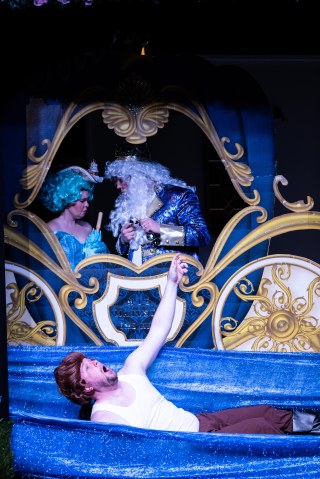
The Princess (Jennifer Burks), King (Steven Groth) and Miller (in river; Nathan Snyder)

The opera is based on the familiar tale of “Puss in Boots,” a conniving cat who uses various tricks to pass off his owner, a poor miller, as a nobleman. He saves his own life in the process, kills an ogre, and arranges for the miler to marry a princess. Naturally, everyone lives happily ever after.

Ashley Gulbranson, music director of the production, says “This is a very accessible opera. It’s two acts with five scenes, and will last less than 60 minutes. So it’s a really great introduction to opera.”

The two casts are entirely separate, with most of the Spanish cast members native Spanish speakers. Having two casts does add to the time needed for rehearsals—”We’ve been having three hour rehearsals, and usually we do about half with one cast, half with another,” Gulbranson says.

That also adds to the cost to the company, but Acosta, who sings el Gato (the cat) in the Spanish cast, said it would have been nearly impossible to perform in both languages with only one cast. “It’s difficult to keep it straight, to keep [the different texts] separate,” she says. “So we just went ahead and hired a Spanish cast.”

To Boulder Opera, the expense is worth it because it contributes directly to their mission of making opera accessible and developing new audiences. “One of the reasons I wanted to do this opera is that it’s part of our children’s series,” Gulbranson says.

“Those performances are reaching a greater audience and getting children and families introduced to the operatic art form.”

# # # # #

Puss in Boots by Xavier Montsalvatge
Boulder Opera, Michael Travis Risner, artistic director and stage director
Nadia Artman, executive producer, set and costume designer

Performances at E-Town Hall, 1535 Spruce St, Boulder:
10 a.m. and 12 noon Thursday, Jan. 30 (performed in Spanish with English titles)
2 p.m. Saturday, Feb. 1 (performed in English)
4 p.m. Saturday, Feb. 1 (performed in Spanish with English titles)
3 p.m. Sunday, Feb. 2 (English)

Performance at Center for Musical Arts, 200 E. Baseline Rd., Lafayette:
3 p.m. Saturday, Feb. 8 (performed in English)

Tickets


Boulder Symphony’s “Genius” concert unites Mozart and Einstein

Slightly different programs will be presented Thursday and Friday evenings

By Peter Alexander Jan. 28 at 4:10 p.m.

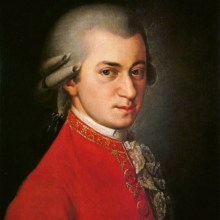
wolfgang-mozart-9417115-2-402

Mozart

Mozart, a composer universally acknowledged to be a genius, and Albert Einstein, a scientist universally acknowledged to be a genius, will be brought together, after a fashion, on the next concert of the Boulder Symphony.

The program, appropriately titled “Genius,” will be presented twice, in slightly different forms. Devin Patrick Hughes will conduct.

Both programs honor some of the great geniuses of physics as well as music. Thursday (Jan. 30) at Boulder’s Jewish Community Center (JCC), the program will comprise Mozart’s Symphony No. 40 in G minor, K550; Einstein’s Dream by Cindy McTee; the world premiere of And Yet it Moves, an homage to Renaissance astronomer Galileo by Clay Allen; and Fermi’s Paradox by Austin Wintory, inspired by a question the Italian nuclear physicist Enrico Fermi once asked casually over lunch.

A second performance Friday (Jan. 31) at First Presbyterian Church in downtown Boulder will substitute the first movement of Chopin’s Piano Concerto No. 2, played by Jessica Zhang, in place of McTee’s score. Zhang was the winner of the Single Movement Division of the Concerto Competition of the 2019 International Keyboard Odyssiad® and Festival Competition, held last summer in Ft. Collins.

mctee_8X10_lg

Composer Cindy McTee

A program with music celebrating the work of great scientists has long been a goal for Hughes. “I’ve been wanting to do a program for a long time that brings the arts and sciences together,” he says, “especially now in this world we live in, where sometimes science gets pushed onto the side of opinion. For hundreds of years the arts and sciences were intertwined.”

Both performances open with one of Mozart’s most well known and celebrated works, the Symphony No. 40 in G minor. It was written at a time when Mozart was in dire straits financially and having to beg loans from his close friends. “This is out of tragedy, Mozart looking inside,” Hughes says. “Of course it’s the creative genius Mozart, and every time you play a Mozart symphony, it’s operatic, you’re telling a story.”

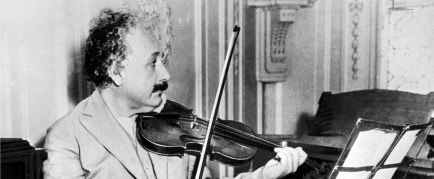
einsteincur

Albert Einstein

Mozart pairs well with McTee’s Einstein’s Dream, because Einstein was devoted to Mozart’s music. An excellent amateur violinist, he often played Mozart’s violin sonatas, and once described Mozart’s music as “part of the inner beauty of the universe.” McTee wrote Einstein’s Dream in 2005, for the World Year of Physics, also known informally as the “Einstein Year” because it was the centennial of some of Einstein’s critical work on the theory or relativity.

The piece is scored for strings and percussion who play with a computer-generated MP3 track that strictly controls the unfolding of the music. It begins with a chorale by Bach, another composer that Einstein admired for the logical construction of his works. The individual movements have titles referring to Einstein’s groundbreaking work as a physicist, including “Warps and Curves in the Fabric of Space and Time,” “Pondering the Behavior of Light” and “The Frantic Dance of Subatomic Particles.”

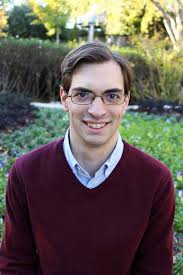
Clay Allen

Composer Clay Allen

And Yet it Moves was commissioned by the Boulder Symphony for the “Genius” program. Allen is a doctoral composition student at the University of Colorado, where he directs the Pendulum New Music concert series. Hughes suggested the idea of a piece about Galileo to Allen, who embraced the idea.

The title, And Yet it Moves, is a comment attributed to Galileo, after he was placed under house arrest and forced by Catholic authorities to recant his claim that the earth revolves around the sun. Galileo’s ideas were such a threat to the Catholic Church’s theological stance that the earth was at the center of the universe that Galileo was tried by the Inquisition. His books were banned by the church until 1718, and only in 1992 did Pope John Paul II finally admit the church had been wrong to censor Galileo’s work.

Allen’s score includes “sweeping string melodies that [portray] standing up in the face of tyranny or ignorance,” Hughes says. The composer will attend the premiere performances by the Boulder Symphony and will speak about his work at a 6:45 p.m. preconcert talk both nights.

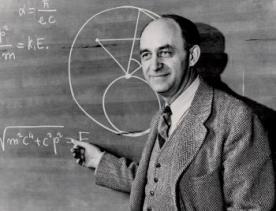
Enrico Fermi chalkboard_0

Enrico Fermi

Enrico Fermi was an Italian nuclear physicist who was part of the Manhattan project developing the atomic bomb during World War II. Once when chatting with fellow scientists over lunch in 1950, Fermi asked if the universe is so vast, with so many galaxies and planets that could hold life, “Where is everybody”?—meaning all the other life forms that should be out there.

This was the origin of “Fermi’s Paradox,” that the universe is vast enough and old enough that we should have made contact with another civilization, but we have not. “Out of Fermi’s Paradox comes a bunch of different solutions,” Hughes says, ranging from the difficulty of interstellar travel to the idea that they are already here in the form of UFOs.

WIntory

Composer Austin Wintory

“Wintory doesn’t exactly say this,” Hughes says, “but one of those solutions is that every time a society develops to where they can destroy themselves, they do. You can hear the doom [in the music], so it’s kind of a warning.”

The composer provided his own epigraph for Fermi’s Paradox in his program note, poetically describing the paradox that Fermi saw: “Our eyes turn to the sky and we see a nearly endless sea of stars and galaxies. . . . With eyes and ears aimed outward, it’s logical that we’d catch glimpses of life and peoples everywhere.

“But we see only overwhelming darkness. We hear total silence. Ours is an existence of oppressive loneliness.

“Reality is at once beautiful and terrifying,” he concludes; “lonely, yet of one.”

# # # # #

BoulderSymphony-0671-RT

Devin Patrick Hughes and the Boulder Symphony

“Genius”
Boulder Symphony, Devin Patrick Hughes, conductor
7:30 p.m. Thursday, Jan 30, Boulder Jewish Community Center

Mozart: Symphony No. 40 in G minor, K550
Cindy McTee: Einstein’s Dream
Clay Allen: And Yet It Moves (World Premiere)
Austin Wintory: The Fermi Paradox (Colorado Premiere)

7:30 p.m. Friday, Jan. 31, First Presbyterian Church, Boulder

Mozart: Symphony No. 40 in G minor, K550
Clay Allen: And Yet It Moves (World Premiere)
Austin Wintory: The Fermi Paradox (Colorado Premiere)
Chopin: Piano Concerto No. 2, First Movement, Jessica Zhang, piano

Tickets

Pro Musica Chamber Orchestra presents “Diverse Voices”

Program features three living composers, one African-American pioneer

By Peter Alexander Jan. 26 at 11:10 a.m.

Searching for diverse repertoire for the Pro Musical Colorado Chamber Orchestra, conductor Cynthia Katsarelis found works by three living composers and a pioneering African-American composer of the 20th century.

Their concert featuring those composers, titled “Diverse Voices,” will be Saturday in Denver and Sunday in Boulder (Feb 1 and 2). The three living composers are Jessie Montgomery, a New York violinist and composer who has been affiliated with the Sphinx Organization, which supports young African-American and Latinx string players; Rudy Perrault, a Haitian native who is director of orchestras at the University of Minnesota, Duluth; and Gabriela Lena Frank, a California-born composer who has mixed Peruvian, Chinese, and Lithuanian-Jewish heritage.

william_grant_still_1

William Grant Still

William Grant Still, the fourth composer on the program, was associated with the Harlem Renaissance in the 1920s, and later had a successful career arranging popular music as well as music for television and films. His Symphony No. 1 (“African-American Symphony”) was the first symphony by an African-American composer to be performed by a major orchestra.

On the all-string orchestra program, Pro Musica will perform his Danzas de Panama, Montgomery’s Starburst, Perrault’s Exodus and Frank’s Leyendas: An Andean Walkabout. This program reflects Katsarelis’s personal commitment to diversity, meaning not only composers of color, which describes all four composer on the program, but also female as well as male composers (two of the four), and new music as well as recognized classics (three of the four).

“I think we come to a more healthy place if we’re inclusive of the different talent and the different voices that we have in the 21st century,” Katsarelis says. “Pro Musica has a mission of [performing] classic to cutting edge [music], and we also present works that were under-represented.”

Katsarelis includes new works among the “under-represented.” “Where the classics touch something universal in us, new music speaks to right now,” she says. “It may or may not last, but it has something to say to us today.”

The entire program is for string orchestra, which is where Katsarelis had to do some searching. “When I encounter a musician that I really respect and am really intrigued by, I go on a Sherlock Holmes-like hunt for music that is appropriate for Pro Musica Colorado Chamber Orchestra,” she says.

Montgomery.image-asset

Jessie Montgomery. Photo by Jiang Chen

Needing music for strings alone, she found several pieces that are written for string quartet or string orchestra. The one exception is the opening work on the program, Montgomery’s Starburst, which was written for the Sphinx Virtuosi chamber orchestra. “It’s a great piece, really energetic, as you would expect a starburst to be,” Katsarelis says.

“It’s inspired by a cosmic phenomenon, and for her that involves rapidly changing musical colors. It’s only a three-minute piece, but you’re getting all these different colors that a string orchestra can produce. They’re playing on the bridge to get this eerie sound, they play harmonics, they have various kinds of pizzicato, and [Montgomery] combines them in various ways. It’s a musical burst as well as a starburst.”

Katsarelis met Perrault through her own work in Haiti. Since 2004 she has gone to Haiti every summer to teach at a music camp, and sometimes during the year as well. “It’s a very musical culture, and they’re always hungry for more,” she says. “It’s really rewarding to work there.”

Perrault-1_3.rev.1568059743

Rudy Perrault

Perrault’s Exodus was originally part of a piece for string quartet. It was inspired by and dedicated to people who have been forced to leave their homelands as refugees. “I hear a very strong musical personality,” Katsarelis says of the score.

“He knows what he’s doing, and he knows how to use a wide range of musical language for the wrenching emotion that is part of the piece. I hear little hints of Bernstein and Shostakovich with a little bit of an island rhythm.”

0414_GabrielaFrank

Gabriela Elena Frank

Frank’s mixed heritage plays a very large role in her work. “Her mother was Peruvian-Japanese, and her father was Lithuanian Jewish,” Katsarelis explains. “She became a kind of musical anthropologist and explored her roots, and she was really captivated by Peru and the Andean music, the Andean instruments and genres and character—they’re all reflected in her piece.”

For example, she imitates the sound of Andean instruments—the panpipes, a heavy wooden flute called the tarka, guitars—in her writing for strings. Other movements depict the chaqui, a legendary runner who covered large distance to deliver messages from town to town, and the llorona, a professional crier hired to mourn at funerals.

Katsarelis often describes pieces of music as a journey, with a return to home providing closure. But in this case, she says, “Peru is part of Frank’s background, and in her exploration she finds another version of home. So we have a journey; home is just a little bit different.”

Photography by Glenn Ross. http://on.fb.me/16KNsgK

Cynthia Katsarelis. Photo by Glenn Ross

Thinking of her musical mission  beyond the individual pieces she selected to illustrate diversity, Katsarelis says “I always thought that classical music could help bring world peace, so this is just one more step.” In addition to that lofty goal, she adds, “What I’m presenting is terrific music. It’s beautiful, it’s inspiring, it’s entertaining, it’s thought provoking and it engages the world today.

“I hope young people will come to the concert, because it’s part of what they’re growing into: a world that’s just so global, and so diverse.”

# # # # #

“Diverse Voices”
Pro Musica Chamber Orchestra of Colorado, Cynthia Katsarelis, music director

Jessie Montgomery: Starburst
Rudy Perrault: Exodus
William Grant Still: Danzas de Panama
Gabriela Lena Frank: Leyendas: An Andean Walkabout

7:30 p.m. Saturday Feb. 1, First Baptist Church of Denver
2 p.m. Sunday, Feb. 2, Mountain View United Methodist Church, Boulder
Tickets


Takács Quartet features Mendelssohn siblings in spring concert series

Retiring violist Geraldine Walther will be honored for her years with the quartet May 3–4

By Peter Alexander

04-Takacs-Quartet-Amanda-Tipton-photography.jpg.jpg

Takács Quartet

Programs featuring string quartets by sister and brother Fanny Mendelssohn Hensel (Jan. 12-13) and Felix Mendelssohn (May 3-4) will form the bookends of the spring concert series by the Takács Quartet at the University of Colorado.

In between (March 8-9) will be a program recognizing the 250th anniversary of Beethoven’s birth. Other composers on the bill over the three programs will be Mozart, Haydn and Brahms.

The programming of quartets by the siblings Mendelssohn comes about partly from a planned recording by the Takács Quartet that will include both pieces, but it also reflects the music’s history. “The Felix Mendelssohn quartet that we’re playing was written just after Fanny died, and he dedicated it to her,” Edward Dusinberre, the quartet’s first violinist, explains. “It’s also his last quartet, and he died very soon after that.

“That’s a nice link between the two pieces, which will form the nucleus of our next recording.”

Read more in Boulder Weekly.

# # # # #

Takács Quartet Spring Series 2020

4 p.m. Sunday, Jan. 12 and 7:30 p.m. Monday, Jan. 13
Mozart: String Quartet in D major, K575
Fanny Mendelssohn Hensel: String Quartet in E-flat major
Mozart: Clarinet Quintet in A major, K 581, with Daniel Silver, clarinet

4 p.m. Sunday, March 8 and 7:30 p.m. Monday, March 9
Haydn: String Quartet in C major, op. 54 No. 2
Beethoven: String Quartet in G major, op. 18 no. 2
Beethoven: String Quartet in C-sharp minor, op. 131

4 p.m. Sunday, May 3 and 7:30 p.m. Monday, May 4
Beethoven String Quartet in B-flat major, op. 18 no 6
Felix Mendelssohn, String Quartet No. 6 in F minor, op. 80
Brahms: String Quintet No. 2 in G major, op. 111, with Erika Eckert, viola

All performances in Grusin Hall of the Imig Music Building on the CU campus. For ticket availability, call 303-492-8008.

2019: Many farewells in the music world

Remembering some of the fabulous musicians we have lost

By Peter Alexander Dec. 28 at 3:20 p.m.

Below are listed some of the musicians we lost in the past 12 months. There is kind of melancholy symmetry to the fact that Carol Channing, famous for the role of Dolly Levi in Hello Dolly, is the first person in the list, and Jerry Herman, that evergreen show’s composer and lyricist, is the last.

These are just the names that caught my eye. Feel free to add any names that have been overlooked.
carol-channing

Who else? Carol Channing

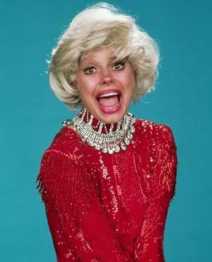
Jan. 15: Carol Channing, the instantly recognizable Tony-winning platinum blond who became permanently associated with the role of Dolly Gallagher Levi in Hello Dolly, a role she revived at the age of 74, 97

Jan. 17: Theo Adam, German bass-baritone known for Wagnerian roles including Hans Sachs and Wotan, which he sang at Bayreuth, the Wiener Staatsoper and the Metropolitan Opera, 92

Jan. 26: Michel Legrand, arranger and composer of hundreds of film scores, known especially for the music for The Umbrellas of Cherbourg and “The Windmills of your Mind” from The Thomas Crown Affair, 86
Sylvan.Chou

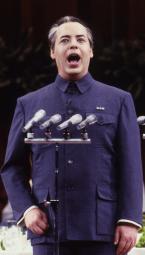
Sanford Sylvan as Chou En-lai

Jan. 26: Sanford Sylvan, American baritone who was particularly memorable in operas by John Adams, including as Chou En-lai in Nixon in China and Leon Klinghoffer in Death of Klinghoffer, 65

Feb. 20: Dominick Argento, celebrated composer of songs, choral music, and 14 operas including Postcard from Morocco and Casanova’s Homecoming, 91
46-105383089

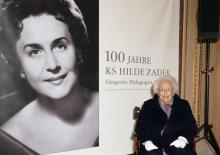
Hilde Zadek

Feb. 21: Hilde Zadek, Austrian soprano who sang at the Wiener Staatsoper from her remarkable debut as Aida—without ever having previously studied the role or even sung onstage—in 1947 until her retirement in 1971, and at other major houses world-wide, 101

Feb. 28: Andre Previn, pianist/composer/conductor whose career spanned jazz, pop and classical music, and who once received three Academy Award nominations in a single year (1961), 89

March 1: Joseph Flummerfelt, American choral conductor known for collaborations with the New York Philharmonic and other orchestras, who also trained younger choral conductors at the Westminster Choir College, 82

March 3: Peter Hurford, British organist, composer and choir director known for his performances of J.S. Bach and a complete recording of Bach’s organ works, 88
Nketia

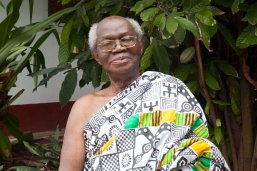
J.H. Kwabena Nketia

March 13: J.H. Kwabena Nketia, Ghanaian scholar and composer who was recognized as the leading scholar of African music, well known to anyone who studied ethnomusicology in the past several generations, 97

March 15: Michael Gielen, German conductor known for his performances of contemporary music and radical productions he led at the Frankfurt Opera, 9

March 16: Dick Dale, guitarist whose left-handed, upside-down playing technique and Lebanese ancestry contributed to his famed “Surf Guitar” style, featured in in the hit song “Misirlou,” 81
24mason1-superJumbo

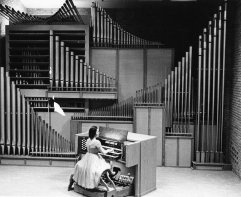
Marilyn Mason

April 4: Marilyn Mason, concert organist and teacher at the University of Michigan for a remarkable 67 years, and a champion of music by living composers, 93

April 5: Sam Pilafian, virtuoso tubist who played everything from classical to jazz, helped found The Empire Brass, taught with exuberance and earned ecstatic reviews everywhere he worked, including Mr. Rogers’ Neighborhood, 69

April 16: Jörg Demus, Austrian pianist who made more than 350 recordings; accompanied Dietrich Fischer-Dieskau, Elly Ameling, and other major vocalists; and performed classical-era four-hand works with Paul Badura-Skoda, 90

The_Man_Who_Knew_Too_Much_trailer_screenshot_Doris_Day_Que_Sera,_Sera

Doris Day singing ‘Que será, será” in The Man Who Knew Too Much

April 22: Heather Harper, Northern Irish-born soprano known for her performances of Ellen Orford in Peter Grimes and other roles in Benjamin Britten’s operas, as well as repertory from the Baroque to the 20th century, 88

May 13: Doris Day, born Doris Mary Ann von Kappelhoff, a singer who was compared to Bing Crosby and Frank Sinatra before she became the perpetually chaste star of films including Pillow Talk and That Touch of Mink, 97

Dr.-John-2

Dr. John

June 6: Dr. John, the six-time Grammy winning New Orleans pianist, singer and songwriter whose musical gumbo blended everything from Mardi Gras flamboyance to voodoo mystery, and whose real name was Malcolm John Rebennack, Jr., 77
 

Z's.Turandot.Met

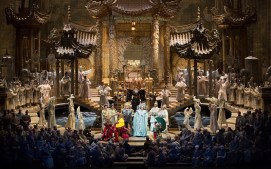
Franco Zeffirelli’s Turandot

June 15: Franco Zeffirelli, Italian film and opera director who brought lavish, extravagant productions to the Metropolitan Opera and other houses around the world, including popular versions of Carmen, La Bohéme and Turandot (1987) at the Met, 96

June 15: Michael Jaffee, co-founder with his wife Kay of the Waverly Consort, which got its start preparing music for a graduate musicology class at New York University and went on to become one of great popularizers of early music, 81

June 23: Spiro Malas, a bass with a long career in supporting roles at the New York City Opera and the Metropolitan Opera, who found fame as Tony Esposito in the 1992 Broadway revival of The Most Happy Fella, 86
15-Vivian-Publicity-Photo

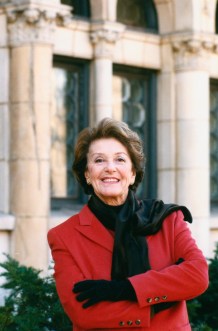
Vivian Perlis

July 1: Sid Ramin, a lifelong friend of Leonard Bernstein who won both an Oscar and a Grammy for his work orchestrating West Side Story, 100

July 4: Vivian Perlis, founder of Yale University’s Oral History of American music, an archive of 3,000 recordings collected over more than 40 years with interviews of composers and other important musicians including Aaron Copland, Elliot Carter, Duke Ellington and John Adams, 91

July 6: João Gilberto, the recording artist and songwriter credited as the creator of the complex Brazilian song style known as bossa nova (“the new thing”), 88

July 9: Aaron Rosand, violinist who performed worldwide and whose students won many major violin prizes, and who sold his Guarneri del Gesù violin for $10.1 million, of which he gave $1.5 million to the Curtis Institute in Philadelphia, 92

July 12: Robert Orth, an American baritone known for creating roles in new operas, having sung the premieres of Jake Heggie’s Dead Man Walking, Ricky Ian Gordon’s Grapes of Wrath, and Heggie and Gene Scheer’s Moby-Dick, among many others, 72

IMG_8591-web500

Ben Johnston

July 21: Ben Johnston, American composer, an advocate of just intonation, a longtime faculty member at the University of Illinois, Urbana-Champaign, whose best known work, string quartet/variations “Amazing Grace,” was performed by several groups including Kronos, 93

July 25: Anner Bylsma, Dutch cellist who won the Pablo Casals International Competition, served as principal cellist of the Royal Concertgebouw Orchestra and became known for his historical performances of Baroque music, 85
90

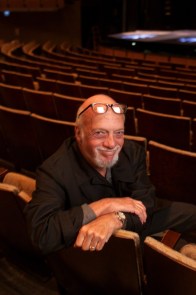
Hal Prince

July 31: Hal Prince, the legendary Broadway producer and multiple-Tony winner who collaborated with Bob Fosse, Jerome Robbins, Leonard Bernstein, Stephen Sondheim, and others, and produced and/or directed shows including West Side Story, Fiddler on the Roof, Sweeney Todd and Phantom of the Opera, 91

Aug. 17: Rosemary Kuhlman, mezzo soprano who sang the role of Amahl’s mother in the 1951 world premiere telecast of Gian Carlo Menotti’s Amahl and the Night Visitors on NBC, a role she sang for many years and that led to a career at New York City Opera, 97

Aug. 23: Mario Davidovsky, Pulitzer Prize-winning Argentine-American composer known for combining live performance with electronics, former head of the Columbia-Princeton Electronic Music Center, 85

Sept. 17: Harold Mabern, a Blues and jazz pianist, composer, recording artist and teacher who worked with “Cannonball” Adderley, Miles Davis, Lionel Hampton and others over a long career as a self-described “”Blues player with chops,” 83
Rouse.AFischer Hall.Chris Lee

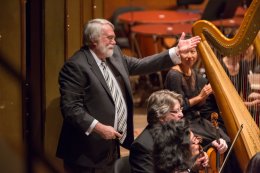
Christopher Rouse

Sept. 22: Christopher Rouse, Pulitzer- and Grammy-winning composer of vivid, energetic and often loud orchestral works that grew out of his enjoyment of rock music and his studies with George Crumb, 70

Sept. 23: Myron Bloom, principal horn of the Cleveland Orchestra under George Szell, later principal of the Orchestre de Paris and faculty member of the Indiana University Jacobs School of Music, 93

Sept. 25: Paul Badura-Skoda, Austrian pianist who was known for his elegant and refined performances, who overcame an early prejudice against period keyboard instruments to record the complete sonatas of Mozart, Beethoven and Schubert on both modern and historical instruments, 91

Sept. 29: Martin Bernheimer, the ruthless and feared, but also widely respected music critic of the Los Angeles Times, where he won the 1982 Pulitzer Prize for criticism and twice won the ASCAP Deems Tayler Award, as well as the Financial Times and other outlets, 83
Jessye_Norman-_In_Conversation_with_Tom_Hall_(15977754135)_(cropped)

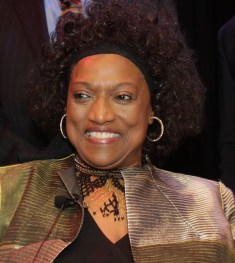
Jessye Norman

Sept. 30: Jessye Norman, exceptional dramatic soprano who performed leading roles at the Metropolitan Opera, La Scala and other major houses, became the youngest winner of Kennedy Center Honors in 1997, received the National Medal of the Arts and a Grammy Lifetime Achievement Award and was a Commander of the French Order of Arts and Letters, 74

Oct. 4: Diahann Carroll, tony-winning singer and actress, for whom Richard Rodgers wrote a part in No Strings after he saw her in Harold Arlen’s House of Flowers, and who then went on from success in musicals, to her first move role in Carmen Jones, and finally became the first black woman to have her own TV show, Julia, 84

Oct. 22: Raymond Leppard, English conductor who made a reputation reviving early Baroque operas, tailoring them to what he considered modern tastes rather than recreating original performances (which he called a “faddish pursuit”), then went on to conduct orchestras in St. Louis, Manchester and Indianapolis, 92
maxresdefault

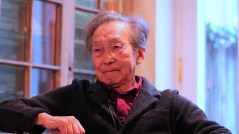
Chou Wen-Chung

Oct. 25: Chou Wen-Chung, Chinese-born composer who taught for many years at Columbia University, one of the first composers to blend Asian and Western sounds in his scores and was called “the godfather of Chinese contemporary music” by his student, composer Tan Dun, 96

Nov. 24: Juan Orrego-Salas, distinguished Chilean-American composer who taught composition for 26 years and co-founded the Latin-American Music Center at Indiana University, 100

Nov. 30: Mariss Jansons, Latvian conductor who led the Bavarian Radio Symphony and the Concertgebouw Orchestra of Amsterdam and whose touring appearances around the world were widely anticipated, 76

Dec. 12: Dalton Baldwin, American pianist who was known and widely admired as a recital accompanist to some of the greatest singers of his time, including Elly Ameling, Frederica von Stade, Jessye Norman, Nicolai Gedda and Gérard Souzay, 87
peter-schreier-300x300

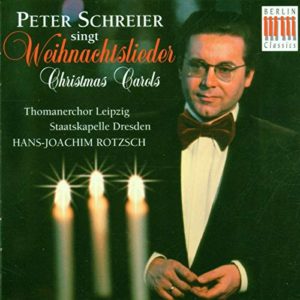
Cover of Christmas album by Peter Schreier

Dec. 25: Peter Schreier, German lyric tenor and conductor who trained in East Germany and performed more than 60 opera roles in major opera houses world wide, and whose final performance in 2005 was Bach’s Christmas Oratorio in Prague, in which he both conducted and sang the role of the Evangelist, 84

Dec. 26: Jerry Herman, composer of notable Broadway musicals about vibrant women—Hello, Dolly and Mame—and notably the first musical featuring gay lovers, La Cage aux Folles, winner of many awards including Tonys for Dolly and La Cage, which also won the Tony for best revival in both 2004 and 2010, 88

NOTE: Edited to correct typos, 12/28 and 12/29


Bahman Saless takes the night off

Italian guests bring their own Christmas music to the Boulder Chamber Orchestra

By Peter Alexander Dec. 19 at 11:20 p.m.
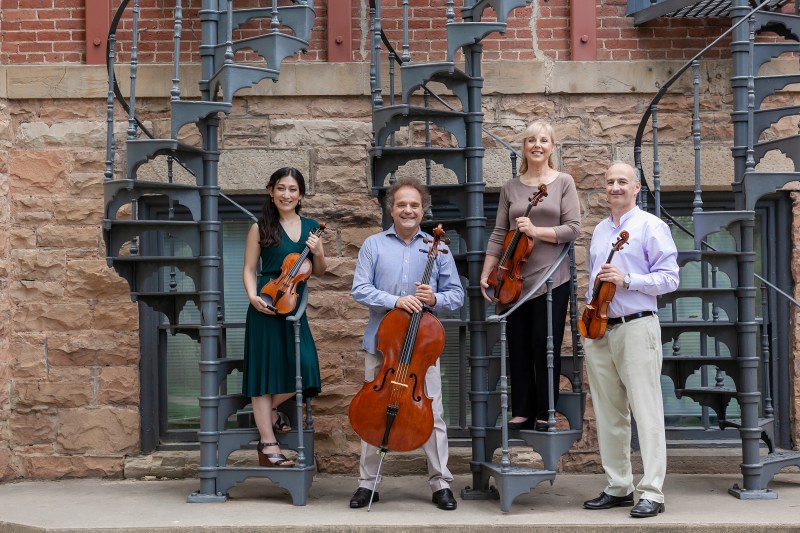
Boulder Chamber Orchestra (BCO) has some holiday surprises planned for a concert Saturday (Dec. 21) that opens with music by Mozart. And one of the surprises is that the group’s music director, Bahman Saless, will not lead the performance — which is fine with him.

Arturo

Arturo Armellino will conductors the BCO

“Tell people that Bahman is not conducting this,” he says, laughing. “It will sell out!”

The concert, titled “Un dono di musica” (a gift of music), will be led by a guest artist from Italy, conductor Arturo Armellino. Appearing with him as a guest artist will be bassoonist Luciano Corona, who will play Mozart’s Bassoon Concerto on the Mozart half of the program. The concert will be Corona’s U.S. debut appearance.

Hopefully, it will not come as a surprise to the audience that the concert time has been changed. Originally announced at 7:30 p.m., the concert will start an hour earlier, at 6:30 p.m., in the Boulder Seventh-Day Adventist Church.

luciano

Luciano Corona will play the Mozart Bassoon Concerto

The first half of the concert will be all Mozart: Symphony No. 33 in B-flat major, and Bassoon Concerto in B-flat major. Both are first performances for the BCO.

For the second half of the concert, they will perform Corelli’s Concerto Grosso in G minor for strings, subtitled “fatto per la notte di Natale” (made for the night of Christmas) and popularly known as the “Christmas Concerto.” The rest of the performance will comprise music for Christmas to be announced from the stage.

Read more in Boulder Weekly.

# # # # #

“Gift of Music/Un dono di musica
Boulder Chamber Orchestra
Arturo Armellino, conductor, with Luciano Corona, bassoon

Mozart: Bassoon Concerto
Mozart: Symphony No. 33
Arcangelo Corelli: Concerto Gross in G minor, op. 6 no. 8 (“Christmas Concerto”)
Christmas selections to be announced from the stage

6:30 p.m. Saturday, Dec. 21
Seventh-Day Adventist Church, 345 Mapleton, Boulder

Tickets

A beloved staple of the holiday season in a new medium

Eklund Opera brings ‘It’s a Wonderful Life’ to the Macky stage

By Peter Alexander

Overtones_Glenn-AsakawaUniversity-of-Colorado-1024x768

Photo by Glenn Asakawa for the University of Colorado Eklund Opera Program

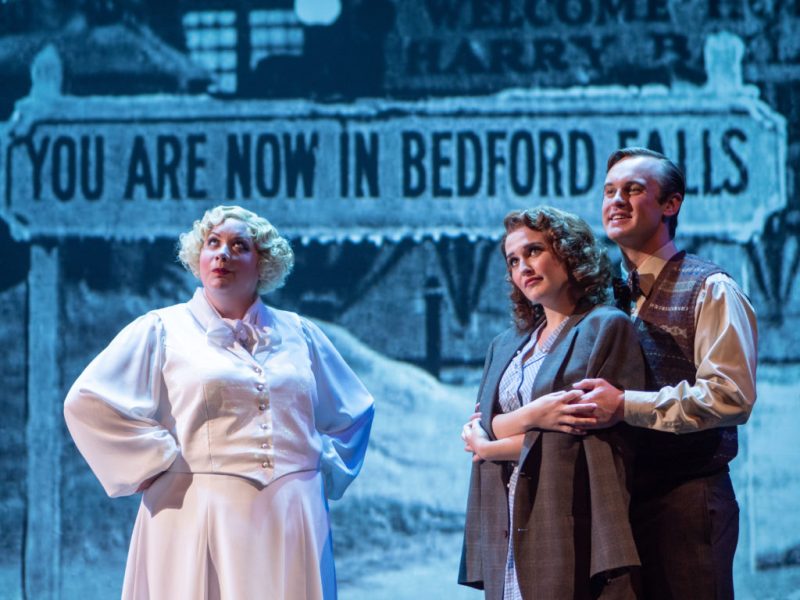
It’s a Wonderful Life, a new opera by composer Jake Heggie and librettist Gene Scheer, started its performance life with a workshop at CU Boulder in 2016, then went to its world premiere in Houston, followed by performances in Indiana and San Francisco, and now it returns to Boulder.

Based on the much loved film of the same title, the opera will be presented this weekend (Nov. 15–17) in a completely new production by the CU Eklund Opera Program. The student orchestra will be conducted by Nick Carthy. Leigh Holman, head of Eklund Opera, will direct the student cast.

“To take it home to Boulder is special, because we workshopped it there, and made so many artistic decisions in the process of creating it there,” Scheer says.

It’s a Wonderful Life was commissioned by the Houston Grand Opera, Indiana University and San Francisco Opera. Essentially the same production was used in all three locations. After Houston, Scheer and Heggie trimmed, streamlined and improved the opera in various ways. Eklund Opera will therefore present only the second physical production in the latest version of the opera.

The opera follows the basic story of the film, which tells of George Bailey’s despair and thoughts of suicide on Christmas Eve. He is rescued by an angel who shows him all the people he has touched in his life, and what his hometown of Bedford Falls would have been without him. The 1946 film, directed by Frank Capra, has become a beloved staple of the holiday season.

Read more in Boulder Weekly.

# # # # #

It’s a Wonderful Life
An opera by Jake Heggie and Gene Scheer
CU Eklund Opera

7:30 p.m. Friday, Nov. 15 and Saturday, Nov. 16
2 p.m. Sunday, Nov. 17
Macky Auditorium

Tickets