Longmont resident Michael Udow’s Ancient Echoes inspired by archaeological finds
By Peter Alexander April 24 at 12:15 a.m.
NOTE: I usually do not review ensembles that are not fully professional. This performance by the semi-pro Longmont Symphony rates an exception because it includes a world premiere, which always deserve media attention.
Last night (April 23) the Longmont Symphony Orchestra (LSO) gave the first performance of a piece that was inspired by archaeological discoveries in the state of Colorado. Michael Udow’s Ancient Echoes makes use of four stones discovered in Great Sand Dunes National Park and elsewhere in the San Luis Valley that archeologist Marilyn Mortorano discovered to be ancient lithophones, or musical instruments made of stone. (Read the full story here.)
Great Sand Dunes NP and the San Luis Valley. Photo by Peter Alexander
Under conductor Elliot Moore, the LSO gave a careful reading of Udow’s atmospheric score. Soloist Anthony Di Sanza, once Udow’s percussion student at the University of Michigan, was all over the front of the stage, switching among four different percussion setups that included the four ancient stones, a modern mallet instrument with tuned granite bars—Udow’s personal creation for this one piece—a vibraphone, drums from North Africa and Japan, German cowbells and temple gongs, among other instruments.
There can be no doubt that Udow knows the percussion instruments intimately that he writes for. They were all used effectively, and Di Sanza gave a virtuosic performance on all of them. It was clearly as much fun for him running from one setup to another, as it was for the audience watching and listening.
Percussion soloist Anthony Di Sanza
The score opens with a dreamy, evocative passage that made good use of the quiet plinking sounds of the ancient stones. From there the score moves from one set of instruments to another, each representing a different culture or part of the world. The score is highly episodic, as each set of instruments brings forth its own musical style and mood.
Udow used the orchestra well, but did not resist falling into Hollywood-style Orientalist cliches to support some of the instruments, and I am not sure that his series of musical vignettes adds up to more than the sum of its highly individual parts. But the result is certainly a showpiece for the soloist, and one that may prove irresistible to other percussionists in the future.
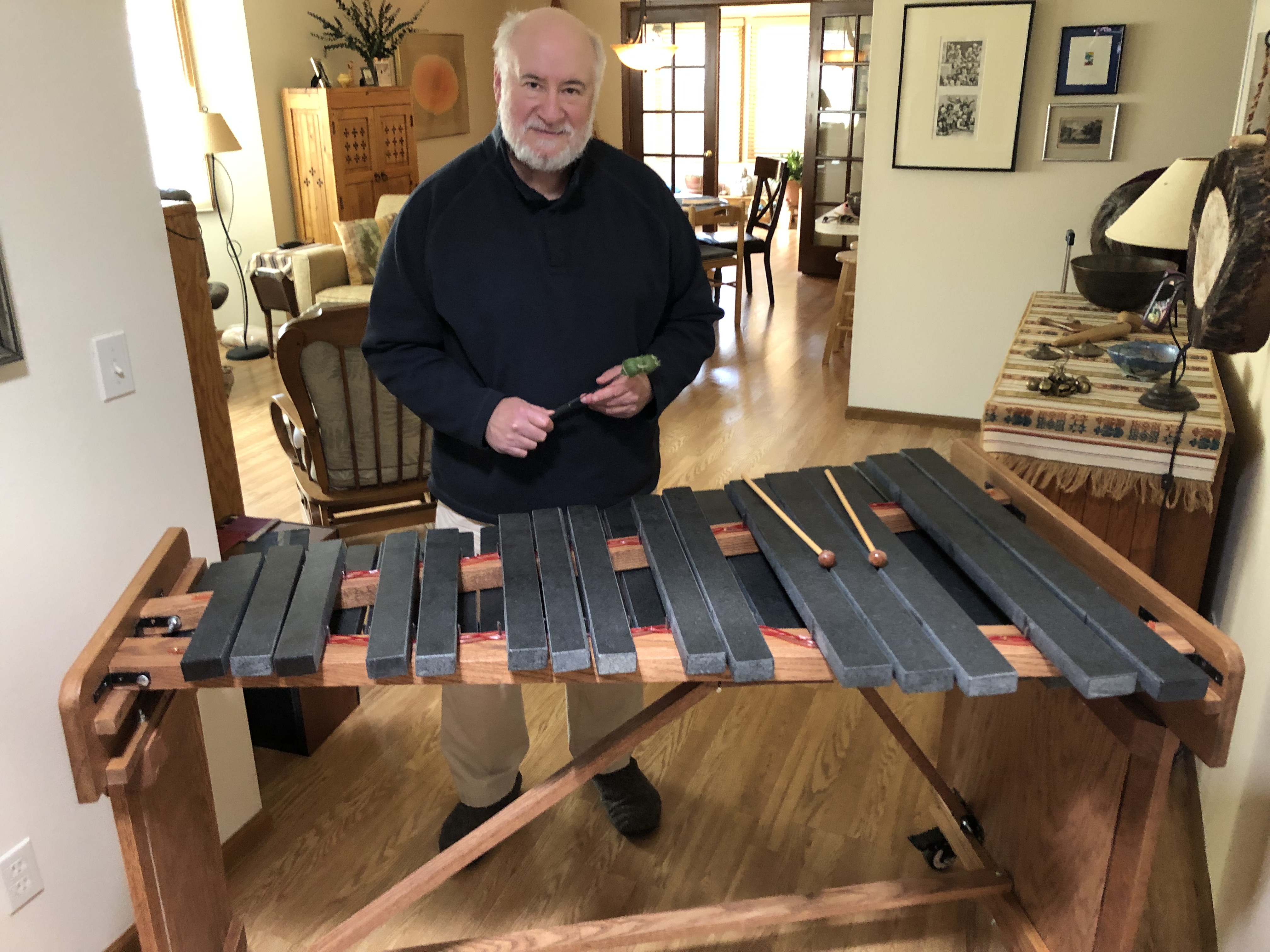
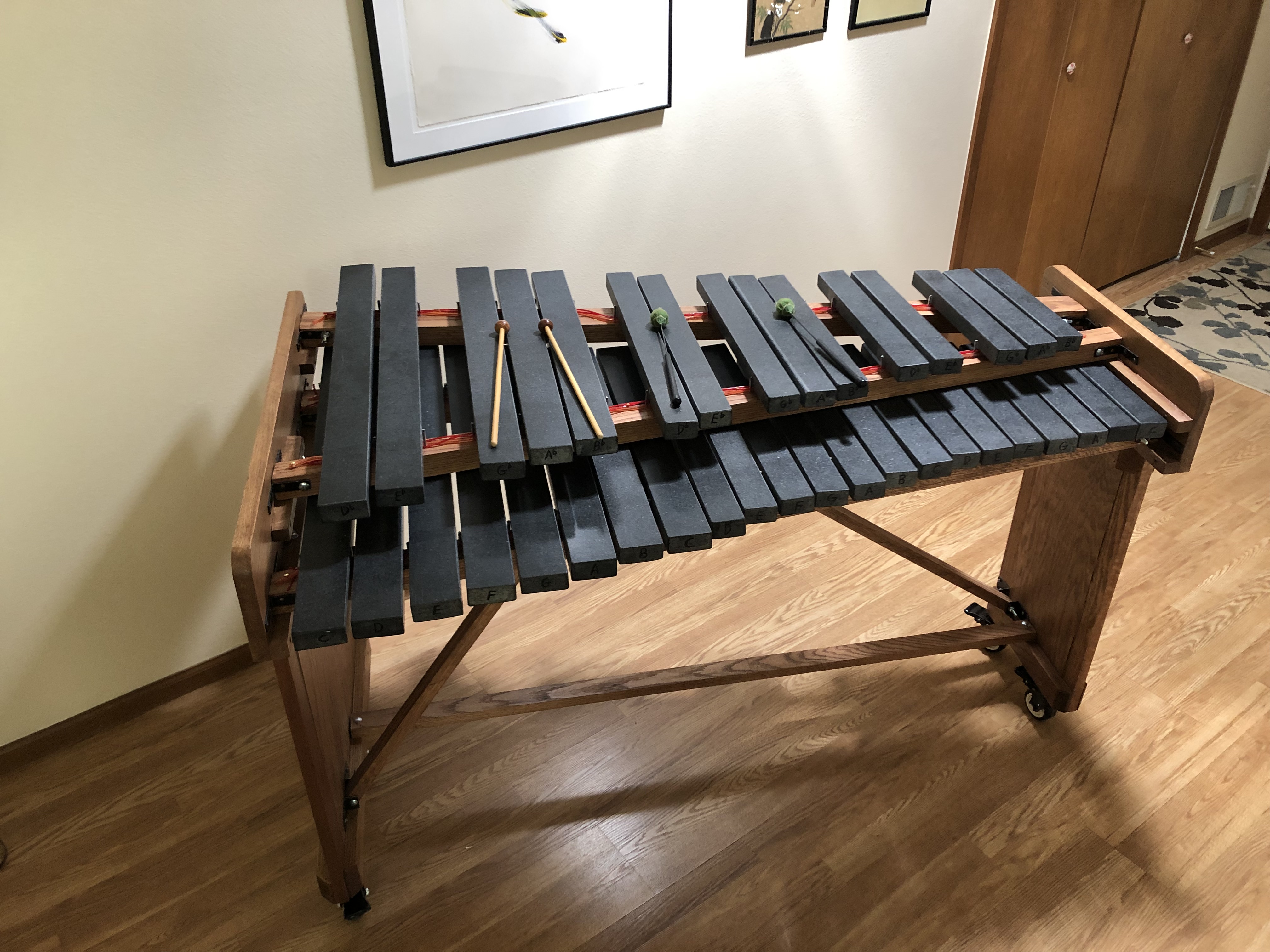
Michael Udow with his granite lithophone, created for his score Ancient Echoes. Photo by Peter Alexander.
Udow’s modern granite lithophone is bound for a percussion collection in Indianapolis, where it will be available for Di Sanza and other professional percussionists who wish to perform Udow’s score. With it containing so many fun licks, I would not dare to guess where we will hear it next.
Following a standing ovation, Di Sanza and his former teacher Udow gave an energetic handclapping encore that was great fun, if perhaps a minute too long.
For the rest of the concert, Moore led the LSO in first Stravinsky’s Firebird Suite, and later to close the program Brahms’s Symphony No. 1. The Firebird performance had a strong expressive profile, capturing well the essence of each scene. There were some especially nice solos in the woodwinds, if a few issues of balance overall.
The Brahms was the least satisfying of the three pieces, needing better balance—again—and more rhythmic precision, especially within the string sections. In a modern concert hall and with modern winds, Brahms really needs a larger string section than most small-budget orchestras can provide, and that was the case here. But it should be noted that the LSO has grown in quality over Moore’e five years in Longmont, and Moore brought the symphony to an energetic conclusion. It was greeted warmly by the audience.
Michael Udow’s Ancient Echoes on Saturday’s program with Stravinsky and Brahms
By Peter Alexander April 21 at 7:10 p.m.
It’s not often that an orchestra premieres a piece with roots that go back 6,000 years.
Saturday (April 23) the Longmont Symphony and conductor Elliot Moore will do just that when they give the first performance of Ancient Echoes, a score by percussionist/composer and Longmont resident Michael Udow (see concert details below; tickets are available here).
Udow’s concerto for multiple percussion instruments will feature soloist Anthony Di Sanza playing instruments including one designed by Udow, based on ancient artifacts from Colorado that date back thousands of years. As part of the same piece, Di Sanza will play a variety of instruments from cultures around the world, including Indonesia, Japan and Korea. The concert program also includes Stravinsky’s Firebird Suite and Brahms’s Symphony No. 1.
Great Sand Dunes National Park and Colorado’s San Luis Valley, where ancient lithophones have been found. Photo by Peter Alexander.
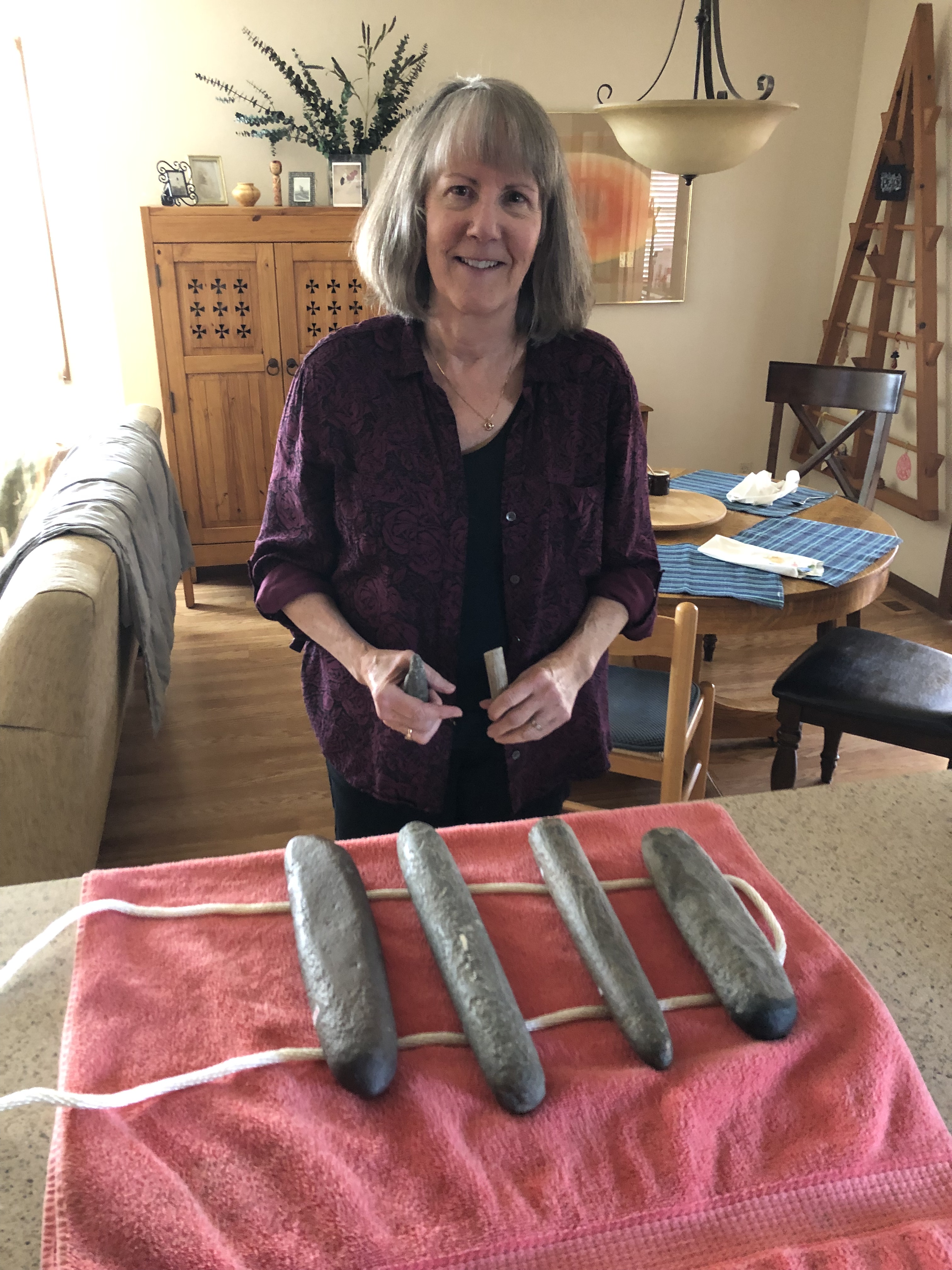
Udow’s piece has a long backstory—although not quite 6,000 years. In fact it started around 2000, when archaeologist Marilyn Mortorano was doing consulting work at Great Sand Dunes National Park. The museum at the park has a number of ground stone artifacts, shaped roughly like baguettes, up to a two feet long, in their collection.
They had been found at archaeological sites throughout the park, including one that was standing up in the sand, and other sites in the San Luis Valley. In fact, Mortorano says, “Almost all the collectors (in the area) had them and they didn’t know what they were, and we didn’t either.”
Archaeologist Marilyn Mortorano with ancient lithophones found in Colorado. Photo by Peter Alexander.
They were carefully worked, but way too heavy to be used as grinding tools like the mano and metate sets found throughout the Southwest. But “somebody spent a lot of time making them,” Mortorano says. “It bothered me because I thought, why do we not know what these are?”
Then in 2013 she ran across a YouTube video from the Musée de l’Homme (Museum of man) in Paris, which had similar artifacts that French soldiers had brought back from Africa. At the time she had several of the Colorado stones for research purposes, so she was surprised when she learned that the stones in Paris produced a musical sound when tapped. (You can see and hear them here; narration in French.)
In fact a set of them was used for Paleomusique, written by French composer Philippe Fenelon. Those stones were used for a single series of performances in 2014, and then packed away for storage, never to be played again.
“I thought this is crazy,” Mortorano says, “but I’ll see if (the stones from Colorado) could be musical. My younger daughter is a percussionist, so she had a basket of mallets. I couldn’t believe it—they rang like bells!”
When Mortorano returned the stones to the museum at Great Sand Dunes the next day, she showed her discovery to Fred Bunch, the chief of resources. He was startled, and promised to support any further research that Mortorano could pursue with the stones.
“We don’t know how these were used, because we don’t know the whole context,” Mortorano says. “But we know now from studying lithophones (musical instruments made of rocks), they’re all over the world. They’re in Africa, they’re in Asia, they’re in South America, they’re even in Hawaii.”
In the meantime, Mortorano had talked to Colorado Public Radio’s Ryan Warner several years earlier, before she realized that the stones could be lithophones, who told her to let him know if she figured out what they were used for. She contacted him again after discovering their musical qualities and he did a new interview that was picked up by National Public Radio and noted on other national media.
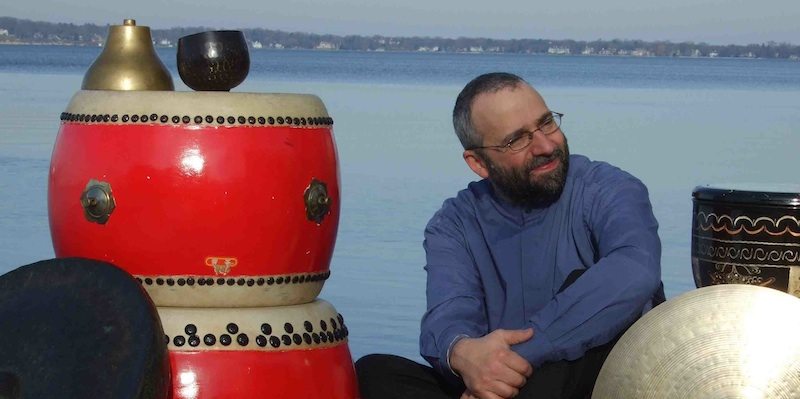
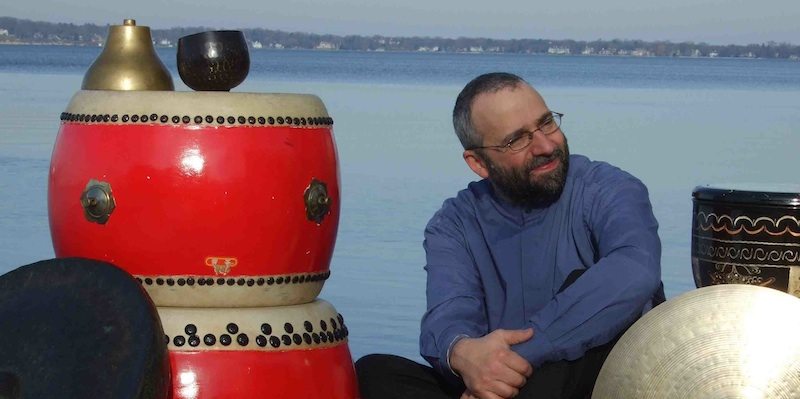
Percussionist/composer Michael Udow
And this is where Udow enters the story. When he heard about Mortorano’s research and the Colorado stones, he wanted to see and hear them. When he contacted Mortorano, he discovered that she only lived about two blocks from his home in Longmont. He went over for a visit.
“Marilyn and (her husband) Sal had them set up beautifully on a long table with a hemp chord set at the nodes so they get maximum vibration,” Udow says. “I played them and I went home and thought, this is really important. It shows the musical side of the creative human spirit from 6,000 years ago, and wouldn’t it be interesting to compose a work!”
The Longmont Symphony had previously played two pieces by Udow, so his next step was to contact LSO director Elliot Moore and propose a new piece for orchestra using the stones. When he met Mortorano and heard the stones, Moore became interested in the project, and eventually got a commitment from the LSO board to support a new piece from Udow.
“What I really have the privilege of getting to do is putting this all together,” Moore says. “You can have the idea to write a piece of music and you can find these ancient stones, but until there’s an orchestra willing to premiere this, it’s theoretical. I feel lucky that when I presented it to the Longmont Symphony, everybody said, ‘Let’s do it!’”
Udow realized that the more or less random collection of stones that had been found was not really suitable for a piece all by themselves. He decided he needed to create a new instrument that as well as possible duplicated the nature and sound of the ancient ground stones: a modern lithophone that was tuned to play with a modern orchestra.
Michael Udow’s absolute black granite lithophone
This turned out to be a lengthy process, but one that paid off in the end. He visited granite quarries in Colorado, but none of them had stone that resonated well enough to be used in a musical instrument. He discovered that the best stone was absolute black granite from India, which fortunately he could get from Colorado manufacturers of granite countertops.
He ended up purchasing two slabs of black granite, only one of which had good acoustical qualities. He was able to have that one cut into bars of varying length, which could be tuned by delicately cutting and grinding the stone, using a circular saw with a diamond blade.
In the end Udow estimates he spent about $5000 of his own money for the granite, the shop time to produce the bars, the frame that holds them and special cases to protect the bars. But he ended up with a playable instrtrument.
The completed score is virtually a concerto for multi percussion with orchestra. Udow’s lithophone will be featured, along with a number of other instruments: a marimba, a vibraphone, gongs from Korea, drums from Japan, a bamboo rattle from Java and German cowbells. For the one performance Saturday, the soloist will also briefly play four of the original ancient stones before they are returned to their museum collection.
Udow decided to use instruments from other cultures because in his travels as a percussionist, he had played instruments all over the world and he wanted to capture not only the timelessness of the original stones, but the universal quality of music.
Percussion soloist Anthony Di Sanza
That also inspired Moore. “One of the main things that have kept me going is remembering that we’re bringing these things to life,” he says. “A fundamental human characteristic that we all share is, we love music. That’s been one of the great things about this whole process.”
The soloist for the performance, Anthony Di Sanza, is a former student of Udow who currently teaches at the University of Wisconsin-Madison. In fact, he will bring instruments that used to be Udow’s with him to fill out the solo percussion array.
One issue that Di Sanza will have to deal with is the width of the bars on Udow’s new lithophone. It turns out that the bars have never been standardized by percussion makers. “Michael sent me all of the dimensions of the instrument, including the overall length and height, and also the bar width,” Di Sanza says. “The bar width (of other instruments) can vary to small increments or great increments, so we get used to making that adjustment.”
Di Sanza has had at least some of the music since last summer. Talking by phone from his home last week, he reported “I am at the stage now where I’m playing through the piece, listening to the midi (digital recording). That’s really fun because there are three-and-a half different physical setups on the stage. I start at one place, move to a different place for another part, come back for a different part, move to a third setup.
“A particularly challenging thing is as you move from one place to the next, knowing here’s where I’m going next! So that’s really fun, and fairly common with multiple percussion in the western classical tradition. And we thought a lot about how the instruments are grouped, to make sure the audience could see into the setups, and see what’s happening.”
LSO conductor Elliot Moore
Moore selected the rest of the program to go with Udow’s piece, with some very specific reasons for both the Stravinsky and the Brahms. “I thought that Stravinsky’s Firebird, with the idea of the rising phoenix, was something that could work well with this concerto,” he says. “It was the idea of matching Michael’s piece with the Stravinsky where I thought we had a winning program.
“And the other thing (is), I haven’t done a Brahms symphony (in Longmont). We have a wonderful cellist that retired pre-pandemic, Carmen Olguin, and as she was walking offstage with me for the retirement, she said, ‘Elliot, if you ever program a Brahms symphony, would you let me come back and play it?’ And I said ‘Sure.’
“I’ve always had in my mind this woman who wanted to play a Brahms symphony so bad, and I never programmed one, and I thought this was a good time to do it. So she joined us again, for her first rehearsal in probably three years.”
Brahms’s First Symphony is very standard orchestral repertoire, but Moore says the audience will hear some new things Saturday. “We are looking at this with fresh eyes and fresh ears, and I think it’s going to feel fresh. We’re taking a direction that is little bit leaner and a little bit closer to what the score indicates, not über Romantic.”
“People are going to be interested to hear it if for no other reason, that reason.”
In case you wonder about the new instrument, Di Sanza will take it back to Wisconsin, and eventually take it to a percussion museum in Indianapolis where he and others can use it for performances. Udow also hopes that some day, someone else might want to write music for it.
“That would be a hope of mine, to share it,” he says.
# # # # #
“Soundings: Past and Present” Longmont Symphony Orchestra, Elliot Moore, conductor With Anthony Di Sanza, percussion
Michael Udow: Ancient Echoes (World Premiere)
Stravinsky: Firebird Suite (1919 version)
Brahms: Symphony No. 1 in C major
7:30 p.m. Saturday, April 23 Vance Brand Civic Auditorium, Longmont
NOTE: Effective immediately and until further notice, the Longmont Symphony no longer requires patrons to show proof of COVID vaccination, and masks will remain optional. This decision has been made with guidance from local, state, and federal officials.
Baroque Ensemble celebrates it 10th anniversary at the weekend
By Peter Alexander April 21 at 1:30 pm.
Boulder’s Seicento Baroque Ensemble celebrates its 10th anniversary this weekend (April 22–24) performing a piece that is both familiar—and not.
The piece is the Magnificat by J.S. Bach, which as the Magnificat in D is one of the most celebrated works of the Baroque master. But they will not perform that Magnificat, but a lesser known, earlier version in E-flat that has much of the same music, with interesting twists.
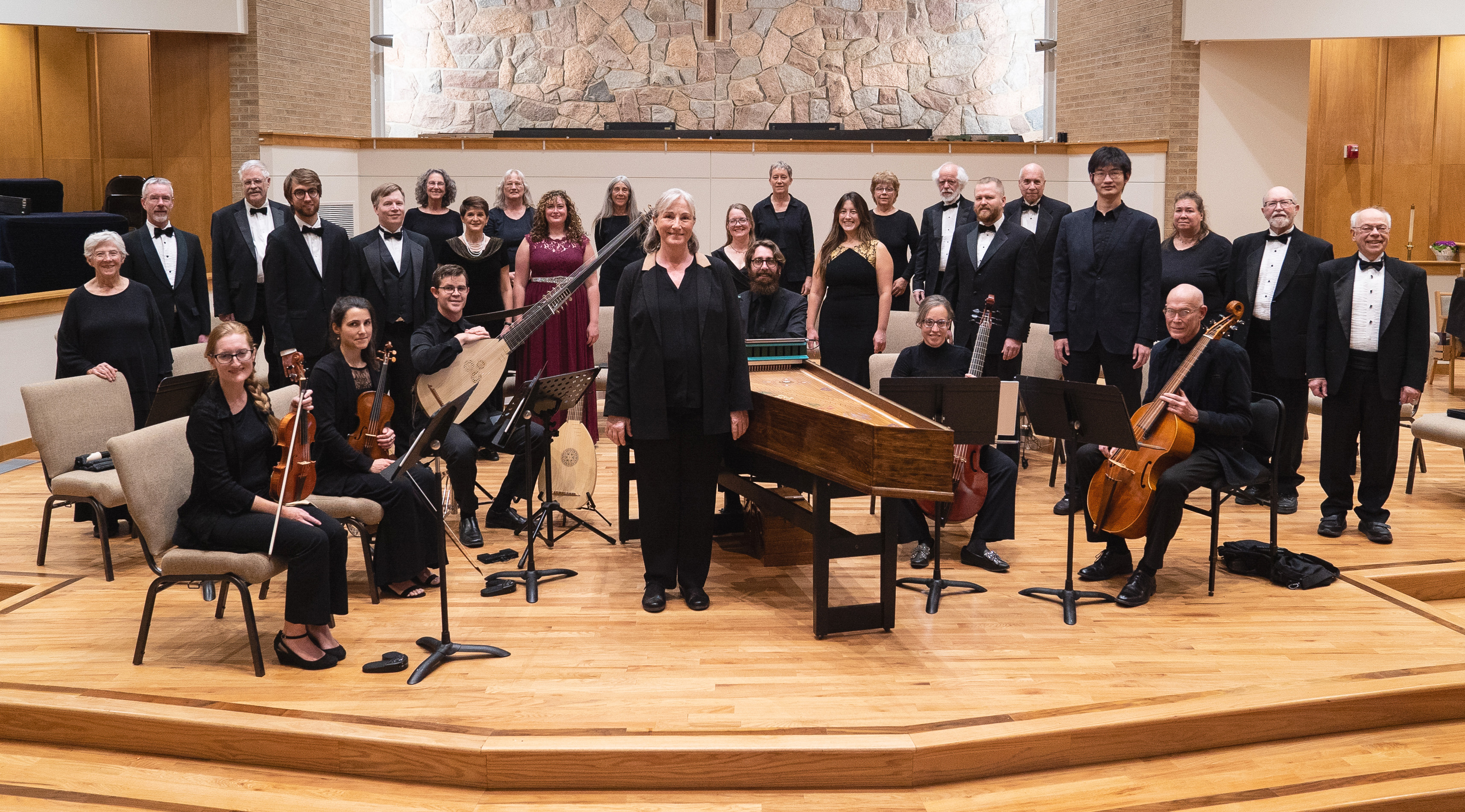
Artistic director Amanda Balestrieri with Seicento. Photo courtesy of Seicento.
Completing the program, titled “Magnificent Magnificats,” are two other settings of the same sacred Christian text, known as the Canticle of Mary. One is anonymous, although previously attributed to the German composer Dietrich Buxtehude, and the other is by the 17th-century French composer Marc-Antoine Charpentier. Performances will be Friday through Sunday in Longmont, Arvada and Boulder.
Surrealistic opera by Dominick Argento Friday through Sunday in the Music Theatre
By Peter Alexander April 18 at 5:35 p.m.
Dominick Argento and John Donahue’s one-act opera Postcard from Morocco definitely doesn’t feature a postcard, it may not take place in Morocco, and it does not really have a plot.
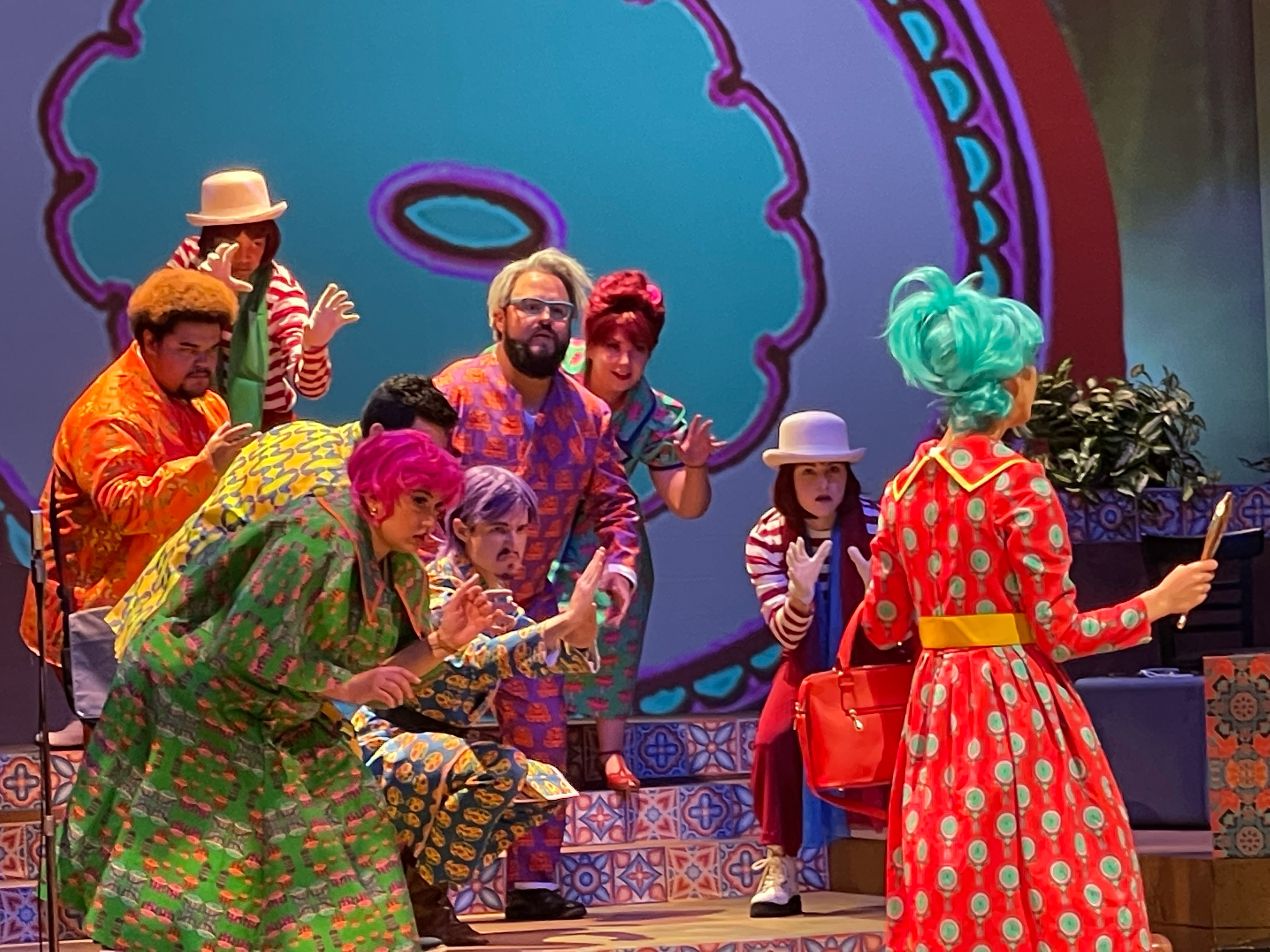
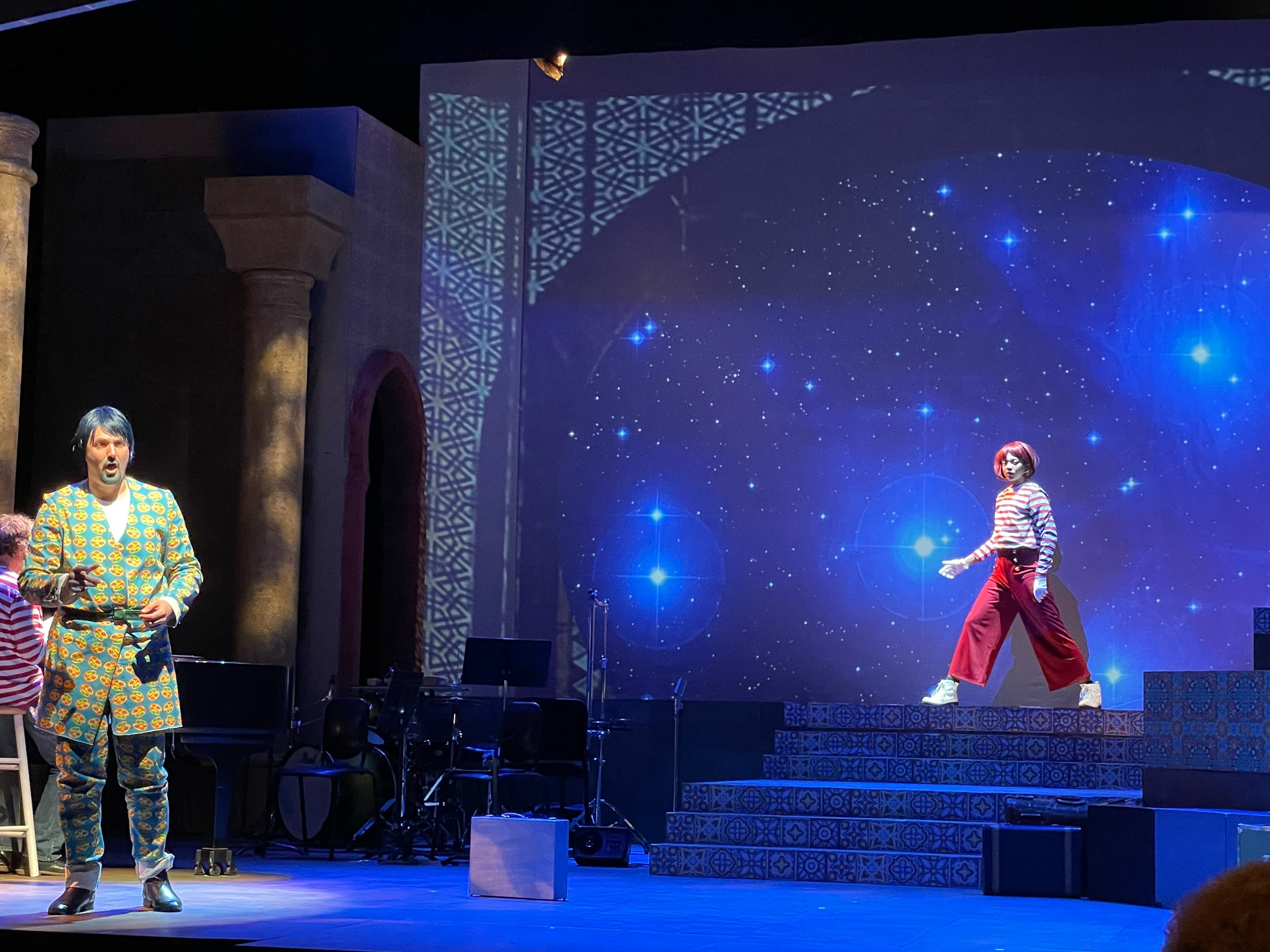
Colorful characters in the CU Eklund Opera’s Postcard from Morocco by Dominick Argento
What it does have is seven curious and colorful characters who collide and interact while waiting for a train that may, or may not—shades of Waiting for Godot—ever arrive. The next production of CU’s Eklund Opera Program, this unique opera will be presented Thursday through Sunday in the Music Theater space of the Imig Music Building (see details and ticket information below).
The student performances are stage directed by Leigh Holman and conducted by Nicholas Carthy. Stage design is by Ron Mueller, with costumes by Ann Piano based on drawings by Maya Hairston-Brown.
If you think this does not sound like any other opera you’ve seen, you might be right. “In a normal opera, we get a plot and hints of a character,” Carthy says. “And in this one we get the character and hints of a plot.”
“We wanted to dig into this piece because it was different,” Holman says. “It’s a way for our singers to dig into a whole genre of opera that’s completely different from other things they’ve done. They have the freedom to really search for the characters they want to develop.”
The CU Eklund Opera’s set for Dominick Argento’s Postcard from Morocco
In many ways, it is an ideal piece for a university opera program. “As an educational project it is perfect,” Carthy says. “Everybody’s onstage all the time. Everybody has an aria. People sing alone, people sing together, people sing in ensemble—basically it’s all there, and [the opera] is so astonishingly well put together.”
Beyond the educational advantages, Holman emphasizes the sheer fun of the piece. “There is a ton of humor in it,” she says. “There are many really funny moments. [During rehearsals] we are just guffawing. There are some very serious moments too, but it’s a nice ride for the audience.”
For Holman one of the pleasures of performing Postcard from Morocco is the fact that it is not often done. “There are no traditions to adhere to,” she says. “That opens up the students and the direction and the music to just do what you would like to do with it. It gives [the singers] space to dig in and find things” in each character.
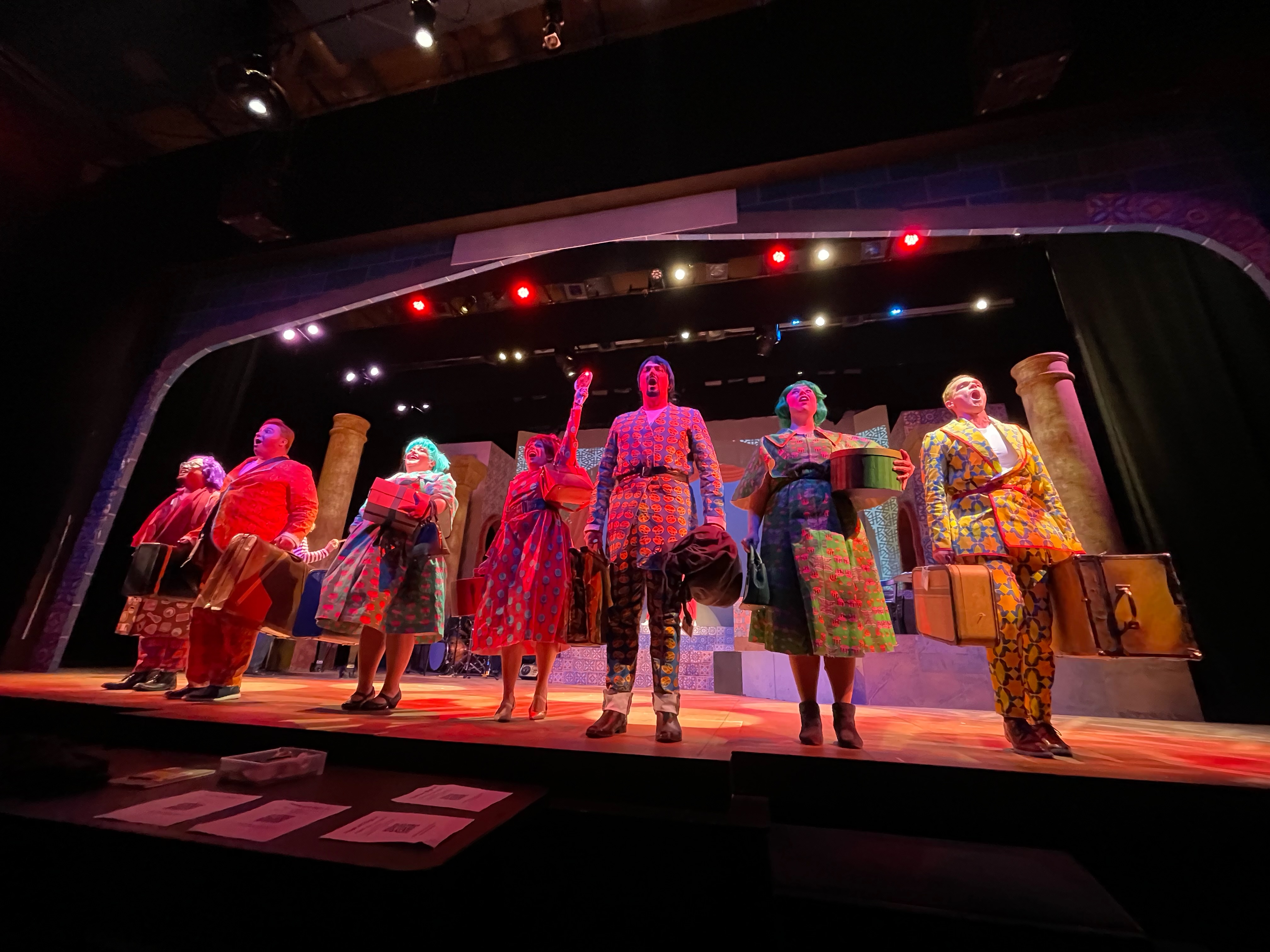
The central conceit of the opera is that each character is carrying some kind of luggage or box with them. These vary from a cornet case to a paint box to a cake box, but none of the characters is willing to show the others what’s in their luggage. “Everyone has their little secret,” Carthy says.
The seven characters of Postcard from Morocco with their luggage
This is a clear metaphor for the “baggage” that we all carry with us through life, which is one of the covert subjects of the opera. “We put on a facade of who we are and what we do, but very few people know what’s really going on inside,” Holman says.
The characters—three women and four men—are deliberately kept mysterious, and only one of them has a name. “An eclectic bunch of characters demands an eclectic score,” Carthy says, and the score features a kaleidoscope of musical styles, from tap dancing to Richard Wagner. The latter appears several times, including a vaudeville scene ironically titled “Souvenirs de Bayreuth.”
Postcards is scored for a chamber ensemble of eight players, who will be costumed and placed onstage. In addition to the singing characters, there are two mimes, and “the maestro is one of the characters onstage, too,” Holman says. “He’s interacting [with the others].”
Carthy points out the many literary references in the libretto—everything from Samuel Beckett’s Waiting for Godot, to James Joyce’s Ulysses, to The Odyssey, to Robert Louis Stevenson’s Child’s Garden of Verses. “You could spend a lifetime deconstructing it,” Carthy says. As for Stevenson’s poetry, “There’s little quotes, but [the opera] has nothing to do with that,” he says. “It’s far away from that.”
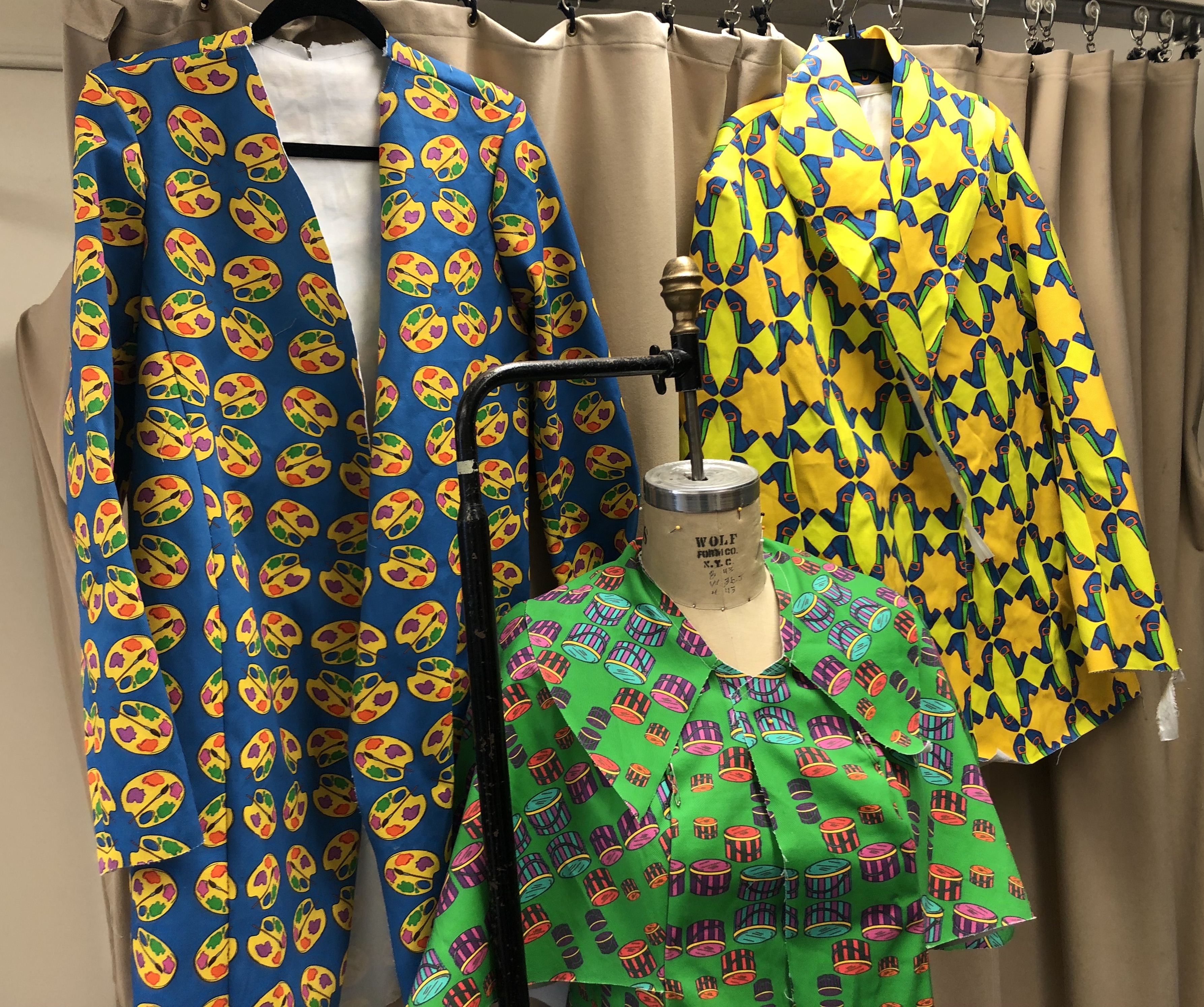
Ann Piano’s costumes feature drawings by Maya Hairston-Brown and a distinctive color for each character
The CU production aims for a kind of timelessness and placelessness that is neither Morocco nor not Morocco. The sets and costumes will be as colorful as the characters, literally. Early in the design process, Holman studied the characters and assigned a color to each. “I had someone sketch little picture of the various things they supposedly hold in their containers, so you’ve got hats, shoes, a cornet,” she explains.
That artist, Maya Hairston-Brown, sent the sketches to a company that printed them on fabric, a different color for each character, and then costume designer Ann Piano turned the fabric into costumes. “This is really amazing,” Holman says. “We never loose sight of who’s who and who is connected to what.”
At the end of the opera, either a train arrives, or it doesn’t, depending on your interpretation. Everyone leaves the waiting room to go onto the outside platform, but, Holman says, “We don’t know if this is a fantasy, or what it is.”
You also get a small hint of what everyone has been hiding, but like so much else in the opera, it’s enigmatic. “It’s really up to the audience to figure out what it means,” Holman says.
“It’s Dadaist, it’s surrealist, it’s fun,” Carthy says, referring to artistic movements from the mid-20th century when the opera was written. “And it is such an incredible ride to go and see!”
# # # # #
Postcard from Morocco by Dominick Argento and John Donahue
CU Eklund Opera Program Leigh Holman, director, and Nicholas Carthy, conductor
7:30 p.m. Thursday, April 21 7:30 p.m. Friday, April 22 7:30 p.m. Saturday, April 23 2 p.m. Sunday, April 24 Music Theatre, CU Imig Music Building
Howard Goodall’s Eternal Light: A Requiem Saturday at 8
By Peter Alexander March 31 at 11:35 p.m.
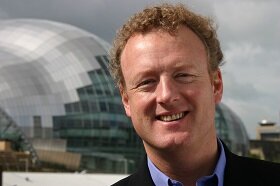
Howard Goodall
Howard Goodall wanted to write a Requiem for the living.
The English composer was not interested in creating a piece about the terrors of the last judgment that often feature heavily in older settings of the Latin Requiem. Instead, he composed a piece “intended to provide solace to the grieving,” he writes, comparing it in this respect to Brahms’s German Requiem.
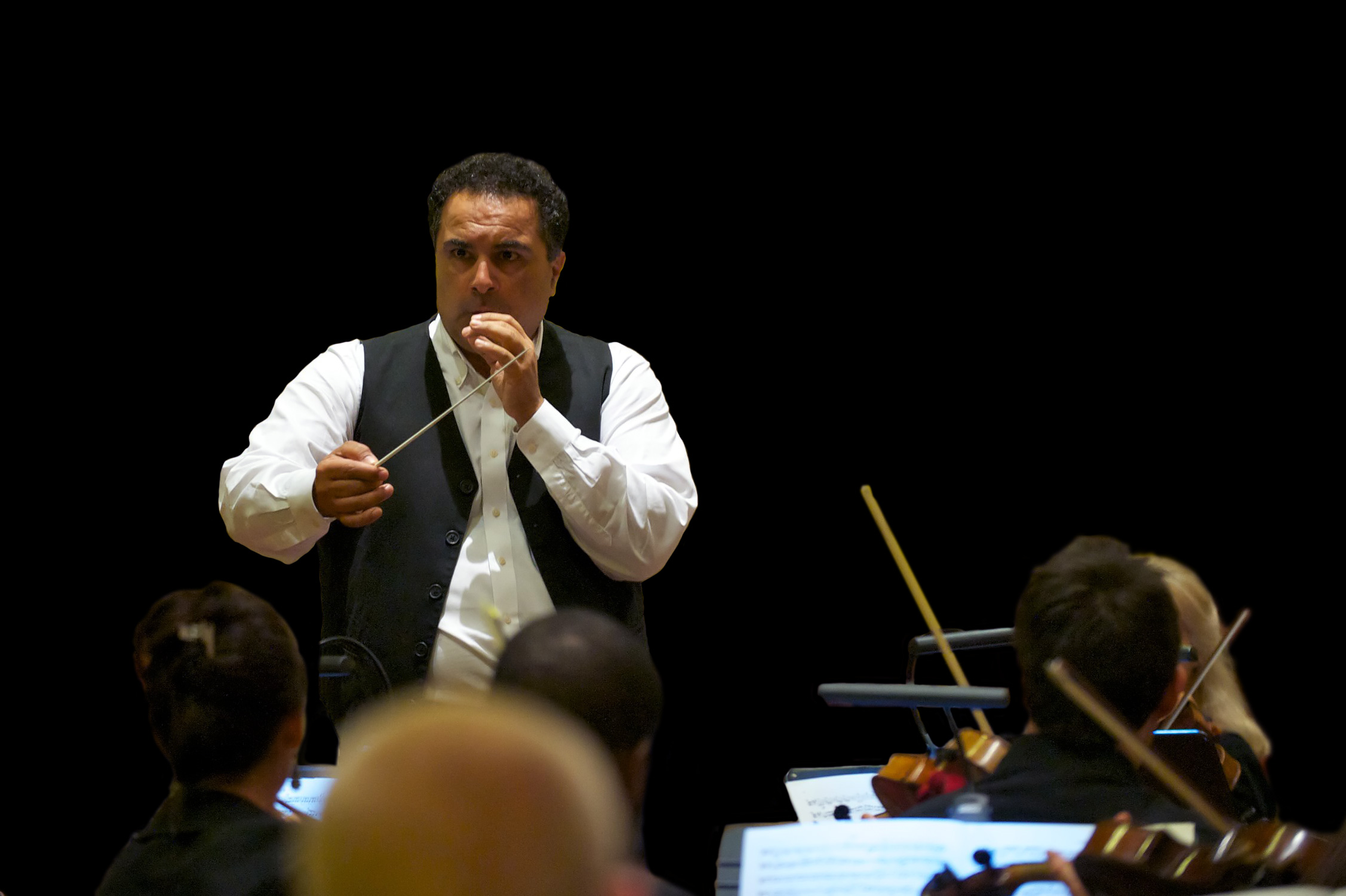
Goodall’s 2008 work Eternal Light: A Requiem will be performed by the Boulder Chamber Orchestra (BCO) and Boulder Chamber Chorale—probably a Colorado premiere—at 8 p.m. Saturday (April 2) at the Boulder Adventist Church. Bahman Saless will conduct.
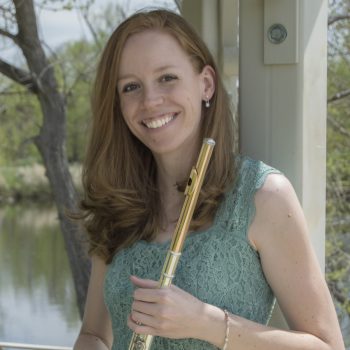
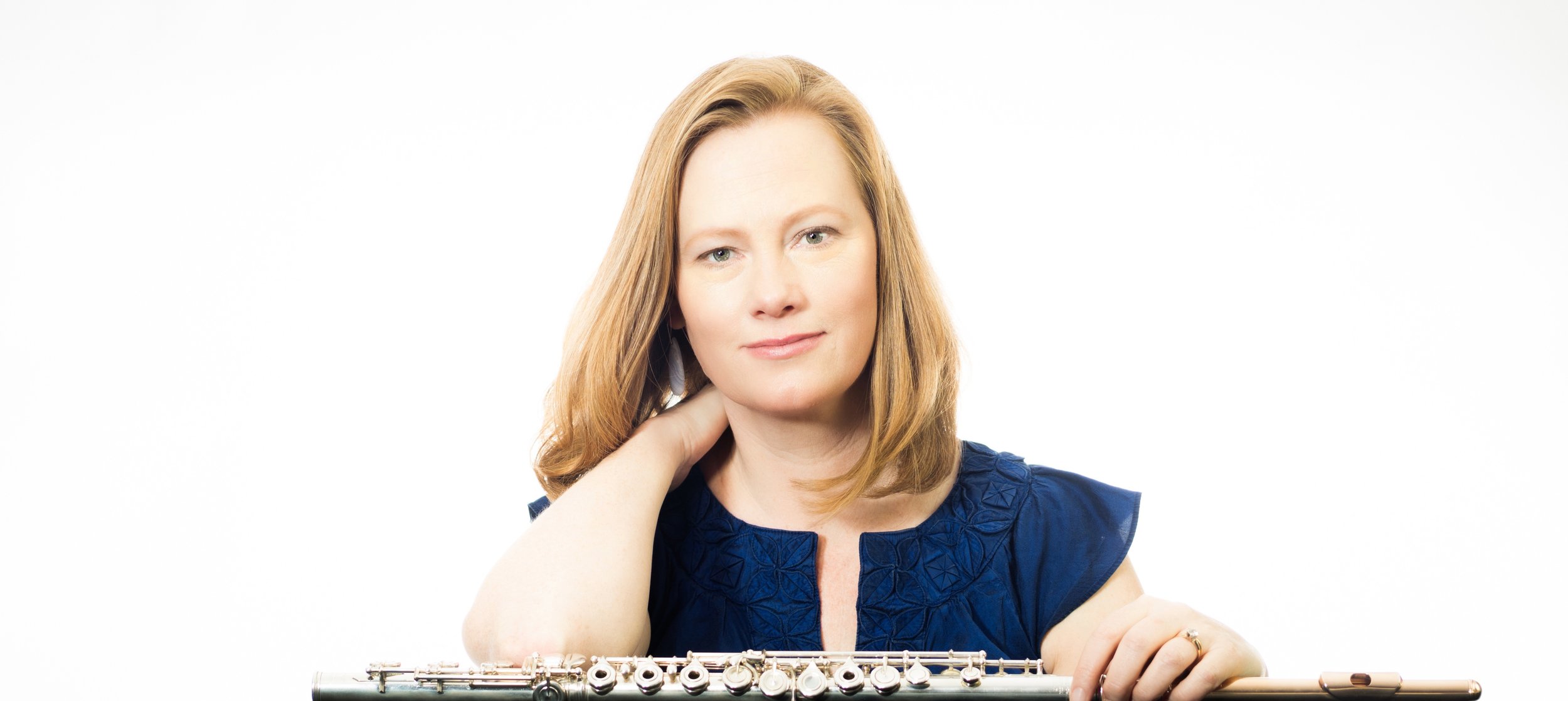
Also on the program is one the BCO’s most popular pieces from past concerts, the Suite Antique by John Rutter. The performance will feature flutist Rachelle Crowell, a member of the BCO (full details below).
When Saless first heard Eternal Light, he was captivated by the piece for two reasons. For one, it is a contemporary piece that should have broad appeal. “The piece is so approachable and so beautiful,” he says. “It has beautiful melodies, gorgeous violin solos and arias, and I thought here’s a piece that we can bring to the world and say ‘Hey, look! There is something really awesome here! Listen!’”
Bahman Saless
The second reason was more personal. “(Goodall) uses poetry from England, and also brings Church of England hymn tunes into it,” Saless explains. “I went to high school in England, and every morning we had to get up and sing these beautiful hymn tunes. So a couple of the pieces hit me directly in my heart and in my past of being a schoolboy in England. That was another reason I fell in love with it.”
The inclusion of English poetry was part of Goodall’s aim of creating a Requiem that focuses on consolation for the grieving. “The writing of a Requiem is a special challenge for any composer,” he writes. “For me, a modern Requiem is one that acknowledges the unbearable loss and emptiness that accompanies the death of loved ones, a loss that is not easily ameliorated with platitudes about the joy awaiting us in the afterlife.”
Goodall’s solution was to create his own text for the Requiem, using English poetry to comment on the liturgical text, and adding movements not part of the usual liturgy. Some movements that juxtapose the Latin liturgical text with English poetry recall Benjamin Britten’s War Requiem (“Kyrie: Close now thine eyes”). Other movements stick entirely to the Latin text—e.g., “Agnus Dei” (Lamb of God).
The “Dies Irae” (Day of wrath) movement drops the Latin text describing the agonies of the final judgment entirely, setting in its place John McCrae’s well known First World War-era poem “In Flanders Fields.” The “Lacrimosa” (Tearful) movement does the same, using the 17th-century poem by Phineas Fletcher “Drop, drop slow tears,” which was set by the Renaissance composer Orland Gibbons and used as a hymn text in the English church.
Another unusual aspect of the Requiem is that it was commissioned as a dance piece as well as a choral-orchestral piece. None of the movements are labelled as dances, but Saless notes that parts are “somewhat dance-y. It’s really a new concept,” he says.
The score calls for chorus and string orchestra, with other parts that can be handled with some flexibility. For the BCO performance, the strings will be supplemented by a piano and an electronic keyboard with harp and organ sounds.
Goodall’s compositional output marks him as a composer who can write accessible music for a broad audience. In addition to his choral works, he has composed musical theater pieces and music for film and television. These include the film Mr. Bean and the highly popular Mr. Bean television series, two of Goodall’s many collaborations with the actor and comedian Rowan Atkinson.
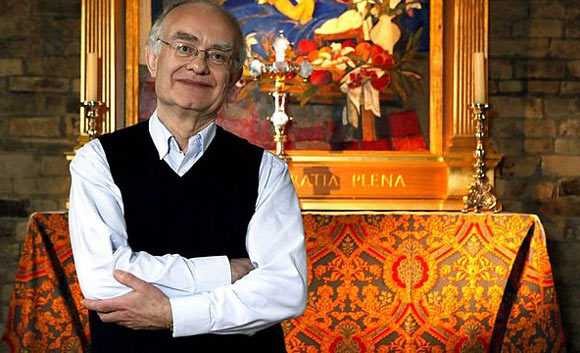
John Rutter
Saless decided to fill out the program with Rutter’s Suite Antique. BCO has performed the suite several times, and their YouTube video with flutist Cobus DuToit has received more than 77,000 hits. “This is our most popular YouTube video,” Saless says.
Flutist Rachelle Crowell
The score is nearly a flute concerto, with the instrument featured as soloist in each of the six movements. Scored for strings, harpsichord and flute, it is reminiscent of Baroque dance suites, with movements titled Prelude, Ostinato, Aria, Waltz, Chanson and Rondeau. The score adheres comfortably to Rutter’s usual accessible and unchallenging style.
“The other nice thing about the concert choice is that it’s basically a British composers concert,” Saless says. “And they’re both alive, so you can chalk that against performing contemporary music!”
Saless originally planned to perform Eternal Light two years ago, as a consoling musical gesture to audiences during the pandemic. “It’s been one of my goals to bring this to Boulder,” he says, but the original plans had to be postponed. Now that it finally will be performed, he says, “I’m really excited.”
# # # # #
“Eternal Light” Boulder Chamber Orchestra, Bahman Saless, conductor With Rachelle Crowell, flute, and Boulder Chamber Chorale, Vicki Burrichter, director
“Made Fragile” welcomes a fragile spring season with consoling music
By Peter Alexander March 29 at 10:20 p.m.
It’s a common theme: Boulder conductors look to program music that recognizes the stress and trauma their audiences have been through in the past two years.
Reena Esmail
For Thomas Morgan and the Ars Nova Singers, that means turning to music that is more comfortably familiar than much of the Renaissance and contemporary music that they usually perform: the gentle, consoling Requiem by French composer Gabriel Fauré. On the same program will be Fauré’s popular Pavane, in a version for orchestra and chorus; Brahms’s choral song “Abendständchen” (Evening serenade); and four works by Indian/American composer Reena Esmail.
The program, titled “Made Fragile,” will be performed at 7:30 p.m. Friday in Denver (April 1) and Saturday in Boulder (May 2; details below).
Featured performers with Ars Nova will be flutist Christina Jennings; violist Matt Dane, who will be concertmaster of the orchestra; Ars Nova assistant conductor Brian Dukeshier, who will lead the Brahms; and soprano Magdalena Kadula, a senior at Tara Performing Arts High School in Boulder who won a competition to sing a solo with Ars Nova.
The Fauré Requiem is probably the most familiar work Morgan and the Ars Nova Singers have performed. “We did it in our second season, 1987, and haven’t done it since,” Morgan says. “It is outside where our usual repertoire is. But one of the things we realized coming out of the pandemic is that there’s so much community grief that’s left unprocessed.
“We wanted to do something that would really appeal both to the audiences and to our singers. And Fauré’s really gentle that way.”
Ars Nova likes to include educational activities in their schedule, but during the pandemic they have been unable to go into schools. Instead, Morgan decided to reach out to students by offering the opportunity to sing “Pie Jesu,” the soprano solo movement of the Requiem. It is relatively short and not difficult, which made it ideal for young singers.
Magdalena Kadula
“We had a competition,” Morgan explains. “We sent it out to public music teachers and private voice teachers and offered a little scholarship (and) we had 13 entrants. It’s just a two-page piece and we had the first round where the kids recorded it on their phones. We evaluated those 13 entries and selected five to do in-person auditions.
“From that we selected Magdalena Kadula, who will be our soprano. She’s a senior at the Tara High School of the Arts here in Boulder. It was a good way for us to outreach to young people at a time that’s very challenging.”
The other major element of the program is a selection of four pieces by Reena Esmail. An Indian-American composer, she has studied at Juilliard and Yale in this country, and with Hindustani music teachers in India. She often incorporates elements of Hindustani music into her compositions, along with Western classical music.
Matt Dane
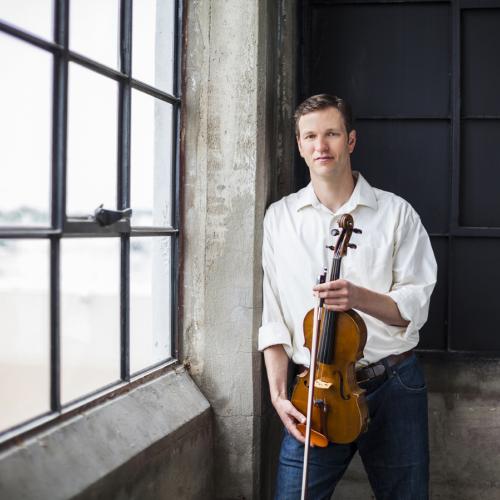
Esmail’s music was added to the program through a suggestion by violist Matt Dane. The orchestra for Fauré’s Requiem only calls for violas and cellos, with no violins, so Dane serves as concertmaster. He suggested Esmail’s “When the Violin” for chorus and viola as a good companion piece to the Requiem.
That led to adding another piece by Esmail for viola and flute, which Dane will play with his wife, flutist Christina Jennings from the CU faculty. That in turn led to adding two other pieces by Esmail, “She Will Transform You” for flute and chorus, and “Tarekita” for a capella chorus, which will open the concert.
Esmail wrote “TaReKiTa” for a choir of homeless people in Los Angeles that she was working with. “It’s taken off in the choral world,” Morgan says. “A number of people have recorded it. It’s very accessible, kind of like Indian scat singing. It’s a short piece that sets the stage well for the rest of her music, (which is) infused with who she is as an Indian-American.”
Christina Jennings
With Jennings included on the program, Morgan then decided to add Fauré’s Pavane, which is popular in a version for small orchestra and featuring a prominent flute solo. Originally written for piano, it was adapted by Fauré for orchestra and chorus, including a text that Morgan says “is not high art in terms of poetry,” about men’s and women’s romantic helplessness. “The beautiful melody carries the whole thing,” he says.
Morgan chose the Brahms “Abendständchen” to complete the program, both for its musical qualities and the opening line, “‘Hark the flute laments again, and the cool springs murmur,” which fits the occasion perfectly. The performance is a farewell for Dukeshier, who has been Ars Nova’s assistant conductor for several years, and recently completed a doctorate at the University of Northern Colorado.
Morgan says that the COVID protocols for the two performances are always subject to change. “We’re watching week to week as to how we implement our COVID strategies,” he says. “At the moment we’re planning to go with the singers masks-optional, but we’re also watching what’s happening. It makes for an interesting time right now.”
In other words, be sure to check the Ars Nova Health and Safety page on the Web before attending the concert. Or as Morgan puts it, “As the name of the program says, everything’s very fragile.”
# # # # #
“Made Fragile“ Ars Nova Singers, Thomas Morgan, director With Christina Jennings, flute, and Matt Dane, viola Magdalena Kadula, soprano Brian Dukeshier, asst. conductor
Reena Esmail: “TaReKiTa” for chorus —“When the Violin” for chorus and solo viola —“She Will Transform You” for chorus and solo flute —“Nadiya” for flute and viola
Brahms: “Abendständchen” (Evening serenade)
Gabriel Fauré: Pavane (arr. Thomas Morgan) —Requiem
7:30 p.m. Friday, April 1 Central Presbyterian Church, 1660 Sherman St., Denver
7:30 pm. Saturday, April 2, First United Methodist, 1421 Spruce St., Boulder Also available by livestream
CORRECTION, March 30: The spelling of TaKeKiTa, with alternating upper case letters was corrected, as well as the spelling of Christina Jennings’s first name.
Music/storytelling production was presented at first ‘Sound of Lyons’ in 2009
By Peter Alexander March 23 at 2:24 p.m.
The very first season of Sounds of Lyons, the adventurous and imaginative music festival managed by violinist MinTze Wu in Lyons, Colo., from 2009 through 2017, included a collaborative performance combining storytelling and music.
That performance was based on “Death of the Pugilist,” a story by Daniel Mason. A narrator read the full story, and a group of musicians provided musical commentary with composed pieces by J.S. Bach, Philip Glass and Steve Reich, as well as improvised music that drew from a variety of styes and sources.
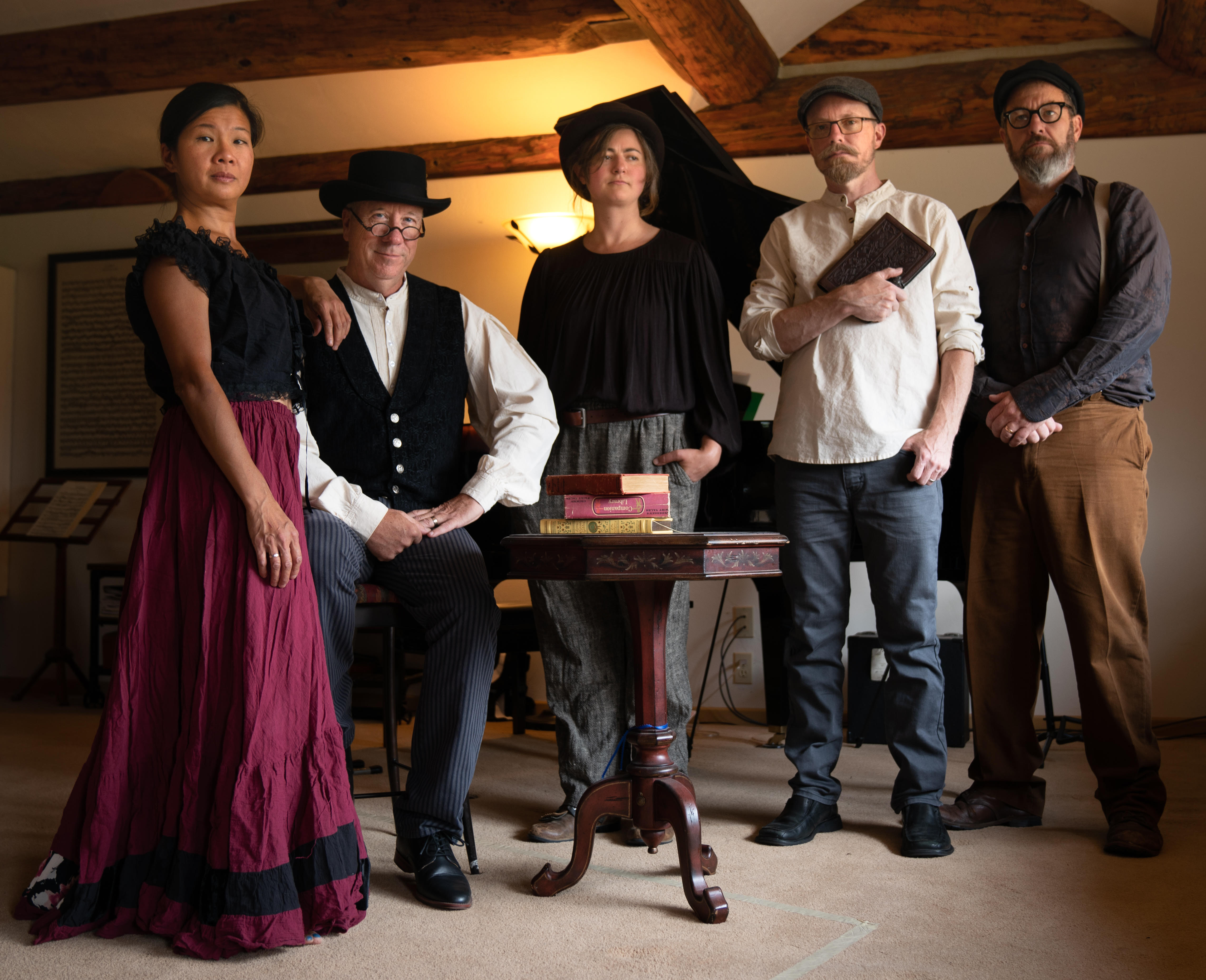
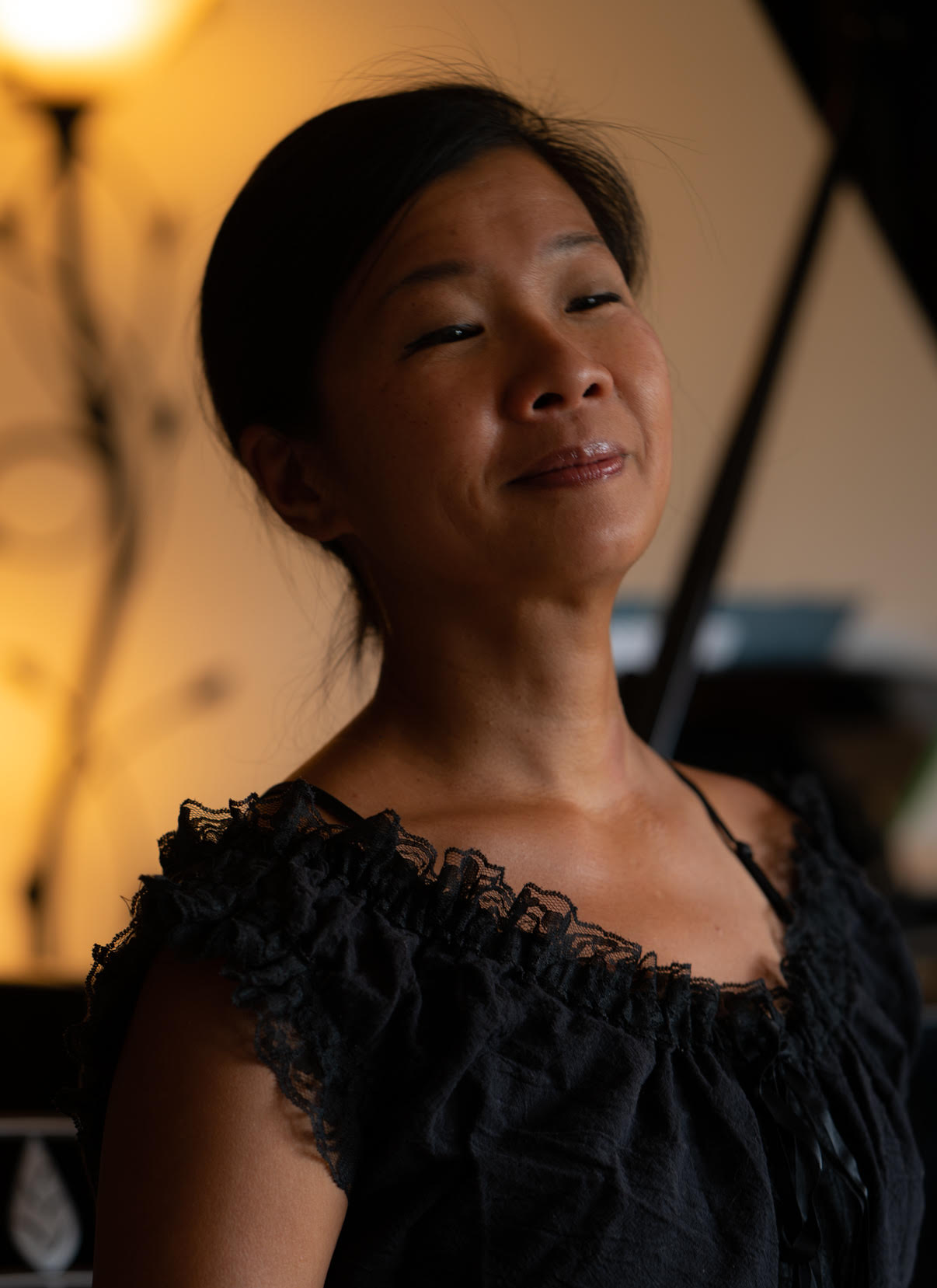
Musicians (L-R) MinTze Wu Jem Moore, Joy Adams, Blayne Chastain and Eric Thorin will perform ’Death of the Pugilist’ in Lyons Sunday.
Thirteen years later, Wu is bringing “Death of a Pugilist” back to Lyons under the aegis of BenFeng Productions, the successor to Sounds of Lyons. The new version will use the same script, the same composed pieces by Bach, Glass and Reich, but a new set of musicians who will provide their own newly improvised music to fill out the performance.
This revived and renewed performance will take place at 4 p.m. Sunday, March 27, at the Lyons Middle/Senior High School Auditorium.
The narrator reading Mason’s story will be Jem Moore, who will also be part of the musical ensemble. The other musicians, all playing multiple instruments, will be Wu, Joy Adams, Blayne Chastain and Eric Thorin. Instruments featured by the ensemble include—but are not necessarily limited to—flute, violin, banjo, mandolin, tuba, cello, string bass, drum and keyboard. In addition to the composed pieces, the musical styles will range from traditional Irish to blues.
“We really want to honor the tradition of storytelling,” Wu says of the production. “It’s almost like a campsite when somebody starts sharing a story that he has heard.”
Wu says she was not initially attracted to a story about boxing, but the quality of the writing won her over. “I started by reading it, and it gave me so much opportunity to imagine a production,” she says.
The plot concerns Jacob Burke, a young man who grows up on the docks in 1820s England and is such a ferocious brawler that he ends up being lured into in illegal bare-knuckle boxing matches. The climax of the story is his fight with “Blindman” McGraw, which takes up the largest portion of the story.
MinTze Wu
Wu selected pieces by Bach to open and close the performance, and particularly the Sarabande from the D-minor Suite for solo cello, which is played before the narration of the fight. “The central piece is the Sarabande,” Wu says. “That is at the pivotal part, the most raw, emotional moment. I love taking the most intense moment emotionally and have the most simple sound there.”
In contrast to the written-out pieces, Wu says that the improvised music is “very much like cooking. You can follow the recipe, but it’s really cooking it every time.” And if the music develops too fast, “somebody will go, ‘Oh, I cook it too hot!’ We understand what that means: we have to cook it slower, longer.”
Although Bach forms the bookends and the central piece of the performance, the players come from various musical backgrounds. A graduate of the Cleveland Institute, Wu has the most extensive classical training. Cellist and plucked strings player Joy Adams is a member of an all-female neo-acoustic quartet, Big Richard, who are performing at the Telluride Bluegrass Festival in June.
Bass player Eric Thorin teaches folk and bluegrass bass at the University of Northern Colorado and has performed both jazz and bluegrass with leading artists. Flutist Blayne Chastain studied traditional music at the Berklee College of Music in Boston before moving to Colorado. Narrator Jem Moore has pursued careers as musician, airline and private pilot, and independent film maker.
Wu says the improvisation occurs within clearly defined limits. “It’s just so organic when the five of us sit down to decide our roadmap,” she explains. “We know our destination, but on the way, where are we going to go? There is freedom but it’s within very defined limits. It’s a very tight ensemble piece, very lean.”
Lean may be the keyword. When she approached the piece again 13 years after first developing it, Wu found that she wanted to trim it down to essentials. “When I started Death of the Pugilist 13 years ago, that was my first ensemble piece with a story,” she says.
“Now having done so many other big productions with literature, and looking at it and still loving the simplicity but being more informed, I realize that all along, what I’m exploring is not confining our imagination. There is always more to discover. If we tap into that curiosity there is just a lot more.
“For me, it’s coming back to it and taking out more things, because they are not necessary. We’re trying to say more by saying less. That really is our passion this time.”
# # # # #
Death of the Pugilist Based on a story by Daniel Mason Presented by Peter Baumgartner and BenFeng Productions Performed by Jem Moore, MinTze Wu, Eric Thorin, Joy Adams and Blayne Chastain
4 p.m. Sunday, March 27 Lyons Middle/Senior High School Auditoriu
Saturday at Macky sees Michael Butterman’s return to lead the orchestra
By Peter Alexander March 18 at 12:10 a.m.
The next concert of the Boulder Philharmonic will feature a co-commission by the orchestra, but none of the music will be new.
Instead, the co-commission is a video created by Stephen Lias to accompany the performance of a work composed in 1955, the Symphony No. 2, “Mysterious Mountain,” by American-Armenian composer Alan Hovhaness.
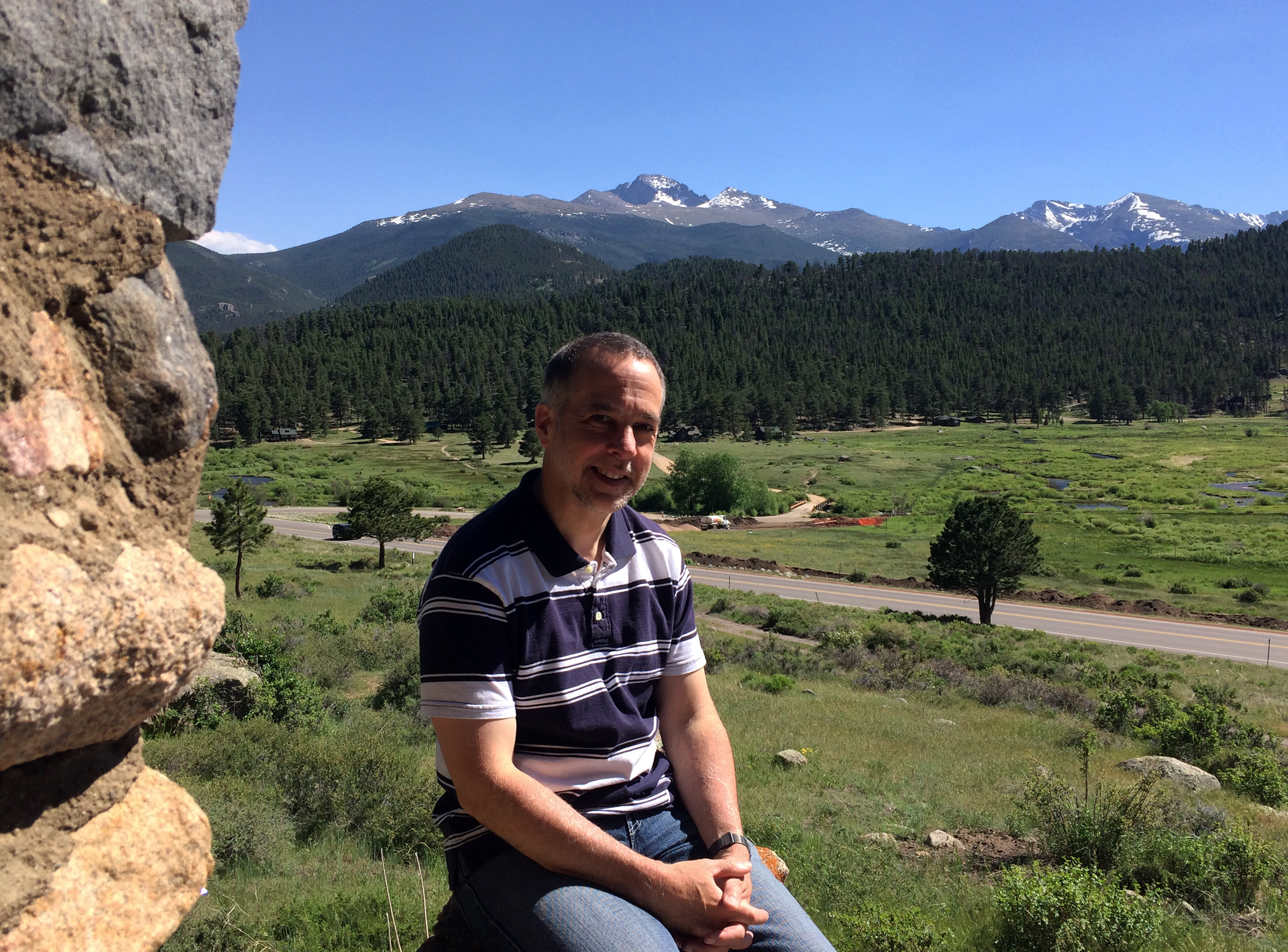
Stephen Lias in Rocky Mountain National Park. Photo by Peter Alexander
That is one of two videos that will be presented as part of the concert, which will open with a performance of Circuits by Cindy McTee with video by Aleksi Moriarty. Finishing the program is Rachmaninoff’s Third Piano Concerto, performed by pianist Terrence Wilson. The performance will be at 7:30 p.m. Saturday, March 19, in Macky Auditorium (tickets available here).
Lias is better known as a composer than a videographer. The Boulder Phil premiered his Gates of the Arctic in 2014 and commissioned his All the Songs that Nature Sings, which they premiered in 2016. In this case the Boulder Phil’s music director, Michael Butterman, wanted to perform the Hovhaness score, and to feature a video with it.
Butterman is back in Boulder to lead the concert, after having to miss the orchestra’s last performance in March due to a health concern.
“When we played (Lias’s) works before, he created visuals that would accompany the music,” Butterman explains. “I approached him about creating a video not for his own music this time, but for someone else’s. And he really ran with it.”
One of Stephen Lias’s composite images for Mysterious Mountain.
By “ran with it,” Butterman really means that Lias worked tirelessly to learn video techniques that he had never used before. “The learning curve was extremely steep for me, because I had no background in visual art or complex video effects,” Lias says. ”A lot of what I learned was very useful and fascinating, but boy it was a big investment! I had to learn to use a collection of high-end applications (and) packages of software that animators use.”
The more complex video techniques were important, Lias says, because—unlike pieces that he created videos for before—Hovhaness’ score is not about a specific location. In fact, the title Mysterious Mountain was added after the music had been written. “The title simply suited the mysterious atmospheric, meditative nature of the music,” Lias says.
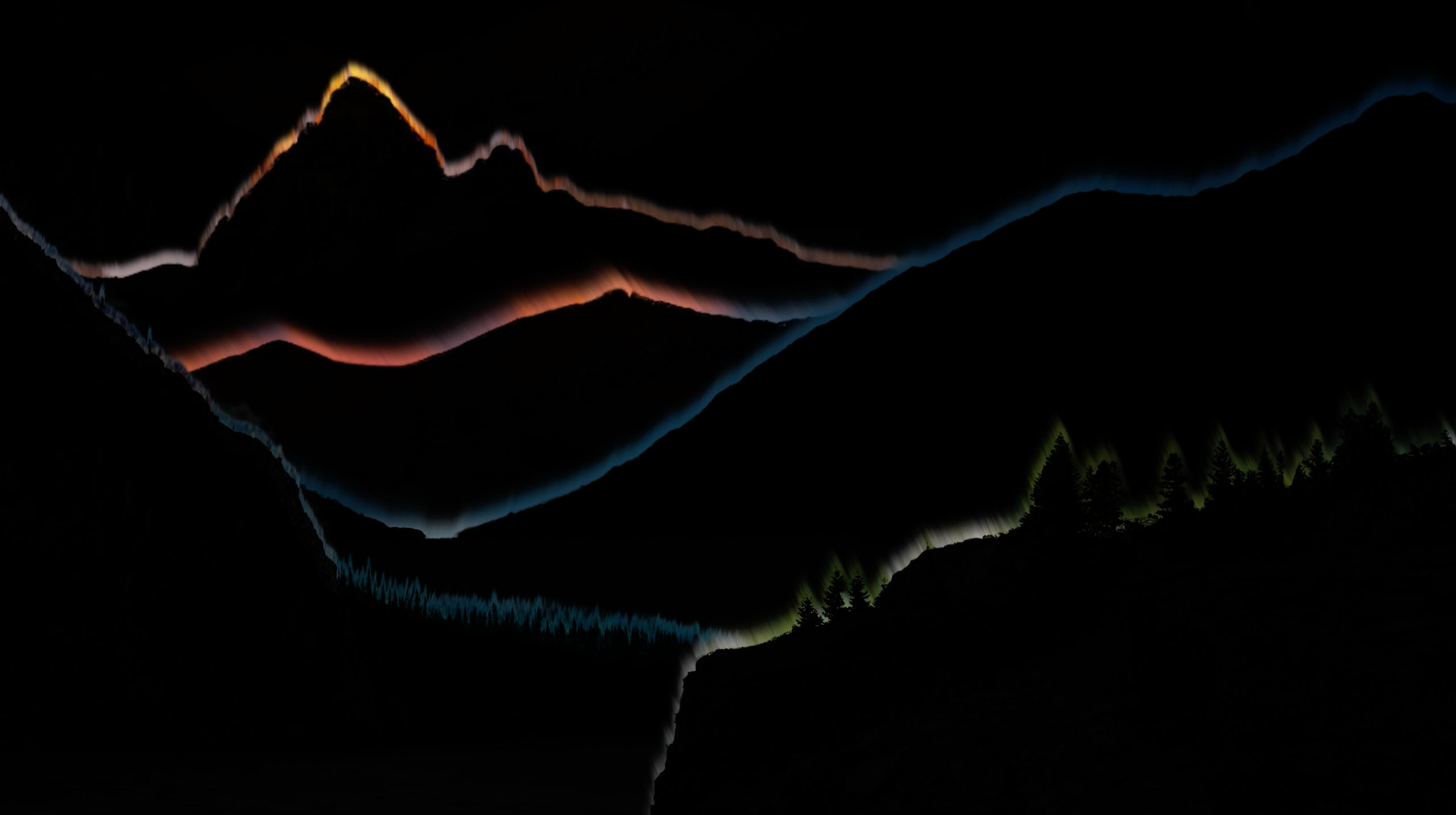
Image by Stephen Lias for Mysterious Mountain
“This feels like it needs to be more amorphous and ambiguous (than Lias’s earlier video creations). My concept was to create virtual mountain ranges comprised of (pictures) from all over the world. There are animated, floating lines in space that reveal the mountain range, and then they are transformed before your eyes and you realize these are (different photos) laying over top of one another.
“Later various virtual environments float around you, and then you end up in a place that is entirely real, but you’re not sure it’s real. The goal is a lingering ‘where are we?’ question. We are clearly not in real life, but the things from real life are mixed with things that make it clearly artificial. You’re in an invented world.”
Image by Stephen Lias for Mysterious Mountain
This fits the spiritual qualitied of Hovhaness’ music, Lias says. He describes the music and video together as “a musical and visual journey through all the things that mountains can be and might become.”
Some people in the audience may recognize some of the locations in the video. “Certainly anyone from Boulder will recognize the places that Longs Peak sticks its head out,” Lias says. “There’s some Banff, Glacier (National Park), and the Great Wall of China.”
Butterman describes the concert’s other video, accompanying McTee’s Circuits, as “entirely abstract,” but in an entirely different way. There are no concrete images at all, but rather abstract patterns.
“(Moriarty) went through the piece in an analytical way,” Butterman says. “He broke it down into a motive for a bar and a half, and then three bars, and then later on it comes back upside down. He identified these musical kernels and created a graphic representation for each one. Once he created the video translations of the musical ideas, he followed the template that the music itself played out. So theoretically, it’s a video representation of the structure and thematic content of the music.”
Butterman warns the audience that the video moves very fast, as does the music. “I would say (it’s) very fast paced,” he says. “If you are bothered by flashing, you would be wise to at least be aware of that. It’s only about five and a half minutes, but it’s very intense. I’m hoping that if anybody feels that’s a difficulty, they can simply look away.”
Both video works are engineered so that the length can be adjusted to fit individual performances. Moriarty works with a program developed by Ion Concert Media of Minneapolis, and Lias developed his own system using a sound, video and lighting control application for the Mac called QLab. Both result in a system where the conductor does not have to follow a click track or any other pre-established speed in the performance.
That’s an important issue for Butterman. “The real bane of (performing with video) is the tyranny of the click track,” he says. “Whenever you’re doing a Hollywood movie for example, you have a screen in front of you and time codes and little bars sweep across (the screen), and you have an earpiece where you can hear clicks, and it’s maddening.”
Terrence Wilson. Photo by J. Henry Fair.
While the videos will be the most unusual aspects of the March 19 concert, the Rachmaninoff Third Piano Concerto will certainly be the most familiar. It is beloved by audiences, but as a virtuoso showpiece it should never be thought to be routine. It was Rachmaninoff’s favorite of his four piano concertos, but also has the reputation of inspiring fear in pianists.
“I’m delighted to have Terrence Wilson joining us,” Butterman says. “He’s someone I’ve enjoyed collaborating with.”
Wilson performed the Grieg Piano Concerto with Boulder Phil in 2007 and has had an impressive performing career in the intervening years, including a 2011 Grammy nomination and a 2015 appearance at the Colorado Music Festival. A graduate of Juilliard, he has also received an Avery Fisher Career Grant and appeared on NPR’s “Performance Today.”
“Closing with Rachmaninoff is a little unusual,” Butterman says, “but at 43 or 44 minutes, it certainly has the heft of a symphony!”
The heft, and I would add, all the fireworks you could want for a rousing concert closer.
# # # # #
Boulder Philharmonic, Michael Butterman, conductor With Terrence Wilson, piano Videos by Aleksi Moriarty and Stephen Lias
Cindy McTee: Circuits
Alan Hovhaness: Symphony No. 2, “Mysterious Mountain”
Performances will be at the Dairy Arts Center March 19 and 20.
By Izzy Fincher March 15 at 12:15 p.m.
What is the secret to pulling off Verdi’s Il trovatore? According to the Italian tenor Enrico Caruso, it’s easy—as long as you have “four of the greatest singers in the world.”
As part of their 10th Anniversary Season, the Boulder Opera Company will present Il trovatore (The troubadour) March 19 and 20 at the Dairy Arts Center. With scenic projections, a reduced orchestra and a chorus, this four-act opera is one of the company’s most ambitious, large-scale productions to date.
Azucena (Dianela Acosta) in the Boulder Opera production of Verdi’s Il trovatore
Il trovatore is a hard opera to present, with four principal roles that require large, dramatic voices and demanding vocal techniques. This is especially true for the lead female characters. The Romany woman Azucena (played by Dianela Acosta) needs a lyrical yet dramatic mezzo soprano with a large range, while noblewoman Leonora (Michelle Diggs-Thompson) needs a coloratura soprano voice that is both flexible and hefty.
“Now that I have been singing for a while, I think that Verdi has kind of settled in my voice,” Diggs-Thompson says. “I don’t think I would have been able to pull off this role 20 years ago.”
Beyond this, the opera poses an artistic challenge—that of bringing to life an impossibly melodramatic storyline with twisted characters in a relatable way. Set in 16th-century war-torn Spain, this blood-curdling tale of revenge features burning babies, kidnapping, beheading, gypsy curses and death by poison.
Premiered in 1853, Il trovatore is a part of a group of three operas by Verdi, along with Rigoletto (1851) and La traviata (1853), that represented a fundamental shift in his dramatic style. Il trovatore is based on Spanish playwright Antonio García Gutiérrez’s first commercial success, El trovador (The troubadour) of 1836.
For the adaptation, Verdi worked with prolific librettist Salvadore Cammarano, best known for Donizetti’s Lucia di Lammermoor. In his correspondence with Cammarano, Verdi urged the playwright to stay true to the sensationalism in the original play, stating “the more unusual and bizarre the better.” Initially, he wanted to call the opera La zingara (The Gypsy), in honor of Azucena, who is at the heart of the melodrama.
The Count di Luna (Karl Butterman)
The plot centers around a twisted love triangle. In the kingdom of Aragon, Count Di Luna (Karl Butterman), a nobleman in the service of the prince, is madly in love with Leonora, one of the Queen’s noblewomen. But she is in love with another man: Manrico (Nathan Snyder), a troubadour and officer in the army of the Prince of Urgel and Azucena’s son, who is leading rebel forces against the monarchy.
“Manrico is a hot-head,” says Snyder. “Verdi writes him in such a bombastic way. It’s electrifying.”
“This story is so powerful (because) it deals with three faces of love,” stage director Gene Roberts says. “It deals with romantic love at the center of the story. It deals with the fierceness of a mother’s love and how that lasts over many years. But the one that seems to be the most powerful in this story and the undoing of everyone is obsessive love.”
But what drives the opera forward is a thirst for revenge, which is introduced in the convoluted backstory. Years ago, a Romany woman set a curse upon Di Luna’s infant brother, causing the child to become sick. The Count had the woman burned at the stake. To avenge her mother, the woman’s daughter—Azucena—kidnapped the infant and supposedly threw him into the fire. The Count swears to get his revenge, though this will ultimately destroy him and those he loves.
“When you are really obsessed with the thought of vengeance, it colors everything, even love,” Roberts says. “Love can become really obsessive. If you can’t have it, no one can have it. Focusing on your vendetta, rather than forgiving those around you, can blind you from seeing those who are close to you.
“There are surprises in this story until the last eight measures of music.”
Manrico (Nathan Snyder center-right) confronts (L-R) the Count di Luna (Karl Butterman) and Ferrando (Allen Adair)
Despite the melodramatic plot, Il trovatore features some of Verdi’s most profound and innovative music.
Verdi incorporates elements of Spanish music, such as flamenco rhythms and guitar-like textures, as well as Moorish and Romany music. There are numerous quotable melodies, including the iconic “Anvil Chorus” in Act II with clanging anvils, triangles, cymbals and drums, Azucena’s “Stride la vampa,” Manrico’s “Di quella pira” and Leonora’s “Miserere.”
“Verdi has this powerful way of completely melding the drama and the music,” Snyder says. “He puts it right into your face, and it’s a blast.”
# # # # #
Il trovatore By Giuseppe Verdi and Salvadore Cammarano Boulder Opera Company Jorge Salazar, conductor; Gene Roberts, stage director With Michelle Diggs-Thompson, Nathan Snyder, Karl Butterman and Dianela Acosta Performed in Italian with English titles
7 p.m. Saturday, March 19 3 p.m. Sunday, March 20 Gordon Gamm Theater, Dairy Arts Center
Performances Friday through Sunday at Macky Auditorium
By Peter Alexander March 9 at 5:07 p.m.
The Eklund Opera Theater at CU will transport audiences back seven decades this weekend.
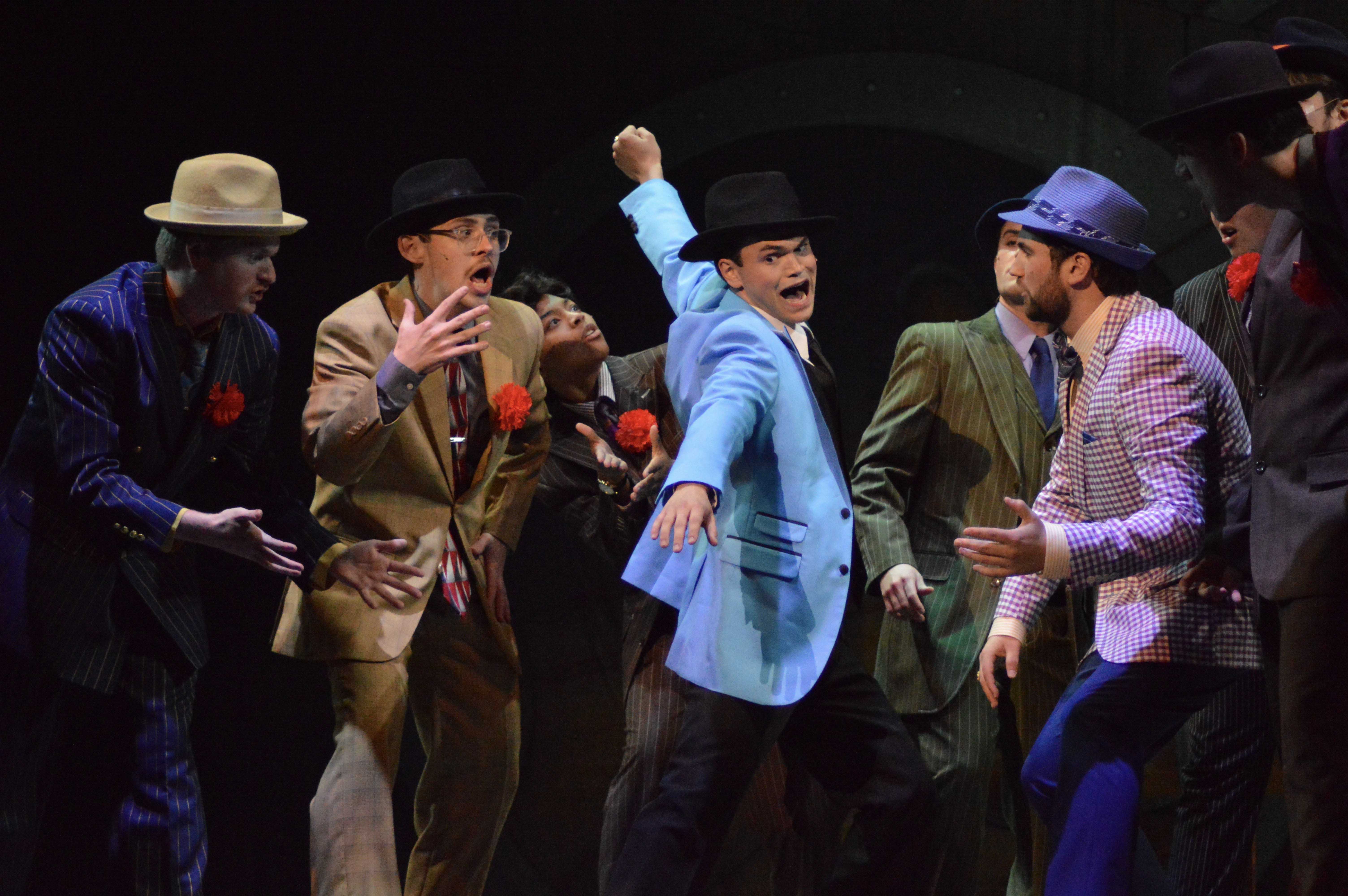
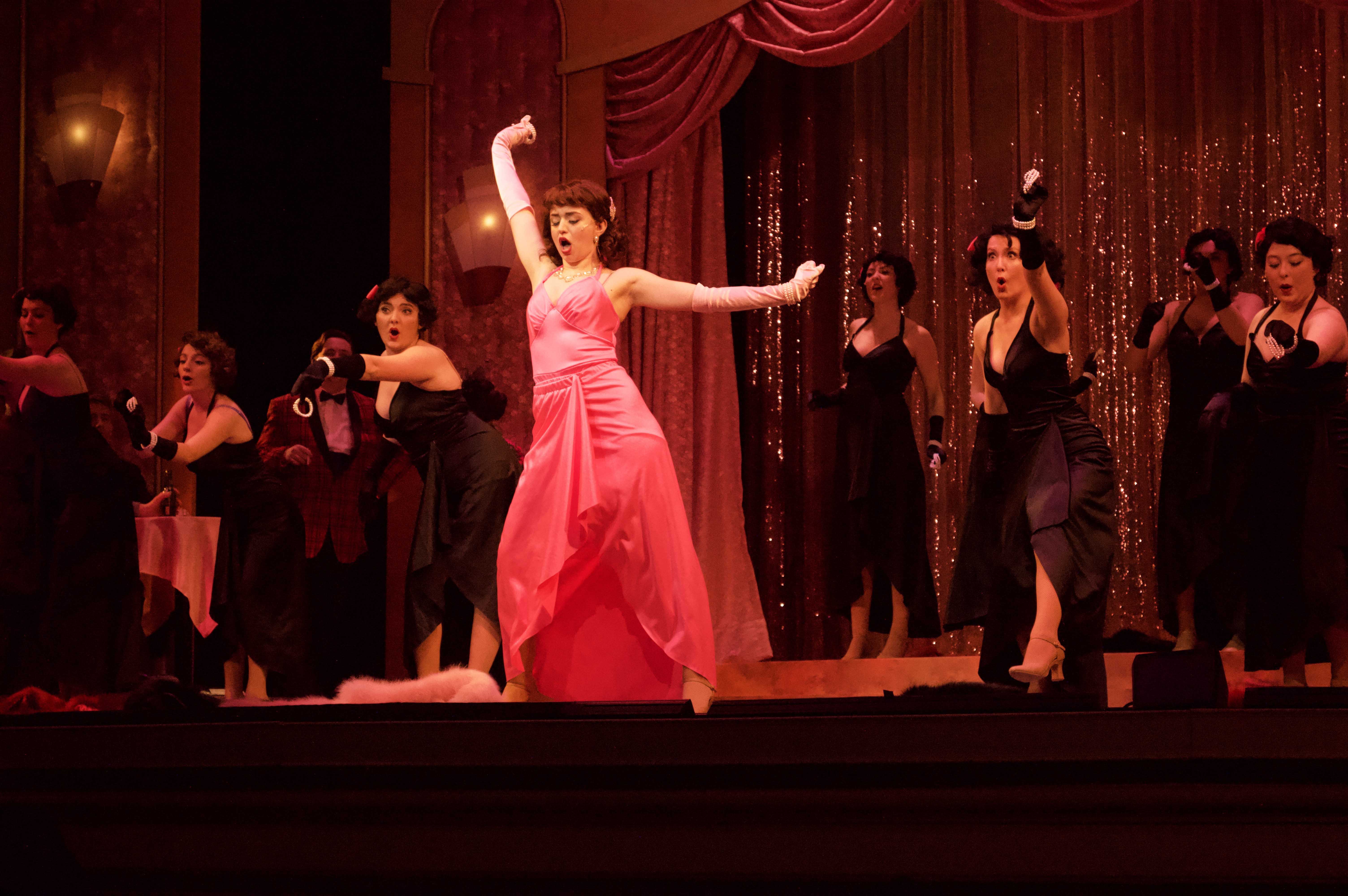
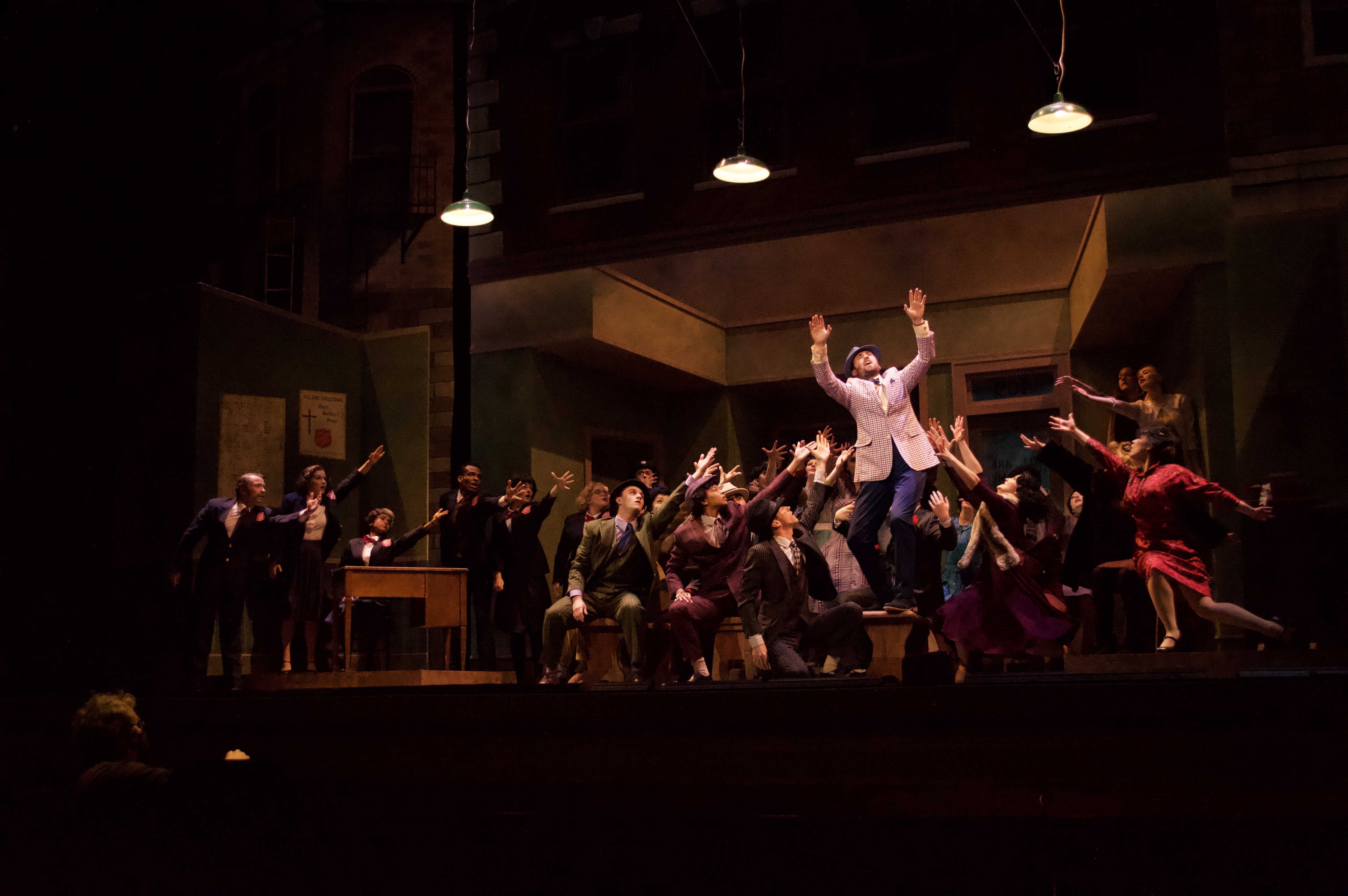
Their production of Frank Loesser’s Tony Award-winning 1950 Broadway hit Guys and Dolls, certainly one of the greatest of the era’s classic musical shows, runs Friday through Sunday at Macky Auditorium (details below). Performances, featuring students in the opera and music theater programs, have been stage directed by Leigh Holman, with choreography by Tracy Doty. Nicholas Carthy conducts.
Sky Masterson (Ian Saverin)in Eklund Opera’s Guys and Dolls. Photo by Lily Valdez.
Based on stories by Damon Runyon, Guys and Dolls features characters from prohibition-era New York, including gamblers and their henchmen, nightclub “girls,” tough cops and Salvation Army missionaries. The main plot revolves around two pairs of potential lovers: the gambler Nathan Detroit and his long-waiting fiancée, nightclub singer Miss Adelaide; and the even flashier gambler Sky Masterson and the pious Salvation Army sergeant Sarah Brown.
Other Runyon-esque characters surrounding the leads include such colorful personalities as “Nicely-Nicely” Johnson, “Harry the Horse,” “Big Jule,” police lieutenant Brannigan, who is always one step behind the gamblers, and an ensemble of Hotbox Club dancers.
The Eklund production is set not in the prohibition times of Runyon’s stories, but in the 1950s of the show’s premiere—when alcohol was not illegal as in the ‘30s, but gambling still was: illegal and a little bit glamorous. Spoiler alert: this being golden-age Broadway, “it is a feel-good story,” Carthy says. At the end, the two couples get married and the leading men renounce their shady habits to adopt respectable lives.
Miss Adelaide (Annie Carpenter) and the Hotbox dancers. Photo by Lily Valdez.
As far as the 1950s are from today’s college students, Holman says the cast members were eager to do the show. “Students came out in droves to audition for this piece,” she says. “We were able to choose really good singers and dancers.”
Not only were students eager to audition, they have really immersed themselves in the show. “They are so absolutely committed to it,” Carthy says. “They put in the work, and it’s incredibly gratifying—they love it.”
Holman says they have also been doing their research into the time period. “They’re teaching us!” she says. “They’ve got the accents down, the way to walk—it’s made our job super easy. And there are so many references to things that don’t exist today: Brooks Brothers, Ovaltine, A&P, Whitney Colors”—the last being the livery colors for racehorses owned by the prominent and wealthy Whitney family.
As for the style of the classical Broadway musical, “they love it,” Holman says. “They really get the timing and the style of this type of musical.”
One thing Holman did have to teach was how to use a pay phone—something that was new and strange for the young people in the cast. “They said, ‘I’ve heard of it,’ Holman recalls. “I said, ‘You pick up the receiver, and then you put the coin in, and then you dial,’ and they’re doing it with me like it’s choreography. ‘You dial, and then you listen, those four steps: receiver, coin, dial, listen.’
Nicely-Nicely Johnson (Sam Bruckner) at the Save-A-Soul Mission. Photo by Lily Valdez.
“Nick and I are the caretakers of all the 20th century. We’re teaching whatever from the 20th century that these folks don’t know.”
Such details of life in the 1950s as forgotten brand names and pay phones are quaint, but it was also an era when social conventions were very different than they are today. It was a largely patriarchal society, and the women are looking for traditional 1950s marriages, but both Carthy and Holman are adamant that the show is not inherently sexist.
“I don’t see it,” Holman says. “Are there examples of men objectifying women? Of course there are. But the women don’t take it! They’re strong women! Adelaide is doing exactly what she wants to do, and Sarah is on a mission. But I don’t think any one of those women put up with much.”
“I do not think it’s a sexist piece in any way,” Carthy says. “It is a child of its time, and child of its time means it’s got fantastically witty dialog and amazing show tunes. It needs to be enjoyed for what it is: an intelligent, non-sexist story with fabulous music and dance.”
Holman is especially pumped about the dance. “The dance is not like anything you’ve seen at Eklund Opera before,” she says. “It’s worth the price of admission on its own! Tracy Doty, who did the choreography, has done wonders with them.”
In fact Holman is, as always during the rehearsal process, pumped about the whole show. “This is one of the strongest books I’ve ever been involved with,” she says. “There’s a lot of dialog, but it’s so brilliantly written, and it really does carry the story forward. We’ve had a lot of fun with that. We’re really excited to be doing this piece!”
For his part, Carthy summarizes the show’s longstanding popularity, saying, “It’s full of big tunes and witty text, (so) how could you not love it, really?”
# # # # #
Guys and Dolls Music and Lyrics by Frank Loesser CU Eklund Opera Theater
7:30 p.m. Friday, March 11, and Saturday, March 12 2 p.m. Sunday, March 13
Correction: The original version of this post incorrectly listed the photos as by Collin Ring. They were taken by Lily Valdez. We apologize for the error. Correction posted 3/10.









 Sharps & Flatirons