Portions of new opera to be presented Sunday

Kamala Sankaram’s Joan of the City is inspired by homelessness and Joan of Arc

By Peter Alexander June 17 at 5:23 p.m.

Composer Kamala Sankaram says that many of the pieces she writes start with her own imagination and not the way many operas get written— with a commission for a specific performing organization. 

“They start with a crazy idea that I have” Sankaram says. “Then I talk to people and see who also is crazy.” She then works with the “also crazy” people to bring her idea to life.

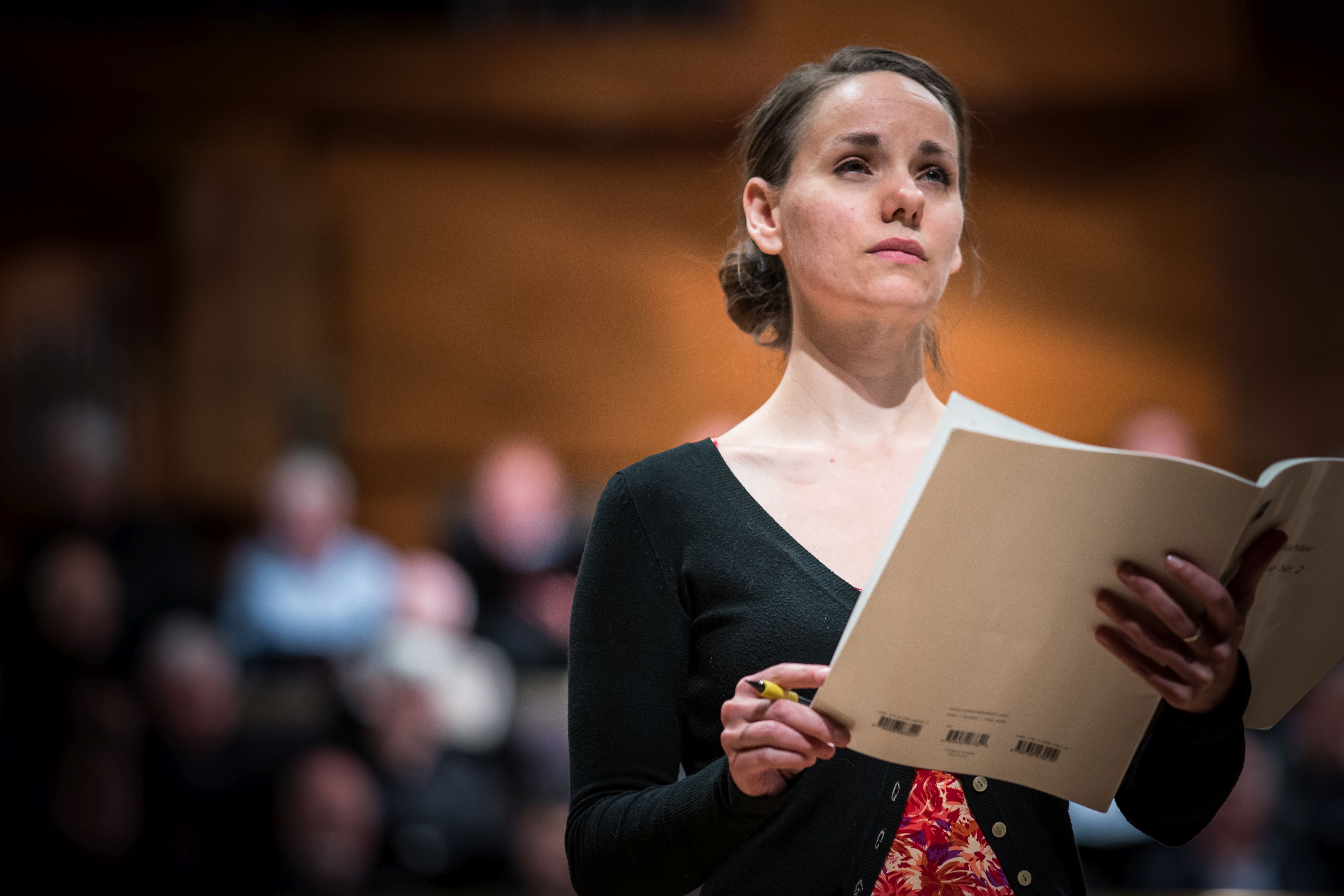
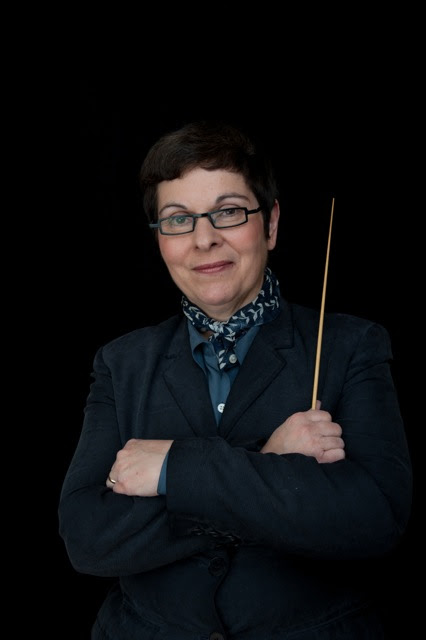
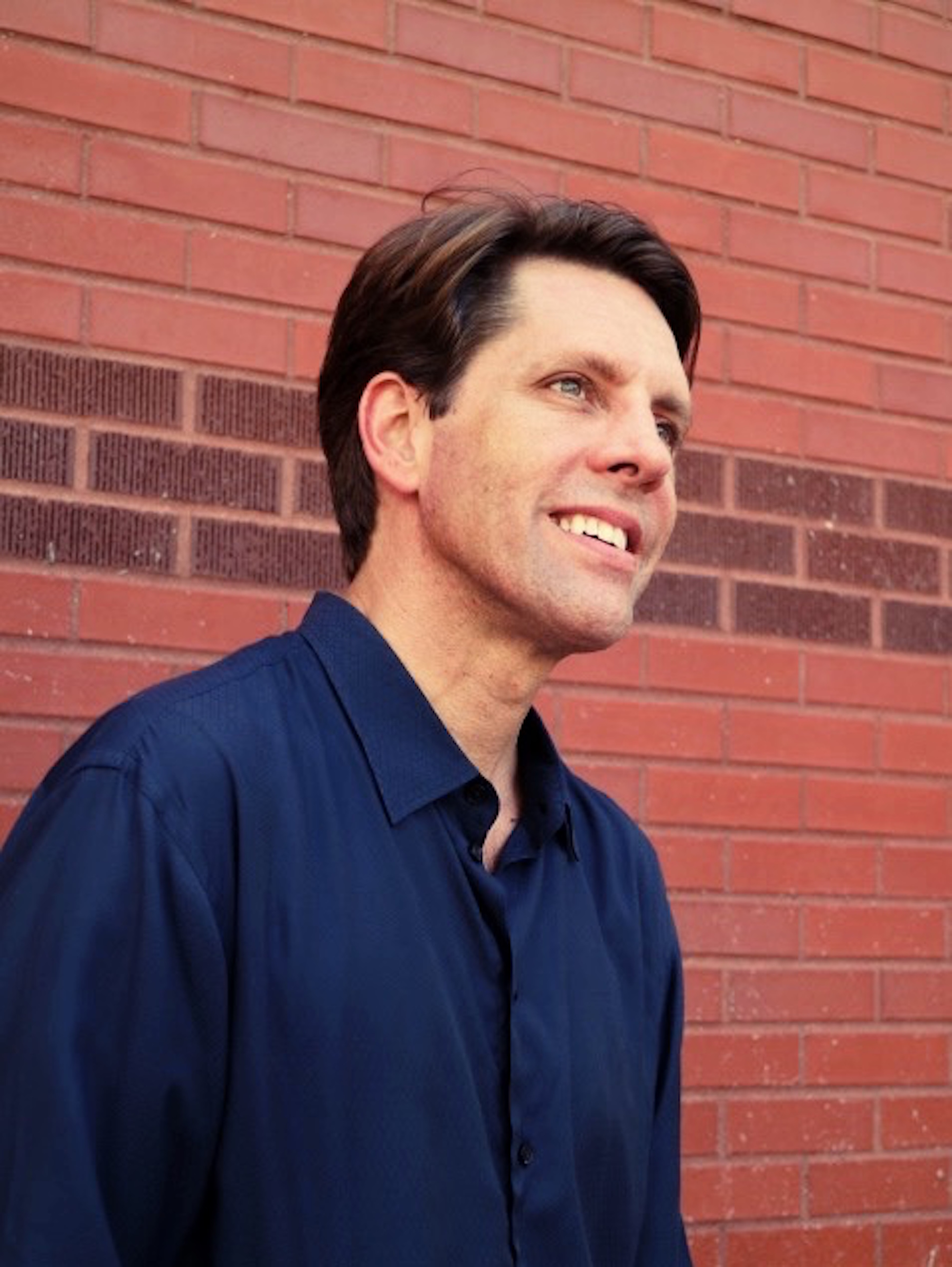
Kamala Sankaram

For her latest project, an opera titled Joan of the City that combines themes of homelessness with the Joan of Arc story, those conversations led her to Leigh Holman, director of the Eklund Opera Program at the University of Colorado, Boulder, and the New Opera Workshop (CU NOW).

Sankaram has been in Boulder for the past two weeks, composing music and working with students in the opera program to start turning her “crazy idea” into a site-specific opera that will be premiered next year by Opera Omaha. Completed portions of Joan of the City will be performed at 3 p.m. Sunday (June 19) in the Music Theatre of Imig Music Building.

The performance is free and open to the public, and will take place entirely in the Music Theatre space.

The basic idea of the opera is that not one but five Joans will be fighting, not the English invaders in France, but gentrification and other forces creating homelessness in American cities. Starting in five different places within Omaha, the Joans eventually meet up, as audiences move with them through the city.

Sankaram grew up in Southern California, where the car is king, but after she moved to New York she started walking everywhere. “Whenever I go to a new city I’m walking, and I see the homeless community,” she says. “I think it’s important to have people see what does that feel like, to be walking the city, instead of driving by in a car.

“I started thinking about [homelessness] several years ago, and it has become increasingly problematic and prevalent . . . [in] all places across the United States. So the idea was how do you get people to look and see things that they normally look past.”

Another idea was the use of technology, which features in a lot of Sankaram’s work. It is technology that will allow the onsite performances in Omaha to take place in different places across the city, and also will allow audience members to participate in the performance by playing audio from their cell phones.

The final piece of Sankaram’s “crazy idea” was working with homeless agencies—Mary’s Place in Seattle and Micah House in Omaha—to connect the finished work to the homeless community. With her co-creator of Joan of the City, New York-based hybrid-theater director Kristin Marting, Sankaram and the homeless shelters presented writing workshops for the shelter clients.

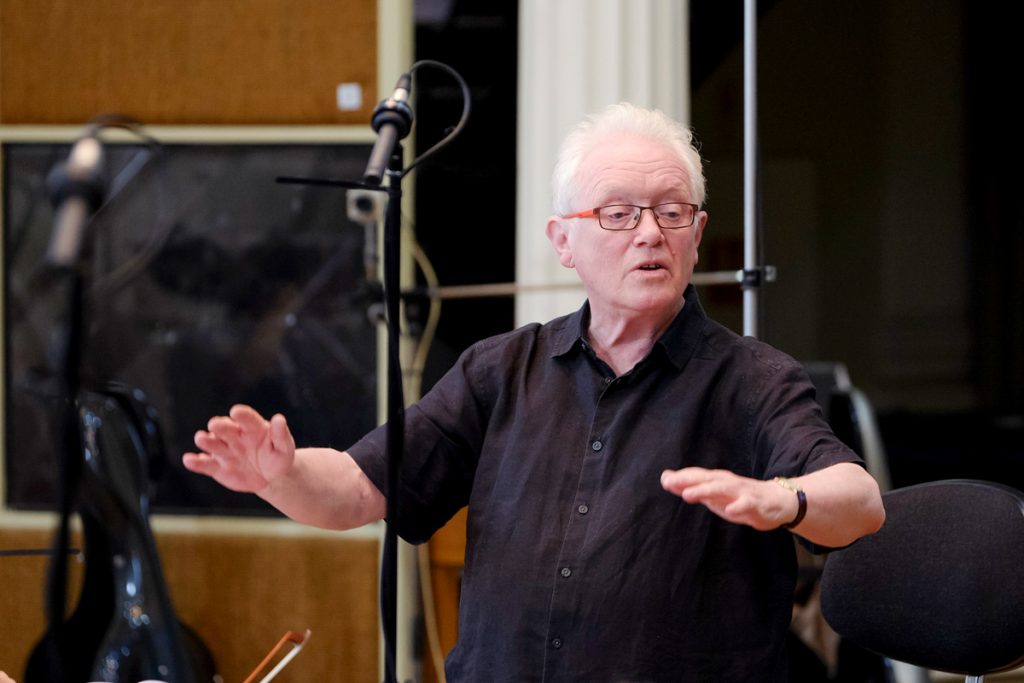
Leigh Holman (Photo by Glenn Asakawa/University of Colorado)

The work that came from those workshops became the basis of the text for Joan of the City. “The libretto is all these poems that the shelter clients wrote, and then they’re sort of structured on this overall dramatic arc from the Joan of Arc story,” Sankaram explains. “It starts off as arias and then as the Joans meet each other, it turns into duets and trios and finally a quintet.”

Sankaram’s work is an example of the kind of creative and adventurous projects that CU NOW aims to support. Many new works go through a workshop process, but CU NOW is unique in that it offers a longer than average period for composers to work with performers while refining their work. 

The program is largely Holman’s brainchild. She started CU NOW in 2010, and it has offered several composers the opportunity to refine works that were in development, including It’s a Wonderful Life by Gene Scheer and Jake Heggie, which was premiered by Houston Grand Opera in 2016 and performed by the CU Eklund Opera in 2019.

The composers and works are chosen for CU NOW largely through Holman’s contacts in the professional world. “So far nobody has ever submitted anything (for consideration),” she says. “It’s only been knowing somebody or meeting somebody through relationships, or going to see their operas. I just invite them, and they do it because they want to develop their piece and we can provide the students and the facilities and the musicians.”

In addition to the work that is done by an established composer preparing a new piece, there is simultaneously an educational component for young composers. Under the rubric Composer Fellows’ Initiative (CFI), a composer and librettist have been brought in to work with students to develop both their musical skills and their understanding of stagecraft.

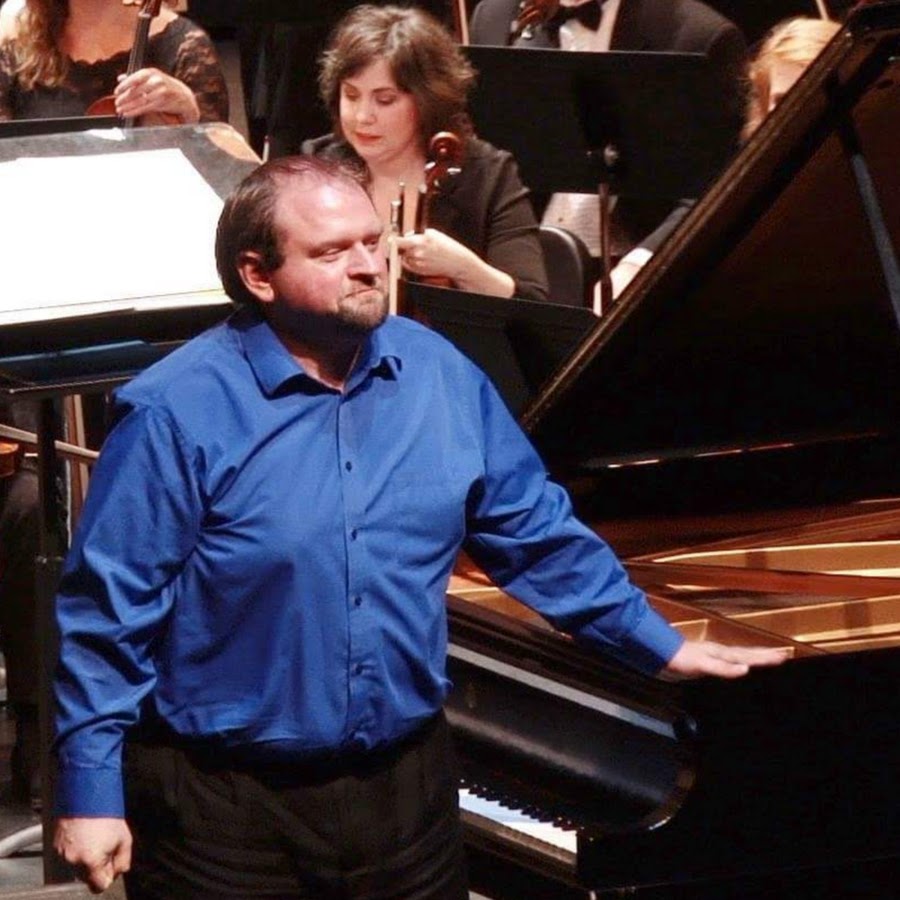
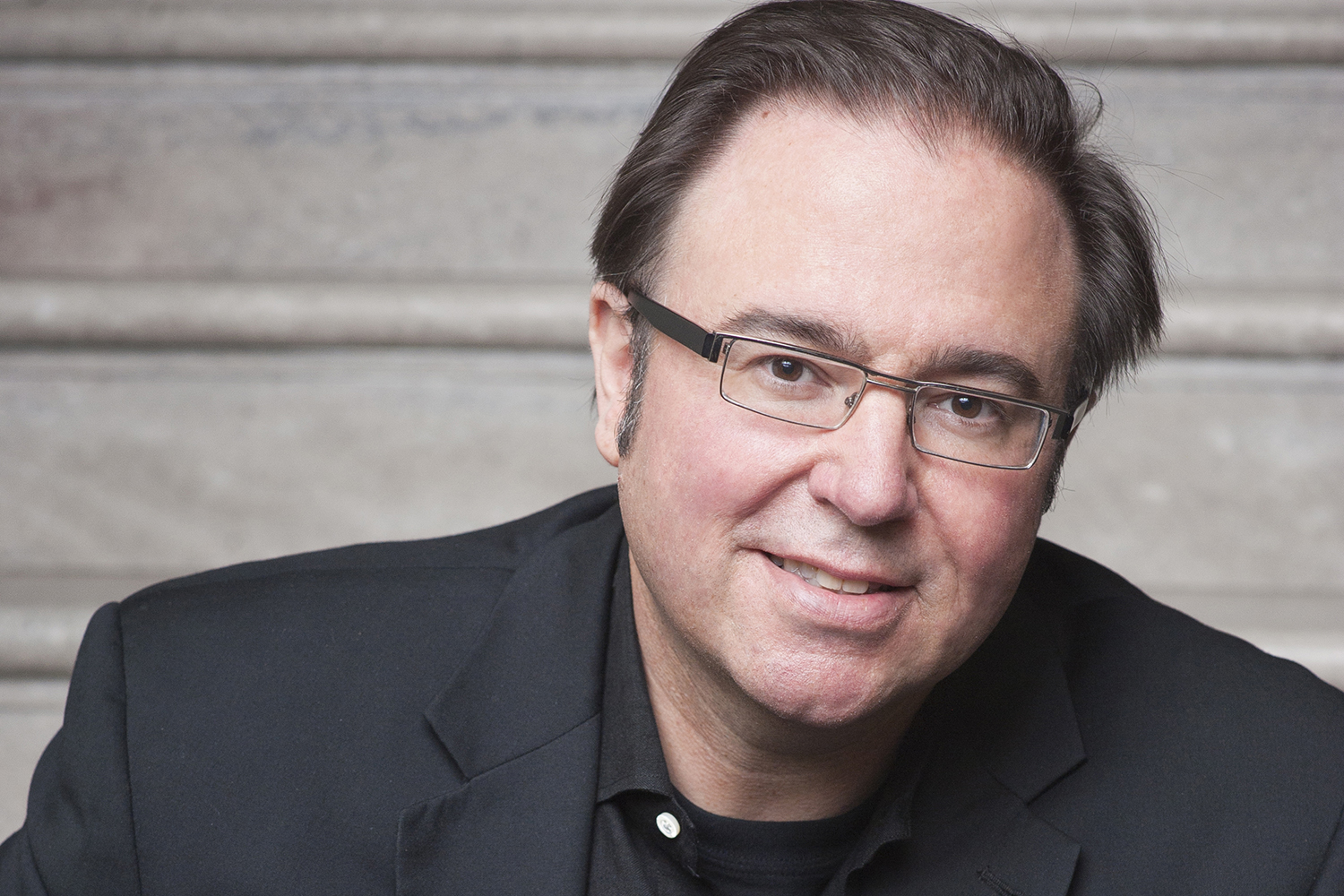
Tom Cipullo

This year, the students have been working with composer Tom Cipullo, whose comic opera Hobson’s Choice was featured at CU NOW in 2019, and librettist Gene Scheer, whose was in Boulder for CU NOW last year (Intelligence, with composer Jake Heggie) as well as 2016 (It’s a Wonderful Life). 

“It’s a marvelously thrilling thing to be a part of,” Cipullo says of CFI. The composers in this year’s program “are extraordinary young musicians,” he says. “CFI gives them a push into writing operas. They have an interest, they’re all talented. How much they’ll pursue it, what works they’ll create, who can say, [but] they jumped in and they’re doing some really good things.”

# # # # #

CU Now Opera Workshop
(CUNOW)
Leigh Holman, director

Kamala Sankaram: Joan of the City (portions)

3 p.m. Sunday, June 19
Imig Music Building, Music Theatre (N1B95)

Free
Pelham (Pat) Pearce resigns from Central City Opera

Surprise announcement made this morning (June 17)

By Peter Alexander June 17 at 3:15 p.m.

Pelham (Pat) Pearce, the general/artistic director of Central City Opera who has been with the company since 1996, today announced his resignation from the company.

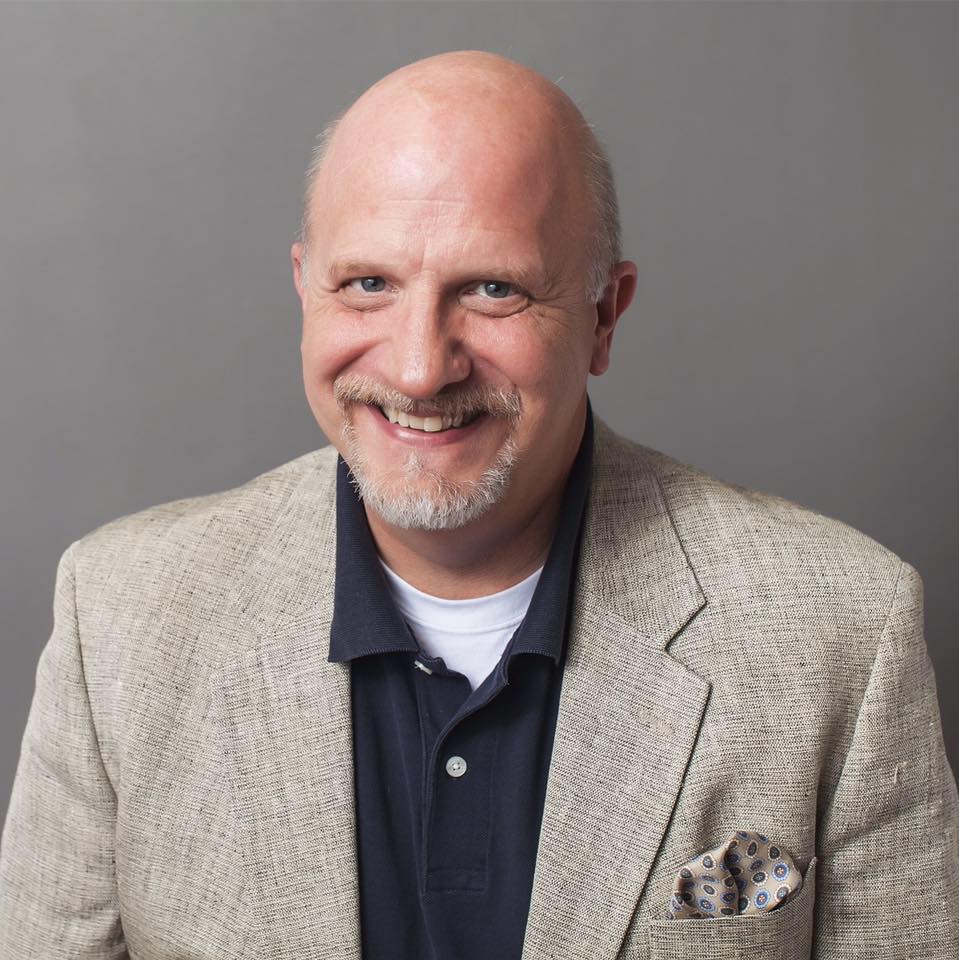
Pelham (Pat) Pearce

The announcement was made by Pearce on his facebook page early this morning. The company has not yet responded to Pearce’s sudden announcement, which in its entirety was: “Dear Friends: I have resigned as Artistic Director of the Central City Opera. Please use my personal email, cell or social media to contact me. I look forward to new possibilities.”

The announcement comes only two weeks before the opening of Central City Opera’s 2002 season on Saturday, July. 2. The season, marking their return to Central City after two years that were affected by the COVID pandemic, features the musical Light in the Piazza by Craig Lucas and Adam Guettel (opening July 2) and Die Fledermaus by Johann Strauss, Jr.  (opening July 9).

For more information on the summer season, visit the Central City Opera Web page.

More information will be posted as it become available.

Longmont Symphony announces 2022–23 season

Season includes Beethoven cycle, Handel’s Messiah, world premieres

By Peter Alexander June 8 at 1:54 p.m.

The Longmont Symphony recently announced their 2022–23 season of concerts. The season features six mainstage concerts, three chamber orchestra concerts, and a Messiah singalong during the Holiday season (Dec. 18; see full season listings below).

The Beethoven symphony cycle will continue with Symphony No. 8 (Oct. 22 and 23), and other familiar orchestral repertoire will be represented by works of Dvořák and Sibelius. There will also be works by less familiar composers, including two world premieres, adding up to a season with intriguing discoveries to be made on most programs.

Composer John Heineken

The first of the two world premieres is Symphony for the Great Return by American composer John Hennecken on the opening night of the new season, Oct. 8. With it on the same program are Dvořák’s familiar Cello Concerto, played by Naumburg Competition winner Clancy Newman, Aaron Copland’s Fanfare for the Common Man, and George Walker’s elegiac Lyric for Strings.

The next installment of the LSO’s Beethoven cycle will feature the Eighth Symphony, possibly the least familiar of the canonical nine symphonies (Oct. 22 and 23 in Stewart Auditorium). Sharing the same chamber orchestral program is a symphony by Anton Reicha, a contemporary and friend of Beethoven. An adventurous and experimental composer for his times, Reicha is little known today, but his work serves to fill in the context in which Beethoven worked.

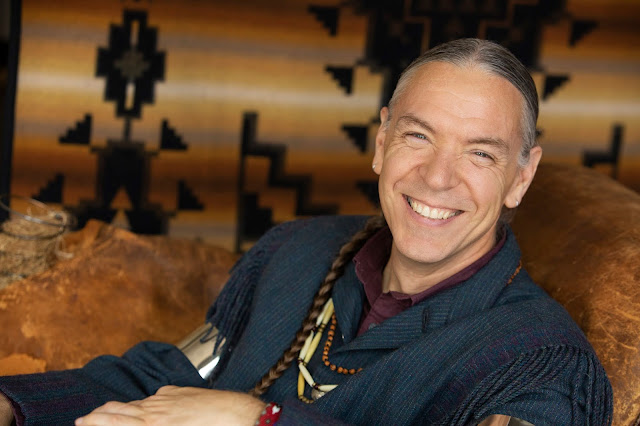
Jerod Impichchaachaaha’ Tate

The major work on the November mainstage concert (Nov. 19) will be Dvořák’s Symphony No. 8 in G major, a cheerful and upbeat piece that was written shortly before the composer’s 1892–93 visit to the United States. It will be preceded by three works that reflect the native American experience: Overture to the choral-orchestral Song of Hiawatha by the black British composer Samuel Coleridge-Taylor; American composer Michael Daugherty’s Trail of Tears for flute, strings and harp, inspired by the forced removal of Cherokees from their homeland; and Chokfi’ (Rabbit) for strings and percussion by Jerod Impichchaachaaha’ Tate, a composer who is a citizen of the Chickasaw Nation in Oklahoma. Flute soloist for Trail of Tears will be Brice Smith.

The LSO will celebrate the Holidays with a complete performance of Handel’s Messiah (Dec. 17), followed by an audience-participation truncated Messiah “singalong.”

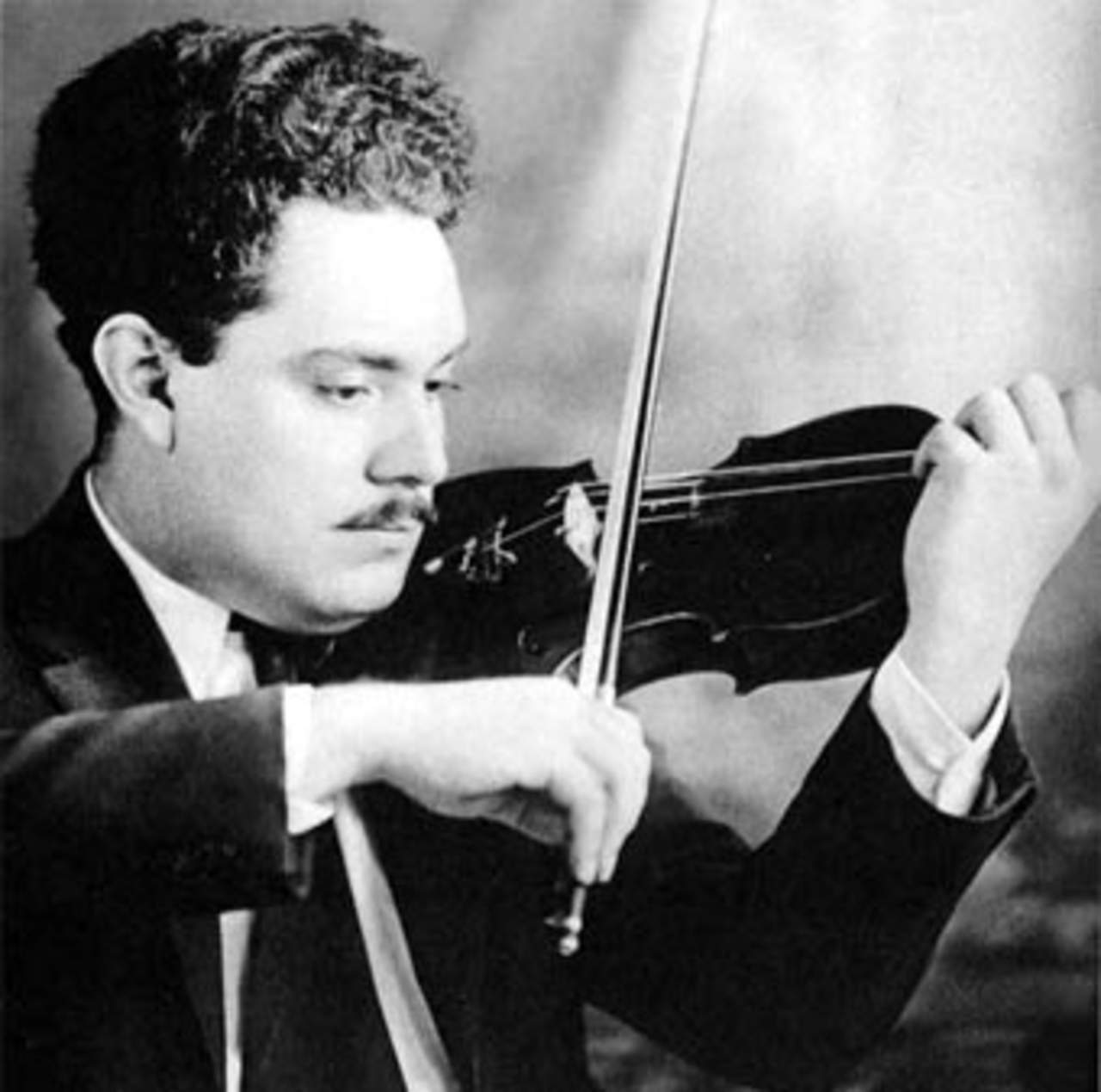
Silvestre Revueltas

The new year begins with a family concert (“Painting the Orchestra,” Jan. 21, 2023), followed by an all-Sibelius program (Feb. 18, 2023). Sibelius is generally under-represented in orchestra repertoire now, so it’s good to have a complete concert of his music, even if the program sticks to his more familiar works—Finlandia, the Violin Concerto with soloist Judith Ingolfsson, and the Symphony No. 2 in D major.

March 18 and 19 will see the second concert of the “Made in America” series, opening with Alcancías (Penny banks) for chamber orchestra by the 20th-century Mexican composer Silvestre Revueltas. Jason Shafer, principal clarinet with the Colorado Symphony and a previous soloist with the LSO, returns to play Copland’s Clarinet Concerto. Completing the program are Gershwin’s Lullaby and Ravel’s Le Tombeau de Couperin, written for piano as a tribute to the Baroque composer François Couperin and later transcribed for orchestra.

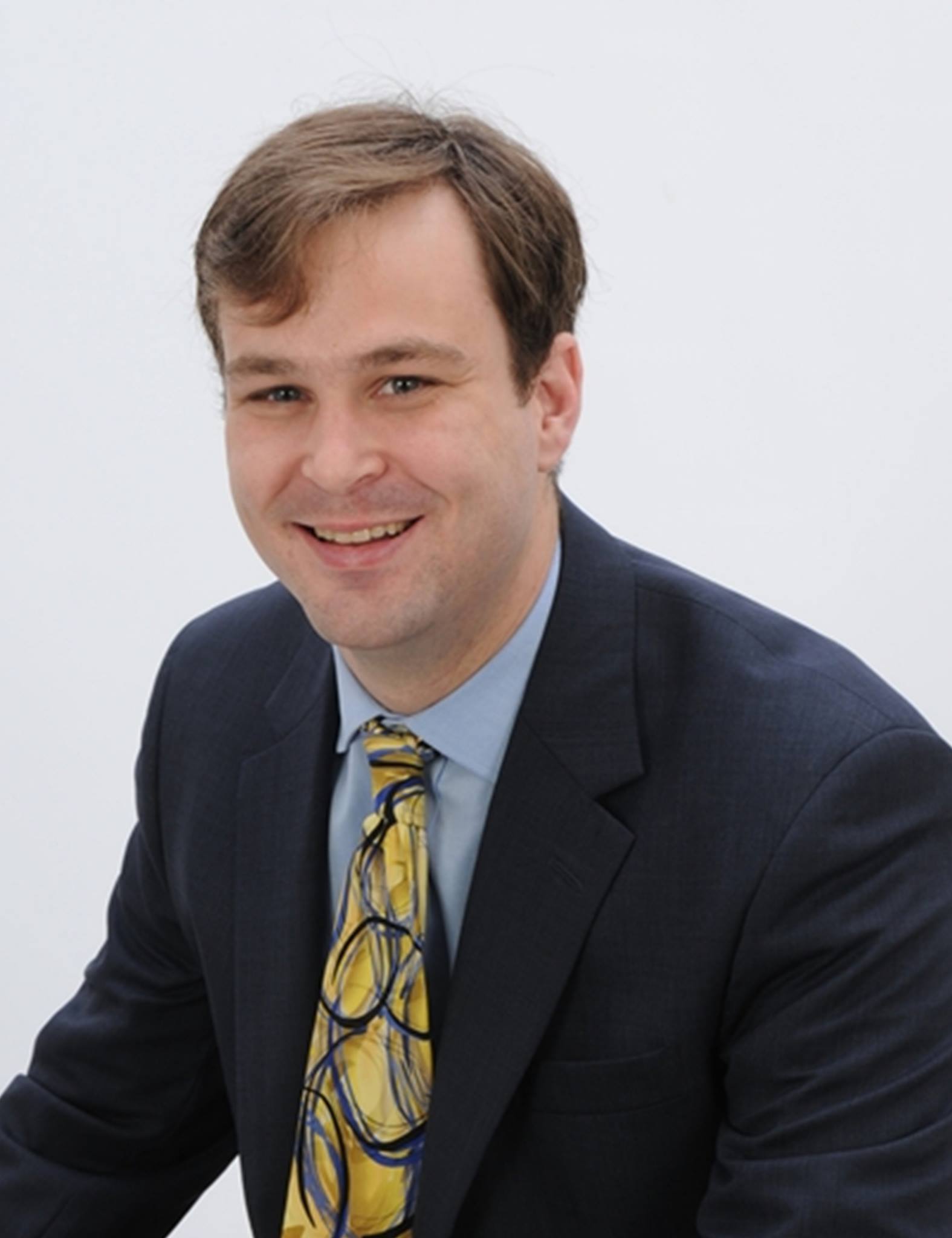
Tyler Harrison

The season’s second world premiere will be the Symphony No. 3 by pianist/composer and CU, Boulder, alumnus Tyler Harrison. It will be paired with Tchaikovsky’s brooding Symphony No. 6, “Pathétique,” in a program titled “Darkness and Light” (April 15).

The 2022–23 concert season wraps up May 6 with a lighter program, “LSO Goes to the Movies,” featuring music by John Williams, Ennio Morricone and Hans Zimmer. Subscriptions are available through the LSO Web page. Tickets to individual concerts will go on sale Friday, July 29.

# # # # #

2022–23 Concert Season
Longmont Symphony Orhestra

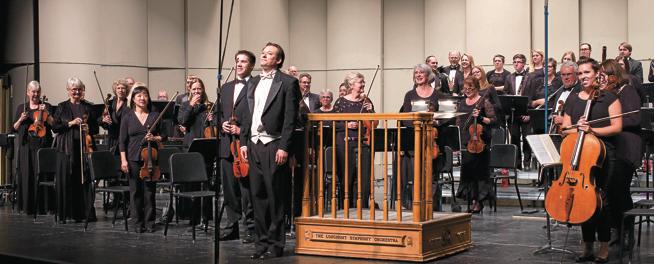
Longmont Symphony and conductor Elliot Moore

“The Great Return”
Elliot Moore, conductor, with Clancy Newman, cello

  • Copland: Fanfare for the Common Man
  • George Walker: Lyric For Strings
  • John Hennecken: Symphony for the Great Return (World premiere)
  • Dvořák: Cello Concerto

7:30 p.m. Saturday, Oct. 8
Vance brand Civic Auditorium

Beethoven Symphony Cycle
Elliot Moore, conductor

  • Anton Reicha: Symphony in G
  • Beethoven: Symphony No. 8

7 p.m. Saturday, Oct. 22
4 p.m. Sunday, Oct. 23
Stewart Auditorium, Longmont Museum

“Made in America,” Part 1
Elliot Moore, conductor, with Brice Smith, flute

  • Samuel Coleridge-Taylor: Overture to Song of Hiawatha
  • Michael Daugherty: Trail of Tears
  • Jerod Impichchaachaaha’ Tate: Chokfi’
  • Dvořák: Symphony No. 8 in G major

7:30 p.m. Saturday, Nov. 19
Vance Brand Civic Auditorium

Candlelight Concert
Elliot Moore, conductor

  • Handel: Messiah

4 p.m. Saturday, Dec. 17
Westview Presbyterian Church

Messiah Singalong
Elliot Moore, conductor

  • Handel: Messiah (selections)

4 p.m. Sunday, Dec. 18
Westview Presbyterian Church

”Painting the Orchestra!” Family Concert
Elliot Moore, conductor
Program includes:

  • Prokofiev: March from The Love for Three Oranges
  • John Williams: Nimbus 2000
  • Prokofiev: Cinderella Ballet Suite (selections)

4 p.m. Saturday, Jan. 21, 2023
Vance Brand Civic Auditorium

“Sibelius: A Portrait”
Elliot Moore, conductor, with Judith Ingolfsson, violin

  • Sibelius: Finlandia
  • —Violin Concerto
  • —Symphony No. 2 in D major

7:30 p.m. Saturday, Feb. 18
Vance Brand Civic Auditorium

“Made in America,” Part 2
Elliot Moore, conductor, with Jason Shafer, clarinet

  • Silvestre Revueltas: Alcancías
  • Copland: Clarinet Concerto
  • Gershwin: Lullaby
  • Ravel: L’Tombeau de Couperin

7 p.m. Saturday, March 18, 2023
4 p.m. Sunday, March 19, 2023
Stewart Auditorium, Longmont Museum

“Darkness and Light”
Elliot Moore, conductor

  • Tchaikovsky: Symphony No. 6, “Pathétique”
  • Tyler Harrison: Symphony No. 3 (World premiere)

7:30 p.m. Saturday, April 15, 2023
Vance Brand Civic Auditorium

“LSO Goes to the Movies”
Elliot Moore, conductor
Program includes:

  • John Williams: Music from Star Wars and Harry Potter films
  • Ennio Morricone: Music from Cinema Paradiso
  • Hans Zimmer: Music from Pirates of the Caribbean

7:30 p.m. Saturday, May 6, 2023
Vance Brand Civic Auditorium

Season tickets now available. Single-even tickets go on sale July 29.

Ars Nova Singers, guitarist Spera will present ‘postcards to the future’

Concerts June 3–5 feature new work by Theofanidis and Pizzetti’s 1922 Requiem

By Peter Alexander May 23 at 9:12 p.m.

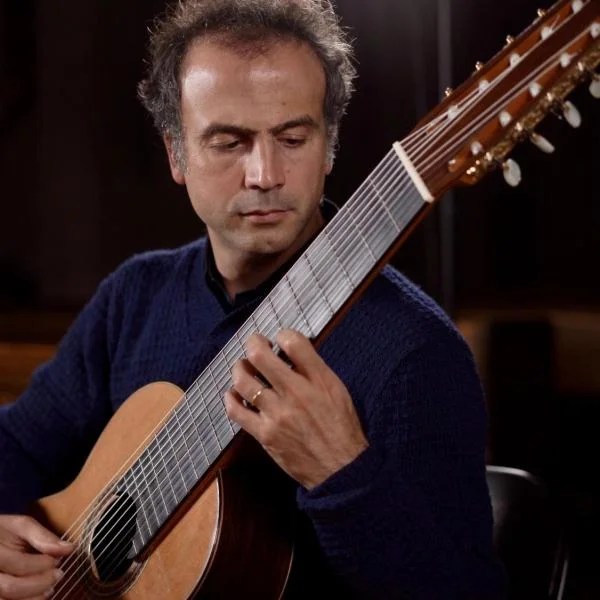
Nicolò Spera

Guitarist and CU music professor Nicolò Spera was shocked by things going on the U.S. after the death of Supreme Court Justice Ruth Bader Ginsburg. He wanted to respond in the best way he knew—with music.

The musical work that came from that desire, Door Out of the Fire by Pulitzer Prize-winning American composer Christopher Theofanidis, will be the centerpiece of a concert by Boulder’s Ars Nova Singers, under the direction of Thomas Edward Morgan. The Ars Nova performance will be the Colorado premiere, following a performance by Spera in Michigan in October, 2021.

Also on the program is the Requiem of Italian composer Ildebrando Pizzetti. Performances will be June 3, 4 and 5, in Denver, Boulder and Longmont, respectively (see details below). In addition to the live performances, the concert will also be available by livestream. Information and tickets for the concerts, which close out Ars Nova’s 2021–22 season, are available here.

Christopher Theofanidis

After Ginsburg’s death, “I wanted a composer to write some ‘postcards to the future,’ in music,” Spera wrote in a recent email. He turned to Theofanidis, who had recently written an orchestral work, On the Bridge of the Eternal, for the 2020 centennial of the CU Boulder College of Music.

Writing for and with Spera, Theofanidis composed four choral “messages in a bottle” based on poems by Melissa Studdard. Each of the four choral settings is preceded by a prelude for guitar.

The texts reflect some of the major issues of our time, including the threat posed by climate change. They are titled “Burning Cathedral,” “The Book of Rahul,” “Ruth’s Aria”—to be sung by CU music faculty member Abigail Nims, mezzo soprano—and “Migration Patterns.” The work is dedicated to “le nostre speranze”—our hopes—Spera’s children, Julia and Giacomo.

Pizzetti’s Requiem will be presented in observance of the 100th anniversary of its composition. The Requiem, Pizzetti’s only liturgical music, is written for a-capella choir. The musical setting includes Gregorian chant as well as movements that recall Renaissance madrigals. The texture varies from single-line chant to eight voices to multiple choirs in the manner of 17th-century Venetian polychoral music.

# # # # #

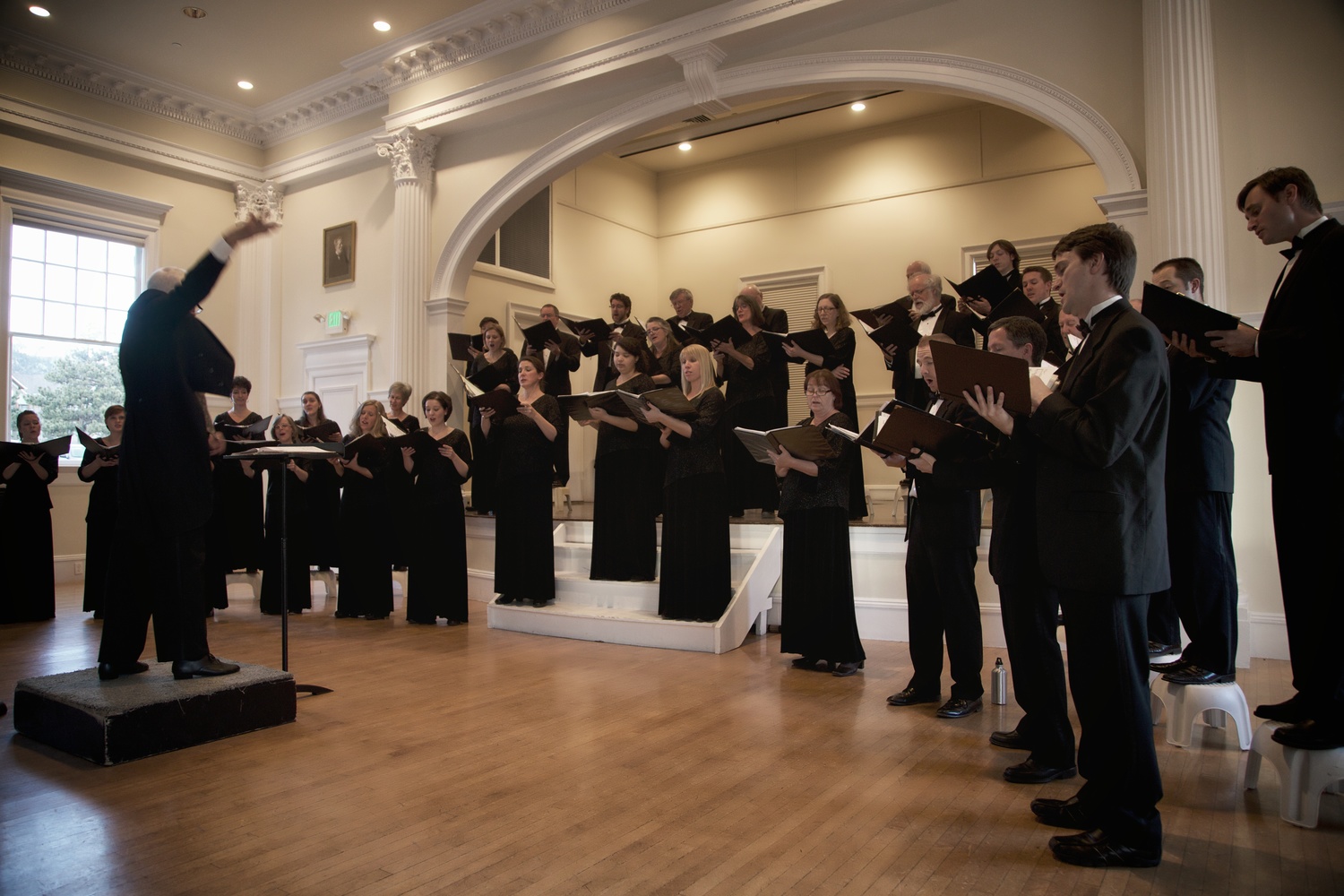
Thomas Edward Morgan and Ars Nova Singers

Made Real
Ars Nova Singers, Thomas Edward Morgan, director
With Nicolò Spera, guitar, and Abigail Nims, mezzo-soprano

  • Christopher Theofanidis: Door Out of the Fire
  • Ildebrando Pizzetti: Requiem

7:30 p.m. Friday, June 3
St. Paul Community of Faith, Denver

7:30 p.m. Saturday, June 4
First United Methodist Church, Boulder

7 p.m. Sunday, June 5
Stewart Auditorium, Longmont Museum

Information and tickets, including livestream

MahlerFest includes works by Bartók, Casella, guest composer Christopher Gunning

Thirty-fifth festival returns to near-normal with five days of activities

By Peter Alexander May 16 at 10:20 p.m.

It has only been nine months since the COVID-postponed 34th Colorado MahlerFest, but the festival is returning in its usual May slot and with a full schedule this week.

Performances in the 35th festival include the usual Sunday afternoon Stan Ruttenberg Memorial Concert (May 22) in Macky Auditorium featuring a Mahler Symphony—this year the Third— as well as a symposium Saturday. Other events include music for piano (Tuesday), a film screening (Wednesday), chamber music (Thursday), a free concert of film music at the Boulder Bandshell (Friday) and an opera performance (Saturday; see full schedule below). There are also open rehearsals and social events during the week.

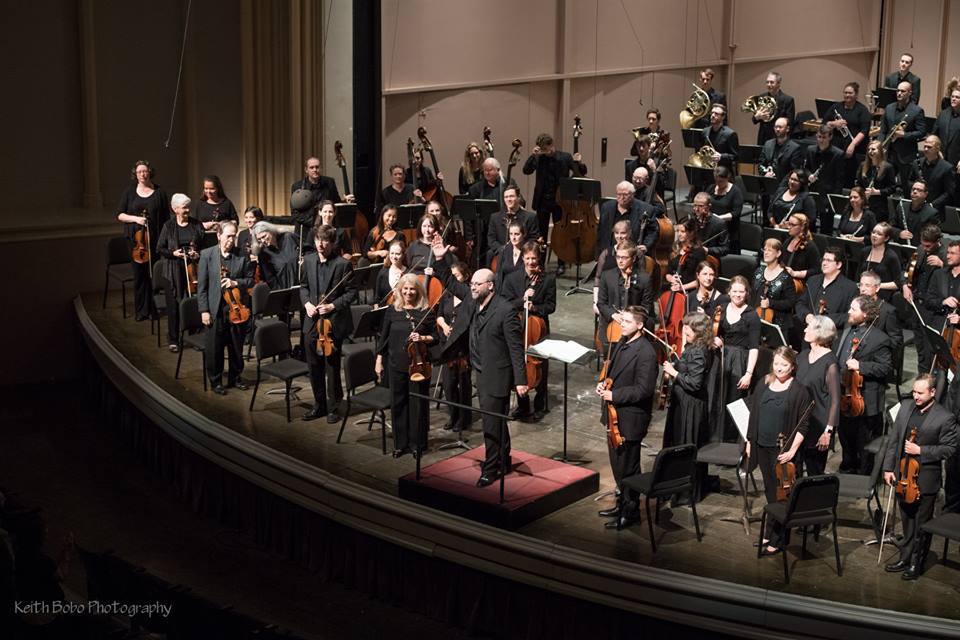
Kenneth Woods with the Colorado MahlerFest Orchestra. Phot by Keith Bobo.

Full details and tickets are available on the MahlerFest Web page.

“We’re really excited to do a quote ‘normal’ festival,” MahlerFest’s artistic director Kenneth Woods says. “It will be the biggest festival we’ve done so far.”

The signature event of the festival is the annual performance of a Mahler symphony. That is how the festival was started, and it remains the culmination of the week’s activities. The Third Symphony “is the biggest of the big pieces, the most Mahler-ish of the Mahler symphonies,” Woods says. It will be presented in the first U.S. performance of a new critical edition from the publisher Breitkopf & Härtel.

The Third is indeed a sprawling work in six movements divided into two parts: An opening march, titled “Pan Awakes; Summer Marches In” that lasts 30 minutes or more; and a series of five movements in differing styles and for differing forces, titled respectively “What the flowers in the meadow tell me,” “What the animals in the forest tell me,” “What man tells me,” “What the angels tell me” and “What love tells me.”

In Woods’s words, the opening movement is “a creation myth. It’s incredibly epic.” That exuberant, bold march is followed by a series of more intimate reflections that grew out of Mahler’s reverence for nature. The flowers inspire a graceful minuet, the animals an energetic scherzo that includes a nostalgic offstage posthorn solo.

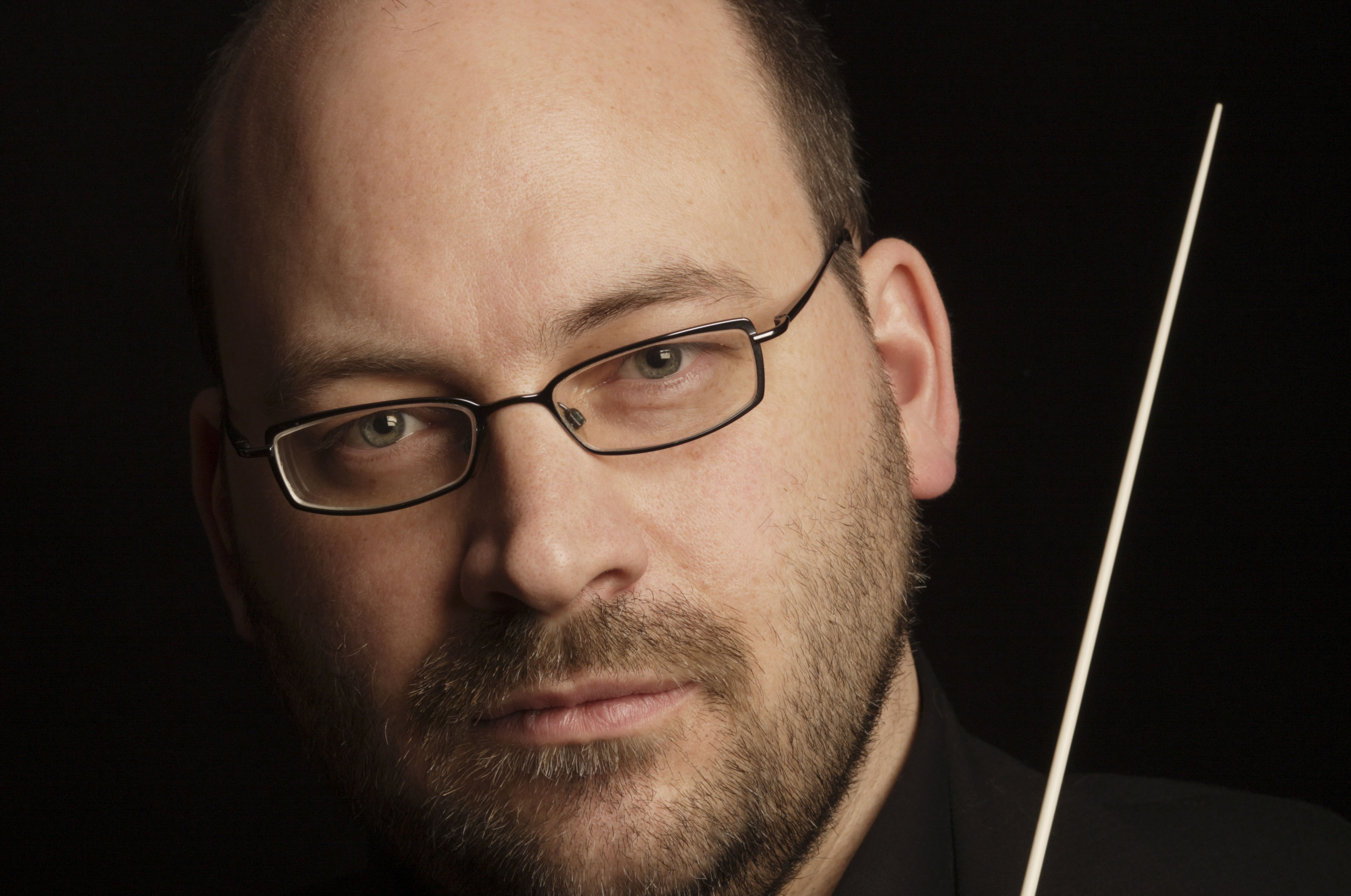
Kenneth Woods. Photo by Chris Stock.

“What man tells me” is an ominous alto solo using a text from Nietzsche, “O Man! Take heed!” The angels are represented with a folk-like tune accompanied by a children’s chorus imitating bells, and in the final movement the full orchestra without singers brings love’s message in the form of a broad, lyrical slow movement. 

“Modern-day fascination with this piece for me is trying to understand what Mahler means when he says, ‘What the flowers tell me’,” Woods says. “It’s quite remarkable that he’s taking these almost naive ideas and writing huge movement after huge movement of intricate, sophisticated music.

“I see the piece almost as a call to action. It ought to inspire us to listen as Mahler listened, (and) to listen to Mahler’s music as he listened to the flowers. It’s so timely—what was once gentle warnings are now urgent cries of alarm. When you think about Mahler’s evocation of the flora and fauna, and what no longer exists, there is an element of a prophetic warning in the Third Symphony, but a whole lot of hope.”

Since taking over as director of the festival in 2015, Woods has expanded the scope of the festival to include music by composers related to Mahler in one way or another. In addition to the Third Symphony of Mahler, the Sunday concert will feature the world premiere of the 10th symphony of British composer Christopher Gunning.

Christopher Gunning

A prominent composer of film scores who has turned more to the writing of symphonies, Gunning is related to Mahler through the world of film music. Woods points out that the earliest film composers—Franz Waxman, Max Steiner and Erich Wolfgang Korngold—were all Austrian- or German-born musicians who brought the style of Mahler and his contemporaries to Hollywood.

And now, he says, Gunning is returning the film-music style to the symphony, “a kind of musical arc of the last 100 years coming full circle. Gunning is taking where film music got to and going back into that large-scale exploration of sonata form (of the symphony) using the language that it evolved through to him.”

The presence of Mahler’s style in film music will be explored in more depth in the free Friday evening concert at the Boulder Bandshell, in a program titled “Mahler and the Movies.” 

Another work with a distant relationship to Mahler is the opera Bluebeard’s Castle by Bartók, which will be presented in a chamber version Friday. Half a generation younger than Mahler, Bartók wrote the opera in 1911, the year of Mahler’s death, and saw its first performance in 1918.

“It is the most amazing of operas,” Woods says. “I would not try to convince anyone that Bartók and Mahler are in any way the same, but they’re breathing the same air, and feeding from the same streams. What fascinates me is stylistically how far they diverge, but the role of vernacular music in both composers is provocative for its time, and that’s something that does link them in an interesting way.”

Soprano April Fredrick

The chamber version of Bluebeard’s Castle will be presented in a concert performance, featuring soprano April Fredrick as Judith and bass Gustav Andreassen as Bluebeard. Fredrick will speak about the opera at Saturday’s symposium in a talk titled “Self-will and missed connections in Bluebeard’s Castle.”

The rest of the symposium program, and the programs of the other concerts are listed in full below. There is a great deal of music not by Mahler—pieces by Bruckner, Casella, George Crumb, Beethoven, John Williams and others—but for Woods the focus remains firmly on Mahler’s symphonies, regardless of the program content.

“This will be the first year that you can hear some of every single Mahler symphony in the festival, if you come to every event,” he says. “In fact, I can guarantee listeners that they’ll hear some of every Mahler symphony on Friday night (“Mahler and the Movies”)—just not in the way they are used to hearing it.”

# # # # #

Colorado MahlerFest XXXV
“What Mahler Tells Me”

Mahler at the Piano
David Korevaar and Jeremy Reger, piano

  • Bruckner: Symphony No. 3, movements II and IV (arranged by Mahler)
  • Mahler: Symphony No. 3, “Menuetto aus der III. Symphonie” (arranged by Ignaz Friedman)
  • Mahler: Symphony No. 4, movement IV ”Das himmlische Leben” (arranged for piano by Mahler; played by Mahler via piano roll)
  • Mahler: Symphony No. 5, movement I “Trauermarsch” (arranged by Stadl)
  • Mahler: Symphony No. 6, movements II and III (arranged by Alexander Zemlinsky)
  • Mahler: Symphony No. 7, movement V (arranged by Alfredo Casella)

7:30 p.m. Tuesday, May 17
Grusin Hall, CU Imig Music Building

Movie: Under Suspicion
Film Screening of Under Suspicion, starring Liam Neeson and Laura San Giacomo
Film score by MahlerFest guest composer Christopher Gunning

3 p.m. Wednesday, May 18
Boedecker Theater, Dairy Arts Center

Quartets and More
Zachary De Pue, Karen Bentley Pollick and Suzanne Casey, violin; Lauren Spaulding, viola; Kenneth Woods and Parry Karp, cello; and Jennifer Hayghe, piano

  • Christopher Gunning: Piano Trio
  • Alfredo Casella: Cello Sonata No. 1
  • George Crumb: Sonata for solo cello
  • Beethoven: String Quartet No. 16 in F major, op. 13
    III. Lento assai, cantabile e tranquilla
  • Bartók: String Quartet No. 1

4 p.m. Thursday, May 19
Mountain View United Methodist Church

Mahler and the Movies
Colorado MahlerFest Chamber Orchestra, Kenneth Woods, conductorMax Steiner: Music from King Kong (arr. Steven Stanke)

  • Christopher Gunning: The Belgian Detective: Theme from Angela Christie’s Poirot (arr. Kenneth Woods)
  • Franz Waxman: Suite from Sunset Boulevard (arr. Matthew Lynch)
  • Mahler: Adagietto from Symphony No. 5 (arr. Kenneth Woods)
  • Korngold: Suite from Captain Blood (arr. Luciano Williamson)
  • John Williams: Theme from Schindler’s List
  • Gunning: Music from Under Suspicion (arr. Kenneth Woods)
  • George Morton: Mahler, A Final Frontier, Fantasy on themes of Mahler and Courage

6 p.m. Friday, May 20
Boulder Bandshell, 1212 Canyon Blvd.; Free

NOTE: An alternate venue in case of inclement weather will be the Mountain View United Methodist Church.

Symposium
MahlerFest XXXV Symposium

  • Leah Batstone: “Mahler’s Nietzsche: Philosophical Resonances in the Early Symphonies”
  • April Fredrick: “’Now all is darkness’: Self-Will and missed connections in Bluebeard’s Castle
  • Peter Franklin: “Mirroring the world? What a sentimental trombone, a distant posthorn and The Bird of the Night tell us about a symphony”
  • Kenneth Woods: “Interpreting Mahler’s Third Symphony”
  • Nick Pfefferkorn: “Mahler Third Symphony: Insights on the first critical edition from the editor’s desk”

9 a.m.–4 p.m. Saturday, May 21
Mountain View United Methodist Church; Free

Bluebeard’s Castle
Colorado MahlerFest Chamber Orchestra, Kenneth Woods, conductor
April Fredrick, soprano, and Gustav Andreassen, bass

  • Bartók: Bluebeard’s Castle
    Arranged for chamber orchestra by Christopher van Tuinen and Michael Karcher-Young

7:30 p.m. Saturday, May 21
Mountain View Methodist Church

Mahler’s Third Symphony 
Colorado MahlerFest Orchestra, Kenneth Woods, conductor
With Stacey Rishoi, mezzo-soprano, Women of the Boulder Concert Chorale and Boulder Children’s Chorale Festival Choir

  • Christopher Gunning: Symphony No. 10 (World premiere)
  • Mahler: Symphony no. 3

3:30 p.m. Sunday, May 22
Macky Auditorium

More information and tickets for all MahlerFest performances are available HERE.

CORRECTIONS (May 17 at 12 noon): April Fredrick’s family name was corrected; it is not Frederick. Violist Mario Rivera has replaced Lauren Spaulding on the “Quartets and More” program May 19. Due to technical constraints in the venue, there will be no lighting effects in the performance of Bluebeard’s Castle as was originally stated.

Violist Richard O’Neill gives stunning performance with Boulder Phil

All-English program features Walton Viola Concerto, works by Elgar and Anna Clyne

By Peter Alexander May 15 at 12:10 a.m.

The Boulder Philharmonic finished the 2021–22 classical concert series with sound and fury last night (May 14).

Conductor Michael Butterman and the Boulder Philharmonic in Macky Auditorium. Photo by Glenn Ross.

No, that is not a criticism. The first piece listed on the program was Anna Clyne’s Sound and Fury, inspired in part by Macbeth’s soliloquy featuring that phrase. In practice, though, Clyne was preceded by an “off-menu special,” in the words of conductor Michael Butterman: Elgar’s familiar “Pomp and Circumstance” March No. 1, in honor of the region’s recent graduates.

The performance was led by an honorary guest conductor, Boulder’s outstanding arts patron Gordon Gamm. Looking dapper in a fedora, Gamm did a creditable job of getting things started and holding the orchestra together. Indeed, the only audible error—one out-of-place note—cannot be laid to the conductor. 

Butterman preceded Clyne’s Sound and Fury with a helpful music-appreciation style introduction, with an explanation of it’s connection to “The Scottish Play” and illustrations from a Haydn symphony quoted in the score. The performance was strongly profiled, with contrasting sections nicely characterized and distinguished, lacking only the precision necessary for clarity in the skittering string parts and the full depth of sound that a larger orchestra could provide. 

The recorded voice speaking the “Tomorrow, and tomorrow, and tomorrow” soliloquy near the end was not always intelligible, but it did show how those words fit into the scheme of the piece. This is a new piece (2019) that is definitely comprehensible and enjoyable for the classical audience, and I would welcome hearing it again.

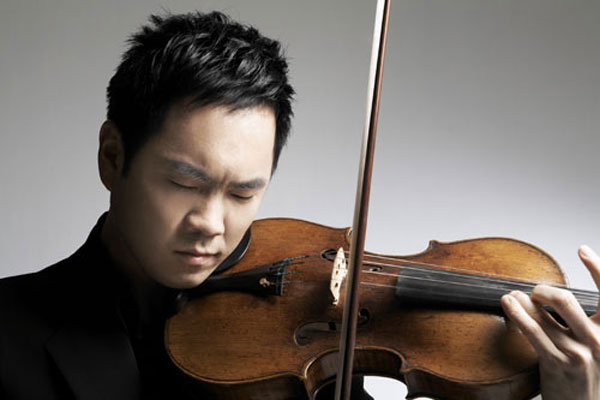
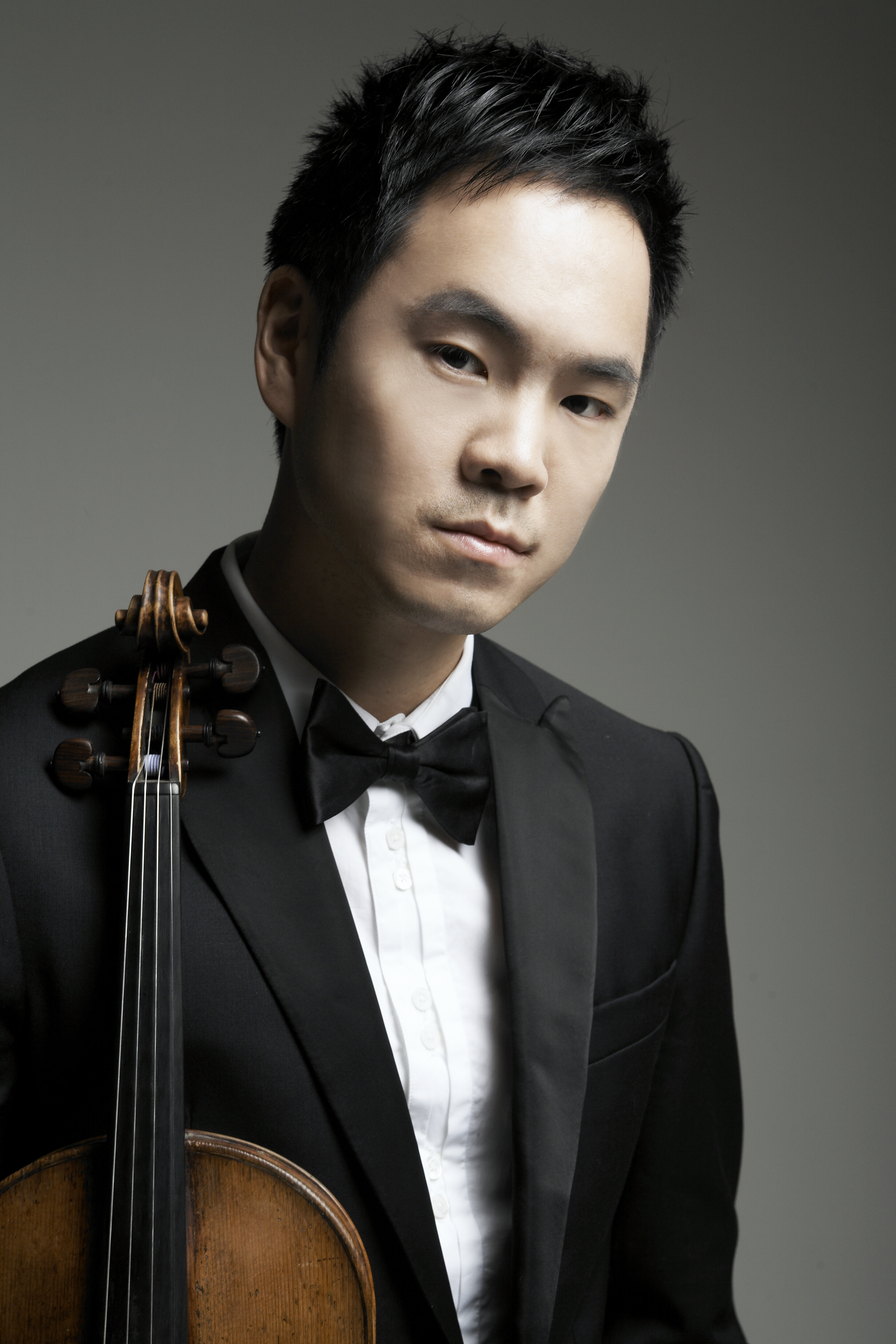
Violist Richard O’Neill

A friend told me about this concert, “The Walton Concerto won’t sell any tickets.” If that’s right, I’m sorry for anyone who was not sold a ticket because they don’t know Walton’s music. They missed a fun piece, and a stunning performance by violist Richard O’Neill, the newest member of the Takács Quartet. Where is their sense of fun, of adventure, interest in new things? This is not difficult music.

Composed in 1929, the Viola Concerto shows the composer’s quirky style to good advantage. At times lush, at times shifting, surging and dying away, its kaleidoscopic episodes and unexpected turns provide an ideal palette for an instrumental soloist of O’Neill’s qualities.

His performance was glittery (and no, I don’t mean his shoes) and perfectly assured. Visibly reacting to every twist and turn of the orchestra part, he showed in both gesture and musical interpretation his connection with the players. Utterly at ease playing all the virtuoso material the concerto throws at the soloist, O’Neil gave a solo performance of the highest caliber. 

Here the issues were of balance, both within the orchestra and (from where I was sitting) with the soloist. The boisterous second movement was my favorite, but the more gentle moments were equally well played. Two profound tributes to O’Neil: he held the audience in silence for at least 20 second at the end of the concerto, and it was the orchestra, stamping their feet, that brought him back for his final curtain call. 

Again channeling his inner Leonard Bernstein, Butterman gave an insightful introduction to Elgar’s “Enigma” Variations, showing how the variations brought their subjects—the composer’s friends—to life. This to me is a better preparation for the audience than program notes about “the return of the subsidiary theme” or “remote tonalities.”

Elgar’s “Enigma,” one of the greatest sets of orchestral variations of the Romantic or any period, received the best orchestral performance of the evening—maybe because it is a piece well known to all orchestral pros. Rehearsal time then can be devoted to details of interpretation, of unity, of sound. Butterman found the telling elements in each variation and brought out their individual characters. 

As one hopes and expects, the familiar “Nimrod” variation swelled calmly from shimmering pianissimo strings to a rich, full orchestral climax before falling back. Other variations had the sparkle, or the weight, to communicate character and meaning. This is a fun piece for brass, who enjoyed their moments of grandeur, and for the timpanist, who brought both visual and aural flash to the performance. 

Finally, this program had many of the ingredients of a successful concert: some exploration, a dazzling soloist, a great piece of music. I happily note the inclusion of a living female composer in the stew. It’s a recipe musical organizations should follow.

Grammy-winning violist to play with Boulder Phil

Richard O’Neill of the Takacs Quartet will play Walton Concerto Saturday

By Peter Alexander May 12 at 1:20 p.m.

Richard O’Neill

It was in the middle of the pandemic and a massive blizzard when Richard O’Neill won a Grammy award. 

The Grammy awarded in 2021 was for his recording of the Viola Concerto by American composer Christopher Theofanidis—during the same year that he joined the Takács Quartet, moved to Boulder and joined the CU faculty. “This has been a long haul,” he said at the time. 

Hopefully, things are closer to whatever can be called normal for a performing musician/recording artist, as O’Neill takes the stage Saturday (May 14) to perform William Walton’s Viola Concerto with the Boulder Philharmonic and conductor Michael Butterman (concert details below; tickets here).

A demanding and dramatic work. Walton’s concerto was composed in 1929, when the composer was 27 years old, and premiered that year by the composer/violist Paul Hindemith. Since then it has become one of the landmarks of the viola repertoire.

Composer Anna Clyne has drawn on a variety of sources for inspiration in her compositions, from the paintings of Mark Rothko to music by Beethoven. Her Sound and Fury was inspired by Shakespeare’s soliloquy for Macbeth and by Haydn’s unusual and quirky six-movement Symphony No. 60, Il distratto (The distracted one), which began as incidental music for a comic play.

Anna Clyne. Photo by Jennifer Taylor.

In a program note, Clyne wrote: “My intention with Sound and Fury is to take the listener on a journey that is both invigorating—with ferocious string gestures that are flung around the orchestra—and reflective—with haunting melodies that emerge and recede.”

Sir Edward Elgar’s Variations on an Original Theme, known as the “Enigma Variations” from the word Elgar wrote at the top of the score, remains one of the most popular works in the orchestral repertoire, more than 120 years after its premiere. Each of the 14 variations has an inscription that refers to one of Elgar’s friends. 

Those subjects of the individual variations have been identified. The larger enigma, however, is what Elgar wrote in his program note: “The Enigma I will not explain. Its ‘dark saying’ must be left unguessed. . . . Over the whole set another and larger theme ‘goes,’ but is not played.”

Whether that “larger theme” is a musical or a philosophical one is one of the many mysteries that surround the piece. Guesses as to the musical theme have ranged from “Rule Britannia” to “Pop Goes the Weasel” to Luther’s “A Might Fortress is Our God,” to Liszt’s Les Preludes, none of which have convinced a majority of musical scholars.

And so that enigma remains unsolved. Feel free to go to the concert and devise your own solution.

# # # # #

Boulder Philharmonic Orchestra, Michael Butterman, conductor
With Richard O’Neill, viola

  • Anna Clyne: Sound and Fury
  • William Walton: Viola Concerto
  • Elgar: Enigma Variations

7:30 p.m. Saturday, May 14
Macky Auditorium

TICKETS

Conductor Cynthia Katsarelis and Pro Musica choose ‘Joy’

Music of Tchaikovsky, Bach and Dvořák for Sunday’s concert

By Peter Alexander April 29 at 1:10 p.m.

Conductor Cynthia Katsarelis found inspiration for her next concert in poetry.

In the midst of dire events in Boulder and around the world—the pandemic, the Marshall Fire, and the war in Ukraine—“I was thinking, how are we going to find joy?” she asks. “There’s a wonderful quote by an African-American poet, Toi Derricotte, ‘Joy is an act of resistance.’ It’s really been a source of inspiration.”

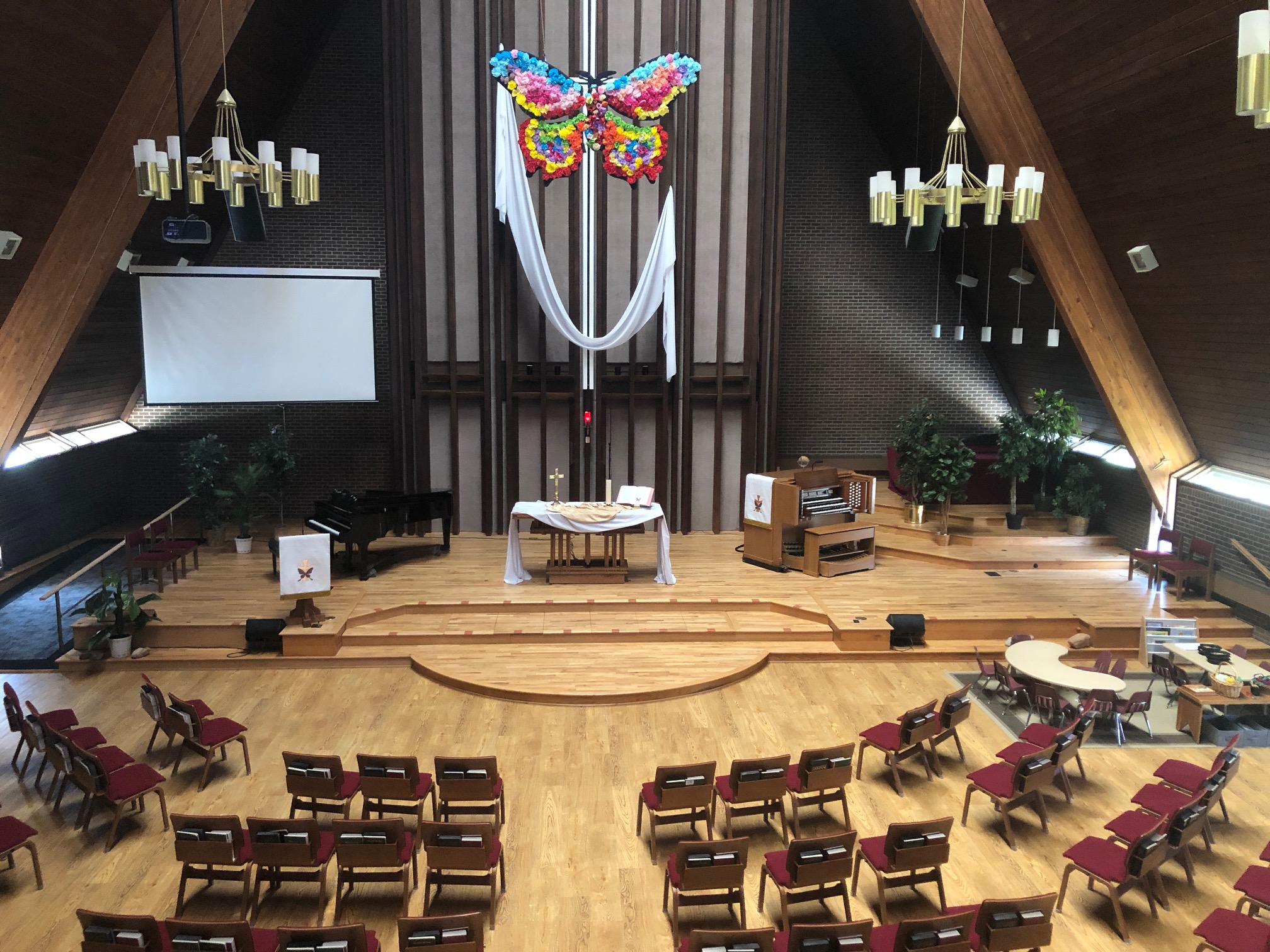
The renovated sanctuary of Mountain View Methodist Church

With that in mind, she decided to put together a concert program for the Pro Musica Chamber Orchestra titled “Joy” that would offer joy through music. The concert will be at 3 p.m. Sunday (May 1) in the newly remodeled Mountain View Methodist Church (see details below). 

The program comprises three pieces: Andante cantabile by Tchaikovsky, the Orchestral Suite in B minor by J.S. Bach, and the Serenade for Winds by Dvořák.

Katsarelis found another source of inspiration in the history of her own family, which has ancestral ties to Greece. “I thought a lot about my family in World War I and in World War II,” she says. “They found joy in their lives in the middle of all this, so I was thinking, how are we going to find joy?

Cynthia Katsarelis

“You can find joy going to a concert and hearing great music, connecting to your own humanity but also connecting to the humanity around you—people in the audience, the musicians (and) the artists. So it was really out of the depths that I decided to put on a concert called ‘Joy.’”

Tchaikovsky’s Andante cantabile is a string orchestra version of the slow movements from the composer’s First String Quartet. “It’s just this really beautiful work,” Katsarelis says. “It opens the concert with a lovely wash of the soul and a little tug at the heartstrings.”

It’s inclusion on this program is also a subtle political statement about the war in Ukraine. Katsarelis explains: “You have to remember that Tchaikovsky was a gay man who had to hide it, and was oppressed because of it. Putin has been brutal on the LGBTQ+ community, and when the Russians invaded Ukraine they had a list of people to target (including) LGBTQ+ activists. Tchaikovsky suffered in the society that he was in, and that element’s still there.”

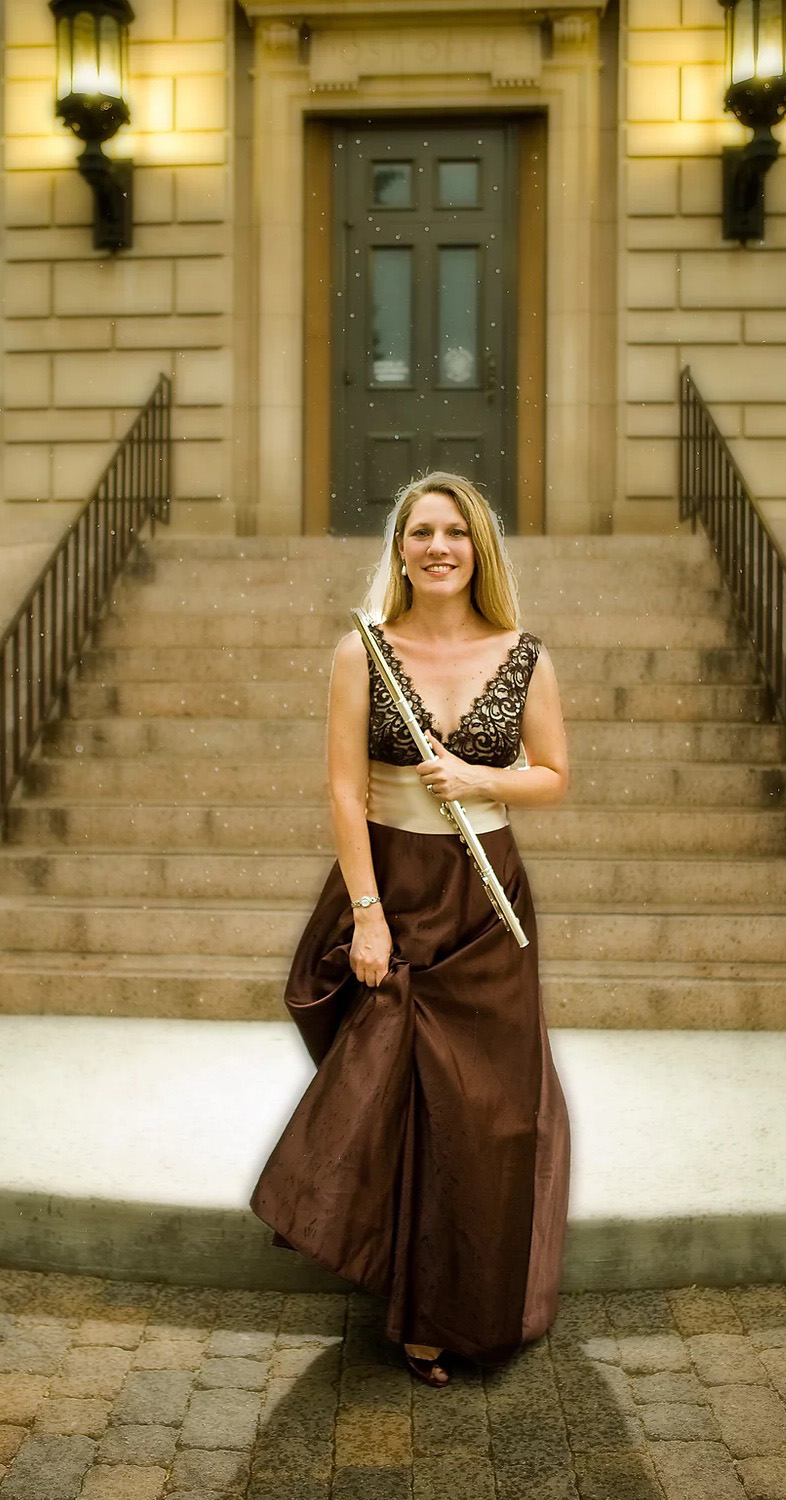
Michelle Stanley

The Orchestral Suite in B minor for flute and strings is one of Bach’s best known works. The featured performer will be Michelle Stanley, Pro Musica’s flutist and a flute professor at Colorado State University.

Katsarelis says that Pro Musica’s approach to Bach’s work would be “historically informed on modern instruments,” meaning that all of the orchestral players will have modern instruments, with their large dynamic range and fuller sound, but they will also make use of Baroque-era conventions in the treatment of rhythms and other details of articulation and interpretation.

“There are some conventions that we follow that are part of the Baroque dance,” Katsarelis says. “There’s a lot about Baroque music that’s suggestions, but you don’t play exactly what’s on the page. We add dynamics, we add articulations, we do the rhythms and in a way that represents the movements (of the different dances).”

The final piece of the “Joy” program is Dvořák’s Serenade for Winds, a piece that Katsarelis has programmed before. She turned to music for winds because she had been able to present music for strings over the past two years, since they can play while wearing masks, but “the winds were out of work for a year and a half during the pandemic,” she says. “And so I thought it was time to do the Dvořák again.”

Dvořák wrote the Serenade in 1878 when he was 37, and included it in an application for an Austrian state award for musicians, which he won. “Brahms was on the jury of that competition and specifically mentioned that he enjoyed that piece,” Katsarelis points out. “It’s a beautiful gem of a piece.

“It’s just lovely to listen to and really nice in character and sophisticated in a way where you don’t have to work at it. It’s very satisfying emotionally and it’s almost like therapy to play and listen to this beautiful piece. And to give the wind players an opportunity to really shine for 25 minutes in a major work is really special for us.”

In fact, Katsarelis hopes that the entire program becomes “almost like therapy” for the audience. “In the depths of everything going on in the world, reaching for joy and happiness felt like the medicine we all need,” she says.

# # # # #

“Joy!”
Pro Musica Chamber Orchestra
Cynthia Katsarelis, conductor, with Michelle Stanley, flute

  • Tchaikovsky: Andante cantabile, op. 11
  • J.S. Bach: Orchestral Suite No. 2 in B minor
  • Antonín Dvořák: Serenade for Winds in D minor, op. 44

3 p.m. Sunday, May 1
Mountain View Methodist Church, Boulder

TICKETS

CORRECTION 4/29: The spelling of poet Toi Derricotte’s name was corrected. It is Derricotte, not Deracotte.

Frequent Flyers join Boulder Phil for ‘Butterfly Lovers’

Concert April 30 includes music celebrating rebirth and reconnection

By Peter Alexander April 27 at 5 p.m.

Two years ago, conductor Michael Butterman had drafted a program to celebrate the return of spring with the Boulder Philharmonic Orchestra.

That program, originally planned for April 2020, had to be postponed, due to COVID. But now the long-planned concert celebrating renewal and rebirth has itself been resurrected for performance at 7:30 p.m. Saturday (April 30) in Macky Auditorium (tickets here).

A previous performance by Frequent Flyers Aerial Dance with the Boulder Philharmonic

“This was a program that was originally intended to reflect the notion of rebirth that happens in springtime,” Butterman says. “It still reflects that, but it has an additional layer of meaning for us—our own emergence from our pandemic isolation.”

The starting point for the program was The Butterfly Lovers Violin Concerto by Chinese composers He Zhanhao and Chen Gang, which the Philharmonic will perform with violin soloist Claude Sim and Boulder’s Frequent Flyers Aerial Dance Company. Before that performance the concert will open with Undistant by Mason Bates, which addresses our return to human interaction after the recent period of widespread self isolation.

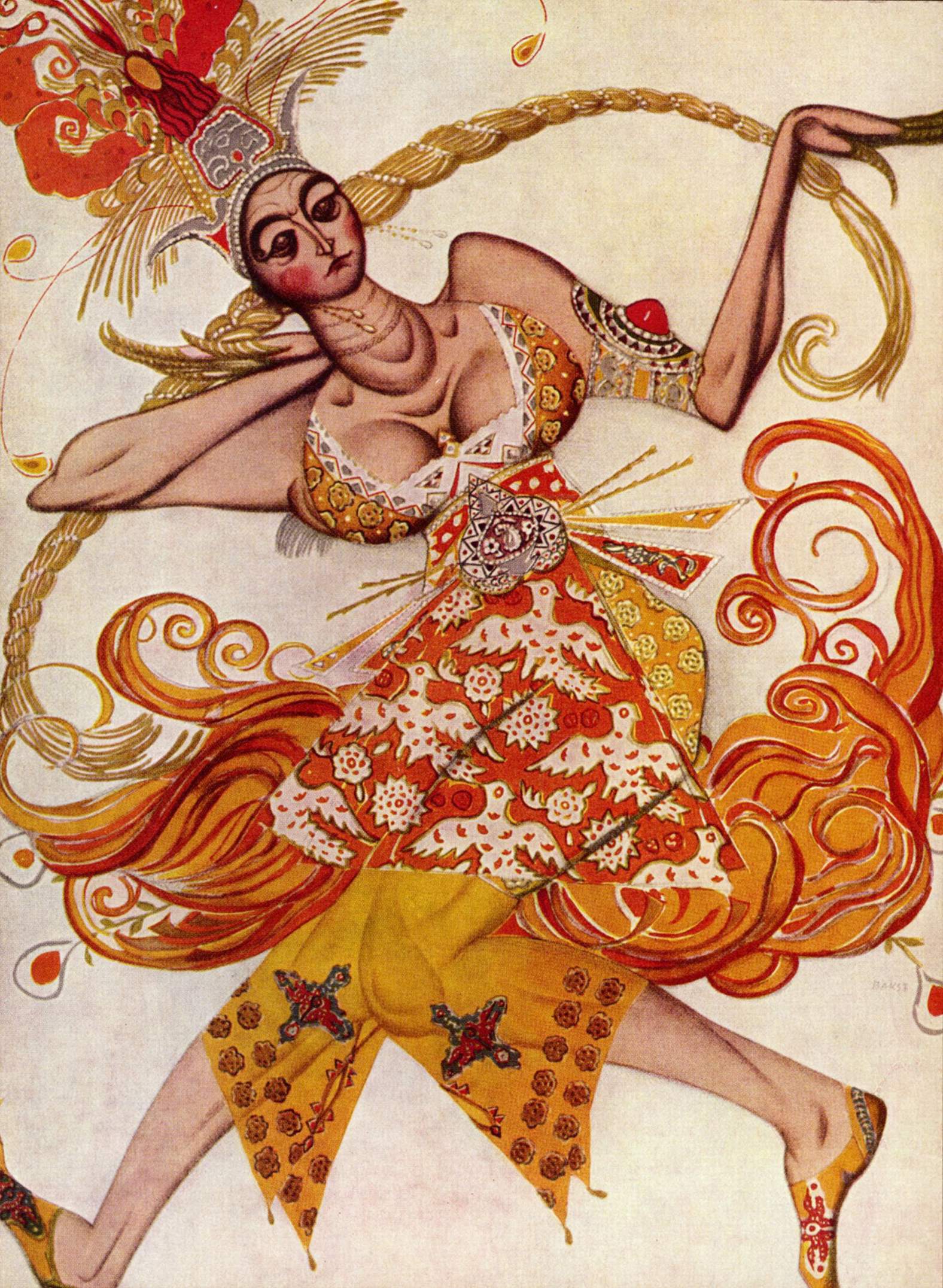
Original costume design for Stravinsky’s Firebird by Léon Bakst (1913)

Filling out the program will be first Rimsky-Korsakov’s Russian Easter Overture, which has obvious seasonal significance. The final piece will be Stravinsky’s Firebird Suite, which Butterman selected because it ends with the rebirth of knights and 13 princesses who have been under a magic spell—another connection to the idea of renewal.

The Butterfly Lovers Violin Concerto was written by two Chinese students of Western music at the Shanghai Conservatory and premiered in 1959. Written for a Western orchestra, it is based on a Chinese legend of lovers who are separated by death, but reunited as butterflies. “It works very well for Western audiences,” Butterman says. “It’s extremely relatable on first hearing.”

Butterman and the Phil have done a number of performances with Frequent Flyers. He thought that The Butterfly Lovers would be a good piece for further collaboration and suggested it to Nancy Smith, Frequent Flyers’ artistic director. “It strikes me that it has a narrative arc, and certainly has potential as a work for visual interpretation,” he says.

“(Smith) agreed and they really embraced the thing. They constructed this large wing-like structure that will be hung above the stage. It acts as one fixed structure for most of the piece, but it also has hinges and it can bend like butterfly wings. It will be quite something to see!”

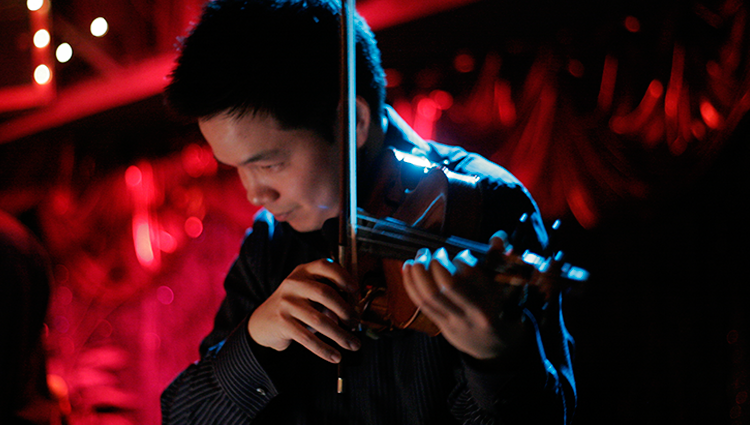
Violinist Claude Sim

The soloist, Claude Sim, is associate concertmaster of the Colorado Symphony. The Phil’s concertmaster, Charles Wetherbee, was first scheduled to perform the concerto, but when he became unavailable Sim stepped in to serve as soloist and as concertmaster for the concert.

The one piece that was not in the original program Butterman conceived two years ago is Bates’s Undistant. That is the piece on the program that best connects with the idea of people re-emerging from isolation as the pandemic abates—at least a little. “Undistant is a piece that (Bates) wrote in 2020, and it is a work that mirrors in some ways our separation,” Butterman says.

Michael Butterman. Photo by Jiah Kyun.

“There are two groups of musicians that are placed away from the rest of the orchestra. (Bates) has written an electronica part that incorporates static, sounds of Zoom and other communication platforms that we came to use a great deal during the pandemic. Over about seven minutes he brings these different elements back together, and there are little wisps of Beethoven’s ‘Ode to Joy,’ just enough that it’s recognizable. That begins to coalesce until we have an affirming and positive ending.”

Apart from the theme of rebirth and renewal, there is one thing that joins all four pieces musically, and that is their uplifting endings. It’s there in all four pieces. In Bates’s Undistant, it is the transformation from separation and static to hints of the “Ode to Joy.” In the Butterfly Lovers, it’s the overcoming of first separation and then death through the transformation of the lovers into butterflies, gently portrayed in music.

In the second half, the Russian Easter Overture opens with the solemn tones of two Russian Orthodox hymns, “Let God Arise!” and “An Angel Cried.” Rimsky-Korsakov wrote in an autobiography that “the gloomy colors of the Andante lugubre seemed to depict the holy sepulcher . . . [and] the solemn trumpet voice of the Archangel is then displaced by a tonal reproduction of the joyous, dance-like tolling of the bells.”

The progress of Stravinsky’s Firebird is no less joyous, with “The Infernal Dance of Katschei” being followed by the “Berceuse”—a tender lullaby that lulls Katschei’s demonic minions to sleep—and the “Finale” that portrays in music the return of Katschei’s prisoners to life.

You might say these are four variations on the theme of life returning after a long winter—or a pandemic.

# # # # #

“The Firebird and Frequent Flyers”
Boulder Philharmonic Orchestra, Michael Butterman, conductor
With Claude Sim, violin, and Frequent Flyers Aerial Dance

  • Mason Bates: Undistant
  • He Zhanhao and Chen Gang: The Butterfly Lovers Violin Concerto
  • Rimsky-Korsakov: Russian Easter Overture
  • Stravinsky: Firebird Suite (1919)

7:30 p.m. Saturday, April 30
Macky Auditorium

TICKETS

Boulder Phil announces its 65th anniversary season

Masterworks concerts for 2022-23 will all be in Macky Auditorium

By Peter Alexander April 27 at 12:15 a.m.

The Boulder Philharmonic announced programming for its 2022–23, 65th anniversary season Tuesday evening (April 26). All subscription concerts for the coming year will be once again in Macky Auditorium

Pianist Angela Cheng returns to Boulder to perform with the Phil April 22, 2023

The season introduced by music director Michael Butterman includes some warhorses— Rachmaninoff’s Rhapsody on a Theme of Paganini and Richard Strauss’ Don Juan—some less familiar standard works—Bruckner’s Symphony No. 7 and Ravel’s Piano Concerto in G—and a healthy dose of new and unfamiliar works (see full programs below). Particularly noteworthy will be two world and one Colorado premiere of commissioned works.

Some features of the season will be familiar to current and past Boulder Phil patrons. One will be the return to Macky. The annual Nutcracker performances with Boulder Ballet are scheduled for Nov. 25 and 27. There will be a seasonal special event, “Holiday Brass with the Phil,” Dec. 18. The Phil’s Executive Director, Sara Parkinson, announced the resumption of the educational Discovery Concerts for school students.

Long-time concertgoers will welcome the return of former CU faculty member and audience favorite Angela Cheng April 22, who has not appeared in Boulder since 2009. Other soloists during the season will include tenor Matthew Plenk, on the opening night concert Oct. 8; double bassist Xavier Foley and violinist Eunice Kim Nov. 12; and violinist Stefan Jakiw March 25. 

Concertmaster Charles Wetherbee will solo with the Phil Jan. 22, 2023

Boulder Phil concertmaster Charles Wetherbee has been on medical leave, but is expected back next season and will play Mozart’s Violin Concerto No. 5 with the orchestra Jan. 22.

One prominent change for the season is that the Saturday evening concert time has been moved to 7 p.m. from 7:30 p.m., in response to feedback from ticket buyers. That change affects all the masterworks concerts except “Afternoon with Bruckner,” at 4 p.m. Sunday, Jan. 22. In conjunction with the change of curtain time, the Phil will try different forms of related programming for its concerts, including pre-concert lectures, intermission features and post-concert talk-back sessions.

One special event in the season will bring the popular Denver-based multi-instrumental band DeVotchKa to Macky Auditorium to perform with the Phil. That performance will take place at the “old” time of 7:30 p.m. Saturday, May 6, 2023. Further details of that concert are pending.

The opening night concert Oct. 8, titled “Hymn to the Earth,” includes the first of the season’s premieres, a Boulder Phil co-commission that was postponed from a planned earlier season due to COVID: Ozymandias: To Sell a Planet. This musical alarum for threats to the planet was composed by the American composer Drew Hemmenger and uses Percy Shelley’s poem “Ozymandias,” as well as texts from native American sources, United Nations climate reports and speeches by Greta Thunberg. 

The Colorado premiere of another co-commission, Jennifer Higdon’s Suite from Cold Mountain, follows on Nov. 12, and another world premiere of a new work by Boulder High School graduate Leigha Amick will be presented April 22, 2023.

Season tickets will go on sale Monday, May 2, and tickets to individual concerts will be available Monday, Aug. 22. Purchases can be made by calling the box office at 303-449-1343, or through the Boulder Phil web page.

# # # # #

Boulder Philharmonic Orchestra
Michael Butterman, music director
2022-23 Season
All performances in Macky Auditorium except as otherwise noted

Conductor Michael Butterman with the Boulder Phil in Macky Auditorium

Opening Night: Hymn to the Earth
Boulder Philharmonic, Michael Butterman, conductor
With Boulder Phil Chorus and Matthew Plenk, tenor

  • Michael Abels: Global Warming
  • Drew Hemenger: Ozymandias: To Sell a Planet (Co-Commission & World Premiere)
  • Mozart: Overture to Don Giovanni
  • Wagner: Trauermusik from Götterdämmerung
  • Richard Strauss: Don Juan

7 p.m. Saturday, Oct. 8

Gran Duo: Higdon and Foley
Boulder Philharmonic, Michael Butterman, conductor
With Xavier Foley, double bass, and Eunice Kim, violin

  • Jennifer Higdon: Suite from Cold Mountain (Co-Commission & Colorado Premiere)
  • Xavier Foley: For Justice and Peace
  • Giovanni Bottesini: Gran Duo Concertante
  • Dvořák: Symphony No. 8 in G major

7 p.m. Saturday, Nov. 12

The Nutcracker with Boulder Ballet
Boulder Philharmonic, Gary Lewis, conductor 

2 and 7 p.m., Friday, Nov. 25
2 p.m. Sunday, Nov. 27

Special Event: Holiday Brass with the Phil

4 p.m. Sunday, Dec. 18
Mountain View United Methodist Church, Boulder

Afternoon with Bruckner
Boulder Philharmonic, Michael Butterman, conductor
With Charles Wetherbee, violin

  • Mozart: Violin Concerto No. 5
  • Anton Bruckner: Symphony No. 7 in E major

4 p.m. Sunday, Jan. 22, 2023

Jackiw Plays Bruch
Boulder Philharmonic, Michael Butterman, conductor
With Stefan Jakiw, violin

  • George Butterworth: The Banks of Green Willow
  • Max Bruch: Scottish Fantasy
  • Rachmaninoff: Symphonic Dances

7 pm. Saturday, March 25, 2023

Ravel and Rachmaninoff
Boulder Philharmonic, Michael Butterman, conductor
With Angela Cheng, piano

  • Leigha Amick: “Resound Boulder”” Commission 
  • Ravel: Piano Concerto in G
  • Rachmaninoff: Rhapsody on a Theme of Paganini
  • Tchaikovsky: Romeo and Juliet: Fantasy Overtur

7 p.m. Saturday, April 22, 2023

Special Event: DeVotchKa + Boulder Phil

7:30 p.m. Saturday, May 6, 2023