Longmont Symphony Brings “Romantic Russia” to the Front Range

Crowd-pleasers by Rimsky-Korsakov and Rachmaninoff are on the bill

By Peter Alexander
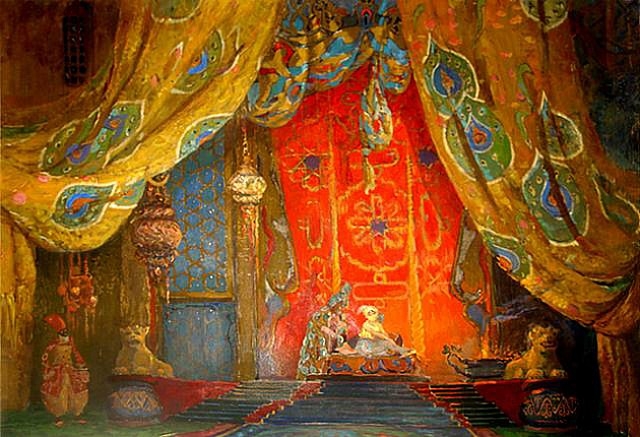
Set design for a ballet production of Rimsky-Korsakov's Scheherazade, but Léon Bakst.

Set design for a ballet production of Rimsky-Korsakov’s Scheherazade, by Léon Bakst.

Scheherazade is in the air.

Rimsky-Korsakov’s brilliant orchestral showpiece has never been more popular anywhere than it seems to be in Boulder right now. The Boulder Philharmonic played it on their season-opening concert. The CU Symphony has it in their plans for the season. It was performed at the Colorado Music Festival as recently as 2013.

And Saturday the Longmont Symphony Orchestra and conductor Robert Olson—not in Boulder but an easy drive up the Diagonal—perform Scheherazade on a program titled “Romantic Russia” (7:30 p.m. Nov. 15 in Longmont’s Vance Brand Civic Auditorium).

To complete the Romantic—and impressively virtuosic—program of Russian music, Colorado’s Katie Mahan will be the soloist with the orchestra for Rachmaninoff’s daunting Third Piano Concerto.
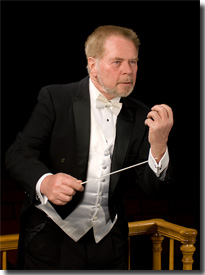
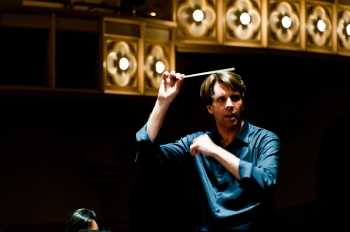
Robert Olson, conductor of the Longmont Symphony

Robert Olson, conductor of the Longmont Symphony

Like most pieces, Scheherazade goes in and out of favor with orchestras for no apparent reason, but for Olson, it is always a great piece to program. “From where I’ve stood, Scheherazade is always a big winner,” he says.

“It’s (a), incredibly popular with audiences, for all the obvious reasons, and (b), it’s a showpiece for orchestras. Usually, orchestras don’t like to play big audience pieces too much, but I think this one they do.”

One reason Scheherazade has remained popular is that Rimsky-Korsakov wrote extravagantly colorful music to describe “The Sea and Sinbad’s Ship,” a “Festival at Baghdad” and the love of “The Young Prince and the Young Princess.” It ends with a storm at sea and a shipwreck, all portrayed in music of great brilliance and orchestral virtuosity.
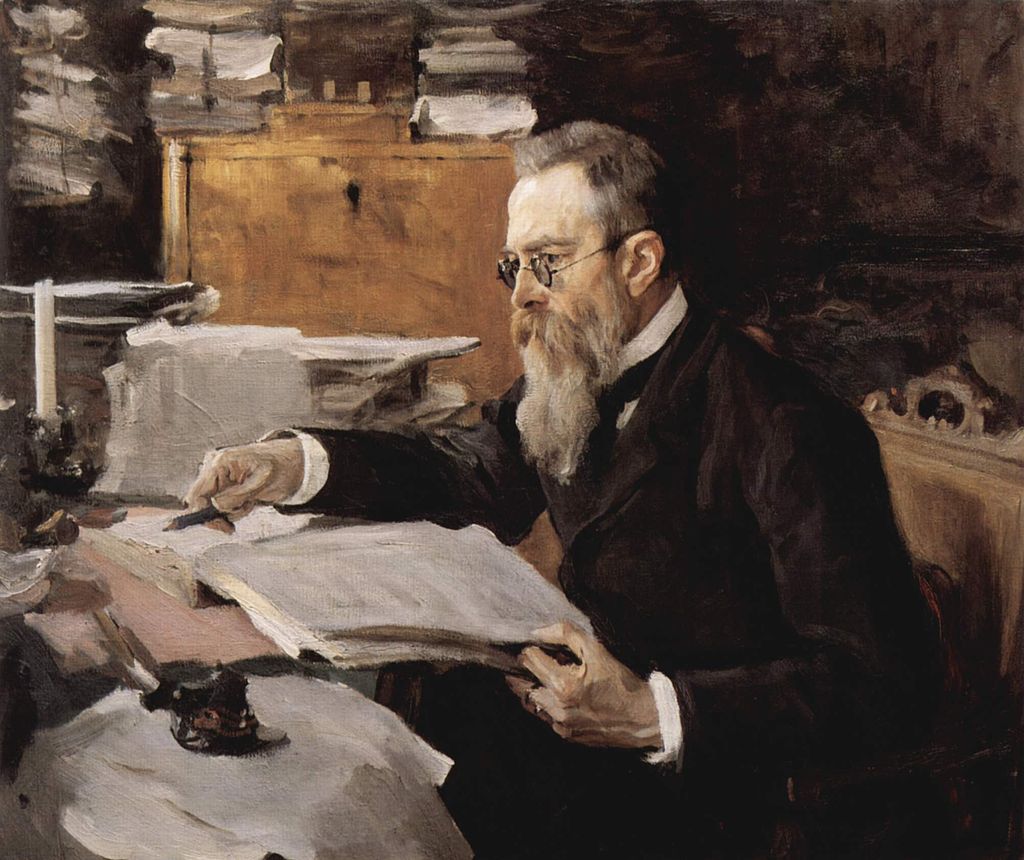
Composer Nikolai Rimsky-Korsakov. Portrait by Valentine Serov.

Composer Nikolai Rimsky-Korsakov. Portrait by Valentine Serov.

The Longmont Symphony, which Olson says stands on the boundary between community orchestra and regional orchestra, is more eager to tackle the big favorites than some of the larger orchestras that may have played them dozens of times before. In the case of Scheherazade, most of the players know the music well, even if they don’t have many opportunities to perform it.

“I would guess that there must be at least a half a dozen of the instruments that when they take an orchestral audition, one of the biggest excerpts (they are asked to play) will be out of this piece,” he explains. “For most of the players, it’s a great piece. And it’s well within our reach.”

Olson says that part of the fascination, and the challenge, of playing Scheherazade comes from the story that the music tells. The heroine, you may recall, has to entertain her cruel husband or she will be beheaded. To stay alive, she tells 1001 fantastic tales for 1001 nights.

“In our first rehearsal, I just stopped and said, ‘Look, we all know the story,’” he says. “The minute she bores this guy, her head’s off, so you can never play the same statement twice. If you play it the same twice, you’re dead!”
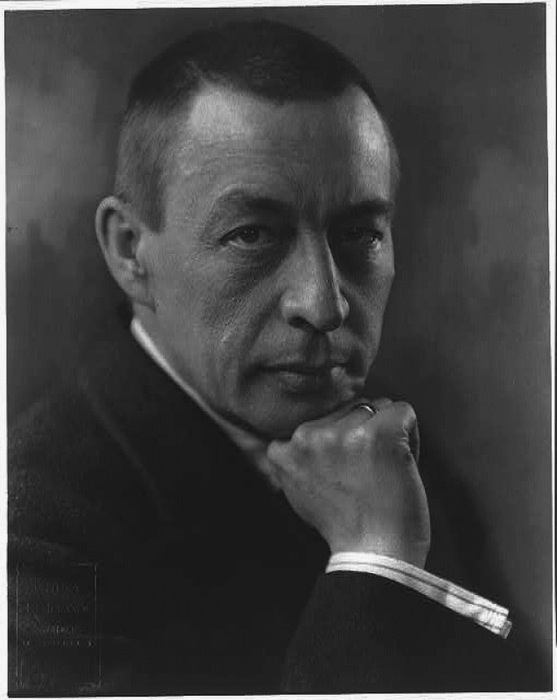
Rachmaninoff around the time of the Third Piano Concerto

Rachmaninoff around the time of the Third Piano Concerto

The Rachmaninoff Third Piano Concerto is one of the great war horses of the pianist’s repertoire, and it is also a piece that Olson enjoys conducting. “I’ve never done his Fourth (Concerto), so I don’t know it,” he says. “But of the big three (concertos by Rachmaninoff), this is my favorite.”

(In an interesting historical note, considering that Olson is acclaimed for conducting Mahler and founding the Colorado Mahlerfest, Rachmaninoff played his Third Concerto with the New York Philharmonic on Jan. 16, 1910. The conductor was Gustav Mahler.)

The extensive rubato that Rachmaninoff calls for—places where the soloist can slow down to extend phrases, or speed up to hurry ahead—pose a challenge to the conductor and players to keep together. Otherwise, Olson does not think the concerto is hard for the orchestra to play. “From a technical standpoint the concerto is not unusually difficult,” he says.

The same cannot be said of the piano part, which is considered one of the great virtuoso challenges for any pianist. Rachmaninoff, a pianist of prodigious technical abilities, wrote the concerto in Russia in 1909 and premiered it himself later that year in New York. But for years, few other pianists were willing to tackle its technical demands. The dedicatee, Josef Hoffman, never played it in public. Only in the 1930s, when the fearless virtuoso Vladimir Horowitz took it up, did it become popular.
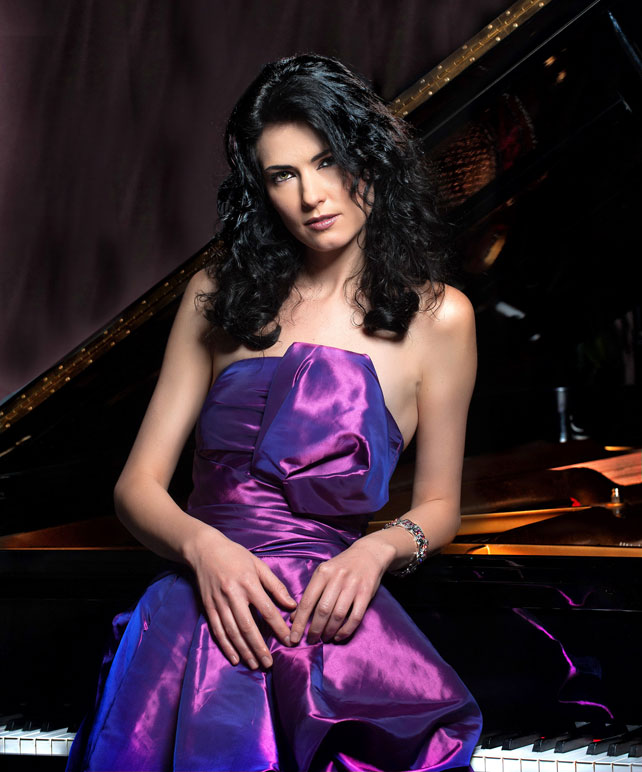
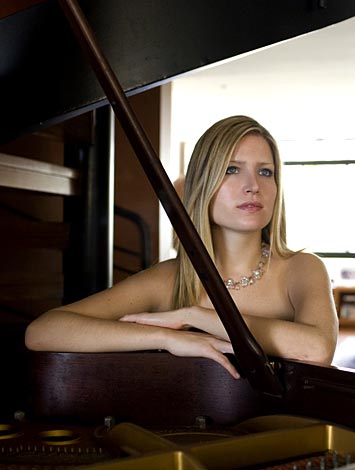
Pianist Katie Mahan.

Pianist Katie Mahan.

The soloist in Longmont, Katie Mahan, is a Denver native who has appeared with orchestras and won acclaim around the world, in addition to many performances from Cheyenne to Colorado Springs along the I-25 corridor. In one of those performances a few years ago, she played the Rachmaninoff Third Concerto with the Timberline Symphony—now the Boulder Symphony—in Niwot.

Olson says he is looking forward to working with Mahan “I’ve never met her, nor have I heard her,” he says. However, “she comes with a really good reputation from everyone I know who knows her. I’m excited because of the word of mouth.”

If you already know and love classical music, this program gives you the opportunity to hear some familiar and well loved music. If you don’t, so much the better: you can be wowed by these brilliant and popular showpieces for the first time.

Just don’t expect to hear anything the same way twice.

# # #

“Romantic Russia”
Longmont Symphony Orchestra, Robert Olson, conductor
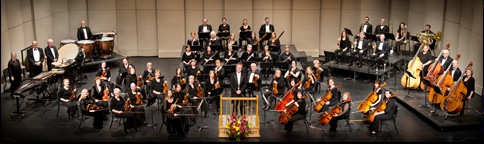
Longmont Symphony

Longmont Symphony

Rimsky-Korsakov: Scheherazade
Rachmaninoff: Piano Concerto No. 3
Katie Mahan, piano

7:30 p.m. Saturday, Nov. 15
Vance Brand Civic Auditorium, Longmont
TICKETS

Michael Butterman ads another contract extension to his resumé

Shreveport Symphony follows Boulder Philharmonic by extending the maestro’s contract

By Peter Alexander

Michael Butterman

Michael Butterman

Last month the Boulder Philharmonic announced that Music Director Michael Butterman had extended his contract with the orchestra for five years, through the 2018–19 season.

Now the Shreveport, La., Symphony Orchestra has announced they have extended Butterman’s contract with that orchestra an additional four years, through the 2017–18 season. Butterman has been music director in Shreveport, where he lives with his family, since 2005.

“Michael has become a celebrity in our community,” Elizabeth (Libby) Siskon, president of the Shreveport Symphony Orchestra Board of Directors, said. “He is extremely well regarded and well-loved throughout the Shreveport area.” Butterman is credited with helping resolve a labor dispute at the orchestra during the 2008–09 season.

“I am extremely proud of the work we’ve accomplished together during my years with the Shreveport Symphony,” Butterman commented.

In addition to his positions with the Boulder and Shreveport orchestras, Butterman is the resident conductor of the Jacksonville (Fla.) Symphony Orchestra and the principal conductor for education and community engagement for the Rochester (New York) Philharmonic Orchestra, the first position of its kind in the United States. And he recently conducted his first performances as music director of the newly formed Pennsylvania Philharmonic.

Read the full news release from the Shreveport Symphony Board of Directors here.

Boulder Symphony Opens Season with ‘Passionate Collisions’

By Peter Alexander

A premiere, a concerto and a symphony.

Those are the ingredients in “Passionate Collisions,” the season-opening program of the Boulder Symphony, to be performed at 7 p.m. Saturday, Sept. 20, at the First Presbyterian Church in Boulder. The largely volunteer orchestra’s music director, Devin Patrick Hughes, will conduct and pianist Toku Kawata will be the soloist for Rachmaninoff’s Second Piano Concerto.

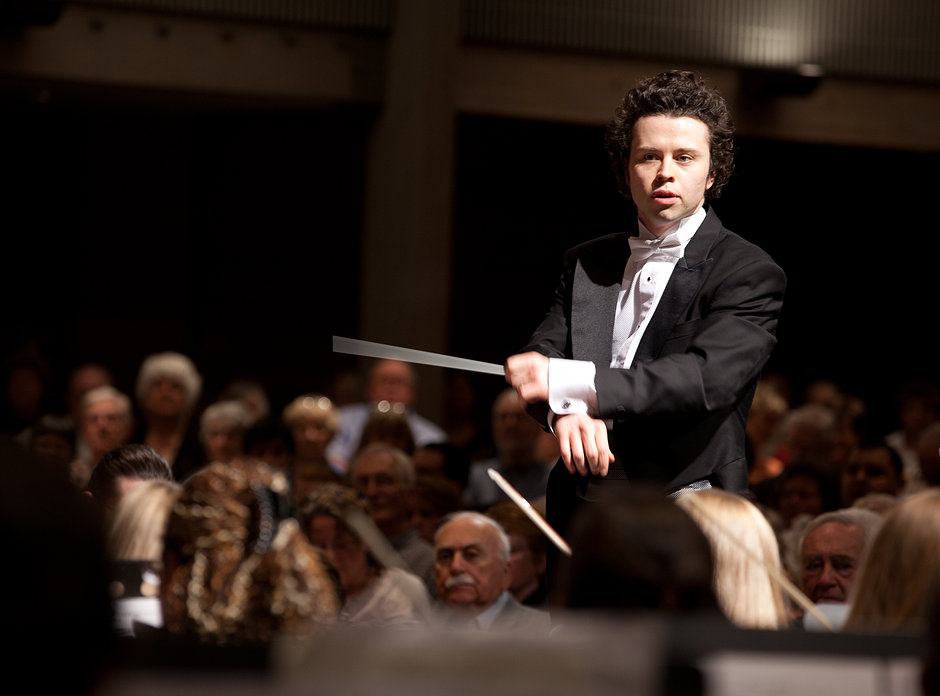
Devin Patrick Hughes will lead the Boulder Symphony in their season-opening concert Sept. 20

Devin Patrick Hughes will lead the Boulder Symphony in their season-opening concert Sept. 20

Other works on the program are the premiere of What Trees May Speak by one of Boulder Symphony’s composers-in-residence, Jonathan Sokol, and the Symphony No. 1 of Jean Sibelius. (Purchase tickets here.)

What Trees May Speak continues a trend in Boulder of orchestral pieces that call on natural inspirations, including last week’s season opener of the Boulder Philharmonic (Gates of the Arctic by Steven Lias), pieces performed last season by the Phil (“Formations” Symphony by Jeffrey Nytch and Ghosts of the Grasslands by Steve Heitzig, among others), and other works from Pro Musica Colorado and the Colorado Music Festival in recent seasons.

In his composer’s notes, Sokol describes his score, which incorporates recordings of bird songs, as “a musical investigation into the ever-dwindling bird population. The piece embraces several facets of bird life . . . but ultimately centers on an impending, growing silence as their numbers continue to decrease.”

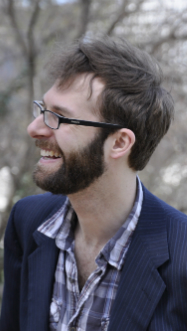
Jonathan Sokol. © Kelly Rae Griffith

Jonathan Sokol. © Kelly Rae Griffith

This sounds like a kind of avian “Farewell” Symphony, but Hughes believes that it is not a pessimistic piece. “It’s hopeful,” he says. “In a way, his music is very melodically American. It’s got a little of the industrial characteristic, but I really don’t think it’s tragic.”

Hughes sees a link from the Sokol piece to Sibelius. “I’m thinking of Sibelius as an outdoorsman,” he explains. “(He) basically thrived in these remote locations and was inspired by birds but also by the rest of nature.

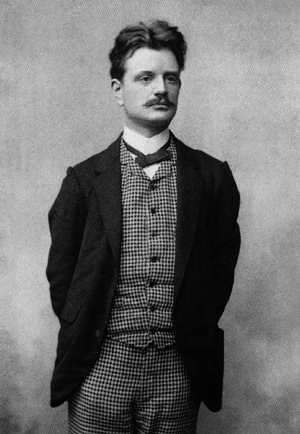
Jean SIbelius

Jean Sibelius

“Sibelius is one of my favorite composers. It’s my goal to play all of the symphonies that are unknown. I think they’re all just as powerful as the Second and Fifth. To me what’s fascinating about this composer is his music created a national identity” for Finland.

Living in the late 19th and early 20th centuries, a time that Finland was not yet an independent nation, Sibelius drew on Finnish mythology and literary sources such as the Kalevala epic as subjects for many of his orchestral works. The Finnish people embraced his music as a symbol of their culture and desire for independence from the Swedes and Russians who had long ruled their country. This was expressed most overtly in Sibelius’s tone poem Finlandia, which was conceived in part as a protest against oppressive Russian rule over Finland.

The First Symphony is a little bit of a surprise choice for the program. Written in 1898, when Sibelius was 33, it is not as well known as some of Sibelius’s later symphonies, especially the Second and Fifth. It has many of the characteristics of the composer’s mature style, including use of woodwind solos, a spare orchestral sound that seems evocative of Finland’s landscape, and a highly individualistic, indirect approach to melodic construction.

The Rachmaninoff is another surprise choice for a largely volunteer orchestra whose size is limited by the space available in the First Presbyterian Church where they perform. Most of us are used to hearing Rachmaninoff’s lush, Romantic scores played by a full symphonic contingent of 100 to 120 players and a string section of 60 or more.

“That’s what we have in our ear, these great recordings,” Hughes admits. “It’s difficult— we’re probably at about 70 or 80 musicians right now—so yeah, a lot of people have to give a lot. And maybe get a massage after!”

While the church limits the size of the orchestra, Hughes says it can also be an advantage. “It helps that the performance space is not a real performance hall where you need a much bigger orchestra. At our size you can pretty much fill up the space.”

Toku Kawata

Toku Kawata

Hughes and Kawata met when they were both at Aspen a number of years ago. Having met again when Kawata came to Boulder for doctoral studies, this will be their first opportunity to perform together. It is also Kawata’s first opportunity to play the Rachmaninoff concerto, as well as his first appearance in Colorado.

Kawata is a doctoral piano student of Andrew Cooperstock in the CU College of Music. In addition to holding degrees from the University of North Texas and the University of Central Arkansas, he has studied at the New England Conservatory and the Aspen Music Festival. He is also the winner of several competitions and made a solo debut at Carnegie Hall in 2010.

You may be wondering, what are the “Passionate Collisions” that provide the title for this concert? New and old? Soloist and orchestra? Natural sounds and instruments in Sokol’s score, representing the collision of man and nature?

No to all of those. It turns out Hughes had something more specific in mind with the title: a political collision between cultures and peoples.

“Finland was basically taken over for hundreds of years and (during Sibelius’s lifetime) they were under the thumb of the Russians,” Hughes told me recently. “That’s where you kind of get the passionate collisions between the (Russian) Rachmaninoff and the (Finnish nationalist) Sibelius.”

And then he quietly adds, “You’re the first person I’ve told that to.”

# # # # #

Boulder Symphony, Devin Patrick Hughes, Music Director
“Passionate Collisions”
Jonathan Sokol: What Tress May Speak (World Premiere)
Sergei Rachmaninoff: Piano Concerto No. 2
Toku Kawata, piano
Jean Sibelius: Symphony No. 1
7 p.m. Saturday, Sept. 20
First Presbyterian Church, 15th & Canyon, Boulder

Details and tickets

Boulder Phil launches ‘Legends’ season with a bang

By Peter Alexander

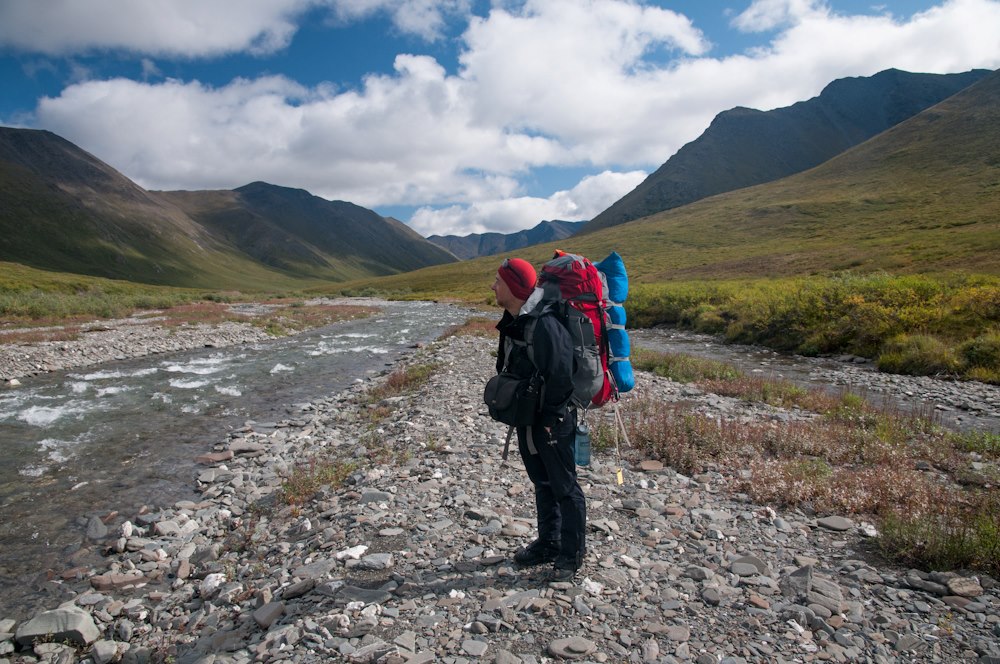
Stephen Lias in Gates or the Arctic National Park. Photo courtesy of the composer.

Stephen Lias in Gates or the Arctic National Park. Photo courtesy of the composer.

Opening night for the Boulder Philharmonic offers a real triple threat.

The concert under music director Michael Butterman, at 7 p.m. Sunday, Sept. 14, in Macky Auditorium, launches the 2014-15 season with three pieces that would each be noteworthy on any program (http://boulderphil.org/concerts/opening-night).

The very opening piece will be the world  premiere of Gates of the Arctic, an avowedly pictorial work portraying the Gates of the Arctic National Park, written by composer Stephen Lias, who describes himself as an “adventurer/ composer.”

Gabriela Martinez

Gabriela Martinez

If that doesn’t capture your imagination, next on the program will be the Second Piano Concerto by Camille Saint-Saëns. That performance will introduce Gabriela Martinez, an emerging pianist from Venezuela whose career has been boosted by Gustavo Dudamel, the young conductor who created a sensation when he moved from Venezuela’s Simon

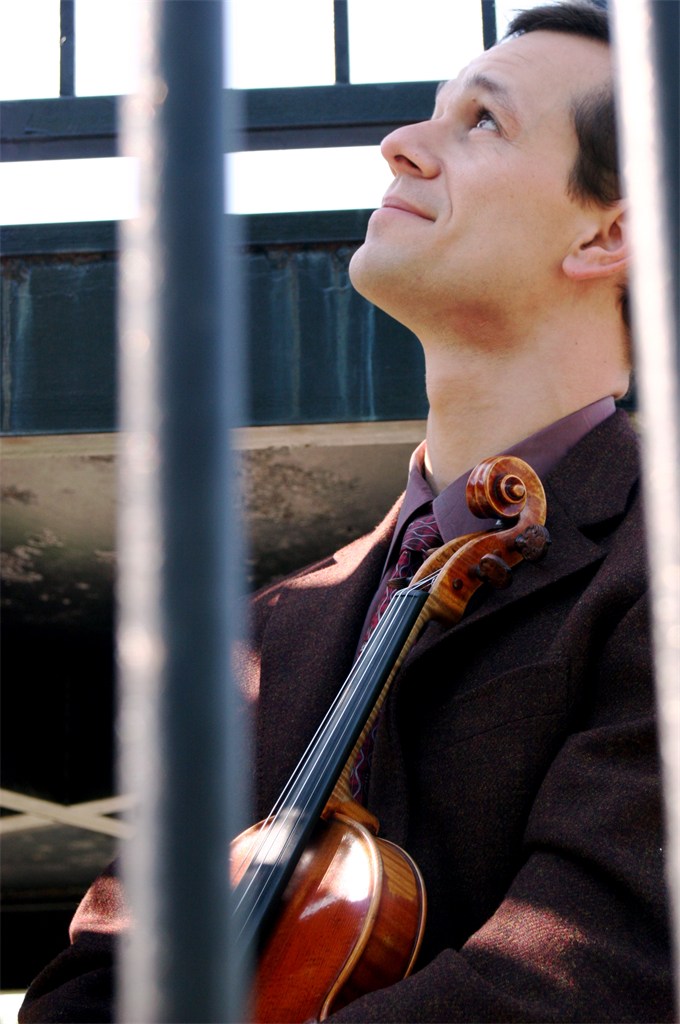
Charles Wetherbee

Charles Wetherbee

Bolivar Youth Orchestra to the podium of the Los Angeles Philharmonic.

And third will be Rimsky- Korsakov’s brilliant Scheherazade, which is not only a crowd-pleaser but also an

opportunity to introduce the orchestra’s new concertmaster, Charles Wetherbee, who will play the prominent violin solos throughout the score.

Read more in Boulder Weekly

.

Winners and Losers

One last assessment of the Metropolitan Opera’s labor agreements

By Peter Alexander

Who won and who lost at the Met? It depends.

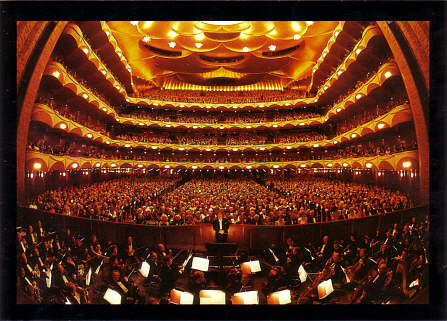
THe Metropolitan Opera House (interior)

The Metropolitan Opera House (interior)

On Wednesday (Aug. 20), the New York Times reported on the agreement that was reached with the third of the Metropolitan Opera’s three major unions, Local 1 of the International Alliance of Theatrical Stage Employees, representing stagehands, carpenters and electricians.

The other two major unions, representing the orchestra and the chorus members, had reached agreement with the Met early on Monday. (See my post on that agreement here.) And an agreement with the remaining unions at the Met was reached on Thursday night, as reported again by the New York Times. These include unions representing scenic artists and designers, the costume department, and others.

These agreements end the conflict between management that has raged for several months and resulted in Peter Gelb, the Met’s general manager, withdrawing the threat of a lockout. He has confirmed that the Met will open its fall season as scheduled on Sept. 22, with a performance of The Marriage of Figaro conducted by James Levine.

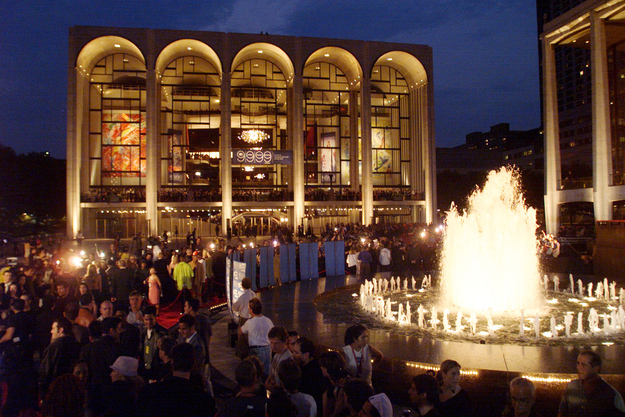
Lincoln Center Plaza and the Metropolitan Opera House

Lincoln Center Plaza and the Metropolitan Opera House

The deal with the musicians’ unions called for an immediate 3.5 percent pay cut, followed by another 3.5 percent six months later, and no raise until the fourth year of the contract. The agreement with the stagehands has been reported to provide comparable cuts in labor costs, although the deal had to be written differently because of the different work rules and benefits packages in the contract with that union’s workers, and because their agreement is for six years instead of four.

But if it sounds like the concessions from the unions—the first pay cut accepted by the Met’s union workers in many years—represent a win by the management, that would be a hasty conclusion, for three reasons. In the first place, Peter Gelb had demanded a 17 percent pay cut from labor, and said that the Metropolitan would have to close otherwise. So the much smaller size of the pay cut than what Gelb was demanding makes his “win” look much less significant.

In the second place, the unions won some battles as well, in that the settlement calls for management to make its own, comparable cuts in the budget. The unions had argued that extravagant production expenses were part of the problem, and while there simply were not enough savings to be made in production costs to solve the Met’s budget woes, the fact that the final agreement took the form it did implies that the federal mediator for the negotiations with the musicians found merit in the union’s complaints. (The stagehands had separate negotiations that did not involve a mediator.)

Finally—and this speaks directly to the union’s complaints about Gelb’s leadership—the deal calls for an independent

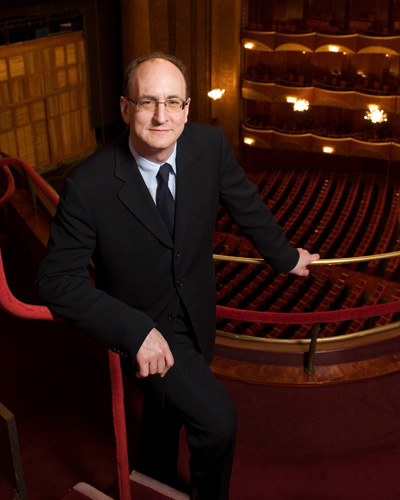
Peter Gelb, general manager of the Met

Peter Gelb, general manager of the Met

monitor to keep an eye on the Met’s budget and expenses. This must be a particularly galling concession for Gelb, whose rather freewheeling, pop culture approach to opera was supposed to bring in larger, younger audiences and save the Met.

Apparently he has not accomplished either of those goals.

The question remains what effect this will have on regional opera throughout the country and here in Colorado. Will this settlement make it possible for other companies to ask for pay cuts from their employees, and to reign in costs in other ways? Will it put pressure on other companies to trim their production costs, or to make their finances more transparent, as the Met was forced to do in the course of negotiations?

For now, leaders of opera companies in this area have declined to comment on the Met’s settlement, although they do say they are keeping an eye on the situation.

 # # # # # 

For other perspectives of the Metropolitan Opera and it’s labor settlement, read these articles:

Jennifer Maloney’s highly complementary evaluation of Peter Gelb’s leadership of the Met can be read here.

Her previous, more balanced, assessment of the deal is here.

Blogger Greg Sandow’s more critical take on Gelb can be found in three installments linked from here.

The cheeky opera-fanatic blog “Parterre Box” has posted a copy of the agreement between the Met and the American Guild of Musical Artists, representing the Met Chorus, here.

The gossipy blogger Norman Lebrecht’s take on the settlement, which he sees as a “surrender” and a “humiliation for Peter Gelb,” can be found here