Jean-Marie Zeituoni reflects on his new role as Music Director

The newly appointed Music Director of the Colorado Music Festival endorses the role of new music, chamber music, and festival themes.

By Peter Alexander
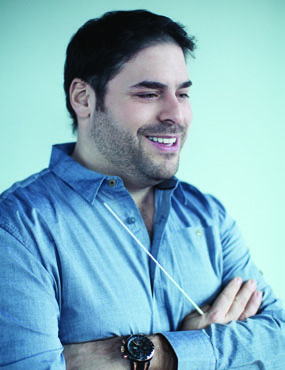
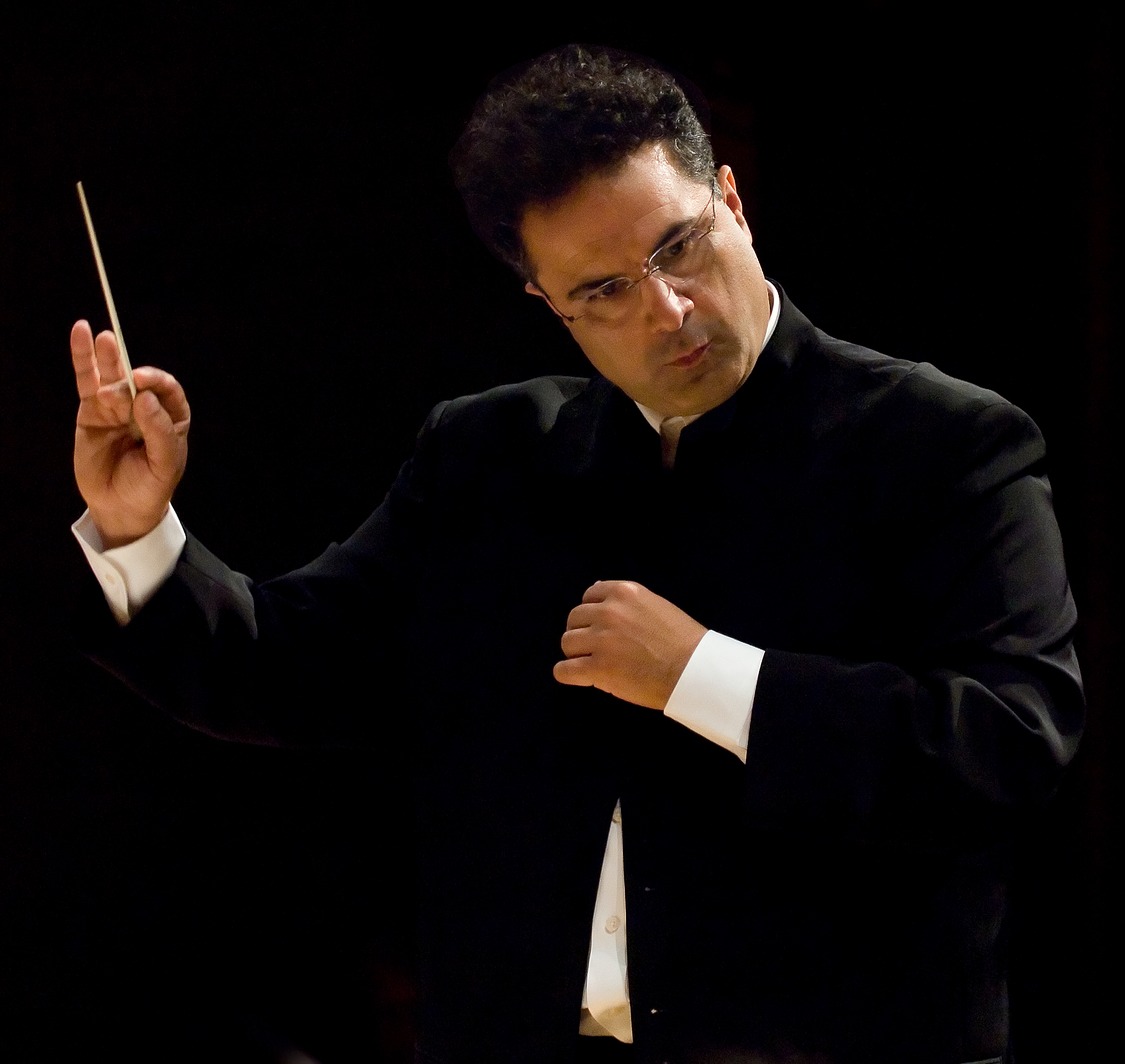
Jean-Marie Zeitouni

Jean-Marie Zeitouni

The following Q&A interview with Jean-Marie Zeitouni covers some of the issues facing the new music director of Boulder’s beloved Colorado Music Festival. The questions were presented to Zeitouni by email, giving him the opportunity to write careful and thorough answers to each question. This also allows him to introduce himself and his thoughts about the festival directly to our readers. The 12 questions I asked were intended to cover many of the most historically prominent aspects of the festival, including mini-festivals, commissions of new works, chamber music events, and guest soloists, and to give opportunity for comments on their future importance to the festival.

His answers are presented unedited, except for minor corrections to capitalization and punctuation. Additions for clarity are placed in brackets. Otherwise, the words are exactly as Zeitouni wrote them.

QUESTION: I assume it is too early to talk about specific programming for the 2015 festival, but I wonder if you have any thoughts about the general nature of programming for an intensive, six-week summer festival as opposed to a nine-month-long subscription season.

JEAN-MARIE ZEITOUNI: The keyword here is “intensity,” to which I would add creativity, originality and some balance. Some audience members are also yearlong classical concertgoers and are not always interested in listening to the same things they hear all year long; others however will get their first concert music experiences in the summer at a festival. It’s important to keep them also in mind as we elaborate programs. I’ve been involved with numerous festivals over the past 15 years (notably the Festival International de Lanaudière, where I’ve been conducting the festival orchestra for the past nine years, and with the Festival International du Domaine Forget, for the past 15 first with Violons du Roy and now with I Musici de Montréal, but also at Grant Park, Banff, Mostly Mozart, Parry Sound, and the Opera Festivals of Glimmerglass, St. Louis, Cincinnati, etc.), and what always strikes me is that they each have a distinct personality and audience that is reflected in their choices of programs, guest artists and explorations.

I’m looking forward to bringing along my experiences and ideas to Boulder, but I’m also allowing myself a bit of time to digest and understand what CMF is all about, from its roots to its fruits.

There is also the wonderful CMF orchestra. We need to develop our way of making music together, and some of next summer will be about that.

Chautauqua Auditorium, home to the CMF Festival Orchestra

Chautauqua Auditorium, home to the CMF Festival Orchestra

Q: How do you feel about “themes” for a festival—musical topics such a Russian music or great violin concertos—to be explored during all or part of a festival?

JMZ: I like themes and thematics in general, especially for concert programs. I think that coherent and original pairings can help us enjoy more and differently some pieces we don’t know, and even some others we think we know so well. “Mini-festivals” are also interesting if the circumstances are right. The nature of a festival allows us to explore a subject more deeply in an intensive period of time and is a good setting for organizing parallel activities (film, seminars, lectures, etc.) for audiences looking for a more complete immersion.

Q: How do you feel about programming that crosses genres and styles, such as the “mashup” programs blending pop and classical styles we have had at CMF the past two years, or the “World Music” series of earlier festivals that blended classical with music of other cultures (Klezmer, Asian styles, jazz, etc.)?

JMZ: My personal taste is very eclectic. I like great music whether it’s Western classical or Eastern or Afro-Cuban or old or modern, etc. . . . (the list goes on and on). I think it’s very natural to blend and cross styles and genres as long as we are presenting good music and at a high level of performance.

The other major factor is having the sensational Festival Orchestra, which is an invaluable asset. We want to program music that will display this ensemble’s colors and possibilities.

CMR Festival Orchestra onstage in Chautauqua Auditorium

CMF Festival Orchestra onstage in Chautauqua Auditorium

Q: What do you see as the role for new music in the festival?

JMZ: The festival has a long history of playing new music and even commissioning works. I think every arts organization should be involved in both the performance and creation of art. As for programming, it’s like creating a menu at a great restaurant—accords and contrasts, themes and threads, originality and references. Balancing the flavors.

Q: Would you like to continue the CMF’s history of commissioning new works?

JMZ: Yes, no doubt.
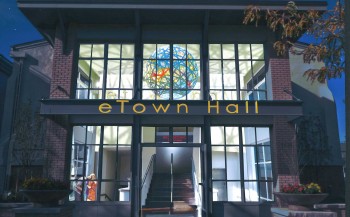
eTown Hall, home of CMF's chamber music concerts

eTown Hall, home of CMF’s chamber music concerts

Q: What do you think should be the role of chamber music performances in the festival?

JMZ: I don’t know where to start. . . . There are so many positive aspects of having the chamber music series in the festival. First, of course, there is the vast repertoire that is complementary to what we do with the orchestra, with so many masterpieces available for the audience to discover. Second, the intimacy and proximity between the artists and the audience that is incomparable. It’s also a great way to showcase some of the musicians of the CMF orchestra (and guest artists) and introduce them to the community in a more personal way.

Q: In picking soloists for the festival, how do feel about inviting well known artists as opposed to younger artists who may not be as well known? Do you think there is a role for each within the festival?

JMZ: There is definitely a role for both in the festival. We have the responsibility to both get the best artists possible on our stage and to be scouting for the best new talents to introduce them to the audience.
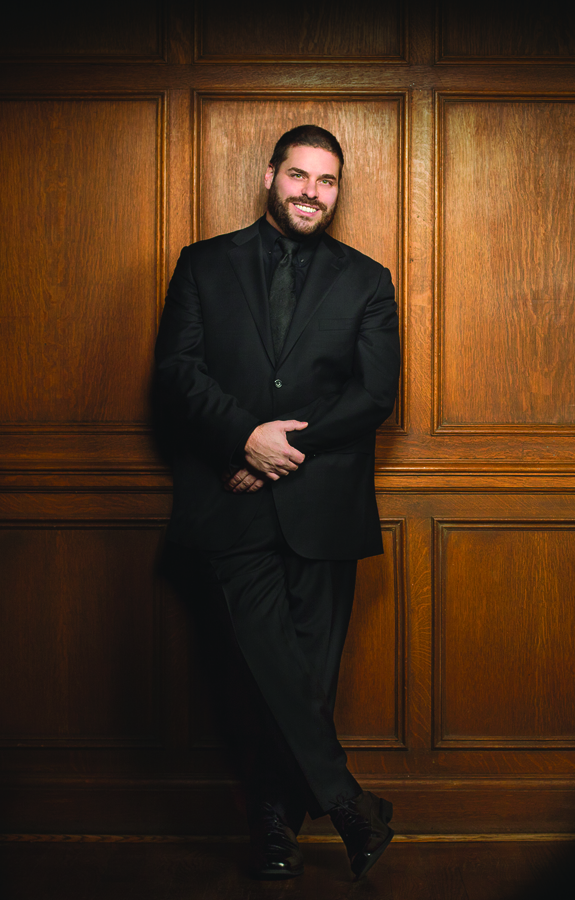
Jean-Marie Zeitouni

Jean-Marie Zeitouni

Q: How do you expect to be involved in the educational aspects of the organization? 

JMZ: Much yet has to be defined. We are looking at creating more activities for the younger ones, and I have some ideas to share with the team. There is of course the very popular young people concerts, and I hope in the future, finding the right channels to involve the kids who attend CMA in original projects.

Q: Do you anticipate any issues in maintaining balance between the two arms of the organization—the school and the festival?

JMZ: No. In fact, it is important to me that we not only strive to take both the Festival and Center to new heights, but that we also look for ways to create greater synergies between the two.

Q: Do you have specific plans for attracting new audiences to the festival?

JMZ: Although [Executive Director] Andrew [Bradford] and I are both still fairly new to the organization, we have already spent a lot of time talking about this subject. We are both committed to collaborating with some of the many arts organizations in Boulder, which we hope will lead to, among other things, new audiences attending our concerts. Also, Andrew is carefully examining how we have approached marketing and public outreach in the past, and is looking for new, more creative ways to increase awareness of the organization.

The Dining Hall, on the beautiful CMF Chautauqua campus

The Dining Hall, on the spectacular CMF Chautauqua campus

Q: What is your initial impression of Boulder?

JMZ: What is there not to love? My first impression was as positive as could be! I got to know many people and found them all to be extremely friendly. I also managed to make time to try many of Boulder’s best restaurants. The location is fantastic and the landscape is literally breathtaking. It’s a place I’m looking very forward to spending my summers in with my daughter, Gabrielle, who will turn two in a couple of months.

Q: What would be your message for Boulder audiences, and the supporters and fans of the Colorado Music Festival?

JMZ: I want them to know that I feel blessed to have been given the opportunity to serve as Music Director of this wonderful organization, and that I take this responsibility with great respect and care. I think I am coming to understand the great love and passion so many people in this community have for CMF and CMA, and I intend not only to create new, exciting programs for their enjoyment but also to be a steward of the organization.

Edited 10/7 to put back one word that dropped out in transmission.

BCO and pianist Victoria Aja in a delightfully designed program

By Peter Alexander

Pianist Victoria Aja

Pianist Victoria Aja

Conductor Bahman Saless and the Boulder Chamber Orchestra were joined by Spanish pianist Victoria Aja for a program of French and Spanish music Friday and Saturday, Oct. 3 and 4. The program was wonderfully planned, if somewhat uneven in execution on Saturday.

The first drawback of that performance was the venue, Broomfield Auditorium. Part of a larger complex that includes a public library, the auditorium looks like a barely completed warehouse, with an open ceiling that reveals pipes, light instruments, ducts and conduits. Spare stands and chairs are stacked on the edge of the stage, and a ladder can be seen backstage as the artists enter and exit.

More troubling than the inelegant appearance, however, is the sound. The stage is shallow and flat, and the hard concrete walls bounce the sound directly into the small seating area (fewer than 300 seats on the main floor), rather than blending it or in any way cushioning the sound waves, as more suitable acoustic materials would do.

Because the sound is so present, it was hard to achieve the needed balance and contrasts in the opening work, Manuel de Falla’s popular “Ritual Fire Dance” from El Amor Brujo. This exciting orchestral work was well played, but the winds—almost hidden on the flat stage—were often unbalanced, while the bright sound made it especially difficult to achieve the kind of dynamic contrasts that would give impact to the fiery climaxes.

The second work on the program introduced the soloist in de Falla’s impressionistic Nights in the Gardens of Spain. Normally a work for large orchestra, Saless used a chamber-orchestra version that suited his smaller ensemble. This version lost none of the score’s exotic color, but the reduced strings gave up some of the mysterious atmosphere of the original.

Clearly having a full grasp of de Falla’s style, Aja played with great flair and expression. Saless’s accompaniment was sympathetic, but the soloist sometimes struggled to be heard, even over the reduced orchestra, in the hall’s vivid acoustic environment.

The second, French half of the program fared better. César Franck’s Symphonic Variations treats the piano and orchestra not as contestants in a heroic concerto or as soloist with accompaniment, but as two equal partners that share the material. This disposition eliminates many of the balance problems the hall imposes.

Consequently, Aja could be heard as a thoroughly worthy partner to the orchestra. She certainly has the technique and the interpretive gifts to bring Franck’s somewhat academic work to life. I especially enjoyed the spirited final variations.

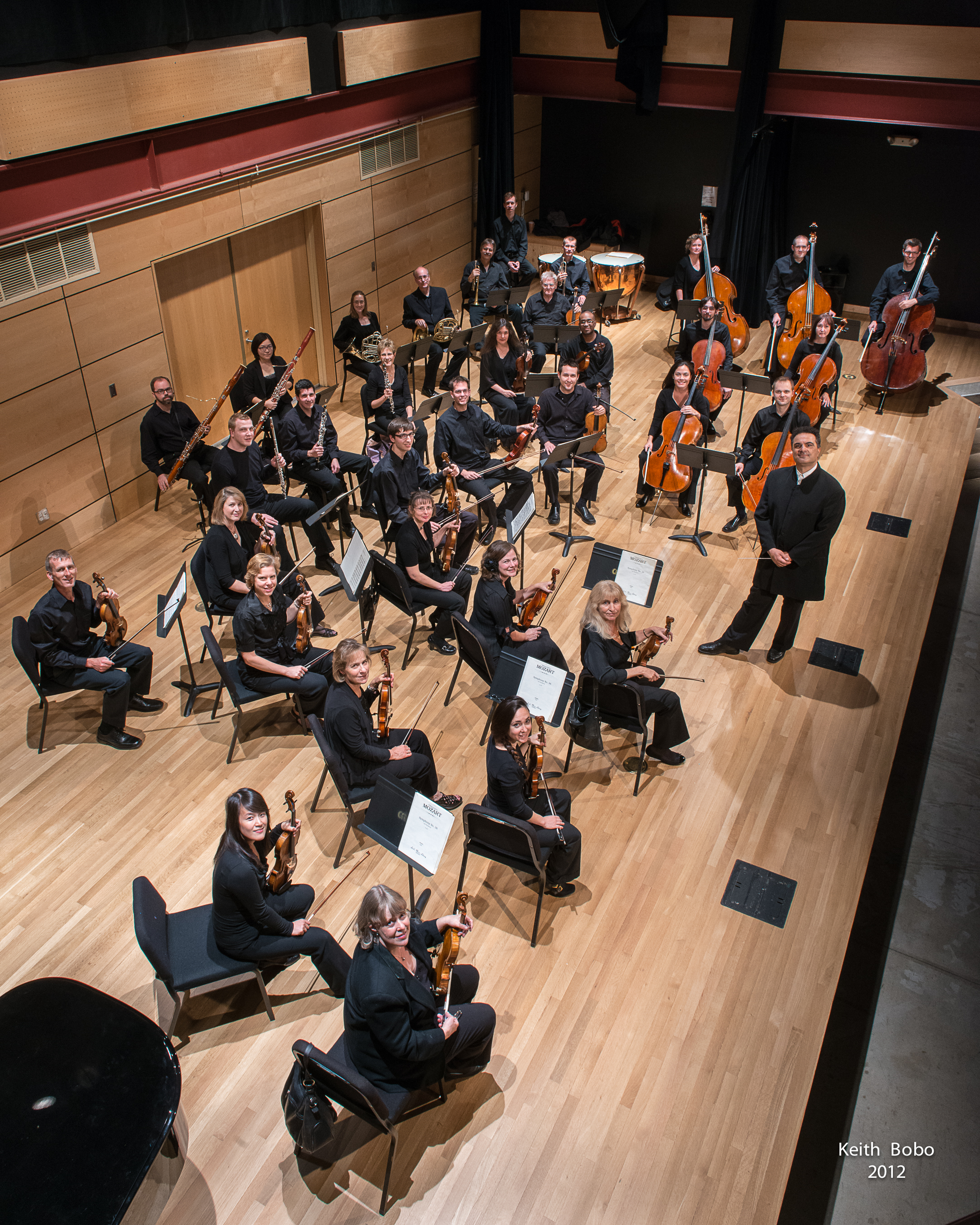
Boulder Chamber Orchestra. Photo by Keith Bobo.

Boulder Chamber Orchestra. Photo by Keith Bobo.

In this case, the greatest drawback was the size of the BCO. Saless said that the Symphonic Variations was written for a “Beethoven orchestra,” which might be true of the wind section. But when it was completed in 1885 (not 1955 as the program anachronistically stated), string sections of 50 or more had been commonplace for more than 20 years, whereas BCO only mustered about 30 for Saturday’s concert. (The program lists 34, but there did not appear to be that many on the Broomfield stage.) While the performance on the whole was satisfactory, the string section sound was audibly underweight in some full-bodied passages.

To close the program, Saless chose Bizet’s early Symphony in C major, written when the composer was a 17-year-old student in the Paris Conservatory. Both the size and the personnel of the BCO are ideally suited to this delightful work, which was pure pleasure from beginning to end. The spirited wind solos were notable throughout, and oboist Max Soto deserves special recognition for his lovely solos throughout the tender second movement.

In spite of any shortcomings, Saless’s thoughtful programming and Aja’s pianism afforded an enjoyable evening of music, topped off with Bizet’s refreshing little symphony. In a more hospitable performance space, such as the Methodist Church where the BCO performed on Friday, it may well have been even more satisfying.

# # # # #

NOTE: After intermission, Saless characterized the first half of the concert as “tapas” that preceded a main course of French cuisine. If you would like more than an appetizer of Iberian music—paella or a Spanish omelet, perhaps?—Aja is playing an entire solo piano recital of “Spanish Piano Masterpieces” at 7:30 p.m. Friday, Oct. 10, in Grace Lutheran Church, Boulder. The program, about an hour to be played without intermission, will include music by Albéniz, de Falla, Joaquin Larregla and Padre Jose Antonio Donostia.

“A Night of Spanish Piano Masterpieces”

Victoria Aja, piano
Presented by the Boulder Chamber Orchestra
7:30 p.m. Friday, Oct. 10
Grace Lutheran Church, Boulder

Tickets

Piano virtuosity, with and without the Boulder Chamber Orchestra

Spanish pianist Victoria Aja will be heard in two performances in Boulder

By Peter Alexander

Bahman Saless. Photo by Keith Bobo

Bahman Saless. Photo by Keith Bobo

When a soloist comes all the way across the Atlantic, Bahman Saless likes to give her a real opportunity to be a star.

That is certainly the case for Victoria Aja, a Spanish pianist who has played extensively in Europe but is not well known here. Aja will be the soloist with Saless and the Boulder Chamber Orchestra on their next concert, at 7:30 p.m. Friday, Oct. 3, in the First United Methodist Church in Boulder (program to be repeated at 7:30 p.m. Saturday in the Broomfield Auditorium; tickets). And a week later, she will play a solo recital, “A Night of Spanish Piano Masterpieces,” at 7:30 p.m. Friday, Oct. 10, in Grace Lutheran Church in Boulder (tickets).

“I really wanted to expose her to the Boulder audiences, in her own intimate setting, which is she does a lot of piano recitals,” Saless says. “I decided, she’s come all the way from (Spain) to here, we will basically host her the entire week, and have her do another recital program of just Spanish music.”

Pianist Victoria Aja

Pianist Victoria Aja

For the orchestra program, Aja will play two large pieces, virtual concertos, with the BCO: a chamber orchestra version of Manuel de Falla’s atmospheric piano showpiece Nights in the Gardens of Spain; and French composer Cesar Franck’s more serious work Symphonic Variations for piano and orchestra.

The orchestra will also play two works that complete the Spanish/French pairing: de Falla’s “Ritual Fire Dance” from El Amor Brujo and the early Symphony in C major by Georges Bizet.

The solo recital program of Spanish music, to be played without intermission, will include the complete Suite from El Amor Brujo, arranged for piano, as well as other works by de Falla, Isaac Albeniz, Joaquin Larregla, and two of the Fifteen Basque Preludes by Padre Jose Antonio Donostia.

Aja comes from the Basque region of Spain, near the border with France. A Basque musicologist and composer, Donostia based his Basque Preludes on the traditional music of the region.

Saless learned of Aja when she wrote to him a few years ago, including a resume and several DVD recordings of her solo recitals. “I had been wanting to do a Spanish program for quite a while, and I thought she would probably be a good fit,” Saless says.

“She is really from the more gypsy end of Spanish pianists—very sort of hot blooded, you know, rubatos, a crazy pianist. She specializes in de Falla, so I thought, let’s bring her in, we’ll do something cool and crazy.”

Boulder Chamber Orchestra. Photo by Keith Bobo.

Boulder Chamber Orchestra. Photo by Keith Bobo.

Friday and Saturday’s orchestra program, Oct. 3 and 4, is titled “Glamour,” but not for the exotic European piano virtuoso. “No,” Saless says, “really the glamour comes from the French-Spanish (culture) of that era, when the music was written. It’s very chic.

“It’s an amazing, exquisite program. It’s really very luscious. Sandwiched by the “Fire Dance” at the beginning and the Bizet Symphony at the end, it’s a really fun and jolly concert. In between, the de Falla pieces are so exotic and I think people are not used to hearing so much color. Color is everywhere with de Falla, and with that sense it’s a really unusual concert for us because you don’t do much color with a chamber orchestra.”

But Saless believes that the Oct. 10 solo recital will be Aja’s “signature event.”

“She is much more of a recital pianist than an orchestra pianist,” he explains. “I think that concert is really going to be fun, filled with music that you just will not hear here in the US. It will showcase her very stylistic, gypsy sort of piano.

“She’s extremely musical— she cannot not be musical!”

# # # # #

“Glamour”

Boulder Chamber Orchestra
Bahman Saless, conductor, with Victoria Aja, piano
“Ritual Fire Dance” from El Amor Brujo by Manuel de Falla
Nights in the Gardens of Spain by Manuel de Falla
Symphonic Variations for piano and orchestra by Cesar Franck
Symphony in C major by Georges Bizet

7:30 p.m. Friday, Oct. 3, First United Methodist Church, Boulder
7:30 p.m. Saturday, Oct. 4, Broomfield Auditorium

Tickets

“A Night of Spanish Piano Masterpieces”

Victoria Aja, piano
Presented by the Boulder Chamber Orchestra
7:30 p.m. Friday, Oct. 10
Grace Lutheran Church, Boulder

Tickets

Boulder’s Barsamian joins Kronos Quartet for Oct. 8 concert at Macky

Concert will feature music commemorating the 1914 outbreak of World War I

By Peter Alexander

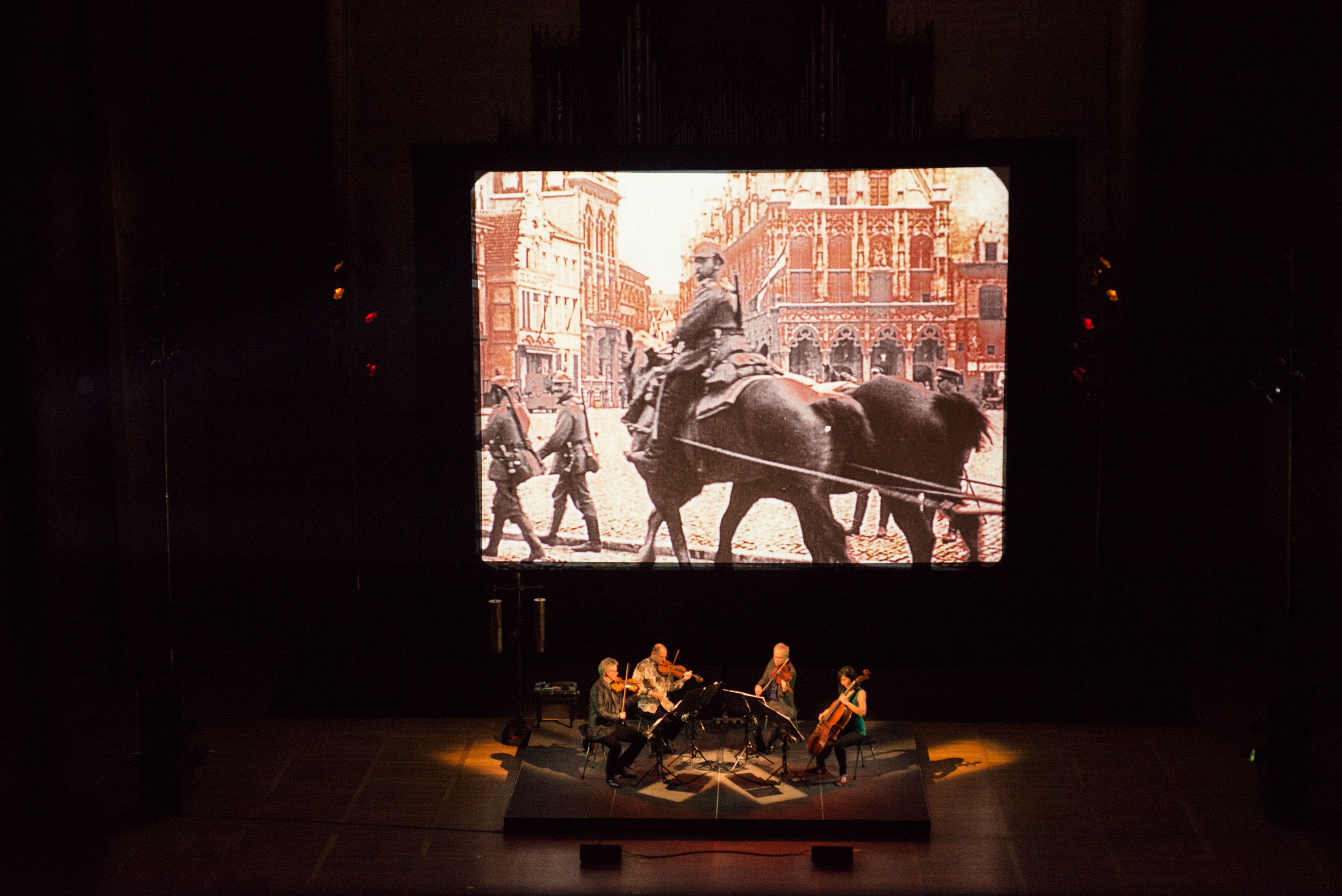
Kronos Quartet performing Beyond Zero. Photo courtesy of Kronos Quartet

Kronos Quartet performing Beyond Zero. Photo courtesy of Kronos Quartet

The Kronos Quartet, always bold, brings Boulder artists to Boulder for their appearance at Macky Auditorium at 7:30 p.m. Wednesday, Oct. 8.

The concert will feature the world premiere of Speak, Time by Yuri Boguinia, who grew up in Boulder; and an appearance by broadcaster and writer David Barsamian, who founded Boulder’s Alternative Radio in 1986.

Barsamian will speak while Kronos performs songs from the early years of the 20th century. That performance will lead to the major work of the program, filling the second half of the concert: Beyond Zero: 1914–1918, a new multimedia work for string quartet and film that Kronos commissioned for the centennial of the outbreak of World War I.

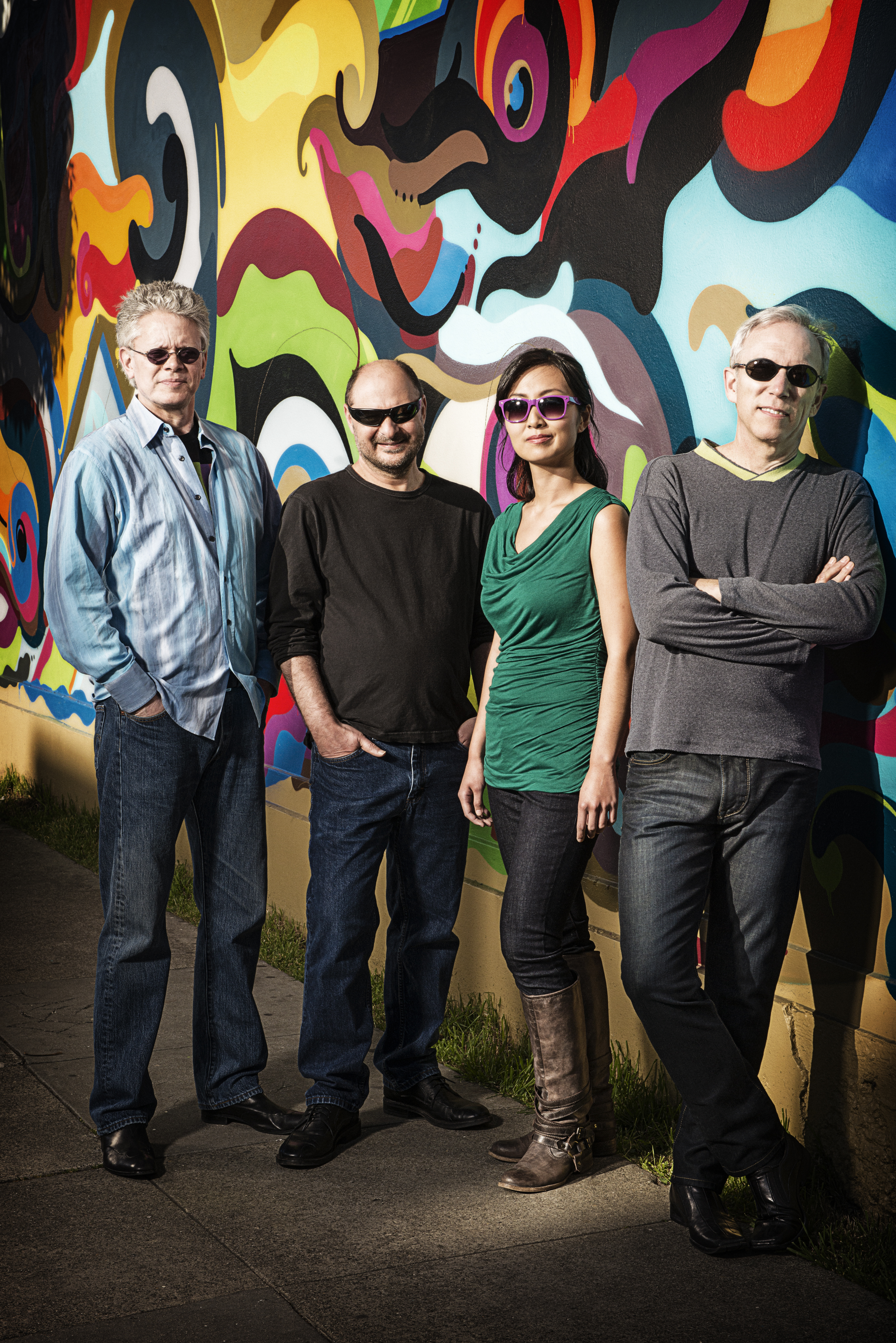
Kronos

Courtesy of Kronos Quartet

Beyond Zero was written by Serbian composer Aleksandra Vrebalov and will be performed with film restored by experimental filmmaker Bill Morrison from extremely rare and badly deteriorated original films of the war.

Read more in Boulder Weekly.

# # # # #

CU Presents: Kronos Quartet
Death to Kosmische by Nicole Lizée
World premiere of Speak, Time by Yuri Boguinia
Four songs from the time of World War I with David Barsamian
Beyond Zero: 1914–1918 by Aleksandra Vrebalov, with film by Bill Morrison
7:30 p.m. Wednesday, Oct. 8, Macky Auditorium
Tickets