Longmont Symphony hosts violinist Andrew Sords Saturday
By Peter Alexander Nov. 14 at 9:24 p.m.
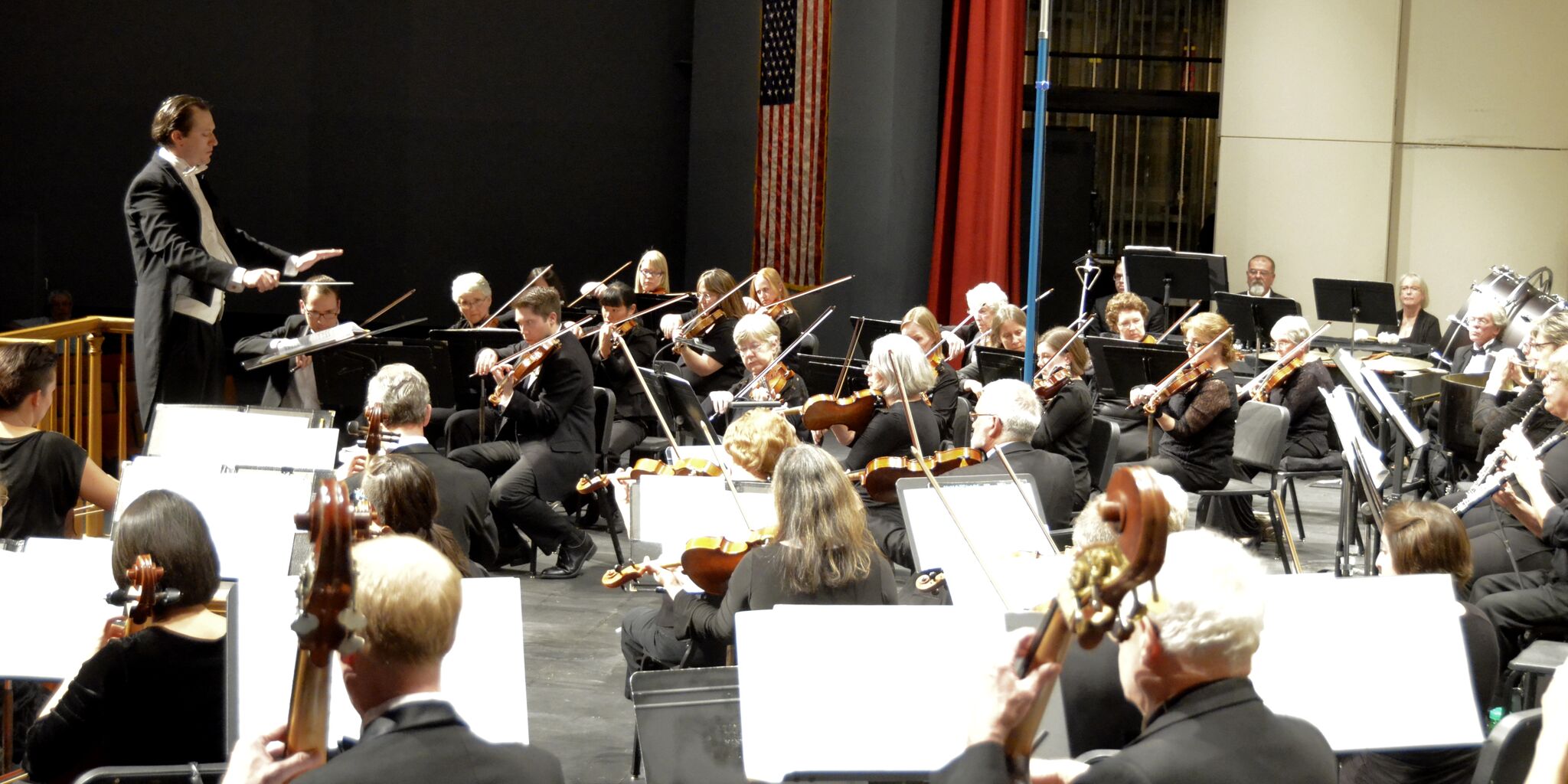
The Longmont Symphony Orchestra (LSO) returns to its long-time home venue, Vance Brand Civic Auditorium at Skyline High School, at 7 p.m. Saturday (Nov. 16; details below) for their second concert of the 2024–25 season.
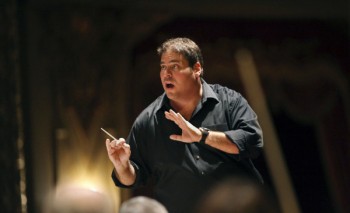
Conductor Elliot Moore with the Longmont Symphony Orchestra
The opening concert on Oct. 7 was in the Longmont High School Auditorium while Vance Brand Auditorium was under repair. Saturday’s concert, titled “An Evening of Romance,” will be conducted by Elliot Moore, the LSO’s music director. Featured soloist Andrew Sords will perform Max Bruch’s Scottish Fantasy.
Other works on the program will be Mendelssohn’s Overture The Hebrides (also known as Fingal’s Cave); Debussy’s impressionist tone poem Prélude à l’après-midi d’un faune (Prelude to the afternoon of a faun); and the Suite from Der Rosenkavalier by Richard Strauss. The concert will be preceded at 6 p.m. by a pre-concert talk by Moore.
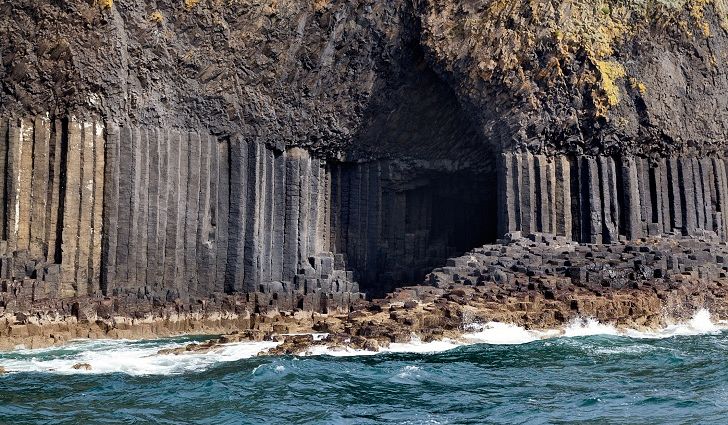
Entrance to Fingal’s Cave, Staffa
The Concert Overture The Hebrides is one of Mendelssohn’s most popular works. It was inspired by Mendelssohn’s 1829 visit to the island of Staffa off the coast of Scotland. Staffa is famous for it’s basalt formation known as “Fingal’s Cave.” The music was written to stand alone as a concert overture. As such it is virtually a symphonic poem inspired by the spectacular cave.
The German composer Max Bruch wrote his Fantasie für die Violine mit Orchester und Harfe unter freier Benutzung schottischer Volksmelodien—happily just known as The Scottish Fantasy—for the great Spanish violin virtuoso Pablo de Sarasate. Bruch had never been to Scotland when he wrote the Fantasy in 1879–80, but he had seen a book of Scottish folk songs in a library in Munich.
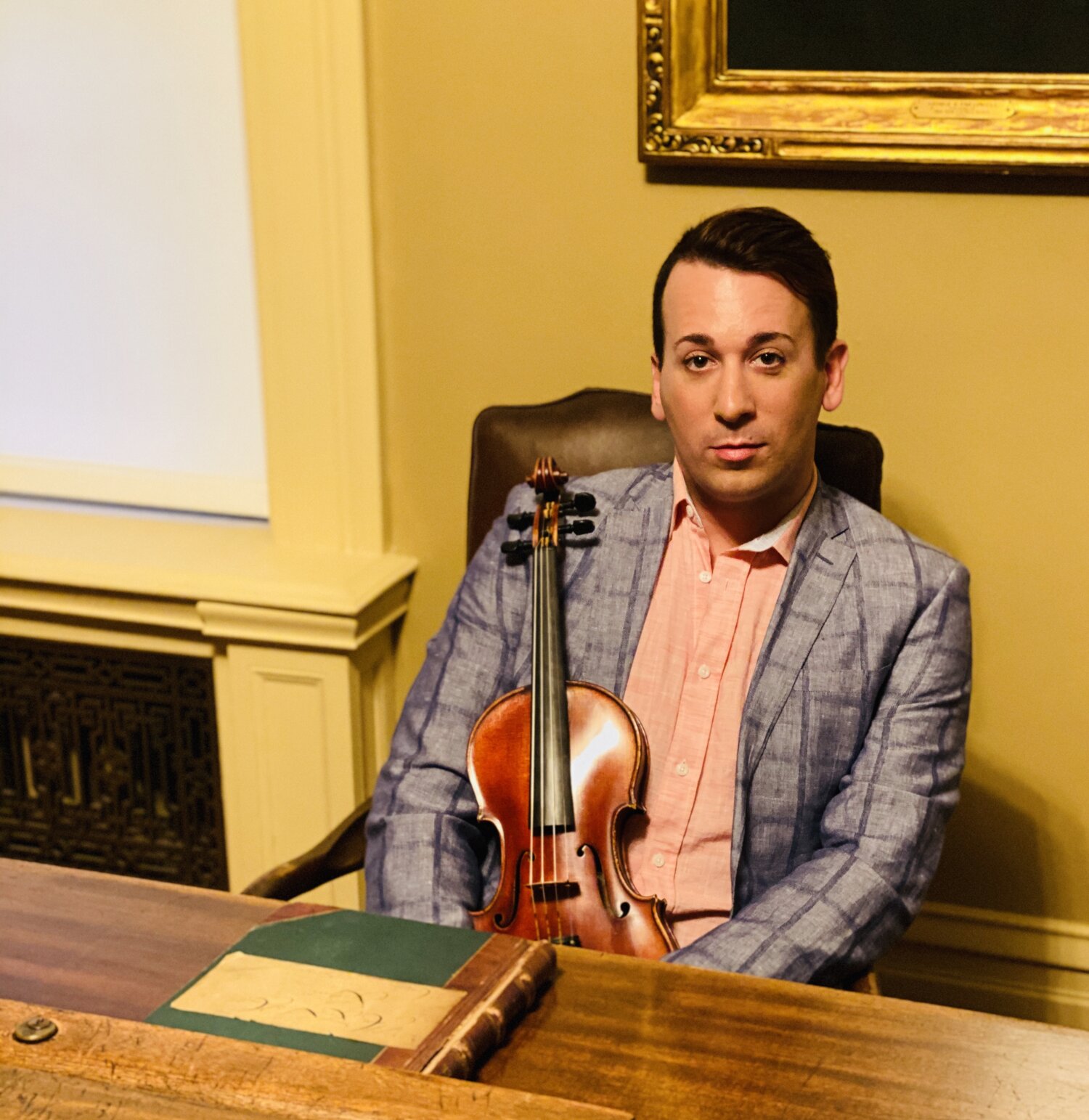
Violinist Andrew Sords
Although titled a fantasy, the work is structured in four movements much like a traditional concerto, and in some performances it was in fact called “Concerto for Violin (Scotch)” and “Third Violin Concerto (with free use of Scottish melodies).” Each of the movements is based on a separate Scottish folk song.
Debussy’s atmospheric Prelude to the Afternoon of a Faun is known for its languid opening flute solo and its role in establishing the impressionist style in music—as conductor and composer Pierre Boulez wrote, “the flute of the faun brought new breath to the art of music.” Debussy wrote the Prelude in 1894 and it achieved greater fame and notoriety when it was given a highly suggestive treatment by the Russian dancer Vaslav Nijinsky in 1912.
Richard Strauss’ comic opera Der Rosenkavalier—a nearly untranslatable word that means loosely “the rose cavalier”—is one of Strauss’ greatest and most popular operas. It was written to a libretto by the Austrian writer Hugo von Hofmannstal in 1909–10 and premiered in Dresden in 1911. Its comic situations and deep exploration of the characters’ personalities make it one of the most human and touching operas in the repertoire.
The opera itself was quickly translated into other languages and performed widely in Europe soon after the premiere. The Viennese-style waltzes and other memorable numbers from the opera have been popular as music for orchestral concerts, as reflected in the suite.
The American violinist Andres Sords has had a highly successful career as a soloist, appearing with nearly 300 orchestras on four continents. He also performs in a trio with John Walz, cello and Timothy Durkovic, piano, in addition to solo recital appearances. He grew up in Shaker Heights, Ohio, and studied at the Cleveland Institute of Music and Southern Methodist University in Dallas.
# # # # #
“An Evening of Romance” Longmont Symphony Orchestra, Elliot Moore, conductor With Andrew Sords, violin
Mendelssohn: The Hebrides Concert Overture
Max Bruch: Scottish Fantasy
Debussy: Prélude à l’après-midi d’un faune (Prelude to the afternoon of a faun)
Mountains, friendship, and wide-ranging influences celebrated
By Peter Alexander May 14 at 1 p.m.
Colorado MahlerFest 2024 comes to Boulder this week, but it might offer a little more than you expect.
Founded in 1988 to bring Mahler’s music to Boulder and the Front Range, in recent years it has expanded its programming way beyond one Austrian composer of big symphonies. And this year, the programming is so diverse—Mahler, Richard Strauss, Schubert, Schoenberg . . . and Jimi Hendrix?—that you might be hard pressed to find the unifying element. (See the festival event schedule below.)
Mahler in the Mountains
The title of this year’s festival—“Mahler and the Mountains”—only offers a hint. But the festival’s music director, Kenneth Woods, has the answer: “We’re trying to explore the idea of connection,” he says. “‘Mahler and the Mountains’ is one very important one. [You also have] Mahler and Richard Strauss, this idea of friendship, and then Mahler and Schubert is the other really good one.”
Bringing in Hendrix might seem like a radical departure (more on that later), but one continuing feature of MahlerFest is the performance of one of Mahler’s symphonies on the final concert. This year it will be the Fourth Symphony on Sunday’s Stan Ruttenberg Memorial Concert (3:30 p.m. May 19, at Macky Auditorium). Sharing the program will be the Prelude to Wagner’s Die Meistersinger and Strauss’s Metamorphosen for 23 strings.
Composed 1899-1900, the Fourth has the smallest orchestra and is in some ways the simplest of Mahler’s symphonies. Expecting a complex and massive work like the Second and Third symphonies, early audiences were disappointed, but more recently the attractive melodies and the joyful finale have made the Fourth a popular entry point for listeners new to Mahler’s music.
“It’s such a gorgeous piece, such a counterbalance to almost everything else he wrote,” Woods says. “It’s so classical, it’s so delicate, it’s so intimate and personal, he reveals something in this piece that he doesn’t show anywhere else. He’s branching out into a much more contrapuntal style (and) using the orchestra one part at a time. It gives it that beautiful transparency that’s not like anything before it.”
Woods says he picked the Meistersinger Prelude for the program because both Mahler and Strauss were heavily influenced by Wagner, and because it features the brass section that the Fourth Symphony barely uses. “We wanted to bring the brass with us to the end of the festival,” he says. “We like our brass section!”
Kenneth Woods with theMahlerFest Orchestra. Photo by Keith Bobo.
Less known than Strauss’s major tone poems and operas, Metamorphosen was one of the composer’s last pieces. And it is one of Woods’s favorites. “I think it might be his greatest work,” he says. “To me, Metamorphosen is the culmination of [Strauss’s] fluidity of musical thought. I don’t think music could go any further in that direction.”
This year’s MahlerFest also includes an orchestral concert on Saturday (7:30 p.m. May 18, also in Macky). The featured orchestral work connects Mahler, the mountains and Strauss: the Alpensinfonie (Alpine Symphony) that Strauss wrote, in part as a memorial to Mahler. This piece is another of Wood’s favorites, although he has never conducted it before. “I’ve been trying to get a chance to conduct this piece for as long as I can remember,” he says. “I’ve been told ‘No!’ by orchestra managers more times for Alpine Symphony than for any other piece.”
Alphorns. Photo by Christo Vlahos.
The problem is that the Alpine Symphony not only calls for a huge orchestra, running up the costs for organizations that perform it, it also includes alphorns in E-flat that are especially hard to find. These are the long, curved, wooden trumpet-like instruments associated with the Swiss Alps. Because they have no valves, they cannot be transposed. Fortunately, MahlerFest’s provider of alphorns, Salzburger Echo, was able to supply properly pitched alphorns at the last minute so that the festival did not have to improvise a solution.
“MahlerFest is the perfect place to do (the Alpine Symphony),” Woods says. “To do it here with the Rockies in the background is just magical. It’s an amazing piece, with a strong connection to Mahler. (Strauss) had the idea of something Alpine for over 10 years, but it was only after Mahler died that he started writing as kind of an homage.”
Richard Strauss and Mahler, 1908
Mahler loved the mountains and often hiked in the alps. Strauss’s score describes such an excursion, including a thunderstorm on the summit, but Woods says it stands for much more. “It’s a clear metaphor for the arc of life,” he says, “that striving that it takes to get to a summit, and the fact that none of us get to stay there—we all have to come down eventually.”
Filling out the program is another piece standing for Mahler’s connections to other composers: his arrangement for full string orchestra of Schubert’s String Quartet in D minor, known as “Death and the Maiden.” Woods points out that arrangements of chamber music, and especially string quartets, for larger ensembles were common in the early 20th century.
“Mahler was in that generation, post Wagner, where everything is getting bigger and bigger,” he explains. “He gets the idea to take some string quartets and arrange them for large string orchestra. It makes it into a different piece in a way and reveals different aspects of the piece. I’m a big fan of (arrangements), and Mahler was, too.”
Other arrangements featured earlier in the festival are not larger, but smaller than the original. During and after World War I, musical resources were strained, and composers were writing pieces for smaller and smaller groups, like Prokofiev’s “Classical” Symphony (1917) and Stravinsky’s Histoire du Soldat (Soldier’s Tale, 1924). Arnold Schoenberg and others started making chamber arrangements of symphonies and other large orchestral pieces by Mahler.
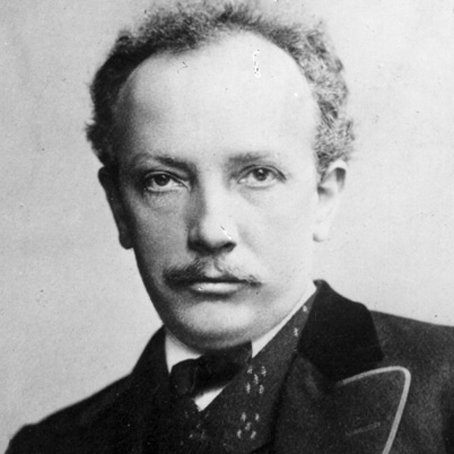
Richard Strauss
Wednesday’s opening night concert (7:30 p.m. May 15 at Mountain View Methodist Church) will include several of those Mahler arrangements, including movements from the Fourth Symphony, as well as with a chamber version of Wagner’s Siegfried Idyll and Richard Strauss’s revered Four Last Songs. On Thursday, a free concert at the Boulder Public Library Canyon Theater will feature the MahlerFest Brass Quintet playing original works for brass and, yes, a Mahler arrangement.
Friday evening (May 17) brings the most outré part of MahlerFest, including the works furthest removed from Mahler’s orbit. There will be two performances that evening at the Roots Music Project, 4747 Pearl St. in Boulder. The first performance, at 7 p.m., will feature string players from the MahlerFest Orchestra and the Tallā Rouge Duo, a Persian-Cajun fusion viola duo.
The centerpiece of the program will be Schoenberg’s string sextet Verklärte Nacht—a deeply Romantic and descriptive piece still well within Mahler’s orbit. The rest of the program will comprise various ethnic-oriented pieces by Hawaiian/Kanaka Maoli composer Anne Leilehua Lanzilotti, folk/jazz violinist Karl Mitze, and bluesy fiddle pieces by African-American composer Coleridge-Taylor Perkinson.
Starting at 9 p.m., the evening’s second event strays furthest from Mahler and the late 19th century, and brings us back to Jimi Hendrix. Titled “Electric Liederabend: Hendrix Meets Mahler,” the performance will juxtapose one of America’s most creative rock musicians with the composer of big symphonies .
Woods will showcase his electric guitar and arranging skills, performing his own versions of Mahler—or at least music derived from Mahler—with a small combo. His 9 Reasons: A Meditation on Mahler’s Ninth Symphony will open the program, which also includes his arrangement of music from Elgar’s Cello Concerto and Mahler’s Der Abschied (The farewell).
Jimi Hendrix
Hendrix has his own place on the program, with “Machine Gun” and “Up from the Skies.” There is no mention of “Purple Haze,” but Woods says there could always be an encore. “‘Purple Haze’ is the first song I learned on the guitar,” he says. “When I got my first electric, I bought the ‘How to Play Jimi Hendrix’ book, and ‘Purple Haze’ was the first one I learned.”
While Hendrix once mentioned Mahler as an influence, to most listeners there’s little obvious musical connection between them. However, Woods likes to look deeper into the personalities of the two artists. “I wanted to showcase Jimi’s later development a little bit more, as he got more into the metaphysics and more complicated musical ideas,” he says.
And in the symphonic world, metaphysics and complexity naturally lead to Mahler.
A full schedule of events, including workshops, open rehearsals and pre-concert discussions, with artists’ bios and links for sales for ticketed events, is available on the MahlerFest Web page.
# # # # #
“Mahler & the Mountains” Mahlerfest 37
Opening Night: “Visions of Childhood” MahlerFest Chamber Orchestra, Kenneth Woods, conductor With April Fredrick, soprano, and David Taylor, bass trombone
Mahler: Mahlerei, Concertino for bass trombone and chamber orchestra, arr. Schnyder/Horowitz (from Symphony No 4, Scherzo)
Richard Strauss: Vier letzte Lieder (Four last songs), arr. Ledger
Mahler: Symphony No. 4, First movement, arr. Kenneth Woods
Wagner: Siegfried Idyll, arr. Woods
Humperdinck: Hänsel und Gretel, “Der kleine Sandmann” (The little sandman) and “Abendsegen” (Evening blessing), arr. Woods
Schubert: Die Forelle (The trout), song and variations, arr. Woods
Mahler: Des Knaben Wonderhorn, Das irdische Leben (The earthly life), arr. Woods
Schubert: Der Tod und das Mädchen (Death and the maiden), song and variations, arr. Woods
7:30 p.m. Wednesday, May 15 Mountain View United Methodist Church, Boulder
Mountains of Brass MahlerFest Orchestra Brass Quintet Daniel Kelly and Richard Adams, trumpet; Lydia Van Dreel, horn; Lucas Borges, trombone; and Jesse Orth, tuba
Anthony Barfield: Gravity
David LeRoy Biller: Little Piece for Brass Quintet (world premiere)
Victor Ewald: Quintet No. 3 in D-flat
Mahler: Die zwei blauen Augen (The two blue eyes), arr. Michael Drennan
Jimi Hendrix: “Angel,” arr. David LeRoy Biller
Joan Tower: Copperware
Morley Calvert: “Suite from the Monteregian Hills”
3 p.m. Thursday, May 16 Canyon Theater, Boulder Public Library FREE
Transfigured Night: Schoenberg & More
Members of MahlerFest Orchestra and Tallā Rouge Duo Alan Snow, Caroline Chin and Sophia Szokolay, violin; Lauren Spalding and Aria Cheregosha, viola; Kenneth Woods and Parry Harp, cello
Karl Mitze: Seesaw
Anne Leilehua Lanzilotti: Silhouette, Mirror
Coleridge-Taylor Perkinson: Blue/s Forms —Louisiana Blues Strut
Schoenberg: Verklärte Nacht (Transfigured Night)
7 p.m. Friday, May 17 Roots Music Project, 4747 Pearl St., V3A, Boulder
Electric Liederabend: Hendrix Meets Mahler Kenneth Woods, guitar and vocals; David LeRoy Biiler, bass and guitar; Michael Karcher-Young, bass and drums; Michael Baker, drums
Mahler: 9 Reasons: A Meditation on Mahler’s Ninth Symphony, arr. Woods
Woods: Life/Time
Elgar: Malvern Hills Melancholy, arr. Woods from the Cello Concerto in E minor
Jimi Hendrix: “Machine Gun” —“Up from the Skies/Third stone from the Sun”
Mahler: Der Abschied (The farewell), arr. Woods
9 p.m. Friday, May 17 Roots Music Project, 4747 Pearl St., V3A, Boulder
Symposium Speakers: Jeremy Barham, Joseph Horowitz, Aaron Cohen, Matthew Mugmon, Nick Pfefferkorn and Kenneth Woods
9:30 a.m.–5 p.m., Saturday, May 18 Mountain View United Methodist Church FREE and live-streamed on YouTube
Strauss and Schubert MahlerFest Orchestra, Kenneth Woods, conductor
Schubert: String Quartet in D minor (“Death and the Maiden”), arr. Mahler
Richard Strauss: Eine Alpensinfonie, op. 64
7:30 p.m. Saturday, May 18 Macky Auditorium
Stan Ruttenberg Memorial Concert MahlerFest Orchestra, Kenneth Woods, conductor With April Fredrick, soprano
Wagner: Prelude to Die Meistersinger von Nürnberg
Richard Strauss: Metamorphosen
Mahler: Symphony No. 4 in G major
3:30 p.m. Sunday, May 19 Macky Auditorium
Tickets for the full festival or individual ticketed events available HERE
CORRECTIONS: The original version of this story stated that MahlerFest had to use extensions to pitch the alphorns in the proper key. After this story was written, the festival was able to obtain horns pitched in E-flat, as reflected in the later version of the story. And due to an editing error, the Friday night concerts (May 17) were originally listed in the article as taking place on Thursday, May 16. Sharpsandflatirons regrets the error.
Cellist Desmond Hoebig and conductor Jean-Marie Zeitouni give committed performance of Strauss’ tone poem
By Peter Alexander
Cellist Desmond Hoebig
The Colorado Music Festival Orchestra, conductor Jean-Marie Zeitouni and cellist Desmond Hoebig gave a fully committed and convincing performance of Richard Strauss’ daunting tone poem Don Quixote last night (July 16).
The program, which also includes the Prelude to Tristan und Isolde by Richard Wagner and the Suite No. 2 from Romeo and Juliet by Sergei Prokofiev, will be repeated at 7:30 p.m. tonight (July 17) in the Chautauqua Auditorium (tickets available here).
At 45 minutes, the Strauss filled the second half of the concert. The program opened with the Prelude to Tristan und Isolde, in a performance of strengths and weaknesses. Zeitouni began the prelude from the closest thing to silence, which gives scope for a wide crescendo, all the way to the Prelude’s defining climactic moment.
Such a beginning is captivating, but such soft levels make it difficult for the players to sustain and control the phrases, which led to some initial uncertainty and unevenness in the winds. At the opposite extreme, there were moments at the highest volume which the sound became slightly rough and not quite balanced among the sections.
Between these levels—which means most of the Prelude—the orchestral sound was warm and well controlled, including some exquisite string section playing, carefully controlled by the conductor. A lovely ending gave the performance the sense of a journey traversed.
Jean-Marie Zeitouni
The Second Suite from Prokofiev’s Romeo and Juliet contains some of the most familiar music from the ballet (“The Montagues and the Capulets,” “Friar Laurence”) as well as some movements that are less familiar but a welcome addition to the program (“Dance of the Girls with Lilies”). Zeitouni led a performance in which the character of each section was strongly delineated, creating meaningful contrasts from one to the next. The orchestra meticulously followed the conductor’s expressive use of rubato, adding an emotional depth to music.
The performance was at its best in the more chamber-like passages, when individual players exchanged melodies and played off each other’s phrases. Likewise, the portions played by the strings alone were again beautifully rendered. From where I sat, however, the brass occasionally overpowered the rest of the orchestra. The tuba played beautifully, but the flute and clarinet could not stand up to his volume. Likewise, the brass section playing as a whole had a magnificent sound, but it was magnificent at the cost of balance with other sections.
Richard Strauss
For Don Quixote, Zeitouni and the orchestra came entirely into their own. This is a piece that defines the concept of the “virtuoso orchestra,” and it requires a correspondingly virtuoso conductor. Happily, CMF has both. The Festival Orchestra boasts section players of the highest caliber, and Zeitouni clearly has an affinity for Strauss. He and the orchestra both proved that last year when his audition concert for the position of music director included powerful performances of Don Juan and Ein Heldenleben.
As part of the “Cellobration”—CMF’s week-long mini-festival celebrating the cello as a solo instrument, in chamber music and as an orchestral soloist—Don Quixote was chosen for this program because the cello is used to portray Cervantes’s literary protagonist. The score features a series of “fantastic variations” (as Strauss wrote) representing several of the Don’s fantastic adventures. Hoebig, the able soloist for CMF’s performances, is a cellist of wide experience who teaches at the Shepherd School of Music at Rice University.
Hoebig conquered all the technical demands of Strauss’ score, even fingering along with the section cellos when his solo part was silent. His intense performance was at its best in the extended solo passages, where he could not be challenged by the volume of Strauss’ massive orchestra. The lyrical sections of “Don Quixote’s Vigil” and the Finale, when the Don regains his senses and approaches his poignant end, were especially memorable. Also notable was Hoebig’s attentiveness to the lovely playing of the orchestra’s concertmaster, Calin Lupanu, in their shared passages.
The Festival Orchestra’s principal violist, Shannon Farrell Williams, is practically a second soloist portraying the Don’s sidekick Sancho Panza (together with bass clarinet and tenor tuba). Williams played with assurance and a dark, solid tone that captured Panza’s grounding in the real world throughout the Don’s chivalric fantasies. She dispatched her part on the same virtuoso level as every other member of the orchestra, from the principal wind players to the percussionist on the highly visible but (alas) barely audible wind machine.
Don Quixote is not played as often as some of Strauss’ better known tone poems—Don Juan, Till Eulenspiegel, or even Ein Heldenleben. For that reason, its programming at CMF as part of the “Cellobration” is all the more welcome—especially when it is performed with such élan and technical skill as was the case last night.
# # # # #
For those who love the cello—as who doesn’t?—the remaining events of the mini-festival will be at 4 and 8 p.m. Saturday, July 18, when members of the Festival Orchestra cello section will play all five of Beethoven’s Cello sonatas at Boulder’s First Congregational Church; and at 7:30 p.m. Sunday, July 19, when the CMF Chamber Orchestra will perform “Classically Cello,” a concert that features Julie Albers, a cellist from Longmont, Colo., performing Haydn’s Cello Concerto No. 2 in D major in the Chautauqua Auditorium. (More information and tickets to these performance available here).
I should point out that the title of the current Festival Orchestra Concert—the one with Don Quixote—is “Impossible Dreams.” This of course refers to the song “To Dream the Impossible Dream” from the popular Broadway musical Man of La Mancha—which serves as a reminder that you can see the musical this month at the Central City Opera, opening at 8 p.m. Saturday, July 18, in the Central City Opera House and continuing through Aug. 9 (details and tickets here).
And finally, to offset the melancholy side of the Don Quixote story, Central City is also offering a one-act Baroque opera on a lighter episode from Cervantes’ novel, Don Quixote and the Duchess by Joseph Bodin de Boismortier. This comic opera will be performed in Central City at 12:30 p.m. July 18 and Aug. 1, and at noon Aug. 6 at the First United Methodist Church in Ft. Collins (details and tickets here).



 Sharps & Flatirons