Violist Richard O’Neill nominated for Classical music Grammy

Newest member of Takacs Quartet part of a very distinguished slate

By Peter Alexander Dec. 18 at 4 p.m.

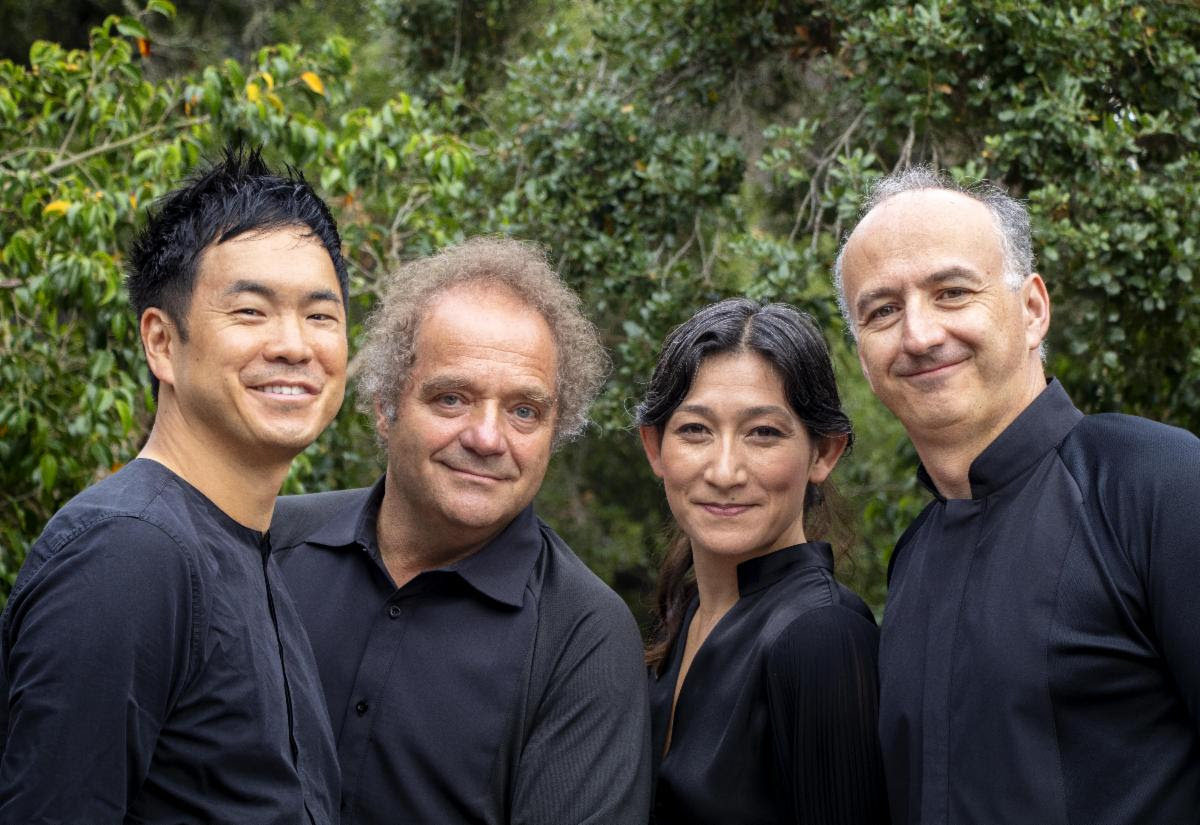
Violist Richard O’Neill, the newest member of the Takacs String Quartet, has been announced as one of a distinguished slate of Grammy nominees in the “Best Classical Instrumental Solo” category.

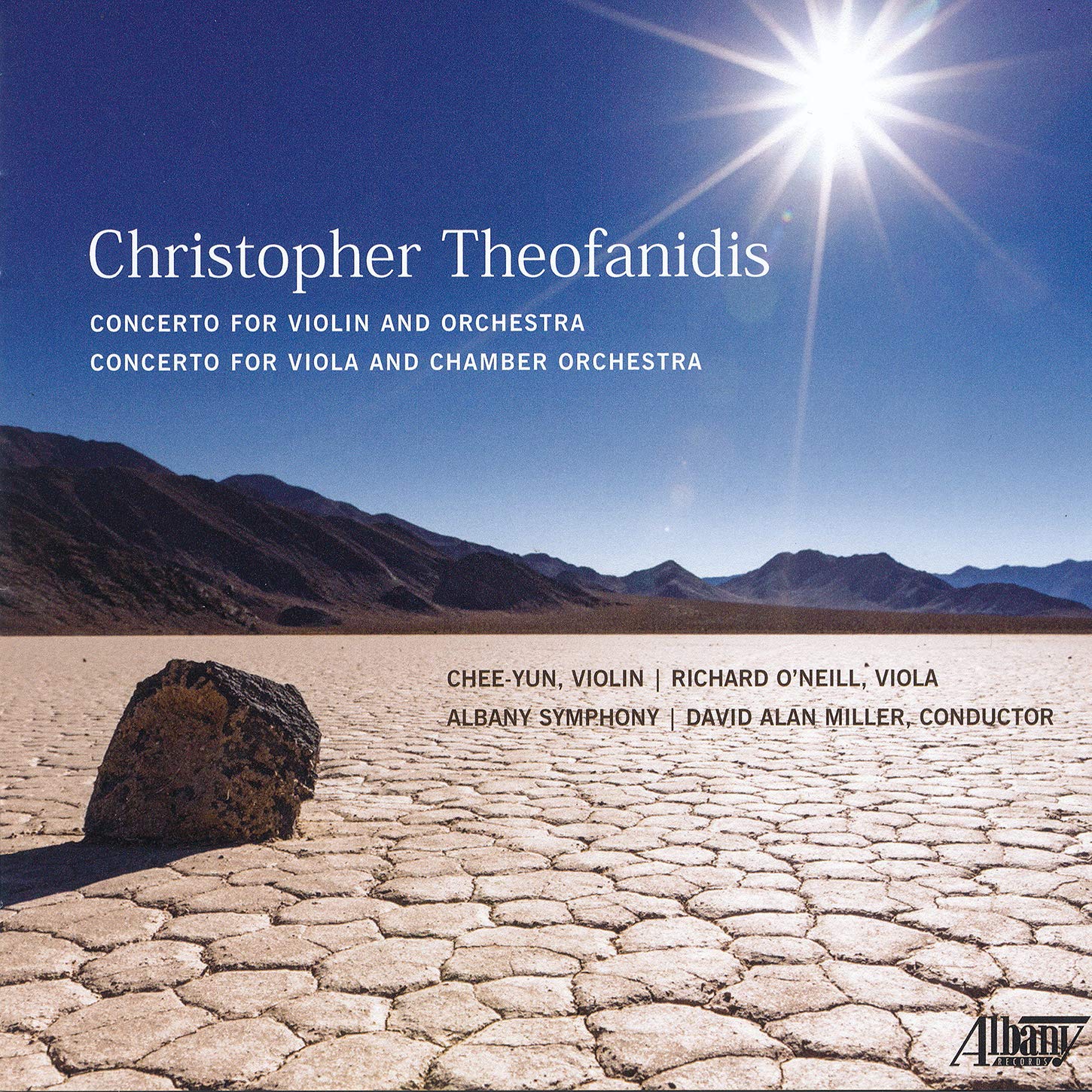
O’Neill was nominated for his recording of the Concerto for Viola and Chamber Orchestra by Christopher Theofanidis, with the Albany Symphony and conductor David Alan Miller. This is O’Neill’s third nomination. Winners will be announced in an online ceremony Jan. 31, 2021.
O’Neill replaced Geraldine Walther as the Takacs Quartet’s violist starting in June of this year. He has appeared in streamed performances by the quartet, but has not yet appeared onstage before a live Boulder audience.

O’Neill learned of the nomination when he was in Los Angeles. “I was sort of lounging around and turned on the Grammy announcement on their Facebook page,” he says. “A friend of mine, Nicola Benedetti, was reading the names for the classical things. When she read my name I was just floored.

“It’s just an incredible honor.”

The other nominees for “Best Classical Instrumental Solo” are pianist Kirill Gerstein for the Thomas Adès Piano Concerto; pianist Igor Levit for the complete Beethoven piano sonatas; violinist Augustin Hadelich for “Bohemian Tales,” a collection of music by Dvořák, Janáček and Josef Suk; and pianist Daniil Trifonov for a recording of the Second and Fourth piano concertos of Rachmaninov.

O’Neill knows and admires most of the other nominees. “Those people, they’re just my favorite artists, every one!” he says.

O’Neill is speaking by Zoom from Korea, where he is quarantining in preparation for scheduled concerts over the Holidays. He notes that the current Covid-19 transmission rate in Seoul is almost high enough for a complete shutdown. “I might not have work when I get out of quarantine,” he says.
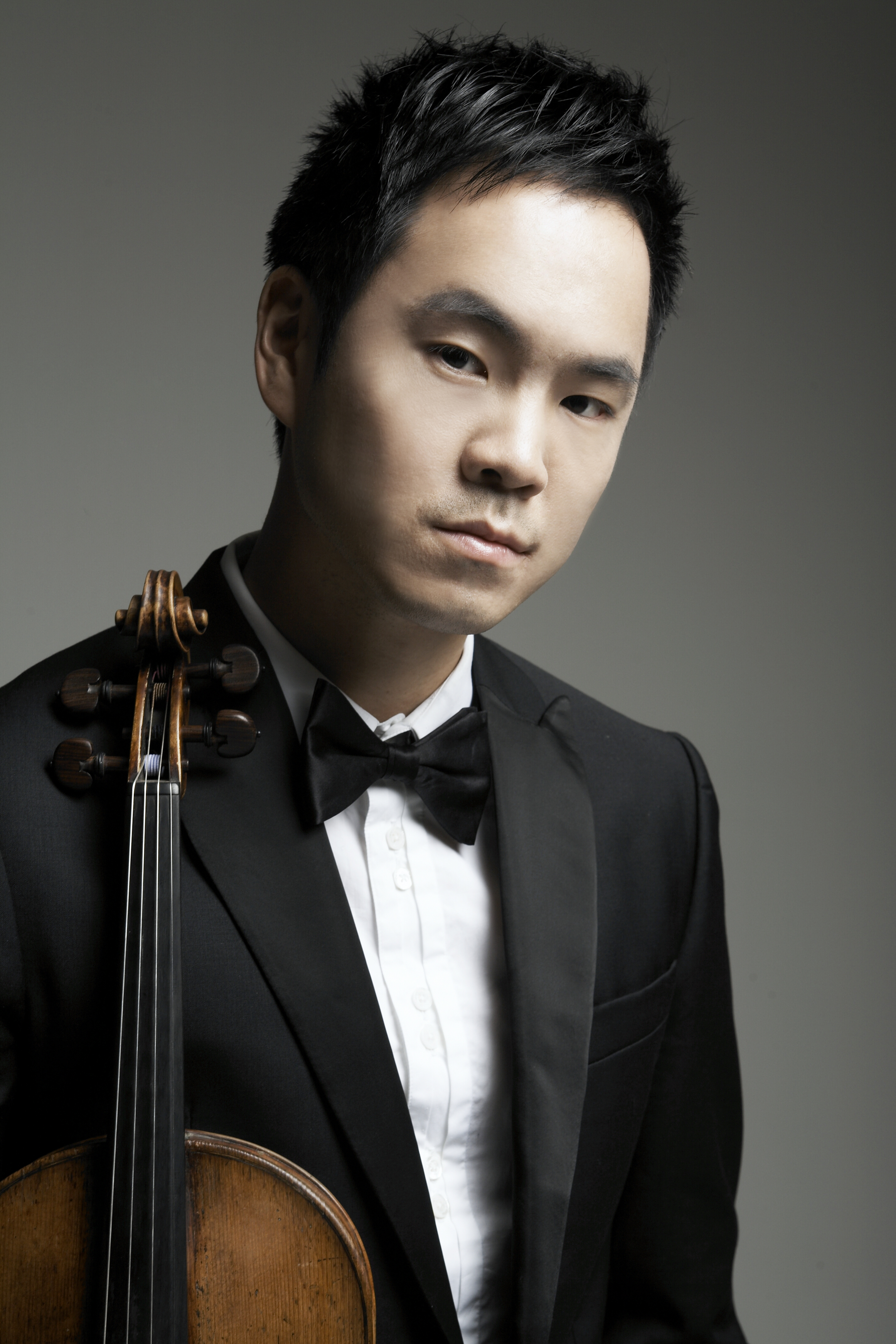
Richard O’Neill

Theofanidis’s Viola Concerto was originally written in 2001 for violist Kim Kashkashian and has since been revised. The current recording is the first of the revised version of the concerto. Before he performed and recorded the concerto, O’Neill met Theofanidis met at a Starbucks near Lincoln Center in New York to discuss the piece.

“I remember that meeting,” O’Neil says. “Everything he says is very meaningful. The way he talked to me about the third movement just moved me very deeply.”

That is partly due to one of the sources of inspiration for the work. In his program notes, Theofanidis writes “This work was written before, during, and in the shadow of September 11th, and I believe is deeply influenced by that event.”

O’Neill explains that “I had actually been living in [New York City] for a few weeks when the planes hit the twin towers. For anybody who was in the city at that time, especially a newbie like me, it felt like the end of the world.”

For O’Neill, just getting the nomination for a Grammy is very meaningful, regardless of who wins. “The nomination is not something that I lobbied or I wrote to somebody,” he says. “It was an anonymous panel that had hundreds if not thousands of records to listen to and judge, and they chose these five albums. That to me, to be in that category—it’s great.”

What matters most, he says, is the piece itself, more than the award. “What happens next is anybody’s guess, and that’s fine with me,” he says. “[Theofanidis] has written a piece that, no matter what happens with this nomination, I think this piece deserves to be in the repertoire and more played.”

FACULTY TUESDAYS CONTINUE FROM AN EMPTY GRUSIN HALL

Next Tuesday’s program offers works by Karol Szymanowski, György Kurtág and Fauré.

By Izzy Fincher Oct. 22 at 5:20 p.m.

CU-Boulder’s Grusin Hall is usually packed on Tuesday nights. Clusters of people gather, chatting and laughing, filling the hall with a pre-concert energy. 

They are here for Faculty Tuesdays, a free concert series featuring CU faculty, which runs from September to March.

Grusin Hall, empty as it now is on Tuesdays

Now on Tuesday nights, Grusin Hall sits mostly empty. But the Faculty Tuesdays series continues through livestreaming. Without an in-person audience, only the performers, a stagehand and the crew of audio technicians remain.

“At CU, we have this wonderful community of people who come to Faculty Tuesdays,” Alejandro Cremaschi, professor of piano pedagogy, says. “I hope that they feel like we are back together after not having live performances for a while. It’s not perfect, but it’s better than not having anything.”

Alejandro Cremaschi (Photo/Larry Harwood)

Cremaschi performed for the first Faculty Tuesdays concert on Sept. 1 with pianist Jéssica Pacheco. Their program featured female composers from the Americas.

Performing safely under social distancing protocols required flexibility. Pacheco and Cremaschi had to play four-hand works on two separate pianos, a challenging experience with fewer visual cues. For the livestream, with up-close cameras and mics rather than a distant live audience, Cremaschi had to tone down his loud announcement voice.

“I am used to speaking from the stage with a voice that projects,” Cremaschi says. “With the microphone, I was yelling so loud that the recording technicians changed the microphone to something that was less live.”

Yet, for Cremaschi, who hadn’t performed live since March at the time, his Faculty Tuesdays livestream was exciting.

“Even though we didn’t have an audience, we play differently when we are doing it for real,” Cremaschi says. “Jéssica loves being on stage, and I love that too. We sound better when we are playing for real. It was nice to have that feeling and energy coming from her. If I had been playing by myself, that would have been really hard.”

David Korevaar (Photo by Matthew Dine)

Pianist David Korevaar is also excited for his upcoming Faculty Tuesdays livestream. He will perform on the Oct. 27 concert, “Signs, Games + Messages,” which will feature works by Karol Szymanowski, György Kurtág and Fauré.

The performance of “Signs, Games + Messages” has been postponed for years. In 2016, Korevaar, David Requiro, Harumi Rhodes and Geraldine Walther, former violist of the Takács Quartet, planned to play this program for Faculty Tuesdays, but that concert fell through. 

Violist Richard O’Neill

Now in 2020, the concert will finally happen with three original collaborators, Korevaar, Requiro and Rhodes, plus Richard O’Neill, the Takács Quartet’s new violist in place of Walther. Korevaar calls it “long postponed, joyful music-making.” 

Korevaar will play on two of the three pieces: Szymanowski’s Mythes, op. 30, and Fauré’s Piano Quartet No. 2 in G minor, op. 45. Mythes is a virtuosic duet for violin and piano, filled with symbolism, extended tonalities and rich harmonies.

While isolated in Poland during World War I, Szymanowski turned to ancient Greek culture and drama for inspiration. Composed in 1915, Mythes shows this influence in the three movements: “I. La Fontaine d’Aréthuse,” “II. Narcisse” and “III. Dryades et Pan.”

Violinist Harumi Rhodes

“It’s an extraordinarily beautiful piece that isn’t done a lot in public because it is also extraordinarily difficult,” Korevaar says. “It’s a scary score to read, but it’s fun to play with a great musician. I am having a wonderful time.”

Korevaar also looks forward to Fauré’s Piano Quartet No. 2. The quartet, premiered in 1887, is a somber, complex work, marking a departure from Fauré’s First Piano Quartet, which was pleasantly simple and conventional. Cyclical themes, filled with rhythmic and melodic development, build and return throughout the later work. Aaron Copland described it as “mature work [that] shows the composer less carefree, less happy, more serious, more profound.”

For Korevaar, the rehearsal process has been largely the same as pre-COVID-19, though with increased distance between players. Masks are a bit more of a challenge—without facial expression cues, the musicians must rely on each other’s movements and gestures.

“(In chamber music,) we do a lot with eyes, with body motions, with the sense of breathing, which doesn’t mean we have to see the breathing apparatus,” Korevaar says. “It’s a whole-body thing.”

This will be Korevaar’s third livestream this fall, after a solo livestream and a duo livestream with violinist Charles Wetherbee in mid-October. He is still getting used to the experience. He says he feels more self-critical in front of cameras and misses the live audience’s energy. However, he finds the energy from other musicians makes the livestream more comfortable, and he looks forward to next Tuesday’s performance.

“It’s a new adventure,” Korevaar says. “In a livestream, you don’t have the opportunity to fix stuff, but you get the same self-consciousness about the bloopers. With chamber music, it’s easier because there is mutual energy, and everybody is working together.”

# # # # #

Signs, Games + Messages
Harumi Rhodes, violin, Richard O’Neill, viola, David Requiro, cello, and David Korevaar, piano
Streamed from CU-Boulder’s Grusin Hall

Karol Szymanowski: Mythes, Op. 30
György Kurtág: Signs, Games and Messages
Fauré: Piano Quartet No. 2 in G minor, Op. 45

7:30 p.m. on Tuesday, Oct. 27, on CU Presents 

__________________

See all remaining Faculty Tuesday performances here.

Takacs Quartet announces change of violist

Geraldine Walther to retire in 2020, after 15 years with quartet

By Peter Alexander Oct. 10 at 4:55 pm.

The Takacs Quartet, in residence at the University of Colorado, Boulder, has announced that retirement from the group of violist Geraldine Walther. She will be replaced by violist Richard O’Neill starting in June 2020.

unnamed-3

New Takacs membership, starting in 2020: From left, Richard O’Neill, viola; András Fejér, cello; Harumi Rhodes, second violin; Ed Dusinberre, first violin.

The other current members of  the quartet are first violinist Edward Dusinberre, who joined in 1993; second violinist Harumi Rhodes, who joined in 2018; and cellist András Fejér, the sole remaining original member of the group.

The original Takács Quartet was formed by four students at the Franz Liszt Academy of Music in Budapest, following a pickup soccer game. That quartet, comprising Gábor Takács Nagy, Karoly Schranz, Gábor Ormai and Fejér, first came to Boulder in 1986 as artists-in-residence at the CU College of Music. In addition to maintaining a high profile international career, the quartet presents an annual concert series on the CU campus that sells out two performances of each program, and frequently collaborate with their faculty colleagues.

Walther was quoted in a statement released by the Takacs Quartet: “I have loved being a member of the Takács Quartet and am grateful for all the friends I’ve made along the way. I am very happy to hand the baton over to the wonderful violist and musician, Richard O’Neill, and wish the group every success for their future together!”

O’Neill wrote, “Joining the Takács Quartet is the greatest honor of my life. I am thrilled to follow in the footsteps of one of my heroes, the great Geraldine Walther, whom I have listened to and adored since I was a child.”

CU College of Music Dean John Davis wrote: “Walther, whose exceptional artistry has contributed to the long-standing success and reputation of the Takács Quartet, will be sorely missed by the many people who have been impacted by her music, friendship, teaching and warm spirit. She has been a treasured part of the College of Music family, and her immense contributions here will be felt for many years to come.

“The addition of Richard (O’Neill) to the quartet is to be celebrated. Richard is a musician of the highest caliber and we are beyond thrilled that he will become the newest member of the Takács Quartet and contribute to the ongoing stellar level of the group. We welcome him to the College of Music!”

walther.cuphoto

Gerladine Walther. CU Photo.

Walther joined the Takacs Quartet from the San Francisco Symphony, where she was principal violist for 29 years. Early in her career she won the William Primrose International Competition. In addition to CU, she taught at the San Francisco Conservatory, Mills College in Oakland and Notre Dame de Namur University in Belmont, Cal.

She also has appeared a chamber music festivals from Marlboro, Vt., to Santa Fe N.M., and frequently performed as a solo artist. Her chamber music performances include collaborations with Isaac Stern and Pinchas Zuckerman, and the Guarneri, Tokyo and St. Lawrence quartets.

unnamed-2

Richard O’Neill

Korean-American violist O’Neill has been artistic director of Ensemble DITTO, founded in 2007 to introduce chamber music to a wider and younger audience in South Korea and Asia, throughout its 13-year existence. He is an artist of the Chamber Music Society of Lincoln Center and principal violist of Camerata Pacifica in Santa Barbara, Cal.

Walther will perform with the quartet for the remainder of the their campus concerts of the 2019-20 academic year. Her last performance with the group will be at the Prague Spring Festival on May 22, 2020. O’Neill will then succeed her starting with a performance at the Music Academy of the West in Santa Barbara, where he is currently on the faculty.