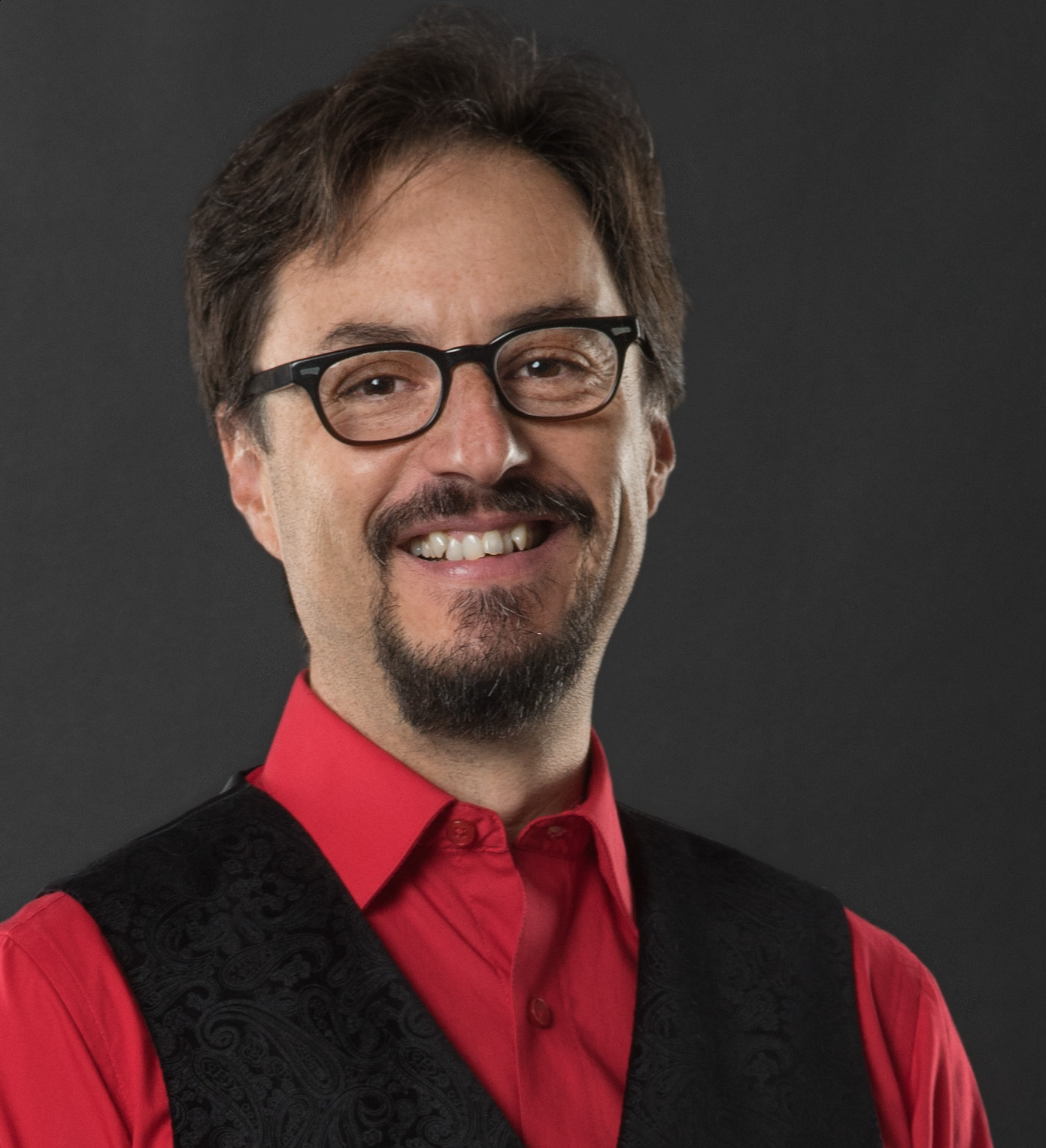
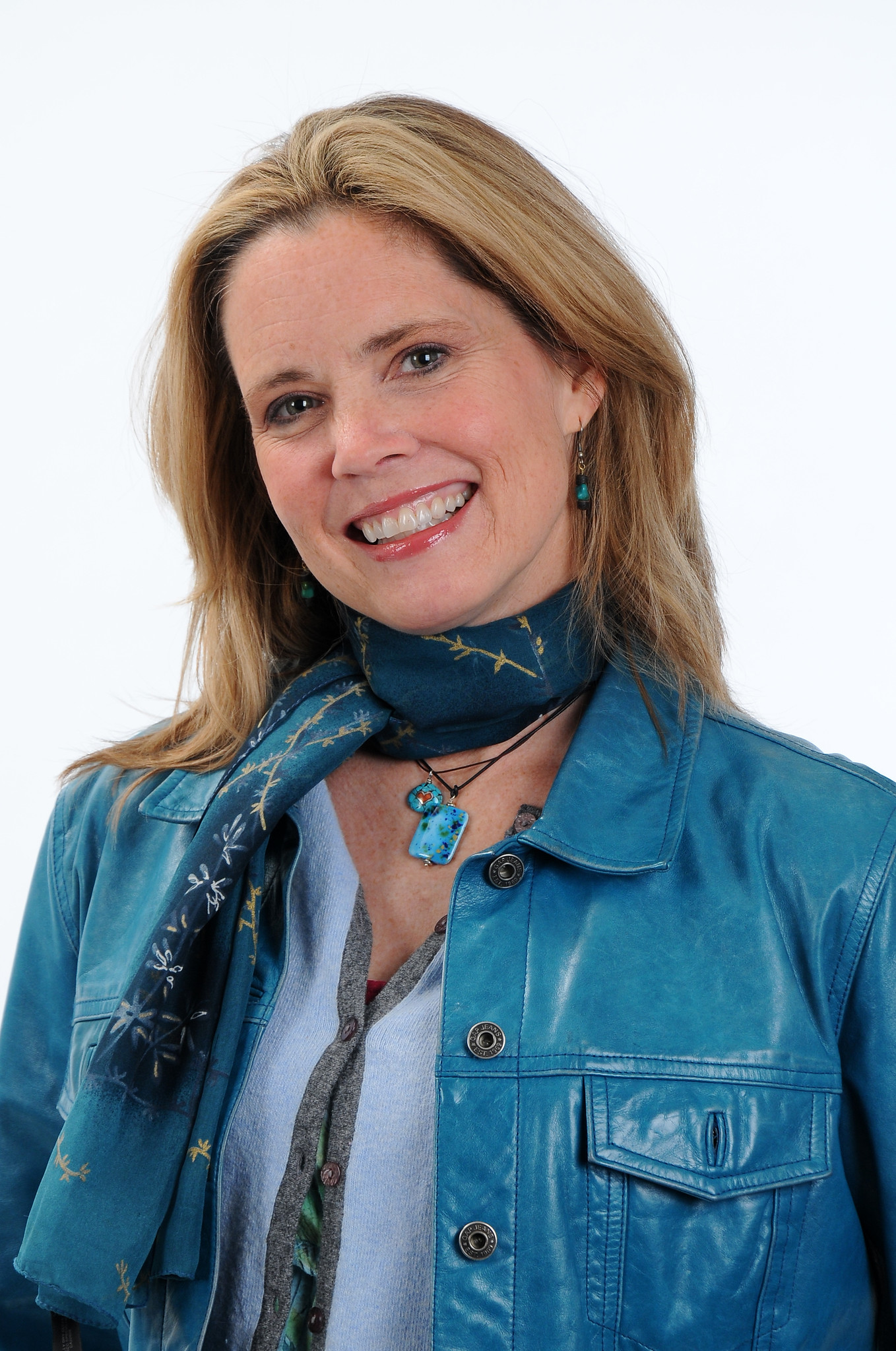
Alison Moritz looks back and ahead

New artistic director at Central City has experience and hopes for CCO

By Peter Alexander March 22 at 6:20 p.m.

Alison Moritz’s career in opera started with a hot-air balloon.

The new artistic director of Central City Opera (CCO), Moritz saw her first opera in St. Louis when she was nine. It was Offenbach’s La belle Hélène, a very Parisian spoof of the the story of Helen of Troy. At nine, the innuendo did not make much of an impression. 

“I think the sexual politics went over my head,” she says. “I was just impressed by the hot-air balloon onstage!”

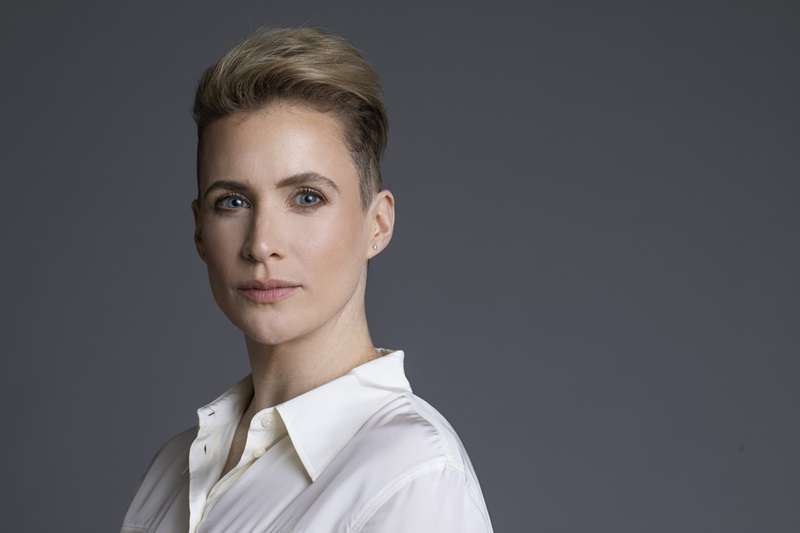
Alison Moritz: Destined for opera?

Balloon or no balloon, she might have been destined for a career in opera. That first experience really clicked with someone who says she was “an indoor kid [who] loved everything artistic. I was really obsessed with story and picture and music.”

Her first ambition was to be a film animator. “I did see an opera when I was nine, and the whole world just made sense to me,” she explains. “It just felt so magical and exceptional, but also incredibly familiar.”

That early sense of familiarity soon led to a near obsession with opera. “When I was in 8th grade I saw my first production of Traviata and I went back and saw it five times! My parents went with me to the first two performances, and after that they would drop me off in the parking lot and say, ’See you three and a half hours.’ 

“I used to say I had to work in opera because I couldn’t afford to see opera as much as I wanted to. I had to find a way to sit in—I never get tired of it.”

Her path into directing was not something that she saw from the outset, however. “Initially, it was not clear what my contribution [to opera] could be,” she says. “When you’re not a singer, at the time I was growing up, there were fewer roles for women in production, there were fewer roles for women in leadership.”

Moritz attended Washington University in St. Louis, where she studied music and art history. She did some work in art administration, and production work backstage, but she thought that might be a hobby and she would work in another field. An internship with Opera America gave her insight into the American opera scene, and while living in New York she attended all the opera and theater that she could afford in standing room.

A turning point came when a friend who went to some performances with her, but did not work in opera, told Moritz, “The way you think about this is someone’s job.”

“That was the first time that I thought maybe I could do this,” she says. “I was really lucky—I went back to school to get  a degree in opera stage direction at the Eastman School of Music. When I arrived there I knew a lot about opera but I had very little experience. And I’m proudly grateful that they saw potential in me, and fostered that.”

From Eastman her career as a stage director has only grown. Today, she can claim directing credits from Lyric Opera of Kansas City, the Glimmerglass Festival, Opera Omaha, Ravinia, Tanglewood, Portland Opera and Opera Colorado, among many others. 

Moritz says that she approaches her work principally through the music. “My job as a director is to really help contemporary audiences see what’s so special about the music,” she says. “It’s really key for the director to bring the story and the visuals and the relationships amongst people and ideas together, so that we’re making a case for these beautiful documents. That’s always been my approach.”

She believes that growing up a Midwesterner—“in a flyover state,” she says—affects her perspective on opera. “I’ve never had the point of view that the only great opera in America is in the largest coastal companies. They’re incredibly important, but to be able to produce things locally and regionally I think is important, and fundamental to what makes Central City such an exciting place to work and to watch opera.

“The other Midwestern thing about me is I’ve always been creative, but through the lens of pragmatism. I know the cost of wood when we’re building the set. We’ve got to make some nitty-gritty decisions in order to be able to make great art. The Midwesterner in me is always looking to see how long will this take to rehearse, how many days do we need to do X, Y and Z, and that keeps me pretty grounded.”

For the coming summer, Moritz already has long established engagements at Cincinnati and Glimerglass in upstate New York, but after this year her new job will mean she has to forego summer directing jobs outside Central City. “This year there’s a little bit of a time-share, [but] I’m really confident that I’ll be able to spend meaningful time with the audiences at the top of the mountain,” she says. “For future seasons, I will be at Central City the entire summer.”

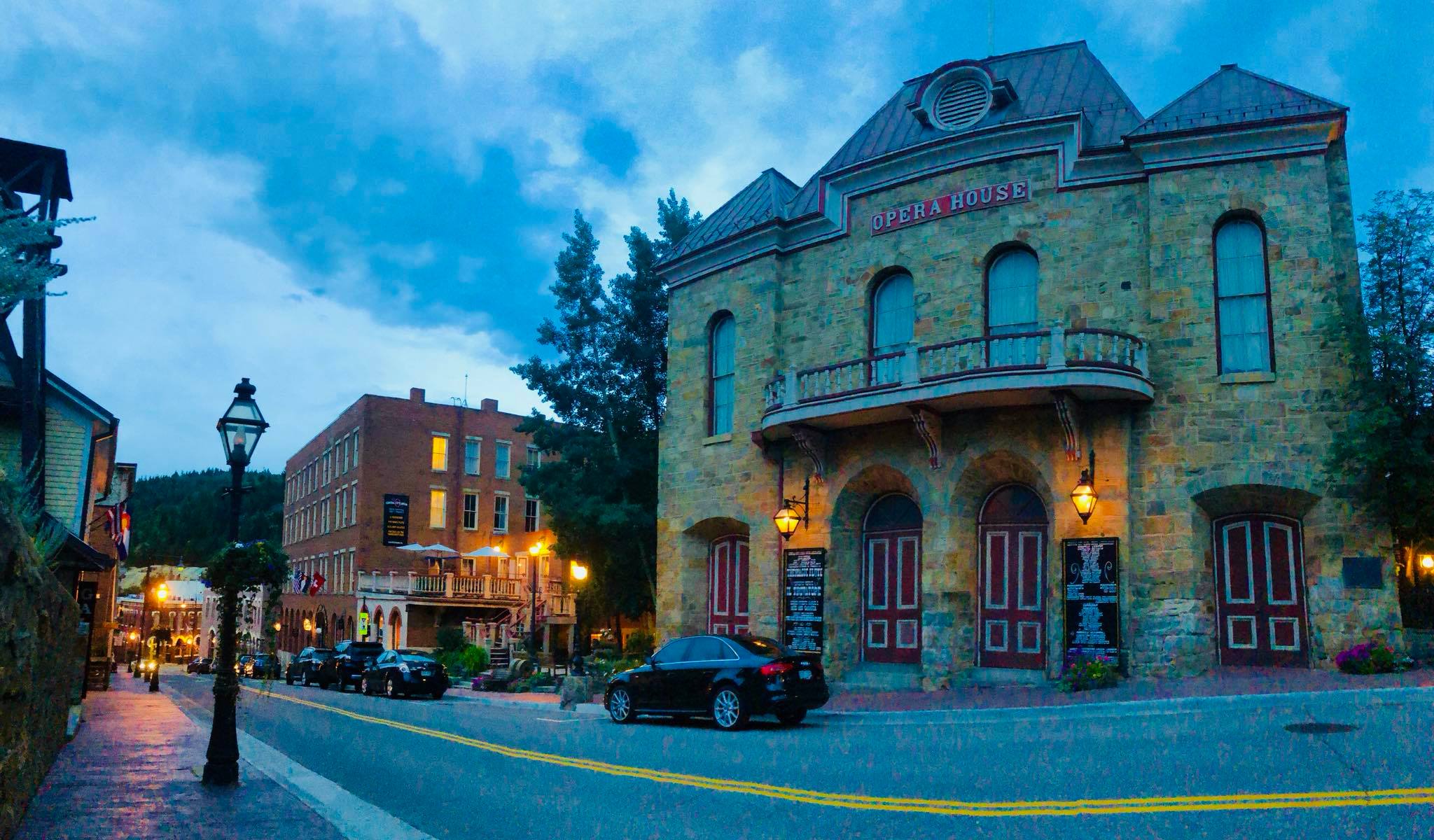
Central City Opera House. Photo by Ashraf Sewailam.

Looking ahead, Mortiz envisions creating cooperative relationships with other opera companies where she might have directing work outside of the Central City season. “I’m excited about the prospect of creating more co-productions [with other companies] and being able to bring the best of American opera here to Central City,” she says. “I’m really optimistic and excited about the future. I’m really happy to have my boots on the ground and to get to work. 

“We’re all very excited to re-imagine and to dream and continue creating a great atmosphere at Central City for both artists and audiences.”

NOTE: Information Central City Opera’s summer 2024 festival season can be found on the CCO Web page.

Alison Moritz appointed artistic director of Central City Opera

An experienced stage director, Moritz will direct one production per season

By Peter Alexander Feb. 20 at 6:10 p.m.

The Central City Opera has announced the appointment of the accomplished stage director Alison Moritz as their new artistic director.

Alison Moritz

Moritz was selected after a national search led by Jonathan West, on behalf of Management Consultants for the Arts and CCO’s volunteer search committee, chaired by Joshua Navarro from the CCO board of directors. The position had been open since the summer of 2023.

In a written announcement, Moritz commented “I am deeply honored to join Central City Opera as the new artistic director. My previous experiences with the company have been incredibly rewarding, and I am excited to build upon that foundation as we embark on this new chapter together.”

CCO president and CEO Scott Finlay stated, “I’m thrilled to welcome Alison Moritz to Central City Opera as our new Artistic Director! Her talent and vision align perfectly with our goals, and I couldn’t be more excited to have her on board.”

Moritz has previously appeared as stage director at CCO, including the 2019 production of Puccini’s Madama Butterfly. As AD she will oversee the company’s artistic and production staff for the upcoming 2024 Festival (June 29–Aug. 4; see the CCO Web page for more information), and will direct one production per season starting with the 2025 Festival. 

Moritz’s recent productions have been described as “enchantingly cheeky” (Washington Post), “elegantly sexy” and “raw, funny, surreal, and disarmingly human” (Opera News). She has recently directed productions for Washington National Opera, Lyric Opera of Kansas City, the Glimmerglass Festival, Opera Omaha, Ravinia, Tanglewood, Bard Music Festival, and Portland Opera. Previous engagements have been on the directing staffs at Santa Fe Opera, Seattle Opera, Opera Theatre of St. Louis, Minnesota Opera, Atlanta Opera, and Wolf Trap Opera.

Moritz succeeds former AD Pamela Pantos, who was released from the position in July 2023, and Pelham (Pat) Pearce, who had been AD for 26 years when he left the post in 2022.

Opera Colorado to present Wagner’s ‘Flying Dutchman’

Legendary ghost ship will sail into Denver Feb. 24, for four performances

By Peter Alexander Feb. 20 at 5:30 p.m.

Never mind the forecast; there will be stormy seas in Denver the end of February and early March.

At least there will be on the stage of the Ellie Caulkins Opera House, where Opera Colorado will present Richard Wagner’s Fliegende Holländer (Flying Dutchman) for a total of four performances opening Feb. 24 (7:30 pm. Saturday; subsequent performances Feb. 27, March 1 and 3 are listed below). Performances under the musical direction of Ari Pelto will feature Norwegian baritone Olafur Sigurdarson in the title role and American soprano Marcy Stonikas as Senta.

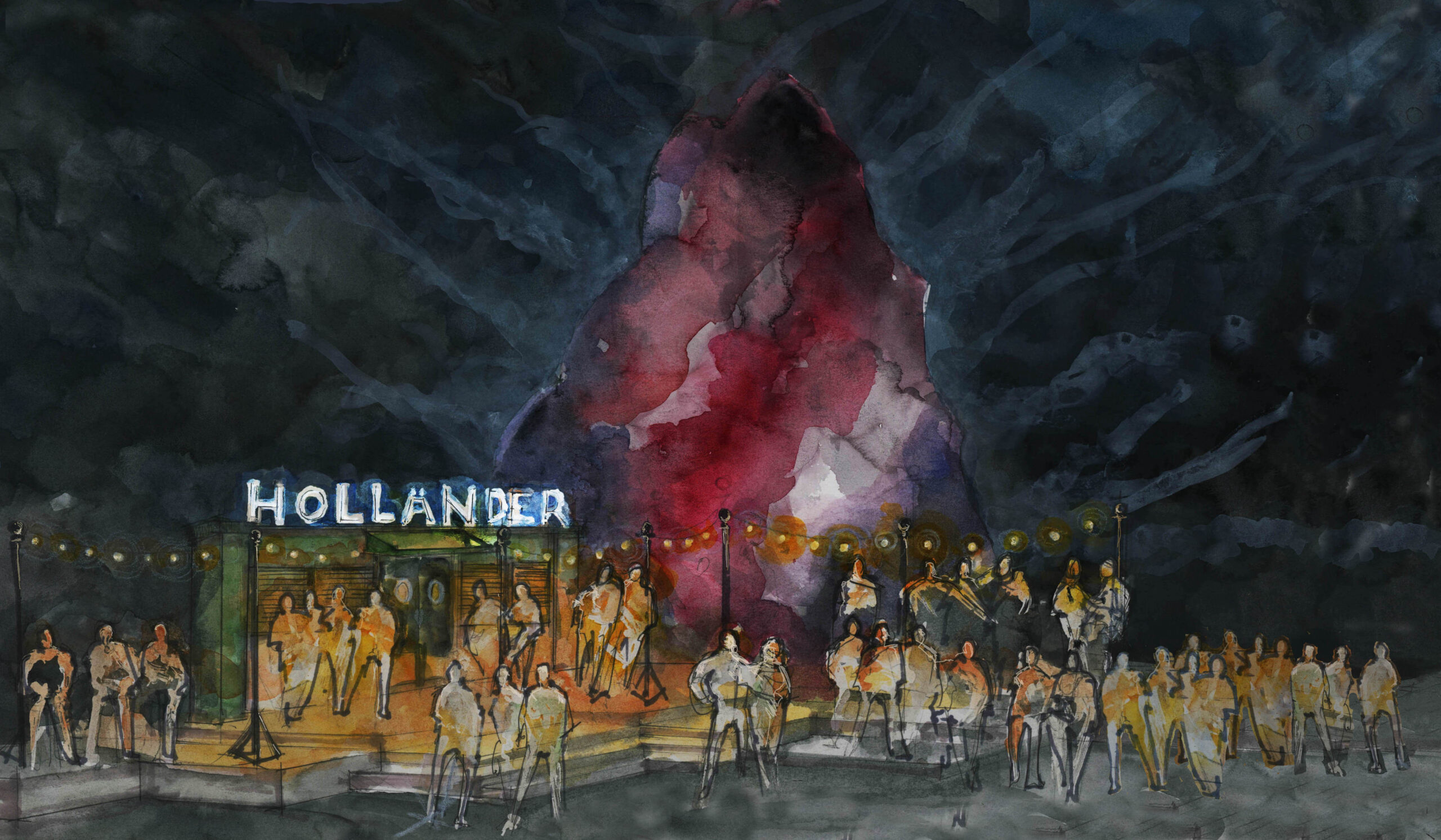
Color sketch of Opera Colorado production of Fliegende Holländer. Courtesy of Opera Colorado.

Wagner wrote The Flying Dutchman in 1840 and ’41 while he was living in Paris. He wrote the text, based on a story by Heinrich Heine, and the music, setting a pattern that he would follow in his subsequent music dramas. Afterwards he wrote to his friends, “From here begins my career as poet, and my farewell to the mere concoctor of opera-texts.”

The 1843 premiere in Dresden was conducted by Wagner himself. Modestly successful at the first performance, The Flying Dutchman is generally regarded as Wagner’s first mature work. It is considered an opera, while his later works are classified as music dramas, a more thorough synthesis of music, text, setting and other dramatic elements.

Fliegende Holländer set under construction. Courtesy of Opera Colorado.

The opera enacts the tale of a ship’s captain who is condemned to sail the seas for eternity, until he is redeemed by the love of a woman. Allowed to land only once every seven years, the Dutchman encounters an avaricious Norwegian sea captain, Daland, and his dreamy daughter Senta, who has long been fascinated by a portrait of the Dutchman hanging in her home. For different reasons, both are eager to make the wealthy Dutchman part of the family through marriage, and in the end Senta makes the ultimate sacrifice, freeing the Dutchman from his curse.

The music that opens the opera was inspired by a stormy voyage Wagner had taken from Riga to London. This powerful opening has made the Overture to The Flying Dutchman a popular staple of the orchestral repertoire.

Opera Colorado has assembled an appealing cast for their production. Sigudarson has sung Wagner roles at Bayreuth and the Metropolitan Opera, among other houses, and other major roles throughout Europe. Stonikas has won several vocal competitions and sung leading roles at Seattle Opera. Cast as Daland, bass Harold Wilson has extensive Metropolitan Opera roles to his credit, and sang at Deutsche Opera Berlin for five seasons. Another Met veteran, Chad Shelton takes the leading tenor role of Erik.

# # # # #

Opera Colorado, Ari Pelto, conductor
Kathleen Smith Belcher, stage director; Alan E. Muraoka, set designer

  • Richard Wagner: Der fliegende Holländer (The Flying Dutchman)

7:30 p.m. Saturday, Feb. 24, Tuesday, Feb, 27, and Friday, March 1
2 p.m. Sunday, March 3
Ellie Caulkins Opera House, Denver Performing Arts Complex

Sung in German with English and Spanish subtitles at each seat.

TICKETS

Central City Opera will be inducted into Colorado Music Hall of Fame

Induction ceremony will be July 29 in Central City

By Peter Alexander Feb. 2 at 2:16 p.m.

The Central City Opera (CCO) will be inducted in the Colorado Music Hall of Fame, in the Hall’s first “destination induction,” to be held in Central City on Saturday, June 29.

In addition to the company, opera singer/professionals Cynthia Lawrence and Keith MiIller, and CCO’s late conductor/artistic director John Moriarty will also be inducted into the Hall of Fame. Under the title “Opera in the High Country,” the ceremony in Central City will be hosted jointly by CCO and the City of Central, and will take place in conjunction with the opening night of a CCO production of Gilbert and Sullivan’s Pirates of Penzance.

Scott Finlay, CCO’s president and CEO commented in a news release, “We are deeply honored to be receiving this recognition. Central City Opera’s 92 years of rich musical heritage is a testament to the dedication of our supporters, volunteers, artists, and staff who have made this milestone possible. This distinction is a tribute to their commitment.”

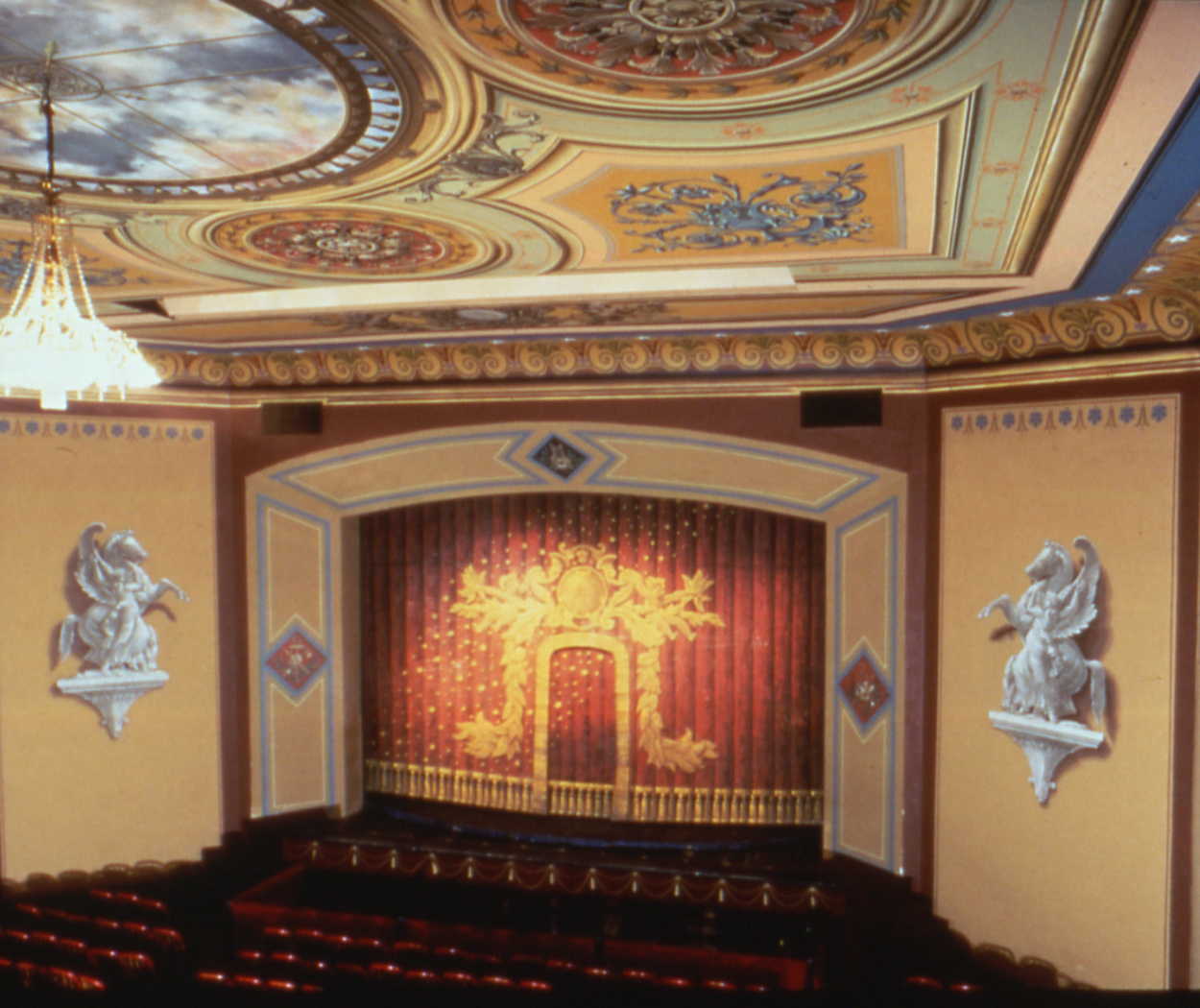
Interior view of Central City Opera’s historic opera house

Officials from the Hall of Fame and the City of Central also released statements. Karen Radman, executive director the Colorado Music Hall of Fame, wrote: “Colorado Music Hall of Fame is honored to be presenting an opera-themed induction class for the first time, recognizing the important contributions that opera has made in music while expanding to a new musical genre for our inductees. Opera in the High Country, focused around the impressive and historic Central City Opera and those whose careers were influenced by it, also expands The Hall of Fame’s reach into the Colorado mountains.”

Central City Mayor Jeremy Fey wrote: “It is a great honor for Central City to host Colorado Music Hall of Fame. We are especially proud as Central City Opera, a pillar of Colorado’s cultural landscape for 92 years, leads the 2024 class of inductees.”

VIP tickets that include a reception, dinner and seating for the induction ceremony, as well as the CCO performance of Pirates of Penzance, are available through the CCO box office

Founded in 1932, Central City Opera is the fifth oldest opera company in the United States. With major performances in the Central City Opera House, a National Historic Landmark that predates the opera company by 54 years, the company offers an annual of summer festival of opera and classic music theater, as well as smaller events in Central City. CCO’s Bonfils-Stanton Foundation Artists Training Program, founded by Moriarty in 1978, contributes to the professional development of young artists, many of whom go on to major operatic and musical theater careers. 

Boulder Opera children’s performance is sold out

Free Sunday performance at the Boulder Public Library is full

By Peter Alexander Jan. 24 at 3:10 p.m.

Chris Pratorius Gómez

Boulder Opera’s upcoming performance of the children’s opera Xochitl and The Flowers by Chris Pratorius Gómez is sold out.

That is, all of the tickets for this free performance have been claimed. One of three children’s operas Pratorius Gómez wrote for the Hands-On-Opera project of Opera Parallèle in San Francisco, Xochitl and The Flowers is a bilingual opera sung in both Spanish and English. The plot is based on true events that took place in San Francisco’s Mission neighborhood, about an immigrant family’s determination to put down roots while preserving their native heritage. 

The performance will include an explanation of opera and the plot and an art activity for children making cutout flowers. 

While this performance is already full, Boulder Opera has plans to tour Xochitl and The Flowers next season.

# # # # #

Boulder Opera—SOLD OUT

  • Chris Pratorius Gómez: Xochitl and The Flowers

3 p.m. Sunday, Jan. 28
Boulder Public Library Canyon Theater

SOLD OUT: Free tickets have all been claimed

Central City Opera announces Magic Flute and Il trovatore for 2018

The Face on the Barroom Floor returns for 40th anniversary production

By Peter Alexander

Mozart’s Magic Flute and Verdi’s Il trovatore, two staples of the operatic repertoire, will be the mainstage productions for Central City Opera’s 2018 summer season.

Central City Opera Opening Night 2006- Page 2 of Book

The Historic Central City Opera House

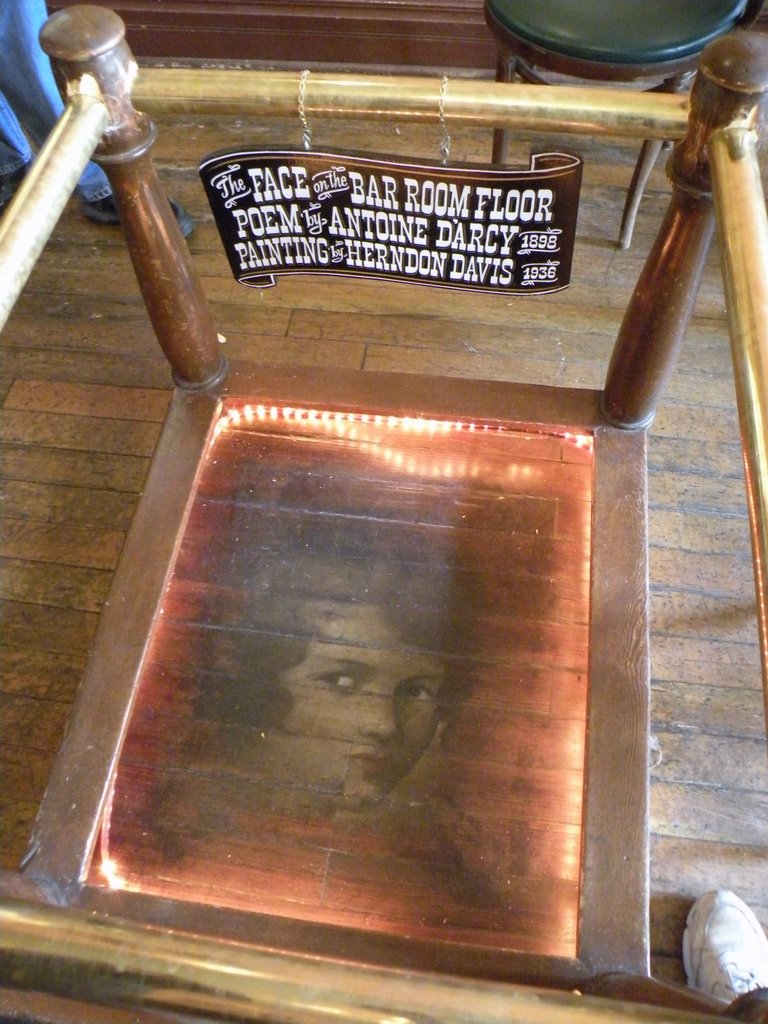
Magic Flute and Il trovatore will be performed in repertory in Central City’s historic 550-seat opera house. Filling out the season are two smaller productions, to be presented in more intimate venues in Central City during the summer: the 40th-anniversary production of The Face on the Ballroom Floor by Henry Mollicone, which was commissioned by CCO; and Handel’s Acis and Galatea, in its Central City debut production.

Face on floor

The Face on the Barroom Floor in the Teller House bar

Mollicone’s Face on the Ballroom Floor was premiered in 1978 in the Teller House Bar in Central City, where the painting that inspired the opera still draws tourists. The painting was made in 1936 under disputed circumstances and was inspired by a poem by Hugh Antoine d’Arcy that was published in 1887—and which was itself derived from an even earlier poem by John Henry Titus.

The one-act opera features two love triangles separated by a century, both revolving around the mysterious face on the barroom floor.

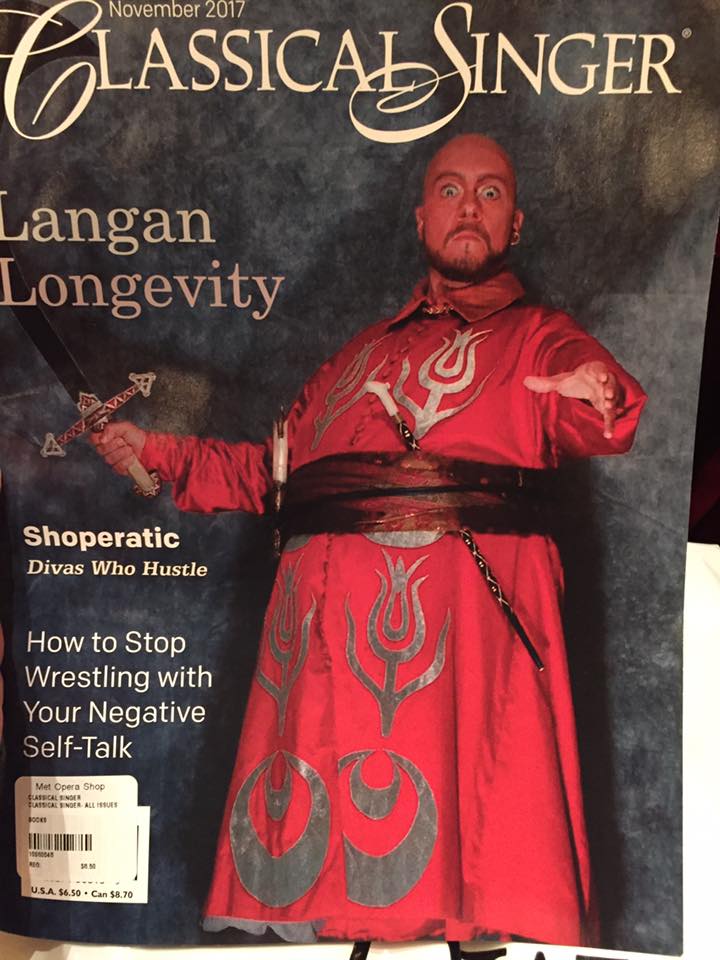
Classical Singer LanganThe season will see the return of number of singers in the two mainstage productions. Bass Kevin Langan, last seen in 2013 as Dr. Gibbs in Our Town, returns in his signature role of Sarastro in The Magic Flute. Langan was recently featured on the cover of Classical Singer magazine in recognition of his longevity over 38 years in opera. Katherine Manley returns as Pamina, and Alessandro Talevi returns to Central City as stage director.

Il trovatore will be practically a reunions party for the 2016 production of Tosca, including Jonathan Burton as Manrico, Alexandra Loutsion as Leonora and Michael Mayes as Count di Luna. John Baril, Central City Opera Music Director, will conduct, and Joachim Schamberger will be stage director.

PatPearce-215x300

Pelham (Pat) Pearce

The pattern of presenting two major works in the Opera House and two smaller productions in other venues in Central City is one the CCO has adopted in the past few years. At one time, the shorter works were taken to other cities and towns in Colorado, but Pelham (Pat) Pearce, CCO’s general/artistic director, says “We decided that part of our identity is the actual experience of being (in Central City).”

According to Pearce, keeping the performances in Central City has not affected the company’s success. “The popularity of these one-acts continues to grow,” he says. “They draw opera goers who are looking for something different as well as those who are new to the art form and curious about experiencing something that’s shorter, less expensive, and feels more accessible.”

In addition to the four staged productions, the CCO summer season includes recitals, opera scenes, pre-performance lectures and post-performance opportunities to meet the artists.

# # # # #

CCOperaLogoPreferred

Central City Opera 2018 Season

Mozart: The Magic Flute
André de Ridder, conductor
Alessandro Talevi, stage director

Cast includes Kevin Langan as Sarastro, Katherine Manley as Pamina. Debuting with Central City Opera: Joseph Dennis as Tamino, Will Liverman as Papageno, Jeni Houser as The Queen of the Night and Ashraf Sewailam as The Speaker.

Matinees at 2:30 p.m.: July 11, 13, 15, 17, 21, 25, 29; Aug. 2, 5
Evenings at 8 p.m.: July 7, 19, 27, 31
Central City Opera House

Performed in German with English supertitles.

Verdi: Il trovatore
John Baril, conductor
Joachim Schamberger, stage director

Cast includes Jonathan Burton as Manrico, Alexandra Loutsion as Leonora, Michael Mayes as Count di Luna and Maria Zifchak as Azucena.

Matinees at 2:30 p.m.: July 18, 22, 24, 28; Aug. 1, 3
Evenings at 8 p.m.: July 14, 20, 26
Central City Opera House

Performed in Italian with English supertitles.

Handel: Acis and Galatea
Christopher Zemliauskas, conductor
Ken Cazan, director

Cast includes artists of the Bonfils-Stanton Foundation Artists Training Program

July 25, 28 and Aug. 1 at 8 p.m.
July 26 at 5 p.m.
Venue in Central City TBA

Performed in English.

Henry Mollicone: The Face on the Barroom Floor, 40th-Anniversary Production
Michael Ehrman, head of the Bonfils-Stanton Foundation Artists Training Program, director

Cast includes artists of the Bonfils-Stanton Foundation Artists Training Program

July 25, 28 and Aug. 1, 2, 3 at 1:15 p.m.
Venue in Central City TBA

Performed in English.

For tickets and more information about the 2018 summer season, visit the Central City Opera Web page, or call (303) 292-6700.

Lehár’s Merry Widow waltzes into Macky Auditorium (and does other dances, too)

Classic Viennese operetta gives its characters a second chance Oct. 27–29

By Peter Alexander

Franz Lehár’s Merry Widow, the classic Viennese operetta, is a delicious platform for wonderful singing, graceful dancing, colorful costumes, and an inexhaustible supply of humor. But in the hands of stage director Leigh Holman, director of the CU Eklund Opera Program, there is a serious side too.

The Merry Widow-X4The CU production will be presented Friday–Sunday, Oct. 27–29, in Macky Auditorium. Nicholas Carthy will conduct an orchestra and cast of CU students. Other artistic staff of the production are set and lighting designer Peter Dean Beck; costume designer Tom Robbins; choreographer Stephen Bertles; and technical director Ron Mueller.

The major roles are double cast, with different singers on Saturday and Friday/Sunday. The performances will be sung in German with English titles.

“People think of it as light, and it is a funny show,” Holman says. “But I’ve taken a little bit more serious tone with it—not to scare anyone off because it’s still very hilarious and fun, but I’ve been doing a lot of thinking about second chances.”

In fact, it’s a second chance for the two main characters that drives the plot of The Merry Widow.

Holman,Leigh-X4

Leigh Holman

As the operetta opens, the fictional east-European country of Pontevedro is facing a budget crisis. At their embassy in Paris, the ambassador hopes to arrange the marriage of the wealthy widow Hanna Glawari with Ponetvedro’s most eligible bachelor, Danilo. That would, he believes, save the country by keeping her money in Pontevedro. But Paris is filled with men—bachelors and married alike—who would love to get their hands on her and her money, making the ambassador’s matchmaking all the more urgent.

Of course there are many other comic-opera complications with many other couples, but you want to keep your eye on the ball, which is the Hanna-Danilo relationship. As Holman explains, this is where the second chance comes in, because they have a history.

“They fell in love years ago when she was a farm girl,” Holman says. “He was wealthy and a nobleman, and his uncle did not approve of their relationship.” Because Danilo hesitated to oppose his uncle, Hanna ended the relationship and got revenge by marrying another wealthy suitor.

Merry_WidowPR48GA-X5

Lightening strikes twice for Danilo (Bryce Bartu) and Hanna (Anna Whiteway) in CU’s “Merry Widow.” (Photo by Glenn Asakawa)

“I wanted to deepen the understanding of the audience for what this couple had gone through,” Holman says. “So I decided to do a pantomime during the Overture, with a young Danilo and a young Hanna in front of the curtain. We get to experience their young love, and the situation where the uncle disapproves and Danilo hesitates. He eventually asks her to marry him, but she shows him her ring, that she’s already married. So we get all of that before the curtain opens.”

After the Overture, the curtain opens on the embassy party. Hanna’s much older husband has now died, leaving her a fortune, and Danilo has buried his sorrows by being a feckless man about Paris. ”They see each other again after all these years,” Holman explains. “Now they just love to spar with each other all the time, always testing each other.

“We really wanted to play on the idea, what would happen if we all got a do-over, if we had the chance to go back again? The question is, would we love to [do that]? We don’t know how it would end up, but we all wonder.”

This being operetta, you can count this second chance ending up with a happy outcome for all of the mixed-up couples. And you can also count on a lot of great entertainment along the way: a bit of farce and mistaken identities, gorgeous individual arias, hilarious ensembles, wonderful “Pontevedrian” folk music and costumes, and plenty of dancing.

carthy

Conductor Nicholas Carthy

“We are having a wonderful time,” Holman says of herself and the cast. “It’s just a joy to go to work every day. We walk into the rehearsal hall and they’re all warming up, everybody’s dancing, the Viennese Waltz, the polka, the mazurka, the everything!”

Because Holman is devoted educator as well as opera director, “the everything” has great benefits for the students. “It’s the whole triple threat,” she says. “They’re singing, dancing, and acting with [spoken] dialog, so it’s a great opportunity for them. And comic timing! There really is an art to that and it’s something that has to be learned. They’re really grasping it and that’s exciting to see.

“Our goal is that when they leave CU they’re ready for whatever life brings. With musical theater and opera melding ever closer and closer together, I think this will get them ready for whatever opportunities they have.”

In other words, young opera singers have to be ready when they leave school because—unlike Hanna and Danilo—they won’t always get second chances when opportunities appear. And neither do audiences; The Merry Widow is only in Macky this weekend.

# # # # #

The Merry Widow by Franz Lehár
CU Eklund Opera Program
Leigh Holman, stage director
Nicholas Carthy, music director and conductor

7:30 p.m. Friday & Saturday, Oct. 27 & 28
2 p.m. Sunday, Oct. 29
Macky Auditorium

Tickets

Magic flutes, golden flutes and flutists of all ages

From Sir James Galway to CU Opera, a week of flutes at CU

By Peter Alexander

3737-16+Sir+James+Galway+by+Paul+Cox+2

Sir James Galway

There will be many kinds of flutes at the University of Colorado Boulder next week: Magic, golden, and from piccolo to bass.

The central event will be a two-day meeting of flutists at the College of Music, Tuesday and Wednesday, March 21–22. Under the title “Once a Flutist: Rekindling the flutist within,” this free event is open to flutists young and old.

The culminating events will be a masterclass for CU flute students with Sir James Galway —“The Man with the Golden Flute” — at 1:30 p.m. Tuesday in Grusin Music Hall, and a concert by Galway and his wife, Lady Jeanne Galway, Wednesday at 7:30 p.m. in Macky Auditorium.

Sir James Galway, who has recorded just about the entire classical flute repertoire, has performed with Stevie Wonder, Joni Mitchell and Sir Elton John, and recorded film music for The Lord of Rings, is one of the world’s best known musicians of any genre.

But before all of that gets underway, CU’s Eklund Opera Program will set the scene with Mozart’s Magic Flute, Friday, Saturday and Sunday, March 17–19, in Macky Auditorium.

# # # # #

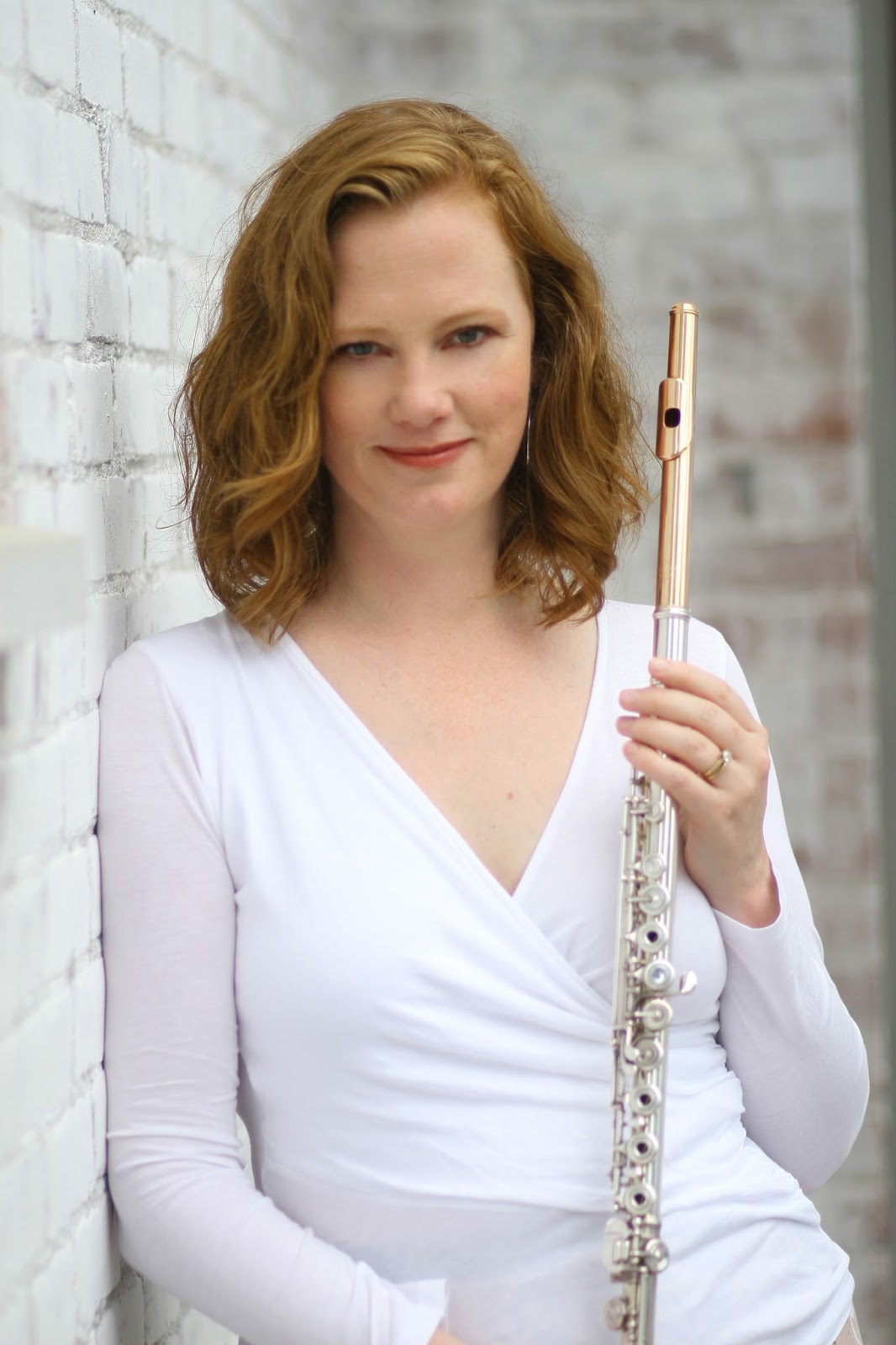
Christina Jennings organized “Once a Flutist” to celebrate her 10th year teaching flute at CU.

“There are a lot of flute players out there,” she says. “I can’t tell you how many times [I’ve met] people who say, ‘I used to play the flute!’ Or ‘My daughter plays the flute!’

“The idea for this festival came from that.”

Jennings will play a recital March 21 for the College of Music “Faculty Tuesdays” series, at 7:30 p.m. in Grusin Hall. But she will not hog the stage: appearing with her will be a flute orchestra of no fewer than 60 players, all on the Grusin stage.

ISS27_Catherine_Coleman_plays_a_flute

Astronaut-flutist Catherine Coleman, playing on the International Space Station. Photo courtesy of NASA.

Another guest is literally an out-of-this-world flute player: astronaut Cady Coleman, who took her flutes onto the International Space Station. In 2011 she played live from orbit on National Public Radio.

Now well into his eighth decade, Galway shows no sign of slowing down. “That’s what I do,” he says. “That’s why I’m here: to play the flute.”

The Macky concert will feature both Galways with Cathal Breslin, a young Irish pianist who is accompanying the flutists on their current U.S. tour. The program will include a sonata by Philippe Gaubert, who Galway describes as “The Brahms of the flute.”

“And we’re playing a few little pieces which I’m well know for as encore pieces — we’re putting those in the middle of the program,” he says. “And Carnival of Venice, which everybody knows.”

# # # # #

Buzz-3-16-2-Glenn-AsakawaUniversity-of-Colorado

Michael Hoffman inThe Magic Flute. Photo by Glenn Asakawa.

The CU production of The Magic Flute will be directed by Herschel Garfein, a Grammy Award-winning librettist, a composer and a stage director. And if you know the rather fantastic plot of The Magic Flute, he wants you to know that he does not see the opera as a fairy tale.

“From the beginning, I’ve seen it as sort of a metaphysical comedy of manners,” Garfein says. “I think it can be taken both more seriously, and more comically, than usual. There’s a very compelling love story between Prince Tamino and Pamina, and there’s also a huge strain of philosophical thought that runs through the opera.”

Read more at Boulder Weekly.

# # # # #

The Magic Flute by W.A. Mozart
University of Colorado Eklund Opera Program
Nicholas Carthy, conductor
Herschel Garfein, stage director
Peter Dean Beck, stage and lighting design

7:30 p.m. Friday and Saturday, March 17–18
2 p.m. Sunday, March 19
Macky Auditorium

Tickets

Christina Jennings

Christina Jennings

Once a Flutist: Rekindling the flutist within!
Tuesday and Wednesday, March 21–22
CU Imig Music Building

All events free and open to the public, including:

James Galway Master Class
1:30 p.m. Tuesday, March 21, Grusin Hall

Christina Jennings, flute, recital with Eisenhower Elementary School and CU Choirs, CU Family Flute Orchestra
7:30 p.m. Tuesday, March 21, Grusin Hall

Lady Galway Master Class
1 p.m. Wednesday, March 22, Macky Auditorium

Full schedule online at http://www.colorado.edu/music/academics/departments/woodwinds/flute-studio/once-flutist

Sir James and Lady Jeanne Galway and Friends
7:30 p.m. Wednesday, March 22
Macky Auditorium

Tickets

Santa Fe audience cheers Higdon’s ‘Cold Mountain’; additional performance added

Rigoletto and Salome are also part of 2015 summer season

By Peter Alexander
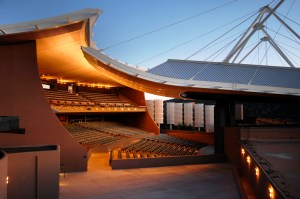
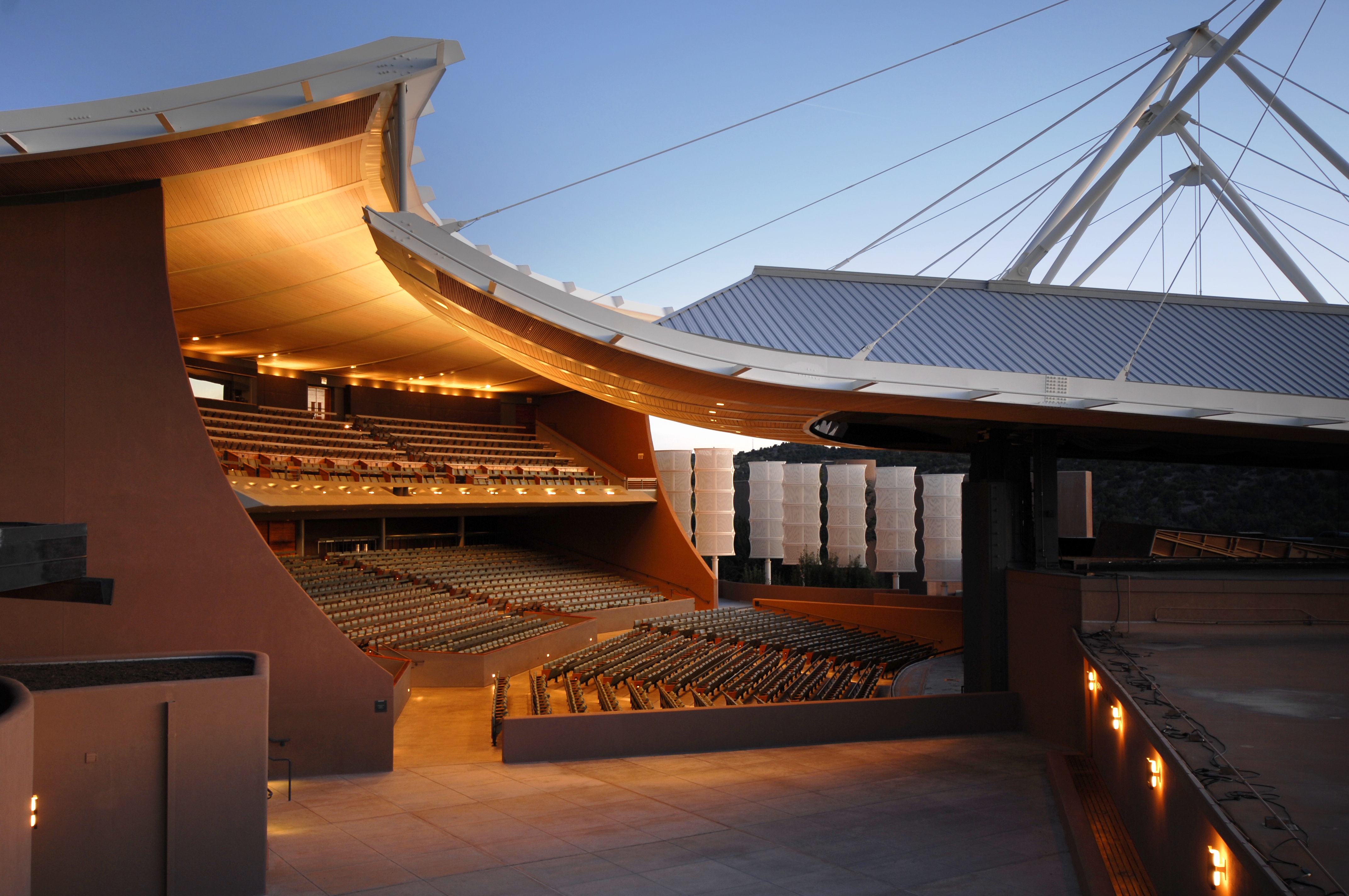
Santa Fe Opera House (c) 2010 Robert Godwin for The Santa Fe Opera

Santa Fe Opera House (c) 2010 Robert Godwin for The Santa Fe Opera

The audience stood and cheered when composer Jennifer Higdon came onstage at the Santa Fe Opera (SFO) Wednesday night (Aug. 5).

The occasion was the second performance of her new opera Cold Mountain, based on the Charles Frazier novel, which had its premiere at the SFO last Saturday (Aug. 1). The opera is playing to sold-out houses, and has in fact been so successful and generated so much demand that the SFO has added a sixth performance Aug. 24 to the original five planned dates. As of this writing, tickets are still available for that performance.

Higdon’s first opera, Cold Mountain is a powerful and assured effort from a very skilled composer. Future performances are planned by the Santa Fe Opera’s co-commissioners Opera Philadelphia and the Minnesota Opera, in collaboration with North Carolina Opera. Based on the reception by the Santa Fe audience, we can expect Cold Mountain to enter the ranks of the most successful American operas.

One of Higdon’s strengths has been the ability to build powerful momentum from rhythmically charged modules and the piling up of brass chords. That skill was particularly evident in the many scenes of threat and violence within the disturbing story of a wounded Confederate deserter’s flight. For the opera, she added to that a remarkable ability to conjure scenes of quiet, comfort and even humor, and to provide gentle, colorful support for the voice in lyrical moments.

The use of orchestral sound, ever varied, to set the mood for the contrasting scenes of the opera is one of the impressive strengths of the score. Treating the instruments as individual voices, Higdon finds a kaleidoscope of different chamber-like combinations to accompany the singers. This points in turn to another virtue: the orchestra almost never overwhelms the voices, and only where the buildup of momentum justifies it. Almost all the vocal solos and small ensembles are accompanied with extreme restraint, making them easily audible and understandable.

Higdon is especially effective in handling the transitions from scene to scene and from one mood to another. Sometimes subtly overlapping the sounds, and even the characters, and sometimes sliding seamlessly into a new musical environment, she keeps the music moving without obvious breaks or pauses.
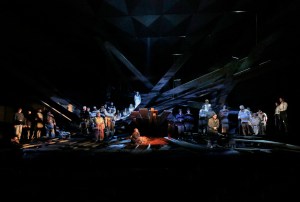
Ensemble cast in ‘Cold Mountain.’ Photo © Ken Howard for Santa Fe Opera

Ensemble cast in ‘Cold Mountain.’ Photo © Ken Howard for Santa Fe Opera

The same is true when she introduces the individual “numbers”—arias, duets, and larger ensembles—that simply emerge without any obvious signal. Each number follows its own arc, then merges back into the musical flow. Among moments I found particularly moving are Ruby’s aria telling of her childhood; several duets between the leading characters, Inman and Ada, particularly “Four Novembers come and gone” in the second act; and above all Ada’s “I feel sorry for you,” sung to Ruby’s father, which conjures in a single aria the cumulative meaning of much of the book.

Equally memorable is the use of the chorus throughout, and especially the beautiful, consoling chorus “Buried and forgotten,” recalling the numberless dead of the Civil War.

For all the breadth of Higdon’s expressive palette, one thing is missing: melodies that bloom in the voice and linger in the memory. Soaring song is the reason for opera, after all, and without it the music sometimes does not rise to the lyrical level of the text, and does not reach a convincing emotional climax near the end when Ada and Inman are finally together. The music at this point is not ineffective, but it does not transcend what has gone before, as we feel it should.

Those who know the book will notice several changes, including the omission of several of the book’s many scenes and the creation of composite characters. Opera being an art form of its own, this is unavoidable, but two changes should be noted.
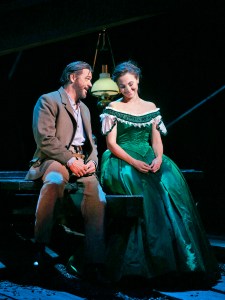
Nathan Gunn (Inman) and Isabel Leonard (Ada) in ‘Cold Mountain.’ Photo © Ken Howard for Santa Fe Opera

Nathan Gunn (Inman) and Isabel Leonard (Ada) in ‘Cold Mountain.’ Photo © Ken Howard for Santa Fe Opera

Teague is introduced from the very beginning, changing him from an unseen threat for much of the story into a familiar menace—none the less evil but more human than in the novel. And Inman and Ada’s connection is strengthened. In the novel, Inman embarks on his odyssey not knowing if Ada will even want him when he returns, whereas in the opera they are both longing to reunite throughout. Doubtless this makes for more lyrical moments and better opera.

On the other hand, fans of the book will happily recognize several lines of dialog that survive directly into the libretto, including Ada saying to Ruby of Inman, “I know I don’t need him. But I think I want him,” and Ruby’s laconic reply, “Well, that’s a whole different thing.”

Robert Brill’s set of slanted and moveable planks may unhappily remind some operagoers of the recent awkward Metropolitan Opera Ring cycle, including the use of projections over the entire stage and even outside onto the proscenium. In this case, however, the set was used effectively to represent the many different locales of the story. Dark areas of the set helped create the mood of menace that dominates the story, with danger often emerging from the shadows, while lighting was used well to direct attention to individual characters. Projections were used with restraint but impressively.

Leonard Foglia’s direction was efficient and clear. In an opera of many scene changes, from place to place and backwards and forwards in time, it is an accomplishment that only once or twice was I briefly wondering where we were.

Ada is the beating heart of the story, and soprano Isabel Leonard was a graceful, poised presence throughout. Her transformation from a sheltered city girl to a competent farm dweller was conveyed by costume and movement, and she sang with conviction and beauty of sound. Her moving performance of “I feel sorry for you” was a highlight.
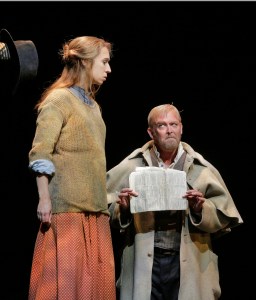
Emily Fons (Ruby Thewes) and Jay Hunter Morris (Teague) in ‘Cold Mountain.’ Photo © Ken Howard for Santa Fe Oper

Emily Fons (Ruby Thewes) and Jay Hunter Morris (Teague) in ‘Cold Mountain.’ Photo © Ken Howard for Santa Fe Opera

Her foil, Ruby, was brought to life by the excellent Emily Fons. At first, I thought the character verged on stereotype—clumping around the stage, drawing out her vowels like a country bumpkin—but as the Ada-Ruby relationship developed I liked her performance more and more.

As Inman, the man who abhors violence but finds himself good at it, Nathan Gunn gave a solid performance. He sang expressively and blended well in his duets with Ada, and his characterization was effective. Jay Hunter Morris was a strong-voiced and thoroughly despicable Teague who relished the melodramatic boos at his curtain call.

The remainder of the large cast ranged from very good to superb. I particularly enjoyed Kevin Burdette as Ruby’s father Stobrod, Robert Pomakov as the doomed Owens, and Deborah Nansteel as Lucinda. Each embodied a strongly etched personality that left a mark on the story.

I have mixed feelings about the use of an accent—those drawling vowels and dropped Gs runnin’ though the text. On one hand, it comes perilously close to southern redneck parody; on the other, it helps place the opera in a world apart. To the credit of the cast, they used it pretty consistently and made it work.

The SFO orchestra handled Higdon’s musical demands ably. The chamber-like combinations were beautifully played and well balanced, and the climaxes were powerful. The composer has complimented the players for handling her constant changes—including those made after the first performance, making the performance I saw another premiere of sorts. Conductor Miguel Harth-Bedoya kept it all moving marvelously well and provided support for the singers.

# # # # #

The night before Cold Mountain I saw Santa Fe’s serviceable and moving, if flawed, Rigoletto.
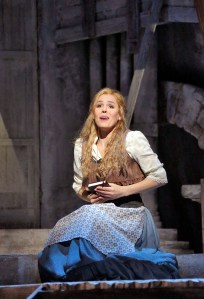
Georgia Jarman (Gilda) in 'Rigoletto.' Photo (c) Ken Howard for The Santa Fe Opera

Georgia Jarman (Gilda) in ‘Rigoletto.’ Photo (c) Ken Howard for The Santa Fe Opera

The star of the evening was Georgia Jarman’s Gilda. She sang with a radiant voice, and placed an expressive weight behind the notes that made her the emotional center of the opera. Her exquisite performance of “Caro nome,” Gilda’s signature aria, earned a well deserved and prolonged ovation (in spite of having to compete with an unfortunately noisy stage turntable).

Beyond her vocal strengths, Jarman personified Rigoletto’s young and innocent daughter as well as anyone I have seen. Her physical movement onstage and her interactions with other singers contributed strongly to her portrayal of a delicate girl who finds the strength to die for love.

In the title role Quinn Kelsey sang with great power throughout. At his best, as in the second act, he became a deeply moving figure, portraying Rigoletto’s bitter torment. I thought he was less effective in other scenes, such as his duet with Gilda in the first act, when his performance seemed slack and unmotivated.

Kelsey is a large man, and he was not helped by the costuming, which made him more of a hulking figure onstage than a downtrodden and powerless jester trapped in a dissolute court. His hatred of the Duke was apparent as the opera moved toward its tragic conclusion, but the power differential between them was not always easy to see.
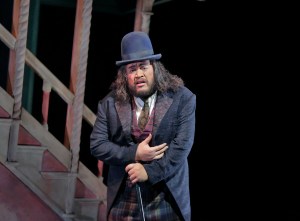
Quinn Kelsey (Rigoletto) in 'Rigoletto.' Photo (c) Ken Howard for The Santa Fe Opera

Quinn Kelsey (Rigoletto) in ‘Rigoletto.’ Photo (c) Ken Howard for The Santa Fe Opera

The Duke of Mantua is not a role with a wide emotional range. Almost the only thing he sings about is love—by which he means lust—that he is “a slave to love,” and famously, the inconstant character of women. As the Duke, Bruce Sledge sang ardently of love, with ringing tones and a pleasing tenor voice.

Others in the cast were all effective. Anne Marie Stanly raised Giovanna, Gilda’s nurse, from an easily overlooked background figure to an angry woman whose betrayal of Rigoletto was based in overt contempt. Singing another doomed man, Robert Pomakov put great weight into Monterone’s curse. Peixin Chen as Sparafucile and Nicole Piccolomini as his sister Maddalena filled their roles admirably.

The production seemed unsure of itself. At first, I thought it was set in Verdi’s time, effectively the late nineteenth century. Many of the characters had a Dickensian look. But others could be mistaken for wearing modern clothes—at the end, the Duke appeared to be wearing Dockers and a burgundy work shirt—as if they came dressed for rehearsal.

The direction and costuming made the depravity of the Duke’s court more than clear. The mannered writhings and groping in the first scene were almost comical, and the harlots in hot pants looked out of place, whatever the time period of the opera, except as reminders that the court was a really bad place.

The unit set, mounted on that noisy turntable, was mostly effective, with doorways and stairs and lairs that served all the needs to the plot. On the other hand, I was never clear why Rigoletto sometimes carried a crutch that looked like a borrowed prop from Dickens’s Christmas Carol, and sometimes managed without it.

But all reservations aside, the Santa Fe night worked its magic. Where better to watch the final scenes of Rigoletto than under the stars, with a breeze blowing though the theater?

# # # # #

I also saw the SFO production of Richard Strauss’ Salome, an opera that has now been done 11 times as part of the company’s advocacy of the composer’s works. Filled with symbolism and saturated with depravity, Salome is an opera that directors cannot resist interpreting for us—and that includes the current stage director Daniel Slater and designer Leslie Travers.

The production begins with an effective coup de theater as a stone wall across the back of the stage opens to reveal a banquet table, as well as the real-life sunset beyond the stage. The audience spontaneously applauded the lovely scene, but things soon began to get murky.
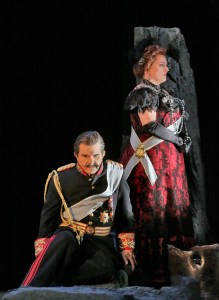
Sal.24 Robert Brubaker (Herod) and Michaela Martens (Herodias) in ‘Salome.’ Photo © Ken Howard for Santa Fe Opera

Robert Brubaker (Herod) and Michaela Martens (Herodias) in ‘Salome.’ Photo © Ken Howard for Santa Fe Opera

The costuming placed the story in Belle Époque France, a believable time for depravity among the powerful. But placed in that period much of the story fails to make sense: the Biblical prophecies; Herod’s fear of the denunciations intoned by Jochanaan (John the Baptist); and claims that the Messiah has appeared. None of this fits late 19th-century France.

But the producers have a specific aim in mind: instead of letting the story stand for itself as Oscar Wilde and Strauss wrote it, they want to show us what it is really “about.” And so Salome is presented as a Freudian family drama played out among Herod, his wife and former sister-in-law Herodias, and his stepdaughter Salome.

This is most obvious in Salome’s dance, which was presented not as a dance but an exploration of the deepest levels of Salome’s psyche. After a few desultory dance steps, she stepped to the side while a series of pictures opened behind her. She was shown as a child, with (apparently) her real father strangled before her by Narraboth, who later (but earlier in the opera) kills himself over his infatuation with the now teenaged princess. After seeing her father killed, the child Salome retreated into a cramped space in the back wall.
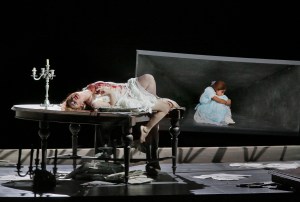
Alex Penda (Salome) in ‘Salome.’ Photo © Ken Howard for Santa Fe Opera

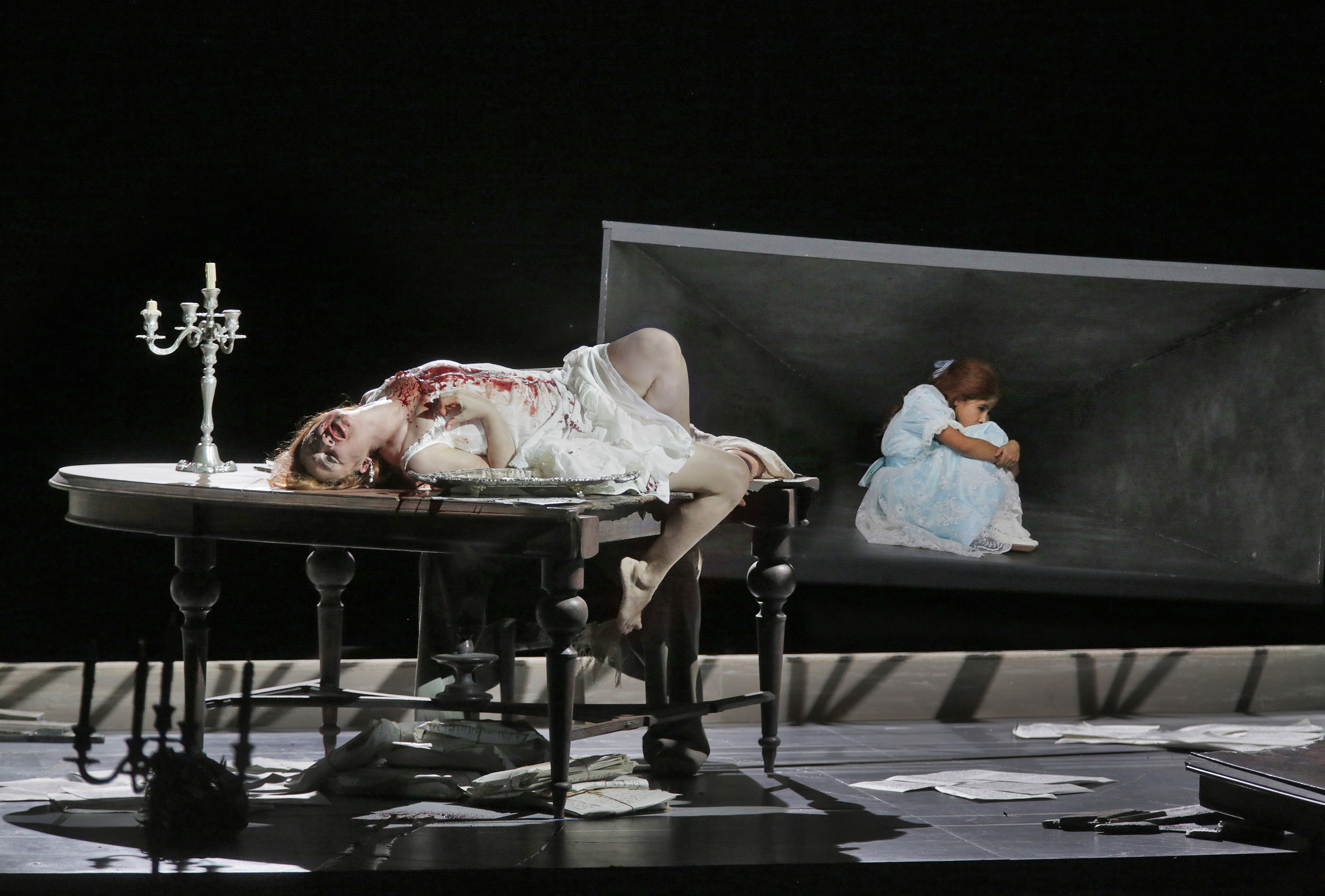
Alex Penda (Salome) in ‘Salome,’ with child Salome behind. Photo © Ken Howard for Santa Fe Opera

Obviously this shows how Salome is trapped by the damage she endured as a child, which is supposed to explain her hatred for her stepfather and her depraved infatuation with Jochanaan. And sure enough, after her bloody orgy with the severed head, instead of being killed—as Herod commands—she goes back to the cringing child and frees her. In other words, John the Baptist’s death serves to rescue Salome from her past.

The point is not that this interpretation is wrong; the point is that the opera contains more than that. There is the religious theme, which, apart from the text, largely disappears in this interpretation, and there is a great deal of action portrayed in the music that does not occur on stage. Strauss did not portray psychoanalysis, he portrayed a dance; he did not portray Salome freed from her demons, he portrayed her death. Substituting psychological explanation for the action of the drama not only discounts the audience’s ability to interpret the drama on its own, it also drains the music of much of its impact.

The musical performance was another matter, and was generally on a high level. The role of Salome is one of the most difficult in the repertoire: she must appear to be a petulant adolescent while singing music worthy of Isolde. Given that difficulty, Alex Penda was generally effective. She played the bored teenager very well, even though her voice was not always strong enough to carry over Strauss’ orchestra.

Nevertheless, Penda carried off the musical climaxes and reached the high notes well. And it should be noted that she was not helped by the direction, which left her far upstage in an enclosed space—Jochanaan’s cell—or singing toward the wings for several of her critical scenes.
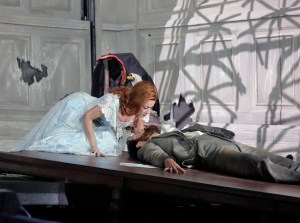
Alex Penda (Salome) and Ryan McKinny (Jochanaan) in ‘Salome.’ Photo © Ken Howard for Santa Fe Opera

Alex Penda (Salome) and Ryan McKinny (Jochanaan) in ‘Salome.’ Photo © Ken Howard for Santa Fe Opera

Her scene with Ryan McKinny as Jochanaan, when he keeps rejecting her demented advances, was played with great intensity by both singers. This is the crux of the whole opera: nothing that comes later will work if this is not brought off. In spite of the jarring anachronisms of the production, this was one of the best parts of the performance.

The production turned Jochanaan into what looked like a 19th-century radical, writing revolutionary manifestos in his crumbling study. It’s hard to see how that fits with the text and music that Strauss gave Jochanaan, but that said McKinny sang with the kind of booming certainty the role requires, and was vocally impressive.

Robert Brubaker’s Herod and Michaela Martens’ Herodias were accurately sung, but only intermittently as expressive as the roles require—which I attribute to the fact that in this production they were not acting much of what they were singing. As Narraboth Brian Jagde was memorable, displaying his fatal obsession with Salome with musical and physical intensity.

The most satisfying aspect of the production was the SFO orchestra, which under conductor David Robertson gave a powerful performance of Strauss’ virtuoso score. The full sound was resonant, and all the solos were immaculate. Slater had the demanding score under control from the beginning.

# # # # #

For tickets and information on the remaining performances in the Santa Fe Opera’s 2015 season, click here.

Edited for clarity and to correct a minor typo Aug. 8, 2015.

Name of the conductor of Salome was corrected Aug. 10, 2015. David Robertson is the conductor; Daniel Slater is the stage director.

Scenes from Zach Redler’s new opera offer a glimpse into the artistic workshop

CU NOW presents a work in progress with libretto by CU alumnus Mark Campbell

By Peter Alexander

Librettist and CU Alumnus Mark Campbell, who is returning to campus for CU NOW. (Photo by Laura Marie Duncan)

Librettist and CU Alumnus Mark Campbell, who is returning to campus for CU NOW. (Photo by Laura Marie Duncan)

It’s mostly hard work.

It looks like magic from the outside, the process of creating a large-scale, complex work of art like an opera. But the more you are able to see inside the process, the more you see the hard work it takes to get from an idea to a viable piece of art to a fully committed production in front of an audience.

It is part of the wonder of the University of Colorado, Boulder College of Music CU NOW (New Opera Workshop) program that it offers a glimpse into the magic-producing hard work of making a new opera, while advancing students’ careers and the world of opera.

The program, started six years ago by Leigh Holman, director of the CU Eklund Opera Program, and Patrick Mason, a professor of voice, opera and choral studies in the CU College of Music, brings composers to campus to work on developing a new operatic work, working over a couple of weeks with student singers in the CU College of Music. In a win-win-win situation, the students benefit from working closely with a composer on a new work, developing skills useful in the professional world; the composers benefit from hearing their work performed as they write it; and audiences benefit from seeing inside the creative process.

This year’s CU NOW program will come to fruition Friday and Sunday (June 12 and 14) with performances of scenes from an opera in progress by composer Zach Redler and librettist Mark Campbell, a CU alumnus whose other libretti include Kevin Puts’s Silent Night, winner of the 2012 Pulitzer prize in music, and the recently premiered Manchurian Candidate.

Composer Zach Redler

Composer Zach Redler

Scenes from Redler and Campbell’s A Song for Susan Smith will be performed with a cast of CU student singers at 7:30 p.m. Friday and 2 p.m. Sunday in the ATLAS Black Box Theater on the CU campus. The scenes will be stage directed by Holman.

The performance will feature six or seven of a projected 15 scenes in a one-act, 90-minute opera. Based on the notorious 1994 case of a woman who was sentenced to life in prison for the deaths of her two sons, A Song for Susan Smith does not dramatize or feature the killings. Instead, it focuses on the period between the killings and Smith’s eventual confession nine days later, and on Smith’s mental state during that time.

Between those two performances, CU NOW will also present the Composer Fellows’ Opera Showcase, scenes by CU student composers who have been working with Redler and other operatic professionals brought to campus for CU NOW, at 7:30 p.m. Saturday, June 13, in the Music Theater inside the CU Imig Music Building. All CU NOW performances are free and open to the public.

A Song for Susan Smith started as a scene that Redler wrote for his wife, soprano Brittney Redler, to sing for a doctoral voice recital. The text came from a completed libretto that Campbell had never used and forms a prologue to the opera, portraying Smith before the killings. That scene has now been performed several times, including as part of the Ft. Worth (Tex.) Opera’s Frontiers program. It will not be included in the CU performances but can be viewed on the composer’s Website (scroll down to the video, featuring the composer at the piano and Brittney Redler singing).

Redler is not unaware that Susan Smith is a difficult subject for an opera, one that might be disturbing to some audience members. “I’m drawn to characters that are hard to comprehend,” he says. “Susan Smith has been through a lot, but because [infanticide] is a too common thing—500 cases a year!—I don’t think it’s exploitive. I think it’s using a very specific instance to tell a very general story.

“It’s a horrible problem, because it’s not that these people are necessarily inherently evil. Susan came from an extremely dysfunctional childhood and household. So it’s about mental health and about mob mentality (when the town turns from supporting Susan to shunning her). A lot of the music is kind of trying to show Susan’s perspective.”

Leigh Holman, director of the CU's Eklund Opera Program and CU NOW (Photo by Glenn Asakawa/University of Colorado)

Leigh Holman, director of the CU’s Eklund Opera Program and CU NOW (Photo by Glenn Asakawa/University of Colorado)

Holman and Mason started CU NOW to give students experience tackling completely new music and new roles. At the time, there were few programs devoted to new opera, but that has changed in the past six years.

“When we started this six years ago, there weren’t many people doing what we’re doing,” Holman says. “Now, people are doing it everywhere.

“The most important thing that was happening at the Opera America Conference two weeks ago was new works—composers there, librettists there, all these big companies looking for new works to do. That’s what audiences want. That’s where the market is now. Six years ago it wasn’t.”

CU’s unique niche in this world is taking works in progress that have not been completed or received a commission, works where the composers are just getting started, and giving them the chance to mold it to living, breathing singers. “We like to do brand new things,” Holman says. “We want our students to have the opportunity to work with a brand new piece.

“The composers are hearing their piece for the first time with our students. And our students get the opportunity to work with the composers. Our students can’t listen to a recording and learn it. There’s no other singer that has already said, ‘This is how it’s supposed to sound.’ It’s really their own interpretation.”

Redler seconds Holman’s comments. “It’s really great for (the students),” he says. “In professional opera companies, it’s the young artists who are doing the workshops and the readings of new works. It’s just such an important skill for them to have, to be able to pick up a new piece of sheet music that no one has ever recorded and learn it.”

He is equally enthusiastic about what the program means for him as a composer. “Hearing scenes that I’ve only heard in my head is just so important,” he says. “The piece changes in front of an audience as well, so to get to see that is fantastic.”

And the value for the audience? You can tell the rest of us: Go to the performances, and post your reaction here afterwards! You too might help open doors for new creations.

# # # # #

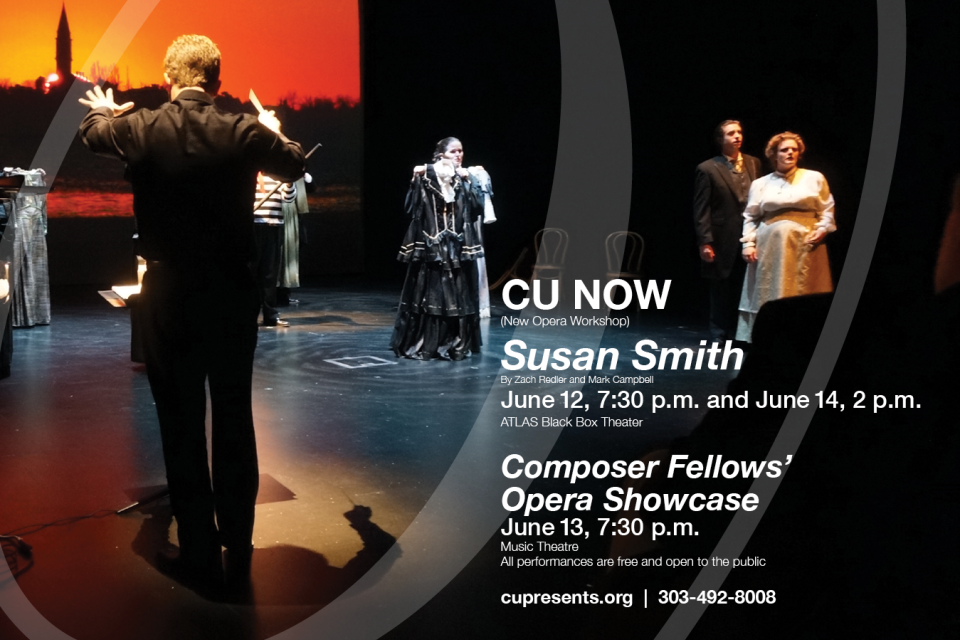
CU NOW web ad 1349 x 905CU NOW

Scenes from A Song for Susan Smith
An opera in progress by Zach Redler and Mark Campbell
7:30 p.m. Friday, June 12
2 p.m. Sunday, June 14
ATLAS Black Box Theater on the CU campus

Composer Fellows’ Opera Showcase
Operatic scenes by CU student composers
7:30 p.m. Saturday, June 13
Music Theater, CU Imig Music Building

All performances free and open to the public