GRACE NOTES: B-minor Mass and string quartet with guitar 

LSO presents Bach’s “Magnum Opus,” Takács Quartet partners with Nicoló Spera

By Peter Alexander April 9 at 5:20 p.m.
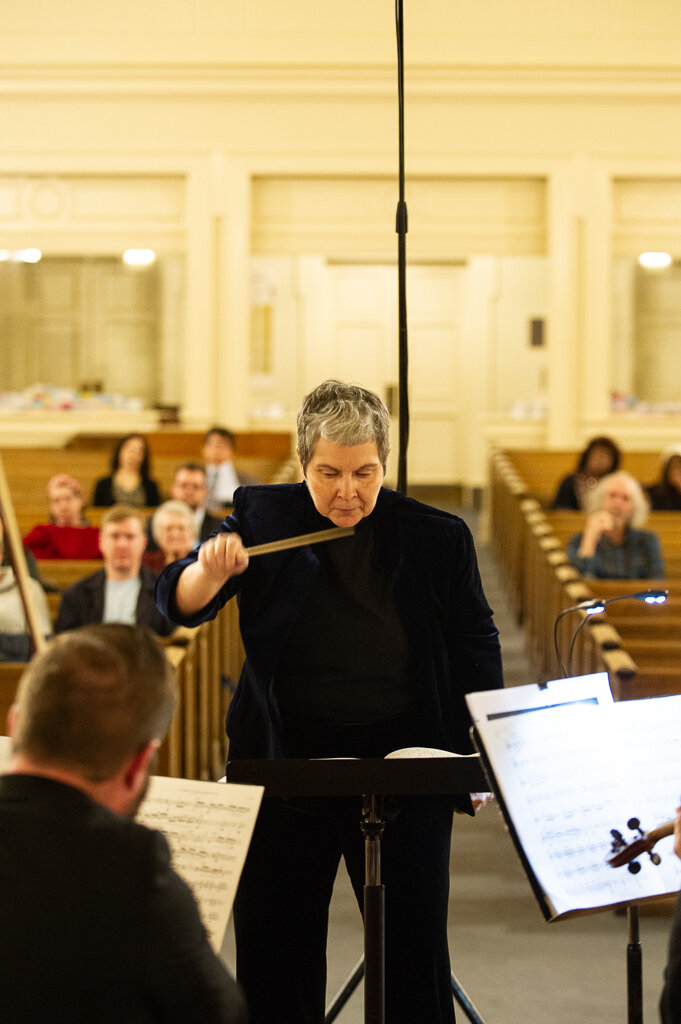
The Longmont Symphony Orchestra (LSO) and conductor Elliot Moore end their season with one of the most significant pieces by J.S. Bach, his monumental Mass in B minor.

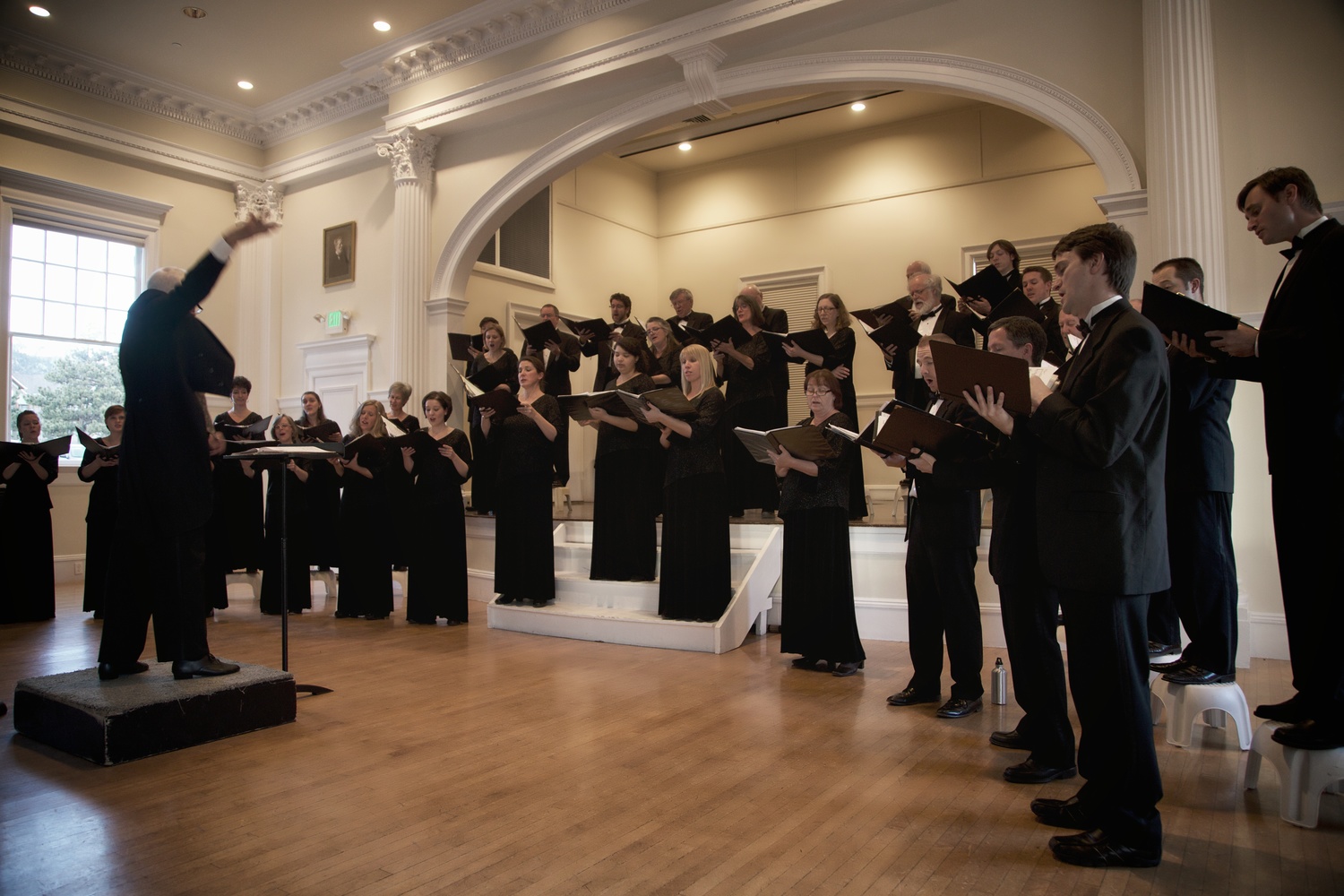
The performance of this large-scale work will be Saturday evening at Vance Brand Civic Auditorium in Longmont (7 p.m. April 12; details below). Moore and the LSO will team up with the Boulder Chamber Chorale, a select group from the Boulder Chorale directed by Vicki Burrichter. Soloists will be soprano Dawna Rae Warren, countertenor Elijah English, tenor Joseph Gaines and baritone Andy Konopak.

Choral settings of the Mass ordinary—the five texts sung every week in Catholic church services, as opposed to texts that vary with the liturgical calendar—had a long history in Europe. However, Bach’s setting is too long to be easily incorporated into a normal service, which is why it is generally performed as a concert piece rather than a liturgical mass.
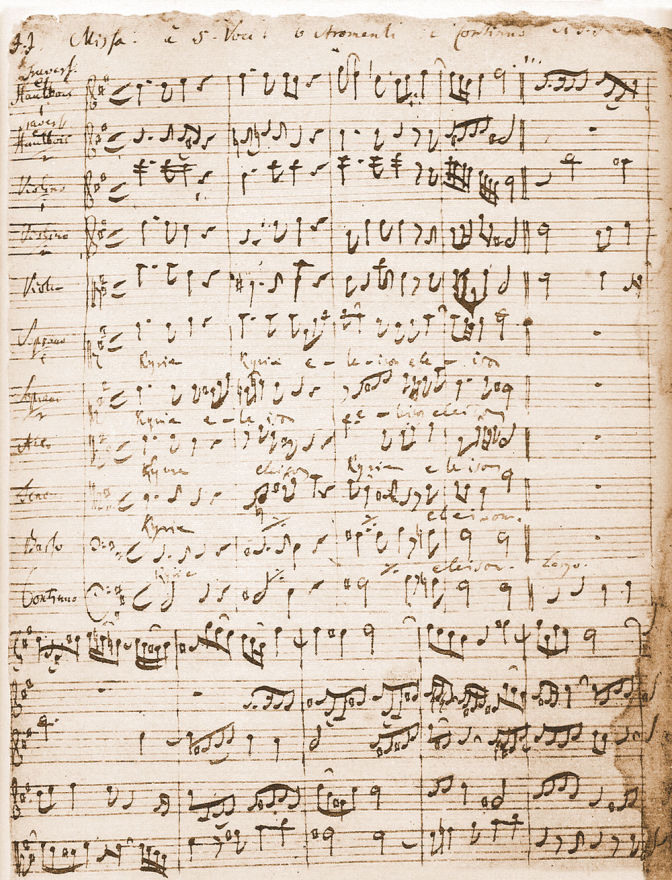
Bach’s manuscript of the B-minor Mass

The structure and composition history of the Mass are complicated. The final work as we know it today comprises the main sections of the Catholic Mass ordinary—Kyrie, Gloria, Credo, Sanctus and Agnus Dei—in 27 separate movements for orchestra, choir and soloists. Bach composed the first two portions of the Mass, Kyrie and Gloria, in 1733. These are the portions that are common to both Catholic and Lutheran services and were theoretically usable at the Lutheran Thomaskirche in Leipzig where Bach was employed. 

Bach presented those two movements to the incoming Elector of Saxony, a Catholic ruler, in 1733. He did not compose the remaining portions of the Mass, which were exclusive to the Catholic services, until  the final years of his life. Some of the music was newly composed, but other movements were reworkings of music from earlier cantatas and other works. 

It is remarkable that a piece written over so many years with many different sources would emerge as a unified work universally revered as one of Bach’s crowning achievements. But the entire B-minor Mass was probably never performed in Bach’s lifetime, and clearly would not have been suitable for a service in Bach’s church. It includes music written over 35 years of the composer’s lifetime, assembled and re-appropriated into a final form dictated by the structure of the Catholic Mass, by a resolutely Lutheran composer.

# # # # #

“A Magnum Opus”
Longmont Symphony Orchestra, Elliot Moore, conductor
With the Boulder Chamber Chorale, Vicki Burrichter, direcotr; Dawna Rae Warren, soprano; Elijah English, countertenor; Joseph Gaines, tenor; and Andy Konopak, baritone

  • J.S. Bach: Mass in B minor

7 p.m. Saturday, April 12
Vance Brand Civic Auditorium

TICKETS

# # # # #

The Takács Quartet and guitarist Nicoló Spera will come together over the weekend for concerts in Grusin Hall on the CU Campus (Sunday, April 13, and Monday, April 14; details below).

Their joint performance of the Quintet for guitar and string quartet by Giacomo Susani will be framed by two works from the standard string quartet repertoire, Haydn’s late Quartet in G major, op. 77 no. 1, written in 1799; and Dvořák’s Quartet in F major, op. 96, composed during the composer’s visit to the Czech immigrant community of Spillville, Iowa, in the summer of 1893.
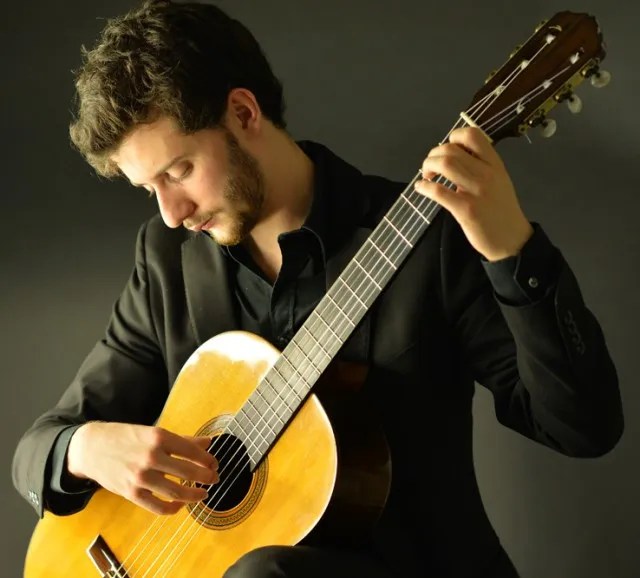
Giacomo Susani

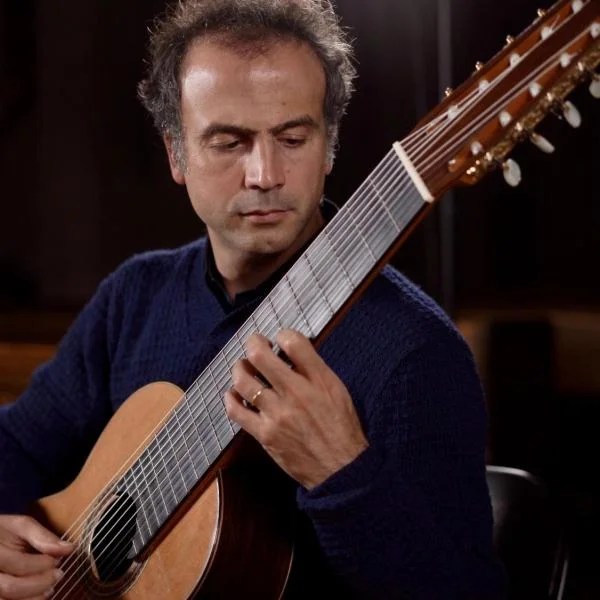
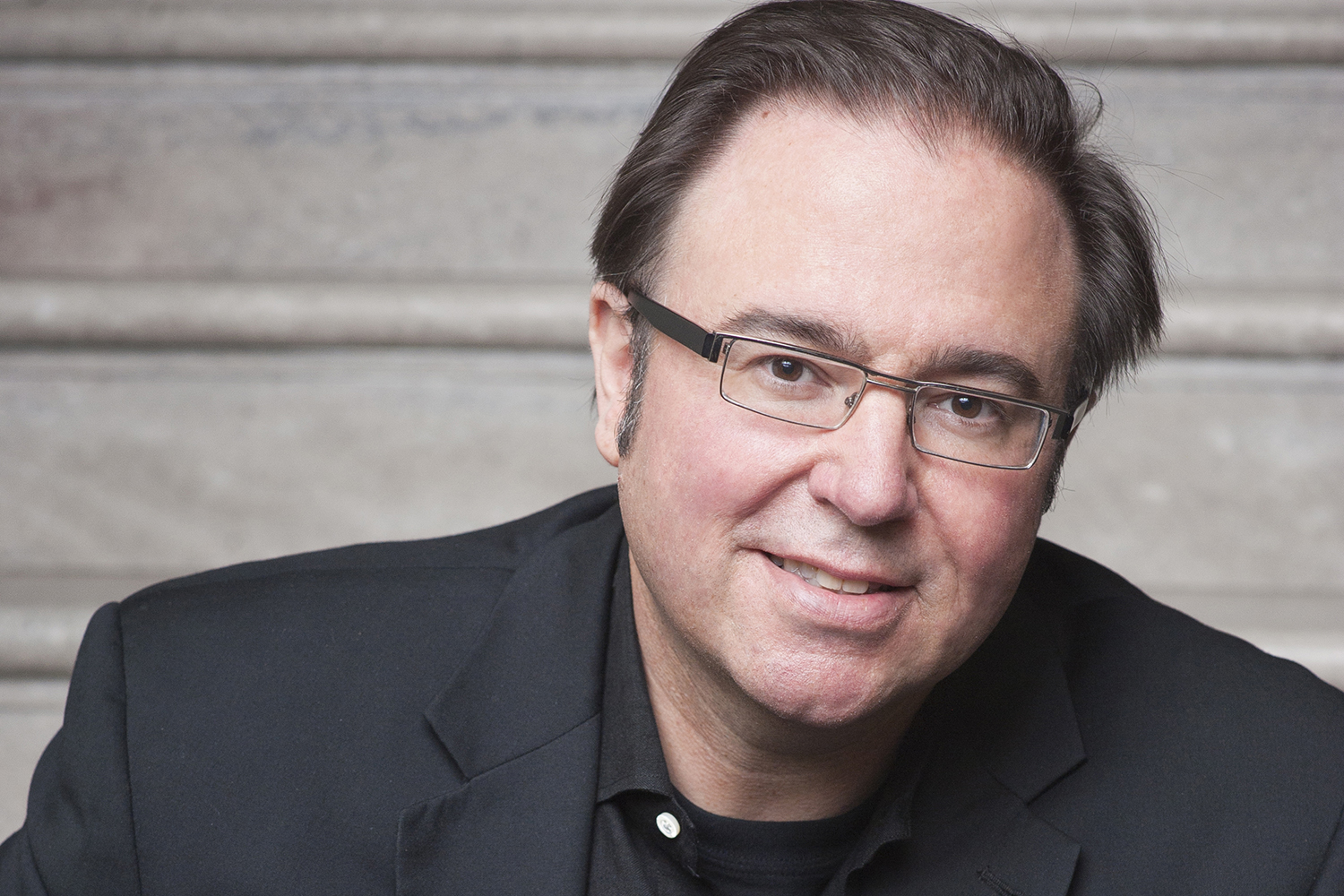
Susani keeps very busy, with a performing career on guitar in Europe and the United States, a compositional career, and as artistic director of the Homenaje International Guitar Festival in Padova, Italy. As a performer he has released four recordings on the Naxos label. He conducted the world premier of his Concerto for 10-string guitar and orchestra in Boulder this past December, with Spera and the Boulder Chamber Orchestra. The Guitar Quintet was written in 2016.

Listeners may be familiar with the string and guitar quintets of Luiggi Boccherini, the best known but not the only works for that combination of instruments. There were several written in the 20th century, including one by Italian composer Mario Castelnuovo-Tedesco. That work is recognized in the last of Susani’s three movements, “Omaggio a Castelnuovo-Tedesco” (Homage to Castelnuovo-Tedesco). The first two movements are titled respectively “La Tempesta” (The storm) and “Liberamente, non trope lento” (Freely, not too slow).

At the age of 67 Haydn began a set of string quartets commissioned by the wealthy aristocratic patron and music lover Prince Lobkowitz. He completed two quartets of a likely set of six, but other projects intervened before he could complete a larger set. The two quartets were published as Op. 77 nos. 1 and 2, and were his final completed string quartets. He only completed two movements of another planned quartet, published in 1806 as Op. 103.
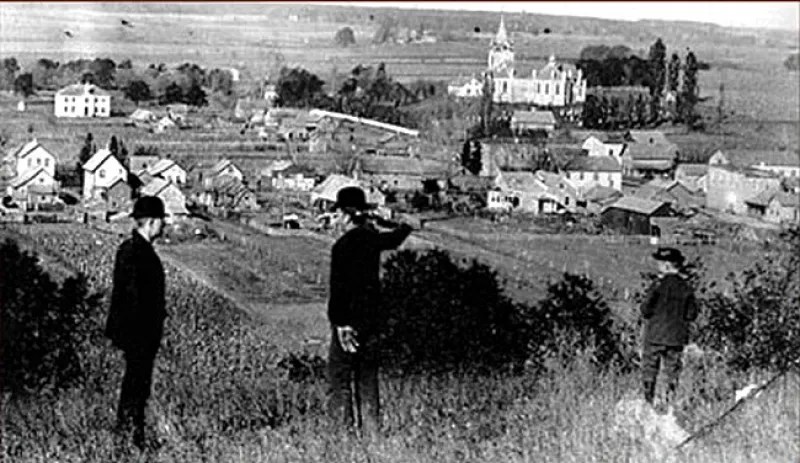
Spillville, Iowa, in 1895, shortly after Dvořák’s visit

Dvořák wrote many of  his best known pieces in the United States. He spent the years 1892–95 as director of the National Conservatory of Music in New York. Intrigued by the idea of a village of Czech immigrants on the Western plains, he spent an idyllic summer in the tiny village of Spillville, Iowa, in 1893. While in the United States he wrote his Symphony No. 9, “From the New World” and his Cello Concerto in New York, and a string quartet and string quintet, now known as the “American” Quartet and Quintet, in Spillville.

Spillville was very much a Czech community, with the people speaking Czech and observing Czech customs that Dvořák found congenial. He frequently played the organ at the local church, which is still standing, and made many friends in the community. 

Dvořák was deeply moved in Spillville, especially by the emptiness of the prairie, perhaps reflected in the Quartet’s melancholy slow movement, and the singing of birds, quoted in the scherzo. Attempts to connect the Quartet’s uncomplicated musical style to American influences have met skepticism. The composer himself once wrote, “I wanted to write something for once that was very melodious and straightforward . . . and that is why it all turned out so simply.

“And it’s good that it did.”

# # # # #

Takács Quartet with Nicoló Spera, guitar

  • Haydn: String Quartet in G Major, op. 77 no. 1
  • Giacomo Susani: Quintet for Guitar and String Quartet
  • Dvořák: String Quartet in F Major, op. 96 (“American”)

4 p.m. Sunday, April 13, and 7:30 p.m. Monday, April 14
Grusin Hall

In-person and streaming tickets HERE.

Pro Musica Colorado reschedules final concert

Farewell concert for conductor Cynthia Katsarelism orchestra will be Sunday, May 5

By Peter Alexander May 22 at 9:50 a.m.

The farewell concert for the Colorado Pro Musica Chamber Orchestra and conductor Cynthia Katsarelis, originally scheduled for April 6 and postponed by weather and a power outage, has been rescheduled.

The concert will take place at Mountain View Methodist Church in Boulder at 4 p.m. Sunday, May 5. The soloist will be guitarist Nicoló Spera. The program will be the same as originally announced (see below). You may read the full original story HERE.

* * * * *

“Nicolò!”
Pro Musica Colorado Chamber Orchestra, Cynthia Katsarelis, conductor
With Nicolò Spera, guitar

  • Jessie Montgomery: Starburst
  • Joaquin Rodrigo: Fantasía para un gentilhombre (Fantasy for a gentleman)
  • Louise Farrenc: Symphony No. 3 in G Minor

4 p.m. Sunday, May 5
Mountain View Methodist Church, 355 Ponca Place, Boulder

TICKETS

Pro Musica Colorado will reschedule ‘farewell concert’

Please note that the final concert by the Colorado Pro Musica Chamber Orchestra with conductor Cynthia Katsarelis and guest soloist Nicolò Spera, originally scheduled for April 6, was postponed due to inclement weather and the widespread power outage on that date. The concert will be rescheduled pending the availability of the musicians and the venue. The new date will be announced as soon as arrangements have been confirmed.

You may read the original story here. This is the full program for the concert:

“Nicolò!”
Pro Musica Colorado Chamber Orchestra, Cynthia Katsarelis, conductor
With Nicolò Spera, guitar

  • Jessie Montgomery: Starburst
  • Joaquin Rodrigo: Fantasía para un gentilhombre (Fantasy for a gentleman)
  • Louise Farrenc: Symphony No. 3 in G Minor

Colorado Pro Musica presents farewell concert Saturday

NOW RESCHEDULED for 4 p.m. Sunday, May 5

By Peter Alexander April 2 at 10 a.m.

Boulder will have one less orchestra after this weekend.

Pro Musica Colorado Chamber Orchestra strings with conductor Cynthia Katsarelis. Photo by Glenn Ross.

The Colorado Pro Musica Chamber Orchestra will play their last concert Saturday (7:30 p.m. April 6; details below), after 17 years of steadfast leadership from conductor and artistic director Cynthia Katsarelis. Katsarelis recently moved from Colorado to South Bend, Ind., where she is on the faculty of Sacred Music at Notre Dame University.

With Katsarelis, Pro Musica’s philosophy has been to to introduce composers from under-represented groups while featuring local soloists. In keeping with this approach, the final program will present two works by women—Starburst by living composer Jessie Montgomery to open the concert, and the Symphony No. 3 by 19th-century French composer Louise Farrenc—and a soloist from the CU faculty, guitarist Nicolò Spera playing the Fantasía para un gentilhombre (Fantasy for a gentleman) by Joaquin Rodrigo.

Montgomery’s Starburst is a short but colorful piece for strings composed in 2012 that has become a popular concert opener. The composer just won a Grammy for her Rounds for piano and orchestra, in a recording by pianist Awadagin Pratt and the ensemble A Far Cry. Pratt will perform Rounds at the Colorado Music Festival this summer (July 25 and 26 at Chautauqua Auditorium).

“It’s become a canonic piece, and it’s a really fabulous opener,” Katsarelis says of Starburst. Pro Musica played it once before, but “it’s good to repeat repertoire sometime,” she says, “especially if it’s right for the program and to highlight the Grammy win.”

 Rodrigo wrote his Fantasía para un gentilhombre in 1954 for the celebrated guitarist Andres Segovia, who gave the premiere in 1958. It has four movements based on dances written for guitar by the 17th-century Spanish composer Gaspar Sanz. 

Nicolò Spera

It has become one of the best known concertos for classical guitar. Katsarelis and Spera selected it for this concert, in part because she feels that it fits well with Ferrenc’s symphony. “When you’re working with a soloist, you want to give them the choice and then see whether it fits what you are already thinking,” she explains. 

“It works really well with Ferrenc because it is a neo-classical work built on 17th-century pieces,” Katsarelis says. “Ferrenc was an extremely well versed composer, and another part of her was involved in reviving early music for keyboard. Her husband was a publisher, and together they did like 15 volumes of treasures for the keyboard, all stuff that wasn’t being played at the time.”

Ferrenc studied both piano and composition in Paris. A successful concert pianist, she was appointed professor of piano at the Paris Conservatory in 1852, the only woman to hold that rank in the 19th century. Known as an excellent teacher, she had many students who had distinguished careers.

As a composer, she stuck to the traditional forms for the symphony, of which she wrote three, and other genres. “She had modern sensibilities, like Mendelssohn and Schumann,” Katsarelis says, but “she doesn’t go the way of program music. Even though she doesn’t write programs, her themes seem to be kind of epic.”

The symphony is in four movements, following the standard pattern of the 19th century: An opening fast movement in sonata form, followed by a slow movement, a scherzo and a finale. 

“The first movement has two introductions, a slow one that introduces melodic and harmonic ideas, and then a fast introduction whose main role is to build up the energy to the exposition,” Katsarelis says. “The first theme has the feel of a rustic dance, and the second major theme is like a lyrical waltz.

Cynthia Katsarelis. Photo by
Glenn Ross.

“The second movement is what you expect, a slow movement (with) long gorgeous melodies. The third movement is a scherzo, fast and kind of breathless. While it’s moving it’s going through really distant keys, but that gives it the sheen of color, and then the finale has soaring melodies.”

Now settled in South Bend, Katsarelis has already started to build bridges with the local musical community. She has already conducted the South Bend Symphony in a concert with soloists from Notre Dame, and she has plans to continue that collaboration. Looking ahead, “we have aspirations for some pretty big stuff,” she says of her work the the orchestra. “We agreed that we had similar aspirations, and everybody wants more, so that’s really great.”

In the meantime, Saturday’s concert will be a farewell for Boulder for Katsarelis and the Pro Musica. “The plan was to have a really great season and to end with a bang and a party, and to be really proud of everything we accomplished,” Katsarelis says. “I’ll miss the musicians in the orchestra. I’ll miss the patrons and the donors, and the whole vibe of discovery that we always had. 

“My heart is full of gratitude. I want it to be a happy farewell, with happy memories of all that we accomplished.”

* * * * *

“Nicolò!”
Pro Musica Colorado Chamber Orchestra, Cynthia Katsarelis, conductor
With Nicolò Spera, guitar

  • Jessie Montgomery: StarburstJoaquin
  • Rodrigo: Fantasía para un gentilhombre (Fantasy for a gentleman)
  • Louise Farrenc: Symphony No. 3 in G Minor

NOW RESCHEDULED:
4 p.m. Sunday, May 5
Mountain View Methodist Church, 355 Ponca Place, Boulder

TICKETS

Ars Nova Singers, guitarist Spera will present ‘postcards to the future’

Concerts June 3–5 feature new work by Theofanidis and Pizzetti’s 1922 Requiem

By Peter Alexander May 23 at 9:12 p.m.

Nicolò Spera

Guitarist and CU music professor Nicolò Spera was shocked by things going on the U.S. after the death of Supreme Court Justice Ruth Bader Ginsburg. He wanted to respond in the best way he knew—with music.

The musical work that came from that desire, Door Out of the Fire by Pulitzer Prize-winning American composer Christopher Theofanidis, will be the centerpiece of a concert by Boulder’s Ars Nova Singers, under the direction of Thomas Edward Morgan. The Ars Nova performance will be the Colorado premiere, following a performance by Spera in Michigan in October, 2021.

Also on the program is the Requiem of Italian composer Ildebrando Pizzetti. Performances will be June 3, 4 and 5, in Denver, Boulder and Longmont, respectively (see details below). In addition to the live performances, the concert will also be available by livestream. Information and tickets for the concerts, which close out Ars Nova’s 2021–22 season, are available here.

Christopher Theofanidis

After Ginsburg’s death, “I wanted a composer to write some ‘postcards to the future,’ in music,” Spera wrote in a recent email. He turned to Theofanidis, who had recently written an orchestral work, On the Bridge of the Eternal, for the 2020 centennial of the CU Boulder College of Music.

Writing for and with Spera, Theofanidis composed four choral “messages in a bottle” based on poems by Melissa Studdard. Each of the four choral settings is preceded by a prelude for guitar.

The texts reflect some of the major issues of our time, including the threat posed by climate change. They are titled “Burning Cathedral,” “The Book of Rahul,” “Ruth’s Aria”—to be sung by CU music faculty member Abigail Nims, mezzo soprano—and “Migration Patterns.” The work is dedicated to “le nostre speranze”—our hopes—Spera’s children, Julia and Giacomo.

Pizzetti’s Requiem will be presented in observance of the 100th anniversary of its composition. The Requiem, Pizzetti’s only liturgical music, is written for a-capella choir. The musical setting includes Gregorian chant as well as movements that recall Renaissance madrigals. The texture varies from single-line chant to eight voices to multiple choirs in the manner of 17th-century Venetian polychoral music.

# # # # #

Thomas Edward Morgan and Ars Nova Singers

Made Real
Ars Nova Singers, Thomas Edward Morgan, director
With Nicolò Spera, guitar, and Abigail Nims, mezzo-soprano

  • Christopher Theofanidis: Door Out of the Fire
  • Ildebrando Pizzetti: Requiem

7:30 p.m. Friday, June 3
St. Paul Community of Faith, Denver

7:30 p.m. Saturday, June 4
First United Methodist Church, Boulder

7 p.m. Sunday, June 5
Stewart Auditorium, Longmont Museum

Information and tickets, including livestream

Takacs Quartet and guest Nicolò Spera will perform music for strings and guitar

‘I cannot wait,’ the guitarist says

By Peter Alexander March 10 at 1:30 p.m.

spera

Guitarist Nicolò Spera. Photo courtesy of CU College of Music

Nicolò Spera is excited.

The guitarist and CU College of  Music faculty member will perform Sunday and Monday with the Takacs Quartet, and he’s really pumped for the occasion. “I’m not sleeping at night, because I know it’s going to be one of the most exciting, incredible musical experiences of my life,” he says. “I cannot wait!”

The Takacs has long made it a point to include CU music colleagues on their concerts. In the words of second violinist Karoly Schranz, “it feels like a family, the College of Music. We have such a close connection with the faculty, it’s always a great feeling to play with them.”

In addition to Spera, the Takacs has already appeared this year with tenor Matthew Chellis and pianist Andrew Cooperstock from the CU faculty, and later in the spring they will also host violist Erika Eckert and cellist David Requiro as guest artists.

The program for the March 10–11 concert includes two works for the quartet alone, Mozart’s String Quartet No. 21 in D major, K575, and Beethoven’s String Quartet No. 14 in C-sharp minor, op. 131. Both are late works of the respective composers, and are among the great treasures of the repertoire.

With Spera, they will play portions of two different works: two movements from Boccherini’s Guitar Quintet in D major, known as the “Fandango” Quintet, and a movement from Mario Castelnuovo-Tedesco’s Quintet for Guitar and Strings.

luigi-boccherini-1-sized

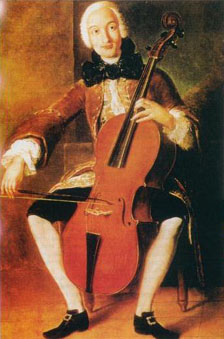
Luigi Boccherini

Spera didn’t want to play only the Boccherini on the concert because he has played it so often. But the entire Castelnuovo-Tedesco Quintet was too long to fit with the rest of the Takacs program, so he and first violinist Ed Dusinberre came up with the idea of playing individual movements from the two pieces.

“As crazy as it may seem, it sort of makes sense, because they have a lot of things in common,” Spera says of the two quintets. “Boccherini and Castelnuovo-Tedesco both loved the guitar, even though they didn’t play it. They both wrote guitar quintets, and Castelnuovo-Tedesco was inspired by Boccherini to write his own.

“The pairing of Fandango Quintet and the second movement of Castelnuovo-Tedesco Quintet works very well, for two reasons. The most important one is that they’re both very Spanish sounding. Boccherini was in Spain when he wrote the Fandango Quintet, and Castelnuovo-Tedesco was from a Sephardic Jewish family from Spain. And the keys (of the movements) work too.”

MCT

Mario Castelnuovo-Tedesco

The movement by Castelnuovo-Tedesco is specifically about his family’s relationship with Spain. Titled Souvenir de España, it expresses the composer’s nostalgia for Spain when he was living in America, exiled from Europe by World War II. “It has the most beautiful theme which is introduced by the viola, and then one by one by all the members of the quartet, and then last you hear the voice of the guitar,” Spera says.

Returning to the subject of performing with the Takacs, Spera has one more thing he wants to say. “They are humble people, but for me they’re superstars. It’s a very humbling and very beautiful opportunity for me.”

Incidentally, the concert will be the final full performance by the Takacs with Schranz playing second violin. He announced his retirement earlier this year, effective May 1. He will be replaced by Harumi Rhodes, a member of the CU College of Music faculty.

For the Takacs Quartet’s final concert of the 2017–18 season, April 29–30, Schranz will play with the quartet for half of the concert, with Rhodes taking over second violin for a performance of Tchaikovsky’s String Sextet, “Souvenir de Florence.” Eckert and Requiro will complete the ensemble for that work.

Both performances of the coming concert are listed as “sold out,” but there may be tickets available at the last minute from the box office in the lobby of the Imig Music Building.

# # # # #

Takasce SQ

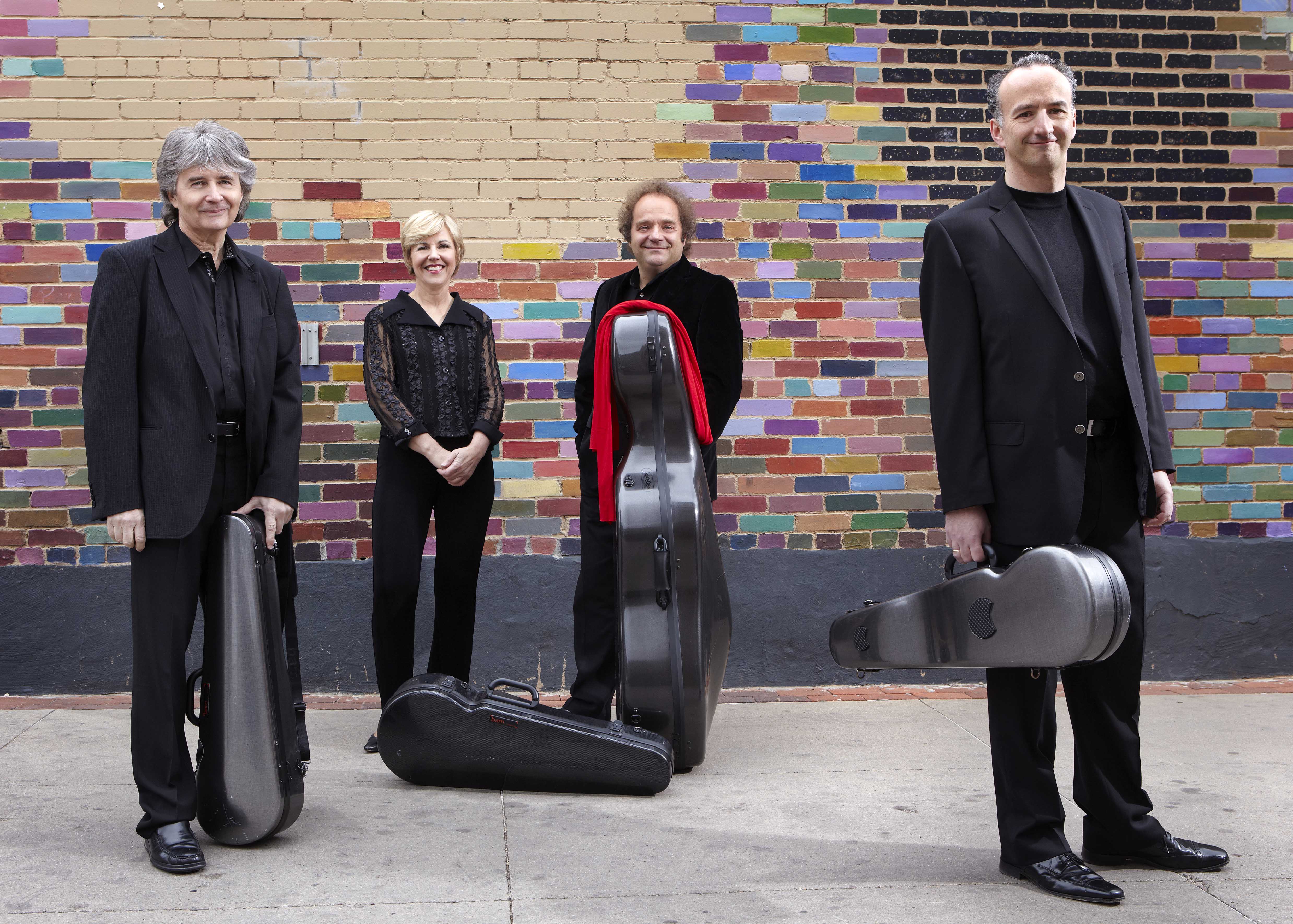
Takacs Quartet. Photo by Keith Saunders

Takacs Quartet with Nicolò Spera, guitar

Mozart: String Quartet No. 21 in D Major, K.575
Excerpts from Boccherini: Guitar Quintet in D Major, G.448; and
Mario Castelnuovo-Tedesco: Quintet for Guitar and Strings, Op. 143
Beethoven: String Quartet No. 14 in C-sharp minor, Op. 131

4 p.m. Sunday, March 11
7:30 p.m. Monday, March 12
Grusin Hall, Imig Music Building

SOLD OUT; last minute seats may be available

EDITED March 11 to add the full name of cellist David Requiro, whose given name was inadvertently omitted in the original article.

“Happy Concert” opens Pro Musica Colorado’s 2017–18 season

Music by Ravel, Castelnuovo-Tedesco and Stravinsky performed with energy, enjoyment

By Peter Alexander

The Pro Musica Colorado Chamber Orchestra opened their 2017–18 season last night (Oct. 21) with a program conductor Cynthia Katsarelis calls “probably the happiest concert we’ve ever done.”

OLYMPUS DIGITAL CAMERA

Cynthia Katsarelis and Pro Music Colorado Chamber Orchestra (photo from a prior season)

The program featured three ebullient neo-classical works written between the First and Second World Wars. This is music that is ideal for a chamber orchestra of Pro-Musica’s size and quality, and it was performed with obvious energy and enjoyment. Pace Katsarelis, it was not happy throughout, since there were moments of melancholy here and there, but on the whole the program was indeed light in texture and mood.

The opening work, Ravel’s Le Tombeau de Couperin (“The tomb of Couperin,” a form of musical homage to a deceased composer), is one of the great works for smaller orchestra. Originally composed for piano, it is a set of Baroque dances stylistically descended from the great keyboard suites of Françoise Couperin. Ravel orchestrated four of the original six dances in the years immediately after World War I.

There is a slight sense of melancholy beneath the surface, since every movement is dedicated to the memory of one or more of Ravel’s friends who had died in that terrible war. But the graceful Baroque-style dances are more reflective of cherished memories than mourning, and the music can be enjoyed without knowing the deeper motivation.

From the first moment, the crucial wind parts were crystal clear and well played. The strings were occasionally less distinct, but the sound was warm and lovely to hear. The players were secure and achieved a sense of ensemble under Katsarelis’ direction. The final movement (Rigaudon) was particularly enjoyable, with nice contrast among the different sections.

Ideally, the orchestra should breathe and move together like the two hands of a single pianist. A certain amount of rhythmic expansion and contraction is an essential part of the style. Instead, I found the interpretation a little rigid and too steady of tempo, but never less than enjoyable.

nicolo.spera

Guitarist Nicolò Spera

The Concerto No. 1 for Guitar and Orchestra of Mario Castelnuovo-Tedesco, performed by CU music faculty member Nicolò Spera as soloist, was a real highlight. Spera is clearly a master of his instrument who plays with a palpable love and joy in every note. His easy virtuosity made this piece, one of the great concertos for guitar, look easy. He has the ability to take expressive freedom with the music without every losing a strong sense of beat, of meter, and of phrase.

The second movement, described by Katsarelis as a sort of farewell to the composer’s homeland of Tuscany before he had to flee Mussolini’s Italy, is wistful throughout. Probably the least “happy” music on the program, it was eloquently performed by Spera and the orchestra. The finale, marked Ritmico e cavalleresco (“rhythmic and knightly”), was delightful from beginning to end.

Katsarelis and the orchestra provided stylish support for the soloist. Spera’s joy in playing this music was contagious to all, orchestra and audience alike, making this a performance to relish and remember.

cynthia

Cynthia Katsarelis

The final piece on the program, Stravinsky’s Suite from Pulcinella, is a good example of why we “play” music. Here there is nothing but happy music, and when performed as it was by Katsarelis and Pro Musica, it is fun for conductor, for players, and for the audience. The performance had great energy and drive.

The score is filled with solo bits for nearly every instrument in the ensemble, some quite showy, all played with evident virtuosity. Concertmaster Stacy Lesartre gave outstanding technical and expressive leadership for the ensemble, and while I hesitate to list individuals for fear of slighting someone, I have to praise string bassist Paul Erhard, another CU faculty member. I have never heard the bass solos played with greater beauty and purity of sound. The entire wind section—flute, oboe, bassoon, horn, trombone—was outstanding.

The only criticism was that the sound was occasionally a little heavy-footed. This may be due to the venue, which is new for Pro Musica: Boulder’s Mountain View Methodist Church. The very high A-frame ceiling may reinforce the longer wave lengths; certainly the bass was well heard all evening. But it was never muddy and the texture was generally clear, which cannot be said of the sound in their prior home, First United Methodist in downtown Boulder.

Mountain View has another great advantage over any of the downtown venues: its own parking lot. This is not a musical issue, but it is an important one. Boulder lacks a decent concert venue with adequate parking, and in particular the crowding in central Boulder on busy weekends may discourage some people from making the effort to go to live performances. I see no downside to using Mountain View: the entryway makes a suitable lobby, the sanctuary is comfortable, the sound is good, and the parking seems like a luxury after all the nights I have cruised downtown neighborhoods looking for an open space.

I hope Pro Musica will make the move permanent.

Edited to correct minor typos 10/22.

Boulder Phil ends remarkable season with a remarkable concert

CU faculty Charles Wetherbee and Nicolò Spera featured in world premiere

By Peter Alexander

butterman.andorch

Michael Butterman and the Boulder Philharmonic

Last night the Boulder Philharmonic and conductor Michael Butterman ended a remarkable season with a remarkable concert, one of the most interesting they have done.

The mostly-Italian program included one of the most brilliant orchestral showpieces of all time, a world premiere, and several pieces that are rarely played. If you love making new discoveries, as I do,  this was a fun program.

First the world premiere—and the one non-Italian piece on the program: Invisible Cities, Double Concerto for violin, guitar strings and percussion by Stephen Goss. The composer is Welsh, although the concerto is based on the fascinating novel of the same title by the 20th-century Italian writer Italo Calvino. Soloists were Charles Wetherbee, violin and Nicolò Spera, guitar.

The novel imagines a series of conversations between Marco Polo and the Mongol Emperor Kublai Khan. In an intricate design, the novel has Polo describe 55 cities to the Emperor, all of which turn out to be facets of Venice, his home. Dispersed among the cities are a series of conversations, in which Polo and Kublai Khan are gradually able to communicate more clearly across their linguistic and cultural barriers.

SteveGoss_10

Stephen Goss

In a similarly intricate design, the concerto alternates between orchestrally accompanied movements representing cities and duos without orchestra representing the conversations. Particularly ingenious are the duos, which represent musically the growing accord between Polo and the Emperor through music of growing lyrical beauty.

The musical design is clever but not cryptic, and it is executed without ever seeming forced. The piece as a whole is accessible, expressively convincing and well constructed. This is a work of significance that should be taken up by other guitar-violin duos.

Wetherbee.1

Charles Wetherbee

The style is largely based in conventional gestures of contemporary orchestral music. If not original, the musical elements are used to good effect, as listeners can recognize and enter the expressive realm of each movement. Where the music is more imaginative, as in the interaction between the soloists, the creativity is never originality for originality’s sake; it always serves the expressive goals.

nicolo.spera

Niccolò Spera

The soloists played with sweet expression together, and with greater intensity when required. Their sounds were well balanced, reflecting prior work together as a duo. At their best they rose to all the demands of Goss’s pleasing new work.

The two works preceding the concerto were undoubtedly new discoveries for most in the audience, and both were 20th-century pieces based on older music. The first was Stravinsky’s Monumentum pro Gesualdo, orchestral arrangements of uniquely strange and adventurous Renaissance madrigals by Carlo Gesualdo.

Stravinsky’s setting is strange in its own way, with discontinuous bits of harmonic and instrumental color shifting about the orchestra and managing to sound like both Gesualdo and Stravinsky. This score, nicely played last night, fits the Boulder Philharmonic and its outstanding individual players well.

That was followed by Luciano Berio’s Four Original Versions of Boccherini’s Return of the Nightwatch from Madrid. Sometimes an enfant terrible of modern music, Berio also wrote highly approachable scores built from older music, of which this is one.

Four different versions of a movement by the 18th-century Italian composer Boccherini are arranged for modern orchestra and layered on top of one another. At times they match perfectly, but at other times they do not, creating delicious and unexpected dissonances that pass quickly.

Depicting the approach and departure of the Nightwatch, the score culminates in a rousing setting of the tune, and then dissipates into silence. It was played with verve, as once again the individual contributions of the players fit well into the orchestral mosaic.

After intermission, Butterman and the orchestra gave an invigorating reading of Verdi’s Overture to Nabucco, with all the turns of mood well traversed and quite a bit of excitement for the explosive ending. Puccini’s Chrysanthemums, an ingratiating minor work, was played with expression, if not the plush, ermine-fringed sound one would like to hear.

Respighi

Ottorino Respighi

The concert ended with a sure bet, Respighi’s Pines of Rome, a piece guaranteed to rouse the audience from their seats. In the hands of the Boulder Phil, Respighi’s orchestra worked its magic: it shone when it should shine and sparkled when it should sparkle, the sudden contrasts were contrasting and the abrupt changes of scene were well delineated.

The winds deserve special recognition, from the brass flourishes in “The Pines of the Villa Borghese,” to the delicate woodwind solos of “The Pines of the Janiculum,” to the massive fanfares of “The Pines of the Appian Way.” Once again the Roman Legions advanced, a brass choir sounded from the balcony—although how effectively depended on where you were sitting—and Respighi brought the crowd to its feet.

You could not have a more rousing ending for a season.