Boulder Chamber Orchestra features “Boulder Celebrities”

Violinist Ed Dusinberre and violist Richard O’Neill will play Mozart

By Peter Alexander Feb. 27 at 5:15 p.m.

The Boulder Chamber Orchestra (BCO) traces the history of classical music on their next concert (7:30 p.m. Saturday, March 1; details below), with a concerto grosso from the Baroque era, music from the heart of the classical style, and a symphony pointing the way to the early Romantic era.

The concert under conductor Bahman Saless will feature violinist Edward Dusinberre and violist Richard O’Neill from the Takács Quartet playing Mozart’s exquisite Sinfonia Concertante for violin and viola with orchestra. Two of the superstars of the classical music world, Dusinberre and O’Neill are hailed in the concert’s title as “Boulder Celebrities.”
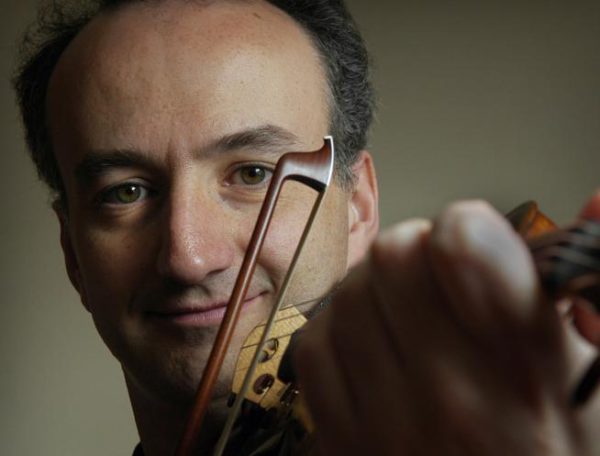
Edward Dusinberre

Works framing the Mozart are the Concerto Grosso in F major attributed to Handel, and Schubert’s Symphony No. 5 in B-flat major. All three are bright and cheerful works, giving the entire concert an uplifting spirit.

With its two soloists, the Mozart stands as the centerpiece of the program. Dusinberre and O’Neill know each other well, having played together in the Takács since the latter joined the group five years ago. In addition to their work in the quartet, they both have concert and recording careers as soloists and both have won a classical music Grammy. 

Mozart’s Sinfonia Concertante is one of the composer’s most loved pieces, and one that O’Neill has played many times. “For some violists it’s the reason they play the viola,” he says. “It’s such an amazing work, and it has been a lifetime dream for me, visiting it through different stages of my life. (There is) the joy of playing it over the years with different orchestras and different violinists, each having their own distinct views on the piece.”

He says he learns from every violinist he plays it with, but this is his first time with Dusinberre. And it’s a special experience playing with someone he knows so well from their work together in the Takács. 

“Part of the magic of being in a string quartet is that you spend so much time with your colleagues, and you get to know them under many different circumstances,” O’Neill says. “I’ve played (the Mozart) with brilliant soloists, but this time with Ed we’ve been able to dig into the more psychological aspects of the music, because we already know each other’s playing pretty well.”
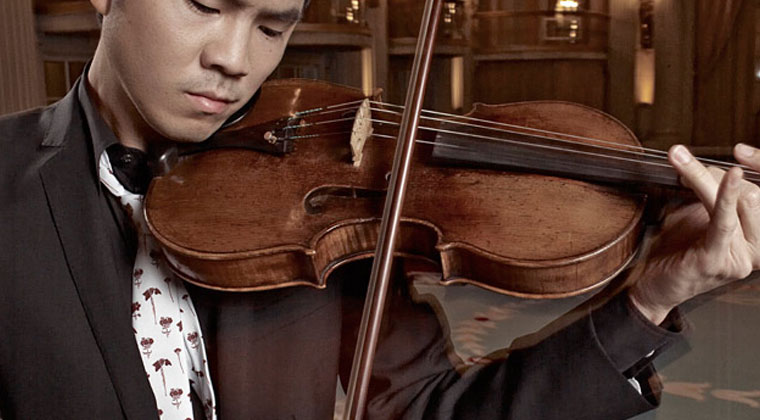
Richard O’Neill

In other words, O’Neill and Dusinberre were able to skip past the early stages of getting to know a musical partner and get down to details right away. The quartet just returned to Boulder from a tour, but they were able to rehearse Mozart together on the road, O’Neill says. Now, “I’m really looking forward to working with the orchestra and Bahman (Saless),” he says.

One thing he urges the audience to tune into with the Sinfonia Concertante is how the two solo parts relate to one another. “Mozart pairs the violin and viola like they’re operatic characters,” he explains. “It’s like a conversation.

“The person that talks first often frames the way the conversation will go. In the first movement,  the violin says, then the viola says, and then the violin says and the viola says. There’s a lot of playful discussion, and then in the recapitulation—the viola says it first!”

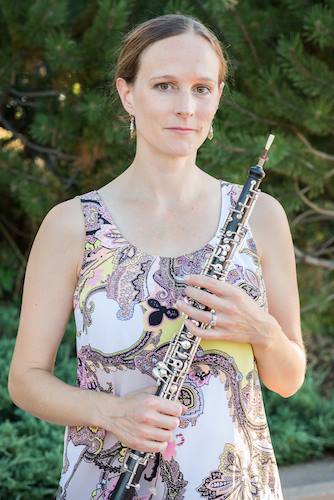
The concerto grosso was a form common in the Baroque period, featuring a small group of soloists with orchestra. The Concerto Grosso in F features two oboes with a string orchestra. The soloists will be guest artist Ian Wisekal and BCO member Sophie Maeda. 

The Concerto is “attributed to Handel” because publishers of the time often printed and sold works that had been pirated, or changed the name of the composer, making authenticity uncertain. In the case of this concerto—which is certainly an authentic representative of the Baroque style—it has appeared under Handel’s name and as an anonymous composition.

Schubert wrote his Fifth Symphony in 1816, when he was 19 years old. It is the most classical of Schubert’s symphonies, having been written for a smaller orchestra, with one flute and no clarinets, trumpets or timpani. Schubert was infatuated with Mozart’s music, and wrote in his diary ”O Mozart, immortal Mozart!”

At the time he was unemployed, hanging out with a group of young artists, poets and musicians. The first reading of the symphony was given by this circle of friends in a private apartment, with the first public performance occurring 13 years after Schubert’s death.

The music of the symphony is often described as “Mozartian” in its gracefulness and melodiousness. It conforms closely to the standard four-movement structure of the classical period, with a minuet movement in third place. At the same time, the harmonic palette suggests the Romantic style to come, particularly in Schubert’s works of the remaining 12 years of his life.

But regarding the program’s title, the question of classical musicians being genuine “celebrities” might be debatable—but if it’s possible it would be in Boulder, where the Takács Quartet routinely sells out two performances of every program. 

Superstars or celebrities, Grammy winners both, Dusinberre and O’Neill are always worth hearing.

# # # # #

“Boulder Celebrities”
Boulder Chamber Orchestra, Bahman Saless, conductor
With Edward Dusinberre, violin, and Richard O’Neill, viola

  • Handel: Concerto Grosso in F major, op. 3 no. 4
  • Mozart: Sinfonia Concertante in E-flat major for violin and viola with orchestra, K364
  • Schubert: Symphony No. 5 in B-flat major, D485

7:30 p.m. Saturday, March 1
Boulder Adventist Church, 345 Mapleton Ave.
TICKETS

GRACE NOTE: Chamber music with piano, viola and clarinet

The Academy University Hill presents free concert Sunday

By Peter Alexander Nov. 26 at 5:40 p.m.

A musical trio assembled for the occasion—called, fittingly, “The Ad Hoc Trio”—will perform three works by Brahms and Mozart on a free concert at The Academy University Hill Sunday (7 p.m. Dec. 1; details below).

The retirement community does not charge admission for performances held in their Chapel Hall at 883 10th St. in Boulder, but audience members are asked to RSVP in advance HERE.

Sunday’s performers will be CU Boulder College of Music faculty member Erika Eckert, viola; Boulder resident Stephen Trainor, clarinet; and Grinnell College (Iowa) faculty member Eugene Gaub, piano. They will play a trio by Mozart and two sonatas by Brahms, one each performed by viola with piano, and clarinet with piano. 

In 1890 Brahms had decided to give up composition, but the following year he heard the clarinetist Richard Mühlfeld. He was so impressed with Mühlfeld’s playing that he changed his mind and wrote two sonatas for him, as well as a trio and quintet with clarinet. The last chamber music Brahms wrote, the sonatas effectively opened the door for later composers’ sonatas for clarinet and piano.

After completing the sonatas, Brahms later arranged them for viola instead of clarinet, making minor alterations to fit the instrument. These versions are rightly known as sonatas for viola and piano, but it is rare to hear both instruments playing these works on the same program. Eckert and Trainor decided to split the two op. 120 sonatas between them, so that the audience has a rare opportunity to hear both instruments in some of Brahms’ most notable chamber music.

Mozart wrote his “Kegelstatt” Trio for his piano student Franziska von Jaquin and the clarinet virtuoso Anton Stadler, for whom he also wrote the Clarinet Concerto and other works. Mozart took the viola part with his two friends in the first performance of the trio, in von Jacquin’s home in 1786. The name “Kegelstatt” means the place where skittles, one of Mozart’s favorite games, is played. 

The Ad Hoc Trio
Erika Eckert, viola; Stephen Trainor, clarinet; and Eugene Gaub, piano

  • Brahms: Sonata for clarinet and piano in F minor, op. 120 no. 1
    —Sonata for viola and piano in E-flat major, op. 120 no. 2
  • Mozart: Trio in E-flat major for clarinet, viola and piano, K498 (“Kegelstatt”)

7 p.m. Sunday, Dec. 1
Chapel Hall, Academy University Hill
883 10th St., Boulder

Admission free; RSVP HERE

Time shifting at the Santa Fe Opera

Reviews of La Traviata and Don Giovanni

By Peter Alexander Aug. 12 at 11:10 p.m.

Opera productions seem to go through trends. That was certainly the case at the Santa Fe Opera this summer: of the five productions, only one—the world premiere of The Righteous by Gregory Spears, set in the 1980s—remained in the time period for which it was conceived. The other four—La Traviata, Don Giovani, Der Rosenkavalier and L’elisir d’amore—were shifted forward to more recent times. Proving that time shifts can work in the right circumstances, some of the productions worked very well in their updated periods. Others were less successful.

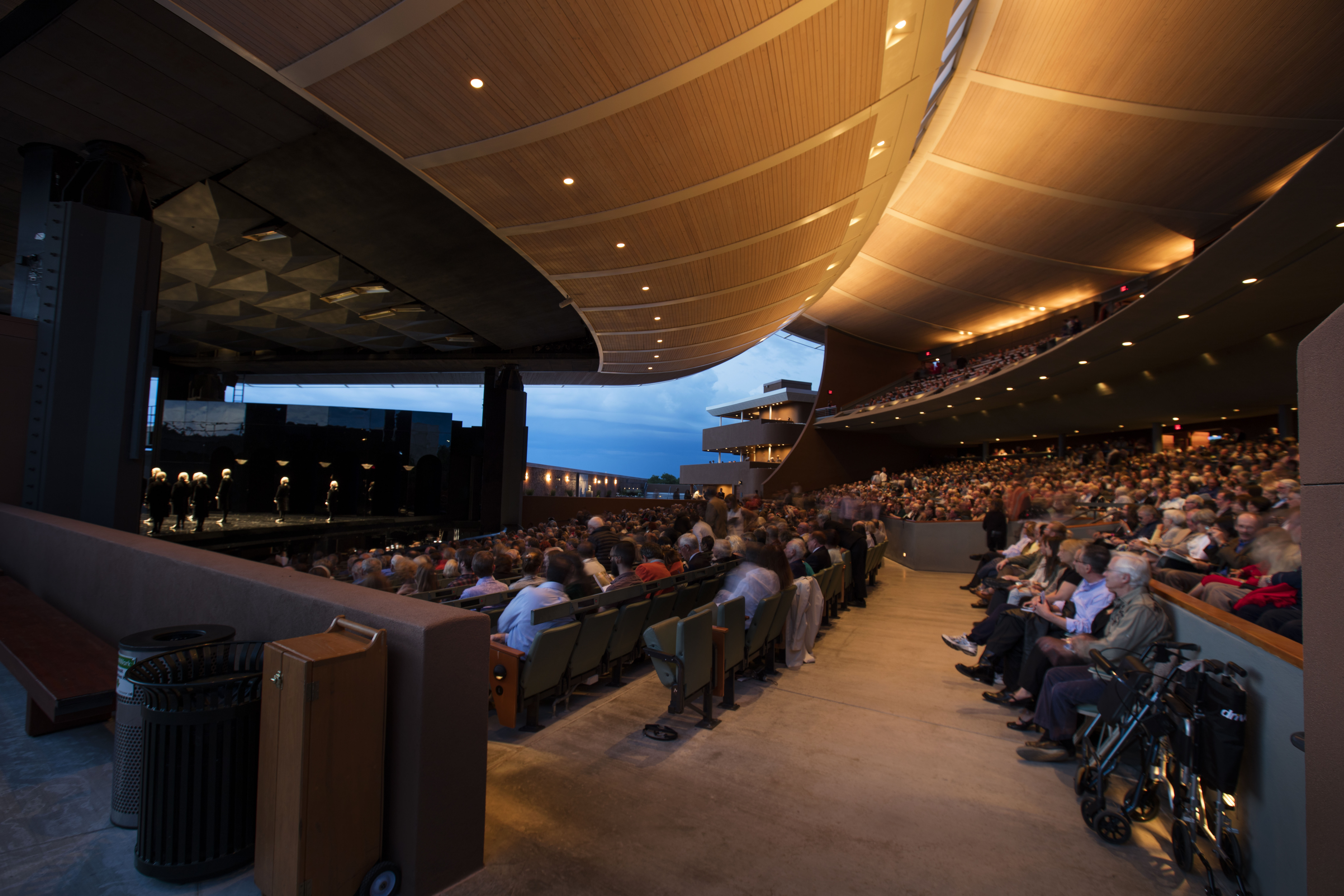
Opera night at Santa Fe. Photo by Kate Russell.

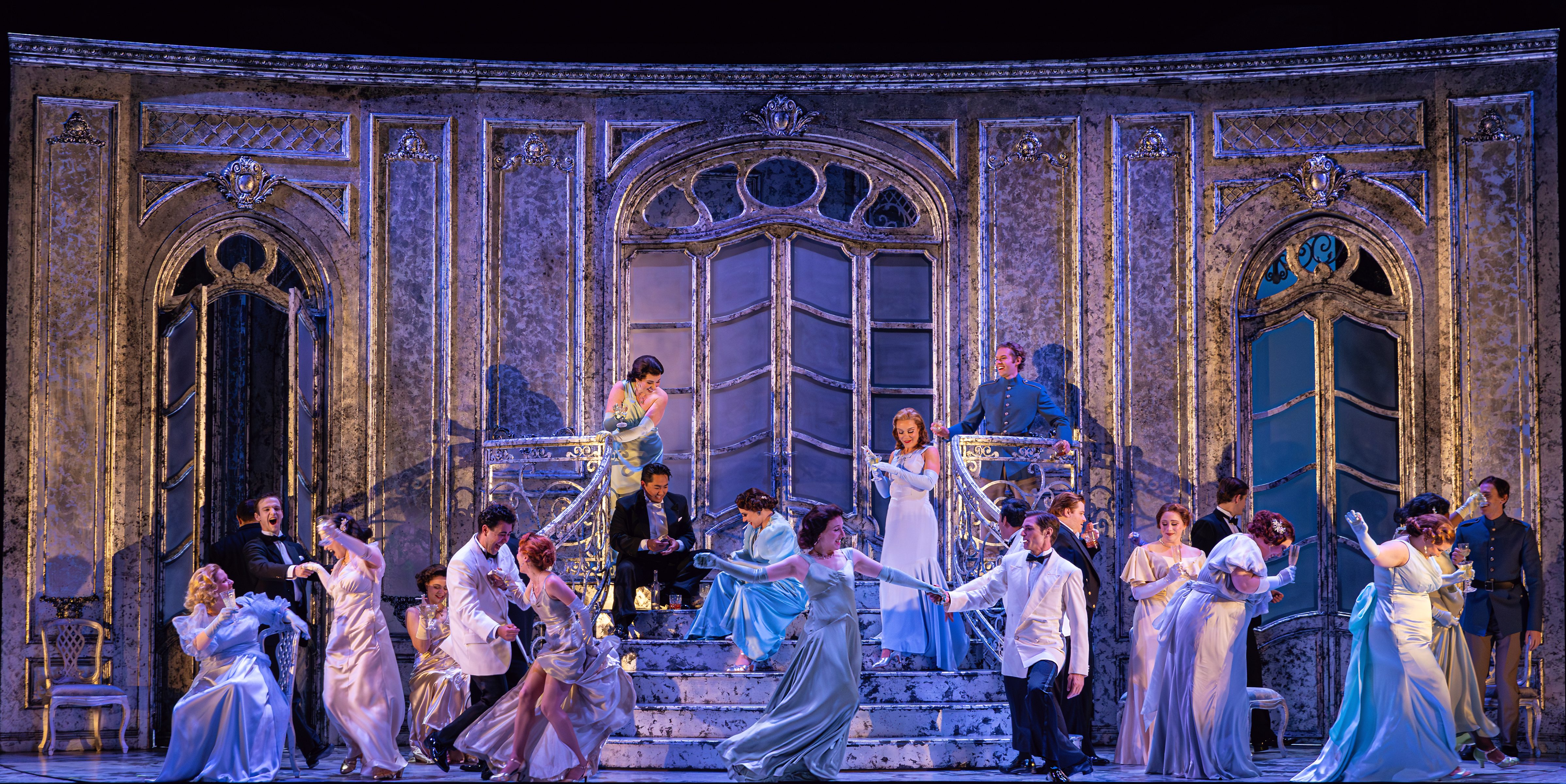
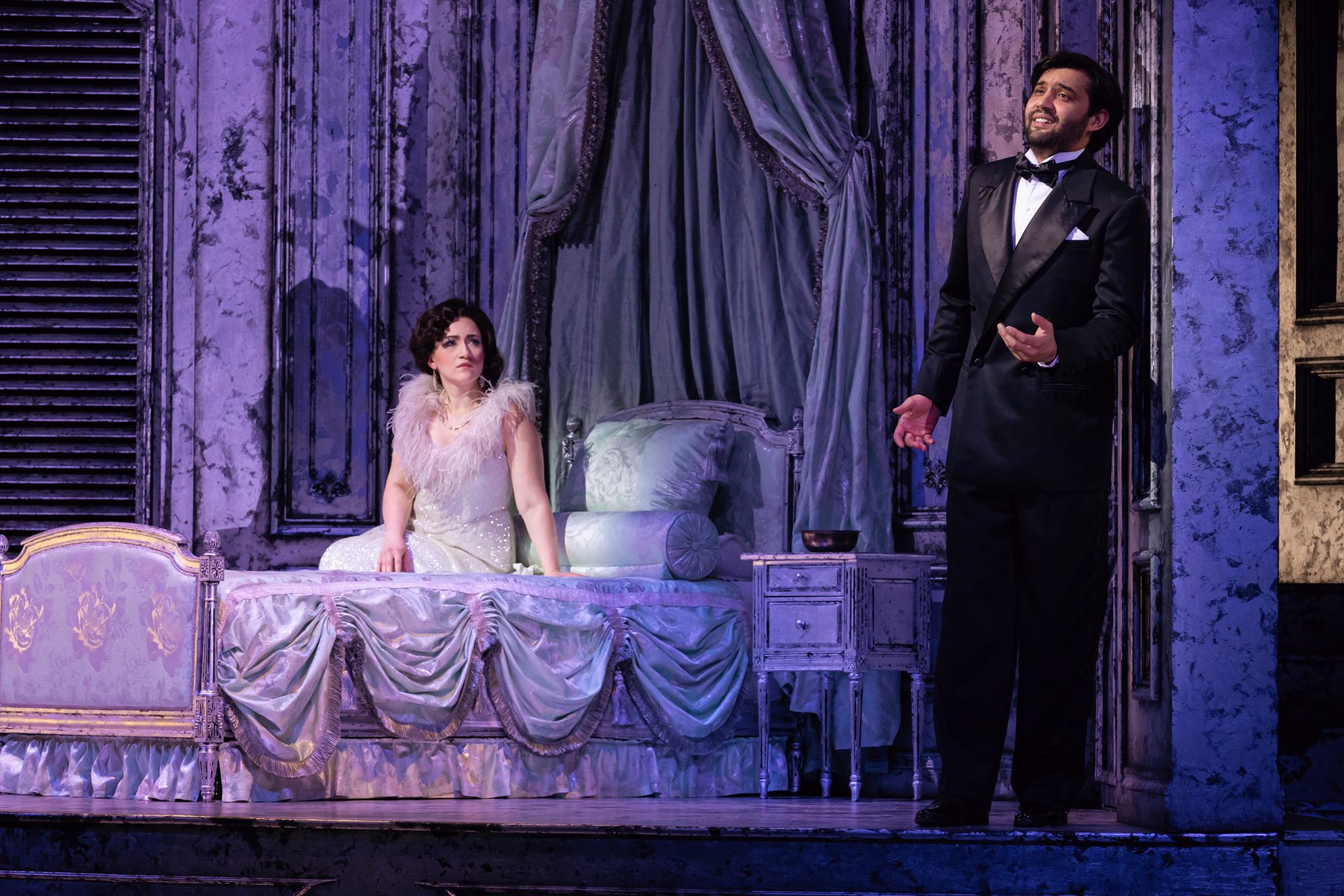
Verdi’s La Traviata, updated to 1930s Paris, is a glittering success in almost every way. Armenian soprano Mané Galoyan is as good a Violetta as I have seen. As Alfredo, Uzbekistan tenor Bekhzod Davronov matches her vocally very well. Stand-in Alfredo Daza, the Mexican baritone rounding out the international cast, is a powerful, if blustery, Giorgio Germont. 

Conductor Corrado Rovaris brought out the Italianate nuances of the score without ever overpowering the singers. The performance I heard (Aug. 5) was filled with glorious, touching pianissimo singing, especially from Galoyan, and every word, every note was clearly voiced no matter how softly. Luisa Muller’s direction created a human drama where many productions are satisfied with conventional routine.

La Traviata set by Christopher Oram. Photo by Curtis Brown.

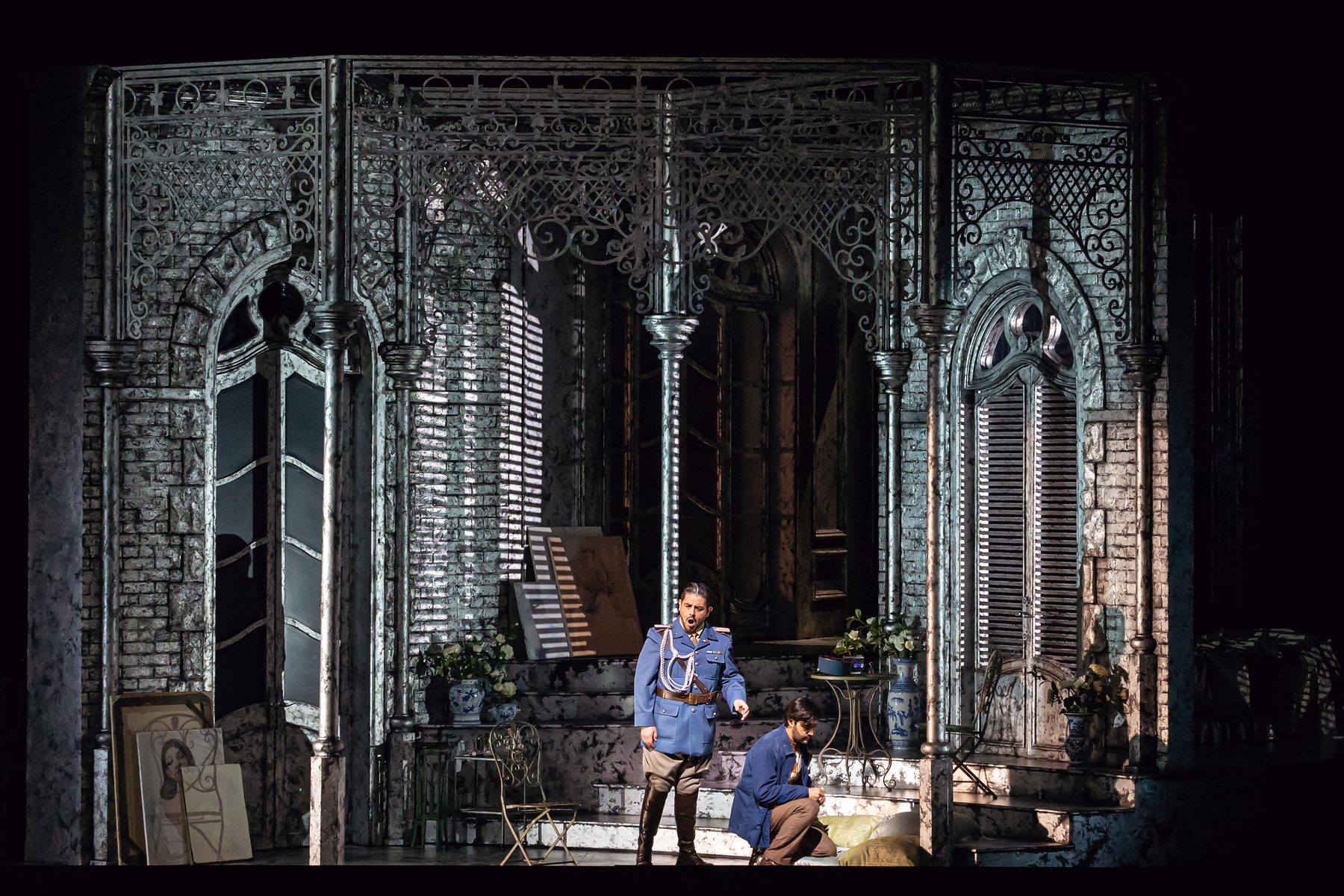
The set by Christopher Oram places evocative spaces on a turntable. The Parisian interiors are elaborately decorated in silver, with discrete lighting adding a touch of color. The rotating set is used strategically: in the first act, Violetta’s public scenes at the party are placed in an ornate salon, while her private moments and scenes with Alfredo move smoothly to an interior bedroom, a contrast that sets up the following scenes with the public alternating with the private. The lovers’ country retreat is appropriately rustic, neither too grand nor too shabby. The sets and costumes adhere carefully to the 1930s aesthetic.

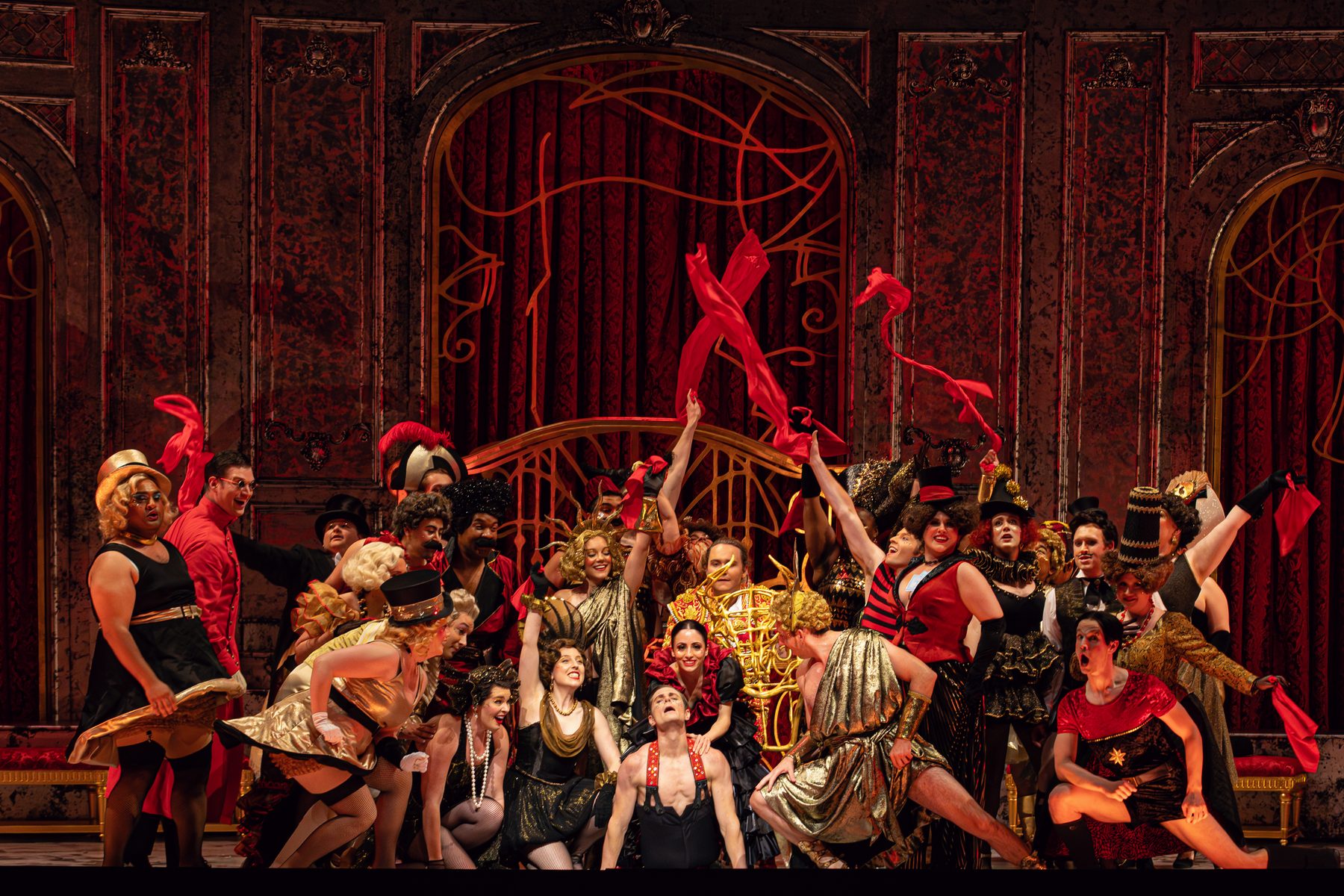
Santa Fe Opera chorus, Act II Scene 2 at Flora Bervoix’s costume party. Photo by Curtis Brown.

A special word for Act II Scene 2, at Flora’s party: Decorated in bright reds, it is a satanic costume party, with characters in various outrageous costumes. Intentionally over the top, the scene evokes every American conception of the Paris of Hemingway, Pound and les années folles (the crazy years) when the arts flourished in spite of a worldwide depression. After the restrained colors of the previous scenes, this hits like a blow to the face, creating exactly the shock that Violetta’s return to her life of decadence implies.

For all the strengths of the production, it is Galoyan’s Violetta that makes the greatest impact. Her bright, focused voice suits the role ideally. Her acting was on a par with her emotive singing, ranging from piercing moments of fury to heartrending fragility. Her delicate pianissimos carried easily and never lost nuance, or flattened out to expressionless undertones. Her most effecting moments were in the second and third acts, when she is overcome by the tragic fate that she can see coming. At the end, her frailty was made tragically real in her singing.

Mané Galoyan (Violetta) and Bakhzod Davronov (Alfredo). Photo by Curtis Brown.

In her director’s notes, Muller describes Traviata as a memory play, with the coming (or remembered) events suggested in tableaux during the Prelude. Violetta, she writes, is “a woman in command of her life choices” who “knows that the end of her life is approaching.” Both the staging and Galoyan’s performance reinforce that conception, making Violetta the emotional center of the opera. The life of a 19th-century courtesan seems remote today, but this is a Violetta current audiences can connect with.

Davronov sang strongly, with a ringing tone that matched well with Galoyan in their duets. If his acting was stiff in the country house scene, that is partly due to the limited space in the set. He sang with great expression and his tragedy was palpable by opera’s end. 

Alfredo Daza (Giorgio Germont) and Bakhzod Davronov (Alfredo Germont). Photo by Curtis Brown.

Costumed as a military officer, Daza was an imposing figure, and his large baritone voice commanded the stage from his entrance. He was never a sympathetic figure in his long scene with Violetta, but he is not meant to be. Booked for Dulcamara in l’Elisir d’amore, he has sung Germont before and so was an obvious person to take over the role, which he filled admirably.

Sejin Park was appropriately arrogant as Baron Douphol. Elisa Sunshine sang well and understands her limited role as Violetta’s faithful maid Annina. Kaylee Nichols has a strong voice but didn’t seem dissolute enough for the scandalous Flora Bervoix. 

The orchestra played admirably, following Rovaris’s expressive rubatos and supporting the singers well through the softest moments. The party-scene choruses were full voiced and strong, contrasting powerfully with the delicate and reflective moments of the lead singers—another level of contrast between the public and private lives of the characters.

This production, and the performance I saw, would stand out in anyone’s season. In a long history of memorable operas at Santa Fe, it is a production worth seeing and remembering. 

* * * * *

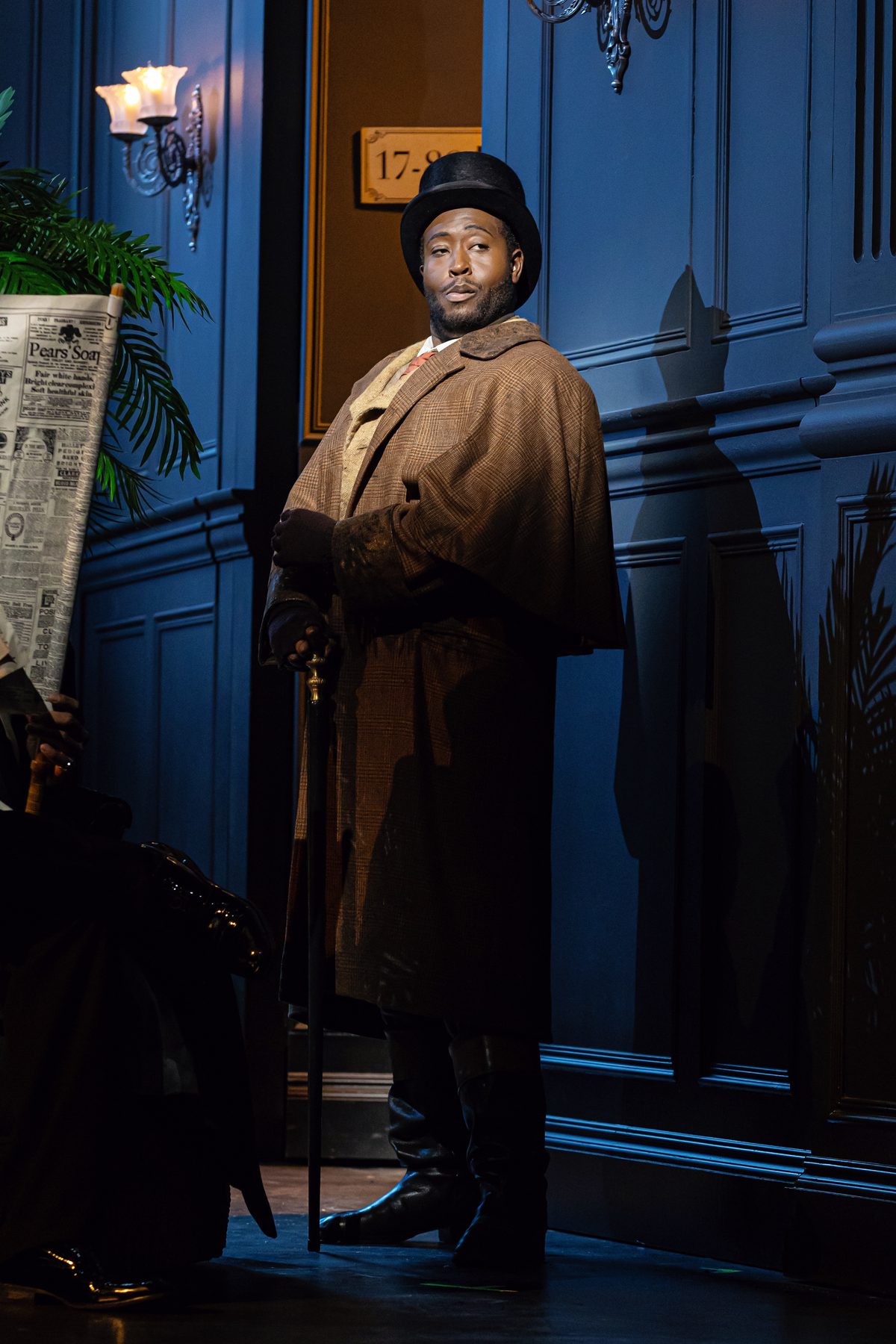
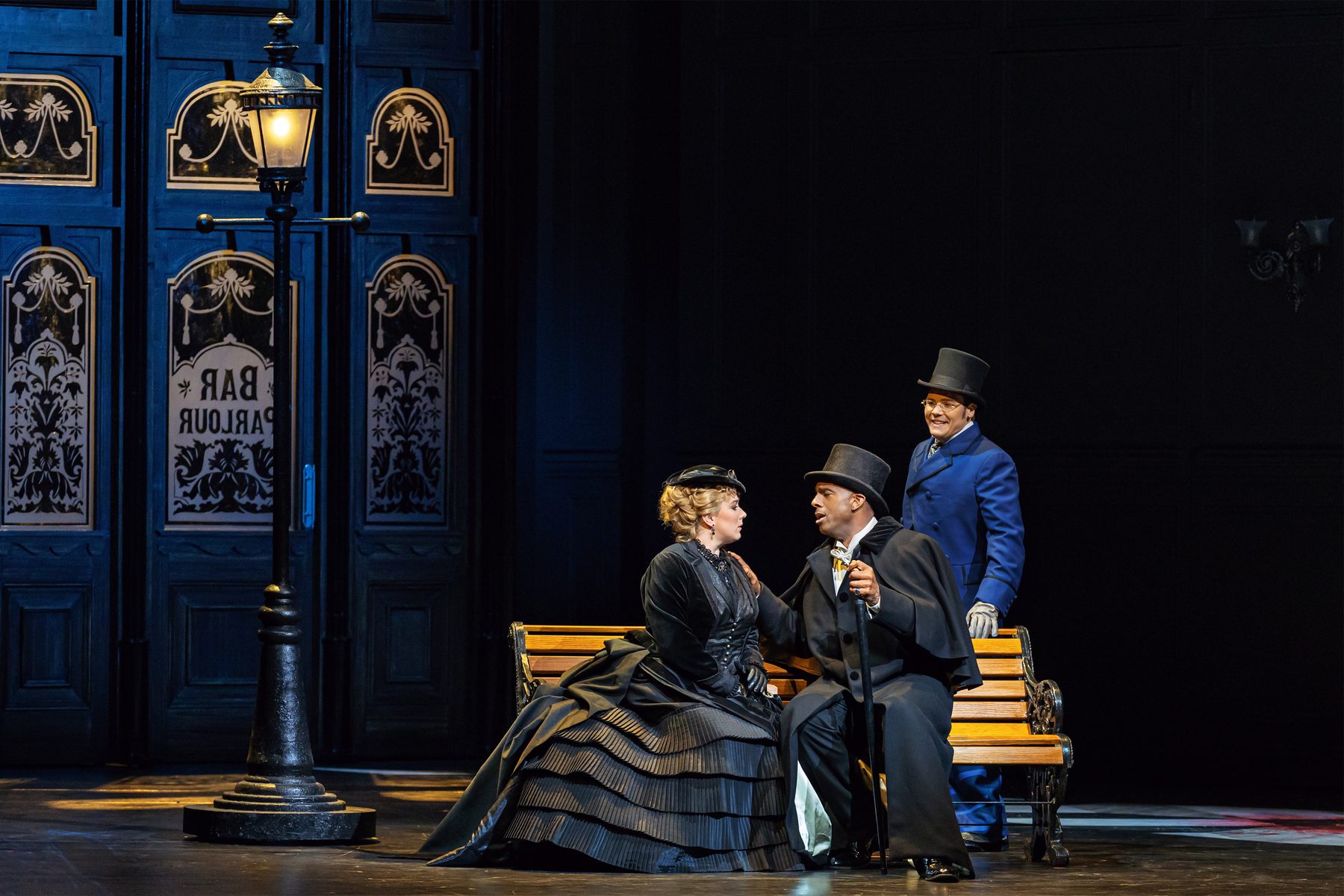
The production of Mozart’s Don Giovanni (seen Aug. 6) has been transported to Victorian-era London. In some ways this works well, but in other ways, not.

The updating was inspired largely by the coincidence that Don Giovanni and Dorian Gray of Oscar’s Wilde’s novel The Picture of Dorian Gray share the initials DG, and that both pursue a life of hedonism. Beyond those superficial similarities, it is certainly true, as director Stephen Barlow points out in his notes, that both the world of Don Giovanni and Victorian England were class-bound societies. In the opera, each member of the cast is defined by their standing as nobility or peasantry, impenetrable social levels identified in the music. These musical distinctions put class, which would have been immediately clear to Mozart’s audience, at the heart of the opera, as it was to lives in Victorian England. 

Leporello (Nicholas Newton) in Victorian London. Photo by Curtis Brown.

But in other ways, the updating is less successful. To maintain the transformed setting, Don Giovanni sings “Come to your window, my treasure” sitting in the lobby of a posh hotel. Instead of a graveyard, Giovanni “leap(s) over the wall” into an enclosed funeral parlor. And in a particularly baffling decision, there is no statue, only a casket sitting on a pedestal. Leporello sings of the immobile casket, “He looked at us.” There is no statue at all—a consistent feature of Don Juan mythology for centuries—in the final scene. The Commendatore enters through a picture frame as a ghost, again making nonsense of the sung text.

Some of the seat-back English titles strayed from the literal to contribute to the Victorian ambience. “Listen, guv,” Leporello sings to Giovanni, and the “Champagne Aria”—literally “As long as the wine warms the head”—has no mention of wine.

One other quibble: If Giovanni is an English Lord ravishing the women of London, why is England not mentioned in Leporello’s “Catalogue Aria”? And what’s the big deal with Spain? Or do we not expect the stage action to correspond to the text in concept productions?

But the musical performance was strong throughout. Conductor Harry Bicket led a stylish if unhurried performance, sometimes bordering on sluggish. To its credit, the orchestra followed his expressive direction faithfully. Once under way, the strings played with clean ensemble, and the horns sounded particularly bright.

Rachel Fitzgerald (Opening night Donna Anna), Ryan Speedo Green (Don Giovani) and David Portillo (Octavio). Photo by Curtis Brown.

Ryan Speedo Green, one of the leading baritones worldwide, was an ingratiating, seductive Giovanni. His voice, while used expressively, is almost too strong for the part. At times he struggled to keep it under control, and balance with Zerlina and other light-voiced characters was occasionally askew. He delivered all the hedonistic enthusiasm needed for the “Champagne Aria,” and made Giovanni a totally assured libertine.

Rachel Willis-Sørensen, engaged for the the Marschallin in Der Rosenkavalier and standing in as Donna Anna, was another singer who seemed at times out of her fach. Her strong, steely voice tended to get away from her at phrase climaxes, but she effectively conveyed the opera’s most tragic character. She was equally capable of expressively weighty tones and pure, bright high notes.

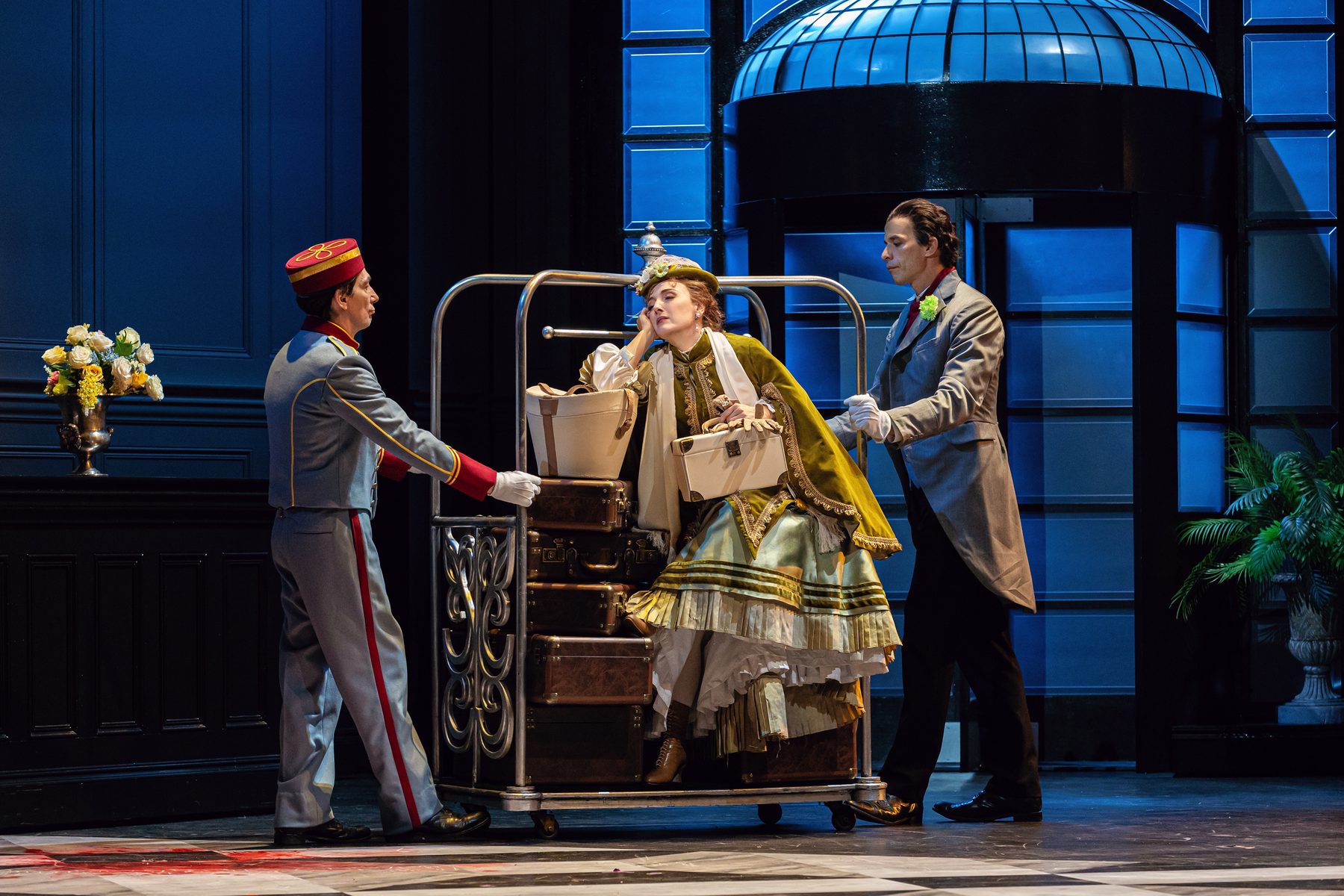
Donna Elvira (Rachael Wilson) and her luggage. Photo by Curtis Brown.

Rachael Wilson’s Donna Elvira was the very essence of the scorned woman. Her dramatic performance and assured singing made Elvira the central character of the unfolding drama, both strong in her confrontations with Giovanni and tragic in her repeated humiliations. She handled the seria aspects of her role with aplomb, with a few stumbles across registers.

Nicholas Newton provided a good comic performance as Leporello. His “Catalogue Aria” was thoroughly entertaining, as he embraced the comic emphasis of the production. David Portillo’s pleasant, light tenor is well suited to the role of Don Ottavio, even though he showed signs of fatigue by the end of a very long opera. 

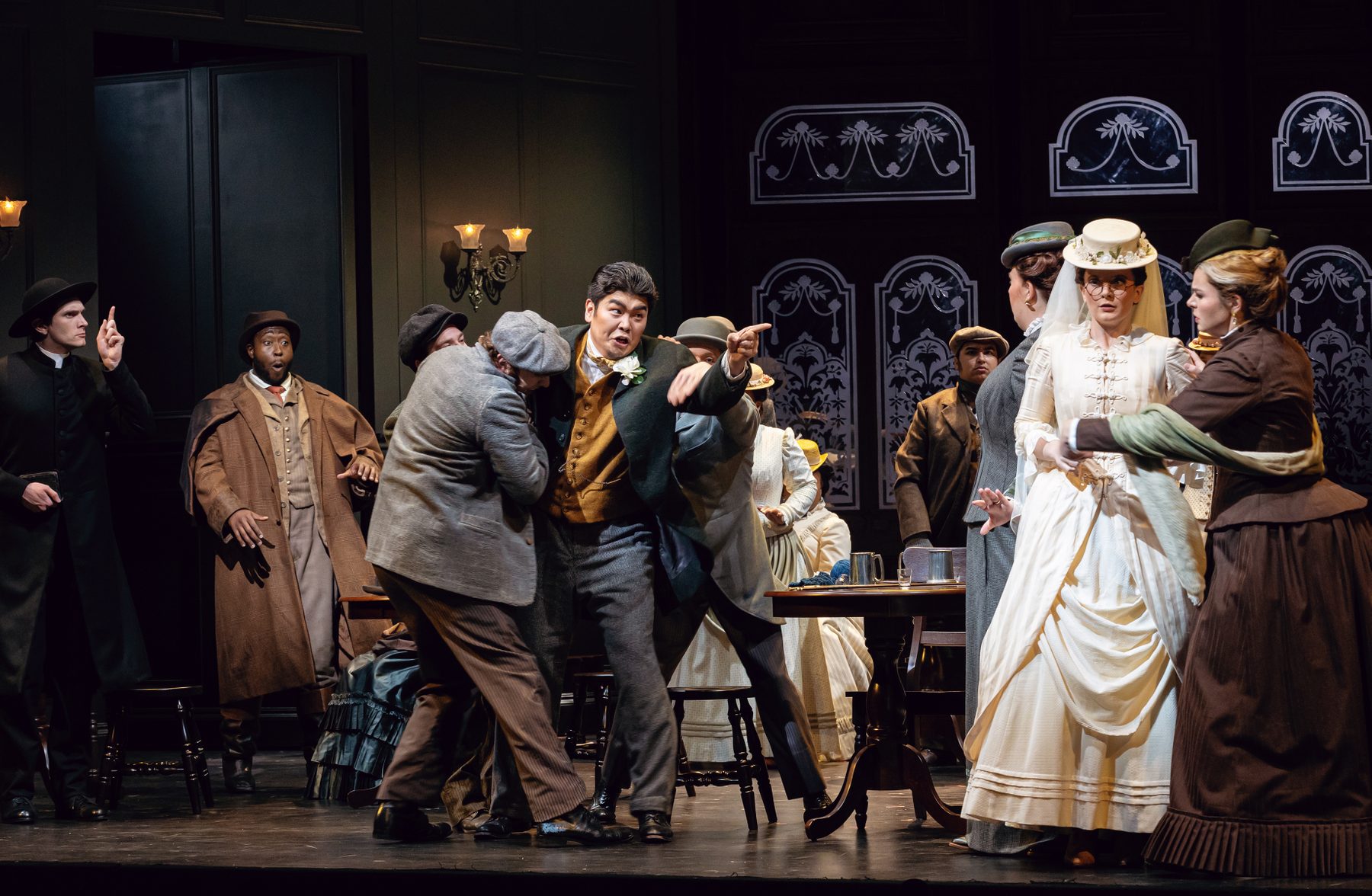
The peasant’s wedding party: William Guanbo Su (Masetto, center), and Liv Redpath (Zerlina, right). Photo by Curtis Brown.

Liv Repdpath was a sweet voiced Zerlina, capturing the character’s innocence well. William Guanbo Su portrayed an angry Masetto whose reconciliation with Zerlina seemed out of reach until the very end. Solomon Howard’s rotund bass suited the Commendatore perfectly.

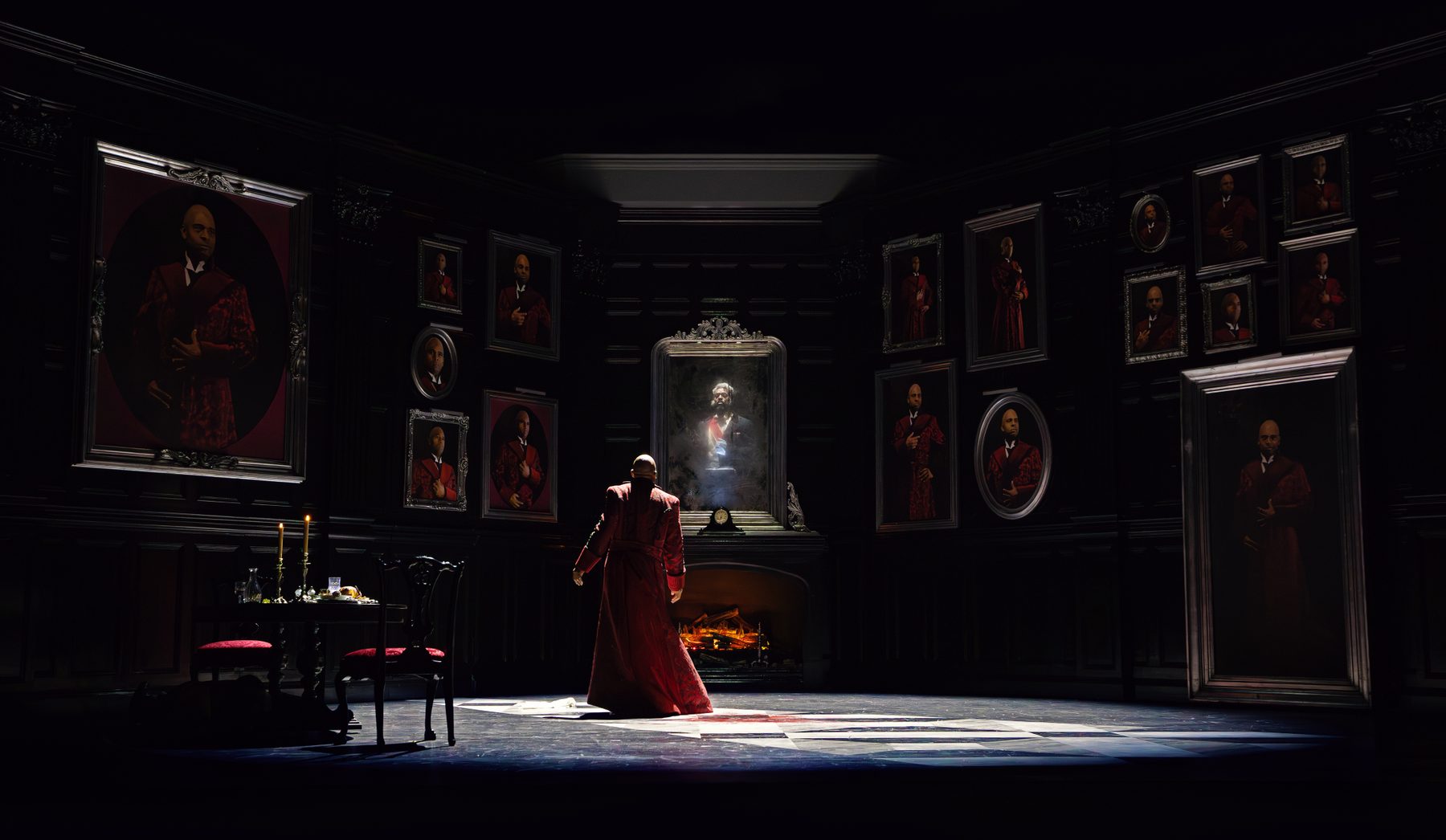
Other notes on the production: a creative set with rotating panels created seamless scene transitions. Don Giovanni’s salon, with walls covered in portraits of the Don recalled the production’s inspiration in The Portrait of Dorian Gray at the same time that it confirmed Giovanni’s narcissism.

A red spot on the floor, marking where the Commendatore dies in the first scene, became a meaningful symbol. From one scene to the next, efforts to scrub it out always failed. 

Don Giovanni (Ryan Speedo Green) is confronted by the ghost of the Commendatore (Salomon Howard) in his picture gallery. Photo by Curtis Brown.

Barlow’s production stressed the comic elements of the plot—the opera is labeled a drama giocoso, “comic drama”—but sometimes the resort to burlesque distracted from the singing. The most egregious example was the beginning of Act II, where some clumsy humor with luggage in the background distracted from Elvira’s mournful “Ah taci, ingiusto core.”

I’m not sure what the British Bobby contributes to the last scene, except that it recalls Ottavio’s promise to bring Giovanni to justice. Which raises the question: is the Victorian setting, evoked by Bobbies and street lamps as well as costumes, too familiar to audiences from television? This is not Downton Abbey. I wonder what expectations are raised with such clear signposts in the production. 

The Santa Fe Opera Season continues through Aug. 24. A few tickets are still available for some performances. For information and tickets, visit the Santa Fe Opera box office HERE.

Colorado Music Festival continues July 23 to August 4

Guest soloists and a Mahler symphony bring 2024 festival to a close

By Peter Alexander July 18 at 3:20 p.m.

The remaining two weeks of the Colorado Music Festival (CMF) will see a series of guest artists—soloists, conductors and chamber musicians—and culminate with a Mahler symphony.

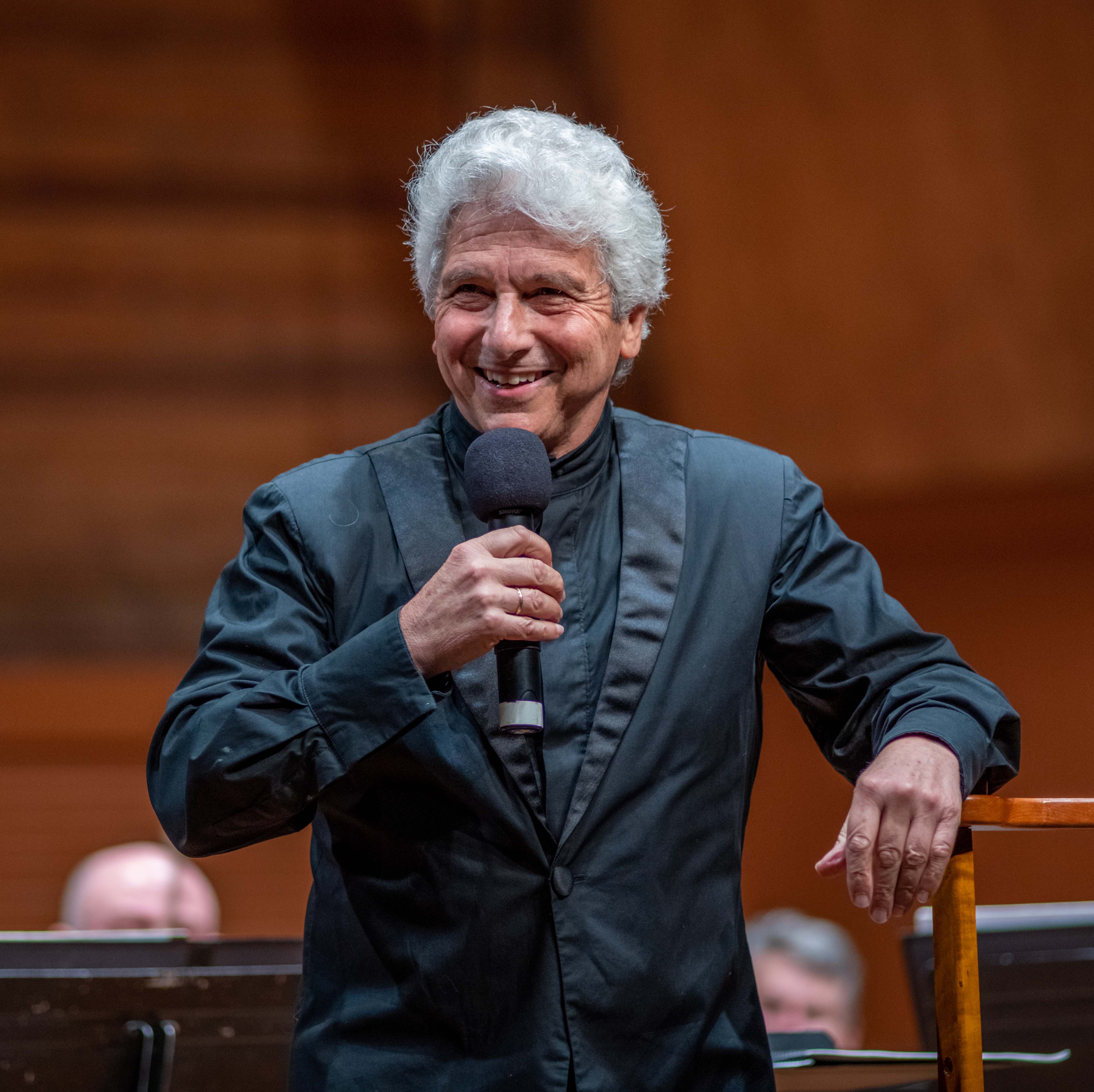
Peter Oundjian, artistic director of the Colorado Music Festival. Photo by Geremy Kornreich.

Ending the summer with Mahler has become a tradition at CMF. “It’s quite conscious,” artistic director and conductor Peter Oundjian says. “We did the Third (Symphony), we did the Fifth. The season of ’21 we ended with Beethoven, because couldn’t have a Mahler symphony”—due to onstage seating restrictions during COVID—but otherwise, Oundjian has made Mahler the preferred festival finale.

Before the season-ending concert Aug. 4, CMF still has intriguing programs of both orchestral and chamber music. Next Tuesday (7:30 p.m. July 23; full programs listed below), the Robert Mann Chamber Music Series continues with a concert by members of the Festival Orchestra. The program will include one of the most loved pieces by Mendelssohn, his String Octet in E-flat, written when the composer was only 16.

Danish String Quartet. Photo by Caroline Bittencourt.

One week later on July 30, the guest chamber group the Danish String Quartet closes the chamber music series with a diverse program of pieces and movements both familiar and unfamiliar. The Danish Quartet, known for creative programming, was originally scheduled in 2021, but due to COVID restrictions had to wait for the 2022 festival.

This summer’s program opens with the minuet from Joseph Haydn’s late quartet Op. 77 no. 2, followed by Three Pieces for String Quartet by Stravinsky and Three Melodies by the 17th-century blind Celtic harpist Turlough O’Carolan. An early divertimento by Mozart and the Third String Quartet by Shostakovich complete the program.

Awadagin Pratt

Pianist Awadagin Pratt will be the guest soloist for the Festival Orchestra concerts July 25 and 26. The first African-American pianist to win the Naumburg International Piano Competition, Pratt has had a protean career, performing with most major American orchestras, appearing on six continents, at the White House by invitation from presidents Clinton and Obama, and on Sesame Street.

Described in the Washington Post as “one of the great and distinctive pianists of our time,” Pratt is known for highly individual artistry and concert dress. A pianist of prodigious technique, he plays a wide ranging repertoire. For his appearance with Oundjian and the Festival Orchestra, Pratt will play a Keyboard Concerto by J.S. Bach and Rounds for piano and string orchestra by Jessie Montgomery. The program will also feature a staple of the large orchestra repertoire, Rimsky-Korsakov’s Scheherazade.

Gemma New. Photo by Anthony Chang.

Two guest artists and a guest conductor will be featured on the Chamber Orchestra concert July 28. Conductor Gemma New, hailed as “one of the brightest rising stars in the conducting firmament” by the St. Louis Post Dispatch, is a native of New Zealand where she leads the New Zealand Symphony. She comes to Colorado on her way to conduct the BBC Proms in London Aug. 16.

The program will feature the piano duo of Christina and Michelle Naughton as guest soloists, performing Mozart’s Concerto in E-flat Major for Two Pianos, K365. Other works on the all-Mozart program are Eine kleine Nachtmusik and the “Haffner” Symphony, No. 35 in D major.

The next Festival Orchestra concert brings another outstanding soloist to Chautauqua: violinist Augustin Hadelich, who has become a CMF favorite since his first appearance at the festival in 2018. He appeared from Oundjian’s home by live stream during the COVID-canceled 2020 season, and returned as artist-in-residence in 2021.

Augustin Hadelich. Photo by Suxiao Yang.

This season he will play the Tchaikovsky Violin Concerto (Aug. 1 and 2) on a program that also includes Two Mountain Scenes by Kevin Puts and Dvořák’s Symphony No. 7 in D minor. The latter, Oundjian says, “is for a lot of people Dvořák’s true masterpiece.

“Obviously the Ninth Symphony (the ‘New World’) is fantastic and the Eighth is so exquisitely beautiful, but Seven is the piece that made him famous. The premiere in London (1885) was kind of an epic moment for him. I have conducted it in a lot of different places, and orchestras love to play it. They know how magnificent it is.”

Puts’s Two Mountain Scenes was commissioned by the New  York Philharmonic and Bravo Vail! “It’s a real showpiece for orchestra, quite original but not forbidding,” Oundjian says. “You’d think living in Colorado it would be performed more often. It’s a wonderful piece!”

The final concert of the 2024 festival, Sunday, Aug 6, features the final guest artist, soprano Karina Gauvin.  A Canadian soprano who has performed with orchestras from San Francisco to Rotterdam, she will sing Ravel’s Shéhérazade and the final movement of the festival-closing Fourth Symphony of Mahler. And in another form of delight, the concert will open with Johann Strauss Jr.s spirited Overture to Die Fledermaus.

Karina Gauvin. Photo by Michael Slobodian.

Following the pattern of ending the festival with Mahler, it was the Fourth that  generated the rest of the program. Oundjian says that work “is in some ways the most fascinating narrative of all (of Mahler’s) symphonies. It’s like poetry. It also has a chamber quality that is very different from all the other Mahler symphonies.

“There’s something both playful and heavenly about the first movement, and something devilish about the second movement, with its falsely tuned violin that represents the devil. And typical of Mahler scherzo movements, where you have trio sections that are very beautiful and elegant. And then a slow movement, you think, ‘OK, this is the most beautiful music that’s ever been written’!”

The finale the gives the whole symphony the character of childish delight. A setting of a poem describing life in heaven, with everyone living “in sweetest peace” and enjoying endless banquets, it is one of Mahler’s most beguiling movements. It is, Oundjian says, a “wonderful image of heaven in this child-like voice, speaking to us from another place.

“I wanted to put (Ravel’s) Scheherazade with the Fourth Symphony. I think Scheherazade is staggering, with orchestration, the colors, harmonies, the way he uses the vocal line and shapes the vocal line. It’s just magnificent. And then to start it with Fledermaus is pure heaven!”

# # # # #

Colorado Music Festival, Peter Oundjian, music director
Remaining concerts, July 23–Aug. 4, 2024
All performances in Chautauqua Auditorium

Robert Mann Chamber Music Series
Colorado Music Festival musicians

  • Joseph Haydn, String Quartet in C Major, op. 20 no. 
  • Claude Debussy, Sonata for flute, viola and harp
  • Felix Mendelssohn, String Octet in E-flat Major, op. 20

7:30 p.m. Tuesday, July 23

Festival Orchestra Concert
Festival Orchestra, Peter Oundjian, conductor
With Awadagin Pratt, piano

  • J.S. Bach: Keyboard Concerto in A major, S1055 
  • Jessie Montgomery: Rounds for piano and string orchestra (2022)
  • Rimsky-Korsakov: Scheherazade

7:30 p.m. Thursday, July 25
6:30 p.m. Friday, July 26

Festival Chamber Orchestra Concert
Chamber Orchestra, Gemma New, conductor
With Christina and Michelle Naughton, piano duo

  • Mozart: Eine kleine Nachtmusik, K525
    —Concerto in E-flat Major for Two Pianos, K365
    —Symphony No. 35 in D major, K385 (“Haffner”)

6:30 p.m. Sunday, July 28

Robert Mann Chamber Music Series
Danish String Quartet 

  • Joseph Haydn: String Quartet, op. 77 no. 2: III, Andante
  • Stravinsky: Three Pieces for String Quartet
  • Turlough O’Carolan: Three Melodies
  • Mozart: Divertimento in F major, K138
  • Shostakovich: String Quartet No. 3 in F major, op. 73

7:30 p.m. Tuesday, July 30

Festival Orchestra Concert
Festival Orchestra, Peter Oundjian, conductor
With Augustin Hadelich, violin

  • Kevin Puts: Two Mountain Scenes (2007)
  • Tchaikovsky: Violin Concerto in D Major, op. 35
  • Dvořák: Symphony No. 7 in D minor, op. 70 

7:30 p.m. Thursday, Aug. 1
6:30 p.m. Friday, Aug. 2

Festival Finale Concert
Festival Orchestra, Peter Oundjian, conductor
With Karina Gauvin, soprano

  • Johann Strauss: Overture to Die Fledermaus
  • Ravel: Shéhérazade
  • Mahler: Symphony No. 4 in G major

6:30 p.m. Sunday, Aug. 4

Tickets for individual concerts can be purchased from the Chautauqua Box Office.

Boulder Phil presents “The Best of Boulder”

Cellist David Requiro, oboists Sarah Bierhaus and Max Soto featured Sunday

By Peter Alexander Feb. 8 at 8:10 p.m.

The Boulder Philharmonic Orchestra often brings renowned soloists to Macky Auditorium.

In recent years, their guests have included pianists Angela Cheng, Simone Dinnerstein and Garrick Ohlsson; violinists Rachel Barton Pine, Anne Akiko Meyers and Hilary Hahn; cellists Astrid Schween and Zuill Bailey; and the Marcus Roberts Trio. Local artists have not been ignored—the late concertmaster Charles Wetherbee was a repeat soloist, and Grammy-winning violist, CU faculty and Takács Quartet member Richard O’Neill played with the orchestra in 2022.

Cellist David Requiro

But now conductor Michael Butterman and the orchestra have devoted their next concert to presenting local artists as soloists. Under the title “The Best of Boulder,” the performance at 7 p.m. Sunday (Feb. 11 in Macky Auditorium; details below) will feature cellist David Requiro from the CU College of Music playing Tchaikovsky’s Variations on a Rococo Theme; and oboists Sarah Bierhaus—the Phil’s principle oboist—and Max Soto in composer Viet Cuong’s Extra(ordinarily) Fancy. 

Other works on the program are Caroline Shaw’s Entr’acte as the opener, and Mozart’s “Jupiter” Symphony—his last and one of his most celebrated works—as the concert’s finale.

Sarah Bierhaus

Cuong was born in California and grew up in Georgia. He has written in program notes that Extra(ordinarily) Fancy, a concerto for two oboes and orchestra, was partly inspired by Baroque-era oboe concertos by Vivaldi and Albinoni.

Max Soto

“After a short Vivaldi-esque introduction that establishes the main melodic ideas of the piece, the oboists go at it,” he wrote. “They mock each other, squawk at each other, and even talk over each other. The orchestra observes and joins in as the oboists continually bicker back and forth, all culminating in a reconciliation where the once-hesitant oboist learns (and even enthusiastically performs) a few multiphonics [a distorted sound that produces more than one pitch] alongside the other oboist.”

Tchaikovsky drew both inspiration and comfort from Mozart. He once wrote in a letter, “I not only love Mozart, I worship him . . . It is to Mozart that I am obliged for the fact that I have dedicated my life to music.” His orchestral Suite No. 4 was written as a tribute to Mozart, and came to be known as “Mozartiana.”

Another work that shows his reverence for Mozart and the classical style is his Variations on a Rococo Theme, composed in 1876 with the assistance of cellist Wilhelm Fitzenhagen. In fact, Fitzenhagen made numerous changes in the piece, including changing the order of variations and adding details in the solo part. It was Fitzenhagen’s version that was ultimately published.

The theme is not from the Rococo period, but is one that Tchaikovsky wrote in the style of that period, roughy 1740–70 between the Baroque and Classical eras. After the theme there are seven variations (excluding one that Fitzenhagen cut out) in varying moods, but all in a graceful and loosely classical style. More genial than some of Tchaikovsky’s music, this has proven one of his most popular pieces. 

Caroline Shaw

One of the most successful composers today, Caroline Shaw became the youngest winner of the Pulitzer Prize in music in 2013, and she is a member of the Grammy-winning vocal ensemble Roomful of Teeth. Also a violinist, she has written a number of works for string quartet, including Entr’acte. Although the inspiration may not be obvious to the listener, she wrote Entr’acte after hearing one of Haydn’s quartets, and later arranged it for string orchestra. She wrote of Haydn’s quartet, “I love the way some music suddenly takes you to the other side of Alice’s looking glass, in a kind of absurd, subtle, Technicolor transition.”

Mozart wrote his last three symphonies—Nos. 39, 40 and 41—potentially for a concert series during the summer of 1788, although there is no definite evidence that the Symphony No. 41 was played at that time. By the early 19th century, it was known as the “Jupiter Symphony”—perhaps so named by the English impresario Johann Peter Salomon but definitely not by Mozart.

The four movements follow the standard classical structure of Haydn, Mozart and Beethoven. The most striking movement is the finale, a quintuple fugue that is both a vivid demonstration of the composer’s mastery of counterpoint and a brilliant ending to the symphony—and any concert.

# # # # #

“The Best of Boulder”
Boulder Philharmonic Orchestra, Michael Butterman, conductor
With David Requiro, cello; Sarah Bierhaus, oboe; and Max Soto, oboe

  • Caroline Shaw: Entr’acte
  • Viet Cuong: Extra(ordinarily) Fancy
  • Tchaikovsky: Variations on a Rococo Theme
  • Mozart: Symphony No. 41 in C major, K551 (“Jupiter)

7 p.m. Sunday, Feb. 11
Macky Auditorium

TICKETS

NOTE: A correction was made on Feb. 9. An earlier version of this story misspelled two names. It is Caroline Shaw, not Carolyn, and Wilhelm Fitzenhagen, not William Fitzhagen.

Moore and the Longmont Symphony present “A Portrait of Mozart”

Program ranges from one of Mozart’s earliest to one of his last works

By Peter Alexander April 13 at 10:10 p.m.

Elliot Moore says that he needs a little Mozart right now.

“It’s been such a terrible time,” he says of the past year. “Mozart’s music is what I need. This is important to who I am.”

Elliot Moore

As conductor of the Longmont Symphony (LSO), Moore is in a position to fill that need. And we can all benefit when the LSO presents “A Portrait of Mozart,” a concert featuring works from Mozart’s very earliest years until nearly the last work he wrote. The concert stream will be available at 7 p.m. Saturday, April 17. You may purchase tickets here.

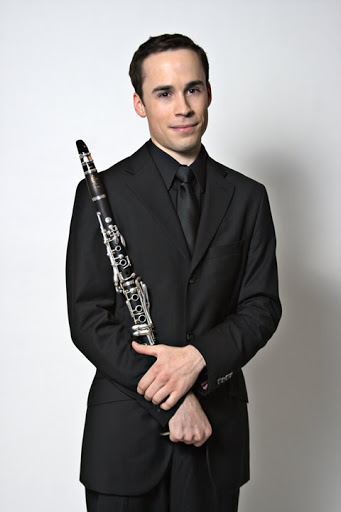
The program opens with the Overture to La finta semplice, K51, Mozart’s very first opera written when he was 12. That is followed by one of his very last completed works, the Clarinet Concerto, K622, featuring Colorado Symphony principal clarinetist Jason Shafer as soloist.

The program concludes with a symphony that falls between these works, the Symphony No. 25 in G minor, K183. Known as the “Little G-minor Symphony” to distinguish it from Mozart’s late Symphony in G minor, K550, it is the first of Mozart’s symphonies to find a permanent place on orchestral programs.

Moore has wrapped the concert into a larger project to make Mozart better known. In addition to the concert itself, there will be a pre-concert discussion about Mozart’s life on Zoom at 7 p.m. Thursday, April 15, that is open to concert ticketholders, and Moore has created a reading list for anyone who wants to go deeper into Mozart’s life. All the details of Moore’s “Mozart Mania” can be found on the LSO Web page

The concert and the project to explore Mozart’s life “is something that I feel is important to who I am,” Moore says. “It’s a way to have some kind of a shared experience that we have not had in over a year, and that’s part of the reason that I had the idea to do this.”

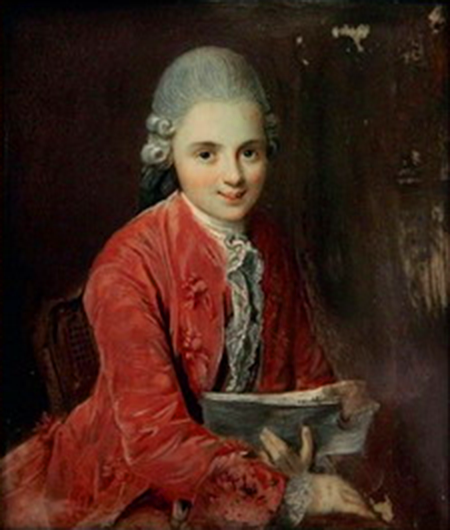
Mozart at age 12

The opera overture “is remarkable for a 12-year old,” Moore says. “I’m not sure it’s much more than that, but I think it’s extraordinary to see some of the first orchestral music a 12-year-old Mozart wrote.”

The overture also provides background to Mozart’s professional life. La finta semplice was written when the boy Mozart was visiting Vienna. His father, Leopold, hoped to have it produced by the court opera, but he made the mistake of overpromoting the work, which annoyed members of the royal family and some of the court musicians. Later the Empress Maria Theresa, who had relatives all over Europe, discouraged her family members from hiring Mozart, describing Leopold and other members of the family as “useless people.”

In other words, this opera, written he was 12, “set the tone for Mozart not being able to get a job” for the rest of his life, Moore says.

Moore chose K183, the “Little G-minor” Symphony, for two reasons. First, it is considered Mozart’s first fully mature symphony, and as such marks a milestone in the composer’s development. 

The other reason is more practical. “I needed to find a work where we could actually fit onstage,” Moore explains. Because Stewart Auditorium at the Longmont Museum is limited in size, the orchestra had to be limited as well. Other symphonies he might have chosen required too many players. “It’s a very tricky balance to put on these kind performances in a pandemic!” Moore says.

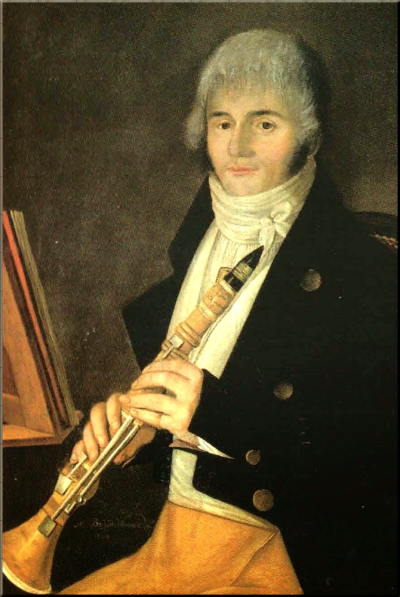
Anton Stadler with 18th-century clarinet

Mozart wrote his Clarinet Concerto in October of 1791, a mere two months before his death. It was written for Anton Stadler, a friend of the composer for whom the concerto, the Clarinet Quintet, and obligato clarinet parts in Mozart’s last opera, La clemenza di Tito, were written. When Mozart rushed to Prague for the premiere of the opera in September 1791, Stadler travelled in the same carriage with the composer and his wife, Constanza.

Stadler was clearly a virtuoso player. The concerto is difficult enough to play well on modern instruments; on the clarinets of his day, it would be a supreme challenge.

It was most likely written for a “basset clarinet,” a clarinet with extended range. That was a custom-made instrument that Stadler owned and played. Few players today have a basset clarinet, but the concerto is well known in a version adapted to the standard modern instrument. 

“It’s a phenomenal piece,” Moore says. “There’s something about the second movement—I ask myself, did he know that this was going to be one of the last slow movements he wrote? I don’t know if I’ll ever know the answer, but boy is it great to be onstage making music.”

Moore is delighted not only to be onstage performing Mozart, but also to share Mozart with the audience. “I have been drawn to Mozart since March 2020, because it makes me feel good,” he says. “If we can share that, and delve a little deeper into this man’s life, it will enrich all our lives.

“At the end of the day, that’s what it’s about.”

# # # # #

Jason Shafer

“A Portrait of Mozart”
Longmont Symphony, Elliot Moore, conductor
With Jason Shafer, clarinet

Mozart: Overture to La finta semplice, K51 (46a)
Mozart: Concerto for Clarinet and Orchestra, K622
Mozart: Symphony in G minor, K183

Stream available 7 p.m. Saturday, April 17

Tickets available here.

The concert will be preceded by a Pre-Concert Talk on Zoom at 7 p.m. Thursday, April 15 that is available to concert ticketholders. For details on this and other activities around the concert, visit the Longmont Symphony Web page

Santa Fe Opera: Così fan tutte is a mixed bag, Jenůfa a triumph

There’s still time to see the SFO productions

By Peter Alexander Aug. 8 at 9:20 p.m.

The Santa Fe Opera’s current production of Mozart’s Così fan tutte is a very mixed bag.

Musically, the performance I saw was superior. The cast is excellent from top to bottom, and Harry Bicket’s direction captured the Mozartian spirit well. Dramatically, however, the production is relentlessly sententious, sometimes baffling and, for long stretches, visually uninteresting.

First, the musical details: The small orchestra played beautifully, especially the wind solos, of which there are many by clarinets, flutes and horns. One or two tempos I thought were on the slow side, but the sublime beauty of Mozart’s score always shone through.

Cosi3

The five main principals of Così fan tutte: Fiordiligi (Amanda Majeski), Guglielmo (Jarett Ott), Don Alfonso (Rod Gilfry), Ferrando (Ben Bliss) and Dorabella (Emily D’Angelo). Photo by Ken Howard for the Santa Fe Opera.

The singers playing the four lovers around whom Mozart’s artificial world turns—Ben Bliss as Ferrando, Jarrett Ott as Guglielmo, Amanda Majeski as Fiordiligi and Emily D’Angelo as Dorabella—are appropriately young and attractive and vocally outstanding. Their ensembles were beautifully sung and well balanced. The magical trio “Suoave sia il vento,” with Majeski, D’Angleo and Rod Gilfry as Don Alfonso, was especially memorable.

In Dorabella’s first-act aria “Smanie implacabili,” D’Angelo exploited a big, rich voice, singing with great control in spite of stage directions that had her on her back and rolling across the stage. Majeski sang Fiordiligi’s arias with a bright, strong voice, managing the formidable leaps handily.

Cosi2

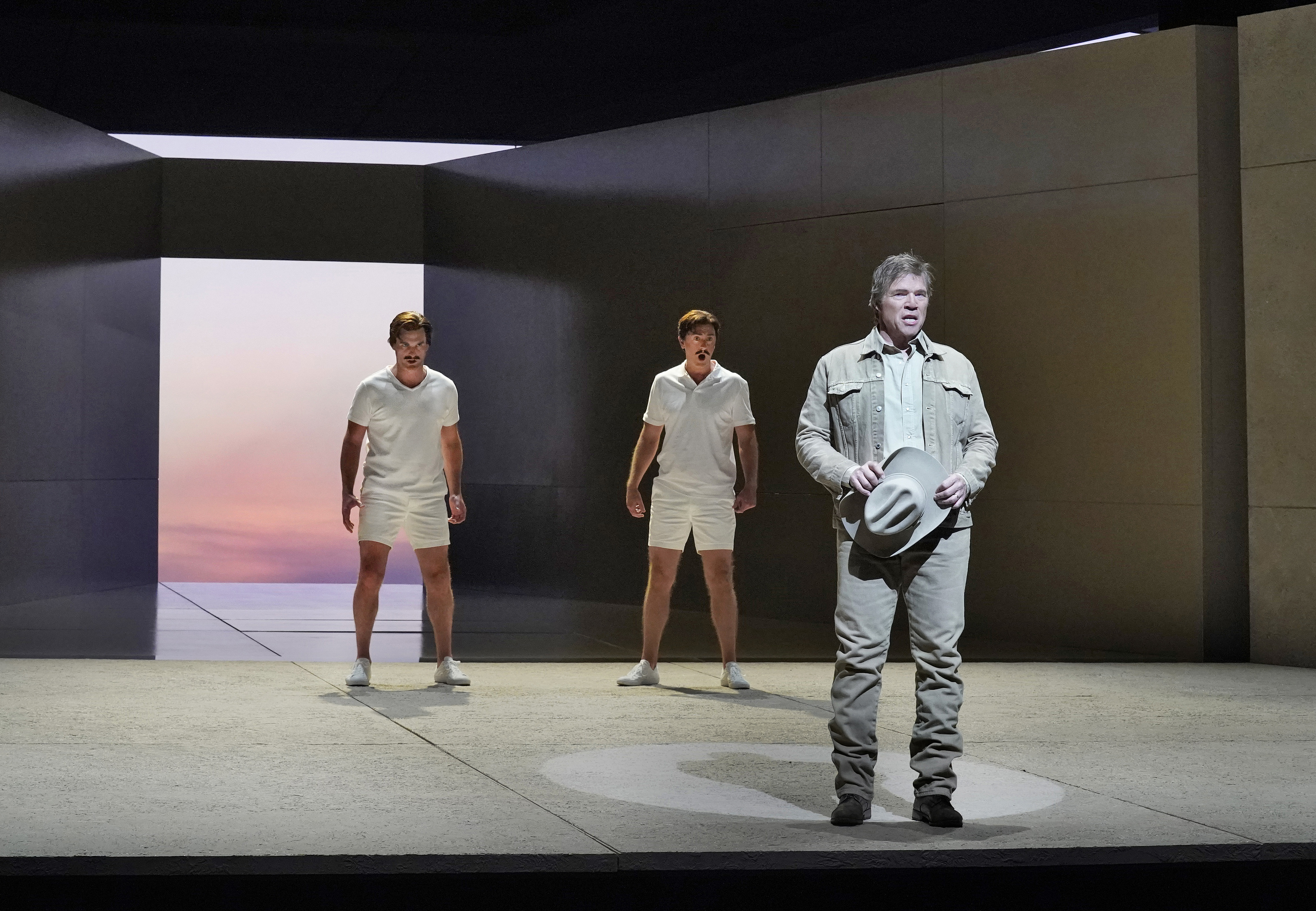
Jarrett Ott and Ben Bliss as the frat-boy lovers Guglielmo and Ferrando, with Ron Gilfry as the cowboy Don Alfonso. Photo by Ken Howard.

Bliss brought a light, flexible tenor to his role as Ferrando. Ott sang Guglielmo with a strong, resonant baritone. Rod Gilfry was occasionally a little rough as Don Alfonso, but his portrayal perfectly matched the production’s concept of Alfonso as a cowboy. Tracy Dahl avoided all the traditional flirty-cutesy clichés for Despina, casting the character as a darker sidekick for Alfonso. As such, she was very effective. Her singing was expressive, if underpowered in the lowest range.
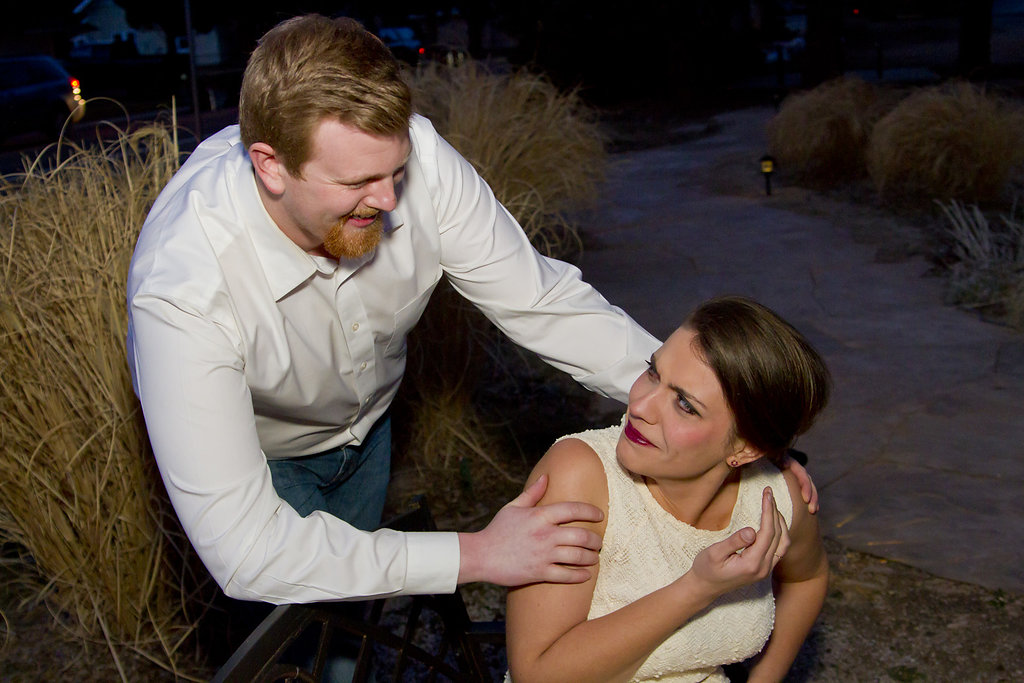
The eternal problem with Così fan tutte is that the story of two men donning disguises to woo each others’ fiancées, if taken literally, is distasteful at best. The betrayal of the women they claim to love is shocking, especially at the moment when the women learn that they have been betrayed and humiliated for the sake of a bet.

Even treated as an allegory, that no one is perfect and we all have to accept the imperfections of our partners, Così can be discomfiting. To avoid that trap, the Santa Fe production jettisoned the period decorations and literal presentation of the plot, paring it down to the barest psychological core. Everything beyond the emotional journey of the six main characters has been eliminated, and that single focus has been insistently pounded home.Some will find that illuminating, but others will be frustrated by the lack of theatrical qualities.

The set by Paul Tate Depoo III places the action inside a stark white box that narrows to the rear and, once all the singers are onstage, closes so that they are trapped inside. Depoo’s blank walls are not enlivened with color, with only the barest of lighting effects to distinguish one area from another. There is no furniture and few props. Only the six principal characters are present. The chorus, singing from offstage, is heard but not seen.

At the two couple’s first entrance into the colorless set, they are dressed in all white—the women in tennis outfits, the men in t-shirts and shorts. In their actions, they are recognizable contemporary types, the women silly sorority girls, the men macho frat boys. Fair enough; they are supposed to be callow and superficial.

Cosi1

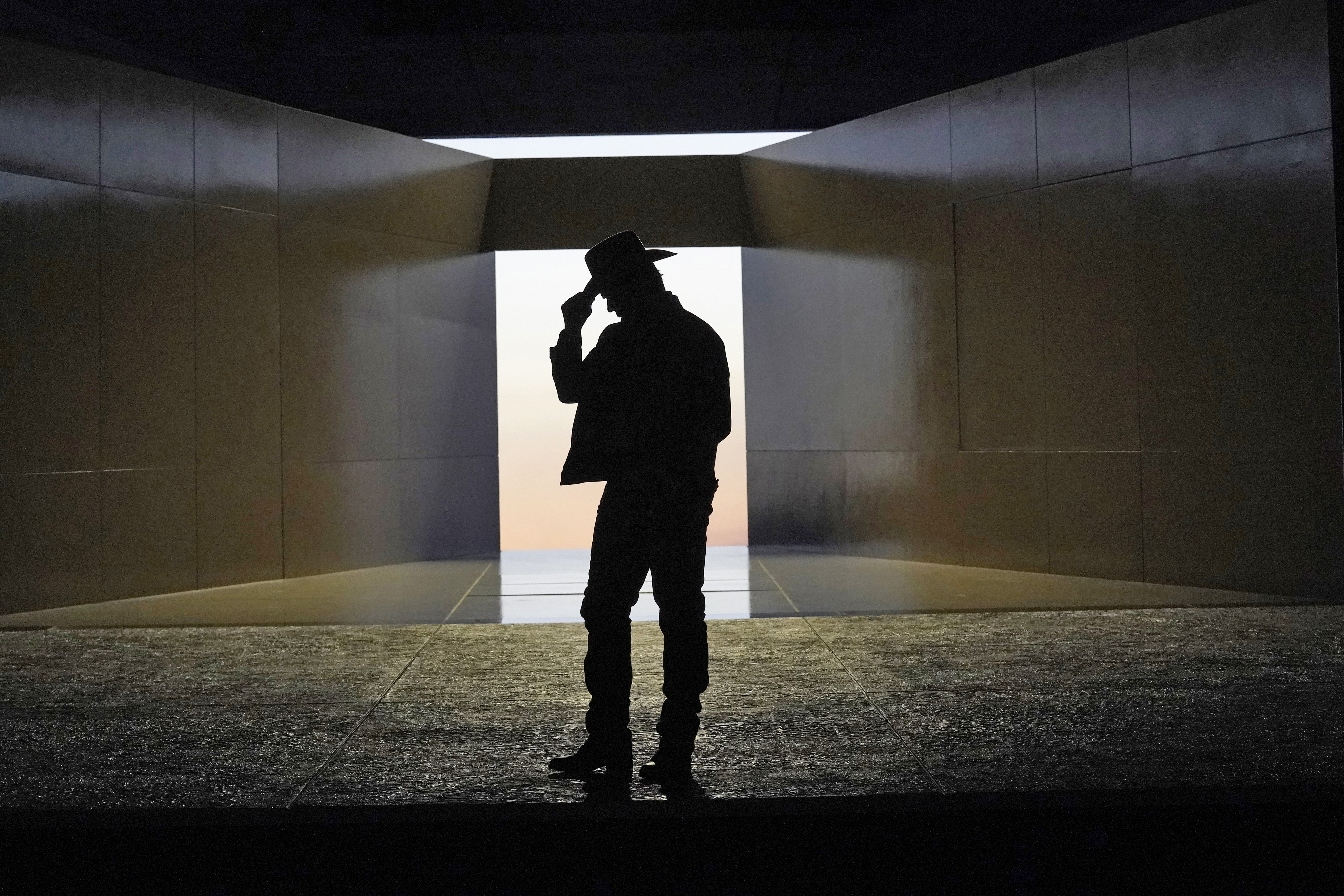
Rod Gilfry portrays Don Alfonso as an iconic Cowboy, Photo by Ken Howard.

Don Alfonso makes the first entrance, ahead of the white-clad lovers, costumed as a rough-hewn cowboy. In director’s R.B. Schlather’s interpretation, he exerts magical control over the other characters, who stagger back from his voice and are unable to resist his machinations. He oversees virtually everything that happens onstage, sometimes crouching against the outside wall and observing.

From this reduction of the opera to essentials, the characters loose obvious differentiation. The men’s “disguise” is identical blue denim and cowboy hats. The careful distinctions that Mozart and librettist Lorenzo Da Ponte made has to be conveyed through singing and acting.

Schlather and Depoo’s distillation of the opera enhances the impact of the emotions, particularly the betrayal and humiliation that is imposed on the women at the end. That was more viscerally felt than in any production I have seen. But the flip side of the psychological purification is that the opera became correspondingly less visually interesting.

Some portions became a concert performance in costume, with the characters standing in symmetrical configurations, singing in place. At such points, interest wanes. And throughout there were touches that were simply baffling. Why does Despina put on multiple aprons, then engage in comic business with them, distracting from the other singers onstage? Why does she as the magnetic “doctor” continuously fire off sparklers when once would make the point?

And why does the opera end with all four lovers seated across the front of the stage, immobile, during the final scenes, with no action whatever—no evidence of a wedding, no entrances and exits that are in the text, no visual discovery of the women’s betrayal—while Alfonso pours water over each of their heads? If your audience has to puzzle about such things, the point may get missed.

# # # # #

Jenůfa, Leoš Janáček’s breakthrough opera composed in 1903, is one of the great works of the 20th century. It is probably Janáček’s highly individual style, based deeply in Czech language and culture, that has kept it from being performed outside its homeland.

The Santa Fe performances, using a production originally created by the English National Opera, is a welcome opportunity to see this great work, and it is in every way a triumph, something that every Janáček fan and every lover of 20th-century opera should see. Jenůfa has only one more performance, Aug. 15.

Jenufa6

Alexander Lewis as Laca cowers outside the Soviet-era mill of designer Charles Edwards. Photo by Ken Howard.

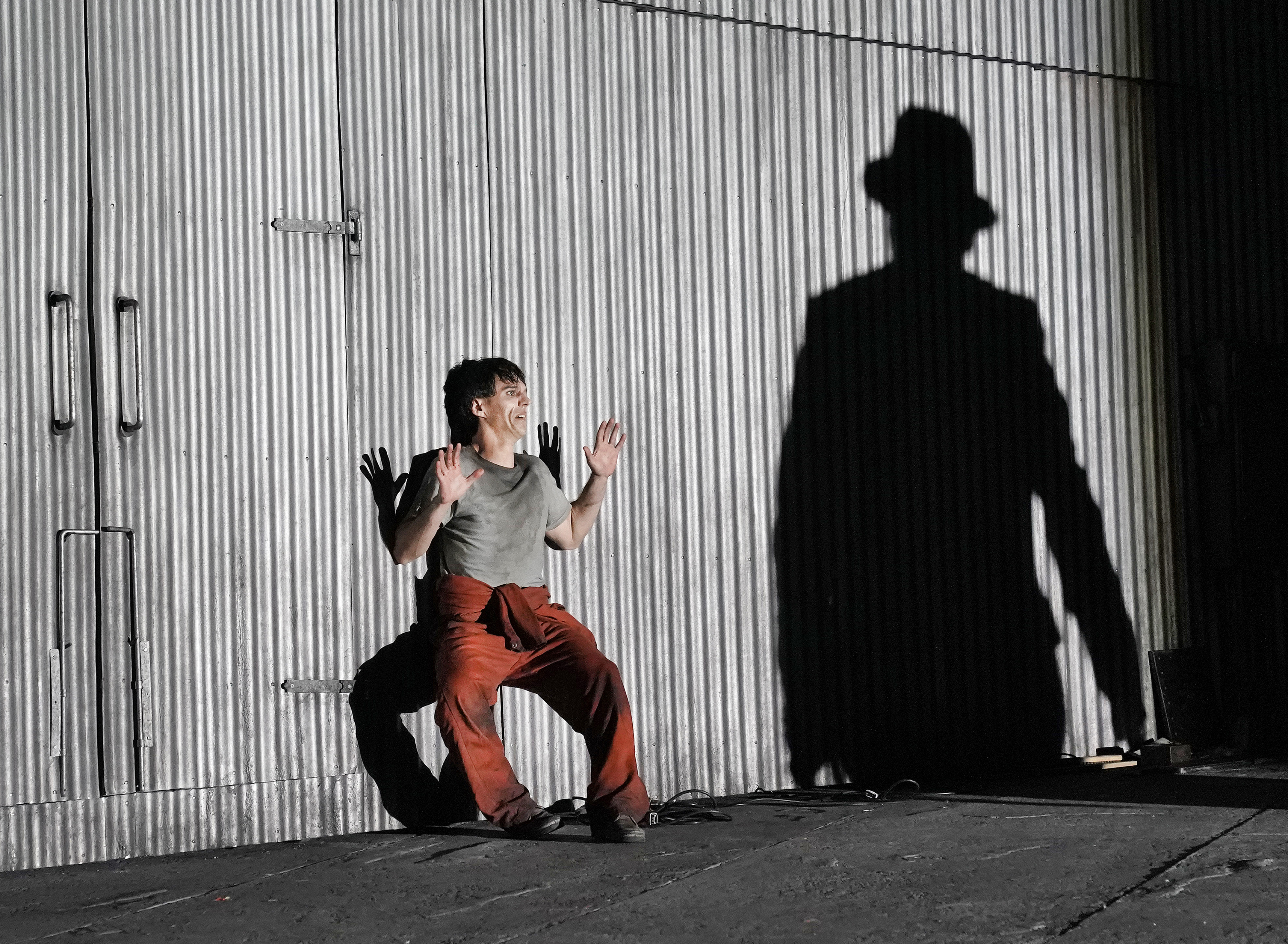
The scenic design of Charles Edwards, costumes by Jon Morrell and direction by David Alden place Jenůfa firmly in the Soviet era. The mill of the first act has dingy corrugated metal walls, and the room where the rest of the opera takes place is authentically shabby. The clothes mark the class of every character, from the mill workers to the mayor, and just like Soviet times, none are fashionable.

To my eyes and ears, this setting fits the story of rural jealousy and violence as well as the original, and deepens the conflicts of social status inherent in the story. Alden’s direction was well attuned to the emotional drama, especially between Jenůfa andLaca, the suitor whose love turns out to be genuine.

Jenufa2

Patricia Racette as Kostelnička (right) with Laura Wilde as Jenůfa and Alexander Lewis as Laca. Photo by Ken Howard.

The excellent cast was led by the powerful Kostelnička of Patricia Racette, a role debut. Racette, who has appeared at Santa Fe for more than 20 years, has previously sung the title role in the same production in Houston and Washington.

Her performance was thrilling, portraying the crucial character of Kostelnička as a whole person. She sang with fire and dramatic passion, particularly in the first-act narration of her unhappy past. Equally memorable was her transformation from the dominating, self-righteous conscience of the village in the first act to the repentant, suffering figure at the end.

Laura Wilde was a sympathetic Jenůfa, someone who is trying to elevate both herself and her village by marrying up and teaching reading to her neighbors. She is visibly reluctant to enter into the drunken celebrations in Act I, and her distaste for her fiancé’s swaggering arrogance was both visible and audible. She used her warm, vibrant sound well.

Jenufa1

Laura Wilde as Jenůfa and Richard Trey Smagur as Števa. Photo by Ken Howard.

As the fiancé, Števa, Richard Trey Smagur was just the kind of thuggish bully the role requires, but does not always get. His shallow attraction to Jenůfa’s beauty and his smug expectation to be admired—qualities portrayed in action and voice—made him repulsive from his very first entrance. His performance strengthened the psychological sinews of the drama and set up his shameful refusal to marry Jenůfa after she had been disfigured.

Laca, Števa’s half brother who attacks Jenůfa in the first act in spite of his genuine love for her, is a tricky role for any singer. It is an exposed balancing act—he has to be angry enough to do violence, but then believable as a repentant lover.

In this regard, I thought the first act was overplayed. Alexander Lewis’s Laca was beyond anger, essentially nasty and uncontrolled, and later he seemed more cowed than supportive to Jenůfa; perhaps this was Alden’s intent. His voice was thin and brittle, neither forceful enough at the outset nor warm enough at the end.

In the smaller roles, veteran Suzanne Mentzer was pleasing as the Grandmother, successful both vocally and in getting a chuckle with her feistiness in the final act. Will Liverman successfully portrayed the mill foreman as a Soviet-era stereotype—a supervisor who seems not to actually do anything. Alan Higgs and Kathleen Reveille had just the right superciliousness as the floridly dressed mayor and his wife.

Jenufa3

L to R: Susanne Mentzer (Grandmother), Kathleen Reveille (Mayor’s Wife), Laura Wilde (Jenůfa), Gina Perregrino (Herdswoman), Alan Higgs (Mayor) and Patricia Racette (Kostelnička). Photo by Ken Howard.

Janáček’s characteristic small orchestral motifs and expressive accompaniments, created so individually and effectively to underline the emotional shifts of the plot, were well managed by conductor Johannes Debus. The orchestra played well, with nicely blended brass and woodwinds.

Sometimes, nature and good luck conspire to enhance performances in Santa Fe. The night I attended, the beautiful sunset above the distant hills behind the theater helped establish the rural setting, and a brief rainstorm later could be taken as symbolic of the emotional storm onstage. Of course, I cannot promise that you will experience the same enhancements Aug. 15, but for every other virtue of the production it is well worth the trip to Santa Fe.

# # # # #

SFO02.Robert Goodwin

Santa Fe Opera house. Photo by Robert Goodwin.

Così fan tutte continues through Aug. 22, Jenůfa through Aug. 15.Tickets for the remaining performances in Santa Fe can be purchased through the calendar on the Santa Fe Opera Web page.


Boulder Opera’s ‘Così fan tutte’ is baptism by fire for director Ron Ben-Joseph

Production set in the 1960s aims to be relevant to the women’s movement

By Peter Alexander March 22 at 9:00 p.m.

Opera is a world of its own. Singers and conductors have their own inside language, they have traditions that seem arcane to outsiders, and they know the works intimately.

Ron Ben-Joseph 092915_0024

Ron Ben-Joseph, stage director of Così fan tutte. Photo courtesy of Big Fish Talent.

Stepping into that world from outside can be intimidating, but that’s the position stage director Ron Ben-Joseph finds himself in. With a background in theater, but not opera, he was engaged to direct this weekend’s performances of Mozart’s Così fan tutte for Boulder Opera (Friday in Longmont, Sunday in Boulder).

Ben-Joseph did bring some skills to the job: As a singer he can read music and follow the score, and he has worked in musical theater. He has taken voice lessons from Dianela Acosta, the artistic director of Boulder Opera and one of the singers in the cast, and in turn he has helped coach her acting in arias that she has learned. But even with that background, it’s not easy to dive into directing an entire opera.

How is he handling this baptism by fire? “I’m learning, I’m learning,” he says.

“One of the first things I did (was) research where theater directors that jump into opera mess up. I do not want to make those mistakes! So I plunged into music theory and the history of opera, and I tried to watch two or three operas a week. I tried to get the sense, the style, just to be respectful and not come in there and go ‘Oh, I know what to do!’

“I didn’t want to be that guy.”

CosiDailyCameraPics0306180015

Dianela Acosta, Boulder opera artistic director Dorabella) and Josh DeVane (Guglielmo) in Così fan tutte. Photo courtesy of  Boulder Opera.

The task was not made easier by the fact that Così is a difficult opera to get right. The plot is artificial and frankly unbelievable on the surface, but at the same time it deals with very basic and deep human emotions that are powerfully expressed in the music. The cast and director have to reconcile these two elements, relishing the humor and silliness of the onstage action without losing the emotional depth of the music.

If you don’t know the opera, it is about two pairs of lovers, two soldiers and a pair of sisters. The men have been bragging extravagantly about their girlfriends’ faithfulness, but a cynical older bachelor, Don Alfonso, challenges them to prove their claims. At Don Alfonso’s direction, the men pretend to march off to war. After leaving the scene, they don disguises and are introduced to the women as foreigners. Each then tries to woo the other’s girlfriend.

Over the course of the opera, the women resist, come to grips with temptation and their own weakness, and ultimately succumb. At the end the rather cruel ruse is revealed. Both men and women realize they have much to forgive. In the traditional ending, the women return to their original partners, but today other ways of ending the story are common as well.

CosiDailyCameraPics0306180028

Michael Hoffman (Ferrando) and Ekaterina Kotcherguina (Fiordiligi) in Così fan tutte. Photo courtesy of Boulder Opera.

“You have two guys who put their girlfriends through torment emotionally, and I think that comes from a very deep insecurity,” Ben-Joseph says. “That was one of the first things I saw. I could judge these guys for being misogynist, but I had a girlfriend once that I was insecure about, so I could kind of see it. Once I saw that personal hook, I really felt for the women, especially with the #MeToo movement.”

With that insight, Ben-Joseph wanted to find a time period that would make the story more relevant today. “This reads to me as if it were set in the late 1960s,” he says. “We’re about to start the female revolution, empowerment and women’s lib. That’s how it started taking shape, and I couldn’t not tell that story, and set it in that world.”

One part of that world was the Viet Nam War, which adds a darker element to the moment when the soldiers seemingly march off to war. Nevertheless, Ben-Joseph aimed to be sensitive to the artwork. “We always stayed true to the libretto, to the score,” he says. “We don’t impose anything. All we’re doing is using a lens for people to view this in a different way.”

Ben-Joseph is extremely complimentary to the performers. “They’re so talented, and they’re doing such a good job of honoring the score and being truthful to it,” he says. “I don’t know that anyone’s going to walk away from this production saying, ‘Oh my goodness! The direction!’ I think they’re going to walk away saying, ‘Those are phenomenal singers! That is a phenomenal orchestra!’

“These performers are starting to have fun and free themselves from feeling structured. You’re seeing real people, and that’s something I’m very proud of. There are a lot of genuine moments that are beautifully acted. That is what I want people to connect with—people that are alive and communicating real emotions in a deep, organic, authentic way.

“That’s what makes it badass.”

# # # # #

Sarah Parkinson-2119

Music director Sara Parkinson

Mozart: Così fan tutte
Boulder Opera
Sara Parkinson, music director
Ron Ben-Joseph, stage director

7:30 p.m. Friday, March 23, Stewart Auditorium Longmont
3 p.m. Sunday, March 25, Dairy Center for the Arts, Boulder

Tickets


Mozart’s Requiem: “A Musical Miracle and a Mystery Story”

Performances Friday and Saturday by Pro Musica Colorado and St. Martin’s Chamber Choir

By Peter Alexander

It is one of the most famous stories in music history.

Lange_PortraitOfMozart,Unfinished

Unfinished portrait of Mozart by Joseph Lange

It was December, 1791. Mozart lay on his deathbed, with his family and friends gathered around. They sang for the dying composer, music from the Requiem that he might as well have been writing for himself and that he was never to complete. After his death, Mozart’s friends and students gathered up all the bits and pieces of music that lay scattered around the room and worked feverishly to finish the manuscript, so that Mozart’s widow could deliver a completed score to the eccentric count who had paid for it.

Out of all of the confusion there emerged a work that has captivated listeners ever since, in spite of the uncertain authorship of its various parts. “It’s a musical miracle and a mystery story wrapped into one,” says Cynthia Katsarelis, who will conduct performances of the Requiem Friday in Denver and Saturday in Boulder (7:30 p.m. April 8 at First Baptist Church in Denver, and April 9 at First United Methodist Church in Boulder).

Photography by Glenn Ross. http://on.fb.me/16KNsgK

Cynthia Katsarelis. Photography by Glenn Ross.

Katsarelis, director of the Pro Musica Colorado Chamber Orchestra, has put together what she considers just about an ideal group of performers for the Requiem. “Pro Musica and (Denver’s) St. Martin’s Chamber Choir are practically a dream team for the Mozart Requiem,” she says. “And our soloists are all people who are just wonderful artists.

“It’s going to be different from a Mozart Requiem with a large orchestra and choir. Our size is more like the size that Mozart would have had, and there’s a kind of immediacy and a visceral quality to doing it with a chamber orchestra and a chamber choir. I think it’s a special team, and there’s incredible potential of being a worthy Requiem.”

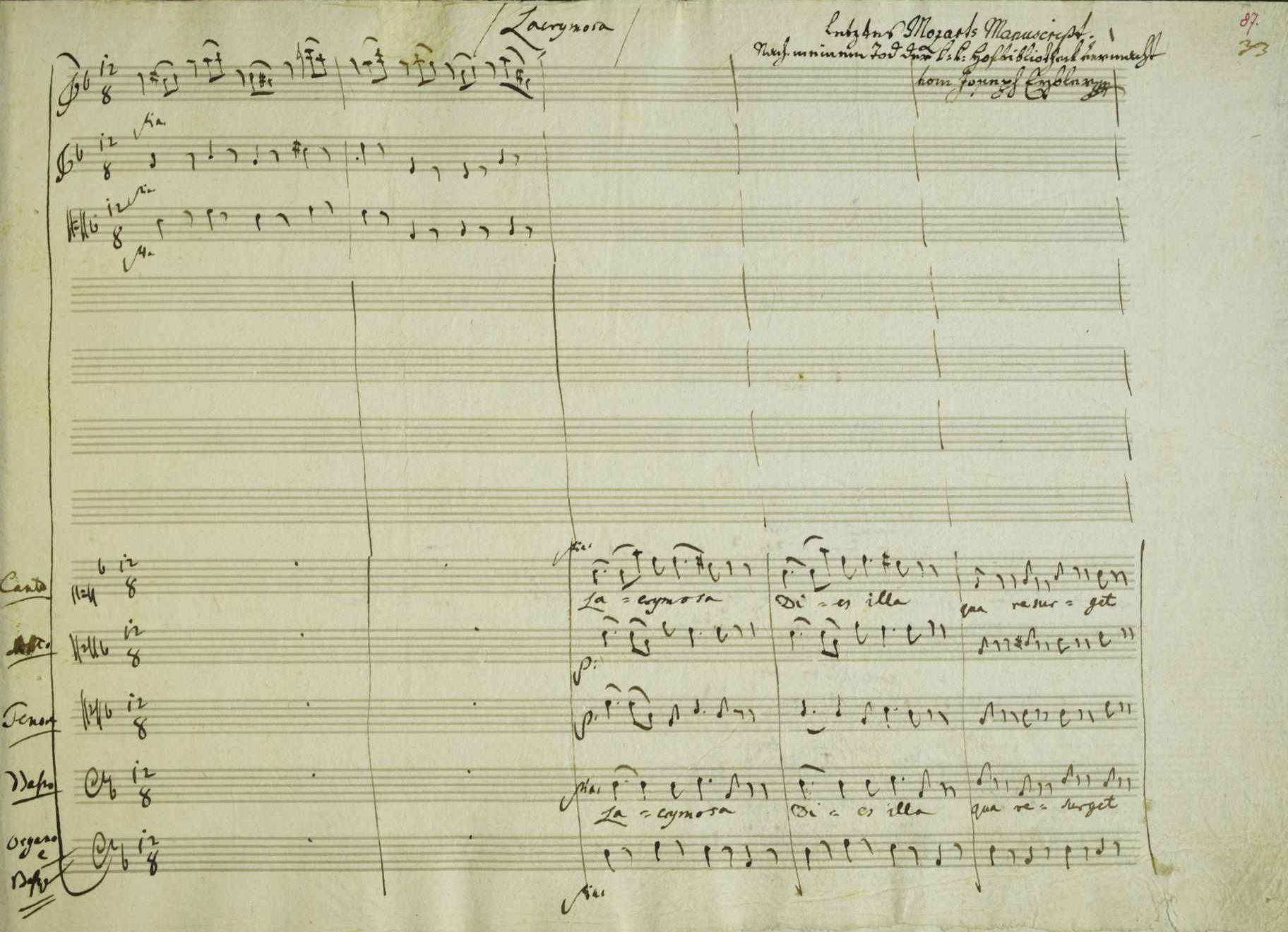
Manuscript_of_the_last_page_of_Requiem

Manuscript page of Mozart’s Requiem

Like all conductors who approach the Requiem, Katsarelis had to decide exactly what to perform. Mozart left different movements in differing degrees of incompletion: some merely had to be filled in according to a partial score, some had to be completed, and some had to be composed more or less from scratch.

Adding to the confusion, Mozart left behind what his widow called “scraps of paper” that may have held music, or instructions, or both. At least two different pupils undertook a completion. And all of their contributions were mixed together, and it was years before scholars were able to separate, more or less, who did what.

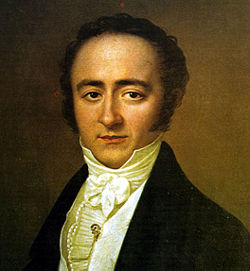
FRANZ_XAVER_S_SSMAYR.1239019040

Franz Xaver Süssmahr

Today there are numerous performing versions to choose from. The score that was turned over to the count three months after Mozart’s death was essentially completed by Mozart’s pupil Franz Xaver Süssmayr. But Süssmayr was not a very good composer: Mozart didn’t think much of him, calling him “a duck in a thunderstorm,” and he made numerous mistakes in the score that he hurriedly finished.

And so there have been many subsequent versions that aim to correct and improve on Süssmayr. Some editors have gone so far as to write whole new movements to stand alongside Mozart. Katsarelis has chosen a version created by Franz Beyer in 1971 that sticks largely to Süssmayr’s version, but polishes some of his work.

There are three movements that Mozart never started, but Katsarelis thinks that Süssmayr had some help with those. “He claimed to have composed the Sanctus, the Benedictus and the Agnus Dei, but I’m not convinced of that, for reasons right out of the music,” she says. “I had my doubts to begin with. Süssmayr never, ever composed anything of the caliber of (those movements).”

She has a “sneaking suspicion,” she says, that the scraps of paper that Mozart left had music on them that Süssmayr was able to use. And, she adds conspiratorially, “I have a theory that I actually don’t have an ounce of historical evidence for, but during the time that Süssmayr was completing the Requiem, he was studying with Salieri.”

antonio-salieri-03

Antonio Salieri

That Salieri? The one who definitely didn’t poison Mozart but was still the villain of the play and movie Amadeus?

Yes, that one. “I just have this sneaking suspicion that Salieri might have helped,” she says. And it’s definitely not the craziest theory about the Requiem, which has attracted conspiracy stories from the date its very first performance.

Regardless of who wrote those movements, and whose help they might have had, “the meat of the Requiem is what Mozart wrote,” Katsarelis affirms. And after the disputed movements, the Requiem ends with two more movements that re-use Mozart’s music from the beginning.

Following the Requiem, the concert will include one more short piece, Mozart’s beautiful and elegiac Ave verum corpus, composed only months before the Requiem. “By doing the Ave verum corpus, we’re absolutely sure that we’ll be ending with Mozart, no question,” Katsarelis explains. “It’s a piece that everybody knows and loves, and it’s a very comforting and beautiful piece.”

In spite of the mystery and confusion, the different hands that touched the Requiem, and all of the controversy that has swirled around the piece over the centuries, “the fact the sublime music comes through is pretty miraculous,” Katsarelis says. “It is deeply moving to do the piece that was the last thing Mozart composed.

“He made it the most beautiful music that he could possibly write. That’s his final gift to us, and it’s one that I receive very gratefully, and that we’ll share on Friday and Saturday.”

# # # # #

Mozart’s Requiem

Pro Musica Colorado Chamber Orchestra
Cynthia Katsarelis, music director
St. Martin’s Chamber Choir
Timothy J. Krueger, artistic director
Amanda Balestrieri, soprano
Leah Biesterfeld, alto
Joseph Gaines, tenor:
David Farwig, bass

W.A. Mozart: Requiem, K626
W.A. Mozart: Ave Verum Corpus, K618

Friday, April 8, First Baptist Church, 1373 Grant St., Denver
Saturday, April 9, First United Methodist Church, 1421 Spruce St., Boulder
Both concerts at 7:30 p.m.
Pre-concert talk at 6:30 p.m. both evenings

TICKETS

NB: Edited to correct typos 4.7.16.

Opposite poles attract success at Central City Opera

Dead Man Walking and Marriage of Figaro are worth the trip into the mountains.

By Peter Alexander

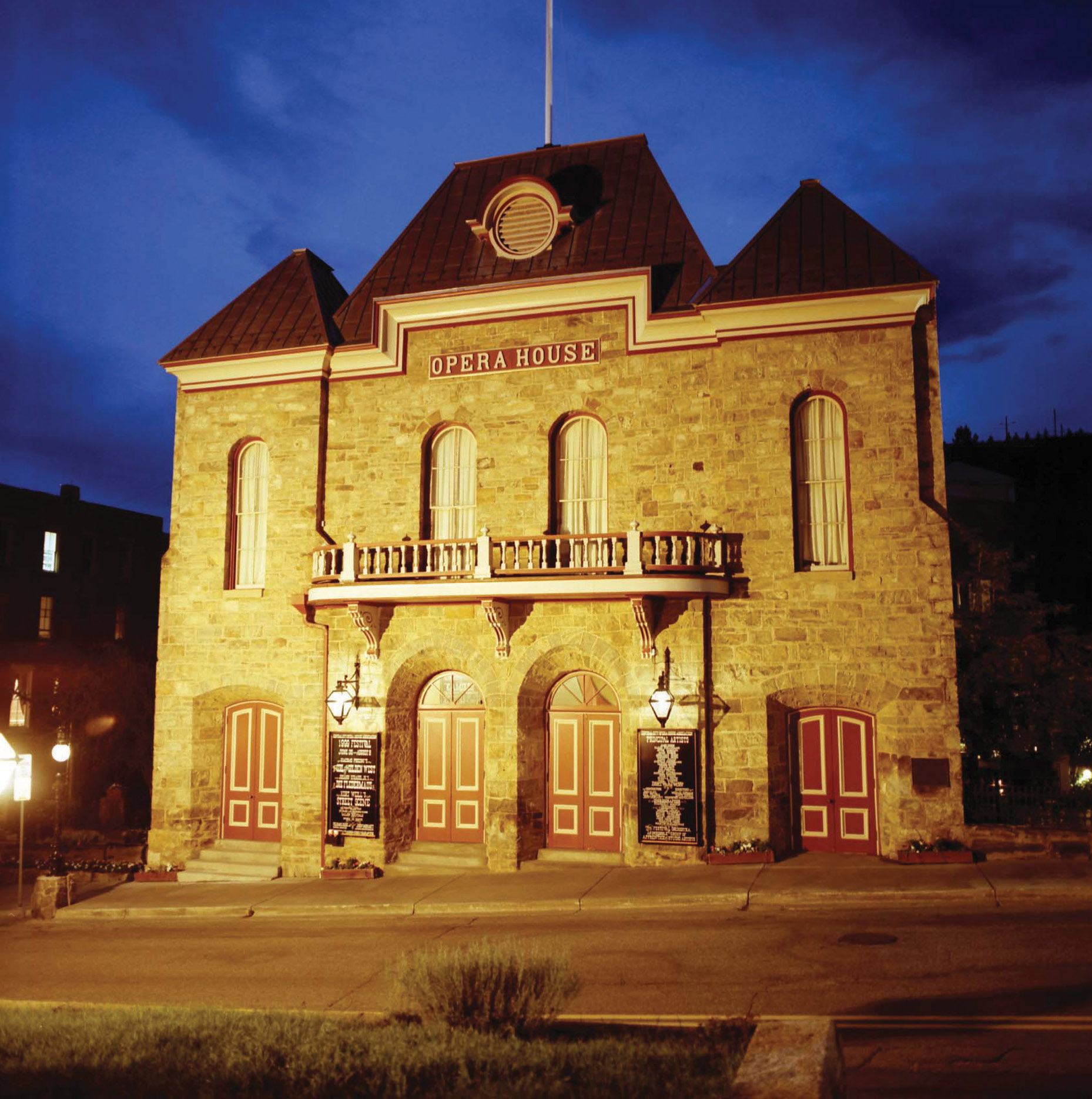
Central City Opera House. Photo by Mark Kiryluk.

Central City Opera House. Photo by Mark Kiryluk.

The two productions currently running at the Central City Opera (CCO) are not so much contrasting shades of opera as opposite poles.

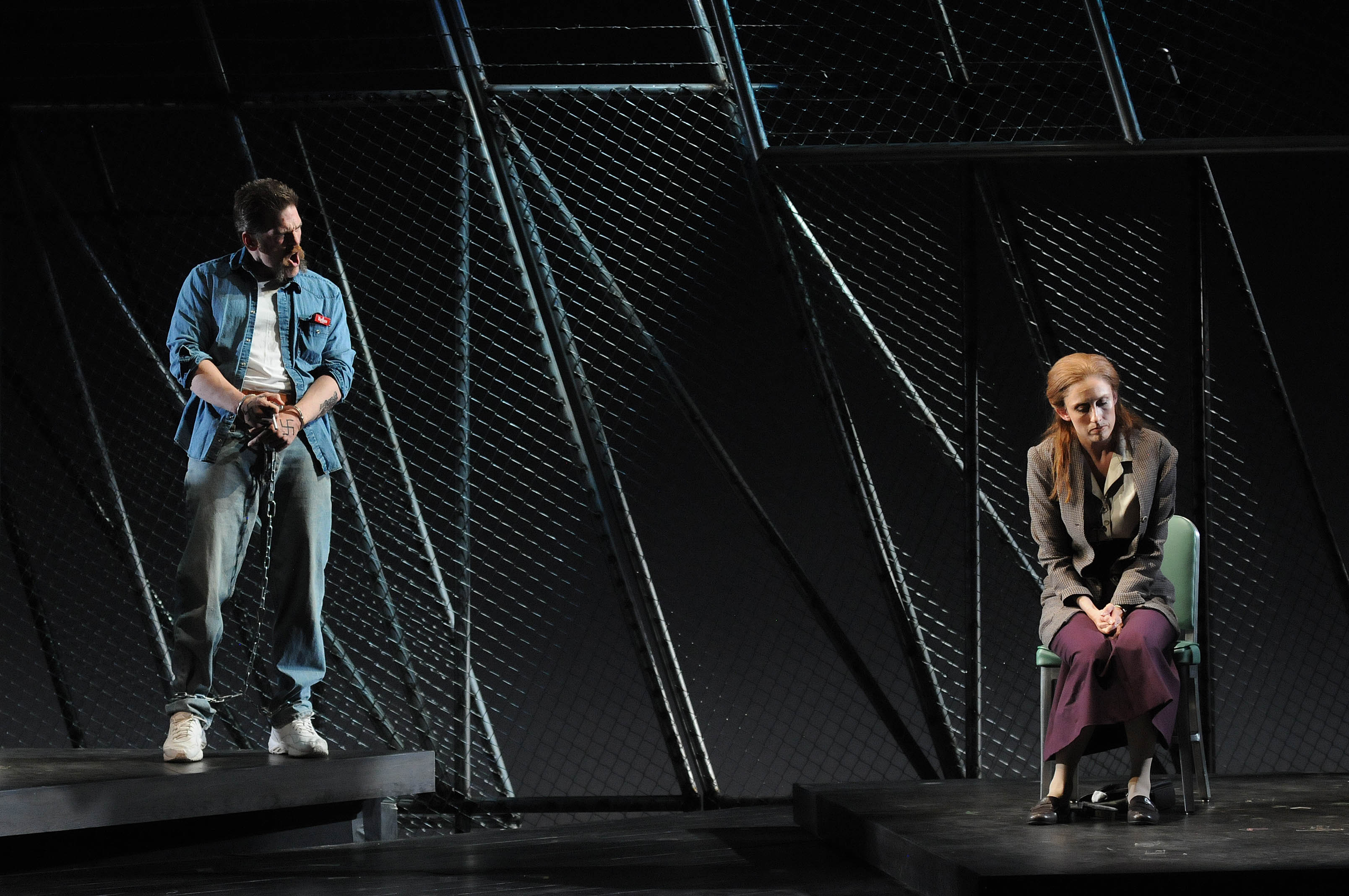
At the dark end of spectrum is Jake Heggie’s Dead Man Walking, a setting of playwright Terence McNally’s powerful libretto, based on the book by Sister Helen Prejean. The true story of a nun’s efforts to reach out to a brutal death row convict, the book also inspired the 1995 film starring Susan Sarandon and Sean Penn. This seems unlikely material for operatic treatment—the drama is largely psychological and very little happens in the conventional sense—but Heggie and McNally have created a gripping work of musical theater that keeps the audience riveted, even as they know the inevitable outcome.

The opposite pole is represented by Mozart’s Marriage of Figaro, one of the greatest and most luminescent operatic explorations of human emotions ever created. A politically and socially dangerous work written on the eve of the French Revolution, it cloaks its subversive message with the light of compassion and humor in Mozart’s transcendent setting of a masterful libretto by Lorenzo da Ponte.

As different as they are, these works are given wholly satisfying and powerfully moving productions by the Central City Opera company. With strong casts, well conceived productions and thoughtful direction, both operas are well worth the drive into the mountains—even if you don’t need an excuse to drive into the mountains.

In his notes for Dead Man Walking, director Ken Cazan observes that the opera “doesn’t tell the viewer what to think and feel. . . . [It] poses questions, not answers.” Indeed, one of the most remarkable things about the work is how well it conveys understanding and sympathy for all of the characters, even the murderer Joseph De Rocher.

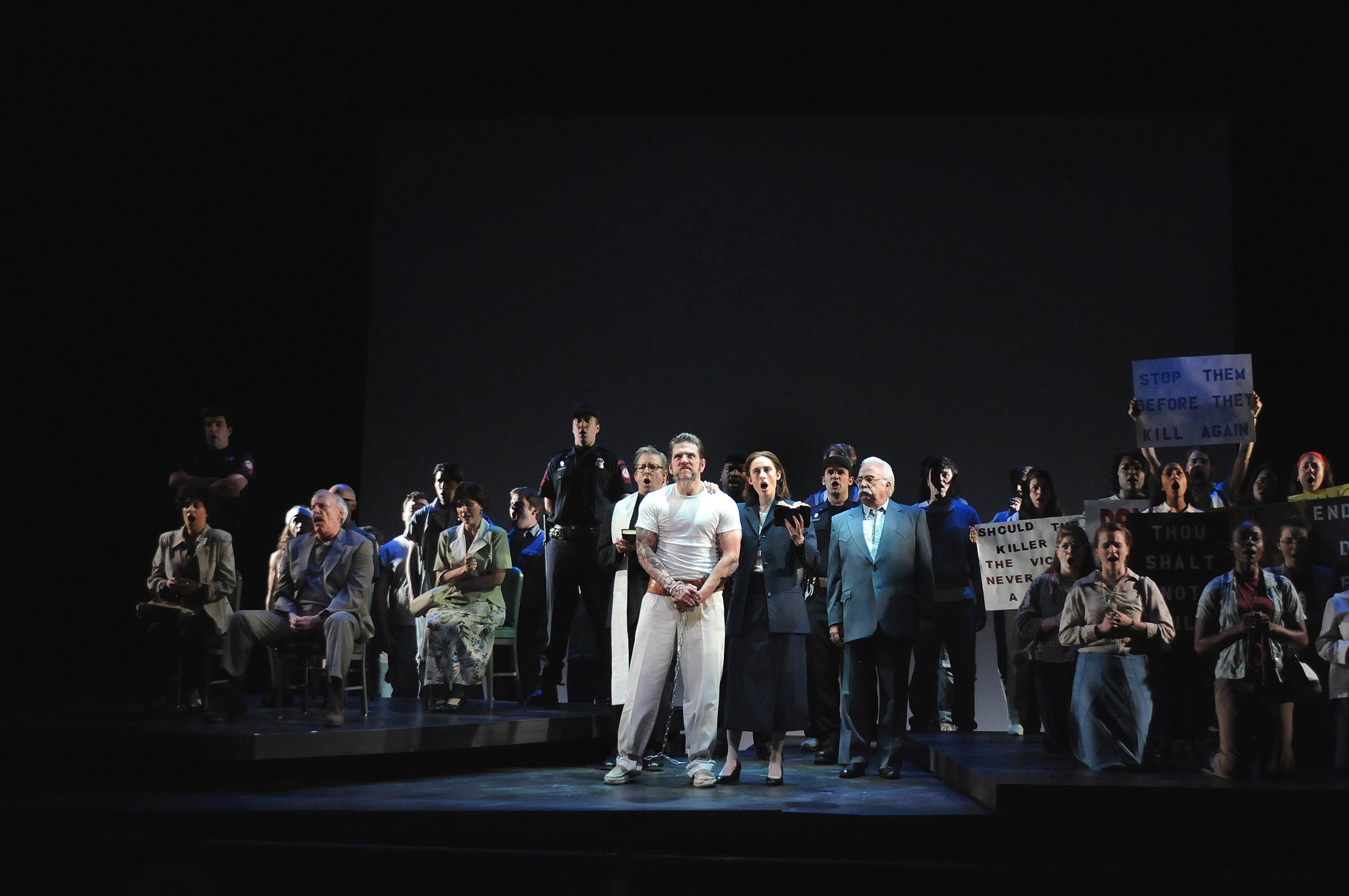
Dead Man Walking execution scene. Photo by Mark Kiryluk.

Dead Man Walking execution scene. Photo by Mark Kiryluk.

If the work has a flaw, it is the sustained intensity of its emotional expression. Though unavoidable considering the subject matter, the unrelenting high tension of the music leaves no scope for the shattering musical climax we might expect. As a result, the ending, when De Rocher finally faces his execution, provides a dramatic resolution but not a musical one. The final scene, where Sister Helen returns to the tender hymn that opened the opera, “He Will Gather Us Around,” rounds out the opera on a quiet note that feels inconclusive.

But perhaps that reflects the reality that the questions faced by the opera’s characters—questions of guilt, of punishment, of retribution and redemption—remain unanswered for the characters and for us, as they must always be.

As the murderer De Rocher, Michael Mayes gave a committed and muscular performance—even singing while doing pushups in one scene. His voice conveyed menace and danger from his very first entrance, only softening in the second act when he sang of being “Down by the river with your woman.” The transformation from the threatening figure of Act I to someone who could admit his fear and his guilt and tell Sister Helen “I love you” at the end is an accomplishment of both vocal and dramatic artistry.

Jennifer Rivera ably filled the role of Sister Helen, who is onstage for most of the opera. The throbbing orchestral accompaniment, the range and contours of her part push her into an intensity of expression that make vocal control difficult. Fortunately, she was able to convey small contrasting moments of humor and tenderness as well as the overarching spiritual struggle that defines her role.

Of the many supporting roles, several stand out: Maria Zifchak as De Rocher’s mother was especially moving in the final scenes when she has to face her son’s death; and Robert Orth as Owen Hart commanded attention as an angry father whose daughter died at De Rocher’s hands, but who manages to move toward acceptance by the end.

Other, more one-dimensional supporting roles are well handled: Thomas Hammons as the warden; Jason Baldwin as the unsympathetic Father Grenville; Karina Brazas, Claire Shackleton and Joseph Gaines as mourning parents. Jeanine De Bique was on target but vocally strained as Sister Rose. John David Nevergall added a light touch as the Motorcycle Cop.

Dead Man Walking: Michael Mayes as Joseph De Rocher and Jennifer Rivera as Sister Helen Prejean. Photo by Mark Kiryluk.

Dead Man Walking: Michael Mayes as Joseph De Rocher and Jennifer Rivera as Sister Helen Prejean. Photo by Mark Kiryluk.

The coloring of vowels by the singers to suggest the Louisiana locale of the story was only intermittently successful, and considering the universality of the questions we are asked to ponder, I am not sure that it is necessary.

One of the pleasures of opera at Central City is seeing the creative ways the company makes use of its limited stage and wing space. Alan E. Muraoka’s minimalist stage designs were highly effective, using angled fences to convey the enclosed space of the prison as well as the emotionally closed world of the convicts. In other scenes, pieces of furniture—two chairs, a table and a chair—or the execution gurney that De Rocher is strapped to, Christ-like, at the end, were sufficient to set the changing scenes and illuminate the changing relationships.

Ken Cazan’s direction was efficient and effective, especially in making use of the limited space to convey relationships among the principal characters. John Baril lead Central City’s fine orchestra with a firm hand.

# # # # #

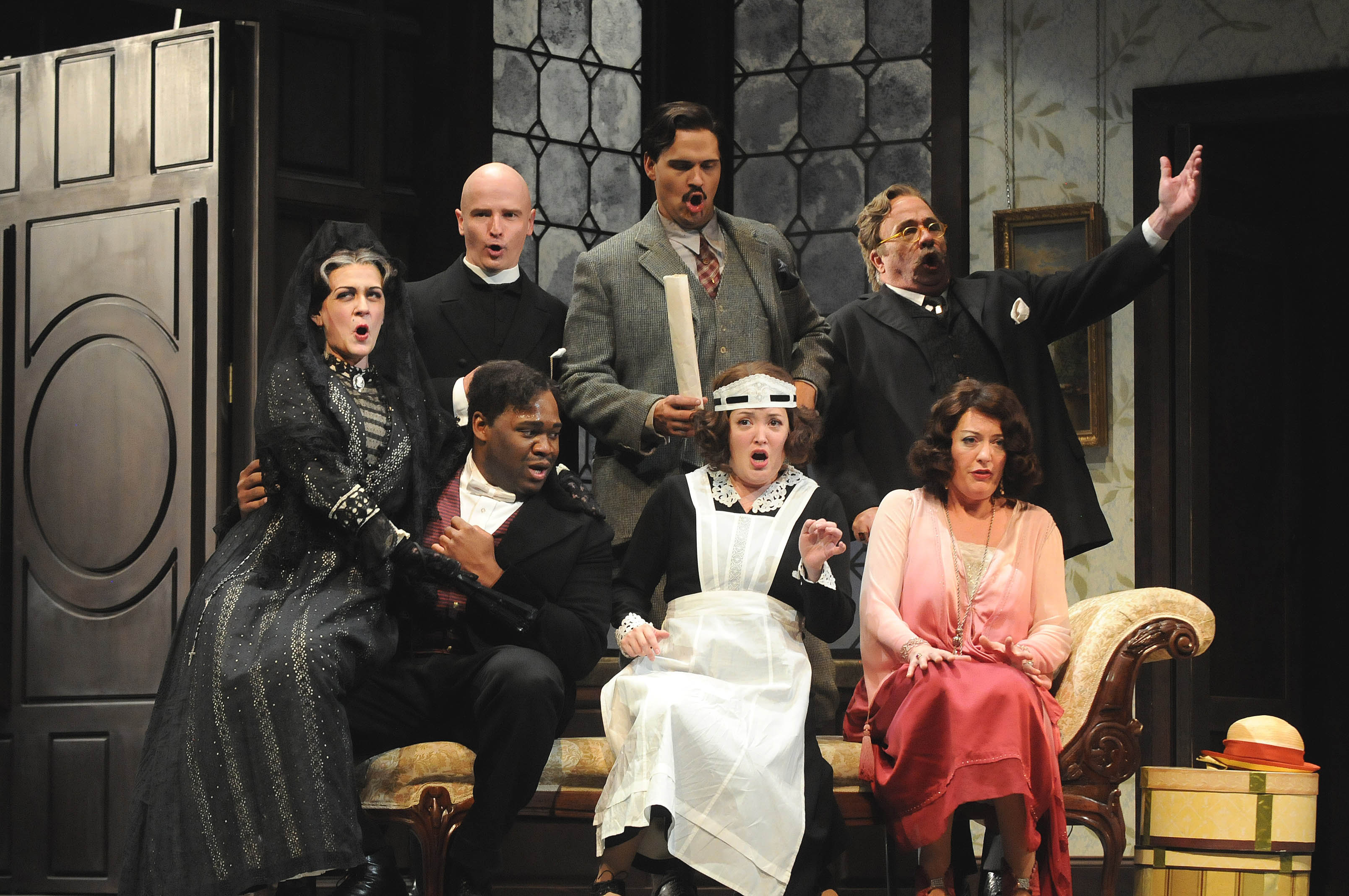
CCO’s production of The Marriage of Figaro has been updated from the 18th century to Spain in the 1920s. Director Alessandro Talevi justifies this through the political situation of the time. “Spain . . . .was deeply conservative and religious in conflict with dynamic progressive movement of secularism,” he writes, establishing a parallel with the pre-revolutionary Europe of Mozart’s time.

Act II Finale, Marriage of Figaro. Photo by Mark Kiryluk

Act II Finale, Marriage of Figaro. Photo by Mark Kiryluk

I am not sure the intellectual justification is necessary, or even helps for that matter.

For the most part the setting and costumes were successful, the 1920s being long enough ago that audiences readily accept the social hierarchies and conflicts of the plot. That said, I do have one reservation, in that British costume dramas are now so familiar to American audiences that many must have thought of Downton Abbey, and the Count reminded me inescapably of John Cleese in Fawlty Towers. These resonances do not enhance Mozart’s masterpiece.

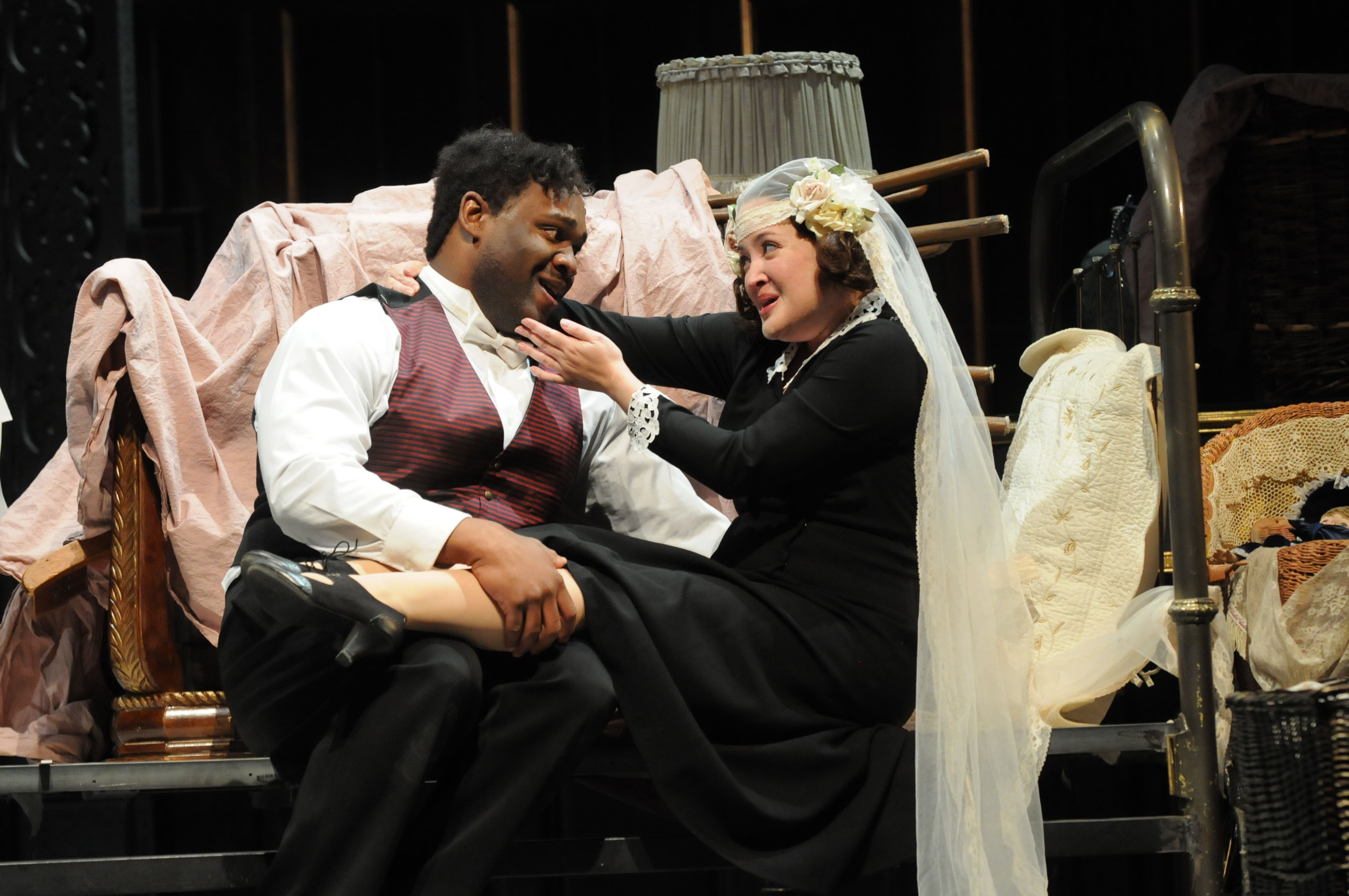
The one essential of any production of the opera is a Figaro who can command the stage. CCO is fortunate to have a vocally secure Figaro in Michael Sumuel, whose genial presence was always welcome onstage. He sang expressively, handling Figaro’s wide range of emotions with aplomb.

Michael Sumuel as Figaro and Anna Christy as Susanna. Photo by Mark Kiryluk.

Michael Sumuel as Figaro and Anna Christy as Susanna. Photo by Mark Kiryluk.

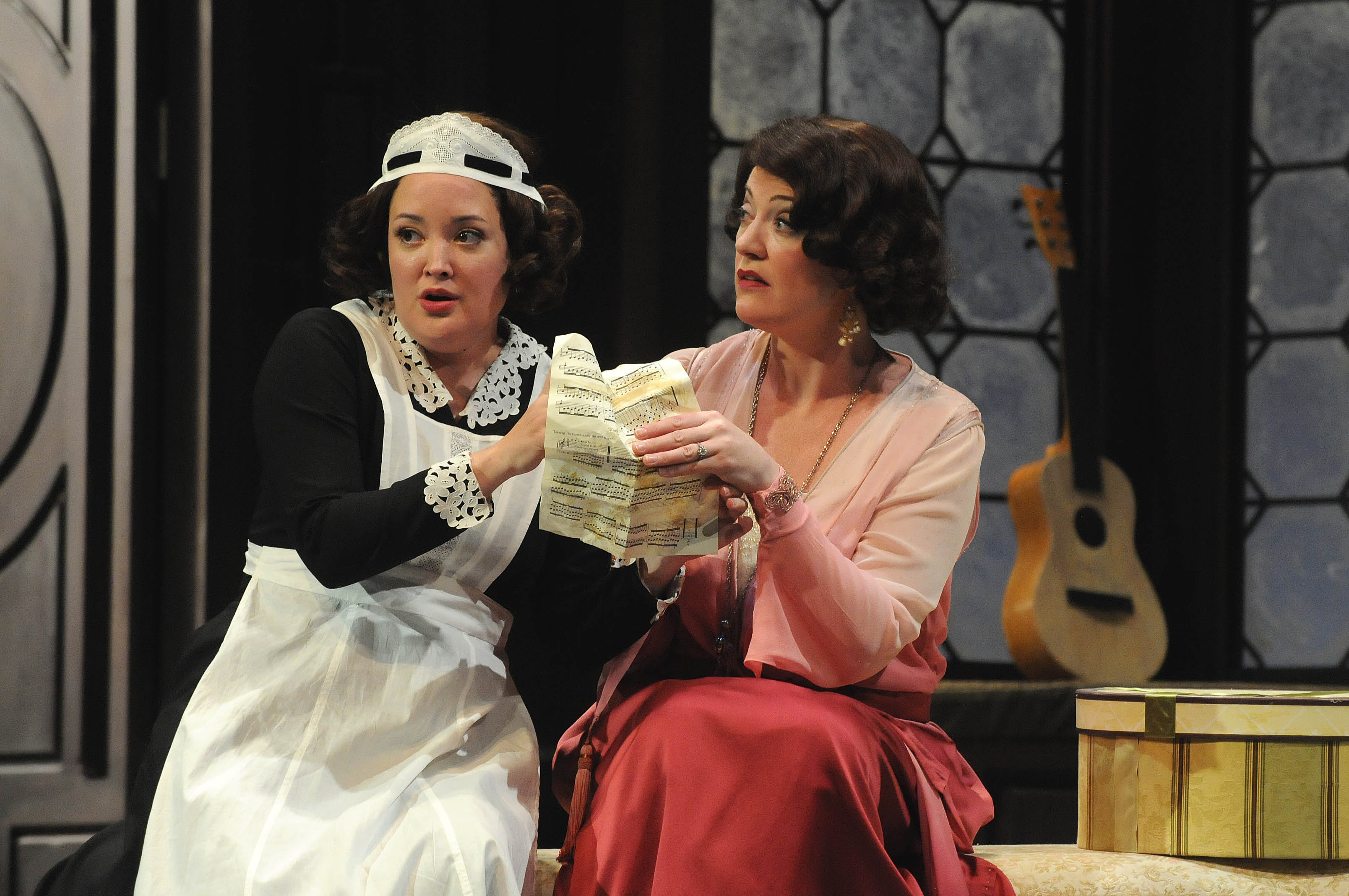
As Figaro’s intended bride Susanna, Anna Christy was a secure vocal partner in her many duets and ensembles with the other cast members. It is her relationship to each of the other principal characters that drives the plot, and Christy was a solid anchor for the drama. In spite of an occasionally nasal sound, her expressive phrasing brought her character warmly to life.

Another critical role is Cherubino, a “pants” role taken by a female mezzo as an adolescent boy who is in love with every woman he sees, from the young Barbarina and Susanna to his godmother the Countess. Tamara Gura was excellent from her first entrance, moving with all the awkwardness of a teenager. I found her unusually convincing throughout, and her aria “Voi che sapete” was especially charming.

As the Count, Edward Parks was perhaps too measured at the outset, neither commanding enough nor bombastic enough in the first two acts. He grew into the role, however, and by the end his confession and plea for forgiveness brought the opera to an effective end.

Anna Christy as Susanna and Sinéad Mulhern as the Countess. Photo by Mark Kiryluk.

Anna Christy as Susanna and Sinéad Mulhern as the Countess. Photo by Mark Kiryluk.

Sinéad Mulhern played the countess with grace and delicacy. Her lovely voice lost quality when pushed, but otherwise her portrayal was pleasing.

Madeleine Boyd’s flexible sets made effective use of the limited stage, even if they recalled an English country house. Talevi’s direction captured the comic qualities of the libretto perfectly, with one exception: the unnecessary comic business during the Count’s Act III aria badly upstaged the singer and undermined the emotion of the scene.

Conductor Adrian Kelly led the performance ably, setting solid tempos and supporting the singers well for most of the opera. The opening overture was full of energy but occasionally smudged, a minor flaw that recurred during the opera as well.

Unfortunately, Central City does not have a genuine harpsichord at its disposal—perhaps due to limited space in the pit or the difficult of caring for a natural instrument at 8,500 ft.—and has to resort to a Kawai electronic keyboard. This is unfortunate whatever the reason. The sound may be adequate for amateur keyboard players who fancy 18th-century music, but it is not suitable for a truly professional performance.

But make no mistake: All reservations aside, this is a sparkling production, full of comic energy and good spirits. The stark contrast between this Figaro and the darkly impressing Dead Man Walking only enhances them both.


Central City Opera

The Marriage of Figaro by Mozart
2:30 pm July 15, 16, 20, 22, 26
8:00 pm July 10, 12, 18
Central City Opera House
For tickets, click here

Dead Man Walking by Jake Heggie
2:30 pm July 13, 19, 23, 25
8:00 pm July 11, 17
Central City Opera House
For tickets, click here