Frequent Flyers join Boulder Phil for ‘Butterfly Lovers’

Concert April 30 includes music celebrating rebirth and reconnection

By Peter Alexander April 27 at 5 p.m.

Two years ago, conductor Michael Butterman had drafted a program to celebrate the return of spring with the Boulder Philharmonic Orchestra.

That program, originally planned for April 2020, had to be postponed, due to COVID. But now the long-planned concert celebrating renewal and rebirth has itself been resurrected for performance at 7:30 p.m. Saturday (April 30) in Macky Auditorium (tickets here).

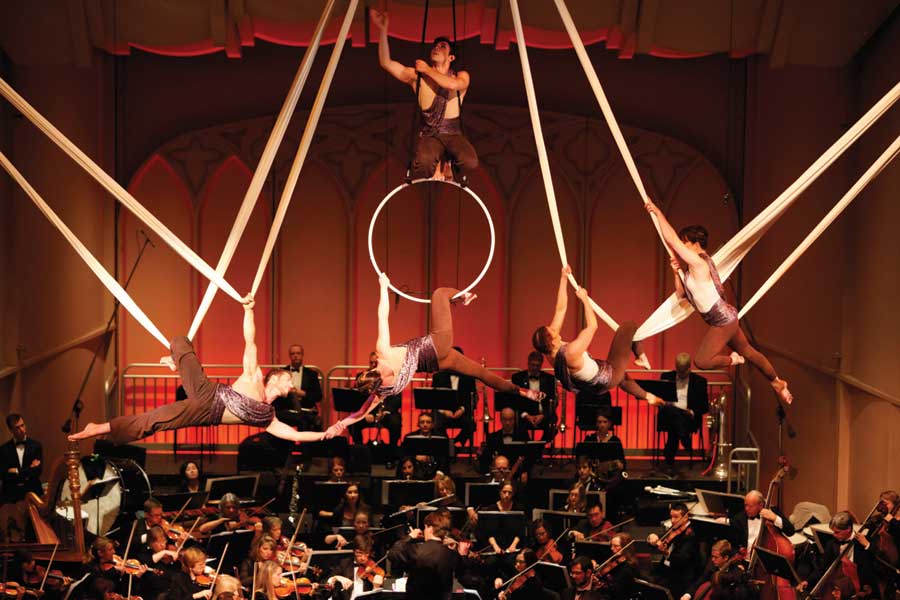
A previous performance by Frequent Flyers Aerial Dance with the Boulder Philharmonic

“This was a program that was originally intended to reflect the notion of rebirth that happens in springtime,” Butterman says. “It still reflects that, but it has an additional layer of meaning for us—our own emergence from our pandemic isolation.”

The starting point for the program was The Butterfly Lovers Violin Concerto by Chinese composers He Zhanhao and Chen Gang, which the Philharmonic will perform with violin soloist Claude Sim and Boulder’s Frequent Flyers Aerial Dance Company. Before that performance the concert will open with Undistant by Mason Bates, which addresses our return to human interaction after the recent period of widespread self isolation.
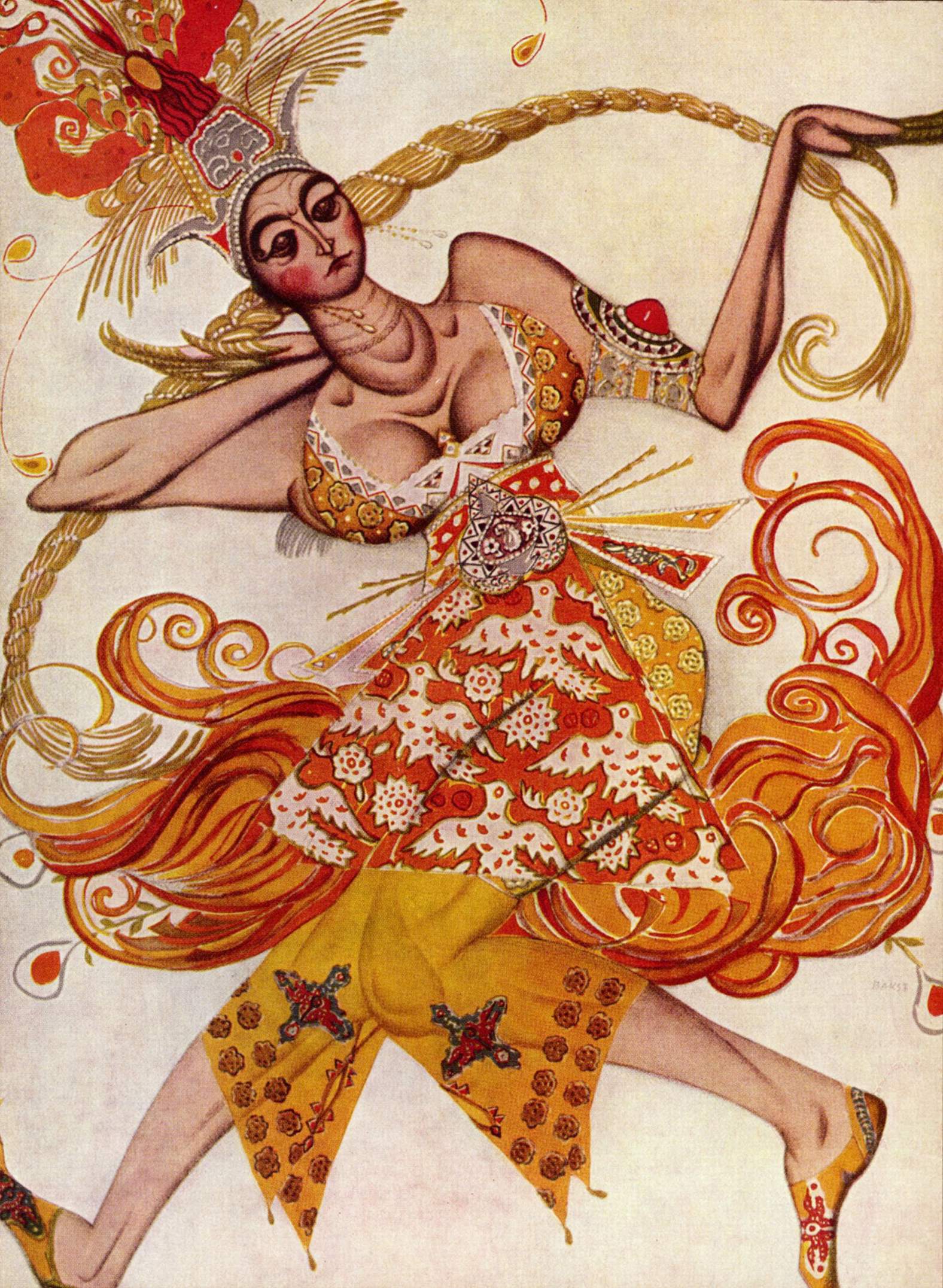
Original costume design for Stravinsky’s Firebird by Léon Bakst (1913)

Filling out the program will be first Rimsky-Korsakov’s Russian Easter Overture, which has obvious seasonal significance. The final piece will be Stravinsky’s Firebird Suite, which Butterman selected because it ends with the rebirth of knights and 13 princesses who have been under a magic spell—another connection to the idea of renewal.

The Butterfly Lovers Violin Concerto was written by two Chinese students of Western music at the Shanghai Conservatory and premiered in 1959. Written for a Western orchestra, it is based on a Chinese legend of lovers who are separated by death, but reunited as butterflies. “It works very well for Western audiences,” Butterman says. “It’s extremely relatable on first hearing.”

Butterman and the Phil have done a number of performances with Frequent Flyers. He thought that The Butterfly Lovers would be a good piece for further collaboration and suggested it to Nancy Smith, Frequent Flyers’ artistic director. “It strikes me that it has a narrative arc, and certainly has potential as a work for visual interpretation,” he says.

“(Smith) agreed and they really embraced the thing. They constructed this large wing-like structure that will be hung above the stage. It acts as one fixed structure for most of the piece, but it also has hinges and it can bend like butterfly wings. It will be quite something to see!”
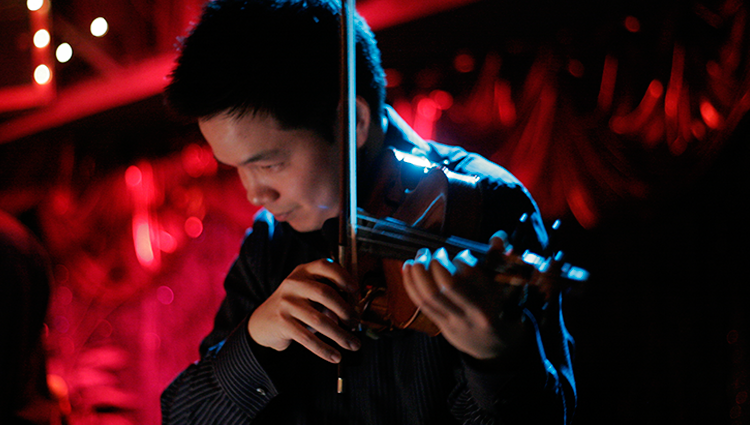
Violinist Claude Sim

The soloist, Claude Sim, is associate concertmaster of the Colorado Symphony. The Phil’s concertmaster, Charles Wetherbee, was first scheduled to perform the concerto, but when he became unavailable Sim stepped in to serve as soloist and as concertmaster for the concert.

The one piece that was not in the original program Butterman conceived two years ago is Bates’s Undistant. That is the piece on the program that best connects with the idea of people re-emerging from isolation as the pandemic abates—at least a little. “Undistant is a piece that (Bates) wrote in 2020, and it is a work that mirrors in some ways our separation,” Butterman says.
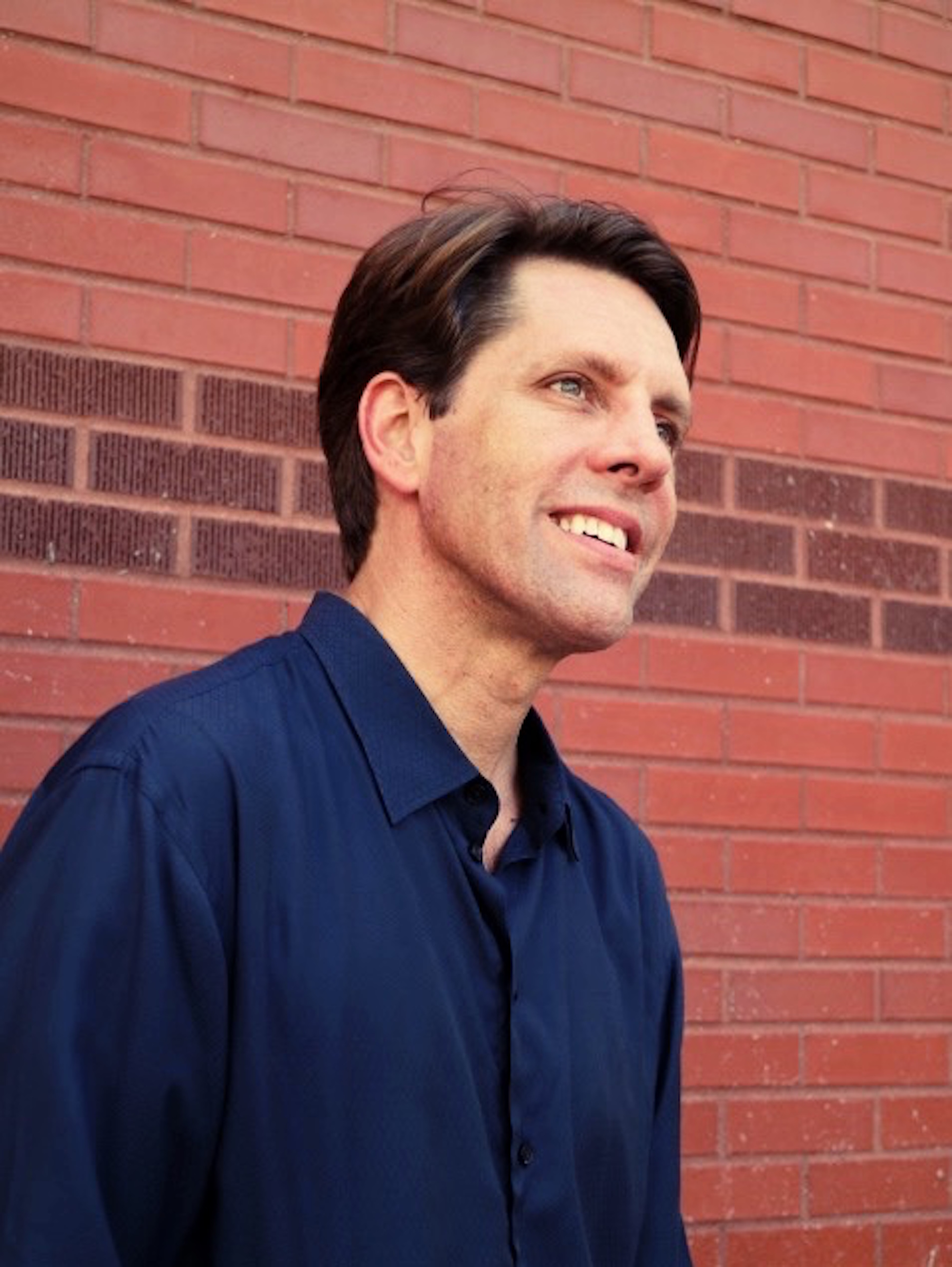
Michael Butterman. Photo by Jiah Kyun.

“There are two groups of musicians that are placed away from the rest of the orchestra. (Bates) has written an electronica part that incorporates static, sounds of Zoom and other communication platforms that we came to use a great deal during the pandemic. Over about seven minutes he brings these different elements back together, and there are little wisps of Beethoven’s ‘Ode to Joy,’ just enough that it’s recognizable. That begins to coalesce until we have an affirming and positive ending.”

Apart from the theme of rebirth and renewal, there is one thing that joins all four pieces musically, and that is their uplifting endings. It’s there in all four pieces. In Bates’s Undistant, it is the transformation from separation and static to hints of the “Ode to Joy.” In the Butterfly Lovers, it’s the overcoming of first separation and then death through the transformation of the lovers into butterflies, gently portrayed in music.

In the second half, the Russian Easter Overture opens with the solemn tones of two Russian Orthodox hymns, “Let God Arise!” and “An Angel Cried.” Rimsky-Korsakov wrote in an autobiography that “the gloomy colors of the Andante lugubre seemed to depict the holy sepulcher . . . [and] the solemn trumpet voice of the Archangel is then displaced by a tonal reproduction of the joyous, dance-like tolling of the bells.”

The progress of Stravinsky’s Firebird is no less joyous, with “The Infernal Dance of Katschei” being followed by the “Berceuse”—a tender lullaby that lulls Katschei’s demonic minions to sleep—and the “Finale” that portrays in music the return of Katschei’s prisoners to life.

You might say these are four variations on the theme of life returning after a long winter—or a pandemic.

# # # # #

“The Firebird and Frequent Flyers”
Boulder Philharmonic Orchestra, Michael Butterman, conductor
With Claude Sim, violin, and Frequent Flyers Aerial Dance

  • Mason Bates: Undistant
  • He Zhanhao and Chen Gang: The Butterfly Lovers Violin Concerto
  • Rimsky-Korsakov: Russian Easter Overture
  • Stravinsky: Firebird Suite (1919)

7:30 p.m. Saturday, April 30
Macky Auditorium

TICKETS

Boulder Phil announces its 65th anniversary season

Masterworks concerts for 2022-23 will all be in Macky Auditorium
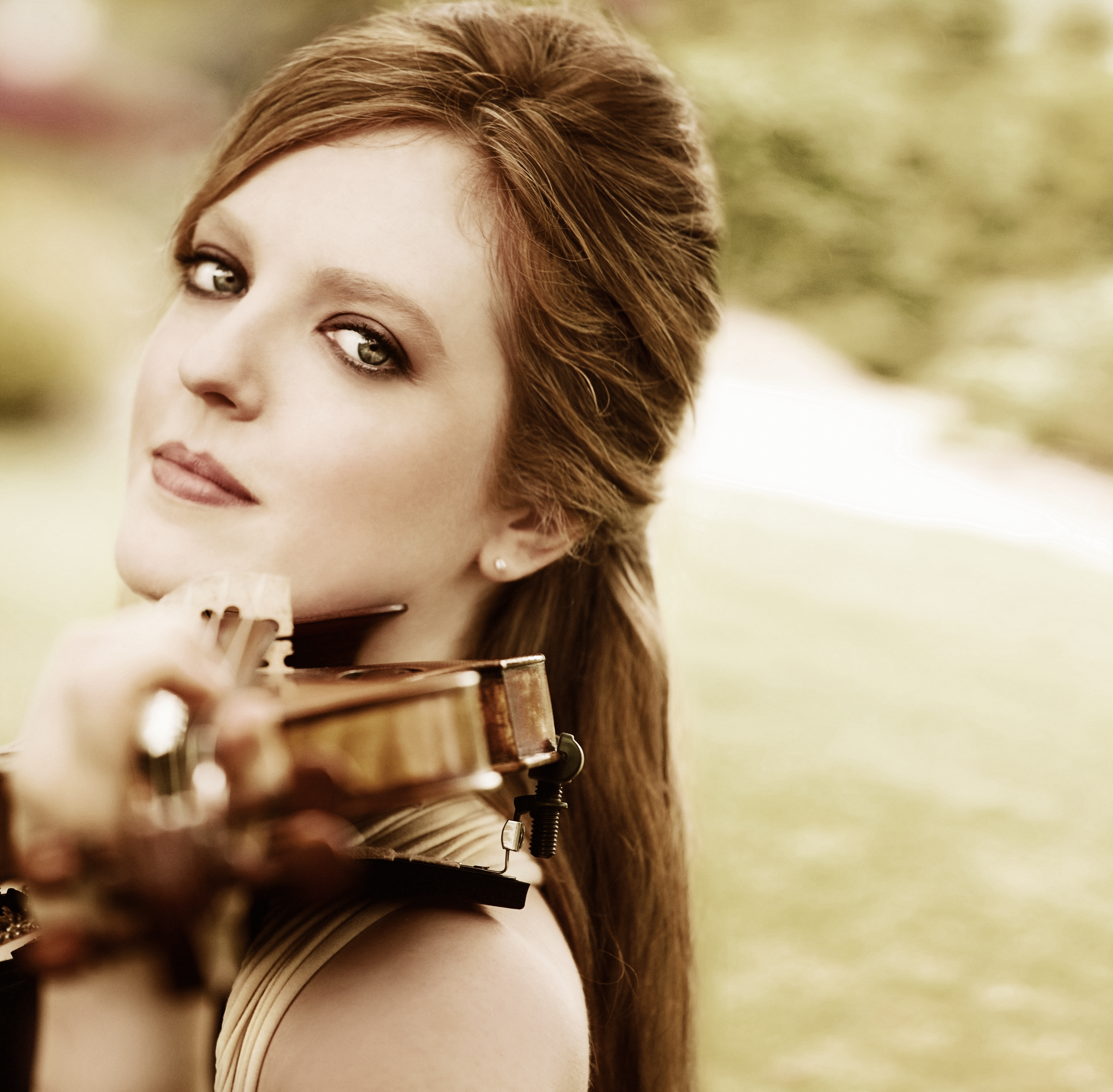
By Peter Alexander April 27 at 12:15 a.m.

The Boulder Philharmonic announced programming for its 2022–23, 65th anniversary season Tuesday evening (April 26). All subscription concerts for the coming year will be once again in Macky Auditorium

Pianist Angela Cheng returns to Boulder to perform with the Phil April 22, 2023

The season introduced by music director Michael Butterman includes some warhorses— Rachmaninoff’s Rhapsody on a Theme of Paganini and Richard Strauss’ Don Juan—some less familiar standard works—Bruckner’s Symphony No. 7 and Ravel’s Piano Concerto in G—and a healthy dose of new and unfamiliar works (see full programs below). Particularly noteworthy will be two world and one Colorado premiere of commissioned works.

Some features of the season will be familiar to current and past Boulder Phil patrons. One will be the return to Macky. The annual Nutcracker performances with Boulder Ballet are scheduled for Nov. 25 and 27. There will be a seasonal special event, “Holiday Brass with the Phil,” Dec. 18. The Phil’s Executive Director, Sara Parkinson, announced the resumption of the educational Discovery Concerts for school students.

Long-time concertgoers will welcome the return of former CU faculty member and audience favorite Angela Cheng April 22, who has not appeared in Boulder since 2009. Other soloists during the season will include tenor Matthew Plenk, on the opening night concert Oct. 8; double bassist Xavier Foley and violinist Eunice Kim Nov. 12; and violinist Stefan Jakiw March 25. 

Concertmaster Charles Wetherbee will solo with the Phil Jan. 22, 2023

Boulder Phil concertmaster Charles Wetherbee has been on medical leave, but is expected back next season and will play Mozart’s Violin Concerto No. 5 with the orchestra Jan. 22.

One prominent change for the season is that the Saturday evening concert time has been moved to 7 p.m. from 7:30 p.m., in response to feedback from ticket buyers. That change affects all the masterworks concerts except “Afternoon with Bruckner,” at 4 p.m. Sunday, Jan. 22. In conjunction with the change of curtain time, the Phil will try different forms of related programming for its concerts, including pre-concert lectures, intermission features and post-concert talk-back sessions.

One special event in the season will bring the popular Denver-based multi-instrumental band DeVotchKa to Macky Auditorium to perform with the Phil. That performance will take place at the “old” time of 7:30 p.m. Saturday, May 6, 2023. Further details of that concert are pending.
The opening night concert Oct. 8, titled “Hymn to the Earth,” includes the first of the season’s premieres, a Boulder Phil co-commission that was postponed from a planned earlier season due to COVID: Ozymandias: To Sell a Planet. This musical alarum for threats to the planet was composed by the American composer Drew Hemmenger and uses Percy Shelley’s poem “Ozymandias,” as well as texts from native American sources, United Nations climate reports and speeches by Greta Thunberg. 

The Colorado premiere of another co-commission, Jennifer Higdon’s Suite from Cold Mountain, follows on Nov. 12, and another world premiere of a new work by Boulder High School graduate Leigha Amick will be presented April 22, 2023.

Season tickets will go on sale Monday, May 2, and tickets to individual concerts will be available Monday, Aug. 22. Purchases can be made by calling the box office at 303-449-1343, or through the Boulder Phil web page.

# # # # #

Boulder Philharmonic Orchestra
Michael Butterman, music director
2022-23 Season
All performances in Macky Auditorium except as otherwise noted

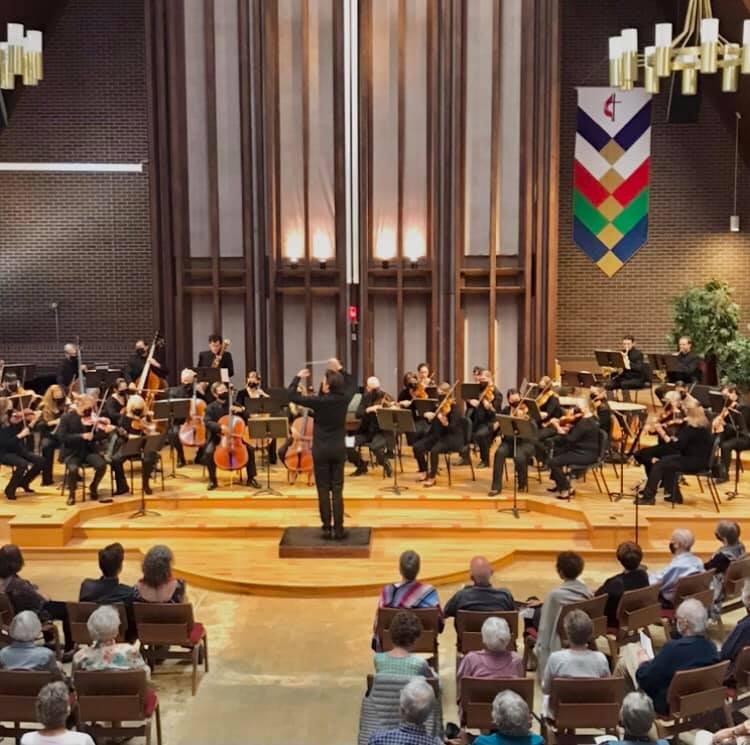
Conductor Michael Butterman with the Boulder Phil in Macky Auditorium

Opening Night: Hymn to the Earth
Boulder Philharmonic, Michael Butterman, conductor
With Boulder Phil Chorus and Matthew Plenk, tenor

  • Michael Abels: Global Warming
  • Drew Hemenger: Ozymandias: To Sell a Planet (Co-Commission & World Premiere)
  • Mozart: Overture to Don Giovanni
  • Wagner: Trauermusik from Götterdämmerung
  • Richard Strauss: Don Juan

7 p.m. Saturday, Oct. 8

Gran Duo: Higdon and Foley
Boulder Philharmonic, Michael Butterman, conductor
With Xavier Foley, double bass, and Eunice Kim, violin

  • Jennifer Higdon: Suite from Cold Mountain (Co-Commission & Colorado Premiere)
  • Xavier Foley: For Justice and Peace
  • Giovanni Bottesini: Gran Duo Concertante
  • Dvořák: Symphony No. 8 in G major

7 p.m. Saturday, Nov. 12

The Nutcracker with Boulder Ballet
Boulder Philharmonic, Gary Lewis, conductor 

2 and 7 p.m., Friday, Nov. 25
2 p.m. Sunday, Nov. 27

Special Event: Holiday Brass with the Phil

4 p.m. Sunday, Dec. 18
Mountain View United Methodist Church, Boulder

Afternoon with Bruckner
Boulder Philharmonic, Michael Butterman, conductor
With Charles Wetherbee, violin

  • Mozart: Violin Concerto No. 5
  • Anton Bruckner: Symphony No. 7 in E major

4 p.m. Sunday, Jan. 22, 2023

Jackiw Plays Bruch
Boulder Philharmonic, Michael Butterman, conductor
With Stefan Jakiw, violin

  • George Butterworth: The Banks of Green Willow
  • Max Bruch: Scottish Fantasy
  • Rachmaninoff: Symphonic Dances

7 pm. Saturday, March 25, 2023

Ravel and Rachmaninoff
Boulder Philharmonic, Michael Butterman, conductor
With Angela Cheng, piano

  • Leigha Amick: “Resound Boulder”” Commission 
  • Ravel: Piano Concerto in G
  • Rachmaninoff: Rhapsody on a Theme of Paganini
  • Tchaikovsky: Romeo and Juliet: Fantasy Overtur

7 p.m. Saturday, April 22, 2023

Special Event: DeVotchKa + Boulder Phil

7:30 p.m. Saturday, May 6, 2023

Boulder Phil presents videos and Terrence Wilson plays Rachmaninoff

Saturday at Macky sees Michael Butterman’s return to lead the orchestra

By Peter Alexander March 18 at 12:10 a.m.

The next concert of the Boulder Philharmonic will feature a co-commission by the orchestra, but none of the music will be new.

Instead, the co-commission is a video created by Stephen Lias to accompany the performance of a work composed in 1955, the Symphony No. 2, “Mysterious Mountain,” by American-Armenian composer Alan Hovhaness. 

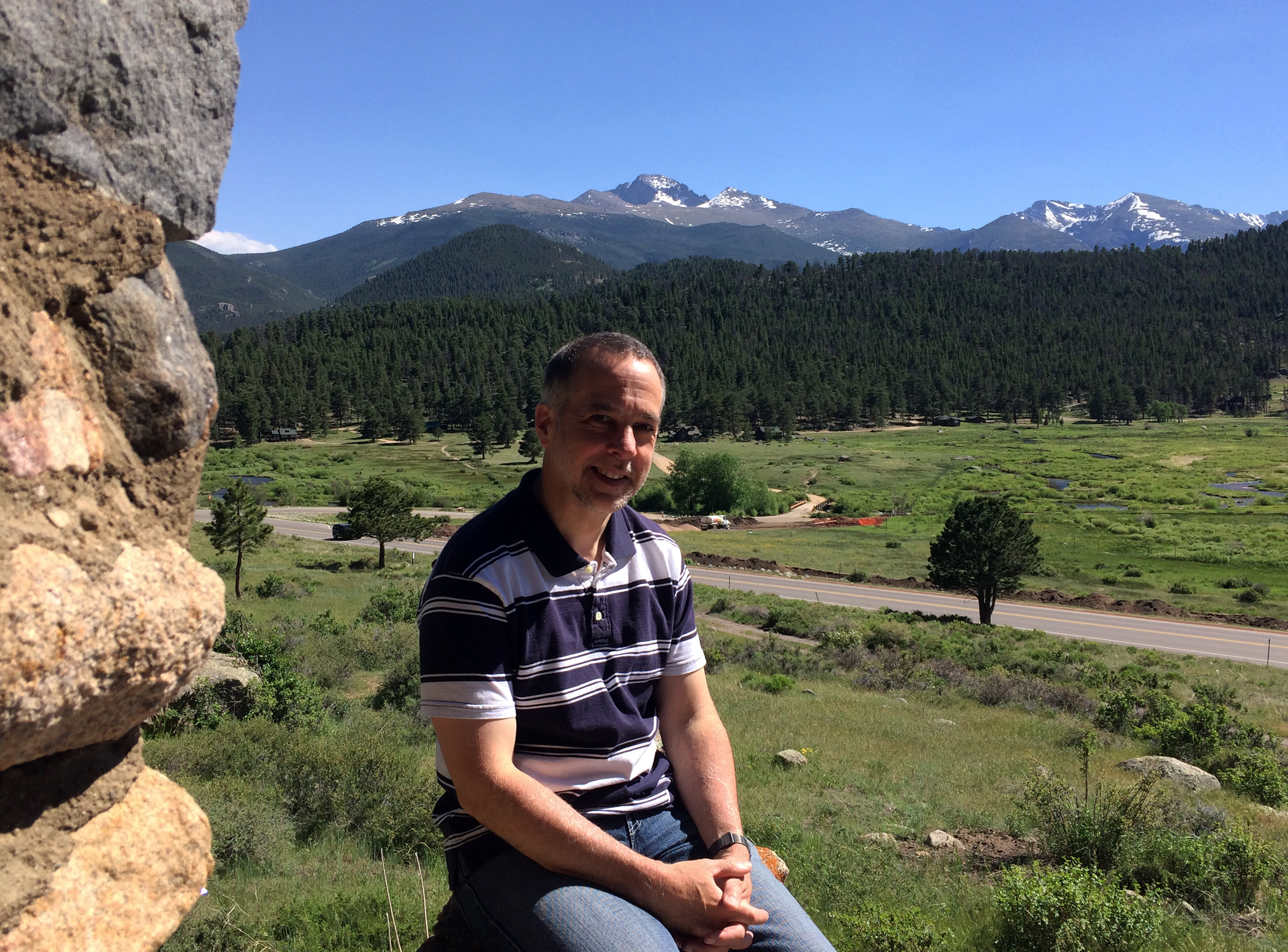
Stephen Lias in Rocky Mountain National Park. Photo by Peter Alexander

That is one of two videos that will be presented as part of the concert, which will open with a performance of Circuits by Cindy McTee with video by Aleksi Moriarty. Finishing the program is Rachmaninoff’s Third Piano Concerto, performed by pianist Terrence Wilson. The performance will be at 7:30 p.m. Saturday, March 19, in Macky Auditorium (tickets available here).

Lias is better known as a composer than a videographer. The Boulder Phil premiered his Gates of the Arctic in 2014 and commissioned his All the Songs that Nature Sings, which they premiered in 2016. In this case the Boulder Phil’s music director, Michael Butterman, wanted to perform the Hovhaness score, and to feature a video with it.

Butterman is back in Boulder to lead the concert, after having to miss the orchestra’s last performance in March due to a health concern.

“When we played (Lias’s) works before, he created visuals that would accompany the music,” Butterman explains. “I approached him about creating a video not for his own music this time, but for someone else’s. And he really ran with it.”

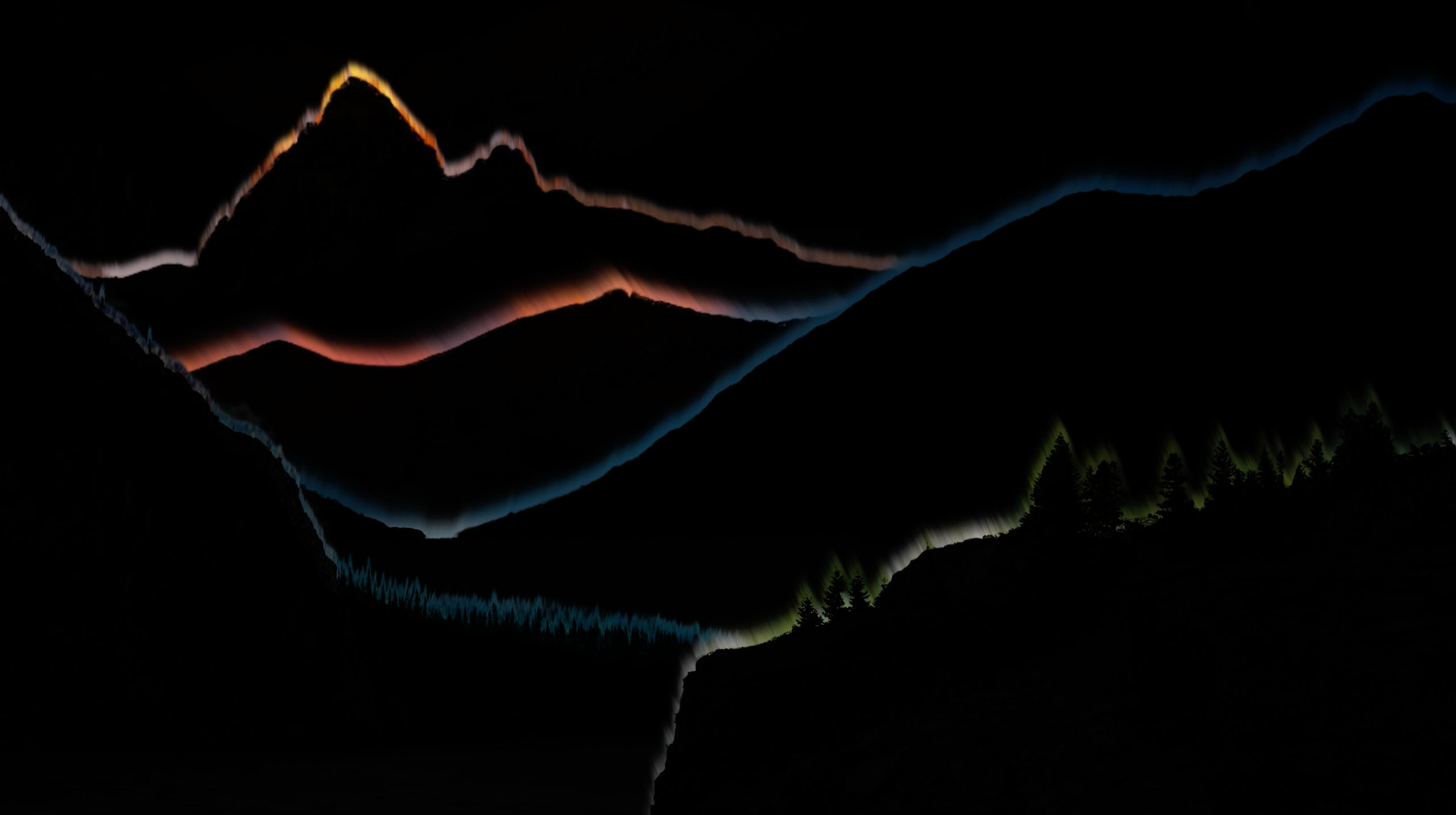
One of Stephen Lias’s composite images for Mysterious Mountain.

By “ran with it,” Butterman really means that Lias worked tirelessly to learn video techniques that he had never used before. “The learning curve was extremely steep for me, because I had no background in visual art or complex video effects,” Lias says. ”A lot of what I learned was very useful and fascinating, but boy it was a big investment! I had to learn to use a collection of high-end applications (and) packages of software that animators use.”

The more complex video techniques were important, Lias says, because—unlike pieces that he created videos for before—Hovhaness’ score is not about a specific location. In fact, the title Mysterious Mountain was added after the music had been written. “The title simply suited the mysterious atmospheric, meditative nature of the music,” Lias says.

Image by Stephen Lias for Mysterious Mountain

“This feels like it needs to be more amorphous and ambiguous (than Lias’s earlier video creations). My concept was to create virtual mountain ranges comprised of (pictures) from all over the world. There are animated, floating lines in space that reveal the mountain range, and then they are transformed before your eyes and you realize these are (different photos) laying over top of one another. 

“Later various virtual environments float around you, and then you end up in a place that is entirely real, but you’re not sure it’s real. The goal is a lingering ‘where are we?’ question. We are clearly not in real life, but the things from real life are mixed with things that make it clearly artificial. You’re in an invented world.”

Image by Stephen Lias for Mysterious Mountain

This fits the spiritual qualitied of Hovhaness’ music, Lias says. He describes the music and video together as “a musical and visual journey through all the things that mountains can be and might become.”

Some people in the audience may recognize some of the locations in the video. “Certainly anyone from Boulder will recognize the places that Longs Peak sticks its head out,” Lias says. “There’s some Banff, Glacier (National Park), and the Great Wall of China.”

Butterman describes the concert’s other video, accompanying McTee’s Circuits, as “entirely abstract,” but in an entirely different way. There are no concrete images at all, but rather abstract patterns.

“(Moriarty) went through the piece in an analytical way,” Butterman says. “He broke it down into a motive for a bar and a half, and then three bars, and then later on it comes back upside down. He identified these musical kernels and created a graphic representation for each one. Once he created the video translations of the musical ideas, he followed the template that the music itself played out. So theoretically, it’s a video representation of the structure and thematic content of the music.”

Butterman warns the audience that the video moves very fast, as does the music. “I would say (it’s) very fast paced,” he says. “If you are bothered by flashing, you would be wise to at least be aware of that. It’s only about five and a half minutes, but it’s very intense. I’m hoping that if anybody feels that’s a difficulty, they can simply look away.”

Both video works are engineered so that the length can be adjusted to fit individual performances. Moriarty works with a program developed by Ion Concert Media of Minneapolis, and Lias developed his own system using a sound, video and lighting control application for the Mac called QLab. Both result in a system where the conductor does not have to follow a click track or any other pre-established speed in the performance.

That’s an important issue for Butterman. “The real bane of (performing with video) is the tyranny of the click track,” he says. “Whenever you’re doing a Hollywood movie for example, you have a screen in front of you and time codes and little bars sweep across (the screen), and you have an earpiece where you can hear clicks, and it’s maddening.”

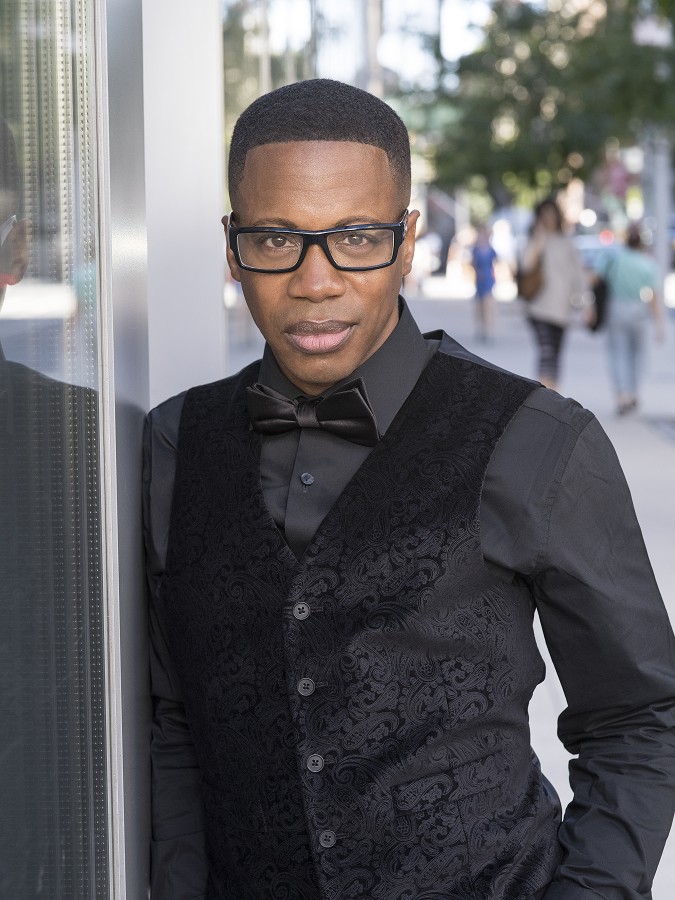
Terrence Wilson. Photo by J. Henry Fair.

While the videos will be the most unusual aspects of the March 19 concert, the Rachmaninoff Third Piano Concerto will certainly be the most familiar. It is beloved by audiences, but as a virtuoso showpiece it should never be thought to be routine. It was Rachmaninoff’s favorite of his four piano concertos, but also has the reputation of inspiring fear in pianists.

“I’m delighted to have Terrence Wilson joining us,” Butterman says. “He’s someone I’ve enjoyed collaborating with.”

Wilson performed the Grieg Piano Concerto with Boulder Phil in 2007 and has had an impressive performing career in the intervening years, including a 2011 Grammy nomination and a 2015 appearance at the Colorado Music Festival. A graduate of Juilliard, he has also received an Avery Fisher Career Grant and appeared on NPR’s “Performance Today.”

“Closing with Rachmaninoff is a little unusual,” Butterman says, “but at 43 or 44 minutes, it certainly has the heft of a symphony!”

The heft, and I would add, all the fireworks you could want for a rousing concert closer.

# # # # #

Boulder Philharmonic, Michael Butterman, conductor
With Terrence Wilson, piano
Videos by Aleksi Moriarty and Stephen Lias

  • Cindy McTee: Circuits
  • Alan Hovhaness: Symphony No. 2, “Mysterious Mountain”
  • Rachmaninoff: Piano Concerto No. 3

7:30 p.m. Saturday, March 19
Macky Auditorium
TICKETS

Boulder Phil and Marcus Roberts Trio celebrate the return to live performances

“Gershwin Celebration” at Macky hits the right notes for a festive event

By Peter Alexander Jan. 23 at 12:20 a.m.

The Boulder Philharmonic and the Marcus Roberts Trio both returned to a live stage last night (Jan. 22) for the first time in two years, to present “A Gershwin Celebration” in Macky Auditorium. And it was a celebration for certain.

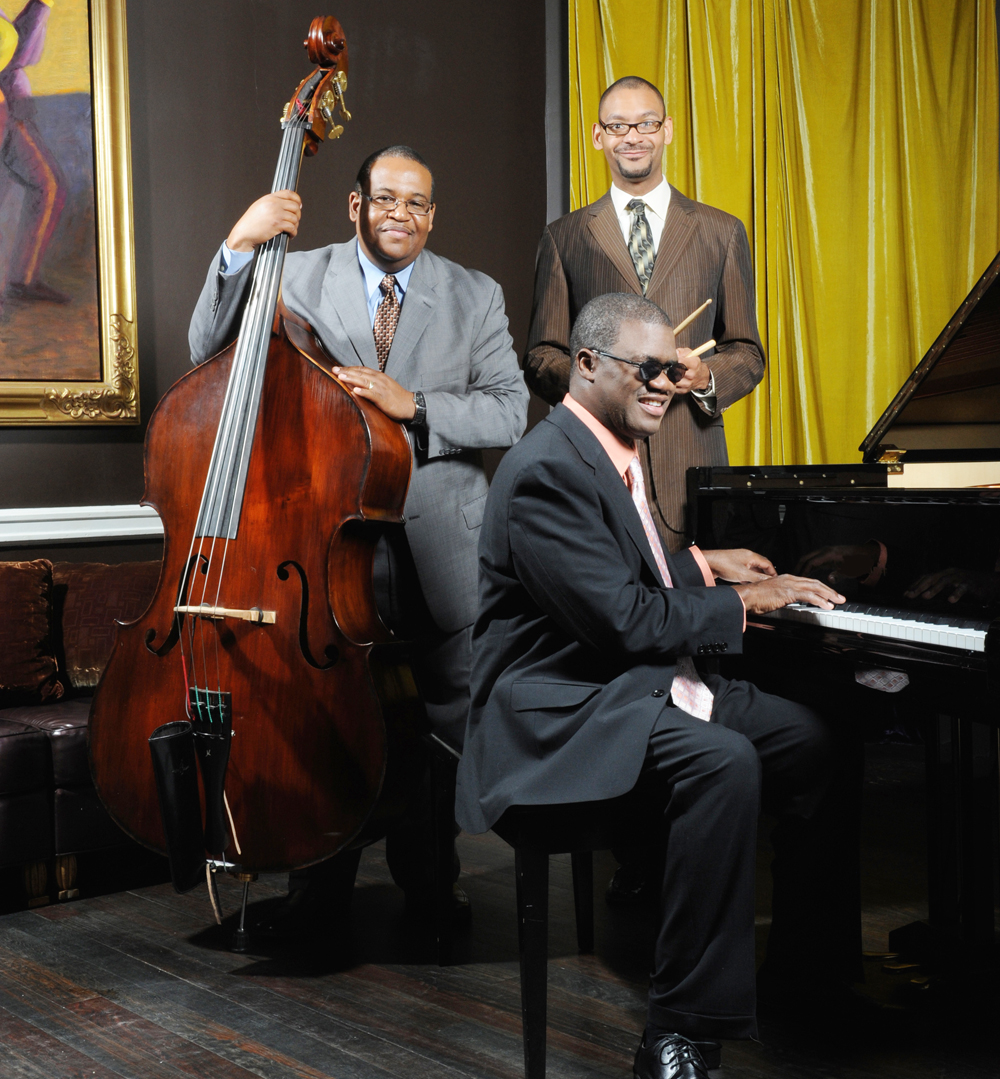
Two works by Gershwin were on the program: An American in Paris, and the Piano Concerto in F with the trio—Marcus Roberts, piano, Jason Marsalis, drums, and Rodney Jordan, bass—as a solo ensemble with the orchestra. The interpretation of Gershwin’s concerto, which Roberts first did with conductor Seiji Ozawa nearly 20 years ago, has become something of a specialty for the trio. They did it with the Boulder Phil once before, in conductor Michael Butterman’s first season with the orchestra 15 years ago.

We should be grateful that Butterman decided to return to that experience. The program, and especially the performance with the trio, hit all the right notes for a festive event. It was brilliantly creative, it was fun, it was musical art on a very high level.

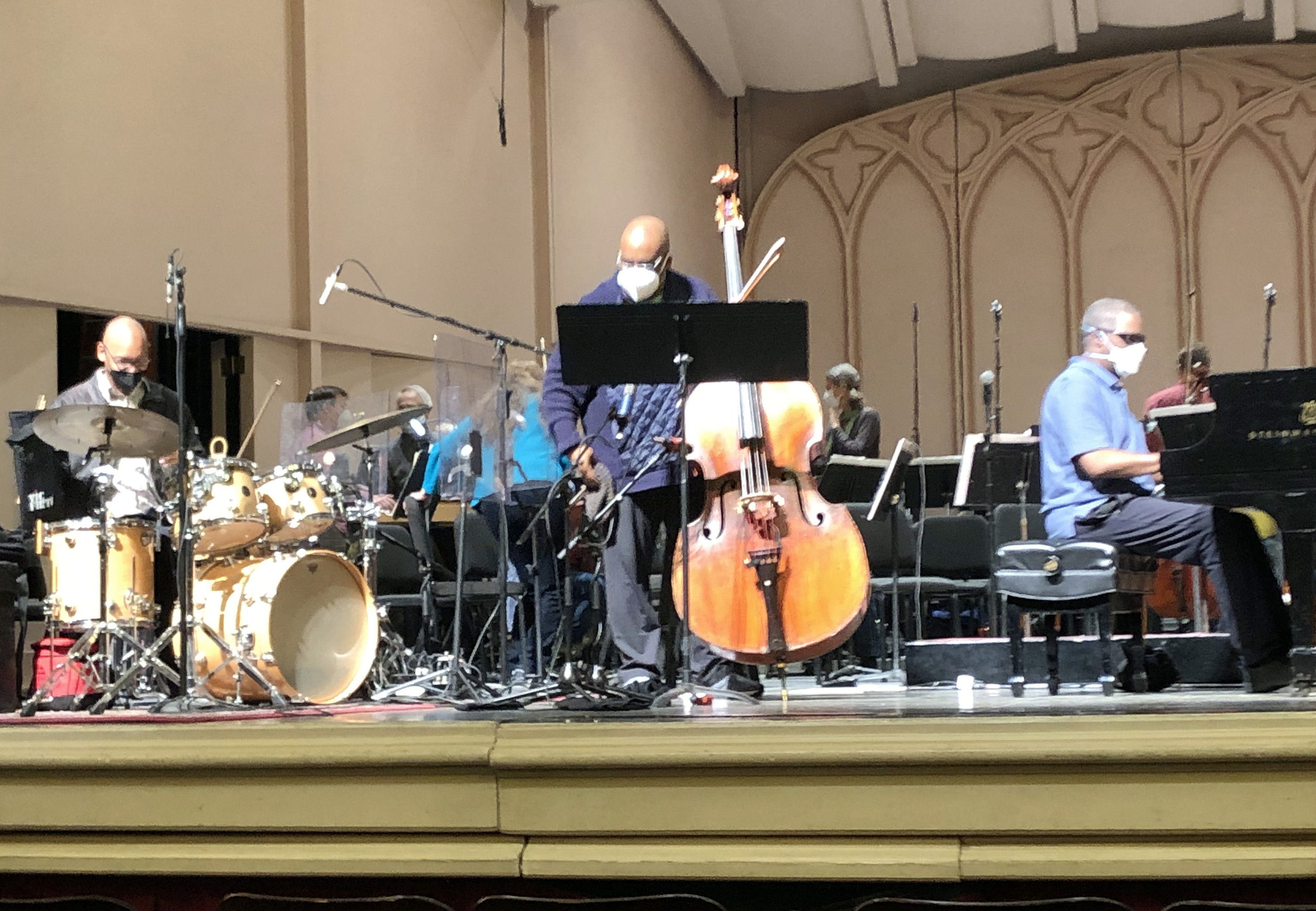
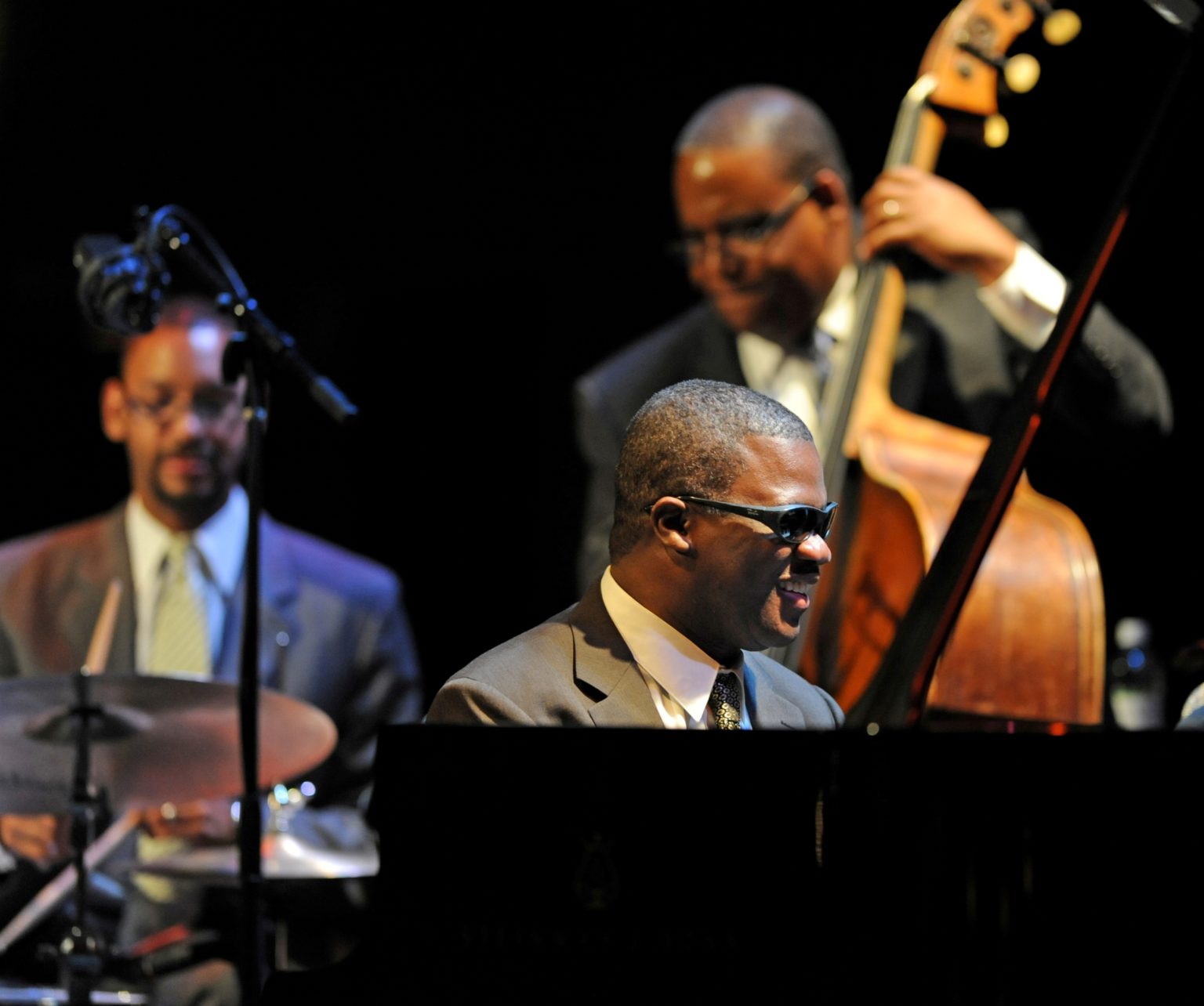
Mar us Roberts Trio rehearsing with the Boulder Phil. Photo by Peter Alexander.

The performance was live-streamed from Macky to anyone who had bought a ticket. I had the privilege of first attending the rehearsal yesterday morning, so that I could hear how the trio put their interpretation and interpolated solos together with the orchestra, and watching the live stream in the evening to hear how it all fit together.

One advantage of “attending” the concert by live stream is that you can see things that are not easily seen from seats in the hall—the very busy percussionists, for example, and who is playing the solos. That is very much a worthwhile pleasure. Since COVID, streaming is common, since it allows people to take in a concert without being in a crowd. Let’s hope streaming becomes normal, as it gives access to people who otherwise would not be able to attend. 

And it give us all the opportunity to hear performances from around the world, building a larger, shared musical culture.

The program opened with An American in Paris, which has earned a place in the orchestral repertoire—and in American audience’s hearts. It’s not fair to “review” a streamed performance because as a listener I am at the mercy of the sound engineers and the speakers on my desktop. But Butterman and the Boulder Phil clearly gave a fluid, polished performance.

For the Concerto, the orchestra played almost entirely what Gershwin wrote. When playing with the orchestra, Roberts observed, if he did not exactly reproduce, what Gershwin wrote in the piano part. At times he spun off from Gershwin’s line—but Gershwin did the same.

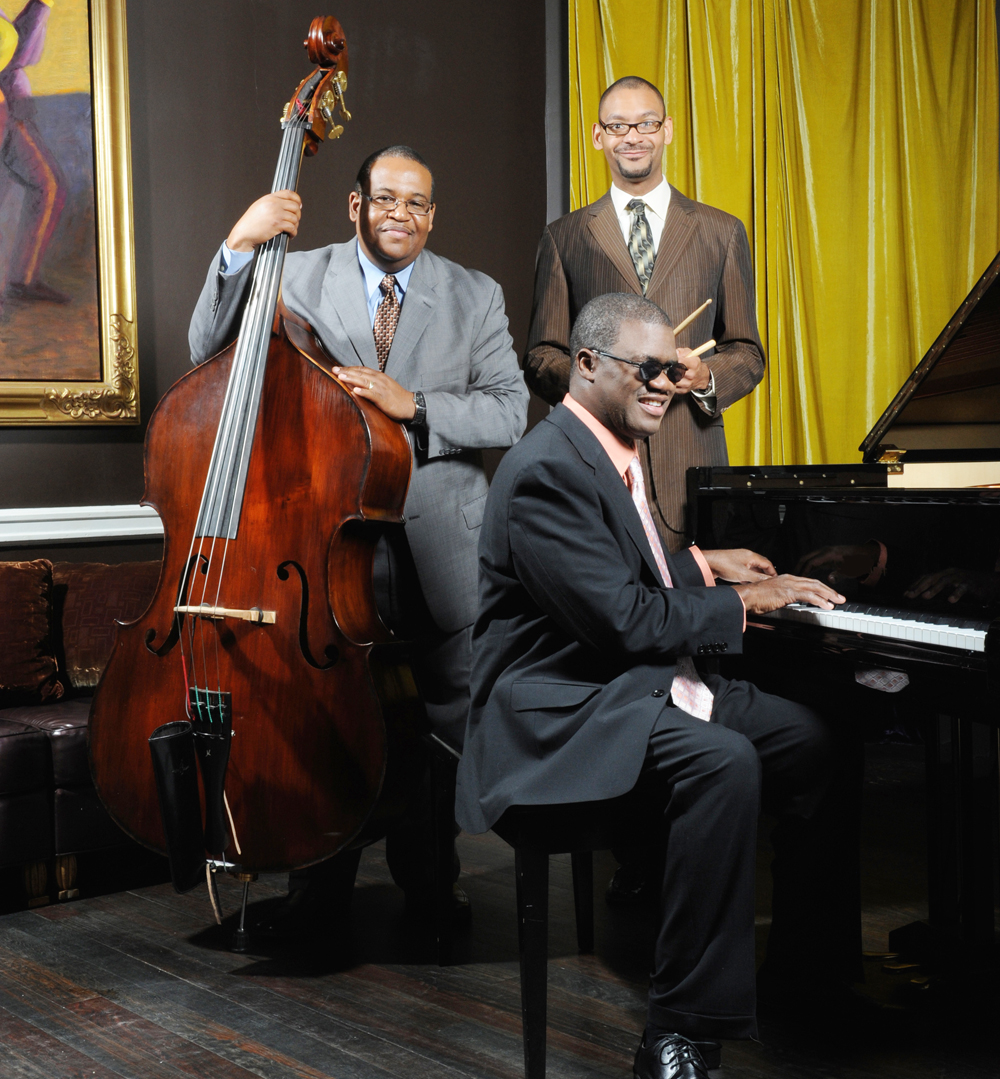
The Marcus Roberts Trio

There were also “breaks” for the jazz trio when the orchestra sat out and turned the performance over to the trio. These moments were, for me, the most joyous parts of the concert, because all three members of the trio are just so darned good. It was delightful to hear Roberts work bits of Gershwin into the multi-hued fabric of his improvisations, and to witness the exchanges among three musicians who know each other so well. Like any tight jazz group, whatever direction Roberts went, the others were with him.

Hearing both the rehearsal and the concert, it was not hard to find the essence of both classical and jazz styles. “We want to make sure that [audiences] understand the grandeur and beauty and structural logic that classical music has,” Roberts told me earlier, “and the freedom of improvisation and the spontaneity of jazz.”

Both were evident in Macky. The “grandeur of classical music” was present in the full orchestral passages of the concerto, which frame and culminate the solo passages. Of course those grandiose passages were the same in the morning and in the evening; that’s classical music. 

The improvised, jazz passages, however, were not the same; in their exuberant unpredictability they showed the “spontaneity of jazz”—and therein lies is the true greatness of the art form. The true greatness of Roberts’s performance of the Concerto in F is in bringing the two together.

As an encore, the trio alone played their version of another Gershwin staple, “I Got Rhythm,” which is both a nod to the composer’s variations for piano and orchestra on “I Got Rhythm” and recognition of the place the tune’s chord progression has taken in jazz history. Here the trio was playful, trading riffs at the beginning and the end, and giving a welcome chance for Marsalis on drums and Jordan on bass to have their own solos.

They all killed it. It was a dazzling demonstration of what we have missed for the past two years, and an exhilarating end to the celebration.

# # # # #

The Boulder Phil and the Marcus Roberts Trio will repeat their performance of “A Gershwin Celebration” this afternoon, at 1:30 p.m. Sunday, Jan. 23, at the Lone Tree Arts Center. You may purchase tickets for that live performance here.

Boulder Phil returns to Macky with Gershwin Celebration

Concert with pianist Marcus Roberts Jan. 22 will also be streamed

By Peter Alexander Jan. 20 at 11 a.m.

The Boulder Philharmonic Orchestra returns to Macky Auditorium Saturday (7:30 p.m., Jan. 22) for the first time in two years, with an all-Gershwin program.

Marcus Roberts Trio

Two works are featured: An American in Paris and the Piano Concerto in F, performed with the Marcus Roberts trio: Roberts, piano, Rodney Jordan, bass, and Jason Marsalis, drums. The same program will be presented Sunday at the Lone Tree Arts Center (1:30 p.m. Jan. 23). Tickets to both concerts, and for a live stream Saturday, are available through the Boulder Phil Web page.

While an all-Gershwin program is a little unusual for a symphony orchestra, “this is a nice way to get back to Macky” conductor Michael Butterman says. “A Gershwin celebration just feels festive.”

The Concerto harks back to a concert early in Butterman’s tenure with the orchestra, when Roberts and his trio played the Concerto in F. “I think it was my very first season,” Butterman says. “I remember that as one of the highlights of my time in Boulder, because it’s exciting to see the musicians of the orchestra so engaged.”

Read more in Boulder Weekly.

# # # # #

Gershwin Celebration
Boulder Philharmonic Orchestra, Michael Butterman, conductor
With Marcus Roberts Trio: Marcus Roberts, piano; Rodney Jordan, bass; Jason Marsalis, drums

  • Gershwin: An American in Paris
    —Piano Concerto in F

7:30 p.m. Saturday, Jan. 22, Mackey Auditorium
1:30 p.m. Sunday, Jan. 23, Lone Tree Arts Center
Masks and proof of vaccination are required.

Live steam 7:30 p.m. Saturday, Jan. 22

TICKETS

Grace Notes: Reminders of two concerts this coming weekend

By Peter Alexander Oct. 28 at 9:50 p.m.

Boulder Phil presents “The Art of Jazz” Saturday at Mountain View Methodist

The Boulder Philharmonic will perform the second of their two short concerts scheduled for the month of October at 4 p.m Saturday, Oct. 30, in the Mountain View United Methodist  church in Boulder.

Tickets are available through the Boulder Phil Web page. Audience members will be required to present proof of vaccination and wear masks throughout the concert. The short program will be presented without intermission, to reduce interaction among audience members. You may read the orchestra’s full, up-to-date COVID protocols here.  

The program features three pieces for small orchestra that were influenced by American jazz: the Jazz Suite No. 1 by Shostakovich, Darius Milhaud’s Creation of the World, and Little Threepenny Music, an orchestral suite arranged from the music for Kurt Weill’s Threepenny Opera. Michael Butterman will conduct. You may read more about this performance in an earlier post on this blog.

# # # # #

Takacs Quartet performs music by Mozart, Henri Dutilleux and Smatana

The Takacs Quartet will present the second of their 2021-22 campus concerts at 4 p.m. Sunday and 7:30 p.m. Monday, Oct. 31 and Nov. 1, in Grusin Music Hall of the CU Imig Music Building.

Masks must be worn inside all buildings on the CU campus. Please note that online streaming tickets for Sunday’s performance are also available, and the stream will remain available for a full week following the Monday performance. Tickets for both in-person attendance at the streamed performance are available through CU Presents.

The quartet will play three works on the concert. One is a familiar part of the standard string quartet repertoire: Mozart’s String Quartet in D minor, K421/417b. The others are less familiar: Ainsi la suit by the French composer Henri Dutilleux, and the String Quartet No. 1 in E minor, “From my Life,” by Smetana. You may read more about this performance in an earlier post on this blog.

Longmont and Boulder orchestras return to live performances for grateful audiences

Abbreviated concerts featured careful COVID protocols, no intermissions

By Peter Alexander Oct. 3 at 11:30 p.m.

For a short time this past weekend, you could have believed that concert life in Longmont and Boulder had returned to normal.

Of course, no one knows what tomorrow will bring. But both the Longmont Symphony and the Boulder Philharmonic presented their first in-person concerts in nearly two years, and sitting in the audience hearing live music was a welcome return to near-normal.

Longmont Symphony Saturday (Oct. 2) with soloist Hsing-ay Hsu and conductor Elliot Moore in Vance Brand Auditorium

Both concerts—the LSO at Vance Brand Auditorium at 7 p.m. Saturday, and the Boulder Phil at Mountain View Methodist Church at 4 p.m. Sunday—had restrictions that for now we might consider the “new normal.” In both cases, patrons were met outside by orchestra representatives checking proof of vaccination and ID, masks were required at all times, and seating was limited to less than full capacity of the respective venues. Conductors and orchestral string players wore masks for the performances as well. Both concerts were presented without intermission, so that the audience did not have the chance to mix and mingle. 

Both conductors, Elliot Moore with the LSO and Michael Butterman with the Boulder Phil, commented on how good it felt to be back, and both were greeted with enthusiasm. I would add that both concerts received standing ovations, but that has long since become normal, so it is not really anything new.

The Longmont Symphony began with a rousing performance of Brahms’s Academic Festival Overture. In his introduction, Moore noted that in spite of its name, the overture is not really academic in nature, because it is actually based on student drinking songs of Brahms’s era. As Moore intended, it started the post-pandemic musical scene with infectious energy. 

Brahms was followed by Mozart’s Piano Concerto in A major, K414, featuring soloist Hsing-ay Hsu. She introduced the concerto with heartfelt remarks about the opportunity to perform again before an audience, and played with solid confidence and sensitivity. The concert of orchestral repertory standards ended with Robert Schumann’s Symphony No. 4 in D minor. Any minor lapses of intonation or ensemble were easily forgiven for musicians who had not played together for so many months. Shouts of “Bravo” were heard through the standing ovation.

Michael Butterman leads the Boulder Philharmonic in Haydn’s Symphony No. 1 at Mountain View Methodist Church

Butterman chose much less standard works for the Boulder Phil’s return to the stage. Two works by Haydn were featured, none of them among the composer’s better known symphonies or concertos. In fact, the concert started at the very beginning, one could say, with Haydn’s Symphony No. 1 of 1759. A three-movement work of about 12 minutes in length, it has the tunefulness and energy, if not the sophistication, of Haydn’s larger late Symphonies. “If you liked that piece,” Butterman quipped, “there are 100 more like it!” (For the record, current research has identified 108 symphonies by Haydn.)

The symphony was paired with Haydn’s Sinfonia Concertante written for London in 1792, a larger and more mature work that features violin, oboe, cello and bassoon soloists with orchestra. The principal players from the orchestra played the solo parts with elan and polish. Using modern instruments, and heard in a church that has only a cement floor due to ongoing renovations, the orchestral sound struck me as a little on the thick side, not as transparent as Haydn would have expected.

Butterman’s final work for the program is one that he particularly loves, the Petite symphonie concertante by the 20th-century Swiss composer Frank Martin. It was a treat to hear this genuine rarity live in concert. It is scored for a double string orchestra with harpsichord, piano and harp soloists, creating an utterly unique sound world. Although written using 12-tone techniques, the music is often consonant, always enjoyable, and unlike any other piece I know. 

Butterman led the orchestra with obvious relish. The size and full-bodied sound of the Phil’s strings was ideal for a 20th-century work. In his analytical introduction to the score, Butterman said that he hoped that the audience would enjoy the Petite symphonie concertante as much as he does. I can’t speak for the rest of the audience, but hearing a committed live performance of an intriguing rarity was the weekend’s highlight for me. 

Like both audiences, I was thrilled to hear live music again, and to be back in the hall with musicians who love what they are doing. More, please!

NOTE: Minor typos and editing errors corrected Monday, 10/4.

Boulder Phil “together again” for two short concerts in October

Performances at Mountain View Methodist will be played without intermission

By Peter Alexander Sept. 29 at 3:40 p.m.

The Boulder Philharmonic Orchestra will be “together again,” as their first in-person concert since the pandemic is titled.

Two concerts for a reduced orchestra have been scheduled for October, both in the intimate Mountain View United Methodist Church in Boulder. Concerts in Macky Auditorium are scheduled to resume in 2022.

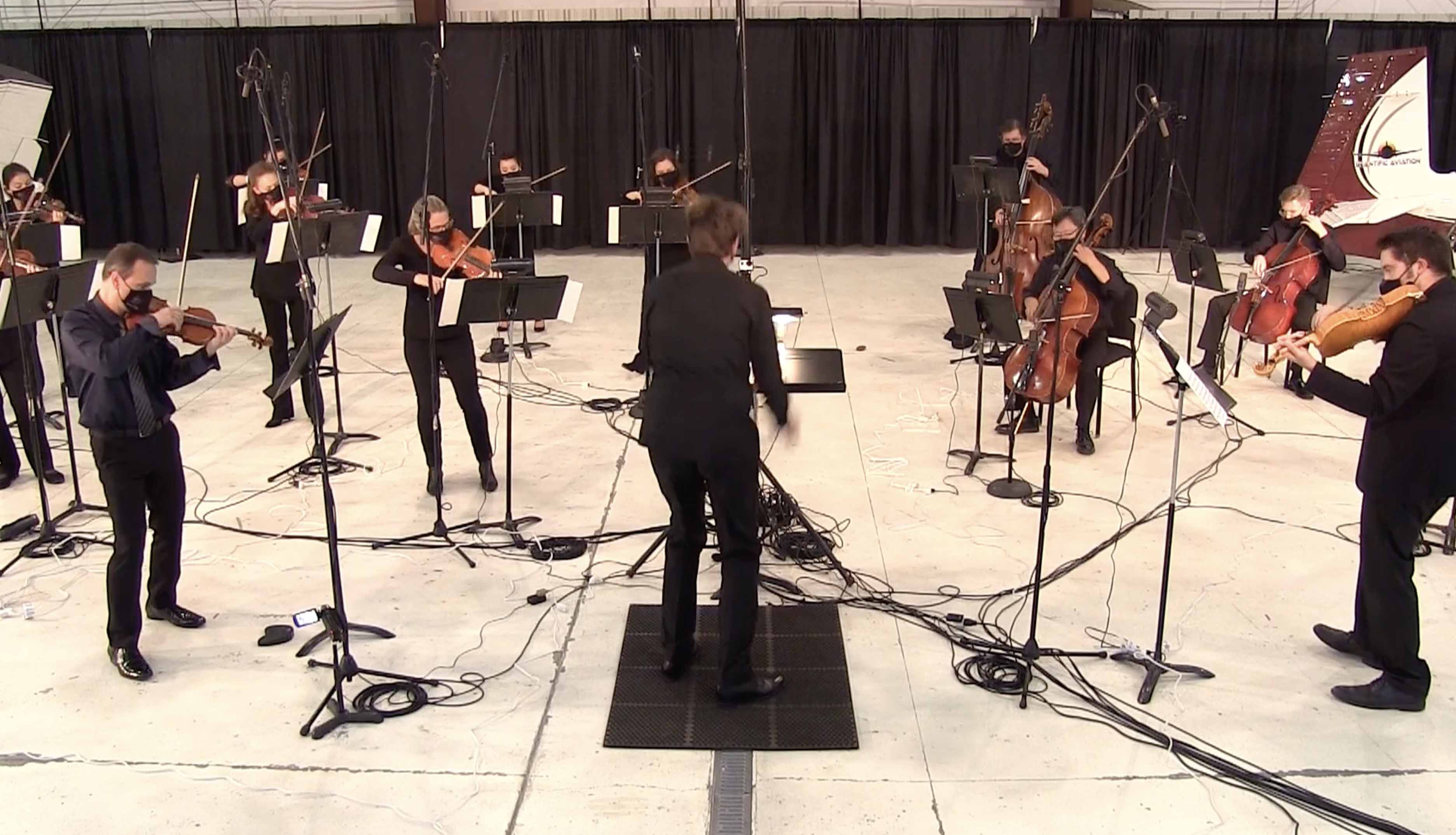
The Boulder Phil’s last pubic performances were recorded for online streaming during 2020-21.

The two October concerts will be “Together Again” at 4 p.m Sunday, Oct. 3, featuring music by Haydn and the Swiss composer Frank Martin; and “The Art of Jazz” at 4 p.m. Sunday, Oct. 30, featuring music of Shostakovich, Darius Milhaud and Kurt Weill. (Full programs are listed below.) Tickets for both concerts may be purchased at the Boulder Phil Webpage.

For safety reasons, both programs will be approximately one hour in length and will be played without intermission. In keeping with current COVID protocols in Boulder County, everyone attending these performances must be fully vaccinated, and must wear masks at all times. Consequently, children under the age of 12 cannot be admitted. 

The Boulder Philharmonic’s COVID-19 Health & Safety protocols are listed here

The first October concert, “Together Again,” features intriguing but little known works for small orchestra. Haydn’s Symphony No. 1 in D major was written in 1759 for Karl Joseph Count Morzin, a member of the Austrian nobility, before Haydn went to work for his better known employer Count Esterhazy. The symphony has three movements and lasts only about 12 minutes, making it a miniature precursor of the larger form that Haydn subsequently established over this career. 

The other two pieces on the program are sinfonias concertante, works similar to concertos with multiple soloists. The Sinfonia Concertante by Haydn, composed in London in 1792, features two soprano-bass instrument pairs: violin and cello, oboe and bassoon. Written on short notice near the end of Haydn’s first visit to London, the score treats the soloists as chamber musicians more than virtuoso soloists, and was a hit with English audiences. 

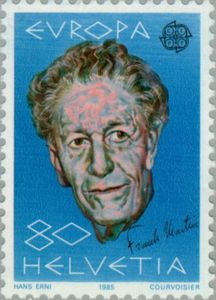
Composer Frank Martin, featured on a Swiss postage stamp

The second such work on the program is Martin’s Petite symphonie concertante (little sinfonia concertante). Composed at the end of World War II, it is scored for double string orchestra and a solo group that loosely corresponds to the Baroque continuo: harpsichord, piano and harp. This unusual combination creates a unique sound world that Boulder Phil music director Michael Butterman describes as “Bach and Stravinsky meet the Addams Family.”

The second concert in October, “The Art of Jazz,” shifts gears fully into the 20th century for three pieces by European composers that reflect, in different ways, the world-wide influence of American jazz. The least serious jazz influence is heard in the Jazz Suite No. 1 by Shostakovich, written in 1934 for a Leningrad dance band. The light and tuneful score, with a waltz, a polka and a foxtrot, is as much central European as jazzy, likely because at the time genuine jazz was either unknown or forbidden in the Soviet Union. 

However, French composer Darius Milhaud was certainly exposed to authentic jazz, during a 1922 trip to the United States that took him into Harlem nightclubs. A year later he wrote a ballet for the modernist Swedish dance company Ballets Suédois titled La Création du monde (The creation of the world) in which he refracted the jazz he had heard in Harlem through his own very French sensibility to create a work that is sui generis

Milhaud was especially impressed with the jazz drummers he heard, playing what he called “a complicated percussion section played by just one man.” He includes a full drum set in the score of Création du monde, as well as a saxophone that takes the place of viola in a string quartet and at times emerges as a soloist. Other echoes of Harlem can be heard in the brass-heavy scoring and the writing for clarinet, string bass and trombone.

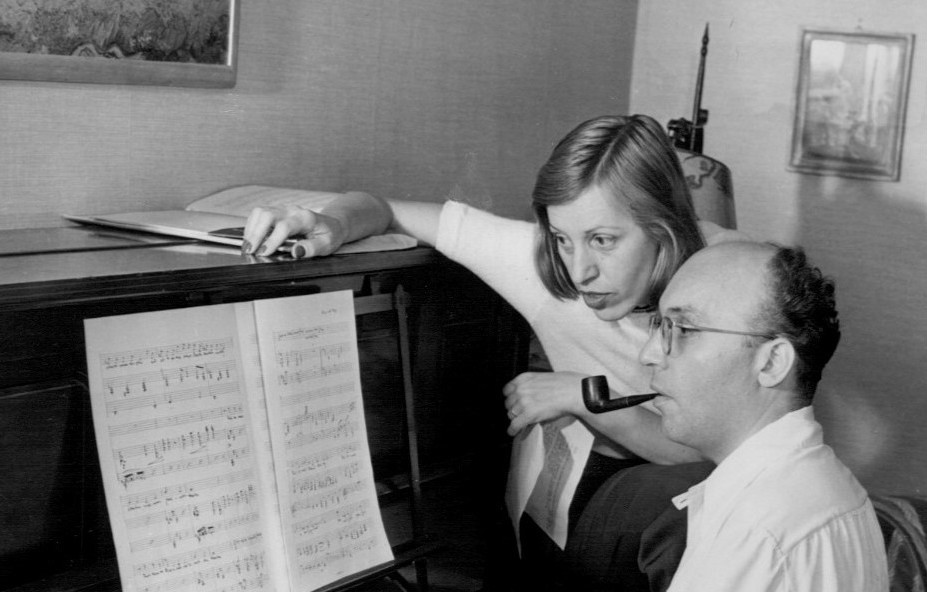
Kurt Weill and Lotte Lenya in New York in 1942

The final piece on the program refracts American jazz through the decadent cabaret scene in Berlin during the 1920s. Kurt Weill’s Dreigroschenoper (Threepenny Opera), a free translation into German by Marxist playwright Bertolt Brecht of the 18th-century Beggar’s Opera, was premiered in 1928. By the time it was banned by the Nazis in 1933, it had been translated in 18 languages and had been performed at least 10,000 times in Europe.

Weill’s music for the Dreigroschenoper was written for a small pit band of doubling players, much like modern Broadway shows. Weill easily made a transition to Broadway when the rise of the Nazis forced him to leave Germany. Among his subsequent American theatrical hits was the posthumous 1956 off-Broadway production of The Threepenny Opera, which earned a Tony Award for the singer Lotte Lenya. Songs from that version, including “Mack the Knife” and “Pirate Jenny,”  became well known in the United States through numerous pop covers.

The orchestral suite from the original show, Little Threepenny Music, was compiled in 1929, capturing the acerbic sound of Weill’s music without the bitter cynicism of Brecht’s lyrics.

# # # # #

Boulder Philharmonic Orchestra
Michael Butterman, music director

Together again
4 p.m. Sunday, Oct. 3
Featuring soloists from the orchestra

  • HAYDN  Symphony No. 1 in D Major
  • HAYDN  Sinfonia concertante in B-flat Major
  • MARTIN  Petite symphonie concertante, Op. 54

The Art of Jazz
4 p.m. Saturday, Oct. 30

  • SHOSTAKOVICH  Jazz Suite No. 1
  • MILHAUD  The Creation of the World, Op. 81a
  • WEILL  Little Threepenny Music

Bother performances at Mountain View United Methodist Church
355 Ponca Place, Boulder

TICKETS

NOTE: The second concert listing was corrected 10/28. Oct. 30 is Saturday, not Sunday.

Boulder Philharmonic announces 2021–22 season

Live concerts again at last, and a return to CU Macky Auditorium in January

By Peter Alexander 8 a.m. May 22

The Boulder Philharmonic is taking cautious steps back to the future.

In other words, they will return to full orchestral concerts in Macky Auditorium, suspended for the COVID-19 pandemic, but not all at once. In announcing their 2021–22 season, they have revealed a schedule that will feature four small orchestra concerts in a smaller space in the fall, followed by a return to Macky in January, 2022.

Boulder Philharmonic and conductor Michael Butterman in Macky Auditorium

Those will not necessarily be full capacity concerts. According to a statement from the orchestra, they have “developed health and safety protocols to ensure a safe environment for performers, audience members, staff, and volunteers. Measures will include adjusting venue capacity and seating plans, and wearing masks. Plans will adjust in response to public health measures as they evolve in the coming months.”

The fall portion of the season will take place in Mountain View United Methodist Church in Boulder (355 Ponca Place). There will be two programs, each presented twice without intermission (see full schedule below) and led by the orchestra’s music director, Michael Butterman. The first will be a program of music for chamber orchestra, including Haydn’s very first symphony, composed in 1759, and the second a program of 20th-century music from Europe influenced by jazz, featuring works by the Russian Shostakovich, the French composer Darius Milhaud and the German Kurt Weill.

December will see a return of the evergreen Nutcracker ballet, performed by the Boulder Phil with Boulder Ballet in Macky Auditorium. CU music prof. Gary Lewis will conduct. Tickets to Nutcracker will be available in the fall.

The Marcus Roberts Trio will join the Boulder Phil for their first concert back in Macky Auditorium

After the holidays, the Phil will present a subscription series of six concerts, January through May. These concerts will feature guests soloists and collaborations, starting with the “Opening Weekend” concert Jan. 22, a “Gershwin Celebration.” Renowned jazz pianist Marcus Roberts and his Trio will join the Phil for a performance of Gershwin’s Piano Concerto in F on a program that also features An American in Paris. This program will be repeated at the Lone Tree Arts Center Jan. 23.

Violinist Rachel Barton Pine returns to Boulder Feb. 12 to play the world premiere of the Violin Concerto by Grammy-winning jazz pianist Billy Childs. Pine was in Boulder in 2014, when she played the Berg Violin Concerto with the Philharmonic. Other soloists through the spring will be pianist Terence Williams, who will play Rachmaninoff’s Third Piano Concerto March 19; Philharmonic concertmaster Charles Wetherbee, who will play The Butterfly Lovers Concerto on a program that will also feature Frequent Flyers Aerial Dance, April 30; recent Grammy winner violist Richard O’Neill, who will play William Walton’s Viola Concerto May 14; and ukulele virtuoso Jake Shimabukuro, who will appear with the Phil and his trio, May 28.

Subscription packages of the six concerts in 2022 go on sale Monday, May 24. Subscription purchasers can add any of the concerts at Mountain View Methodist Church at a discounted price. Any remaining single tickets will be available in September, along with Nutcracker tickets. Information and, starting on Monday, subscription purchases will be available on the Boulder Phil Web page

# # # # #

Boulder Philharmonic Orchestra
Michael Butterman, music director
2021-22 Season Schedule

Michael Butterman. Photo by Shannon Palmer

“Together Again”
Michael Butterman, conductor

  • Haydn: Symphony No. 1 in D Major
  • —Sinfonia concertante in B-flat Major
  • Frank Martin: Petite symphonie concertante, op. 54

4 & 6 p.m. Sunday, Oct. 3 (no intermission)
Mountain View United Methodist Church, 355 Ponca Place, Boulder

“The Art of Jazz”
Michael Butterman, conductor

  • Shostakovich: Jazz Suite No. 1
  • Darius Milhaud: The Creation of the World, op. 81a
  • Kurt Weill: Little Threepenny Music

4 & 6 p.m. Saturday, Oct. 30 (no intermission)
Mountain View United Methodist Church, 355 Ponca Place, Boulder

The Nutcracker with Boulder Ballet
Gary Lewis, conductor

2 p.m. Friday, Nov. 26, Saturday Nov. 27 and Sunday, Nov. 18
7 p.m. Saturday, Nov. 27
Macky Auditorium

Opening Weekend: “Gershwin Celebration”
Michael Butterman, conductor
Marcus Roberts Trio: Marcus Roberts, piano; Rodney Jordan, bass; Jason Marsalis, drums

  • Gershwin: An American in Paris
  • —Piano Concerto in F

7:30 p.m. Saturday, Jan. 22, 2022 
Macky Auditorium

1:30 p.m. Sunday Jan. 23, 2022
Lone Tree Arts Center

Rachel Barton Pine. Photo by Lisa-Marie Mazzucco

Michael Butterman, conductor, with Rachel Barton Pine, violin

  • Billy Childs: Concerto for Violin and Orchestra (world premiere/co-commission)
  • Beethoven: Symphony No. 7 in A Major, Op. 92

7:30 p.m. Saturday, Feb. 12
Macky Auditorium

Michael Butterman, conductor, with Terrence Wilson, piano

  • Cindy McTee: Circuits
  • Alan Hovhaness: Symphony No. 2, “Mysterious Mountain”
  • Rachmaninoff: Piano Concerto No. 3

7:30 p.m. Saturday, March 19, 2022
Macky Auditorium

The Firebird & Frequent Flyers
Michael Butterman, conductor, with Charles Wetherbee, violin
Frequent Flyers Aerial Dance

  • Mason Bates: Undistant
  • He Zhanhao/Chen Gang: The Butterfly Lovers’ Violin Concerto
  • Rimsky Korsakov: Russian Easter Overture
  • Stravinsky: Firebird Suite (1919)
Richard O’Neill

7:30 pm. Saturday, April 30, 2022
Macky Auditorium

Michael Butterman, conductor, with Richard O’Neill, viola

  • Anny Clyne: Sound and Fury
  • William Walton: Viola Concerto
  • Elgar: Enigma Variations

7:30 p.m. Saturday, May 14, 2022
Macky Auditorium

Jake Shimabukuro, ukulele, and trio, with the Boulder Phil
Michael Butterman, conductor

7:30 p.m. Saturday, May 28, 2022
Macky Auditorium

Boulder Phil concludes re-imagined season with all-strings program

Orchestra partners with Frequent Flyers Aerial Dance 

By Peter Alexander April 22 at 4:12 p.m

Collaborations during a pandemic have to come in through the back door, as it were.

Frequent Flyers with the Boulder Philharmonic. Photo by
David Andrews

In the case of the Boulder Philharmonic and Frequent Flyers Aerial Dance, who are joining together for the orchestra’s final concert of the 2020-21 season, the musicians recorded Korine Fujiwara’s Suite from Claudel in one venue, and then the dancers performed to the recorded music in another venue. The resulting performance will be shown online at 7:30 p.m. Saturday, April 24.

Korine Fujiwara is also violist in the Carpe Diem String Quartet

It will remain available until Saturday, May 8. You may access the stream through the Boulder Phil Web page

Originally written for string quartet, the three movements of the Suite from Claudel were arranged for string orchestra by the composer. To simplify COVID precautions, Boulder Phil music director Michael Butterman wanted to have an entire program for strings, who can wear masks while playing. 

In addition to Fujiwara’s Suite, the program features the Lyric for Strings by George Walker and an arrangement of Beethoven’s Symphony No. 6 (known as the “Pastoral Symphony”) for string sextet.

Michael Butterman, music director of the Phil, noted that the orchestra has collaborated with Frequent Flyers several times in the past. “In this re-imagined season, I wanted to retain the community collaborations that have been a hallmark of our work as an orchestra,” he says.

Camille Claudel (l) at work in her studio

Fujiwara’s Claudel was originally a ballet celebrating the life and work of Camille Claudel, a pioneering woman sculptor of the early 20th century. Butterman identified three pieces from the larger ballet that he particularly liked, and asked the composer if she would arrange those movements for full string orchestra.

He also shared the music with Nancy Smith, artistic director of Frequent Flyers. She agreed to choreograph the suite, and decided to incorporate some elements of Claudel’s story. The three movements are titled “In the Woman’s Studio,” “Waltz” and “Age of Maturity”; the last two are taken from names of two of Claudel’s best-known works.

Butterman had hoped to record the entire piece together with the dancers, but that proved impractical under pandemic conditions. Instead, the Suite was recorded with the rest of the musical program at Mountain View Methodist Church, and several weeks later the dancers recorded their performance at the Dairy Center. Putting them together, along with the entire musical performance, is being engineered by Michael Quam of Quam Audio.

George Walker

Walker’s Lyric for Strings is one of the most performed string orchestra works of the 20th century. The first African-American composer to win the Pulitzer Prize, Walker was also the father of former Boulder Phil Concertmaster Gregory Walker.

Also titled “Lament,” the Lyric for Strings was composed in 1946 and dedicated to the memory of the composer’s grandmother. “It is a deeply felt work,” Butterman says. 

“It’s a good connection with our current moment, elegiac but [with] a lot of consolation. There’s a lot of sorrow, but also hope and rays of optimism, so it seems like a piece that in addition to being beautiful to listen to, can say something to our current moment.”

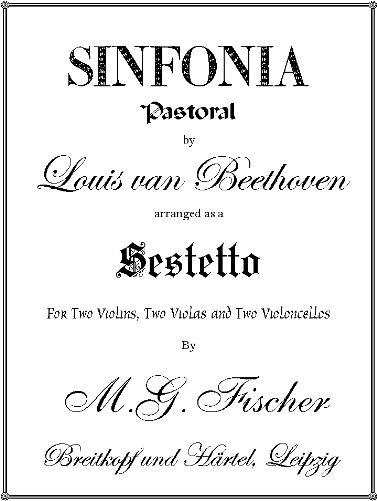
For modern audiences, the most unusual piece on the program will be the sextet arrangement of Beethoven’s Sixth Symphony. In Beethoven’s lifetime, arrangements of orchestral works for small ensembles were common. In a time when there were no recordings and orchestral concerts were infrequent, such arrangements were made and sold for home performances of music most people would otherwise not be able to hear.

The Sextet arrangement was made by M.G. Fischer, an organist and composer who was Beethoven’s contemporary. It was published in the composer’s lifetime by Breitkopf & Härtel in Leipzig, one of the most important European music publishers. That original edition has now been reprinted, for anyone who wants to try this at home. 

“A German orchestra shared this sextet version very early on in the pandemic,” Butterman explains. “Someone forwarded it to me and said, ‘Isn’t this great?’ And I thought it was.

“This captures quite well a work for full orchestra, but just with these six players. I wanted to have a masterwork or two on our season, and here’s a masterpiece of the full orchestral repertoire.”

Butterman says that the musicians enjoyed playing it, but found it challenging because they know it almost too well. “It’s kind of the same, but enough not that you really have to stay focused,” he says. “They’re busy all the time. They have to handle all of the things that they previously had to handle, but now they’re also given these other things to play, wind parts or whatever. It’s a tiring piece to play.”

Looking back over the past season, Butterman sees some good things that came out of the pandemic. “It’s been a year of experimentation and one that we’ve grown a lot in our understanding of how to share music with the public,” he says.

“There are some aspects that we’re going to take forward and continue to utilize in positive ways.”

# # # # #

Boulder Philharmonic, Michael Butterman, conductor
With Frequent Flyers Aerial Dance

  • George Walker: Lyric for Strings
  • Korine Fujiwara: Suite from Claudel
    Frequent Flyers Aerial Dance
  • Beethoven: Symphony No. 6 in F Major, op. 68 (“Pastoral”), arr. M.G. Fischer

Stream available at 7:30 p.m. Saturday, April 24
Pre-performance discussion at 7 p.m.

Tickets available here.

Note: Typos corrected 4/22/21.