‘West Side Story’: 61 years old and still as relevant as today’s headlines

CU Eklund Opera presents Bernstein’s masterpiece

By Peter Alexander Oct. 25 at 12:15 p.m.

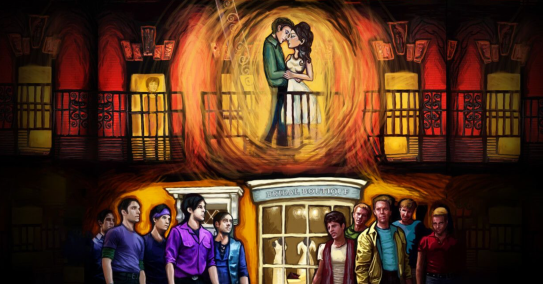
Leonard Bernstein’s West Side Story opened on Broadway just over 61 years ago — Sept. 26, 1957 — but for Leigh Holman, the story does not get old.

Overtones_-10-25_Glenn-AsakawaUniversity-of-Colorado-1-1024x839

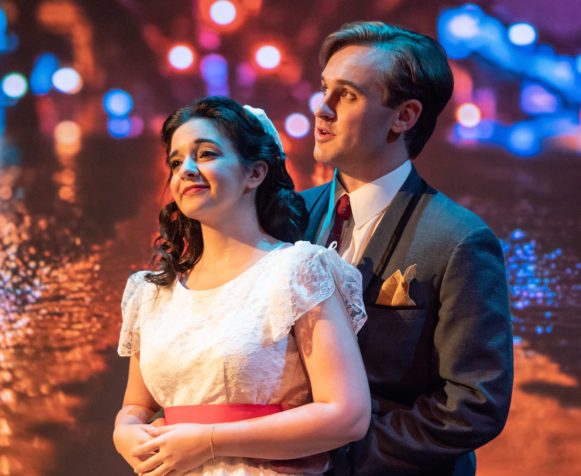
West Side Story cast members Christine Honein as Maria and Patrick Bessenbecher as Tony. Photo by Glenn Asakawa/University of Colorado.

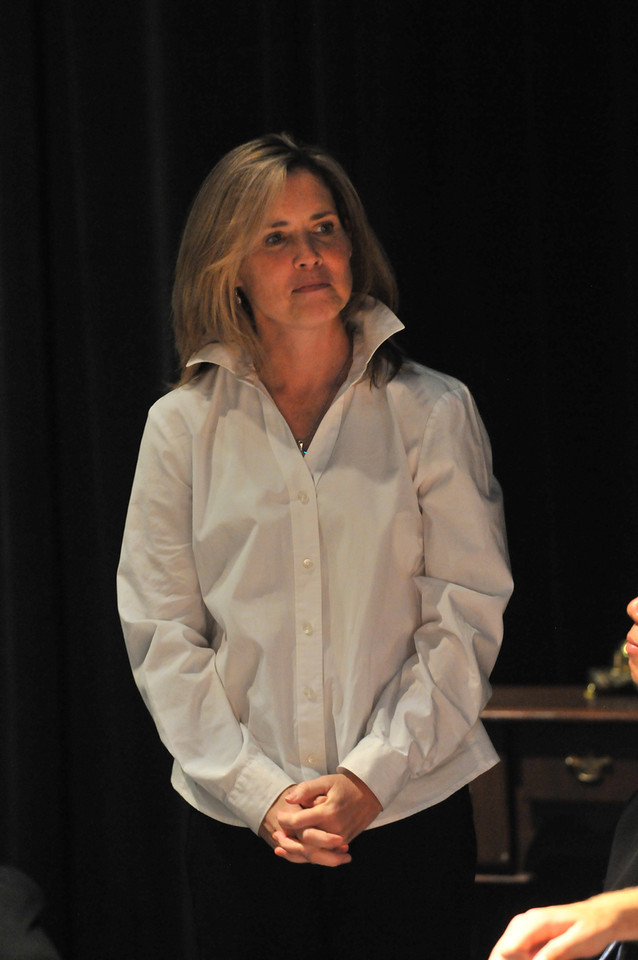
Holman is the director of the Eklund Opera Program at the CU College of Music, which will be presenting Bernstein’s masterpiece Friday through Sunday, Oct. 26–28. The cast of CU students, freshman though graduate students, will be stage-directed by Holman. Guest conductor Philip Hesketh will lead the singers and student orchestra.

The show is a transplanted version of Romeo and Juliet, with New York street gangs replacing the rival families. The conflict is between immigrants and newer immigrants, the Jets and the Sharks, a white gang and a Puerto Rican gang.

West Side Story has a theme that’s important to talk about right now,” Holman says. “It’s a story about people who are immigrants, and nothing could be more relevant. When someone moves into our area, is in the workplace or in school with us, people who don’t look like us, what sort of fear ignites in us and how do we act upon that?

“To me it sounds like a story from 2018.”

Read more in Boulder Weekly.

# # # # #

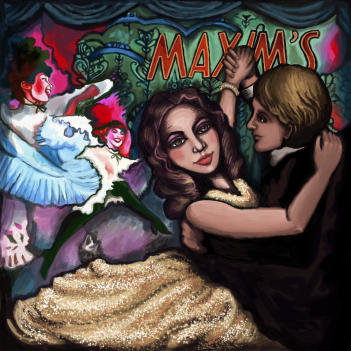
Art by Janalee Robison for CU Presents

West Side Story
By Leonard Bernstein
Book by Arthur Laurents; Lyrics by Stephen Sondheim
Eklund Opera Theater

7:30 pm. Friday Oct. 26 and Sunday, Oct. 27
2 p.m. Sunday, Oct. 28
Macky Auditorium

Tickets

CU NOW presents selections from new opera by Jake Heggie and Gene Scheer

If I Were You’ addresses questions of identity, life and death

By Peter Alexander June 14 at 6:30 p.m.

Jake Heggie, composer of the opera Dead Man Walking, and Gene Scheer, who wrote librettos for Heggie’s Moby Dick and It’s a Wonderful Life, are hard at work again.

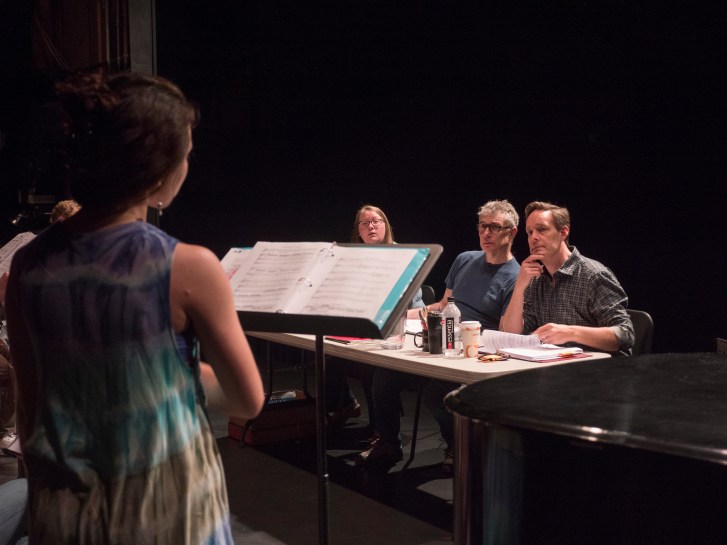
CU_Now_Rehearsal10GA-X5

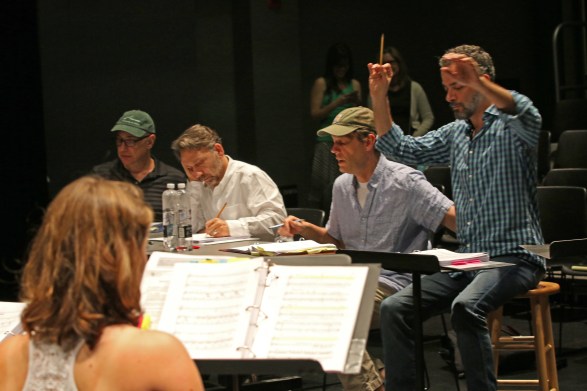
CU NOW Rehearsal. L to R: Erin Hodgson, assistant to the composer and librettist; Gene Scheer, librettist; Jake Heggie, composer (photo by Glenn Asakawa)

Their latest project, an opera that addresses existential questions about identity, life and death, has brought them to Boulder and CU Eklund Opera’s New Operatic Workshop (CU NOW). Selected excerpts from the new work, If I Were You, will be presented to the public for free, performed by CU student singers.  The Composer Fellows’ Initiative (CFI), a separate project of CU NOW will present four short operas by CU composition students: three 8-minute works and one 30-minute work.

CU NOW invites a composer and librettist every year to come to Boulder for a couple of weeks in June as they develop a new opera and work with student singers. The composers have the opportunity to hear portions of their own work and make changes as necessary before it’s complete. As part of his association with CU NOW, Heggie has also been working with the students whose works will be presented by the Composer Fellows’ Initiative.

If I Were You, as Heggie describes it, is “a modern-day Faust story” with an overlay of Gothic romance. “It’s about a disillusioned young man who wishes he could be anyone else,” he says. Heggie and Scheer will decide which portions of the opera to perform during the workshop. They will introduce the musical excerpts to the audience and explain the plot as they go along.

Read more in Boulder Weekly.

# # # # #

CU New Opera Workshop festival (CU NOW)
Leigh Holman, director
Jeremy Reger, director of music


If I Were You (selected excerpts)
Libretto by Gene Scheer
Music by Jake Heggie
Adam Turner, guest conductor

7:30 p.m. Friday, June 15, and 2 p.m. Sunday, June 17
Music Theater, CU Imig Music Building

Composer Fellows’ Initiative (CU NOW—CFI)
Daniel Kellogg, managing director
Four short operas by student composers
Steven Aguillo, guest music director
Bud Coleman, stage director

7:30 p.m. Saturday, June 16
ATLAS Blackbox, Roser ATLAS Center

Performances free and open to the public


CU Eklund Opera melds Handel’s Ariodante with Game of Thrones

‘Probably a dozen of the greatest arias of the early 18th century’

By Peter Alexander April 26 at 11:40 p.m.

Handel’s opera Ariodante is as old as 1516 when its story was first recorded, and as new as today.

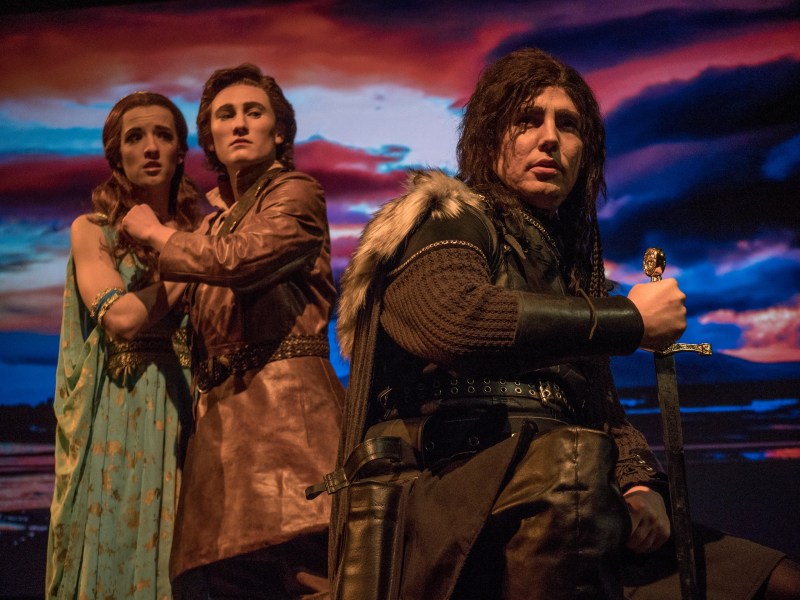
Ariodante_PR107GA-X5

Photo by Glenn Asakawa, courtesy of  CU Presents. L to R: Maureen Bailey, Rebecca Myers, Steven Groth

Its theme, the lynchpin of many operas, is timeless: a man being believed before a woman. “Hashtag MeToo, right?” Leigh Homan, the director of CU’s Eklund Opera Program, says. “This is so relevant!”

The next CU opera production, Ariodantewill be presented Thursday through Sunday (April 26–29) in the intimate Music Theatre. Holman is the stage director, and Zachary Carrettin, director of the Boulder Bach Festival, will conduct the orchestra and a cast of CU students.

For a Baroque opera, the plot is fairly simple, a human drama with no divine intervention and no magic. The scheming Polinesso wants to marry princess Ginevra in order to gain the throne of Scotland, but Ginevra and her father, the King, are celebrating her engagement to Ariodante. With the help of Dalinda, a lady-in-waiting, Polinesso frames Ginevra for infidelity. The King cancels the wedding and renounces his daughter.\

“It says a lot that they believe the male who’s not in the royal family over the princess,” Carretin says. But all is not lost: Ariodante, who is thought to have killed himself in despair, returns in time to implicate Polinesso, the latter is killed in a duel, and the opera ends with the villain vanquished and the true lovers wed.

Read more in Boulder Weekly.

# # # # #

Ariodante by George Frideric Handel
CU Eklund Opera Program
Zachary Carrettin, conductor
Leigh Holman, stage director

7:30 p.m. Thursday-Saturday, April 26–28
2 p.m. Sunday, April 29
Music Theatre, Imig Music Building

Tickets 


CU Eklund Opera Brings Sondheim’s “Demon Barber” to the Macky stage

Victorian production with a twist aims to make Sweeney Todd at least human

By Peter Alexander March 15 at 1:50 p.m.

Stephen Sondheim’s demon barber of Fleet Street is a hard character to like. He is after all a serial killer with a dark heart, but with a production of Sondheim’s Sweeney Todd, Leigh Holman of CU’s Eklund Opera Program aims to make him likable.

At least a little.

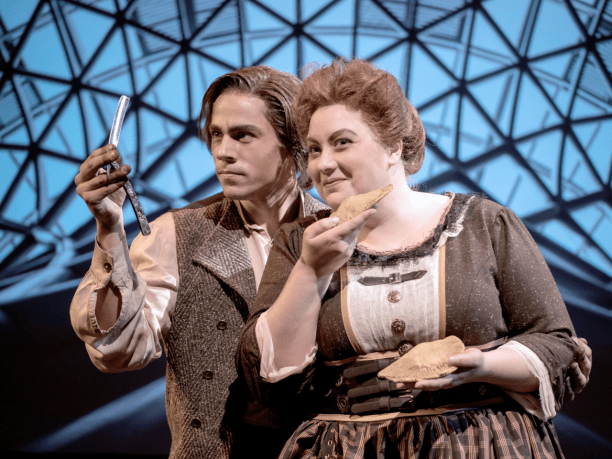
AC_Sweeney_PR12GA_3-X2

Sklyer Schlenker (Sweeney Todd) and Erin Hodgson (Mrs. Lovett) in the CU Eklund Opera production of  Sweeney Todd. Photo courtesy CU Presents.

“I don’t want him to appear already as a villain” at the beginning of the show, she says. “I want to see a human being, and it’s not until he learns what (happened) to his wife that we start to see the change” into a calculated killer.

“I want to see that arc,” she says. “He’s an anti-hero that’s cutting throats, but somehow you find yourself on his side.”

The production of Sweeney Todd by CU’s Eklund Opera program, with Holman’s semi-likable anti-hero and the rest of the gory story, will take the Macky Auditorium stage this weekend, with performances Friday through Sunday (March 16–18). The cast and orchestra of CU students will be led by guest conductor Caleb Harris, a member of the Vanderbilt University faculty who is a sabbatical replacement for CU’s Nick Carthy.

Other artistic contributors to the production include set and lighting designer Peter Dean Back, costume designer Tom Robbins, chorus master Jeremy Reger and choreographer Stephen Bertles. In addition to CU students, the cast will include CU faculty Andrew Garland as Todd and guest artist and CU alumnus Wei Wu as Judge Turpin.

Read more in Boulder Weekly.

# # # # #

Sweeney Todd
Eklund Opera Program, University of Colorado, Boulder
Leigh Holman, director
Caleb Harris, conductor

7:30 p.m. Friday, March 16 and Saturday, March 17
2 p.m. Sunday, March 18
Macky Auditorium

Tickets

More information available here.
View the full program here.

Lehár’s Merry Widow waltzes into Macky Auditorium (and does other dances, too)

Classic Viennese operetta gives its characters a second chance Oct. 27–29

By Peter Alexander

Franz Lehár’s Merry Widow, the classic Viennese operetta, is a delicious platform for wonderful singing, graceful dancing, colorful costumes, and an inexhaustible supply of humor. But in the hands of stage director Leigh Holman, director of the CU Eklund Opera Program, there is a serious side too.

The Merry Widow-X4The CU production will be presented Friday–Sunday, Oct. 27–29, in Macky Auditorium. Nicholas Carthy will conduct an orchestra and cast of CU students. Other artistic staff of the production are set and lighting designer Peter Dean Beck; costume designer Tom Robbins; choreographer Stephen Bertles; and technical director Ron Mueller.

The major roles are double cast, with different singers on Saturday and Friday/Sunday. The performances will be sung in German with English titles.

“People think of it as light, and it is a funny show,” Holman says. “But I’ve taken a little bit more serious tone with it—not to scare anyone off because it’s still very hilarious and fun, but I’ve been doing a lot of thinking about second chances.”

In fact, it’s a second chance for the two main characters that drives the plot of The Merry Widow.

Holman,Leigh-X4

Leigh Holman

As the operetta opens, the fictional east-European country of Pontevedro is facing a budget crisis. At their embassy in Paris, the ambassador hopes to arrange the marriage of the wealthy widow Hanna Glawari with Ponetvedro’s most eligible bachelor, Danilo. That would, he believes, save the country by keeping her money in Pontevedro. But Paris is filled with men—bachelors and married alike—who would love to get their hands on her and her money, making the ambassador’s matchmaking all the more urgent.

Of course there are many other comic-opera complications with many other couples, but you want to keep your eye on the ball, which is the Hanna-Danilo relationship. As Holman explains, this is where the second chance comes in, because they have a history.

“They fell in love years ago when she was a farm girl,” Holman says. “He was wealthy and a nobleman, and his uncle did not approve of their relationship.” Because Danilo hesitated to oppose his uncle, Hanna ended the relationship and got revenge by marrying another wealthy suitor.

Merry_WidowPR48GA-X5

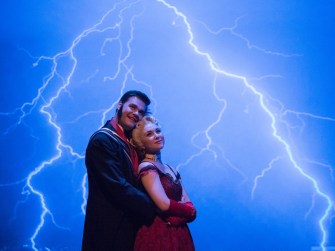
Lightening strikes twice for Danilo (Bryce Bartu) and Hanna (Anna Whiteway) in CU’s “Merry Widow.” (Photo by Glenn Asakawa)

“I wanted to deepen the understanding of the audience for what this couple had gone through,” Holman says. “So I decided to do a pantomime during the Overture, with a young Danilo and a young Hanna in front of the curtain. We get to experience their young love, and the situation where the uncle disapproves and Danilo hesitates. He eventually asks her to marry him, but she shows him her ring, that she’s already married. So we get all of that before the curtain opens.”

After the Overture, the curtain opens on the embassy party. Hanna’s much older husband has now died, leaving her a fortune, and Danilo has buried his sorrows by being a feckless man about Paris. ”They see each other again after all these years,” Holman explains. “Now they just love to spar with each other all the time, always testing each other.

“We really wanted to play on the idea, what would happen if we all got a do-over, if we had the chance to go back again? The question is, would we love to [do that]? We don’t know how it would end up, but we all wonder.”

This being operetta, you can count this second chance ending up with a happy outcome for all of the mixed-up couples. And you can also count on a lot of great entertainment along the way: a bit of farce and mistaken identities, gorgeous individual arias, hilarious ensembles, wonderful “Pontevedrian” folk music and costumes, and plenty of dancing.

carthy

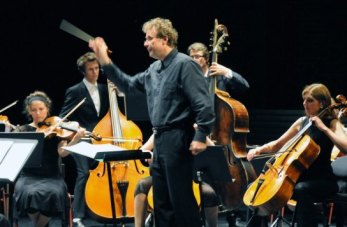
Conductor Nicholas Carthy

“We are having a wonderful time,” Holman says of herself and the cast. “It’s just a joy to go to work every day. We walk into the rehearsal hall and they’re all warming up, everybody’s dancing, the Viennese Waltz, the polka, the mazurka, the everything!”

Because Holman is devoted educator as well as opera director, “the everything” has great benefits for the students. “It’s the whole triple threat,” she says. “They’re singing, dancing, and acting with [spoken] dialog, so it’s a great opportunity for them. And comic timing! There really is an art to that and it’s something that has to be learned. They’re really grasping it and that’s exciting to see.

“Our goal is that when they leave CU they’re ready for whatever life brings. With musical theater and opera melding ever closer and closer together, I think this will get them ready for whatever opportunities they have.”

In other words, young opera singers have to be ready when they leave school because—unlike Hanna and Danilo—they won’t always get second chances when opportunities appear. And neither do audiences; The Merry Widow is only in Macky this weekend.

# # # # #

The Merry Widow by Franz Lehár
CU Eklund Opera Program
Leigh Holman, stage director
Nicholas Carthy, music director and conductor

7:30 p.m. Friday & Saturday, Oct. 27 & 28
2 p.m. Sunday, Oct. 29
Macky Auditorium

Tickets

CU NOW rewards audiences, composers and performers

Adamo’s Gospel of Mary Magdalene is getting an intimate makeover

By Peter Alexander
IMG_0440

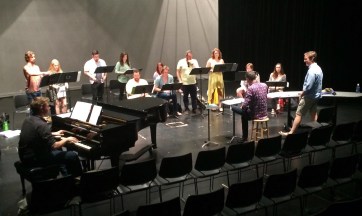
2016 CU NOW rehearsal. Photo by Peter Alexander

CU NOW, the University of Colorado Eklund Opera Program’s annual New Opera Workshop, is one of the most rewarding events on the Boulder classical music scene.

It is an opportunity to see how operas are put together. It is an opportunity to hear new works, often before their professional world premieres, and possibly, through feedback sessions with the composer, to influence the final product. And falling between the end of the main music season and the beginning of the summer festivals, it comes at a time when the classical scene is starting to get dry.

And that’s just the benefits for the audience. It almost goes without saying that the composer has the reward of seeing his work in an informal setting, where he can tweak the score and make improvements, and the singers reap the reward of learning a new work and preparing it for the composer. I count that a win-win-win.

Usually a workshop for completely new works, the NOW program goes in a different direction this year. Composer Mark Adamo is in Boulder to re-work his Gospel of Mary Magdalene, which was premiered by the San Francisco Opera in 2013 (under conductor Michael Christie, known locally for his years at the Colorado Music Festival). Following the somewhat controversial premiere, Adamo decided to revise the opera to make it smaller in scope than the San Francisco production, more intimate, more human.
Mark.Adamo

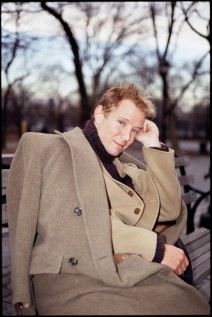
Composer Mark Adamo

Or as he was quoted in the CU press release, he wanted the show to be “more witty and modern, a lot closer to Godspell.”

Complete performances of the re-worked Gospel of Mary Magdalene will be free and open to the public, 7:30 p.m. Friday and 2 p.m. Sunday in the Imig Music Building Music Theater. The cast and ensemble of CU students and alumni will be accompanied by piano and harp.

Knowing the history of CU Now, Adamo says he was unsure about bringing a work that had already had a premiere, and a grand one at that, to Boulder. “Leigh (Holman, director of the Eklund Opera Program) talked to me about this, because ordinarily CU NOW does pieces before they’re given a premiere,” he says. “I wanted to revisit this because I’m not sure that the show that we staged (in San Francisco) was entirely the show that I meant.
Leigh.Holman

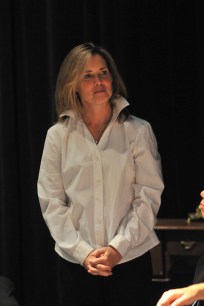
Leigh Holman

“It was a beautiful production, it was brilliantly cast, it was a beautiful set, it was a beautiful design, the direction was very sensitive, and yet . . . I didn’t feel like the tone was what I hoped for. And so Leigh said ‘we’re absolutely the place for that.’”

Adamo wrote both the libretto and the music for The Gospel of Mary Magdalene. The opera places Mary Magdalene at the center of the story, making her an important influence on Jesus’ teachings. Adamo’s libretto is based in part on the Gnostic Gospels, early Christian texts that were discovered in 1945. Not accepted by most Christian traditions, the Gnostic Gospels suggest that Jesus and Mary were lovers, and later married, and that Jesus was illegitimate.

The libretto grew out of Adamo’s own research, which was so thorough that the libretto even contains footnotes, some of which are sung. One important part of his goal was to counteract anti-female ideas of some Christian traditions. The opera opens with modern characters expressing their unease with the negativity toward sex and women that they have encountered in the church.
Cory.Weaver.Mary-M

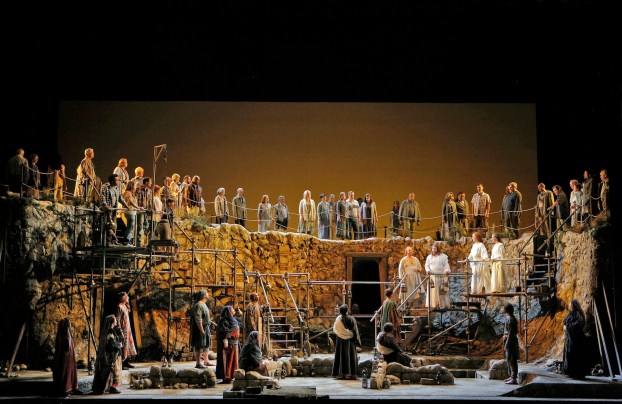
San Francisco Opera production of The Gospel of Mary Magdalene. Set by David Korins. Photo by Cory Weaver.

In the San Francisco production, which Adamo describes as “more King of Kings, if you will, that kind of Biblical spectacular look,” the modern characters got much less emphasis than he wanted. “Given the grandeur and the somberness of the setting, it was a stage that you could not do anything remotely personal, or witty,” he says.

To shift the focus back to the modern characters, and their relationship with the Biblical characters they conjure from their imaginations, Adamo cut the cast from 72 including chorus down to 16. “In San Francisco we had the five seekers (modern believers) and the chorus in modern dress, and then the Biblical characters, and all the supporting characters,” he explains. All of that has been reduced to the four principals—Yeshua (Jesus), Mary Magdalene, Miriam (Mary) and Peter—plus a dozen ensemble singers who take the other roles.

The original production was 2½ hours of music, plus intermission, which some listeners found to be ponderous. Adamo says he has reduced that to under 2½ hours including intermission. “Here’s the joke,” he says, “Nothing has been cut. A five-minute opening has been added, and the running time is shorter than in San Francisco.”
gs-adamo-portrait

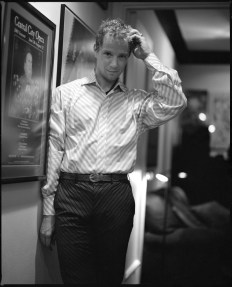
Mark Adamo

“It starts with me,” he admits. “I had under-marked the tempos to so dramatic a degree that when I went back to the score in preparation for this production, I was looking at the metronome markings and saying, ‘what was I thinking? Are these tempos sponsored by Ambien?’

“All of this needs to move much more conversationally. When I met with (conductor) Andrew (Bisantz), I said, ‘assume the metronome markings you’ve got are 12 (beats per minute) slow.’”

Finally, Adamo wanted a setting that was not as monumental as the San Francisco production. “Is there a setting that is illustrative of the concerns of the show, that allows more nimbleness and a wider variety of dramatic tones?” he asks. “I did come up with that,” he says, adding slyly, “I’ll leave the surprise for you if you see the show.”

Adamo is particularly happy that the smaller number of singers and the more intimate setting has shifted the emotional focus of the performance. “For the most part, the stress is squarely on what the performers are doing and how they are defining the space and the emotional terms of the piece, rather than anything more elaborate,” he says.

“That and making the whole stage into a group, rather than principals and then a chorus, have been the principal innovations, and it has been a delight.”

# # # # #

CU NOW
Leigh Holman, founder and artistic/general director

The Gospel of Mary Magdalen
By Mark Adamo
Andrew Bisantz, conductor

7:30 p.m. Friday, June 16
2 p.m. Sunday, June 18
Music Theatre, Imig Music Building, CU

Free and open to the public

Advisory: These performances include adult content, sexual situations, and a stylized suggestion of violence, and may not be suitable for children.

Renowned composer Jake Heggie is working on his newest opera in Boulder

“It’s a Wonderful Life” at the CU New Opera Workshop

By Peter Alexander

It’s a wonderful life for composer Jake Heggie right now.

IMG_3134

Left to Right: Libretist Gene Scheer; Leonard Foglia, Houston Grand Opera; composer Jake Heggie; and Bradley Moore, Houston Grand Opera. Photo by Alexandria Ortega for CU Presents.

As the composer of two highly successful operas, Dead Man Walking (2000) and Moby Dick (2010), he finds that commissions for his works keep coming.

“People keep asking me,” he says. “A commission is a huge gift.”

Now he is in Boulder to work on his latest opera, based on Frank Capra’s beloved 1946 film It’s a Wonderful Life. Joining him for work at the CU New Opera Workshop, (CU NOW) are librettist Gene Scheer and staff from the Houston Grand Opera, where the finished opera will have its premiere in December.

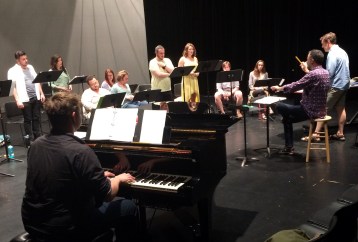
Under Leigh Holman, director of CU’s Eklund Opera Program, CU NOW offers composers the opportunity to workshop new operas prior to their first productions. For more than two weeks, they can try out their new works with CU student singers and other support staff, seeing what works and what doesn’t, making changes as they go.

After 18 days of intensive work, CU NOW will present performances of selected scenes from It’s a Wonderful Life at 7:30 p.m. Friday, June 17, and 2 p.m. Sunday, June 19, in the ATLAS Black Box Theater. Between those two performances, CU NOW will also present scenes by CU student composers at 7:30 p.m. Saturday (June 18) in the Imig Music Theatre. All three performances are free and open to the public.

Read more in Boulder Weekly.

# # # # #

CU New Opera Workshop (CU NOW)

IMG_0441

Rehearsal of “It’s a Wonderful Life” at CU NOW. Photo by Peter Alexander.

Workshop: It’s a Wonderful Life by
Jake Heggie
Libretto by Gene Scheer

7:30 p.m. Friday, June 17
2 p.m. Sunday, June 19
ATLAS Black Box Theater, CU Roser ATLAS Building

Composers Fellows’ Initiative
Performances of student opera compositions

7:30 p.m. Saturday, June 18
Music Theatre, CU Imig Music Building

Performances are free and open to the public


Jake Heggie will be the 2016 guest composer for CU NOW

Composer of Dead Man Walking will workshop new opera at CU

By Peter Alexander

heggie_piano16x9

Jake Heggie

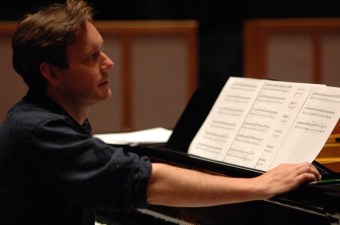
Jake Heggie, a composer who achieved considerable renown in 2000 with his opera Dead Man Walking, will visit the University of Colorado College of Music for three weeks in June.

Heggie will be in Boulder to develop a new opera at the Eklund Opera Program’s CU New Opera Workshop (CU NOW). The new work, with a libretto by Gene Scheer, will be based on the 1946 Frank Capra film It’s a Wonderful Life, starring Jimmy Stewart and Donna Reed.

At the end of the workshop period, portions of the new work will be presented at 7:30 p.m. Friday, June 17, and 2 p.m. Sunday , June 19, in the ATLAS Black Box Theater, located in the basement of the Roser ATLAS Building on the CU campus. These performances will be free and open to the public.

Seating will be first come, first served. The ATLAS Black Box Theater seats approximately 80–100.

It's_A_Wonderful_Life

Donna Reed, Jimmy Stewart and Karolyn Grimes in ‘It’s a Wonderful Life’

It’s a Wonderful Life has been commissioned by the Houston Grand Opera (HGO). The workshop process will allow Heggie and Scheer to work with CU students, trying portions of the new opera, making changes and rewriting as they go. Leonard Foglia, director of the HGO who will stage direct the world premier of It’s a Wonderful Life in Houston, will also be working with the student singers during the workshop, along with Jeremy Reger, a vocal coach with the CU Eklund Opera Program.

At the end of the workshop performances, the composer and librettist will ask for questions and feedback from the audience. Leigh Holman, director of the Eklund Opera Program, says “These workshops are for the intellectually curious. With the question and answer sessions, the creative team learns so much from the people asking the questions!”

Dead Man Walking, with a libretto by playwright Terence McNally based on the book by Sister Helen Prejean, took the operatic world by storm in 2000. His other operatic works have included Three Decembers (libretto by Scheer, 2008), Moby Dick (libretto by Scheer, 2010), and Great Scott (libretto by McNally, 2015).

DeadManWalkingJosephSister

Dead Man Walking: Michael Mayes as Joseph De Rocher and Jennifer Rivera as Sister Helen Prejean. Photo by Mark Kiryluk, Central City Opera

Dead Man Walking has been presented more than 50 times around the world. It was produced by CU in 2007 and by Central City Opera in 2014. Central City Opera also presented Heggie’s Three Decembers in 2010.

One of the busiest opera librettists working today, Scheer has collaborated with several prominent composers. In addition to the work he has done with Heggie, his works include An American Tragedy by Tobias Picker, premiered at the Metropolitan Opera in 2005, and last year’s Cold Mountain by Jennifer Higdon, premiered at the Santa Fe Opera.

This will be the seventh year for the CU NOW program. Previous operas that were developed through a CU NOW workshop have included Kirke Mechem’s Pride and Prejudice, Herschel Garfein’s Rosencrantz and Guildenstern are Dead, Alberto Caruso’s The Master, and Zach Redler’s A Song for Susan Smith.


Scenes from Zach Redler’s new opera offer a glimpse into the artistic workshop

CU NOW presents a work in progress with libretto by CU alumnus Mark Campbell

By Peter Alexander

Librettist and CU Alumnus Mark Campbell, who is returning to campus for CU NOW. (Photo by Laura Marie Duncan)

Librettist and CU Alumnus Mark Campbell, who is returning to campus for CU NOW. (Photo by Laura Marie Duncan)

It’s mostly hard work.

It looks like magic from the outside, the process of creating a large-scale, complex work of art like an opera. But the more you are able to see inside the process, the more you see the hard work it takes to get from an idea to a viable piece of art to a fully committed production in front of an audience.

It is part of the wonder of the University of Colorado, Boulder College of Music CU NOW (New Opera Workshop) program that it offers a glimpse into the magic-producing hard work of making a new opera, while advancing students’ careers and the world of opera.

The program, started six years ago by Leigh Holman, director of the CU Eklund Opera Program, and Patrick Mason, a professor of voice, opera and choral studies in the CU College of Music, brings composers to campus to work on developing a new operatic work, working over a couple of weeks with student singers in the CU College of Music. In a win-win-win situation, the students benefit from working closely with a composer on a new work, developing skills useful in the professional world; the composers benefit from hearing their work performed as they write it; and audiences benefit from seeing inside the creative process.

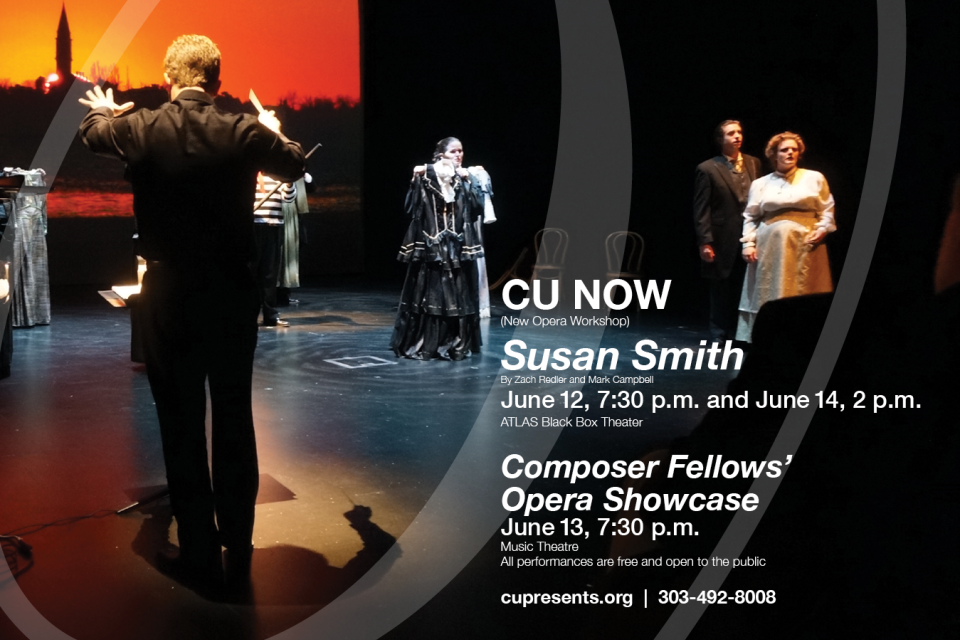
This year’s CU NOW program will come to fruition Friday and Sunday (June 12 and 14) with performances of scenes from an opera in progress by composer Zach Redler and librettist Mark Campbell, a CU alumnus whose other libretti include Kevin Puts’s Silent Night, winner of the 2012 Pulitzer prize in music, and the recently premiered Manchurian Candidate.

Composer Zach Redler

Composer Zach Redler

Scenes from Redler and Campbell’s A Song for Susan Smith will be performed with a cast of CU student singers at 7:30 p.m. Friday and 2 p.m. Sunday in the ATLAS Black Box Theater on the CU campus. The scenes will be stage directed by Holman.

The performance will feature six or seven of a projected 15 scenes in a one-act, 90-minute opera. Based on the notorious 1994 case of a woman who was sentenced to life in prison for the deaths of her two sons, A Song for Susan Smith does not dramatize or feature the killings. Instead, it focuses on the period between the killings and Smith’s eventual confession nine days later, and on Smith’s mental state during that time.

Between those two performances, CU NOW will also present the Composer Fellows’ Opera Showcase, scenes by CU student composers who have been working with Redler and other operatic professionals brought to campus for CU NOW, at 7:30 p.m. Saturday, June 13, in the Music Theater inside the CU Imig Music Building. All CU NOW performances are free and open to the public.

A Song for Susan Smith started as a scene that Redler wrote for his wife, soprano Brittney Redler, to sing for a doctoral voice recital. The text came from a completed libretto that Campbell had never used and forms a prologue to the opera, portraying Smith before the killings. That scene has now been performed several times, including as part of the Ft. Worth (Tex.) Opera’s Frontiers program. It will not be included in the CU performances but can be viewed on the composer’s Website (scroll down to the video, featuring the composer at the piano and Brittney Redler singing).

Redler is not unaware that Susan Smith is a difficult subject for an opera, one that might be disturbing to some audience members. “I’m drawn to characters that are hard to comprehend,” he says. “Susan Smith has been through a lot, but because [infanticide] is a too common thing—500 cases a year!—I don’t think it’s exploitive. I think it’s using a very specific instance to tell a very general story.

“It’s a horrible problem, because it’s not that these people are necessarily inherently evil. Susan came from an extremely dysfunctional childhood and household. So it’s about mental health and about mob mentality (when the town turns from supporting Susan to shunning her). A lot of the music is kind of trying to show Susan’s perspective.”

Leigh Holman, director of the CU's Eklund Opera Program and CU NOW (Photo by Glenn Asakawa/University of Colorado)

Leigh Holman, director of the CU’s Eklund Opera Program and CU NOW (Photo by Glenn Asakawa/University of Colorado)

Holman and Mason started CU NOW to give students experience tackling completely new music and new roles. At the time, there were few programs devoted to new opera, but that has changed in the past six years.

“When we started this six years ago, there weren’t many people doing what we’re doing,” Holman says. “Now, people are doing it everywhere.

“The most important thing that was happening at the Opera America Conference two weeks ago was new works—composers there, librettists there, all these big companies looking for new works to do. That’s what audiences want. That’s where the market is now. Six years ago it wasn’t.”

CU’s unique niche in this world is taking works in progress that have not been completed or received a commission, works where the composers are just getting started, and giving them the chance to mold it to living, breathing singers. “We like to do brand new things,” Holman says. “We want our students to have the opportunity to work with a brand new piece.

“The composers are hearing their piece for the first time with our students. And our students get the opportunity to work with the composers. Our students can’t listen to a recording and learn it. There’s no other singer that has already said, ‘This is how it’s supposed to sound.’ It’s really their own interpretation.”

Redler seconds Holman’s comments. “It’s really great for (the students),” he says. “In professional opera companies, it’s the young artists who are doing the workshops and the readings of new works. It’s just such an important skill for them to have, to be able to pick up a new piece of sheet music that no one has ever recorded and learn it.”

He is equally enthusiastic about what the program means for him as a composer. “Hearing scenes that I’ve only heard in my head is just so important,” he says. “The piece changes in front of an audience as well, so to get to see that is fantastic.”

And the value for the audience? You can tell the rest of us: Go to the performances, and post your reaction here afterwards! You too might help open doors for new creations.

# # # # #

CU NOW web ad 1349 x 905CU NOW

Scenes from A Song for Susan Smith
An opera in progress by Zach Redler and Mark Campbell
7:30 p.m. Friday, June 12
2 p.m. Sunday, June 14
ATLAS Black Box Theater on the CU campus

Composer Fellows’ Opera Showcase
Operatic scenes by CU student composers
7:30 p.m. Saturday, June 13
Music Theater, CU Imig Music Building

All performances free and open to the public