New work and a familiar potboiler at CMF

Pianist Awadagin Pratt, Scheherazade make an impression with CMF Orchestra

By Peter Alexander July 26 at 12:15 a.m.

The Colorado Music Festival orchestra presented an intriguing program last night (July 25), combining a new piece for piano and strings, played by a striking individual soloist, and a dramatic reading of Rimsky-Korsakov’s colorful tone poem, Scheherazade.

The soloist, Awadagin Pratt, has earned a reputation as committed musician who devotes himself fully to the programs he plays. The piece that formed the focus of his performance with the orchestra and conductor Peter Oundjian was Rounds by Jessie Montgomery, one of the leading young American composers today.
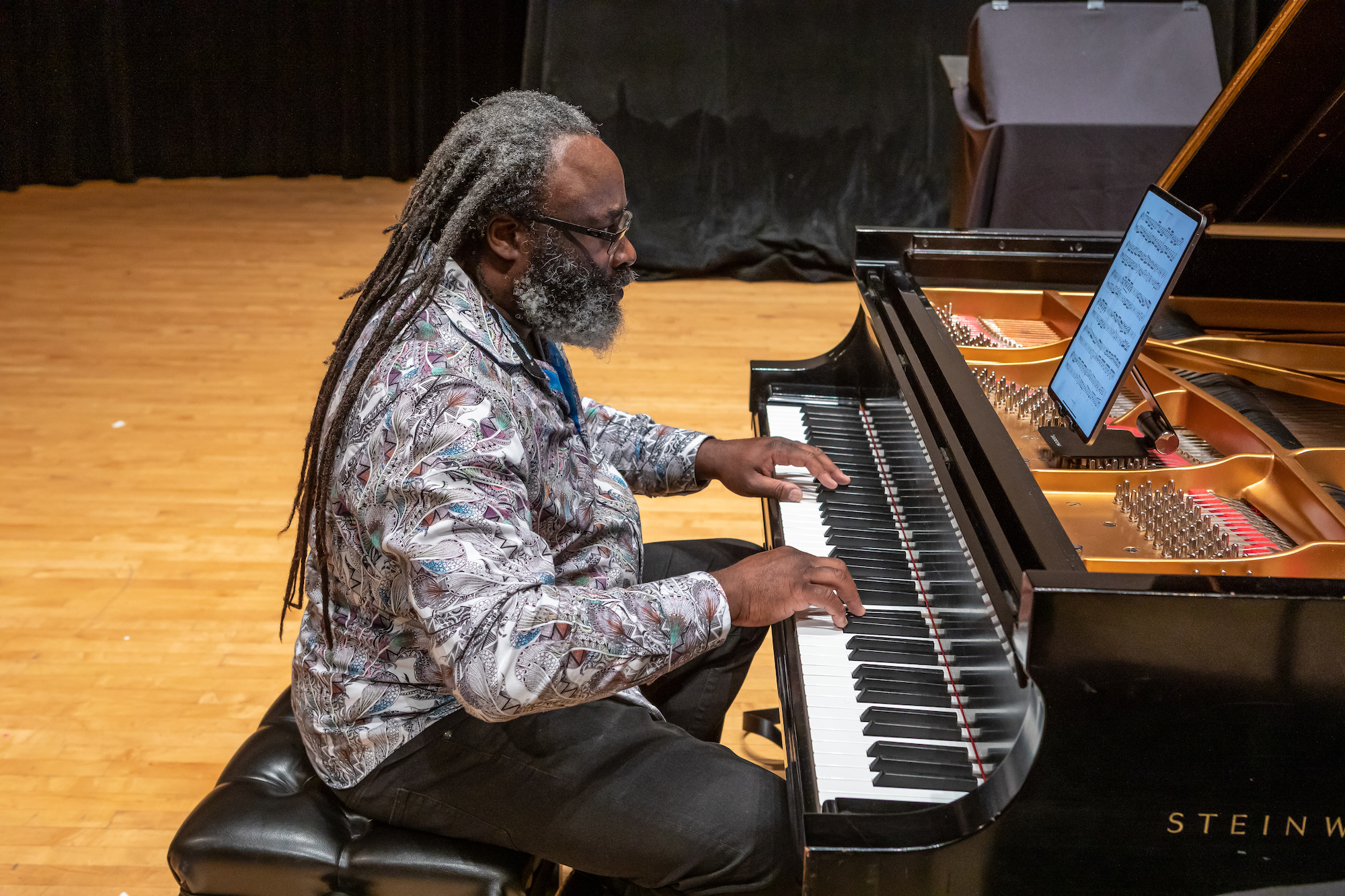
Pianist Awadagin Pratt

Rounds was part of the Still Point project, in which six composers including Montgomery were commissioned to write a new piece to be inspired by T.S. Eliot’s Four Quartets. Pratt was one of the performers in the project, along with the vocal group Roomful of Teeth and the self-conducted orchestra A Far Cry. The six works were released on an album titled Still Point, taken from the poem: “At the still point of the turning world. . . . there is only the dance.”

The album was released by New Amsterdam Records in 2023. Pratt has played Rounds with several different orchestras since then, including the Colorado Symphony, which was one of the co-commissioners.

Rounds opens with a rushing figure that, in different forms, recurs in-between and after other episodes. In about 15 minutes, the music carries the listener into different places and moods, from the rapidly pulsing opening to moments of stillness, to moments of great force.

This is clearly a piece that Pratt enters with great enthusiasm.His playing embraced wispy chords and thundering outbursts, and he navigated the partly-written cadenza that allows improvisation with confidence. All the sudden contrasts emerged clearly and cleanly in a riveting performance that evoked an enthusiastic response. After several curtain calls, Pratt came back for a gently touching encore by French composer Françoise Couperin.

The concert had opened with a performance by Pratt, Oundjian and the CMF strings of J.S. Bach’s Keyboard Concerto in A major, S1055. In spite of Pratt’s tidy technique and expressive playing, the performance was an example of the problems of playing Baroque music on the modern concert grand. The balance was not consistent, with inner voices often lost in the thick sound. Nevertheless, the performers showed an elegant grasp of Baroque phrasing, and the performance was never less than enjoyable.

A masterfully written score, Scheherazade is one of the most popular of orchestral potboilers. I don’t mean to denigrate the work, which contains gems of orchestration and great orchestral effects from beginning to end, but the pot does indeed boil in the best performances.

You might say that it not only boiled, it exploded last night on the Chautauqua stage. The orchestra demonstrated an extreme dynamic range, which really means that the soft passages were wonderfully, lean-forward-to-hear soft. Any orchestra with a brass section can play loud, but not all can play as softly as the Festival Orchestra did without ever losing intonation or fullness of tone. And you will never hear a softer, or cleaner, snare drum solo than accompanying woodwind solos in the third section of the score.

Oundjian clearly knows how to find the drama in a piece that is bursting with it. He also knows when to trust the musicians and let them take the lead, as he did with the robust trombone solos in the second section, and also some of the delicate woodwind solos. All of the soloists played with finesse and an alluring tone, especially the clarinet and flute. Of the winds, the bassoon, oboe, horn and trumpet soloists also shone.

The largest share of solos in Scheherazade goes to the concertmaster, Jonathan Carney from the Baltimore Symphony, who lent a gentle, sweet tone to the portrayal of the heroine, Scheherazade herself. In places, you could imagine you were hearing a violin concerto, which Carney executed eloquently.

Once again the audience stood and cheered. Oundjian made it a point to recognize all of the individual soloists, including the harpist who has much to do.

This attractive program will be repeated at 6:30 p.m. tonight (Friday, July 26) in the Chautauqua Auditorium. Tickets are available from the Chautauqua Box Office.
Pro Musica Chamber Orchestra presents “Diverse Voices”

Program features three living composers, one African-American pioneer

By Peter Alexander Jan. 26 at 11:10 a.m.

Searching for diverse repertoire for the Pro Musical Colorado Chamber Orchestra, conductor Cynthia Katsarelis found works by three living composers and a pioneering African-American composer of the 20th century.

Their concert featuring those composers, titled “Diverse Voices,” will be Saturday in Denver and Sunday in Boulder (Feb 1 and 2). The three living composers are Jessie Montgomery, a New York violinist and composer who has been affiliated with the Sphinx Organization, which supports young African-American and Latinx string players; Rudy Perrault, a Haitian native who is director of orchestras at the University of Minnesota, Duluth; and Gabriela Lena Frank, a California-born composer who has mixed Peruvian, Chinese, and Lithuanian-Jewish heritage.

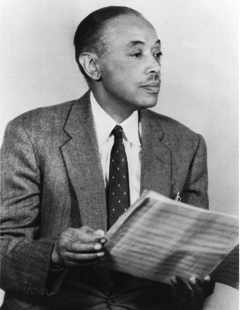
william_grant_still_1

William Grant Still

William Grant Still, the fourth composer on the program, was associated with the Harlem Renaissance in the 1920s, and later had a successful career arranging popular music as well as music for television and films. His Symphony No. 1 (“African-American Symphony”) was the first symphony by an African-American composer to be performed by a major orchestra.

On the all-string orchestra program, Pro Musica will perform his Danzas de Panama, Montgomery’s Starburst, Perrault’s Exodus and Frank’s Leyendas: An Andean Walkabout. This program reflects Katsarelis’s personal commitment to diversity, meaning not only composers of color, which describes all four composer on the program, but also female as well as male composers (two of the four), and new music as well as recognized classics (three of the four).

“I think we come to a more healthy place if we’re inclusive of the different talent and the different voices that we have in the 21st century,” Katsarelis says. “Pro Musica has a mission of [performing] classic to cutting edge [music], and we also present works that were under-represented.”

Katsarelis includes new works among the “under-represented.” “Where the classics touch something universal in us, new music speaks to right now,” she says. “It may or may not last, but it has something to say to us today.”

The entire program is for string orchestra, which is where Katsarelis had to do some searching. “When I encounter a musician that I really respect and am really intrigued by, I go on a Sherlock Holmes-like hunt for music that is appropriate for Pro Musica Colorado Chamber Orchestra,” she says.

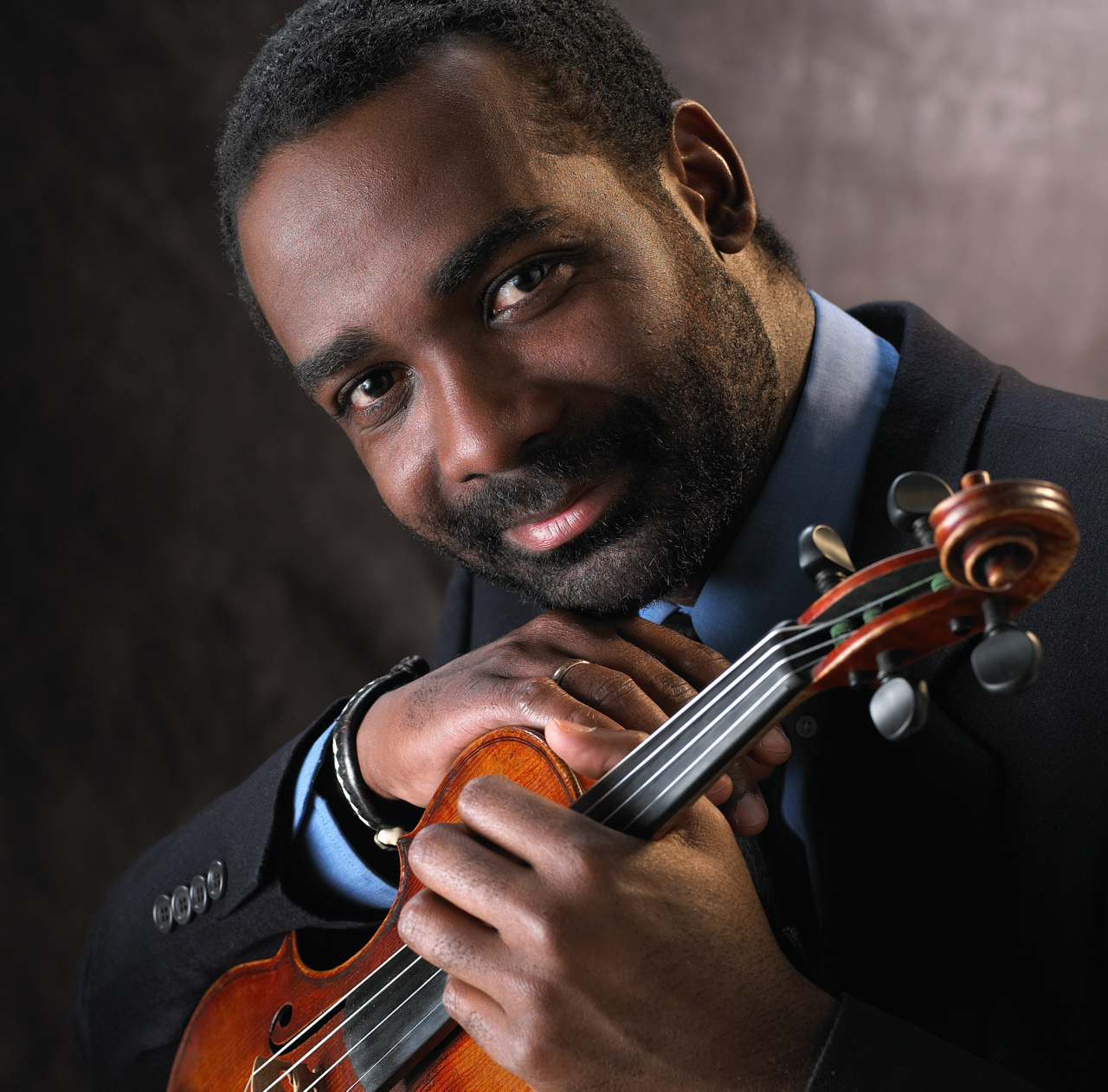
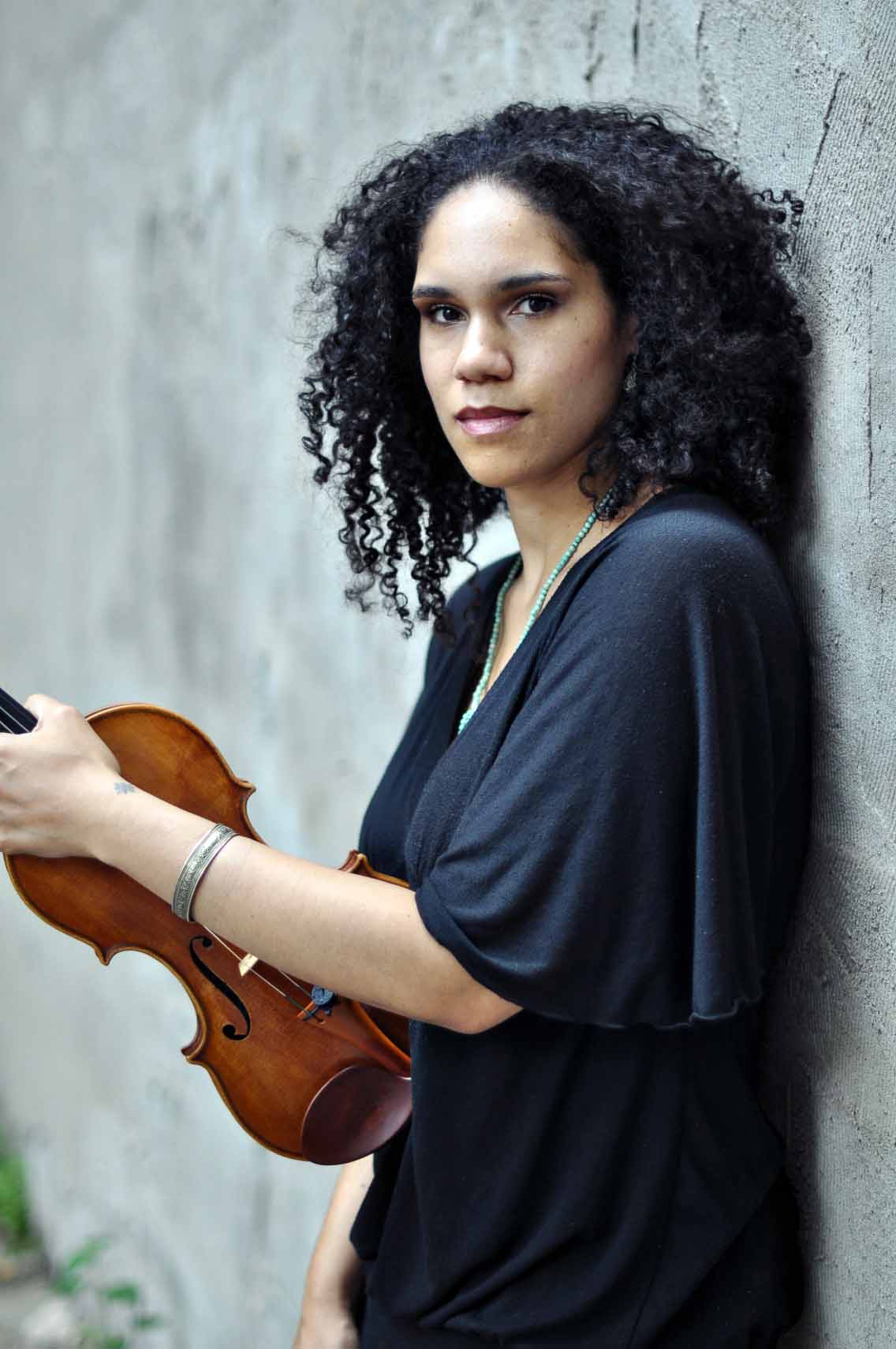
Montgomery.image-asset

Jessie Montgomery. Photo by Jiang Chen

Needing music for strings alone, she found several pieces that are written for string quartet or string orchestra. The one exception is the opening work on the program, Montgomery’s Starburst, which was written for the Sphinx Virtuosi chamber orchestra. “It’s a great piece, really energetic, as you would expect a starburst to be,” Katsarelis says.

“It’s inspired by a cosmic phenomenon, and for her that involves rapidly changing musical colors. It’s only a three-minute piece, but you’re getting all these different colors that a string orchestra can produce. They’re playing on the bridge to get this eerie sound, they play harmonics, they have various kinds of pizzicato, and [Montgomery] combines them in various ways. It’s a musical burst as well as a starburst.”

Katsarelis met Perrault through her own work in Haiti. Since 2004 she has gone to Haiti every summer to teach at a music camp, and sometimes during the year as well. “It’s a very musical culture, and they’re always hungry for more,” she says. “It’s really rewarding to work there.”

Perrault-1_3.rev.1568059743

Rudy Perrault

Perrault’s Exodus was originally part of a piece for string quartet. It was inspired by and dedicated to people who have been forced to leave their homelands as refugees. “I hear a very strong musical personality,” Katsarelis says of the score.

“He knows what he’s doing, and he knows how to use a wide range of musical language for the wrenching emotion that is part of the piece. I hear little hints of Bernstein and Shostakovich with a little bit of an island rhythm.”

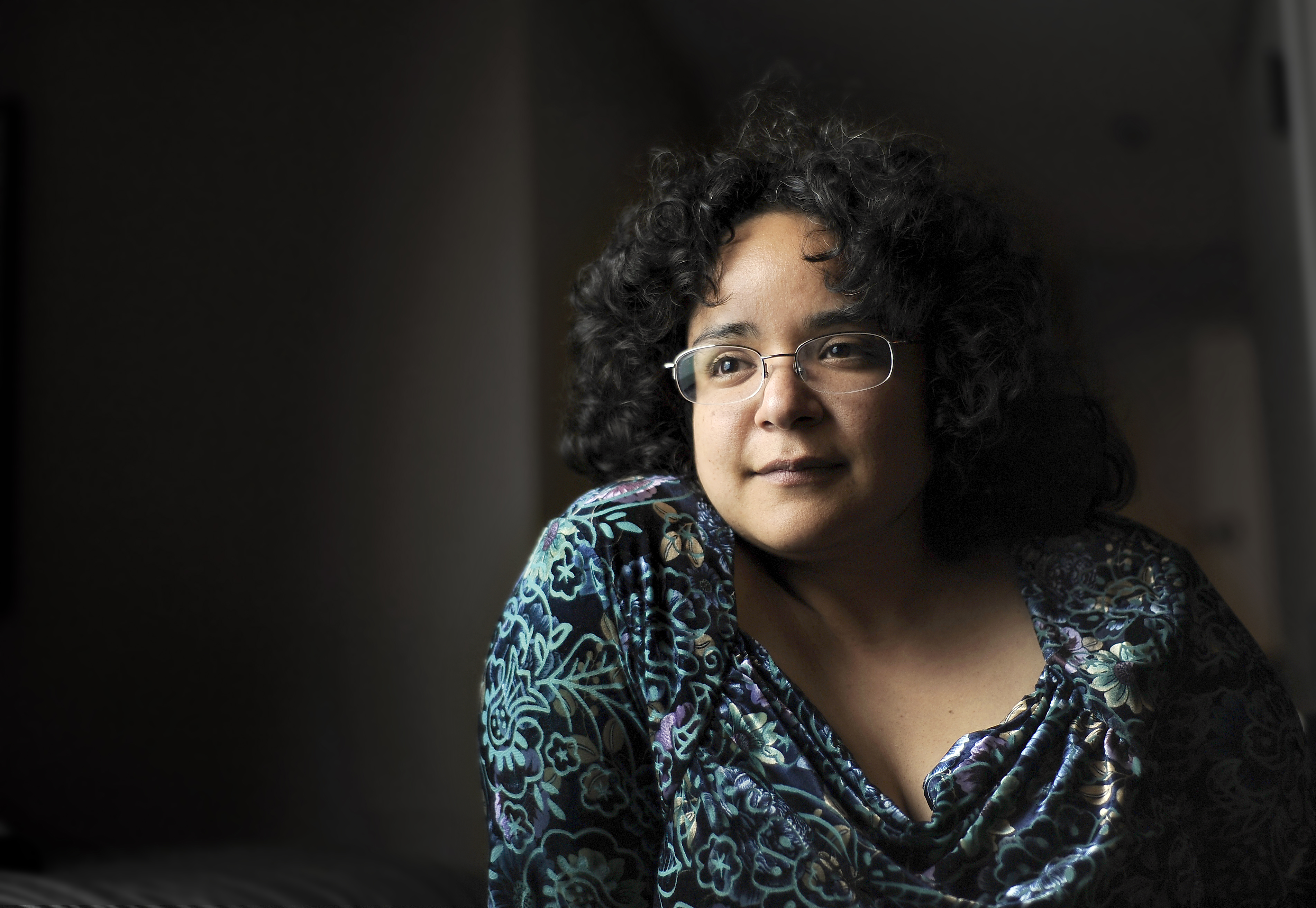
0414_GabrielaFrank

Gabriela Elena Frank

Frank’s mixed heritage plays a very large role in her work. “Her mother was Peruvian-Japanese, and her father was Lithuanian Jewish,” Katsarelis explains. “She became a kind of musical anthropologist and explored her roots, and she was really captivated by Peru and the Andean music, the Andean instruments and genres and character—they’re all reflected in her piece.”

For example, she imitates the sound of Andean instruments—the panpipes, a heavy wooden flute called the tarka, guitars—in her writing for strings. Other movements depict the chaqui, a legendary runner who covered large distance to deliver messages from town to town, and the llorona, a professional crier hired to mourn at funerals.

Katsarelis often describes pieces of music as a journey, with a return to home providing closure. But in this case, she says, “Peru is part of Frank’s background, and in her exploration she finds another version of home. So we have a journey; home is just a little bit different.”

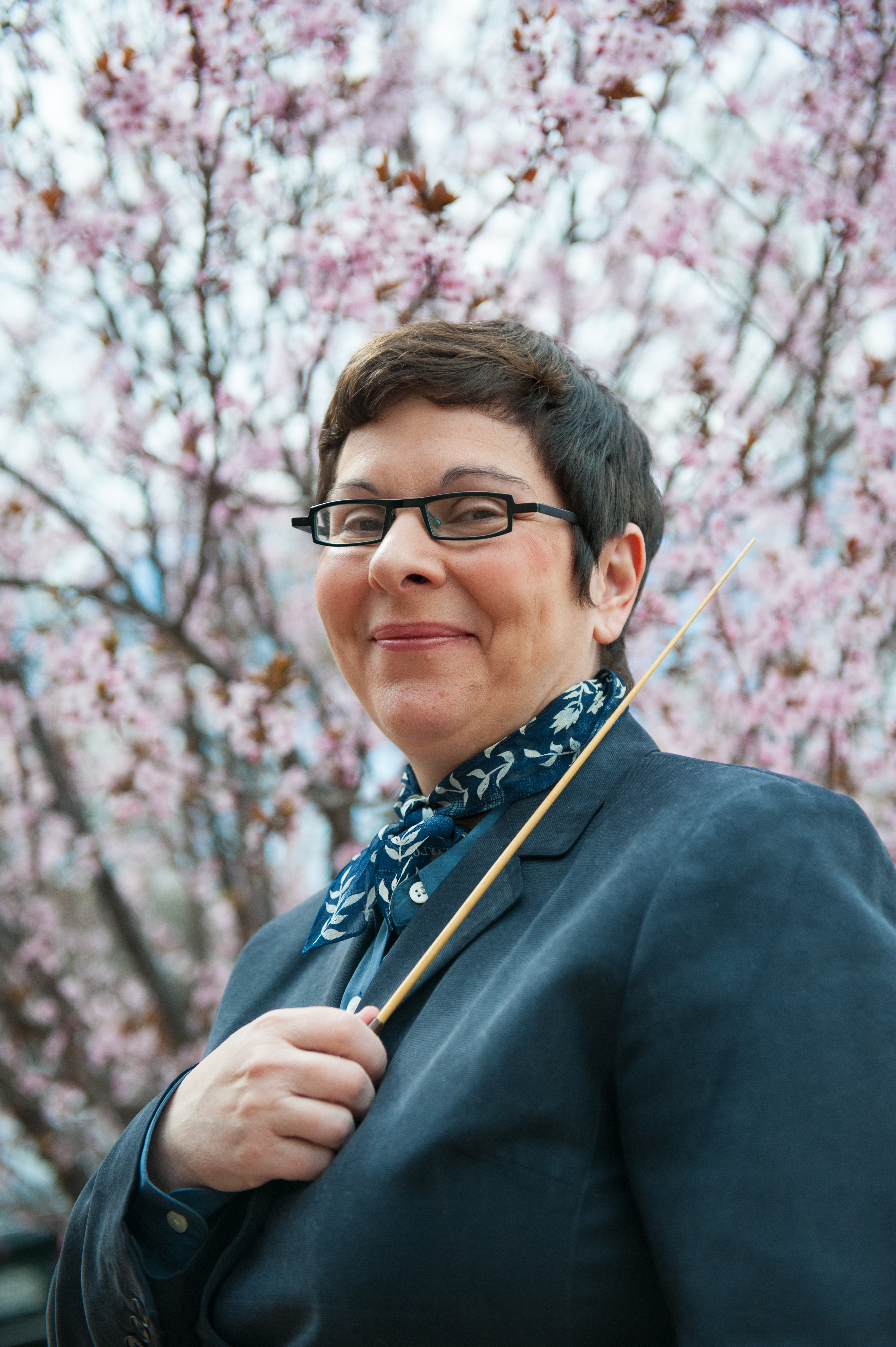
Photography by Glenn Ross. http://on.fb.me/16KNsgK

Cynthia Katsarelis. Photo by Glenn Ross

Thinking of her musical mission  beyond the individual pieces she selected to illustrate diversity, Katsarelis says “I always thought that classical music could help bring world peace, so this is just one more step.” In addition to that lofty goal, she adds, “What I’m presenting is terrific music. It’s beautiful, it’s inspiring, it’s entertaining, it’s thought provoking and it engages the world today.

“I hope young people will come to the concert, because it’s part of what they’re growing into: a world that’s just so global, and so diverse.”

# # # # #

“Diverse Voices”
Pro Musica Chamber Orchestra of Colorado, Cynthia Katsarelis, music director

Jessie Montgomery: Starburst
Rudy Perrault: Exodus
William Grant Still: Danzas de Panama
Gabriela Lena Frank: Leyendas: An Andean Walkabout

7:30 p.m. Saturday Feb. 1, First Baptist Church of Denver
2 p.m. Sunday, Feb. 2, Mountain View United Methodist Church, Boulder
Tickets