Grace Notes: Bach, Timbres, Sphere and a Groove

Programs outside the norm, from the 18th to the 21st centuries

By Peter Alexander Sept. 18 at 10:05 p.m.
The Boulder Bach Festival (BBF) and guest artists will take audiences back to 18th-century Venice in a program entitled “Anonimo Veneziano” (Anonymous Venetian) 4 p.m. Saturday, Sept. 21, at the Dairy Arts Center in Boulder.

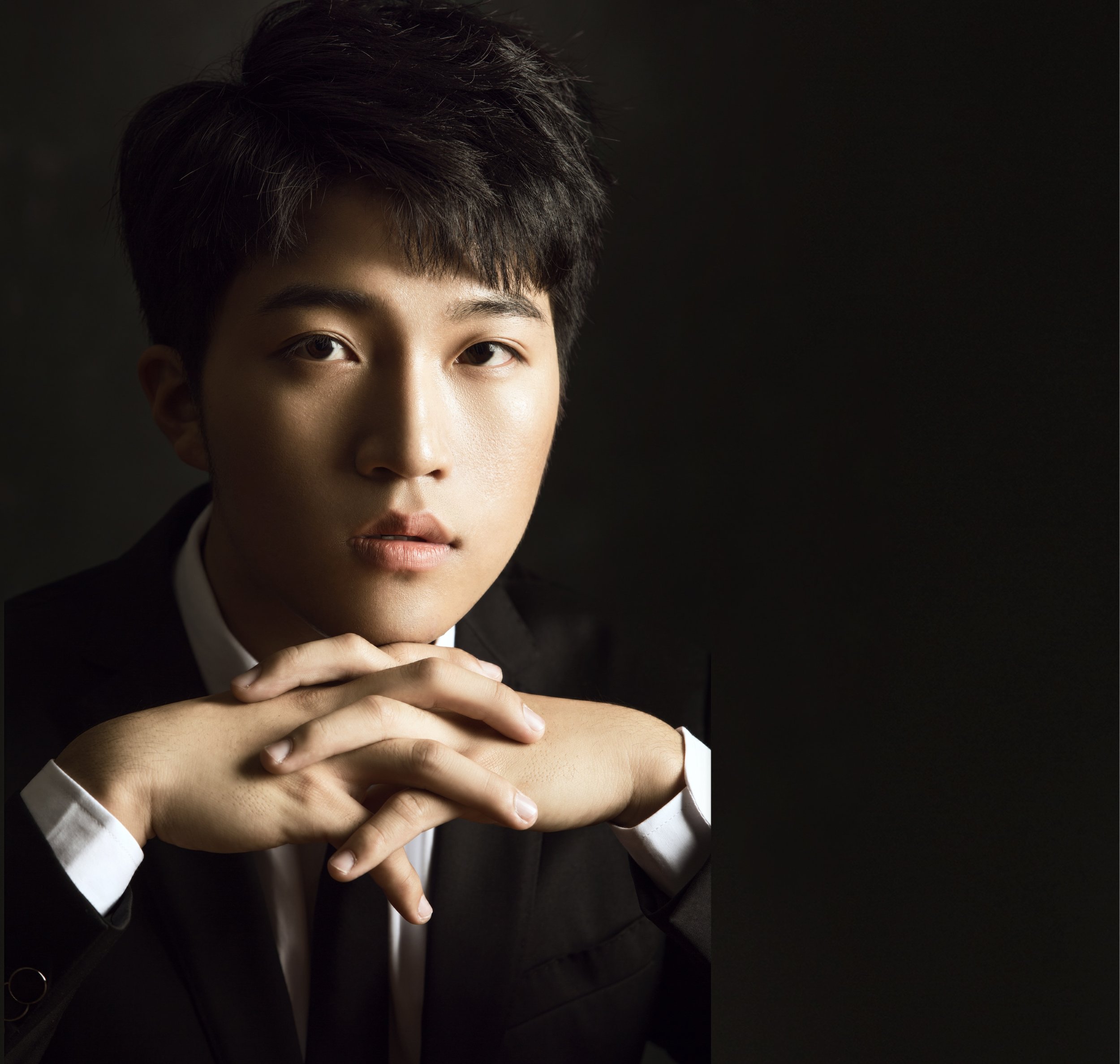
The program, with the BBF’s music director/violinist Zachary Carretin and the COmpass REsonance ensemble (CORE Ensemble), will feature violinist Nurit Pacht from NewYork, harpsichordist Chris Holman from Cincinnati, and theorbist Keith Barnhart, an historical plucked instruments specialist who is also the BBF’s educational coordinator.
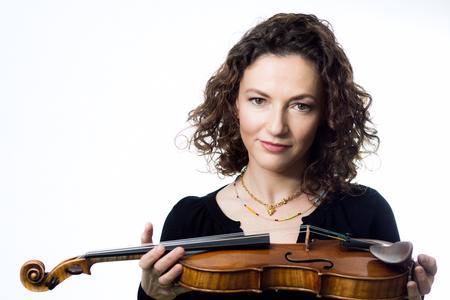
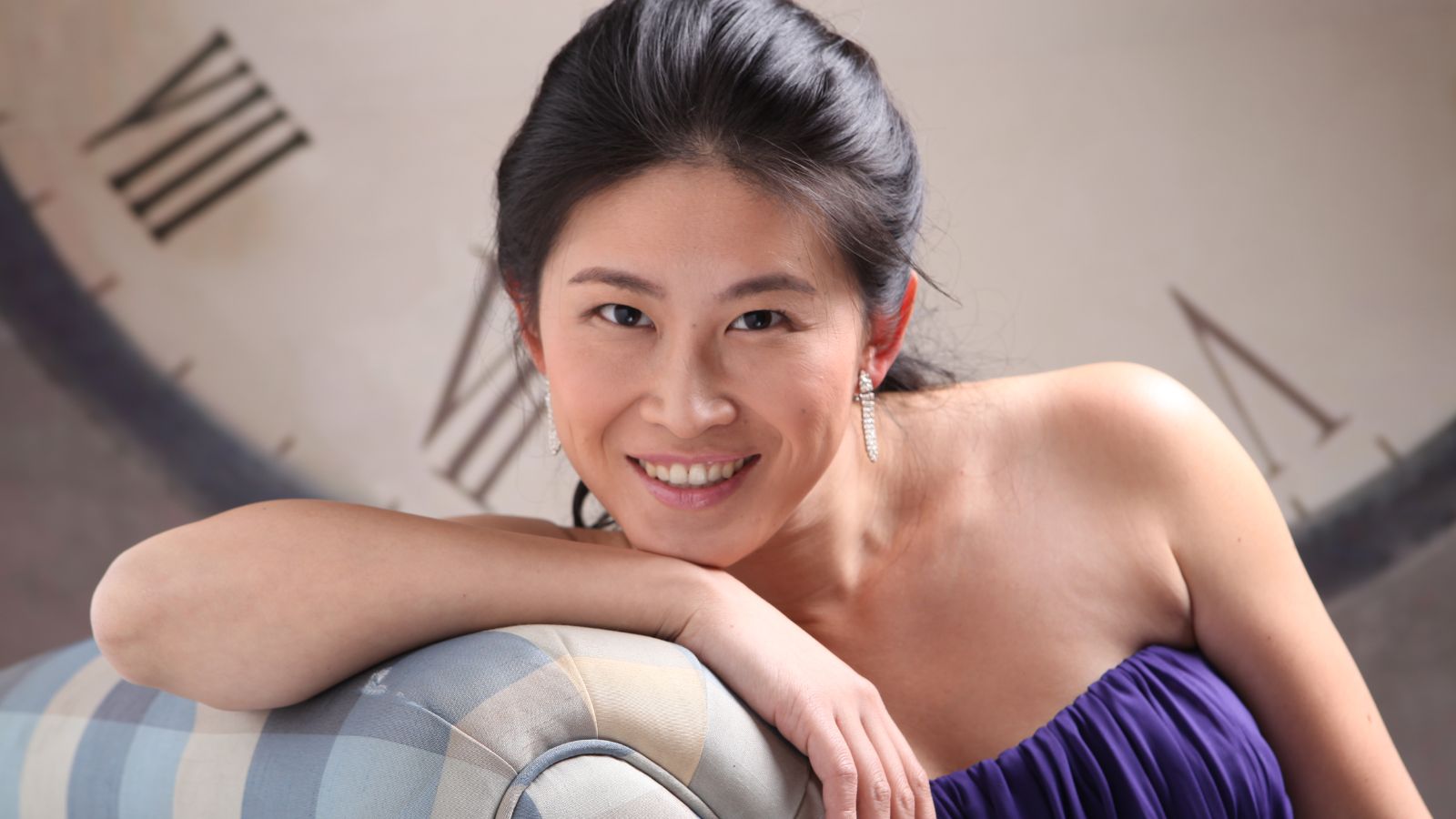
Nurit Pacht

The program opens with the famous Adagio attributed to 18th-century Italian composer Tomaso Albinoni and featured in many film scores. In fact, the Adagio was composed by 20th-century Italian musicologist Remo Giazotto. A scholar of Albinoni’s music Giazotto claimed that the Adagio was based on a fragment of an Albononi trio sonata that he found on a manuscript that has since mysteriously disappeared. 

The remainder of the program will be filled out with genuine Albinoni works, the complete Sinfonie e Concerti a cinque (Sinfonias and concertos for five instruments), op. 2, that were published in Venice in 1700. This important collection is rarely performed complete. The BBF performance, which will  be played without intermission, is expected to take approximately 75 minutes.

 Pacht holds a degree in historical performance from the Juilliard school and is known as a specialist in both music by living composers, including works written for her, and music of the Baroque. She was a top prize winner in the Irving Klein International Music Competition in California, the Tibor Varga International Violin Competition in Switzerland, and the Kingsville International Music Competition in Texas. She has toured widely in Europe and the United States. She teaches privately in New York City.

# # # # #

Anonimo Veneziano
Boulder Bach Festival CORE Ensemble, Zachary Carrettin, conductor/violinist
With Nurit Pracht, violin, Chris Holman, harpsichord, and Keith Barnhart, theorbo

  • Remo Giazotto: “Adagio in G minor by Tomaso Albononi”
  • Tomaso Albinoni: Sinfonie e Concerti, op. 2

4 p.m. Saturday, Sept. 21
Dairy Arts Center Gordon Gamm Theater

TICKETS

# # # # #

The Boulder Chamber Orchestra’s (BCO)chamber concert titled “Mixed Timbres,” postponed from last April due to the power outage caused by high winds, will be presented at 7:30 p.m. Saturday, Sept. 21, in the Boulder Seventh-Day Adventist Church.

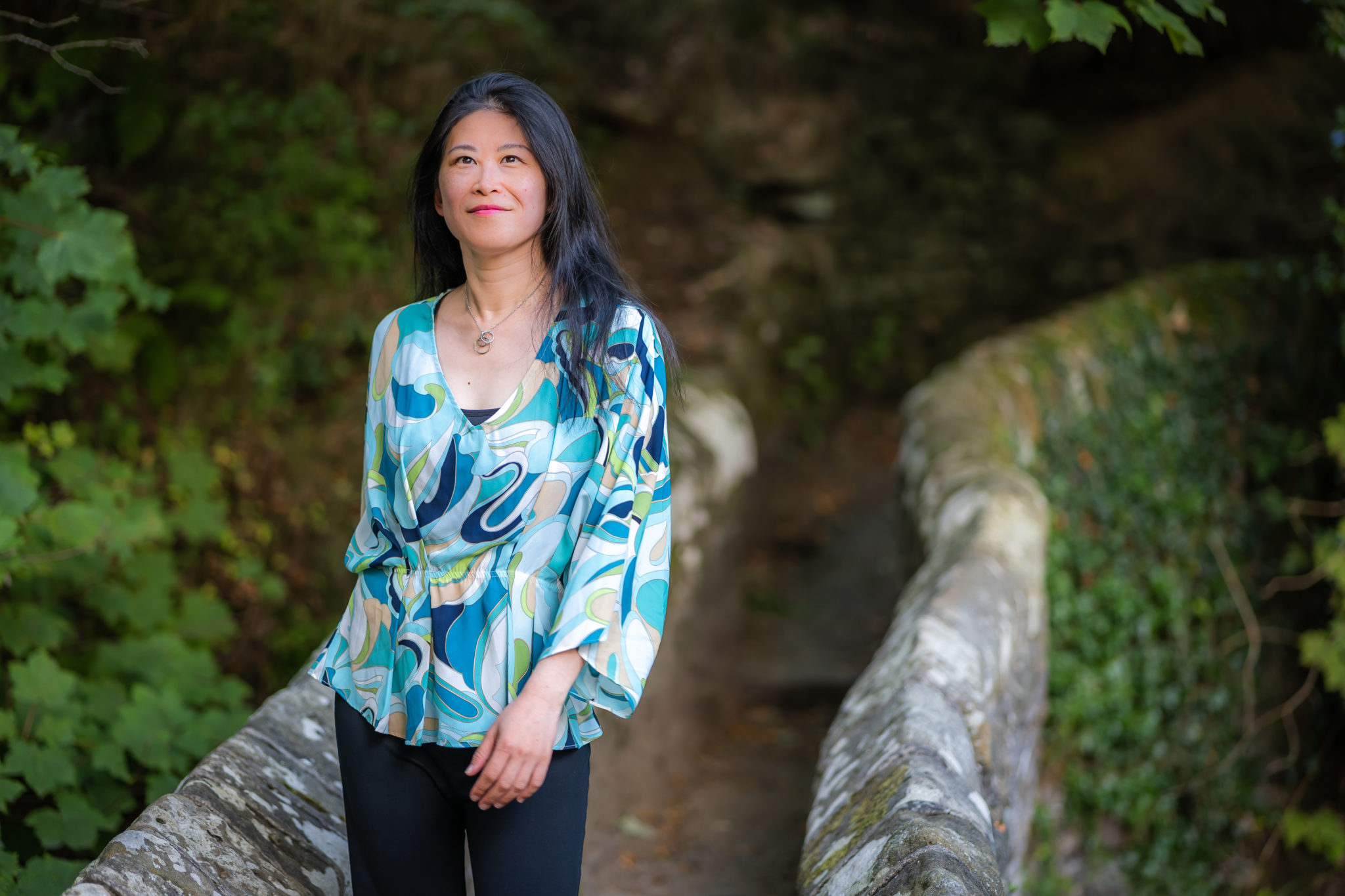
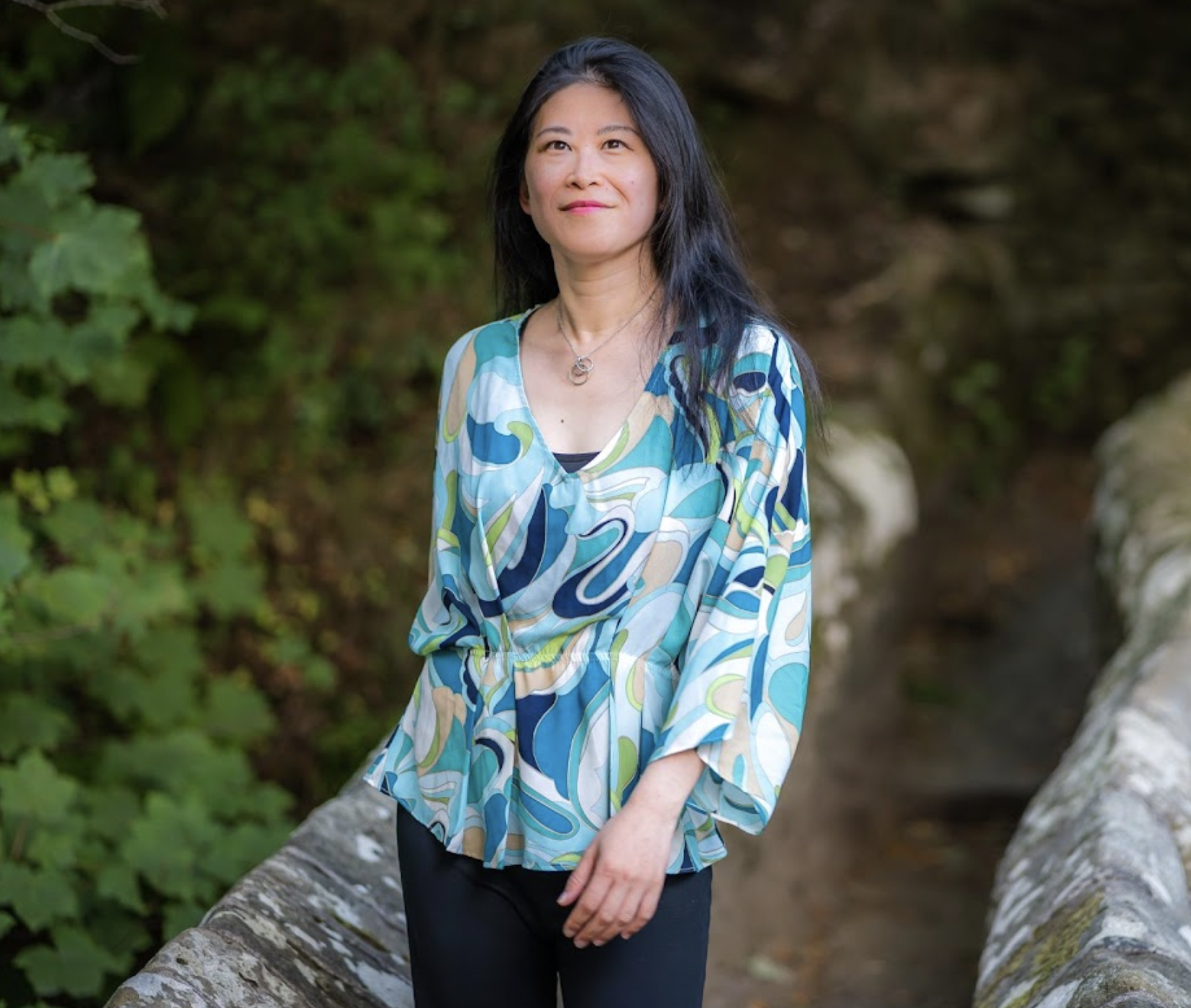
The concert will feature the BCO’s 2023-24 artist-in-residence, pianist Hsing-ay Hsu, performing with two members of the orchestra—cellist Julian Bennett and clarinetist Kellan Toohey. All four works on the program use the ensemble of piano, clarinet and cello, a mix of timbres that has a limited but interesting repertoire.
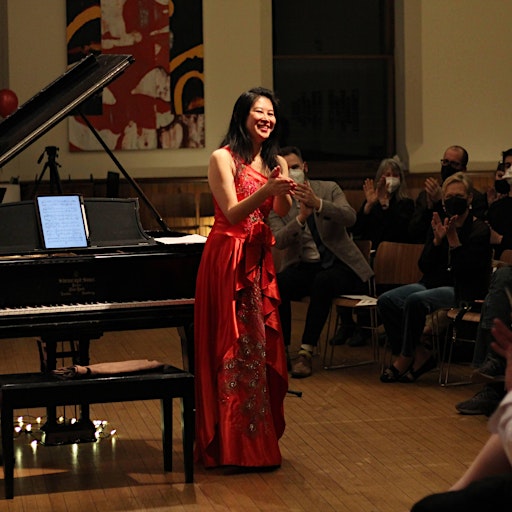
Hsing-ay Hsu

Beethoven’s Op. 11 is one of the earliest works for the combination. It is sometimes known as the “Gassenhauer Trio,” taken from the popularity of the theme that Beethoven uses for variations in the final movement. In Vienna, a Gassenhauer (from Gasse, an alleyway) referred to a simple song that was so popular that it was heard all over town. The theme Beethoven used was taken from a popular music theater work, L’amor marinaro (Seafaring love) by Joseph Weigl.

Brahms’s Trio op. 114 is one of four chamber works the composer wrote for the clarinetist Richard Mühlfeld in the last years of his life. Brahms’s admiration for Mühlfeld’s playing was reflected in the comment of one of the composer’s friends who wrote that in the Trio, “it is as though the instruments were in love with each other.”

Like Brahms’s Trio, Fauré’s D minor Trio was one of his last compositions. Although Fauré originally planned the Trio for piano, clarinet and cello, it was published as a traditional piano trio, with violin in place of the clarinet. The BCO performance of the first movement restores the instrumentation that Fauré first imagined for the trio.

Emily Rutherford’s “Morning Dance” for piano, clarinet and cello was commissioned by Toohey in 2017. A native of Colorado, Rutherford is a graduate of Westmont College in Santa Barbara, Calif., and the Longy School of Music in Los Angeles.

# # # # #

“Mixed Timbres”
Hsing-ay Hsu, BCO Artist in residence, piano
With Boulder Chamber Orchestra members Kellan Toohey, clarinet, and Julian Bennett, cello

  • Gabriel Fauré: Piano Trio in D minor, I. Allegro ma non troppo
  • Beethoven: Trio in B-flat major for piano, clarinet and cello, op. 11
  • Brahms: Trio in B-flat for piano, clarinet and cello, op. 114
  • Emily Rutherford: Morning Dances

7:30 p.m. Saturday, Sept. 21
Boulder Seventh-Day Adventist Church, 345 Mapleton Ave.

TICKETS

# # # # #

The Sphere Ensemble, a 14-member string ensemble, will celebrate the 100th anniversary of the premiere of Gershwin’s Rhapsody in Blue in 1924 with performances of their own all-strings arrangement of the Rhapsody.

The program, presented Saturday in Boulder and Sunday in Denver (Sept. 21 and 22; details below), will also include works by other jazz musicians including James P. Johnson, Hazel Scott and Winton Marsalis. Also on the program are arrangements of music from the Squirrel Nut Zippers, The Turtles and Andrew Bird; and pieces by Shostakovich, Stephen Foster and the classical-era composer Christoph Willibald Gluck, among others. 
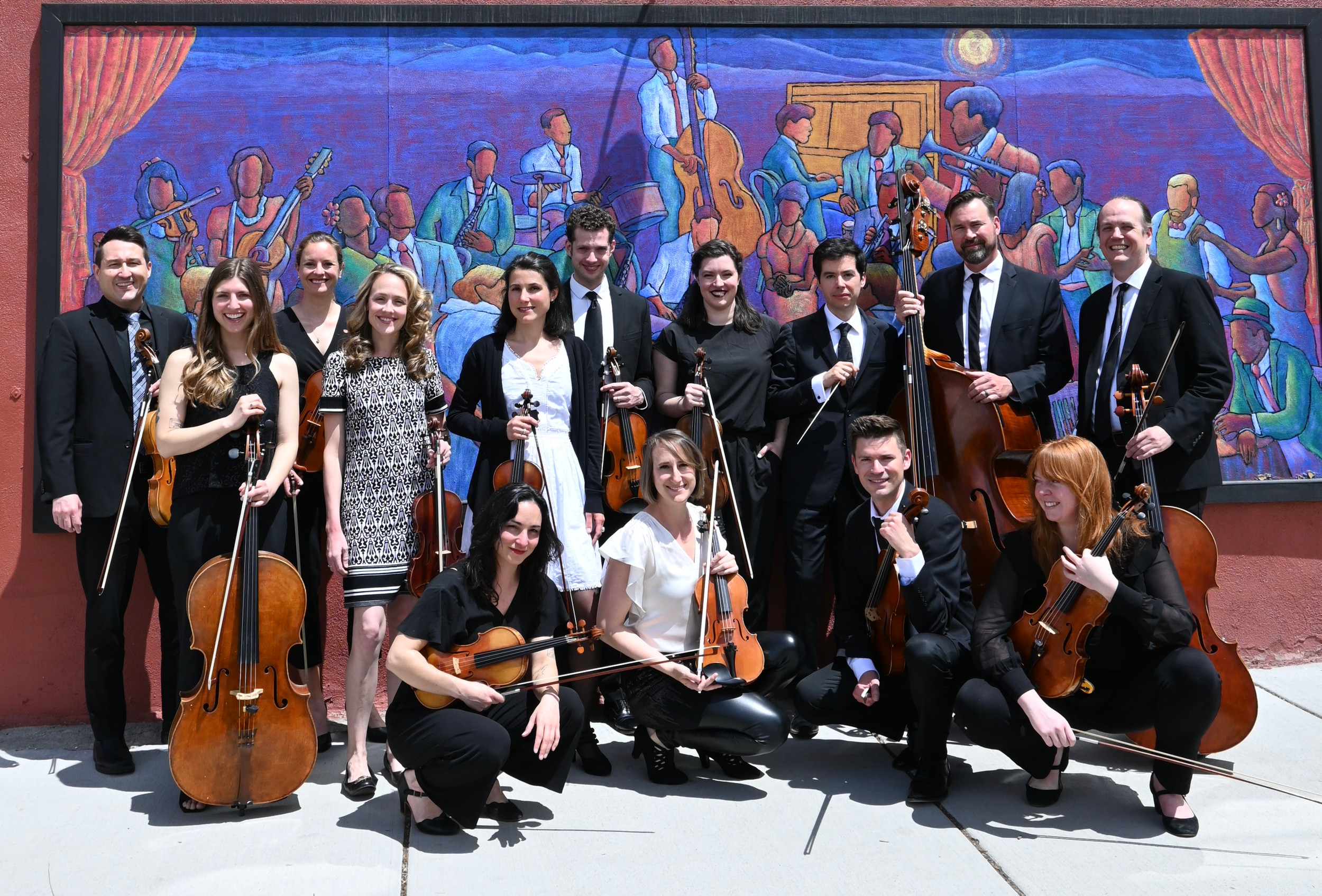
Sphere Ensemble

In addition to the live performances, a live stream will be available from 7:30 p.m. Saturday, Sept. 21 through 10 p.m. Sunday, Sept. 29. 

This kind of eclectic programming, mixing sources and genres, is typical of the Sphere Ensemble, often in arrangements made by members of the ensemble. The “About” page on their Website explains, “We prioritize music by composers that are often overlooked in classical music programs. . . . From classical to classic rock, from baroque to hip hop, Sphere always chooses music that excites us.”

# # # # #

“Bridges”
Sphere Ensemble

  • Aldemaro Romero: Fuga con Pajarillo
  • Dmitri Shostakovich: Prelude and Fugue in D-flat Major (arr. Chris Jusell)
  • Stephen Foster: “Jeanie with the Light Brown Hair” (arr. Alex Vittal)
  • Squirrel Nut Zippers: The Ghost of Stephen Foster (arr. Sarah Whitnah)
  • Andrew Bird: Orpheo Looks Back (arr. Sarah Whitnah)
  • C.W. Gluck: Orfée et Eurydice, Danses des Ombres Heureuses
  • Brenda Holloway: You’ve Made Me So Very Happy (arr. David Short)
  • The Turtles: Happy Together (arr. Dave Short)
  • James Price Johnson: Charleston (arr. Alex Vittal)
  • Hazel Scott: “Idyll” (arr. Sarah Whitnah)
  • Wynton Marsalis: “At the Octoroon Balls”
    —“Rampart St. Rowhouse Rag”
  • George Gershwin: Rhapsody in Blue (arr. Alex Vittal)

7:30 p.m. Saturday, Sept. 21
Nomad Playhouse, 1410 Quince Ave., Boulder

3 p.m. Sunday, Nov. 22
Truss House, 3400 Atkins Ct., Denver

Livestream: 7:30 p.m. Saturday, Sept. 21–10 p.m. Sunday, Sept. 29

In-person and livestream TICKETS

# # # # #
The Boulder Philharmonic Orchestra will have a new series of intimate performances during the 2024-25 season, designed to bring their musicians into more informal spaces and give audiences the opportunity to hear them in smaller groups.

The repertoire will be a little different from the Macky concerts, too, featuring music by pop sensations from Lizzo to Taylor Swift alongside pieces by living composers including Philip Glass and Jessie Montgomery. And just for fun, they might throw in some Vivaldi as well.

These concerts, collectively the “Shift” series, will feature several different programs, each presented first at Planet Bluegrass in Lyons and then taken to small venues in Longmont and Boulder. The first program, played by a string quartet of principal players from the orchestra, opens next Wednesday at Planet Bluegrass (7 p.m. Sept. 25; details below). Titled “Groove,” it will be repeated at the Dickens Opera House in Longmont at 6:30 p.m.Monday, Nov. 25.
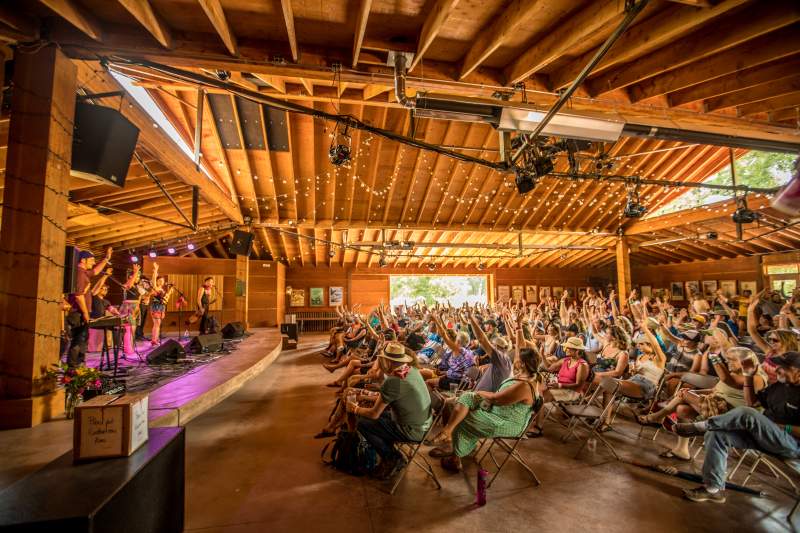
Wildflower Pavilion at Planet Bluegrass, Lyons

The second program, also for string quartet, is titled “Americana: Redefined” and will be presented in October and February. A third program featuring a brass quintet from the orchestra, “Brass & Brews,” will be presented in October and April;  see the Boulder Phil Web page for details on all currently scheduled performances.

Mimi Kruger, the Boulder Phil’s executive director, said, “The idea is that people can get to know our musicians and these composers and connect in a different way. These are obviously smaller venues, but also a little bit more casual.”

She said that discussions about ways to showcase the individual musicians of the orchestra led them to look for new venues. “The idea came up to launch it through Planet Bluegrass (because) they have a series at the Wildflower Pavilion,” she said. “We’re doing all three there, but we also wanted to take them to other venues, so the first two will get repeated at Dickens Opera House in Longmont—that’s a great little place!”

The Phil’s Web page says pretty much the same thing, in more promotional language: “The Shift Series lifts the facade of the stereotypical orchestral concert . . . in unique venues along the Front Range.”

Kruger recommends watching for future announcements, as further performances are under consideration, featuring the orchestra’s woodwind players. 

# # # # #

“GROOVE”
Boulder Philharmonic string players: Ryan Jacobsen and Hilary Castle-Green, violin; Stephanie Mientka, viola; and Amanda Laborete, cello

  • Takashi Yoshimatsu: Atomic Hearts Club Quartet, Movement I
  • Justin Bieber: “Peaches” (arr. Alice Hong) 3’
  • Dinuk Wijeratne:Two Pop Songs on Antique Poems: “Letter from the afterlife”
  • Carlos Simon: Loop
  • Michael Begay: “Forest Fires”
  • Lizzo: “ Good As Hell” (arr. Alice Hong)
  • Jessie Montgomery: “VooDoo Dolls
  • Philip Glass: String Quartet No. 3: VI “Mishima/Closing” 4’
  • Taylor Swift: All Too Well” (arr. Alice Hong)
  • Wijeratne: Two Pop Songs on Antique Poems: “I will not let you go
  • Ed Sheeran: “Shape of You” (arr. Alice Hong)
  • Due Lipa: “Dance the Night” (arr. Zack Reaves)
  • Jessica Meyer: “Get into the NOW”: III. “Go Big or Go Home”
  • Vivaldi: Summer: Moment III (arr. Naughtin)

7 p.m. Monday, Sept. 25
Planet Bluegrass, Lyons, Colo.

TICKETS

6:30 Monday, Nov. 25
Dickens Opera House, Longmont Como.
TICKETS

Works with piano, cello and clarinet on chamber program

Mini-Chamber 4 with pianist Hsing-ay Hsu and BCO members

By Peter Alexander April 2 at 11 a.m.

The Boulder Chamber Orchestra (BCO) will present their 2023-24 artist in residence, pianist Hsing-ay Hsu, performing with members of the orchestra on a mini-chamber concert Saturday (8 p.m. April 6; details below).

Pianist Hsing-ay Hsu

The performance, titled “Mixed Timbres,” will be the fourth and final mini-chamber concert of the 2023-24 season. The program features works for piano with clarinet and cello, with cellist Chas Bernard and clarinetist Kellan Toohey from the orchestra.

Beethoven’s Op. 11 is the earliest work on the program, and one of the earliest works for the combination of piano, clarinet and cello. It is sometimes known as the “Gassenhauer Trio,” taken from the popularity of the theme that Beethoven uses for variations in the final movement. In Vienna, a Gassenhauer (from Gasse, an alleyway) referred to a simple song that was so popular that it was heard all over town. 

The theme Beethoven used was taken from a popular music theater work, L’amor marinaro (Seafaring love) by Joseph Weigl. The same tune was used for variations by several other composers, including Paganini and Johann Nepomuk Hummel.

Brahms’s Trio op. 114 is one of four chamber works the composer wrote for clarinet in the last decade of his life. All were written for the clarinetist Richard Mühlfeld, whose playing inspired Brahms to resume composing after he had planned to stop writing new pieces. Brahms’s admiration for Mühlfeld’s playing was reflected in the comment of one of the composer’s friends who wrote that in the Trio, “it is as though the instruments were in love with each other.”

Like the Trio of Brahms, Fauré’s D minor Trio was one of his last compositions. Although Fauré originally planned the Trio for piano, clarinet and cello, it was published as a traditional piano trio, with violin in place of the clarinet. In that form it was premiered in 1922 by the leading piano trio of the time, that of Alfred Cortot, Jacques Thibaud and Pablo Casals. The BCO Mini-Chamber performance of the first movement restores the instrumentation that Fauré first imagined for the trio.

Emily Rutherford’s “Morning Dance” for piano, clarinet and cello was commissioned by BCO clarinetist Kellan Toohey in 2017. A native of Colorado, Rutherford is a graduate of Westmont College in Santa Barbara, Calif., and the Longy School of Music in Los Angeles. Her works have been performed in California and by Denver’s Stratus Chamber Orchestra.

# # # # #

“Mixed Timbres,” BCO Mini-Chamber 4
Hsing-ay Hsu, piano, Chas Bernard, cello, and Kellan Toohey, clarinet

  • Faure: Trio in D minor, I. Allegro ma non troppo 
  • Beethoven: Trio in B-flat for piano, clarinet and cello, op. 11
  • Brahms: Trio in A minor for piano, clarinet and cello op. 114
  • Emily Rutherford: “Morning Dance” (2017)

8 p.m. Saturday, April 6
Boulder Seventh-Day Adventist Church, 345 Mapleton Ave.

TICKETS

Grace Notes: Chamber Music in Boulder, Tchaikovsky in Boulder and Longmont

Piano trios, Tchaikovsky 5 and two Romantic piano concertos on programs

By Peter Alexander Feb. 13 at 2:38 p.m.

The Boulder Symphony will be the first of two area orchestras to perform Tchaikovsky’s Fifth Symphony this weekend, as part of a program Friday and Saturday (Feb. 16 and 17; details below) that also features Rachmaninoff’s Third Piano Concerto played by Chinese pianist Jialin Yao.

The program opens with Conga del Fuego Nuevo (“New fire” conga) by Mexican composer Arturo Marquez. The son of a Mexican mariachi musician, Marquez studied in Mexico and the United States, where he earned an MFA in composition at the California Institute of Fine Arts. A Cuban carnival dance, the conga was the source of the “conga line” made popular in the U.S. by Xavier Cougat and other bandleaders.

Jialin Yao

Currently a student at the Juilliard School of Music, Yao won the 2023 International Keyboard Odyssiad® and Festival Competition. Boulder Symphony’s conductor, Devin Patrick Hughes, was quoted in the concert press release: “Jialin is a rockstar! He plays the Rachmaninoff 3 . . .  with ease, soulfulness, and a virtuosity that rivals any of the great pianists.”

Rachmaninoff wrote his Third Piano Concerto, considered one of the most virtuosic and challenging piano concertos, in 1909 and played the first performance in New York later that year. The initial reception was mixed at best, but Rachmaninoff gave a more successful second performance the following January conducted by Gustav Mahler. Today the concerto is widely accepted as one of the greatest and most demanding works in the piano repertoire. 

The work that audiences can hear twice this weekend, Tchaikovsky’s Fifth Symphony, was composed over the summer of 1888. In spite of powerful emotional currents, the composer did not give the symphony any program or explicit personal meaning. After the first performances, he wrote in a letter “I have come to the conclusion that [the symphony] is a failure. There is something repellent in it . . . which the public instinctively recognizes.”

In spite of that conclusion, the Fifth Symphony has become on of Tchaikovsky’s most performed orchestra works. The coincidence of two performances, by two different orchestras on the front range in a single weekend, is an indication of how successful the symphony has been with both conductors and audiences. 

The Boulder Symphony will also play the Symphony on Sunday as part of its GLOW Project, free concerts designed for people with dementia, neurological and developmental disabilities. That performance will consist of only the symphony, played with no intermission and lasting approximately 45 minutes. 

* * * * *

Boulder Symphony, Devin Patrick Hughes, conductor
With Jialin Yao, piano

  • Arturo Marquez: Conga del Fuego Nuevo (“New fire” conga)
  • Rachmaninoff: Piano Concerto No. 3 in D minor
  • Tchaikovsky: Symphony No. 5 in E minor

7:30 p.m. Friday and Saturday, Feb. 16 and 17
Gordon Gamm Auditorium, Dairy Arts Center

TICKETS

GLOW Concert
Boulder Symphony, Devin Patrick Hughes, conductor

  • Tchaikovsky: Symphony No. 5 in E minor

2 p.m. Sunday, Feb. 18
Gordon Gamm Auditorium, Dairy Arts Center

REGISTRATION

* * * * *

The weekend’s second performance of Tchaikovsky’s Fifth Symphony will be provided by the Longmont Symphony (LSO)and conductor Elliot Moore (7 p.m. Saturday, Feb. 17; details below).

The program, which includes Tchaikovsky’s Fantasy Overture Romeo and Juliet and the Piano Concerto No. 1 in B-flat minor played by Marika Bournaki, is billed as “Portrait of a Composer.” This is an annual series for the LSO and Moore, providing an opportunity to focus on the life and works of a single composer who is part of the orchestral tradition.

Marika Bournaki

Bournaki teaches piano as a faculty member of Shenandoah University in Winchester, Va. She was born in Montreal—leading to her being dubbed “the Celine Dion of classical”—and received bachelor’s and master’s degrees from the Juilliard School of Music. She was the subject of an award-winning documentary film, “I Am Not a Rockstar,” that covered her musical studies, staring when she was 12 and first took lessons at Juilliard, through the age of 20.

She has performed extensively with regional orchestras in the United States and Canada as well as in Switzerland, Russia and Romania. She is also an active chamber musician who has performed at Bargemusic in Brooklyn and the Cape Cod music festival, among other venues. Her educational activities have included programs that bring music to underserved populations in Canada.

Tchaikovsky’s First Piano Concerto had its premiere in 1875 in Boston played by Hans von Bülow. Nikolai Rubinstein, for whom it had been written, was first critical of the piece leading to the first performance being given outside of Russia. Rubinstein later changed his mind about the concerto, and performed it widely. 

Today it is one of the most popular piano concertos. In addition to frequent appearances on orchestral programs, it was used as the sporting anthem for the Russian Olympic Committee at the Beijing Winter Olympics in 2022, during the time that Russian athletes were banned from appearing under the Russian national flag. American pianist Van Cliburn famously won the 1958 Tchaikovsky Competition in Moscow playing the concerto.

Almost as popular as the Piano Concerto, Tchaikovsky’s Romeo and Juliet is one of several works by the composer inspired by Shakespeare. After a stormy beginning, the music breaks into a soaring love theme that has been used in films and television, from The Three Musketeers to SpongeBob SquarePants

The concert concludes with the Fifth Symphony, one of four by two different organizations over the weekend—yet another testament to Tchaikovsky’s place in the orchestral repertoire and in the hearts of audiences.

* * * * *

Tchaikovsky: A Portrait
Longmont Symphony Orchestra, Elliot Moore, conductor
With Marika Bournaki, piano

  • Tchaikovsky: Romeo and Juliet Fantasy-Overture
    Piano Concerto No. 1 in B-flat minor
    —Symphony No. 5 in E minor

7 p.m. Saturday, Feb. 17
Vance Brand Civic Auditorium

TICKETS

* * * * *

The Boulder Chamber Orchestra (BCO) will present their current artist-in-residence, pianist Hsing-Ay Hsu, in a program of piano trios, played with members of the orchestra.

The concert, Saturday at 7:30 p.m. (Feb. 17; details below), is the third in the BCO’s series of mini-chamber concerts of the 2023–24 concert season. The fourth mini-chamber concert, featuring works including trios for clarinet, cello and piano, will be at 7:30 pm. April 6. (See the BCO Web Page for details.)

Hsing-Ay Hsu

Born in China, Hsu has studied at Juilliard, the Yale School of Music, the Ravinia Steans Music Institute, and the Aspen and Tanglewood festivals. A Steinway artist, she won the silver medal of the William Kapell International Piano Competition and first prize of the Ima Hogg National Competition, as well as several artist grants and fellowships. She taught at the CU College of Music, where she was artistic director of the Pendulum New Music Series.

The piano trio emerged as a distinct genre out of domestic music-making in the early classical era, when it was known as an “accompanied piano sonata.” Originally, the piano part was written for women, who were thought to have time for practice, with men—who were not expected to master instruments—playing violin and cello parts to reinforce the melody and bass line of the piano part. 

It was Mozart who first created piano trios with three equal parts, starting around 1780, followed by Beethoven. By the time that Brahms wrote his second and third piano trios, in the late 19th century, it had become a recognized chamber music genre.

* * * * *

Mini-Chamber Concert 3: Triptych of Trios
Hsing-Ay Hsu, piano, and members of the BCO

  • J.S. Bach: Trio Sonata in G major, S1039 (arr. from trio sonata for two flutes and continuo)
  • Mozart: Piano Trio in G major, K564
  • Brahms: Piano Trio No. 3 in C minor, op. 101

7:30 p.m. Saturday, Feb. 17
Boulder Seventh-Day Adventist Church, 345 Mapleton Avenue

TICKETS

NOTE: Corrections were made on Feb. 13, clarifying details of the performances and correcting typos in the original story.

Boulder Chamber Orchestra presents mini-chamber concert Saturday

“Mini-Chamber 1: Capturing the Folk Spirit”

By Peter Alexander Oct. 19 at 3:45 p.m.

The Boulder Chamber Orchestra will present the first of four ”Mini-Chamber” concerts on their 2023–24 season schedule at 7:30 p.m. Saturday (Oct. 21, at the Boulder Adventist Church; ticket information below).

Three of the concerts—Saturday, and further performances Feb. 17 and April 6—will feature BCO’s artist-in-residence, pianist Hsing-Ay Hsu, performing chamber works with members of the orchestra. The other “Mini-Chamber” concert, Jan. 20, 2024, will feature pianist Adam Zukiewicz with members of the orchestra.

Boulder Chamber Orchestra artist-in-residence Hsing-Ay Hsu

The ”Mini-Chamber” concerts are distinguished from the BCO’s other performances in that they feature pure chamber music—small, one-player-per-part ensembles—rather than the full chamber orchestra itself under director Bahmann Saless.

Saturday’s concert features three pieces with differing instrumentation. The first will be the violin-and-piano version of Bartók’s Romanian Folk Dances. A suite of six short pieces originally written for piano, based on Romanian tunes from the Transylvania—once part of Hungary and later part of Romania. Bartók himself wrote a version for small ensemble, and there have been arrangements for violin and other instruments with piano. It has been one of Bartók’s most popular pieces with performers. 

The program also includes Dvořák’s Quintet for piano and string quartet in A major. Composed in 1887, it is considered one of the leading works for Piano Quintet. It comprises four movements indulging two that are based in Eastern European folk culture: Dumka, a movement that alternates between melancholy and exuberance with a title that derives from Ukranian; and Furiant, a fiery Bohemian folk dance.

Finally, Hsu alone will pay Brahms’s Klavierstücke (Piano pieces) op. 118, a set of six pieces that Brahms dedicated to Clara Schumann, widow of the composer Robert Schumann. Composed in 1893, they were the composer’s next-to-last completed work.

# # # # #

“Capturing the Folk Spirit”

Boulder Chamber Orchestra Mini-Chamber 1
Hsing-ay Hsu, piano, with members of the Boulder Chamber Orchestra

  • Bartók: Romanian Folk Songs for violin and piano
  • Dvořák: Quintet for piano and strings in A major
  • Brahms: Klavierstücke, op. 118 no. 3

7:30 p.m. Saturday, Oct. 21
Boulder Adventist Church

TICKETS 

Longmont and Boulder orchestras return to live performances for grateful audiences

Abbreviated concerts featured careful COVID protocols, no intermissions

By Peter Alexander Oct. 3 at 11:30 p.m.

For a short time this past weekend, you could have believed that concert life in Longmont and Boulder had returned to normal.

Of course, no one knows what tomorrow will bring. But both the Longmont Symphony and the Boulder Philharmonic presented their first in-person concerts in nearly two years, and sitting in the audience hearing live music was a welcome return to near-normal.

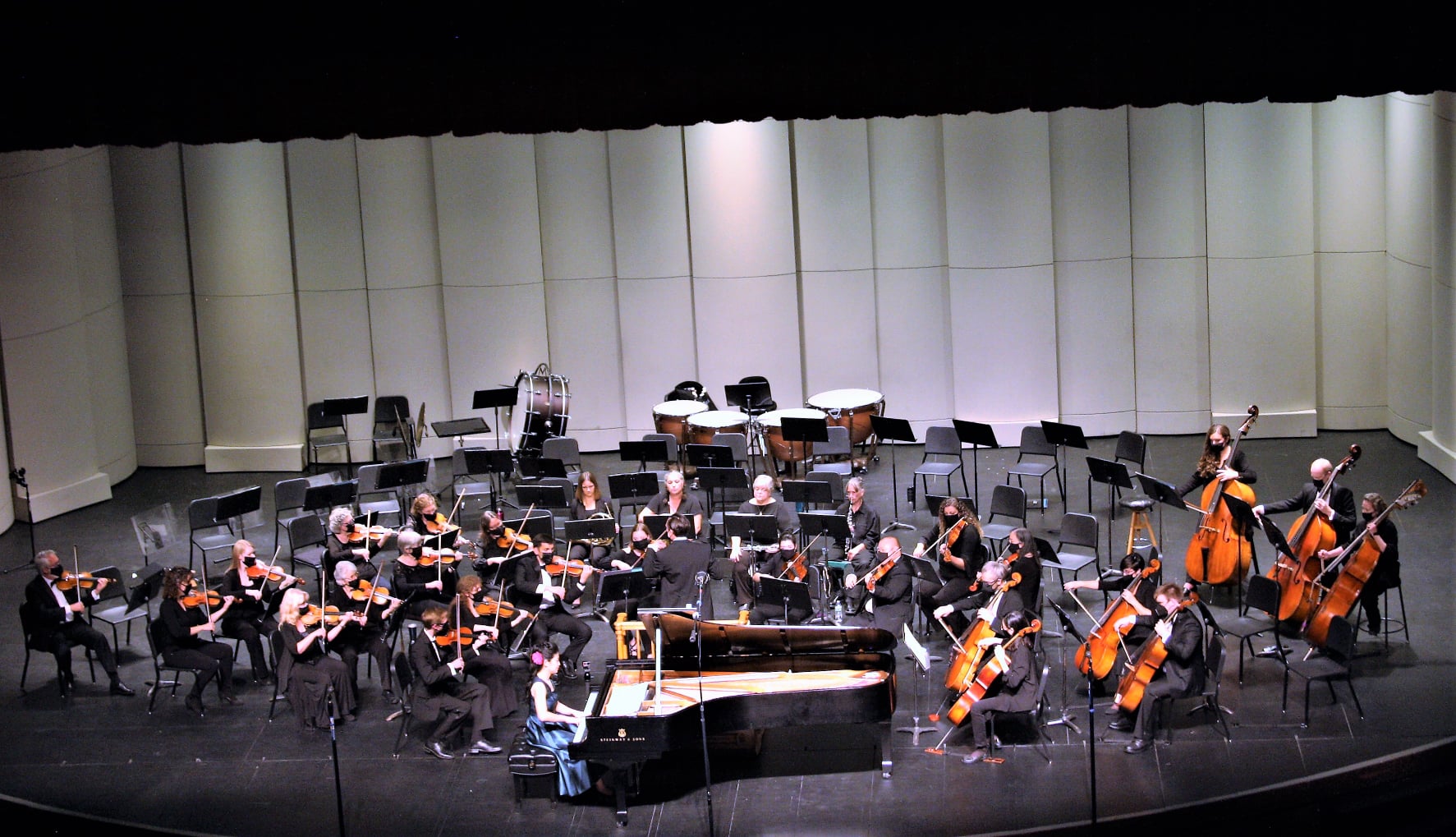
Longmont Symphony Saturday (Oct. 2) with soloist Hsing-ay Hsu and conductor Elliot Moore in Vance Brand Auditorium

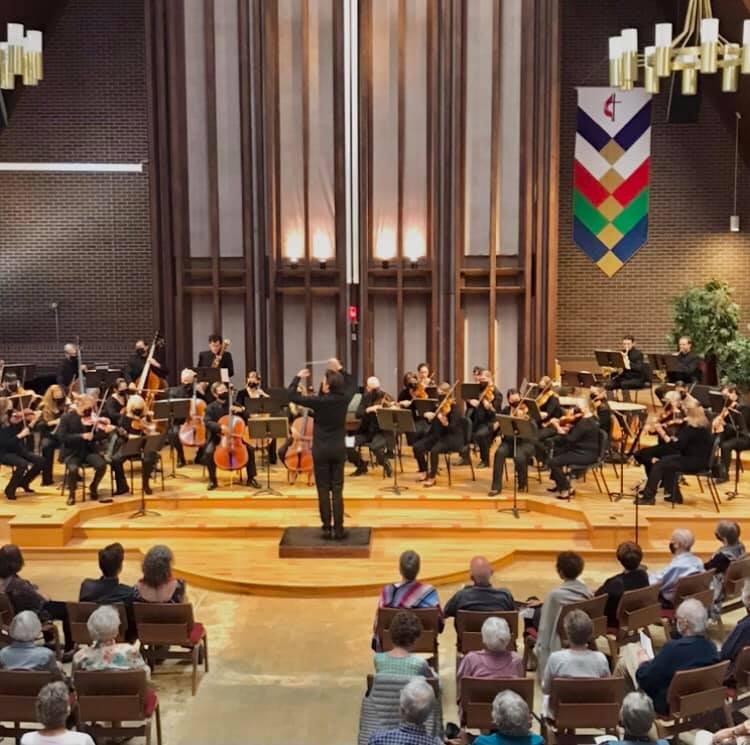
Both concerts—the LSO at Vance Brand Auditorium at 7 p.m. Saturday, and the Boulder Phil at Mountain View Methodist Church at 4 p.m. Sunday—had restrictions that for now we might consider the “new normal.” In both cases, patrons were met outside by orchestra representatives checking proof of vaccination and ID, masks were required at all times, and seating was limited to less than full capacity of the respective venues. Conductors and orchestral string players wore masks for the performances as well. Both concerts were presented without intermission, so that the audience did not have the chance to mix and mingle. 

Both conductors, Elliot Moore with the LSO and Michael Butterman with the Boulder Phil, commented on how good it felt to be back, and both were greeted with enthusiasm. I would add that both concerts received standing ovations, but that has long since become normal, so it is not really anything new.

The Longmont Symphony began with a rousing performance of Brahms’s Academic Festival Overture. In his introduction, Moore noted that in spite of its name, the overture is not really academic in nature, because it is actually based on student drinking songs of Brahms’s era. As Moore intended, it started the post-pandemic musical scene with infectious energy. 

Brahms was followed by Mozart’s Piano Concerto in A major, K414, featuring soloist Hsing-ay Hsu. She introduced the concerto with heartfelt remarks about the opportunity to perform again before an audience, and played with solid confidence and sensitivity. The concert of orchestral repertory standards ended with Robert Schumann’s Symphony No. 4 in D minor. Any minor lapses of intonation or ensemble were easily forgiven for musicians who had not played together for so many months. Shouts of “Bravo” were heard through the standing ovation.

Michael Butterman leads the Boulder Philharmonic in Haydn’s Symphony No. 1 at Mountain View Methodist Church

Butterman chose much less standard works for the Boulder Phil’s return to the stage. Two works by Haydn were featured, none of them among the composer’s better known symphonies or concertos. In fact, the concert started at the very beginning, one could say, with Haydn’s Symphony No. 1 of 1759. A three-movement work of about 12 minutes in length, it has the tunefulness and energy, if not the sophistication, of Haydn’s larger late Symphonies. “If you liked that piece,” Butterman quipped, “there are 100 more like it!” (For the record, current research has identified 108 symphonies by Haydn.)

The symphony was paired with Haydn’s Sinfonia Concertante written for London in 1792, a larger and more mature work that features violin, oboe, cello and bassoon soloists with orchestra. The principal players from the orchestra played the solo parts with elan and polish. Using modern instruments, and heard in a church that has only a cement floor due to ongoing renovations, the orchestral sound struck me as a little on the thick side, not as transparent as Haydn would have expected.

Butterman’s final work for the program is one that he particularly loves, the Petite symphonie concertante by the 20th-century Swiss composer Frank Martin. It was a treat to hear this genuine rarity live in concert. It is scored for a double string orchestra with harpsichord, piano and harp soloists, creating an utterly unique sound world. Although written using 12-tone techniques, the music is often consonant, always enjoyable, and unlike any other piece I know. 

Butterman led the orchestra with obvious relish. The size and full-bodied sound of the Phil’s strings was ideal for a 20th-century work. In his analytical introduction to the score, Butterman said that he hoped that the audience would enjoy the Petite symphonie concertante as much as he does. I can’t speak for the rest of the audience, but hearing a committed live performance of an intriguing rarity was the weekend’s highlight for me. 

Like both audiences, I was thrilled to hear live music again, and to be back in the hall with musicians who love what they are doing. More, please!

NOTE: Minor typos and editing errors corrected Monday, 10/4.

Longmont Symphony returns to live in-person performances Saturday

Program of music by Brahms, Mozart and Schumann launches 2021–22 season

By Peter Alexander Sept. 30 at 9:45 p.m.

The Longmont Symphony Orchestra (LSO) will return to the Vance Brand Auditorium stage for its first live, in-person performance in 20 months at 7:30 p.m. Saturday (Oct. 2). The program will feature music by three of the most loved classical composers: Brahms, Mozart and Schumann.

Elliot Moore and the Longmont Symphony onstage at Vance Brand Auditorium

“This is an exceptional opportunity for the musicians of the Longmont Symphony to come together again,” LSO music director Elliot Moore says. “It’s an amazing thing we are able to gather and have a live audience. And it’s another amazing thing that we’re able to have a venue to rehearse in, and to perform in. 

“When you combine all of these elements, I think it’s really going to be a celebration that we are able to continue lifting people up through music.”

Securing Vance Brand Auditorium for the series of rehearsals and full orchestra concerts this year was complicated by several factors. For one, there were shifting COVID protocols that the St. Vrain Valley School District, who control the use of the facility, had to consider. Then there was new staff for both the school district and the LSO working together for the first time to make the schedule work. “I’d like to take my hat off to our new executive director, Catherine Beeson, for the exceptional work she did,” Moore says.

In addition to Saturday’s concert, the LSO will present a second Masterworks Concert during the fall, at 7:30 p.m. on Saturday, Nov. 13, also in Vance Brand Auditorium. In between, there will be a concert for smaller orchestra in Stewart Auditorium at the Longmont Museum Saturday and Sunday, Oct. 16 and 17. The fall portion of the season will conclude with “A Baroque Christmas” Sunday, Dec. 19 (see full schedule and programs below).

LSO music director Elliot Moore

Moore wanted to select just the right piece to open the first concert after the pandemic. When he selected Brahms’s Academic Festival Overture he had two thoughts, one whimsical and one serious. “I did happen to think the Academic Festival Overture is really about drinking songs,” he admits, then adds more seriously that “it uses the largest orchestra that Brahms ever used. It gives us the most possibility to use all of our musicians, so that everybody plays together. This (program) is about being together and offering something to our community that is uplifting, engaging, fun, and creates a common experience.”

The overture, written for a German university that gave Brahms an honorary degree, uses a variety of spirited student songs of the time, ending with one that is treated in appropriately academic counterpoint. Whether or not one recognizes the songs, the mood is clearly one of good cheer.

Mozart began his career in Vienna as a piano virtuoso. Consequently, his piano concertos were mostly written for the composer himself to play. A few however were written with an eye to possible sales to the public as well, particularly three that were written in 1782, soon after Mozart had moved to the imperial capital. The Concertos K413, 414 and 415 were written so that they could be performed either with full orchestra or, in private homes with only a string quartet accompaniment. 

In a famous letter to his father, Mozart wrote that the concertos “are a happy medium between too heavy and too light. They are very brilliant, pleasing to the ear, and natural, without being insipid. There are parts here and there from which connoisseurs alone can derive satisfaction, but these passages are written in such a way that the less learned cannot fail to be pleased, albeit without knowing why.”

Pianist Hsing-ay Hsu

Soloist for the Mozart concerto will be pianist Hsing-ay Hsu, a Steinway Artist and winner of the William Kapell International Piano Competition, among other awards. A former member of the CU College of Music faculty, Hsu was also director of the Pendulum New Music Series at the college.

The concluding piece on Saturday’s concert will be Schumann’s Symphony No. 4 in D minor. First completed in 1841, it was revised by the composer ten years later. That later version was published and is the form in which the symphony is usually performed today. However, that version has been criticized as too heavily orchestrated, even though it was preferred by Schumann’s widow Clara. Because Schumann was first of all pianist and not an orchestral player, conductors and others have often revised the scoring of his symphonies, aiming to make them lighter.

Moore admits that he too will make some slight changes. “I do alter a couple of things,” he says. “I change a couple of dynamics. I do it in the spirit of hopefully clarifying the musical discourse, not to put my own stamp on it.”

Moore also notes that while it numbered fourth among Schumann’s symphonies, based on the revised version, it was originally the second to be written. “His first symphony is glorious, (but) this one has darker overtones,” he says. “At the same time, to me, it still ends in joy and exuberance.

“Right now, I’m OK with a symphony that has some darkness in it and takes us into the light.”

# # # # #

Longmont Symphony Orchestra
Elliot Moore, music director
2021 fall season of concerts

7:30 p.m. Saturday, Oct. 2
Vance Brand Auditorium

Hsing-ay Hsu, piano

  • Brahms: Academic Festival Overture
  • Mozart: Piano Concerto in A major, K414
  • Schumann: Symphony No. 4

7 p.m. Saturday, Oct. 16, and 4 p.m. Sunday, Oct. 17
Stewart Auditorium, Longmont Museum

Matthew Zalkind, cello

  • Jessie Montgomery: Starburst
  • Tchaikovsky: Variations on a Rococo Theme, Op. 33
  • Richard Strauss: Serenade for 13 Winds
  • Joseph Haydn: Symphony No. 96 “The Miracle”

7:30 Saturday, Nov. 13
Vance Brand Auditorium

Leberta Lorál, mezzo-soprano

  • Samuel Barber: Knoxville: Summer of 1915
  • Dvořák: Symphony No. 9, “From the New World”

Candlelight: A Baroque Christmas
4 p.m. Sunday, Dec. 19
Westview Presbyterian Church, Longmont

  • Archangelo Corelli: Concerto Grosso Op. 6. No. 8. (“Christmas Concerto”)
  • Gustav Holst: “Christmas Day”
  • J.S. Bach: Brandenburg Concerto No. 3
  • Jesu, Joy of Man’s Desiring”
  • Ottorino Respighi: “Adoration of the Magi” from Trittico Botticelliano (Three Botticelli pictures)

Season and individual LSO concert tickets are available through the LSO webpage

“A crazy piece” tops off Boulder Chamber Orchestra’s season

After Rossini and Chopin, season-ending concert ends with Beethoven’s Fourth Symphony

Bahman Saless and the Boulder Chamber Orchestra. Photo by Keith Bobo.

Bahman Saless and the Boulder Chamber Orchestra. Photo by Keith Bobo.

By Peter Alexander

First it’s serious, and then it’s not; then it seems not, but it is.

That’s more or less the way Bahman Saless, music director of the Boulder Chamber Orchestra, describes Beethoven’s Fourth Symphony. Saless and the BCO end their 2014–15 season with that energetic symphony, Saturday in Broomfield and Sunday in Boulder (May 9 and 10, both concerts at 7:30 p.m.; details).

In addition to Beethoven’s symphony—one that is less well known than the Third or the Fifth or Seventh or Ninth— the program features the rollicking Overture to La Scala di seta (The Silken Ladder) by Rossini and Chopin’s Second Piano Concerto, performed by soloist Hsing-ay Hsu. This adds up to a comfortable and enjoyable evening—a humorous Rossini overture, an elegant, decorative piano concerto, and a cheerful Beethoven symphony that Robert Schumann compared to a “slender Greek maiden.”

I’ll get back to Beethoven and that Greek maiden in a moment, but first the concert opens with the overture by Rossini. It is easy to think of all of those bubbly Rossini overtures as being almost interchangeable, but Saless had a reason for choosing the one he did.

“I picked La Scala di seta because we’ve done many of the other ones, and this one seemed just fun to do,” he says. “I listened to three or four of them and I thought it fits the character of this concert, just because it’s kind of comical.”

Next on the program will be Chopin’s Piano Concerto No. 2—actually the first to be written, while the composer was still studying at the Warsaw Academy and first performed in 1830. It is not modeled on the heroic concerto of Beethoven and the later 19th century, but is more lyrical, decorative and free-flowing.

Hsing-ay Hsu. Photo by Cyrus McCrimmon.

Hsing-ay Hsu. Photo by Cyrus McCrimmon.

The concerto was the choice of the soloist, Hsing-ay Hsu. “I think that every great composer has his own voice and there is a lot of poetry in Chopin. It’s emotionally very approachable, and for an audience to experience that kind of soaring and that kind of blissful energy is a great experience.”

Poetry suggests a certain freedom for the soloist, which Hsu identifies as the greatest challenge of the concerto. “What I find really challenging is that on one hand it has to feel completely free and improvised, and on the other hand the rhythmic integrity is very important,” she says. “There’s the sense of very long-reaching lines and having that flexibility within this larger structure is something that is really exciting and really challenging at the same time.”

That flexibility is in turn a challenge for the conductor, who has to follow the soloist without constraining her expressivity. “The pianist can take all of these elaborations on every phrase, with a lot of freedom if they want to, so the rubato (alteration of tempo) is going to challenge any conductor to make sure they play together,” Saless says.

Because he wrote the concerto before leaving Poland, Chopin did not have the Parisian drawing room in mind. In fact, Hsu hears a lot of the composer’s native culture in the music.

“I think of the third movement as a mazurka,” she says, referring to a Polish folk dance. “You might not dance to it because it’s quite complex music, but I think that understanding the rhythm is crucial to the performance, and having that feeling of lifting your dress up and twirling and all that is part of the character of the third movement.

“I think it’s music of the people. It’s a movement that’s meant to be a joyful family gathering.”

Beethoven_Hornemann

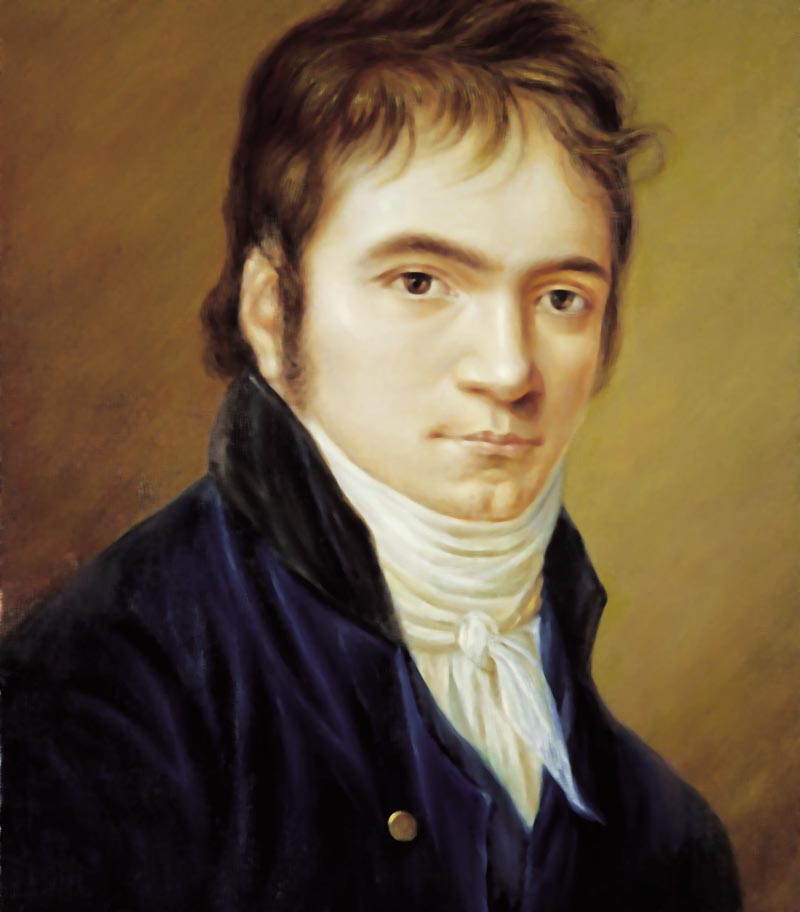
Beethoven around the time of the Fourth Symphony. Portrait by Christian Horneman.

After intermission it’s time for Schumann’s “slender Greek maiden,” a phrase suggesting that Beethoven’s Fourth Symphony is graceful and ingratiating, and avoids the drama of some of his music.

But maybe not. Saless sees far more going on in the symphony than the cheerful surface Schumann describes. “It’s a crazy piece,” Saless says. “It’s lighter and folksier, but at the same time in many ways crazier than even the Third Symphony, in the sense that he’s just pushing the boundaries and experimenting with extremes.”

Saless points to the very beginning of the symphony. It opens with a very somber slow introduction that seems to be building to a dramatic climax when suddenly, a fast and bumptious allegro seems to explode out of nowhere.

In other words, first it’s serious and then it’s not.

“Beethoven tries at first to kind of fool you into thinking this is going to be a serious piece of music,” Saless says. “The first 12, 15 bars is very serious. You think ‘Oh my God, what’s going to happen,’ but then suddenly, brrum! It’s like a horse race!”

Saless compares this beginning, seeming so solemn before bursting into a raucous romp, to Beethoven’s private piano recitals, when he would practically mock his audiences. “He would perform something and purposefully make the music deep,” Saless explains. “Everybody was drawn in, their complete attention was to the music, and then he would suddenly stop and laugh at them!”

The slow movement moves in another direction, from placid beauty to something more troubling. “I think the slow movement has a lot more depth than people have thought,” Saless says.

Bahman Saless.

Bahman Saless. Photo by Keith Bobo.

The movement is dominated by one of Beethoven’s most serene melodies. It seems perfectly calm, but it is accompanied by a constant rhythmic figure that, to Saless, represents the composer’s heartbeat. “Why would you put that against this legato melody?” Saless asks. “He obviously wants to keep you unsettled.”

At one point, the heartbeat figure takes over completely, and is played in unison and forte by the whole orchestra. “It seems like the whole idea of this beautiful melody gets dropped and he’s really concerned about his heart,” Saless says. “What’s that about? It’s nothing musical, it’s not fate knocking on the door, it’s just really amazing.”

So now it doesn’t seem serious, but it is.

After that, the last movement poses virtuoso challenges to the players, but refreshingly few complications to the audience. It moves like the wind from beginning to the end, and is one of the great movements of Beethovenian exuberance. It is, Saless says, “as showoff a piece as anything, if you can pull it off!”

Making a great ending for a concert or a season.

# # # # #

newbanner3“Character”
Boulder Chamber Orchestra
Bahman Saless, conductor, with Hsing-ay Hsu, piano

Rossini: Overture to La Scala di seta
Chopin: Piano Concerto No. 2 in F minor
Beethoven: Symphony No. 4 in B-flat major

7:30 p.m. Saturday, May 9, Broomfield Auditorium, Broomfield
7:30 p.m. Sunday, May 10, Seventh-Day Adventist Church,
345 Mapleton Ave., Boulder

Tickets