Low Ticket Warning for Dec. 1 Nutcracker in Macky; limited Longmont tickets still available
By Peter Alexander Nov. 26 at 12:05 a.m.
What would the Holiday season be without Tchaikovsky’s beloved ballet The Nutcracker?
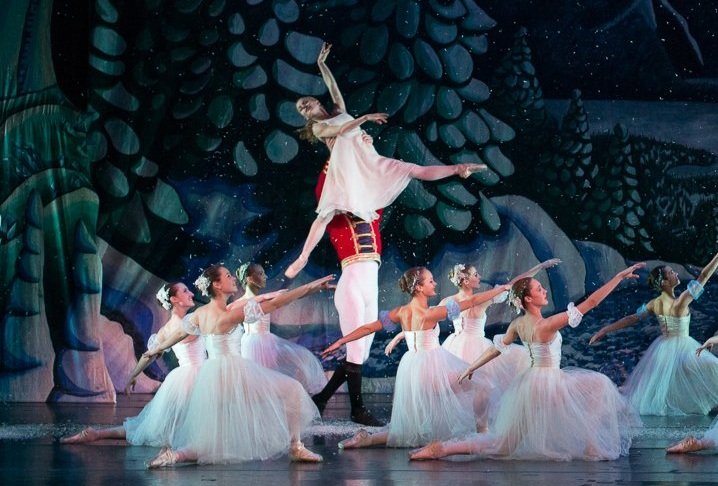
For many families, something would definitely be missing from their celebrations. The Boulder Philharmonic and Boulder Ballet open their annual performances of Nutcracker this weekend, with performances Saturday and Sunday (Nov. 30 and Dec. 1; details below), but they are warning that the Sunday matinee, an especially popular time for families to attend events together, has a limited number of tickets left.
Boulder Ballet production of The Nutcracker
If you do miss the Boulder performances, however, you need not despair! Boulder ballet will also present The Nutcracker in Longmont the following weekend (Dec. 7 and 8; details below) with the Longmont Symphony. Tickets are limited but still available for those performances.
The Boulder Ballet and the Longmont Symphony will also present their annual “Gentle Nutcracker,” an abbreviated and sensory-friendly one-hour version of the ballet at 1 p.m. Saturday, Dec. 7. These performances are designed for individuals with special needs and their families.
In addition to the performances of the full ballet, Boulder Ballet will also feature additional events. As part of a theme titled “Unlocking Tradition,” the stage curtain will be left open until 10 minutes before the performance begins. This will offer audience members a glance behind the scenes, as they will be able to see dancers, musicians and stage crew preparing for the performance.
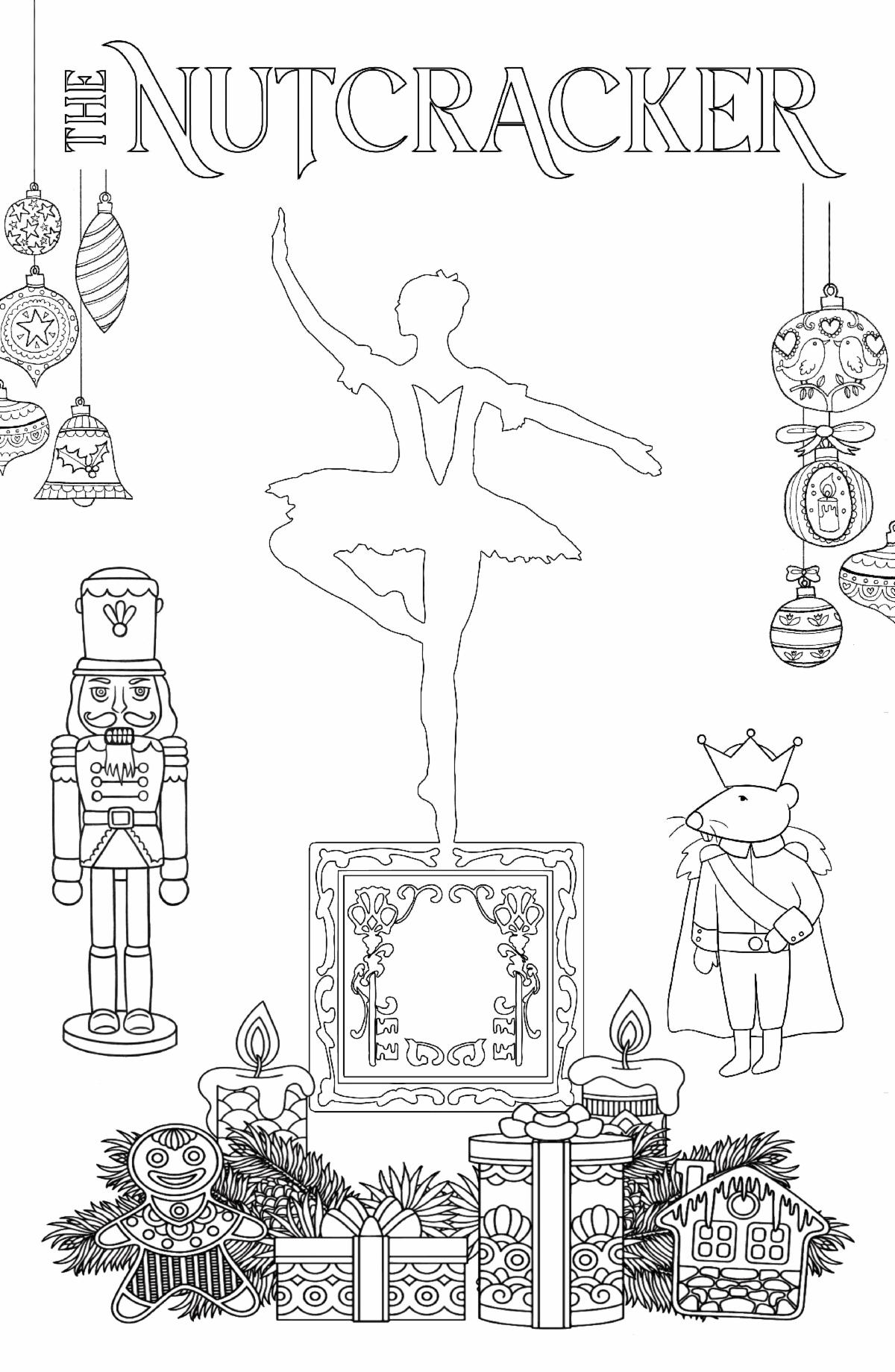
For the performance with the Boulder Philharmonic in Macky Auditorium, there will be a coloring contest for children. A line drawing of characters and images from The Nutcracker has been posted online. Children attending each performance are invited to color the drawing, and bring their colored pages to the performance for a chance to win a Nutcracker doll.
Tchaikovsky: The Nutcracker Ballet
Boulder Ballet with the Boulder Philharmonic, Gary Lewis, conductor
The Nutcracker 1 and 6:30 p.m. Saturday, Nov. 30 1 p.m. Sunday, Dec. 1 LOW TICKETS Macky Auditorium
Boulder Concert Chorale and Boulder Phil perform weekend concerts
By Peter Alexander Oct. 24 at 2 p.m.
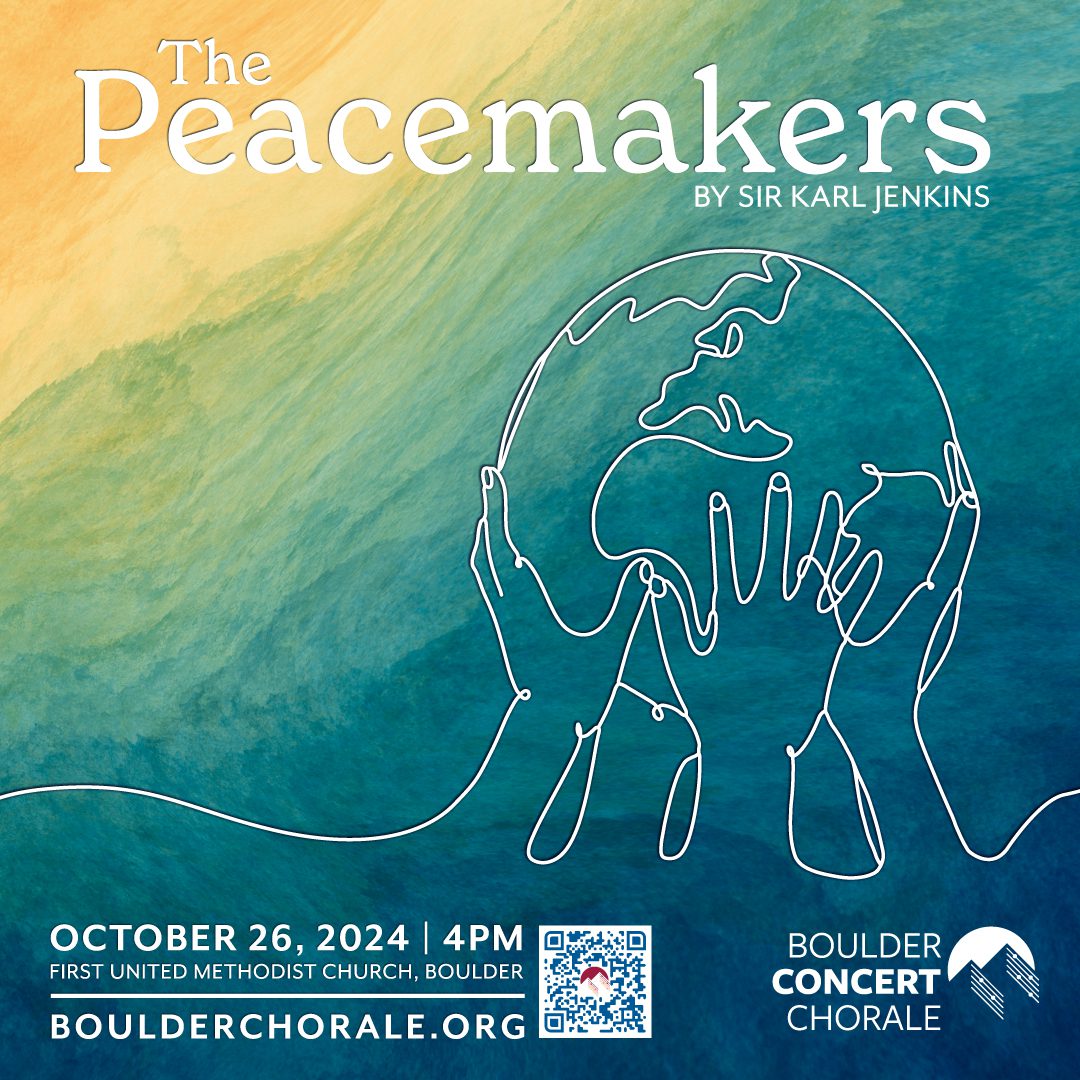
The Boulder Concert Chorale will present a work celebrating peace, with texts from more than a dozen authors, to start its 2024–25 season.
The concert, at 4 p.m. Saturday, Oct. 26, at the First United Methodist Church in Boulder, will feature The Peacemakers by Sir Karl Jenkins, a Welsh composer whose music is widely performed. Authors of texts for the 17 movements of The Peacemakers include Percy Bysshe Shelley, Gandhi, the Dalai Lama, Terry Waite, Mother Teresa, Albert Schweitzer, St. Francis of Assisi, Rumi, Nelson Mandela and Anne Frank.
Known principally as a jazz and jazz-rock musician, Jenkins plays baritone and soprano saxophones, keyboards and oboe. He has written music for advertising, winning prizes for work in that field, as well as a series of crossover albums under the title Adiemus. Originally written for a Delta Airlines advertisement, the original song Adiemus and the subsequent albums contributed to the growth of Jenkins’s recognition as a composer.
The Peacemakers was premiered in Carnegie Hall in 2012. Jenkins dedicated the score “to the memory of all those who lost their lives during armed conflict: in particular innocent civilians.” The composer has written that one line from Rumi summarizes the underlying idea of the piece: “All religions, all singing one song: Peace be with you.”
# # # # #
Boulder Concert Chorale Vicki Burrichter, artistic director and conductor
Sir Karl Jenkins: The Peacemakers
4 p.m. Saturday, Oct. 26 First United Methodist Church, Boulder
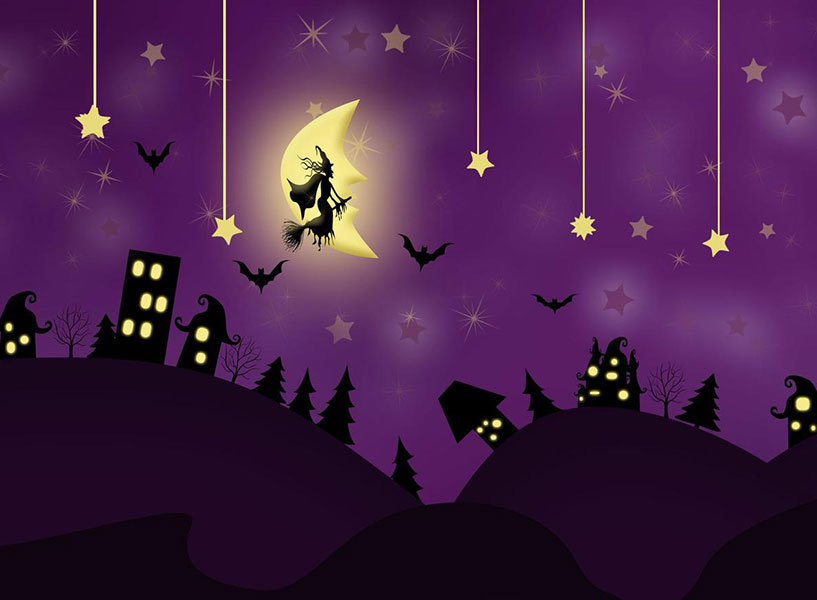
The Boulder Philharmonic Orchestra presents “Bewitching,” a Halloween Extravaganza, Saturday in Northglenn and next Wednesday in Macky Auditorium (Oct. 27 and 30; details below).
Aiming to start “a new tradition,” the Boulder Phil added the Halloween concert this season to their usual schedule of masterworks concerts and special events including the annual Holiday performances of The Nutcracker. Along with the “Shift” series of informal concerts featuring players in unique venues, “Bewitching” represents a populist trend in programming running parallel to the more traditional orchestral concerts.
Billed as “a spine-tingling evening filled with haunting melodies and thrilling orchestral arrangements, perfect for audiences of all ages,” “Bewitching” features film music along with light classical music with magical or eerie associations. Concertgoers are encouraged to wear costumes.
# # # # #
“Bewitching: Halloween Extravaganza” Boulder Philharmonic Orchestra, Gary Lewis, conductor
Boulder Piano Quartet, Boulder Phil Holiday Brass Dec. 15 & 17
By Peter Alexander Dec. 13 at 6:15 p.m.
The Boulder Piano Quartet continues its season of guest violinists Friday (7 p.m. Dec. 15, Chapel Hall at the Academy) with Jubal Fulks, a faculty member at the University of Northern Colorado College of Music.
Fulks joins standing Boulder Piano Quartet members Matthew Dane, viola, Thomas Heinrich, cello and David Korevaar, piano, for two late Tomantic-era quartets, by the little known composer Amanda Röntgen-Maier and a young Richard Strauss.
Fulks is the second of four guest violinists who will appear with the Boulder Piano Quartet during their 2023–24 season. All are appearing in place of the quartet’s long-time previous violinist, Chas Wetherbee, following his untimely death last year. Remaining concerts by the quartet during the current season will be Jan. 19 and May 3 at the Academy.
The quartet likes to include one piece by an unfamiliar composer on each program, to go with pieces by better known composers. Clearly the unknown composer for Dec. 15 is Röntgen-Maier. The first female graduate of the Royal College of Music in Stockholm, she married Julius Röntgen, the son of her violin teacher, who himself became a well known composer.
Her Quartet in E minor is her final major composition, written on a trip to Norway in 1891. It pairs well with the Quartet in C minor of Richard Strauss, a comparably late-Romattic work written 1884-85. Written when the composer was 20, it is one of his earliest works and shows the influence of Brahms.
– – –
Boulder Piano Quartet Jubal Fulks, guest violin, with Matthew Dane, viola, Thomas Heinrich, cello and David Korevaar, piano
Amanda Röntgen-Maier: Piano Quartet in E minor (1891)
RIchard Strauss: Piano Quartet in C minor (1884-85)
7 p.m. Friday, Dec. 15 Chapel Hall, The Academy, 833 10th St., Boulder Free with reservation, available HERE
Concert funded by the Ruth M Shanberge Chamber Music Fund in memory of Academy resident Ruth Shanberge.
# # # # #
Holiday Brass, an ensemble of brass and percussion players from the Boulder Philharmonic Orchestra, will present the Phil’s annual Holiday concert, under the direction of Gary Lewis, at 4 p.m. Sunday, Dec. 17, at the Mountain View Methodist Church, 355 Ponca Place in Boulder.
In the words of the Boulder Phil Web page, the program “includes a variety of beloved holiday tunes, ranging from traditional carols to popular holiday songs, all arranged to showcase the sound of the brass and percussion ensemble.”
– – –
Holiday Brass Boulder Philharmonic Brass ad Percussion Gary Lewis, conductor
Seasonal music including traditional carols and holiday songs from the pop repertoire
Masterworks concerts for 2022-23 will all be in Macky Auditorium
By Peter Alexander April 27 at 12:15 a.m.
The Boulder Philharmonic announced programming for its 2022–23, 65th anniversary season Tuesday evening (April 26). All subscription concerts for the coming year will be once again in Macky Auditorium
Pianist Angela Cheng returns to Boulder to perform with the Phil April 22, 2023
The season introduced by music director Michael Butterman includes some warhorses— Rachmaninoff’s Rhapsody on a Theme of Paganini and Richard Strauss’ Don Juan—some less familiar standard works—Bruckner’s Symphony No. 7 and Ravel’s Piano Concerto in G—and a healthy dose of new and unfamiliar works (see full programs below). Particularly noteworthy will be two world and one Colorado premiere of commissioned works.
Some features of the season will be familiar to current and past Boulder Phil patrons. One will be the return to Macky. The annual Nutcracker performances with Boulder Ballet are scheduled for Nov. 25 and 27. There will be a seasonal special event, “Holiday Brass with the Phil,” Dec. 18. The Phil’s Executive Director, Sara Parkinson, announced the resumption of the educational Discovery Concerts for school students.
Long-time concertgoers will welcome the return of former CU faculty member and audience favorite Angela Cheng April 22, who has not appeared in Boulder since 2009. Other soloists during the season will include tenor Matthew Plenk, on the opening night concert Oct. 8; double bassist Xavier Foley and violinist Eunice Kim Nov. 12; and violinist Stefan Jakiw March 25.
Concertmaster Charles Wetherbee will solo with the Phil Jan. 22, 2023
Boulder Phil concertmaster Charles Wetherbee has been on medical leave, but is expected back next season and will play Mozart’s Violin Concerto No. 5 with the orchestra Jan. 22.
One prominent change for the season is that the Saturday evening concert time has been moved to 7 p.m. from 7:30 p.m., in response to feedback from ticket buyers. That change affects all the masterworks concerts except “Afternoon with Bruckner,” at 4 p.m. Sunday, Jan. 22. In conjunction with the change of curtain time, the Phil will try different forms of related programming for its concerts, including pre-concert lectures, intermission features and post-concert talk-back sessions.
One special event in the season will bring the popular Denver-based multi-instrumental band DeVotchKa to Macky Auditorium to perform with the Phil. That performance will take place at the “old” time of 7:30 p.m. Saturday, May 6, 2023. Further details of that concert are pending.
The opening night concert Oct. 8, titled “Hymn to the Earth,” includes the first of the season’s premieres, a Boulder Phil co-commission that was postponed from a planned earlier season due to COVID: Ozymandias: To Sell a Planet. This musical alarum for threats to the planet was composed by the American composer Drew Hemmenger and uses Percy Shelley’s poem “Ozymandias,” as well as texts from native American sources, United Nations climate reports and speeches by Greta Thunberg.
The Colorado premiere of another co-commission, Jennifer Higdon’s Suite from Cold Mountain, follows on Nov. 12, and another world premiere of a new work by Boulder High School graduate Leigha Amick will be presented April 22, 2023.
Season tickets will go on sale Monday, May 2, and tickets to individual concerts will be available Monday, Aug. 22. Purchases can be made by calling the box office at 303-449-1343, or through the Boulder Phil web page.
# # # # #
Boulder Philharmonic Orchestra Michael Butterman, music director 2022-23 Season All performances in Macky Auditorium except as otherwise noted
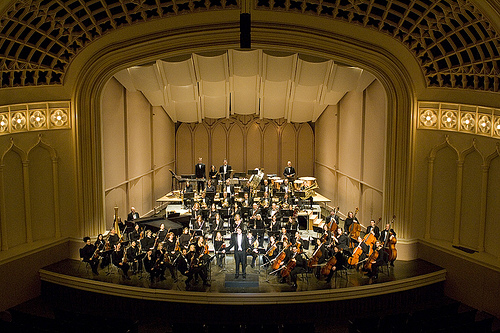
Conductor Michael Butterman with the Boulder Phil in Macky Auditorium
Opening Night: Hymn to the Earth Boulder Philharmonic, Michael Butterman, conductor With Boulder Phil Chorus and Matthew Plenk, tenor
Michael Abels: Global Warming
Drew Hemenger: Ozymandias: To Sell a Planet (Co-Commission & World Premiere)
Mozart: Overture to Don Giovanni
Wagner: Trauermusik from Götterdämmerung
Richard Strauss: Don Juan
7 p.m. Saturday, Oct. 8
Gran Duo: Higdon and Foley Boulder Philharmonic, Michael Butterman, conductor With Xavier Foley, double bass, and Eunice Kim, violin
Jennifer Higdon: Suite from Cold Mountain (Co-Commission & Colorado Premiere)
Xavier Foley: For Justice and Peace
Giovanni Bottesini: Gran Duo Concertante
Dvořák: Symphony No. 8 in G major
7 p.m. Saturday, Nov. 12
The Nutcracker with Boulder Ballet Boulder Philharmonic, Gary Lewis, conductor
Guest conductor Gary Lewis steps in at last minute to hold things together
By Peter Alexander Feb. 13 at 12:10 a.m.
Billy Childs, versatile jazz pianist and composer of concert music, finally saw the premiere of his Second Violin Concerto in Macky Auditorium last night (Feb. 12), courtesy of violinist Rachel Barton Pine and the Boulder Philharmonic.
Guest conductor Gary Lewis stepped in at the last minute for the Phil’s music director, Michael Butterman, who was unable to travel due to COVID restrictions. But that was not the only impact COVID had on the concerto. Two earlier planned premieres at the Grant Park Festival in Chicago—Pine’s hometown—were postponed, making Boulder’s the very first performance.
Like Butterman, I was unable to attend the performance, having been exposed to someone who tested positive for COVID last weekend in St. Paul, Minn. (See my reviews from that trip here.) I’m fine, but I was only able to experience the Boulder Phil concert by live stream. My impressions are necessarily limited by the quality of the sound through the speaker attached to my desktop computer. Normally I would not write a review under those circumstances; for a world premiere, some kind of report is appropriate.
As finally presented last night, the concerto fittingly evokes the mood of the last two years during the COVID pandemic. That was in fact, the strongest impression made by the concerto—a sequence of moods, from consoling, to elegiac, to nervous and jittery. In creating these moods the piece is effective, but beyond that there were no themes nor specific musical gestures that remained in the memory.
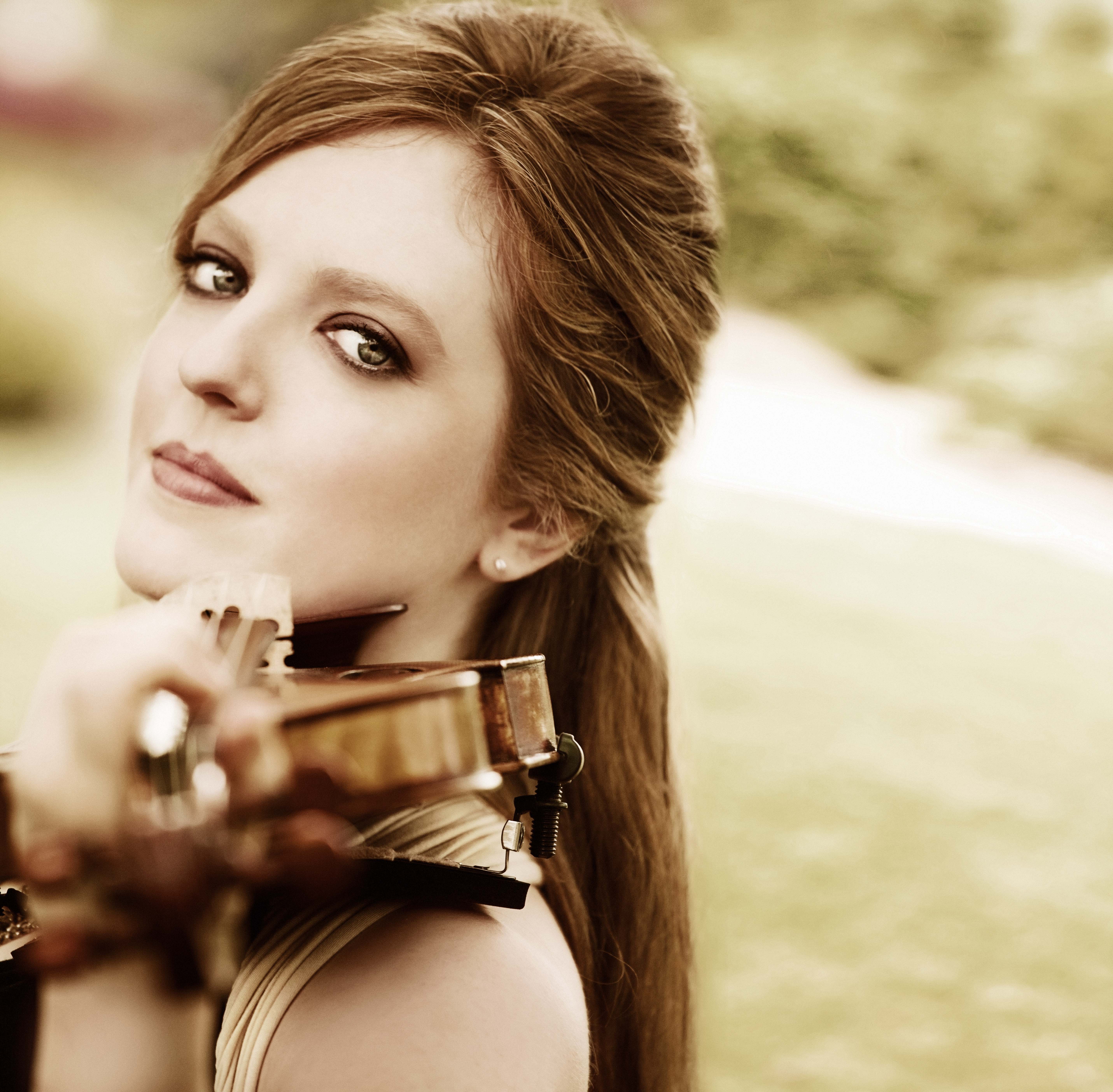
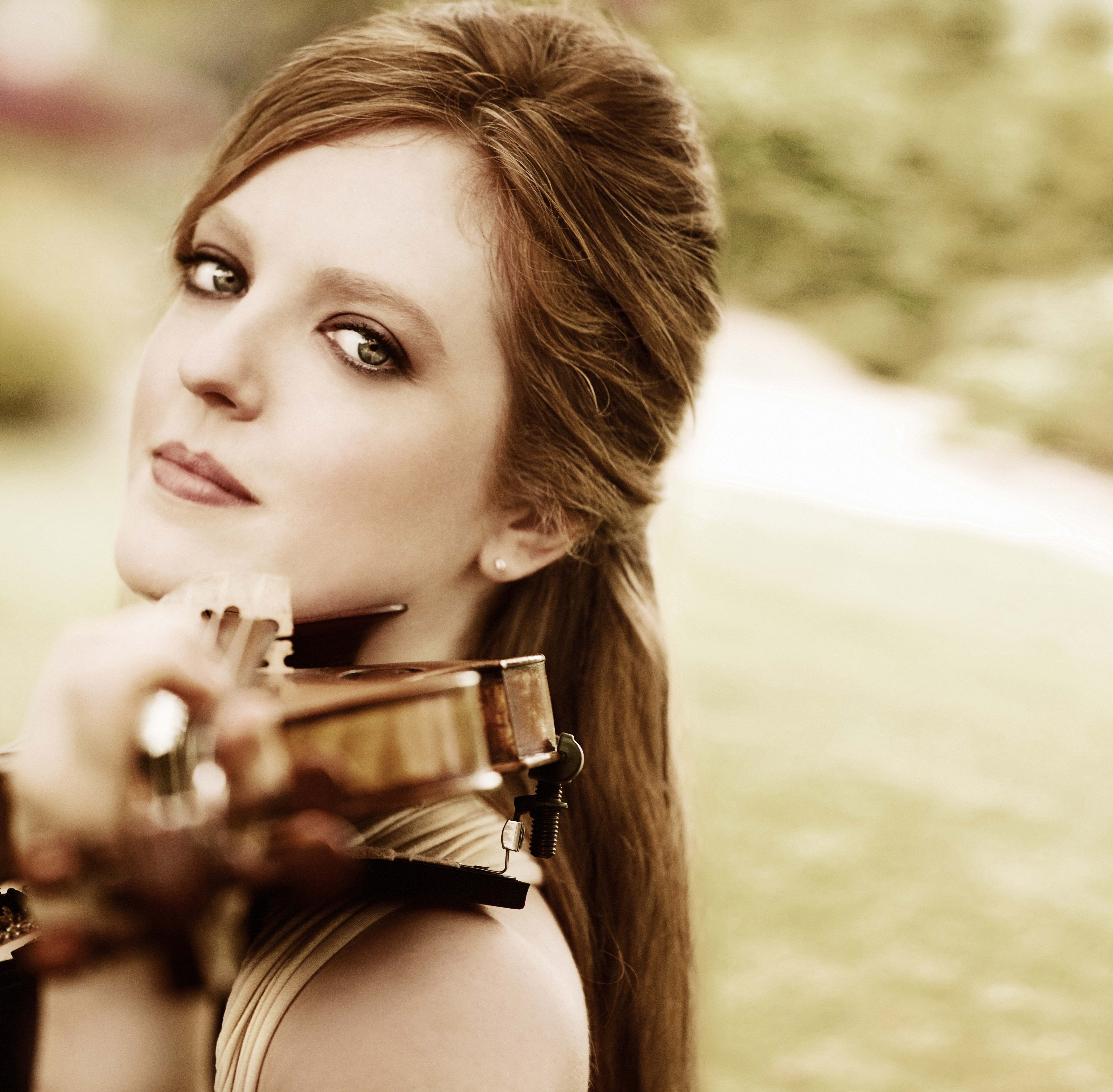
Rachel Barton Pine played the premiere of Billy Childs’s Second VIolin Concerto with the Boulder Phil. Photo by Lisa-Marie Mazzucco.
Childs’s classically-based music—as opposed to his jazz work—is as he has said, “in the style of the mid-20th-century composers.” He has given Ravel and Barber as models, but his orchestra lacks the brilliance of those examples. Today the style seems like something out of the past, and as such it sounds derivative, imitative rather than strongly individual in any way.
It should be stated, however, that this relatively weak impression cannot be laid at the feet of the soloist. Pine played with a passion and commitment that came through the live feed loud and clear. The technical passages were played with extraordinary precision and clarity, while the lyrical passages were all rendered with beautiful tone and deep expression. Pine is an exceptional artist, and it was a pleasure to hear her perform.
She concluded the first half of the concert with a lovingly played movement from a Bach Sonata for solo violin. This is of course music of great depth, and far more than the concerto it revealed the artistry of the performer.
The second half of the concert was taken by Beethoven’s ever-popular Symphony No. 7. Lewis led a performance that seemed safe, straightforward, but lacking the excitement and the textural clarity the symphony wants. This may be a reflection of limited rehearsal time having been given to a piece that is, after all, familiar to most of the musicians.
But here’s where the quality of the live stream becomes an issue. What came through my speakers sounded cautious, murky, sometimes plodding. The themes and gestures were under-characterized, and the tempo dragged in spots, particularly in the highly energized, onrushing third movement. Only in the finale did the orchestra start to generate real excitement, but from what I heard, a lack of precision and control got in the way of clarity.
But Beethoven wins in the end. The finale provided the conclusion that everyone wanted for the program. Lewis deserves thanks and credit for holding the concert together under challenging conditions.
Gary Lewis substitutes for Michael Butterman with violinist Rachel Barton Pine
By Peter Alexander Feb. 10 at 9:55 p.m.
Billy Childs might think his new Violin Concerto is under a curse.
Commissioned by several groups including the Boulder Philharmonic, it was twice scheduled to premiere at the Grant Park Music Festival in Chicago, in 2020 and 2021, and it was twice postponed by COVID. It will finally have its premiere Saturday by the Boulder Philharmonic with violinist Rachel Barton Pine, for whom it was written (7:30 p.m. Feb. 12 in Macky Auditorium).
Gary Lewis will substitute for Michael Butterman with the Boulder Philharmonic
But Boulder Phil music director Michael Butterman is unable to travel to Colorado, so prof. Gary Lewis of the CU College of Music has stepped in at the last minute to conduct the premiere. And it will finally make its way to the Grant Park Festival in the coming summer—hopefully.
Childs’s brand new Concerto shares the program with a very familiar piece, Beethoven’s Symphony No. 7 in A major. Termed “the apotheosis of the dance” by Richard Wagner, the Seventh has been one of the most performed of all Beethoven’s symphonies, standing at No. 3 on the list of orchestral works performed at Carnegie Hall. It’s standing in Boulder may not be quite third, but it certainly has been performed here several times in the last few years.
Pine appeared with the Boulder Phil once before, in 2015, when she played the Berg Violin Concerto. A musician of wide ranging interests, she has performed heavy metal as well as classical music, and created a foundation to promote the music of Black composers from the 18th to the 21st centuries.
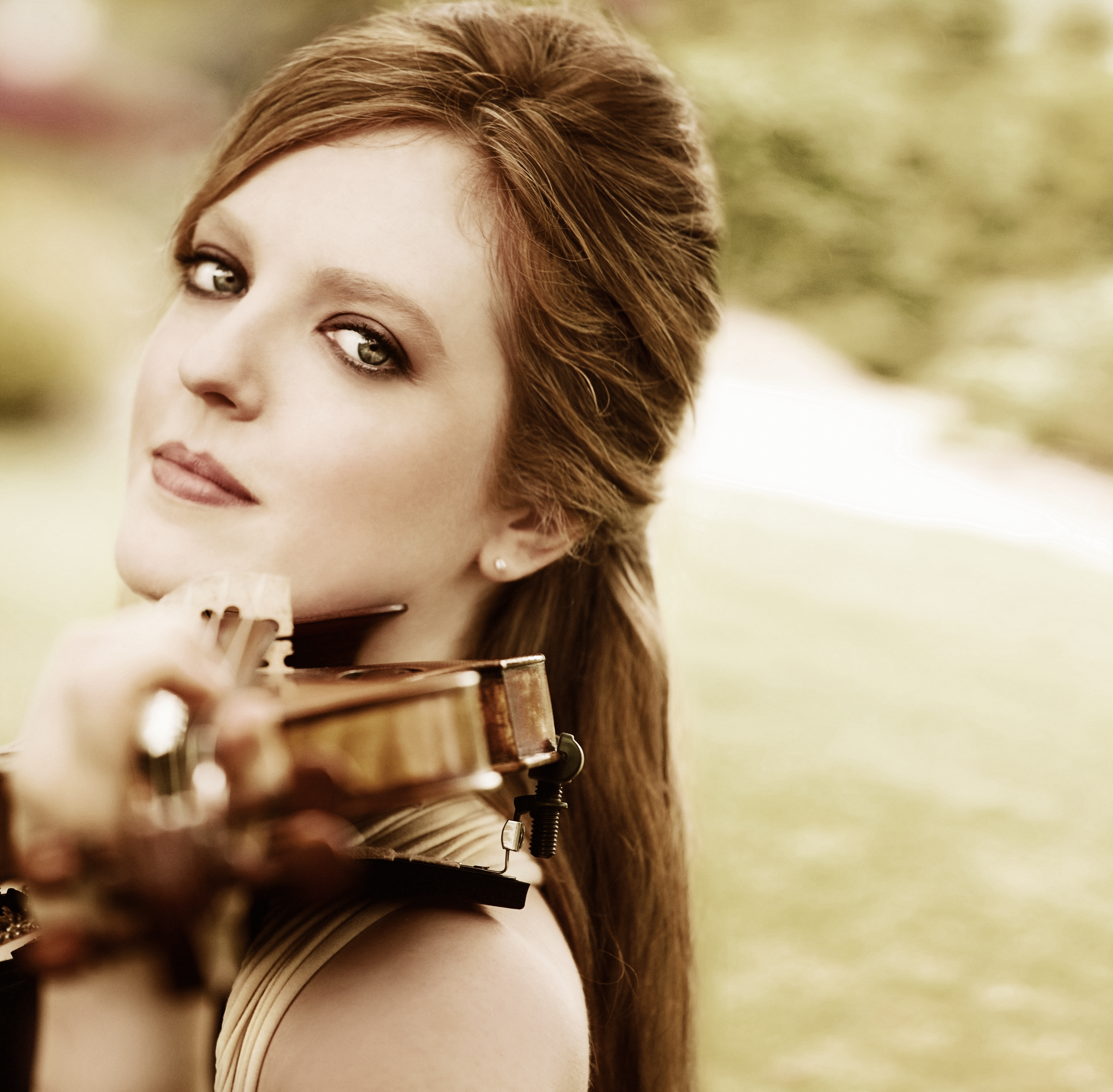
Rachel Barton Pine. Photo by Lisa-Marie Mazzucco.
The concerto, Childs’s Violin Concerto No. 2, is not the first piece he has written for Pine. They met through his work as a board member of Chamber Music America, and he wrote his Four Portraits for solo violin, modeled on the Bach D-minor Partita for solo violin, for her in 2017. That was followed by Incident on Larpenteur Avenue for violin and piano, and now the concerto.
“The pieces have been getting exponentially bigger,” Childs says. “Solo violin, then piano and violin, and then all of a sudden a quantum leap into orchestra and violin.” And what’s next?
“I would love to write something for her and my jazz chamber ensemble,” he says.
Every bit as much as Pine, Childs is a musician of diverse interests. A jazz pianist who has played with Freddie Hubbard and Wynton Marsalis, he has also written concert music in the classical tradition, including chamber and orchestral pieces. Speaking of his musical training, he says “Jazz was the strongest (influence), but there was no one that I was tethered to.”
Growing up he heard Bach and Handel at home, but also Nat “King” Cole. This was in the ‘70s, so he also heard the Temptations, the Four Tops and the Supremes. His older sisters introduced him to Bob Dylan, Laura Nyro, Paul Simon and Joni Mitchell. In school he became acquainted with Emerson, Lake and Palmer, Genesis and Yes. “My musical influences were all over the map,” he says.
“I started thinking, what music do I like that dramatically moves me? That’s all I care about. I don’t care about the genre.”
He approaches each piece he writes in terms of the expressive capabilities of the instruments. “I am concerned with the story of each piece, the dramatic implications of a piece, what instruments I’m writing for and how those instruments express the drama of the piece,” he says.
“There are certain thing that an orchestra does that no other ensemble does, so you listen to the masters of that genre. You check out what they did—people like Ravel, Bartók, Samuel Barber.”
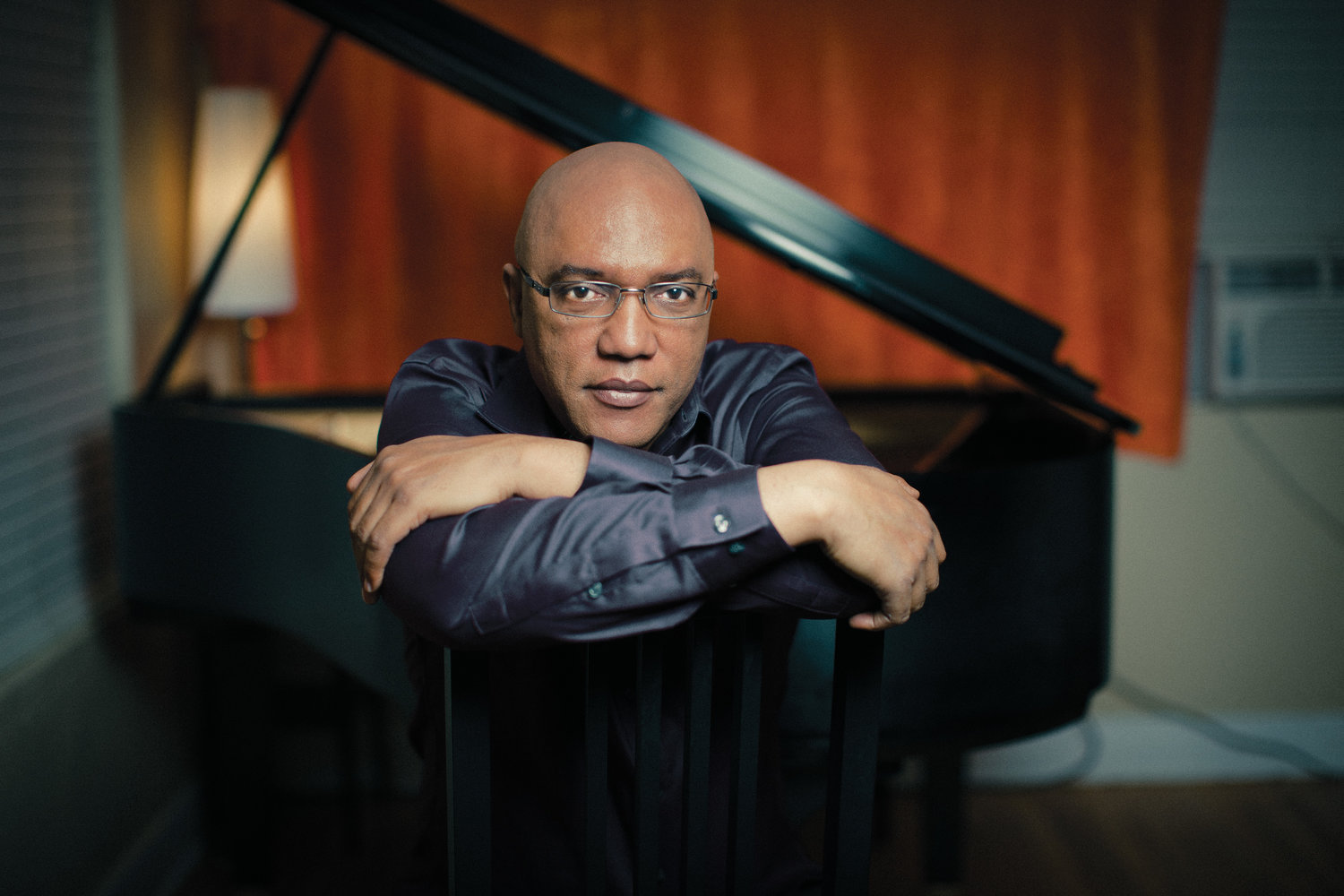
Billy Childs. Photo by Raj Nail.
In terms of musical style, “my aim had always been to marry, or create a hybrid form of Western European classical music and American classical music—jazz—but do that on an organic level,” he says. But don’t listen for specific jazz influences in the concerto. “If you hear Ellington, it’s because you want to,” he says.
”I’m reluctant to describe the music, because that’s impossible. But it’s in the style of the mid-20th century composers. I took a cue from that language. Since it’s orchestra, I tried to do what the great orchestrators do—the Ravels, the Barbers, Stravinsky. How they used the orchestra—I tried to do that.”
The shape of the concerto was partly determined by the fact that Childs wrote the movements in reverse order. “I wrote the last movement first, and the first movement last,” he says. “I don’t know why that happened, I guess because the last movement is a very exciting and angular and difficult movement.
“That was the first thing that I wrote during 2019 and 2020. Especially during 2020 when COVID hit, things were just out of our control. And then I kind of calmed down. There’s a lyricism in all the movements, but the second movement is elegiac, and the first one is celebratory.”
So two years after the planned premiere, is the Concerto really finished? Well, not exactly. “I really like what I wrote, but I know that I will be going in there (to the performance) with a notepad, changing a lot of stuff,” Childs says.
“You never really know until you actually hear it.”
# # # # #
“Beethoven and Billy Childs” Boulder Philharmonic Orchestra, Gary Lewis, guest conductor With Rachel Barton Pine, violin
Billy Childs: Violin Concerto No. 2 (World premiere, co-commission)
Live concerts again at last, and a return to CU Macky Auditorium in January
By Peter Alexander 8 a.m. May 22
The Boulder Philharmonic is taking cautious steps back to the future.
In other words, they will return to full orchestral concerts in Macky Auditorium, suspended for the COVID-19 pandemic, but not all at once. In announcing their 2021–22 season, they have revealed a schedule that will feature four small orchestra concerts in a smaller space in the fall, followed by a return to Macky in January, 2022.
Boulder Philharmonic and conductor Michael Butterman in Macky Auditorium
Those will not necessarily be full capacity concerts. According to a statement from the orchestra, they have “developed health and safety protocols to ensure a safe environment for performers, audience members, staff, and volunteers. Measures will include adjusting venue capacity and seating plans, and wearing masks. Plans will adjust in response to public health measures as they evolve in the coming months.”
The fall portion of the season will take place in Mountain View United Methodist Church in Boulder (355 Ponca Place). There will be two programs, each presented twice without intermission (see full schedule below) and led by the orchestra’s music director, Michael Butterman. The first will be a program of music for chamber orchestra, including Haydn’s very first symphony, composed in 1759, and the second a program of 20th-century music from Europe influenced by jazz, featuring works by the Russian Shostakovich, the French composer Darius Milhaud and the German Kurt Weill.
December will see a return of the evergreen Nutcracker ballet, performed by the Boulder Phil with Boulder Ballet in Macky Auditorium. CU music prof. Gary Lewis will conduct. Tickets to Nutcracker will be available in the fall.
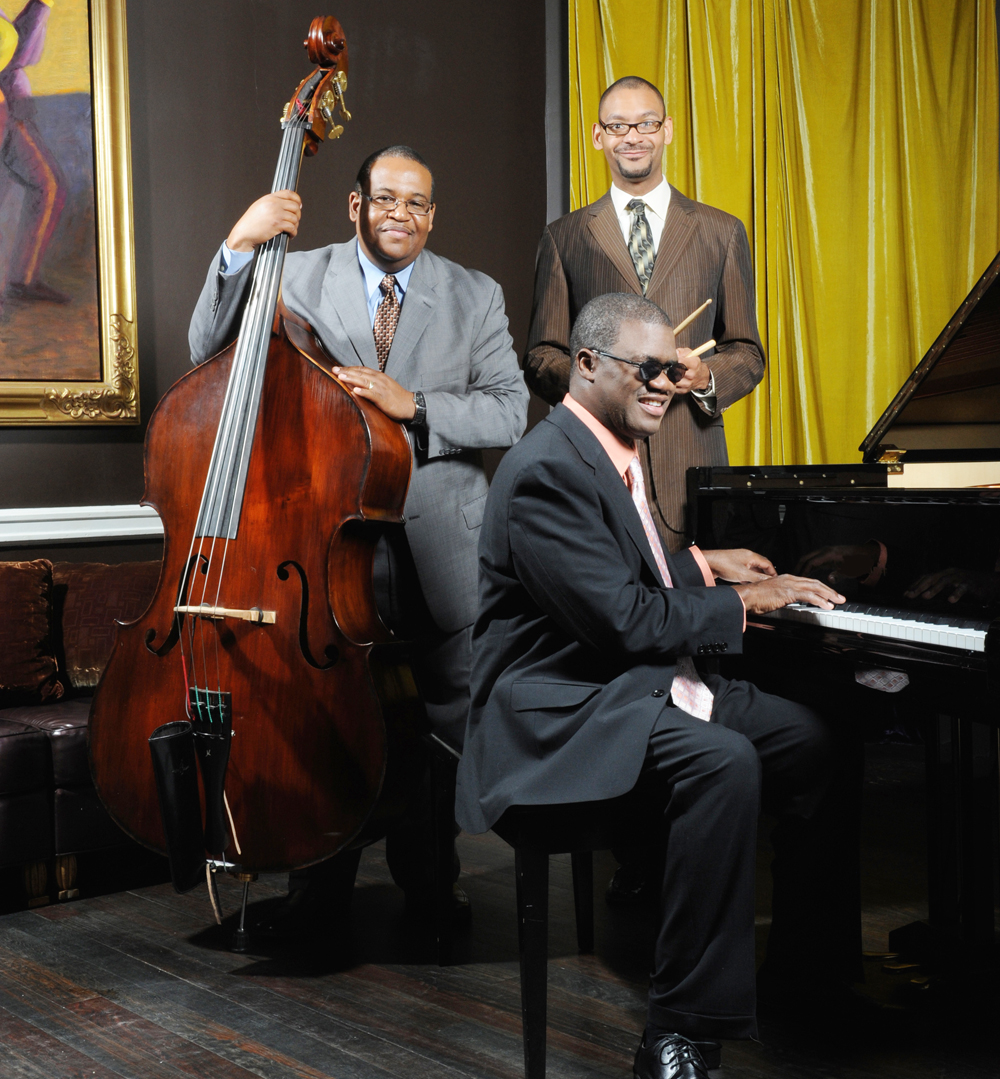
The Marcus Roberts Trio will join the Boulder Phil for their first concert back in Macky Auditorium
After the holidays, the Phil will present a subscription series of six concerts, January through May. These concerts will feature guests soloists and collaborations, starting with the “Opening Weekend” concert Jan. 22, a “Gershwin Celebration.” Renowned jazz pianist Marcus Roberts and his Trio will join the Phil for a performance of Gershwin’s Piano Concerto in F on a program that also features An American in Paris. This program will be repeated at the Lone Tree Arts Center Jan. 23.
Violinist Rachel Barton Pine returns to Boulder Feb. 12 to play the world premiere of the Violin Concerto by Grammy-winning jazz pianist Billy Childs. Pine was in Boulder in 2014, when she played the Berg Violin Concerto with the Philharmonic. Other soloists through the spring will be pianist Terence Williams, who will play Rachmaninoff’s Third Piano Concerto March 19; Philharmonic concertmaster Charles Wetherbee, who will play The Butterfly Lovers Concerto on a program that will also feature Frequent Flyers Aerial Dance, April 30; recent Grammy winner violist Richard O’Neill, who will play William Walton’s Viola Concerto May 14; and ukulele virtuoso Jake Shimabukuro, who will appear with the Phil and his trio, May 28.
Subscription packages of the six concerts in 2022 go on sale Monday, May 24. Subscription purchasers can add any of the concerts at Mountain View Methodist Church at a discounted price. Any remaining single tickets will be available in September, along with Nutcracker tickets. Information and, starting on Monday, subscription purchases will be available on the Boulder Phil Web page.
# # # # #
Boulder Philharmonic Orchestra Michael Butterman, music director 2021-22 Season Schedule
Michael Butterman. Photo by Shannon Palmer
“Together Again” Michael Butterman, conductor
Haydn: Symphony No. 1 in D Major
—Sinfonia concertante in B-flat Major
Frank Martin: Petite symphonie concertante, op. 54
4 & 6 p.m. Sunday, Oct. 3 (no intermission) Mountain View United Methodist Church, 355 Ponca Place, Boulder
“The Art of Jazz” Michael Butterman, conductor
Shostakovich: Jazz Suite No. 1
Darius Milhaud: The Creation of the World, op. 81a
Kurt Weill: Little Threepenny Music
4 & 6 p.m. Saturday, Oct. 30 (no intermission) Mountain View United Methodist Church, 355 Ponca Place, Boulder
The Nutcracker with Boulder Ballet Gary Lewis, conductor
Opening Weekend: “Gershwin Celebration” Michael Butterman, conductor Marcus Roberts Trio: Marcus Roberts, piano; Rodney Jordan, bass; Jason Marsalis, drums
“Pixar in Concert” features music from Toy Story, Incredibles, Finding Nemo and more
By Peter Alexander March 21 at 4:15 p.m.
You have probably seen the films, even if you don’t know who composed the music.
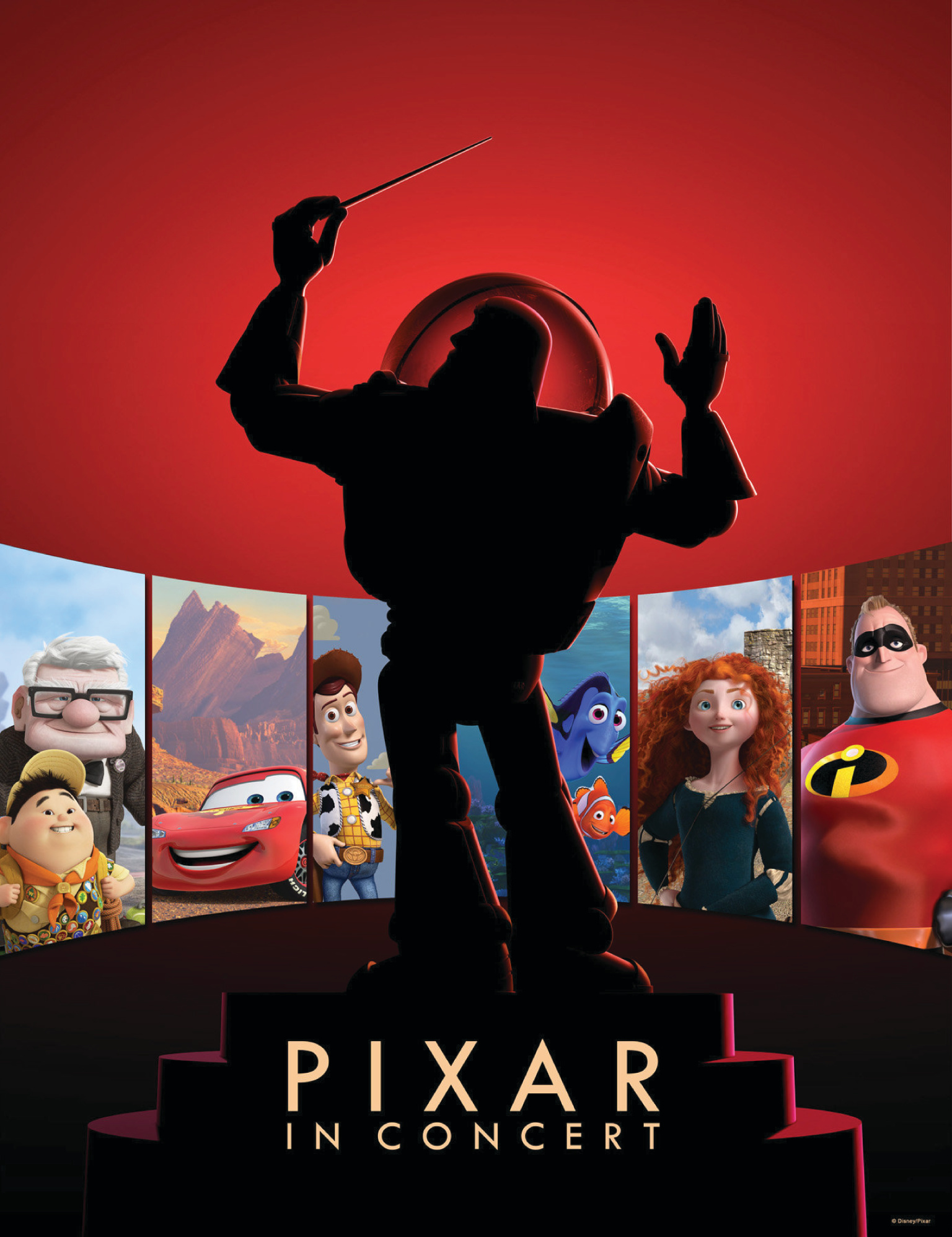
The Boulder Philharmonic is presenting “Pixar in Concert” Saturday (March 23), with music from a baker’s dozen films, including Toy Story, Cars, The Incredibles and Finding Nemo, among others. The composers of these well known film scores are Randy Newman, Michael Giacchino and Thomas Newman.
Recognize those names?
Only the first of them is well known, as much for his career as a recording artist as for his numerous film scores, including Toy Story, A Bug’s Life, Monsters, Inc. and Cars. Giacchino and Thomas Newman, however, are much less known by name, even though they have scored some of the most popular films of recent times, including Cars 2, The Incredibles and Finding Nemo.
The music will be performed live with clips from these Pixar films. Principal guest conductor Gary Lewis will conduct the Philharmonic.
Orchestral concerts of film music are more and more common. That is partly because of the quality of the composers writing today, and also the popularity that their music has achieved. “John Williams and others like him have really brought symphonic music to the masses, in a way,” Lewis says. “Now that has sort of turned around where symphony orchestras are latching onto that popularity to help bring people into the concert hall.”
The composers for this program are some of the best, Lewis says. Randy Newman is “just one of the great talents of our generation—an amazing pianist and songwriter and composer, sort of all in one package.” And Giacchino and Thomas Newman “are the new generation that is writing and scoring these Pixar films. They’re quite talented, and it’s really interesting music.”
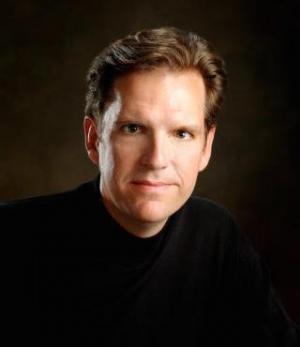
Conductor Gary Lewis
Keeping live music synchronized with the film excerpts is not an easy task. “In fact this is one of the most challenging concerts or programs that I have conducted, and I do a lot of this kind of stuff,” Lewis says. “The tempos, the techniques required, the size of the orchestra with guitarists and rhythm section and saxophonists and a large percussion section, harp, piano, and synthesizers—it’s complex!”
We are all used to seeing these films and having the music flow seamlessly along with the action—the outcome of compositional skill and the technical magic that is applied in postproduction. Coordination between film and music can be achieved with great precision through digital editing. But it’s a different matter when 80 or 100 musicians sit down onstage and have to play live with film events that can be measured in fractions of a second.
“For me, that is just another aspect of [conducting] that I enjoy the challenge of,” Lewis says. He has been doing it for some time, and he has managed to deal with several different ways of achieving some degree of synchronization.
“The most challenging thing that I’ve ever conducted was a Wizard of Oz, which was before everything was digitized,” he says. “The synchronization of that was with a sweep hand on an analog clock. I had to be able to start and stop with no other method of synchronization.
“With things that have singing or musical accompaniment that you had to accompany with the orchestra, there were all sorts of little anomalies in the [film] editing process where they would rush or drag. It was like nailing Jello to the wall.”
Happily, those days are past. Today, there are several forms of synchronization of which the most precise are “click tracks”—a sort of digital metronome signal that is created to exactly match with the film. Performers wear headsets so they can hear the clicks to keep together with one another and the film.
“This show has click tracks, [which] will be exceptionally helpful,” Lewis says. “Some of the tempo changes are just immediate and not particularly organic.” In this case, Lewis and some of the percussionists will hear the click tract, while the rest of the orchestra players will follow Lewis in a more or less normal way.
But while it’s fascinating to know the details of how the performance comes about, and what’s going on when you are there, Lewis doesn’t want the audience to sit there thinking about the technical details. When there was singing, as in The Wizard of Ozˆ, “if you didn’t line up, it was quite obvious,” he says. But for “Pixar in Concert,” it will be “just the orchestra, so if something doesn’t quite line up, most people wouldn’t even notice.”
Apart from the technical aplomb that it takes to pull off the performance, Lewis has a slew of other reasons why you should go this concert. “The animation is brilliant, as with all Pixar productions,” he says. “And the music is engaging as well. There’s everything from hard driving jazz to Latin, to Americana.
“There’s a lot of variety and it’s all really, really fun stuff.”
# # # # #
Boulder Philharmonic Orchestra
Pixar in Concert
Boulder Philharmonic, Gary Lewis, conductor
Randy Newman: Music from Toy Story, A Bug’s Life, Monsters, Inc., Monsters University and Cars Michael Giacchino: music from Coco, Ratatouille, UP, The Incredibles, Cars 2 and Inside Out
Thomas Newman: music from Finding Nemo and WALL-E
Composer’s daughter, former NY Phil concertmaster, scholar visit College of Music
By Peter Alexander Sept. 20 at 12:25 p.m.
Jamie Bernstein. Photo by Steven J. Sherman.
The University of Colorado College of Music has joined the rest of the musical world to celebrate the centennial of the unique American composer, conductor, teacher, writer, lecturer and humanitarian Leonard Bernstein.
Just about the entire College of Music is represented in the months-long festival, from individual faculty members to the University Symphony, the Eklund Opera Program and even the Marching Band.
The celebration gains an extra dimension starting Monday, Sept. 24, with the arrival on campus of three prominent guests: Jamie Bernstein, the composer’s daughter and author of the recently released memoir Famous Father Girl; violinist Glenn Dicterow, concertmaster of the New York Philharmonic for 34 years who played many performances Bernstein conducted; and Carol Oja, William Powell Mason Professor of Music at Harvard University and one of the leading Bernstein scholars.
The three guests will open the week with a joint appearance Monday afternoon. Oja will present a keynote address for the celebration, followed by a public discussion moderated by Susan Thomas, director of the CU American Music Research Center. Each of the guests will then participate in individual events during the rest of the week.
CU Bernstein at 100
Events featuring guest artists
All events are free and open to the public
Public Talk with Jamie Bernstein, Glenn Dicterow and Carol Oja
Moderated by Susan Thomas, director of the CM American Research Center
4 p.m. Monday, Sept. 24
Grusin Music Hall
Faculty Tuesday
Chamber Music of Leonard Bernstein, narrated by Jamie Bernstein
CU Faculty and Student performers
7:30 p.m. Tuesday, Sept. 25
Grusin Music Hall
“Citizen, Conductor, Composer: The Continuing Legacy of Leonard Bernstein”
Conversation with Carol Oja, presented by The Entrepreneurship Center for Music
5 p.m. Wednesday, Sept.. 24
Chamber Hall (C199), Imig Music Building
CU Symphony Orchestra
Gary Lewis, conductor, with Glenn Dicterow, violin
Jamie Bernstein, narrator
7:30 p.m. Thursday, Sept. 27
Mackey Auditorium
Bernstein: Overture from Candide Bernstein: Suite from On the Waterfront Samuel Barber: Violin Concerto
Master Class with Glenn Dicterow, violin
3 p.m. Friday, Sept. 28
Grusin Music Hall







 The Boulder Philharmonic is presenting “Pixar in Concert” Saturday (March 23), with music from a baker’s dozen films, including Toy Story, Cars, The Incredibles and Finding Nemo, among others. The composers of these well known film scores are Randy Newman, Michael Giacchino and Thomas Newman.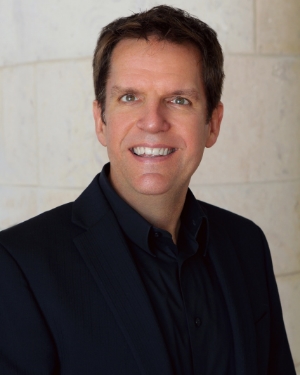
 Sharps & Flatirons