Brilliant concert of all-women composers at CMF 

Premiere by Gabriela Lena Frank, Concerto by Joan Tower showcase the Festival Orchestra

By Peter Alexander July 22 at 12:15 a.m.

The Colorado Music Festival Orchestra and conductor Peter Oundjian hit the jackpot last night (July 21) with a program of three pieces by women composers. 

All three works, by Florence Price, Gabriela Lena Franck and Joan Tower, were performed memorably. Both living composers—Frank and Tower—were present and spoke to the audience.

The concert opened with Price’s Adoration, a piece that she originally wrote for organ in 1951 and that here was performed in a setting for string orchestra. Played tenderly by the Festival Orchestra strings, it is almost too soothing and gentle to serve as an opener. Oundjian and the players thoroughly embraced the mood, creating a comforting start to a program that soon turned adventurous.

Frank’s Kachkaniraqmi (“I still exist” in the Quechua language of her Peruvian forebears) was commissioned by CMF as a concerto for string quartet and string orchestra, written for Boulder’s Takács Quartet and the CMF Orchestra. As an introduction by Oundjian, Frank and Takács violinist Harumi Rhodes spelled out, the commission emerged from a suggestion by CMF contributor and long-time patron Chris Christoffersen for a concerto for the Takács, and then from a friendship between Frank and Rhodes.
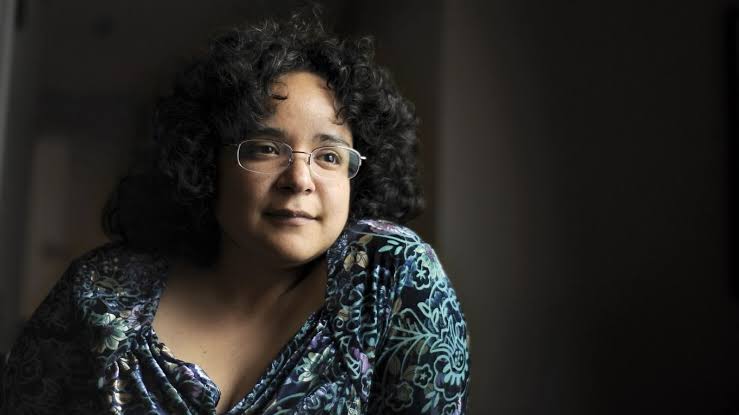
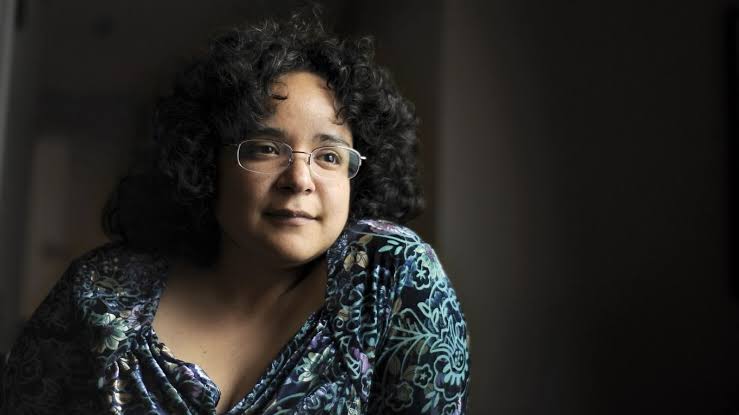
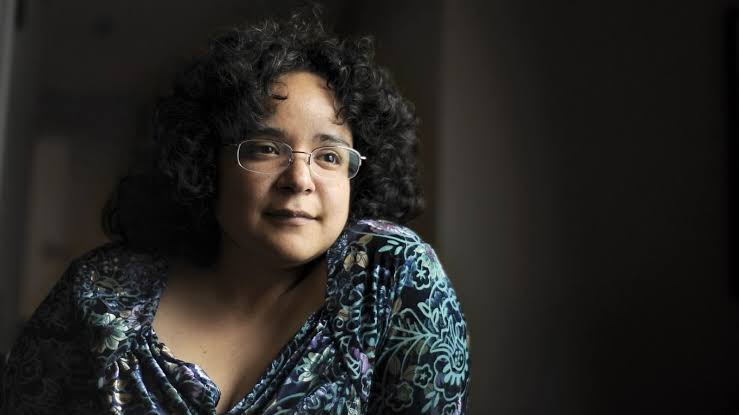
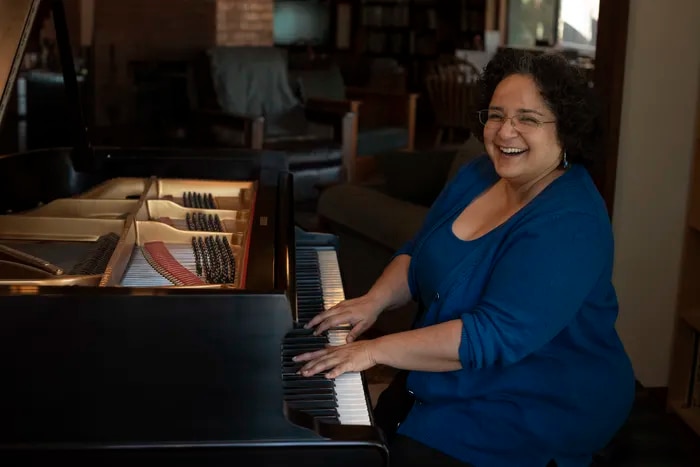
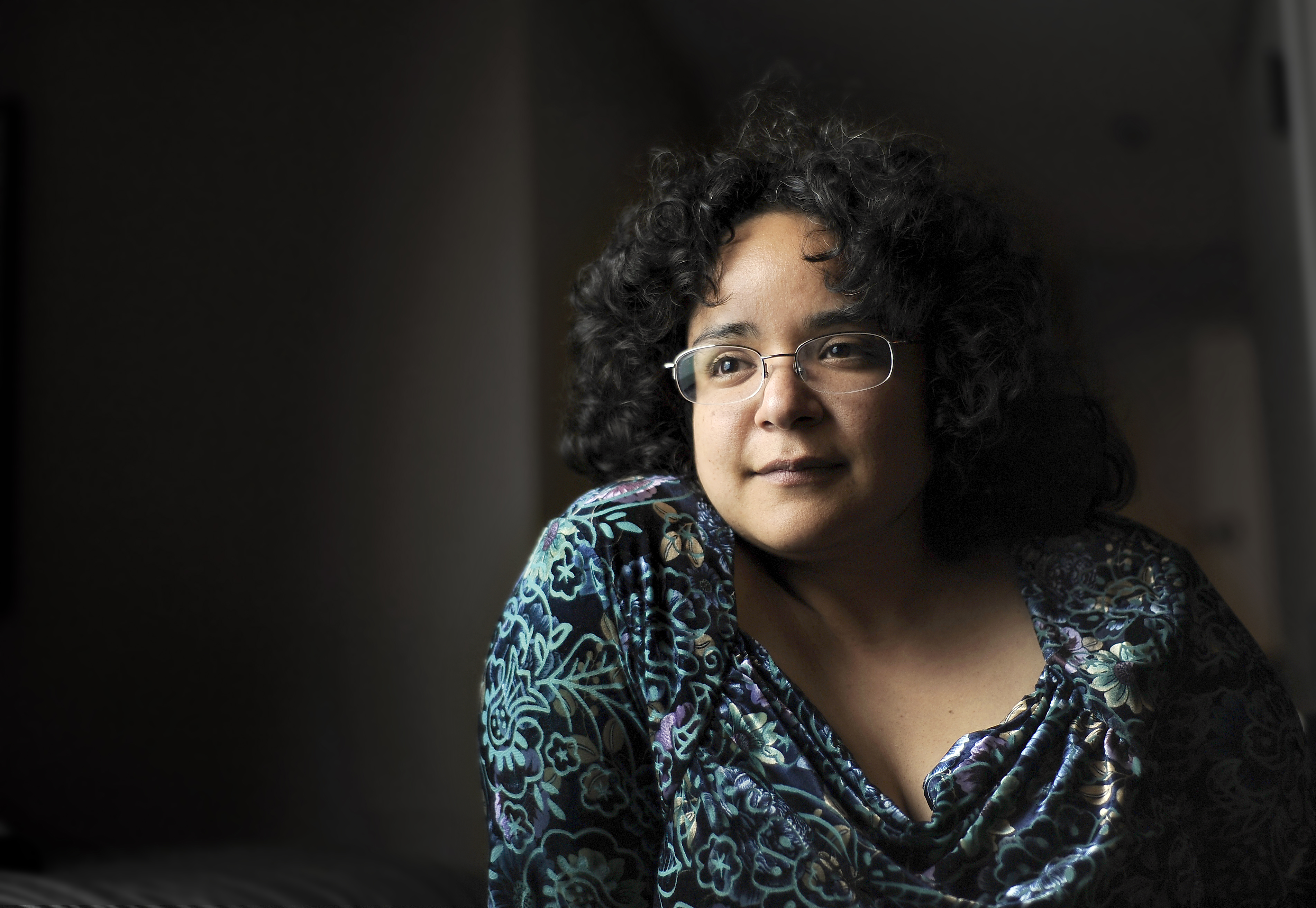
Gabriela Lena Frank

Kachkaniraqmi is a piece of great imagination and creativity. Frank refuses to cozy up to the listener with easy tunes and catchy ideas. In fact, Kachkaniraqmi sounds like no other piece I have heard, but it makes great use of string timbres and textures. It opens with highly individual, sometimes quirky gestures for the solo violist and orchestral violas before moving into a fuller texture. At places, the strings sound like a single instrument, leaping across a large range from top to bottom, and at other times like a large organ moving in full orchestral chords.

The middle section, or second movement, presents a rushing, incessant forward drive. All texture and motion, this portion of the concerto is not hummable, but identifiable musical ideas can be followed as they are passed from section to section over an unrelenting rhythmic foundation. This driven middle section settles into a more contemplative final portion that explores different techniques of string playing to create a startling range of sounds and gentling moods as the music moves toward silence.

Kachkaniraqmi is a remarkable creation, an intriguing piece that I expect will reveal more and more as one listens to it again and again. I hope that the Takács will take the score well beyond Boulder and introduce it to the wider musical world.

The concert concluded with a stunningly complex and difficult piece, Joan Tower’s Concerto for Orchestra. Composed in 1991 for the New York Philharmonic, Chicago Symphony and St. Louis Symphony, it has had modest success in the intervening 33 years. “This piece should be played everywhere!” Oundjian said in his introductory comments, standing onstage with the composer. 
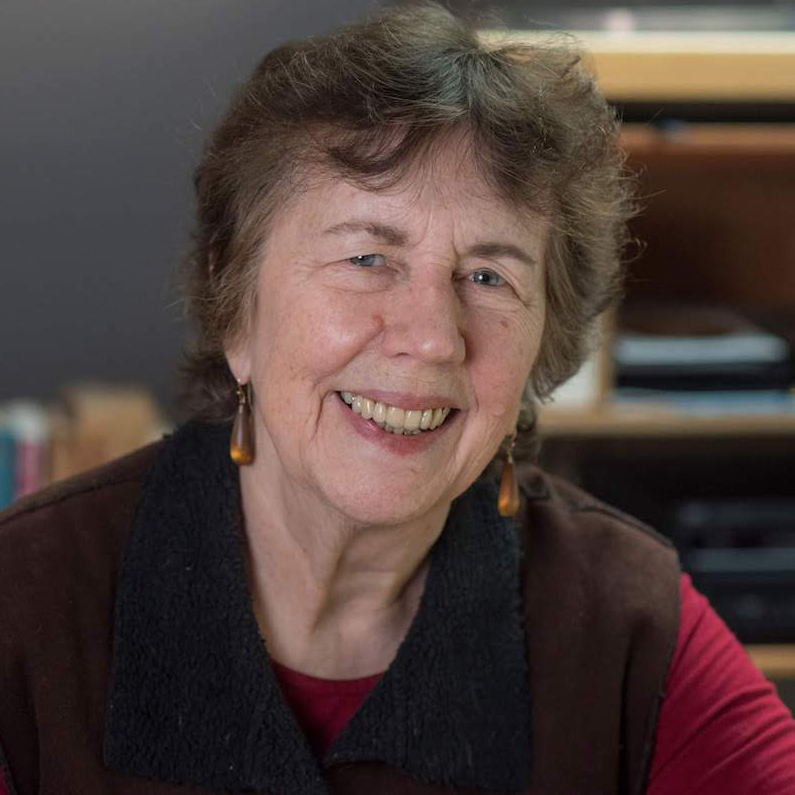
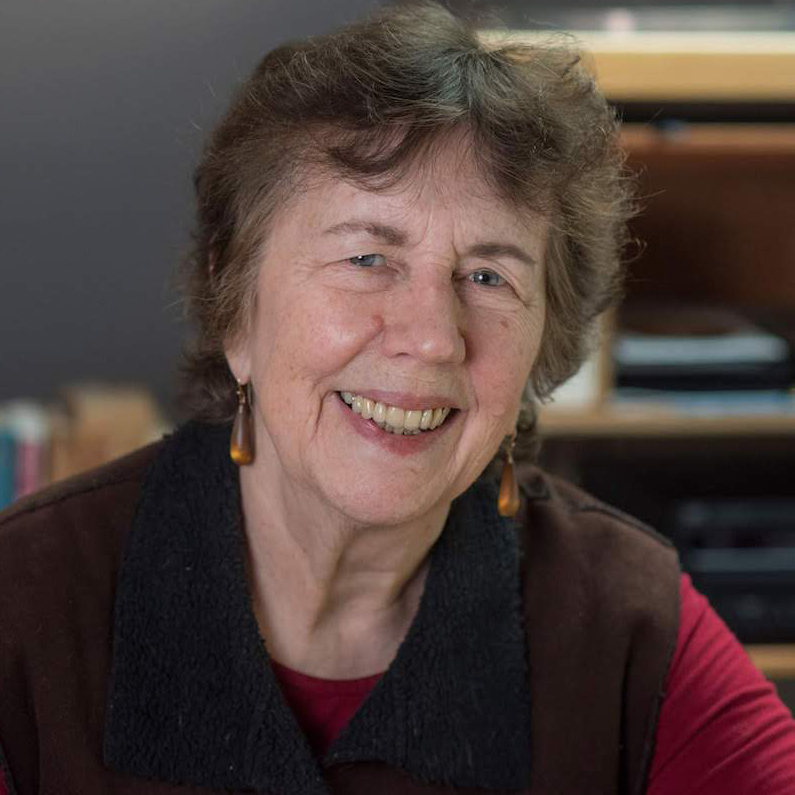
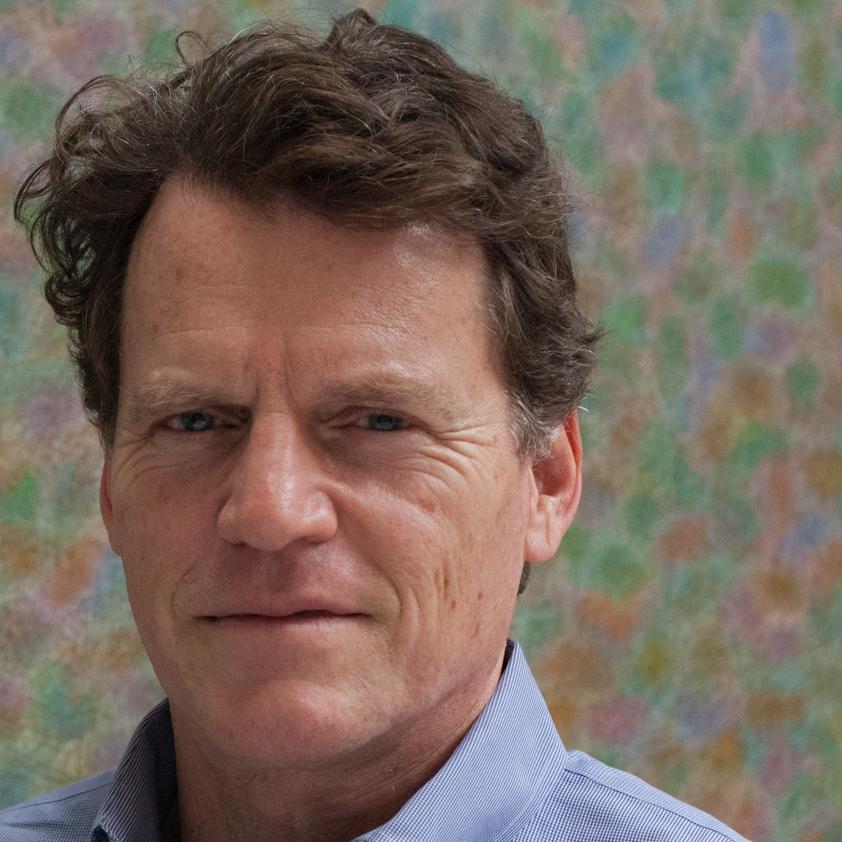
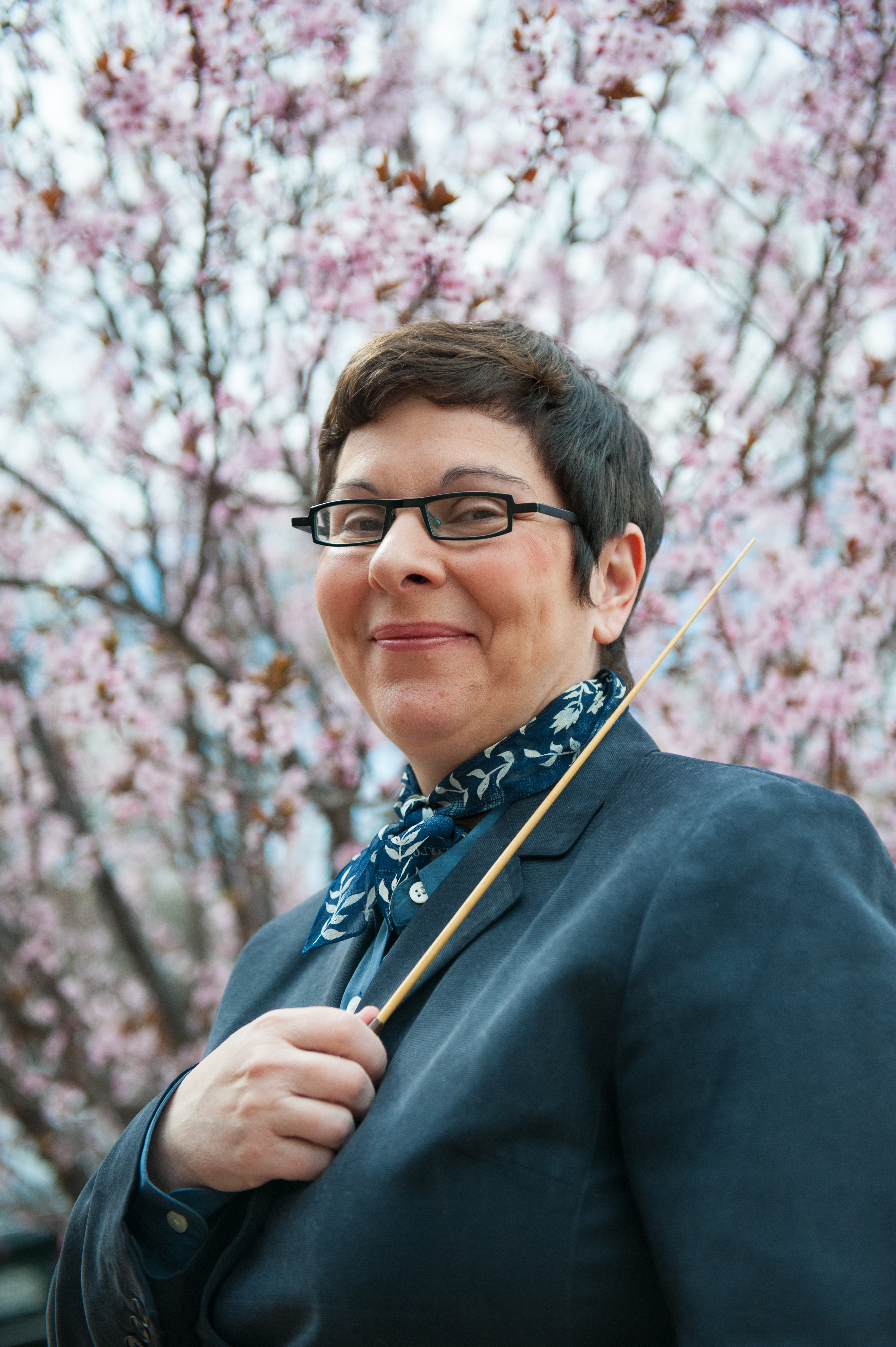
Joan Tower

Tower noted that it is a difficult piece to conduct—on top of being very difficult to play—which may be one barrier, but the CMF Orchestra’s performance showed what musical fireworks it sets off when played at the highest level. Clearly, Oundjian had mastered all the shifting meters and tricky rhythms, and the CMF players responded with a virtuoso display.

As expected, there are many solos in the course of the score’s 25+ minutes, for horn, for English horn, for tuba, but more stunning are the intricate passages for whole sections—trumpets, woodwinds, a tricky motive passed up and down from trumpets to horns and back. Often played at a breakneck pace, these are the most virtuosic passages of the concerto, and they were played with precision and confidence by the CMF orchestra.

Other noteworthy moments included a cello section solo that gives a lyrical contrast to the more driving and excitable portions of the score, with the cellos at times divided into parts to create full chords, and at other times reduced to two eloquent solo players. A later softening and lowering of temperature allows two violinists to come forward, before the rhythmic frenzy starts again. 

As Tower promised, the percussion players are kept busy, running from instrument to instrument, culminating with a viciously fast running beat by several drums that requires extreme concentration to keep together. This exciting moment, played with perfect precision, leads to a final crashing chord—and inevitably, wild enthusiasm from the audience.

They were still cheering as I gathered my things and snuck out the side door.

Under Oundjan’s leadership, the CMF has established itself as a forward-looking summer festival that all Boulder should support. His thoughtful programming, his embrace of living composers, and the commissioning of new pieces are admirable and exciting. A concert of works by three women, two of them present for the performance, is a perfect illustration of his vision of the festival. On this occasion, it was brilliantly realized.

Correction: Misspellings of string as “sting“ in paragraph six and viciously as “viscously” in paragraph 12 corrected 7/22.

Colorado Music Festival opens 2024 summer season Friday

Commissioned premiere and birthday celebrations are early highlights

By Peter Alexander July 1 at 6:27 p.m.

Peter Oundjian at Chautauqua.

Peter Oundjian, artistic director of the Colorado Music Festival (CMF), is brimming with excitement for the coming summer concert season.

“I love every program because I programmed them all!” he says. Nevertheless, when pressed he points to two concerts in the first weeks of the CMF season as especially interesting for audiences.

“One is the world premier of the Gabriela Lena Frank string quartet concerto with the Takács Quartet (6:30 p.m. Sunday, July 21; see full programs July 5–12 below). On that program we’re also playing what I consider to be one of the great American masterpieces of the past five years, the Concerto for Orchestra by Joan Tower.

“The other one is the week before, where I am celebrating the birthdays of Schoenberg and Bruckner with arguably the most beautiful piece that either of them ever wrote (Schoenberg’s Verklärte Nacht and Bruckner’s Fourth Symphony; 6:30 pm. Sunday, July 14). On a Sunday evening, to listen to these two glorious pieces will be beautiful and also a healing experience.”

The festival opens Friday and Sunday (July 5 and  7) with three pieces selected for variety and compatibility. The opening piece, Anna Clyne’s Masquerade was written for the BBC Symphony and premiered at the Last Night of the Proms in London in 2013. That will be followed by Dvořák’s Cello Concerto, one of the pieces the Czech composer wrote while living in the United States.

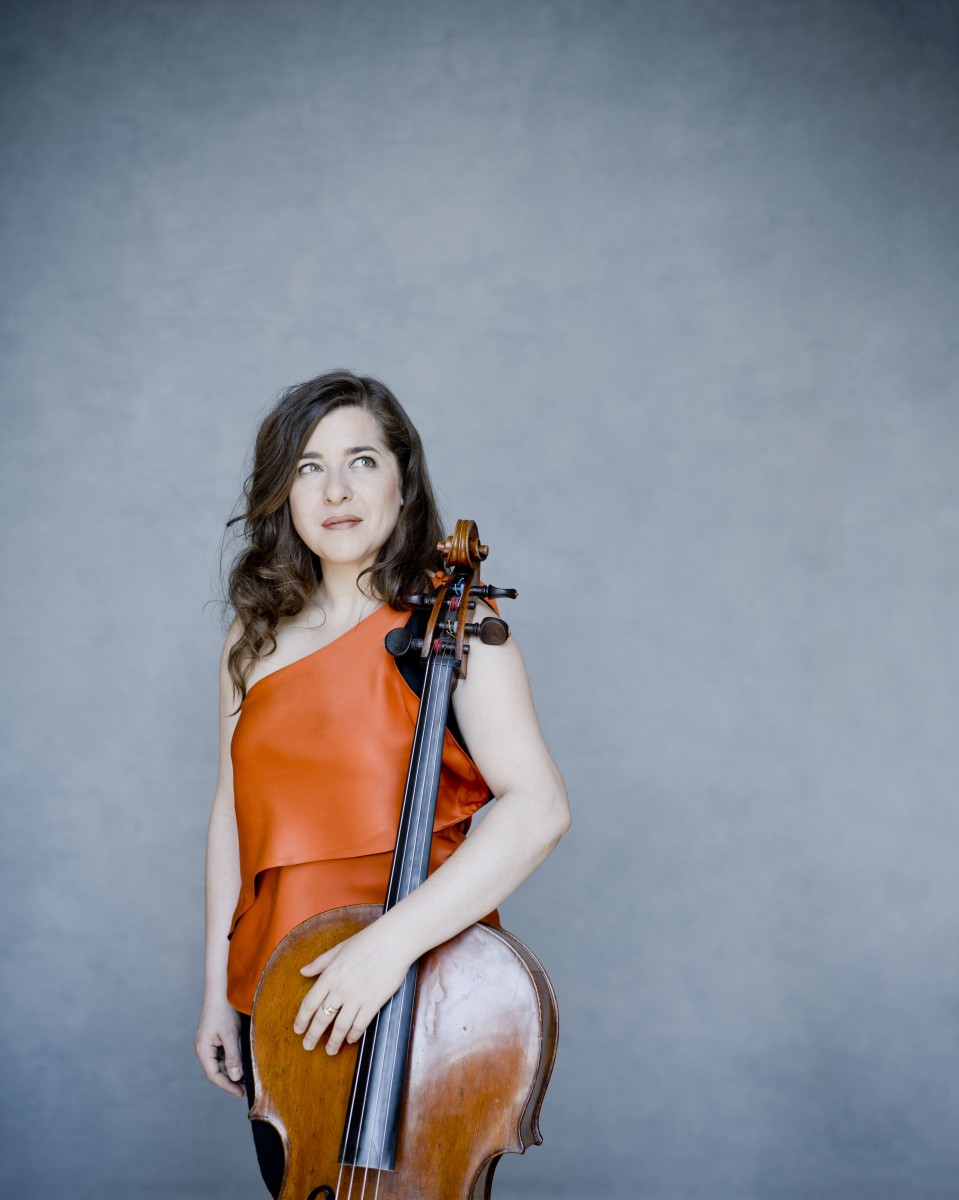
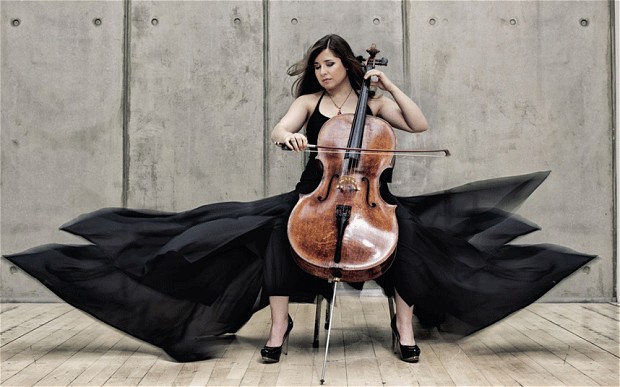
Alisa Weilserstein

Featured soloist for the concerto will be cellist Alisa Weilerstein, whom Oundjian calls “one of the great cellists in the history of the instrument, and an amazing musician. . . . Her Dvořák is spectacular,” he says. “It’s maybe (Dvořák’s) most profound work, because it’s so moving.”

To close the program Oundjian wanted something that would not compete with the intensity of the concerto. “I wanted to have a celebration in the second half,” he says. “I wanted everyone to feel great,” and for that he chose Mendelssohn’s “Italian” Symphony, certainly one of the most cheerful and ebullient pieces in the orchestral repertoire.

The opening week also features the CMF’s annual Family Concert Sunday morning at 10:30 a.m. (July 7), with some light orchestral pieces mixed with some fun, including a piece based on Dr. Seuss’s Green Eggs and Ham. Tuesday sees the first of the summer’s Robert Mann Chamber Music Series concerts, named for the late violinist and founding member of the Juilliard String Quartet. The series will continue the following three Tuesdays at 7:30 p.m.

Festival Orchestra Thursday and Friday pairs, at 7:30 and 6:30 p.m. respectively, start the first week with violinist Vadim Gluzman playing Prokofiev’s Second Violin Concerto, and the iconic 20th-century masterpiece, The Rite of Spring by Stravinsky (July 11 and 12). The program will open with the exhilarating Short Ride in a Fast Machine by the American composer John Adams, who was CMF composer-in-residence in 2022.

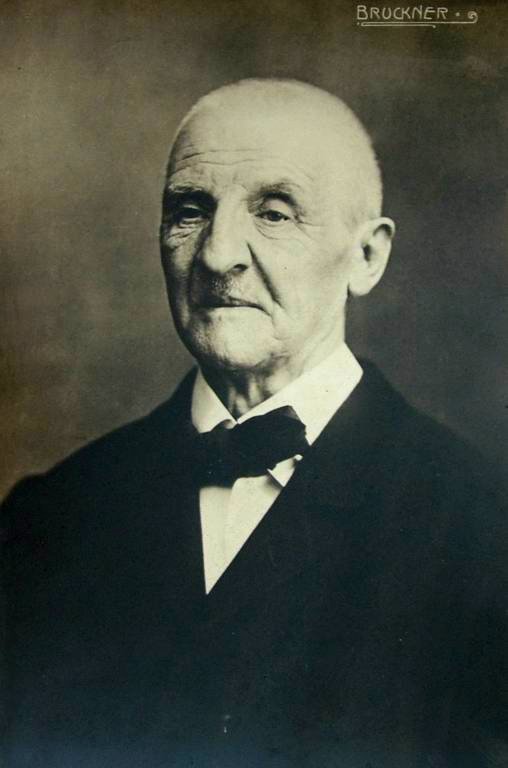
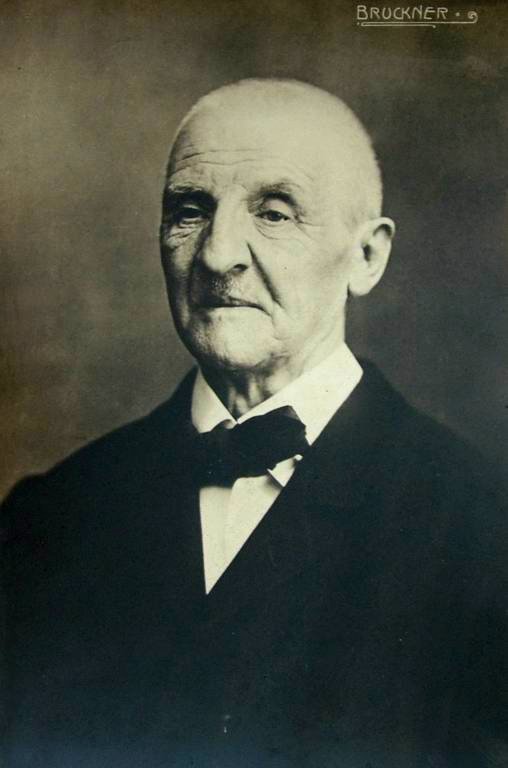
Anton Bruckner

“I did the (July 14) program because it’s the 150th birthday of Schoenberg and the 200th of Bruckner, and I wanted to acknowledge that,” Oundjian says. “I decided, let’s do it in one evening and make it a beautiful experience for everybody! The music is very spiritual (and) both pieces are fantastic to play, in that gorgeous acoustic at Chautauqua.”

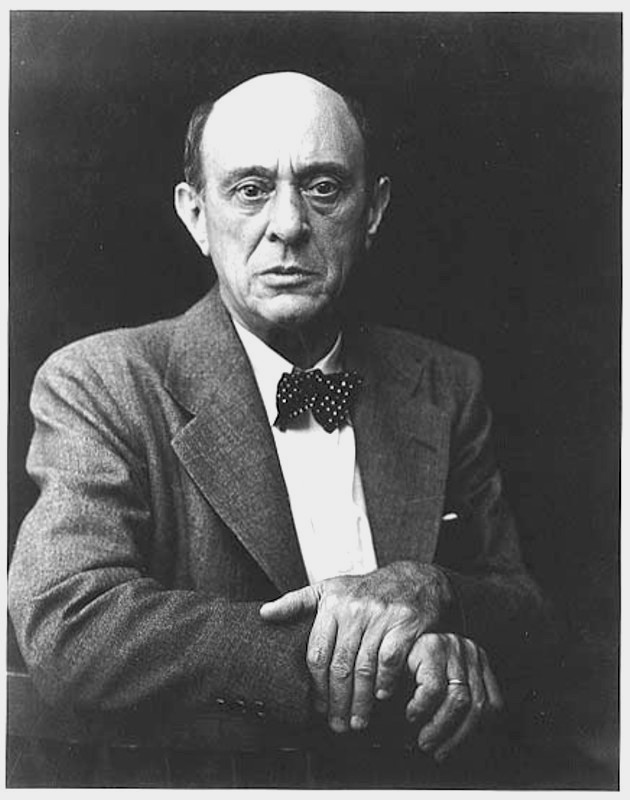
The two composers took Wagner’s music and turned in different directions—Bruckner more conservatively by putting Wagner’s sound into the traditional form of the symphony, Schoenberg, born 50 years later, by pushing beyond Wagner’s harmonic freedom and the limits of tonality. 

Arnold Schoenberg

“Bruckner’s Fourth Symphony is probably the most accessible (of his nine symphonies), because it’s fairly compact,” Oundjian says. “It has stunning themes and glorious horn solos, and you really hear the power of the orchestra. I find the music exquisitely beautiful and contemplative. It’s almost surreal in its staggering beauty, to me.”

If you think of Schoenberg only as a thorny modernist, you are missing the earlier works that followed much closer to Wagner than his later works. “Verklärte Nacht is basically like late Wagner, with its glorious string sound,” Oundjian says. “It’s a beautiful string orchestra piece.”

Pianist Olga Kern returns to CMF for concerts July 18 and 19. She will play Rachmaninoff’s Piano Concerto No. 2, which she played at CMF in 2013. The concert, under the direction of Norwegian guest conductor Rune Bergmann, will also feature Prayer by Canadian composer Vivian Fung—a work that had its premiere with a “virtual orchestra” of Canadian musicians during the COVID-19 pandemic—and Edvard Grieg’s Suites from music for the play Peer Gynt, narrated by Kabin Thomas.

Gabriela Lena Frank

When he was looking for a new work to commission for the 2024 festival, Oundjian thought of a concerto for the Takács Quartet. “I said to (the quartet members), if we were to have a quartet concerto, who would you be interested in approaching, and without hesitation Gabriela’s name came up,” he says. “She  is a wonderful composer, Peruvian-American, and a very particular voice.”

Frank will be present for the July 21 premiere, as will Joan Tower, whose Concerto for Orchestra is on the same program.

Frank has written in her program notes, “Kachkanaraqmi, or ‘I still exist’ in the indigenous Quechua language of my Peruvian forbearers, speaks to the resilience, even insistence, of a racial soul through the generations. In this four-movement work, a brief pastoral Andean prelude, a moody mountain soliloquy, a romp of thieving winds, and a lyrical child’s wake utilize the sonorous possibilities of a concerto grosso for string quartet and string orchestra . . . Throughout, re-imaginings of age-old indigenous motifs and rhythms proliferate.”

Joan Tower

The premiere will be part of a concert of all-women composers, opening with Adoration by Florence Price, an early-20th-century African American composer whose works were forgotten for many years but recently have been rediscovered. Written in 1951, Adoration was originally for organ solo but has been arranged posthumously for various ensembles..

Joan Tower’s Concerto for Orchestra was commissioned jointly by the Chicago, St. Louis and New York orchestras, all of whom gave premieres but never played it again. “They always say this about compositions: Getting a commission is hard enough, but try to get second performances,” Oundjian says. “It’s one of those things that has really intrigued me, over my entire career: Let’s find out what’s just premiered in the last few years but has been undeservedly ignored.”

He discovered Tower’s Concerto for Orchestra when he was asked to conduct it in Iceland. “I said, ‘I don’t know that piece!’ I just loved it. It is so dramatic and so beautiful. There are two passages that are some of the most stunning contrapuntal harmony that I know in contemporary music. 

“It has tremendous drive and brilliance, and it demands everything from the orchestra.”

# # # # #

Colorado Music Festival, Peter Oundjian, music director
July 5–21, 2024
All performances in Chautauqua Auditorium

Opening Night
Festival Orchestra, Peter Oundjian, conductor
With Alisa Weilerstein, cello

  • Anna Clyne: Masquerade (2013)
  • Dvořák: Cello Concerto in B minor
  • Mendelssohn: Symphony No. 4 in A major (“Italian”)

6:30 p.m. Friday and Sunday, July 5 and 7

Family Concert: Green Eggs and Ham
Festival Orchestra, Jacob Joyce, conductor 
With Really Inventive Stuff and Jennifer DeDominici, mezzo-soprano

  • Glinka: Overture to Ruslan and Ludmilla
  • Daniel Dorff: Three Fun Fables
  • Mendelssohn: Overture to A Midsummer Night’s Dream
  • Rob Kapilow: Green Eggs and Ham

10:30 a.m. Sunday, July 7

Robert Mann Chamber Music Series
Colorado Music Festival musicians 

  • Ernst von Dohnányi: Sextet in C Major
  • Beethoven: “Duet with two Obligato Eyeglasses” in E-flat major for viola and cello, WoO 32
  • Schumann: Piano Quartet in E-flat Major, op. 47

7:30 p.m. Tuesday, July 9

Festival Orchestra Concert
Festival Orchestra, Peter Oundjian, conductor
With Vadim Gluzman, violin

  • John Adams: Short Ride in a Fast Machine
  • Prokofiev: Violin Concerto No. 2 
  • Stravinsky: Rite of Spring

7:30 p.m. Thursday July 11
6:30 p.m. Friday, July 12 

Bruckner Bicentennial Concert
Festival Orchestra, Peter Oundjian, conductor

  • Arnold Schoenberg: Verklärte Nacht (“Transfigured night”), op. 4
  • Anton Bruckner: Symphony No. 4 (“Romantic”)

6:30 p.m. Sunday, July 14

Robert Mann Chamber Music Series
Colorado Music Festival musicians

  • Carl Nielsen: Wind Quintet, op. 43
  • Schubert: String Quintet in C Major, D956

7:30 p.m. Tuesday, July 16

Festival Orchestra Concert
Festival Orchestra, Rune Bergmann, conductor
With Olga Kern, piano, and Kabin Thomas, narrator

  • Vivian Fung: Prayer
  • Rachmaninoff: Piano Concerto No. 2, op. 18
  • Edvard Grieg: Suites from Peer Gynt

7:30 p.m. Thursday, July 18
6:30 p.m. Friday, July 19

Festival Chamber Orchestra Concert
Festival Orchestra, Peter Oundjian, conductor
With the Takács Quartet and Gabriela Lena Frank, composer 

  • Florence Price: Adoration
  • Gabriela Lena Frank: Kachkanaraqmi (“I still exist”; world premiere)
  • Joan Tower: Concerto for Orchestra

6:30 p.m. Sunday, July 21

Tickets for individual concerts are available through the Chautauqua Box Office Web page.

Colorado Music Festival announces summer festival schedule

Subscriptions now available; single tickets on sale March 5

By Peter Alexander Feb. 4 at 4 p.m.

The Colorado Music Festival (CMF) has announced its 2024 festival season, July 5 through Aug. 4 at Chautauqua Auditorium in Boulder.

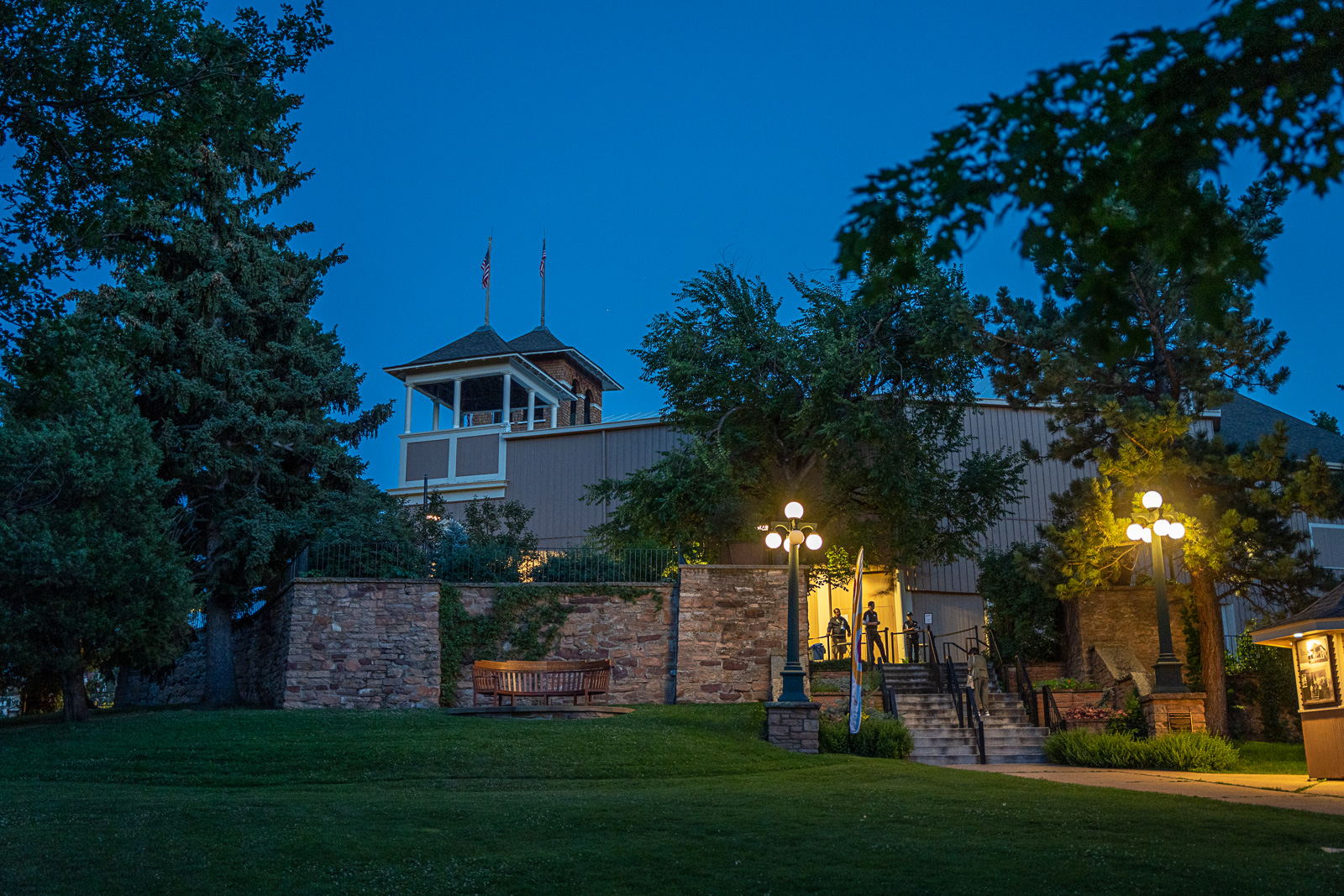
Chautauqua Auditorium. Photo by Jeremy Kornreich

This year’s festival will present 19 performances in 31 days—between four and five weeks and slightly shorter than recent previous festival seasons. In addition to the Festival Orchestra made up of musicians from around the country, it will feature the world premiere of a new piece by Gabriela Lena Frank; four Tuesday evening concerts on the Robert Mann Chamber Music Series, performed by members of the Festival Orchestra and the visiting Danish String Quartet; and guest artists including the CU-based Takács Quartet, cellist Alisa Weilerstien, and returning CMF favorites pianist Olga Kern and violinist Augustin Hadelich.

Performances by the full Festival Orchestra will be most Thursday and Friday evenings at 7:30 and 6:30 p.m. respectively. Orchestral concerts at 6:30 p.m. on Sunday will generally feature a smaller ensemble. The full festival schedule is listed below.

Gabriela Lena Frank

A highlight of the season will be the premiere of a new orchestral work with string quartet by Franks on July 21 (see details below). The summer’s only world premiere, the performance will feature the Takács Quartet. Other works by living composers will be featured throughout the summer, including Masquerade by Anna Clyne; Short Ride in a Fast Machine by John Adams, who was CMF composer-in-residence in 2022; Two Mountain Scenes by Kevin Puts, a work that was commissioned by the Bravo! Vail Valley Music Festival and the New York Philharmonic in 2007; and Joan Tower’s Concerto for Orchestra.

Anton Bruckner

On July 14 conductor Peter Oundjian and the CMF Orchestra will celebrate the 200th anniversary of the birth of Austrian composer Anton Bruckner with a performance of his Symphony No. 4 (“Romantic”). On the same program CMF will celebrate the 150th anniversary of Arnold Schoenberg’s birth with a performance of his late Romantic work for strings Verklärte Nacht (Transfigured Night). 

The annual CMF family concert at 10:30 a.m. Sunday, July 7, will feature some shorter standard classical overtures by Mikhail Glinka and Mendelssohn, as well as a performance of composer Rob Kapilow’s setting of Dr. Seuss’s Green Eggs and Ham. Also on the program is Three Fun Fables, a setting for narrator and orchestra of three of Aesop’s fables by Daniel Dorff, who is known for numerous works that introduce music and musical instruments to young audiences.

Alisa Weilerstein. Photo by Marco Borggreve

Outstanding guest artists have always been a feature of the CMF. This summer’s guest soloists will be:
—Cellist Alisa Weilerstein, a member of a renowned musical family, playing the Dvořák Cello Concerto on the opening night program, July 5 and 7;
—the playful ensemble Really Inventive Stuff, a favorite on past CMF summer schedules, and the mezzo-soprano Jennifer DeDominici for the family concert July 7;
—violinist Vadim Gluzman playing the Prokofiev Second Violin Concerto July 9;
—pianist Olga Kern playing the Rachmaninoff Second Piano Concerto July 18 and 19;
—Colorado Public Radio personality Kabin Thomas narrating Greig’s music for for Henrik Ibsen’s verse play Peer Gynt, alsoJuly 18 and 19;
—the Takács Quartet playing the world premiere of Gabriel Lena Frank’s new work July 21;
—pianist Awadagin Pratt, playing J.S. Bach’s Keyboard Concerto in A major and Jessie Montgomery’s Rounds for piano and string orchestra July 25 and 26;
—the Danish String Quartet, who last appeared at CMF in 2022, playing a varied program that ranges from Haydn to Stravinsky to the 18th-century blind Celtic harpist Turlough O’Carolan July 30;
—violinist Augustin Hadelich, returning to CMF to play Tchaikovsky’s Violin Concerto Aug. 1 and 2; and
—soprano Karina Gauvin to sing Ravel’s song cycle Shéhérazade and the final movement of Mahler’s Symphony No. 4 on the Festival Finale concert, Aug. 4.

Subscription tickets are currently available for the Colorado Music Festival. Tickets to individual concerts will go on sale through the Chautauqua Box Office March 5. More information on CMF tickets, including discounted youth and student tickets, is available HERE.

# # # # #

Colorado Music Festival, Peter Oundjian, music director
Summer 2024
All performances in Chautauqua Auditorium

Opening Night
Festival Orchestra, Peter Oundjian, conductor
With Alisa Weilerstein, cello

  • Anna Clyne: Masquerade (2013)
  • Dvořák: Cello Concerto in B minor
  • Mendelssohn: Symphony No. 4 in A major (“Italian”)

6:30 p.m. Friday and Sunday, July 5 and 7

Family Concert: Green Eggs and Ham
Festival Orchestra, Jacob Joyce, conductor 
With Really Inventive Stuff and Jennifer DeDominici, mezzo-soprano 

  • Glinka: Overture to Ruslan and Ludmilla
  • Daniel Dorff: Three Fun Fables
  • Mendelssohn: Overture to A Midsummer Night’s Dream
  • Rob Kapilow: Green Eggs and Ham

10:30 a.m. Sunday, July 7

Robert Mann Chamber Music Series
Colorado Music Festival musicians 

  • Ernst von Dohnányi: Sextet in C Major
  • Beethoven: “Duet with two Obligato Eyeglasses” in E-flat major for viola and cello, WoO 32
  • Schumann: Piano Quartet in E-flat Major, op. 47

7:30 p.m. Tuesday, July 9

Festival Orchestra Concert
Festival Orchestra, Peter Oundjian, conductor
With Vadim Gluzman, violin

  • John Adams: Short Ride in a Fast Machine
  • Prokofiev: Violin Concerto No. 2 
  • Stravinsky: Rite of Spring

7:30 p.m. Thursday July 11
6:30 p.m. Friday, July 12  

Bruckner Bicentennial Concert
Festival Orchestra, Peter Oundjian, conductor

  • Arnold Schoenberg: Verklärte Nacht (“Transfigured night”), op. 4
  • Anton Bruckner: Symphony No. 4 (“Romantic”)

6:30 p.m. Sunday, July 14

Robert Mann Chamber Music Series
Colorado Music Festival musicians 

  • Carl Nielsen: Wind Quintet, op. 43
  • Schubert: String Quintet in C Major, D956

7:30 p.m. Tuesday, July 16

Festival Orchestra Concert
Festival Orchestra, Rune Bergmann, conductor
With Olga Kern, piano, and Kabin Thomas, narrator

  • Vivian Fung: Prayer
  • Rachmaninoff: Piano Concerto No. 2, op. 18
  • Edvard Grieg: Suites from Peer Gynt

7:30 p.m. Thursday, July 18
6:30 p.m. Friday, July 19

Festival Chamber Orchestra Concert
Festival Orchestra, Peter Oundjian, conductor
With the Takács Quartet and Gabriela Lena Frank, composer 

  • Florence Price: Adoration
  • Gabriela Lena Frank: World Premiere
  • Joan Tower: Concerto for Orchestra

6:30 p.m. Sunday, July 21

Robert Mann Chamber Music Series
Colorado Music Festival musicians

  • Joseph Haydn, String Quartet in C Major, op. 20 no. 2
  • Claude Debussy, Sonata for flute, viola and harp
  • Felix Mendelssohn, String Octet in E-flat Major, op. 20

7:30p.m. Tuesday, July 23

Festival Orchestra Concert
Festival Orchestra, Peter Oundjian, conductor
With Awadagin Pratt, piano

  • J.S. Bach: Keyboard Concerto in A major, S1055 
  • Jessie Montgomery: Rounds for piano and string orchestra (2022)
  • Rimsky-Korsakov: Scheherazade

7:30 p.m. Thursday, July 25
6:30 p.m. Friday, July 26

Festival Chamber Orchestra Concert
Chamber Orchestra, Gemma New, conductor
With Christina and Michelle Naughton, piano duo

  • Mozart: Eine kleine Nachtmusik, K525
    —Concerto in E-flat Major for Two Pianos, K365
    —Symphony No. 35 in D major, K385 (“Haffner”)

6:30 p.m. Sunday, July 28

Robert Mann Chamber Music Series
Danish String Quartet 

  • Joseph Haydn: String Quartet, op. 77 no. 2: III, Andante
  • Stravinsky: Three Pieces for String Quartet
  • Turlough O’Carolan: Three Melodies
  • Mozart: Divertimento in F major, K138
  • Shostakovich: String Quartet No. 3 in F major, op. 73

7:30 p.m. Tuesday, July 30

Festival Orchestra Concert
Festival Orchestra, Peter Oundjian, conductor
With Augustin Hadelich, violin

  • Kevin Puts: Two Mountain Scenes (2007)
  • Tchaikovsky: Violin Concerto in D Major, op. 35
  • Dvořák: Symphony No. 7 in D minor, op. 70 

7:30 p.m. Thursday, Aug. 1
6:30 p.m. Friday, Aug. 2

Festival FInale Concert
Festival Orchestra, Peter Oundjian, conductor
With Karina Gauvin, soprano

  • Johann Strauss: Overture to Die Fledermaus
  • Ravel: Shéhérazade
  • Mahler: Symphony No. 4 in G major

6:30 p.m. Sunday, Aug. 4

Information on Subscription tickets is available HERE.
Single concert tickets will go on sale March 5.

NOTE: A correction was made Feb. 10. An earlier version of the story said that the 2024 festival would last four weeks. The correct length is 31 days—between four and five weeks.

Faculty Tuesday: ‘Odysseys from Nicaragua to New Hampshire’

Contemporary song cycles by Gabriela Lena Frank and Herschel Garfein will be performed Dec. 7

By Izzy Fincher Dec. 3 at 1:55 p.m.

The genre of song cycles, popularized by Schubert in the early 19th century, is traditionally associated with tenor and piano. However, there is also a rich history of baritone song cycles by classical and contemporary composers, including Beethoven, Verdi, Ravel, Ralph Vaughn Williams and Benjamin Britten. 

Baritone Andrew Garland

At 7:30 p.m. Tuesday, Dec. 7, baritone Andrew Garland will perform two contemporary song cycles for “Odysseys from Nicaragua to New Hampshire,” a concert for CU’s “Faculty Tuesdays” series. The program features Gabriela Lena Frank’s Cantos de Cifar y el Mar Dulce (Songs of Cifar and the sweet sea) with pianist Jeremy Reger and the baritone premiere of Herschel Garfein’s Mortality Mansions with pianist David Korevaar. 

Frank, a Grammy Award-winning pianist and composer, is known for her multicultural influences, combining Latin American musical styles with Western classical music. This reflects her diverse background, growing up in California with parents of mixed Peruvian/Chinese and Lithuanian/Jewish ancestry, as well her creative travels throughout Latin America. 

Her song cycle Cantos de Cifar y el Mar Dulce is an odyssey from Nicaragua, the largest country in Central America. Set to poems by Nicaraguan poet Pablo Antonio Cuadra, it tells the story of the harp-playing sailor Cifar, who travels around Lake Nicaragua.

Gabriela Lena Frank

“The poetry is very simple and direct, yet deep and meaningful,” Garland says. “There’s definitely magic realism in there.”

The eight-song cycle lasting 30 minutes is a work in progress, which Frank plans to expand to 70 minutes with soprano and then orchestrate with guitars and marimbas. In 2007, Garland premiered the last two songs in the cycle, “Eufemia” and “En la Vela del Angelito”(In the little angel’s candle). Fourteen years later for his Faculty Tuesday performance, he wanted to perform the rest of the cycle, which he describes as cohesive and compelling even in its incomplete form.

“Within the arc of these eight songs, you get a great variety of magic, solemnity, comedy, mystery, intensity and darkness,” Garland says. “They are very powerful and memorable.” 

This will be followed by the baritone premiere of Mortality Mansions by Garfein, a Grammy-Award winning composer, librettist and stage director. Mortality Mansions, originally written for tenor, is set to selected poems that span former U.S. poet laureate Donald Hall’s 60-year career. Drawing from his personal experiences with the death of his wife, the poet Jane Kenyon, Hall depicts a moving portrait of love, sexuality and loss in later life.

Herschel Garfein

“When I first read Hall’s poetry, I was amazed,” Garfein recalls. “I was immediately attracted to these very vivid poems about life and especially about sexuality over the age of 60, which is something no one talks about. He’s both very frank and very moving about it.”

“These poems are so insightful and illuminating, but he doesn’t show off or lecture the reader,” Garfein continues. “That’s extremely important in great art.”

To complement Hall’s writing style, Garfein chose to keep the vocal lines melodic and mostly tonal. This is accompanied by dissonant harmonies and virtuosity of the piano part, a contrast inspired by Schubert’s lieder style. 

Garfein selected the title, Mortality Mansions, from the second poem, “When I Was Young,” a contemplation of how youthful lust has evolved with aging. The poem ends with the line, “Let us pull back the blanket, slide off our bluejeans,// assume familiar positions,// and celebrate lust in mortality mansions.” 

Given the long time span of the collection, each poem feels like a vignette of love and life, cohesive yet independent. The work opens with “When the Young Husband,” depicting an ill-fated affair between the young husband and his wife’s friend, accompanied by an energetic motif. 

“In the first song, what needs to come across is the recklessness and brazen disregard or the desire for chaos and downfall, that Don Giovanni-esque, bring-it-on attitude,” Garland says. 

Then the focus shifts to bittersweet recollections from Hall’s relationship with Kenyon, beginning with “When I Was Young.” This flow is briefly interrupted by “Woolworth’s,” an ode to the iconic American five-and-dime business that closed in 1997, and “The Green Shelf,” in which a neighbor is killed in a lawnmower accident, a disturbing scene accompanied by an agitated piano part in an ominously low register. 

Over the next six poems, Hall shares happy memories of making love and cooking together with Kenyon, before shifting to painful reflections on endings and death. The cycle ends with “Otherwise” by Kenyon, a poem about enjoying the beauty of small moments in daily life, while acknowledging the ephemeral nature of existence.  

Mortality Mansions evokes both the grandeur and the fatality (of human existence),” Garfein says. “It’s a call to enjoy life while you can because it’s not going to last forever. Love and sexuality are a hedge against mortality, against death.”

# # # # #

“Odysseys from Nicaragua to New Hampshire”
Andrew Garland, tenor

  • Gabriela Lena Frank: Cantos de Cifar y el Mar Dulce
    with Jeremy Reger, piano
  • Herschel Garfein: Mortality Mansions
    with David Korevaar, piano

7:30 p.m. Tuesday, Dec. 7
Grusin Recital Hall, CU Imig Music Building
Admission free 
Livestream available from CU Presents

Pro Musica Chamber Orchestra presents “Diverse Voices”

Program features three living composers, one African-American pioneer

By Peter Alexander Jan. 26 at 11:10 a.m.

Searching for diverse repertoire for the Pro Musical Colorado Chamber Orchestra, conductor Cynthia Katsarelis found works by three living composers and a pioneering African-American composer of the 20th century.

Their concert featuring those composers, titled “Diverse Voices,” will be Saturday in Denver and Sunday in Boulder (Feb 1 and 2). The three living composers are Jessie Montgomery, a New York violinist and composer who has been affiliated with the Sphinx Organization, which supports young African-American and Latinx string players; Rudy Perrault, a Haitian native who is director of orchestras at the University of Minnesota, Duluth; and Gabriela Lena Frank, a California-born composer who has mixed Peruvian, Chinese, and Lithuanian-Jewish heritage.

william_grant_still_1

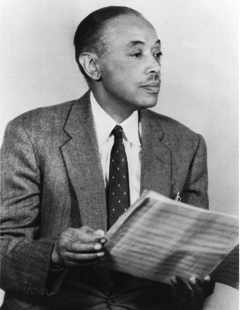
William Grant Still

William Grant Still, the fourth composer on the program, was associated with the Harlem Renaissance in the 1920s, and later had a successful career arranging popular music as well as music for television and films. His Symphony No. 1 (“African-American Symphony”) was the first symphony by an African-American composer to be performed by a major orchestra.

On the all-string orchestra program, Pro Musica will perform his Danzas de Panama, Montgomery’s Starburst, Perrault’s Exodus and Frank’s Leyendas: An Andean Walkabout. This program reflects Katsarelis’s personal commitment to diversity, meaning not only composers of color, which describes all four composer on the program, but also female as well as male composers (two of the four), and new music as well as recognized classics (three of the four).

“I think we come to a more healthy place if we’re inclusive of the different talent and the different voices that we have in the 21st century,” Katsarelis says. “Pro Musica has a mission of [performing] classic to cutting edge [music], and we also present works that were under-represented.”

Katsarelis includes new works among the “under-represented.” “Where the classics touch something universal in us, new music speaks to right now,” she says. “It may or may not last, but it has something to say to us today.”

The entire program is for string orchestra, which is where Katsarelis had to do some searching. “When I encounter a musician that I really respect and am really intrigued by, I go on a Sherlock Holmes-like hunt for music that is appropriate for Pro Musica Colorado Chamber Orchestra,” she says.

Montgomery.image-asset

Jessie Montgomery. Photo by Jiang Chen

Needing music for strings alone, she found several pieces that are written for string quartet or string orchestra. The one exception is the opening work on the program, Montgomery’s Starburst, which was written for the Sphinx Virtuosi chamber orchestra. “It’s a great piece, really energetic, as you would expect a starburst to be,” Katsarelis says.

“It’s inspired by a cosmic phenomenon, and for her that involves rapidly changing musical colors. It’s only a three-minute piece, but you’re getting all these different colors that a string orchestra can produce. They’re playing on the bridge to get this eerie sound, they play harmonics, they have various kinds of pizzicato, and [Montgomery] combines them in various ways. It’s a musical burst as well as a starburst.”

Katsarelis met Perrault through her own work in Haiti. Since 2004 she has gone to Haiti every summer to teach at a music camp, and sometimes during the year as well. “It’s a very musical culture, and they’re always hungry for more,” she says. “It’s really rewarding to work there.”

Perrault-1_3.rev.1568059743

Rudy Perrault

Perrault’s Exodus was originally part of a piece for string quartet. It was inspired by and dedicated to people who have been forced to leave their homelands as refugees. “I hear a very strong musical personality,” Katsarelis says of the score.

“He knows what he’s doing, and he knows how to use a wide range of musical language for the wrenching emotion that is part of the piece. I hear little hints of Bernstein and Shostakovich with a little bit of an island rhythm.”

0414_GabrielaFrank

Gabriela Elena Frank

Frank’s mixed heritage plays a very large role in her work. “Her mother was Peruvian-Japanese, and her father was Lithuanian Jewish,” Katsarelis explains. “She became a kind of musical anthropologist and explored her roots, and she was really captivated by Peru and the Andean music, the Andean instruments and genres and character—they’re all reflected in her piece.”

For example, she imitates the sound of Andean instruments—the panpipes, a heavy wooden flute called the tarka, guitars—in her writing for strings. Other movements depict the chaqui, a legendary runner who covered large distance to deliver messages from town to town, and the llorona, a professional crier hired to mourn at funerals.

Katsarelis often describes pieces of music as a journey, with a return to home providing closure. But in this case, she says, “Peru is part of Frank’s background, and in her exploration she finds another version of home. So we have a journey; home is just a little bit different.”

Photography by Glenn Ross. http://on.fb.me/16KNsgK

Cynthia Katsarelis. Photo by Glenn Ross

Thinking of her musical mission  beyond the individual pieces she selected to illustrate diversity, Katsarelis says “I always thought that classical music could help bring world peace, so this is just one more step.” In addition to that lofty goal, she adds, “What I’m presenting is terrific music. It’s beautiful, it’s inspiring, it’s entertaining, it’s thought provoking and it engages the world today.

“I hope young people will come to the concert, because it’s part of what they’re growing into: a world that’s just so global, and so diverse.”

# # # # #

“Diverse Voices”
Pro Musica Chamber Orchestra of Colorado, Cynthia Katsarelis, music director

Jessie Montgomery: Starburst
Rudy Perrault: Exodus
William Grant Still: Danzas de Panama
Gabriela Lena Frank: Leyendas: An Andean Walkabout

7:30 p.m. Saturday Feb. 1, First Baptist Church of Denver
2 p.m. Sunday, Feb. 2, Mountain View United Methodist Church, Boulder
Tickets